Orca
The top predator of the sea hunts as a family
Orcinus orca
Also called Killer whale, Blackfish, Grampus
Living individuals or members of this group exist today. This does not mean they are safe from extinction.
Meet the orca
The orca is the largest dolphin and the top predator of the sea. It lives in every ocean in family pods that hunt together and share a dialect of calls.
Images of the orca
Lifespan in the wild
31 to 46 years averages for males and females that survive infancy; the oldest females reach 90
Weight
3 to 6 t
Length
5 to 8 m
Top speed
Up to 56 km/h
Fact file
Orca
- Location
- All oceans, most common in cool coastal water
- Habitat
- Open ocean, Coast, Polar ice
- Diet
- Carnivore
- Prey / food
- Salmon, herring, seals, sea lions, dolphins, whales, sharks, squid, seabirds
- Predators
- None as adults; sharks and other orcas may take calves
- Lifestyle
- Social; active by day and night
- Group name
- Pod
- Name of young
- Calf
- Gestation
- 15 to 18 months
- Litter size
- 1 calf
- Population
- At least 50,000 worldwide
- Biggest threat
- Loss of prey and PCB pollution
- Distinctive feature
- Tall black dorsal fin and white eye patches
- Colour
- Black and white with a grey saddle patch
- Skin type
- Smooth skin
Size
Next to a person
Measurements
Size and speed
- Length
- 5 to 8 m, up to 10 m females 5 to 7 metres, males 6 to 8 metres
- Length, male
- 6 to 8 m, up to 10 m
- Length, female
- 5 to 7 m, up to 8.5 m
- Weight
- 3 to 6 t, up to 10 t females about 3 to 4 tonnes, males over 6 tonnes; the largest males pass 10 tonnes
- Top speed
- Up to 56 km/h
Typical adult ranges. Source: Wikipedia.
Life cycle
Lifespan
- In the wild31 to 46, up to 90 years averages for males and females that survive infancy; the oldest females reach 90
- 090 years
The pale bar is the record. Source: Wikipedia.
Appearance
Colour and coat
- Primary colours
- blackwhite
- Secondary colours
- grey
- Skin type
- smooth skin
- Male and female
- Strong. Males are longer and heavier, with a tall triangular dorsal fin of about 1.8 metres and larger flippers. Females have a shorter, curved fin.
Life cycle
Mating and family
- Mating system
- polygynandrous, both sexes with several mates
- Social structure
- matrilineal pods led by the oldest female
- Breeding
- one calf about every five years
Orcas breed in any month, though most calves in the northeast Pacific arrive in winter. A female carries her calf for 15 to 18 months and gives birth to one calf. The calf nurses for a year or more and is weaned by the age of two. It stays in its mother's pod, and in resident populations it never leaves her. A female stops breeding at about 40, and the oldest females live to 90.
Classification
Taxonomy
- Kingdom
- Animalia
- Phylum
- Chordata
- Class
- Mammalia
- Order
- Cetacea
- Family
- Delphinidae
- Genus
- Orcinus
- Species
- Orcinus orca
Conservation
Red List status
- LC
- NT
- VU
- EN
- CR
- EW
- EX
Data Deficient. The IUCN has no category for this species yet.
Range
Recorded in 13 countries
- Antarctica
- Argentina
- Ashmore and Cartier Islands
- Canada
- Ecuador
- United Kingdom
- Iceland
- Japan
- Mexico
- Norway
- New Zealand
- Russia
- United States of America
Habitat layer: tundra, mangrove.
Countries from 7,922 wild records on GBIF (iNaturalist research grade), filtered and checked by hand. Country shapes: Natural Earth. Habitat: RESOLVE Ecoregions 2017, CC BY 4.0. Basemap: Natural Earth.
Habitats
Three things to know
- 1
Female orcas go through menopause and can live for decades after their last calf.
- 2
Each pod has its own dialect of calls that passes from mother to calf.
- 3
Orcas have killed blue whales, the largest animals that ever lived.
Did you know
Seven more facts
- 1
The name orca comes from a Latin word for a large-bellied pot, not from the god of the dead.
- 2
The male dorsal fin can stand 1.8 metres tall, higher than most people.
- 3
An orca's heart beats about 60 times a minute at the surface and 30 times a minute on a dive.
- 4
One Alaskan pod split into groups to rob two fishing boats at once.
- 5
A captive orca learned to spit fish onto the surface to lure gulls, and four others copied it.
- 6
Orcas have more cortical neurons than any other mammal, including humans.
- 7
An orca keeps a body temperature of 36 to 38 degrees Celsius under its blubber.
Field notes
How it looks and acts
Field notes
Distinguishing features
- A black body with a white belly, white eye patches and a grey saddle patch.
- A tall, triangular dorsal fin in the male, up to 1.8 metres.
- Broad, rounded, paddle-shaped flippers.
- A blunt snout with no beak, unlike most dolphins.
- A total length of 5 to 8 metres, with the largest males at 10 metres.
- Yellow or orange patches on a newborn where an adult is white.
Field notes
Unique adaptations
- Echolocation clicks find prey in dark or murky water.
- A blubber layer 7.6 to 10 cm thick holds heat in polar seas.
- Interlocking conical teeth grip prey that struggles.
- A burst speed of up to 56 kilometres per hour catches fast dolphins.
- Learned hunting methods, such as wave-washing and beaching, pass to each generation.
Field notes
Interesting behaviours
- Spy-hopping to look for seals resting on ice floes.
- Breaching and tail-slapping at the surface.
- Carousel feeding, in which a pod herds herring into a ball and stuns them with tail slaps.
- Sharing prey within the matriline.
- Surplus killing, such as playing with a sea lion to exhaustion without eating it.
Field notes
Temperament
- Curious and playful with people at sea, and orcas have been seen tossing ice after a snowball.
- Wary of pilot whales, which mob and chase them.
- Calm toward swimmers in the wild, with no recorded fatal attack.
- Stressed and sometimes aggressive in captivity.
Field notes
Communication
- Pulsed calls in a pod dialect keep the family together.
- Whistles pass between animals at close range.
- Clicks bounce off prey and return as echoes.
- Breaches and tail slaps may carry signals over a long distance.
Ecology
Ecological role
The orca is the top predator of the sea, and it shapes the numbers and the behaviour of everything below it.
- It controls seal and sea lion numbers at breeding colonies.
- Its arrival drives great white sharks away from their feeding grounds.
- Some scientists blamed orcas for a fall in Aleutian sea otters in the 1990s, though the evidence is indirect.
- The loss of great whales to whaling may have pushed orcas onto seals and smaller whales.
Stories
Myths and legends
- In Haida tradition, orcas live in houses beneath the sea and take human form under water.
- In Kwakwaka'wakw tradition, the orca rules the undersea world.
- In Siberian Yupik tradition, an orca turns into a wolf each winter.
- In Ainu tradition, the orca is Repun Kamuy, a god who brings whales to the shore.
- In Inuit tradition, the akhlut is an orca that hunts on land as a wolf.
People
Relationship with humans
People
Living alongside us
People have watched, feared, hunted and displayed orcas. Northwest Coast nations honour them, while Western sailors named them killers. Between 1954 and 1997 Japan took 1,178 orcas and Norway 987. Aquarium captures began in 1964 and ended in most of the world by the 1990s. Whale watching now brings boats to every well-known pod.
- No wild orca has killed a person, and confirmed attacks in the wild are very few.
- Captive orcas have injured or killed trainers, and Tilikum was involved in three deaths.
- Since 2020 orcas off Spain and Portugal have rammed sailing boats, and a few boats sank.
People
Status, uses and products
- Domestication
- Wild
- As a pet
- Not suitable. An orca weighs several tonnes, travels up to 160 kilometres a day and needs its family. No private tank can hold one, and captive orcas often develop collapsed fins and shorter lives.
- Uses
- whale watchingaquarium displaysubsistence hunting
- Products
- meatoil
The full account
About the orca
The orca, Orcinus orca, is the biggest of the oceanic dolphins. Sailors named it the killer whale after they watched it hunt larger whales. Its black back, white belly and white eye patches make it hard to mistake for any other animal. Adults measure 5 to 8 metres long, and the largest males reach 10 metres. A female weighs about 3 to 4 tonnes, and a big male can pass 10 tonnes.
Orcas live in every ocean, from the pack ice at both poles to the tropics. They are most common in cool coastal water at high latitudes. Each population hunts its own prey, and some eat only fish while others eat only seals and whales. Pods are families built around a mother, and in some populations her sons and daughters never leave her. The IUCN lists the species as Data Deficient, because the orca may be several species. At least 50,000 orcas swim in the world's oceans.
Name and taxonomy
Carl Linnaeus described the orca in 1758, in the tenth edition of Systema Naturae. Conrad Gessner wrote an earlier account in 1558, after a dead orca washed up in the Bay of Greifswald. The genus name Orcinus comes from the Latin orca, which meant a large-bellied pot. Some writers link the name to Orcus, a Roman god of the underworld, but the zoological code rejects that story. The Romans used orca for these animals, and probably borrowed a Greek word for whales. The orca is the only living species in its genus.
Old English names include blackfish and grampus, and the second is now rare. Since the 1960s the name orca has slowly replaced killer whale in everyday speech. Scientists have proposed splitting the species into several species or subspecies. A 2024 study named the fish-eating residents and mammal-eating transients of the North Pacific as separate species. The Society for Marine Mammalogy accepted them only as subspecies, pending a global review.
Evolution and relatives
The oceanic dolphin family, Delphinidae, holds 35 species and first appeared about 11 million years ago. The orca line probably branched off soon after the family arose. It resembles the false and pygmy killer whales and the pilot whales, but the resemblance misleads. One gene study placed its closest living relatives among the snubfin dolphins of the genus Orcaella. A 2018 study instead placed it beside a group that holds Lagenorhynchus and Cephalorhynchus dolphins. A 2019 study found that it sits apart from almost every other dolphin.
The orca also has several ecotypes that differ in prey, calls and body markings. Four types, A to D, live in Antarctic waters, and DNA suggests that types B and C deserve species rank. Type D orcas from sub-Antarctic seas may be a species of their own.
Appearance
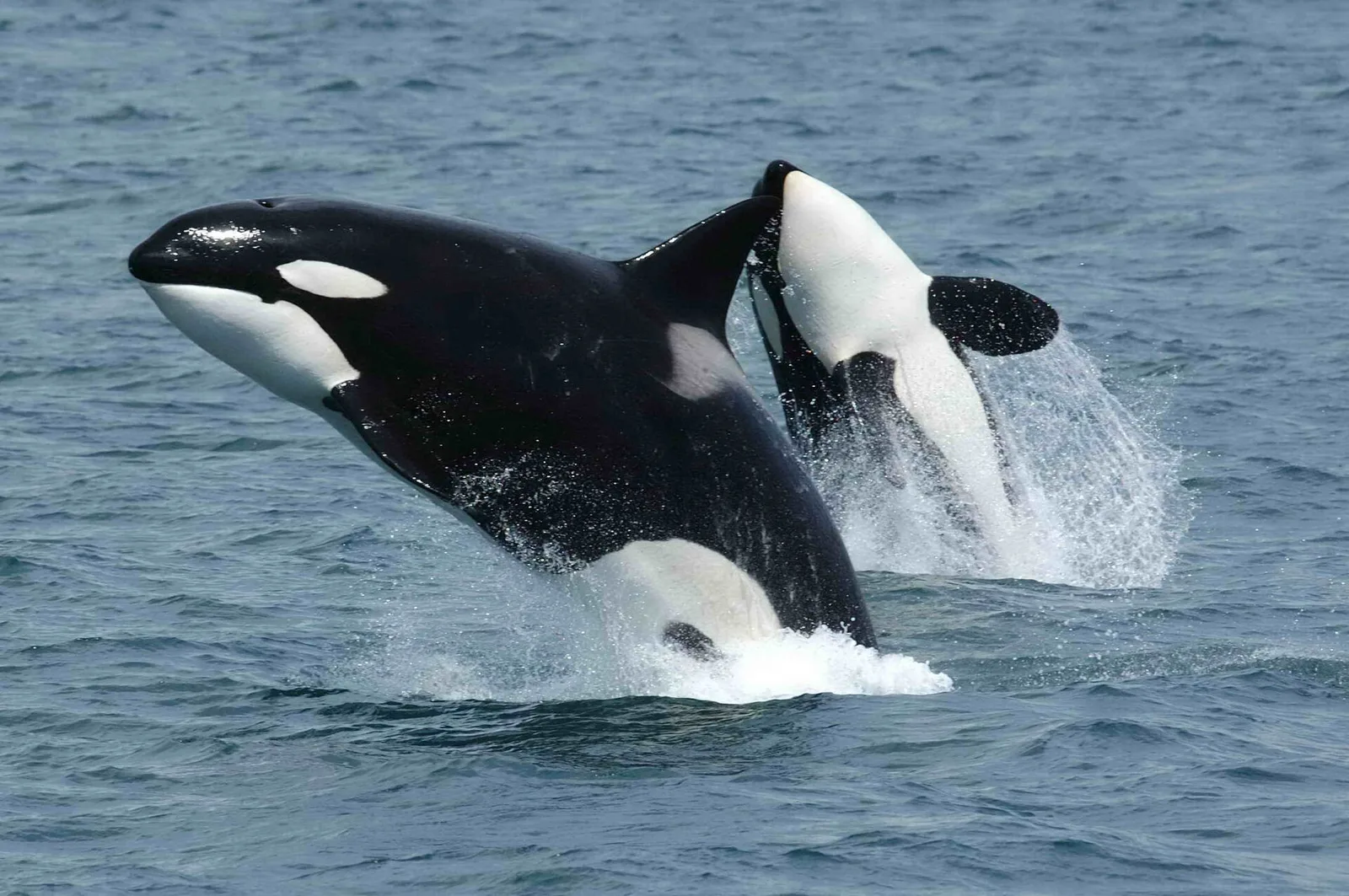
The orca is mostly black with sharply edged white areas. The lower jaw and the belly are white, and the white runs back to two lobes on the flanks. An oval white patch sits behind and above each eye. A grey saddle patch lies behind the dorsal fin. Newborn calves show yellow or orange where adults show white. Some Antarctic orcas look brown or yellow because diatoms coat their skin.
Males typically measure 6 to 8 metres and weigh over 6 tonnes. Females measure 5 to 7 metres and weigh about 3 to 4 tonnes. The tallest male dorsal fin stands about 1.8 metres high, more than twice the height of a female's fin. A male's fin is a tall triangle, while a female's fin curves backward. The flippers are broad, rounded paddles, and the snout is blunt with no beak. The jaw carries 10 to 14 pairs of large conical teeth that interlock when the mouth shuts. A blubber layer 7.6 to 10 centimetres thick keeps the body warm. Researchers identify individuals from nicks on the dorsal fin and the shape of the saddle patch.
Habitat and range
Orcas live in all oceans and most seas, which makes them the most widespread cetacean. They prefer cool water at high latitudes and stay near coasts more than in the open ocean. The densest populations swim off Norway, along the Aleutian Islands, in the Gulf of Alaska and around Antarctica. They are also common off British Columbia, Washington, Oregon, Iceland and the Faroe Islands. GBIF holds occurrence records from 111 countries.
In the Antarctic they push right up to the pack ice and swim into open leads inside it. In the Arctic they are summer visitors, and they now travel deep into Hudson Strait as the sea ice shrinks. They normally hunt at depths of 20 to 60 metres but can dive to 300 metres for food. A few orcas have swum 160 kilometres up the Columbia River, and others entered the Fraser and Horikawa rivers. Migration is poorly understood, and the same residents return to British Columbia each summer. Where those animals spend the winter remains unknown after decades of study.
Diet and hunting
The orca is an apex predator, and no wild animal hunts an adult. Across its range it eats over 140 species, including fish, squid, seals, whales, seabirds and turtles. A single orca eats about 227 kilograms of food a day. Each population specialises, and the choice of prey shapes its whole way of life. Fish-eating residents of the northeast Pacific take salmon for 96% of their diet, and Chinook make up 65% of that. Norwegian orcas herd herring into a tight ball with bubbles and flashes of their white bellies. They then slap the ball with their tails and stun up to 15 fish at a time.
Mammal-eating transients chase dolphins and porpoises until they tire, then ram them or leap onto them. Off Argentina and the Crozet Islands, orcas slide onto beaches to seize sea lions and elephant seals. Antarctic type B orcas swim together to make a wave that washes a seal off its ice floe. In New Zealand they hunt rays and sharks, and elsewhere they flip great white sharks to reach the liver. Pods also attack grey, humpback, sperm and minke whales, and mostly target calves. In 2019 orcas killed blue whales off Western Australia on three occasions. Resident orcas sometimes kill porpoises and seals without eating them.
Behaviour and social life
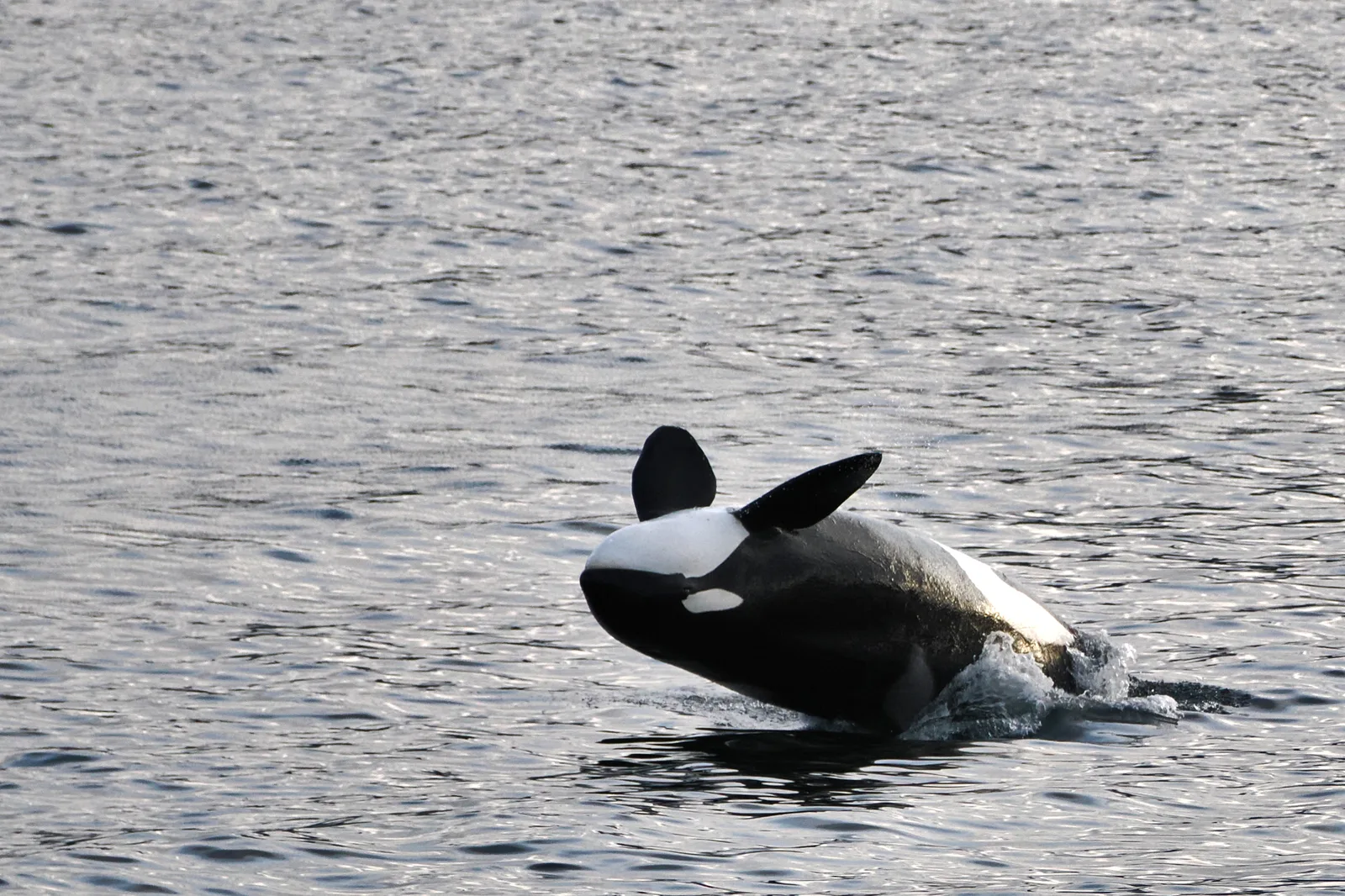
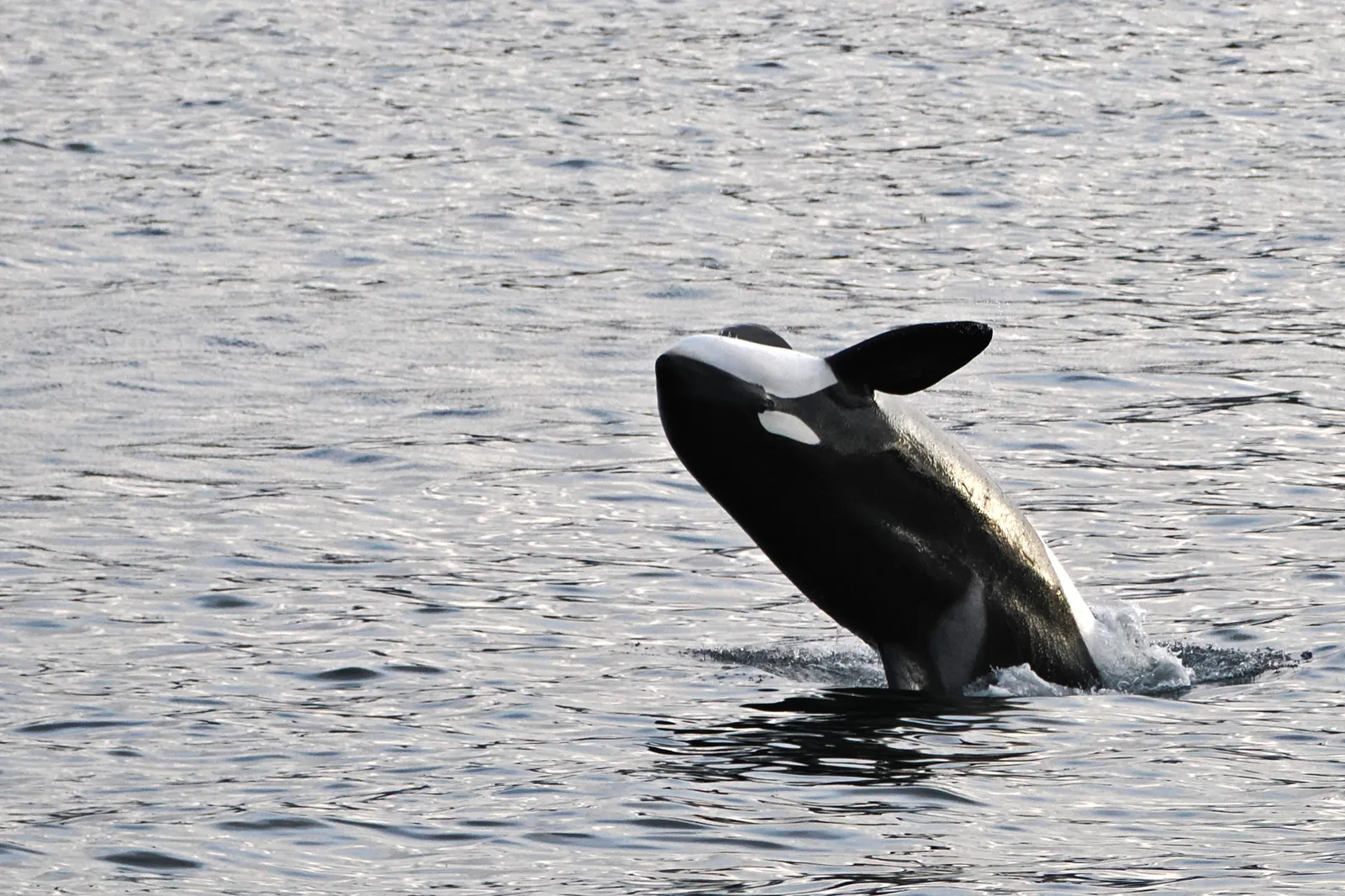
Orcas spend their days foraging, travelling, resting and socialising. They breach, slap their tails and spy-hop, which means holding the head above the water to look around. These displays may serve courtship, communication, play or the removal of parasites. They can reach 56 kilometres per hour in a burst, and a pod may travel 160 km in a day. Some orcas have been seen carrying a dead salmon on the head like a hat.
Only elephants and the higher primates live in societies as complex as an orca pod. A resident matriline is a mother, all her children, and her daughters' children in turn. The average matriline holds 5.5 animals, and up to six generations can travel together. Members separate for only a few hours, to mate or to hunt. One to four related matrilines form a pod, and pods with a shared dialect form a clan. Transient groups are smaller, often a female with one or two of her offspring. Some transient males rove alone and join groups only when a female is ready to mate.
Orcas teach their young, and a Crozet mother pushes her calf onto the beach and pulls it back when needed. Alaskan pods learned to strip fish from longlines and beat every trick the fishermen tried. In 2025 a Salish Sea orca rolled strands of bull kelp along its body, the first recorded tool use in the species. Researchers describe the dialects and hunting methods that pass from mother to calf as animal culture.
Communication and senses
Like all cetaceans, orcas rely on sound to find their way, to hunt and to talk. They make three kinds of sound: clicks, whistles and pulsed calls. Clicks serve echolocation, so an orca can find and judge prey in dark water. Every pod has a dialect of discrete calls, and residents use seven to 17 call types. A dialect stays stable for generations, and a calf learns it from its mother. Newborns produce calls like their mother's, but with fewer types.
Residents call often, because salmon cannot hear them well. Transients stay quiet on the hunt, because seals and porpoises hear whale calls clearly. The eyesight is good above and below the surface, and the hearing is excellent. Sound enters through the lower jaw and travels to an ear-bone complex, as in other toothed whales. The ear openings are tiny holes behind the eyes with no outer flap. The brain is the second heaviest among marine mammals, after the sperm whale.
Reproduction and life cycle
Females mature at about 10 to 13 years and are most fertile around 20. Males mature at 15 but seldom father a calf before 21. A male seeks mates in other pods, so inbreeding stays rare. Gestation lasts 15 to 18 months, one of the longest of any mammal. A mother has one calf about every five years, and twins are almost unknown.
A newborn calf is about 2.4 metres long and weighs about 180 kilograms. The first months are dangerous, and 37 to 50% of calves die before seven months. Weaning starts at about 12 months and ends by the age of two. Every pod member helps to care for a calf. Females stop breeding at about 40 and can live for decades afterward, a menopause rare among animals.
Wild females that survive infancy live about 46 years on average, and males about 31. The oldest females reach 90 years. One southern resident, Granny, was claimed to be 105, though a biopsy suggested 65 to 80. Infanticide was first seen in the wild in 2016, when a male and his mother killed a calf off British Columbia.
Predators and threats
An adult orca has no natural predator. A young orca may be attacked by large sharks or by other orcas. A 2026 study found that transient orcas eat resident orcas, which researchers treat as predation between species. The threats that matter come from people.
Prey depletion is the greatest danger, and Pacific salmon stocks have fallen sharply. Orcas sit at the top of the food chain, so PCBs and other poisons build up in their blubber. A 2018 study in Science warned that this pollution could cut many populations dramatically. Norwegian Arctic orcas carry more PCBs, pesticides and flame retardants than polar bears. Ship noise, naval sonar, oil spills and boat traffic all disturb them. After the Exxon Valdez spill, about half of one resident pod vanished, and the AT1 transients stopped breeding. In 2020 an orca found dead in England had a large piece of plastic in its stomach.
Population and conservation
The world population is at least 50,000, and the true number is probably higher. About 25,000 live in Antarctic waters and 8,500 in the tropical Pacific. Norway holds 500 to 1,500, and the seas around Japan about 2,321. The IUCN moved the orca from Conservation Dependent to Data Deficient in 2008. It did so because some types may prove to be separate, endangered species. The species sits on Appendix II of CITES, which regulates trade.
The southern resident community of Washington and British Columbia was listed as endangered in the United States in 2005. It once held about 200 animals, lost 48 to aquarium captures, and fell to around 75 by 2019. Canada set a 200-metre approach limit for boats in 2017, up from 100 metres. The AT1 transients of Prince William Sound numbered only seven by 2009 and will likely die out. Fewer than 50 orcas survive near the Strait of Gibraltar, where bluefin tuna stocks have fallen.
Relationship with humans
No wild orca has ever killed a person. A surfer in California was bitten in the 1970s, and a boy in Alaska was bumped in 2005. Captive orcas have attacked people nearly two dozen times since the 1970s, and some attacks killed. Tilikum, a male at SeaWorld, was involved in three deaths between 1991 and 2010. The 2013 film Blackfish told his story and turned public opinion against orca shows.
Whalers mostly ignored orcas until the larger whales ran out. Between 1954 and 1997 Japan took 1,178 orcas and Norway took 987. Fishermen shot them as pests, and 25% of orcas captured in Puget Sound before 1970 carried bullet scars. Between 1964 and 1976, 50 orcas were captured in the Pacific Northwest for display. Only one capture has happened in North American waters after 1976. The orcas of Eden, Australia, once helped whalers by herding baleen whales into the bay.
Since 2020, orcas off Spain and Portugal have rammed sailing boats and torn off rudders. As many as 500 vessels were damaged between 2020 and 2023, and a few sank. Whale watching is now a large industry, but too many boats stress the animals.
In culture and myth
The peoples of the Pacific Northwest Coast carve the orca into totem poles, masks and canoes. In Haida tradition, orcas live in towns beneath the sea and take human form when they dive. Haida stories say that a drowned person goes to live with them. The Kwakwaka'wakw saw the orca as the king below the waves, and said it kept sea lions as slaves and dolphins as soldiers. In Nuu-chah-nulth belief an orca may carry the soul of a dead chief. The Lummi word for orcas, qwe'lhol'mechen, translates as our relations beneath the waves.
The Tlingit of Alaska regard the orca as the sea's guardian and a friend to people. A 4,000-year-old burial at Port au Choix, Newfoundland, held a stone carving of an orca. Siberian Yupik tales say that orcas become wolves in winter, and hunters throw tobacco into the sea for them. The Ainu of Hokkaido called the orca Repun Kamuy, a sea god who drove whales to the shore. In Inuit folklore the akhlut is an orca that walks on land as a wolf.
Western writers feared it, and Pliny the Elder around AD 70 described a savage mass of flesh with teeth. Moby Doll, captured in 1964, proved docile and changed scientific opinion. The 1993 film Free Willy made a captive named Keiko famous, and he was released off Iceland in 2002.
A sentence with a dotted underline is inferred: it describes the group the animal belongs to, or is a reading of the sources, rather than a measured or reported fact about this species.
Questions
Orca questions, answered
How big is an orca?
Adults measure 5 to 8 metres, and the largest male reached 10 metres. A female weighs about 3 to 4 tonnes, and a big male passes 6 tonnes. It is the largest dolphin.
Is an orca a whale or a dolphin?
It is both, in a sense. The orca belongs to the oceanic dolphin family, Delphinidae, which sits within the toothed whales. It is the largest dolphin alive.
Why is it called a killer whale?
Sailors saw orcas hunt and kill larger whales, and the name stuck. The Latin orca meant a large pot, not a killer. Since the 1960s most people prefer the name orca.
What do orcas eat?
Fish, squid, seals, sea lions, dolphins, whales, seabirds and turtles, over 140 species in all. Each population specialises. Northeast Pacific residents eat salmon, while transients in the same water eat only mammals.
Do orcas attack humans?
No wild orca has killed a person, and confirmed bites are very rare. Captive orcas have injured and killed trainers. Since 2020 some Iberian orcas have rammed sailing boats.
How fast can an orca swim?
An orca can reach 56 kilometres per hour in a short burst. A travelling pod moves much more slowly and can cover 160 km in a day.
How long do orcas live?
Wild females that survive infancy average about 46 years, and males about 31. The oldest females reach 90. Captive orcas usually die in their twenties.
Are orcas endangered?
The IUCN lists the species as Data Deficient, because it may be several species. At least 50,000 exist worldwide. Some local groups are endangered, such as the 75 southern residents of Washington and British Columbia.
Where do orcas live?
In every ocean, from the Antarctic pack ice to the tropics. They are most common in cool coastal water off Norway, Alaska, the Pacific Northwest, Iceland and Antarctica.
How smart are orcas?
Orcas have the second heaviest brain among marine mammals and more cortical neurons than any other mammal. They teach hunting skills to their calves, solve problems and pass dialects down the generations.
Do orcas have a language?
Each pod uses a dialect of discrete pulsed calls, and residents use seven to 17 call types. Calves learn the dialect from their mothers. Scientists describe this as a form of culture.
How many orcas are left?
At least 50,000 worldwide, with about 25,000 around Antarctica and 8,500 in the tropical Pacific. Local numbers are far smaller, and fewer than 50 remain near Gibraltar.
Do orcas eat great white sharks?
Yes. Orcas flip a shark onto its back, which paralyses it, and then eat the liver. White sharks leave an area when orcas arrive.
Why do orcas attack boats?
Since 2020 orcas off Spain and Portugal have rammed the rudders of sailing boats, and up to 500 boats were damaged by 2023. Experts disagree on the cause. Ideas range from play to a response to an earlier injury.
How long is an orca pregnant?
An orca is pregnant for 15 to 18 months, among the longest pregnancies of any mammal. A mother has one calf about every five years.
Can you keep an orca in captivity?
Marine parks have held orcas since 1964. Captive males often suffer collapsed dorsal fins, and many campaigners want the practice ended. SeaWorld stopped breeding orcas in 2016.
Food web
Prey and food
 Atlantic salmon
- herring
- seals
- sea lions
- dolphins
- whales
- sharks
- squid
- seabirds
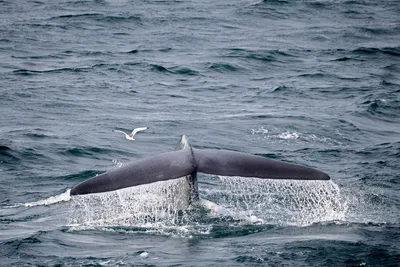 Blue whale
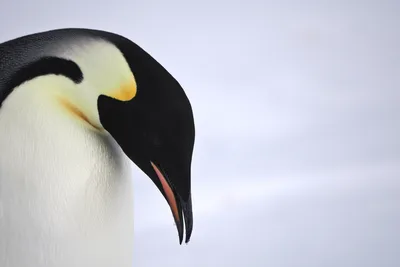 Emperor penguin
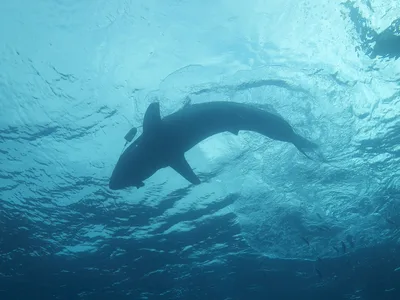 Great white shark
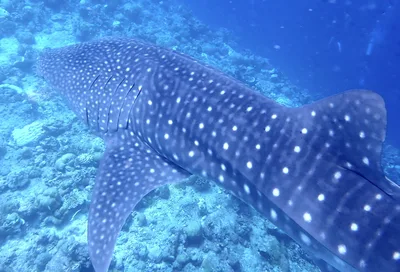 Whale shark
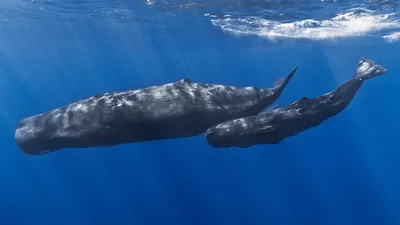 Sperm whale
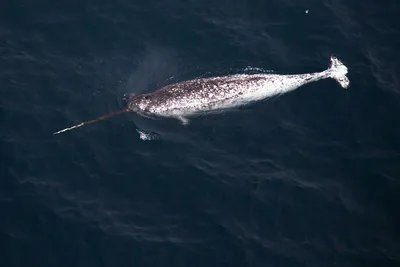 Narwhal
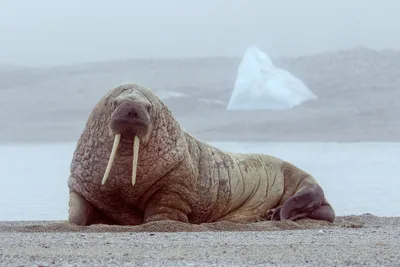 Walrus
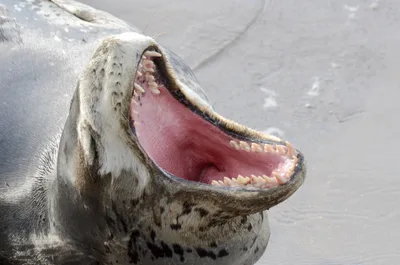 Leopard seal
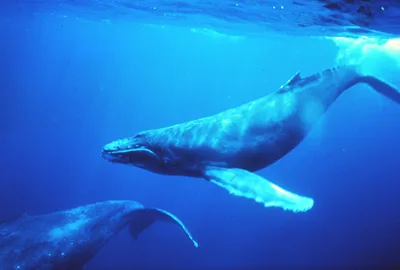 Humpback whale
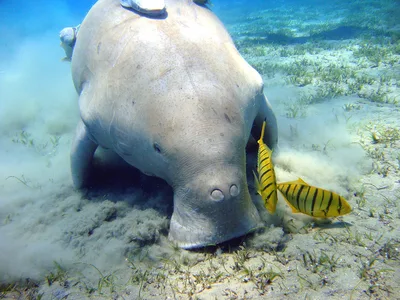 Dugong
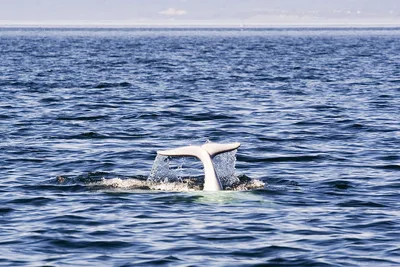 Beluga whale
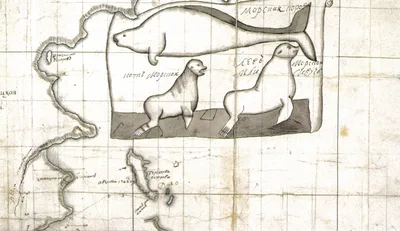 Steller's sea cow
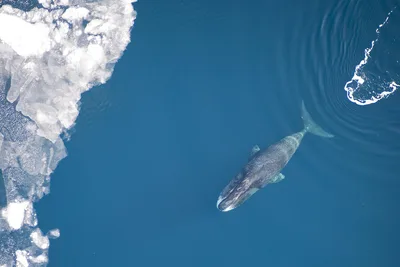 Bowhead whale
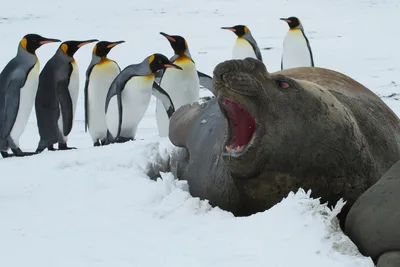 Southern elephant seal
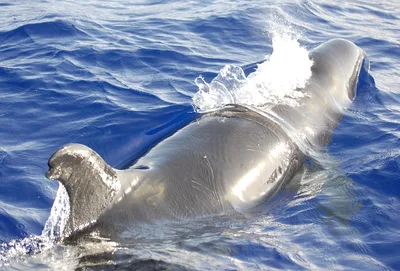 False killer whale
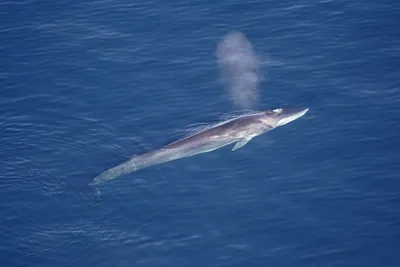 Fin whale
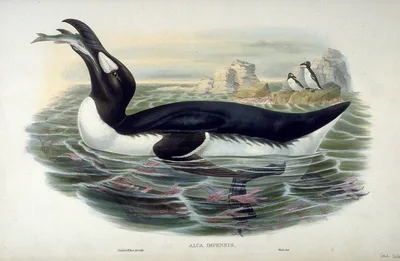 Great auk
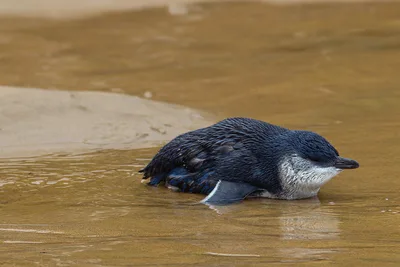 Little penguin
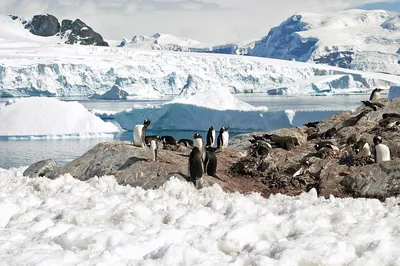 Gentoo penguin
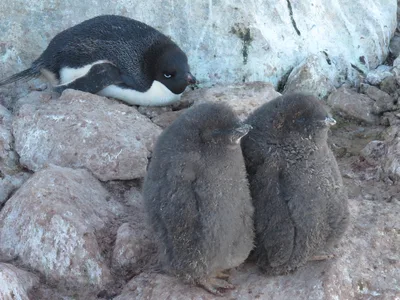 Adélie penguin
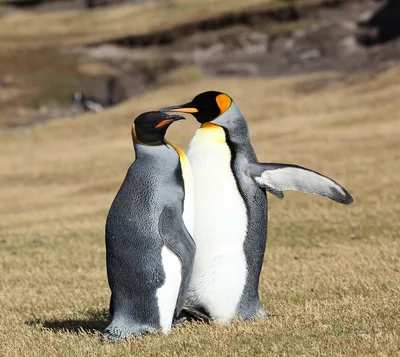 King penguin
Food web
Predators
- sharks
- orcas may
Ecological equivalents
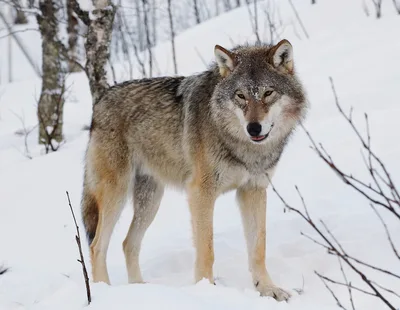
Related species on this site
Bottlenose Dolphin (same family), Dolphin (same family), Dusky Dolphin (same family), False killer whale (same family), Amazon River Dolphin (Pink Dolphin) (same order), Basilosaurus (same order), and more.
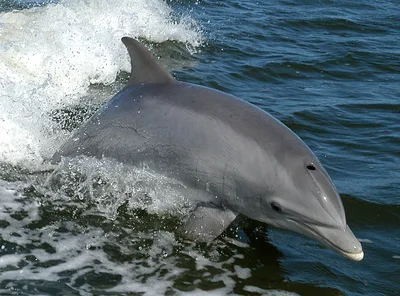
Mammals
Bottlenose Dolphin
Tursiops truncatus
The common bottlenose dolphin is a social marine mammal with a curved dorsal fin.
Living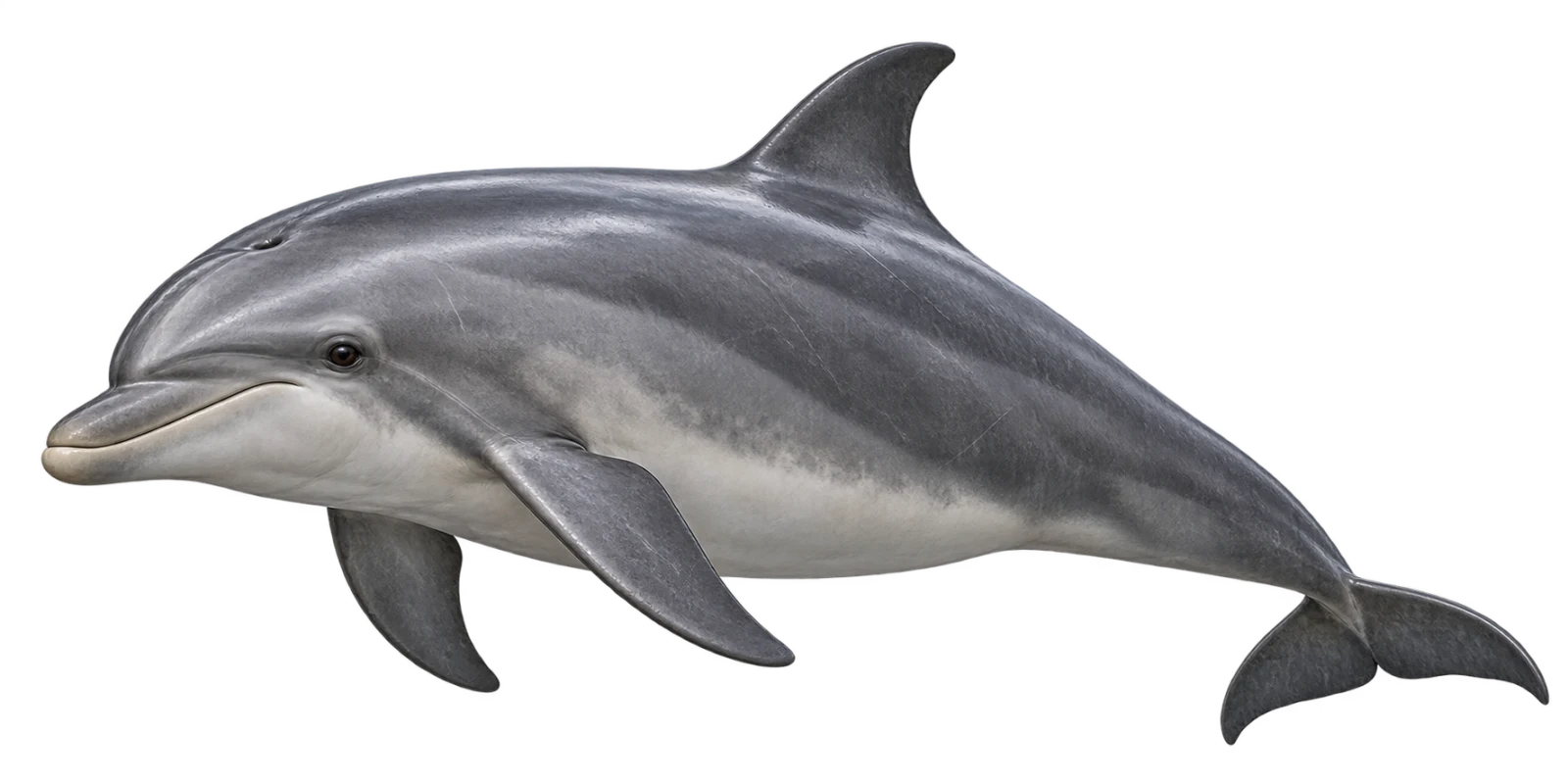
Mammals
Dolphin
Delphinidae
Classification and source reference
LivingAI illustration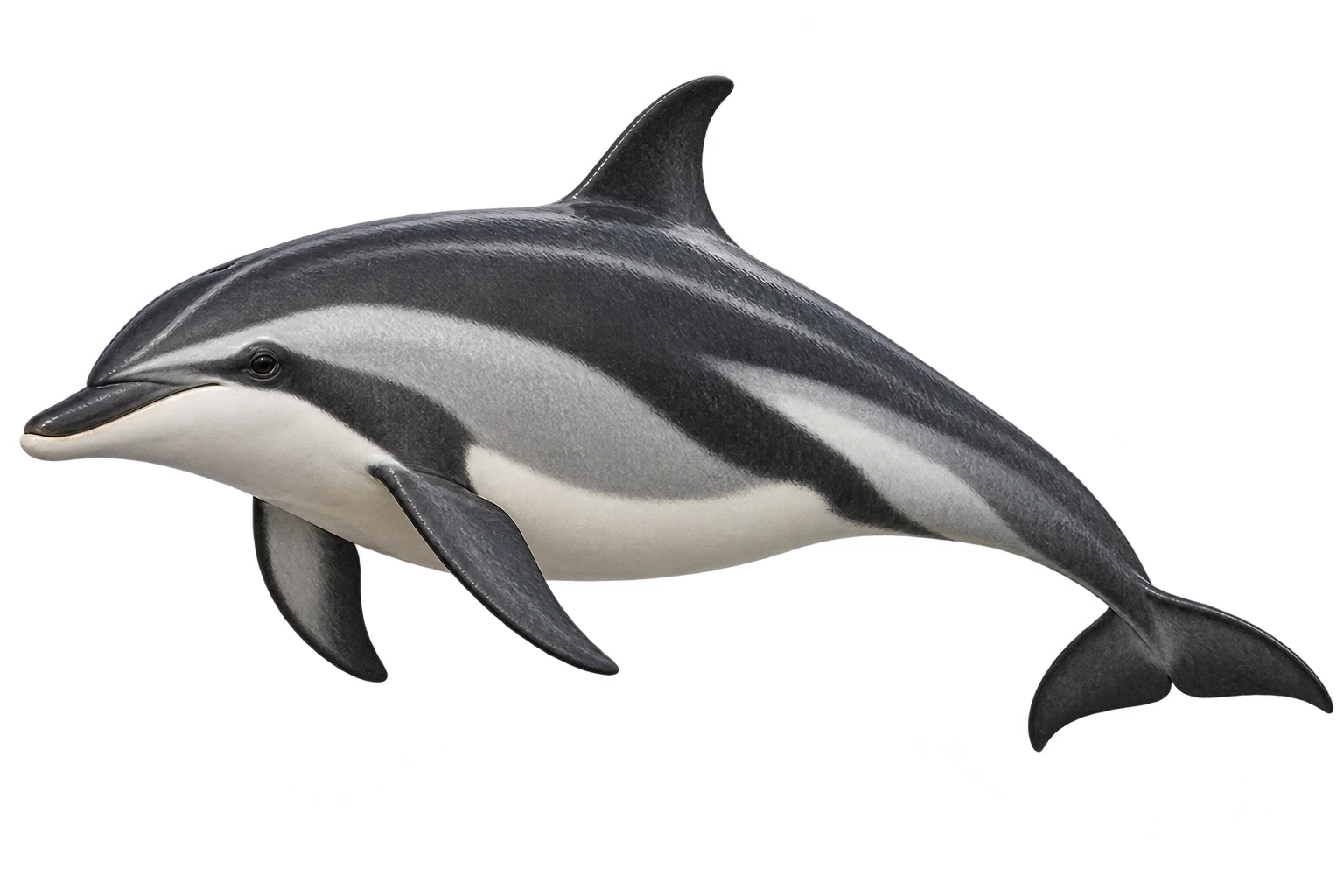
Mammals
Dusky Dolphin
Lagenorhynchus obscurus
Classification and source reference
LivingAI illustration- NT
Mammals
False killer whale
Pseudorca crassidens
The false killer whale is a large black dolphin of warm, deep seas that hunts tuna and squid in pods bound by lifelong ties.
Living 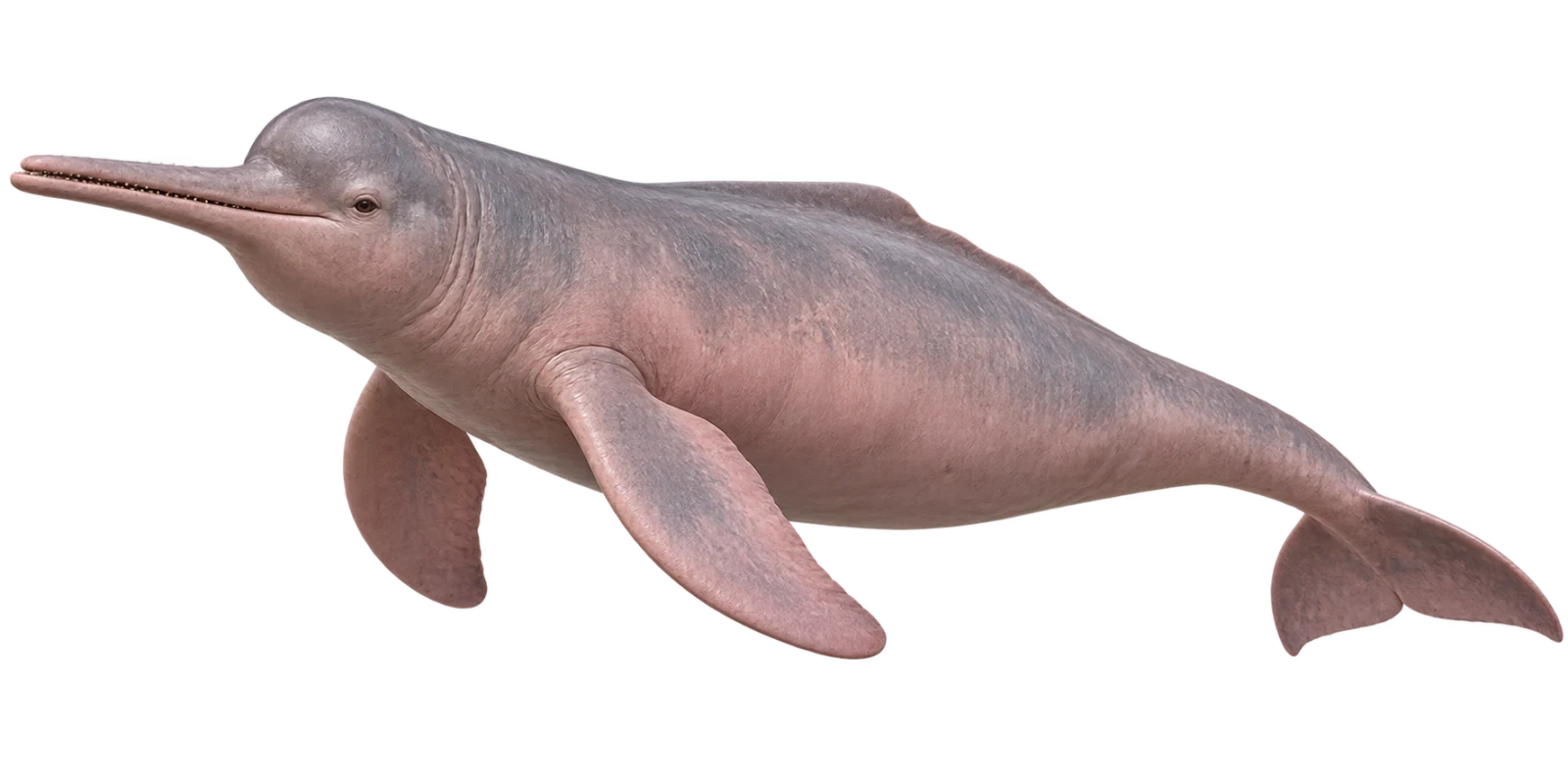
Mammals
Amazon River Dolphin (Pink Dolphin)
Inia geoffrensis
Classification and source reference
LivingAI illustration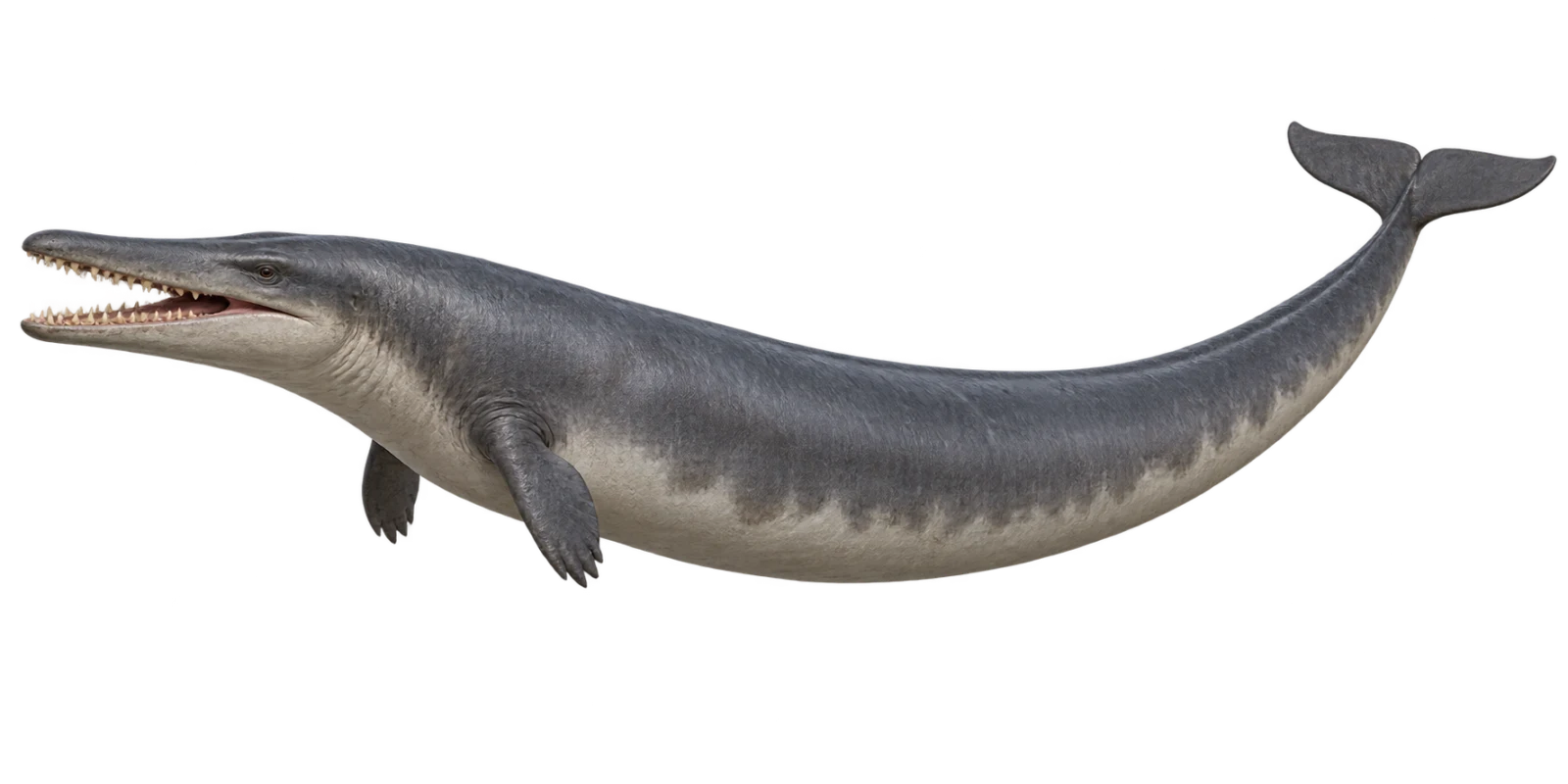
Mammals
Basilosaurus
Basilosaurus
Classification and source reference
ExtinctAI reconstruction