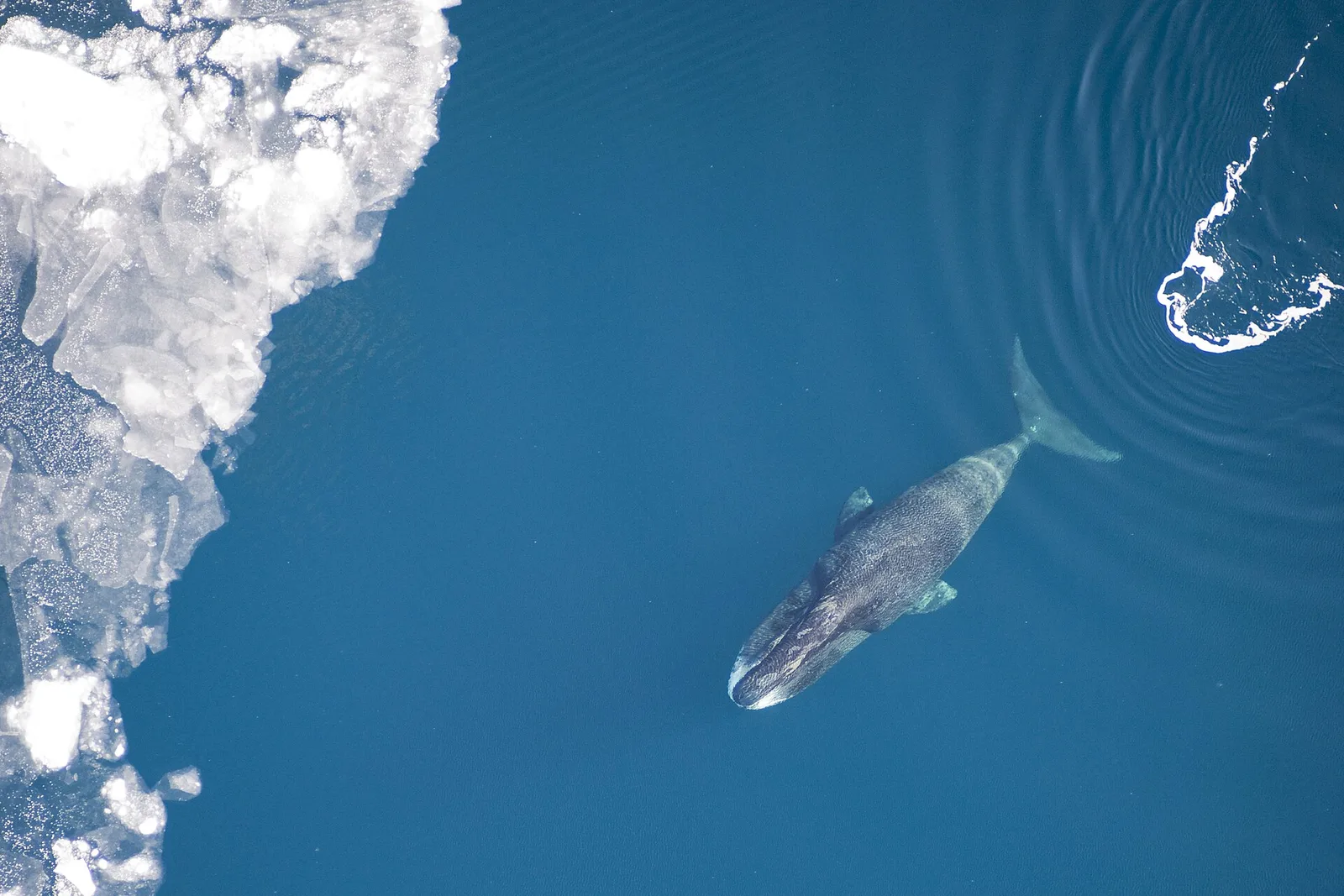
Bowhead whale
The Arctic whale that can live for two centuries
Balaena mysticetus
Also called Greenland right whale, Greenland whale, Arctic whale, Polar whale, Arctic right whale
Living individuals or members of this group exist today. This does not mean they are safe from extinction.
Meet the bowhead whale
The bowhead whale is a heavy Arctic baleen whale that breaks sea ice with its huge arched head. It is the longest-lived mammal known, with individuals aged at more than 200 years.
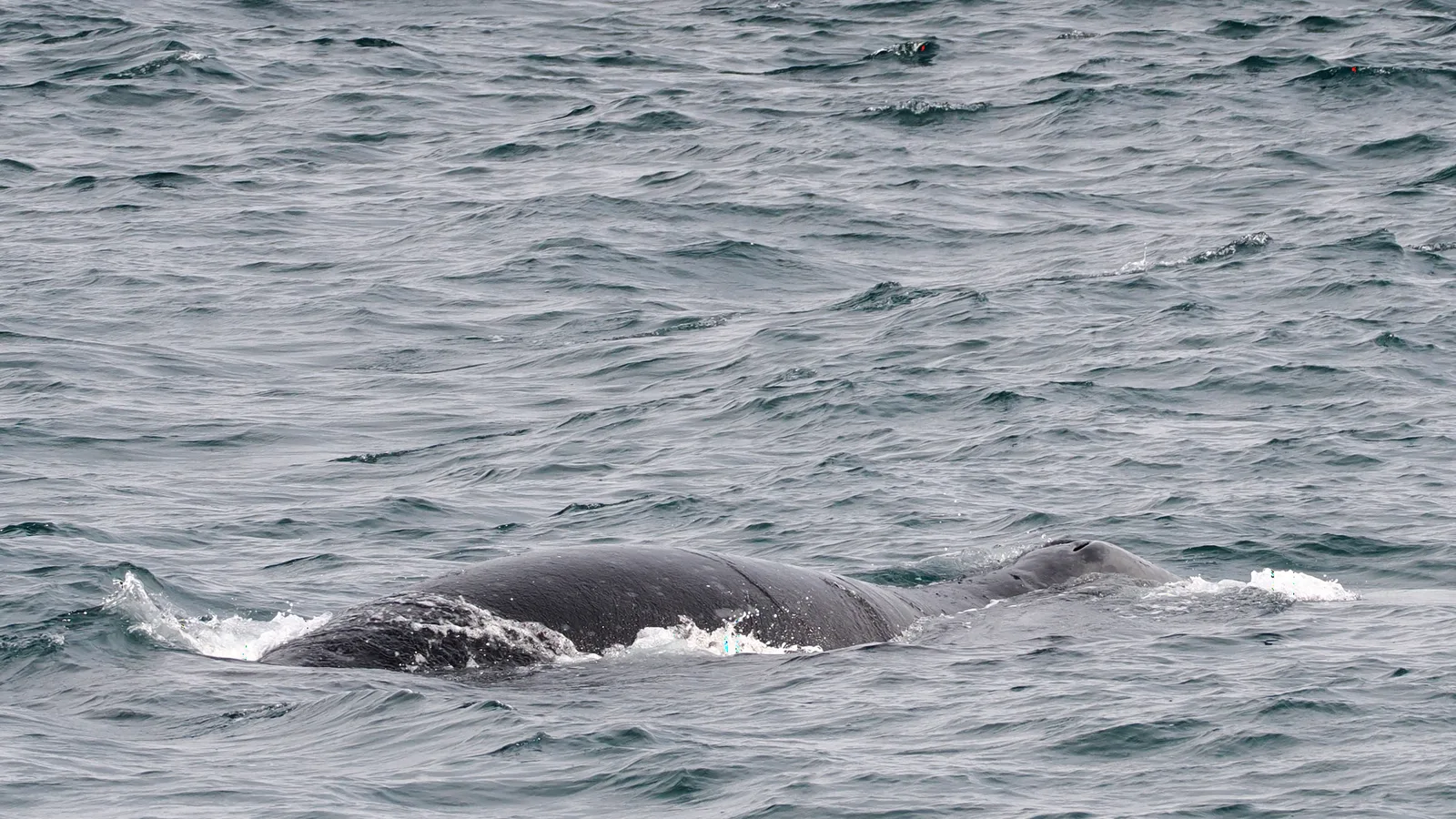
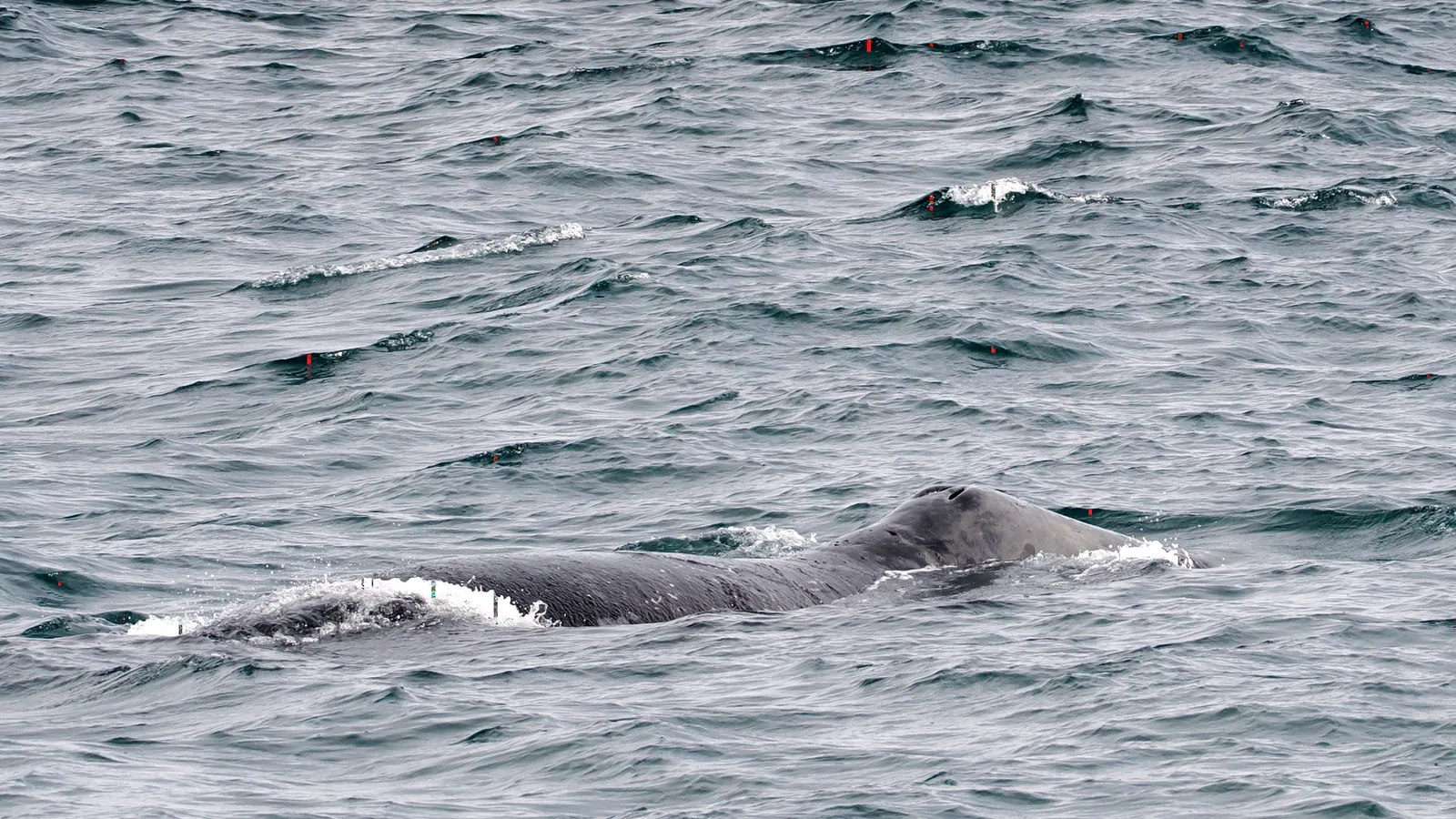
Images of the bowhead whale
Lifespan in the wild
60 to 70 years average age of whaling catches; individuals reach 200 years and one male was aged at 211
Weight
75 to 100 t
Length
14 to 18 m
Top speed
2 to 5 km/h
Fact file
Bowhead whale
- Location
- Arctic and subarctic seas
- Habitat
- Polar ice, Open ocean, Coast
- Diet
- Filter feeder
- Prey / food
- Copepods, krill, mysid shrimps, amphipods
- Predators
- Orca
- Lifestyle
- Solitary or small groups; migrates with the ice edge
- Group name
- Pod
- Name of young
- Calf
- Gestation
- 13 to 14 months
- Litter size
- 1 calf every 3 to 4 years
- Population
- About 10,000 to 25,000
- Biggest threat
- Loss of sea ice, shipping and orca attacks
- Distinctive feature
- Huge arched head with the longest baleen of any whale
- Colour
- Black with a white chin patch
- Skin type
- Smooth skin
Size
Next to a person
Measurements
Size and speed
- Length
- 14 to 18 m, up to 19 m females are larger; the largest reliable female was about 19 metres
- Length, male
- 14 to 16 m
- Length, female
- 16 to 18 m
- Weight
- 75 to 100 t
- Top speed
- 2 to 5 km/h, up to 10 km/h cruising speed; 10 km/h when fleeing
Typical adult ranges. Sources: Wikipedia, Animal Diversity Web.
Life cycle
Lifespan
- In the wild60 to 70, up to 200 years average age of whaling catches; individuals reach 200 years and one male was aged at 211
- 0200 years
The pale bar is the record. Source: Animal Diversity Web.
Appearance
Colour and coat
- Primary colours
- black
- Secondary colours
- white
- Skin type
- smooth skin
- Male and female
- Females are larger than males. Females usually reach 16 to 18 metres, while males average 14 to 16 metres.
Life cycle
Mating and family
- Mating system
- polygynandrous; several males compete for one or two females
- Social structure
- solitary or small groups of up to six
- Breeding
- one calf every 3 to 4 years
Bowheads mate in late winter and early spring, and males sing to attract females. Gestation lasts 13 to 14 months, and a single calf is born in spring, most often in May. The calf is about 4 to 4.5 metres at birth and is weaned between 9 and 15 months. Sexual maturity comes at about 15 to 25 years, and females may keep calving for 100 years. The species lives for more than 200 years.
Classification
Taxonomy
- Kingdom
- Animalia
- Phylum
- Chordata
- Class
- Mammalia
- Order
- Cetacea
- Family
- Balaenidae
- Genus
- Balaena
- Species
- Balaena mysticetus
Conservation
Red List status
- LC
- NT
- VU
- EN
- CR
- EW
- EX
Least Concern on the IUCN Red List
Range
Recorded in 4 countries
Habitat layer: tundra, mangrove.
Countries from 159 wild records on GBIF (iNaturalist research grade), filtered and checked by hand. Country shapes: Natural Earth. Habitat: RESOLVE Ecoregions 2017, CC BY 4.0. Basemap: Natural Earth.
Habitats
Three things to know
- 1
Bowhead whales can live for more than 200 years, longer than any other mammal.
- 2
The bowhead has the largest mouth of any animal and baleen plates up to 5.2 metres long.
- 3
A bowhead breaks breathing holes through sea ice 20 centimetres thick with its head.
Did you know
Seven more facts
- 1
Bowheads sang 184 different songs near Greenland between 2010 and 2014, from a population of about 300.
- 2
A newborn calf is about 4 to 4.5 metres long and can swim within 30 minutes of birth.
- 3
The blubber layer is 40 centimetres or more thick, the thickest of any whale.
- 4
Bowheads rub on rocks to scrape away old skin, and a moulting site was found off Baffin Island in 2012.
- 5
A bowhead can strain about 50,000 copepods a minute through its baleen.
- 6
Belugas often swim with bowheads, which open breathing holes in the ice for them.
- 7
GBIF holds records of the species from 18 countries, including strays in Japan and Massachusetts.
Field notes
How it looks and acts
Field notes
Distinguishing features
- A huge, strongly arched head that makes up nearly 40% of the body.
- A bowed lower jaw that wraps around the upper jaw in a U shape.
- No dorsal fin on a smooth, broad back.
- Black skin with a white patch on the chin.
- Baleen plates up to 5.2 metres long.
- A body of 14 to 18 metres and 75 to 100 tonnes.
Field notes
Unique adaptations
- A thick, reinforced skull lets the whale break through ice of 20 centimetres to breathe.
- Blubber of 40 centimetres or more insulates the body in water near freezing.
- Very long baleen strains tiny copepods and krill from cold water in vast numbers.
- A blood-rich organ on the palate is thought to cool the whale during hard swimming.
- Genes for DNA repair, such as ERCC1 and PCNA, are linked to its long life and low cancer rate.
Field notes
Interesting behaviours
- Travels alone or in groups of up to six, and gathers in larger numbers to feed.
- Migrates with the ice edge, north in spring and south in autumn.
- Feeds in V formations of up to 14 whales moving at one speed.
- Breaches and slaps its flukes at the surface.
- Dives for 9 to 18 minutes and can stay under for up to an hour.
Field notes
Temperament
- Slow and unhurried, cruising at about 2 to 5 kilometres per hour.
- Shy of orcas, retreating under ice or into shallow water.
- Curious enough to approach boats and people in some bays off Baffin Island.
- Able to strike back at an orca with the tail when cornered.
Field notes
Communication
- Low-frequency calls below 1,000 hertz keep whales in touch on migration.
- Males sing long, complex songs in the breeding season, and the songs change each year.
- Loud calls during migration may help the whales navigate under ice.
- Breaching and fluke slapping probably carry signals to whales nearby.
Ecology
Ecological role
The bowhead is the main large consumer of zooplankton in the Arctic seas.
- Eats about 1.8 tonnes of copepods and krill a day, which links plankton to the top of the Arctic food web.
- Opens breathing holes in the ice that belugas and probably other animals use.
- Carries barnacles that use the whale as transport and a route to fresh food.
- Serves as prey for orcas, which now reach the far north more often as the ice shrinks.
Stories
Myths and legends
- In Inuit tradition, the whale offers itself to hunters who show respect and waste nothing.
- In Inuit tradition, a killed whale was given fresh water and food so its spirit could go home and be reborn.
- In Inupiat tradition, carved whale amulets flattered the whale and called it to the hunters.
- In Inuit tradition, the qulliq lamp fuelled by whale oil stands for survival and endurance.
People
Relationship with humans
People
Living alongside us
Arctic peoples have hunted the bowhead for food, fuel and tools for thousands of years. Commercial whalers from Europe and America killed tens of thousands from the 16th century until a 1966 moratorium. Today Inuit, Inupiat and other native hunters take a small quota each year under co-management with government agencies. Whale watching has begun in the Sea of Okhotsk. The whale can collide with vessels or be caught in nets, but it poses no threat to people.
- The bowhead has no teeth and feeds only on plankton, so it cannot bite a person.
- It has collided with sailing vessels on rare occasions.
- It approaches boats and people calmly in some bays off Baffin Island.
People
Status, uses and products
- Domestication
- Wild
- As a pet
- Not suitable. A bowhead weighs up to 100 tonnes, needs Arctic sea ice and eats about 1.8 tonnes of plankton a day. No aquarium can hold one, and the species is protected under CITES Appendix I.
- Uses
- subsistence huntingwhale watching
- Products
- meatblubberbaleen
The full account
About the bowhead whale
The bowhead whale, Balaena mysticetus, is a large baleen whale that spends its whole life in Arctic and subarctic seas. It takes its name from the huge, arched skull, which it uses to smash breathing holes through sea ice. Its mouth is the largest of any animal, and it holds the longest baleen plates of any whale. Scientists rank it as the longest-lived mammal, with individuals that pass 200 years.
An adult measures 14 to 18 metres long and weighs 75 to 100 tonnes. The whale feeds by swimming slowly with its mouth open, straining copepods and krill from the water. Commercial whalers hunted it from the 16th century until numbers collapsed, and a 1966 moratorium ended the hunt. The IUCN lists the species as Least Concern worldwide, but three of its five stocks remain endangered. Inuit and other Arctic peoples still take a small, regulated number each year.
Name and taxonomy
Carl Linnaeus described the species in 1758 in the tenth edition of Systema Naturae. At the time, naturalists lumped the bowhead with the right whales of the Atlantic, Pacific and Southern Oceans as one species. John Edward Gray proposed a separate genus for the bowhead in 1821, and Balaena now holds this one species alone. Debate over how many species the family Balaenidae held ran on for about 180 years. Genetic studies in the 2000s settled it: the three right whales form their own line in the genus Eubalaena.
The common name describes the bow-shaped curve of the mouth, where the lower jaw wraps around the upper jaw in a U shape. Older names include Greenland right whale, Greenland whale, Arctic whale and polar whale. GBIF lists vernacular names in many languages, among them arviq in Inuktitut and baleine boreale in French.
Evolution and relatives
The bowhead belongs to the baleen whales, the group that strains food through keratin plates instead of teeth. Its closest living relatives are the three right whales, which share the same family, Balaenidae. The fossil record of the family goes back to Morenocetus, found in South American rocks about 23 million years old. Balaena fossils from the Pleistocene have turned up in Italy and North Carolina, far south of the present range. Bones once credited to a mystery Swedenborg whale proved, on DNA testing, to be bowhead bones.
A whale believed to be a cross between a bowhead and a right whale has been found, which suggests the two lines can still interbreed. DNA from living whales and from old baleen shows that Arctic bowheads lost much genetic diversity over the past 500 years. Whaling and the cooling of the Little Ice Age probably shrank the summer habitats that once let Atlantic and Pacific whales mix.
Appearance
The bowhead is a rotund whale with a smooth back, no dorsal fin, broad flippers and wide, triangular flukes. Adults measure 14 to 18 metres, and females, at 16 to 18 m, run longer than males. Males average 14 to 16 metres. Weight ranges from 75 to 100 tonnes, which makes this the second heaviest whale after the blue whale. The largest reliable female measured about 19 metres.
The head takes up nearly 40% of the body length, the largest share of any cetacean. Between 230 and 360 baleen plates hang from each side of the upper jaw, and the longest reach 2.97 to 5.2 metres. The skin is black, with white patches on the chin, around the eyes and near the tail that spread with age. A blubber layer of 40 centimetres or more wraps the body against the cold. The twin blowholes send up a V-shaped blow that can rise 6.1 m.
Habitat and range
The bowhead is the only baleen whale that stays in Arctic and subarctic water all year. It lives among the pack ice and rarely swims south of 45 degrees north. Five stocks are recognised: Bering-Chukchi-Beaufort, Hudson Bay-Foxe Basin, Baffin Bay-Davis Strait, Sea of Okhotsk and Svalbard-Barents Sea. Genetic and tagging data now suggest that the two eastern Canadian stocks are one population.
The whales follow the ice edge, moving north as it melts in spring and south as it forms in autumn. The Alaskan population winters in the south-west Bering Sea and moves into the Chukchi and Beaufort Seas as leads open. Satellite tags on whales off West Greenland showed stays of 3 to 6 weeks at one site between offshore journeys of 1 to 2 weeks. In summer the whales enter bays, straits and estuaries.
The range once reached farther south, and bowheads were common off Labrador and Newfoundland into the 17th century. Strays have reached Japan, the Gulf of St Lawrence and Massachusetts. GBIF holds records from 18 countries, including a stray calf caught in Osaka Bay in 1969.
Diet and feeding
The bowhead is a filter feeder. It swims forward with its mouth open, and water streams through the fine bristles of the baleen. Copepods, krill, mysid shrimps and amphipods stick to the bristles, and the tongue pushes them back to be swallowed. The large upturned lower lip supports the plates so that water pressure does not bend or break them. Stomach studies have found more than 60 prey species, but copepods of the genus Calanus and krill dominate.
An adult eats about 1.8 tonnes of food a day. A whale can strain roughly 50,000 copepods a minute. Bowheads skim the surface, feed in mid-water and also feed at the sea floor. Feeding dives typically last 5 to 15 minutes. Groups of up to 14 whales sometimes feed together in a V formation, moving at one speed. Most feeding takes place on the summer and autumn grounds, and the whales live off blubber during long migrations.
Behaviour and social life
The bowhead is not a social animal. It usually travels alone or in groups of up to six, though larger gatherings form on feeding grounds and during migration. Migrating whales sort themselves by age and size, with subadults, mid-sized adults and large adults in separate waves. Mothers and calves often lead the spring movement. The sexes also use different areas: in Foxe Basin, mother and calf pairs dominate, while adult males use north-western Hudson Bay.
The whale swims slowly, at about 2 to 5 kilometres per hour, and can reach 10 km/h when it flees. During feeding the pace rises to 4 to 9 km/h. Most dives last 9 to 18 minutes, but a bowhead can stay under for up to an hour. It is not a deep diver, and 150 metres is a typical limit, though one tagged whale reached 352 m.
Bowheads break through ice of 20 centimetres from below with their heads, and Inuit hunters report ice of 60 cm being broken. Belugas often travel with bowheads, probably because the larger whale opens breathing holes that they can use. Bowheads rub on rocks to scrape off dead skin, and a moulting site was found off Baffin Island in 2012. They also breach and slap their flukes at the surface.
Communication and senses
Bowheads are among the most vocal of the baleen whales. They use low-frequency sounds below 1,000 hertz to keep in contact while travelling, feeding and socialising. Loud calls peak during migration, when they may help the whales find their way under the ice. In the breeding season males sing long, complex songs that change from year to year. A population of about 300 whales near Greenland produced 184 different songs between 2010 and 2014.
Like other baleen whales, the bowhead probably relies on hearing more than sight in dark, ice-covered water. Its eyes sit above the corners of the mouth, low on the huge head. A ridge of blood-rich tissue on the palate is thought to shed heat when the whale opens its mouth in cold water. Two male brains weighed 2.072 and 2.280 kilograms, and both showed a strongly folded surface.
Reproduction and life cycle
Mating takes place in late winter and early spring, and most conceptions are thought to occur in March when song activity peaks. Mating groups often consist of one or two females with several males, and sperm competition is believed to decide paternity. Gestation lasts 13 to 14 months, and a female calves once every 3 to 4 years. Most calves arrive in May, during the northward migration.
A newborn measures about 4 to 4.5 metres and weighs roughly 1,000 kilograms. It is born with a thick layer of blubber and can swim on its own within 30 minutes. The calf grows to about 8.2 metres in its first year on its mother's milk. Weaning takes place between 9 and 15 months.
Sexual maturity comes late, at about 15 to 25 years, and the body stops growing at 50 to 60 years. Females may keep calving for 100 years, and the oldest pregnant female found was estimated at 121 years old. The bowhead is considered the longest-lived mammal, and one male was aged at 211 years. Genes such as ERCC1 and PCNA, which repair DNA, are thought to explain the whale's resistance to cancer and ageing.
Predators and threats
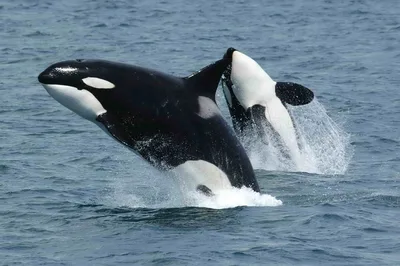
The orca is the only known natural predator. Bowheads seek ice and shallow water when orcas appear, and they can strike an attacker with the tip of the tail. In one 1995 study, a third of the Davis Strait stock carried scars from orca attacks. As sea ice shrinks, orcas reach the far north more often, so attacks are expected to rise. No shark attacks on bowheads have been recorded.
Commercial whaling was the main cause of decline, and it is over. Today the threats come from a warming Arctic: more shipping through open water, ship strikes and noise from drilling. Whales have been caught in fishing nets and have collided with vessels on rare occasions. Loss of ice also removes the shelter the whales use to hide from orcas.
Population and conservation
Before commercial whaling, about 50,000 bowheads swam the northern seas. The estimate today is 10,000 to 25,000, and one census range reaches 43,000. The Western Arctic stock recovered after commercial hunting stopped in the early 1900s, and it grew 3.7% a year from 1978 to 2011. A 2011 count put it at 16,820, and a 2019 survey found 12,505. The surveyors put the gap down to unusual conditions in 2019 rather than a real decline. The eastern Canada and West Greenland whales number about 6,000 or more, and their numbers are rising.
The Sea of Okhotsk stock probably holds no more than 400 whales. The Svalbard stock, once the largest, may now number only in the tens. The IUCN rates the species as Least Concern worldwide. Regionally it lists the Svalbard whales as Critically Endangered and the Okhotsk and Baffin Bay-Davis Strait whales as Endangered. The Hudson Bay-Foxe Basin stock, counted at 1,026 in 2005, is Vulnerable. CITES Appendix I bans commercial trade, and the United States lists the whale as endangered. Isabella Bay on Baffin Island became the first wildlife sanctuary in the world designed for bowheads.
Relationship with humans
Arctic peoples have eaten bowhead for thousands of years, and Paleo-Eskimo sites show use from perhaps 4000 BC. The whale gave meat, blubber for lamp fuel and baleen for tools. Basque whalers began the commercial hunt in the 16th century in the Strait of Belle Isle. The first whaling expedition sailed to Spitsbergen in 1611, and the whales there were nearly gone by mid-century. A whaler from Sag Harbor took the first Bering Strait bowheads in 1848, and about 18,600 died there by 1914.
A 1966 moratorium ended commercial hunting. Native hunters in Alaska, Canada, Greenland and Russia still take small numbers under quota. The IWC quota for the Western Arctic stock has stood at 67 strikes a year since 1998, about 0.5% of the stock. In 2024 hunters in Aklavik were allowed one whale to share meat among Inuvialuit and Gwich'in communities. Whale watching on the Shantar Islands in the Sea of Okhotsk now brings visitors to see the whales from shore.
In culture and myth
The bowhead sits at the centre of Inuit and Inupiat life in the Arctic. Inuit tradition holds that the whale offers itself to hunters who treat it with respect and waste nothing. One Inuit story says the Creator loved the great whales best but gave them to people in need, never to be killed for nothing. A hunted whale was given fresh water and a meal so that its spirit could travel home and return in a new body. Carved whale amulets were made to flatter the whale and call it to the hunters.
The qulliq, a stone lamp that burns whale or seal oil, remains a symbol of Inuit endurance. Inuit have a word for a bowhead that kills an orca with its tail, which shows the behaviour is old knowledge. The Alaska Eskimo Whaling Commission co-manages the hunt with NOAA, so tradition and science set the quota together.
A sentence with a dotted underline is inferred: it describes the group the animal belongs to, or is a reading of the sources, rather than a measured or reported fact about this species.
Questions
Bowhead whale questions, answered
How long do bowhead whales live?
Bowheads are considered the longest-lived mammals. One male was aged at 211 years, and others at 135 to 172. A genetic study estimated a natural maximum of 268 years.
How big is a bowhead whale?
An adult measures 14 to 18 metres and weighs 75 to 100 tonnes. Females are larger than males, and the largest reliable female measured about 19 metres.
What do bowhead whales eat?
Bowheads eat zooplankton: copepods, krill, mysid shrimps and amphipods. An adult takes about 1.8 tonnes of food a day by straining water through its baleen.
Where do bowhead whales live?
They live only in Arctic and subarctic seas, among the pack ice. Five stocks range from the Bering and Beaufort Seas to Hudson Bay, Baffin Bay, the Sea of Okhotsk and the Svalbard-Barents Sea.
Are bowhead whales endangered?
The IUCN lists the species as Least Concern worldwide. The Svalbard stock is Critically Endangered, the Okhotsk and Baffin Bay-Davis Strait stocks are Endangered, and the Hudson Bay-Foxe Basin stock is Vulnerable.
How many bowhead whales are left?
Estimates range from 10,000 to 25,000, with an upper figure of 43,000. About 50,000 lived before commercial whaling. The Western Arctic stock alone numbers around 12,505 to 16,820.
Can a bowhead whale break ice?
Yes. A bowhead breaks ice of about 20 centimetres from below with its head, and Inuit hunters report it breaking ice up to 60 cm thick.
How fast can a bowhead whale swim?
A bowhead normally cruises at 2 to 5 kilometres per hour. It speeds up to 4 to 9 km/h while feeding and reaches about 10 km/h when it flees.
Why is it called a bowhead?
The name comes from the bow-shaped curve of the mouth. The lower jaw wraps around the arched upper jaw in a U shape.
How long can a bowhead whale hold its breath?
A typical dive lasts 9 to 18 minutes, and the longest last about an hour. It normally dives to about 150 metres, and one tagged whale reached 352 m.
Do bowhead whales sing?
Yes. Males sing long, varied songs in the breeding season, and a population of about 300 near Greenland produced 184 songs in four years. The whales also use low calls below 1,000 hertz on migration.
What eats bowhead whales?
Orcas are the only known natural predators. Bowheads hide under ice or in shallow water, and some have killed orcas with a blow of the tail.
How long is a bowhead whale pregnant?
Gestation lasts 13 to 14 months. A female gives birth to one calf every 3 to 4 years, usually in spring.
Are bowhead whales still hunted?
Commercial hunting ended with a 1966 moratorium. Native hunters in Alaska, Canada, Greenland and Russia take small numbers under quota, about 0.5% of the Western Arctic stock a year.
How thick is bowhead whale blubber?
The blubber is 40 centimetres or more thick, the thickest of any whale. It keeps the whale warm in Arctic water and stores energy for long migrations.
Food web
Prey and food
- copepods
- krill
- mysid shrimps
- amphipods
Food web
Predators
 Orca
Ecological equivalents
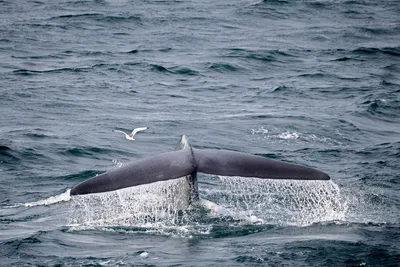
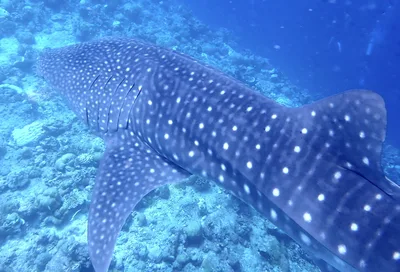
Related species on this site
Amazon River Dolphin (Pink Dolphin) (same order), Basilosaurus (same order), Beluga whale (same order), Bottlenose Dolphin (same order), Dolphin (same order), Dusky Dolphin (same order), and more.
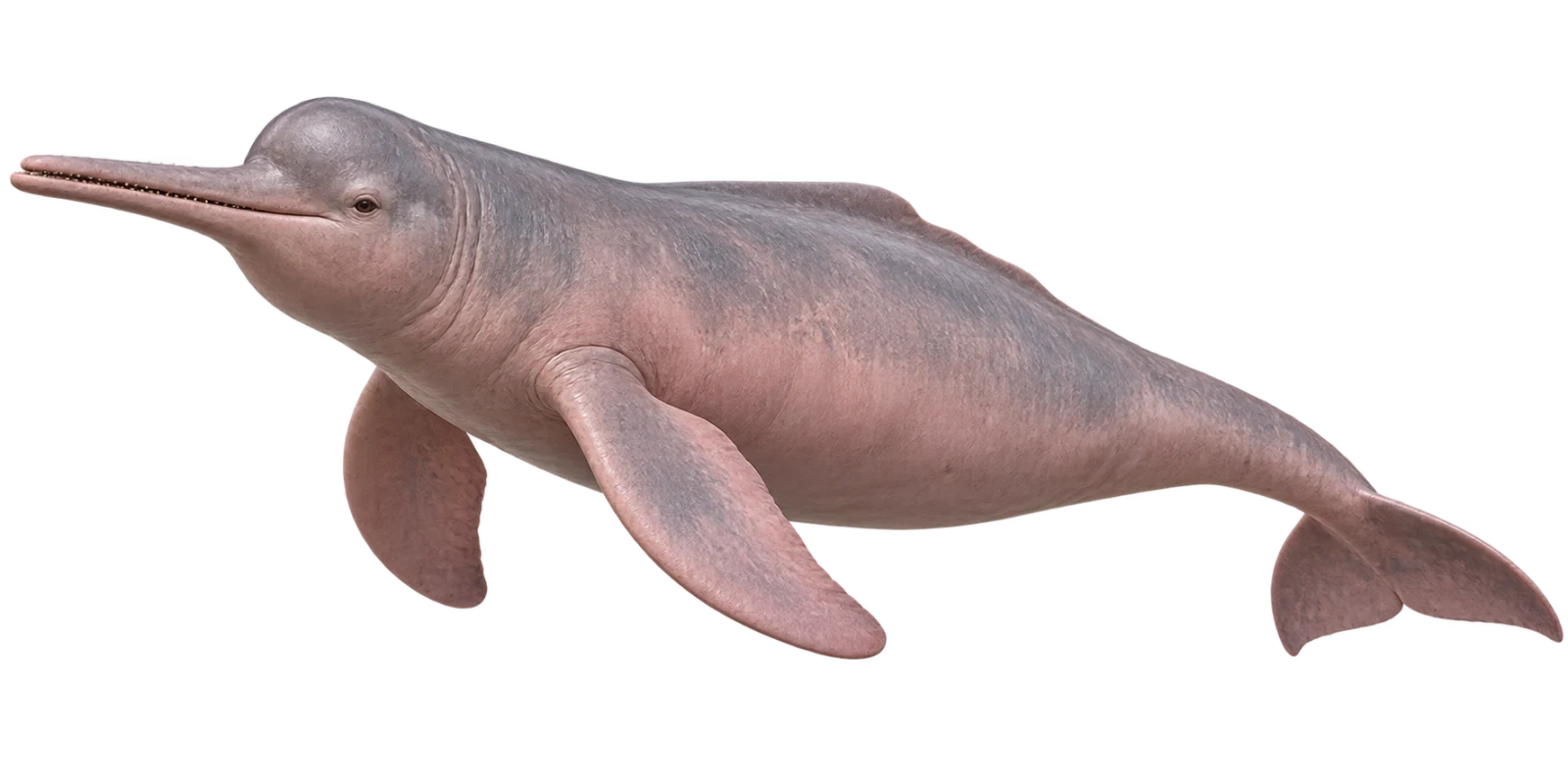
Mammals
Amazon River Dolphin (Pink Dolphin)
Inia geoffrensis
Classification and source reference
LivingAI illustration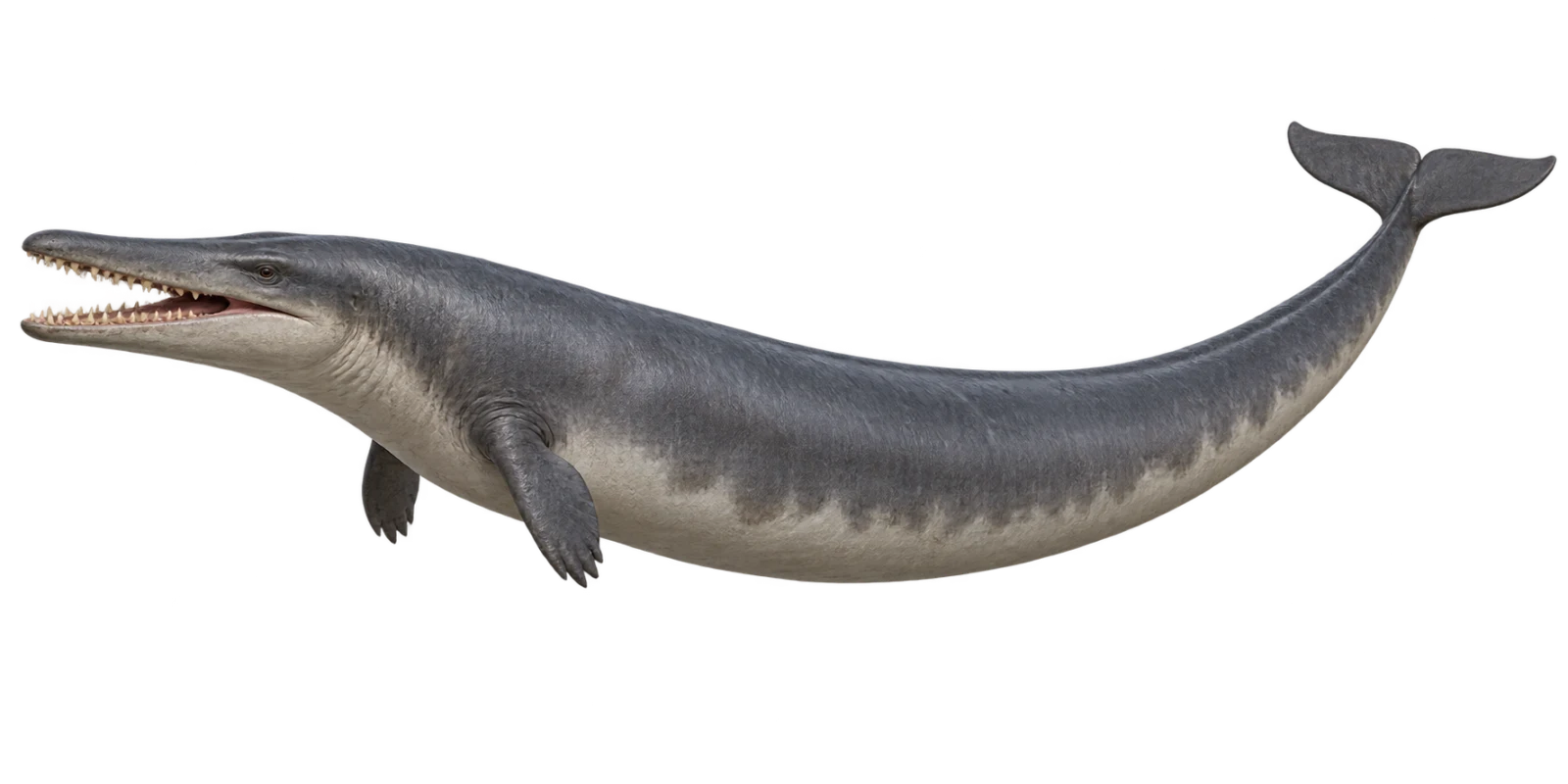
Mammals
Basilosaurus
Basilosaurus
Classification and source reference
ExtinctAI reconstruction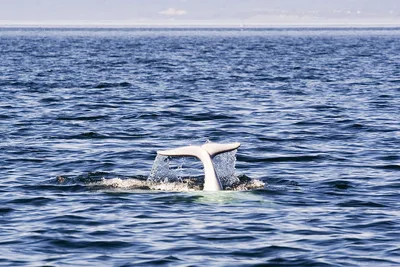 LC
Mammals
Beluga whale
Delphinapterus leucas
The beluga whale is a white toothed whale of Arctic and sub-Arctic seas.
Living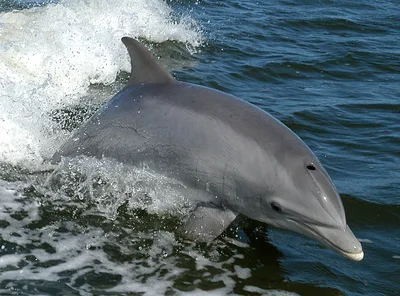
Mammals
Bottlenose Dolphin
Tursiops truncatus
The common bottlenose dolphin is a social marine mammal with a curved dorsal fin.
Living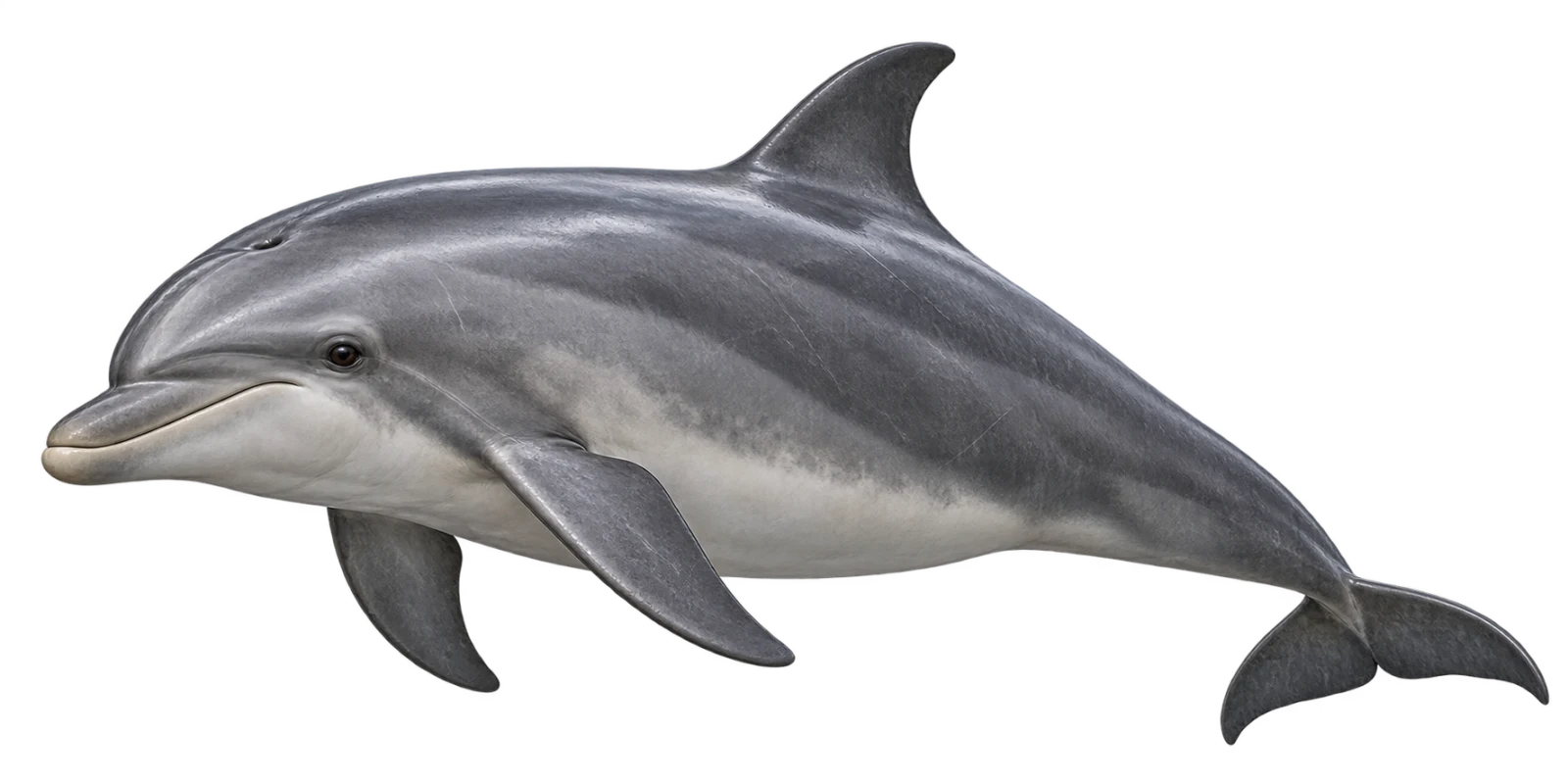
Mammals
Dolphin
Delphinidae
Classification and source reference
LivingAI illustration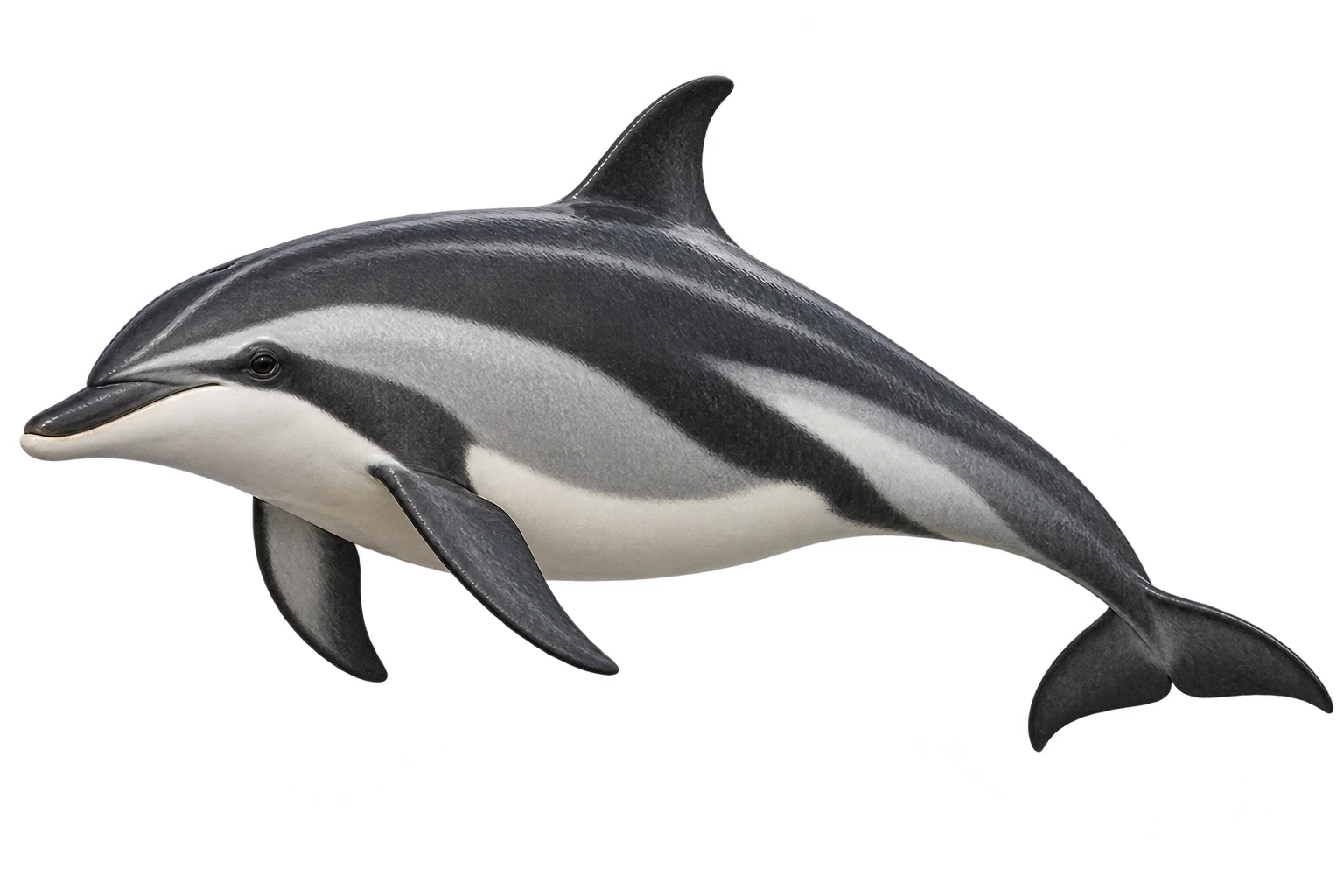
Mammals
Dusky Dolphin
Lagenorhynchus obscurus
Classification and source reference
LivingAI illustration