Living individuals or members of this group exist today. This does not mean they are safe from extinction.
Meet the blue whale
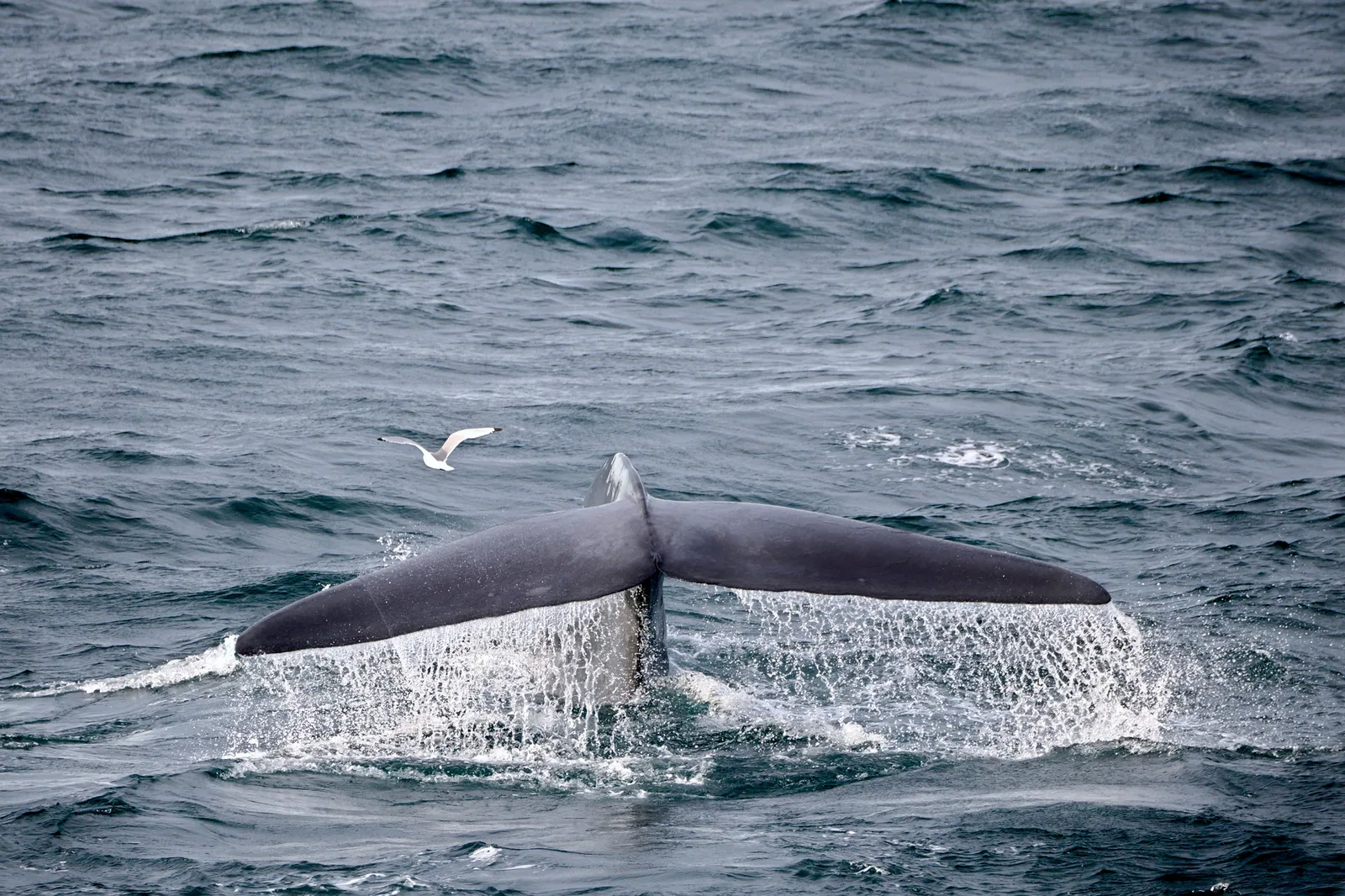
The blue whale is the largest animal that has ever lived. It feeds almost entirely on krill, taking in tonnes of water and prey with each lunge.
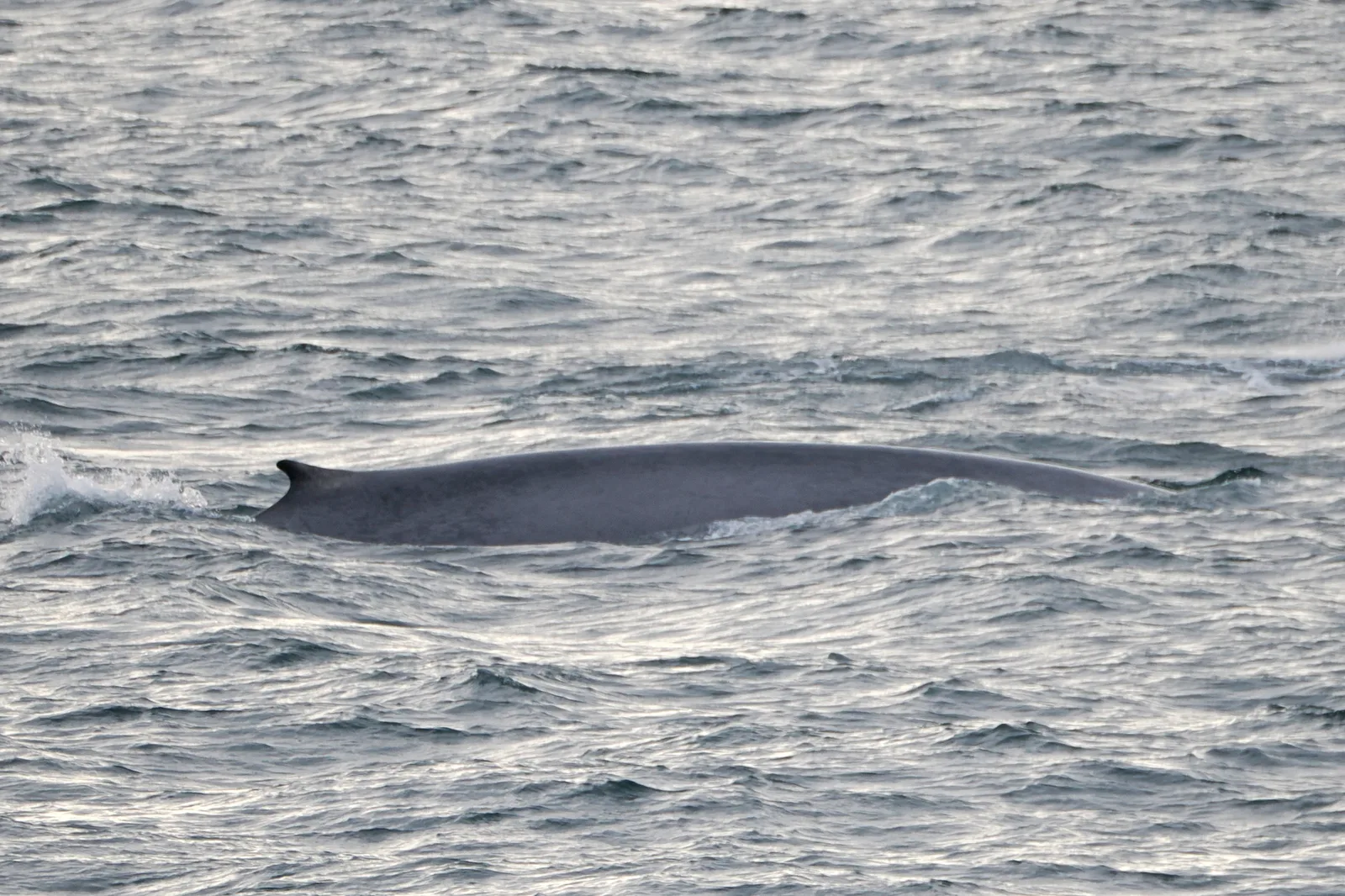
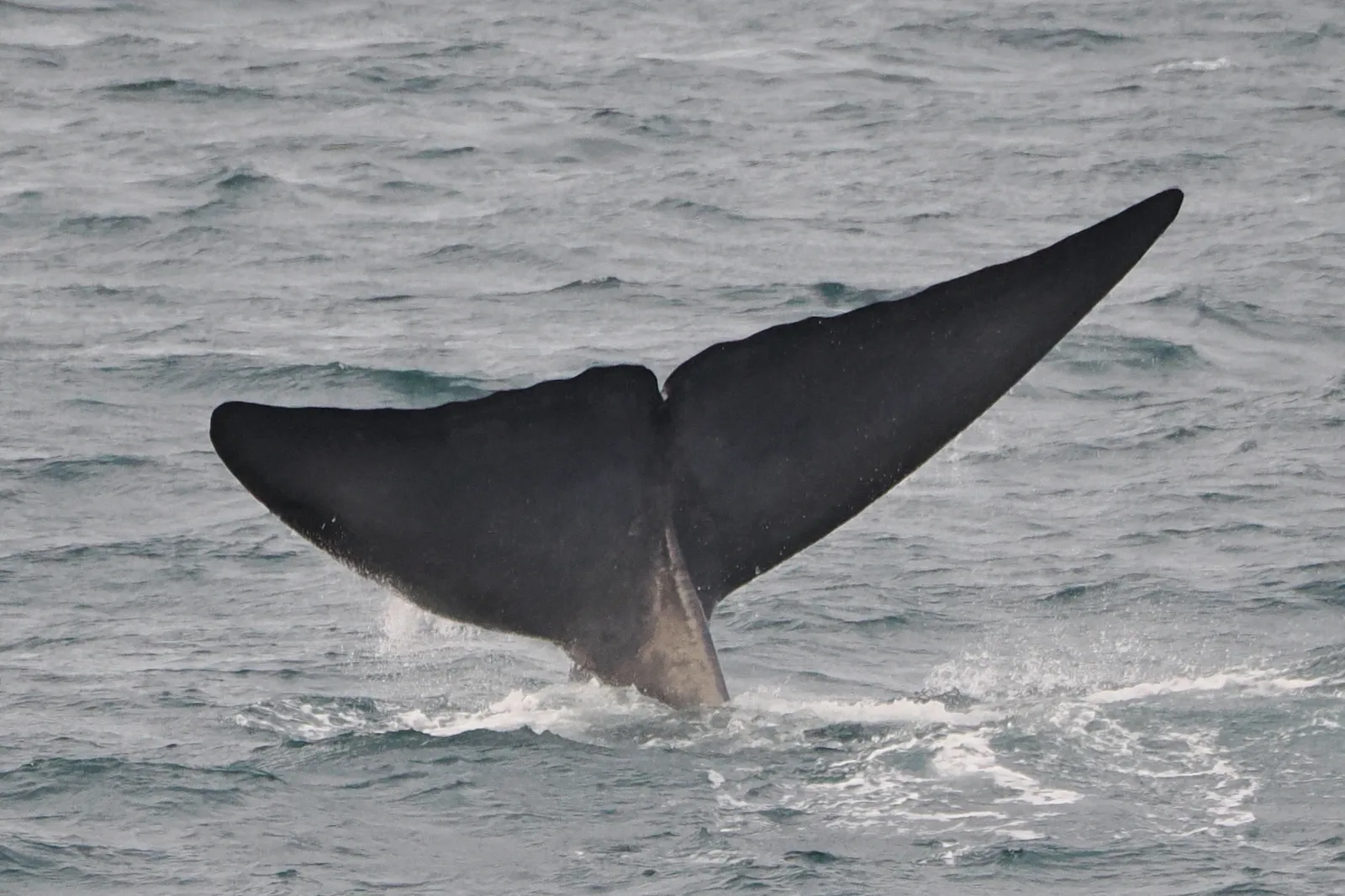
Images of the blue whale
Lifespan in the wild
80 to 90 years
Weight
72 to 135 t
Length
21 to 27 m
Top speed
2 to 8 km/h
Fact file
Blue whale
- Location
- All oceans except the Arctic
- Habitat
- Open ocean
- Diet
- Filter feeder
- Prey / food
- Krill
- Predators
- Orcas attack calves
- Lifestyle
- Active at any hour
- Group name
- Pod
- Name of young
- Calf
- Gestation
- About 11 months
- Litter size
- 1 calf
- Population
- 10,000 to 25,000
- Biggest threat
- Ship strikes and past whaling
- Distinctive feature
- A mottled blue-grey body and a tiny dorsal fin
- Colour
- Blue-grey
- Skin type
- Smooth skin
Size
Next to a person
Measurements
Size and speed
- Length
- 21 to 27 m, up to 29.9 m
- Weight
- 72 to 135 t, up to 190 t
- Top speed
- 2 to 8 km/h, up to 27 km/h swimming
Typical adult ranges. Source: Wikipedia.
Life cycle
Lifespan
- In the wild80 to 90 years
- 090 years
Source: Animal Diversity Web.
Appearance
Colour and coat
- Primary colours
- blue-grey
- Secondary colours
- whiteyellowish
- Skin type
- smooth skin
- Male and female
- Slight. Females are larger than males, but the sexes look alike.
Life cycle
Mating and family
- Mating system
- polygynous, males trail and compete for females
- Social structure
- solitary or pairs
- Breeding
- one calf every two to three years
Blue whales mate in autumn and winter in warm water. Gestation lasts 10 to 12 months, and the calf is born 6 to 7 metres long. It drinks about 220 kilograms of milk a day and is weaned at 6 to 8 months. Females mature at about 10 years and calve every two to three years. Blue whales live 80 to 90 years.
Classification
Taxonomy
- Kingdom
- Animalia
- Phylum
- Chordata
- Class
- Mammalia
- Order
- Artiodactyla
- Family
- Balaenopteridae
- Genus
- Balaenoptera
- Species
- Balaenoptera musculus
Conservation
Red List status
- LC
- NT
- VU
- EN
- CR
- EW
- EX
Endangered on the IUCN Red List
Range
Recorded in 15 countries
- Antarctica
- Ashmore and Cartier Islands
- Canada
- Chile
- Ecuador
- Greenland
- South Georgia and the South Sandwich Islands
- Indonesia
- Iceland
- Sri Lanka
- Mexico
- New Zealand
- Portugal
- East Timor
- United States of America
Countries from 1,540 wild records on GBIF (iNaturalist research grade), filtered and checked by hand. Country shapes: Natural Earth. Habitat: RESOLVE Ecoregions 2017, CC BY 4.0. Basemap: Natural Earth.
Habitats
Three things to know
- 1
The heart is about the size of a small car.
- 2
A calf gains about 90 kg a day on its mother's milk.
- 3
The call is one of the loudest sounds made by any animal.
Did you know
Seven more facts
- 1
The blue whale and the fin whale interbreed, and the hybrids can breed too.
- 2
A blue whale's heart can slow to 2 beats a minute on a deep dive.
- 3
Scientists read a whale's age from yearly layers in its earwax.
- 4
The brain of a 50.9-tonne whale weighed only about 3.636 kilograms.
- 5
Blue whale songs have dropped in pitch by 31 percent since the 1960s.
- 6
The male's penis is about 3 metres long, the largest in the animal kingdom.
- 7
iNaturalist holds 2,489 observations of the species.
Field notes
How it looks and acts
Field notes
Distinguishing features
- A mottled grey-blue body that looks blue underwater.
- A tiny sickle-shaped dorsal fin set far back near the tail.
- A broad, flat, U-shaped head.
- A length of 21 to 27 metres in adults.
- Long thin flippers and wide thin flukes.
- A spout up to 12 metres high from twin blowholes.
Field notes
Unique adaptations
- Throat grooves that let the mouth balloon to hold 220 tonnes of water.
- Baleen plates that sieve krill from the water.
- A thick blubber layer that stores energy for the long fasting migration.
- A heart that slows to 2 beats a minute to save oxygen on dives.
- An inner ear tuned to the low frequencies of its own calls.
Field notes
Interesting behaviours
- Lunges through krill swarms with its mouth open up to 80 degrees.
- Migrates between polar feeding grounds and warm breeding waters.
- Dives for 10 to 20 minutes, then blows 8 to 15 times.
- Rolls through 180 degrees while feeding.
- Slaps its tail to fend off orcas.
Field notes
Temperament
- Solitary or in pairs, with no lasting bonds except mother and calf.
- Tolerant of other whales at rich feeding grounds.
- Harmless to people.
Field notes
Communication
- Sings at 8 to 25 hertz, below most human hearing.
- Males repeat A and B calls in the breeding season.
- Both sexes give D calls while feeding together.
- Songs differ from one population to another.
Ecology
Ecological role
The blue whale is the greatest consumer of krill in the sea, and its feeding shapes the ocean food web.
- Eats about 4 tonnes of krill a day.
- Shares Antarctic krill with other baleen whales by taking prey of different sizes.
- Feeds orcas, which target its calves.
- Its droppings likely return iron to surface waters and feed the plankton the krill eat.
Stories
Myths and legends
- In Norwegian whaling tradition, the name blåhval was coined by Svend Foyn, inventor of the harpoon gun.
- In American literary tradition, Melville's Moby-Dick names the sulphur bottom whale.
- In Icelandic tradition, whale bones from about 900 CE show the first settlers hunted blue whales.
- In the myths of seafaring peoples, great whales appear as sea monsters, and the blue whale probably fed those tales.
People
Relationship with humans
People
Living alongside us
Icelanders hunted the blue whale from at least the 9th century. The harpoon gun of the mid 19th century made it a target everywhere. Whalers took 350,000 or more in the Antarctic alone. The species gained full protection in 1966. Today it draws whale watchers and stands as a symbol of ocean conservation.
- The blue whale eats krill and has never been known to harm a person.
- A collision harms the whale far more than the vessel, though a small boat could be damaged.
- As with any large animal, a swimmer or small boat should keep a safe distance.
People
Status, uses and products
- Domestication
- Wild
- As a pet
- Not suitable. No aquarium could hold a 27-metre whale that eats 4 tonnes of krill a day. The blue whale is protected worldwide.
- Uses
- whale watchingresearch
- Products
- whale oil (historic)baleen (historic)
The full account
About the blue whale
The blue whale, Balaenoptera musculus, is the largest animal known to have lived. It is a baleen whale of the rorqual family, with a long slender body and a tiny dorsal fin set far back. The skin is mottled grey-blue, and underwater the animal looks blue. It feeds almost only on krill, which it takes in huge mouthfuls and strains through its baleen. Blue whales swim in every ocean except the Arctic, mostly alone or in pairs.
An adult measures 21 to 27 metres and weighs 72 to 135 tonnes, and the longest measured reached 29.9 m. The heaviest on record weighed 190 tonnes. Whalers killed hundreds of thousands in the 20th century, and the IUCN still lists the species as Endangered. Between 10,000 and 25,000 remain, and numbers are rising slowly. Ship strikes, ocean noise and a warming sea are the threats today.
Name and taxonomy
Carl Linnaeus named the species in Systema Naturae. Balaenoptera means winged whale, and musculus can mean muscle or little mouse, which may have been a joke. Robert Sibbald published one of the first descriptions after a whale stranded in the Firth of Forth in 1692. For that reason the animal was long called Sibbald's rorqual. The English name comes from the Norwegian blåhval, coined by the whaler Svend Foyn, and G. O. Sars adopted it in 1874. Whalers also called it the sulphur bottom, because diatoms tint the belly of some animals yellow.
Four subspecies are recognised. B. m. musculus lives in the North Atlantic and North Pacific, and B. m. intermedia around Antarctica. The pygmy blue whale, B. m. brevicauda, lives in the Indian Ocean and South Pacific, while B. m. indica stays in the northern Indian Ocean. Whales off Chile differ in genes and song and may be a fifth subspecies. A 2024 genomic study backed the Antarctic and Indo-western Pacific forms but not a separate eastern Pacific one.
Evolution and relatives
The blue whale belongs to the order Artiodactyla, which makes the hippopotamus its closest living relative on land. A 2018 analysis dated the split of the rorqual family from other whales to between 10.48 and 4.98 million years ago. The oldest fossil of a modern blue whale is a partial skull from southern Italy, about 1.5 to 1.25 million years old. Genome sequencing places the sei whale as its nearest relative, with the grey whale as a sister group.
Blue whales interbreed with fin whales, and the hybrids can be fertile. A pregnant hybrid caught off Iceland in 1986 had a blue whale mother, a fin whale father and a fetus sired by a blue whale. A 2024 study found about 3.5 percent of the North Atlantic blue whale genome came from fin whales. Gene flow runs one way, from fin whales into blue whales. The Australian pygmy blue whale split off during the last glacial maximum, so its genetic diversity is low.
Appearance
The blue whale has a slender body, a broad U-shaped head and long thin flippers. A small sickle-shaped dorsal fin sits close to the tail, and the flukes are wide and thin. The upper jaw carries 70 to 400 black baleen plates under a metre long. The throat has 60 to 88 grooves that let the mouth expand during a lunge. Two blowholes throw a spout 9.1 to 12 metres high.
An adult measures 21 to 27 metres, and females are larger than males. Mature females average 22 metres in the eastern North Pacific and 25.4 to 26.6 metres in the Antarctic. Average weight runs from 72 to 135 tonnes. Antarctic females average 130 tonnes. The record female, caught in 1947, measured 27.6 m and weighed 190 tonnes. The longest whale measured with care was 29.9 m, and models suggest 33 m is the physical limit.
The heart of one stranded whale weighed 180 kilograms, the largest known. The brain of one 50.9-tonne whale weighed about 3.636 kilograms. The skin is mottled grey-blue, paler below, and the pattern near the dorsal fin identifies individuals. A few albino whales are pure white.
Habitat and range
Blue whales live in all the world's oceans, from the tropics to the edge of the polar ice. They are mostly absent from the Arctic Ocean, the Mediterranean, the Sea of Okhotsk and the Bering Sea. Most populations migrate: they feed near the poles in summer and breed in warmer water in winter. Some whales stay in one area all year, and in some places only part of the population moves. GBIF holds records from 71 countries, which reflects the species' global range.
North Atlantic whales summer from New England to Greenland, especially the Gulf of St Lawrence, and winter towards the West Indies and Azores. Eastern North Pacific whales feed off California in summer and autumn and move to the Gulf of California and the Costa Rica Dome in winter. Pygmy blue whales winter off Indonesia and feed off Western Australia, at Perth Canyon and the Great Australian Bight. Whales are present around New Zealand all year.
Feeding dives average about 201 metres and 9.8 minutes off California. The deepest dive recorded from a tagged blue whale was 315 metres, and 506 m for a pygmy blue whale.
Diet and feeding
The diet is almost entirely krill. Antarctic whales eat Euphausia superba, California whales mostly Thysanoessa spinifera, and pygmy whales Nyctiphanes australis. The northern Indian Ocean subspecies is the exception: it eats mainly sergestid shrimp and dives deeper and longer to do so. Fish, amphipods, squid and jellyfish turn up in droppings as well.
The whale lunges at a krill swarm with its mouth open up to 80 degrees and takes in up to 220 tonnes of water. Throat pouch and tongue then force the water out through the baleen, and the krill stays behind. Whales sometimes roll through 180 degrees during a lunge, perhaps to find the densest patch. A lunge only pays when krill density passes 100 animals per cubic metre. One mouthful can return up to 240 times the energy the lunge costs.
An average blue whale needs about 1,120 kilograms of krill a day, and eats about 4 tonnes. A pregnant female eats about 4 percent of her body weight daily and gains 60 percent of her weight over a summer. Different baleen whales in the Southern Ocean take krill of different sizes, which lessens competition. The whale seems to remember good feeding areas from year to year.
Behaviour and social life
The blue whale is usually alone or in a pair. Where food is dense, gatherings of more than 50 form, and up to 60 have been reported. There is no lasting social structure beyond mother and calf. Groups feed loosely together and break up again.
Cruising speed is 2 to 8 kilometres per hour. Alarmed whales reach 32 to 48 km/h in bursts. The best estimate of top speed is about 27 km/h in racing mode, and satellite tags have recorded 19 km/h. The whale is too heavy to breach like a humpback. A dive normally lasts 10 to 20 minutes, followed by 8 to 15 blows at the surface. The longest dive measured was 15.2 minutes, and the heart can slow to 2 beats a minute at depth.
Communication and senses
Blue whales make some of the loudest and lowest sounds of any animal. The fundamental frequency runs from 8 to 25 hertz, below the range most people can hear, and calls reach 188 decibels. ADW gives a low of 14 Hz and a peak near 200 dB. Such sounds travel for thousands of kilometres through deep water. The inner ear is adapted to low frequencies, while sight and smell are limited.
Songs differ between populations. Eastern North Pacific males repeat pulsed A calls and tonal B calls, which suggests a breeding function. D calls come from both sexes while feeding and from males competing for mates. Songs in the eastern North Pacific dropped in pitch by 31 percent between the early 1960s and the early 2000s. One idea links the fall to recovering numbers and sexual selection for bigger bodies, and another calls it a cultural fashion. During a marine heatwave off California, whales called less often, probably because they had to spend more time hunting food.
Reproduction and life cycle
Blue whales mature at 5 to 15 years, females at about 10 and males at about 12. In the north, females mature at 21 to 23 metres and males at 20 to 21 m. Little is known of mating, but the species seems polygynous: a male trails a female and fights off rivals. Mating runs from autumn to winter.
Gestation lasts 10 to 12 months. A calf is born 6 to 7 metres long and weighs 2 to 3 tonnes. The mother produces about 220 kilograms of milk a day, and the calf gains about 90 kg daily. It is weaned at 6 to 8 months, when it is about 16 metres long. The first film of a nursing calf was taken in New Zealand in 2016.
Calves come every two to three years, and 2.6 years on average in pygmy blue whales. Age is read from the ear plug, which lays down a light and a dark layer each year. Blue whales live about 80 to 90 years, and the oldest found this way was 110. Physical growth stops at about 35 years.
Predators and threats
No natural predator of the adult blue whale is well documented. Orcas attack calves and, rarely, adults. The first recorded attack, off Baja California in 1977, ended when the whale escaped after five hours. Off Western Australia orcas killed blue whales in 2019 and 2021, the first attacks seen directly. Rake scars from orca teeth mark 3.7 percent of blue whales off southeastern Australia and 42.1 percent of pygmy whales off the west.
Ship strikes are the leading cause of death today off the United States west coast, with 17 whales killed from 1998 to 2019. Sri Lankan waters cross one of the busiest shipping lanes, and strikes killed eleven blue whales in 2010 and 2012. Fishing gear entangles a few, and the first case in the United States was reported in 2015. Shipping noise and naval sonar interrupt deep feeding dives. The whale feeds low on the food chain, so pollutants build up less than in top predators, though earwax still shows pesticides and mercury.
Population and conservation
The IUCN listed the blue whale as Endangered in 2018. The global population was 10,000 to 25,000 animals in 2015 to 2018, with 5,000 to 15,000 mature. In 1926 there were at least 140,000 mature whales. The Antarctic holds 5,000 to 8,000, the North Pacific 3,000 to 5,000 and the North Atlantic 1,000 to 3,000. The Antarctic subspecies is Critically Endangered, and iNaturalist lists a Near Threatened rating for Europe.
Whaling peaked in 1930 and 1931, when 30,000 were taken. Antarctic whalers took 350,000 to 360,000 before 1950. Protection came in stages: the Southern Hemisphere in 1939, the North Atlantic in 1955, then Antarctic waters in 1965 and North Pacific waters in 1966. In 1966 the International Whaling Commission ended every blue whale hunt, though the Soviet Union kept killing them into the 1970s.
The species sits on CITES Appendix I and on the Convention on Migratory Species. The United States lists it under the Endangered Species Act. Numbers have very likely grown over recent decades. Slower ships, moved shipping lanes and seasonal closures are the main tools against strikes.
Relationship with humans
Icelanders hunted whales from the 9th century, and more than half of 124 bones from old sites were blue whale. Size and speed kept the blue whale safe from most whalers until the harpoon gun arrived in the mid 19th century. A single whale gave 70 or 80 barrels of oil, and baleen was prized for its springy, plastic-like quality. Only the sperm whale rivalled it in value.
An Icelandic company killed a blue-fin hybrid in 2018, and blue whale meat trade is illegal. Hybrid meat has also turned up in Japanese markets. Today whale watching gives the species real economic value. Research uses earwax, photographs of fin mottling and satellite tags.
The blue whale has no negative effect on people. It has become a symbol of the whaling era and of the case for protecting the sea.
In culture and myth
Whales feature in the myths of seafaring peoples, and the blue whale, as the largest, stands for the ocean itself. Herman Melville mentions the sulphur bottom whale in Moby-Dick. For two centuries naturalists called it Sibbald's rorqual after the Scottish doctor who described one in 1692. The Norwegian name blåhval came from the whaler Svend Foyn, whose harpoon gun made hunting it possible.
In the modern conservation movement the blue whale is the emblem of what whaling nearly destroyed. Its songs, which have dropped in pitch for decades, have become a research puzzle and a popular story. The 1947 record whale and the 29.9-metre Panama Canal specimen anchor every claim that it is the largest animal ever. Museums hang full skeletons and models, and a fetus preserved since 1922 is still used for teaching.
A sentence with a dotted underline is inferred: it describes the group the animal belongs to, or is a reading of the sources, rather than a measured or reported fact about this species.
Questions
Blue whale questions, answered
How big is a blue whale?
An adult measures 21 to 27 metres and weighs 72 to 135 tonnes. The longest measured reached 29.9 m, and the heaviest weighed 190 tonnes.
Is the blue whale the largest animal ever?
Yes, as far as is known. Some fossil giants have been proposed as rivals, but their remains are too fragmentary to be sure.
What do blue whales eat?
Krill, almost nothing else. A whale eats about 4 tonnes a day by lunging through swarms with its mouth open. The northern Indian Ocean subspecies eats shrimp instead.
Are blue whales endangered?
Yes. The IUCN lists the species as Endangered. Between 10,000 and 25,000 remain, down from at least 140,000 mature whales in 1926. Numbers are rising slowly.
How loud is a blue whale?
Its call reaches 188 decibels, and some sources say 200. The sound is very low, 8 to 25 hertz, and travels thousands of kilometres.
How fast can a blue whale swim?
It cruises at 2 to 8 kilometres per hour. In racing mode it reaches about 27 km/h, and alarmed whales have been estimated at up to 48 km/h.
How long do blue whales live?
About 80 to 90 years. The oldest known, dated from its earwax, was 110.
Where do blue whales live?
In every ocean except the Arctic. Most feed near the poles in summer and move to warmer water in winter to breed.
How deep can a blue whale dive?
Off California, feeding dives go to about 201 metres and last 9.8 minutes on average. The deepest tagged dive was 315 m, and a pygmy blue whale reached 506 m.
How big is a blue whale calf?
A calf is 6 to 7 metres long and weighs 2 to 3 tonnes at birth. It gains about 90 kilograms a day on milk.
Do blue whales have predators?
Only orcas attack them, mostly calves. Adults defend themselves with tail slaps. The main killers today are ships.
How big is a blue whale's heart?
One heart from a stranded whale weighed 180 kilograms, the largest known. It can beat as slowly as 2 times a minute on a deep dive.
Why did people hunt blue whales?
For oil and baleen. One whale gave 70 or 80 barrels of oil. The hunt peaked in 1930 and 1931 with 30,000 taken.
Are blue whales dangerous to people?
No. They eat krill and have no record of harming anyone.
Can blue whales breed with other whales?
Yes. Blue and fin whales interbreed, and the hybrids can be fertile. About 3.5 percent of the North Atlantic blue whale genome comes from fin whales.
Why do blue whales sing?
Males repeat long low songs in the breeding season, which points to courtship. Both sexes make shorter calls while feeding together.
Food web
Prey and food
- krill
Food web
Predators
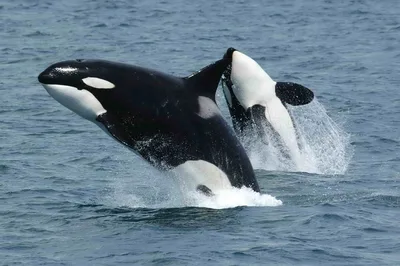 Orca
Ecological equivalents
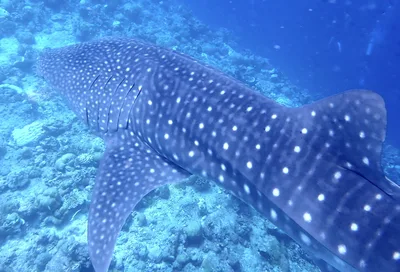
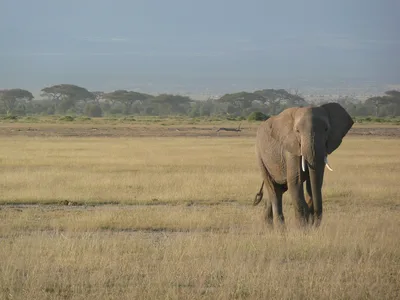
Related species on this site
Fin whale (same genus), Minke Whale (same genus), Sei Whale (same genus), Humpback whale (same family), Addax (same order), African buffalo (same order), and more.
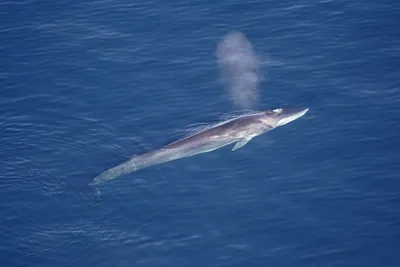 VU
Mammals
Fin whale
Balaenoptera physalus
The fin whale is the second longest animal alive and one of the fastest of the great whales.
Living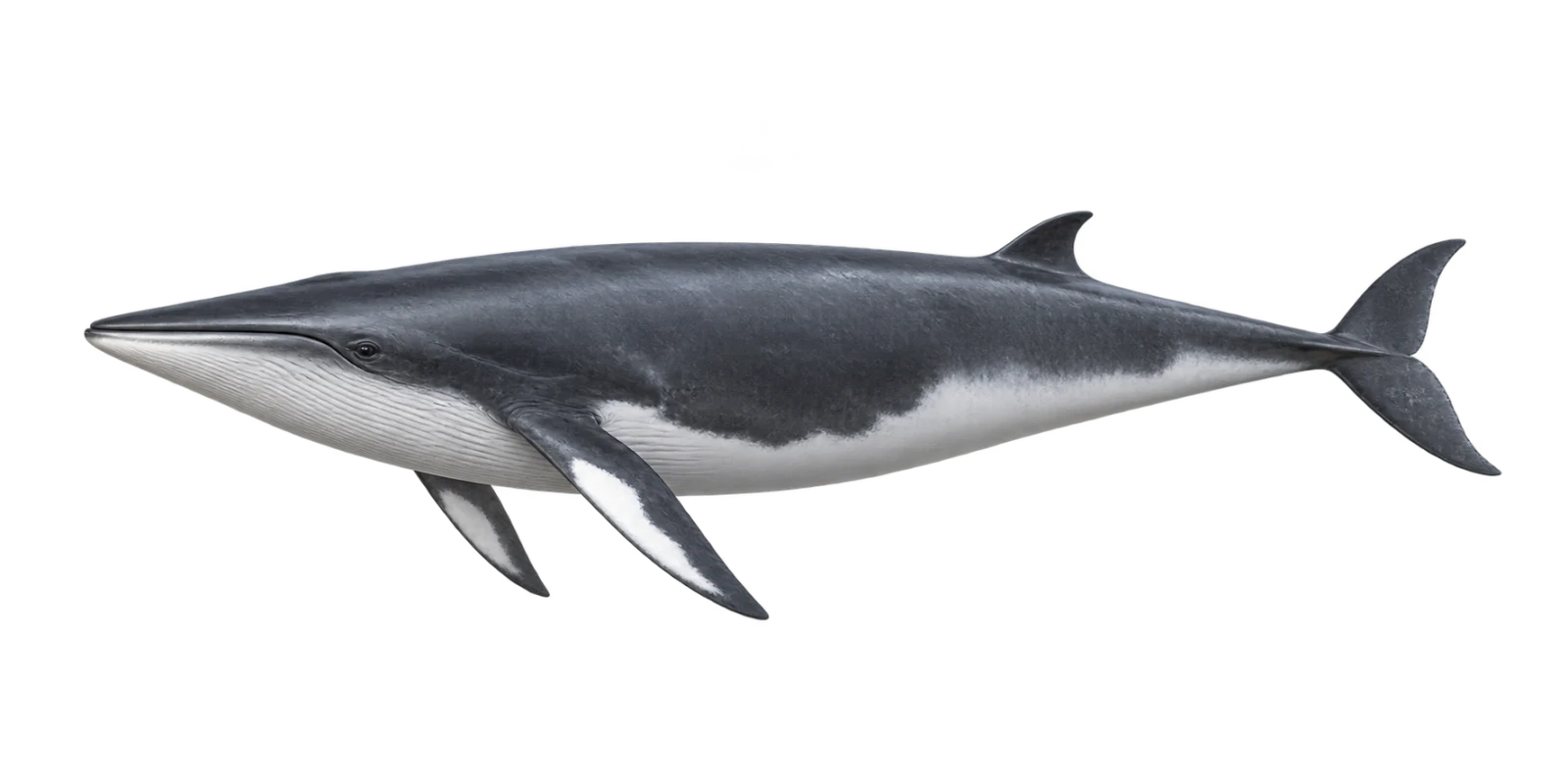
Mammals
Minke Whale
Balaenoptera acutorostrata
Classification and source reference
LivingAI illustration
Mammals
Sei Whale
Balaenoptera borealis
Classification and source reference
LivingAI illustration LC
Mammals
Humpback whale
Megaptera novaeangliae
The humpback whale is a large baleen whale found in every ocean.
Living
Mammals
Addax
Addax nasomaculatus
Classification and source reference
LivingAI illustration NT
Mammals
African buffalo
Syncerus caffer
The African buffalo is a heavy wild ox of sub-Saharan Africa that lives in herds of dozens to thousands and must drink every day.
Living