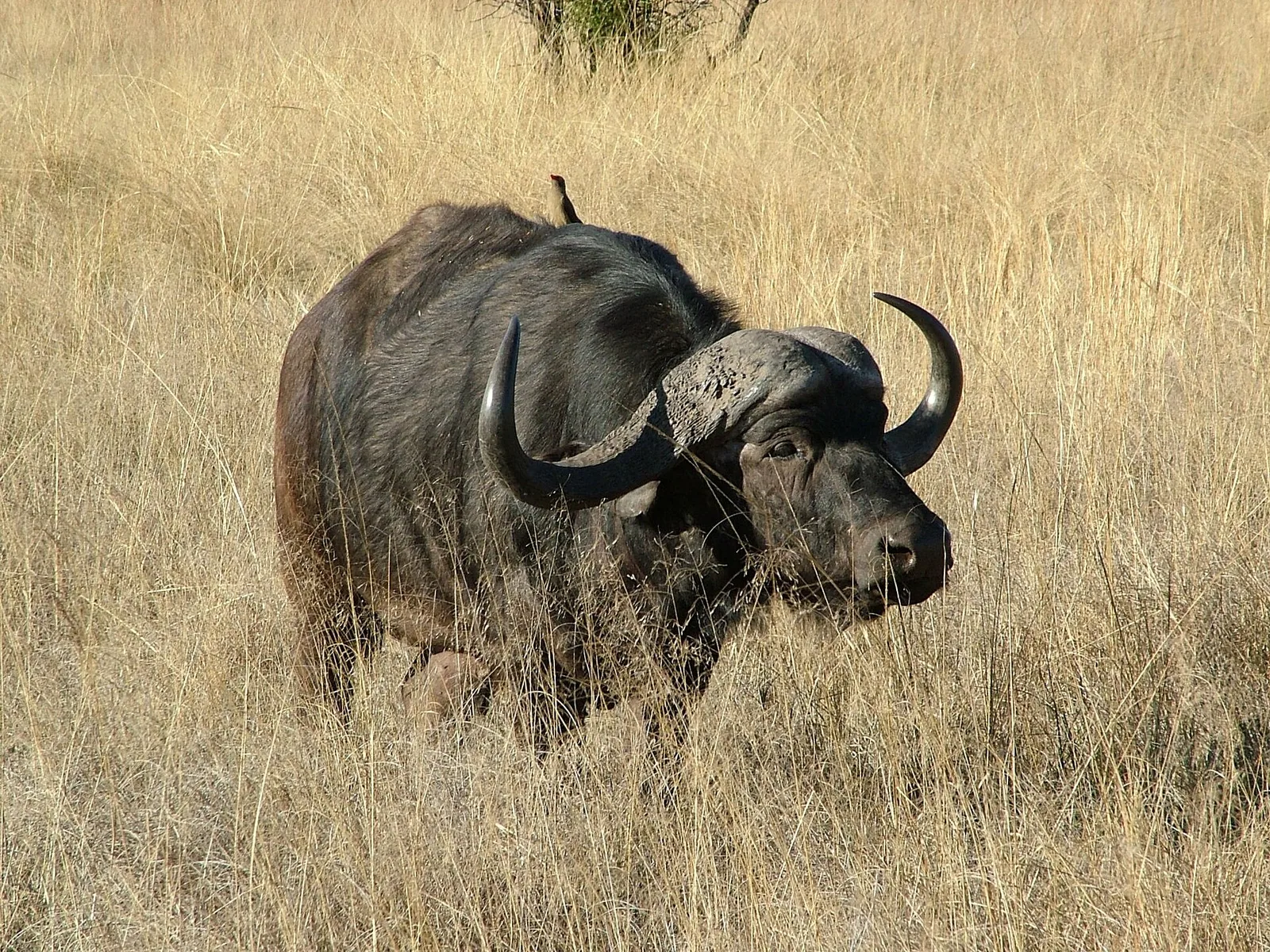
African buffalo
The Big Five's grazer that fights lions and wins
Syncerus caffer
Also called Cape buffalo, Savanna buffalo, Forest buffalo, Nyati, Mbogo
Living individuals or members of this group exist today. This does not mean they are safe from extinction.
Meet the african buffalo
The African buffalo is a heavy wild ox of sub-Saharan Africa that lives in herds of dozens to thousands and must drink every day. It is one of the Big Five, it kills lions that attack it, and hunters rate it the most dangerous animal to follow on foot.
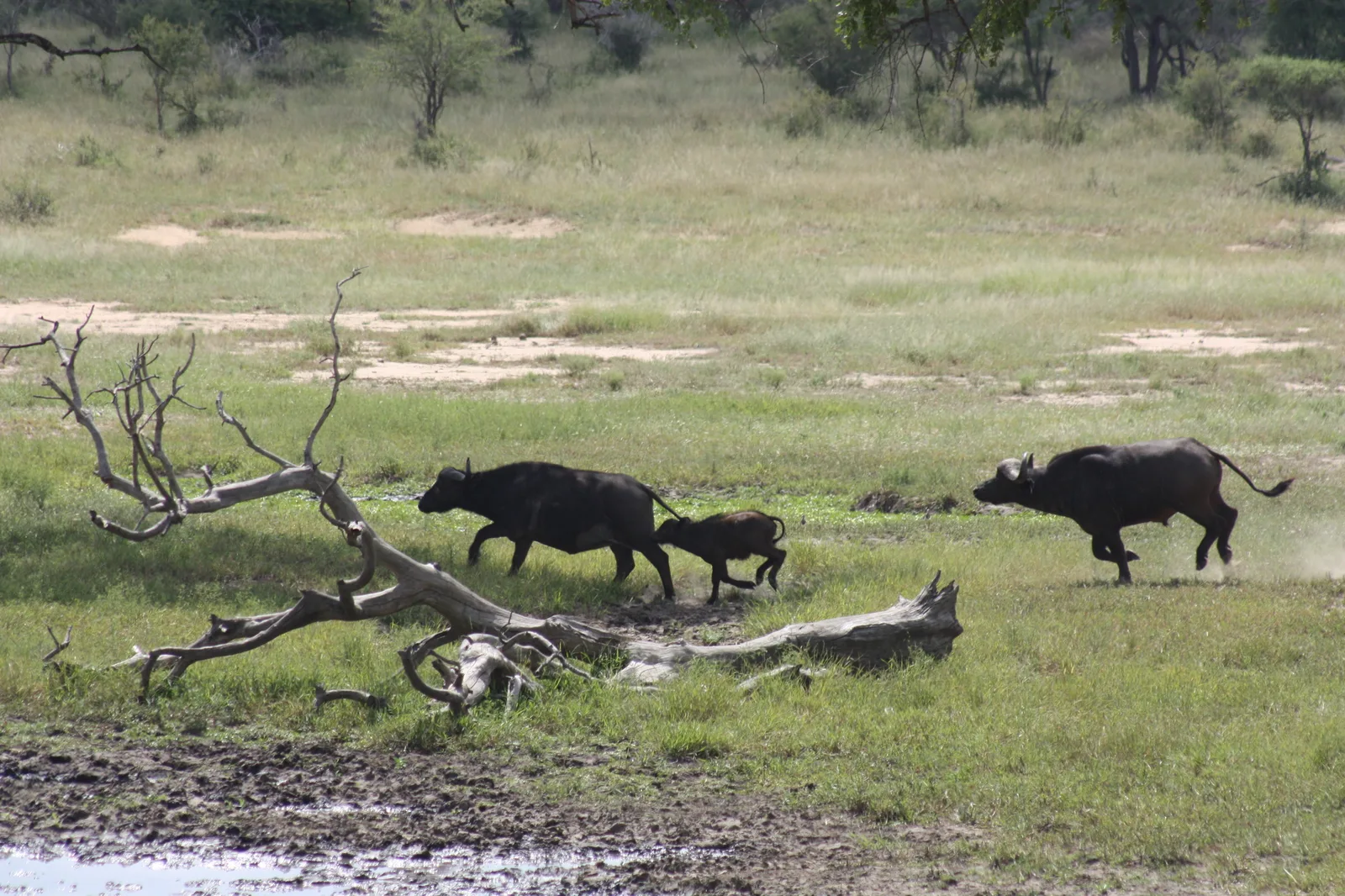
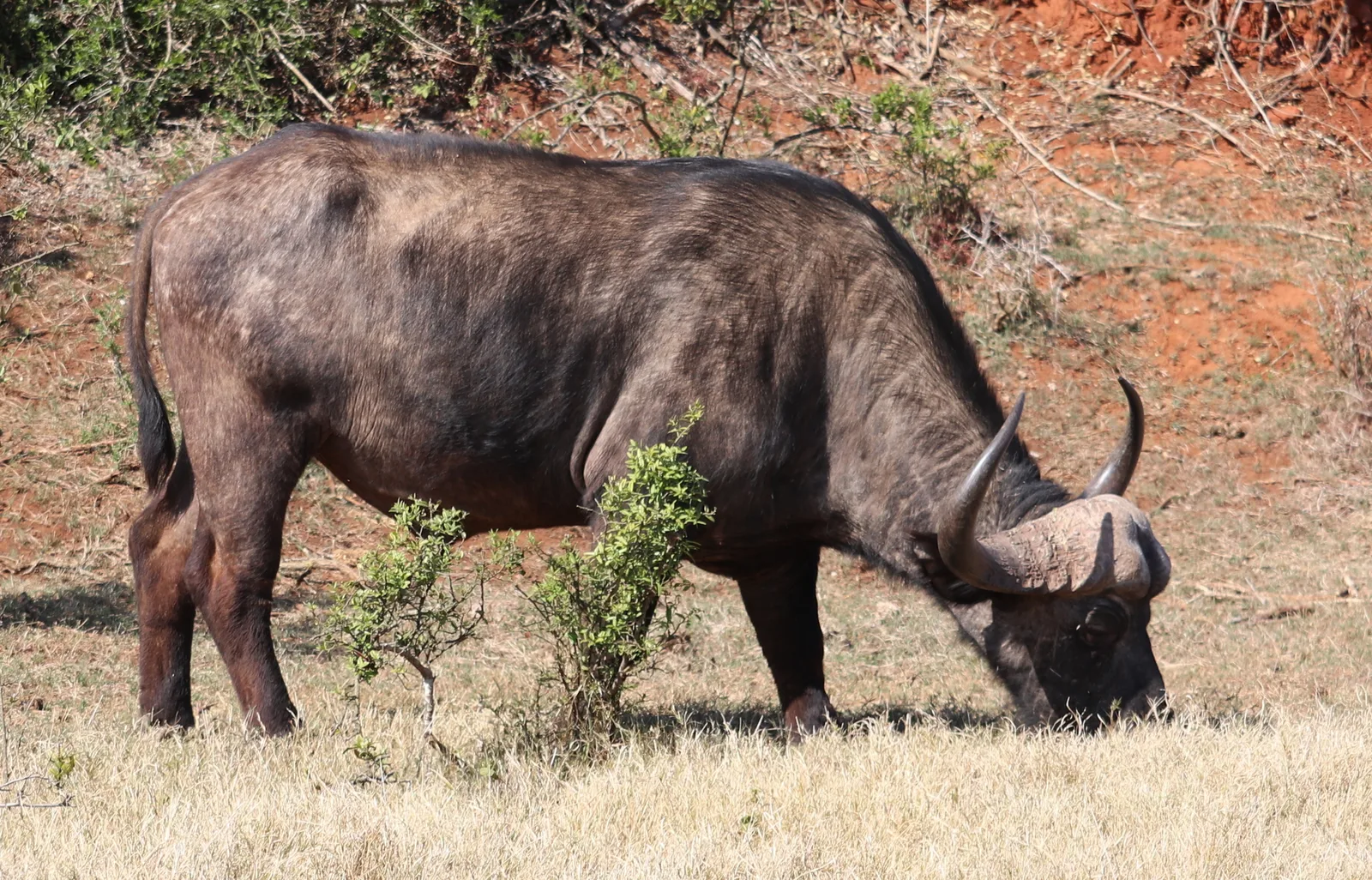
Images of the african buffalo
Lifespan in the wild
About 11 years
Weight
300 to 835 kg
Length
1.7 to 3.4 m
Top speed
Up to 56 km/h
Fact file
African buffalo
- Location
- Sub-Saharan Africa, from Senegal to Ethiopia and south to South Africa
- Habitat
- Savanna, Grassland, Wetlands, Temperate forest
- Diet
- Herbivore
- Prey / food
- Grasses, sedges; some leaves and shoots
- Predators
- Lions; Nile crocodiles; spotted hyenas and wild dogs take calves
- Lifestyle
- Herd-living grazer, active by day and night, never far from water
- Group name
- Herd
- Name of young
- Calf
- Gestation
- About 340 days
- Litter size
- 1 calf every 1 to 2 years
- Population
- About 400,000, decreasing; savanna subspecies about 513,000 at the last continental count
- Biggest threat
- Habitat loss, cattle disease and poaching for meat
- Distinctive feature
- Horns fused into a bony boss across the forehead of a bull
- Colour
- Black to dark brown; forest buffalo are red
- Skin type
- Sparse hair over thick skin
Size
Next to a person
Measurements
Size and speed
- Height
- 1 to 1.7 m at the shoulder; forest buffalo at the low end
- Length
- 1.7 to 3.4 m head and body, without the tail
- Tail
- 0.7 to 1.1 m
- Weight
- 300 to 835 kg forest buffalo to Cape buffalo bull
- Weight, male
- Up to 835 kg Cape buffalo
- Weight, female
- Up to 500 kg Cape buffalo
- Top speed
- Up to 56 km/h a reported charge
Typical adult ranges. Sources: Wikipedia, Animal Diversity Web.
Life cycle
Lifespan
- In the wildAbout 11, up to 22 years
- In captivityAbout 16, up to 29.5 years AnAge records a zoo female of 32.8
- 029.5 years
The pale bar is the record. Source: Animal Diversity Web.
Appearance
Colour and coat
- Primary colours
- blackdark brown
- Secondary colours
- redgrey
- Skin type
- sparse hair over thick skin
- Male and female
- Bulls are about 100 kilograms heavier than cows, with a thick neck, a hump behind it, and horns fused into a boss. Cows have slimmer horns with no boss and tend to be redder.
Life cycle
Mating and family
- Mating system
- promiscuous, with a rank order among bulls deciding who mates
- Social structure
- herds of related cows and calves, with attached bulls and separate bachelor groups
- Breeding
- one calf every 15 to 24 months, born in the rains
Cows breed from about 5 years and bulls from 4 to 6, though a bull rarely wins a mating before 8 or 9. Mating peaks late in the rains, and a single calf arrives about 340 days later, at the start of the next rains. The calf hides in cover for its first weeks, is weaned at 9 to 10 months, and follows its mother until her next calf. Bulls leave at 2 years for bachelor groups. A wild buffalo lives about 11 years, up to 22, and a captive one has reached 29.5.
Classification
Taxonomy
- Kingdom
- Animalia
- Phylum
- Chordata
- Class
- Mammalia
- Order
- Artiodactyla
- Family
- Bovidae
- Genus
- Syncerus
- Species
- Syncerus caffer
Conservation
Red List status
- LC
- NT
- VU
- EN
- CR
- EW
- EX
Near Threatened on the IUCN Red List
Range
Recorded in 17 countries
- Burkina Faso
- Benin
- Botswana
- Central African Republic
- Republic of the Congo
- Gabon
- Kenya
- Malawi
- Namibia
- Niger
- Rwanda
- Chad
- Tanzania
- Uganda
- South Africa
- Zambia
- Zimbabwe
Habitat layer: temperate broadleaf and mixed forest, temperate conifer forest, boreal forest and taiga, tropical grassland, savanna and shrubland, temperate grassland, savanna and shrubland, flooded grassland and savanna, mangrove.
Countries from 11,531 wild records on GBIF (iNaturalist research grade), filtered and checked by hand. Country shapes: Natural Earth. Habitat: RESOLVE Ecoregions 2017, CC BY 4.0. Basemap: Natural Earth.
Habitats
Three things to know
- 1
A resting herd votes on where to graze next: cows stand, face a direction and lie down, and the herd goes the way most faced.
- 2
Buffalo have chased lions up trees and kept them treed for two hours after a lion killed one of the herd.
- 3
The horns of a bull fuse across the forehead into a boss so thick that two bulls charge and take the blow on it.
Did you know
Seven more facts
- 1
A buffalo has 52 chromosomes, cattle have 60, so the two cannot breed.
- 2
On Mount Kenya, buffalo above 3,000 metres dig up soil with their horns and eat it for the iron.
- 3
A calf suckles from behind its mother, with its head between her hind legs.
- 4
Old cows adopt orphaned calves, sometimes several at once.
- 5
The record horn span is 164 centimetres, tip to tip.
- 6
A disease-free buffalo from Kruger stock has sold for close to 130,000 US dollars.
- 7
The buffalo is on South Africa's 100 rand note.
Field notes
How it looks and acts
Field notes
Distinguishing features
- A bull's horns joined across the forehead by a hard bony boss.
- A shoulder height of 100 to 170 centimetres on short, thick legs.
- A black or dark brown coat in the savanna form, red in the forest form.
- A head carried low, below the line of the back.
- Large drooping ears fringed with hair, and a tufted tail.
- Front hooves wider than the hind ones.
Field notes
Unique adaptations
- A wide mouth and broad front teeth crop coarse grass fast.
- A four-chambered stomach and long hours of cud-chewing pull nutrients from poor grass.
- The boss and thick neck let a bull take a charge that would kill another animal.
- Herd life and mobbing turn a slow grazer into a predator's worst risk.
- A long pregnancy times births to the rains, when grass is best.
Field notes
Interesting behaviours
- Drinks every day, often twice.
- Wallows in mud, which cools the body and marks rank among bulls.
- Moves in a column with pathfinders in front and bulls around the edge.
- Spars by locking horns and twisting, about seven bouts of ten seconds each.
- Runs back to a distress call and mobs the attacker.
Field notes
Temperament
- Placid when grazing in a herd.
- Unpredictable and violent when wounded, cornered or alone.
- Aggressive towards lions even when the lions pose no threat.
- Old lone bulls are the most dangerous of all.
Field notes
Communication
- Low repeated calls set the herd moving, and a creaking call turns it.
- Body posture, from a lowered head to an alert stance, carries most messages.
- A calf's bleat draws the whole herd.
- Explosive grunts and a rumbling growl warn a rival.
Ecology
Ecological role
The buffalo is one of Africa's key grazers, shaping grassland for other animals and feeding its largest predators.
- Mows tall coarse grass and opens the sward for zebra, wildebeest and smaller antelope.
- Trampling and dung along its traditional paths turn the soil and drive regrowth.
- Feeds lions, crocodiles and, through carcasses, hyenas.
- Hosts oxpeckers and cattle egrets, and carries ticks and the diseases they spread.
Stories
Myths and legends
- In colonial hunting tradition, the buffalo is one of the Big Five and the deadliest to follow on foot.
- In hunters' lore, it is the Black Death and the widowmaker, the bull that ambushes its tracker.
- In South African tradition, the Cape buffalo stands for the country on the 100 rand banknote.
- In internet culture, the Battle at Kruger made the herd a symbol of standing together.
People
Relationship with humans
People
Living alongside us
People hunt the buffalo for meat and for its horns, and tourists pay to see it. Ranches in southern Africa keep herds for both trades. Farmers see it as a crop pest and a carrier of cattle disease. It has never been tamed. Hunters call it the most dangerous of the Big Five, because a wounded bull turns and hunts the hunter.
- A wounded or cornered buffalo charges, and a bull can weigh over 835 kilograms.
- Old lone bulls attack with little warning, and hunters are killed most years.
- Attacks by large herbivores in Uganda killed almost 50% of the people attacked.
People
Status, uses and products
- Domestication
- Wild
- As a pet
- Not suitable. No one has tamed the African buffalo, and it has no domestic form. It weighs up to 835 kilograms, needs water daily, carries cattle disease and kills people. It is a ranch or park animal, never a pet.
- Uses
- trophy huntingecotourismbushmeatgame ranching
- Products
- meathidehorn
The full account
About the african buffalo
The African buffalo, Syncerus caffer, is a heavy wild ox of the African savanna and forest. It stands 100 to 170 centimetres at the shoulder and weighs 300 to 835 kilograms. A bull's horns join across the forehead in a thick shield of bone called the boss. The coat is black or dark brown in the savanna form and red in the forest form. It lives in herds of a few dozen to more than a thousand and must drink every day.
Buffalo graze coarse grass that other antelope leave, and their herds open the sward for pickier grazers. Lions are their main predator, but a herd will turn and kill a lion that attacks it. Hunters count the buffalo among the Big Five and call it the most dangerous of them to follow on foot. The IUCN lists it as Near Threatened, with about 400,000 animals and falling.
Name and taxonomy
Anders Sparrman described the species in 1779 from the Sunday River at Algoa Bay in what is now South Africa. The species name caffer probably refers to that part of the Cape. Syncerus is a genus of one species in the cattle tribe, Bovini, of the family Bovidae. Swahili speakers call the animal nyati or mbogo, and Zulu speakers inyathi.
Most authorities accept five subspecies. The Cape buffalo of eastern and southern Africa is the largest and best known. The forest buffalo of the Congo and West African rainforests is the smallest and is red. The Sudan buffalo and the Nile buffalo occupy the drier belt across West and Central Africa, and a disputed mountain buffalo lives in the Virungas. Some recent authors raise four of these forms to full species, but the IUCN still treats them as one.
Evolution and relatives
The African buffalo is closer to the Asian buffaloes of the genus Bubalus than to cattle or bison. It carries 52 chromosomes, while cattle and American bison carry 60, so it cannot breed with either. A Cape buffalo has been crossed with the Indian water buffalo, however, and the cross contributed to the Jafarabadi breed. Unlike the wild yak and the wild water buffalo, it has never been tamed and has no domestic descendant. Its unpredictable temper is probably part of the reason.
The forest and savanna forms grade into each other around the Congo basin. Genetic work suggests the small red forest buffalo is the ancestral type, and the big black savanna form spread from it. A century ago taxonomists had given the buffalo at least 92 scientific names.
Appearance
A Cape buffalo bull stands up to 170 centimetres at the shoulder, while a forest buffalo stands about 1 metre. The head and body run 170 to 340 cm, and the tail adds 70 to 110 cm. Bulls of the Cape subspecies can pass 835 kilograms, and cows reach about 500 kg. Forest buffalo weigh only 250 to 320 kg. The body is long and barrel-shaped on short, thick legs, so the animal stands lower than its bulk suggests. The front hooves are wider than the back ones, because the heavy head and neck load the front end.
Savanna buffalo are black or dark brown, and old bulls go bald and grey around the eyes and face. Cows tend to be redder than bulls, and all calves are born red. Both sexes carry horns that sweep down, out and up. In a bull the horn bases swell and meet in the middle to form the boss, which does not harden until 8 or 9 years. The span between the horn tips can pass a metre, and the record is 164 cm. Cows have thinner horns and no boss, and forest buffalo have short horns under 40 cm that curve back.
Habitat and range
Buffalo live in a chain of separate ranges from south-east Senegal through West and Central Africa to South Africa. They use savanna, swamp, floodplain, mopane and miombo woodland, and mountain forest. On Mount Kenya they climb above 3,000 metres into bamboo, where they dig up and eat soil for its iron. They like dense cover, such as reeds and thickets, next to open grass. Water is the one fixed need: a herd drinks every day and stays within about 20 kilometres of a permanent source.
Rainfall sets the density, and buffalo are rare where less than 500 millimetres falls in a year. A herd walks a traditional home range of under 50 to more than 1,000 square kilometres along familiar paths. Most herds do not migrate, though moves of over 80 km are on record. GBIF holds records from 49 countries, a count that includes zoos.
Diet and feeding
The buffalo is a grazing ruminant, and grass makes up nearly all of its diet. It prefers leafy grasses such as Themeda in the rains, and it can live on tall coarse grass and sedges that smaller antelope refuse. A wide mouth and a broad row of front teeth let it crop grass faster than most African herbivores. An adult needs about 14 kilograms of forage a day. Feeding bouts alternate with long spells of lying down and chewing the cud.
Browse is a small part of the diet, about 10% at most, except in the forest buffalo and in thicket country. In the Eastern Cape thicket, browse can reach 33% of the dry-season diet. Herds return to a grazed patch when the regrowth is tall enough, and they do not linger on trampled ground. Buffalo lick salt wherever they find it, including the sweat of their herd mates.
Behaviour and social life
A herd is built on related cows and their calves, in a near-linear rank order. Bulls of various ages attach themselves to it, and old or sick animals trail at the edges. Herds range from about 20 in mountain forest to more than 1,500 on the Serengeti. Large herds split and rejoin, and a Botswana study saw 7 of 45 collared cows change herds in one wet season. When a herd moves, pathfinders and senior cows lead, calves travel in the middle, and bulls ring the outside.
A resting herd decides its next move by a kind of vote. Cows stand, face the way they favour, and lie down again, and after an hour or so the herd sets off the way most faced. Rank plays no part in the choice. Bulls hold a separate rank order based on age and size, and the top bull is known by the thickness of his horns. Bulls spar by locking horns and twisting, and a real fight is a single head-on charge onto the bosses.
In the dry season many bulls leave for bachelor groups of 5 to 10. Bulls of 4 to 7 years rejoin the cows in the rains to breed, while some of 12 years or more never go back. These old loners, caked in mud, are the dagga boys, and hunters rate them the most dangerous buffalo of all. Herds are active around the clock, with rest in the early morning and late afternoon, and they graze more at night in the dry season.
Communication and senses
Most buffalo signals are silent. A lowered head offers a spar, an alert posture warns the herd, and the direction a cow faces casts her vote. Bulls read a cow's readiness to mate from her urine, with the lip-curling flehmen face. Sources disagree on eyesight: one says buffalo spot a lion more than a kilometre away, another calls their vision poor. Hearing and scent are keen, and a pathfinder stands apart for up to eight minutes, sniffing and listening, before leading the herd on.
The calls are deep versions of cattle sounds. A low call of two to four seconds, repeated, tells the herd to move, and a creaking sound from a leader turns it. On the way to water some animals give a drawn-out maaa call, as often as 20 times in a minute. An angry bull gives explosive grunts that can turn into a growl. A lost calf bleats, and that call brings not only its mother but the whole herd.
Reproduction and life cycle
Cows first breed at about 5 years, and bulls mature at 4 to 6 but do not win matings until 8 or 9. Mating happens all year, with a peak late in the rains, and most births come in the rains about 340 days later. A bull tends a cow that is coming into season and drives other bulls off, but a stronger bull can take his place. By the time she is fully in season, only the top bull of the herd is still with her.
A cow bears a single calf, and twins are very rare. Newborns weigh about 40 to 45 kilograms and hide in cover for their first weeks. Unusually for a bovid, the calf suckles from behind, pushing its head between its mother's hind legs. Weaning comes at 9 to 10 months, and the bond lasts until the next calf, when the mother drives the yearling off with horn jabs. The interval between calves runs from one year to more than two, averaging 18 to 19 months.
Young bulls leave their mothers at 2 years and join the bachelor groups. Older cows sometimes adopt orphaned calves and watch over several at once. A wild buffalo lives about 11 years on average and up to 22. In captivity the average is 16 years and the record 29.5. Disease is the commonest cause of death, followed by lions.
Predators and threats
Lions are the only regular predator of buffalo over a year old, and in some regions buffalo are their main prey. It usually takes several lions to pull down an adult, though single males have managed it. A buffalo can outrun a lion by about 10 km/h, so lions must ambush from close range. Bulls at the edge of a herd or in bachelor groups die four times as often as cows in the herd. Big Nile crocodiles take calves and old animals at the water, and now and then a healthy adult. Hyenas, wild dogs and leopards take calves, and elephants in musth sometimes kill buffalo.
The herd answers a distress call, and it mobs an attacker. Buffalo have killed lions, trampled cubs, and chased lions up trees and held them there for two hours. In the Battle at Kruger video, a herd took a calf back from lions and a crocodile together. Bulls have driven off more than one lion at once, though usually with severe wounds.
The worst blow in history was the rinderpest plague of the 1890s, which killed up to 95% of buffalo and cattle alike. Today the threats are loss of range to farms, competition with cattle, drought, and poaching for meat. Buffalo carry bovine tuberculosis, foot-and-mouth and corridor disease, so fences keep them from cattle.
Population and conservation
The IUCN lists the African buffalo as Near Threatened, with about 400,000 animals and a falling trend. The last continental census put the three savanna subspecies together at about 513,000. In the late 1990s the estimate was 500,000 to 1,000,000, with 70% in or near protected areas. Free-ranging Cape buffalo in southern Africa fell by about half between 1991 and 1996.
Herds are stable or growing in the parks of Tanzania, Zambia, northern Botswana, Zimbabwe and South Africa. Mozambique's herds are less secure, and the species has been reintroduced to Eswatini. Buffalo pay their way: tourists come to see them, and hunters pay more than 10,000 US dollars for a bull. That money funds anti-poaching patrols and payments to villages for damaged crops. Disease-free animals bred from Kruger stock have sold for close to 130,000 US dollars each.
Relationship with humans
People and buffalo have always met over meat and land. The animal was hunted for food long before its horns became a trophy. Private ranches in southern Africa now keep free-ranging herds and charge up to twice as much for safaris and hunts. Attempts to tame the buffalo have failed, and it is managed only as a ranch animal in the wild state.
Outside the parks, buffalo raid crops and pass disease to cattle, so farmers see them as pests. Bushmeat poaching takes many, and infected meat can pass brucellosis to people. The buffalo is also one of the few African animals that hunts the hunter. Wounded bulls circle back and ambush the people tracking them, which earned the species the names Black Death and widowmaker.
Buffalo are often called Africa's deadliest animal, but the same claim is made for hippos and crocodiles. In Mozambique, attacks by buffalo were far rarer than attacks by hippos or crocodiles. In Uganda, large herbivores attacked more people than lions or leopards and killed almost 50% of those they attacked. In August 2025 a Cape buffalo killed an American hunter in Limpopo, charging at a reported 56 km/h.
In culture and myth
The buffalo's place in modern culture comes from the hunt. Colonial hunters coined the Big Five for the animals that were hardest to hunt on foot: buffalo, elephant, rhinoceros, leopard and lion. Safari companies probably turned the hunters' list into a tourist checklist. South Africa printed the Big Five on its banknotes in 1992 and again in 2005, and the buffalo took the 100 rand note.
In hunting lore the buffalo is the Black Death, the widowmaker, and the animal that looks at you as if you owe it money. The Zulu word for mud gave the name dagga boy to the old lone bull. In popular culture, the Battle at Kruger made the buffalo an internet hero. Filmed at Transport Dam in September 2004 and posted in May 2007, it passed 90 million views by 2023 and became a National Geographic film.
The buffalo probably features in the oral traditions of many African peoples, but no specific myth turned up in the sources used here. Its names, nyati and inyathi, probably survive in place names and clan names across eastern and southern Africa. Spirit-animal websites make it a symbol of strength and stubbornness, but that is probably a modern reading, not folklore.
A sentence with a dotted underline is inferred: it describes the group the animal belongs to, or is a reading of the sources, rather than a measured or reported fact about this species.
Questions
African buffalo questions, answered
What is the African buffalo?
It is a large wild ox of sub-Saharan Africa, one species with five subspecies. The Cape buffalo of eastern and southern Africa is the biggest and the one most tourists see.
How big is an African buffalo?
A Cape buffalo stands up to 170 centimetres at the shoulder and weighs up to 835 kilograms. Head and body measure 170 to 340 cm. Forest buffalo are about half that size.
Are African buffalo dangerous?
Yes. A wounded or lone bull charges without warning, and hunters rate it the most dangerous of the Big Five. In Uganda, attacks by large herbivores killed almost half of the people attacked.
Why is the buffalo called the Black Death?
Big-game hunters gave it that name, and widowmaker too, because a wounded buffalo circles back and ambushes the people tracking it.
What do African buffalo eat?
Grass, above all. They crop tall coarse grasses and sedges that smaller grazers leave, chew the cud for hours, and take a little browse in dry country.
Do buffalo really kill lions?
Yes. A herd mobs a lion that attacks it, and buffalo have trampled cubs, gored adults and chased lions up trees. Bulls have fought off several lions at once.
What is a dagga boy?
An old bull that has left the herd for good and lives alone or with a few others, caked in dried mud. The name comes from a Zulu word for mud, and hunters call these bulls the most dangerous buffalo.
How do buffalo herds decide where to go?
By a vote. While the herd rests, cows stand up, face the direction they prefer and lie down again. When the herd rises, it moves the way most cows faced.
Is the African buffalo endangered?
Not yet. The IUCN lists it as Near Threatened, with about 400,000 animals and a falling trend. Habitat loss, cattle disease and poaching are the main threats.
What is the Big Five?
A hunters' term from colonial times for the African animals that were hardest to hunt on foot: buffalo, elephant, rhinoceros, leopard and lion. Safari companies now use it as a checklist.
How long do African buffalo live?
About 11 years on average in the wild, and up to 22. In captivity they average 16 years, and the record is 29.5.
Can the African buffalo be domesticated?
No. Unlike the water buffalo and the yak, it has never been tamed, and its temper is thought to be the reason. It cannot breed with cattle, because it has 52 chromosomes to their 60.
Where do African buffalo live?
In separate ranges across sub-Saharan Africa, from Senegal through West and Central Africa to Ethiopia and South Africa. They use savanna, swamp, woodland and mountain forest, always within reach of water.
How many calves does a buffalo have?
One calf at a time, after about 340 days. A cow calves every 15 to 24 months, and twins are very rare.
What was the Battle at Kruger?
A video filmed in Kruger National Park in 2004, in which a herd took a calf back from a pride of lions and a crocodile. Posted in 2007, it has been watched more than 90 million times.
Food web
Prey and food
- grasses
- sedges
- some leaves
- shoots
Food web
Predators
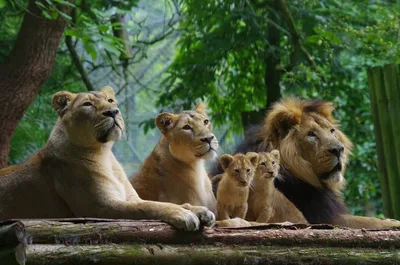 Lion
- nile crocodiles
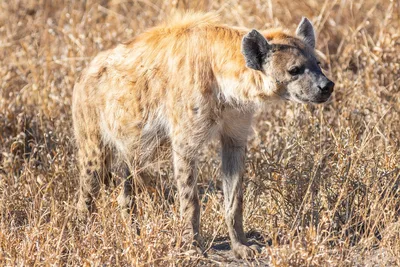 Spotted hyena
- wild dogs
Ecological equivalents
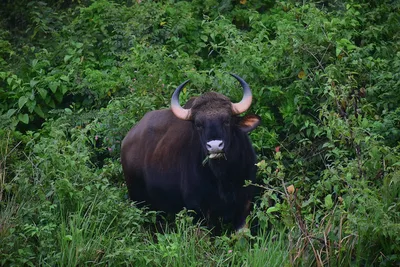
Related species on this site
Addax (same family), Alpine Goat (same family), American bison (same family), American Pygmy Goat (same family), Antelope (same family), Aoudad Sheep (same family), and more.
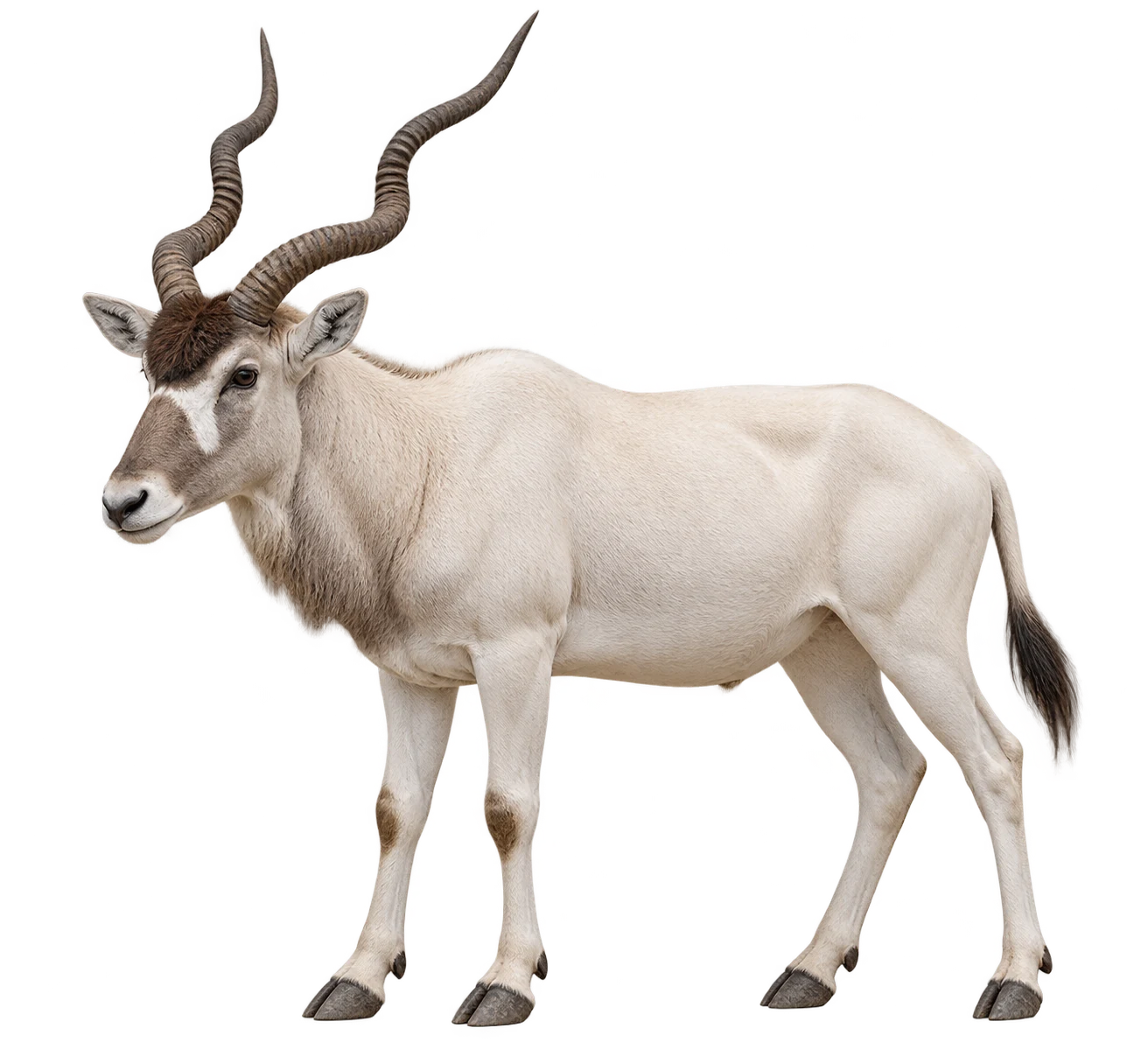
Mammals
Addax
Addax nasomaculatus
Classification and source reference
LivingAI illustration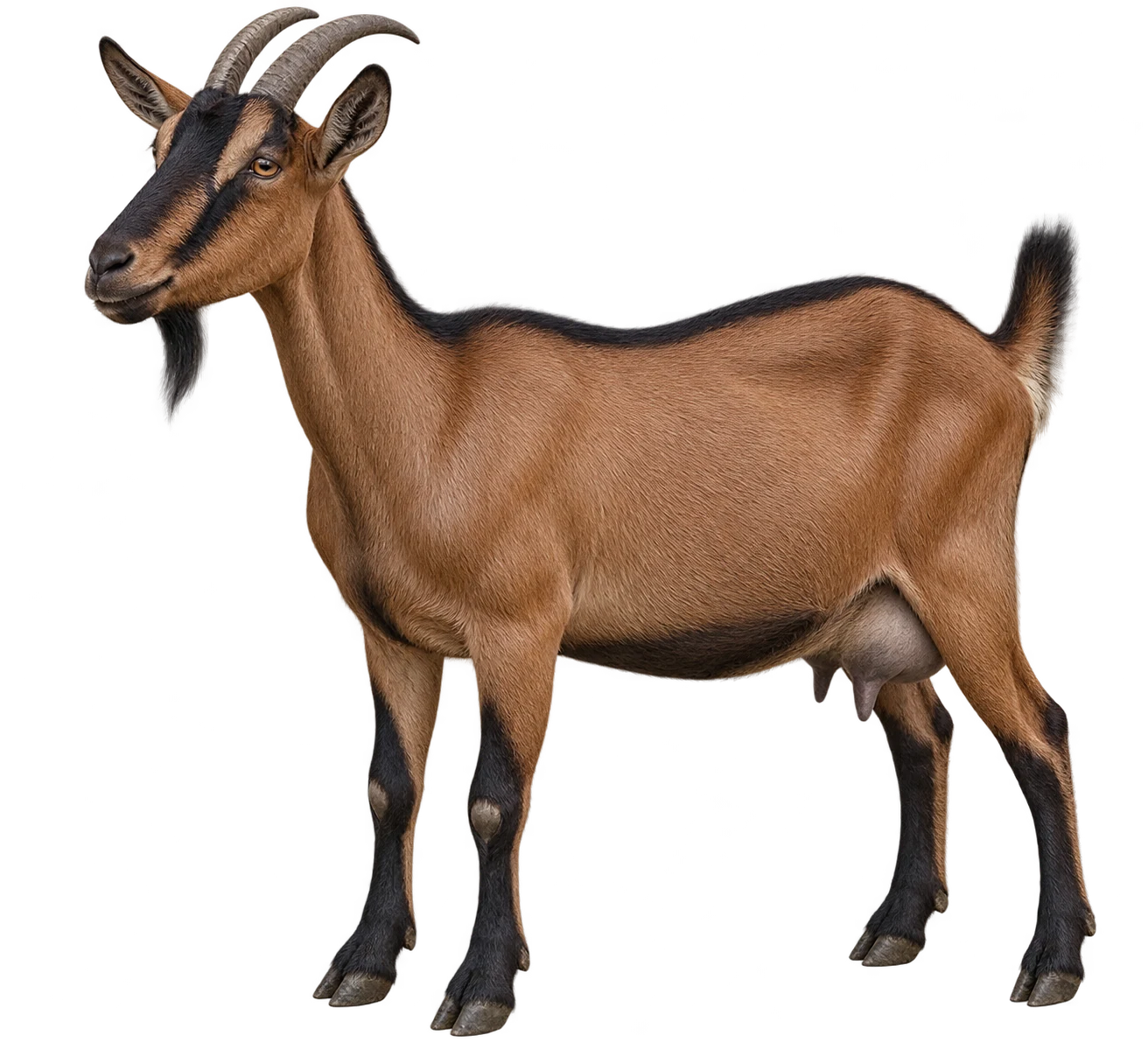
Mammals
Alpine Goat
Capra hircus
Classification and source reference
LivingAI illustration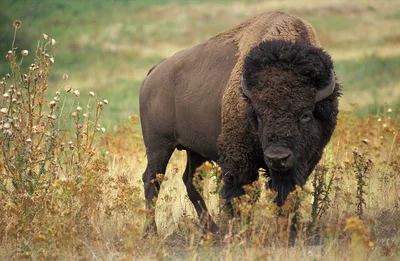 NT
Mammals
American bison
Bison bison
The American bison is the heaviest land animal in North America and the national mammal of the United States.
Living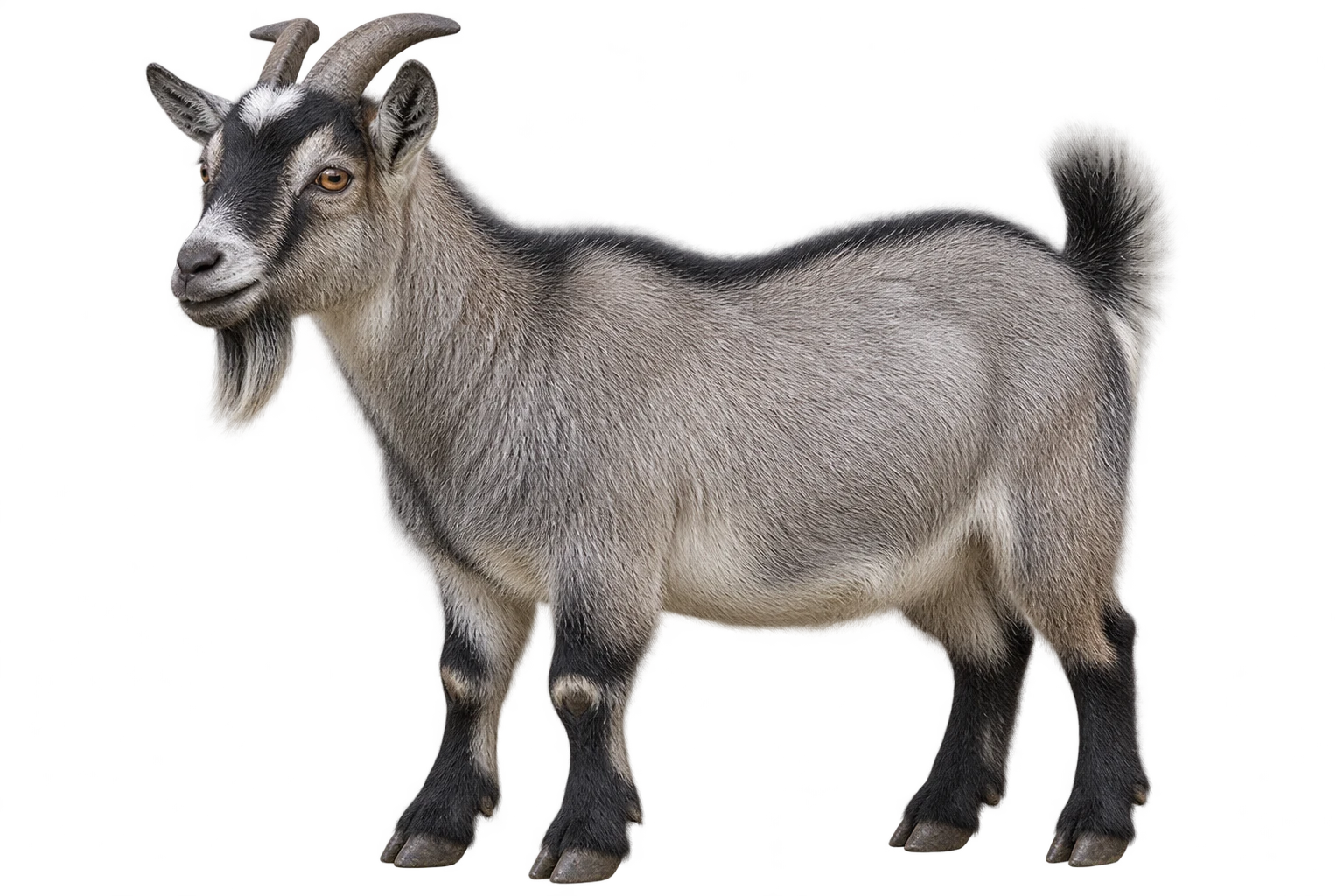
Mammals
American Pygmy Goat
Capra hircus
Classification and source reference
LivingAI illustration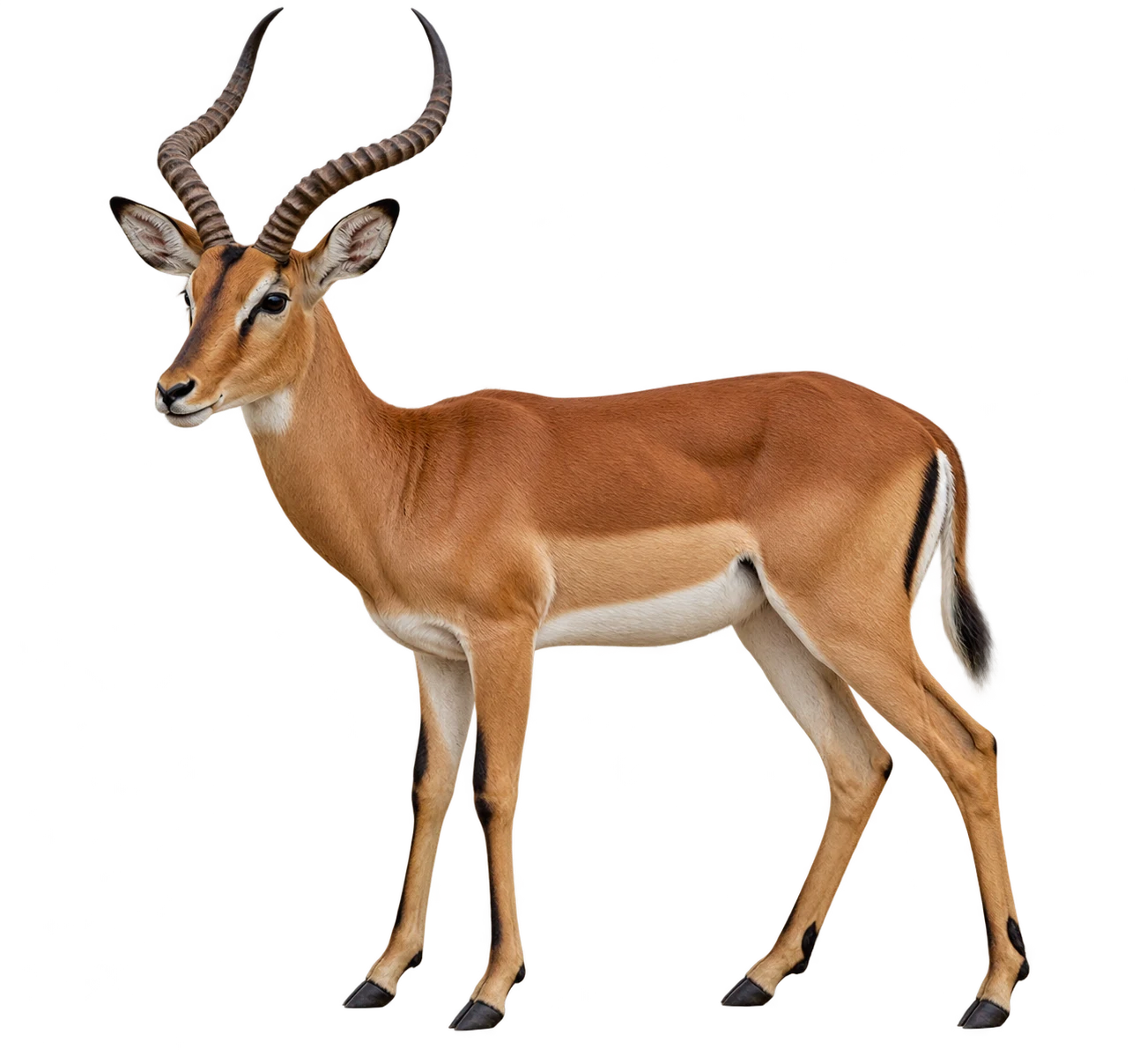
Mammals
Antelope
Bovidae
Classification and source reference
LivingAI illustration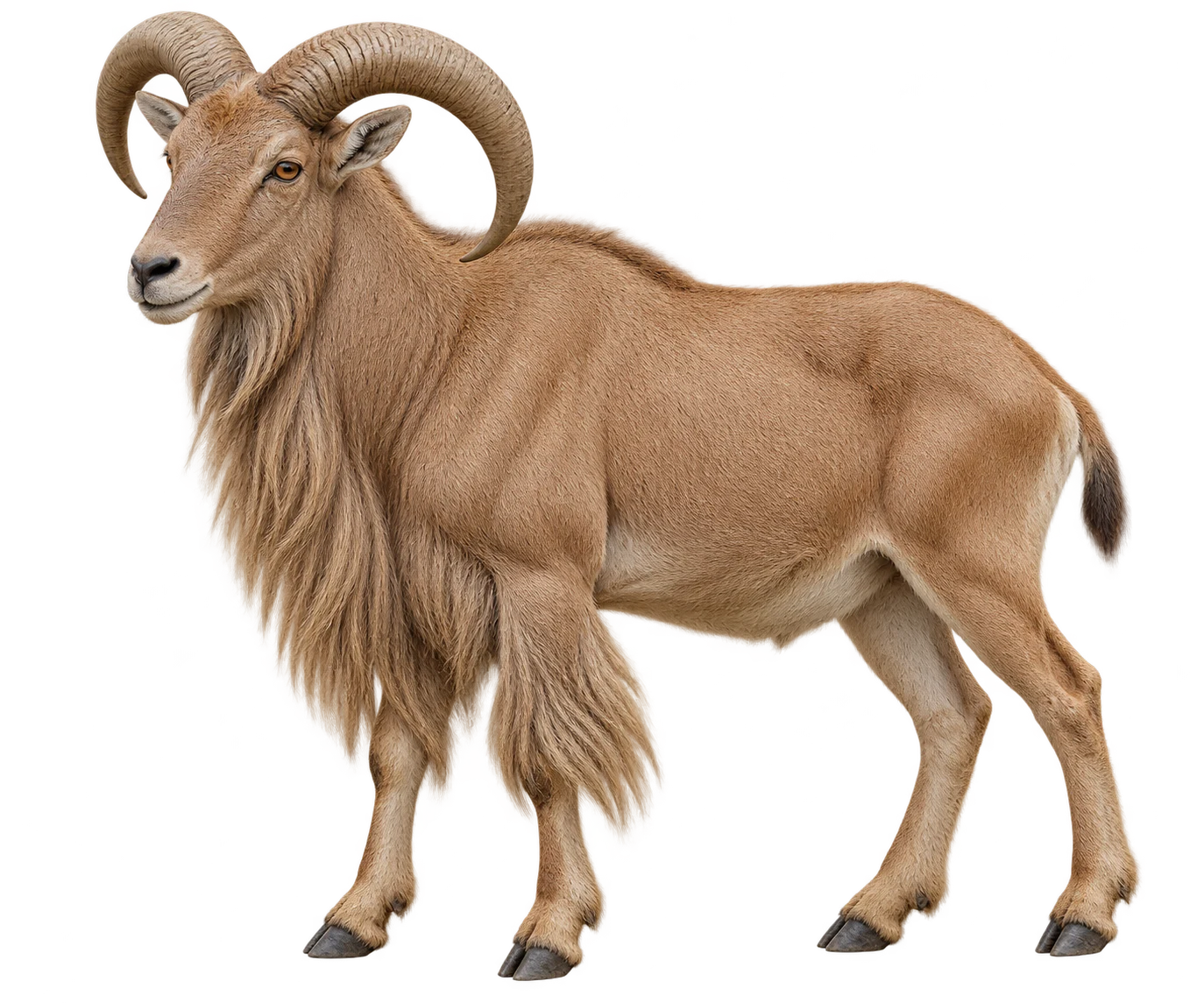
Mammals
Aoudad Sheep
Ammotragus lervia
Classification and source reference
LivingAI illustration