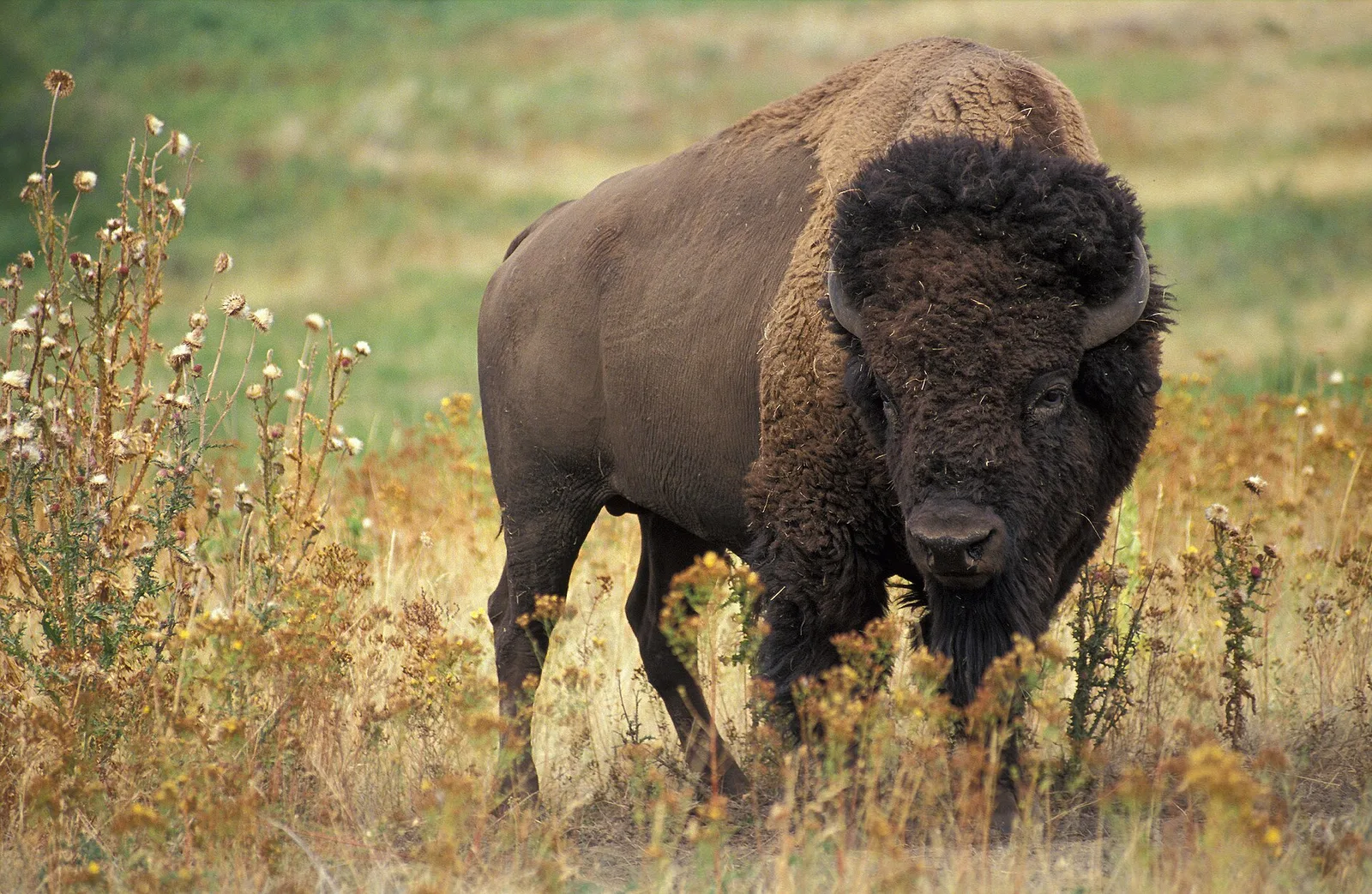
American bison
The prairie giant that came back from 541 animals
Bison bison
Also called American buffalo, Buffalo, Plains bison, Wood bison
Living individuals or members of this group exist today. This does not mean they are safe from extinction.
Meet the american bison
The American bison is the heaviest land animal in North America and the national mammal of the United States. Tens of millions once grazed the plains, hunters cut them to a few hundred, and about half a million live today.
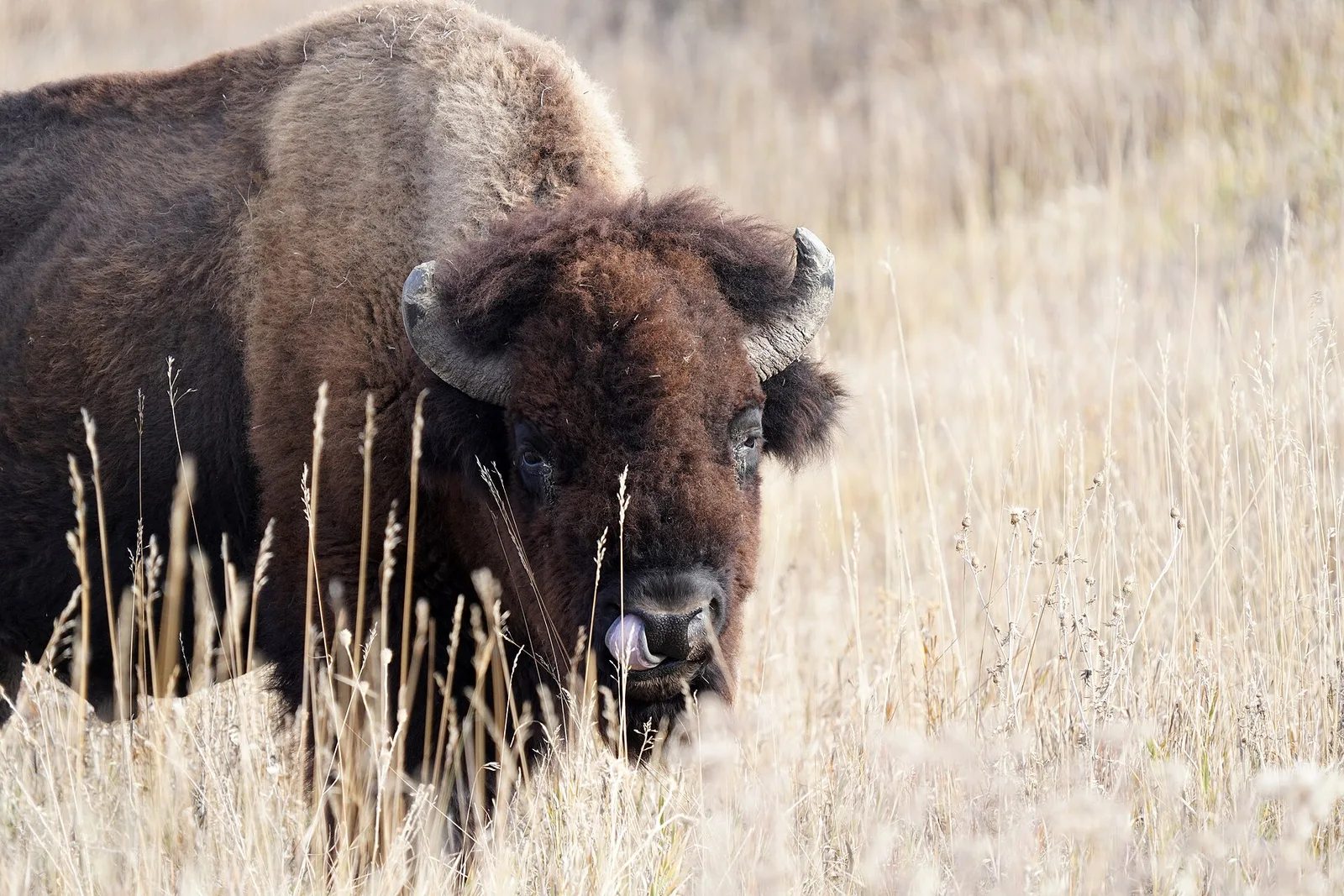
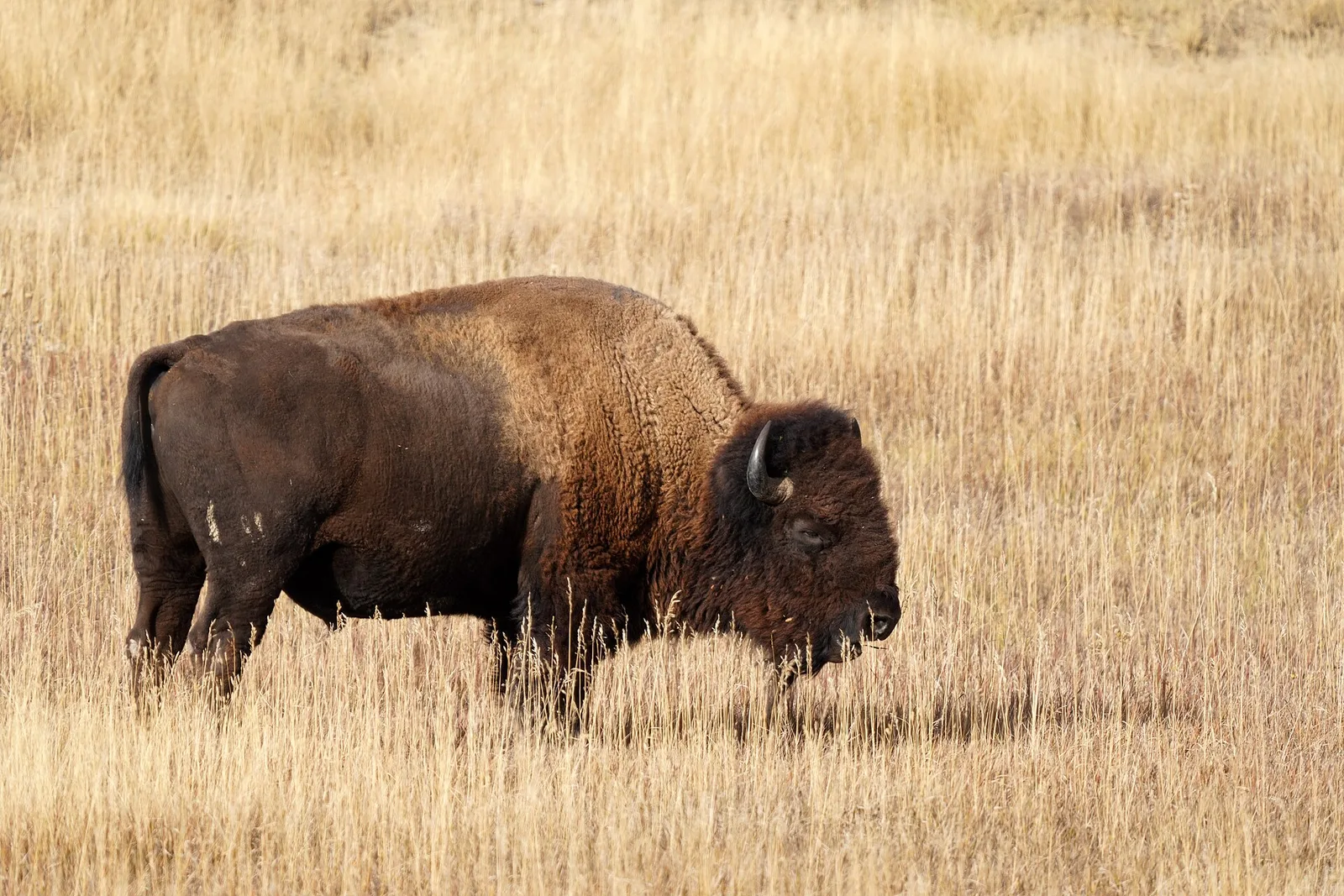
Images of the american bison
Lifespan in the wild
15 to 20 years a hunted, wolf-preyed herd in northern Canada still had cows reach 25
Weight
0.36 to 1 t
Length
2.13 to 3.8 m
Top speed
55 to 70 km/h
Fact file
American bison
- Location
- Western United States and Canada, northern Mexico; introduced to Yakutia
- Habitat
- Grassland, Temperate forest, Mountains
- Diet
- Herbivore
- Prey / food
- Grasses, sedges, sagebrush in hard times
- Predators
- Gray wolf, grizzly bear, mountain lion take calves and the weak
- Lifestyle
- Herd grazer; active by day, migrates with the seasons
- Group name
- Herd
- Name of young
- Calf
- Gestation
- About 285 days
- Litter size
- 1 calf
- Population
- About 400,000 to 500,000, most in commercial herds; about 15,000 free-ranging
- Biggest threat
- Low genetic diversity and cattle genes from past crossbreeding
- Distinctive feature
- A tall shoulder hump and a massive shaggy head
- Colour
- Dark brown, lighter in summer; calves are reddish
- Skin type
- Fur
Size
Next to a person
Measurements
Size and speed
- Height
- 1.52 to 1.86 m at the shoulder; females 1.52 to 1.57 m, males 1.67 to 1.86 m
- Height, male
- 1.67 to 1.86 m
- Height, female
- 1.52 to 1.57 m
- Length
- 2.13 to 3.8 m head and body; females 2.13 to 3.18 m, males 3.6 to 3.8 m
- Tail
- 30 to 95 cm
- Weight
- 0.36 to 1 t, up to 1.27 t females 360 to 640 kg, bulls commonly 460 to 988 kg; the heaviest wild bull weighed 1,270 kg
- Weight, male
- 0.46 to 0.99 t, up to 1.27 t
- Weight, female
- 360 to 640 kg
- Top speed
- 55 to 70 km/h
Typical adult ranges. Sources: Wikipedia, Animal Diversity Web.
Life cycle
Lifespan
- In the wild15 to 20, up to 25 years a hunted, wolf-preyed herd in northern Canada still had cows reach 25
- In captivityUp to 40 years the 40-year figure is unverified
- 040 years
The pale bar is the record. Source: Animal Diversity Web.
Appearance
Colour and coat
- Primary colours
- dark brown
- Secondary colours
- blackreddish brown
- Skin type
- fur
- Male and female
- Strong. Bulls are far larger, with a taller hump, a bigger head and a longer mane. Cows stand 1.52 to 1.57 metres at the shoulder against 1.67 to 1.86 for bulls.
Life cycle
Mating and family
- Mating system
- polygynous; dominant bulls tend and mate with several cows
- Social structure
- maternal herds of cows and calves; bulls alone or in bachelor groups
- Breeding
- one calf a year, born in April or May
The rut runs from late June to September. A dominant bull tends a cow until she accepts him, and the top bulls mate first. After about 285 days the cow gives birth to one calf in spring, away from the herd. The calf nurses for seven to eight months and is weaned within the year. Cows breed from two to three years old, and bulls compete only from about six.
Classification
Taxonomy
- Kingdom
- Animalia
- Phylum
- Chordata
- Class
- Mammalia
- Order
- Artiodactyla
- Family
- Bovidae
- Genus
- Bison
- Species
- Bison bison
Conservation
Red List status
- LC
- NT
- VU
- EN
- CR
- EW
- EX
Near Threatened on the IUCN Red List
Range
Recorded in 2 countries
Habitat layer: temperate broadleaf and mixed forest, temperate conifer forest, boreal forest and taiga, tropical grassland, savanna and shrubland, temperate grassland, savanna and shrubland, montane grassland and shrubland.
Countries from 19,419 wild records on GBIF (iNaturalist research grade), filtered and checked by hand. Country shapes: Natural Earth. Habitat: RESOLVE Ecoregions 2017, CC BY 4.0. Basemap: Natural Earth.
Habitats
Three things to know
- 1
A bull can weigh 1,270 kilograms and still run at 70 kilometres an hour.
- 2
The whole species fell to 541 animals by 1889 before ranchers and parks saved it.
- 3
Plains nations found more than 150 uses for the parts of one bison.
Did you know
Seven more facts
- 1
A bison can jump nearly 1.8 metres straight up.
- 2
A bison's rank in the herd follows its birth date.
- 3
Wood bison from Alberta now live wild in Yakutia, Russia.
- 4
Almost every bison herd carries a little cattle DNA from crosses made in the 1800s.
- 5
Bison horn cedar trees in autumn, and the resin seems to repel insects.
- 6
A tending bull hides the cow's view so she cannot see rival bulls.
- 7
The Lakota have different words for a bison cow and a bison bull.
Field notes
How it looks and acts
Field notes
Distinguishing features
- A tall hump over the shoulders.
- A huge head carried low, with a beard on the chin.
- Short black horns that curve up and in, up to 60 centimetres.
- A shaggy dark brown coat, thickest on the front half.
- A shoulder height of 1.52 to 1.86 metres.
- A short tail of 30 to 95 centimetres with a tuft.
Field notes
Unique adaptations
- A thick winter coat that lets it stand through blizzards on the plains.
- A massive head and neck that probably sweep snow aside to reach grass.
- Like other cattle, a four-chambered stomach that digests coarse grasses and sedges.
- Speed of 55 to 70 kilometres an hour despite its bulk.
- A keen sense of smell that finds danger before it is seen.
Field notes
Interesting behaviours
- Wallowing in dust or mud.
- Horning trees and poles in autumn.
- Tending a cow during the rut.
- Travelling in a line behind a lead cow.
- Migrating between seasonal ranges and up and down mountains.
Field notes
Temperament
- Calm and slow-moving when left alone.
- Curious, and it may walk towards people.
- Quick to charge when crowded or touched.
- Described by ranchers as wild and ungovernable.
Field notes
Communication
- Grunts and snorts within the herd.
- Bellows and roars between rival bulls.
- Scent, above all in the rut.
- A raised tail before a charge.
Ecology
Ecological role
The bison is a keystone grazer of the prairie, and its feeding and wallowing shape the plants and animals around it.
- Grazing keeps the grassland open and varied.
- Wallows hold water and raise plant and animal diversity.
- Its carcasses feed wolves, grizzly bears and scavengers.
- Along with prairie dogs it shaped the whole prairie community.
Stories
Myths and legends
- In Lakota tradition, White Buffalo Calf Woman brought the sacred pipe, and a white calf marks her return.
- In Mandan and Hidatsa tradition, the White Buffalo Cow Society was the highest society for women.
- In many Plains traditions, the buffalo gave themselves as food and asked for ceremony in return.
- In Lakota tradition, the bison is tied to Wi, the sun.
People
Relationship with humans
People
Living alongside us
The bison fed and housed the peoples of the Great Plains for thousands of years. In the 19th century hunters and the United States government destroyed the herds, partly to starve those nations. Ranchers and parks rebuilt the species from a few hundred animals. Most bison today are farmed for meat, and the rest live in parks and tribal herds. Park visitors who approach them are gored every year.
- Bison charge people who come too close, and they gore with their horns.
- In Yellowstone they injured 79 people between 1980 and 1999, and one died.
- They can outrun any person and are not scared off by gunshots.
People
Status, uses and products
- Domestication
- Wild
- As a pet
- Not suitable. No. A bison is a wild animal of up to 1,270 kilograms with a temper ranchers call ungovernable. It needs a steel fence and open range.
- Uses
- ranchingecotourismtribal restorationhunting
- Products
- meathideswoolhorns and bones
The full account
About the american bison
The American bison, Bison bison, is the heaviest land animal in North America. Most Americans call it the buffalo, though it is not a close relative of the buffalo of Africa or Asia. A bull stands 1.67 to 1.86 metres at the shoulder, and the biggest wild bull on record weighed 1,270 kilograms. Cows are smaller, at 360 to 640 kg. A tall hump over the shoulders, a huge low-slung head and a shaggy dark coat make the animal easy to know.
Some 60 million bison grazed the plains in the late 18th century. Commercial hunting and a deliberate campaign against the Plains nations cut the species to 541 animals by 1889. Ranchers, zoos and Yellowstone National Park kept the survivors alive. Today about 400,000 to 500,000 bison exist, most of them on ranches. The IUCN lists the species as Near Threatened, because only about 15,000 roam free and unfenced. In 2016 Congress made the bison the national mammal. That title came long after the herds had recovered.
Name and taxonomy
English speakers used the word buffalo for the animal as early as 1625. Samuel de Champlain had written of buffles in 1616 after members of the Nipissing First Nation showed him skins and a drawing. The word traces back through Portuguese and Latin to the Greek boubalos. The word bison came into English from French in the 1690s, from a Latin name for the aurochs. In British English, buffalo means only the African and water buffalo.
The species belongs to the cattle tribe Bovini in the family Bovidae. Two forms are recognised: the plains bison, with a rounded hump, and the larger wood bison, with a tall square hump. Some scientists treat them as subspecies and others as ecotypes. Plains languages such as Lakota and Arapaho use separate words for a bison cow and a bison bull. That split probably reflects how central the animal was to daily life.
Evolution and relatives
Nuclear DNA shows the bison's closest living relative is the yak. By that evidence bison sit inside the genus Bos, beside cattle. The European bison is the only other living bison species. Its mitochondrial DNA is closer to cattle and the aurochs, which suggests ancient crossbreeding.
Bison first appeared in Asia about 2.6 million years ago. They crossed Beringia into North America between 195,000 and 135,000 years ago as the steppe bison. New species followed fast, including the long-horned Bison latifrons and Bison antiquus. The modern bison descends from Bison antiquus at the end of the last ice age. American bison can still breed with cattle, and only the female calves of the first cross are fertile.
Appearance
The bison is built front-heavy, with massive shoulders, a deep hump and a broad head. Cows measure 2.13 to 3.18 metres from head to rump, and bulls 3.6 to 3.8 metres. Bulls stand 1.67 to 1.86 metres at the shoulder, and cows 1.52 to 1.57 metres. The tail adds 30 to 95 centimetres. Bulls commonly weigh 460 to 988 kilograms, and cows 360 to 640 kg. Wood bison run larger, and three quarters of the animals over 1,000 kg at Elk Island were wood bison.
The winter coat is long, shaggy and dark brown, and the summer coat is shorter and lighter. The hair is longest on the head, neck and shoulders, and a beard hangs from the chin. Both sexes carry short black horns that curve up and inwards, up to 60 centimetres long. The hooves are black and round. Calves are reddish for their first two months and turn brown by four months. A white bison is very rare.
Habitat and range
Around 9000 BC the range ran from Alaska to the Gulf of Mexico and east almost to the Atlantic. Bison lived in North Carolina as late as 1750. By 1890 wild bison had vanished from almost all of that range. Today wild herds live in parks and reserves across the western United States and Canada, and in northern Mexico. Since 2006 wood bison from Elk Island have also lived in Yakutia in Russia.
The bison is above all a grassland animal. It lives on prairies, plains and river valleys, and in sagebrush and scrub. It also grazes hills and mountains where the slopes are gentle. Yellowstone bison often feed above 2,400 metres, and the Henry Mountains herd reaches 3,000 metres. Bison in Yukon spend the summer on alpine plateaus above the treeline.
Bison trails were the first roads of North America. The herds followed ridge crests and watersheds, and their paths avoided summer mud and winter drifts. Indigenous peoples, explorers and pioneers used the same paths, and some later became railway routes. One heavy trail forded the Ohio at its falls and ran west past Vincennes in Indiana.
Diet and feeding
The bison is a grazer all year round. Grasses and sedges make up nearly all of the diet, and on mixed prairie they supply 79 to 96 percent of it. In hard times it turns to sagebrush and other shrubs. An adult eats about 1.6 percent of its body mass in dry plant matter each day. It needs water every day and eats snow in winter.
A herd grazes for about two hours, then rests and chews the cud, then moves on to fresh ground. It keeps walking while it feeds, so no one patch is grazed bare. In the Hayden Valley of Yellowstone, bison walk about 3 kilometres a day in summer. Herds migrate with the seasons, and some move up and down mountains.
Behaviour and social life
Cows live in maternal herds with their calves, a few young bulls and sometimes an old bull. Bulls leave the maternal herd at about three years and live alone or in bachelor groups of up to 30. The sexes mix only in the rut, from late June to September. Both bulls and cows keep a strict linear rank order. Rank tracks birth date, because calves born early in the season grow larger. An adult cow leads the herd when it travels, and the animals walk in a line.
Bison wallow in shallow pits of dust or mud. Wallowing sheds loose fur, eases insect bites, cools the body and lets bulls spread scent in the rut. The pits hold rainwater and add plant and animal diversity to the prairie. In autumn bison rub their horns on cedars and pines, and the resin seems to keep insects off. Bison swim well and can run at 55 to 70 kilometres an hour. They can also jump nearly 1.8 metres straight up.
Communication and senses
Smell is the bison's sharpest sense, and it is the main way the animal detects danger. Hearing is also good. The eyes pick out a large object at 1 kilometre and a moving one at 2 kilometres. Bison grunt and snort to each other, and a bull bellows or roars during the rut. A tending bull must answer the roar of any challenger.
Scent probably carries most of the messages about breeding condition. Park rangers say the tail shows mood, and a tail held straight up often comes before a charge. Bison ignore wolves that are not hunting, which suggests they read a predator's behaviour closely.
Reproduction and life cycle
The rut runs from late June to September, with the peak in August and September. A dominant bull tends one cow at a time, follows her, and chases off rivals. He blocks her view with his body so she cannot see other bulls. The top bulls mate in the first two to three weeks, and lesser bulls take the cows that remain. Bulls fight, wallow and horn trees more often during the rut.
Gestation lasts about 285 days, so most calves arrive from mid-April to May. A cow leaves the herd to give birth in cover. She has one calf, which weighs 15 to 25 kilograms and can run within hours. Calves nurse for seven to eight months, and most stop before their first birthday. A calf whose mother has no new calf may nurse for 18 months. Bulls take no part in raising the young.
Cows can breed at two to three years, and bulls mature at about three. A bull rarely wins a cow before five or six, when he is big enough to compete. Wild bison live about 15 to 20 years, and some reach 25. In captivity the claimed record is 40 years.
Predators and threats
A healthy adult bull is almost safe from any predator. Wolves take calves, injured cows and weak animals, most often in late winter when snow is deep. A wolf hunt can last from a few minutes to more than nine hours. Calves flee to a cow, to the herd, to a bull, into the middle of a stampede, or into water. When a herd runs, cows with calves lead and bulls guard the rear. Grizzly bears scavenge kills and sometimes take a calf, but a healthy adult may kill the bear instead.
The deepest threat is genetic. All plains bison descend from about 100 founders in six herds, plus 25 wild animals in Yellowstone. Early ranchers crossed some of them with cattle, and cattle DNA now shows up in almost every herd tested. Perhaps only 12,000 to 15,000 bison are free of cattle genes. Bison can also carry brucellosis, which worries cattle ranchers near parks.
Population and conservation
The IUCN lists the American bison as Near Threatened. Estimates in 2010 put the total at 400,000 to 500,000. About 20,500 lived in 62 conservation herds, and the rest in about 6,400 commercial herds. Only about 15,000 count as wild and unfenced, and 31,000 were wild by March 2019. The Yellowstone herd, which began with 25 animals, numbered about 5,900 in 2022.
Herds with little or no cattle ancestry include Yellowstone, the Henry Mountains, Wind Cave and Wood Buffalo National Park. The Nature Conservancy has returned bison to more than a dozen preserves, including one in Indiana in 2016. In 2014 tribes and First Nations signed a bison treaty, the first in nearly 150 years. The Inter Tribal Buffalo Council, formed in 1990, joins 56 tribes with more than 15,000 bison on tribal land. The 2020 Bison Conservation Initiative moves animals between federal herds to keep the gene pool wide.
Relationship with humans
For the peoples of the Great Plains the bison was food, shelter, clothing and tools, with more than 150 uses. The United States government backed the slaughter of the herds to break those nations. Crow chief Plenty Coups said the hearts of his people fell to the ground when the buffalo went away. Native Americans never domesticated the bison, and European attempts before the 20th century mostly failed. Ranchers describe a wild temper, and a good fence needs steel beams 6 metres long set in concrete.
Most bison today are raised for meat, hides and wool. About 35,000 were processed for meat in the United States in 2005, and Canada's farmed herd reached 195,728 head in 2006. The meat has less fat than beef and more protein. Bison draw visitors to the western parks, and Custer State Park keeps a public herd of 1,500.
Bison hurt more park visitors than bears do. In Yellowstone between 1980 and 1999, bison injured 79 people and bears injured 24. One person died from a bison goring in 1983. The animals look slow but outrun any person, and gunshots do not scare them.
In culture and myth
Many Plains nations hold the bison sacred. In Lakota tradition, White Buffalo Calf Woman brought the sacred pipe and the Seven Sacred Rites. The Sioux read the birth of a white calf as her return and a sign that prayers are heard. Among the Mandan and Hidatsa, the White Buffalo Cow Society was the most sacred society for women. The Lakota link the bison with Wi, the sun.
In many Plains stories the buffalo give themselves as food, so a hunter owes them respect and ceremony. Some peoples call the bison the first people. Other tales punish a hunter who treats the animal with contempt. During the slaughter, the Sioux and other nations danced the Ghost Dance to lift their spirits.
The bison appears on the buffalo nickel and on the seal of the Interior Department. Kansas, Oklahoma and Wyoming made it their state mammal, and Manitoba put it on the provincial flag. It sits in the arms of the Royal Canadian Mounted Police and on many sports jerseys. In 2016 the United States named it the national mammal.
A sentence with a dotted underline is inferred: it describes the group the animal belongs to, or is a reading of the sources, rather than a measured or reported fact about this species.
Questions
American bison questions, answered
Is a bison the same as a buffalo?
In American English both words mean the same animal. True buffalo live in Africa and Asia, and the bison is a closer relative of the yak and cattle.
How big is an American bison?
Bulls stand 1.67 to 1.86 metres at the shoulder and commonly weigh 460 to 988 kilograms. The heaviest wild bull weighed 1,270 kg.
How fast can a bison run?
About 55 to 70 kilometres an hour. That is faster than any person.
Are bison dangerous?
Yes, when approached. Bison injured 79 people in Yellowstone between 1980 and 1999, three times as many as bears.
How many bison are left?
About 400,000 to 500,000 in total, most of them on ranches. Only about 15,000 are wild and unfenced, and perhaps 12,000 to 15,000 are free of cattle genes.
Are bison endangered?
The IUCN lists the species as Near Threatened. It is safe in numbers but depends on conservation herds for its genetic health.
What do bison eat?
Grasses and sedges make up nearly all of the diet. They eat sagebrush and other shrubs when grass is scarce.
Why did bison almost go extinct?
Commercial hunting in the 1870s and 1880s, backed by a government campaign to starve the Plains nations, cut 60 million to 541 animals.
How long do bison live?
About 15 to 20 years in the wild, with some reaching 25. The captive record is 40 years.
Where can I see wild bison?
Yellowstone, Wind Cave, the Henry Mountains, Elk Island and Wood Buffalo National Park hold well-known herds. Custer State Park keeps 1,500.
How many calves does a bison have?
One calf a year, born in April or May after about 285 days. It weighs 15 to 25 kilograms.
What eats bison?
Wolves take calves and weak animals, mostly in late winter. Grizzly bears take the odd calf. A healthy bull has no predator.
Why do bison roll in the dirt?
Wallowing sheds loose fur, eases insect bites, cools the body and spreads scent in the rut.
Is a white bison real?
Yes, but very rare. The Sioux see its birth as the return of White Buffalo Calf Woman.
Can bison breed with cattle?
Yes. Only the female calves of a first cross are fertile, and cattle DNA has turned up in almost every herd tested.
What is the difference between plains and wood bison?
The wood bison is larger with a tall square hump. The plains bison is smaller with a rounded hump.
Food web
Prey and food
- grasses
- sedges
- sagebrush in hard times
Food web
Predators
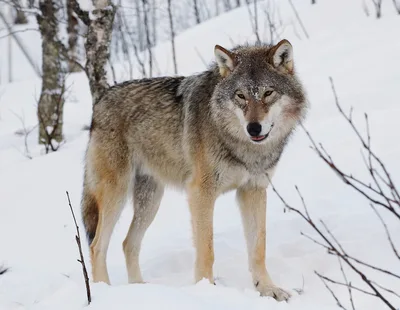 Gray wolf
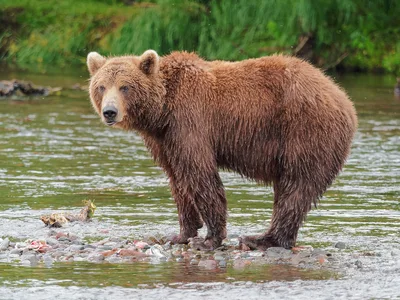 Brown bear
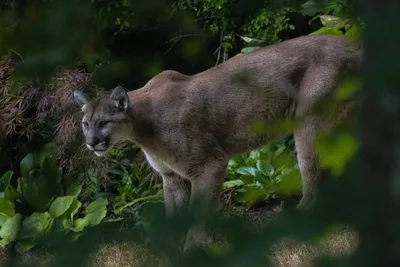 Cougar
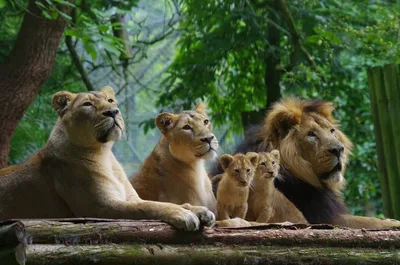 Lion
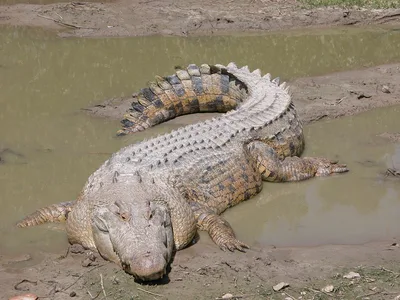 Saltwater crocodile
Ecological equivalents
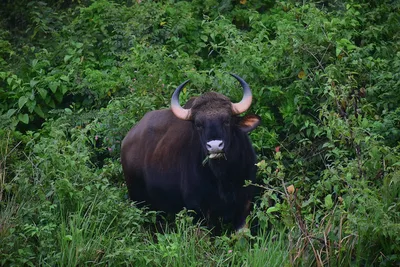
Related species on this site
Bison (same genus), European bison (same genus), Addax (same family), African buffalo (same family), Alpine Goat (same family), American Pygmy Goat (same family), and more.
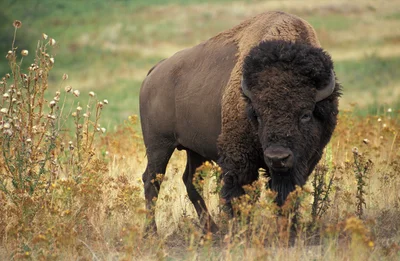
Mammals
Bison
Bison
Bison are heavy-bodied wild cattle.
Living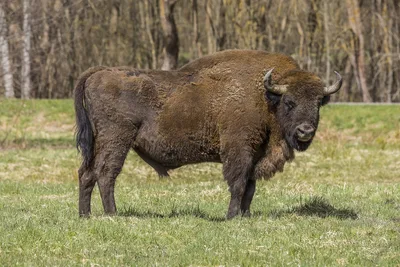 NT
Mammals
European bison
Bison bonasus
The European bison, or wisent, is the heaviest wild animal on land in Europe.
Living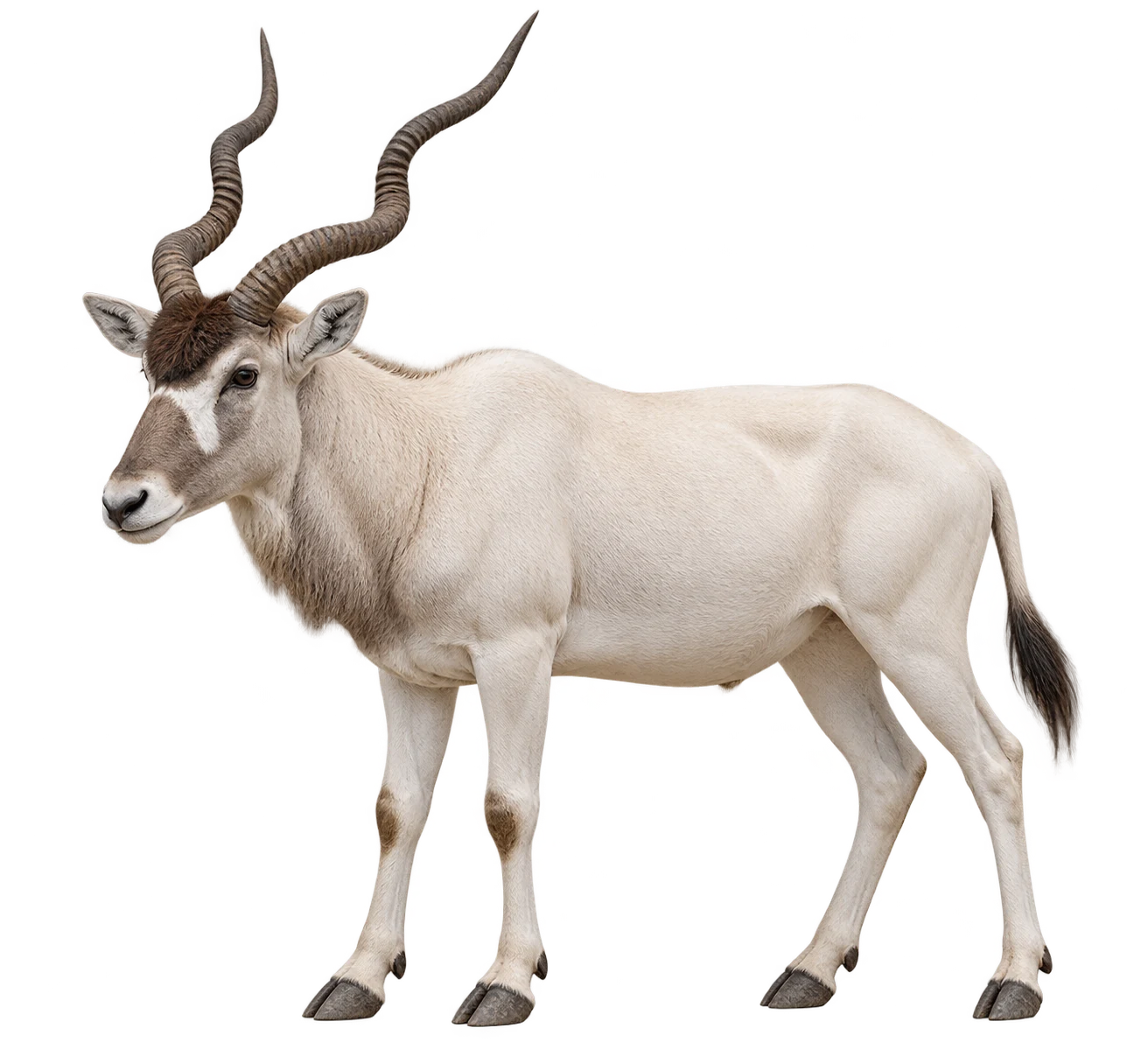
Mammals
Addax
Addax nasomaculatus
Classification and source reference
LivingAI illustration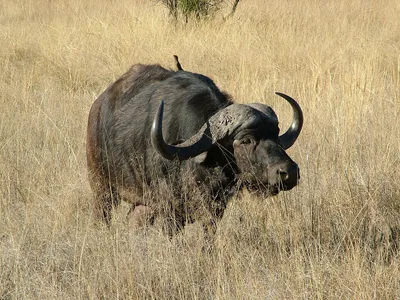 NT
Mammals
African buffalo
Syncerus caffer
The African buffalo is a heavy wild ox of sub-Saharan Africa that lives in herds of dozens to thousands and must drink every day.
Living
Mammals
Alpine Goat
Capra hircus
Classification and source reference
LivingAI illustration
Mammals
American Pygmy Goat
Capra hircus
Classification and source reference
LivingAI illustration