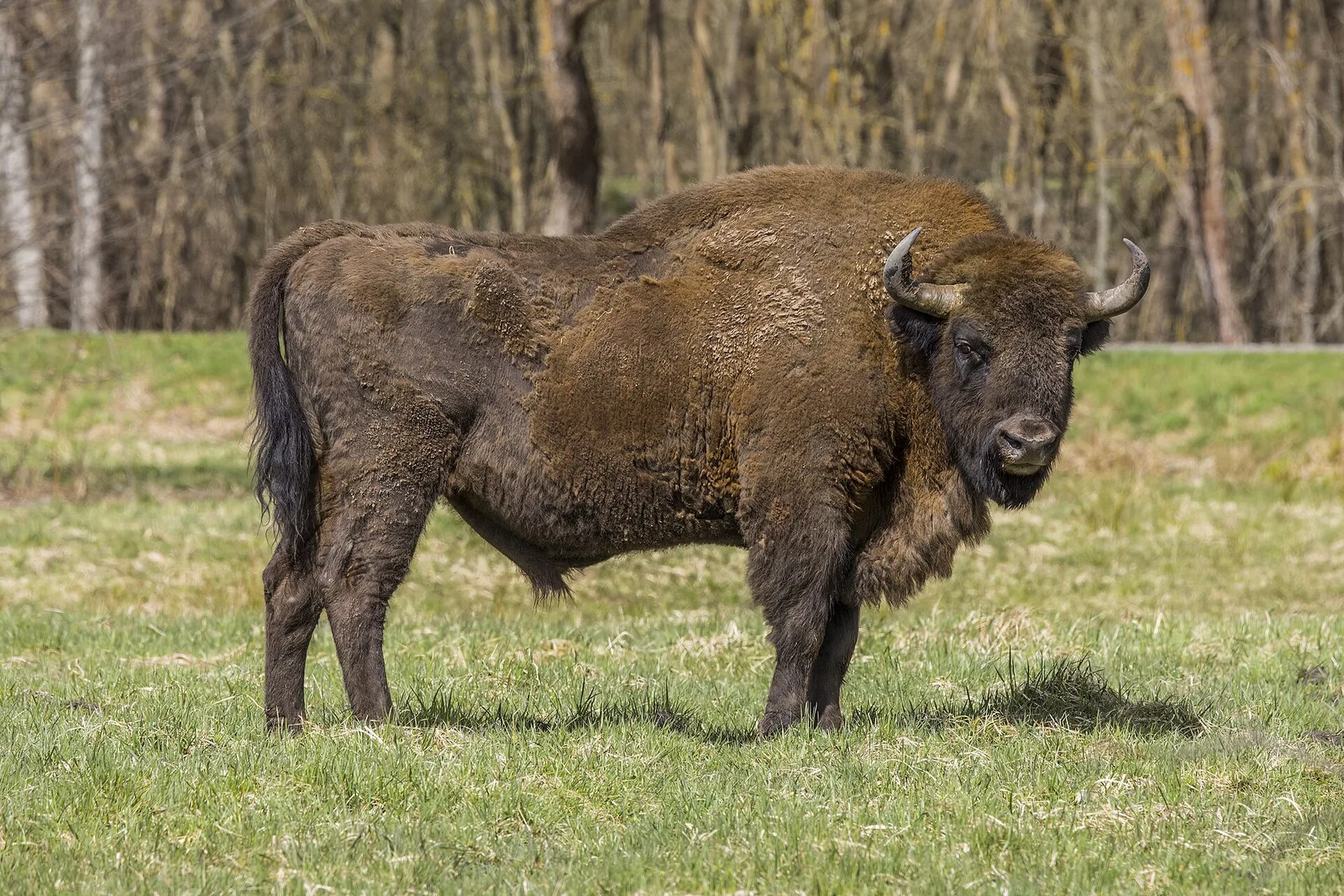
European bison
Europe's heaviest wild animal, back from twelve founders
Bison bonasus
Also called Wisent, Zubr, European wood bison
Living individuals or members of this group exist today. This does not mean they are safe from extinction.
Meet the european bison
The European bison, or wisent, is the heaviest wild animal on land in Europe. Hunters shot the last wild ones in the 1920s, and every bison alive today descends from twelve zoo animals.
Images of the european bison


Lifespan in the wild
18 to 24 years
Weight
0.42 to 0.92 t
Length
2.4 to 3.3 m
Height
1.69 to 2.1 m
Fact file
European bison
- Location
- Forests of Poland, Belarus, Russia and other reintroduction sites across Europe
- Habitat
- Temperate forest, Grassland, Mountains
- Diet
- Herbivore
- Prey / food
- Grasses, sedges, herbs, twigs, bark, leaves
- Predators
- None as adults; wolves and bears rarely take calves
- Lifestyle
- Diurnal, lives in herds led by cows
- Group name
- Herd
- Name of young
- Calf
- Gestation
- About 264 days
- Litter size
- 1 calf, rarely 2
- Population
- About 7,500 in 2019, and rising
- Biggest threat
- Inbreeding, poaching and small, isolated herds
- Distinctive feature
- A high shoulder hump and a long mane on the forehead and throat
- Colour
- Golden brown to dark brown
- Skin type
- Fur
Size
Next to a person
Measurements
Size and speed
- Height
- 1.69 to 2.1 m at the shoulder
- Height, male
- 1.8 to 2.1 m
- Height, female
- 1.69 to 1.97 m
- Length
- 2.4 to 3.3 m head and body, without the tail
- Length, male
- 2.8 to 3.3 m
- Length, female
- 2.4 to 2.9 m
- Tail
- 30 to 92 cm
- Weight
- 0.42 to 0.92 t, up to 1 t females from 424 kg, males to 920 kg; a big bull can pass 1,000 kg
- Weight, male
- 615 to 920 kg
- Weight, female
- 424 to 633 kg
Typical adult ranges. Source: Wikipedia.
Life cycle
Lifespan
- In the wild18 to 24 years
- In captivityUp to 30 years
- 030 years
The pale bar is the record. Source: Wikipedia.
Appearance
Colour and coat
- Primary colours
- browndark brown
- Secondary colours
- golden brownblack
- Skin type
- fur
- Male and female
- Strong. Bulls are taller and much heavier, with a larger hump and a thicker mane. The difference shows from three years of age.
Life cycle
Mating and family
- Mating system
- polygynous, with a tending bond
- Social structure
- mixed herds of cows, calves and young led by cows, with bulls alone or in small groups
- Breeding
- one calf a year
The rut runs from August to October, and a dominant bull guards each cow in heat. After about 264 days the cow leaves the herd and bears a single calf, usually from May to July. The calf stands within an hour and may suckle into its second year. Cows first calve at about four years. Wild bison live 18 to 24 years.
Classification
Taxonomy
- Kingdom
- Animalia
- Phylum
- Chordata
- Class
- Mammalia
- Order
- Artiodactyla
- Family
- Bovidae
- Genus
- Bison
- Species
- Bison bonasus
Conservation
Red List status
- LC
- NT
- VU
- EN
- CR
- EW
- EX
Near Threatened on the IUCN Red List
Range
Recorded in 9 countries
Habitat layer: temperate broadleaf and mixed forest, temperate conifer forest, boreal forest and taiga, tropical grassland, savanna and shrubland, temperate grassland, savanna and shrubland, montane grassland and shrubland.
Countries from 972 wild records on GBIF (iNaturalist research grade), filtered and checked by hand. Country shapes: Natural Earth. Habitat: RESOLVE Ecoregions 2017, CC BY 4.0. Basemap: Natural Earth.
Habitats
Three things to know
- 1
Only 12 zoo animals from the 1920s are the ancestors of every European bison alive today.
- 2
A bull European bison can eat about 32 kilograms of plants in a single summer day.
- 3
A European bison has 14 pairs of ribs, and its American cousin has one pair more.
Did you know
Seven more facts
- 1
The wisent has 14 pairs of ribs, and the American bison has 15.
- 2
A newborn calf weighs 15 to 35 kilograms and stands within 45 minutes.
- 3
About 2.4 to 3.2% of the bison genome came from the aurochs, the wild ancestor of cattle.
- 4
Every living bull carries one of only two Y chromosomes.
- 5
In winter a bison breaks ice with its hooves to drink.
- 6
Three cows released in Kent in 2022 were the first bison in Britain for 6,000 years.
- 7
About 140,000 people visit the Białowieża Forest each year to look for bison.
Field notes
How it looks and acts
Field notes
Distinguishing features
- A shoulder height of 1.69 to 2.1 metres, taller than the American bison.
- A high hump over the shoulders, larger in bulls.
- A long mane on the forehead and under the throat.
- Short horns that curve forward through the line of the face.
- A golden brown to dark brown coat that is less shaggy than an American bison's.
- A tail of 30 to 92 centimetres with a hairy tuft.
Field notes
Unique adaptations
- As with other cattle, a four-chambered stomach digests grass, bark and twigs.
- Long legs and a strong jump suit broken, hilly forest.
- A neck set high lets it browse from trees as well as graze.
- Heavy hooves break winter ice to reach water.
- Forward-pointing horns let bulls lock and wrestle rather than charge.
Field notes
Interesting behaviours
- Feeds, rests and chews the cud in turns through the day.
- Gathers in large mixed crowds at winter feeding sites.
- Cows leave the herd to calve and return a few days later.
- A rutting bull guards a cow in a tending bond and hardly eats.
- Young bulls wander between herds more than any other class.
Field notes
Temperament
- Calm in the herd and led by the cows.
- Harder to tame than the American bison and less willing to breed with cattle.
- Bulls fight rivals in the rut.
- One wild bull named Pubal became famous for seeking out people and refusing to rejoin the herd.
Field notes
Communication
- Gives a low growl when anxious or in the rut.
- A cow calls her calf to suckle.
- A bull tests a cow's scent with the flehmen lip curl.
- Herds exchange members when they meet, which probably spreads information about food.
Ecology
Ecological role
The European bison is the largest grazer of the European forest and shapes it by feeding and by moving seeds.
- Grazes glades and meadows and keeps them open.
- Carries the seeds of around 178 plant species in its coat and dung.
- Browses young trees of low timber value and changes which species regenerate.
- Its grazing raised the number of plant species in a Polish forest, according to a 2024 study.
Stories
Myths and legends
- In Greek tradition, Pausanias told how the Paeonians trapped bison alive in pits.
- In Polish tradition, the zubr is a national animal and guards the coats of arms of many towns.
- In Belarusian tradition, the bison stands for the Grodno and Brest regions and the Białowieża forest.
- In Slavic folklore, the wisent is said to be the wild spirit of the forest, though no old source is named.
People
Relationship with humans
People
Living alongside us
People hunted the European bison to extinction in the wild by 1927. Zoos and breeders rebuilt the species from 12 founders and returned it to the forest. Today it draws tourists to Poland and Belarus, but it also damages crops and costs farmers money. Governments pay compensation in some countries, and poaching follows where they do not. The bison is a national symbol in Poland and Belarus.
- A bull weighs up to 920 kilograms and can kill a person if it charges.
- Bison usually walk away from people, and attacks are probably rare.
- A cow with a calf or a bull in the rut is the most likely to charge.
People
Status, uses and products
- Domestication
- Wild
- As a pet
- Not suitable. A European bison needs many square kilometres of forest and meadow, a herd, and daily water. It is less tameable than the American bison. It is a protected species, and only registered breeding centres may keep it.
- Uses
- ecotourismconservation breedingrewilding
- Products
- meathidehorn
The full account
About the european bison
The European bison, Bison bonasus, is the heaviest wild animal that lives on land in Europe. Many people know it as the wisent, from German, or the zubr, from Polish. A bull weighs 615 to 920 kilograms and stands 1.8 to 2.1 metres at the shoulder. A cow weighs 424 to 633 kg. It is one of two living bison species, and it is taller and longer in the leg than its American cousin.
In the early 1900s hunters shot the last wild European bison, in Poland in 1921 and in the Caucasus in 1927. Only 48 animals were left, all in zoos, and just 12 of them became the ancestors of every bison alive today. Breeders rebuilt the species from that handful and returned it to the forest from 1929 onward. About 7,500 European bison existed in 2019, about half of them in Poland and Belarus. The IUCN now lists the species as Near Threatened, and Poland and Belarus both count it as a national animal.
Name and taxonomy
Carl Linnaeus described the species in 1758. The Greeks named the animal first, and Aristotle called it bonasos in the 4th century BC. Later Greek and Roman writers used bison, and both words survive in the scientific name Bison bonasus. The English word wisent came from German in the 19th century and is related to the Old English wesend. Zubr is the Polish name, and every Slavic language has a similar word.
Three subspecies existed in recent times. The Carpathian bison died out by 1852, and the Caucasian bison followed in 1927. Only the lowland subspecies, B. b. bonasus, survives as a pure line. A second breeding line carries genes from one Caucasian bull, and some scientists treat it as a new subspecies, B. b. montanus. Some authors have argued that the European and American bison are one species, but most keep them apart.
Evolution and relatives
The European bison split from the steppe bison, Bison priscus, at least 100,000 years ago. The American bison descends from the steppe bison too, so the two living species are each other's closest relatives. The story has a twist. The mitochondrial DNA of the wisent sits closer to the aurochs, the wild ancestor of cattle, than to the American bison. Ancient interbreeding is the likely cause, and the aurochs share of the modern genome is probably 2.4 to 3.2%.
During the last ice age two lineages of European bison lived side by side with the steppe bison, from Spain to the Caucasus. The steppe bison vanished from Europe at the end of the ice age. One wisent lineage died out about 9,900 years ago in southern Scandinavia, and every living bison belongs to the other. Cave painters at Altamira and elsewhere seem to have drawn the two ice-age species differently.
Appearance
A bull measures 2.8 to 3.3 metres from nose to rump, and a cow 2.4 to 2.9 m. The tail adds 30 to 92 centimetres. Bulls stand 1.8 to 2.1 metres at the shoulder and weigh 615 to 920 kilograms. Cows stand 1.69 to 1.97 m and weigh 424 to 633 kg. An old bull can pass 1,000 kg. A newborn calf weighs only 15 to 35 kg.
The coat runs from golden brown to dark brown. A tall hump rises over the shoulders, built from long spines on the backbone and heavy muscle, and it is bigger in bulls. A long mane hangs from the forehead and under the throat. Next to the American bison, the wisent has a shorter mane, a longer tail, longer horns and a less shaggy body. Its horns point forward through the line of the face, so two bulls can lock horns like domestic cattle. The wisent has 14 pairs of ribs, one pair fewer than the 15 of the American bison.
Habitat and range
Before farming spread, the bison lived across the lowlands of Europe, from the Pyrenees and the Massif Central to the Volga and the Caucasus. It may have reached the Altai Mountains and Lake Baikal in the east. Forest clearing pushed it back over the Middle Ages. It vanished from Gaul in the 8th century and from the Ardennes and Vosges by the 15th century. By 1900 only two wild herds remained, in the Białowieża Forest and in the north-west Caucasus.
Today free-living herds exist in Poland, Belarus, Lithuania, Ukraine, Russia, Romania, Slovakia, Germany, Switzerland and other countries. The Białowieża Forest on the Polish and Belarusian border still holds the largest wild population, with around 1,000 animals counted in 2014. Small herds have been released in Spain, Denmark, Portugal and Kent in England, places with no firm record of the species. GBIF holds records from 28 countries, which include zoo animals.
The bison prefers broadleaf and mixed forest broken up by meadows, glades and young plantations. Oak and oak-pine woodland is typical in the lowlands, and beech and fir with spruce in the hills. Every herd needs open grass and a daily drink of water. One Russian population lives at about 60 degrees north in the Northern Dvina valley without any winter feeding.
Diet and feeding
Grasses, sedges and herbs make up about 90% of the diet. Twigs, bark, shoots and leaves of trees and shrubs supply the other 10%. Mosses, ferns, horsetails and fungi together fill only 0.1 to 0.7% of the rumen. In summer a bull can eat 32 kilograms of plant matter in a day. The wisent browses more than the American bison, and its neck is set to reach up rather than down.
Like other cattle, the bison is a ruminant, and it spends the day in turns of feeding, resting and chewing the cud. It must drink every day. In winter it breaks ice with its heavy hooves to reach water. In the Białowieża Forest, keepers have put out hay for the bison every winter for centuries. Large herds gather round the hay racks, and even then the animals keep chewing bark and twigs.
Behaviour and social life
The European bison lives in herds. A mixed herd holds cows, calves, young animals of two to three years and a few young bulls, about eight to 13 animals in all. Bull groups are smaller, about two animals, and more than half of the adult bulls live alone. Herds are not families. Groups meet, merge, swap members and split again. In winter most bison gather at feeding sites in big mixed crowds.
The cows lead. They decide where the herd grazes and when it moves, so specialists call the system a matriarchy. The oldest and strongest bulls hang about the edges of the herd and step in only when danger appears or the rut begins. In summer a bison spends about 60% of its active time feeding, 30% resting and 10% walking. In winter, with hay on offer, the shares reverse and walking fills 60% of the day.
Bison do not defend a territory, and home ranges overlap. A bull of five or six years roams about 44 square kilometres, and an older bull about 84.3 km2. Bulls in forest cover the most ground, up to 151.6 km2. In winter ranges shrink to about 10.7 km2 for bulls and 7.9 km2 for cows, depending on snow and cold. Compared with the American bison the wisent runs slower and tires sooner, but it jumps higher and further.
Communication and senses
The bison has a range of calls that change with its mood. When anxious it gives a low growl, which Polish speakers call chruczenie. Bulls make the same sound in the rut. A cow calls her calf to suckle with a special sound.
Smell matters most in the breeding season. A bull sniffs a cow and curls back his upper lip, the flehmen response, to test whether she is in heat. Like other cattle, the bison probably relies more on smell and hearing than on sharp eyesight. Posture carries a message too, and a bull that lowers his head and paws the ground is probably about to charge.
Reproduction and life cycle
The rut runs from August to October, though bulls start to join the cow herds in July. One mature bull over six years old usually controls a small herd, and one to three younger bulls tag along without breeding. Bulls of four to six years are fertile but the older bulls keep them away from the cows. When a cow comes into heat, the dominant bull walks beside her, keeps her apart from the herd and barely eats until they mate. If a rival bull approaches, the two may fight.
Pregnancy lasts 254 to 277 days, and about 264 on average. A cow slips away from the herd for a few days, gives birth, usually between May and July, and comes back with one calf. Twins are rare. A male calf weighs about 27.6 kilograms at birth and a female about 24.4 kg. The calf stands within 22 to 45 minutes and suckles within the first hour. By one month it walks well and grazes beside its mother, and it may suckle into its second year.
Bulls mature at two years and cows in their third year, and a cow usually bears her first calf at four. Cows breed from about four to 20 years of age, but bulls breed only from six to 12. Wild bison usually live 18 to 24 years, and cows outlive bulls. The oldest marked cow in a free herd reached 24, and captive animals have reached 30.
Predators and threats
An adult European bison has no regular predator. Scattered 19th century reports describe wolves, bears and even lions and tigers killing bison. Today wolves and bears probably take a calf now and then, but the herd and its bulls protect the young. Disease and injury each cause about 21% of deaths, and old age and poaching about 7% each.
The deepest threat is inside the animal. The whole species passed through a bottleneck of 12 founders, so every herd is inbred. All living bulls carry one of only two Y chromosomes. Inbreeding has slightly slowed skeletal growth in cows and raised calf deaths, and it weakens resistance to disease. Managers also fear foot-and-mouth disease, hybrids with American bison in the Caucasus, and poaching where farmers resent crop damage. Habitat broken up by farms, roads and logging keeps many herds small and isolated.
Population and conservation
In 1996 the IUCN listed the species as Endangered, and it has since moved to Vulnerable and then Near Threatened. Numbers rose from 6,573 in 2016 to about 7,500 in 2019. Poland held 3,060 bison in May 2025, and 2,855 of them roamed free. Belarus counted 2,385 in 2023 and Russia 1,588 in 2020. The lowland line is listed as Vulnerable and the lowland-Caucasian line as Endangered.
Protection has a long history. Polish kings guarded the Białowieża herd from the 1500s, and one made poaching a capital crime. The International Society for the Preservation of the Wisent formed in Berlin in 1923 and opened a stud book. The first two animals went back into Białowieża in 1929, and by 1964 more than 100 lived there. Poland is now the breeding centre of the species, and its herds grow by about 15% to 18% a year. Between 1945 and 2014 Białowieża alone sent 553 bison to other reserves and zoos.
Managers aim for 3,000 free-ranging animals, linked herds, a gene bank and tighter poaching laws. A herd released in 2014 in the Țarcu Mountains of Romania was found to lock away about 54,000 more tonnes of carbon a year. Three cows released near Canterbury in July 2022 were the first bison in Britain for 6,000 years, and the herd reached 8 by 2024.
Relationship with humans
People hunted the bison for meat, hide and horn for thousands of years, and in the Middle Ages the horns became drinking cups. During World War I German troops shot 600 bison in Białowieża, and at the war's end retreating soldiers killed all but nine. In the 1930s Hermann Göring backed a scheme to cross wisent with American bison to breed game for hunting. After World War II only the pure animals at Springe near Hanover stayed in the international herd book.
Today the bison is a tourist draw. About 140,000 visitors come to the Białowieża Forest each year to see it. Farmers are less pleased, because about 70% of released bison drift out of the forest into fields. In 2010 Poland paid just over 90,000 euros for crop damage, and the bill rises each year. Where no compensation exists, as in parts of Belarus, Russia and Ukraine, poaching follows. In 2017 a wild bull swam the Oder into Germany, the first there for 250 years, and hunters shot it on official orders.
In culture and myth
Bison appear in some of the oldest art on Earth. Ice-age painters drew them on the cave walls at Altamira in Spain. In Greek tradition, Pausanias described how the Paeonians caught bison alive, and a Paeonian king gave a golden bull head to Delphi. In 1523 the poet Mikołaj Hussowczyk wrote a Latin poem about the bison of the Grand Duchy of Lithuania.
In Polish and Belarusian tradition, the zubr is a national animal and a symbol of the eastern forests. It stands on the coats of arms of Hajnówka, Żywiec, Grodno, Brest and many other towns and districts. Bronze bison stand in Spała, Kiel, Pszczyna and at the gate of Kyiv Zoo. The vodka Żubrówka, a noble recipe from the 14th century, carries a blade of bison grass from Białowieża in every bottle. A Polish beer and the country's second largest bank also use the bison as a badge. Spirit-animal websites call the wisent the untamed spirit of the forest, but that reading is probably modern.
A sentence with a dotted underline is inferred: it describes the group the animal belongs to, or is a reading of the sources, rather than a measured or reported fact about this species.
Questions
European bison questions, answered
How big is a European bison?
A bull stands 1.8 to 2.1 metres at the shoulder and weighs 615 to 920 kilograms. A cow stands 1.69 to 1.97 m and weighs 424 to 633 kg. An old bull can pass 1,000 kg.
Is the European bison the same as the American bison?
No. They are two species. The European bison is taller, has longer legs and horns, a shorter mane and one fewer pair of ribs.
Where do European bison live?
Wild herds live in forests in Poland, Belarus, Lithuania, Ukraine, Russia, Romania, Slovakia and several other countries. The largest herd is in the Białowieża Forest on the Polish and Belarusian border.
What do European bison eat?
About 90% of the diet is grass, sedge and herbs. The rest is twigs, bark, shoots and leaves. A bull can eat 32 kilograms a day in summer.
Are European bison endangered?
The IUCN lists the species as Near Threatened. It was extinct in the wild by 1927, but about 7,500 lived in 2019 and numbers are rising.
How many European bison are left?
About 7,500 in 2019. Poland alone counted 3,060 in May 2025, and Belarus 2,385 in 2023.
Why did the European bison almost go extinct?
Forest clearing shrank its range over centuries, and hunting finished the job. Soldiers shot 600 in Białowieża in World War I, and the last wild animal died in 1927.
How long do European bison live?
In the wild, 18 to 24 years is usual, and cows outlive bulls. Captive animals have reached 30.
How fast can a European bison run?
No source gives a measured speed. It runs slower and tires sooner than the American bison, but it jumps higher and further.
Are European bison dangerous?
They can be. A bull weighs up to 920 kilograms, and a cow with a calf or a bull in the rut may charge. Most bison walk away from people, so keep your distance.
What is a wisent?
Wisent is another name for the European bison. The word came into English from German in the 19th century.
How many calves does a European bison have?
One calf a year, born after about 264 days, usually between May and July. Twins are rare.
Who leads a bison herd?
The cows. They choose where the herd feeds and when it moves. The largest bulls stay at the edges and step in when danger appears.
Do European bison have predators?
Adults have none. Wolves and bears probably take the odd calf. Disease, injury and poaching cause most deaths.
Are there bison in Britain?
Yes. Three cows were released in woods near Canterbury in Kent in July 2022, and the herd grew to 8 animals by 2024.
Why is the bison on Polish coats of arms?
The zubr is a national animal in both Poland and Belarus, and half of all European bison live there. Towns such as Hajnówka, Żywiec, Grodno and Brest carry it on their arms.
Food web
Prey and food
- grasses
- sedges
- herbs
- twigs
- bark
- leaves
Food web
Predators
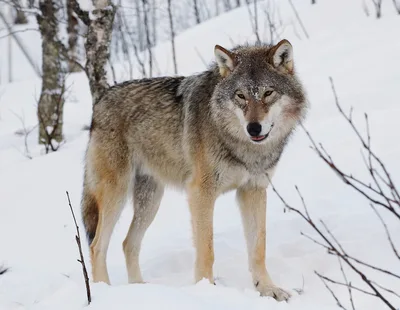 Gray wolf
- bears rarely
Ecological equivalents
Related species on this site
American bison (same genus), Bison (same genus), Addax (same family), African buffalo (same family), Alpine Goat (same family), American Pygmy Goat (same family), and more.
 NT
Mammals
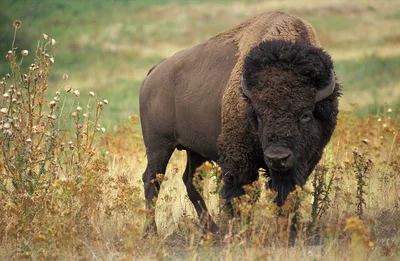
American bison
Bison bison
The American bison is the heaviest land animal in North America and the national mammal of the United States.
Living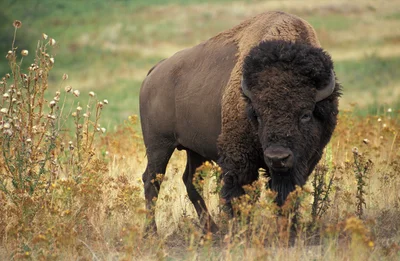
Mammals
Bison
Bison
Bison are heavy-bodied wild cattle.
Living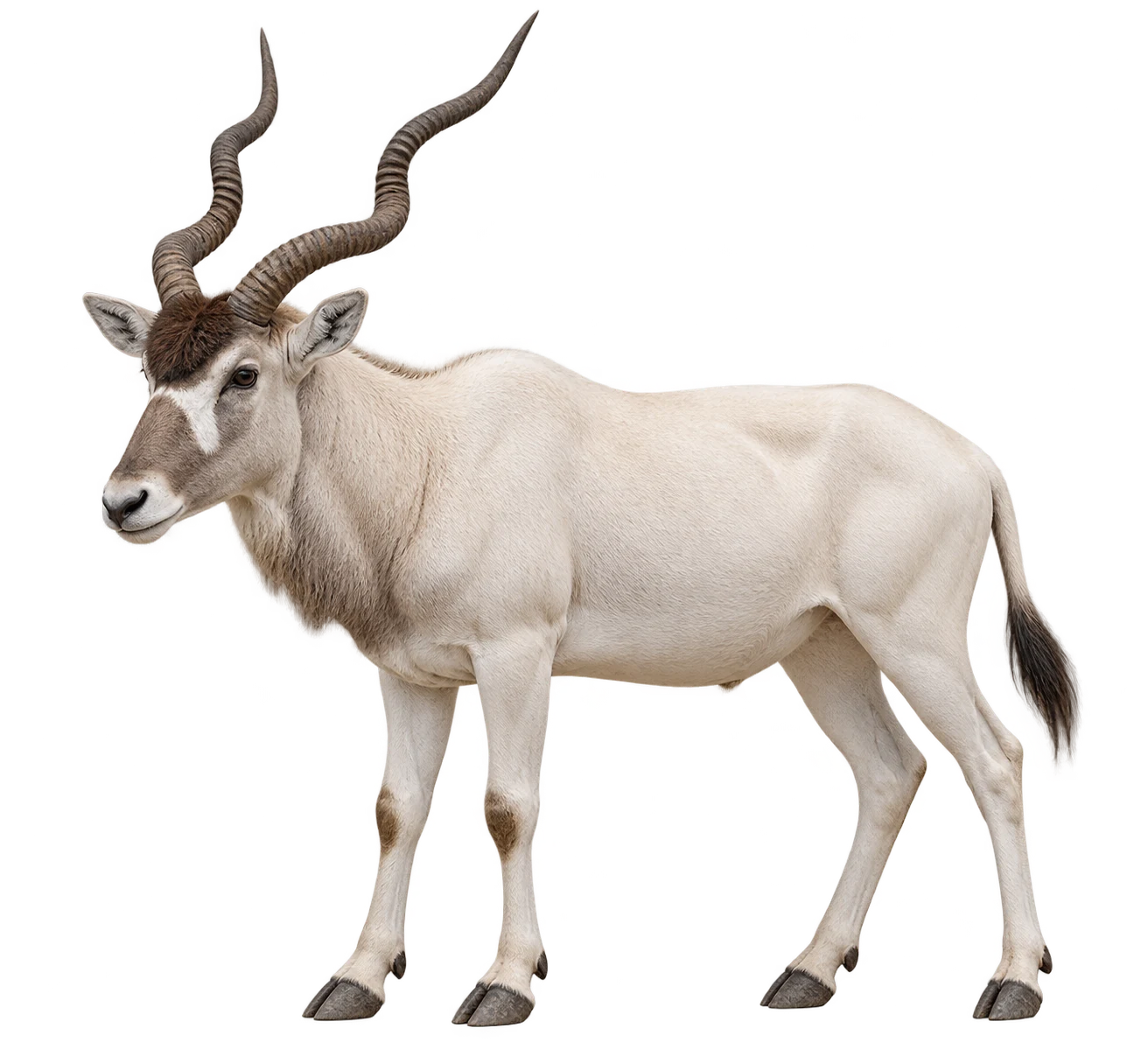
Mammals
Addax
Addax nasomaculatus
Classification and source reference
LivingAI illustration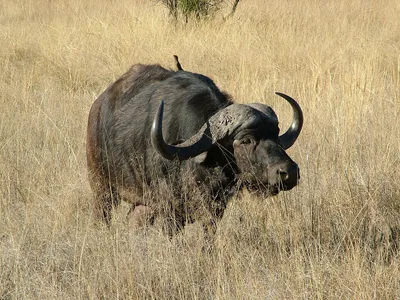 NT
Mammals
African buffalo
Syncerus caffer
The African buffalo is a heavy wild ox of sub-Saharan Africa that lives in herds of dozens to thousands and must drink every day.
Living
Mammals
Alpine Goat
Capra hircus
Classification and source reference
LivingAI illustration
Mammals
American Pygmy Goat
Capra hircus
Classification and source reference
LivingAI illustration