Brown bear
The giant of the north that lives mostly on plants
Ursus arctos
Also called Grizzly bear, Kodiak bear, Bruin
Living individuals or members of this group exist today. This does not mean they are safe from extinction.
Meet the brown bear
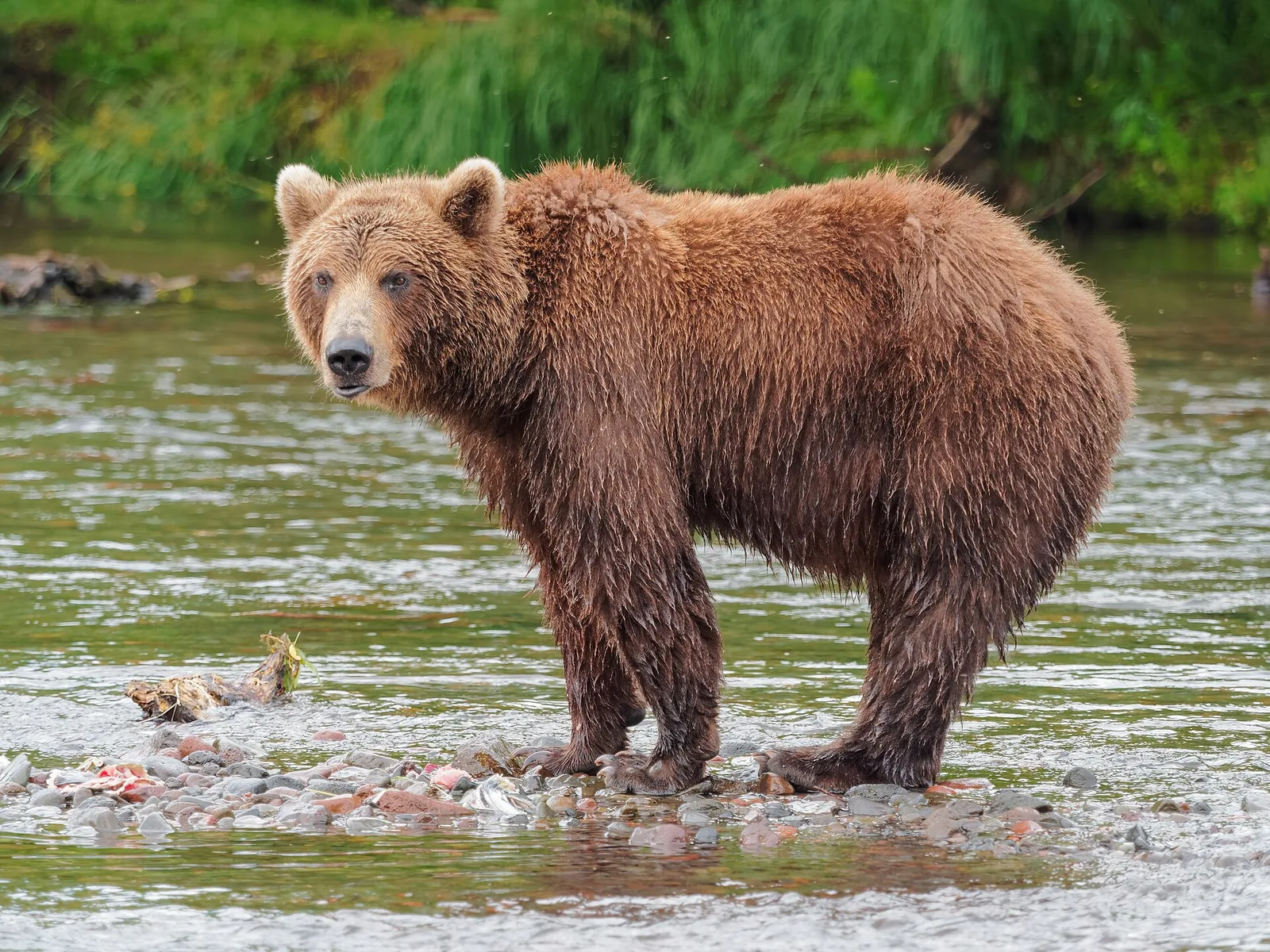
The brown bear is one of the two largest land carnivores, and it ranges across the forests and mountains of Eurasia and North America. It eats mostly plants, sleeps through the winter and gives birth in its den.
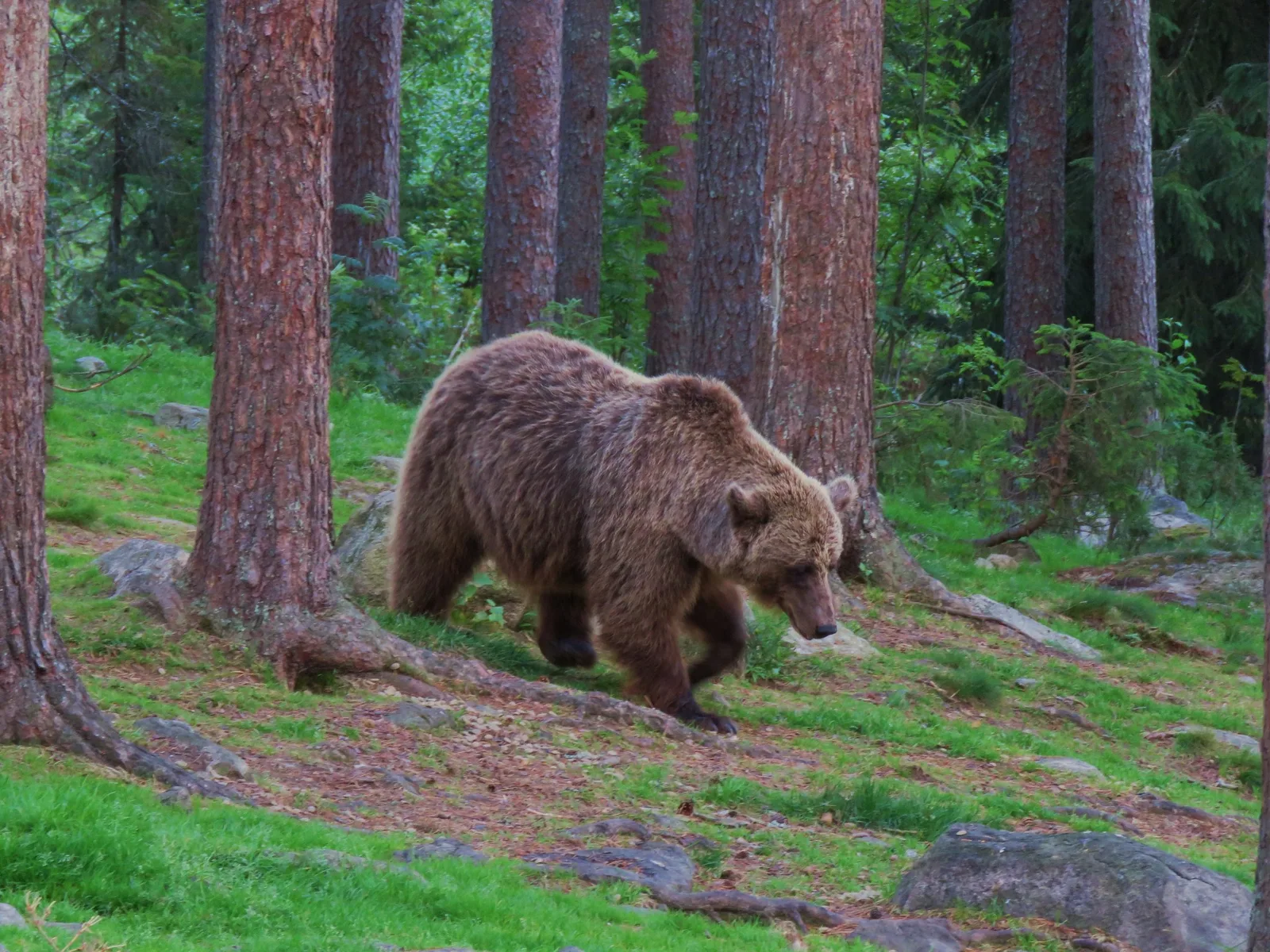
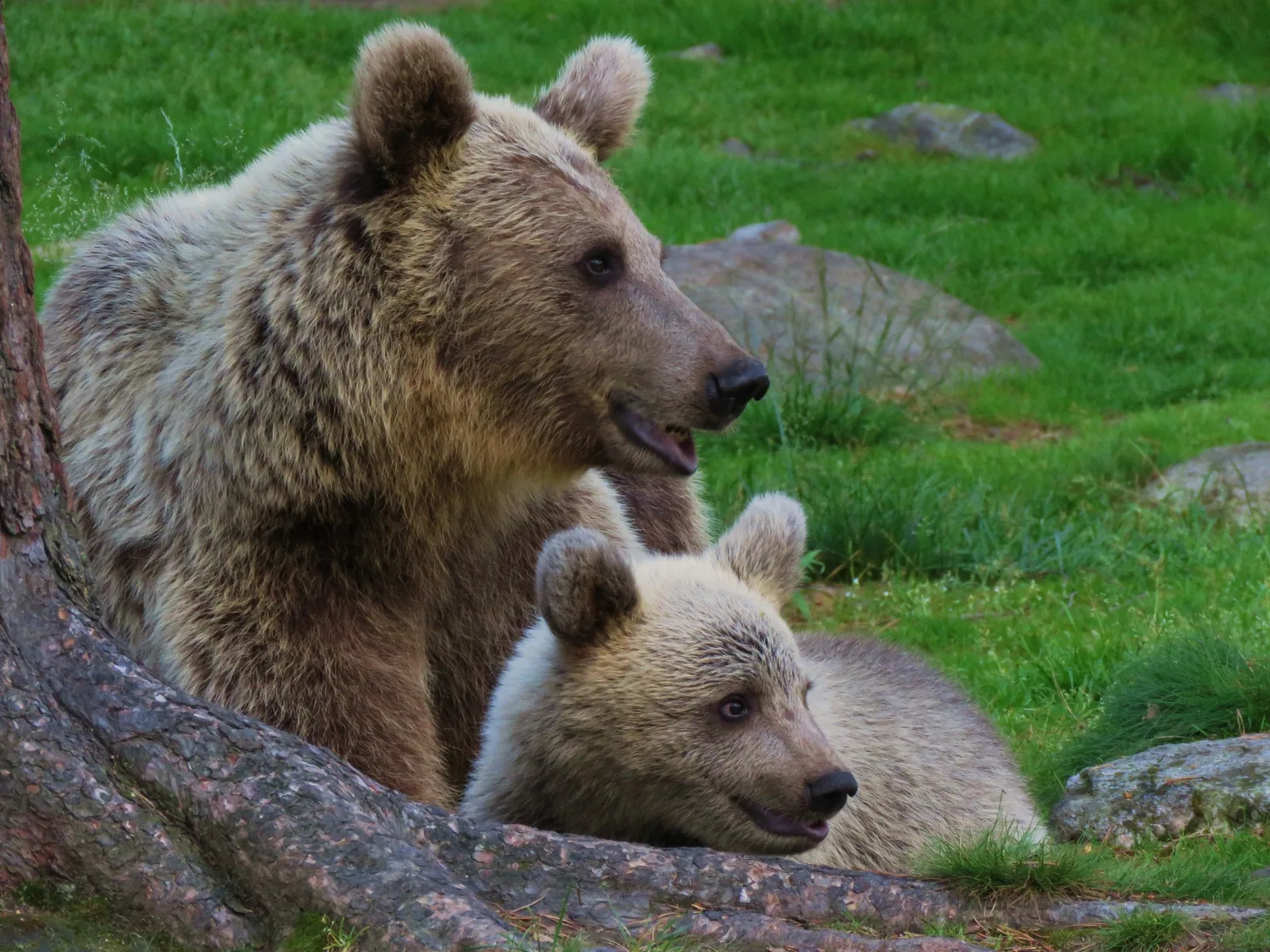
Images of the brown bear
Lifespan in the wild
20 to 30 years the oldest wild bear on record was nearly 37
Weight
80 to 600 kg
Length
1 to 2.8 m
Height
0.9 to 1.5 m
Fact file
Brown bear
- Location
- Russia, Alaska, western Canada, the Rockies, northern and eastern Europe, central Asia, Hokkaido
- Habitat
- Temperate forest, Mountains, Tundra, Coast
- Diet
- Omnivore
- Prey / food
- Salmon, moose and elk calves, ground squirrels, moths, carrion; mostly berries, roots and grass
- Predators
- None as adults; Siberian tigers, wolves and other bears take cubs
- Lifestyle
- Solitary; active at dawn and dusk; sleeps in a den through winter
- Name of young
- Cub
- Gestation
- 180 to 266 days, including delayed implantation
- Litter size
- 1 to 3 cubs, up to 6
- Population
- About 200,000 worldwide; 130,000 in Russia
- Biggest threat
- Hunting, poaching for gall bladders, and the loss of habitat to roads and farms
- Distinctive feature
- A muscular hump on the shoulders and long front claws
- Colour
- Brown, from cream to nearly black
- Skin type
- Fur
Size
Next to a person
Measurements
Size and speed
- Height
- 0.9 to 1.5 m at the shoulder
- Length
- 1 to 2.8 m head and body
- Tail
- 6 to 22 cm
- Weight
- 80 to 600 kg, up to 780 kg interior bears are far smaller than coastal ones; a coastal Alaskan male averages 389 kg and one weighed 780 kg
- Weight, male
- About 217 kg the average of adult males in 19 populations
- Weight, female
- About 152 kg the average of adult females in 24 populations
Typical adult ranges. Sources: Animal Diversity Web, Wikipedia.
Life cycle
Lifespan
- In the wild20 to 30, up to 37 years the oldest wild bear on record was nearly 37
- In captivityUp to 50 years
- 050 years
The pale bar is the record. Source: Animal Diversity Web.
Appearance
Colour and coat
- Primary colours
- browndark brown
- Secondary colours
- creamreddishblack
- Skin type
- fur
- Male and female
- Strong. Males average at least 30% larger than females and are more compactly built, and the biggest males can be twice a female's weight.
Life cycle
Mating and family
- Mating system
- polygynandrous, with both sexes taking several mates
- Social structure
- solitary, with mothers and cubs the only lasting bond
- Breeding
- one litter every three to four years
Brown bears mate from mid-May to early July. The fertilised egg waits about six months and implants when the female enters her den. The cubs are born about eight weeks later while she sleeps. A litter holds one to three cubs, each 350 to 510 grams at birth. The cubs stay with their mother for 1.5 to 4.5 years and learn everything from her. A wild bear lives 20 to 30 years.
Classification
Taxonomy
- Kingdom
- Animalia
- Phylum
- Chordata
- Class
- Mammalia
- Order
- Carnivora
- Family
- Ursidae
- Genus
- Ursus
- Species
- Ursus arctos
Conservation
Red List status
- LC
- NT
- VU
- EN
- CR
- EW
- EX
Least Concern on the IUCN Red List
Range
Recorded in 13 countries
- Canada
- Spain
- Finland
- Georgia
- Greece
- Italy
- Japan
- Poland
- Romania
- Russia
- Slovenia
- Slovakia
- United States of America
Habitat layer: temperate broadleaf and mixed forest, temperate conifer forest, boreal forest and taiga, montane grassland and shrubland, tundra, mangrove.
Countries from 12,325 wild records on GBIF (iNaturalist research grade), filtered and checked by hand. Country shapes: Natural Earth. Habitat: RESOLVE Ecoregions 2017, CC BY 4.0. Basemap: Natural Earth.
Habitats
Three things to know
- 1
About 90% of a brown bear's food energy comes from plants, despite its reputation as a hunter.
- 2
A bear can gain up to 180 kilograms of fat between summer and autumn, and it doubles its spring weight.
- 3
The cubs are born in the winter den while the mother sleeps, and they weigh only 350 to 510 grams.
Did you know
Seven more facts
- 1
The scientific name Ursus arctos means bear in Latin and bear in Greek.
- 2
A newborn cub weighs only 350 to 510 grams, about the weight of a tin of soup.
- 3
A female can breed at 28 years old, the oldest known for any wild bear.
- 4
A bear's roar carries 2 kilometres.
- 5
The brown bear is the only bear with a muscular hump on its shoulders.
- 6
Wild grizzly-polar bear hybrids have been confirmed in the Canadian Arctic since 2006.
- 7
A bear in Yellowstone can range over 874 square kilometres.
Field notes
How it looks and acts
Field notes
Distinguishing features
- A prominent hump of muscle over the shoulders.
- Long, blunt front claws of 5 to 6 centimetres.
- A broad, dished face with small rounded ears.
- A coat from cream to nearly black, often frosted with pale tips.
- A shoulder height of 90 to 150 centimetres.
- A short tail of 6 to 22 centimetres.
Field notes
Unique adaptations
- A shoulder hump and long claws power the digging of roots, rodents and dens.
- Delayed implantation lets the female cancel a pregnancy if she is too thin for winter.
- A winter sleep with a small drop in body temperature carries it through months without food.
- Broad paws let it cross crusted snow where a moose breaks through.
- Teeth built for both meat and plants let it switch diet with the seasons.
Field notes
Interesting behaviours
- Catches leaping salmon in mid-air at waterfalls.
- Travels a very long way in autumn to reach a salmon stream or a berry crop.
- Digs a winter den on a sheltered slope and lines it with dry plants.
- Steals kills from wolves and cougars by sheer size.
- Rubs and scratches trees to leave scent.
Field notes
Temperament
- Solitary and tolerant of other bears except at food or a mate.
- Unpredictable, and quick to attack when surprised at close range.
- Fiercely protective as a mother, more than any male.
- Shy of people and prefers to move away.
Field notes
Communication
- Scent left by rubbing and scratching trees.
- Huffs when tense and woofs when alarmed.
- A growl that rises to a roar during a charge.
- Facial signals, from a play face to a gaping jaw.
- Bawling between cubs and mother.
Ecology
Ecological role
The brown bear is a top predator, a scavenger and a gardener that spreads seeds and turns the soil.
- Disperses the seeds of the berries and fruit it eats across its huge range.
- Digs for roots and rodents, which probably turns and aerates mountain soil.
- Carries salmon from streams into the forest, where the leftovers feed foxes, eagles, ravens and gulls.
- Takes young and weak moose, elk and caribou, and cleans up winter carrion.
Stories
Myths and legends
- In Haida tradition, the people descend from a woman who married a grizzly bear.
- In Denaa tradition, a dead bear's paws are cut off so that its spirit cannot escape.
- In ancient Greek tradition, the bear belonged to the goddess Artemis and was seen as almost human because it stands upright.
- In Ainu and Siberian tradition, the bear was an elder relative honoured with a feast.
- In Scottish tradition, The Brown Bear of Norway tells of a prince turned into a bear and freed by his wife's love.
People
Relationship with humans
People
Living alongside us
People have hunted the brown bear for at least 9,300 years, and bounties nearly wiped it out in Europe and the American West. It has danced in circuses and died in Roman arenas. Today it draws tourists to Yellowstone and Alaska, and licensed hunting continues in some places. It kills about 95 people in 15 years across its range, most of them when surprised or when defending cubs. Bear spray is the best defence.
- A 2019 study counted 95 deaths and 568 injuries from brown bears in 15 years across North America and Eurasia.
- Mothers with cubs cause 70% of the fatal attacks in North America, and a surprised bear at close range is the other main danger.
- A single bite or swipe can kill, and bear spray works better than a gun.
People
Status, uses and products
- Domestication
- Wild
- As a pet
- Not suitable. A brown bear can weigh 600 kilograms, needs hundreds of square kilometres and can kill with one blow. Cubs tamed for shows grow into dangerous adults, and private bears suffer obesity and malnutrition.
- Uses
- ecotourismtrophy huntingcircus actszoo exhibition
- Products
- meathidesgall bladderspaws
The full account
About the brown bear
The brown bear, Ursus arctos, is a huge bear of the northern forests, mountains and tundra of Eurasia and North America. Among land carnivores only its closest relative, the polar bear, matches it in size. Adults weigh 80 to 600 kilograms, and the largest coastal males in Alaska have reached 780 kg. Head and body measure 100 to 280 centimetres, and the shoulder stands 90 to 150 cm high. A hump of muscle over the shoulders and long front claws make it a powerful digger.
Despite its reputation, the brown bear takes about 90% of its food energy from plants. It eats grass, roots, berries, nuts and moths, and it hunts salmon, ground squirrels and the calves of moose and elk when it can. It sleeps through the winter in a den, and the cubs are born there while the mother dozes. About 200,000 brown bears remain, most of them in Russia, and the IUCN lists the species as Least Concern.
Name and taxonomy
Ursus is Latin for bear, and arktos is Greek for bear, so the scientific name says bear twice. Linnaeus gave that name in the 1758 edition of Systema Naturae. The old English word bruin comes from a Middle Dutch word for brown, through the fable of Reynard the Fox. American settlers of the 1800s called the bear Old Ephraim and Moccasin Joe. The name grizzly describes the grizzled coat of inland North American bears, with dark hairs tipped in cream.
Brown bear taxonomy is a tangle: scientists have named up to 90 subspecies over the years. In 2005 the scientific community recognised 15 living or recently extinct subspecies. DNA studies find only five to nine main lineages, and one of those is the polar bear. In North America, the coastal brown bear and the inland grizzly are two forms of the same subspecies, Ursus arctos horribilis. The Kodiak bears of Alaska have probably been isolated since the last ice age.
Evolution and relatives
The brown bear is one of eight living bears, and it belongs to the subfamily Ursinae with six of them. It is thought to descend from the Etruscan bear of Asia in the early Pliocene. Its line separated from the cave bears about 1.2 to 1.4 million years ago. The oldest brown bear fossils come from Asia and are 500,000 to 300,000 years old. Brown bears reached Europe about 250,000 years ago, then North Africa. In Britain they may have helped push the cave bear to extinction.
They crossed into North America from Siberia over the Beringia land bridge in several waves that followed the ice ages. The founding lineage of most North American bears dates to about 177,000 years ago. The polar bear is the brown bear's sister species, and the two still interbreed. DNA confirmed a wild grizzly-polar hybrid in the Canadian Arctic in 2006. Seven more have turned up since, all descended from one female polar bear. The bears of Alaska's Alexander Archipelago carry old polar bear DNA from a population stranded at the end of the Pleistocene.
Appearance
The brown bear varies more in size than any other bear. Inland grizzlies average about 180 kilograms for males and 135 kg for females. Coastal bears fed on salmon weigh about twice as much: males on the southern Alaskan coast average 389 kg. The tail is short, at 6 to 22 centimetres. A bear weighs least in spring after the winter fast. In late autumn it can carry up to 180 kg of extra fat.
The coat runs from cream through red and yellow-brown to almost black, and legs are often darker than the body. Indian bears can be reddish with silver tips, and Chinese bears wear a pale collar across the chest and shoulders. Winter fur grows thick and long, up to 11 to 12 cm at the shoulders in the north. A mane of longer hair lies along the back of the neck.
The brown bear is the only living bear with a shoulder hump, and the hump is pure muscle for digging. The front claws are longer than the back ones, at 5 to 6 cm straight and 7 to 10 cm round the curve. Those blunt claws and that weight mean an adult cannot climb a tree the way a black bear does. The skull is massive and concave in profile, and the jaws carry large canines with the lower pair strongly curved.
Habitat and range
No other bear uses so many kinds of country. Brown bears live from sea level to 5,000 metres in the Himalayas. They use tundra, every type of northern forest, alpine meadows and coasts. They prefer semi-open land with enough cover for a daytime rest. Once the species roamed the Great Plains, the Atlas Mountains of North Africa and most of Europe.
Russia holds about 130,000 bears, the United States about 32,500 and Canada around 25,000. Alaska alone has about 30,000, and the bears are slowly returning along the Rockies and the western plains of the lower 48 states. Europe had about 14,000 in 2010, split into ten separate populations from Spain to Russia. Romania has 5,000 to 6,000, the Pyrenees only 20 to 25, and central Italy's Marsican bears number about 50. In Asia the bear ranges from Turkey and Iran through central Asia and Siberia to China, Korea and the Japanese island of Hokkaido.
Bears in Alaska and western Canada are stable, but the populations of the Sierra Nevada, the southern Rockies and northern Mexico are gone. The Mexican grizzlies died out in the 1960s.
Diet and feeding
The brown bear eats a wider variety of food than any other bear. In spring it lives on winter-killed carrion, grass, sedges, shoots and moss. In summer and early autumn it turns to berries, nuts and fruit, and in a poor fruit year inland bears dig roots and bulbs. No other bear digs so well for tough food. Its long claws open the ground and its heavy jaws bite through roots. Insects matter too: bears in Yellowstone may eat 40,000 army cutworm moths in a day and take up to half their yearly energy from them.
On the Kamchatka peninsula and the Alaskan coast, bears live mostly on spawning salmon, and that rich food explains their huge size. They gather at waterfalls and snatch leaping fish from the air, or wade in and pin a fish with their claws. At the peak of the run a bear eats only the eggs and head and leaves the rest to foxes, eagles, ravens and gulls.
Most brown bears are clumsy hunters, and many chases of large prey end with the prey escaping. A few bears, taught by their mothers, hunt elk, moose, caribou, muskoxen and wild boar with confidence, and they target the young and the weak. A bear kills by pinning the animal and eating it alive. A blow of the forearm can break the back of a moose. Near people they raid crops, beehives, cattle and rubbish, and Yellowstone closed its open dump because bears came to link people with food.
Behaviour and social life
The brown bear lives alone for most of the year and meets others only to mate or at a rich food source. At a salmon river or a dump, bears form a hierarchy by age and size. Big adult males rank highest, but a mother with cubs is the most aggressive bear of all. A dominant bear faces its rival head on, shows its canines and stretches its neck, and the loser turns sideways, drops its head and sits.
Bears are not territorial, and several adults share the same ground without trouble. Home ranges are vast: in Yellowstone a female uses up to 281 square kilometres and a male up to 874. In the central Canadian Arctic, where food is scarce, a male may range over 8,171 square kilometres. Activity peaks in the morning and early evening, and bears that live near people become fully nocturnal. In autumn a bear may travel a very long way to reach a salmon stream or a berry crop.
From October to December a bear digs a den on a sheltered slope, under a rock or among tree roots. It lines the den with dry plants. Its body temperature drops only a few degrees, so this is a deep winter sleep rather than true hibernation, and the bear wakes easily.
Communication and senses
Smell is the bear's main sense, and it can follow the scent of a carcass for more than two miles. Hearing is about as good as a person's, and eyesight is relatively poor. Bears rub and scratch trees and other landmarks to leave scent that tells others who passed and whether a female is in season. A female in oestrus marks with urine, and the scent draws several males.
Bears have a rich set of faces. A relaxed open mouth with a curled lip invites play, while flattened ears and a closed mouth mean the bear feels threatened. A gaping jaw that shows the lower canines is a warning of attack. A tense bear huffs about twice a second, an alarmed bear woofs, and an aggressive bear growls. A charging bear's growl builds to a roar that carries 2 kilometres, and cubs bawl when they want their mother.
Reproduction and life cycle
Mating runs from mid-May to early July, and later further north. Both sexes take several partners. A male usually mates with two females in a few weeks, and a female may accept four or even eight males. Females mature at four to eight years, and males mate about a year later, once they can compete. A female comes into season only every three to four years, because she is busy with cubs in between.
The fertilised egg floats free in the womb for about six months and implants only when the female enters her winter den. If she has not stored enough fat, the embryo is reabsorbed and there are no cubs that year. The cubs are born about eight weeks after implantation, while the mother sleeps, so the whole pregnancy spans 180 to 266 days. A litter is usually one to three cubs, though six have been recorded. A newborn is blind, hairless and toothless and weighs 350 to 510 grams.
The cubs suckle in the den until spring, leave it at 7 to 9 kilograms, and follow their mother over long distances. They learn everything from her: what to eat, where to find it, how to fish and where to den. They stay with her for 1.5 to 4.5 years, on average about 2.5 in North America. The father plays no part, and a strange male may kill cubs to bring their mother back into season within two to four days. A wild bear lives 20 to 30 years, and the oldest known wild bear was nearly 37.
Predators and threats
An adult brown bear has no regular predator apart from the Siberian tiger and other bears. In the Russian Far East tigers killed bears 32 times between 1944 and 1959, mostly young animals or small females caught outside their dens. In the same period bears killed four tigresses and cubs. Wolves, cougars and other bears take cubs, and cubs flee up a tree when a strange male approaches. Between 13% and 44% of cubs die in their first year, most of them from hunger.
People kill far more bears than tigers do. Hunting, poaching, road and rail collisions, and the spread of farms and resorts all take a toll. A three-year survey in the Russian Far East found bear gall bladders being smuggled to Southeast Asia, though no medical value has ever been shown. Yearly mortality is about 10% in most protected areas. Bears carry flukes, ticks, tapeworms and lice, and may catch distemper from dogs and wolves.
Population and conservation
The IUCN lists the brown bear as Least Concern, with a world population of about 200,000. Of the eight living bears, only it and the American black bear escape a threatened listing. That headline hides many local disasters. Hunters wiped out the Atlas bear of North Africa in the 19th century. The grizzlies of California, Mexico and the Pacific Northwest followed by the mid 20th century. The lower 48 states held about 100,000 bears in the early 1900s and fewer than 1,000 today.
The Himalayan brown bear is Critically Endangered and keeps only 2% of its former range, because poachers kill it for body parts. The Syrian brown bear has gone from more than half of its range. Europe's 2000 action plan paid compensation for livestock losses, taught farmers safer practices and protected forest. Sweden's bears grew by 1.5% a year between the 1940s and the 1990s. In central Asia conservationists plan wildlife corridors to link populations that climate change is pulling apart.
Relationship with humans
People have hunted brown bears for at least 9,300 to 10,300 years. European bounty schemes in the 17th and 18th centuries pushed the bear close to extinction before protection came in the 1900s. Grizzlies received some US protection only in the 1920s, and Alaska still allows licensed hunting.
Most brown bears keep away from people and seldom charge without cause. A surprised bear or a mother with cubs is the danger. Mothers defending cubs cause 70% of the deaths from brown bears in North America. A 2019 study counted 664 attacks across North America and Eurasia in 15 years, with 568 injuries and 95 deaths. Bear spray stopped aggressive bears in 92% of studied cases, against 67% for guns.
More than 700 brown bears live in zoos, and the species has performed in circuses since Roman times. Dancing bears were trained by standing cubs on hot metal plates while a violin played, a cruelty that persists in places. Today bear watching earns money in Yellowstone and Alaska, and the shooting of Bear 148 by a trophy hunter in 2017 caused public outrage.
In culture and myth
The bear is among the oldest subjects of human art, with over 100 cave paintings from the Palaeolithic. Many Native American peoples hold the brown bear sacred. In Denaa tradition, hunters cut off all four paws of a dead bear so that its spirit could not escape. They waited before eating the meat. A bear claw necklace marked a brave and honoured person, and its rattle was thought to heal. In Haida tradition, the people descend from the marriage of a woman and a grizzly bear.
In ancient Greek tradition bears were seen as close to people, because they stand upright, and the goddess Artemis was linked to the bear. Several Siberian and Finno-Ugric peoples, and the Ainu of Japan, treated the bear as an ancestor or elder relative. They held bear feasts in its honour. Western fables paint the bear as slow, foolish and easily tricked. The real animal is not: bears have backtracked in snow to fool hunters.
The bear is the national animal of Finland and the unofficial symbol of Russia. It appears on the arms of Madrid, reaching into a strawberry tree. It is also on the arms of Bern, a name popularly tied to the German word for bear. Children meet the brown bear in Goldilocks, in Snow White and Rose Red, and in the Scottish tale The Brown Bear of Norway.
A sentence with a dotted underline is inferred: it describes the group the animal belongs to, or is a reading of the sources, rather than a measured or reported fact about this species.
Questions
Brown bear questions, answered
How big is a brown bear?
Adults weigh 80 to 600 kilograms and measure 100 to 280 centimetres from head to rump. The shoulder stands 90 to 150 cm high. Coastal Alaskan males average 389 kg, and one weighed 780 kg.
Is a grizzly bear the same as a brown bear?
Yes. The grizzly is the inland form of the North American brown bear, Ursus arctos horribilis. Coastal bears of the same subspecies grow about twice as heavy on salmon.
What do brown bears eat?
Mostly plants: grass, roots, berries, nuts and fruit make up about 90% of their food energy. They also eat moths, ground squirrels, salmon, carrion and the young of moose, elk and caribou.
Are brown bears dangerous?
Yes, when surprised or when a mother is guarding cubs. A 2019 study counted 95 deaths in 15 years across the whole range. Most bears avoid people, and bear spray stops an attack in 92% of cases.
Do brown bears hibernate?
They sleep deeply in a den from about October to December until March to May, but their body temperature drops only a few degrees. This is a deep sleep rather than hibernation in the strict sense, and a bear wakes easily. In the south the sleep is short or absent.
Where do brown bears live?
Across Russia, Alaska, western Canada, the northern Rockies, northern and eastern Europe, central Asia and Hokkaido. They use forest, tundra, mountains and coasts, from sea level to 5,000 metres.
How many brown bears are left?
About 200,000. Russia has around 130,000, the United States 32,500 and Canada 25,000. Europe had about 14,000 in 2010.
Are brown bears endangered?
The IUCN lists the species as Least Concern. But the Himalayan brown bear is Critically Endangered, the Marsican bears of Italy number about 50, and the grizzlies of California and Mexico are extinct.
How long do brown bears live?
Wild bears live 20 to 30 years, and the oldest known wild bear was nearly 37. In captivity a male named Andreas reached 50.
How many cubs does a brown bear have?
Usually one to three, and up to six. The cubs are born in the winter den and weigh 350 to 510 grams. A female breeds only every three to four years.
Can a brown bear climb a tree?
Adults cannot, because of their weight and blunt claws. Cubs climb well and flee up a tree when a strange male appears.
How fast can a brown bear run?
The sources give no measured speed, but ADW says a brown bear can outrun a horse and easily catch a black bear. Never try to outrun one.
Why do brown bears have a hump?
The hump is a mass of shoulder muscle that powers digging. Brown bears dig for roots, bulbs and burrowing rodents and excavate their own winter dens. No other bear has it.
Do brown bears and polar bears interbreed?
Yes. The polar bear is the brown bear's closest relative. A wild hybrid was confirmed by DNA in the Canadian Arctic in 2006, and seven more have been found since.
What is the biggest brown bear?
The Kodiak and coastal Alaskan bears. Males there average 389 kg, and one was weighed at 780 kg. Their size comes from a diet rich in salmon.
Food web
Prey and food
 Atlantic salmon
 Moose
- elk calves
- ground squirrels
- moths
- carrion
- mostly berries
- roots
- grass
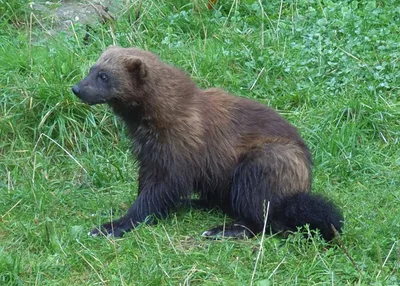 Wolverine
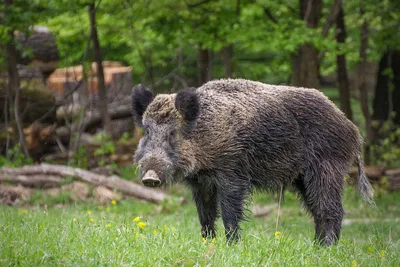 Wild boar
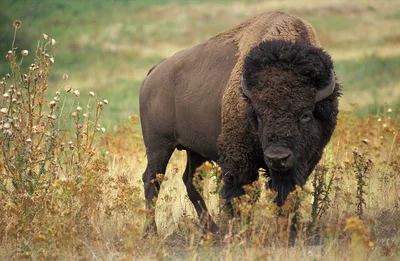 American bison
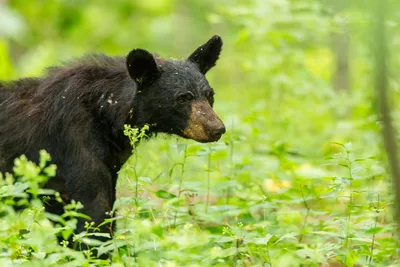 American black bear
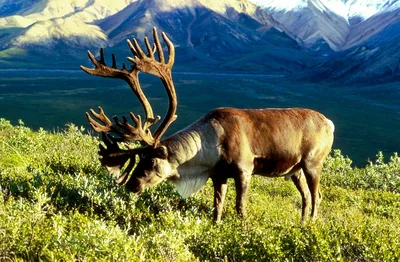 Reindeer
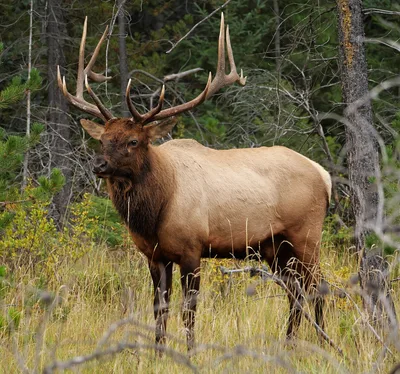 Elk
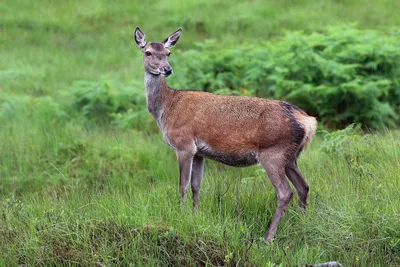 Red deer
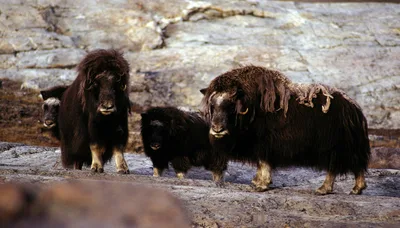 Muskox
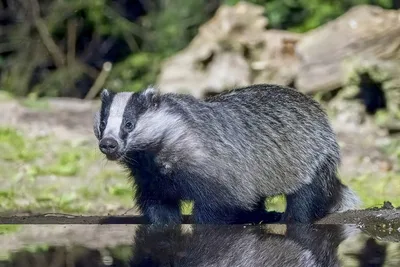 European badger
Food web
Predators
- siberian tigers
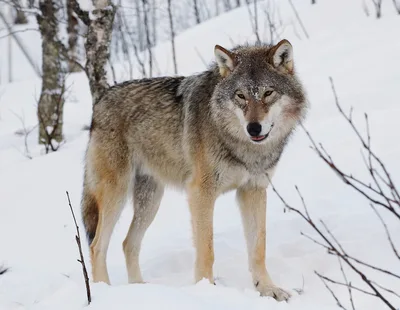 Gray wolf
- bears
Ecological equivalents
Related species on this site
American black bear (same genus), Asian black bear (same genus), Cave Bear (same genus), Cinnamon Bear (same genus), Kermode Bear (Spirit Bear) (same genus), Marsican Brown Bear (same genus), and more.
- LC
Mammals
American black bear
Ursus americanus
The American black bear is the smallest and most widespread bear in North America, at home in forest from Alaska to Mexico.
Living 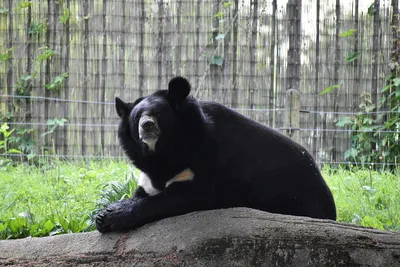 VU
Mammals
Asian black bear
Ursus thibetanus
The Asian black bear is a medium-sized forest bear of Asia with a pale crescent on its chest and a gift for climbing.
Living
Mammals
Cave Bear
Ursus spelaeus
Classification and source reference
ExtinctAI reconstruction
Mammals
Cinnamon Bear
Ursus americanus
Classification and source reference
LivingAI illustration
Mammals
Kermode Bear (Spirit Bear)
Ursus americanus kermodei
Classification and source reference
LivingAI illustration
Mammals
Marsican Brown Bear
Ursus arctos marsicanus
Classification and source reference
LivingAI illustration