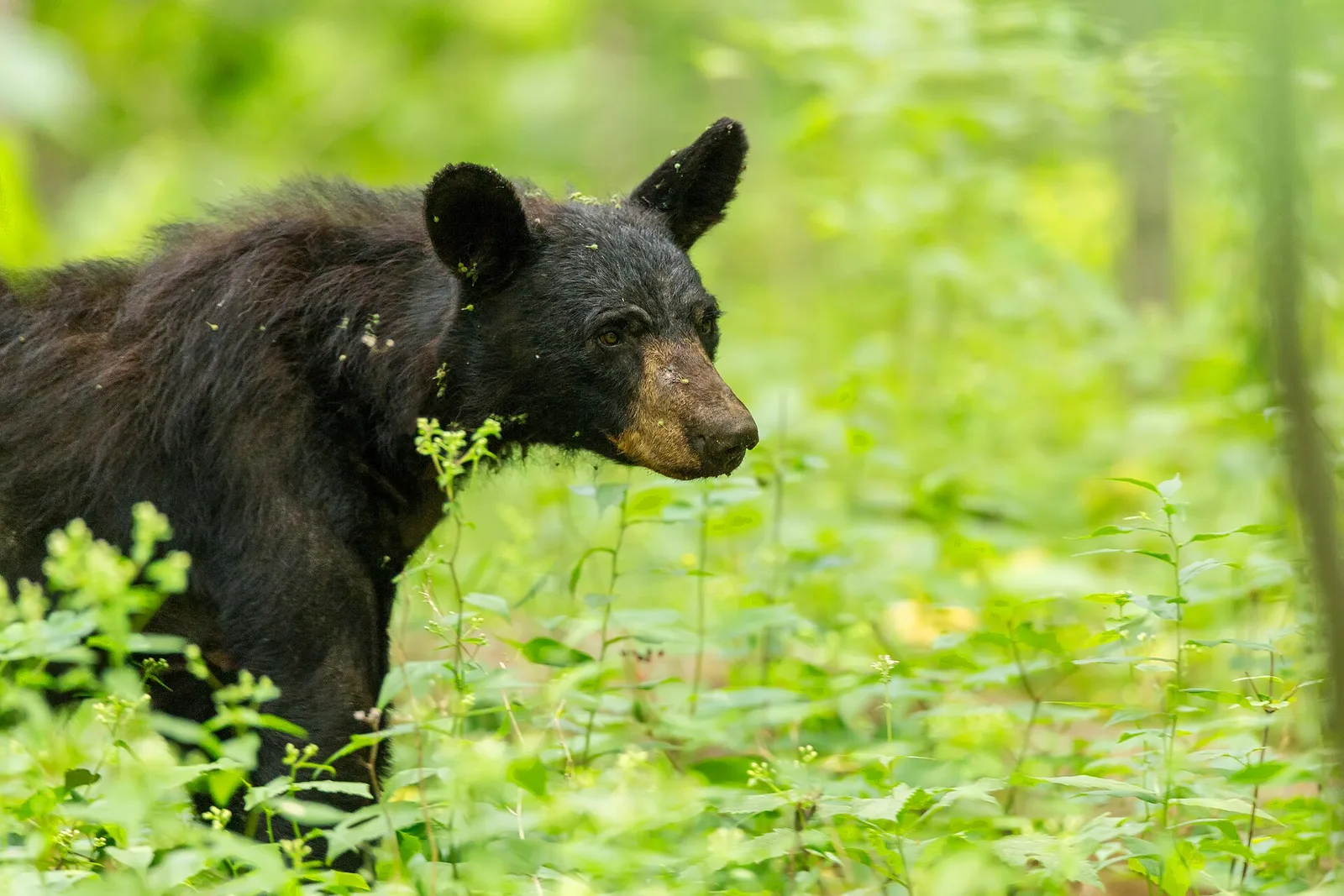
American black bear
North America's most common bear, and its most timid
Ursus americanus
Also called Black bear, Baribal
Living individuals or members of this group exist today. This does not mean they are safe from extinction.
Meet the american black bear
The American black bear is the smallest and most widespread bear in North America, at home in forest from Alaska to Mexico. It eats mostly plants, sleeps through the winter and usually runs from people.
Images of the american black bear


Lifespan in the wild
About 18 years
Weight
40 to 300 kg
Length
1.2 to 1.88 m
Top speed
40 to 48 km/h
Fact file
American black bear
- Location
- Alaska, Canada, most of the United States and northern Mexico
- Habitat
- Temperate forest, Mountains, Wetlands
- Diet
- Omnivore
- Prey / food
- Berries, nuts, acorns, grasses, insects, honey, salmon, deer fawns, carrion
- Predators
- Wolves, cougars, brown bears and other black bears take cubs; humans take adults
- Lifestyle
- Mostly active at dawn and dusk; hibernates for 3 to 8 months
- Group name
- Sloth or sleuth
- Name of young
- Cub
- Gestation
- About 235 days, including delayed implantation
- Litter size
- 1 to 6 cubs, usually 2 or 3
- Population
- About 735,000 to 941,000 in the United States and Canada, stable or rising
- Biggest threat
- Hunting and road deaths
- Distinctive feature
- Straight face profile, tall ears and no shoulder hump
- Colour
- Usually black; also cinnamon, brown, blonde, blue-grey or white
- Skin type
- Fur
Size
Next to a person
Measurements
Size and speed
- Height
- 0.63 to 1.03 m at the shoulder
- Length
- 1.2 to 1.88 m head and body, without the tail
- Length, male
- 1.4 to 2 m total length
- Length, female
- 1.2 to 1.6 m total length
- Tail
- 7.7 to 17.7 cm
- Weight
- 40 to 300 kg, up to 409 kg females 40 to 150 kg, males 60 to 300 kg; the record is a dressed weight
- Weight, male
- 60 to 300 kg
- Weight, female
- 40 to 150 kg
- Top speed
- 40 to 48 km/h
Typical adult ranges. Sources: Wikipedia, Animal Diversity Web.
Life cycle
Lifespan
- In the wildAbout 18, up to 39 years
- In captivityUp to 44 years
- 044 years
The pale bar is the record. Source: Wikipedia.
Appearance
Colour and coat
- Primary colours
- black
- Secondary colours
- cinnamonblondewhite
- Skin type
- fur
- Male and female
- Males are much heavier, 60 to 300 kilograms against 40 to 150 kg for females, with larger cheek teeth. Females have slimmer, more pointed faces.
Life cycle
Mating and family
- Mating system
- promiscuous, both sexes take several partners
- Social structure
- solitary, except mothers with cubs and crowds at rich food
- Breeding
- one litter every second year
Bears mate in June and July, but the embryo waits until November to implant. Cubs are born in the den in late January or February, blind and about 280 to 450 grams. They nurse through the winter, leave the den at 2 to 5 kilograms and stay with their mother until 16 to 18 months. A female first breeds at 3 to 5 years and then every second year. The average wild lifespan is about 18 years, with a record of 39 in the wild and 44 in captivity.
Classification
Taxonomy
- Kingdom
- Animalia
- Phylum
- Chordata
- Class
- Mammalia
- Order
- Carnivora
- Family
- Ursidae
- Genus
- Ursus
- Species
- Ursus americanus
Conservation
Red List status
- LC
- NT
- VU
- EN
- CR
- EW
- EX
Least Concern on the IUCN Red List
Range
Recorded in 3 countries
Habitat layer: temperate broadleaf and mixed forest, temperate conifer forest, boreal forest and taiga, flooded grassland and savanna, montane grassland and shrubland, mangrove.
Countries from 51,770 wild records on GBIF (iNaturalist research grade), filtered and checked by hand. Country shapes: Natural Earth. Habitat: RESOLVE Ecoregions 2017, CC BY 4.0. Basemap: Natural Earth.
Habitats
Three things to know
- 1
Its population is thought to be about twice that of all the other bear species combined.
- 2
A hibernating black bear can go months without eating, drinking or passing waste.
- 3
Only about 70% of American black bears are black; the rest are brown, cinnamon, blonde or even white.
Did you know
Seven more facts
- 1
A bear can run at 40 to 48 kilometres per hour.
- 2
White Kermode bears catch salmon 30% more often than black ones, because fish see black fur by day.
- 3
A hibernating bear forms a hard fecal plug and passes nothing all winter.
- 4
The 2.41 metre record bear from New Brunswick weighed an estimated 500 kilograms alive.
- 5
Black bears visited 77% of cougar kills in one California study and stole many of them.
- 6
Bears are the third favourite quarry of bowhunters, after deer and elk.
- 7
A 1986 Michigan bear was so large that some thought it a grizzly hybrid, but DNA could not settle it.
Field notes
How it looks and acts
Field notes
Distinguishing features
- A straight or slightly rounded face, without the grizzly's dished profile.
- No shoulder hump.
- Tall, rounded ears set well back on the head.
- Short curved claws, good for climbing.
- A short tail of 7.7 to 17.7 centimetres.
- A pale muzzle and sometimes a white chest spot.
Field notes
Unique adaptations
- A slowed heart and metabolism let it fast for 3 to 8 months in the den.
- Muscle and bone hold their strength through months of stillness.
- Insulin resistance switches on in winter and off in the feeding season.
- Short curved claws and long hind legs make it the best climber of the large bears.
- A nose about seven times keener than a dog's finds hidden fawns and buried carcasses.
Field notes
Interesting behaviours
- Feeds mostly at dawn and dusk, and at night near towns.
- Eats nearly non-stop in autumn to put on up to 14 kilograms of fat.
- Digs its own den under a log, a rock or a bank.
- Rubs and claws trees to mark its range.
- Sends cubs up a tree and retreats when a person comes too close.
Field notes
Temperament
- Shy and secretive with people, and quick to leave.
- Curious and clever, and quick to learn where food is.
- Tolerant of other bears at a rich food source, with a clear pecking order.
- Bluffs before it fights, with a charge that stops short.
Field notes
Communication
- Tongue clicks and grunts for friendly contact.
- Jaw clicks and lip pops as a warning.
- A pulsing growl-like call in a real fight.
- Rubbing and clawing trees to leave scent and marks.
Ecology
Ecological role
The black bear is a seed spreader, an insect eater and an opportunist scavenger across the forests of North America.
- Spreads the seeds of the berries and fruit it eats across its large range.
- Eats huge numbers of ants, wasps and moth larvae.
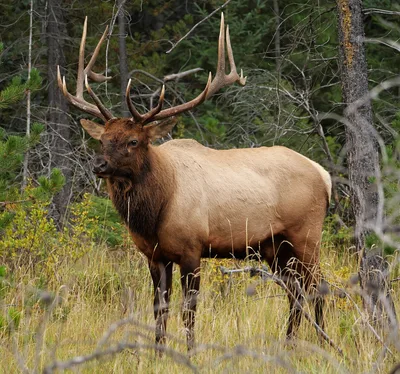
- Takes deer, elk and moose calves in spring, and cleans up winter carcasses.
- Pushes cougars off their kills, so the cats hunt more often.
Stories
Myths and legends
- In Haida, Tlingit and Tsimshian tradition, a girl who married a bear chief's son taught people to respect bears.
- In Navajo tradition, the Big Black Bear guards the four directions around the Sun's house.
- In Kwakwaka'wakw tradition, a quarrel between Grizzly Bear Woman and Black Bear Woman made the two species enemies.
- In Cherokee tradition, the black bear is an elder and a guide to the people.
- In Anishinaabe and other Great Lakes tradition, a mother bear and two drowned cubs became the Sleeping Bear Dunes.
People
Relationship with humans
People
Living alongside us
People have hunted the black bear for meat, fat and fur since the first settlement of the Americas. It is a game animal in most states and provinces, with hundreds of thousands of licences sold each year. The bear raids crops, bins and beehives, and it sometimes kills sheep or dogs. It seldom harms people and usually runs, though a hungry bear can kill. Its winter torpor now guides research into kidney disease and muscle wasting.
- A black bear can kill a person, but ADW counts fewer than 36 deaths in the whole 20th century.
- Most attacks come from hungry bears used to human food, so a victim should fight back, not play dead.
- A mother usually sends her cubs up a tree and withdraws rather than attack.
People
Status, uses and products
- Domestication
- Wild
- As a pet
- Not suitable. An adult can weigh 300 kilograms, opens latches and jars, and needs a range of many square kilometres. It is a wild animal and illegal to keep in most places.
- Uses
- huntingecotourismmedical researchzoo exhibition
- Products
- furmeatfat
The full account
About the american black bear
The American black bear, Ursus americanus, is the smallest of the three bears in North America. It is also the most widespread, and the most numerous bear on Earth. Its population is estimated at about twice that of all other bear species put together. Adults measure 120 to 188 centimetres from nose to rump and stand 63 to 103.5 cm at the shoulder. Males weigh 60 to 300 kilograms and females 40 to 150 kg, and a record male scaled 409 kg.
Despite the name, a black bear can be brown, cinnamon, blonde, blue-grey or white. It lives in forest, where it climbs trees, digs dens and eats mostly plants. It sleeps through the winter for 3 to 8 months without food or water. The IUCN lists the species as Least Concern. Hunters take tens of thousands each year, and bears still spread back into land they lost.
Name and taxonomy
The scientific name Ursus americanus means simply American bear. It sits in the family Ursidae and the order Carnivora, though most of its food is plant matter. GBIF lists Baribal as a second English name, along with the Spanish oso negro americano and the French ours noir. A group of bears is sometimes called a sloth or a sleuth, though wild black bears probably rarely form one.
Sixteen subspecies have been named by tradition. A 2015 genetic study found no support for several of them, including the Florida black bear. The white Kermode bear of coastal British Columbia is a colour form of one subspecies, not a separate species. The black bear is not a close relative of the brown bear or the polar bear, even though all three share the continent.
Evolution and relatives
The black bear line split from the brown bear and polar bear line about 5.05 million years ago. Its nearest living relative is the Asian black bear, and the two parted about 4.08 million years ago. Before that, their shared ancestor had left the sun bear line about 4.58 million years ago. A small early bear, Ursus abstrusus, is the oldest member of the genus in North America, at 4.95 million years.
The earliest fossils of the species, from Port Kennedy in Pennsylvania, look much like the Asian species. Later Pleistocene animals grew as large as grizzlies. The black bear shared the continent with the giant short-faced bear and the Florida spectacled bear. Those bears died out at the end of the last ice age, while the black bear survived, probably because it ate almost anything. In 1859 a black bear and a brown bear produced three cubs at London Zoo, but none reached adulthood.
Appearance
The black bear has a broad skull, a narrow muzzle, small rounded ears set well back, and a short tail of 7.7 to 17.7 centimetres. The face runs straight or slightly convex from the forehead to the nose. A grizzly has a dished face, a shoulder hump and a larger body, which is the easiest way to tell the two apart. The claws are short, curved and dark, and the front claws curve more than the hind ones. The soles are bare, black and deeply wrinkled.
Head and body length runs from 120 to 188 centimetres, and shoulder height from 63 to 103.5 cm. Males weigh 60 to 300 kilograms, and females weigh about a third to a half less, 40 to 150 kg. Weight swings with the season: a bear enters its den about 30% heavier than it leaves it. The largest wild male on record, shot in New Brunswick in 1972, weighed 409 kg after dressing and was 2.41 metres long.
The fur is soft, with dense underfur under long guard hairs. About 70% of black bears are black, but only half of those in the Rocky Mountains are. Cinnamon, brown and blonde bears are common in the northwest, and they are often mistaken for grizzlies. A blue-grey form lives on the Alaskan coast, and white Kermode bears live on the islands of British Columbia. Many bears carry a pale muzzle, and some carry a white spot on the chest.
Habitat and range
The species ranges from northern Alaska across Canada to Newfoundland, and south through the United States into central Mexico. It once lived in nearly every forested part of the continent. Today it holds most of its Canadian range, the whole Appalachian chain, the northern Midwest, the Rockies, the West Coast and Alaska. Bears have returned to Ohio, Illinois, Indiana and Nebraska in recent decades, and one settled in Iowa in 2019.
Black bears want three things from a place: rough ground, thick undergrowth and plenty of nuts or berries. In the lower 48 states they mostly live in wooded mountains between 400 and 3,000 metres. In the southwest that means chaparral and pinyon-juniper woodland, with trips into the open for prickly pear. In the southeast it means oak-hickory forest in the hills and swampy hardwoods on the coast. In the northeast, beech, maple and birch give food, and white cedar swamps give cover.
The taste for dense cover probably dates from a time when bigger bears and sabre-toothed cats held the open country. In Labrador, with no brown bears about, black bears live in open tundra and hunt caribou. Bears also live at the edge of towns wherever bins, bird feeders and orchards offer easy food.
Diet and feeding
Up to 85% of the diet is plant matter. In spring a bear leaves its den thin and looks for winter-killed carcasses, new grass and wetland shoots. In summer it turns to berries and other soft fruit. In autumn it eats almost without pause, and hazelnuts, acorns and pine nuts go down by the hundred each day. It raids squirrel nut stores and takes huckleberries and buffalo berries by the mouthful.
Most of the animal food is insects: ants, bees, wasps, beetles and their grubs. A bear will tear open a tree trunk to reach a hive and eat the comb through the stings. Coastal bears fish for salmon, mostly at night, because the fish spot a black shape by day. The white Kermode bears catch salmon 30% more often than their black neighbours.
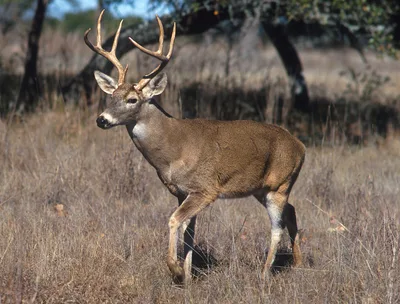
The black bear is not a keen hunter, but it takes deer fawns in spring by scent while the fawns still lie hidden. After about 10 days the fawns can dodge a bear, and the bears lose interest. Young elk in Idaho and young moose in Alaska go the same way. Near people, bears eat rubbish, birdseed, corn, apples and honey from hives.
Behaviour and social life
Black bears live alone, except for mothers with cubs, mating pairs in summer and crowds at a rich food source. Where salmon run or a dump is open, many bears gather and a pecking order forms, with the largest males at the best spots. They are most active at dawn and dusk, but feed at any hour. Bears near towns turn nocturnal, and bears near brown bears turn diurnal.
A male's annual range can be small or huge. On Long Island in Washington it averages 13 square kilometres, and on the Ungava Peninsula up to 2,600 square kilometres. One male covered 11,260 square kilometres in a year of food shortage. Bears mark their ground by rubbing against trees and raking the bark with claws and teeth. They climb well, swim well and can open screw-top jars and door latches.
In October or November the bear enters a den it has usually dug itself, under a log, a rock or in a bank. Its heart slows from 40 to 50 beats per minute to about 8, and its metabolic rate can fall to a quarter of normal. Body temperature stays near 35 degrees Celsius, so the bear can wake and move if disturbed. It neither eats, drinks nor passes waste for the whole 3 to 8 months, and loses 25 to 40% of its weight. Its muscles and bones do not waste away as a resting human's would, which interests medical researchers.
Communication and senses
Smell is the bear's sharpest sense, about seven times keener than a dog's. Its eyesight is good, and in tests it learned to tell colours apart faster than chimpanzees and as fast as dogs. It can also learn to tell a triangle from a circle or a square.
Bears talk with sound, posture, touch and scent. Tongue clicks and grunts are friendly sounds, used with cubs, other bears and sometimes people. A relaxed bear gives a loud rumbling hum, and a nervous one moans, huffs or blows. Jaw clicks and lip pops are warnings, and a real threat brings a pulsing guttural call like a growl. Cubs squeal or bawl when upset and hum like a motor when they nurse. Claw and tooth marks on trees carry messages to the next bear that passes.
Reproduction and life cycle
Mating runs from June into July, and into August in the far north. Both sexes take several partners, though a big male may drive rivals off a female by force. The fertilised eggs do not implant until November, so gestation lasts about 235 days in all. Cubs arrive in late January or February, in the den, while the mother is still torpid. A litter holds 1 to 6 cubs, usually 2 or 3.
A newborn weighs 280 to 450 grams and is 20.5 centimetres long, blind and almost hairless. For its size, it is the smallest newborn of any placental mammal. The eyes open after 28 to 40 days, and the cub walks at about five weeks. By 8 weeks it weighs 2.5 kilograms, and by 6 months 18 to 27 kg. Cubs nurse for about 30 weeks and stay with their mother through a second winter, until 16 to 18 months.
A female first breeds at 3 to 5 years and then has cubs every second year if food allows. Males mature at 3 to 4 years but keep growing until 10 to 12, when size alone wins them fights. The average wild lifespan is about 18 years, and the wild record is 39. One captive bear reached 44 years.
Predators and threats
An adult black bear has few natural enemies, apart from a brown bear or a wolf pack. Wolves sometimes kill hibernating bears and leave them uneaten. In the far south a jaguar can ambush a bear, and the famous jaguar El Jefe ate one. Cubs face bobcats, coyotes, cougars, wolves, brown bears and other black bears, and one golden eagle took a yearling. About 60% of cubs survive their first year.
People are the main killer. ADW reports that over 90% of deaths after 18 months of age come from guns, traps or vehicles. A Nevada study found no adult deaths in wilderness but 83% annual mortality in developed areas. Roughly 18,000 bears were shot each year in the United States between 1988 and 1992. Flooded dens drown some newborn cubs.
Population and conservation
The IUCN lists the black bear as Least Concern, one of only two bears not thought to be at risk worldwide. A 2011 estimate put the United States population between 339,000 and 465,000, without Alaska and four other states. Canada held 396,000 to 476,000 bears in seven provinces in the mid 1990s. Surveys from 35 states in the early 1990s showed stable or rising numbers everywhere except Idaho and New Mexico.
California had 25,000 to 35,000 bears in 2017, the most of any of the lower 48 states. Great Smoky Mountains National Park held about 1,500 in 2020. Western North Carolina went from about 3,000 bears in the early 2000s to over 8,000 in the 2020s. Mexico is the one country that lists the species as endangered. The species sits on CITES Appendix II, which controls trade in its parts.
Relationship with humans
People have hunted black bears since the first Americans. A roasting pit at Lehner Ranch in Arizona held the teeth of a cub, with charcoal dated to 10,940 years ago. Quebec exported 192,000 bear skins in 1799. Today 28 states run bear seasons, and over 481,500 licences sell each year. Canada has about 80,900 licensed bear hunters.
The bear itself rarely attacks. It bluff charges, blows and slaps the ground, then usually leaves. ADW counts fewer than 36 deaths from black bears in the whole 20th century. The worst case came in May 1978, when one bear killed three teenagers in Algonquin Park, Ontario. Most attacks are about food, so fighting back beats playing dead. In the Great Smoky Mountains, 1,028 aggressive incidents from 1964 to 1976 caused 107 injuries, almost all where tourists fed bears.
Bears raid corn, oats and apples, strip bark from timber in the northwest, and kill sheep, goats and pigs in spring. Closing dumps and ending handouts cuts trouble almost every time. Moving a problem bear rarely works, because it walks home. Research into bear torpor is helping doctors treat kidney failure, gallstones and burns.
In culture and myth
In one Native American tale, the Great Spirit made the black bear and the Evil Spirit made the grizzly. In Haida, Tlingit and Tsimshian tradition, people learned respect for bears after a girl wed the son of a black bear chief. In Kwakwaka'wakw tradition, Grizzly Bear Woman killed Black Bear Woman for laziness, and the children took revenge. The Navajo prayed to the Big Black Bear, chief of the bears of the four directions, for protection on raids. Many nations treat the bear as a medicine animal, and the Cherokee see it as an elder and a guide.
Sleeping Bear Dunes in Michigan takes its name from a mother bear who swam Lake Michigan and waited for two cubs that drowned. Some tribes decorated the head of a killed bear, blew tobacco smoke into its nostrils and praised its courage.
The teddy bear began in 1902, after a newspaper told how Theodore Roosevelt refused to shoot a tethered black bear cub. Winnie-the-Pooh took his name from Winnipeg, a black bear cub at London Zoo from 1915 to 1934. Smokey Bear's living model was a cub rescued from the Capitan Gap Fire in 1950. Two universities, Maine and Baylor, use the black bear as their mascot, and Baylor keeps two live bears on campus.
A sentence with a dotted underline is inferred: it describes the group the animal belongs to, or is a reading of the sources, rather than a measured or reported fact about this species.
Questions
American black bear questions, answered
How big is an American black bear?
An adult is 120 to 188 centimetres long from nose to rump and 63 to 103.5 cm tall at the shoulder. Males weigh 60 to 300 kilograms and females 40 to 150 kg.
Are black bears dangerous?
Rarely. A black bear usually bluff charges and leaves. ADW counts fewer than 36 human deaths in the 20th century. If one does attack, it is usually after food, so fight back.
What do black bears eat?
Up to 85% of the diet is plants: grass and shoots in spring, berries in summer, and acorns, hazelnuts and pine nuts in autumn. They also eat ants, bees, honey, salmon, deer fawns and carrion.
Do black bears hibernate?
Yes. They den from October or November for 3 to 8 months. The heart slows to about 8 beats per minute. The bear does not eat, drink or pass waste, but it stays warm enough to wake.
How fast can a black bear run?
A black bear can reach 40 to 48 kilometres per hour. That is faster than any person, so running from one is pointless.
Can black bears climb trees?
Yes, very well. Short curved claws let them climb to feed, escape and even den. They climb less as they age and grow heavy.
Are all black bears black?
No. About 70% are black. Others are cinnamon, brown, blonde, blue-grey or white. The white Kermode bear of British Columbia is a black bear.
How do I tell a black bear from a grizzly?
Look at the shoulders and face. A grizzly has a hump and a dished face. A black bear has no hump, a straight face and taller ears. Colour is no guide, since black bears can be brown.
Where do black bears live?
In forest from Alaska across Canada and down through the United States into central Mexico. They favour rough ground with thick undergrowth and plenty of nuts and berries.
How long do black bears live?
About 18 years on average in the wild, with a record of 39. One captive bear reached 44.
How many cubs does a black bear have?
Usually 2 or 3, sometimes 1 to 6. They are born in the den in late January or February and stay with the mother until 16 to 18 months.
Are black bears endangered?
No. The IUCN lists them as Least Concern, and there are more black bears than all other bear species combined. Only Mexico lists them as endangered.
How many black bears are there?
A 2011 estimate gave 339,000 to 465,000 in the United States, excluding Alaska and four other states. Canada held 396,000 to 476,000 in the mid 1990s.
What should I do if I meet a black bear?
Stand your ground, make yourself look big and speak firmly. Do not run and do not climb a tree. Back away slowly if the bear does not follow.
Do black bears eat people's food?
Yes, and that causes most trouble. Bears learn to raid bins, bird feeders, campsites and orchards. Nearly every attack in national parks involved bears fed by tourists.
Why is Winnie-the-Pooh named after a black bear?
A black bear cub called Winnipeg lived at London Zoo from 1915 to 1934. A boy who visited her, Christopher Robin, named his toy bear after her.
Food web
Prey and food
- berries
- nuts
- acorns
- grasses
- insects
- honey
 Atlantic salmon
- deer fawns
- carrion
 American black bear
 Elk
 White-tailed deer
 Passenger pigeon
Food web
Predators
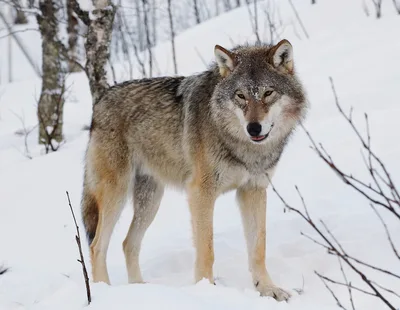 Gray wolf
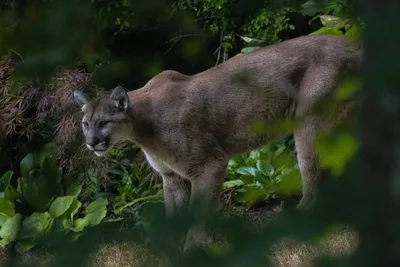 Cougar
Ecological equivalents
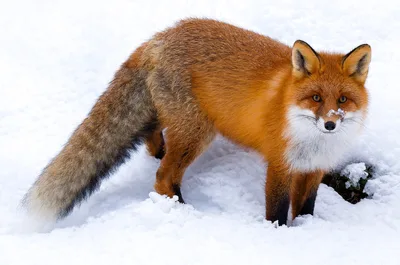
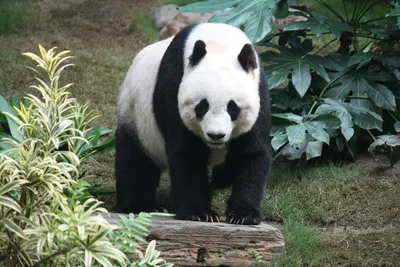
Related species on this site
Asian black bear (same genus), Brown bear (same genus), Cave Bear (same genus), Cinnamon Bear (same genus), Kermode Bear (Spirit Bear) (same genus), Marsican Brown Bear (same genus), and more.
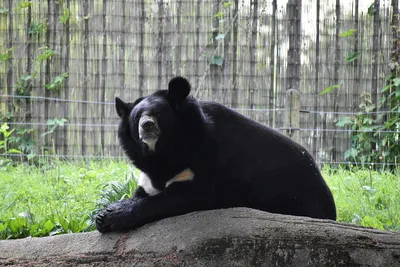 VU
Mammals
Asian black bear
Ursus thibetanus
The Asian black bear is a medium-sized forest bear of Asia with a pale crescent on its chest and a gift for climbing.
Living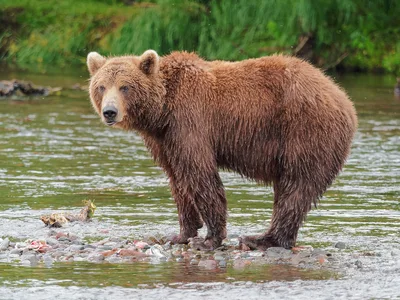 LC
Mammals
Brown bear
Ursus arctos
The brown bear is one of the two largest land carnivores, and it ranges across the forests and mountains of Eurasia and North America.
Living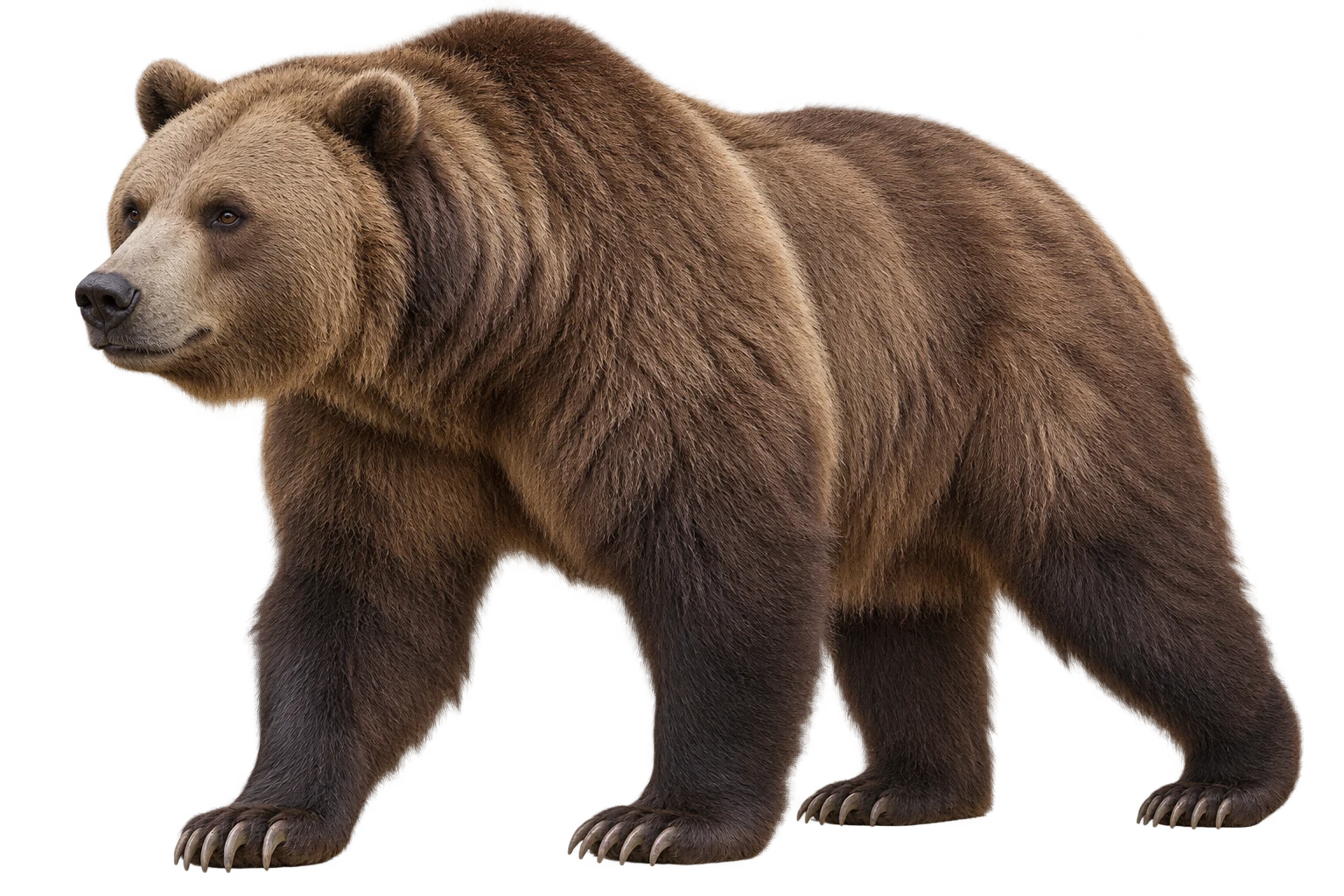
Mammals
Cave Bear
Ursus spelaeus
Classification and source reference
ExtinctAI reconstruction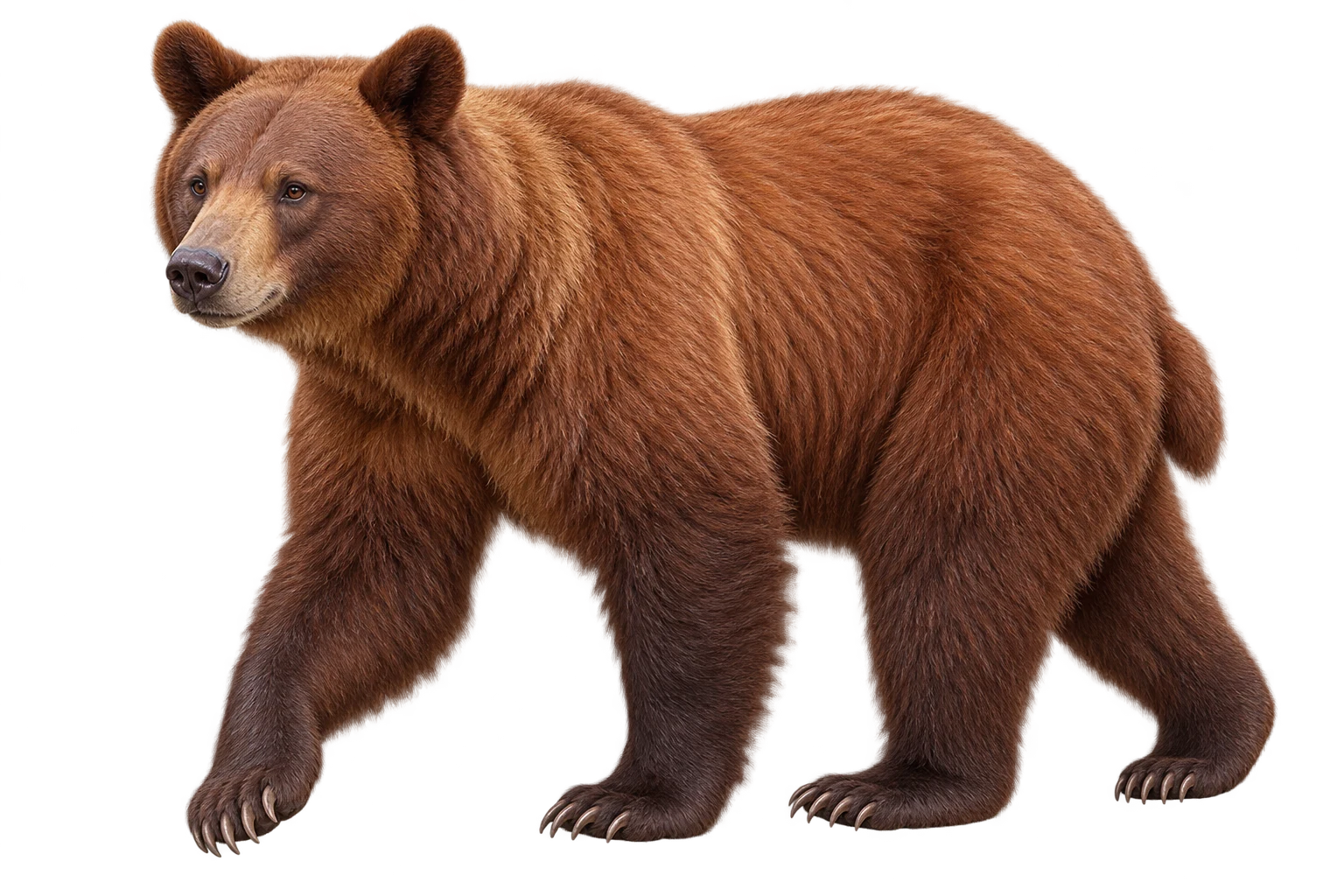
Mammals
Cinnamon Bear
Ursus americanus
Classification and source reference
LivingAI illustration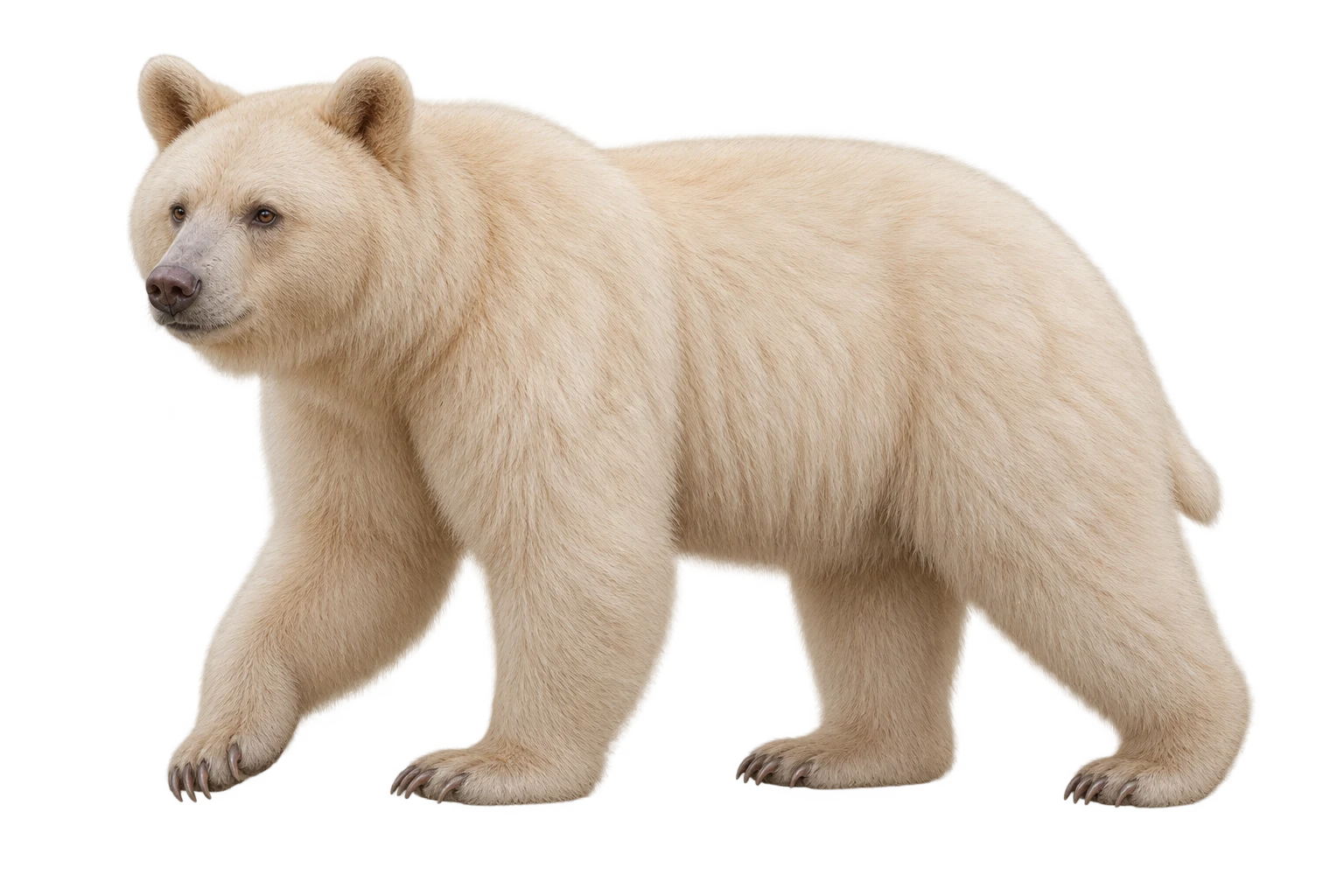
Mammals
Kermode Bear (Spirit Bear)
Ursus americanus kermodei
Classification and source reference
LivingAI illustration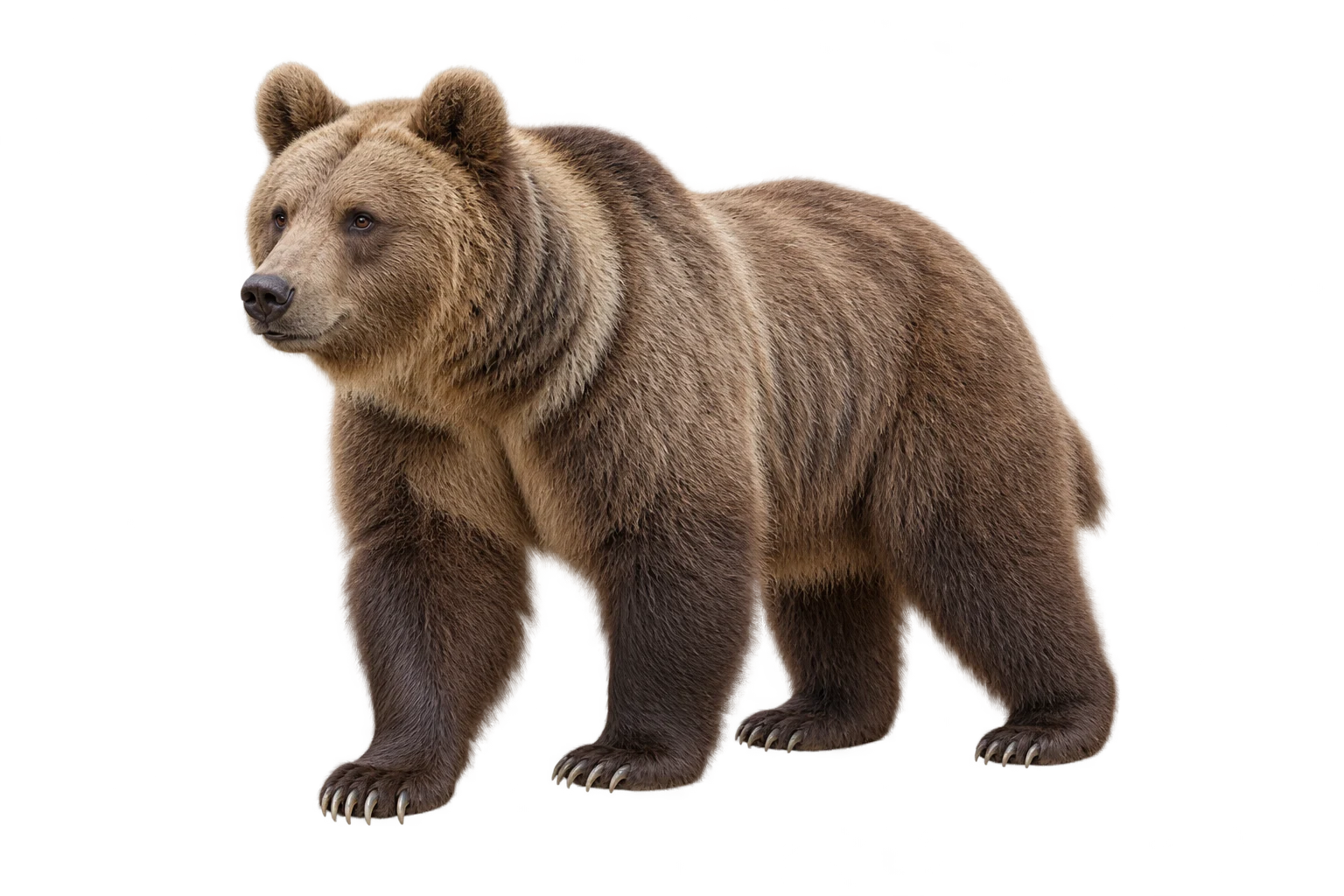
Mammals
Marsican Brown Bear
Ursus arctos marsicanus
Classification and source reference
LivingAI illustration