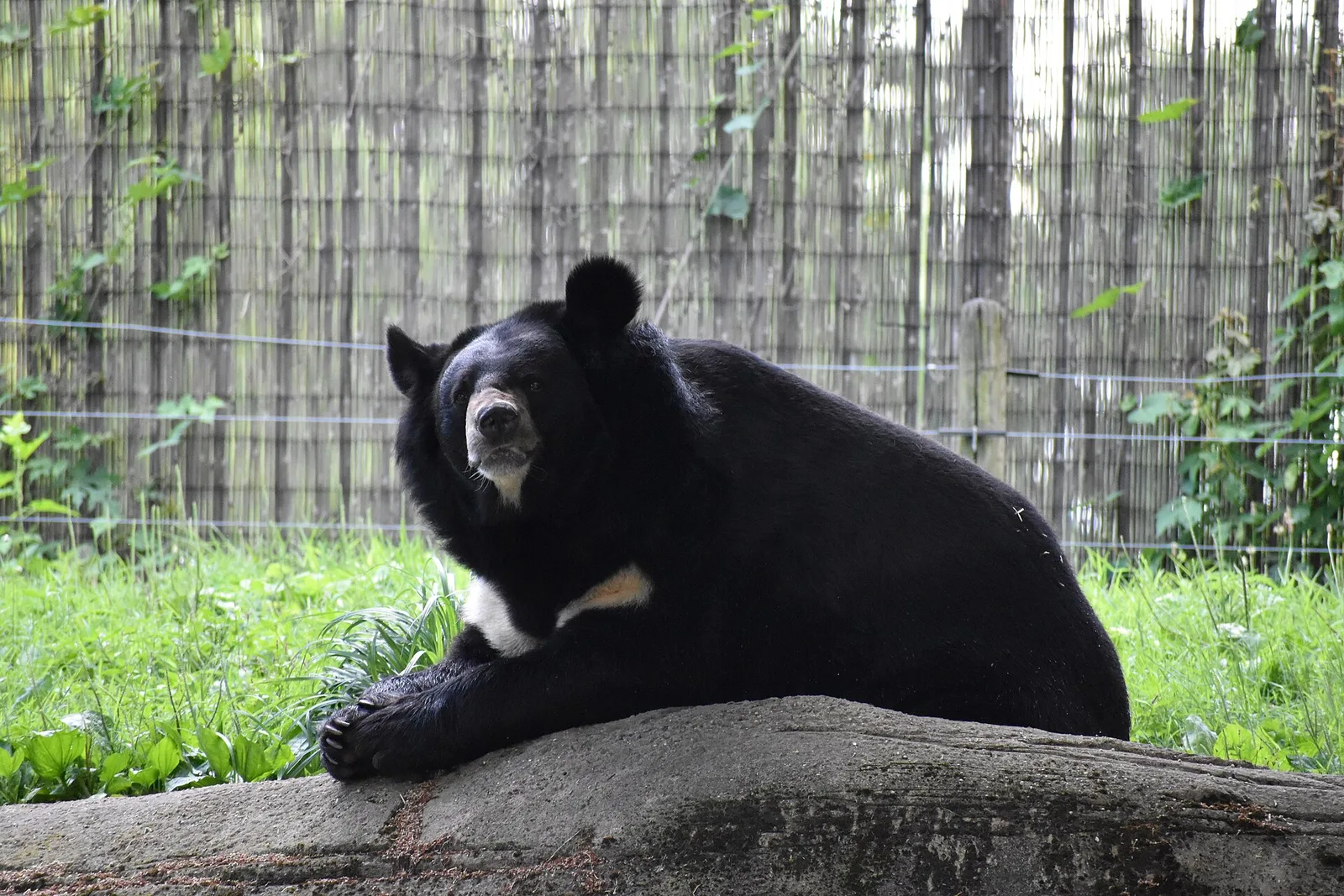
Asian black bear
The tree-climbing bear with a moon on its chest
Ursus thibetanus
Also called Asiatic black bear, Moon bear, White-chested bear, Himalayan black bear
Living individuals or members of this group exist today. This does not mean they are safe from extinction.
Meet the asian black bear
The Asian black bear is a medium-sized forest bear of Asia with a pale crescent on its chest and a gift for climbing. It ranges from Iran to Japan, eats mostly nuts and fruit, and is listed as Vulnerable because of forest loss and poaching.
Images of the asian black bear

Lifespan in the wild
Up to 25 years
Weight
65 to 150 kg
Length
1.2 to 1.8 m
Height
0.7 to 1 m
Fact file
Asian black bear
- Location
- Southern and eastern Asia, from Iran to Japan
- Habitat
- Temperate forest, Mountains
- Diet
- Omnivore
- Prey / food
- Acorns, nuts, fruit, insects, honey, carrion; wild boar, muntjac, serow, water buffalo
- Predators
- Tiger; leopard, wolf and lynx take cubs
- Lifestyle
- Mostly diurnal; climbs, dens in trees, hibernates in the north
- Group name
- Solitary; a mother with cubs
- Name of young
- Cub
- Gestation
- About 7 to 8 months, with delayed implantation
- Litter size
- 1 to 4 cubs, usually 2
- Population
- No reliable total; Japan alone held about 44,000 in 2023
- Biggest threat
- Forest loss and poaching for bile, gall bladders and paws
- Distinctive feature
- Pale V on the chest and large bell-shaped ears
- Colour
- Black with a cream chest patch and a light brown muzzle
- Skin type
- Fur
Size
Next to a person
Measurements
Size and speed
- Height
- 0.7 to 1 m at the shoulder
- Length
- 1.2 to 1.8 m head and body, without the tail
- Tail
- 6.5 to 10.6 cm
- Weight
- 65 to 150 kg, up to 200 kg typical adults; the record male is from Wikipedia
- Weight, male
- 110 to 150 kg
- Weight, female
- 65 to 90 kg
Typical adult ranges. Sources: Animal Diversity Web, Wikipedia.
Life cycle
Lifespan
- In the wildUp to 25 years
- In captivityUp to 39.2 years
- 039.2 years
The pale bar is the record. Sources: Animal Diversity Web, AnAge.
Appearance
Colour and coat
- Primary colours
- black
- Secondary colours
- creamlight brown
- Skin type
- fur
- Male and female
- Males are larger. A male weighs about 110 to 150 kilograms and a female about 65 to 90 kg.
Life cycle
Mating and family
- Mating system
- promiscuous
- Social structure
- solitary, except a mother with cubs
- Breeding
- one litter every 2 to 3 years
Bears mate between June and October, and implantation is delayed. Cubs are born in a winter den after a pregnancy of about 7 to 8 months. Litters hold 1 to 4 cubs, and 2 is usual. Young bears leave the mother after 2 to 3 years. A wild bear can reach about 25 years.
Classification
Taxonomy
- Kingdom
- Animalia
- Phylum
- Chordata
- Class
- Mammalia
- Order
- Carnivora
- Family
- Ursidae
- Genus
- Ursus
- Species
- Ursus thibetanus
Conservation
Red List status
- LC
- NT
- VU
- EN
- CR
- EW
- EX
Vulnerable on the IUCN Red List
Range
Recorded in 12 countries
- Bangladesh
- Bhutan
- People's Republic of China
- India
- Iran
- Japan
- South Korea
- Myanmar
- Nepal
- Russia
- Thailand
- Taiwan
Habitat layer: temperate broadleaf and mixed forest, temperate conifer forest, boreal forest and taiga, montane grassland and shrubland.
Countries from 285 wild records on GBIF (iNaturalist research grade), filtered and checked by hand. Country shapes: Natural Earth. Habitat: RESOLVE Ecoregions 2017, CC BY 4.0. Basemap: Natural Earth.
Habitats
Three things to know
- 1
It spends about half of its life in trees and builds nest-like feeding platforms in the canopy.
- 2
It can walk upright on its hind legs for more than 400 metres, further than any other bear.
- 3
In Japan the population rose from about 15,000 in 2012 to about 44,000 in 2023.
Did you know
Seven more facts
- 1
The heart of a hibernating bear slows to about 8 to 12 beats a minute.
- 2
A family on the move walks in a line from the largest bear to the smallest.
- 3
The bear leaves broken branches in treetops that look like giant nests.
- 4
The Thai name means buffalo bear, after the V on its chest.
- 5
Some tigers pretend to leave and wait for a treed bear to climb down.
- 6
In Japan, matagi hunters saw an all-black bear as a messenger of the mountain deity.
- 7
Zoos have bred it with four other bear species.
Field notes
How it looks and acts
Field notes
Distinguishing features
- A cream V or crescent on the chest of an otherwise black coat.
- Large bell-shaped ears that stick out sideways.
- A light brown muzzle with a white spot on the chin.
- A heavy front end and short hind legs.
- Hooked front claws 30 to 45 millimetres long.
- A tail so short it hides under the fur.
Field notes
Unique adaptations
- Strong shoulders and hooked claws let it climb trees and rocks with ease.
- Large heel pads on the front feet give grip on bark.
- A keen nose finds grubs about 1 metre under the ground.
- Autumn gorging builds fat that carries the bear through winter sleep.
- During hibernation it recycles its waste into protein and does not need to urinate.
Field notes
Interesting behaviours
- Climbs to feed, rest, sun itself and escape danger.
- Builds a rough platform of broken branches to sit on while feeding in a tree.
- Turns nocturnal near villages and raids crops at night.
- Moves downhill in autumn to reach the acorn crop.
- Dens in a hollow tree, cave or log from November to March in the north.
Field notes
Temperament
- Shy and cautious in the forest, and it usually avoids people.
- Quick to attack when surprised, wounded or guarding food.
- Calm and playful in captivity, and it learns tricks fast.
Field notes
Communication
- Grunts, whines and roars, plus a slurping sound while feeding.
- A loud hiss as a warning and a scream in a fight.
- A tut-tut tongue click when approaching another bear.
- Clucking sounds during courtship.
- Scent left on trees and the ground, as in other bears.
Ecology
Ecological role
The Asian black bear shapes its forest as a seed carrier, a scavenger and an occasional predator.
- Eats fruit and nuts in bulk, and it is likely to spread seeds through its droppings.
- Drops fruit from trees that the heavier brown bear then eats on the ground.
- Cleans up carrion, including kills left by tigers.
- Serves as prey for tigers, and its cubs feed leopards and wolves.
Stories
Myths and legends
- In Japanese tradition, the bear is the creature of yama no kami, the mountain deity.
- In Niigata folklore, the chest mark is the trace of a silk amulet from the mountain deity.
- In Hindu tradition, the bear king Jambavan fights beside Rama in the Ramayana.
- In Bunun tradition in Taiwan, bears and people share an ancestor, and killing a bear unjustly is murder.
- In Korean tradition, a bear turned into a woman and became the mother of Dangun.
People
Relationship with humans
People
Living alongside us
People and Asian black bears clash over crops, beehives, livestock and forest. The bear is poached for its bile, gall bladder and paws, and bile farms still operate in South Korea. It attacks people more often than most bears, and Japan now counts deaths every year. It tames easily and once filled circus rings. Reintroduction in South Korea and recovery in Japan show it can rebound where forest survives.
- Attacks when surprised at close range in dense forest.
- Kills people in Japan in a typical year, with a record in 2025.
- Aims for the head and face with claws and teeth.
People
Status, uses and products
- Domestication
- Wild
- As a pet
- Not suitable. A large, strong and unpredictable wild animal, protected by law across its range. Cubs are still kept as pets in Vietnam, and this trade drives poaching.
- Uses
- traditional medicinecircus actssport hunting in Japan and Russia
- Products
- bilegall bladderspawsfurmeatfat
The full account
About the asian black bear
The Asian black bear, Ursus thibetanus, is a medium-sized bear of the forests of Asia. Many people call it the moon bear, after the pale crescent on its chest. It climbs better than any other bear of its size, and it spends about half its life in trees. Its range runs from Iran in the west to Japan in the east, and from the Russian Far East south to Thailand and Vietnam.
An adult weighs about 65 to 150 kilograms and measures 120 to 180 centimetres from head to rump. It eats mostly plants: acorns, nuts, fruit, shoots and roots, with insects, honey and some meat. The IUCN lists the species as Vulnerable. Loss of forest and poaching for gall bladders, paws and bile drive the decline. In Japan the population grew fast after 2000, and bear attacks there reached a record in 2025.
Name and taxonomy
The species name thibetanus is probably a Latin form of Tibet, one of the regions where the bear lives. Older books call it Selenarctos thibetanus, and some authors placed it in the subgenus Euarctos. English names include Asiatic black bear, moon bear, white-chested bear and Himalayan black bear. In Thai the bear is mi khwai, the buffalo bear, because the pale mark under its neck resembles the mark on a buffalo. It belongs to the family Ursidae in the order Carnivora, with the brown bear, the polar bear and the giant panda.
Several subspecies live across the range. The Formosan black bear, U. t. formosanus, lives only in the central mountains of Taiwan. China holds three subspecies, and U. t. ussuricus is the only bear subspecies in the northeast of the country. The Baluchistan black bear of Pakistan and Iran is listed as Critically Endangered on its own. Two more subspecies lived in Europe and West Asia until the Late Pleistocene.
Evolution and relatives
The Asian black bear carries 74 chromosomes, almost the same set as the other five ursine bears. Scientists treat it as the least changed of the Old World bears. It may descend from Ursus minimus, an extinct bear that appeared about 4 million years ago. Bones of Ursus minimus are hard to tell from those of the living species, except by their age. The closest living relative is the American black bear. The two lines separated about 3 million years ago, though the genetic evidence is still thin.
The oldest fossils of the species come from Moldova, in the early Pliocene. Japanese bears may have split from mainland bears about 500,000 years ago, when bears crossed a land bridge from Korea. In zoos the species has bred with the American black bear, the sloth bear, the spectacled bear and the brown bear. Its body shows the first steps toward the tree-climbing build of the sun bear and the sloth bear.
Appearance
The coat is black, long and coarse. A pale V or crescent marks the chest, and a smaller pale band crosses the throat. The muzzle is light brown, and a white spot sits on the chin. The ears are large and bell shaped, and they stand out sideways from the head. For its size, the bear has longer ears than any other bear.
Adults stand 70 to 100 centimetres at the shoulder. Head and body measure 120 to 180 cm, and the tail adds only 6.5 to 10.6 cm. Males weigh about 110 to 150 kilograms, and females about 65 to 90 kg. The heaviest wild male on record reportedly reached 200 kg, and zoo animals have reached 225 kg.
The bear has a strong upper body for climbing and short, rather weak hind legs. The front claws are 30 to 45 millimetres long, longer than the hind claws, and they curve more than an American black bear's claws. It stands on two legs more readily than any other bear, and it can walk upright for over 400 metres. The skull is small but heavy, with a low crest on top. The lips and nose are large and mobile, more so than in the brown bear.
Habitat and range
The species lives across a broad but broken band of Asia. It occurs from southeastern Iran through Afghanistan and Pakistan, then along the Himalayan foothills of India, Nepal and Bhutan. It continues into Myanmar and mainland Southeast Asia, but it does not reach Malaysia. In China it lives in patches in the northeast and the south, including Hainan. Other groups survive in Taiwan, the Russian Far East, North Korea, and on Honshu and Shikoku in Japan.
It favours deciduous, mixed and thorn forests, and it needs thick cover. ADW describes moist forest on steep mountain slopes as its usual home. In the Himalayas it summers at about 3,500 metres and seldom goes above 3,700 m. In winter it drops below 1,500 m, and in Japan it also lives at sea level. Bears move to lower slopes each autumn to reach the nut crop.
During the Pleistocene the species ranged as far west as Spain and the Balkans. In South Korea it died out in the wild by the 1990s. A reintroduction at Jirisan National Park began in 2004, and by 2018 the park held 56 wild bears. GBIF holds records from 29 countries, but that count includes zoos and escaped animals.
Diet and feeding
The Asian black bear is an omnivore that eats mostly plants. Its food includes acorns, pine nuts, hazelnuts, cherries, grapes, other fruit, shoots, roots, bark, grasses and mushrooms. It also takes insects, beetle larvae, termites, bees, honey, eggs, carrion and rubbish near villages. In Japan, nuts from oaks and their relatives make up the largest share of the autumn diet. The bear gorges on these rich foods and stores the surplus as fat before winter.
The menu shifts with the season. In April and May it digs up the previous year's acorns and pine nuts. From mid-May to June it turns to green plants and early fruit. From July to September it climbs for cherries, pine cones, vines and grapes. It snaps branches under itself as it feeds, and this leaves nest-like platforms in the treetops.
The species eats more meat than the American black bear, though less than the brown bear. It kills wild boar, muntjac, serow, takin and even adult water buffalo, and it breaks the neck of its prey. It takes livestock when wild food fails, and it steals kills from tigers. Its nose can find grubs about 1 metre under the soil.
Behaviour and social life
The bear is active by day over most of its range, but it turns nocturnal near people. ADW reports the opposite pattern in some areas, with feeding at night and rest in a tree hole or cave by day. Night activity rises in autumn, when the bears must eat hard before winter. Adults forage alone, except for mothers with cubs and pairs in the mating season. When a family walks together, the bears go in a line from the largest to the smallest.
It climbs to feed, to rest, to sun itself, to escape enemies and even to den. In the Russian Far East, bears pass up to 15% of their hours in trees. It rests in tree nests, and it swims well. With enough food, a bear may stay in an area of only 1 to 2 square kilometres. ADW gives home ranges from about 6.4 to 36.5 square kilometres, depending on food.
Bears in the cold north hibernate, but bears in the south usually stay active. Almost every pregnant female dens for the winter. Dens are hollow trees, caves, holes in the ground or hollow logs, and the bear prepares them in mid-October. The sleep runs from November to March. During the sleep the heart rate falls from 40 to 70 beats a minute to 8 to 12. Body temperature drops by only 3 to 7 degrees, so the bear wakes easily.
Communication and senses
Asian black bears make many sounds. They grunt, whine and roar, and they slurp while they feed. A loud hiss is a warning, and a scream means a fight. When one bear approaches another, it makes a tut-tut sound with its tongue against the roof of its mouth. Courting bears cluck. Like other bears, a cub separated from its mother probably cries, and clicking teeth signal aggression.
The sense of smell is acute, and it guides the bear to buried insects and to the scent of other bears. Like other bears, it probably marks its range by rubbing on trees, urinating and defecating. Wikipedia reports poor eyesight and moderate hearing, with an upper limit of 30 kilohertz. ADW disagrees, and it calls the sight, hearing and smell all exceptional. Hunters in Kashmir found the black bear harder to stalk than the brown bear, because it saw and heard them sooner.
Reproduction and life cycle
Mating happens from June to October, depending on the population. In the Russian Far East it runs from mid-June to mid-August, and in Pakistan it happens in October. In captivity the mating system is promiscuous, and only the larger, older males mate. A male under 80 kilograms has little chance with a female. Females first breed at 3 to 4 years old.
Like other bears, the species probably delays implantation of the embryo by about two months. Wikipedia gives a gestation of 200 to 240 days, and ADW gives 7 to 8 months. The birth takes place in a winter den, usually in January or February. A litter holds 1 to 4 cubs, most often 2. A newborn weighs under half a kilogram. Cubs walk at about 4 days old and open their eyes about 3 days later.
Growth is slow, and a cub weighs only about 2.5 kilograms by May. Cubs nurse for a long time, and they leave the mother at 24 to 36 months. The mother then waits 2 to 3 years before the next litter. A wild bear can live up to 25 years. AnAge records a captive bear that lived 39.2 years, and Wikipedia reports one that reached 44.
Predators and threats
The tiger is the main predator of the Asian black bear. Russian hunters have found bear remains in tiger droppings. Tigers mostly take young bears, and a bear over 5 years old is usually safe. A chased bear runs up a tree and waits, but some tigers pretend to walk away and wait below. Leopards take cubs under 2 years old, and wolves and lynx may take cubs as well.
Brown bears sometimes attack the species in the Russian Far East. In the Himalayas the black bear tends to intimidate the brown bear, which is too heavy to climb for fruit. Jim Corbett watched a large black bear drive off a tiger even after the tiger tore its face. He also saw black bears carry off tiger kills twice.
People are the greater threat. Poachers take gall bladders, paws, skin and live cubs. Logging removes the hollow trees the bears den in, and it forces them onto the ground where tigers and hunters find them. Steel traps set for wild boar catch bears in Taiwan. In southern Iran, warming and habitat loss have cut the population by 30 to 40% in three decades.
Population and conservation
The IUCN lists the Asian black bear as Vulnerable, and CITES puts it in Appendix I. No reliable count exists for the whole species. Russian biologists once suggested only a few thousand across the range, but the basis is unclear. India may hold up to 9,000 bears, and Pakistan about 1,000. A Chinese government estimate gives 28,000, and Taiwan holds 200 to 600. Japan is the exception: its population rose from about 15,000 in 2012 to about 44,000 in 2023.
Protection is uneven. China protects the bear under its national wildlife law. India lists it in Schedule I of its Wildlife Protection Act, but poaching cases rarely reach a court. Russia lists it in its Red Data Book, yet 75 to 100 bears are shot legally each year and about 500 illegally. Vietnam banned hunting and export in 1989. South Korea reintroduced bears to Jirisan in 2004, and the park reached its carrying capacity by 2021.
South Korea still allows bear bile farms, which held about 1,374 bears on 74 farms in 2009. Japan set a bear management manual in 2000 with a cap on the annual cull. After the population boom and a rise in attacks, the Japanese government revised the plan in 2024 toward more hunting.
Relationship with humans
The species is more aggressive toward people than the brown bear of Eurasia or the American black bear. David Macdonald suggests this comes from a long history of living beside tigers. Most attacks happen when a person surprises a bear at close range in thick cover, or when a bear guards food. An attacking bear rears up, knocks the person down with its paws, then bites an arm or a leg and the head. Around 1900 a hospital in Srinagar treated dozens of bear victims every year.
Japan recorded nine deaths between 1979 and 1989. In 2016 four people died in Akita while they picked bamboo shoots. Injuries and deaths rose sharply around 2023 and hit a record in 2025, after poor nut crops sent bears into towns. Russia has no record of a bear eating a person, and Taiwan has no recorded conflict.
Bears strip bark from cedar and cypress, raid orchards and beehives, and eat rice, corn and persimmons. Japanese bears damage about 3,000 beehives a year. Bile, gall bladders, paws and bone glue sell in the traditional medicine trade. The species learns quickly and tames easily, and it was once common in circus acts. In Pakistan, cubs were taken for street dancing and bear baiting.
In culture and myth
In upland Japan the bear belongs to yama no kami, the mountain deity, and people call it the mountain man or the mountain uncle. A tale from Niigata says the deity gave the bear a silk-wrapped amulet, and the white mark is where the amulet hung. Matagi hunters in Akita treat an all-black bear as sacred, and a hunter who shot one gave up hunting. Matagi believed that killing a bear in the mountains brought a storm. A Japanese bear hunt is often called kuma taiji, a word used for the slaying of monsters.
In the Hindu epic Ramayana, the bear king Jambavan helps Rama search for Sita and fight Ravana. In Korean tradition, a bear became the woman Ungnyeo and gave birth to Dangun, the founder of the first Korean kingdom. That legend does not name the species, though the black bear is likely the bear of the Korean mountains. A Thai saying compares a grumbling person to a bear eating honey, because the bear mutters as it eats.
In Taiwan the Bunun people call the bear aguman, the devil, and they see bears and humans as kin. For the Bunun, an unjust killing of a bear equals murder and brings disease, death or a burnt millet crop. The Formosan black bear became a symbol of Taiwanese identity in this century, often shown against the panda. In Yann Martel's Life of Pi, the narrator's father calls the species one of the most dangerous animals he keeps.
A sentence with a dotted underline is inferred: it describes the group the animal belongs to, or is a reading of the sources, rather than a measured or reported fact about this species.
Questions
Asian black bear questions, answered
Why is it called the moon bear?
Because of the pale crescent on its chest. The mark is cream or white on an otherwise black coat.
How big is an Asian black bear?
An adult stands 70 to 100 centimetres at the shoulder and measures 120 to 180 cm from head to rump. Males weigh about 110 to 150 kilograms, females about 65 to 90 kg.
Where do Asian black bears live?
In forests across southern and eastern Asia, from Iran and Pakistan through the Himalayas to China, Korea, the Russian Far East, Taiwan and Japan.
What do Asian black bears eat?
Mostly plants: acorns, nuts, fruit, shoots, roots and bark. They also eat insects, honey, eggs, carrion and, at times, deer, wild boar or livestock.
Are Asian black bears dangerous?
Yes. They attack people more often than brown bears or American black bears, usually when surprised in thick cover. Japan records several deaths in a bad year.
Are Asian black bears endangered?
The IUCN rates the species as Vulnerable. Forest loss and poaching for bile and body parts drive the decline, though numbers in Japan have grown.
Do Asian black bears hibernate?
Bears in the cold north sleep from about November to March. Bears in the warm south usually stay active, but almost all pregnant females den.
Can Asian black bears climb trees?
Yes, and they climb better than most bears. They feed, rest and even den in trees, and they spend about half their lives there.
How long do Asian black bears live?
Up to about 25 years in the wild. One captive bear lived 39.2 years, and Wikipedia reports another that reached 44.
How many cubs does an Asian black bear have?
Usually 2, and sometimes 1 to 4. They follow their mother for 2 to 3 years before they go their own way.
Do Asian black bears walk on two legs?
Yes. They stand upright more readily than any other bear, and one can walk on its hind legs for over 400 metres.
What eats Asian black bears?
Tigers take young bears, and leopards, wolves and lynx take cubs. Brown bears sometimes attack adults. People are the main threat.
What is bear bile farming?
Bears are kept in cages and their bile is drained for traditional medicine. South Korea still allows it, and about 1,374 bears sat on farms there in 2009.
How is the Asian black bear different from the American black bear?
It has larger ears, a pale chest V, longer and more hooked claws, and a stronger upper body. It also eats more meat and attacks people more often.
Why are bear attacks rising in Japan?
The population grew fast after 2000 as hunting fell. Poor nut crops then pushed bears into towns, and attacks reached a record in 2025.
Is the Asian black bear related to the giant panda?
Both are bears in the family Ursidae, but they sit on different branches. The closest relative of the Asian black bear is the American black bear.
Food web
Prey and food
- acorns
- nuts
- fruit
- insects
- honey
- carrion
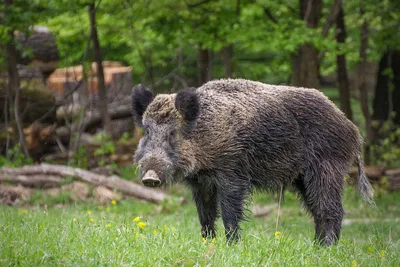 Wild boar
- muntjac
- serow
- water buffalo
Food web
Predators
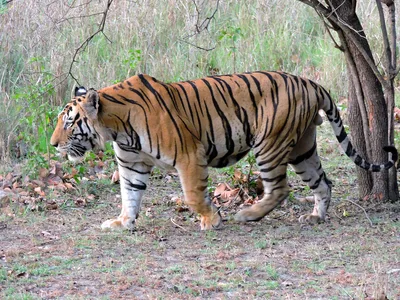 Tiger
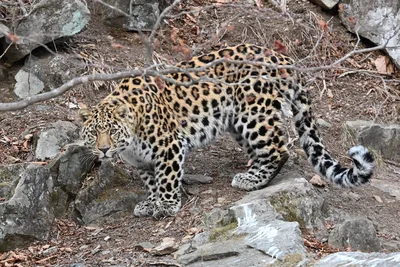 Leopard
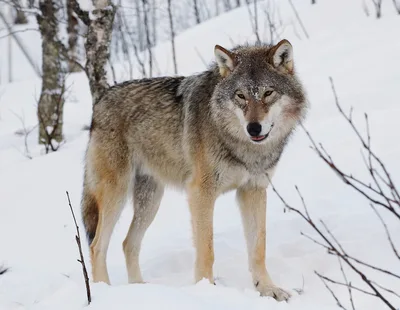 Gray wolf
Ecological equivalents
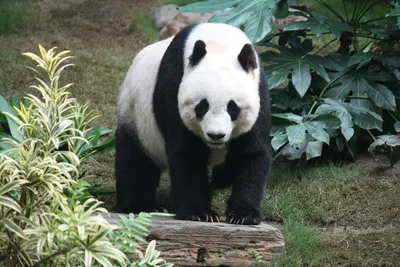
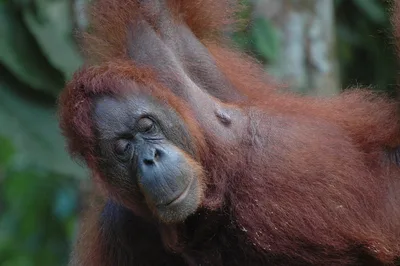
Related species on this site
American black bear (same genus), Brown bear (same genus), Cave Bear (same genus), Cinnamon Bear (same genus), Kermode Bear (Spirit Bear) (same genus), Marsican Brown Bear (same genus), and more.
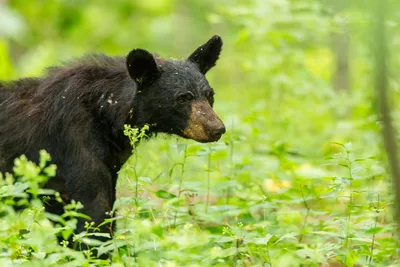 LC
Mammals
American black bear
Ursus americanus
The American black bear is the smallest and most widespread bear in North America, at home in forest from Alaska to Mexico.
Living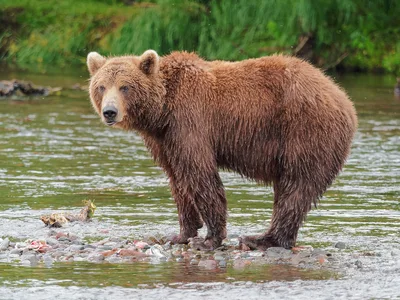 LC
Mammals
Brown bear
Ursus arctos
The brown bear is one of the two largest land carnivores, and it ranges across the forests and mountains of Eurasia and North America.
Living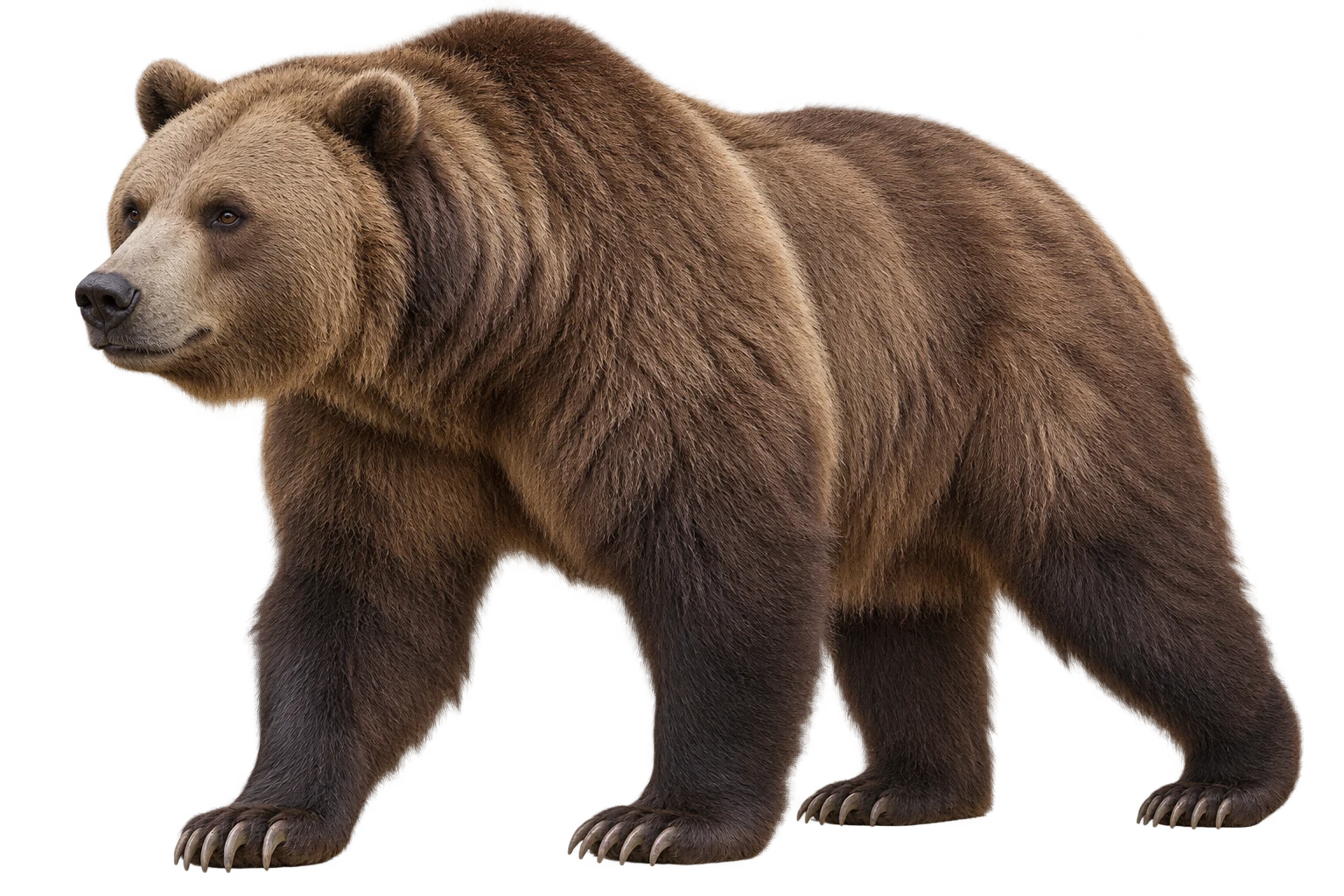
Mammals
Cave Bear
Ursus spelaeus
Classification and source reference
ExtinctAI reconstruction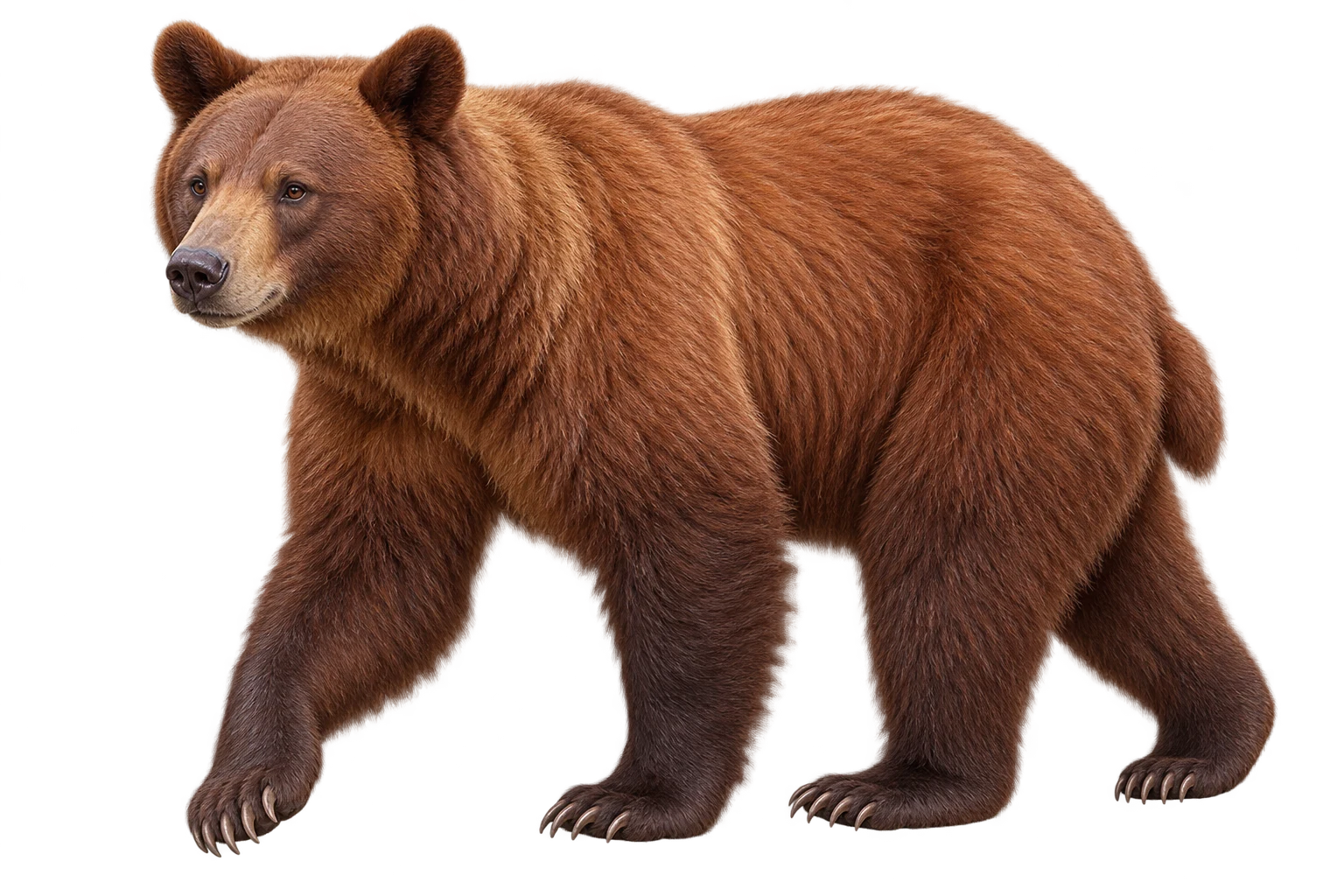
Mammals
Cinnamon Bear
Ursus americanus
Classification and source reference
LivingAI illustration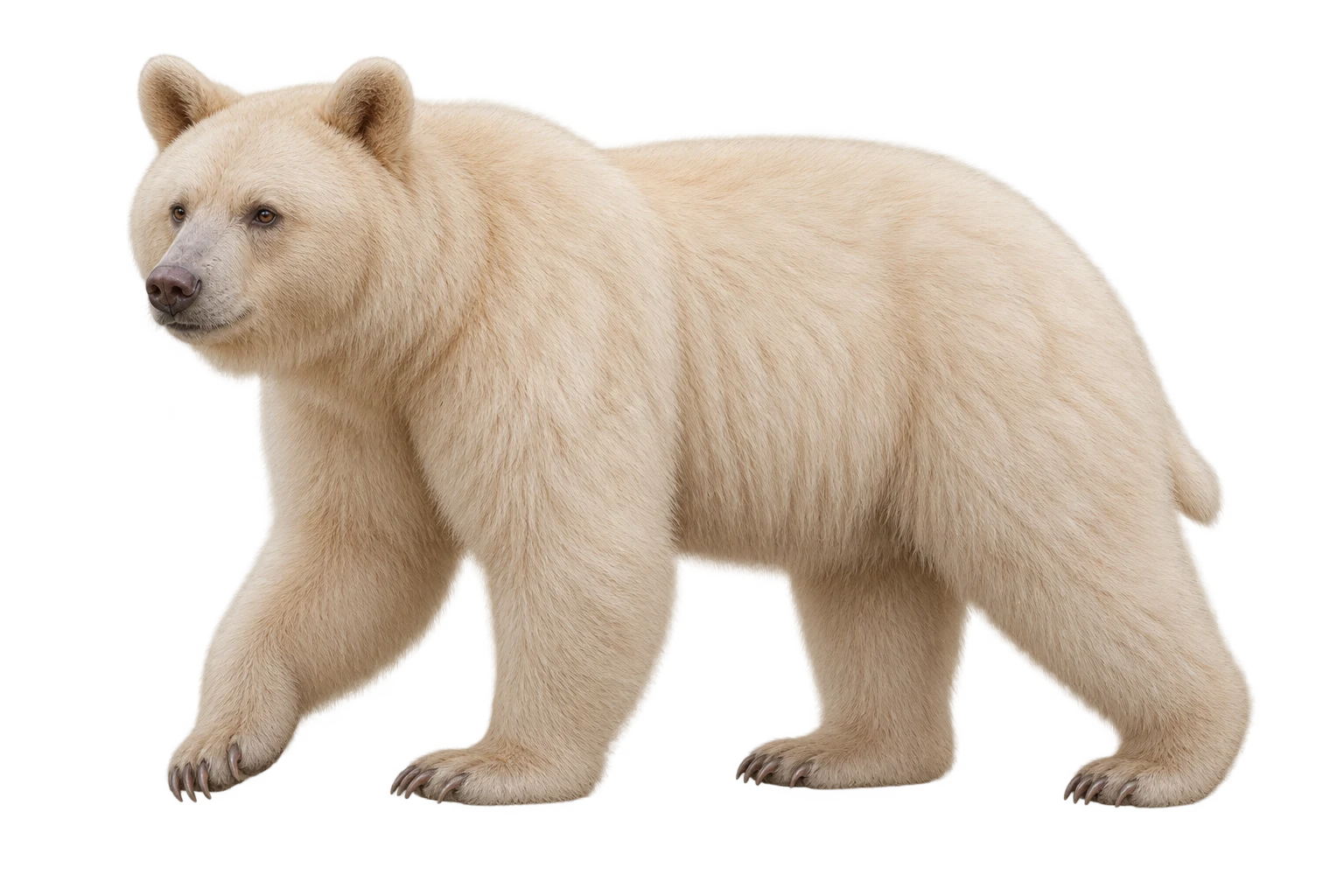
Mammals
Kermode Bear (Spirit Bear)
Ursus americanus kermodei
Classification and source reference
LivingAI illustration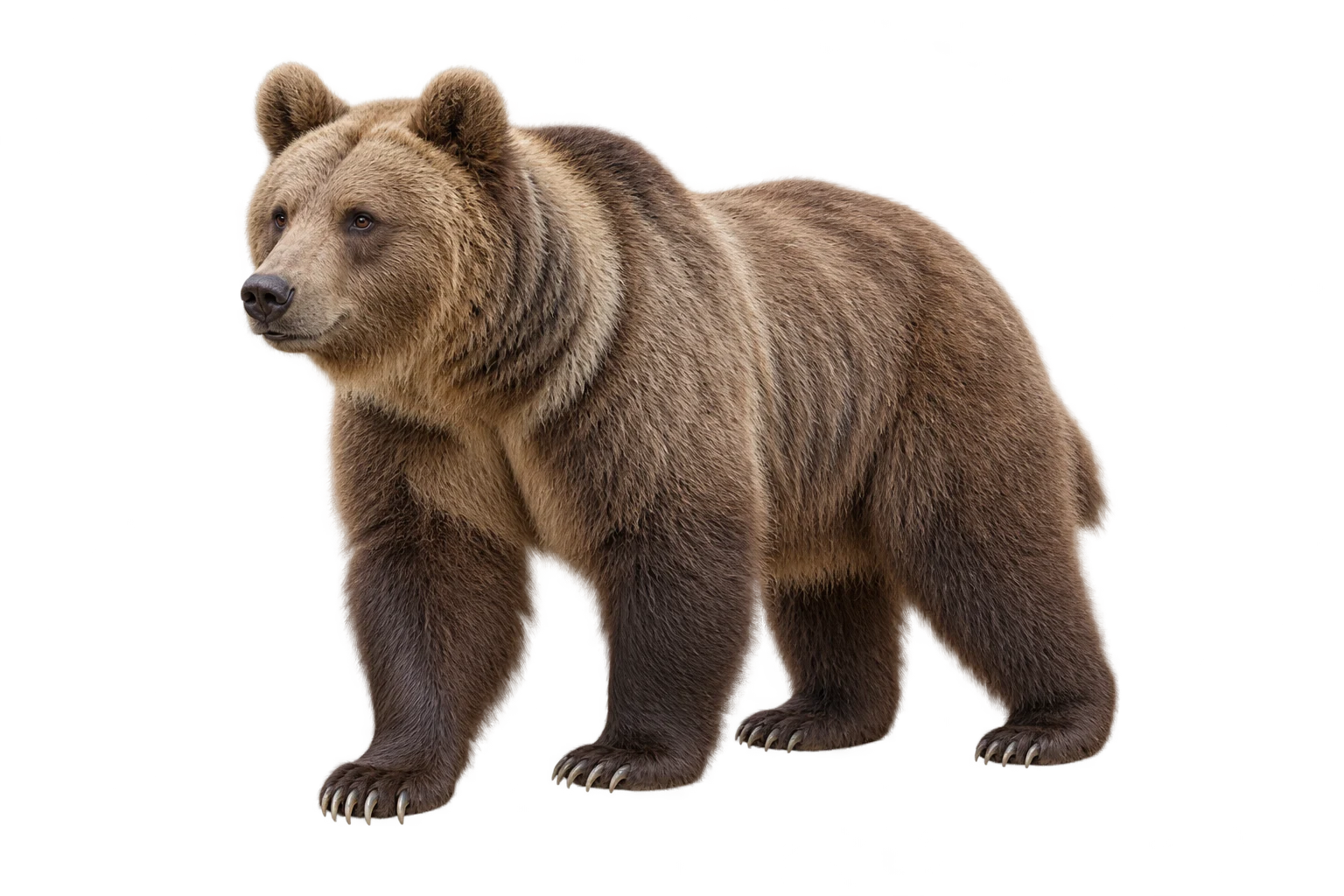
Mammals
Marsican Brown Bear
Ursus arctos marsicanus
Classification and source reference
LivingAI illustration