Living individuals or members of this group exist today. This does not mean they are safe from extinction.
Meet the giant panda
The giant panda is a bear that eats almost nothing but bamboo. It lives in the cool mountain forests of central China and spends more than half of each day feeding.
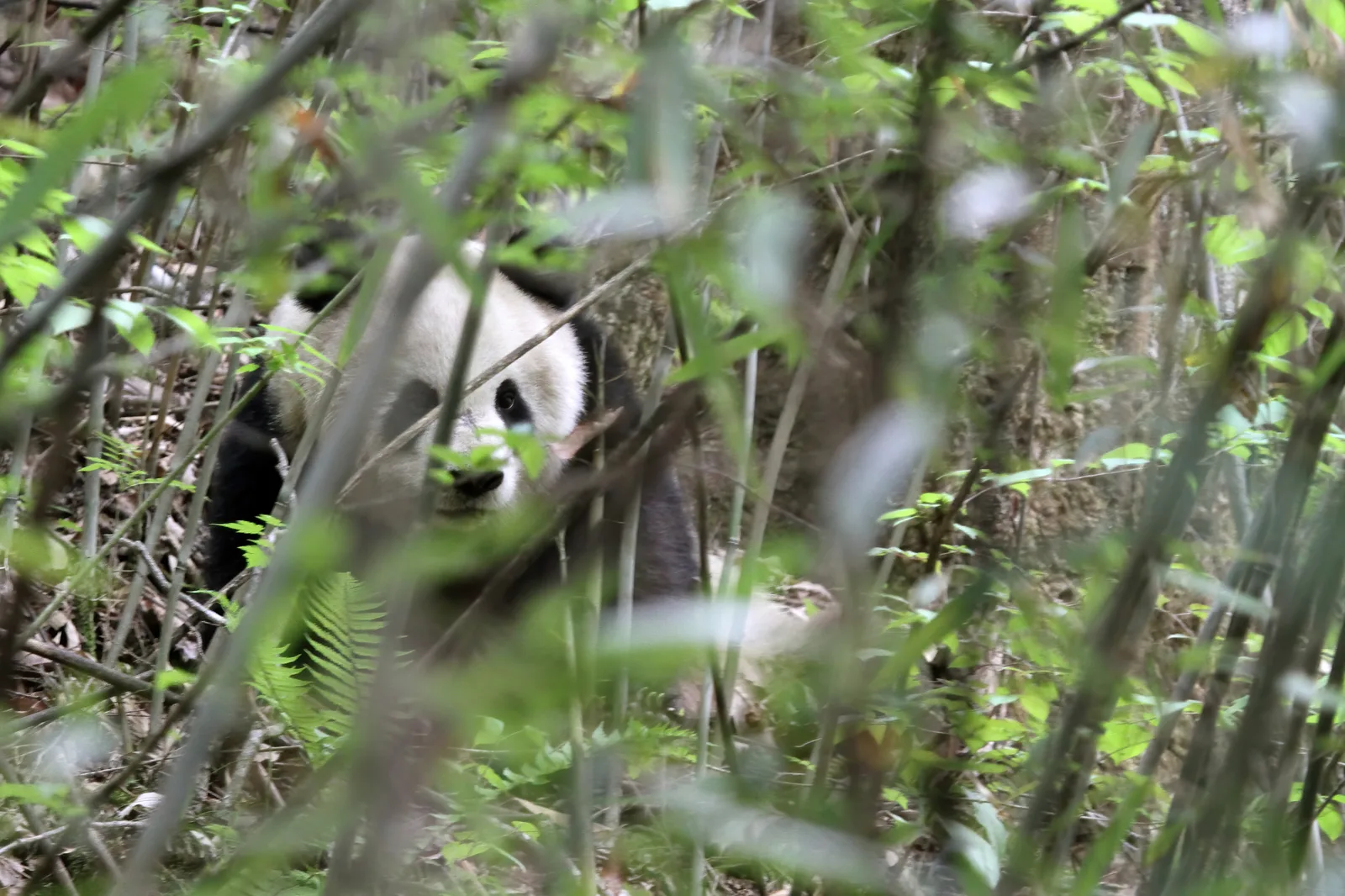
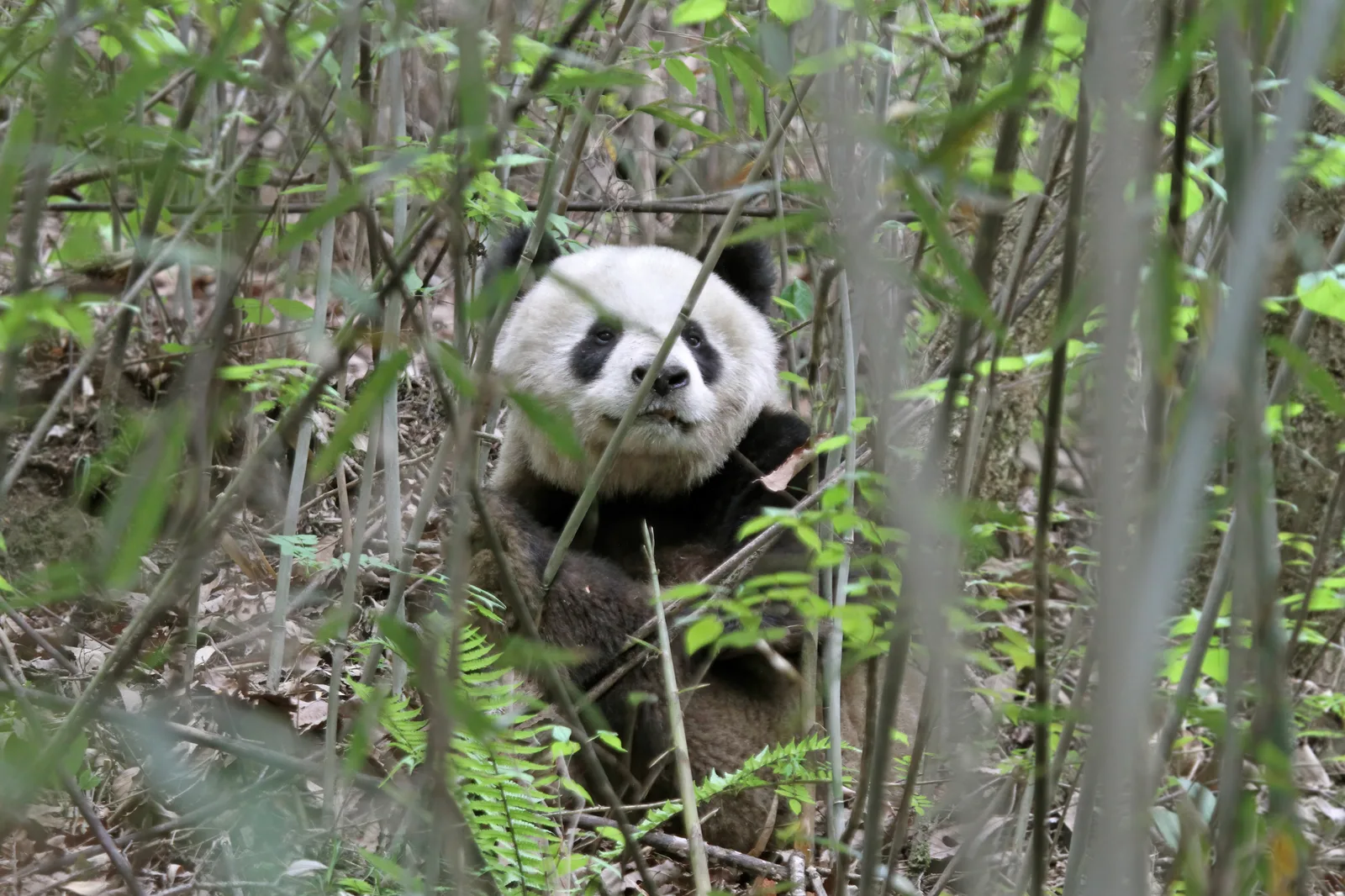
Images of the giant panda
Lifespan in the wild
10 to 15 years
Weight
80 to 125 kg
Length
1.2 to 1.9 m
Height
60 to 90 cm
Fact file
Giant panda
- Location
- Sichuan, Shaanxi and Gansu, China
- Habitat
- Temperate forest, Mountains
- Diet
- Herbivore
- Prey / food
- Bamboo shoots, stems and leaves
- Predators
- Snow leopards and jackals take cubs
- Lifestyle
- Crepuscular
- Name of young
- Cub
- Gestation
- About 135 days including delayed implantation
- Litter size
- 1 to 2 cubs; usually one survives
- Population
- About 1,860 in the wild
- Biggest threat
- Habitat fragmentation
- Distinctive feature
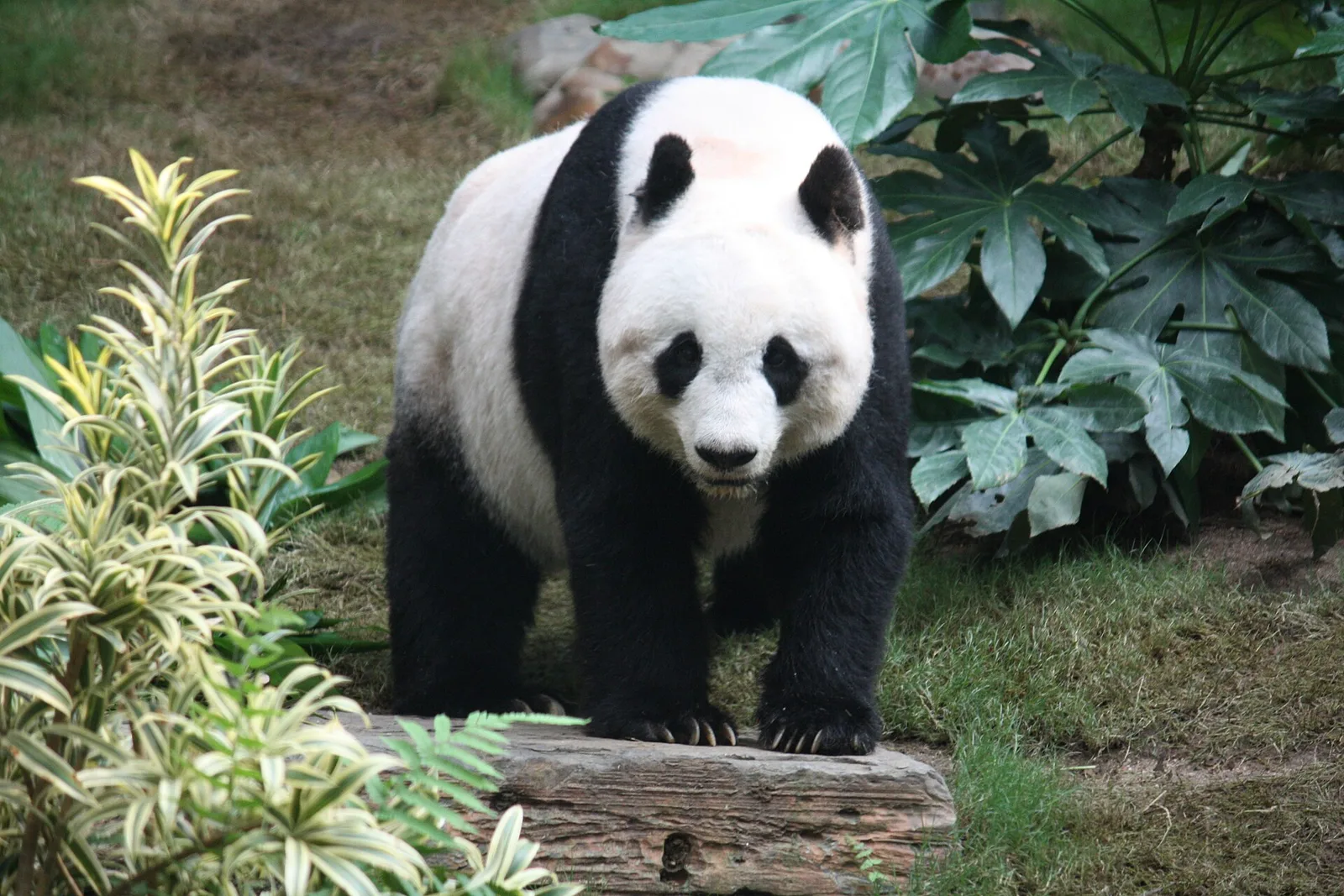
- Black eye patches and black ears on a white face
- Colour
- Black and white
- Skin type
- Fur
Size
Next to a person
Measurements
Size and speed
- Height
- 60 to 90 cm at the shoulder
- Length
- 1.2 to 1.9 m including the tail
- Tail
- 10 to 15 cm
- Weight
- 80 to 125 kg
Typical adult ranges. Sources: Animal Diversity Web, Wikipedia.
Life cycle
Lifespan
- In the wild10 to 15 years
- In captivityUp to 36.8 years
- 036.8 years
The pale bar is the record. Sources: Animal Diversity Web, AnAge.
Appearance
Colour and coat
- Primary colours
- whiteblack
- Secondary colours
- light brown
- Skin type
- fur
- Male and female
- Slight. Males are 10 to 20 percent larger than females, and the sexes look alike.
Life cycle
Mating and family
- Mating system
- promiscuous, both sexes with several partners
- Social structure
- solitary, with overlapping home ranges
- Breeding
- one cub about every two years
Pandas mate from March to May, when a female is receptive for only two or three days. The egg implants after a delay, so gestation runs 95 to 160 days. Twins are common, but the mother raises one cub, which weighs only 90 to 130 grams at birth. The cub stays with her for 18 months to two years. Wild pandas live 10 to 15 years.
Classification
Taxonomy
- Kingdom
- Animalia
- Phylum
- Chordata
- Class
- Mammalia
- Order
- Carnivora
- Family
- Ursidae
- Genus
- Ailuropoda
- Species
- Ailuropoda melanoleuca
Conservation
Red List status
- LC
- NT
- VU
- EN
- CR
- EW
- EX
Vulnerable on the IUCN Red List
Range
Recorded in 1 country
Habitat layer: temperate broadleaf and mixed forest, temperate conifer forest, boreal forest and taiga, montane grassland and shrubland.
Countries from 27 wild records on GBIF (iNaturalist research grade), filtered and checked by hand. Country shapes: Natural Earth. Habitat: RESOLVE Ecoregions 2017, CC BY 4.0. Basemap: Natural Earth.
Habitats
Three things to know
- 1
A panda eats 12 to 38 kg of bamboo a day.
- 2
A newborn cub weighs about 100 g, about 1/900 of its mother.
- 3
The wrist has an extra bone that works like a thumb for holding bamboo.
Did you know
Seven more facts
- 1
A cub's fur can turn slightly pink from a reaction with its mother's saliva.
- 2
Wild pandas feed on 25 different bamboo species.
- 3
A panda's droppings hold bamboo pieces of one length, which lets surveyors tell one animal from another.
- 4
Wild pandas have been seen coating themselves in horse manure.
- 5
In captivity a mother can be tricked into raising twins if keepers swap the cubs every twelve hours.
- 6
The Qinling panda is brown and white rather than black and white.
- 7
iNaturalist holds 1,421 observations of the species.
Field notes
How it looks and acts
Field notes
Distinguishing features
- Black eye patches, ears, legs and shoulder band on a white coat.
- A round face shaped by very large jaw muscles.
- A false thumb formed from the wrist bone.
- A shoulder height of 60 to 90 centimetres.
- A tail of 10 to 15 cm, the second longest among bears.
- Wide, flat molars with ridges for grinding bamboo.
Field notes
Unique adaptations
- Broad molars and huge jaw muscles crush tough bamboo stems.
- A sixth digit grips a stem while the panda strips it.
- A thick, mucus-lined gut resists bamboo splinters.
- Gut microbes help break down the cyanide in raw bamboo.
- A very low metabolic rate, like a sloth's, lets it live on food that gives little energy.
Field notes
Interesting behaviours
- Sits upright to eat and holds the stem in one paw.
- Feeds for 10 to 16 hours a day.
- Moves to lower ground in winter and higher ground in summer.
- Climbs a tree to rest or to escape a threat.
- Scent marks rocks and trees along ridges.
Field notes
Temperament
- Solitary and quiet, with little interest in other pandas outside spring.
- Placid in appearance, but it has attacked people on rare occasions.
- A mother plays with her cub, rolling and wrestling with it.
Field notes
Communication
- Rubs scent from a gland near the tail onto rocks and trees.
- Bleats to keep a meeting peaceful.
- A female in oestrus chirps to attract males.
- Roars and growls in a fight, squeals to submit.
Ecology
Ecological role
The giant panda is the main large consumer of bamboo in its mountains, and its forest shelters many other rare species.
- Panda numbers track bamboo abundance, and pandas help spread bamboo seed.
- Shares its bamboo with the takin, and moves to the edge of takin range when food is short.
- Protected panda forest also covers 70 percent of China's forest birds and mammals.
- Its range overlaps with the red panda on the Tibetan Plateau, where the two rarely compete.
Stories
Myths and legends
- In Chinese tradition, pandas got their black patches when they wiped away tears with ash-covered paws after a girl died saving a cub.
- In Chinese tradition, the legendary beast pixiu is often taken to be the giant panda.
- In Chinese tradition, the zouyu appears only during the reign of a kind and honest ruler.
- In Sichuan folk belief, a panda pelt keeps ghosts away and brings dreams that foretell the future.
People
Relationship with humans
People
Living alongside us
China has prized the panda since ancient times, and emperors kept them in their gardens. Hunters took skins until strict laws and executions ended most poaching. Since the 1970s China has sent pandas abroad as gifts and then as loans, a form of diplomacy. Zoos pay up to 1 million dollars a year to keep a pair. The species is now the best known symbol of conservation in the world.
- A panda can bite hard and has attacked people on rare occasions.
- Wild pandas avoid people, and meetings are uncommon because the animals are rare.
- A mother with a cub should be given a wide berth, as with any bear.
People
Status, uses and products
- Domestication
- Wild
- As a pet
- Not suitable. A panda needs 9 to 14 kilograms of fresh bamboo every day and a mountain forest to roam. Every panda in the world belongs to China, and trade is banned under CITES Appendix I.
- Uses
- zoo exhibitionecotourismdiplomacy
- Products
- fur (historic, now banned)
The full account
About the giant panda
The giant panda, Ailuropoda melanoleuca, is a bear that lives only in the mountain forests of central China. Its white coat carries black patches over the eyes, the ears, the legs and the shoulders. Although it belongs to the order Carnivora, bamboo makes up about 99 percent of what it eats. A bone in the wrist works like a thumb and holds a bamboo stem while the panda feeds. The panda is solitary and meets other pandas only in the short spring mating season.
An adult weighs 80 to 125 kilograms and measures 1.2 to 1.9 metres long, including the tail. Wild pandas live in six mountain ranges in Sichuan, Shaanxi and Gansu. The IUCN lists the species as Vulnerable, and the last national survey counted 1,864 wild pandas. Its greatest threat is the break-up of its forest into small, isolated patches. The panda is China's national symbol and the emblem of the World Wide Fund for Nature.
Name and taxonomy
English took the word panda from French, and no one is sure where the French word came from. The best guess is the Nepali word ponya, which may refer to the wrist of the red panda. For about 40 years the name panda meant only the red panda, which science described first. The species name melanoleuca means black and white, and Ailuropoda means cat-foot. Chinese speakers call it dàxióngmāo, the giant bear cat, and older texts used names such as spotted bear and bamboo bear.
Western science did not describe the panda until 1869. For decades zoologists argued whether it was a bear or a relative of the raccoon, because it shares traits with both. Molecular studies in 1985 settled the question: the panda is a true bear in the family Ursidae. Two subspecies are recognised. The nominate form lives mainly in Sichuan and shows the familiar black and white pattern. The Qinling panda of Shaanxi is brown and white, with a smaller skull and larger molars.
Evolution and relatives
The panda's lineage was the first to branch off within the bear family, about 19 million years ago. Fossil relatives show that the ancient panda was an omnivore around 7 million years ago. Full herbivory arrived about 2 million years ago with the species Ailuropoda microta. The gene for the umami taste receptor, which detects meat, broke down about 4.2 million years ago. Scientists think this loss followed the change of diet rather than causing it.
The Qinling population separated from the others about 300,000 years ago. The remaining pandas split into two further groups only about 2,800 years ago. Like other bears, the panda keeps the digestive system of a carnivore, so it digests bamboo poorly. The species has no close living relative, and the red panda belongs to a different family.
Appearance
The panda has the round head and stocky body of a bear, with a short tail. Adults stand 60 to 90 centimetres at the shoulder. Head, body and tail together measure 120 to 190 cm, and the tail alone is 10 to 15 cm. A typical adult weighs 80 to 125 kilograms, and a large male can reach 160 kg. Males are 10 to 20 percent larger than females.
The ears, eye patches, legs and a band across the shoulders are black, and the rest of the coat is white. In the Qinling Mountains the black is replaced by light brown. The coat is thick and woolly, and the hairs feel coarse and oily. The pattern seems to work as camouflage: white against snow, black in shade. Studies suggest the black ears signal aggression and the eye patches help pandas recognise each other.
The skull is built for crushing, with wide flat molars and very large jaw muscles that give the face its round shape. A panda of 117.5 kg produced a bite force of 1,298.9 newtons at the canine teeth. The forepaw carries a sixth digit, an enlarged wrist bone with its own pad, that presses against the first finger to grip bamboo. Only the sloth bear has a longer tail among bears.
Habitat and range
The giant panda is endemic to China. It survives in six mountain ranges, mainly in Sichuan, with smaller numbers in Shaanxi and Gansu. The species uses forest with dense bamboo at 1,200 to 4,100 metres, and most often at 1,500 to 3,000 m. It favours old-growth forest but will enter secondary forest. Pandas seek gentle slopes and moist ground, because steep terrain costs energy.
Pandas once ranged across much of southern and eastern China and into Myanmar and northern Vietnam. Remains from sinkholes show they still lived in the Gaoligong Mountains of Yunnan 5,000 years ago. Farming and logging pushed the species out of the lowlands, and by 2001 its range had shrunk by about 99 percent. What is left is steep and rugged land that nobody farmed.
Pandas move up and down the mountains with the seasons to follow bamboo growth. They descend in winter to escape deep snow, and they can shift several hundred metres in altitude in a few days.
Diet and feeding
Bamboo makes up about 99 percent of the diet. Pandas use over 60 bamboo species across their range, and about 35 of these are main foods. They pick the parts highest in protein: shoots in spring and summer, leaves in the rest of the year. A panda also eats other plants, and it takes meat, fish, eggs and insects when it can.
Because bamboo gives so little energy, a panda eats 9 to 14 kilograms of shoots a day. It feeds for 10 to 16 hours a day and may defecate up to 40 times. Food passes fast through a short, straight gut, so only about 17 percent of the nutrients are absorbed. The stomach wall is thick with muscle, and mucus lines the gut to guard against splinters. Raw bamboo contains cyanide, and gut microbes help the panda break it down.
A panda sits upright to eat, holds a stem in one paw and bites off pieces the width of its palate. It chews little, so the fragments in its droppings are all the same length, and surveys use this to tell animals apart. The field metabolic rate is among the lowest known in mammals, close to that of a sloth. When a bamboo species flowers and dies at once, a panda needs a second species nearby or it starves.
Behaviour and social life
Pandas are solitary, and each adult holds a home range. A female does not tolerate other females in her range, but a male's range overlaps those of several females. Home ranges span 1 to 60 square kilometres, and most cover 5 to 15. Scent marks on ridges and tree stumps keep neighbours apart for most of the year. Unlike other bears, it is the young females that leave the area where they were born.
Pandas are active for about half of each day, in bursts of a few hours, with peaks in the morning, afternoon and around midnight. Activity is highest in June and rises again from November to March. The species does not hibernate, because bamboo is available all year. In snow or hard cold it shelters in a hollow tree, a rock crevice or a cave, but it builds no permanent den.
Pandas climb trees to rest, to escape danger and during courtship, and they can swim. They avoid steep slopes and keep social contact short, which saves energy. Pandas have been seen rolling in horse manure, which may help them cope with cold. Although the panda looks docile, it has attacked people on rare occasions.
Communication and senses
Smell is the main channel of communication. A panda rubs a gland near the tail on a rock or tree, or sprays urine, and it also claws the bark. Males mark with a hind leg raised or by rubbing the backside against the landmark, while females squat. A higher mark advertises a bigger animal, and a smaller panda may avoid it. Marks carry the signaller's sex, age, identity and breeding state, and pandas can tell how old a mark is.
Pandas that share an area leave marks at the same scent stations, so each can read who is nearby. In the breeding season a female's urine raises androgen levels in males. A bleat keeps meetings peaceful, a female in oestrus chirps, and roars and growls mark a fight. Squeals signal submission, and honks, moans, chomps and barks are also recorded. The panda relies on spatial memory more than on sight to find its way.
Reproduction and life cycle
Pandas mature at four to eight years and can breed until about 20. Mating runs from March to May. A female comes into oestrus once a year, for only two or three days, and she signals it by chirping and by extra scent marking. Males compete for her, and both sexes may mate with several partners. A pair may stay together for days before mating, and the male leaves afterwards.
The fertilised egg floats free for 1.5 to 4 months before it implants, so gestation runs from 95 to 160 days. True embryonic growth takes only about 1.5 months. Most cubs arrive in August or September, in a rock den or a hollow tree. About half of births are twins, but the mother raises only the first healthy cub, and the other dies. She does not store fat, so she probably cannot make milk for two.
A newborn weighs 90 to 130 grams, about 1/800 of its mother, the smallest baby of any placental mammal in proportion. It is pink, blind and toothless, with a thin coat of white hair. The full black and white pattern appears within about a month. The cub crawls at 75 to 80 days and first tastes bamboo at about six months. At one year it weighs about 45 kilograms. Cubs leave their mothers at 18 months to two years, and a female gives birth about every two years. In the wild a panda lives 10 to 15 years, and the oldest captive animal reached 36.8 years.
Predators and threats
Adult pandas have few natural predators. Cubs are taken by snow leopards, martens, eagles, feral dogs and Asian black bears. Subadults up to 50 kilograms can be taken by leopards. A roundworm, Baylisascaris schroederi, kills more wild pandas than anything else. Canine distemper and parvovirus from dogs and livestock also reach wild pandas.
The main threat is the loss and fragmentation of habitat. Roads, farms and settlements have split the species into more than 30 small subpopulations. Bamboo of one species flowers and dies together every 15 to 120 years, and a panda trapped in one patch can starve. Snares set for musk deer still kill pandas, though poaching for skins has almost stopped. One model projects that climate change could remove up to 100 percent of panda habitat by 2100.
Population and conservation
The IUCN downgraded the panda from Endangered to Vulnerable in 2016, and China followed in 2021. The Fourth National Survey, published in 2015, counted 1,864 wild pandas older than 1.5 years. With cubs added, the total was put at about 2,060 in 2018. By late 2024 about 1,900 lived in the wild and 757 in captivity. Earlier counts had been much lower: a 2006 DNA study suggested the true number might be nearer 3,000 than 1,000.
China created the Wolong National Nature Reserve in 1963. Reserves rose from 13 in 1998 to 40 in 2006. Nearly 70 of them merged into the Giant Panda National Park in 2020. The Sichuan Giant Panda Sanctuaries became a UNESCO World Heritage Site in 2006. Protecting panda forest also shelters 70 percent of China's forest birds and mammals, so the panda acts as an umbrella species.
The species sits on CITES Appendix I, which bans trade in its parts. China's Wildlife Conservation Law of 1988 gives it the highest level of protection, and traders in skins have been executed. Captive breeding now works well, helped by artificial insemination and frozen sperm. The problem is finding release sites with good bamboo and few resident pandas.
Relationship with humans
Ancient Chinese writers already treated the panda as rare and noble. A panda skull lay in the tomb of the Empress Dowager Bo. A Tang emperor's grandson is said to have sent two pandas and a skin to Japan as a gift. Unlike many animals in China, the panda had almost no use in traditional medicine. Sima Xiangru wrote that the panda was the most prized animal in the emperor's garden at Chang'an.
Local hunters took pandas for soft fur, and the black market in skins grew after China opened up. A pelt was believed to keep off ghosts and to bring dreams that foretold the future. In Japan a skin once fetched the equivalent of 176,000 dollars. In the 1970s China gave pandas to zoos in the United States and Japan, a practice known as panda diplomacy. Since 1984 pandas go abroad only on ten-year loans, for fees of up to 1 million dollars a year, and every cub belongs to China.
Keeping a panda costs a zoo about five times as much as keeping an elephant. Chi Chi at London Zoo inspired the WWF logo. In the 2020s individual pandas have become internet celebrities with queues of fans at Chengdu. Pandas rarely attack people, and encounters in the wild are uncommon.
In culture and myth
In Chinese tradition, the ancient creature called mo has been read as the giant panda. The Han dictionary Shuowen Jiezi described the mo of Sichuan as bear-like but yellow and black. The fierce legendary pixiu is also often identified with the panda. In the early 15th century a zouyu was sent to the Yongle Emperor, an animal said to appear only under a just ruler. Early Chinese art and literature made the panda a sign of strength and bravery.
A folk tale explains the black patches. In the story, a girl died protecting a cub, and the pandas in mourning rubbed their eyes with paws blackened by ash. Before 1869 many Westerners took the panda for a creature of Chinese folklore.
Chinese Gold Panda coins have carried the animal since 1982, and Silver Panda coins since 1983. It served as one of the five Fuwa mascots at the 2008 Beijing Olympics. The WWF chose a panda as its emblem after Chi Chi drew crowds at London Zoo. In 1988 a private zoo in Tainan dyed a sun bear black and white and called it a panda. The pandas Tuan Tuan and Yuan Yuan, sent to Taiwan, carry names that together mean reunion.
A sentence with a dotted underline is inferred: it describes the group the animal belongs to, or is a reading of the sources, rather than a measured or reported fact about this species.
Questions
Giant panda questions, answered
What do giant pandas eat?
Bamboo makes up about 99 percent of the diet: shoots in spring and summer, leaves for the rest of the year. A panda eats 9 to 14 kilograms of shoots a day. It also takes other plants, meat, fish and eggs when it finds them.
Are giant pandas endangered?
The IUCN lists the panda as Vulnerable, one step below Endangered, since 2016. The wild population is about 1,860, and it is rising slowly. Habitat fragmentation remains the main threat.
How many giant pandas are left?
About 1,900 live in the wild and 757 in captivity, as of late 2024. The last national survey counted 1,864 wild pandas older than 1.5 years.
Where do giant pandas live?
Only in China, in six mountain ranges in Sichuan, Shaanxi and Gansu. They live in bamboo forest at about 1,500 to 3,000 metres.
How big is a giant panda?
An adult weighs 80 to 125 kilograms and measures 1.2 to 1.9 metres long. It stands 60 to 90 centimetres at the shoulder. A large male can reach 160 kg.
Is the giant panda a bear?
Yes. Molecular studies in 1985 placed it in the bear family, Ursidae. Its lineage split from the other bears about 19 million years ago.
Why are pandas black and white?
The pattern probably works as camouflage, with white against snow and black in shade. The black ears may signal aggression. The eye patches seem to help pandas tell each other apart.
Do pandas hibernate?
No. Bamboo is available all year, so a panda keeps feeding through the winter. It moves to lower ground to escape deep snow.
How long do giant pandas live?
About 10 to 15 years in the wild. In captivity the oldest recorded animal reached 36.8 years.
How many cubs does a panda have?
Usually one cub every two years. About half of births are twins, but the mother raises only one in the wild.
Why are panda cubs so small?
A newborn weighs 90 to 130 grams, about 1/800 of its mother. That is the smallest newborn of any placental mammal in proportion to the adult. The mother does not store fat, so she feeds the cub on milk for most of a year.
Are pandas dangerous?
Rarely. A panda has a strong bite and has attacked people on a few occasions, but wild pandas avoid humans.
Why do pandas eat bamboo if they are carnivores?
The ancient panda was an omnivore about 7 million years ago and turned fully herbivorous about 2 million years ago. It kept a carnivore's gut, so it must eat huge amounts of bamboo to get enough energy.
What is the panda's thumb?
An enlarged wrist bone with its own pad. It cannot move like a real thumb, but it presses against the first finger to hold a bamboo stem.
Why does China lend pandas to other countries?
Since 1984 China has offered pandas only on ten-year loans, for up to 1 million dollars a year. Any cub born abroad belongs to China. The practice is known as panda diplomacy.
Can pandas climb trees?
Yes. Pandas climb to rest, to escape danger and during courtship. They can also swim.
Food web
Prey and food
- bamboo shoots
- stems
- leaves
Food web
Predators
 Snow leopard
- jackals
Ecological equivalents
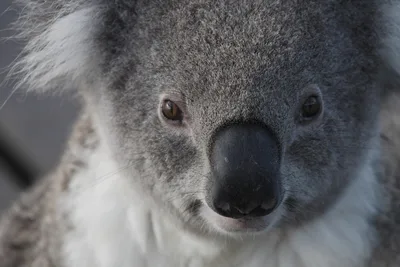
Related species on this site
Giant Panda Bear (same genus), American black bear (same family), Arctodus (same family), Asian black bear (same family), Bear (same family), Brown bear (same family), and more.
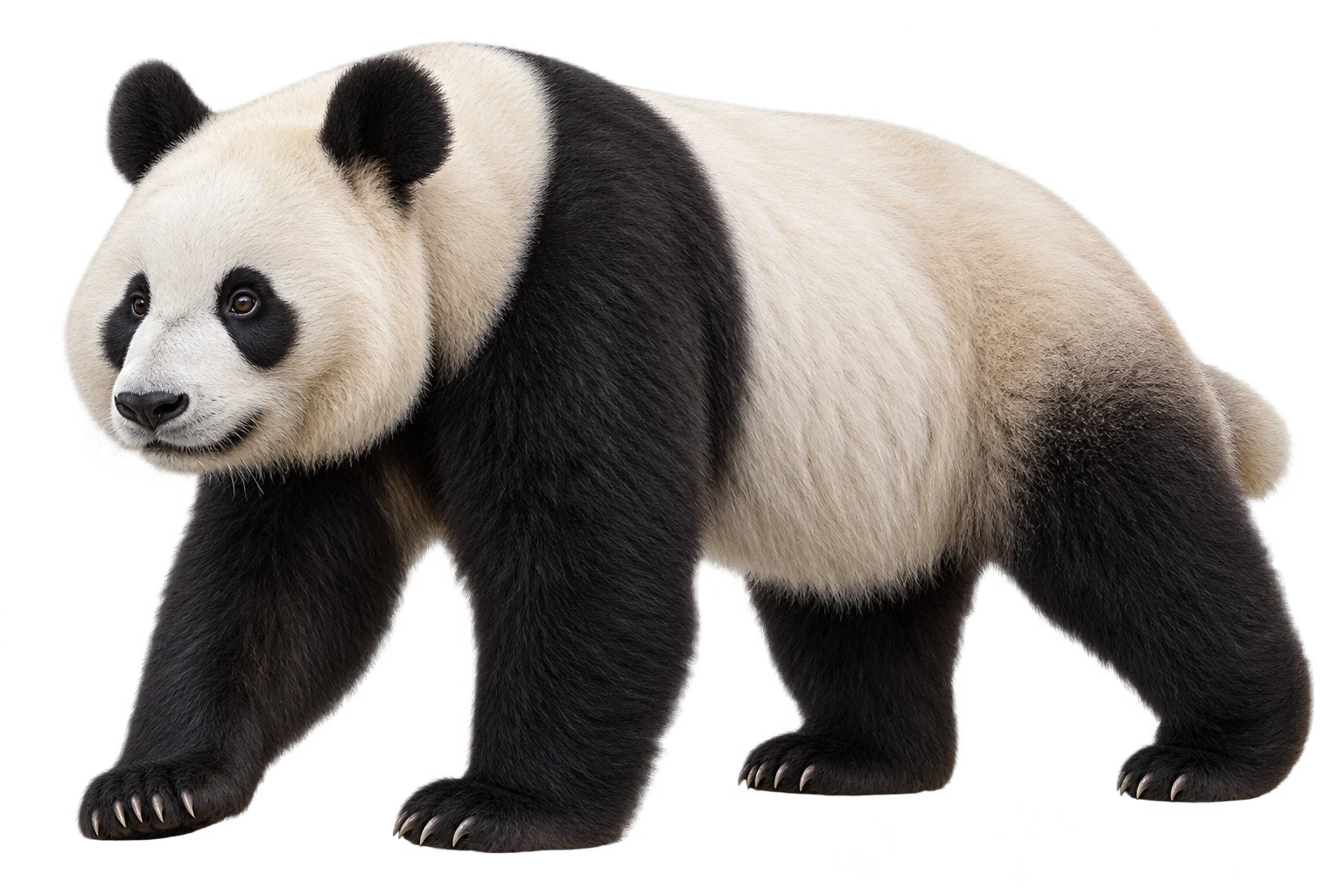
Mammals
Giant Panda Bear
Ailuropoda melanoleuca
Classification and source reference
LivingAI illustration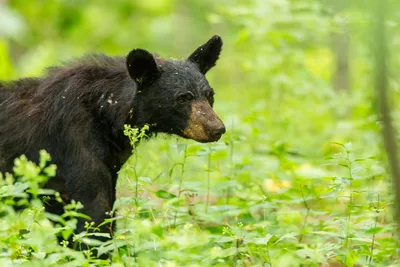 LC
Mammals
American black bear
Ursus americanus
The American black bear is the smallest and most widespread bear in North America, at home in forest from Alaska to Mexico.
Living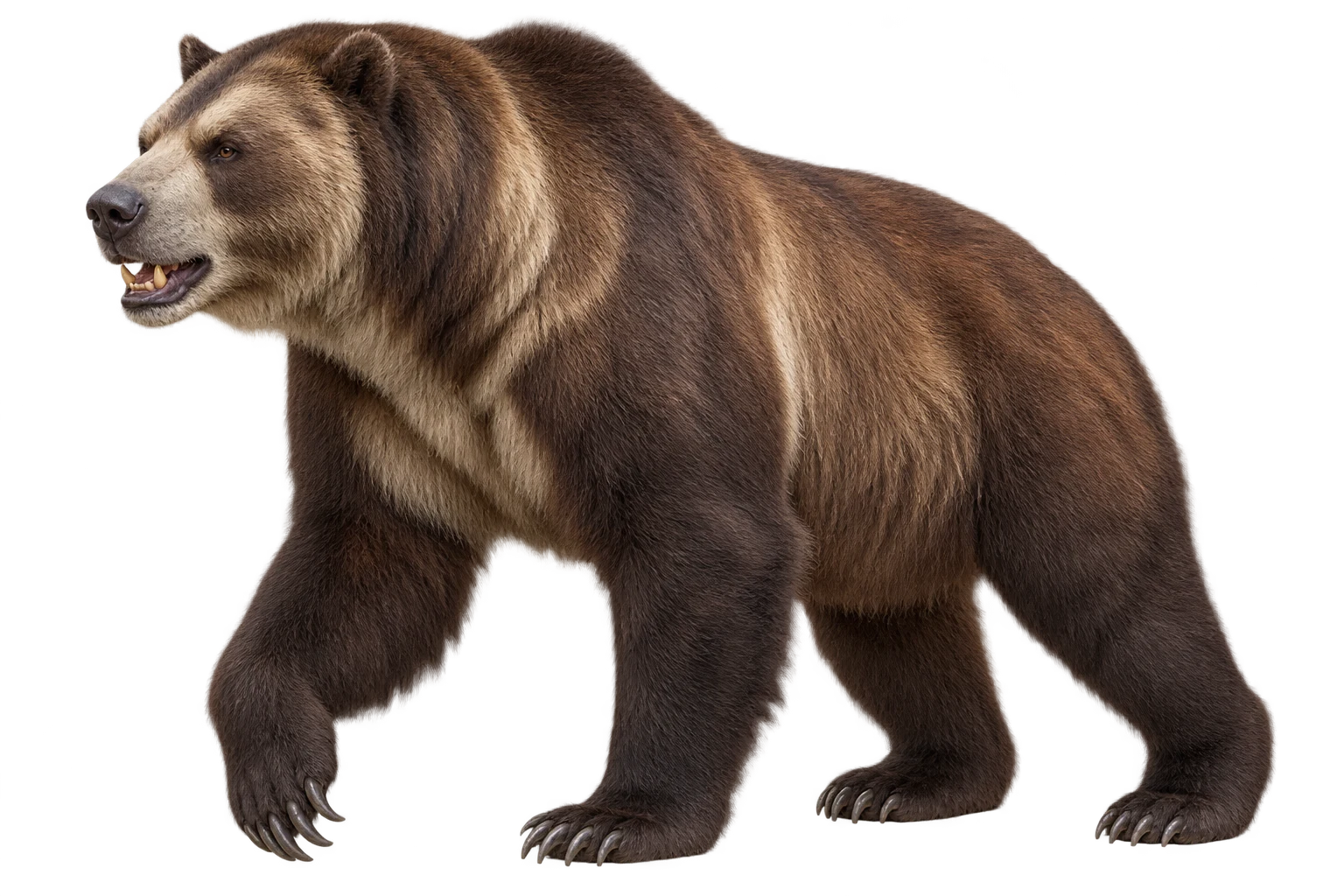
Mammals
Arctodus
Arctodus
Classification and source reference
ExtinctAI reconstruction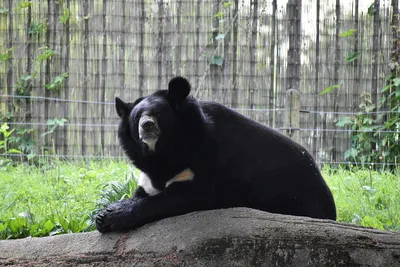 VU
Mammals
Asian black bear
Ursus thibetanus
The Asian black bear is a medium-sized forest bear of Asia with a pale crescent on its chest and a gift for climbing.
Living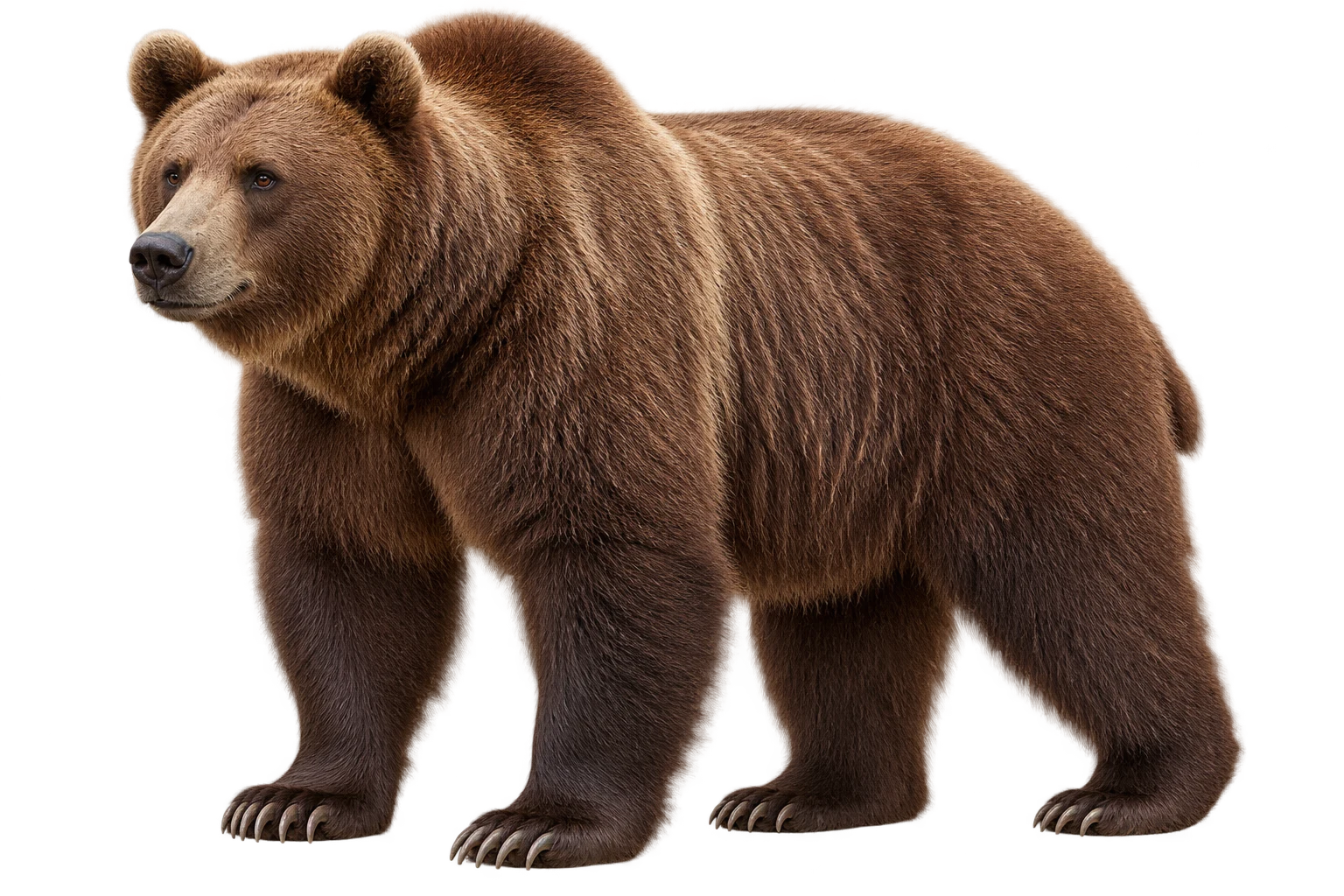
Mammals
Bear
Ursidae
Classification and source reference
LivingAI illustration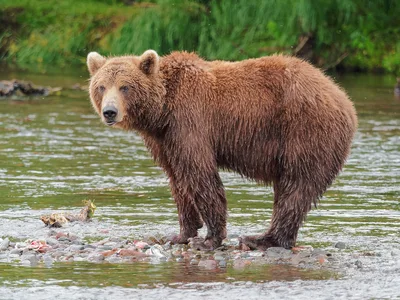 LC
Mammals
Brown bear
Ursus arctos
The brown bear is one of the two largest land carnivores, and it ranges across the forests and mountains of Eurasia and North America.
Living