Living individuals or members of this group exist today. This does not mean they are safe from extinction.
Meet the snow leopard
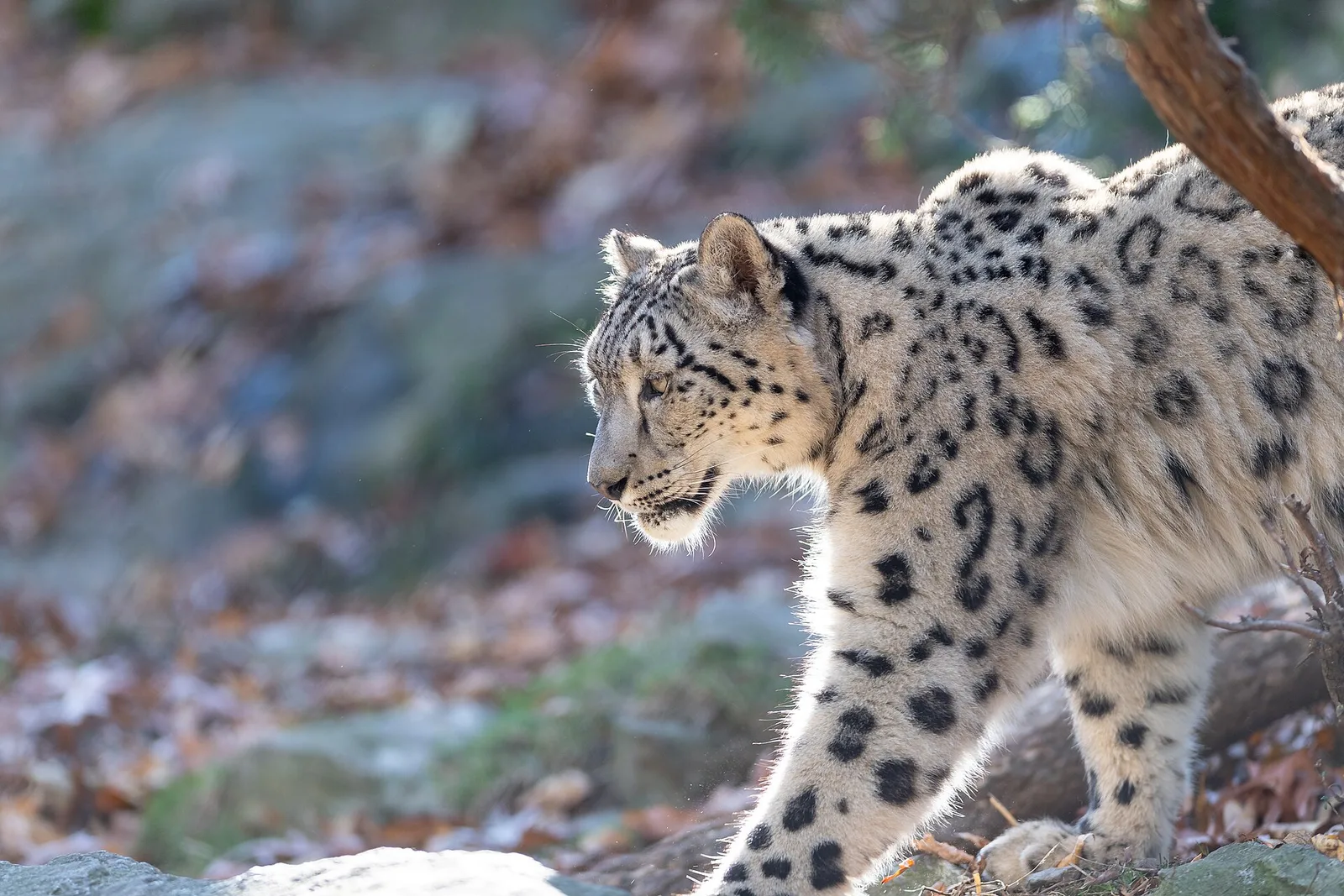
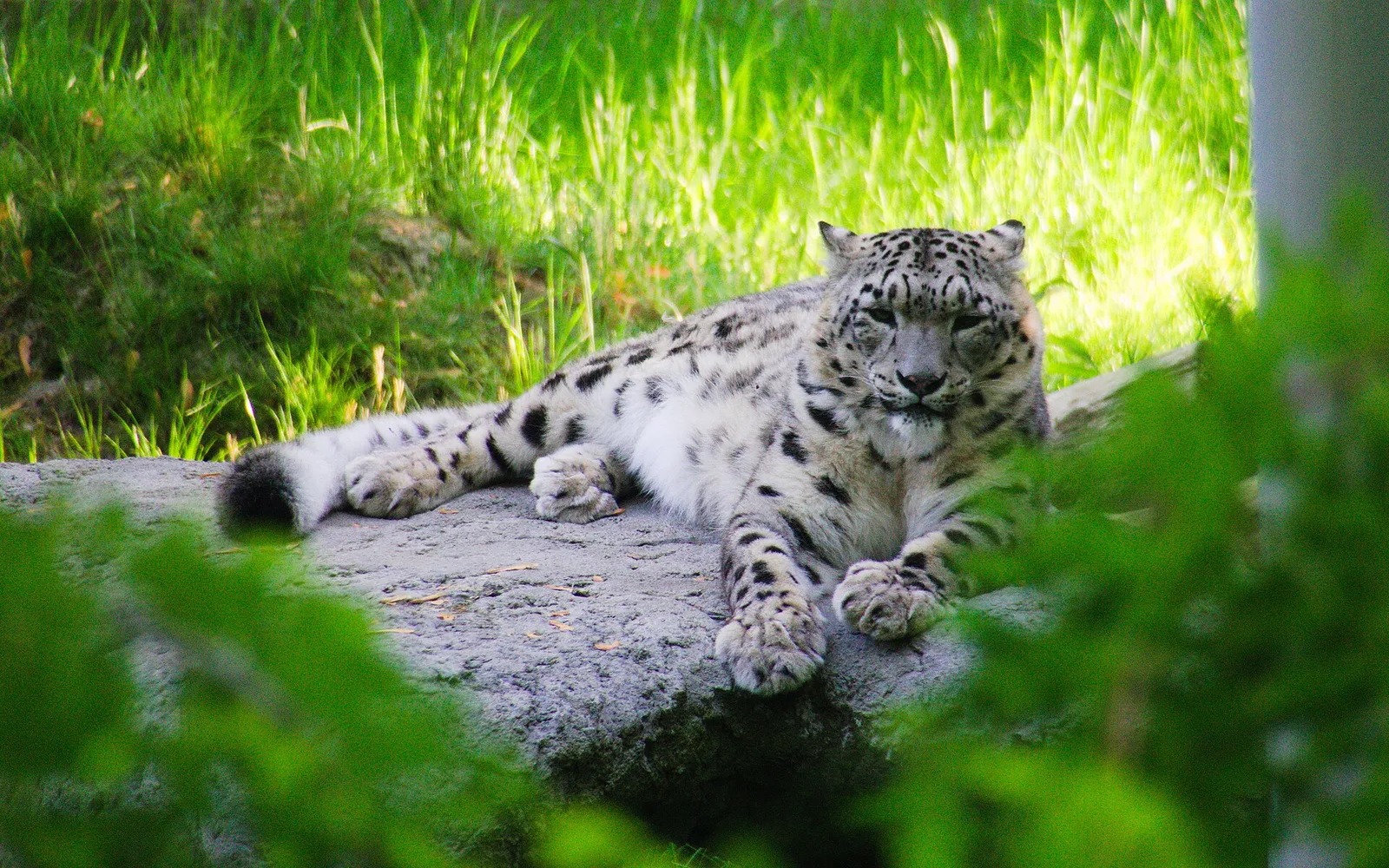
The snow leopard lives on steep, rocky slopes high in the mountains of Central Asia. Its smoky coat and long tail suit a life of stalking prey across cliffs and snow.
Images of the snow leopard
Lifespan in the wild
15 to 18 years
Weight
25 to 75 kg
Length
0.75 to 1.5 m
Height
Up to 56 cm
Fact file
Snow leopard
- Location
- The Himalaya, Tibetan Plateau, Pamir, Tian Shan and Altai
- Habitat
- Mountains
- Diet
- Carnivore
- Prey / food
- Blue sheep, ibex, marmots, pikas
- Predators
- None as adults
- Lifestyle
- Crepuscular
- Name of young
- Cub
- Gestation
- About 100 days
- Litter size
- 2 to 3 cubs
- Population
- 4,000 to 6,500
- Biggest threat
- Poaching and loss of prey
- Distinctive feature
- A tail almost as long as the body
- Colour
- Smoky grey with dark rosettes
- Skin type
- Thick fur
Size
Next to a person
Measurements
Size and speed
- Height
- Up to 56 cm at the shoulder
- Length
- 0.75 to 1.5 m head and body
- Tail
- 0.8 to 1.05 m
- Weight
- 25 to 75 kg
Typical adult ranges. Sources: Animal Diversity Web, Wikipedia.
Life cycle
Lifespan
- In the wild15 to 18 years
- In captivityUp to 25 years
- 025 years
The pale bar is the record. Source: Wikipedia.
Appearance
Colour and coat
- Primary colours
- smoky greywhite
- Secondary colours
- blackcream
- Skin type
- thick fur
- Male and female
- Slight. Males are somewhat larger than females, with slightly wider canine teeth. Both sexes carry the same coat pattern.
Life cycle
Mating and family
- Mating system
- polygynous, with a male range overlapping several females
- Social structure
- solitary, except a mother with cubs
- Breeding
- one litter of two or three cubs every second year
Snow leopards mate from January to March, the only big cat with a fixed season. After about 100 days the female bears two or three cubs in a rock den between April and June. The cubs open their eyes at about a week, are weaned by about 10 weeks and follow her from two to four months. They leave her at about 20 to 22 months. Wild cats live 15 to 18 years.
Classification
Taxonomy
- Kingdom
- Animalia
- Phylum
- Chordata
- Class
- Mammalia
- Order
- Carnivora
- Family
- Felidae
- Genus
- Panthera
- Species
- Panthera uncia
Conservation
Red List status
- LC
- NT
- VU
- EN
- CR
- EW
- EX
Vulnerable on the IUCN Red List
Range
Recorded in 12 countries
- Afghanistan
- Bhutan
- People's Republic of China
- India
- Kyrgyzstan
- Kazakhstan
- Mongolia
- Nepal
- Pakistan
- Russia
- Tajikistan
- Uzbekistan
Habitat layer: montane grassland and shrubland.
Countries from 219 wild records on GBIF (iNaturalist research grade), filtered and checked by hand. Country shapes: Natural Earth. Habitat: RESOLVE Ecoregions 2017, CC BY 4.0. Basemap: Natural Earth.
Habitats
Three things to know
- 1
A snow leopard can leap about 9 m in one bound.
- 2
It wraps its tail around its face to keep warm while resting.
- 3
Snow leopards cannot roar. They chuff and yowl.
Did you know
Seven more facts
- 1
The old English name for the cat is the ounce.
- 2
Snow leopards eat twigs and grass on purpose.
- 3
Cubs are born with black stripes down the back that later break into spots.
- 4
The cat's huge nasal cavities warm the thin mountain air before it reaches the lungs.
- 5
About 40% of the protected areas in its range are smaller than one male's home range.
- 6
Snow leopards in Mongolia have crossed 65 kilometres of open desert between mountain blocks.
- 7
Its skull has a domed forehead and a shorter muzzle than any other big cat.
Field notes
How it looks and acts
Field notes
Distinguishing features
- A smoky grey coat with dark rosettes on the body and solid spots on the head and legs.
- A thick, furry tail of 80 to 105 centimetres, nearly as long as the body.
- Very large paws with fur on the soles.
- Small, rounded ears set wide apart.
- A short face with a raised, rounded forehead.
- Pale grey-green eyes, unusual among the big cats.
Field notes
Unique adaptations
- Broad, fur-lined paws spread its weight on snow and grip ice and rock.
- A long tail balances the cat on cliffs and covers its face in the cold.
- Large nasal cavities warm cold, dry air with each breath.
- Dense fur up to 12 centimetres long on the belly holds in heat.
- Long hind legs power leaps of about 9 metres across broken ground.
Field notes
Interesting behaviours
- Stalks from above and charges downhill for up to 300 metres.
- Scrapes the ground and sprays sheltered rocks to mark its routes.
- Rests on ridges and cliff tops with a wide view.
- Moves a kill to hide it from crows and vultures.
- Follows its prey down the mountain in winter.
Field notes
Temperament
- Shy and secretive, and it avoids people.
- Solitary, and it keeps about 2 kilometres from its neighbours.
- Gives up a kill readily rather than fight.
- Males will not tolerate other males in their range.
Field notes
Communication
- A high yowl from a female in heat carries across the valleys at dusk.
- A chuff through the nose greets another cat.
- Scrapes, droppings and urine sprays on rocks mark travel routes.
- Head and neck rubbing shows friendly intent.
- A wide-open mouth with bared canines is a threat.
Ecology
Ecological role
The snow leopard is the top predator of the high Asian mountains and a flagship for the whole alpine ecosystem.
- Keeps blue sheep, ibex and other mountain grazers in check, which protects alpine pasture.
- Takes marmots and pikas in summer, so it links the large and small prey webs.
- Its presence signals a healthy mountain ecosystem, and its protection shelters many other species.
- Its leftover carcasses probably feed vultures, crows and foxes through the winter.
Stories
Myths and legends
- In Kyrgyz tradition, the snow leopard is sacred, a noble mountain animal that stands for strength and courage.
- In Mongolian tradition, the cat is a spirit animal and a messenger of the gods.
- In Tatar tradition, the winged white leopard, the Aq Bars, is a national emblem.
- In several mountain traditions, the snow leopard is thought to be a shape-shifting spirit because it vanishes among the rocks.
People
Relationship with humans
People
Living alongside us
Herders across Central Asia lose sheep, goats and yaks to the snow leopard, and some kill it in return. Poachers take skins and bones for trade and traditional medicine. Every range country now protects the cat by law, and insurance schemes and stronger corrals reduce the conflict. The animal is a national emblem in several countries and a symbol of the high mountains.
- The snow leopard is shy and keeps away from people.
- Only three attacks on people are recorded, and none was fatal.
- It abandons a kill rather than defend it against a person.
People
Status, uses and products
- Domestication
- Wild
- As a pet
- Not suitable. A snow leopard needs a mountain range of tens of square kilometres, cold air and wild prey. It is a protected species under CITES Appendix I, and private ownership is illegal in most countries.
- Uses
- ecotourismzoo exhibition
- Products
- skinsbones
The full account
About the snow leopard
The snow leopard, Panthera uncia, is a big cat of the high mountains of Central and South Asia. Its smoky grey coat hides it so well among rock and snow that local people call it the ghost of the mountains. A thick tail almost as long as the body gives balance on cliffs and wraps around the face as a blanket in the cold. Broad, fur-lined paws spread its weight on snow and grip loose rock. Unlike the lion, tiger, leopard and jaguar, it cannot roar.
An adult weighs 25 to 75 kilograms and measures 75 to 150 centimetres in head and body, with a tail of 80 to 105 cm. It lives from the Hindu Kush and the Himalaya across the Tibetan Plateau to the Altai and southern Siberia, usually between 3,000 and 4,500 metres. It hunts blue sheep, ibex, argali and marmots on steep slopes, and it takes livestock where wild prey is scarce. The IUCN lists the snow leopard as Vulnerable, with fewer than 10,000 mature animals left and poaching still the main threat.
Name and taxonomy
The species name uncia and the old English name ounce both come from the Old French once, itself from the Greek for lynx. Panther comes from the Latin panthera and the Greek panther, a word for a spotted cat. Johann Schreber named the cat Felis uncia in 1777, working from a description by Buffon that wrongly placed it on the Barbary Coast. In 1854 John Edward Gray proposed the genus Uncia for Asian cats with long, thick tails. The snow leopard sat alone in that genus for more than a century, and Reginald Pocock used Uncia uncia in 1930.
Genetic studies later showed it belongs inside Panthera, next to the tiger, so it is now Panthera uncia. In 2017 a study proposed three subspecies. P. u. uncia lives in the Pamirs, the Mongolian cats are P. u. irbis, and P. u. uncioides holds the Himalaya and Qinghai. Other researchers dispute that split, and many still treat the species as a single form with no subspecies. In Mongolian and Russian the cat is the irbis, and the Turkic name aq bars means white leopard.
Evolution and relatives
The snow leopard is the sister species of the tiger. Their shared line split from other Panthera cats about 4.62 to 1.82 million years ago. The two probably parted 3.7 to 2.7 million years ago. The genus Panthera most likely arose in northern Central Asia. Panthera blytheae, a fossil cat from western Tibet, has a skull like a snow leopard's. It was called the oldest Panthera, though that is disputed. The mitochondrial genes of the snow leopard, leopard and lion are more alike than their nuclear genes, which suggests their ancestors once interbred.
The oldest sure fossil of the modern species comes from Niuyan Cave in China and dates to the Late Pleistocene. A Middle Pleistocene cat from the Zhoukoudian Peking Man site looks much like it. Fossils from France and Portugal have been named as European snow leopard subspecies, P. u. pyrenaica and P. u. lusitana. They may record a spread of snow leopards into Europe, or European leopards that evolved a similar build for rocky ground.
Appearance
The snow leopard is a stocky, short-legged cat, slightly smaller than the other Panthera species. It stands up to 56 centimetres at the shoulder, and the head and body run 75 to 150 cm. The tail is 80 to 105 cm long, thick with stored fat and wrapped in dense fur. Males average 45 to 55 kilograms and females 35 to 40 kg. Large males reach 75 kg, and small females fall below 25 kg.
The fur is whitish to smoky grey, with a white belly. Solid black spots mark the head, neck and lower legs, and larger rosettes cover the back, flanks and tail. Winter fur grows to about 5 cm on the back and up to 12 cm on the belly, and the coat moults twice a year. Cubs have black stripes down the spine that break into rows of long rings as they grow.
The head is small and broad, with a short muzzle, a domed forehead and very large nasal cavities. Those cavities warm and moisten the thin, cold air with every breath. The ears are small and rounded, which cuts heat loss. The paws are huge for the cat's size, with fur on the soles for grip and warmth. The canine teeth are about 28.6 millimetres long and more slender than in other big cats.
Habitat and range
The snow leopard lives in 12 countries, from Afghanistan, Pakistan, India, Nepal and Bhutan in the south to Kazakhstan, Mongolia and Russia in the north. Its range runs from the Hindu Kush and Karakoram through the Pamirs, Tian Shan and Himalaya, across the Tibetan Plateau to the Altai and Sayan. About 60% of that range lies in China, mainly in Xinjiang, Tibet, Qinghai, Sichuan and Gansu. The whole range covers about 2.3 million square kilometres, but the cat is spread thinly across it. GBIF holds records from 18 countries, which includes zoo animals.
It favours steep, broken ground: cliffs, ridges, ravines and rocky slopes above the tree line. Alpine meadows, alpine steppe and open conifer forest all serve, but it avoids dense forest and farmland. Most cats live between 3,000 and 4,500 metres, and in summer they range from 2,700 up to 6,000 m. In winter they follow their prey down to 1,200 to 2,000 m, and in the north of the range they live lower all year. A snow leopard can push through snow 85 cm deep, but it prefers trails that other animals have already made. In Mongolia cats have crossed 20 to 65 km of flat, open ground to reach isolated mountain blocks.
Diet and hunting
The snow leopard eats meat, and mountain sheep and goats make up most of its diet. Its main prey are blue sheep, Himalayan tahr, argali, markhor, Siberian ibex and urial. It prefers animals of 36 to 76 kilograms, but it can kill prey up to three times its own weight. Marmots, pikas, hares, voles and pheasants matter too, and marmots may supply 45% of the meat in summer. Droppings from Pakistan held rhesus macaque, palm civet, hare and several mice and rats. The cat also eats twigs and grass on purpose, especially the shoots of tamarisk bushes.
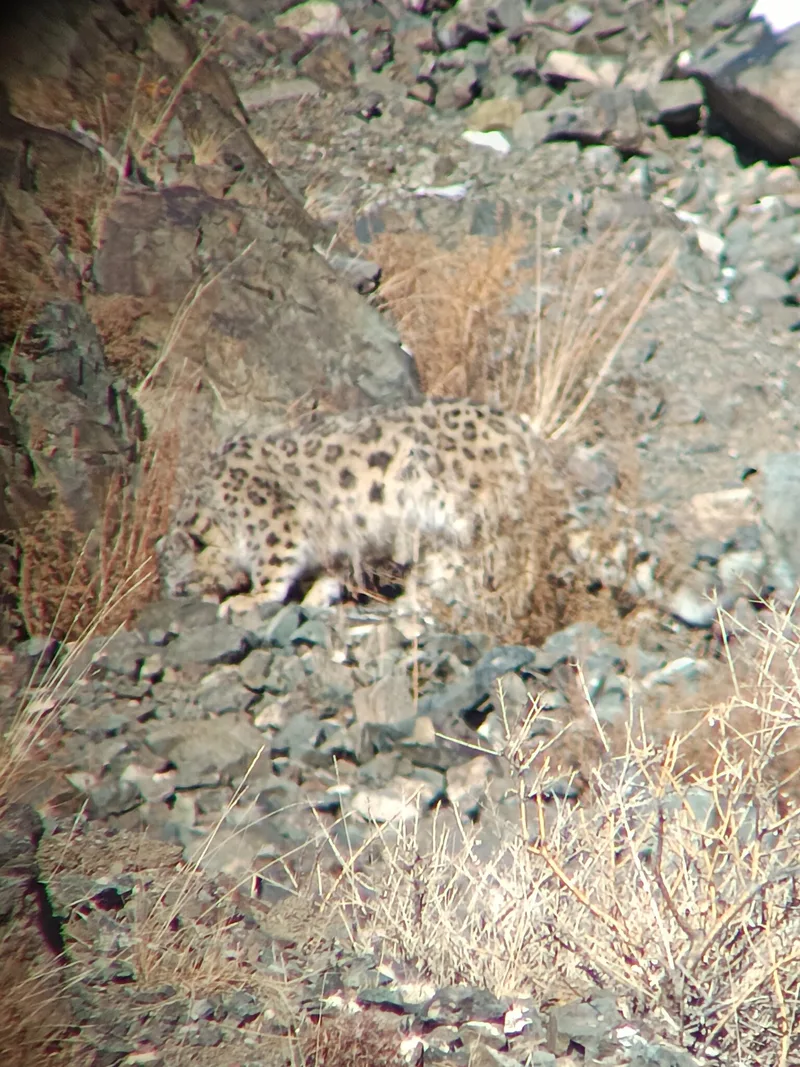
It hunts by walking ridge lines, animal trails, river terraces and the beds of gorges. It stalks from above, hidden by rock and scrub, then launches down the slope. The chase runs up to 300 metres, and the cat can leap about 9 m in one bound. It kills with a bite to the neck, drags the carcass to a safe spot and eats every edible part. It often moves a kill to hide it from crows and vultures. One blue sheep feeds a single cat for a week or two, and an adult needs about 20 to 30 blue sheep a year.
Where wild prey has been hunted out, it turns to sheep, goats, cattle, horses, yaks and dogs. In Mongolia domestic sheep still make up less than 20% of its diet. It is easily driven off a kill and rarely fights to keep it. Mating pairs sometimes hunt together.
Behaviour and social life
The snow leopard is solitary, and it is most active at dawn and dusk. Radio-tagged cats in Mongolia were active 37% of the time, least in the afternoon and most between 20:00 and 04:00. Where people leave it alone it hunts by day, and where it takes livestock it hunts mostly at night. It rests near cliffs and ridges that give shade and a view, and it shifts its bed several times a day.
In Nepal's Shey Phoksundo National Park, five collared cats used ranges of 12 to 39 square kilometres that overlapped widely, yet they rarely met. Males moved 0.5 to 5.45 km a day in a straight line, and females 0.2 to 2.25 km. Their zigzag paths covered up to 7 km a night. In the Gobi, where prey is sparse, male ranges ran 144 to 270 km² and female ranges 83 to 165 km². About 40% of the 170 protected areas across the range are smaller than one male's home range. Good habitat holds up to 10 cats per 100 km², while poor habitat may support five in 1,000 km².
Cats that share a range keep about 2 km apart and avoid each other by reading scent marks. Males do not tolerate other males, so they are probably territorial. It is so shy that most people who live beside it never see one.
Communication and senses
The snow leopard cannot roar. Its vocal folds are only 9 millimetres long and give little resistance to airflow, even though its hyoid bone is partly ossified. Instead it mews, grunts, moans and yowls, and it can purr as it breathes out. A female in heat gives a long, high yowl in the evening to bring in a male. A soft chuff through the nostrils, called prusten, greets another cat.
Scent does most of the talking. The cat scrapes the ground with its hind feet, then leaves urine or droppings on the scrape. It sprays urine on rocks, choosing the sheltered undersides of boulders where rain cannot wash the mark away. Scrapes cluster along ridge lines, the base of cliffs, river terraces and stream junctions, and busy routes are re-marked often. The urine carries compounds such as pentanol, hexanol and indole that probably encode sex and breeding state. Cats also rub heads and necks on a partner, rake claws down tree trunks, and bare their canines when defensive.
Reproduction and life cycle
Unlike most big cats, the snow leopard has a fixed breeding season. Mating runs from January to March, when scent marking and calling rise sharply. A female is in heat for five to eight days and mates 12 to 36 times a day over three to six days. A male rarely seeks a second mate, probably because the season is too short. Females usually breed every second year, because they spend so long raising cubs.
Gestation lasts about 100 days, and cubs are born between April and June. A litter usually holds two or three cubs, rarely up to five, and in exceptional cases seven. The mother gives birth in a cave or rock crevice lined with fur shed from her belly. Cubs weigh 320 to 567 grams at birth, are blind and wear a thick woolly coat. Their eyes open at about seven days and they walk at five weeks. Weaning ends by about 10 weeks, at a weight near 6 kilograms.
Cubs leave the den at two to four months and follow their mother, though at first they hinder her hunting. They depend on her for up to 18 months. In Mongolia's Tost Mountains, cubs left their mothers at 20 to 22 months and still rejoined them for a few days at a time. Cats mature at two to three years, but rarely breed before four. Wild snow leopards live 15 to 18 years, and one captive cat reached 25.
Predators and threats
An adult snow leopard has no natural predator. A common leopard may kill one where their ranges meet, and adult males can kill cubs. People are the real danger, through poaching, revenge killings and the loss of prey. Herders shoot or poison cats that take livestock, and every year many die that way. Poisoning campaigns against pikas and marmots have stripped away an important small prey.
Skins and bones fuel an illegal trade centred on Kashgar in Xinjiang, with links through Kazakhstan to Russia and China. China loses an estimated 103 to 236 cats to poachers each year, Mongolia 34 to 53, Pakistan 23 to 53 and India 21 to 45. Between 2003 and 2016, 710 skins were traded, and 288 of them were seized. Bones now stand in for tiger bone in traditional medicine, and skins still trim traditional dress in Tibet and Mongolia. A warming climate is expected to push the tree line up and shrink alpine habitat in the Himalaya by about 30%.
Population and conservation
The IUCN Red List rates the snow leopard as Vulnerable. The global population is put at about 4,000 to 6,500 animals, and fewer than 10,000 mature cats survive. Numbers are expected to fall by about 10% by 2040. India counted 718 snow leopards in 2024, with 124 in Uttarakhand and an estimated 380 to 598 in Ladakh. Surveys on the Tibetan Plateau between 2015 and 2021 gave 755 to 1,341 cats across 360,000 km². Pakistan holds about 100 to 239, most of them in the Pamir and Karakoram.
The species is on CITES Appendix I, and hunting it is banned in almost every range country. Kyrgyzstan outlawed hunting in the 1950s, Nepal in 1973, Afghanistan in 1986 and China in 1989. In India poaching carries three to seven years in prison, and in China at least 10 years. Russia's Red Data Book lists it as threatened with extinction, and iNaturalist notes that status too. In 2013 all 12 range countries met in Bishkek and agreed to protect the cat and its mountains across borders.
Conservation groups pay herders for livestock losses and help them build predator-proof corrals. Zoos have bred the cat since the 1990s, and by 1986 American zoos already held 234 animals. iNaturalist holds only 1,191 observations of the species, which shows how rarely it is seen.
Relationship with humans
The snow leopard avoids people, and no wild attack on a human is known from most of its range. Only three attacks are recorded. A rabid cat and an old toothless cat struck near Almaty, and a tourist was mauled in China in 2026. None was fatal. The cat's only real harm to people is the killing of sheep, goats and yaks.
For herders in Ladakh, Mongolia or the Pamirs, one raid on a corral can cost a year's income. Insurance schemes and better night pens have cut those losses in many valleys. Zoos value the cat highly, because so few people ever see one in the wild. The Moscow Zoo showed the first captive snow leopard in 1872, and the Bronx Zoo followed in 1903. Camera traps near Almaty caught snow leopards 65 times in one year, on the edge of a city of millions.
In culture and myth
Across Central Asia the snow leopard is a symbol of nobility and strength. The Aq Bars, the white leopard, is a political emblem of the Tatars, Kazakhs and Bulgars. A winged Aq Bars appears on the coat of arms of Tatarstan and the seal of Samarkand. The cat is on the seal of Almaty, the emblem of Bishkek and the former 10,000 tenge banknote of Kazakhstan. Ladakh and Himachal Pradesh in India have made it their state animal, and Afghanistan, Kazakhstan and Kyrgyzstan treat it as a national symbol.
The Kyrgyz people hold the cat sacred and see it as a noble mountain animal of strength and courage. In Mongolian belief it is a spirit animal or a messenger of the gods. Mountain peoples probably cast it as a shape-changing spirit because it vanishes so completely among the rocks. In some traditions the cat purifies the land, so hunting it was forbidden. Peter Matthiessen's 1978 book The Snow Leopard tells of a two-month search for the cat in the Dolpo region of Nepal.
A sentence with a dotted underline is inferred: it describes the group the animal belongs to, or is a reading of the sources, rather than a measured or reported fact about this species.
Questions
Snow leopard questions, answered
How big is a snow leopard?
An adult weighs 25 to 75 kilograms and measures 75 to 150 centimetres in head and body. It stands up to 56 cm at the shoulder. The tail adds another 80 to 105 cm.
Where do snow leopards live?
In the mountains of 12 Asian countries, from Afghanistan and India across Tibet and China to Mongolia and Russia. They live on cliffs and alpine slopes, usually between 3,000 and 4,500 metres. About 60% of the range is in China.
What do snow leopards eat?
Mainly blue sheep, ibex, argali, markhor and tahr, plus marmots, pikas, hares and birds. They also take sheep, goats and yaks from herders. One blue sheep can feed a cat for a week or two.
Are snow leopards endangered?
The IUCN lists them as Vulnerable. About 4,000 to 6,500 remain, fewer than 10,000 mature animals, and numbers are expected to fall about 10% by 2040. Poaching and loss of prey are the main threats.
Can snow leopards roar?
No. Their vocal folds are only 9 millimetres long and cannot make a roar. They mew, grunt, yowl and chuff, and they can purr while breathing out.
How far can a snow leopard jump?
About 9 metres in a single bound. Long hind legs and a balancing tail let it leap across gullies and charge downhill after prey for up to 300 metres.
Why do snow leopards have long tails?
The tail is almost as long as the body and helps the cat balance on cliffs. It is thick with stored fat and dense fur, and the cat wraps it around its face to keep warm when it sleeps.
Are snow leopards dangerous to humans?
No. They are shy and avoid people. Only three attacks are recorded, one by a rabid cat and one by an old toothless one, and none was fatal.
How many snow leopards are left?
About 4,000 to 6,500 in the wild. India counted 718 in 2024, the Tibetan Plateau holds an estimated 755 to 1,341, and Pakistan about 100 to 239. The cats are so hard to see that every count is uncertain.
How long do snow leopards live?
About 15 to 18 years in the wild. In captivity a snow leopard has lived to 25.
How many cubs does a snow leopard have?
Usually two or three, born in a rock den between April and June after about 100 days. Cubs weigh 320 to 567 grams at birth and stay with their mother for up to about 22 months.
Is a snow leopard a leopard?
No. Despite the name, its closest relative is the tiger. It was once placed in its own genus, Uncia, but genetic studies moved it into Panthera with the tiger, lion, leopard and jaguar.
Why are snow leopards called ghosts of the mountains?
Their grey, rosetted coat matches rock and snow so well that they are almost invisible. They are solitary, shy and live at low density, so even local herders rarely see one.
Why do people kill snow leopards?
Herders kill them for taking sheep, goats and yaks. Poachers sell the skins for clothing and the bones for traditional medicine. In China alone an estimated 103 to 236 cats are poached each year.
Do snow leopards live in groups?
No. Adults live alone and keep about 2 kilometres apart, though their ranges overlap. The only lasting bond is between a mother and her cubs, and mating pairs sometimes hunt together.
Food web
Prey and food
- blue sheep
- ibex
- marmots
- pikas
 Giant panda
Food web
Predators
No natural predator is recorded.
Ecological equivalents
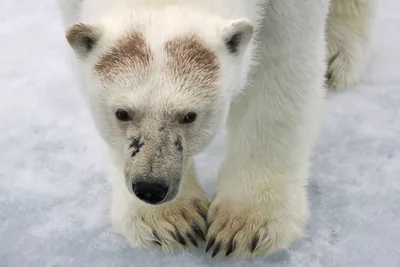
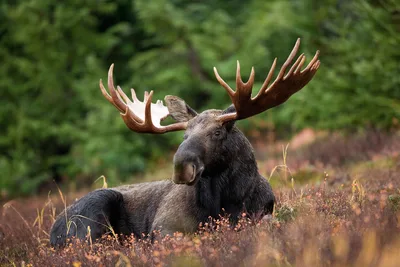
Related species on this site
Amur Leopard (same genus), Bengal Tiger (same genus), Cape Lion (same genus), Cave Lion (same genus), Indochinese Tiger (same genus), Jaguar (same genus), and more.
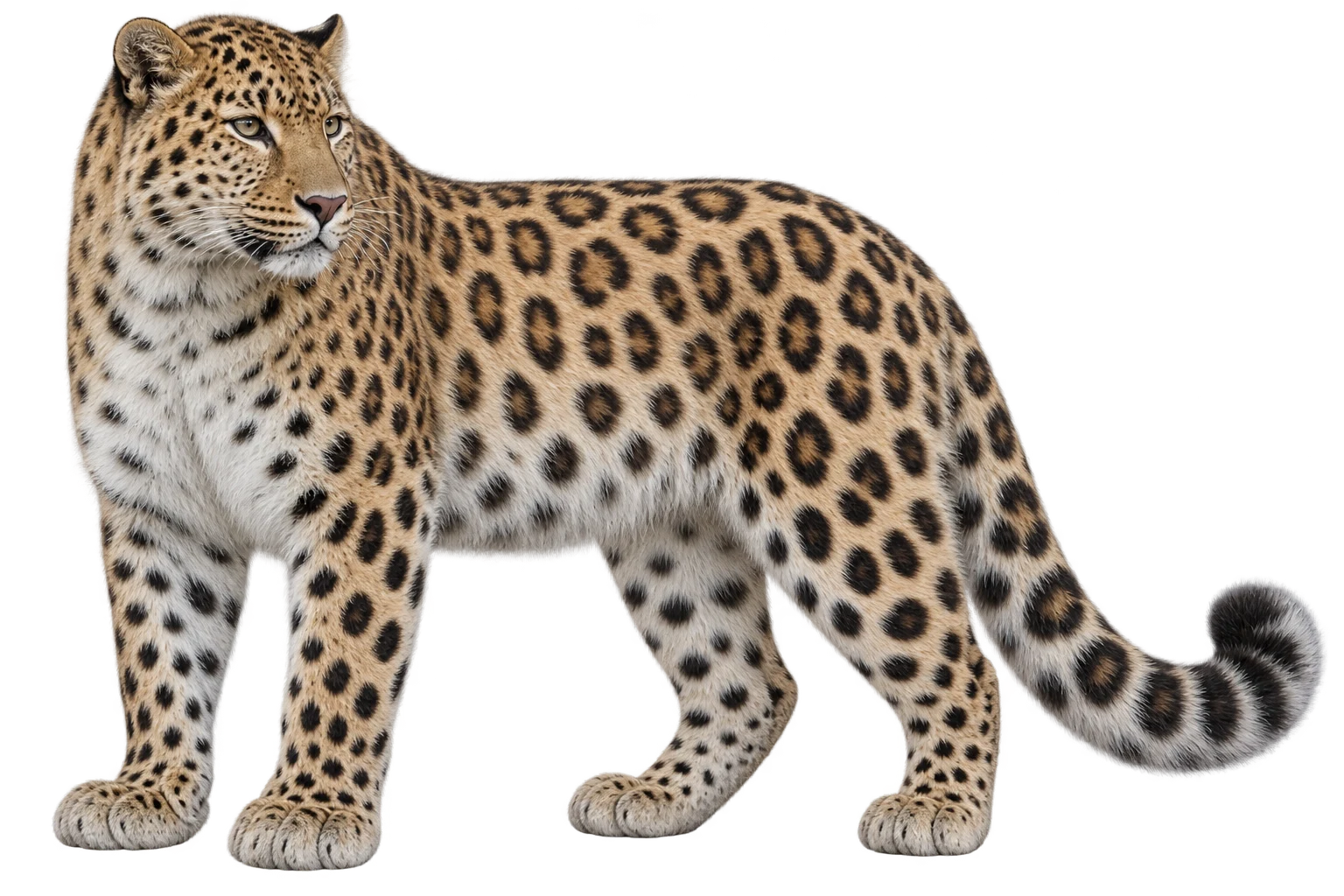
Mammals
Amur Leopard
Panthera pardus orientalis
Classification and source reference
LivingAI illustration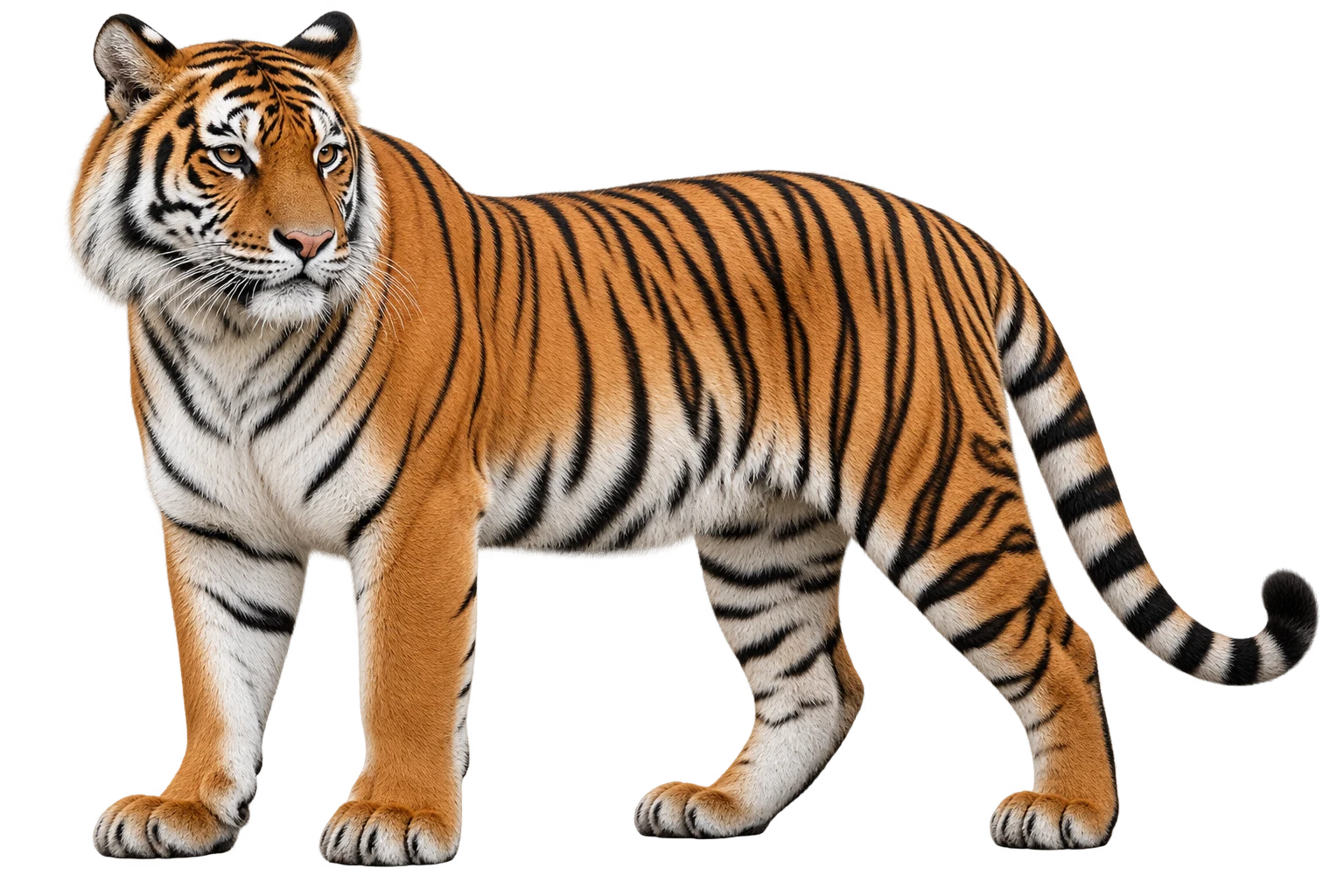
Mammals
Bengal Tiger
Panthera tigris tigris
Classification and source reference
LivingAI illustration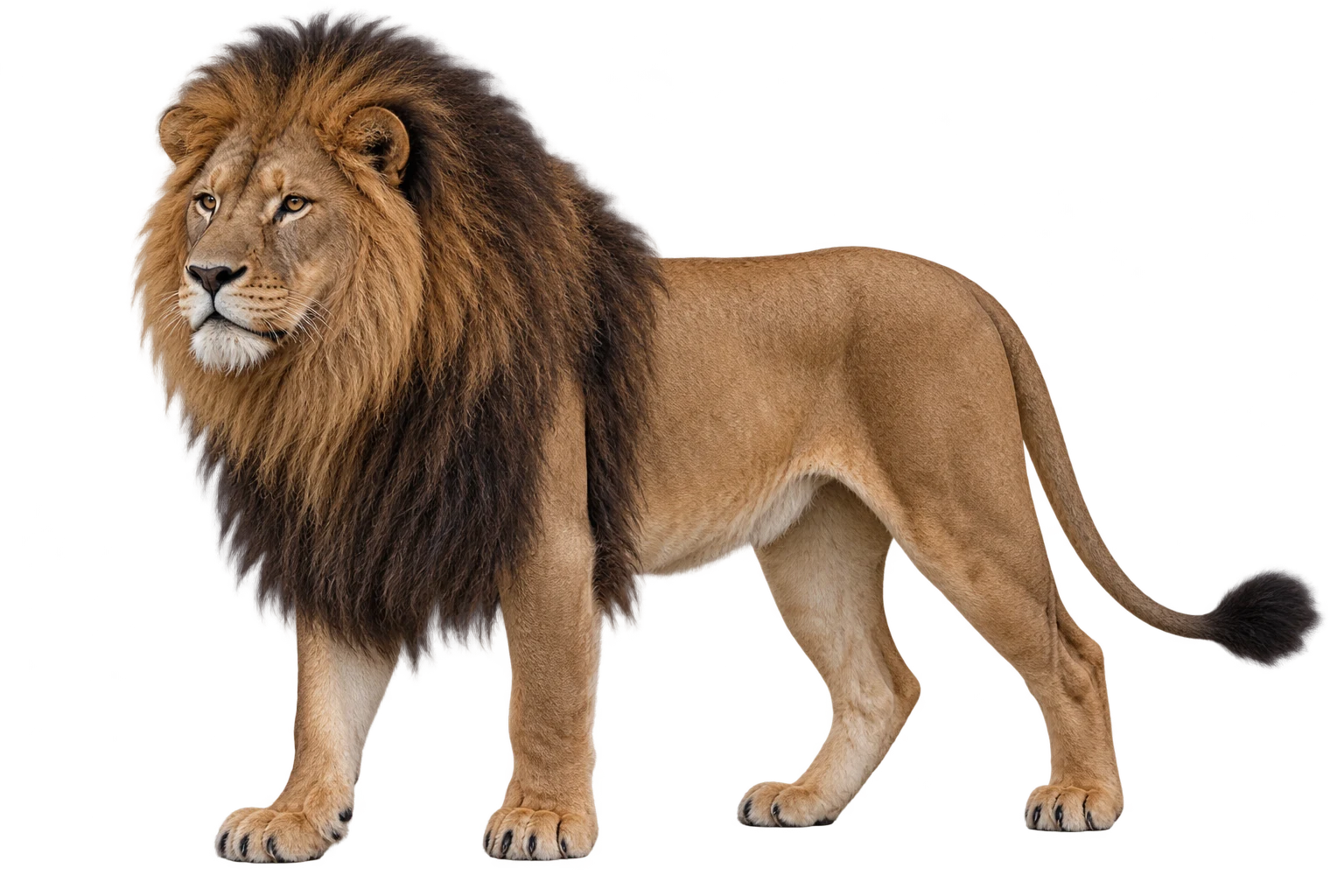
Mammals
Cape Lion
Panthera leo melanochaita
Classification and source reference
ExtinctAI reconstruction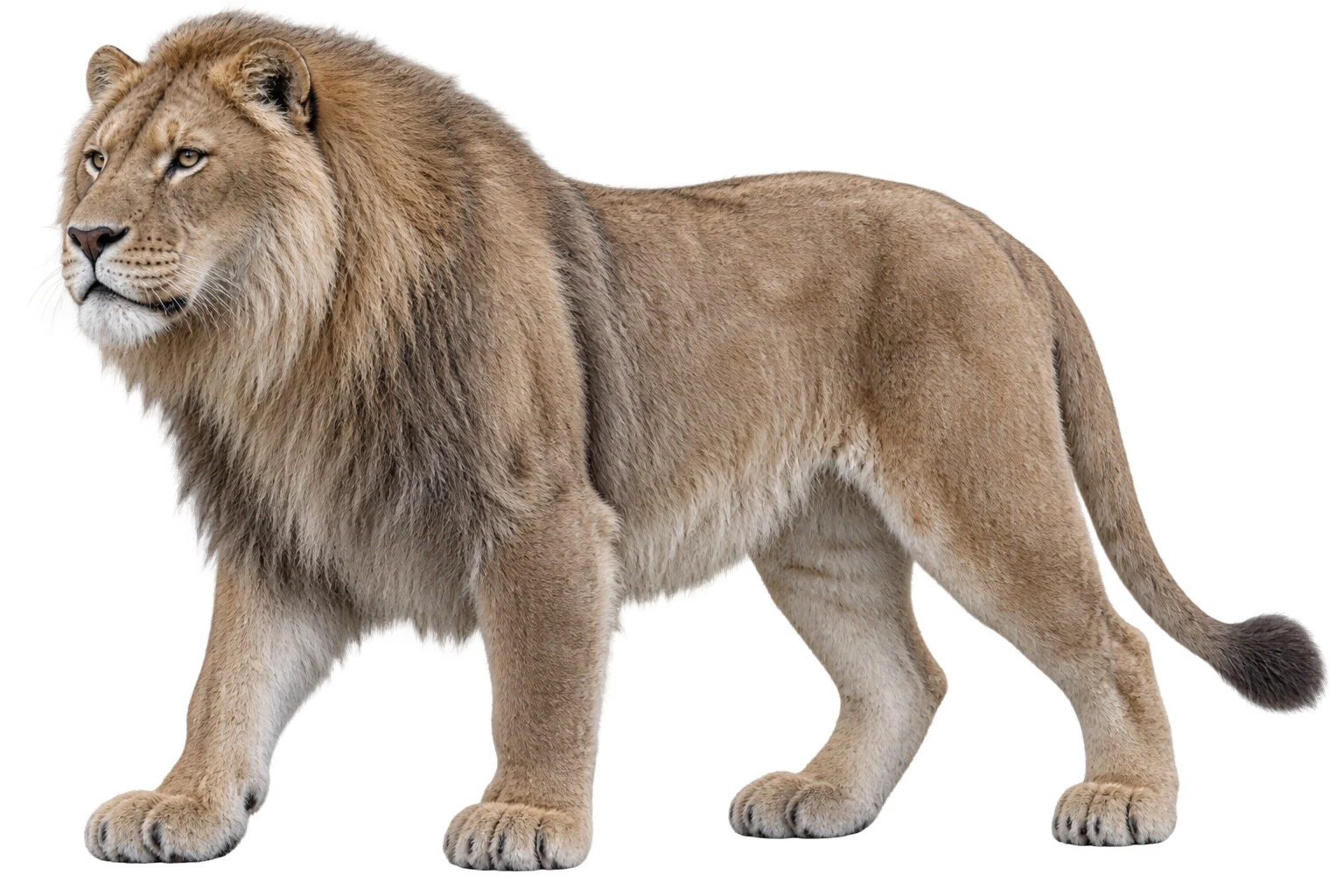
Mammals
Cave Lion
Panthera spelaea
Classification and source reference
ExtinctAI reconstruction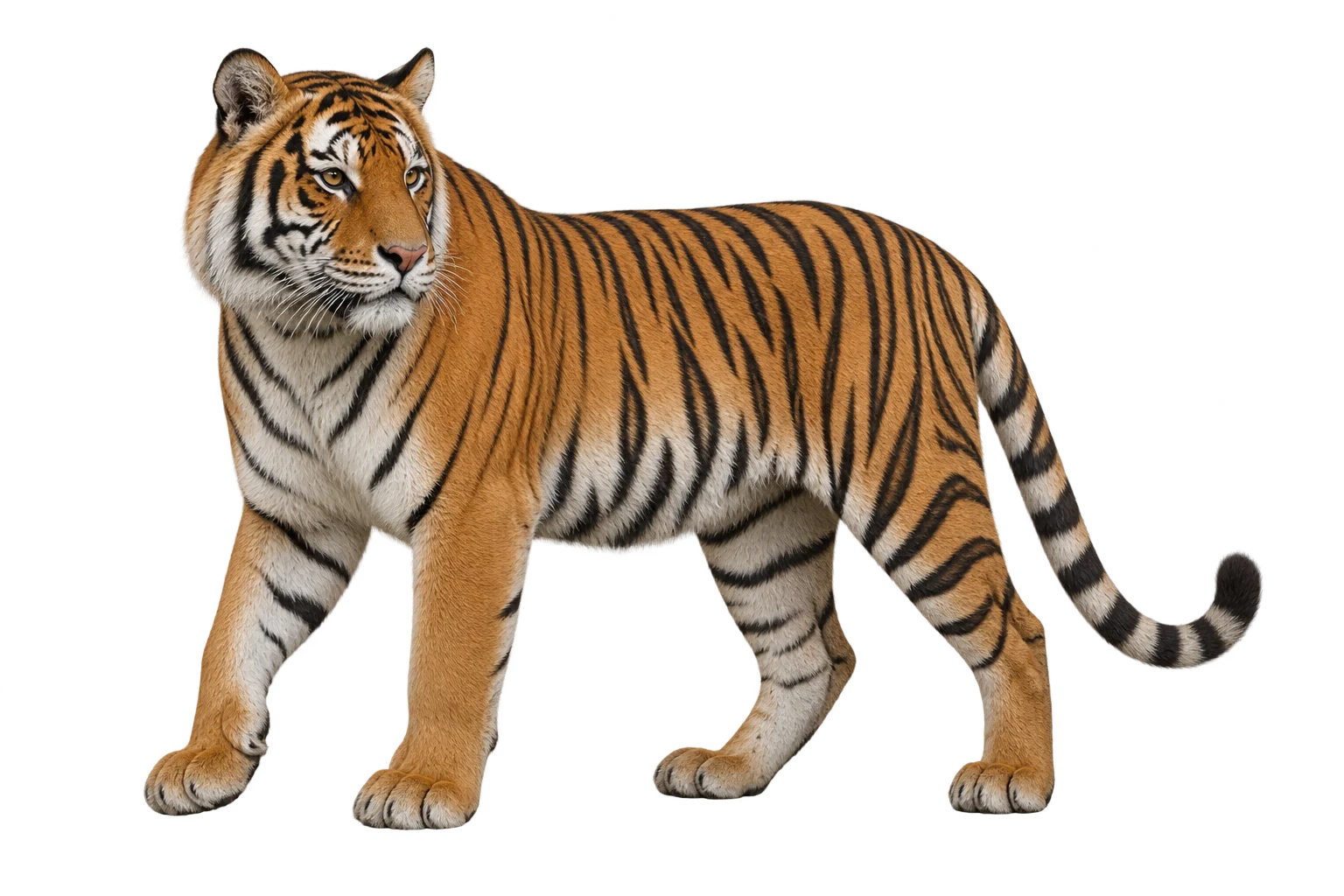
Mammals
Indochinese Tiger
Panthera tigris corbetti
Classification and source reference
LivingAI illustration NT
Mammals
Jaguar
Panthera onca
The jaguar is the largest cat in the Americas and the third largest in the world.
Living