Living individuals or members of this group exist today. This does not mean they are safe from extinction.
Meet the polar bear
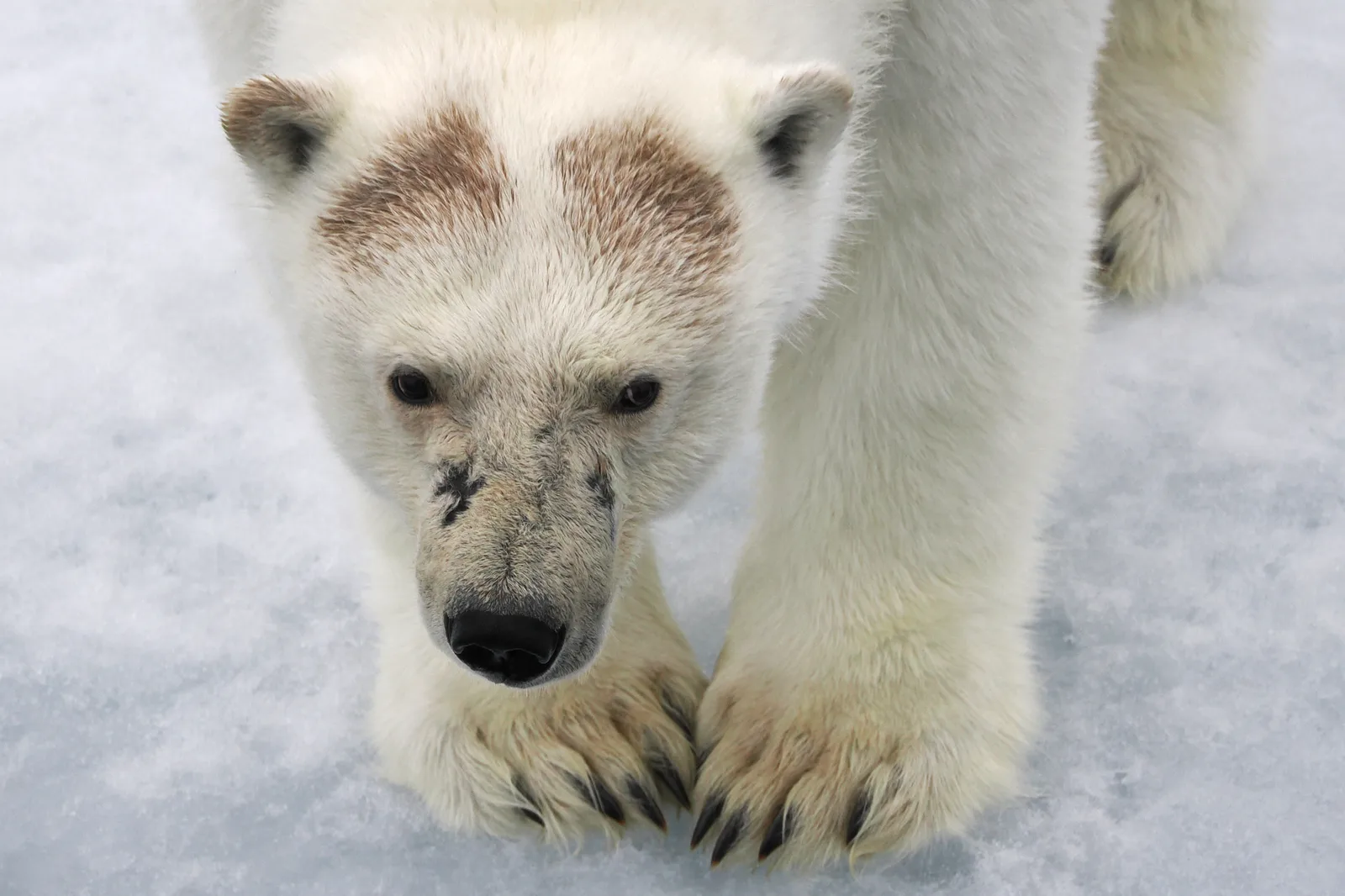
The polar bear is the largest bear and the largest land carnivore. It hunts seals from the Arctic sea ice, and the loss of that ice is its main threat.
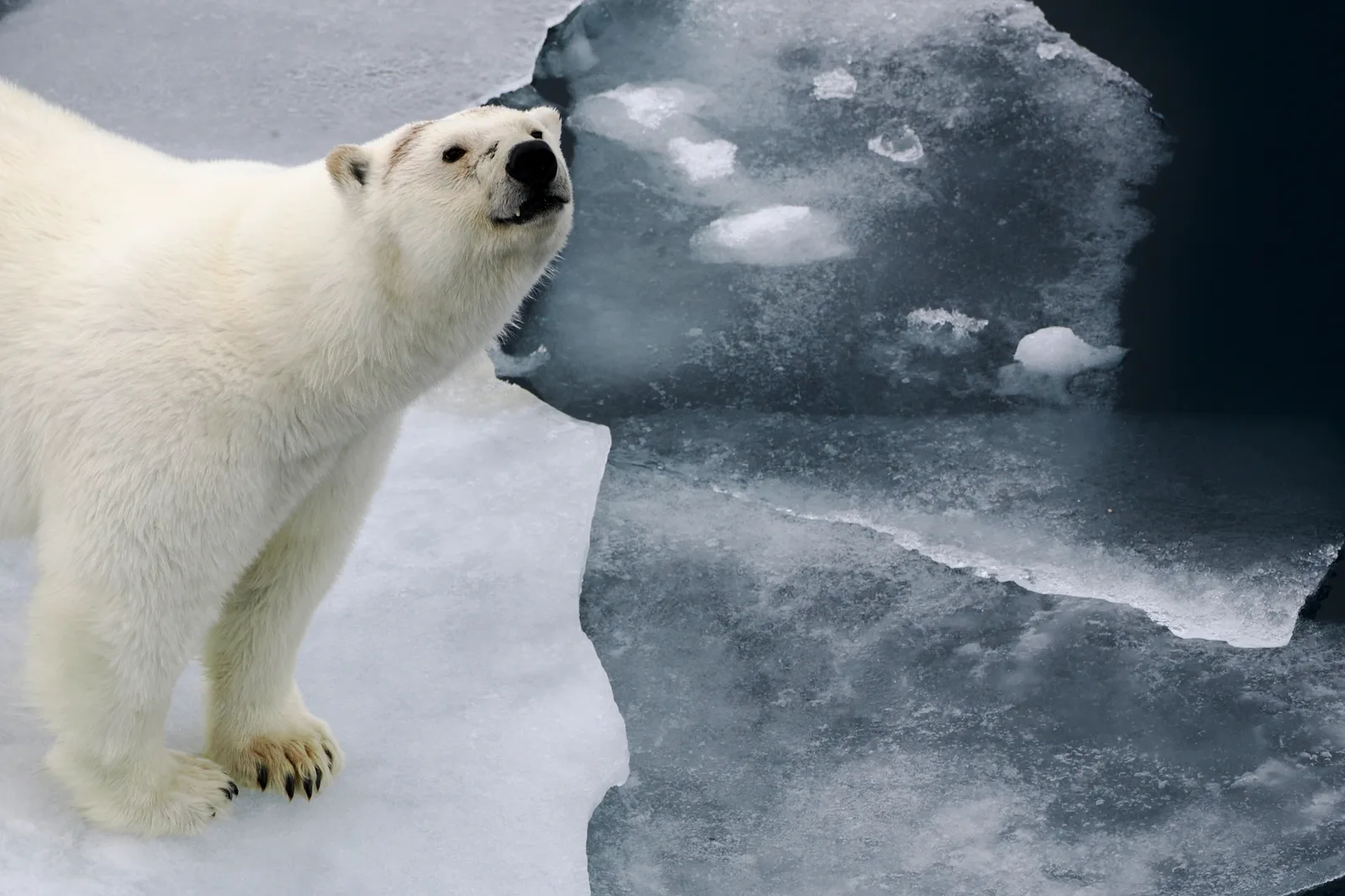
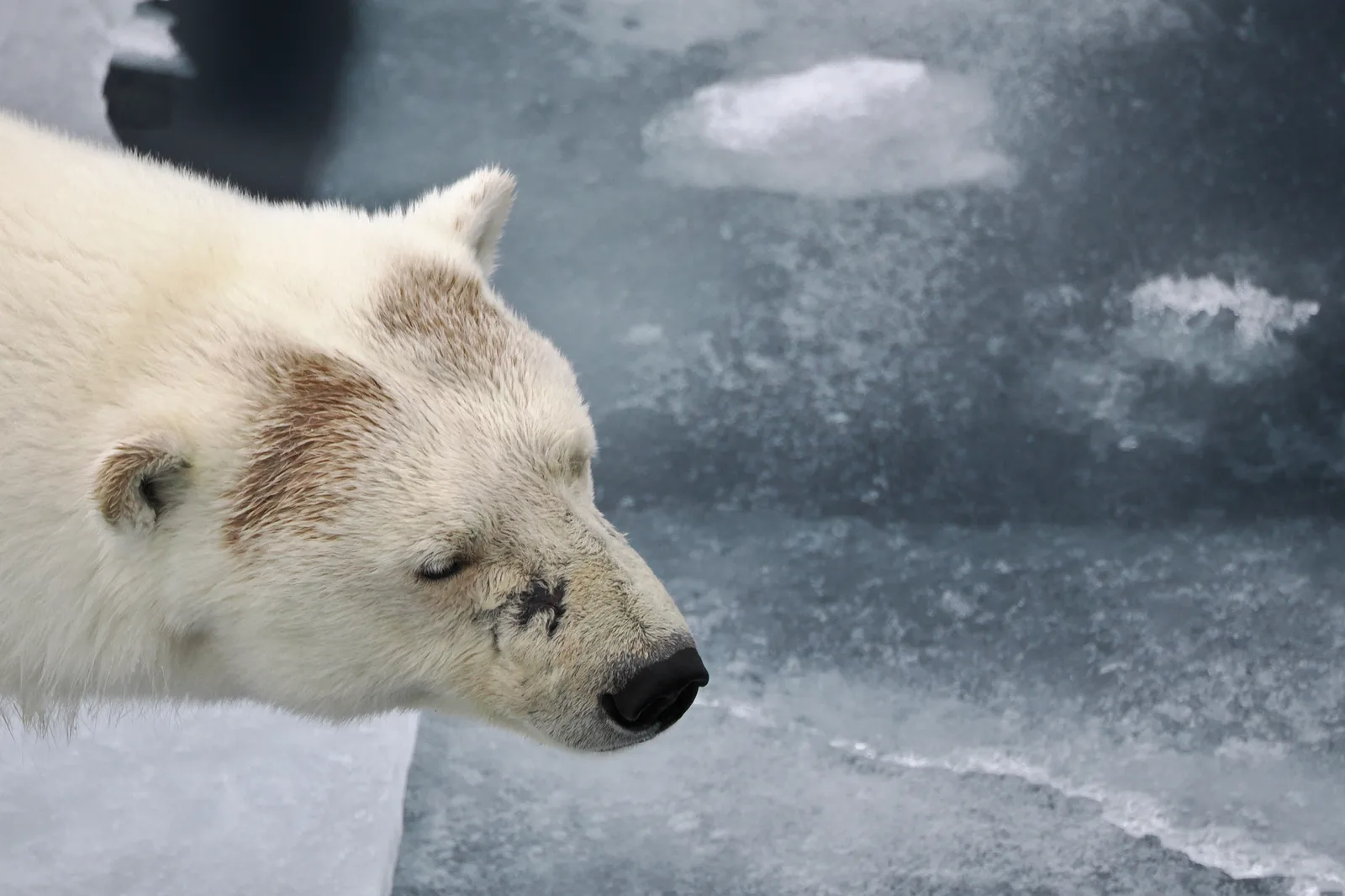
Images of the polar bear
Lifespan in the wild
25 to 30 years
Weight
150 to 800 kg
Length
1.8 to 2.5 m
Top speed
Up to 40 km/h
Fact file
Polar bear
- Location
- The Arctic: Canada, Greenland, Norway, Russia, Alaska
- Habitat
- Polar ice, Tundra, Coast
- Diet
- Carnivore
- Prey / food
- Ringed seals, bearded seals
- Predators
- None as adults
- Lifestyle
- Active at any hour
- Group name
- Sleuth
- Name of young
- Cub
- Gestation
- About 8 months including delayed implantation
- Litter size
- 1 to 3 cubs
- Population
- About 26,000
- Biggest threat
- Loss of sea ice from climate change
- Distinctive feature
- White fur over black skin
- Colour
- White to yellowish
- Skin type
- Fur
Size
Next to a person
Measurements
Size and speed
- Height
- 1.3 to 1.6 m at the shoulder
- Length
- 1.8 to 2.5 m
- Length, male
- 2 to 2.5 m
- Length, female
- 1.8 to 2 m
- Tail
- 7.6 to 12.6 cm
- Weight
- 150 to 800 kg
- Weight, male
- 300 to 800 kg
- Weight, female
- 150 to 300 kg
- Top speed
- Up to 40 km/h on land
Typical adult ranges. Sources: Animal Diversity Web, Wikipedia.
Life cycle
Lifespan
- In the wild25 to 30 years
- In captivityUp to 43.8 years
- 043.8 years
The pale bar is the record. Sources: Animal Diversity Web, AnAge.
Appearance
Colour and coat
- Primary colours
- whiteyellowish white
- Secondary colours
- black
- Skin type
- fur
- Male and female
- Strong. Males weigh 300 to 800 kilograms and females 150 to 300 kg. Males also have larger heads and long hair on the forelegs.
Life cycle
Mating and family
- Mating system
- polygynous, with mate guarding
- Social structure
- solitary, except mothers with cubs
- Breeding
- one litter of one to four cubs every two to three years
Polar bears mate on the sea ice in spring. The egg does not implant until autumn, so gestation runs seven to nine months. The mother digs a den, fasts through the winter and gives birth to about two tiny cubs. The family leaves the den in spring, and the cubs stay with her for two to two and a half years. Wild bears live 25 to 30 years.
Classification
Taxonomy
- Kingdom
- Animalia
- Phylum
- Chordata
- Class
- Mammalia
- Order
- Carnivora
- Family
- Ursidae
- Genus
- Ursus
- Species
- Ursus maritimus
Conservation
Red List status
- LC
- NT
- VU
- EN
- CR
- EW
- EX
Vulnerable on the IUCN Red List
Range
Recorded in 5 countries
Habitat layer: tundra, mangrove.
Countries from 2,090 wild records on GBIF (iNaturalist research grade), filtered and checked by hand. Country shapes: Natural Earth. Habitat: RESOLVE Ecoregions 2017, CC BY 4.0. Basemap: Natural Earth.
Habitats
Three things to know
- 1
The fur is not white. Each hair is hollow and clear, and it scatters light.
- 2
A polar bear can swim for days at a time across open water.
- 3
Its sense of smell can find a seal under a metre of snow.
Did you know
Seven more facts
- 1
A newborn cub weighs around 600 grams and cannot see for its first month.
- 2
Polar bears walk and gallop but never trot.
- 3
The liver holds so much vitamin A that it is poisonous to eat.
- 4
In warm zoos, algae can grow inside the hollow hairs and turn a bear green.
- 5
Polar bears in the Beaufort Sea sometimes den on drifting sea ice rather than on land.
- 6
A female has only four teats, so a litter never exceeds four cubs.
- 7
iNaturalist holds 4,031 observations of the species.
Field notes
How it looks and acts
Field notes
Distinguishing features
- A white or yellowish coat over black skin.
- A longer neck and a narrower head than a brown bear, with no shoulder hump.
- Broad, furred paws that work as paddles and snowshoes.
- A shoulder height of 130 to 160 centimetres.
- Small ears and small eyes set high on the head.
- A short tail of 7.6 to 12.6 cm.
Field notes
Unique adaptations
- Hollow guard hairs trap heat and help the bear float.
- A fat layer up to 10 centimetres thick stores energy for months without food.
- Furred soles grip ice and keep the feet warm.
- Kidneys that filter out the salt in a diet of marine prey.
- Fewer starch genes and more fat genes than other bears, which probably suits a diet of blubber.
Field notes
Interesting behaviours
- Waits motionless beside a seal breathing hole for hours.
- Stalks a resting seal with head low, then charges from about 10 metres.
- Swims between ice floes and can dive for up to three minutes.
- Digs a rest hollow on the sheltered side of a pressure ridge.
- Washes its fur after a meal by licking and rinsing.
Field notes
Temperament
- Solitary, but tolerant of other bears at a whale carcass.
- A mother defends her cubs fiercely and will charge a far larger male.
- Curious about human food and rubbish, which leads to conflict on land.
- No more aggressive towards people than a brown bear, despite its reputation.
Field notes
Communication
- Chuffs softly to keep contact between mother and cubs.
- Uses teeth chops, jaw pops, growls and roars when hostile.
- Leaves scent from the foot pads in its tracks.
- Signals with the eyes, ears, nose and lips at close range.
Ecology
Ecological role
The polar bear is the top predator of the Arctic sea ice, and its leftovers feed a chain of scavengers.
- Takes mainly ringed seal pups, so bear density tracks seal density across the Arctic.
- Leaves the meat of a kill after eating the blubber, which feeds Arctic foxes and young bears.
- Competes with grizzly bears for whale carcasses in northeastern Alaska, and usually yields to them.
- Its pressure on ringed seals likely rises as melting snow exposes the seal lairs.
Stories
Myths and legends
- In Inuit tradition, the deity Torngarsuk can appear as a giant polar bear and rules the creatures of the sea.
- In Inuit tradition, a polar bear can take off its skin and walk as a person.
- In Icelandic tradition, a polar bear king with a glowing horn understands human speech.
- In Norwegian tradition, the fairy tale White-Bear-King-Valemon tells of a white bear who becomes a man.
- In European sailors' tradition, a hunting bear covers its black nose with a paw, a story with no modern eyewitness.
People
Relationship with humans
People
Living alongside us
Arctic peoples have hunted polar bears for thousands of years and still hunt them under quota. Commercial hunting for fur took huge numbers until the 1973 agreement ended most of it. Zoos and circuses kept the species for centuries, though many zoos have now stopped. As the ice shrinks, hungry bears come ashore and meet people more often. The species has become the symbol of climate change.
- About 73 attacks on people were recorded from 1870 to 2014, and 20 were fatal.
- Most attacks come from hungry subadult males near settlements.
- A mother attacks in defence of her cubs, so keep well away from a family.
People
Status, uses and products
- Domestication
- Wild
- As a pet
- Not suitable. A polar bear needs sea ice, seals and a range of thousands of square kilometres. Even zoos struggle to house one, and many have given up. It is a protected species under a five-nation treaty, and trade is regulated.
- Uses
- subsistence huntingguided sport huntingecotourismzoo exhibition
- Products
- furmeatfatbone and teeth tools
The full account
About the polar bear
The polar bear, Ursus maritimus, is the largest bear alive and the largest carnivore that lives on land. It spends most of its life on the sea ice of the Arctic, where it hunts seals. Scientists count it as a marine mammal because it depends on the sea for food. The white coat hides black skin, and thick fat beneath keeps out the cold. Its closest relative is the brown bear, and the two can still interbreed.
Adult males weigh 300 to 800 kilograms, and females weigh 150 to 300 kg. A large male can measure up to 2.5 metres from nose to tail. The polar bear lives around the whole Arctic: in Canada, Greenland, Norway, Russia and Alaska. The IUCN lists the species as Vulnerable, and the world population is about 26,000. The loss of sea ice from a warming climate is its main threat.
Name and taxonomy
In Latin, Ursus maritimus means sea bear. Thomas Pennant gave the animal its English name in 1771. Before that, Europeans called it the white bear, the ice bear or the Greenland bear. To the Inuit it is nanook, and the Netsilik use separate words for males, lone females, pregnant females and newborns.
Carl Linnaeus treated the polar bear as a form of brown bear in 1758. Constantine John Phipps described it as a species of its own in 1774, after his voyage towards the North Pole. Some later authors moved it into a separate genus, Thalarctos, because of its life at sea. Most taxonomists now keep it in Ursus, because the fossil record and its fertile hybrids with brown bears support that view. No subspecies is accepted, so the species is monotypic.
Evolution and relatives
The polar bear is one of eight living bear species and belongs to the subfamily Ursinae. Genetic work suggests that the ursine bears arose around five million years ago, with much interbreeding between species. The polar bear and the brown bear are sister lineages, and past interbreeding explains why some brown bears look close to it. A 2012 study put the split at around 600,000 years ago, and a 2022 study pushed it past one million.
Fossils are rare, and the oldest known one is a jaw bone from Norway, aged 110,000 to 130,000 years. Gene flow ran from polar bears into brown bears. Brown bears of the ABC Islands in Alaska carry up to 9 percent polar bear genome. Large-scale hybridisation seems to have ended about 200,000 years ago, and wild hybrids are now rare. Compared with brown bears and black bears, polar bears have fewer starch-digesting genes and more genes for breaking down fat. More copies of keratin genes give the species its thicker coat.
Appearance
The polar bear has a longer neck, a narrower skull and a lower shoulder hump than a brown bear. Adults stand 130 to 160 centimetres at the shoulder. A male measures 200 to 250 cm long, and a female 180 to 200 cm. The tail is short, at 7.6 to 12.6 cm. Males weigh 300 to 800 kilograms, while females weigh 150 to 300 kg, so the sexes differ more than in most mammals. The heaviest bear on record was a male of 1,002 kg shot in Alaska in 1960.
The coat has dense underfur about 5 cm long and guard hairs about 15 cm long. The guard hairs are hollow and have no pigment, so the fur looks white because it scatters light. Sunlight turns the coat yellowish over time, and a moult restores the white. The skin beneath, including the nose and lips, is black. A fat layer 5 to 10 cm thick sits under the skin and gives warmth and stored energy.
The paws are broad, with the front pair wider than the back pair, and the soles carry fur. The eyes and ears are small, which probably limits heat loss and protects against blowing snow.
Habitat and range
Polar bears live around the whole Arctic, in Greenland, Canada, Alaska, Russia and Norway's Svalbard islands. Bears have been recorded within 25 kilometres of the North Pole. The southern edge of the range reaches James Bay, Newfoundland and Labrador, and the Pribilof Islands of Alaska. Because few people live in the Arctic, the species still holds more of its original range than any other large land carnivore.
The preferred habitat is annual sea ice over the continental shelves and between the islands of the archipelagos. Bears gather where ice meets open water, at leads and polynyas, because seals surface there. When the ice melts in summer, the bears must come ashore or follow the ice north. In the Chukchi and Beaufort seas, 15 to 40 percent of bears now stay on land in summer, a change seen since the 1980s.
Scientists divide the species into at least 18 subpopulations, from East Greenland to the Chukchi Sea and Hudson Bay. GBIF holds records from 16 countries, but that count includes zoos and wanderers.
Diet and hunting
The polar bear is the most carnivorous of all bears and the top predator of the Arctic. Its main prey is the ringed seal, which is common and small enough for any bear to overpower. Bearded seals, harp seals and hooded seals are taken too, and adult males sometimes kill young walruses. Bears also take beluga whales and narwhals trapped in shallow water or ice holes, plus reindeer, birds, eggs and fish. The bear eats the blubber first and often leaves the meat for foxes and younger bears.
The main method from winter to early spring is still-hunting: the bear waits beside a breathing hole for hours. When a seal surfaces, the bear pulls it onto the ice with its paws and claws. A bear that sees a seal resting on the ice stalks it with head and neck low. It closes to within 100 metres, drops low, and creeps nearer before a final rush from about 10 m. In spring, bears smell ringed seal pups in snow lairs under the ice and smash through the roof with their front feet.
Polar bears rarely eat plants, because the gut is built for meat, though berries, grass and seaweed are recorded. Fat reserves let a bear go for months without food. Cannibalism occurs, and it spreads the roundworm Trichinella.
Behaviour and social life
Polar bears are mostly solitary, apart from mothers with cubs and pairs in the breeding season. On land they gather at food and tolerate each other more, and adult males have formed stable alliances that travel and play together. A mother with cubs keeps away from males, but she may join other mothers in a composite family. A smaller bear usually runs from a larger one, though a mother will charge a much bigger male to protect her cubs.
A bear may cover an area of 3,500 square kilometres in a year, or as much as 38,000. On an average day it travels about 12 km. It walks or gallops, never trots, and can run at up to 40 kilometres per hour on land. In the water it swims at up to 6 km/h, and one study recorded swims that lasted 3.4 days and covered 154.2 km on average.
Only pregnant females hibernate, and the rest stay active all year. Bears are most active early in the day and sleep close to eight hours. One study found bears inactive 66.6 percent of the time, travelling 29.1 percent, stalking 1.2 percent and feeding 2.3 percent. On the ice a bear rests in a hollow dug on the sheltered side of a pressure ridge.
Communication and senses
Polar bears are quiet animals, but they make several sounds. A mother chuffs softly to keep in touch with her cubs, and a male chuffs at a female during courtship. Teeth chops, jaw pops, huffs, growls and roars mark a hostile meeting. Bears also signal with the eyes, ears, nose and lips, and they leave scent from the foot pads in their tracks.
Smell is the strongest sense, and the nose can find a seal pup under a metre of snow. The eyes sit high on the head, which may keep them above the water when the bear swims. Polar bears see two colours only, since they lack the cones for green light, but many rod cells help at night. Like other bears, the polar bear explores objects with its sensitive lips and whiskers.
Reproduction and life cycle
Mating takes place on the sea ice in spring, mostly from March to May. A male finds a female by scent, then guards her from rivals for about two weeks. A female mates with several males in one season, so one litter can have more than one father.
The fertilised egg does not implant until autumn, so the whole gestation runs seven to nine months while true pregnancy lasts two. Between August and October the female digs a den in snow or earth, on land or on the sea ice close to shore. She fasts through the winter, gives birth in the den and nurses the cubs there. A litter usually holds two cubs, though one to four are possible. Newborns weigh around 600 grams, have woolly hair and pink skin, and open their eyes after a month.
The family emerges in late winter or early spring, when each cub weighs 10 to 15 kilograms. Cubs learn to hunt by watching their mother and can catch prey on their own at around two years old. Weaning ends at two to two and a half years, and then the mother leaves them or a courting male drives them off. Females mature at around four years, and males at six. In the wild a polar bear lives 25 to 30 years, and one zoo female reached 43.8 years.
Predators and threats
An adult polar bear has no natural predator apart from people and other polar bears. Adult males kill cubs, both to bring the mother back into heat and for food. A mother and cubs can outrun a heavy male, and she will fight him if he gets close, sometimes at the cost of her life. Subadults hunt poorly and lose kills to bigger bears, so many are underweight and at risk of starvation.
The greatest threat is the loss of sea ice as the climate warms. Ice now breaks up earlier, so bears reach shore before they build enough fat for the lean months. Thin, mobile ice makes hunting harder and forces longer swims, which sometimes end in drowning. Bears at the top of the food chain collect persistent pollutants such as PCBs in their fat. Oil and gas leases in the Chukchi Sea overlap key habitat, and a big spill could affect nearly 40 percent of that population.
Population and conservation
The IUCN Red List rates the polar bear as Vulnerable, most recently assessed in 2015. The estimate at that time was 22,000 to 31,000 bears, and the overall trend is unknown. About half of all polar bears live in the Canadian territory of Nunavut. In 2021 the Polar Bear Specialist Group rated four subpopulations as likely stable, two as likely increased and three as likely decreased.
A 2008 study predicted that two thirds of polar bears could vanish by 2050 as the ice shrinks. A 2016 study projected a decline above 30 percent within three generations. Not every population responds the same way: Chukchi Sea bears cope with less ice better than their Beaufort Sea neighbours. A 2026 study at Svalbard found bears that fattened on other prey during long ice-free periods.
All five Arctic nations signed a polar bear conservation agreement in 1973. It banned most hunting, allowed indigenous hunting by traditional methods and protected habitat. The United States listed the species as threatened in 2008, and Canada lists it as of special concern. CITES Appendix II allows regulated trade in polar bear parts.
Relationship with humans
Arctic peoples have hunted polar bears for at least 8,000 years, as remains on Zhokhov Island show. Before firearms, hunters used lances and bows and worked in groups with dogs. Every part was used: fur for clothing and bedding, meat, fat, tendons, and bone and teeth for tools. Explorers ate the meat but avoided the liver, which holds toxic amounts of vitamin A.
Commercial hunting grew from the 18th century, and more than 150,000 bears were killed or captured in Russia and Svalbard by the 20th century. The Hudson's Bay Company sold about 15,000 polar bear coats. Zoos have kept polar bears since the Tower of London took one in 1252. Circuses trained them to slide down chutes and ride motorcycles, but most acts ended by the late 20th century.
Between 1870 and 2014 there were about 73 recorded attacks on people, and 20 of them were fatal. Most attackers were hungry young males, and most female attacks defended cubs. Bears drawn to rubbish dumps in Churchill, Manitoba are held in a polar bear jail until the sea freezes. In 2019 more than 50 bears entered a town on Novaya Zemlya, and the authorities declared an emergency. Despite its reputation, the polar bear attacks people no more readily than other bears.
In culture and myth
In Inuit belief, the deity Torngarsuk sometimes takes the form of a giant polar bear that rules the sea creatures from below the sea floor. The goddess Nuliajuk is said to have created the polar bear along with the other animals of the sea. Shamans were thought to ride a polar bear spirit to the Moon or down to the seabed. Inuit stories tell of bears that shed their skins to become human, and of people who wear bear skins to become bears. In Inuit astronomy, the Pleiades are a polar bear held at bay by dogs.
In the Norse Tale of Auðun, a poor man grows rich by giving a polar bear to the Danish king. Icelandic writers of the 18th century described a polar bear king with red cheeks and a glowing horn. In the Norwegian tale of Valemon, a white bear turns into a man and courts a woman.
Coca-Cola has used polar bears in advertising since 1922, and the animal appears on the coat of arms of Greenland. Greenpeace built Aurora, a giant polar bear puppet, for climate protests, and the species has become the emblem of a warming Arctic. The old story that a hunting bear hides its black nose with a paw has no eyewitness record in recent decades.
A sentence with a dotted underline is inferred: it describes the group the animal belongs to, or is a reading of the sources, rather than a measured or reported fact about this species.
Questions
Polar bear questions, answered
How big is a polar bear?
An adult male weighs 300 to 800 kilograms and measures 200 to 250 centimetres long. A female weighs 150 to 300 kg. Adults stand 130 to 160 cm at the shoulder.
Is a polar bear's fur really white?
No. Each hair is hollow and has no pigment, and the coat looks white because it scatters light. The skin underneath is black.
What do polar bears eat?
Mainly ringed seals, plus bearded seals and harp seals. Adult males sometimes kill young walruses, and bears take belugas, reindeer, birds and eggs when they can. They eat the blubber first.
Are polar bears endangered?
The IUCN lists the polar bear as Vulnerable, not Endangered. The population is about 26,000, within a range of 22,000 to 31,000. The loss of sea ice is the main threat.
How fast can a polar bear run?
Up to 40 kilometres per hour on land for a short burst. A normal walking pace is about 5.5 km/h.
How far can a polar bear swim?
One study found swims that lasted 3.4 days and covered 154.2 kilometres on average. Bears swim at up to 6 km/h and can dive for three minutes.
Where do polar bears live?
Around the whole Arctic: in Canada, Greenland, Alaska, Russia and Svalbard in Norway. They hunt from the sea ice and come ashore when it melts.
Do polar bears hibernate?
Only pregnant females do. They enter a den in autumn, give birth in winter and leave in spring. All other polar bears stay active through the winter.
How long do polar bears live?
About 25 to 30 years in the wild. The oldest known captive bear reached 43.8 years at Detroit Zoo.
Are polar bears dangerous to humans?
Yes, but attacks are rare. About 73 attacks were recorded from 1870 to 2014, with 20 deaths. Most attackers were hungry young males near settlements.
Do polar bears live in Antarctica?
No. Polar bears live only in the Arctic, at the north of the planet. Their whole range circles the North Pole.
How many cubs does a polar bear have?
Usually two, though litters run from one to four. Cubs weigh around 600 grams at birth and stay with the mother for two to two and a half years.
Do polar bears cover their noses when they hunt?
Probably not. Sailors told the story that a hunting bear hides its black nose with a paw. No one has recorded it in recent decades.
Can polar bears and brown bears breed?
Yes. The two species are sister lineages that split at least 600,000 years ago, and they still produce fertile hybrids. Wild hybrids are rare.
Why is the polar bear a marine mammal?
It depends on the sea for its food and spends most of its life on sea ice. The Latin name means sea bear.
What is a group of polar bears called?
A sleuth, though the animals are solitary. A real group forms only at a large carcass or on land when the ice melts.
Food web
Prey and food
- ringed seals
- bearded seals
 Narwhal
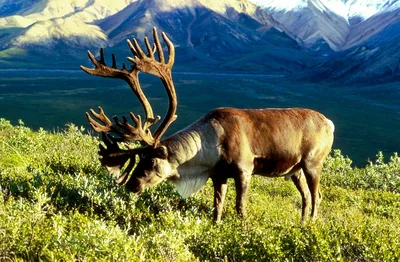 Reindeer
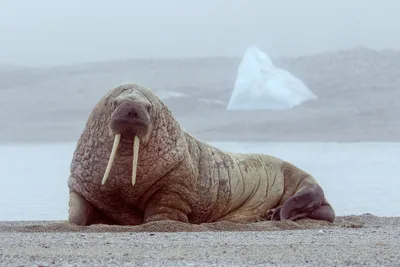 Walrus
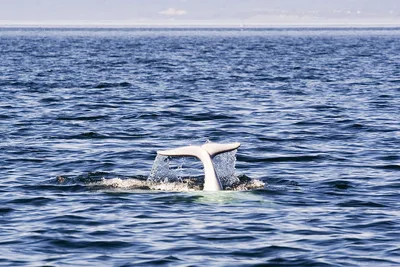 Beluga whale
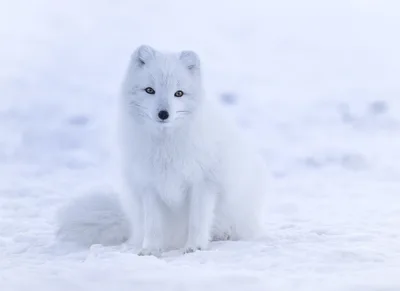 Arctic fox
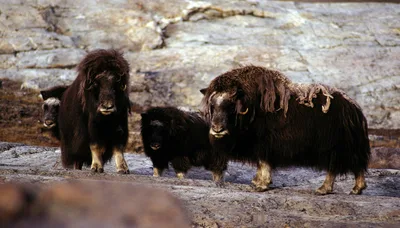 Muskox
Food web
Predators
No natural predator is recorded.
Ecological equivalents
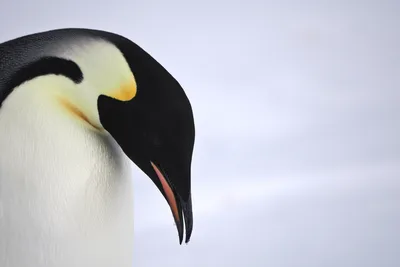
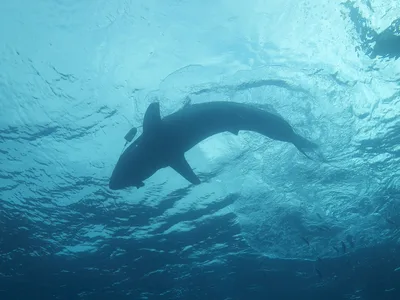
Related species on this site
American black bear (same genus), Asian black bear (same genus), Brown bear (same genus), Cave Bear (same genus), Cinnamon Bear (same genus), Kermode Bear (Spirit Bear) (same genus), and more.
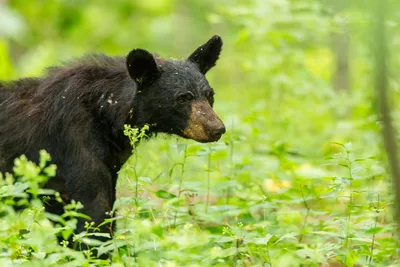 LC
Mammals
American black bear
Ursus americanus
The American black bear is the smallest and most widespread bear in North America, at home in forest from Alaska to Mexico.
Living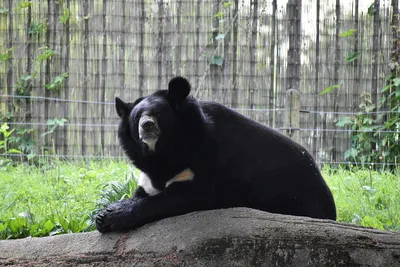 VU
Mammals
Asian black bear
Ursus thibetanus
The Asian black bear is a medium-sized forest bear of Asia with a pale crescent on its chest and a gift for climbing.
Living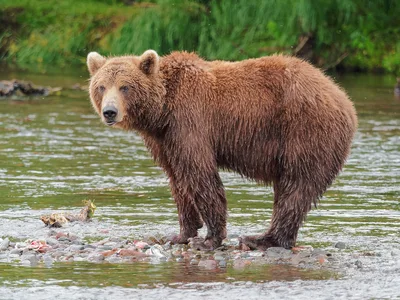 LC
Mammals
Brown bear
Ursus arctos
The brown bear is one of the two largest land carnivores, and it ranges across the forests and mountains of Eurasia and North America.
Living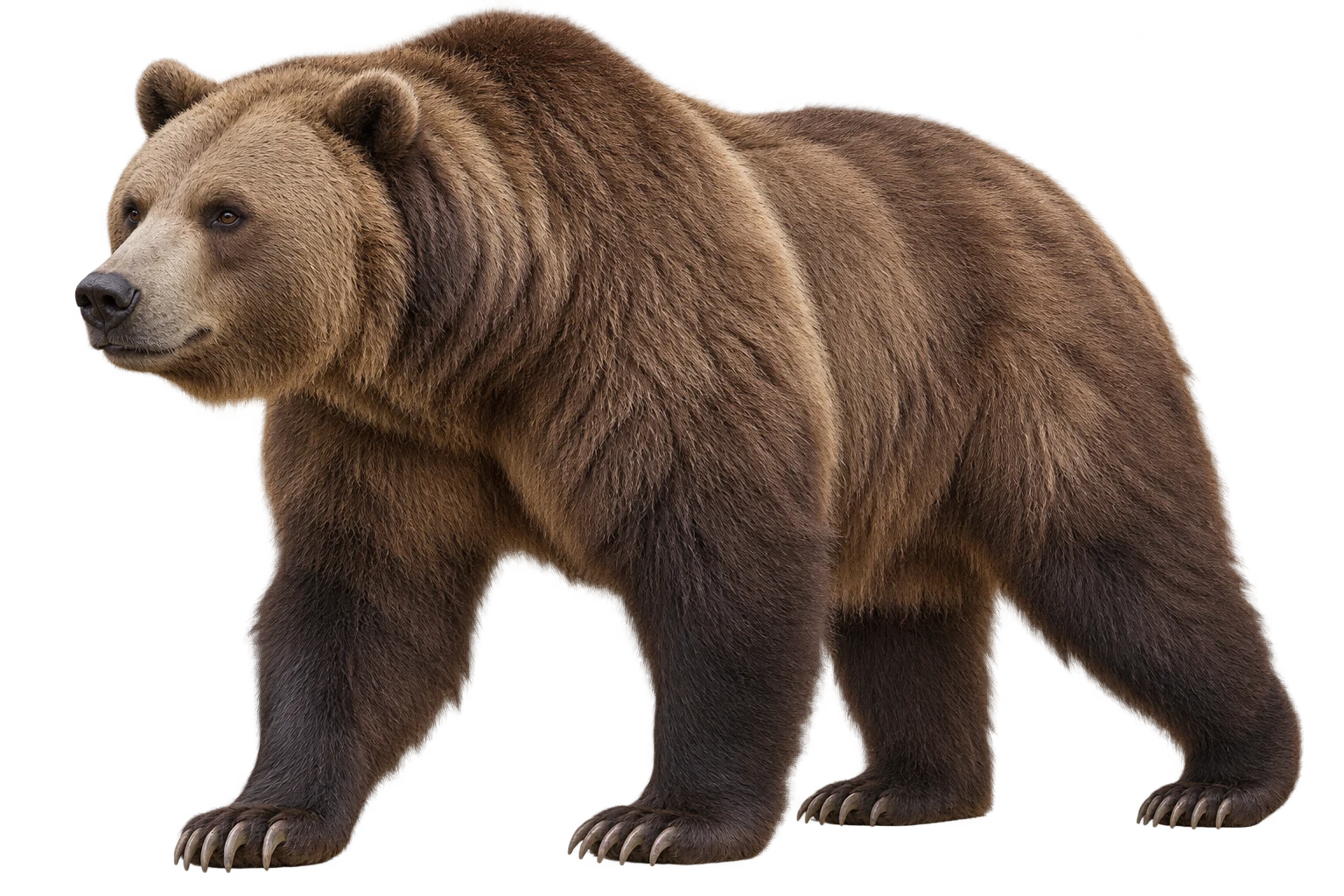
Mammals
Cave Bear
Ursus spelaeus
Classification and source reference
ExtinctAI reconstruction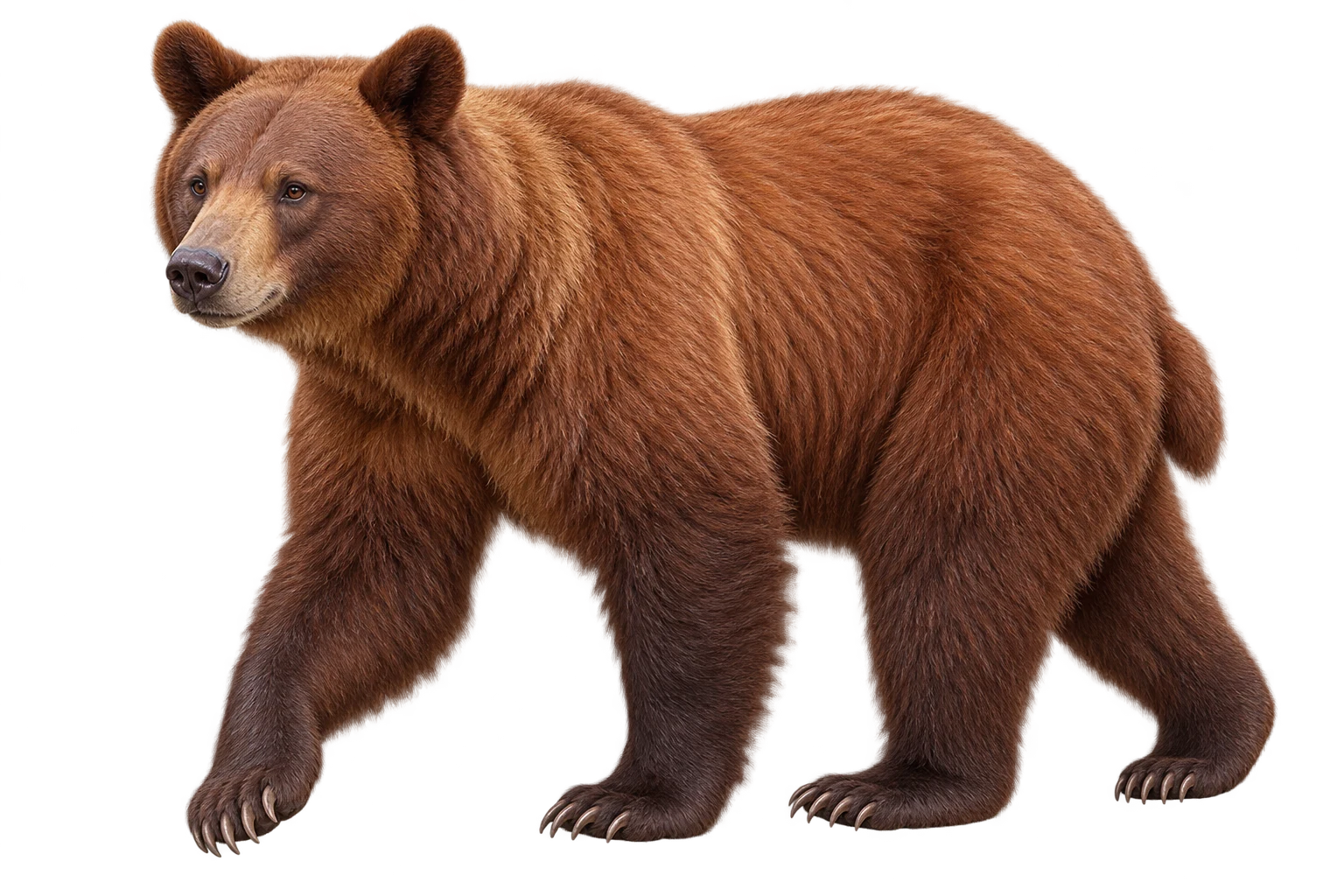
Mammals
Cinnamon Bear
Ursus americanus
Classification and source reference
LivingAI illustration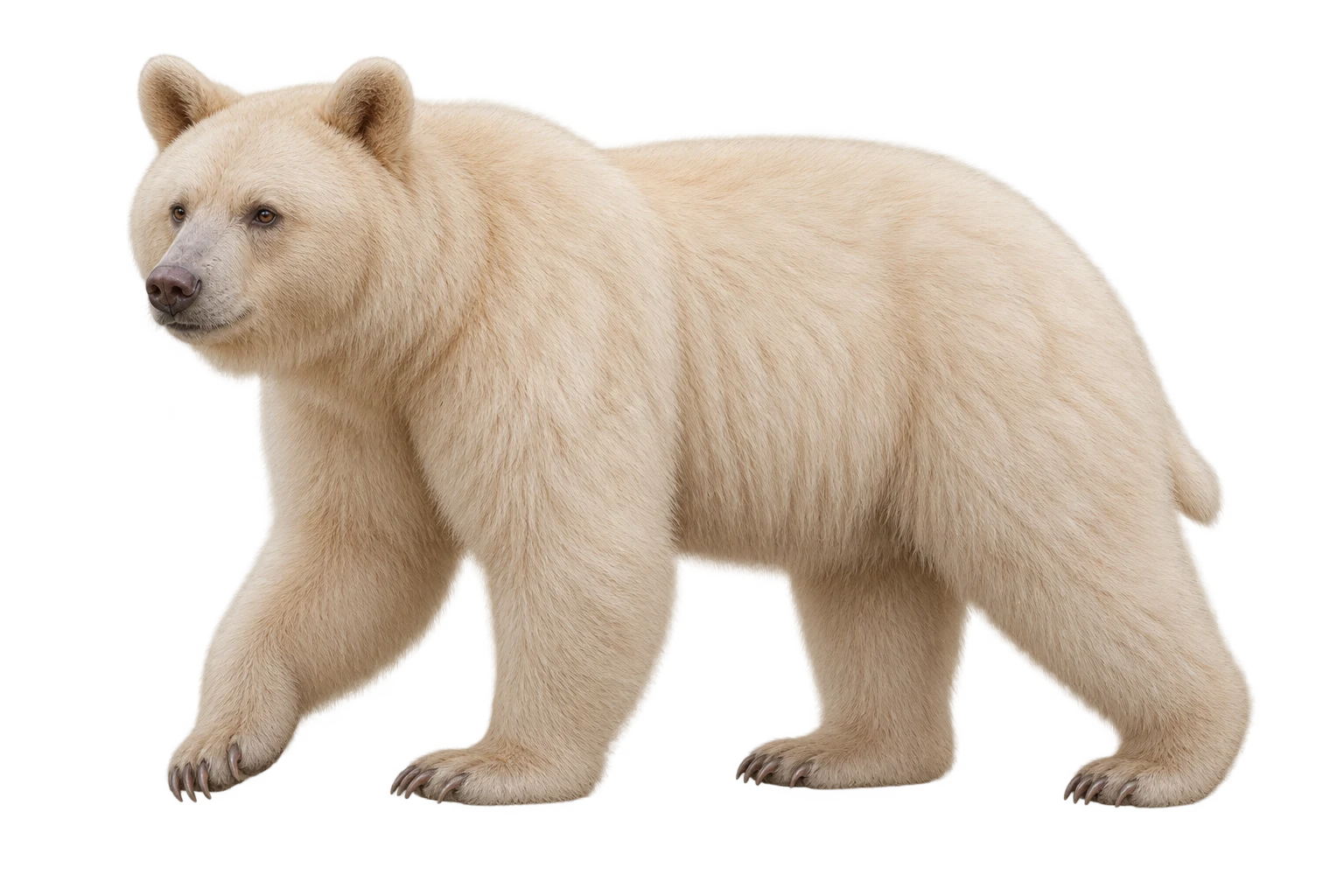
Mammals
Kermode Bear (Spirit Bear)
Ursus americanus kermodei
Classification and source reference
LivingAI illustration