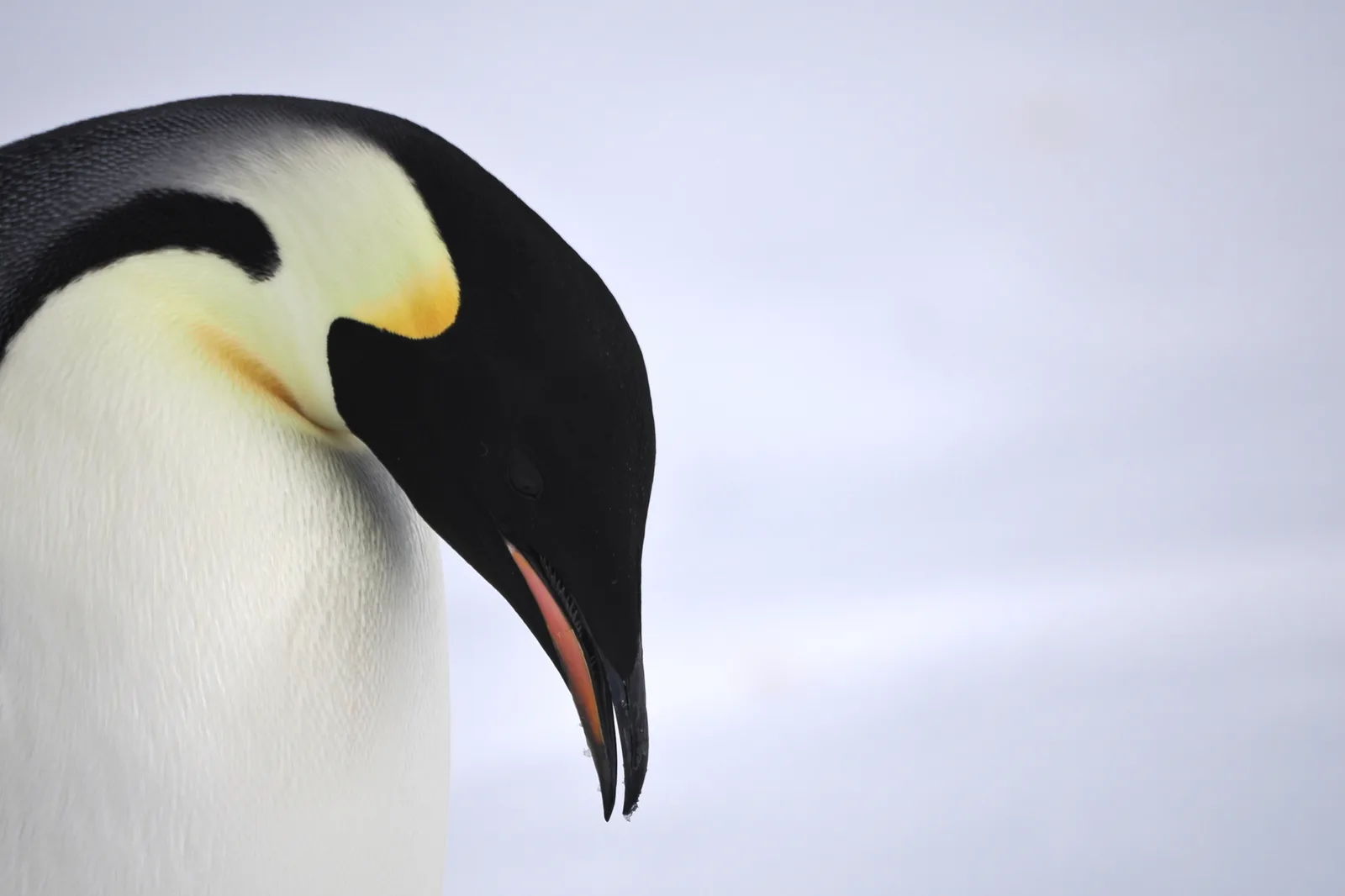
Emperor penguin
The bird that raises its chick through the polar night
Aptenodytes forsteri
Living individuals or members of this group exist today. This does not mean they are safe from extinction.
Meet the emperor penguin
The emperor penguin is the largest penguin and the only bird that breeds through the Antarctic winter. Males keep a single egg on their feet for two months in the dark.
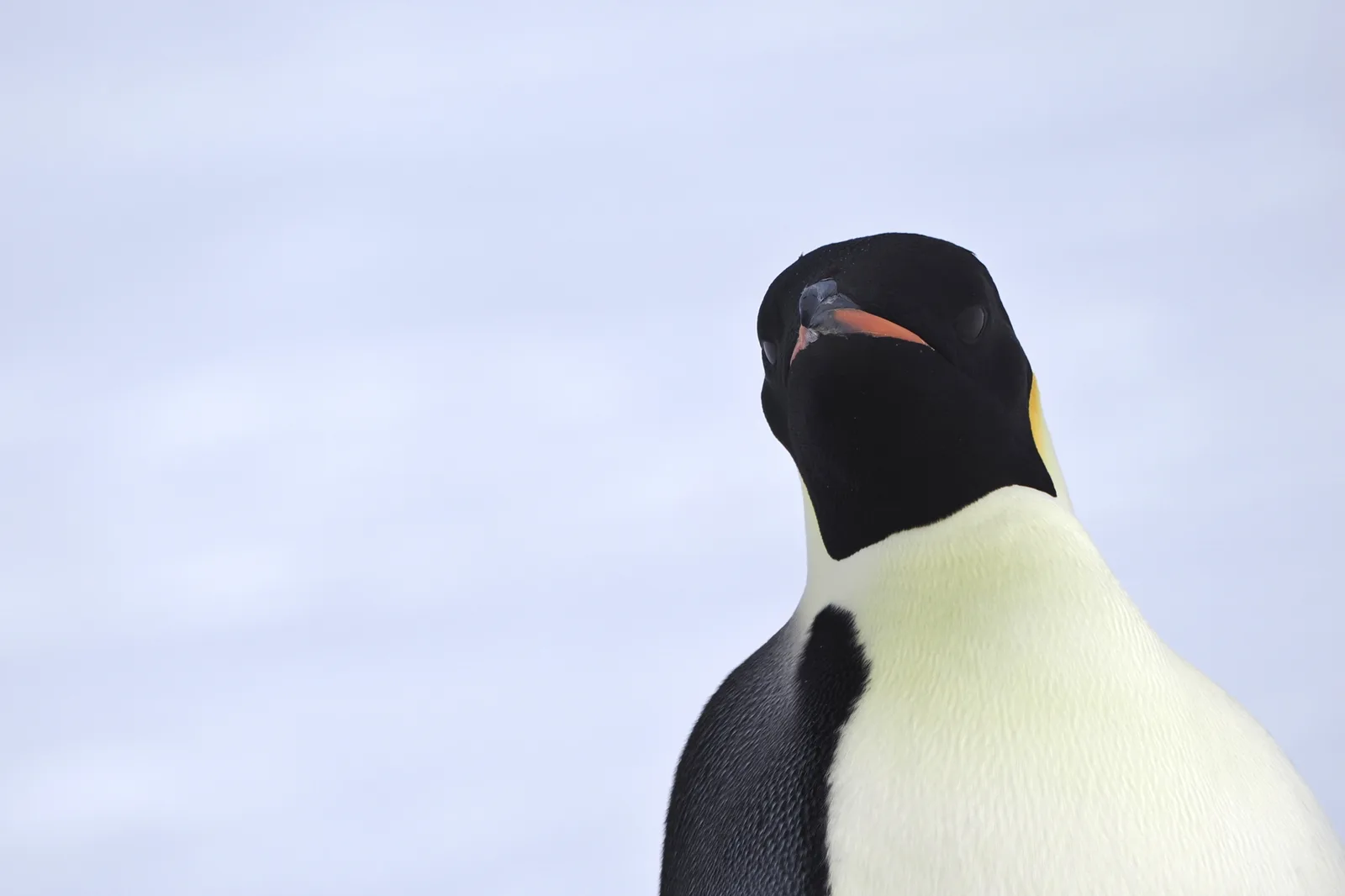
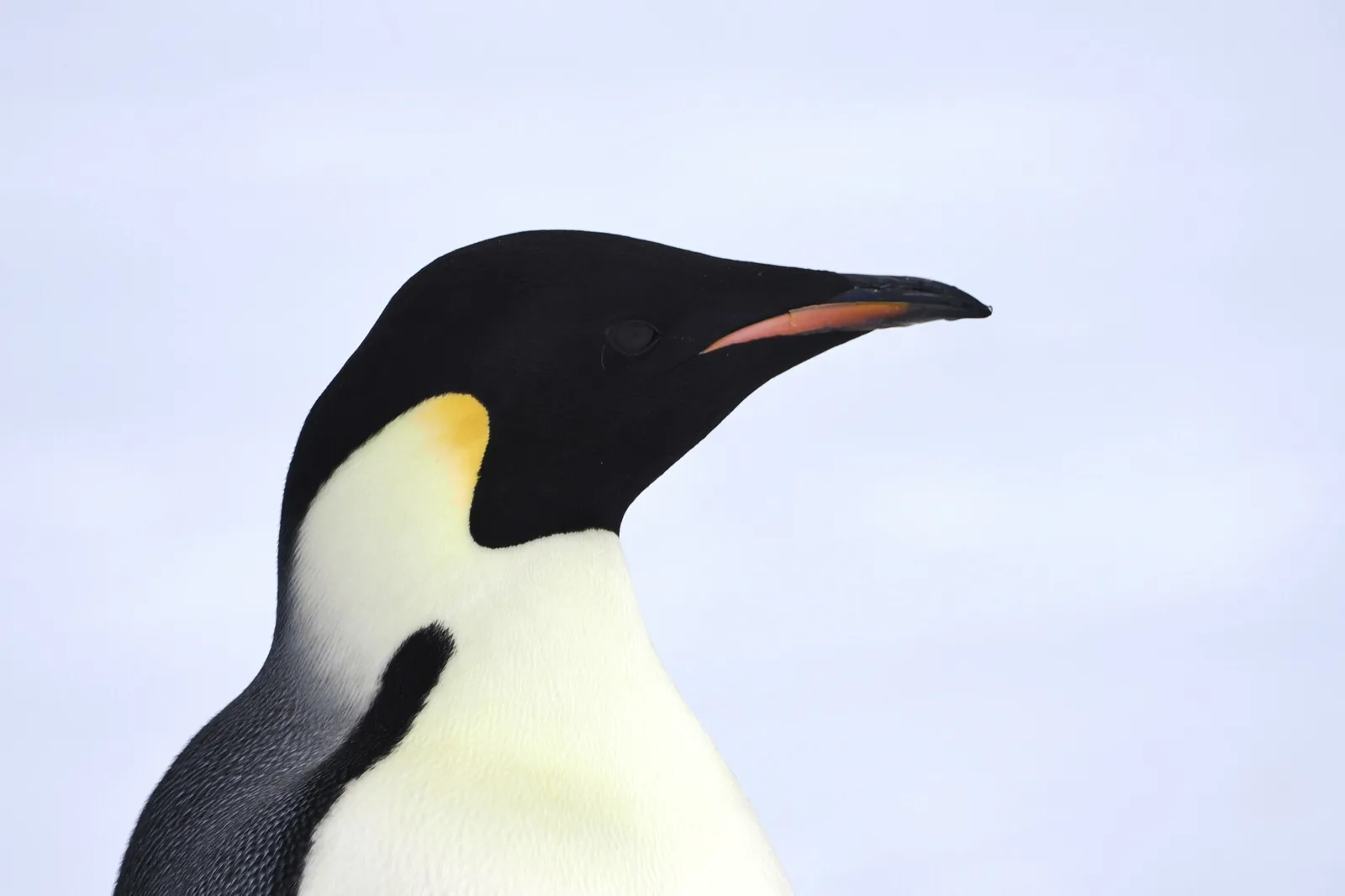
Images of the emperor penguin
Lifespan in the wild
15 to 20 years
Weight
22 to 45 kg
Length
1.01 to 1.32 m
Top speed
6 to 9 km/h
Fact file
Emperor penguin
- Location
- The coast of Antarctica
- Habitat
- Polar ice, Open ocean
- Diet
- Piscivore
- Prey / food
- Fish, squid, krill
- Predators
- Leopard seals, orcas; skuas and giant petrels take chicks
- Lifestyle
- Diurnal
- Group name
- Colony
- Name of young
- Chick
- Incubation
- About 65 days of incubation
- Clutch size
- 1 egg
- Population
- About 600,000
- Biggest threat
- Loss of stable sea ice
- Distinctive feature
- Yellow-orange patches on the neck
- Colour
- Black, white and yellow
- Skin type
- Feathers
Size
Next to a person
Measurements
Size and speed
- Height
- 0.81 to 0.97 m, up to 1.08 m standing
- Length
- 1.01 to 1.32 m bill to tail
- Wingspan
- 76 to 89 cm
- Weight
- 22 to 45 kg
- Top speed
- 6 to 9 km/h swimming
Typical adult ranges. Sources: Wikipedia, Animal Diversity Web.
Life cycle
Lifespan
- In the wild15 to 20 years
- In captivity20 to 34, up to 50 years
- 050 years
The pale bar is the record. Source: Animal Diversity Web.
Appearance
Colour and coat
- Primary colours
- blackwhite
- Secondary colours
- yelloworange
- Skin type
- feathers
- Male and female
- Slight. Males and females share the same plumage and much the same size, but males are heavier by about 18 kilograms on average.
Life cycle
Mating and family
- Mating system
- monogamous pairs for one season
- Social structure
- large breeding colonies with no territories
- Breeding
- one egg a year, laid in May or early June
Adults walk to the colony in March and April and pair up by call and display. The female lays one egg in May or June and gives it to the male. He holds it on his feet for 65 to 75 days while she feeds at sea. The chick hatches in July and the parents then take turns to feed it. Chicks form a creche at about 45 to 50 days and go to sea in December or January. A wild bird lives 15 to 20 years, and a few reach 50.
Classification
Taxonomy
- Kingdom
- Animalia
- Phylum
- Chordata
- Class
- Aves
- Order
- Sphenisciformes
- Family
- Spheniscidae
- Genus
- Aptenodytes
- Species
- Aptenodytes forsteri
Conservation
Red List status
- LC
- NT
- VU
- EN
- CR
- EW
- EX
Endangered on the IUCN Red List
Range
Recorded in 2 countries
Habitat layer: tundra.
Countries from 364 wild records on GBIF (iNaturalist research grade), filtered and checked by hand. Country shapes: Natural Earth. Habitat: RESOLVE Ecoregions 2017, CC BY 4.0. Basemap: Natural Earth.
Habitats
Three things to know
- 1
An emperor penguin can dive to more than 500 m and stay under 20 minutes.
- 2
Males lose about 40 percent of their body weight during incubation.
- 3
Thousands huddle together, taking turns on the cold outer edge.
Did you know
Seven more facts
- 1
The egg is only 2.3% of the mother's weight, one of the smallest eggs for its bird in the world.
- 2
A male can lose 20 kg between leaving the sea in autumn and the hatching of his egg.
- 3
Only about 15% of pairs meet again the next year, so the species does not mate for life.
- 4
Feathers give 80 to 90% of the bird's insulation, and a fat layer under the skin can be 3 cm thick.
- 5
The species can keep a normal body temperature from minus 10 to 20 degrees Celsius without changing its metabolism.
- 6
Colonies are found from space by the brown stain their droppings leave on the ice.
- 7
iNaturalist holds only 630 observations of the species, a sign of how few people ever see one.
Field notes
How it looks and acts
Field notes
Distinguishing features
- The largest penguin, 101 to 132 centimetres from bill to tail.
- A bright yellow patch behind each ear that fades toward the shoulder.
- A pale yellow wash across the upper breast above a white belly.
- A long black bill with a pink, orange or lilac stripe on the lower half.
- Stiff black flippers 76 to 89 cm across.
- Chicks in silver-grey down with a black cap and a white face.
Field notes
Unique adaptations
- Solid bones that do not crush under pressure 40 times that at the surface.
- Haemoglobin and myoglobin that carry oxygen at very low blood levels.
- Feathers that stand up on land to trap air and flatten in water to seal the skin.
- A resting stance on the heels and tail that keeps the soles of the feet off the ice.
- A brood fold of bare skin that wraps the egg and the small chick.
Field notes
Interesting behaviours
- Walks 50 to 120 km across the ice to reach the colony in autumn.
- Huddles in the winter dark and shuffles from the windward edge to the sheltered side.
- Slides on its belly across the ice, pushed by its feet and flippers.
- Dives with a group and surfaces with it, which may help the birds herd fish.
- Rests almost motionless for days during incubation to save energy.
Field notes
Temperament
- Calm and tolerant of neighbours, which a huddle needs.
- Holds no territory and does not defend a nest.
- Strong when handled, and a male can knock a person over.
- Females without a chick may fight to steal one, and the chick often dies in the scuffle.
Field notes
Communication
- A two-band call that identifies each bird to its mate and chick.
- A courtship call given by a lone male with his head on his chest.
- A rising and falling whistle from a hungry chick.
- A raised bill with flippers held out that signals no wish to fight.
Ecology
Ecological role
The emperor penguin is one of the top predators of the Antarctic sea ice zone and a link between the krill and the seals.
- Takes large amounts of silverfish, krill and squid from the water under the pack ice.
- Feeds leopard seals and orcas at sea, and giant petrels and skuas on the ice.
- Hosts tapeworms, roundworms and a louse that lives only on penguins.
- Its colonies probably return nutrients to the ice edge through droppings, as with other seabird colonies.
Stories
Myths and legends
- In French cinema, March of the Penguins turned the breeding cycle into a story of devotion.
- In popular culture the emperor stands for endurance and parental care, though the pair bond usually lasts one year.
- In modern environmental writing, the emperor penguin is a symbol of sea-ice loss.
- In Antarctic tradition there is no myth at all, because no people lived there before the explorers.
People
Relationship with humans
People
Living alongside us
People met the emperor penguin only when explorers reached Antarctica. Scientists study it for its diving and its resistance to cold, and tourists pay to visit colonies in summer. A few zoos in North America and Asia keep and breed it in chilled houses. The bird has never harmed people, but human activity threatens it through warming, fishing and disturbance.
- The species has never been known to attack a person on its own.
- A handled adult is strong enough to knock a grown man over.
- The long pointed bill probably can cut skin if a bird is cornered.
People
Status, uses and products
- Domestication
- Wild
- As a pet
- Not suitable. An emperor penguin needs sea water, deep diving space, air below freezing and a colony of its own kind. Only a handful of specialist aquariums can keep one alive, and the species is protected.
- Uses
- ecotourismscientific researchzoo exhibition
- Products
- None recorded
The full account
About the emperor penguin
Aptenodytes forsteri, the emperor penguin, is the heaviest and the tallest of all penguins alive today. It lives only around Antarctica, on the sea ice and in the cold water beyond it. An adult weighs 22 to 45 kilograms and stands about 81 to 97 centimetres tall. Black feathers cover the head and back, the belly is white, and a patch of yellow marks each side of the neck. Like every penguin, it cannot fly, and its wings have become stiff flippers for swimming.
No other bird breeds through the Antarctic winter. The female lays one egg and walks back to the sea, and the male holds the egg on his feet for about two months. He eats nothing in that time and huddles with hundreds of other males against the wind. At sea the emperor is a deep diver, and one bird reached 535 metres below the surface. The IUCN lists the emperor penguin as Endangered, and the loss of stable sea ice is the main threat.
Name and taxonomy
George Robert Gray, an English zoologist, described the species in 1844. He built the genus name Aptenodytes from Greek parts that mean a diver without wings. The species name honours Johann Reinhold Forster, the German naturalist who sailed with James Cook on his second voyage. Forster saw a large penguin in 1773 or 1774 and recorded it as a king penguin, but it was probably an emperor.
The emperor penguin sits in the family Spheniscidae and the order Sphenisciformes, which holds every penguin. Its only living relative in the genus is the king penguin, Aptenodytes patagonicus. Wikidata lists common names in more than twenty languages, such as Kaiserpinguin in German and manchot empereur in French. The English name and the German name both call the bird an emperor, and the king penguin takes the lesser title.
Evolution and relatives
Genetic studies place Aptenodytes at the base of the penguin family tree. In other words, the line that led to the emperor and king penguins split from every other penguin early. Evidence from mitochondrial and nuclear DNA puts that split at around 40 million years ago. A third species, Ridgen's penguin, is known from fossils in New Zealand that date to about three million years ago.
Penguins as a group belong with the tube-nosed seabirds and loons in a wider bird lineage called Aequornithes. Like other penguins, the emperor probably lost flight as its ancestors became better and better divers. Solid bones, a dense coat of feathers and a thick fat layer all fit a life spent in cold water.
Appearance
An adult measures 101 to 132 centimetres from bill to tail and weighs 22 to 45 kilograms. The standing height is lower than the body length, about 81 to 97 cm, and the tallest bird measured stood 108 cm. Many reports confuse the two figures, which is why some books give a height of 1.2 metres or more. Each flipper spans 76 to 89 cm, and the sexes look alike in colour and size. Males are heavier, and a female weighs about 18 kg less than a male on average.
The head, chin, throat, back and the top of the flippers are black. The belly and the underside of the flippers are white, and the upper breast is pale yellow. A bright yellow patch sits behind each ear and fades toward the shoulder. The bill is about 8 cm long, black on top, with a pink, orange or lilac stripe along the lower half. Chicks wear silver-grey down with a black head and a white face, and young birds have white cheeks and a black bill.
Over the Antarctic summer the dark plumage fades to brown, and the yearly moult follows in January and February. The moult takes about 34 days, which is fast for a bird. New feathers grow to a third of their length under the old ones before those fall, so the bird never loses its insulation.
Habitat and range
The emperor penguin lives all the way around Antarctica, almost entirely between 66 and 77 degrees south. It breeds on firm pack ice close to the coast, sometimes as far as 18 kilometres from the shore. Colonies form where ice cliffs and icebergs block some of the wind. Only three colonies on land have ever been reported, and one of those has since vanished. Since 2009, some colonies have moved onto shelf ice in years when the sea ice formed late.
By 2022 scientists knew of 66 breeding colonies. The most northerly is on Snow Hill Island near the tip of the Antarctic Peninsula. Outside the breeding season the birds spend most of their time in the pack ice zone, where open water is close by. Winter air can fall to minus 40 degrees Celsius, and the water stays near minus 1.8 degrees.
Wanderers have turned up on Heard Island, South Georgia, the Falkland Islands and the southern tip of South America. A few reach New Zealand, and in November 2024 one bird landed on a beach in Western Australia. GBIF holds records from 18 countries, but most of those are vagrants, museum specimens or zoo birds.
Diet and feeding
The emperor penguin eats fish, krill and squid, and the mix changes from place to place. Fish matter most, and the Antarctic silverfish makes up the largest share of the diet. Other regular prey are cod icefish, two kinds of squid and Antarctic krill. An adult eats about 2 to 3 kg a day, and up to 6 kg a day before the long fast of the breeding season. A rough, barbed tongue holds slippery prey so it cannot slide back out.
The bird hunts in open water, in ice-free patches called polynyas and in cracks in the pack ice. One tactic is to dive to about 50 metres and look up for fish that swim against the underside of the ice. It swims up, takes the fish, dives again and repeats the move about six times before it surfaces to breathe. Birds that hunt together may time their dives and surfacing as a group. A record dive reached 564 metres and lasted 21.8 minutes, and another bird touched 535 metres near McMurdo Sound.
Behaviour and social life
The emperor penguin is social at every stage of its life. It breeds in colonies of up to several thousand birds and often hunts in groups. It holds no territory and defends no nest site, because it has no nest. Individuals can be active by day or by night, and the species spreads out into the ocean from January to March.
The huddle is the behaviour that lets the species survive winter. Ten to several thousand birds pack together, each leaning on a neighbour, with the young in the centre. Birds on the cold upwind edge shuffle round to the sheltered side, so the whole mass slowly churns. Every bird gets a turn inside and a turn outside. One study found that 84% of pairs stayed together during a huddle, and a typical huddle lasted about 1.6 hours.
It swims at about 6 to 9 kilometres per hour and pushes with both the up and the down stroke of the flipper. On the ice it walks with a rocking gait or lies on its belly and pushes itself along with feet and flippers. To save heat on land it rests on its heels and tail, so the soles of its feet stay off the ice. It is strong, and a crew of six men once failed to hold a single male that they wanted for a zoo.
Communication and senses
Because there is no nest to return to, an emperor penguin must find its mate and chick by voice alone. Each bird has its own call, and the species shows the widest range of individual calls of any penguin. The call uses two frequency bands at the same time, which makes it easy to tell apart in a noisy colony. A chick begs with a whistle that rises and falls, and a parent answers only its own chick.
Once a pair has formed, both birds fall silent so that other penguins do not cut in. The calls return after the egg is laid, and the female uses them to pick out her mate among hundreds of males. Posture matters too: a bird that lifts its bill and holds its flippers slightly out is asking not to be attacked. Like other diving birds, the emperor probably sees well under water, but the sources say little about its senses.
Reproduction and life cycle
Emperor penguins can breed at about three years old, but most wait one to three more years. In March and April the adults walk 50 to 120 km across the ice to the colony as the days grow short. A lone male stands still, drops his head to his chest and gives a call that lasts one or two seconds. A pair then stand face to face, stretch their necks up and hold the pose for several minutes. The species does not mate for life, and only about 15% of pairs meet again the next year.
In May or early June the female lays one egg of about 460 to 470 grams. It is pale greenish white, about 12 by 8 cm, and only 2.3% of her weight, a tiny egg for a bird this size. She passes it to the male at once, and a dropped egg freezes on the ice within a minute or two. The male rests it on his feet under a fold of bare skin and holds it there for 65 to 75 days. He is the only male penguin that incubates alone, and by hatching he has fasted for about 120 days.
A newly hatched chick weighs about 315 g and needs its parents for both food and warmth. If the mother is still away, the father feeds it a curd from a gland in his throat for up to 7 days. The female returns from mid July to early August, finds her mate by his call and takes over the chick. The parents then swap duties, one at sea and one at the colony, until the chicks gather in a creche at 45 to 50 days. Chicks moult from November and leave for the sea in December and January at about half of adult weight. Only about 19% of chicks survive their first year, but an adult has a 95.1% chance of surviving each year.
Predators and threats
The leopard seal is the main predator of adults and takes birds soon after they enter the water. Orcas also take adults at sea, and they will attack a penguin of any age near the water. Neither seal nor orca depends on emperors, and both probably prefer smaller penguins when those are plentiful. Most dives are short and shallow, which cuts the time a predator has to reach the bird. A black back and a white belly hide the swimming shape from above and from below.
On the ice the southern giant petrel is the chief killer of chicks and causes over a third of chick deaths in some colonies. The south polar skua mostly takes dead chicks and eggs, because the live chicks are too large by the time it arrives. Cold, starvation and storms kill far more chicks than any predator. The largest threat to the species is the loss and early break-up of sea ice as the climate warms.
Population and conservation
A 2009 count from satellite images put the population at about 595,000 adults in 46 colonies. Later surveys raised the number of known breeding sites to 61, and then to 66. About 35% of the known birds live north of the Antarctic Circle. Satellite images from 2009 to 2018 showed a fall of about 10%, or more than 20,000 adults.
The IUCN listed the species as Near Threatened from 2012, then raised it to Endangered in April 2026. The new listing rests on projected sea-ice loss rather than on a count that has already fallen. Chile and Argentina list it as Vulnerable, and the United States has weighed it for its Endangered Species Act. One model predicts a 45% chance that numbers will halve by 2073. A 2023 study found that more than 90% of colonies could face near extinction from breeding failure by the end of the century.
The Halley Bay colony, the second largest, lost almost every chick for three years after 2015 when the ice broke early. Some of those birds moved 55 km south to the Dawson-Lambton colony, which grew tenfold. The Dion Islands colony, studied since 1948, vanished at some point before 2009, the first known loss of a whole colony.
Relationship with humans
Antarctica had no people before the modern age, so no human culture grew up alongside this bird. Scientists study it to learn how a body copes with deep dives, low oxygen and extreme cold. Tour operators run day trips and overnight trips to see colonies, mostly in the Antarctic summer. One study found that chicks in a creche grew nervous when a helicopter came within 1,000 metres. Researchers also suspect that people carried bird diseases such as avian influenza to the continent.
Zoos have tried to keep emperors since the 1930s, and early attempts mostly failed. Aalborg Zoo in Denmark built a chilled house and kept one bird for 20 years. SeaWorld San Diego hatched the first captive chicks, and over 20 have followed there since 1980. In 2011 a young emperor came ashore in New Zealand, ate 3 kg of sand and was nursed back to health before release. The species harms no one, and no negative effect on people is known.
In culture and myth
There is no traditional folklore about the emperor penguin, because no people lived where it breeds. Its place in culture is modern and comes mostly from film. The French documentary March of the Penguins, released in 2005, followed a colony through one breeding season. Happy Feet, from 2006, made a dancing emperor chick its hero and carried a message about warming seas and overfishing. Surf's Up, from 2007, gave the species a surfing character.
More than 30 countries have printed the bird on postage stamps, including Australia, Britain, Chile and France. In popular writing the emperor stands for endurance and for devoted parents. More recently it has become a symbol of what melting sea ice will cost.
A sentence with a dotted underline is inferred: it describes the group the animal belongs to, or is a reading of the sources, rather than a measured or reported fact about this species.
Questions
Emperor penguin questions, answered
How big is an emperor penguin?
An adult weighs 22 to 45 kilograms and measures 101 to 132 centimetres from bill to tail. It stands about 81 to 97 cm tall, and the tallest bird measured was 108 cm. It is the largest penguin alive.
How deep can an emperor penguin dive?
One female dived to 535 metres near McMurdo Sound, and a bird from Auster rookery reached 564 metres on a dive that lasted 21.8 minutes. Most dives are much shallower and shorter.
How long can an emperor penguin hold its breath?
It can stay under water for around 20 minutes on a deep dive. Its heart slows to 15 to 20 beats a minute and its blood carries oxygen at very low levels.
What do emperor penguins eat?
They eat fish, krill and squid. The Antarctic silverfish is the main food, with other cod icefish, glacial squid and Antarctic krill. An adult eats about 2 to 3 kg a day.
Where do emperor penguins live?
They live only around Antarctica, on the sea ice and in the Southern Ocean beside it. The colonies sit between 66 and 77 degrees south, and there were 66 known colonies in 2022.
Are emperor penguins endangered?
The IUCN lists it as Endangered since April 2026, up from Near Threatened, because of sea-ice loss. About 595,000 adults were counted in 2009.
Why does the male emperor penguin keep the egg?
The female is exhausted after laying and must go to sea to feed. The male holds the egg on his feet under a fold of skin for 65 to 75 days through the winter. No other penguin leaves incubation to the male alone.
How long does an emperor penguin go without food?
A male fasts for about 120 days from his arrival at the colony to the hatching of the egg. He can lose 20 kg in that time.
Do emperor penguins mate for life?
No. A pair stays together for one season, and only about 15% of pairs meet again the next year. The short window for breeding leaves little time to wait for an old partner.
How do emperor penguins keep warm?
Dense feathers give 80 to 90% of the insulation, backed by a fat layer up to 3 cm thick. In winter the birds huddle in groups of up to several thousand and take turns in the centre.
How fast can an emperor penguin swim?
It cruises at about 6 to 9 kilometres per hour. Reports of bursts up to 20 km/h exist, but the cruising speed is the typical figure.
How many eggs does an emperor penguin lay?
One egg a year, laid in May or early June. It weighs about 460 to 470 grams and hatches after 65 to 75 days.
How long do emperor penguins live?
A wild bird usually lives 15 to 20 years, and about 1% may reach 50. Captive birds have lived 20 to 34 years.
What eats emperor penguins?
Leopard seals and orcas take adults at sea. On the ice, southern giant petrels kill chicks and skuas take eggs and dead chicks.
Can you see emperor penguins in a zoo?
Only a few zoos and aquariums in North America and Asia keep them, because they need a chilled house. SeaWorld San Diego has bred them since 1980.
Is Happy Feet about an emperor penguin?
Yes. The 2006 film Happy Feet made a dancing emperor chick its hero, and March of the Penguins from 2005 filmed a real colony.
Food web
Prey and food
- fish
- squid
- krill
Food web
Predators
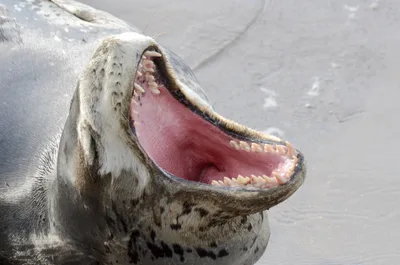 Leopard seal
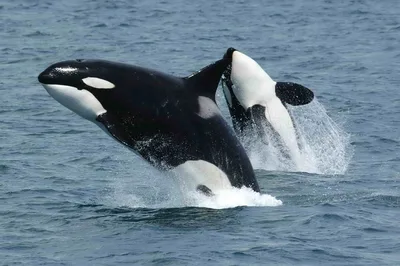 Orca
- skuas
- giant petrels
Ecological equivalents
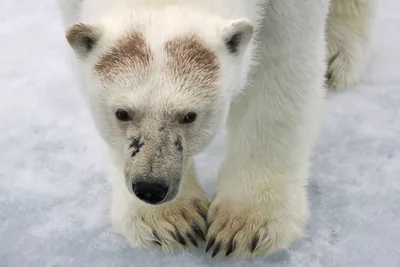
Related species on this site
King penguin (same genus), Adélie penguin (same family), African penguin (same family), Chinstrap Penguin (same family), Crested Penguin (same family), Galapagos Penguin (same family), and more.
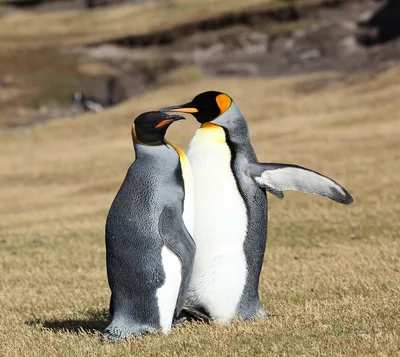 LC
Birds
King penguin
Aptenodytes patagonicus
The king penguin is the second largest penguin, an orange-throated bird of subantarctic island beaches.
Living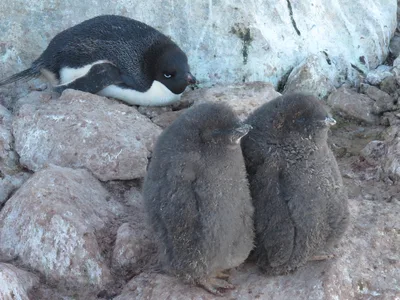 LC
Birds
Adélie penguin
Pygoscelis adeliae
The Adelie penguin is the most widespread penguin of the Antarctic coast.
Living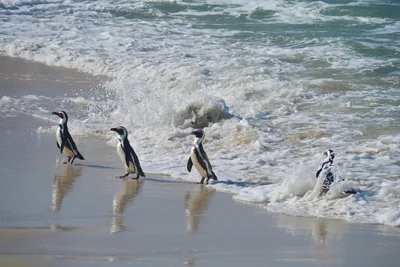 CR
Birds
African penguin
Spheniscus demersus
The African penguin is the only penguin that breeds on the African continent.
Living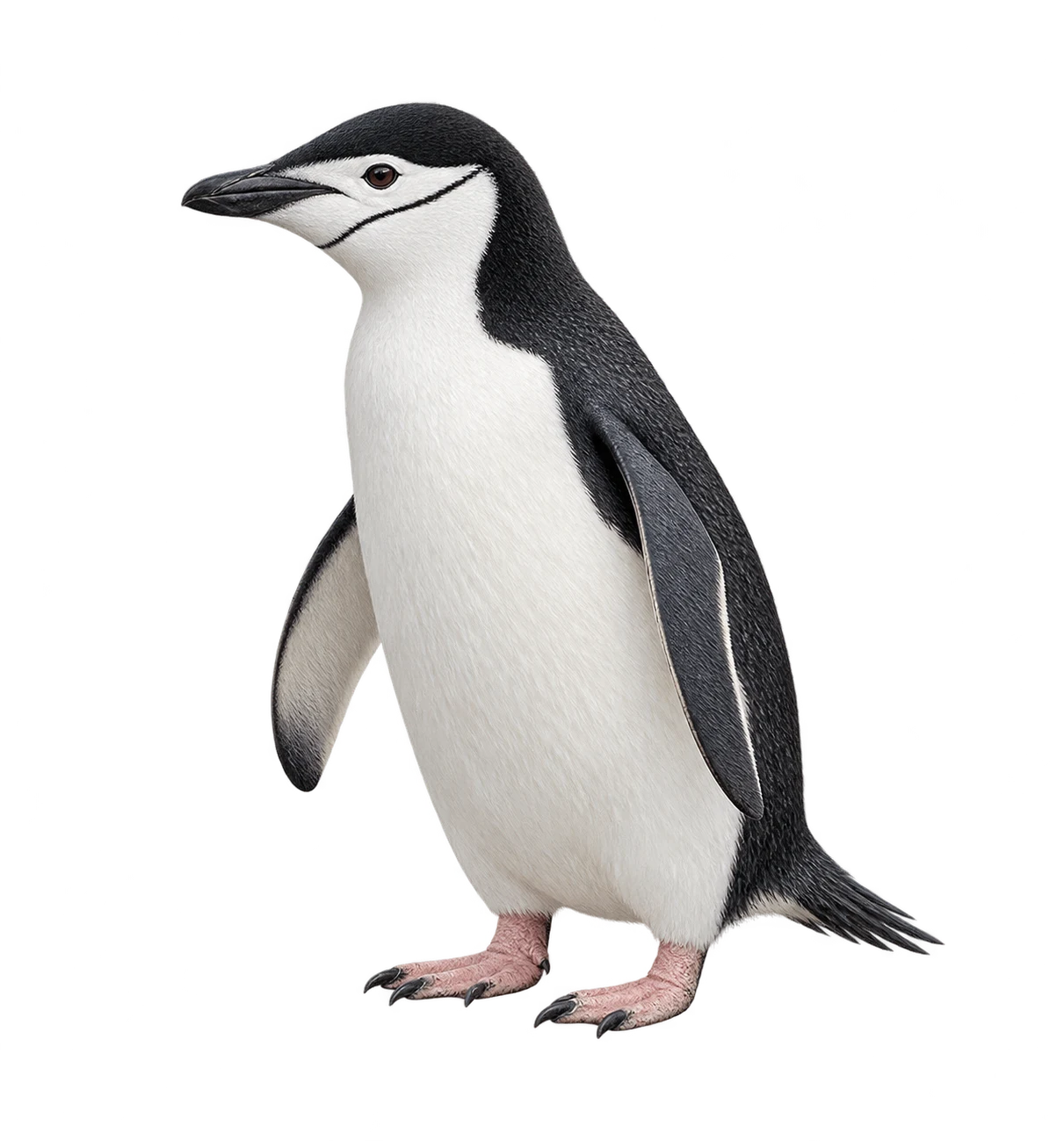
Birds
Chinstrap Penguin
Pygoscelis antarcticus
Classification and source reference
LivingAI illustration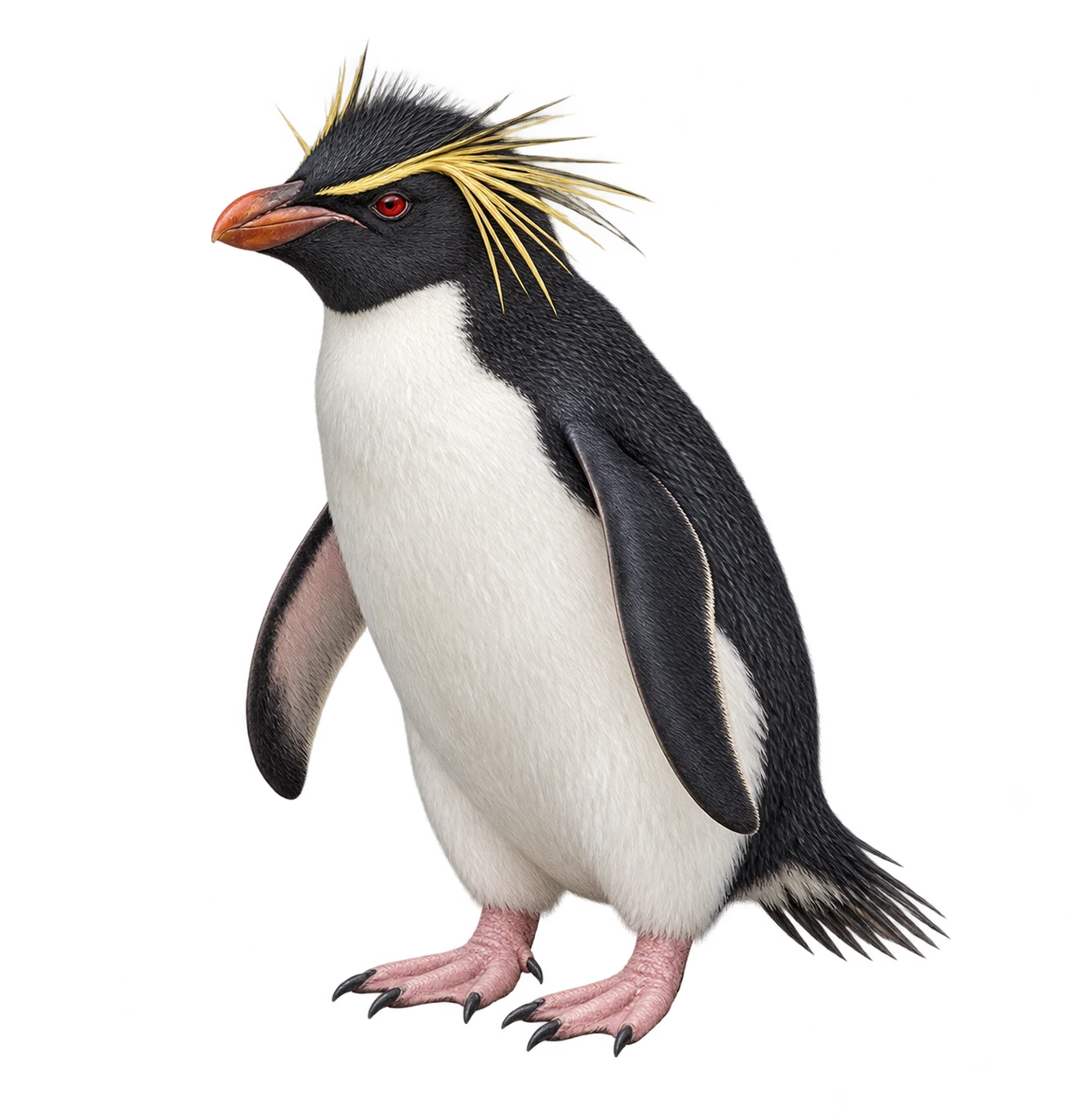
Birds
Crested Penguin
Eudyptes
Classification and source reference
LivingAI illustration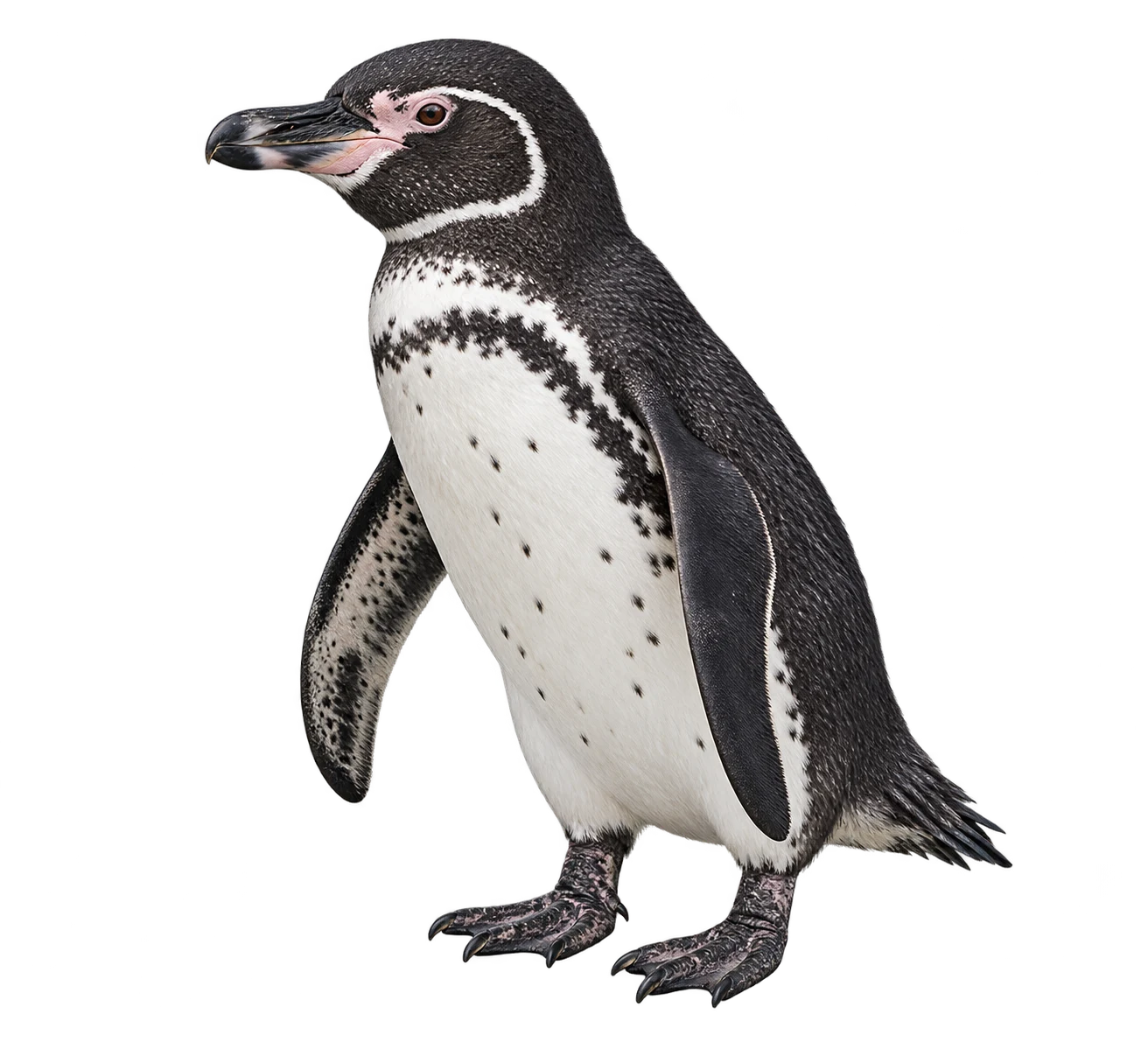
Birds
Galapagos Penguin
Spheniscus mendiculus
Classification and source reference
LivingAI illustration