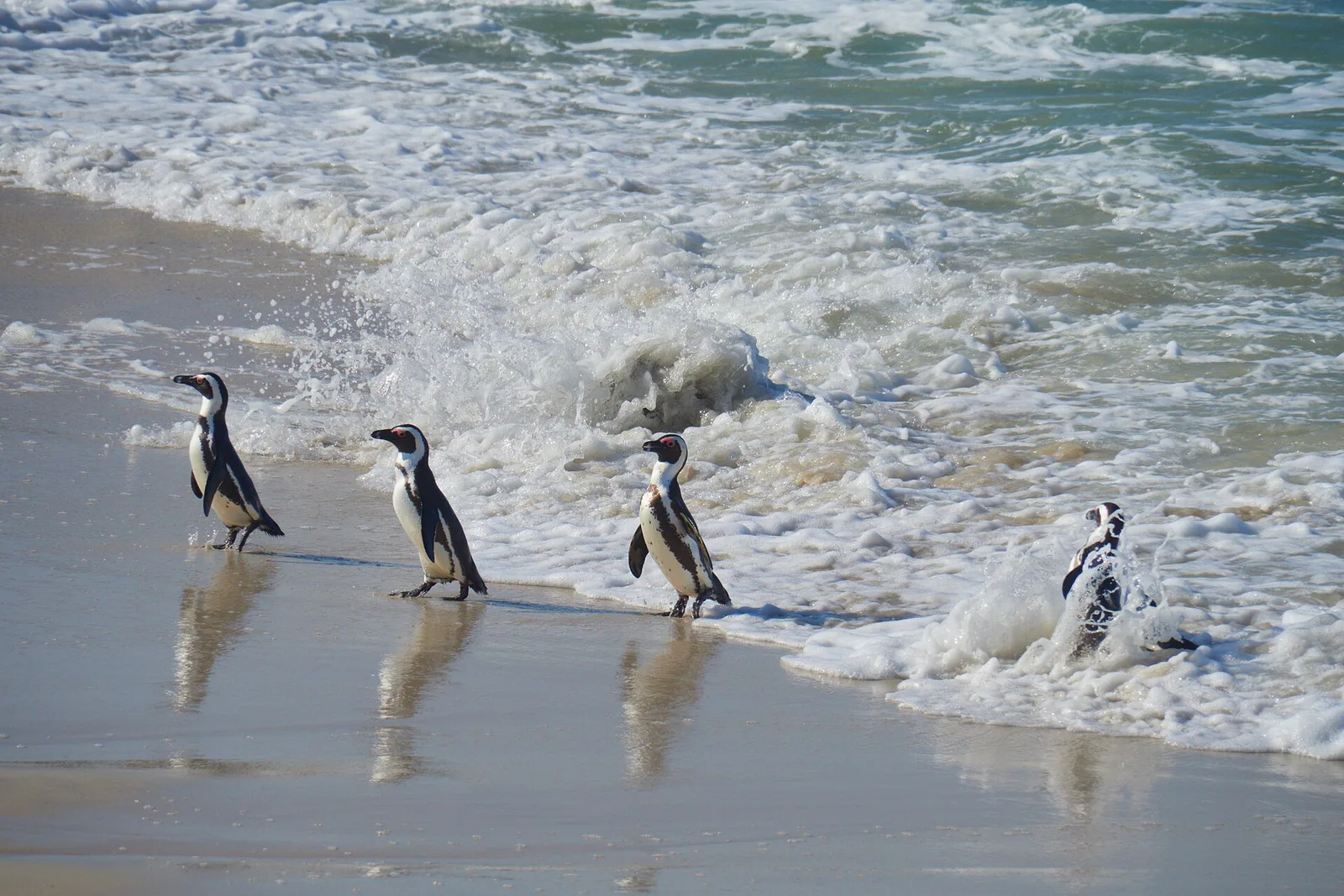
African penguin
The only penguin that breeds in Africa, and the rarest
Spheniscus demersus
Also called Cape penguin, South African penguin, Black-footed penguin, Jackass penguin
Living individuals or members of this group exist today. This does not mean they are safe from extinction.
Meet the african penguin
The African penguin is the only penguin that breeds on the African continent. Fewer than 20,000 mature birds remain, and the IUCN now lists the species as Critically Endangered.
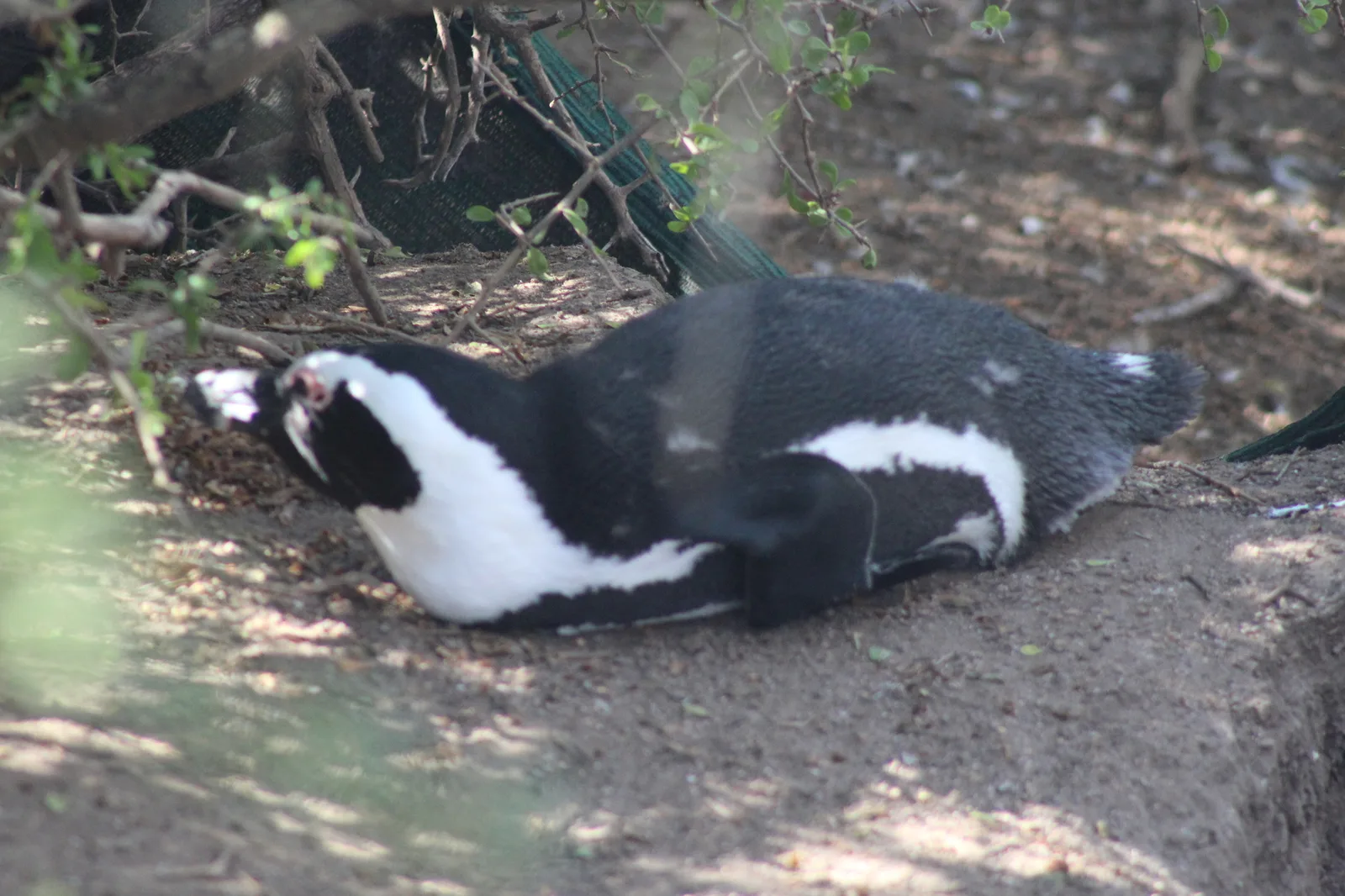
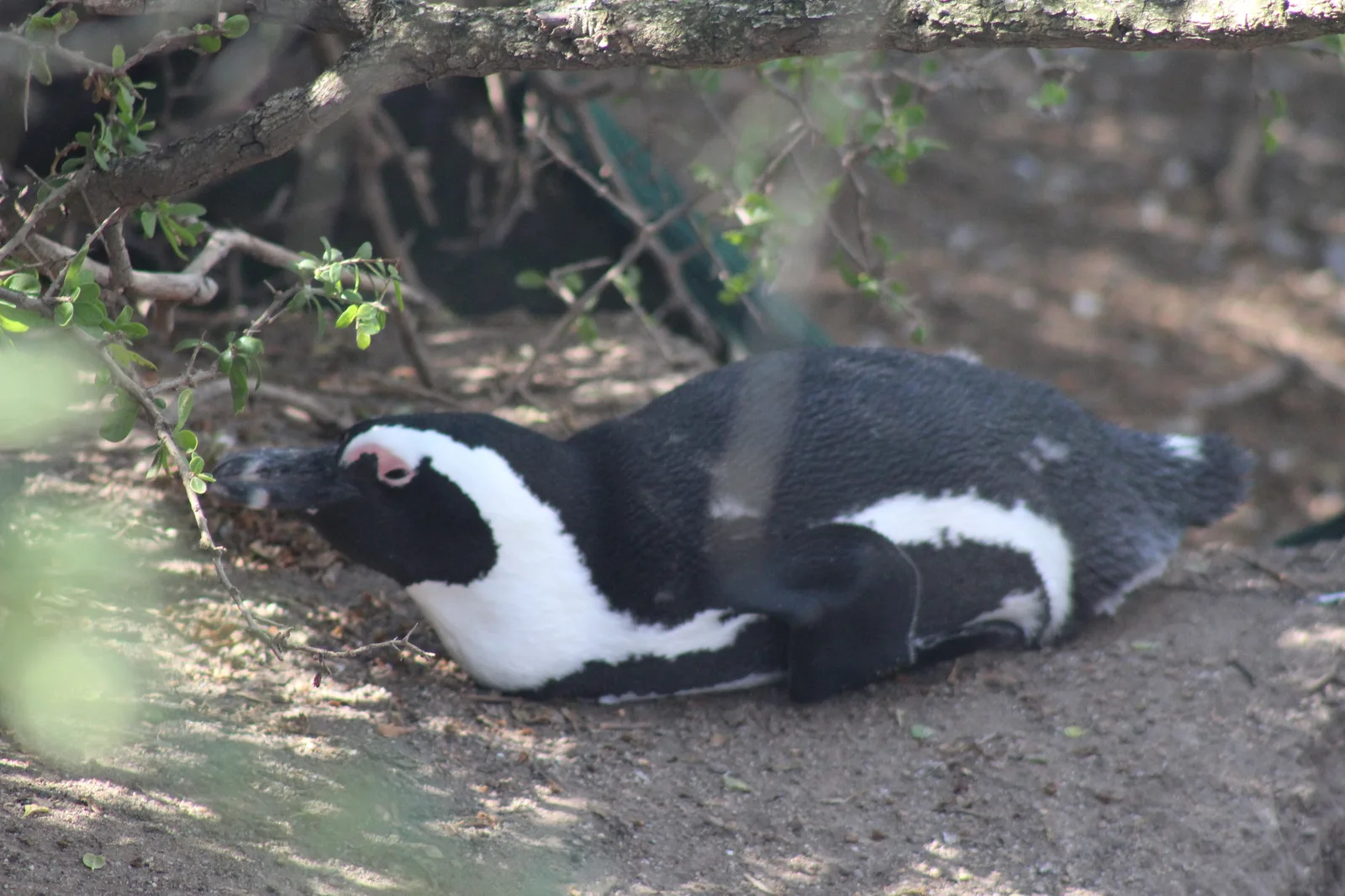
Images of the african penguin
Lifespan in the wild
10 to 25 years
Weight
2.2 to 3.5 kg
Height
60 to 70 cm
Top speed
Up to 20 km/h
Fact file
African penguin
- Location
- Coasts and islands of Namibia and South Africa
- Habitat
- Coast, Open ocean
- Diet
- Piscivore
- Prey / food
- Sardines, anchovies, horse mackerel, round herrings, squid, krill
- Predators
- Sharks and fur seals at sea; kelp gulls, genets, mongooses and caracals on land
- Lifestyle
- Feeds at sea by day and comes ashore to roost
- Group name
- Colony
- Name of young
- Chick
- Incubation
- Eggs hatch after about 40 days
- Clutch size
- 2 eggs
- Population
- About 19,800 mature birds in 2024
- Biggest threat
- Commercial fishing that removes sardines and anchovies
- Distinctive feature
- A single black chest band and bare pink patches above the eyes
- Colour
- Black above, white below with black spots
- Skin type
- Feathers
Size
Next to a person
Measurements
Size and speed
- Height
- 60 to 70 cm standing height
- Weight
- 2.2 to 3.5 kg
- Top speed
- Up to 20 km/h top swimming speed
Typical adult ranges. Sources: Wikipedia, Animal Diversity Web.
Life cycle
Lifespan
- In the wild10 to 25, up to 27.3 years
- In captivityUp to 34 years
- 034 years
Appearance
Colour and coat
- Primary colours
- blackwhite
- Secondary colours
- pink
- Skin type
- feathers
- Male and female
- Slight. Males are a little larger and have longer bills. Plumage is the same in both sexes, and colour patterns differ most clearly during breeding.
Life cycle
Mating and family
- Mating system
- monogamous pairs
- Social structure
- island colonies, with pairs holding a nest site
- Breeding
- one clutch a year, peaking March to May in South Africa
A pair digs a burrow in guano or sand, or takes shelter under a rock, a bush or a nest box. The female lays two eggs, and both birds sit on them for about 40 days. Parents feed the chicks by regurgitation for a month, then leave them in a creche while they fish. Fledging comes between 60 and 130 days, and the young then spend one to two years at sea. They return to the colony where they hatched to moult into adult plumage.
Classification
Taxonomy
- Kingdom
- Animalia
- Phylum
- Chordata
- Class
- Aves
- Order
- Sphenisciformes
- Family
- Spheniscidae
- Genus
- Spheniscus
- Species
- Spheniscus demersus
Conservation
Red List status
- LC
- NT
- VU
- EN
- CR
- EW
- EX
Critically Endangered on the IUCN Red List
Range
Recorded in 2 countries
Habitat layer: mangrove.
Countries from 3,635 wild records on GBIF (iNaturalist research grade), filtered and checked by hand. Country shapes: Natural Earth. Habitat: RESOLVE Ecoregions 2017, CC BY 4.0. Basemap: Natural Earth.
Habitats
Three things to know
- 1
Every bird carries a pattern of black chest spots that is unique to it, like a fingerprint.
- 2
The pink patches above the eyes are cooling glands, and they flush pinker as the bird heats up.
- 3
The braying call sounds like a donkey, which is why sailors named it the jackass penguin.
Did you know
Seven more facts
- 1
A chick hatches at about 103 grams and reaches adult plumage after roughly three years.
- 2
The deepest recorded dive by this species reached 130 metres.
- 3
A moulting penguin fasts for three weeks and loses about half its body weight.
- 4
Salt glands above the eyes let the bird drink seawater and get rid of the salt.
- 5
Penguin eggs are three to four times the size of a hen's egg.
- 6
SANCCOB has treated more than 85,000 seabirds since 1968.
- 7
The colony at Boulders Beach began with two pairs in 1982.
Field notes
How it looks and acts
Field notes
Distinguishing features
- A single black band crosses the white chest in an upside-down horseshoe.
- Bare pink patches sit above the eyes.
- The feet are black.
- The bird stands 60 to 70 cm tall.
- The bill tapers more sharply than a Humboldt penguin's.
- Each bird carries its own pattern of black chest spots.
Field notes
Unique adaptations
- Stiff flattened flippers drive the bird through water at up to 20 km/h.
- Countershading hides the bird from predators above and below it.
- Salt glands remove the salt that comes in with seawater.
- Cooling glands above the eyes shed heat in a climate no other penguin breeds in.
- A brood patch of bare skin passes body heat straight to the eggs.
Field notes
Interesting behaviours
- Pairs preen each other's heads and necks, which they cannot reach alone.
- Chicks gather into a creche while both parents fish.
- Birds dive into the sea on hot days simply to cool off.
- Males swing the head to claim a nest site and to warn rivals.
- Pairs return to the same nest site every year.
Field notes
Temperament
- Sociable, and the birds do almost everything in a group.
- Quarrelsome over nest sites, with fights that use bill and flippers.
- Tolerant of visitors at Boulders, where birds let people come within about a metre.
- Loud after dark, when the whole colony appears to bray at once.
Field notes
Communication
- The bray is a display call that attracts a mate and keeps a pair in contact.
- The yell is a contact call that warns another bird off a patch of ground.
- The haw passes between a bird on land and its partner at sea.
- Head swinging marks ownership of a nest site.
- Bowing with the bill lowered confirms the bond between two birds.
Ecology
Ecological role
The African penguin is a mid-level predator of the Benguela upwelling, and its numbers track the sardine and anchovy stocks it depends on.
- It eats small shoaling fish and up to 18 species of crustacean.
- It feeds sharks and fur seals at sea and kelp gulls on land.
- Its guano once built the burrowing layer that the colonies themselves needed.
- Its breeding success appears to be a direct measure of local fish stocks.
Stories
Myths and legends
- In the language of European sailors the bird became the jackass penguin, after its braying call.
- In eighteenth century British natural history it was first published as the black-footed penguin.
- In modern South African conservation it appears to stand as the emblem of a threatened coast.
- In Western popular culture penguins in general read as comic figures in evening dress.
People
Relationship with humans
People
Living alongside us
People took the eggs and the guano and left the bird with nowhere good to nest. Egg collecting continued into the 1970s, and guano mining stripped the burrowing layer from the islands. Oil spills have killed penguins since the 1930s, and the MV Treasure crisis in 2000 led to the largest animal rescue ever run. Fishing boats now take the sardines and anchovies the birds need. Tourism at Boulders Beach and Stony Point gives the species a value that helps it.
- The bird weighs about 3.1 kg and cannot seriously harm an adult.
- A cornered penguin bites hard, and a bite may break the skin.
- Birds at Boulders let people approach to about a metre, and they walk away rather than attack.
People
Status, uses and products
- Domestication
- Wild
- As a pet
- Not suitable. No. The African penguin is Critically Endangered and protected by law in South Africa and Namibia. It needs cold seawater, live fish every day and the company of a colony.
- Uses
- ecotourismguanozoo breeding programmes
- Products
- guanoskins
The full account
About the african penguin
The African penguin, Spheniscus demersus, is the only penguin that breeds on the African continent. It stands 60 to 70 centimetres tall and weighs 2.2 to 3.5 kilograms. The back is black and the belly is white, marked with a black band and a scatter of spots. Bare pink patches sit above the eyes and a black mask covers the face. The species lives on the Namibian and South African coast and its offshore islands.
This is a pursuit diver that chases small shoaling fish and squid. Sardines and anchovies are the food that matters most. About 4 million African penguins lived at the start of the nineteenth century. The IUCN counted around 19,800 mature birds in 2024 and lists the species as Critically Endangered. It is now the rarest penguin in the world.
Name and taxonomy
George Edwards drew and described the bird in 1747 and called it the black-footed penguin. He worked from two preserved birds brought to London, probably taken near the Cape of Good Hope. Carl Linnaeus named it Diomedea demersa in 1758 and filed it beside the wandering albatross. Mathurin Jacques Brisson set up the genus Spheniscus in 1760, and the bird sits there now.
Spheniscus comes from a Greek word for a wedge and points at the shape of the flippers. The species name demersus is Latin for plunging. English also calls the bird the Cape penguin and the South African penguin. The name jackass penguin comes from the braying call, which carries across a colony at night. Several South American relatives make the same sound, so the nickname is not exclusive.
Evolution and relatives
The African penguin is one of four banded penguins in the genus Spheniscus. The Humboldt and Magellanic penguins live off southern South America. The Galapagos penguin lives on the equator in the Pacific. All four share the same size, the same colour scheme and much the same behaviour.
The four are easy to confuse in a zoo, and the chest bands appear to be the surest guide. The Magellanic penguin carries two dark bars across the throat and chest. The African penguin carries one, shaped like an upside-down horseshoe. Its bill tapers to a sharper point than the Humboldt penguin's does. Like all penguins, this one probably lost flight long ago and turned its wings into stiff flippers.
Appearance
An adult stands 60 to 70 cm tall and weighs 2.2 to 3.5 kg. The bill runs from 4.8 to 6.5 cm long. The upper parts are black and end in a sharp line against the white belly. A single black band crosses the chest, along with scattered black spots. The spot pattern differs from bird to bird, so researchers can tell individuals apart by it.
Bare pink skin sits above each eye. Glands there cool the blood, and more blood flows through them as the bird warms up. The patches therefore turn a deeper pink on a hot day. Salt glands above the eyes also strip salt out of the seawater the bird swallows. The black back and white belly form countershading, which hides the bird from above and below.
Males are slightly larger than females and carry longer bills. Juveniles look different again, with dark grey-blue to brown upper parts. Their undersides are plain, with no band and no spots. The change into full adult plumage takes about three years.
Habitat and range
The species lives in the Benguela and western Agulhas systems off southern Africa. Colonies sit on rocky islands from Hollamsbird Island in Namibia to Bird Island in Algoa Bay. Breeding now happens on about 24 islands, and the Penguin Islands take their name from the bird. Islands matter because mainland predators cannot easily reach them. Birds spend the day at sea and gather on shore at night.
Two mainland colonies started near Cape Town in the 1980s. One is at Boulders Beach near Simon's Town and one is at Stony Point in Betty's Bay. Penguins settled at Boulders in 1982 from two breeding pairs and built up to about 3,000 birds. A ban on pelagic trawling in False Bay left more fish and helped that growth. Leopards have attacked the Betty's Bay colony, which shows the risk of a mainland site.
No colony exists outside the southwest coast of Africa. Young birds sometimes wander well beyond the normal range. Zoos across the world hold breeding groups, because the bird does not need cold air. GBIF holds records from 19 countries and territories, which include those captive birds.
Diet and feeding
African penguins hunt small fish that swim in shoals. Sardines, anchovies, horse mackerel and round herrings make up most of the catch. Squid and small crustaceans such as krill and shrimps fill out the diet. A bird may eat up to 540 grams of prey a day. That figure passes 1 kg when a pair is feeding older chicks.
Hunting appears to mean diving, not flying. A normal dive reaches about 25 metres and lasts 69 seconds. The deepest recorded dive reached 130 m and the longest lasted 275 seconds. The bird can swim at close to 20 km/h when chasing fish. Penguins usually stay within 20 km of the shore.
A foraging trip on the west coast covers 30 to 70 km. On the south coast the average trip runs to about 110 km. Sardines have declined near the colonies, so the birds now eat more anchovies. Anchovies carry less fat and protein, so the swap costs the birds condition. Parents will not starve themselves for a brood, so chicks die first when fish are scarce.
Behaviour and social life
African penguins live in colonies and do almost everything in company. They gather on shore overnight and pass most of the daylight hours hunting at sea. Pairs preen each other, which is the only way a penguin can clean its own head and neck. Allopreening tidies the feathers and strips off ticks and other parasites. A lone bird has to scratch at its head with its feet instead.
Birds bathe a few metres offshore, shaking hard and working the feathers with bill and feet. On hot days they slip into the water simply to cool down. Fights break out over nest sites and mates. A fighting penguin grips a rival's back with its bill and beats it with both flippers. Chases probably run right through a colony while other birds stand aside.
Communication and senses
The braying call gave the bird its old nickname. Researchers name three calls: the bray, the yell and the haw. The yell is a contact call and warns another colony member off a patch of ground. The bray is a display call, used to attract a mate and to keep a pair in touch. The haw passes between partners when one is ashore and the other is in the water.
Posture appears to carry as much information as sound. A male swings his head to claim a nest site, to draw a female and to warn other males. A pair then stretches necks and heads upward while giving a harsh call together. Bowing follows, with the bill pointed at the nest or at the partner's feet. Displays also let a parent and a chick find each other in a crowded colony.
Reproduction and life cycle
African penguins are monogamous and return to the same nest site year after year. Nesting peaks from March to May in South Africa and from November to December in Namibia. Females first breed at about four years old and males at about five. A female stays fertile for roughly ten years. Birds prefer to breed in winter, when the ground is cooler.
The best nest is a burrow dug into a layer of guano, which holds a steady temperature. People mined that guano for fertiliser, so the material has gone from many islands. Birds now dig into sand, shelter under rocks and bushes, or use nest boxes. Trials on Robben Island found that birds in nest boxes raised more chicks than birds in the open. An egg left in full sun is abandoned, and an abandoned egg never hatches.
A clutch holds two eggs, each three or four times the size of a hen's egg. Both parents share the sitting equally for about 40 days. A bare patch of skin on the belly presses warmth straight onto the eggs. Chicks hatch at about 103 grams and are fed by regurgitation for around a month.
One parent guards the chicks for that first month. The chicks then join a creche while both parents fish all day. Fledging comes between 60 and 130 days, depending on how much food there is. Young birds go to sea alone for one to nearly two years, then come home to moult into adult plumage. A moulting penguin cannot swim for food and fasts for about three weeks.
Predators and threats
Sharks and fur seals take adult penguins at sea. Kelp gulls, sacred ibises, Cape genets, mongooses and caracals take eggs and chicks on land. Feral cats and dogs add to the loss at some colonies. Birds forced to nest in the open lose far more young than birds in burrows or boxes.
Cape fur seals now seem to be a problem of conservation's own making. Work to build seal numbers up succeeded, and rogue seals now kill penguins at Namibian colonies. Dyer Island faces the same pressure in South Africa. Culling problem seals at Mercury Island was followed by a rise in penguin numbers.
Oil appears to be the other old enemy. Records of oiled African penguins go back to the 1930s. The MV Apollo Sea sank in 1994, and fewer than half of the 10,000 cleaned birds survived. Blood parasites and avian malaria kill many birds brought inland for treatment. Avian malaria accounts for 27 percent of deaths among rehabilitated penguins each year.
Population and conservation
The fall of this species appears to be one of the steepest recorded for any seabird. About 1.5 million birds were counted in 1910, and only a tenth of those were left by 2000. The total population dropped to about 150,000 to 180,000 in 2000 and to 55,000 by 2010. Breeding pairs fell to about 20,850 in 2019 and below 10,000 in 2023. The IUCN listed the species as Critically Endangered in 2024, with about 19,800 mature birds left.
Fishing is the main cause of the collapse. Commercial boats take the sardines and anchovies the birds need, so penguins travel further for worse food. Closing waters near Robben Island to fishing for three years raised breeding success sharply. South Africa kept only limited trial closures, and conservation groups went to court. A settlement in March 2025 closed the water around six important colonies to fishing all year.
SANCCOB has run seabird rescue in South Africa since November 1968. It has treated more than 85,000 seabirds and handled about 750 oiled penguins a year from 1990 to 2005. A 2003 model found the population 19 percent larger than it would be without that work. Naturalists have logged 6429 observations of the species on iNaturalist. Zoos in Europe and the United States run coordinated breeding programmes as a backup population.
Relationship with humans
People appear to have taken from this bird for two centuries before they gave anything back. Penguin eggs were treated as a delicacy and were still sold in the 1970s. Collectors smashed the eggs they found so that only fresh ones reached the market. Some 12,000 eggs were taken from Dassen Island in 1953 alone. Guano miners stripped the islands of the layer the birds dug their burrows in.
The MV Treasure sank near Cape Town on 23 June 2000 and oiled 19,000 adult penguins. Workers also moved 19,500 clean birds about 800 kilometres east so the oil could be cleared. Tens of thousands of volunteers joined the effort, which ran for more than three months. More than 91 percent of the birds were cleaned and released, the largest animal rescue on record.
Tourism is probably the main way most people meet the species now. Boardwalks at Boulders Beach bring visitors within a few metres of the birds. The penguins there let people approach to about a metre. The colony at Simon's Town holds over 2000 birds and is the main viewing site. Swimming is allowed only on the beaches next to the colony.
In culture and myth
The African penguin appears to have no old body of myth, because Europeans met it late and local peoples lived inland. Its oldest cultural mark seems to be a sailors' joke. Crews rounding the Cape heard the braying call and named the bird after a donkey. George Edwards fixed the other old name, the black-footed penguin, in 1747. Both names appear to be in use in South Africa today.
The modern meaning of the bird appears to be conservation. The MV Treasure rescue in 2000 became a national story in South Africa. A retired naval officer known as Van the Penguin Man helped the Boulders colony take hold. At De Hoop Nature Reserve, SANCCOB set out lifelike models and played penguin calls to draw birds in. The penguins carried Boulders Beach to second place in the 2024 Golden Beach Awards.
In Western popular culture the penguin appears to read as a comic figure in a dinner suit. That image probably comes from film and cartoon rather than from any wild bird. The African penguin is the species most zoo visitors see, so it carries much of that image. Its real story is harder than the image, because the wild population may not last the century.
A sentence with a dotted underline is inferred: it describes the group the animal belongs to, or is a reading of the sources, rather than a measured or reported fact about this species.
Questions
African penguin questions, answered
How big is an African penguin?
Adults reach 60 to 70 cm in standing height and 2.2 to 3.5 kg in weight. The bill measures 4.8 to 6.5 cm.
Where do African penguins live?
They live along the coast of Namibia and South Africa. Most breed on offshore islands, with two mainland colonies near Cape Town at Boulders Beach and Stony Point.
Why is it called a jackass penguin?
The call is a loud bray that sounds like a donkey. Sailors named the bird for it. Several South American penguins make the same noise.
Are African penguins endangered?
Yes. The IUCN listed the species as Critically Endangered in 2024, with about 19,800 mature birds. Numbers have fallen by around 95 percent since pre-industrial times.
Why are African penguins dying out?
Commercial fishing removes the sardines and anchovies they eat. Oil spills, seal predation and the loss of guano nesting material all add to the pressure.
What do African penguins eat?
Small shoaling fish, mainly sardines and anchovies, plus horse mackerel and round herrings. They also take squid and small crustaceans.
How deep can an African penguin dive?
The average dive goes to about 25 metres for 69 seconds. The record is 130 m deep, and the longest dive lasted 275 seconds.
How fast can an African penguin swim?
Close to 20 km/h at full speed. Foraging trips cover 30 to 70 km on the west coast and about 110 km on the south coast.
How long do African penguins live?
Usually 10 to 25 years in the wild, with a record of 27.3 years. Captive birds have reached 34.
How many eggs do African penguins lay?
Two. Both parents incubate them for about 40 days. Chicks fledge between 60 and 130 days, depending on the food supply.
Why do African penguins have pink patches above their eyes?
Those patches are cooling glands. Blood flows through them faster as the bird heats up, which sheds heat and turns the skin a deeper pink.
What eats African penguins?
Sharks and Cape fur seals hunt them at sea. Kelp gulls, genets, mongooses, caracals and feral cats take eggs and chicks on land.
Can you see African penguins at Boulders Beach?
Yes. Boardwalks at Foxy Beach take visitors within a few metres of the colony. People may swim only on the beaches next door.
What happened in the MV Treasure oil spill?
The tanker sank near Cape Town on 23 June 2000 and oiled 19,000 penguins. Another 19,500 clean birds were moved 800 km away. More than 91 percent of the birds were saved.
How can you tell a male African penguin from a female?
It is hard. Males are slightly larger and have longer bills. The plumage of the two sexes is the same.
Are African penguins the same as other penguins?
No. They belong to the banded penguins, with the Humboldt, Magellanic and Galapagos penguins. The African penguin has one chest band, while the Magellanic has two.
Food web
Prey and food
- sardines
- anchovies
- horse mackerel
- round herrings
- squid
- krill
Food web
Predators
- sharks
- fur seals
- kelp gulls
- genets
- mongooses
- caracals on land
Ecological equivalents
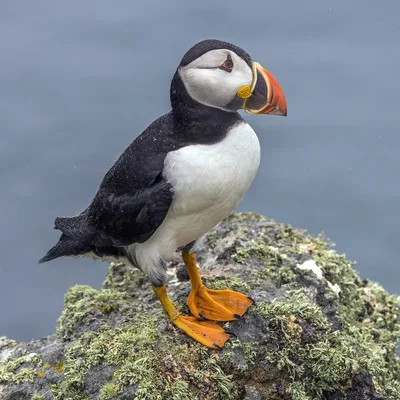
Related species on this site
Galapagos Penguin (same genus), Humboldt Penguin (same genus), Magellanic Penguin (same genus), Adélie penguin (same family), Chinstrap Penguin (same family), Crested Penguin (same family), and more.
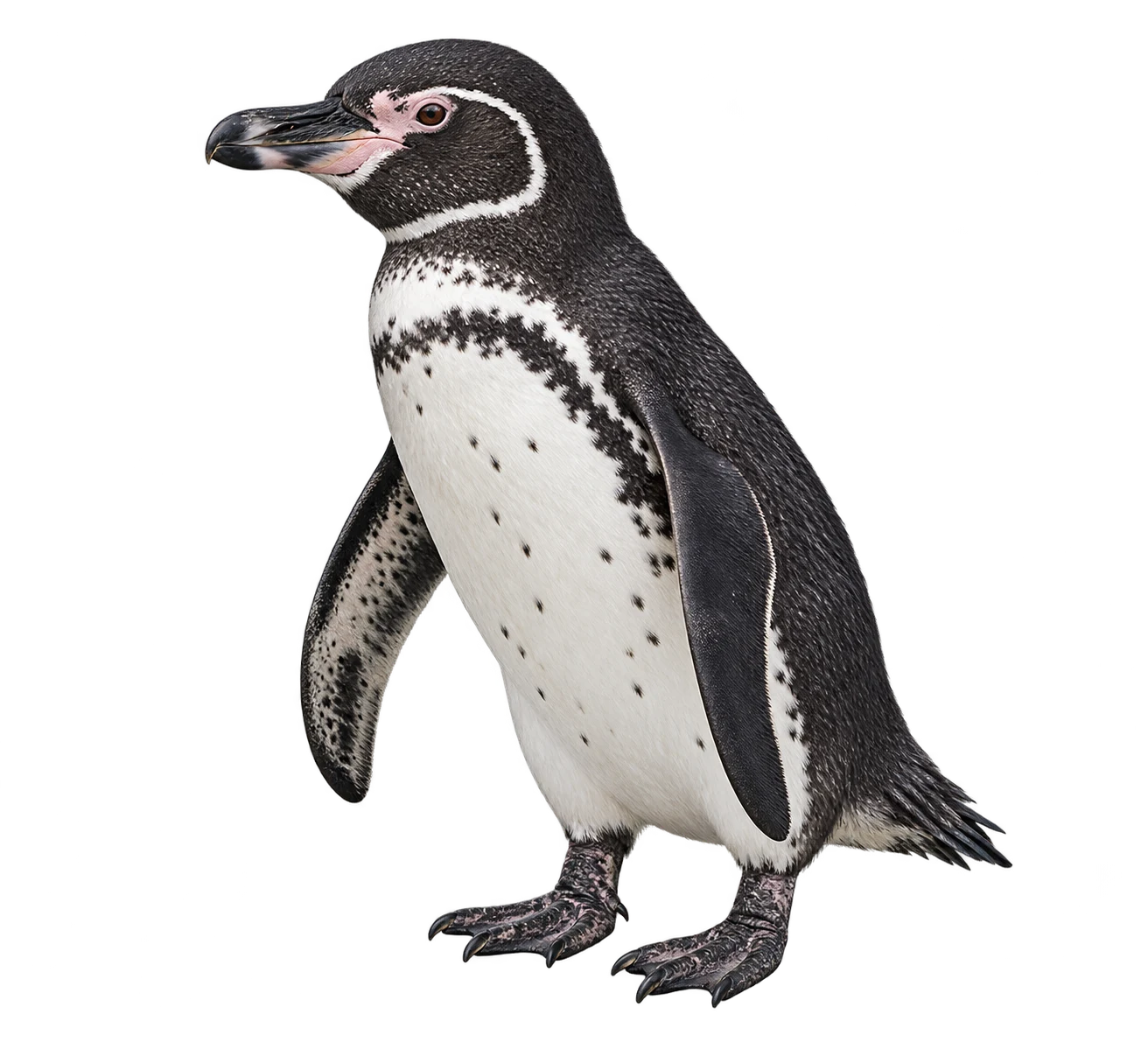
Birds
Galapagos Penguin
Spheniscus mendiculus
Classification and source reference
LivingAI illustration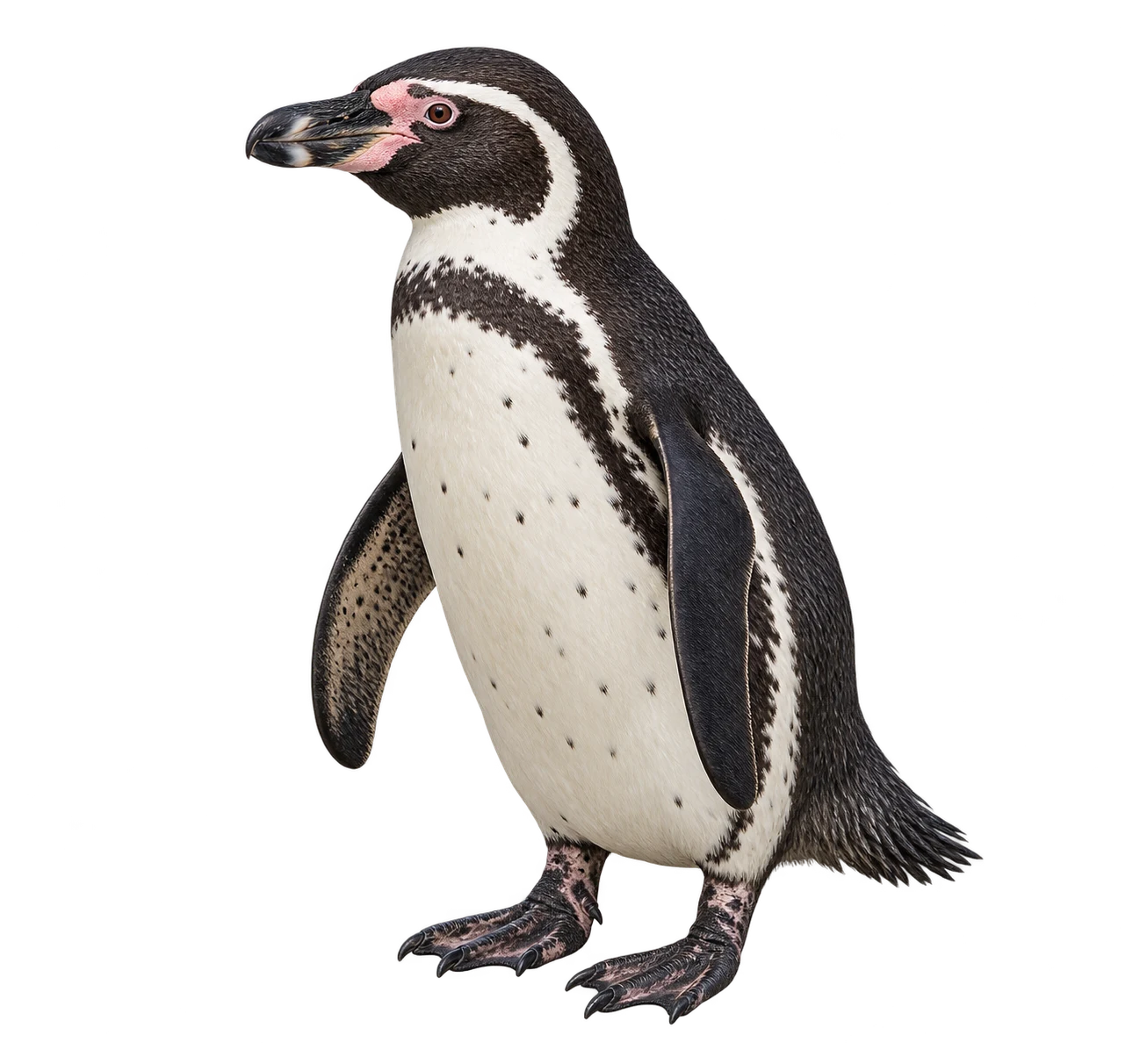
Birds
Humboldt Penguin
Spheniscus humboldti
Classification and source reference
LivingAI illustration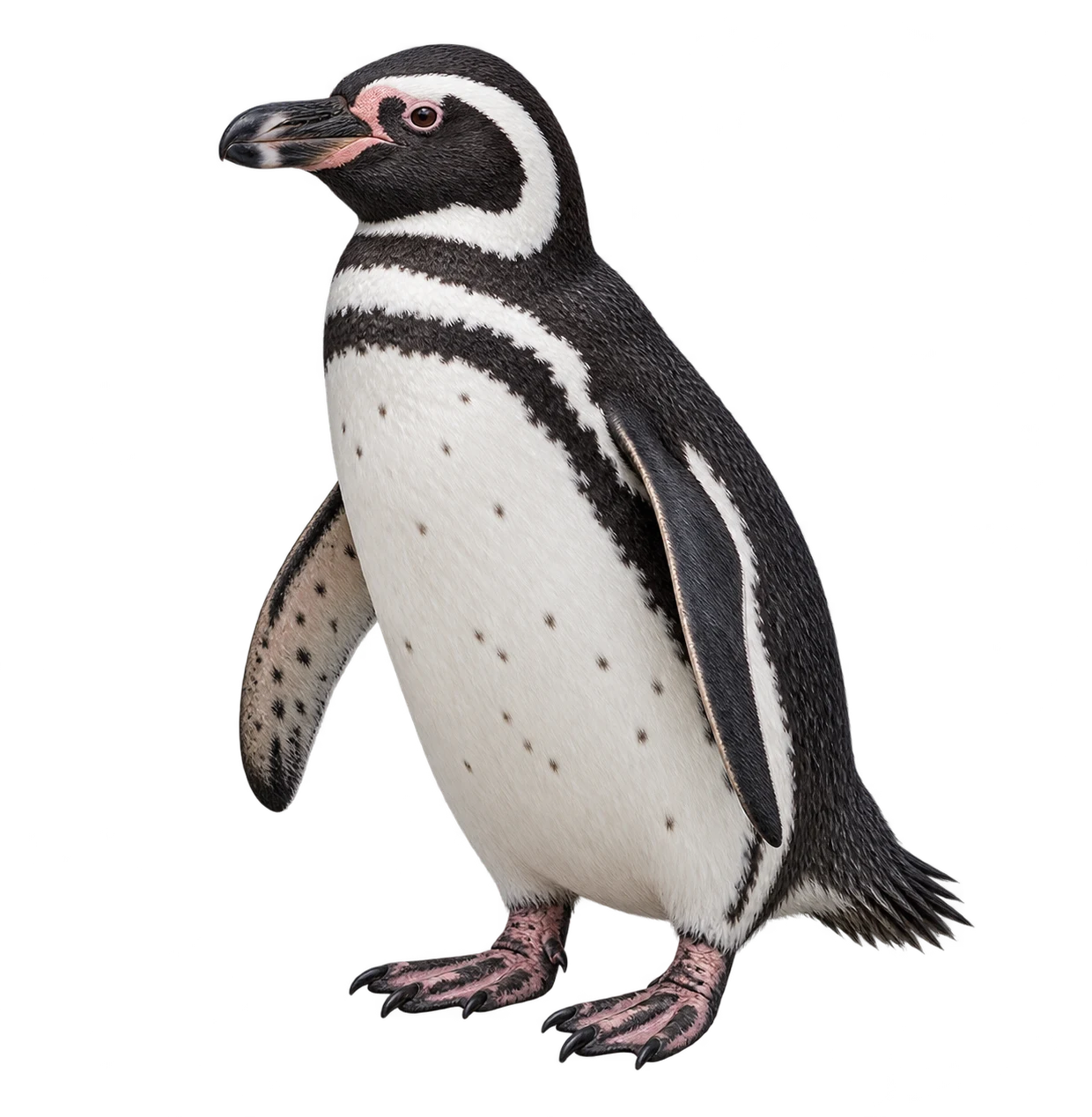
Birds
Magellanic Penguin
Spheniscus magellanicus
Classification and source reference
LivingAI illustration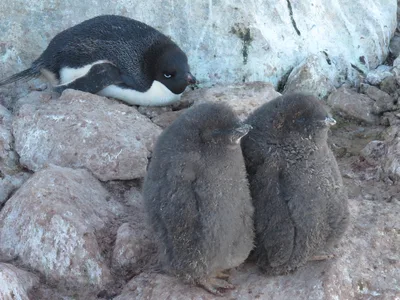 LC
Birds
Adélie penguin
Pygoscelis adeliae
The Adelie penguin is the most widespread penguin of the Antarctic coast.
Living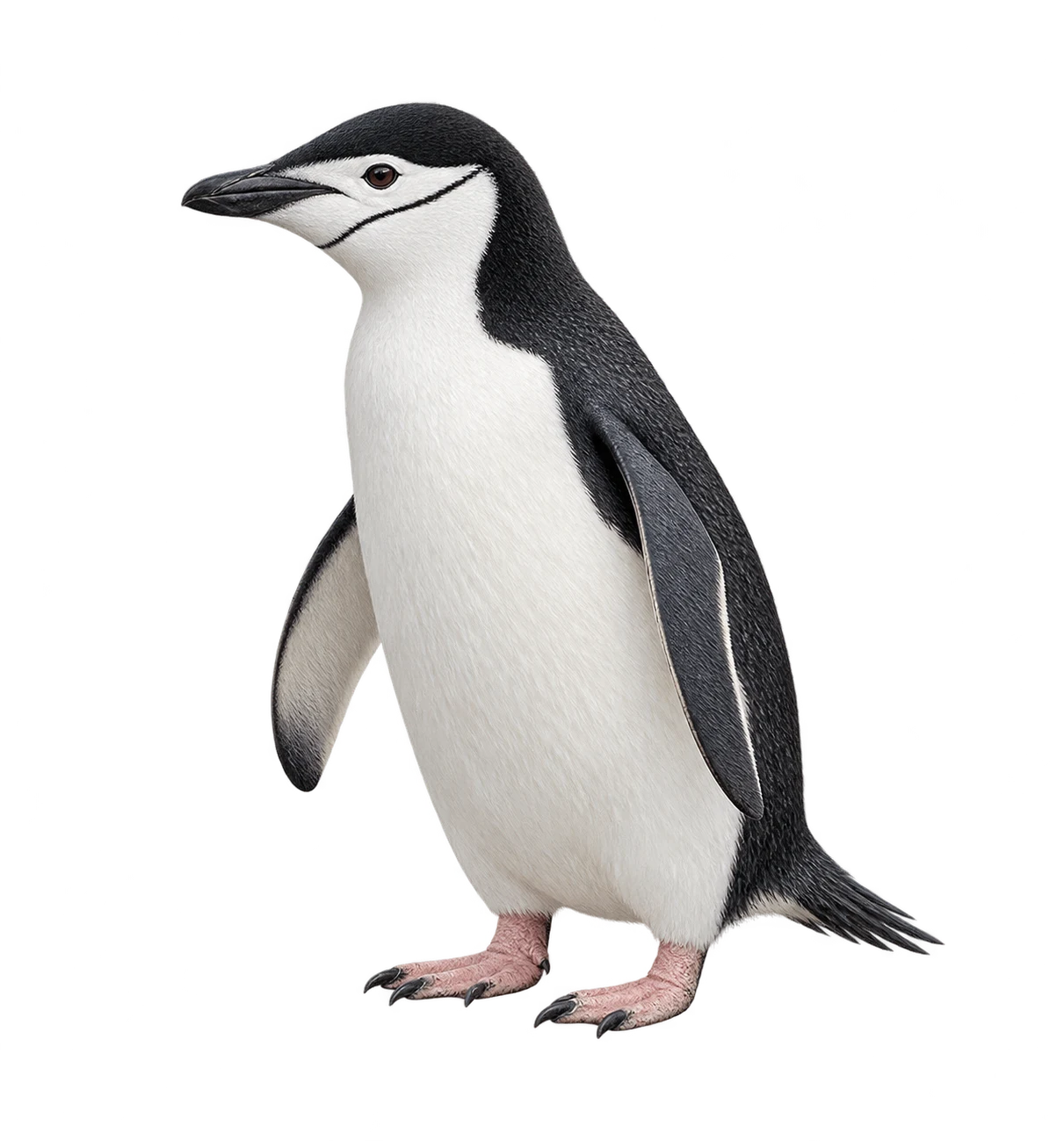
Birds
Chinstrap Penguin
Pygoscelis antarcticus
Classification and source reference
LivingAI illustration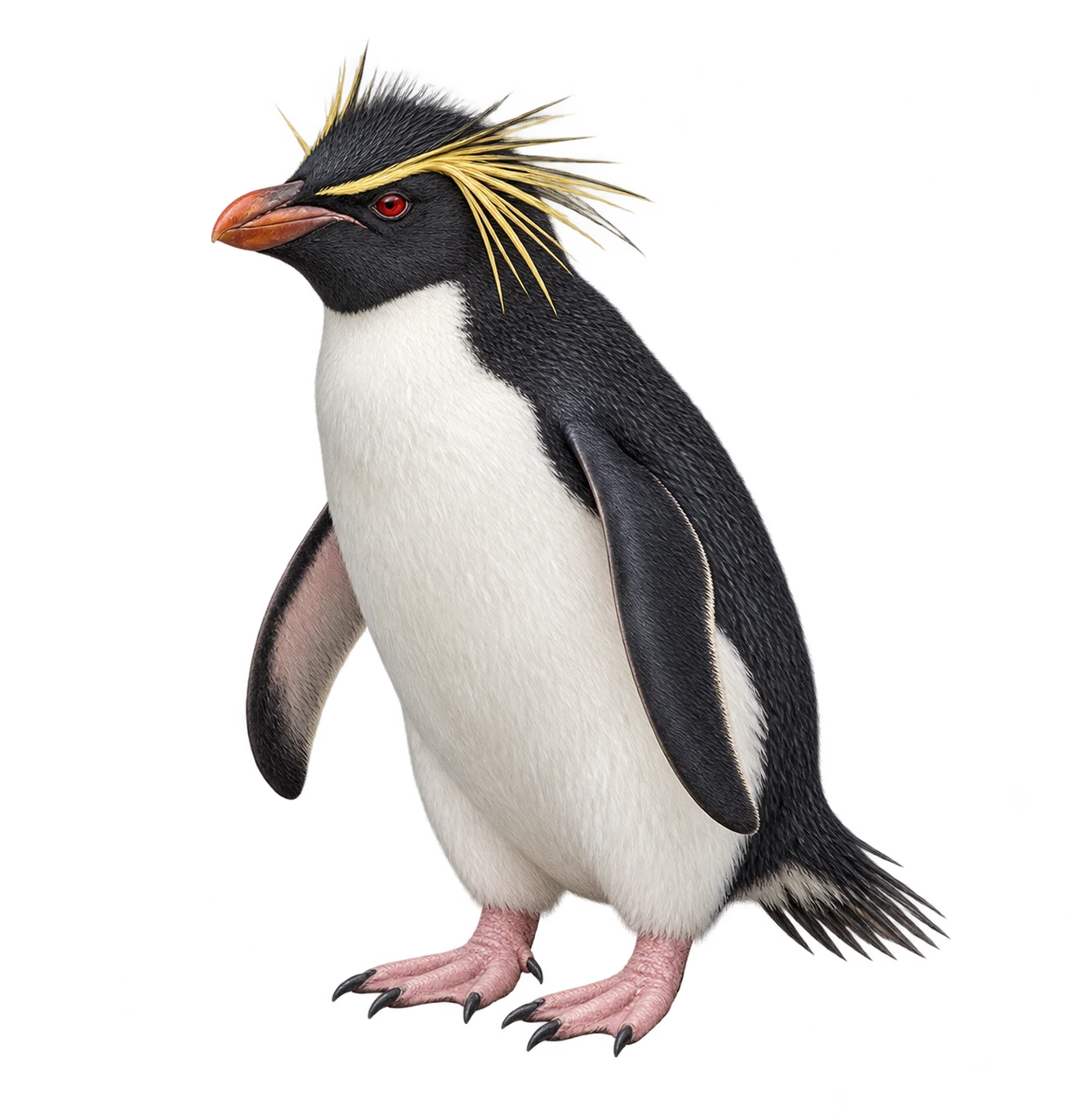
Birds
Crested Penguin
Eudyptes
Classification and source reference
LivingAI illustration