Atlantic puffin
The little auk-family bird that flies underwater
Fratercula arctica
Also called Common puffin, Sea parrot, Clown of the sea
Living individuals or members of this group exist today. This does not mean they are safe from extinction.
Meet the atlantic puffin
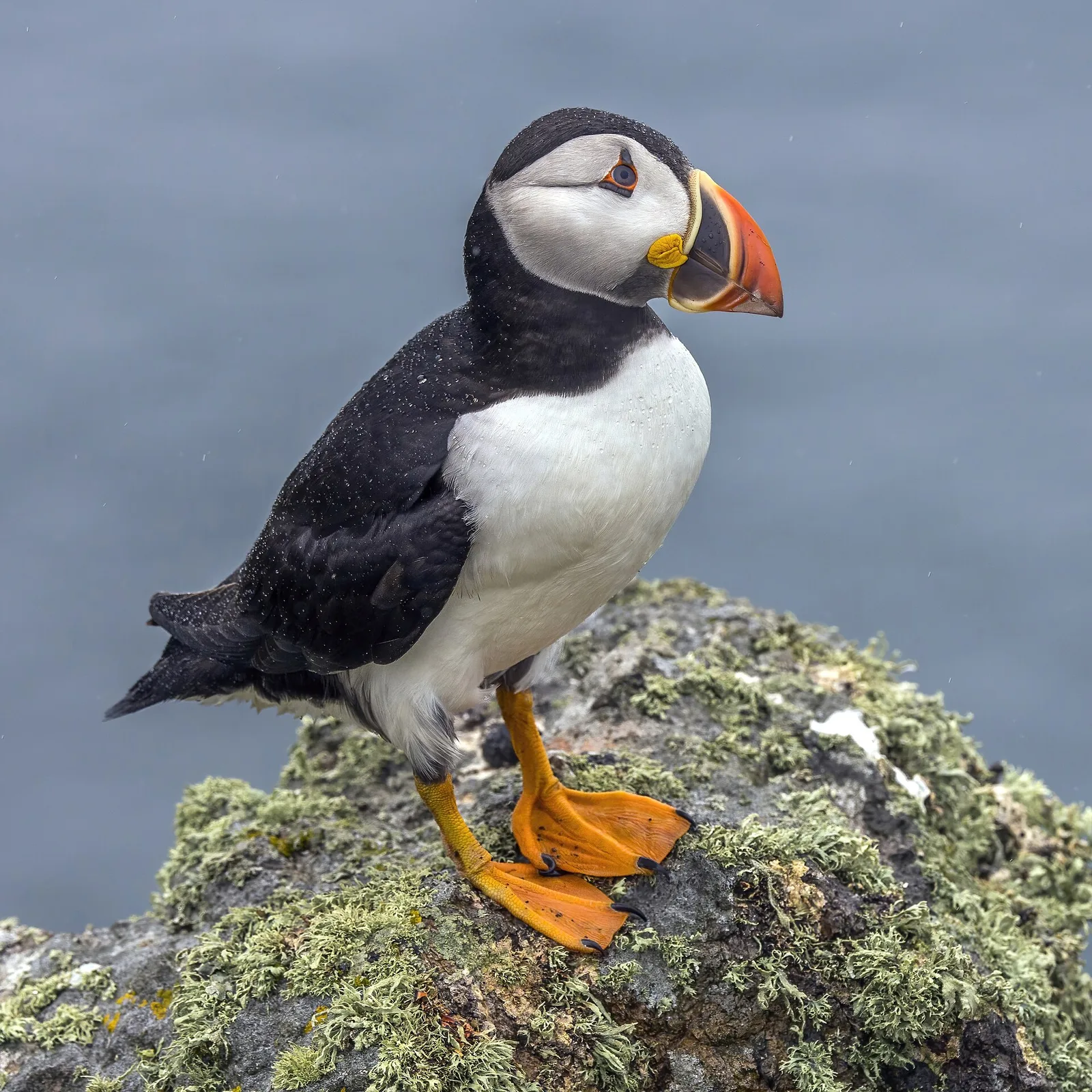
The Atlantic puffin is a small black and white seabird with a bright triangular bill. It spends the winter alone on the open ocean and comes ashore in spring to dig a burrow on a grassy clifftop.
Images of the atlantic puffin
Lifespan in the wild
15 to 23 years AnAge records a ringed bird of at least 45 years
Weight
400 to 650 g
Length
28 to 30 cm
Top speed
Up to 80 km/h
Fact file
Atlantic puffin
- Location
- The North Atlantic, with most birds in Iceland
- Habitat
- Coast, Open ocean
- Diet
- Piscivore
- Prey / food
- Sand eels, herring, capelin, sprats, crustaceans
- Predators
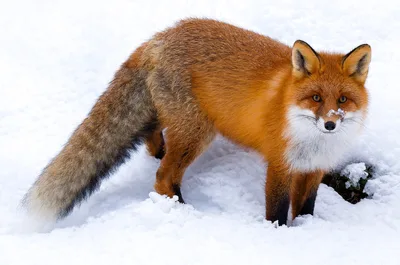
- Great black-backed gulls, great skuas, rats, foxes, cats, seals
- Lifestyle
- At sea all winter, ashore only to breed
- Group name
- Colony
- Name of young
- Puffling
- Incubation
- Incubation 39 to 45 days
- Clutch size
- One egg a year
- Population
- About 12 to 14 million adults worldwide
- Biggest threat
- Falling fish stocks and warming seas
- Distinctive feature
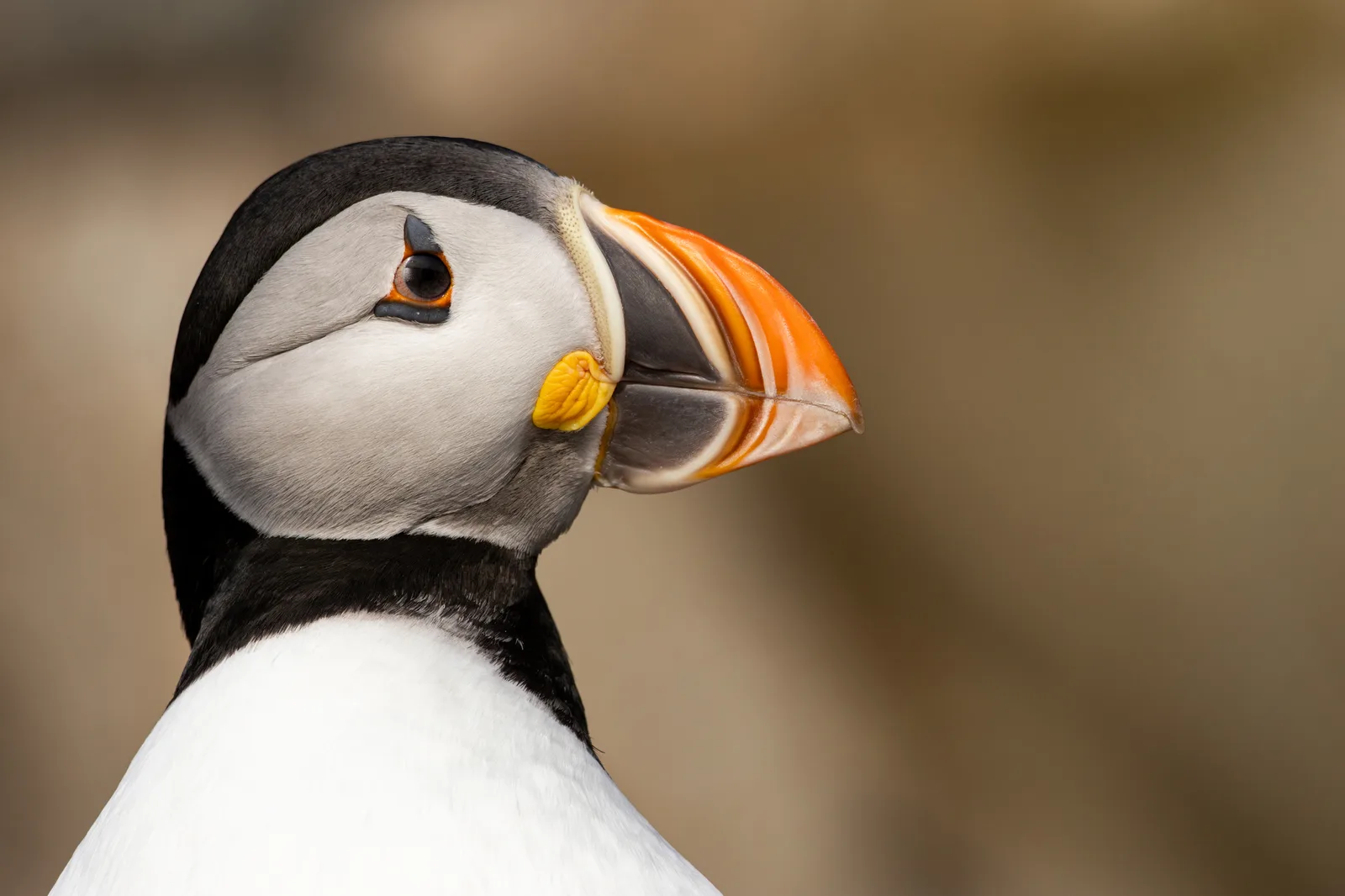
- A broad red, orange and grey bill in summer
- Colour
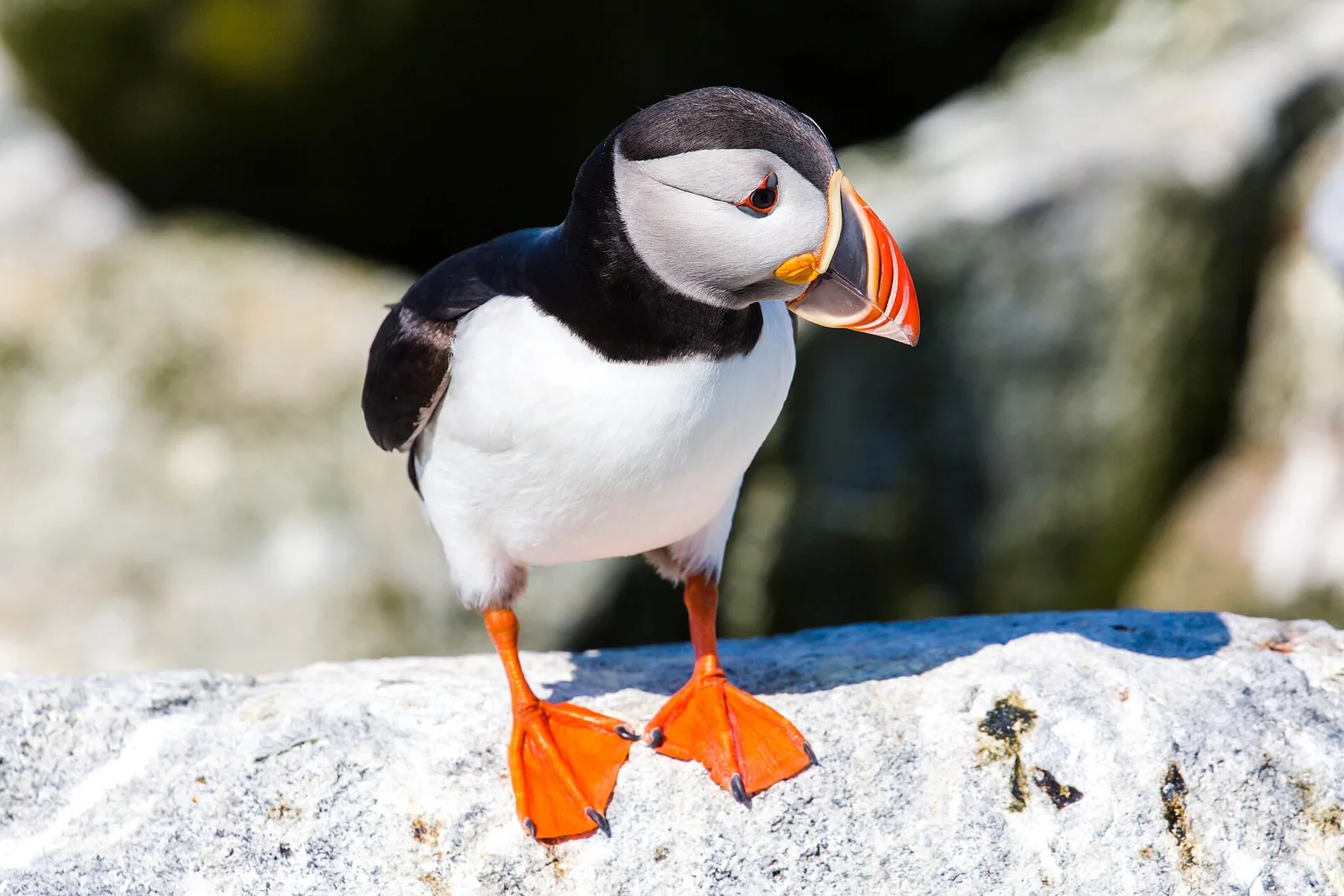
- Black above, white below, with orange legs
- Skin type
- Feathers
Size
Next to a person
Measurements
Size and speed
- Height
- About 20 cm standing height on land
- Length
- 28 to 30 cm
- Wingspan
- 47 to 63 cm
- Weight
- 400 to 650 g Faroese birds about 400 grams, north Icelandic birds about 650
- Top speed
- Up to 80 km/h
Typical adult ranges. Source: Wikipedia.
Life cycle
Lifespan
- In the wild15 to 23, up to 45 years AnAge records a ringed bird of at least 45 years
- In captivityUp to 36 years
- 045 years
The pale bar is the record. Source: Animal Diversity Web.
Appearance
Colour and coat
- Primary colours
- blackwhite
- Secondary colours
- orangeredgrey
- Skin type
- feathers
- Male and female
- Very slight. Males average a little larger, but the two sexes are coloured alike. Young birds have a narrower dark bill and a duller face.
Life cycle
Mating and family
- Mating system
- monogamous pairs that reuse one burrow
- Social structure
- dense clifftop colonies in summer, solitary at sea in winter
- Breeding
- one egg a year in late spring
Birds return to their natal colony at about five years old and pair at a burrow. One partner digs while the other clears soil from the entrance. The female lays a single white egg, and both parents incubate it for 39 to 45 days. The chick grows on whole fish for 38 to 44 days and sheds its down. It walks to the sea alone at night and stays offshore for two or three years.
Classification
Taxonomy
- Kingdom
- Animalia
- Phylum
- Chordata
- Class
- Aves
- Order
- Charadriiformes
- Family
- Alcidae
- Genus
- Fratercula
- Species
- Fratercula arctica
Conservation
Red List status
- LC
- NT
- VU
- EN
- CR
- EW
- EX
Vulnerable on the IUCN Red List
Range
Recorded in 11 countries
- Canada
- Spain
- Faroe Islands
- France
- United Kingdom
- Ireland
- Iceland
- Norway
- Portugal
- Russia
- United States of America
Habitat layer: mangrove.
Countries from 12,767 wild records on GBIF (iNaturalist research grade), filtered and checked by hand. Country shapes: Natural Earth. Habitat: RESOLVE Ecoregions 2017, CC BY 4.0. Basemap: Natural Earth.
Habitats
Three things to know
- 1
It swims underwater with its wings and can hold a row of small fish crosswise in its bill.
- 2
Iceland holds about 60% of the world's Atlantic puffins.
- 3
The bright bill plates are shed after breeding, so the winter bird looks quite plain.
Did you know
Seven more facts
- 1
A puffin flies at up to 80 kilometres an hour and beats its wings several times a second.
- 2
Its burrow runs about 70 to 110 cm into a grassy clifftop.
- 3
One tracked bird crossed 7,700 km of ocean in 8 months.
- 4
Chicks leave the burrow at night and do not return to land for two or three years.
- 5
Salt glands in the nostrils let the bird drink sea water.
- 6
Landing is clumsy, and a puffin often finishes with a belly flop.
- 7
Puffins sometimes take over a rabbit's burrow and drive the rabbit out.
Field notes
How it looks and acts
Field notes
Distinguishing features
- The summer bill is deep, triangular and banded in red, orange and grey.
- A pale grey lozenge covers each side of the face.
- Blue-grey skin above and below the eye makes the eye look triangular.
- The legs and webbed feet are bright orange in summer.
- The bird stands upright, about 20 cm high, with its legs set well back.
- The wings are short and narrow for the body, spanning 47 to 63 cm.
Field notes
Unique adaptations
- Short stiff wings work as paddles underwater and still carry the bird in the air.
- A grooved tongue and serrated bill edges hold several fish at once.
- Salt glands in the nostrils dump the salt the bird swallows with its prey.
- Dry down under the outer feathers keeps out the cold of the North Atlantic.
- A dark back and white belly hide the bird from hunters above and below.
Field notes
Interesting behaviours
- Pairs dig and repair a burrow together every spring.
- Mates rattle their bills together in a greeting called billing.
- Adults arrive with fish in groups, which makes theft by skuas harder.
- A whole colony may lift off and wheel round when one bird panics.
- Birds rest at sea facing into the wind, even when asleep.
Field notes
Temperament
- The puffin is cautious on land and will not land where no other bird stands.
- It is social in the colony and solitary for the rest of the year.
- A cornered bird bites and scratches hard in its own defence.
- Curiosity may be its undoing, as the old noose hunt showed.
Field notes
Communication
- A deep growl from inside the burrow is the main call.
- At sea the bird purrs quietly in flight and is otherwise silent.
- Billing renews the bond between a pair.
- An upright walk with a cocked tail warns a rival off.
- A quick dip of the body signals that the bird is about to take off.
Ecology
Ecological role
The puffin ties shoals of small fish to the cliffs where seabirds breed, and its digging reshapes the ground.
- It takes large numbers of sand eels, herring and capelin from surface waters.
- Its breeding success tracks fish stocks, so colonies act as a gauge of the sea.
- Burrow networks undermine the turf, dry the soil and change the plants that grow.
- It feeds gulls and skuas, and it carries pollutants up the food chain.
Stories
Myths and legends
- In Norse tradition the island of Lundy was named for the puffin that nested there.
- In Icelandic tradition on Heimaey, children carry stranded pufflings down to the sea.
- In Faroese tradition the fleyg net and a cliff-top stone seat were the tools of the hunt.
- In Newfoundland tradition the puffin serves as the official bird of the province.
- In British publishing tradition, Puffin Books borrowed the bird's name for children's books.
People
Relationship with humans
People
Living alongside us
North Atlantic communities hunted puffins for food and feathers for centuries. Faroese hunters used a long-handled net, and St Kilda hunters used a noose on a pole. Most countries now protect the bird, and the remaining hunts are limited by law. Tourism has replaced hunting as the main value of a colony. Conservation projects in Maine and Scotland have brought birds back to islands they had left.
- The puffin does not attack people and flies for the sea when disturbed.
- A handled bird has a powerful bite and sharp claws.
- Walking on a nesting slope can collapse the burrows underneath.
People
Status, uses and products
- Domestication
- Wild
- As a pet
- Not suitable. A puffin eats live sea fish, spends most of the year on the open ocean and digs a burrow to breed. No home can supply any of that. The species is protected across almost all of its range.
- Uses
- wildlife tourismtraditional huntingenvironmental monitoring
- Products
- meatfeathers
The full account
About the atlantic puffin
The Atlantic puffin is a small seabird of the cold North Atlantic. It is black above and white below, with orange legs and a deep triangular bill. An adult measures 28 to 30 centimetres long and stands about 20 cm high on land. The wings span 47 to 63 cm and beat several times a second in flight. The bird swims after fish underwater, using its wings as paddles.
Puffins pass autumn and winter alone far out at sea. They come back to land in late spring and dig burrows on grassy clifftops. Each pair raises a single chick, which leaves for the sea at night. Iceland holds about 60% of the world total, and Europe holds over 90%. The IUCN moved the species to Vulnerable in 2015 after a sharp European decline.
Name and taxonomy
The scientific name of the Atlantic puffin is Fratercula arctica. Fratercula is medieval Latin for little friar, a nod to the black and white plumage. The second word points north, from the Greek word for bear and the Great Bear constellation. The English word puffin first belonged to the cured meat of young Manx shearwaters. Pennant applied it to this bird in 1768, probably because both species nest in burrows. The species is also called the common puffin.
Three subspecies are usually recognised, and they differ only in size. Body, wing and bill all grow larger towards the north. A bird from northern Iceland weighs about 650 grams, and one from the Faroes about 400 g. Ernst Mayr argued that the change is gradual and that no subspecies should be named.
Evolution and relatives
The puffin belongs to Alcidae, the auk family, in the order Charadriiformes. Guillemots, murrelets, auklets and the razorbill are its cousins. Two more puffins live in the northeast Pacific, the tufted and the horned. The horned puffin is the closest relative of the Atlantic bird. The puffins and the rhinoceros auklet form one group inside the family.
Auks use the same wing for flying and for swimming, so the wing is a compromise. Its surface is small for the bird's weight, which forces a very fast wingbeat. Like other auks, the puffin stands upright on land with its legs set far back. That build probably works well in water and poorly on a flat surface.
Appearance
The crown, nape, back, wings and tail are glossy black, and a black collar rings the throat. The breast and belly are white, and a pale grey lozenge covers each side of the face. The bird is 28 to 30 cm long and weighs 400 to 650 g depending on where it lives. Its wingspan is 47 to 63 cm, and it stands about 20 cm tall. Blue-grey horny skin above and below the eye makes the eye look triangular. A red ring circles each brown or dark blue iris.
The summer bill is the famous part, broad and bright in red, orange and grey. It deepens and curves with age, and old birds may show grooves on the red section. After breeding the bird sheds the coloured plates and the eye ornaments. The winter face is darker and the bill is narrower and duller. People rarely see that plumage, because the birds are then far out at sea. A juvenile has a dark face, a narrow grey bill and dark legs.
Habitat and range
The puffin breeds around the North Atlantic, from Arctic coasts to France and Maine. Colonies sit in Iceland, Norway, the Faroes, Britain, Ireland, Greenland and Newfoundland. Iceland alone holds about 60% of the world population. Witless Bay in Newfoundland holds the largest western colony, at more than 260,000 pairs. Islands are favoured over the mainland, most likely because they carry no ground predators.
Outside the breeding season the bird lives on the open sea. It may reach the Arctic Circle in summer and the Mediterranean in winter. One tracked bird from Maine covered 7,700 kilometres of ocean in 8 months. The wintering range is so wide that each bird has more than 1 square kilometre to itself. Nesting ground is a grassy slope just above a cliff edge, where take-off is easiest. A burrow runs about 70 to 110 cm into the soil.
Diet and feeding
The diet is almost all fish, with some shrimp, molluscs and marine worms. Sand eels, herring, capelin and sprats are the usual catch. The bird can swallow a shallow-bodied fish up to 18 cm long, but takes prey nearer 7 cm. An adult needs roughly 40 small fish a day. It hunts by sight and can stay under for up to a minute.
Underwater the puffin half-opens its wings and rows, steering with its feet. It swallows small prey below the surface and brings larger fish up. The two halves of the bill can be held parallel, so a row of fish lies crosswise in it. A grooved tongue and inward-facing serrations stop the catch slipping out. Salt glands in the nostrils remove the sea water the bird swallows. Feeding trips can run 100 km offshore, and about half that when there is a chick to feed.
Behaviour and social life
At sea the puffin lives alone and rides the waves facing into the wind. It preens for long periods and spreads oil from its preen gland over the feathers. The dry down beneath keeps the bird warm in cold water. A dark back and pale belly hide it from hunters above and below. The bird moults at sea between January and March and loses all its flight feathers at once. It cannot fly for a month or two while the new feathers grow.
On land the same bird is highly social and nests in packed colonies. Arriving birds circle the slope several times and avoid landing where no puffin stands. A dominant bird walks slowly with its chest fluffed, its tail cocked and its bill gaping. A submissive bird lowers its head, holds level and hurries past. If one bird is startled, the whole colony may lift and wheel around together. Colonies are busiest in the evening, then empty as the birds fly out to roost at sea.
Communication and senses
The puffin is nearly silent at sea, except for a soft purring in flight. Above ground in the colony it is quiet as well. Inside the burrow it gives a deep growl, which people compare to a small engine. The call is used mostly in the breeding season.
Posture appears to do most of the talking in a colony. Billing, in which a pair wags their heads and rattles their bills together, renews the bond. Pairs keep billing at a lower rate through the whole season. A bird signals a take-off by dipping its body before it runs downhill. Both sexes see colour, so the bright bill is probably a signal about quality. Puffins also dip their heads under water to look around for predators.
Reproduction and life cycle
Birds first breed at about five years old, and the range runs from 3 to 6. They return to the colony where they hatched and often to the very same burrow. Pairs stay together year after year, though loyalty to the site may drive that more than loyalty to the mate. One bird digs while the other stands outside and takes a shower of soil. Some pairs line the chamber with dry grass, and others leave it bare.
The female lays a single white egg, in April in the south and rarely before June in Greenland. The egg averages 61 millimetres long and 42 mm wide and weighs about 62 g. Both parents incubate it with two bare brood patches for 39 to 45 days. The chick hatches at about 42 g, with open eyes and the ability to stand. It gains around 10 g a day on whole fish dropped beside it in the burrow.
Fledging takes 34 to 50 days, and 38 to 44 days is the usual span. By then the chick weighs about 75% of an adult and has shed its black down. It leaves at night, walks and flaps its way down to the water and paddles offshore. By dawn it may be 3 km out, and it will not touch land again for two or three years. Wild birds usually live 15 to 23 years, and a ringed bird reached at least 45.
Predators and threats
Great black-backed gulls and great skuas take adults in the air or on the ground. Smaller gulls cannot kill a healthy adult, so they steal eggs, small chicks and fish instead. Arctic skuas chase returning birds until they drop the load meant for a chick. Seals and large fish catch puffins at sea. A caught bird fights back hard with its bill and claws.
Rats, cats, dogs, foxes, stoats and weasels wipe out colonies on islands where they land. On Lundy the population fell from 3,500 pairs in 1939 to 10 pairs in 2000 because of rats. Oil spills soak the plumage, and a soaked bird loses insulation and swallows toxins as it preens. Plastic in the sea kills birds too, and mercury and arsenic build up through the fish they eat. Ticks, fleas and feather mites live in the burrows.
Population and conservation
The IUCN listed the puffin as Vulnerable in 2015 after a review of the European trend. Europe holds 4,770,000 to 5,780,000 pairs, which is over 90% of the world total. A 2018 estimate put the global figure at 12 to 14 million adults. Numbers have fallen sharply since 2000 in Iceland, Norway, the Faroes and Greenland. One projection has the European population dropping by 50 to 79% between 2000 and 2065.
Food supply seems to drive most of the change. Sand eels make up at least 90% of chick food in Shetland, and chicks starve in poor sand eel years. Warmer water has moved herring away from Maine, and adults there have starved. Some colonies are growing, and Skomer in Wales now holds more than 43,000 birds. Removing rats from an island is probably the clearest way to help. The Scottish project SOS Puffin cuts back tree mallow on Craigleith so birds can burrow again.
Relationship with humans
People ate puffins for centuries, fresh, salted or smoked, and used the feathers in bedding. In the Faroes hunters used the fleyg, a pole 3.6 metres long carrying a small net. A skilled hunter could scoop 200 to 300 birds from the air in a day. On St Kilda a noose on a flexible pole was slipped over a curious bird. Most countries now protect the species, and Iceland and the Faroes limit the hunt by law.
Watching puffins probably earns more now than eating them ever did. Boat tours run in Maine, Iceland, the Hebrides and Newfoundland every summer. Project Puffin, begun in 1973, moved 954 chicks to Eastern Egg Rock in Maine. Decoys, mirrors and recorded calls convinced the first returning adults to stay. By 2014 the island held 148 nesting pairs, on ground the birds had left in 1885.
In culture and myth
The puffin is the official bird of Newfoundland and Labrador in Canada. Vaeroy in Norway carries a puffin on its coat of arms. Nicknames include clown of the sea and sea parrot, and a chick is a puffling. The island of Lundy takes its name from the Old Norse word lundi, meaning puffin. Its owner issued Half Puffin and One Puffin coins in 1929 and was fined for it.
On the Icelandic island of Heimaey children gather lost pufflings and carry them to the sea. The fledglings get confused by street lights on their first walk down to the water. A photographic children's book recorded that tradition in 1995.
Puffin Books took the bird's name for its children's list in 1939. Many countries have put the bird on postage stamps. The porgs of the Star Wars films grew out of puffins the crew could not remove from shot. The bird is protected on Skellig Michael, so the film makers covered it digitally instead.
A sentence with a dotted underline is inferred: it describes the group the animal belongs to, or is a reading of the sources, rather than a measured or reported fact about this species.
Questions
Atlantic puffin questions, answered
What is an Atlantic puffin?
It is a small seabird of the auk family, black above and white below, with a bright triangular bill. Adults are 28 to 30 cm long.
Where do Atlantic puffins live?
Around the North Atlantic, from Arctic coasts south to France and Maine. Iceland alone holds about 60% of the world's birds.
How many fish can a puffin hold in its beak?
Several at once, lined up crosswise. A grooved tongue and serrations in the bill hold the first catch while the bird takes more.
Can puffins fly?
Yes, at up to 80 kilometres an hour, with very fast wingbeats. They also lose every flight feather at once in winter and cannot fly for a month or two.
How deep do puffins dive?
They swim underwater with their wings and can stay down for up to a minute. Most feeding happens near the surface.
What do puffins eat?
Mainly small fish such as sand eels, herring, capelin and sprats. Shrimp, molluscs and marine worms make up a small part of the diet.
Where do puffins nest?
In a burrow dug into a grassy clifftop, usually on an island without ground predators. The tunnel runs about 70 to 110 cm in.
How many eggs does a puffin lay?
One a year. Both parents incubate it for 39 to 45 days.
What is a baby puffin called?
A puffling. It leaves the burrow alone at night and paddles out to sea.
How long do puffins live?
Usually 15 to 23 years in the wild. One ringed bird was at least 45 years old.
Are Atlantic puffins endangered?
They are listed as Vulnerable. The IUCN raised the listing in 2015 after a rapid European decline.
Why are puffin numbers falling?
Mostly because their prey fish are moving or failing. Introduced rats, oil, plastic and warming seas all add to the pressure.
Why is the puffin's beak so bright?
The colour is a breeding signal, and both sexes can see it. The bright plates drop off after the season and grow back in spring.
Do puffins mate for life?
Pairs usually stay together for many years. That may owe more to loyalty to the burrow than to the partner.
Where can I see puffins?
Boat tours run in Iceland, the Hebrides, Newfoundland and Maine in summer. Skomer in Wales holds more than 43,000 birds.
Why are puffins called clowns of the sea?
Because of the bright bill, the white face and the rolling walk. Sea parrot is another old nickname.
Food web
Prey and food
- sand eels
- herring
- capelin
- sprats
- crustaceans
Food web
Predators
- great black-backed gulls
- great skuas
- rats
 Red fox
- cats
- seals
Ecological equivalents
Related species on this site
Puffin (same genus), Great auk (same family), Razorbill (same family), African Jacana (same order), Bronze-winged Jacana (same order), Comb-crested Jacana (same order), and more.
Birds
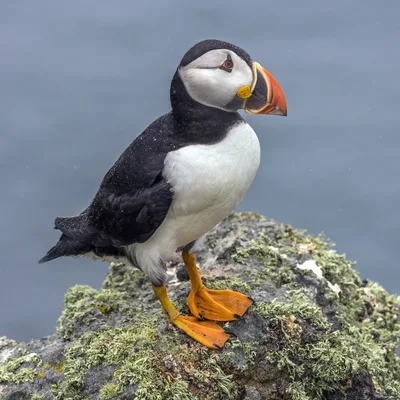
Puffin
Fratercula
Puffins are diving seabirds.
Living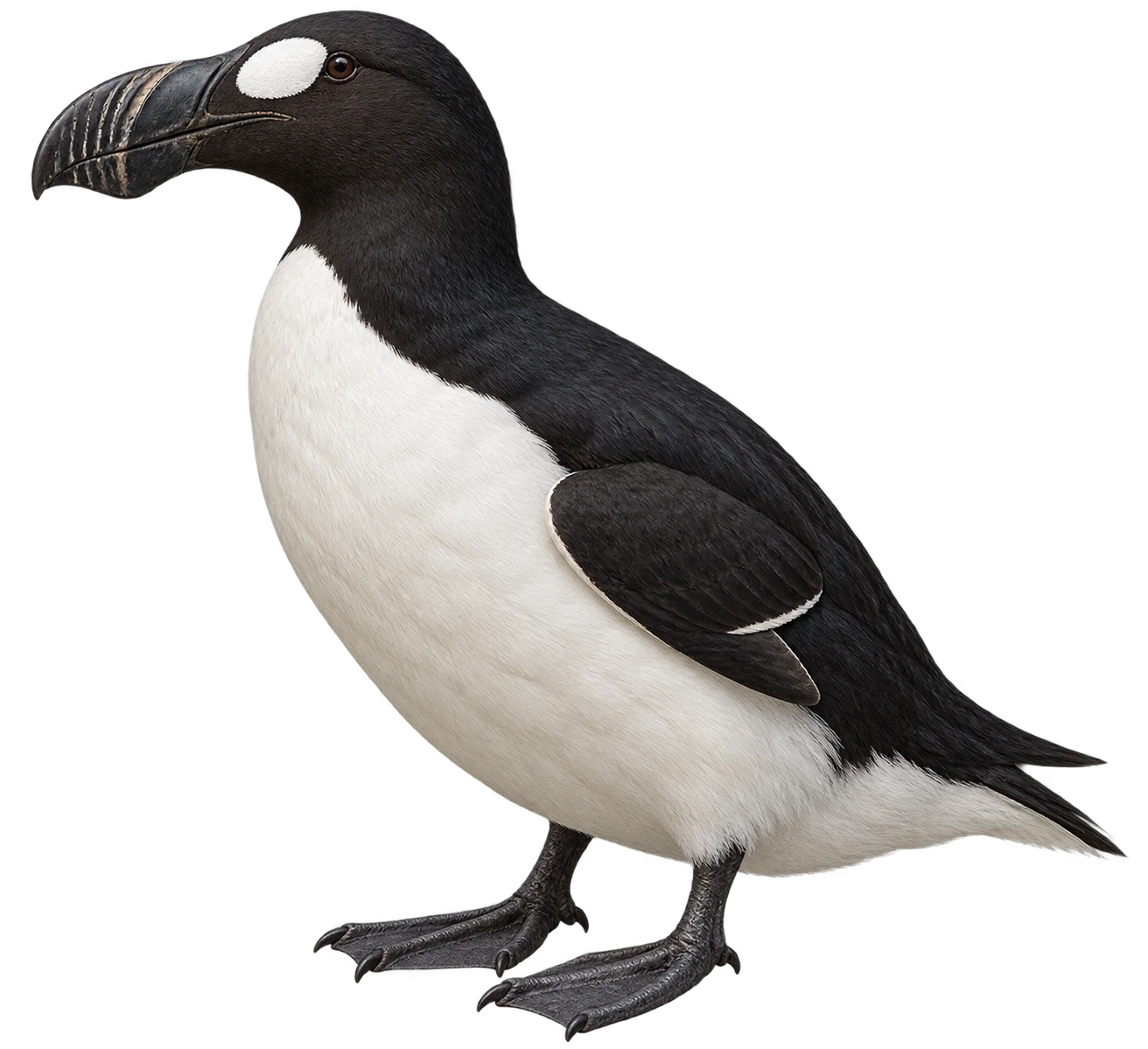 EX
Birds
Great auk
Pinguinus impennis
The great auk was a large flightless seabird of the North Atlantic that swam with its wings and caught fish under water.
ExtinctAI reconstruction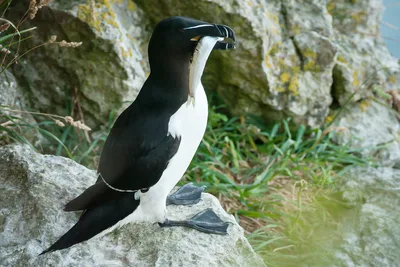 LC
Birds
Razorbill
Alca torda
The razorbill is a black and white North Atlantic auk with a deep, blade-like bill.
Living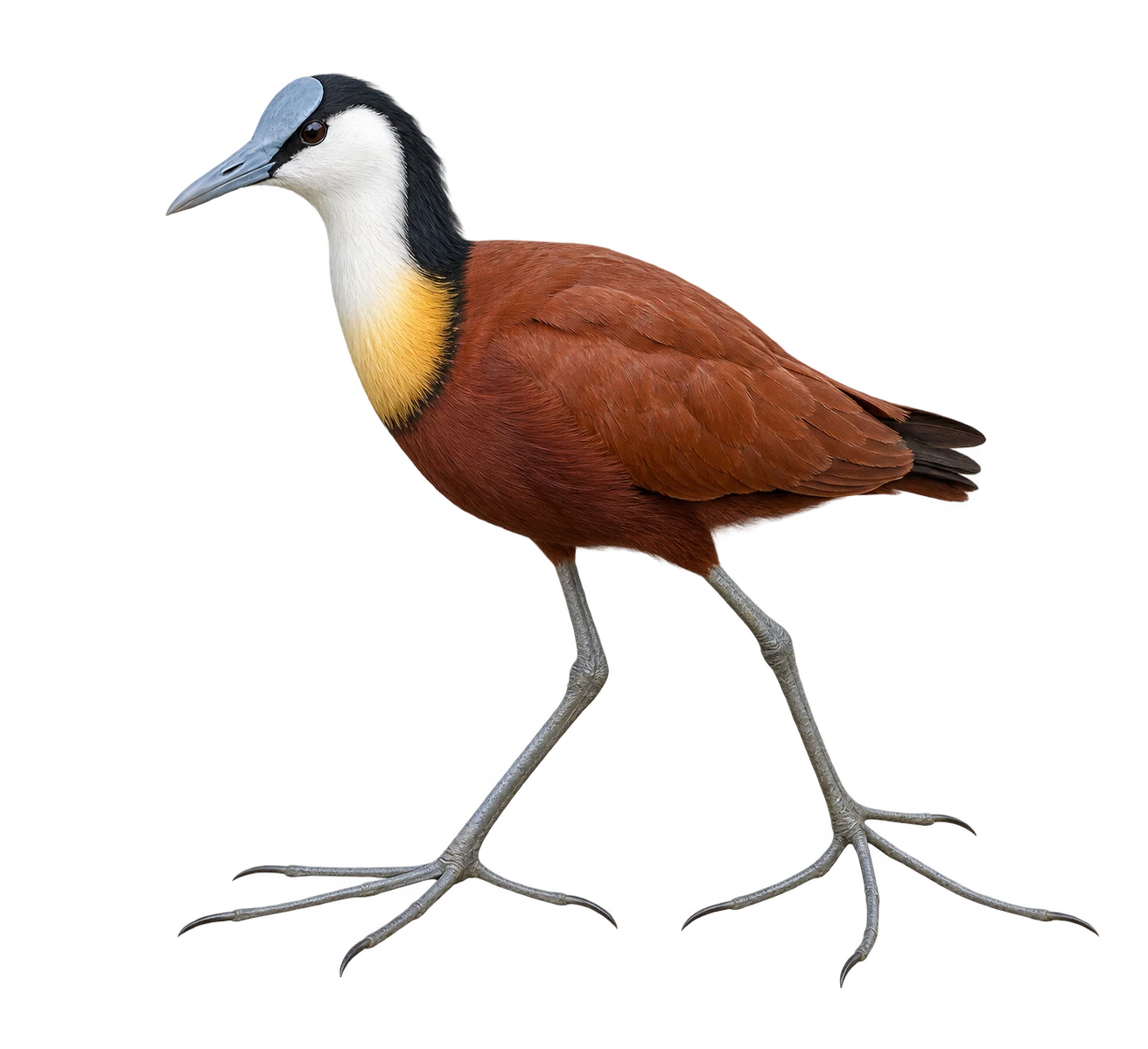
Birds
African Jacana
Actophilornis africanus
Classification and source reference
LivingAI illustration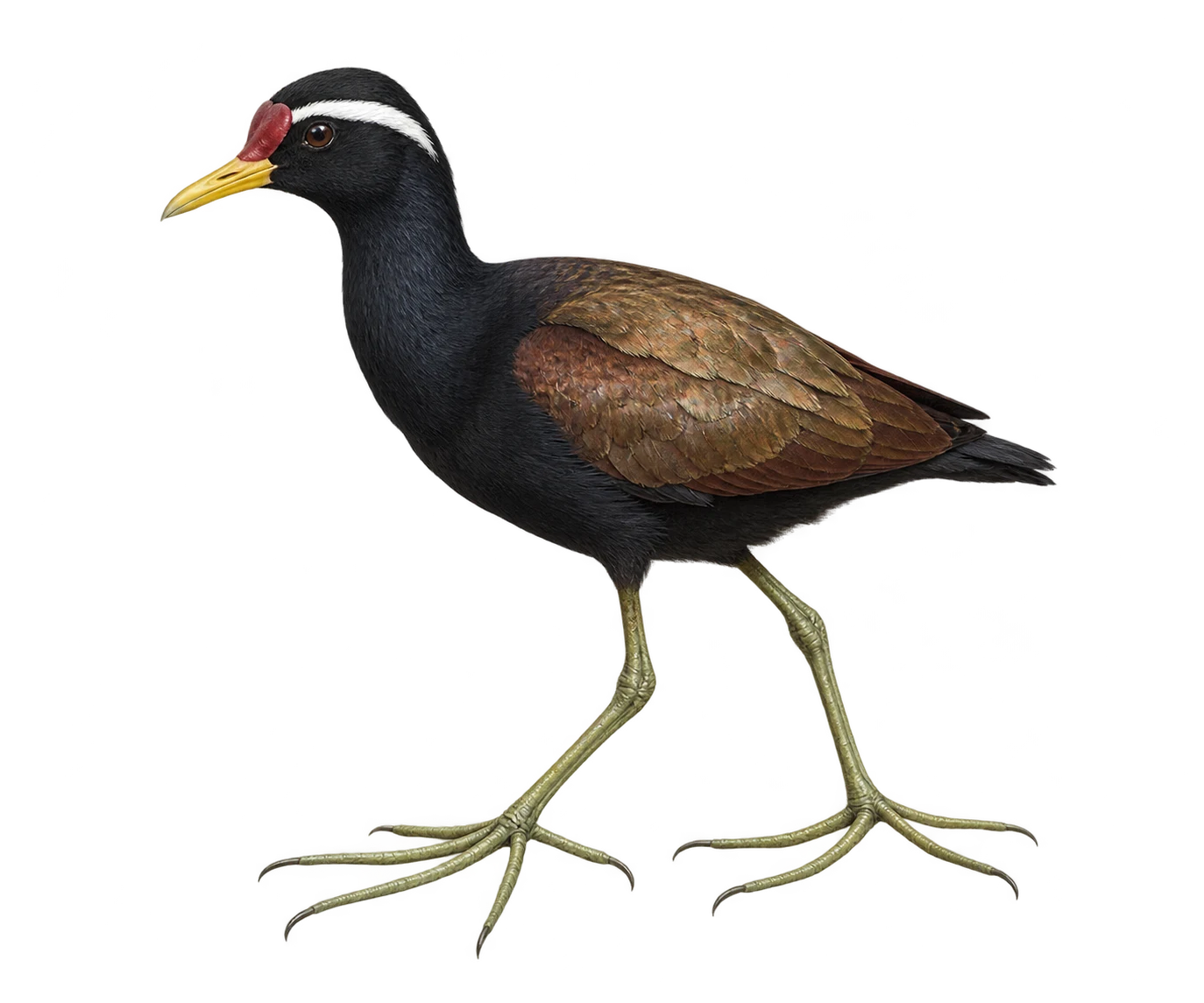
Birds
Bronze-winged Jacana
Metopidius indicus
Classification and source reference
LivingAI illustration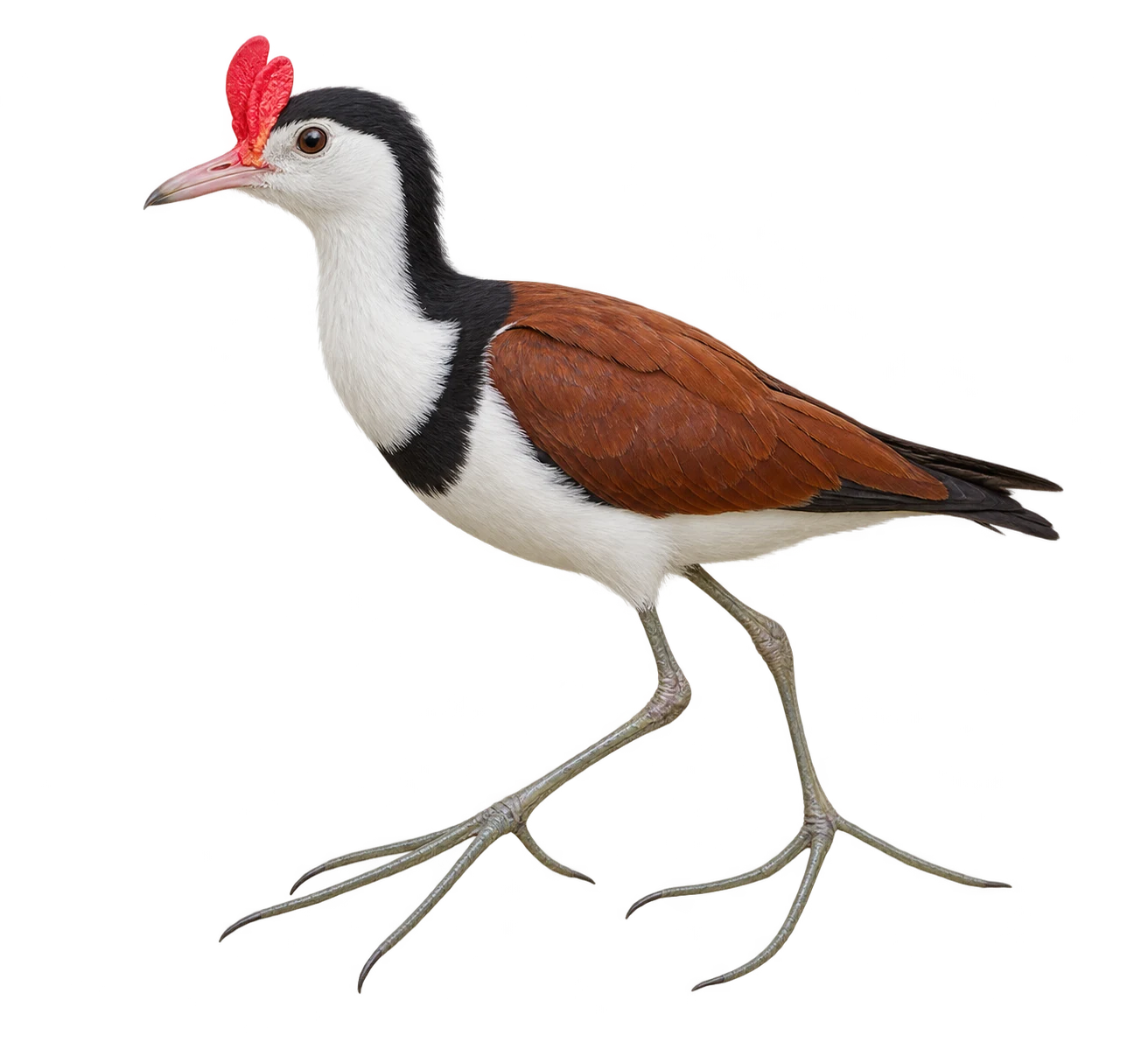
Birds
Comb-crested Jacana
Irediparra gallinacea
Classification and source reference
LivingAI illustration