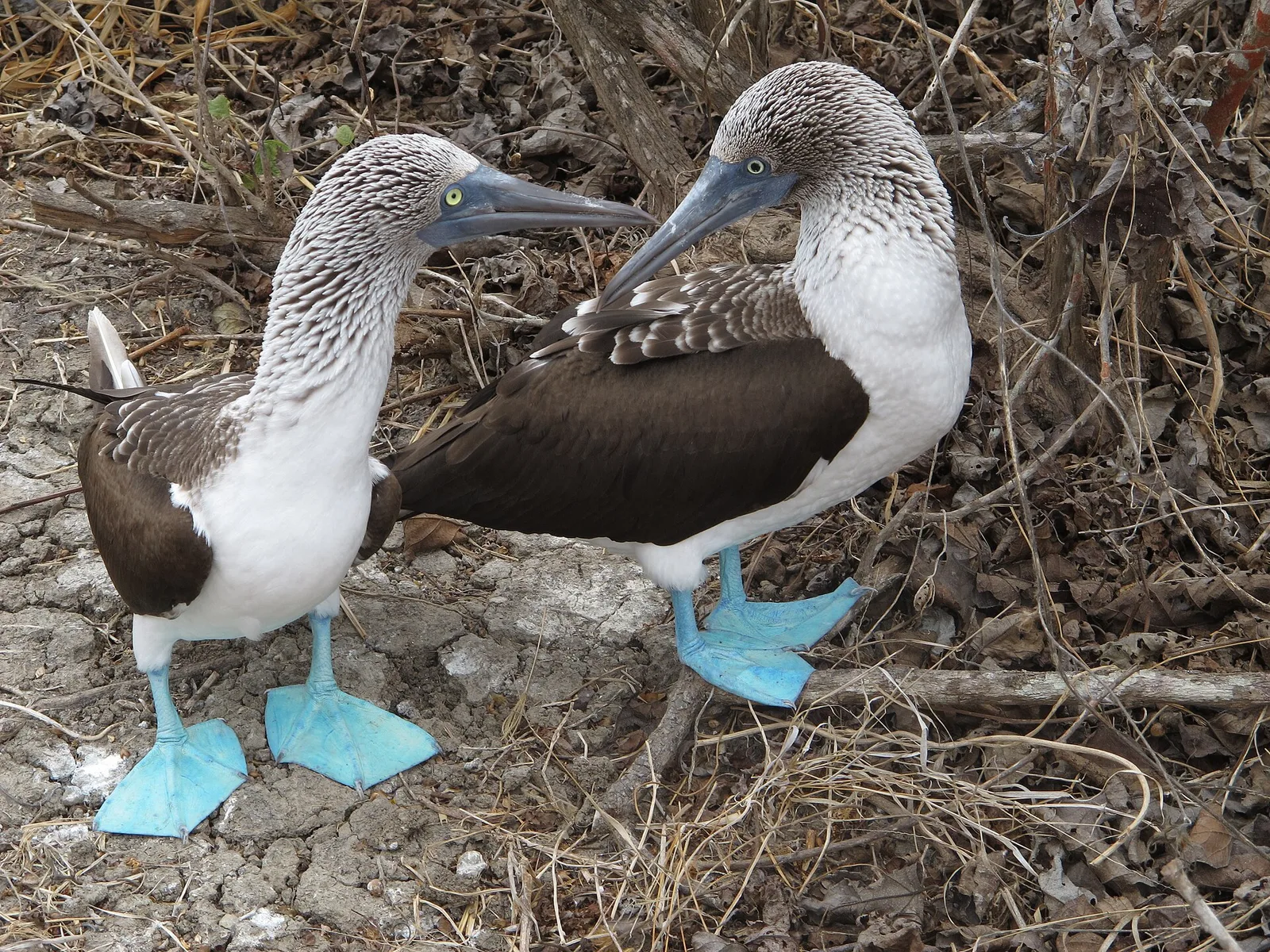
Blue-footed booby
The seabird that courts with its bright blue feet
Sula nebouxii
Also called Blue-foot
Living individuals or members of this group exist today. This does not mean they are safe from extinction.
Meet the blue-footed booby
The blue-footed booby is a seabird of the eastern Pacific that dives on schools of small fish. Its turquoise feet are a diet-built signal of health, and the male shows them off in a high-stepping dance.
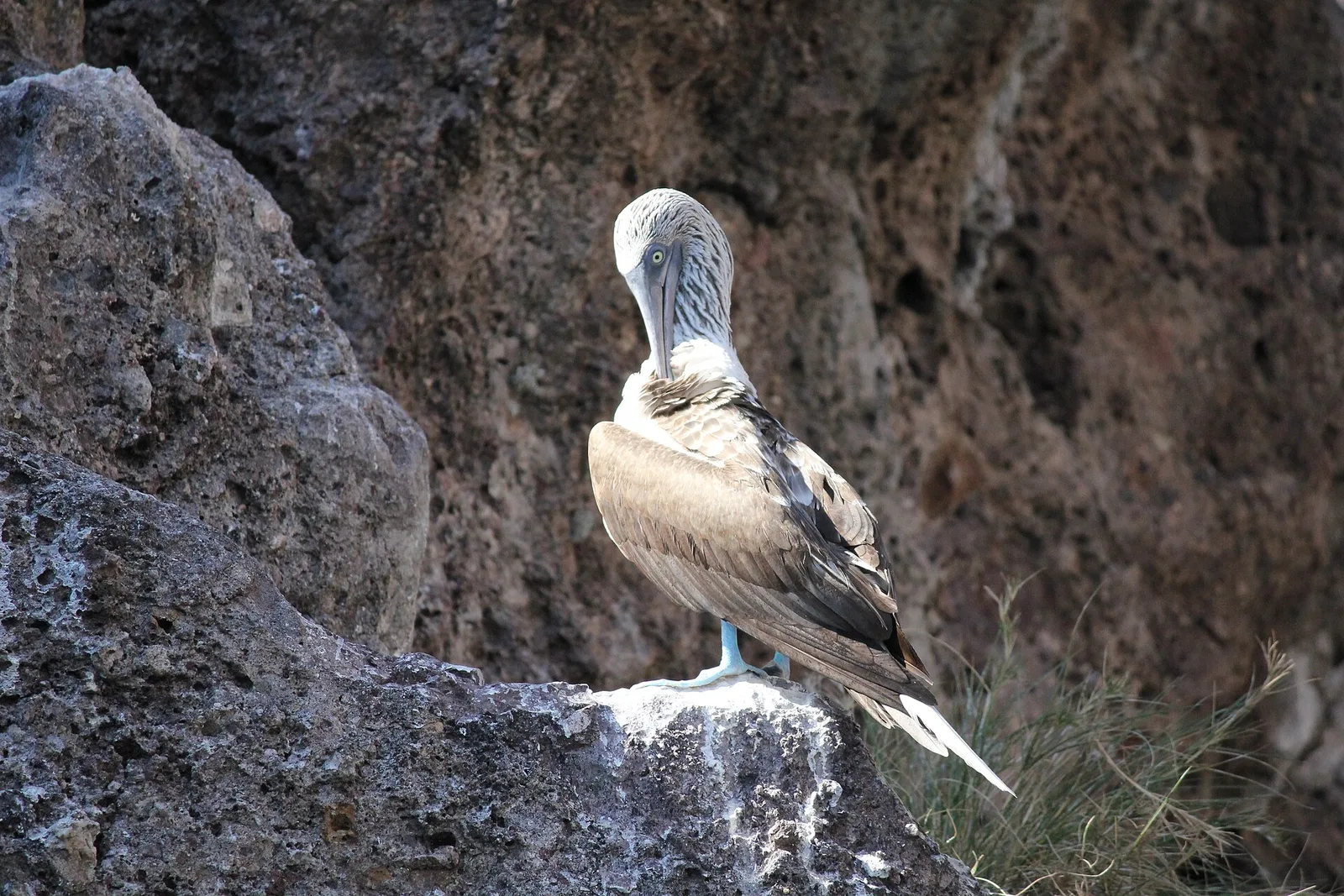
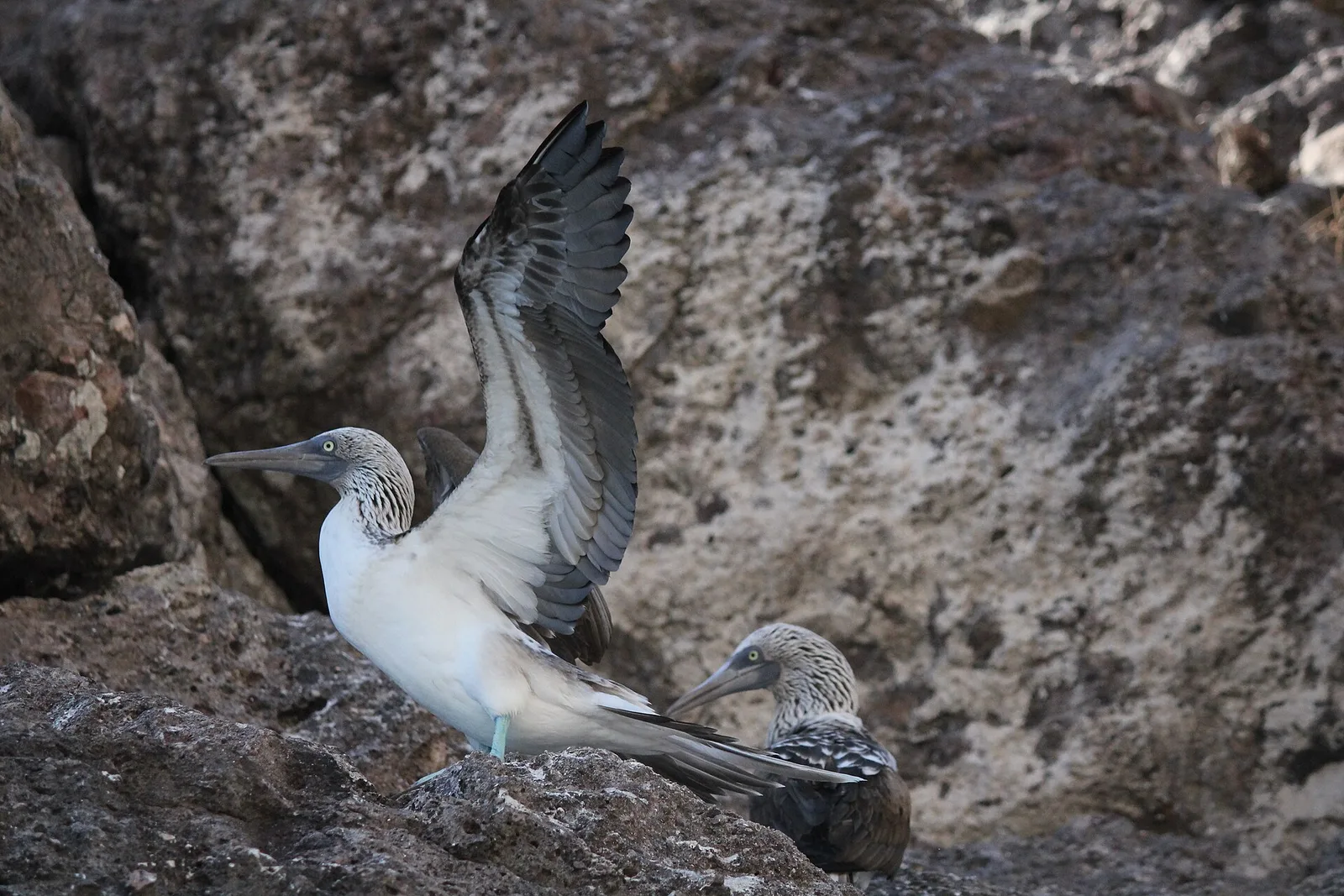
Images of the blue-footed booby
Lifespan in the wild
Up to 18 years
Weight
1.28 to 1.8 kg
Length
About 81 cm
Top speed
Up to 97 km/h
Fact file
Blue-footed booby
- Location
- Eastern Pacific from the Gulf of California to Peru
- Habitat
- Coast, Open ocean
- Diet
- Piscivore
- Prey / food
- Sardines, anchovies, mackerel, flying fish, squid
- Predators
- Milk snakes take eggs and small chicks
- Lifestyle
- Marine, and ashore only to breed
- Group name
- Colony
- Name of young
- Chick
- Incubation
- Incubation 41 to 45 days
- Clutch size
- 1 to 3 eggs, usually two
- Population
- Under 40,000 breeding pairs, roughly 90,000 birds
- Biggest threat
- The loss of sardines from Galapagos waters
- Distinctive feature
- Feet from pale turquoise to deep aquamarine
- Colour
- Brown above, white below, with blue feet and yellow eyes
- Skin type
- Feathers
Size
Next to a person
Measurements
Size and speed
- Length
- About 81 cm, up to 90 cm females are the larger sex
- Wingspan
- About 1.52 m
- Weight
- 1.28 to 1.8 kg adult males average 1.283 kg and adult females 1.801 kg
- Top speed
- Up to 97 km/h the speed at which a diving bird hits the water
Typical adult ranges. Sources: Wikipedia, Animal Diversity Web, Wikidata.
Life cycle
Lifespan
- In the wildUp to 18 years
- 018 years
The pale bar is the record. Source: AnAge.
Appearance
Colour and coat
- Primary colours
- brownwhite
- Secondary colours
- blueyellow
- Skin type
- feathers
- Male and female
- Moderate. Females are longer and heavier, averaging 1.801 kg against 1.283 kg for males. Males have paler feet and more yellow in the iris.
Life cycle
Mating and family
- Mating system
- monogamous pairs, with occasional bigamy
- Social structure
- dense breeding colonies on bare island ground
- Breeding
- one breeding cycle every 8 to 9 months
Females start to breed between the ages of one and six, and males a year later. The male dances with his feet raised, offers nest material, and points his bill at the sky. The female lays one to three eggs several days apart, and the pair warms them with their feet for 41 to 45 days. Chicks stand on a parent's feet for a month and take regurgitated fish from the bill. When food is short the older chick kills the younger, and the parents do not interfere.
Classification
Taxonomy
- Kingdom
- Animalia
- Phylum
- Chordata
- Class
- Aves
- Order
- Suliformes
- Family
- Sulidae
- Genus
- Sula
- Species
- Sula nebouxii
Conservation
Red List status
- LC
- NT
- VU
- EN
- CR
- EW
- EX
Least Concern on the IUCN Red List
Range
Recorded in 6 countries
Habitat layer: mangrove.
Countries from 6,827 wild records on GBIF (iNaturalist research grade), filtered and checked by hand. Country shapes: Natural Earth. Habitat: RESOLVE Ecoregions 2017, CC BY 4.0. Basemap: Natural Earth.
Habitats
Three things to know
- 1
The blue in its feet comes from carotenoid pigments in the fresh fish it eats.
- 2
It strikes the water at about 97 kilometres an hour and reaches 25 metres down.
- 3
About half of all breeding pairs nest in the Galapagos Islands.
Did you know
Seven more facts
- 1
The blue comes from carotenoid pigments in fresh fish, not from a feather colour.
- 2
Females mate with younger males, because young feet are the brightest.
- 3
A female whose mate's feet were dulled with makeup laid a smaller second egg.
- 4
About 80% of nests hold exactly two eggs.
- 5
Air sacs in the skull absorb the shock when the bird strikes the water.
- 6
The male is smaller and fishes shallow water, while the larger female dives deeper.
- 7
Boobies raise more than one chick, which only one other booby species does.
Field notes
How it looks and acts
Field notes
Distinguishing features
- The webbed feet are turquoise to aquamarine, unlike any other seabird's.
- The eyes are yellow and set forward for binocular vision.
- The head and neck are brown with dense white streaking.
- The bill is blue, tapered and serrated along the edge.
- Wings are long, pointed and brown, and span about 152 cm.
- Females are the larger sex and reach 90 cm in length.
Field notes
Unique adaptations
- Sealed nostrils keep water out during a high-speed dive.
- Skull air sacs cushion the brain against the impact.
- Serrated bill edges grip a slippery fish underwater.
- Webbed feet with a rich blood supply take the place of a brood patch.
- Different body sizes let a pair fish two depths and feed more chicks.
Field notes
Interesting behaviours
- Males lift their feet one at a time in a slow strutting dance.
- Flocks of about a dozen birds dive together on one shoal.
- A sitting female turns to face the sun all day long.
- Pairs return to nest close to where they themselves hatched.
- The older chick attacks the younger one when food runs short.
Field notes
Temperament
- The booby appears fearless around people and rarely moves off a path.
- Pairs are aggressive only in the small circle around the nest.
- Parents stay passive while their chicks fight, and never break it up.
Field notes
Communication
- Males whistle thinly, and females answer with a groan.
- Each bird has its own voice, and mates recognise each other by it.
- Sky-pointing lifts the bill, wings and tail as a courtship signal.
- Foot brightness reports the health of a bird without a sound.
- A whistle from the lead bird sets off a group dive.
Ecology
Ecological role
The booby links shoals of small fish to the bare islands where it nests.
- It takes large numbers of sardines, anchovies and mackerel from surface shoals.
- Its droppings probably carry sea nutrients onto dry island ground.
- Its breeding success tracks the sardine stock, so colonies act as an ocean gauge.
- Its eggs and chicks feed island snakes.
Stories
Myths and legends
- In Spanish tradition, bobo means a fool, and sailors gave the word to this bird.
- In sailing tradition, a booby that landed on deck was thought too stupid to escape.
- In castaway stories, the booby is the bird that keeps shipwrecked crews alive.
- In Galapagos tourist tradition, the dancing male appears as the emblem of the islands.
People
Relationship with humans
People
Living alongside us
Sailors met this bird long before naturalists did. Boobies landed on ships and were caught for food, and shipwrecked crews relied on them. The same tameness now draws visitors to the Galapagos, where the courtship dance is a highlight of a tour. Egg collectors take a few clutches outside the islands. The greatest human effect is indirect, through the fish stocks the bird depends on.
- The booby does not attack people and often ignores them completely.
- A handled bird may jab with its pointed bill in self-defence.
- The species appears to carry no known disease risk to visitors.
People
Status, uses and products
- Domestication
- Wild
- As a pet
- Not suitable. A blue-footed booby eats live sea fish, dives from height and needs a colony around it. No home can supply any of that. The bird is protected in the Galapagos and in Mexico.
- Uses
- wildlife tourismscientific research
- Products
- None recorded
The full account
About the blue-footed booby
The blue-footed booby is a seabird of the warm eastern Pacific. It is brown above and white below, and its webbed feet are turquoise. An adult measures about 81 centimetres long, and a large female reaches 90 cm. The wings span about 152 cm and carry the bird far out to sea. It feeds on small fish, which it takes by dropping out of the air.
The feet appear to be the point of the bird. Their colour comes from pigments in fresh fish, so a bright foot means a well-fed bird. Males dance in front of females and lift each foot in turn. Females weigh the colour and adjust how much they invest in the eggs. About half the breeding pairs in the world nest in the Galapagos Islands.
Name and taxonomy
The scientific name of the blue-footed booby is Sula nebouxii. The French naturalist Alphonse Milne-Edwards described the species in 1882. He named it after Adolphe-Simon Neboux, a naval surgeon and naturalist. Two subspecies are recognised, and the Galapagos birds are the larger and paler of the two. The English word booby probably comes from the Spanish bobo, which means foolish. Sailors used it because the birds move awkwardly on land and show no fear of people. The name stuck, though the bird is probably as precise as any seabird in the air. Spanish speakers along the coast may still call the group piqueros.
Evolution and relatives
The bird belongs to Sulidae, the family of gannets and boobies. Six species share the genus Sula. The Peruvian booby is the closest relative, and a study of many genes dated the split at 1.1 to 0.8 million years ago. The two ranges overlap off northern Peru and southern Ecuador. A Peruvian booby has grey feet, a whiter head and white spots on the wing coverts. The two species share a way of life, which is probably why they look so alike.
Like other members of the family, the booby has a torpedo-shaped body and a dagger bill. Because it enters the water head first, its nostrils are sealed shut for good. The bird breathes through the corners of its mouth instead. Air sacs in the skull spread the shock of impact away from the brain. These traits are typical of a family that feeds by plunging.
Appearance
The average adult is 81 cm long and weighs about 1.5 kilograms. Males average 1.283 kg and females average 1.801 kg. The wingspan measures about 152 cm, and the wings are long, pointed and brown. The head and neck are pale brown with heavy white streaks, and the belly is clean white. A white patch marks the back of the neck where it joins the mantle.
The eyes are yellow and sit on either side of the bill, facing forward. That placement probably gives the bird the binocular vision a dive needs. Males carry more yellow in the iris than females. Foot colour runs from pale turquoise to deep aquamarine, and males and young birds are the palest. Chicks hatch with black bills and feet under a coat of white down. The blue bill has serrated edges that grip a slippery fish.
Habitat and range
The species ranges down the eastern Pacific from the Gulf of California to Peru. It breeds on dry islands off the coasts of Mexico, Central America and South America. The Galapagos Islands hold about half of all breeding pairs. In some years a few birds wander north to the Salton Sea in California. The booby is a marine bird and comes ashore only to breed and raise young.
A nest is no more than a scrape in bare black lava. A pair may hold two or three possible sites and settle on one shortly before laying. Nests sit inside large colonies, but each pair keeps a gap around its own patch. The sitting female turns to face the sun through the day, so droppings ring the nest. Young birds settle close to where they hatched, which packs the colonies tightly.
Diet and feeding
The booby lives on small fish that shoal, above all sardines, anchovies, mackerel and flying fish. It takes squid and scraps thrown from boats as well. Parties of about 12 birds search for a shoal together. The first bird to spot fish signals, and the whole group drops at once. Each bird folds its wings back and enters the sea like an arrow.
Dives usually start between 10 and 30.5 metres up, and some begin as high as 100 m. The bird hits the surface at about 97 kilometres an hour. It can then swim on down to 25 m below the surface. Most prey is swallowed before the bird comes back up. It can also dive from a floating position, which the other boobies cannot do. Birds prefer to eat alone in the early morning or late afternoon. A booby may travel far from the colony to find a shoal worth diving on. Fish supply therefore appears to set how many chicks a colony can raise.
Behaviour and social life
The booby is colonial on land and often social at sea. It hunts alone, in pairs or in flocks, depending on where the fish are. Males and females feed in different water, which spreads the effort of a brood. The smaller male has a proportionally larger tail and works both shallow and deep water. The heavier female dives deeper and farther offshore and carries more food back.
On land the bird walks in an ungainly high step and shows little fear of people. That tameness gave the species its name and once made it easy to catch. Pairs defend a small circle of ground rather than a wide territory. Bigamy happens, and two females sometimes share one nest with a single male. Colonies are noisy, and a landing bird may have to cross ground that other pairs guard. Young birds seem to gather at the edge of a colony before they start to breed.
Communication and senses
Boobies make harsh grunts, shouts and thin whistles. A male will throw his head back and whistle at a female passing overhead. Females answer with a groaning call rather than a whistle. Calls differ between the sexes and also between individuals. Both partners can pick their mate's voice out of the colony.
Display appears to carry as much meaning as sound. Sky-pointing raises the bill, wings and tail together and marks the end of a courtship run. Foot colour is a signal in itself, and it fades within 48 hours if a bird goes hungry. Forward-facing eyes probably give the depth judgement a plunge diver needs.
Reproduction and life cycle
The booby is an opportunistic breeder and starts a cycle every 8 to 9 months. Females first breed at 1 to 6 years old and males at 2 to 6. Courtship begins when the male struts before the female with his feet raised. He offers scraps of nest material, then finishes with another display of the feet. Pairs are usually monogamous for the cycle.
The female lays one to three eggs, and about 80% of nests hold exactly two. Eggs come four to five days apart, and the first is incubated at once. Neither parent has a brood patch, so both wrap the eggs in their warm webbed feet. Incubation runs 41 to 45 days, and one bird sits while the other watches. Chicks stand on a parent's feet for their first month. Both adults feed them regurgitated fish taken from inside the bill.
Because laying is staggered, the first chick starts life four days ahead of the second. In a lean season the older chick pecks the younger one or drags it out of the scrape. Aggression rises sharply once the older chick falls 20 to 25% below its target weight. Parents do not step in, and they feed the larger chick first. They do build a steep-sided nest, which makes it harder to push a chick out. The oldest bird on record reached 18 years.
Predators and threats
Milk snakes raid nests for eggs and small chicks. Staggered hatching lowers the chance that a raider takes a whole brood at once. Adults face few predators on a bare island, which may explain their tameness. Egg collectors still take a small number of clutches outside the Galapagos. Ticks infest nestlings, and broods with parents of different ages carry the fewest. A chick on open lava may also suffer heat and thirst on a still day.
Food supply seems to be the real threat. Sardines have been largely missing from the waters around Espanola Island since 1997. In 2012 and 2013 only about half the prey items in the diet were sardines. Birds short of sardines often fail to breed at all rather than raise fewer young. Researchers found no sign that people, introduced predators or disease drive the decline.
Population and conservation
The IUCN lists the blue-footed booby as Least Concern. Breeding pairs number under 40,000, and the world total is near 90,000 birds. Roughly half of the breeding population sits in the Galapagos Islands. Galapagos law protects the species where it is most concentrated. Mexico lists the bird under special protection in its national wildlife rules.
A study finished in April 2014 confirmed a fall in the Galapagos population. The birds appear to be breeding poorly rather than dying in unusual numbers. Researchers linked the trouble to the decline of sardines in local waters. Annual counts are still needed to separate a long slide from a normal swing. A colonial seabird tied to one prey fish is probably vulnerable to any change in the sea.
Relationship with humans
Boobies once settled on the decks of sailing ships, and crews caught and ate them without effort. William Bligh and other shipwrecked sailors lived on them for a time. That behaviour probably built the bird's reputation for stupidity. Today the same tameness seems to make it a favourite of visitors to the Galapagos. Tourists may stand close to a dancing male without disturbing the display.
The species appears to be a mainstay of Galapagos wildlife tourism. Its courtship dance appears in nature films and in guidebooks worldwide. Egg collecting is now the only direct human take of any size. Fishing that removes sardines probably hurts the bird more than any hunting ever did. The booby is also a study animal for work on sibling rivalry and parental care.
In culture and myth
In Spanish tradition the name bobo marks a person who is slow or clownish. Sailors carried that word to the bird, and English kept it as booby. The name probably says more about sailors than about the animal. A bird that never met a land predator may have had no reason to flee a boat.
In modern Galapagos tourism the booby appears as a mascot of the islands. Its dance appears on shirts, posters and stamps sold to visitors. In British sailing tradition, boobies were remembered as food of last resort. The bird probably serves best as a teaching example of sexual selection. Few animals seem to show a signal of health as plainly as a foot that fades in two days.
A sentence with a dotted underline is inferred: it describes the group the animal belongs to, or is a reading of the sources, rather than a measured or reported fact about this species.
Questions
Blue-footed booby questions, answered
Why does the blue-footed booby have blue feet?
Pigments called carotenoids come from the fresh fish it eats and colour the skin of the foot. A well-fed bird shows brighter feet than a hungry one.
What does the blue-footed booby's dance mean?
The male raises his feet one at a time in front of the female. The display advertises his health, because foot colour fades when a bird goes short of food.
Where do blue-footed boobies live?
Along the eastern Pacific, from the Gulf of California south as far as Peru. Roughly half the world's breeding pairs sit in the Galapagos Islands.
How deep can a blue-footed booby dive?
It can reach 25 metres below the surface. Dives usually start 10 to 30.5 m up, and some begin as high as 100 m.
How fast does a booby hit the water?
About 97 kilometres an hour. Air sacs in its skull spread the shock away from the brain.
What do blue-footed boobies eat?
Small schooling fish, above all sardines, anchovies, mackerel and flying fish. They also take squid and scraps from boats.
Why is it called a booby?
The name probably comes from the Spanish word bobo, meaning foolish. Sailors used it because the birds are clumsy on land and unafraid of people.
How many eggs does a blue-footed booby lay?
One to three, and about 80% of nests hold two. Incubation takes 41 to 45 days.
Do booby chicks kill each other?
Yes, when food is short. The older chick pecks the younger one or pushes it out of the nest, and the parents do not intervene.
How do boobies keep their eggs warm without a brood patch?
They wrap the eggs in their webbed feet, which carry an increased blood supply. Newly hatched chicks then stand on those feet for a month.
How long do blue-footed boobies live?
Records give a maximum of 18 years in the wild. Most birds live for far less.
Are blue-footed boobies endangered?
No. The IUCN lists them as Least Concern, though the Galapagos population is falling.
Why is the Galapagos booby population declining?
The birds are failing to breed, and researchers link that to a shortage of sardines. No evidence points to people, disease or introduced predators.
How big is a blue-footed booby?
About 81 cm long with a wingspan near 152 cm. Females reach 90 cm and are heavier than males.
Can you tell male and female boobies apart?
Yes, with practice. Females are larger, with duller yellow eyes and usually darker feet, and their voice is a groan rather than a whistle.
Do blue-footed boobies mate for life?
Not usually. They pair for a breeding cycle, and bigamy sometimes occurs when two females share one male.
Food web
Prey and food
- sardines
- anchovies
- mackerel
- flying fish
- squid
Food web
Predators
- milk snakes
Ecological equivalents
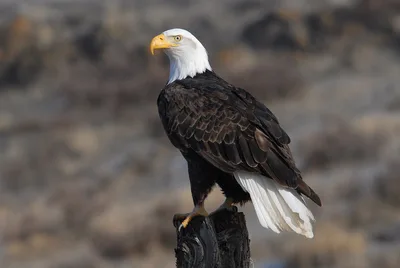
Related species on this site
Booby (same family), Anhinga (same order), Cormorant (same order), Frigatebird (same order).
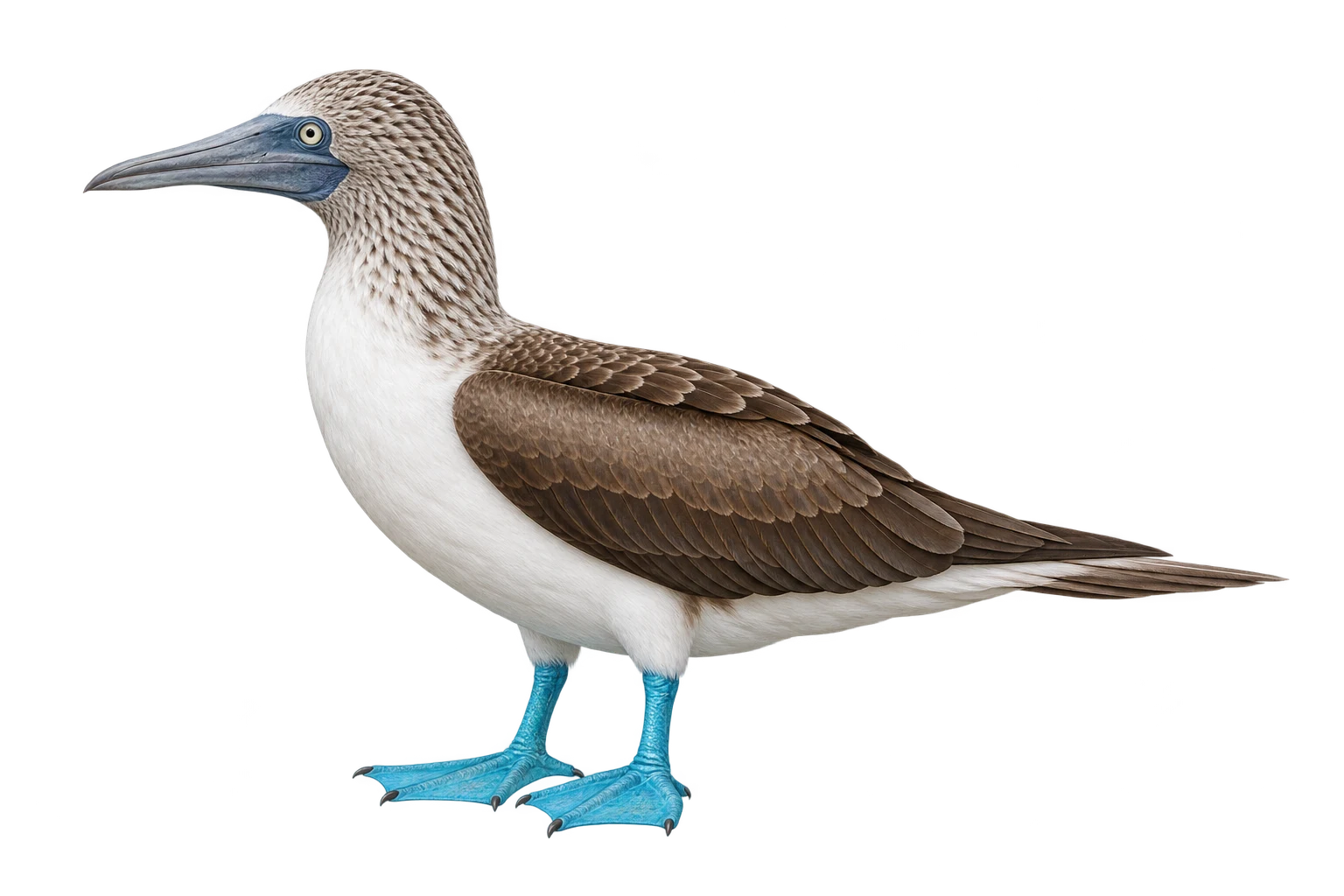
Birds
Booby
Sulidae
Classification and source reference
LivingAI illustration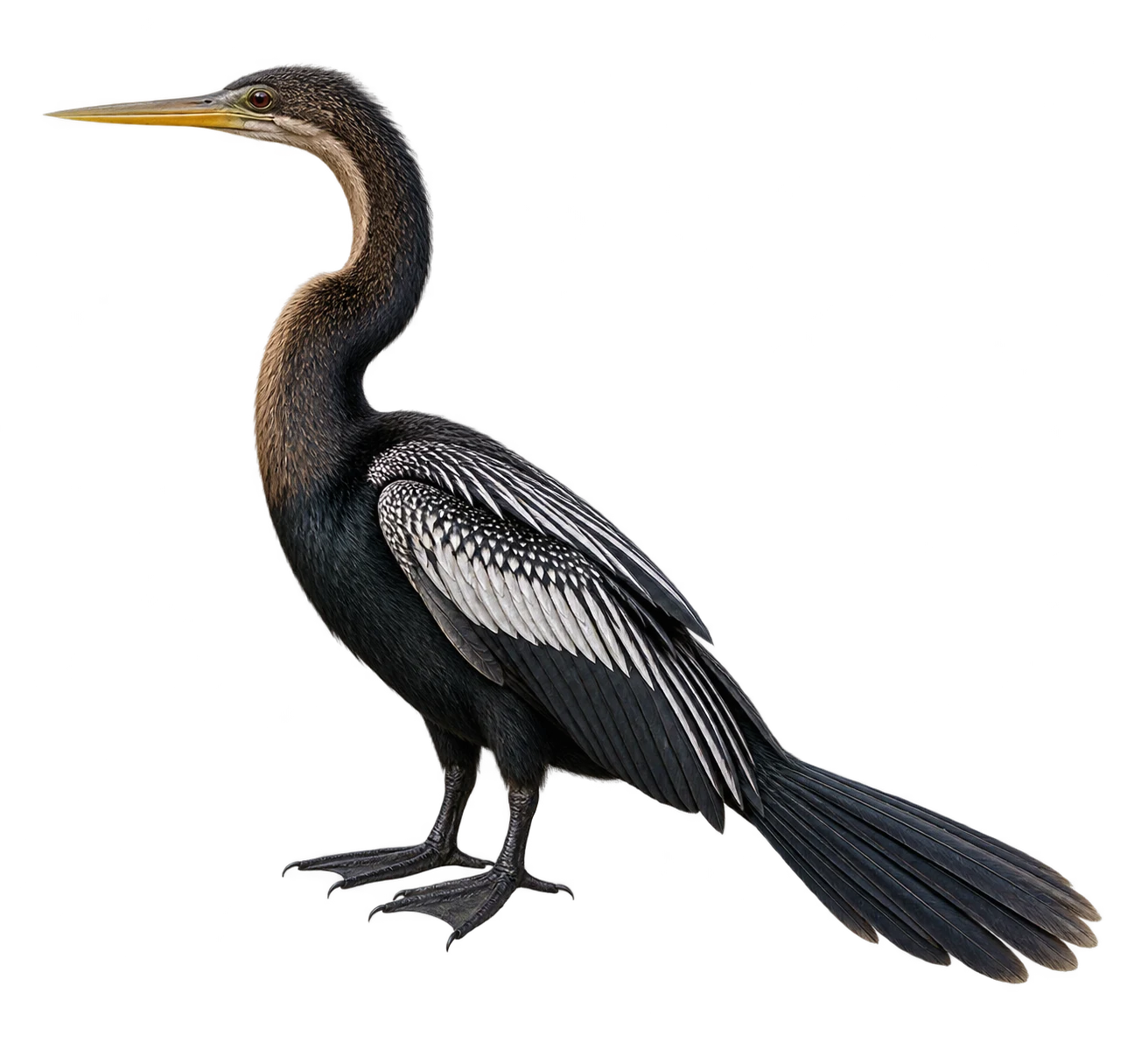
Birds
Anhinga
Anhinga anhinga
Classification and source reference
LivingAI illustration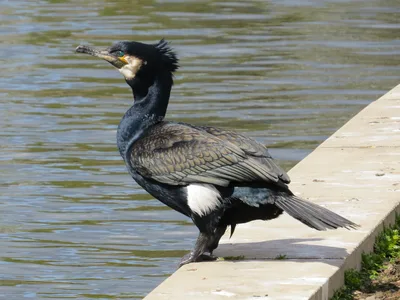
Birds
Cormorant
Phalacrocoracidae
Cormorants are fish-eating diving birds.
Living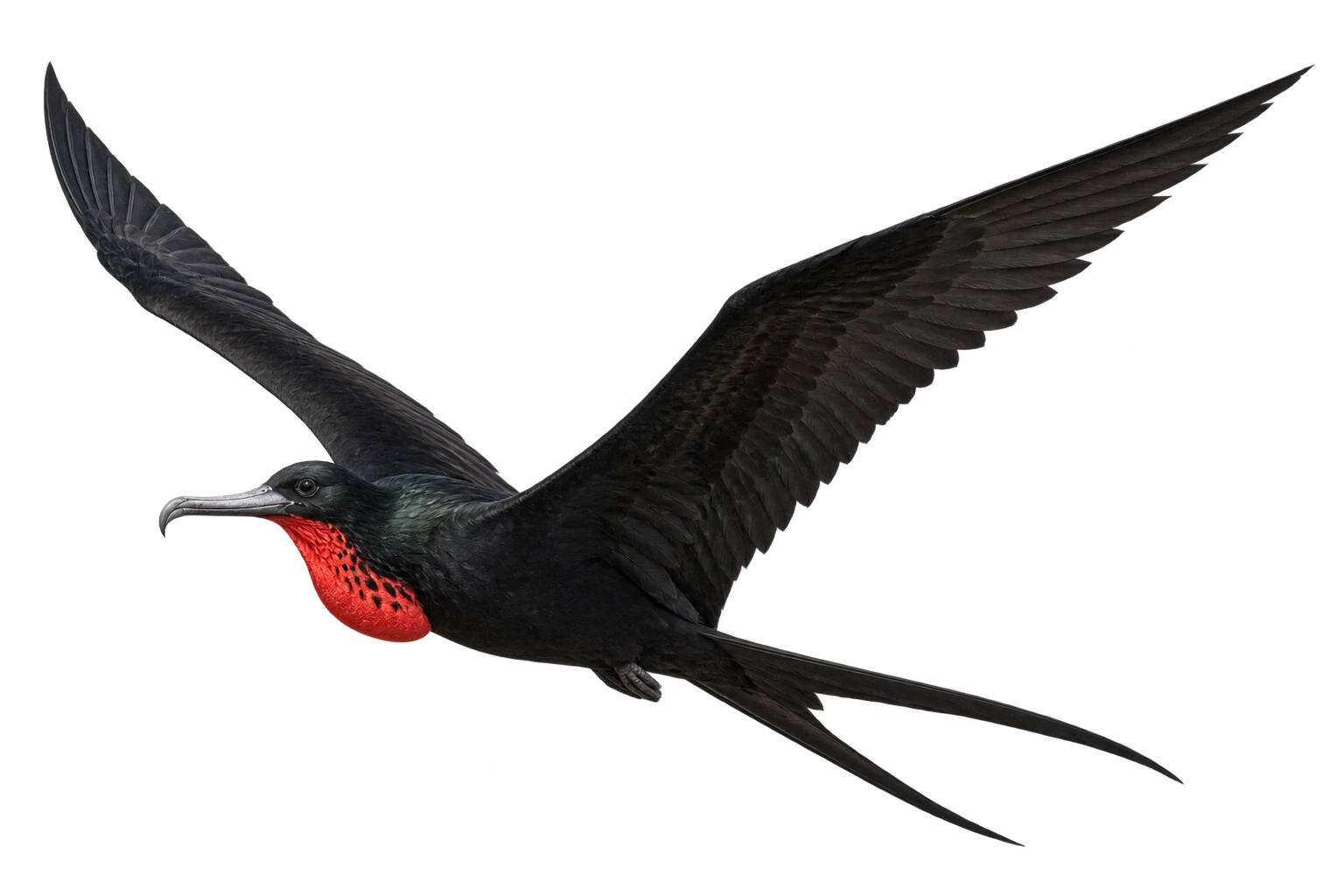
Birds
Frigatebird
Fregatidae
Classification and source reference
LivingAI illustration