Razorbill
The last of the great auk's line
Alca torda
Also called Razor-billed auk, Lesser auk, Petit pingouin, Tordalk
Living individuals or members of this group exist today. This does not mean they are safe from extinction.
Meet the razorbill
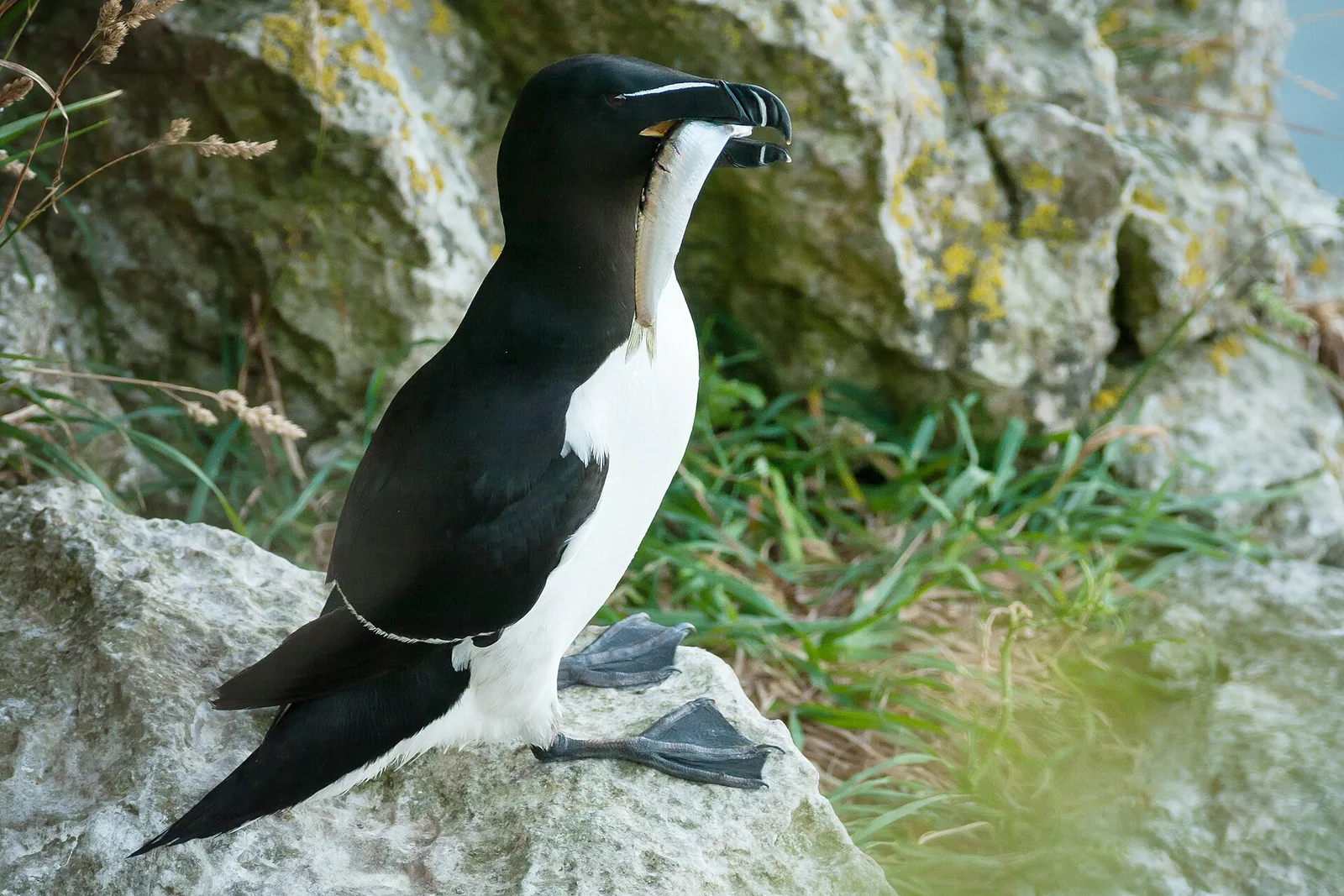
The razorbill is a black and white North Atlantic auk with a deep, blade-like bill. It lives at sea, breeds in cliff crevices and is the closest living relative of the great auk.
Images of the razorbill
Lifespan in the wild
About 13 years a bird ringed in Britain in 1967 lived at least 41 years; AnAge records 42
Weight
505 to 890 g
Length
37 to 39 cm
Fact file
Razorbill
- Location
- North Atlantic coasts; most birds breed in Iceland
- Habitat
- Coast, Open ocean
- Diet
- Piscivore
- Prey / food
- Sandeels, capelin, sprats, herring, juvenile cod
- Predators
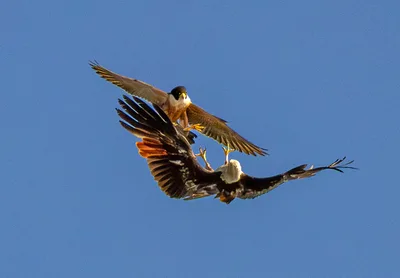
- Great black-backed gulls, peregrine falcons, ravens, arctic foxes
- Lifestyle
- At sea most of the year, colonial on cliffs in summer
- Group name
- Colony
- Name of young
- Chick
- Incubation
- About 35 days of incubation
- Clutch size
- 1 egg
- Population
- 838,000 to 1,600,000 mature birds
- Biggest threat
- Oil spills and the loss of small forage fish
- Distinctive feature
- Deep flattened black bill crossed by a white line
- Colour
- Black above and white below, with a white bill line
- Skin type
- Feathers
Size
Next to a person
Measurements
Size and speed
- Length
- 37 to 39 cm body length
- Weight
- 505 to 890 g mean weight range; ADW gives 505 to 730 grams for females
Typical adult ranges. Source: Wikipedia.
Life cycle
Lifespan
- In the wildAbout 13, up to 41 years a bird ringed in Britain in 1967 lived at least 41 years; AnAge records 42
- 041 years
The pale bar is the record. Source: Wikipedia.
Appearance
Colour and coat
- Primary colours
- blackwhite
- Secondary colours
- brown
- Skin type
- feathers
- Male and female
- Slight. Males are generally a little larger, mainly in wing length, and the plumage of the two sexes is the same.
Life cycle
Mating and family
- Mating system
- monogamous pairs for life, chosen by the female
- Social structure
- cliff colonies with nests set metres apart
- Breeding
- one egg a year, from late April to early June
A female picks her mate after letting males compete, and the pair then stays together for life. She lays one egg in a crevice, and both birds incubate it for about 35 days. The chick shelters under a parent for its first days and is fed small fish. After 17 to 23 days it jumps from the cliff before it can fly, and the male leads it out to sea. Birds first breed at three to five years old.
Classification
Taxonomy
- Kingdom
- Animalia
- Phylum
- Chordata
- Class
- Aves
- Order
- Charadriiformes
- Family
- Alcidae
- Genus
- Alca
- Species
- Alca torda
Conservation
Red List status
- LC
- NT
- VU
- EN
- CR
- EW
- EX
Least Concern on the IUCN Red List
Range
Recorded in 16 countries
- Canada
- Germany
- Denmark
- Spain
- France
- United Kingdom
- Ireland
- Iceland
- Italy
- Netherlands
- Norway
- Poland
- Portugal
- Russia
- Sweden
- United States of America
Habitat layer: mangrove.
Countries from 8,769 wild records on GBIF (iNaturalist research grade), filtered and checked by hand. Country shapes: Natural Earth. Habitat: RESOLVE Ecoregions 2017, CC BY 4.0. Basemap: Natural Earth.
Habitats
Three things to know
- 1
Only one species is left in the auk genus Alca, and this is it.
- 2
The chick leaps from the cliff to the sea before it can fly.
- 3
More than half of all razorbills breed in Iceland.
Did you know
Seven more facts
- 1
About 60 to 70 percent of all razorbills breed in Iceland.
- 2
One Icelandic cliff, Látrabjarg, held around 230,000 pairs in the mid-1990s.
- 3
The bird nests at least 10 centimetres back from an open ledge, unlike a guillemot.
- 4
Adults spend about 44 percent of their time at sea looking for food.
- 5
Nine out of ten adults survive from one year to the next.
- 6
Razorbills feed in estuaries with low salinity, which other auks avoid.
- 7
The United States protected the species in 1918.
Field notes
How it looks and acts
Field notes
Distinguishing features
- The bill is deep, flat-sided and blunt, with vertical grooves near the tip.
- A thin white line runs from the eye along the bill.
- The head is blacker than a common murre's, and the back is jet black.
- The tail is long for an auk and shows a point in flight.
- Adults are 37 to 39 centimetres long and weigh up to 0.89 kilograms.
Field notes
Unique adaptations
- Half-folded wings drive the bird underwater like short paddles.
- A streamlined body lets it chase fish to 120 metres down.
- The deep bill holds several small fish crosswise at once.
- Crevice nesting hides the single egg from gulls and ravens.
- A pointed egg is less likely to roll off a rock ledge.
Field notes
Interesting behaviours
- Flocks dive and circle together in the weeks before laying.
- Long lines of birds swim across each other in the same direction.
- Partners preen each other around the head for minutes at a time.
- Males drive rival males off with the bill before the egg is laid.
- Chicks leave the colony at dusk or at first light.
Field notes
Temperament
- The razorbill is sociable at the colony but keeps a gap from its neighbours.
- It fights less than a guillemot, because the nests are further apart.
- It is wary on land and dives at once when threatened at sea.
Field notes
Communication
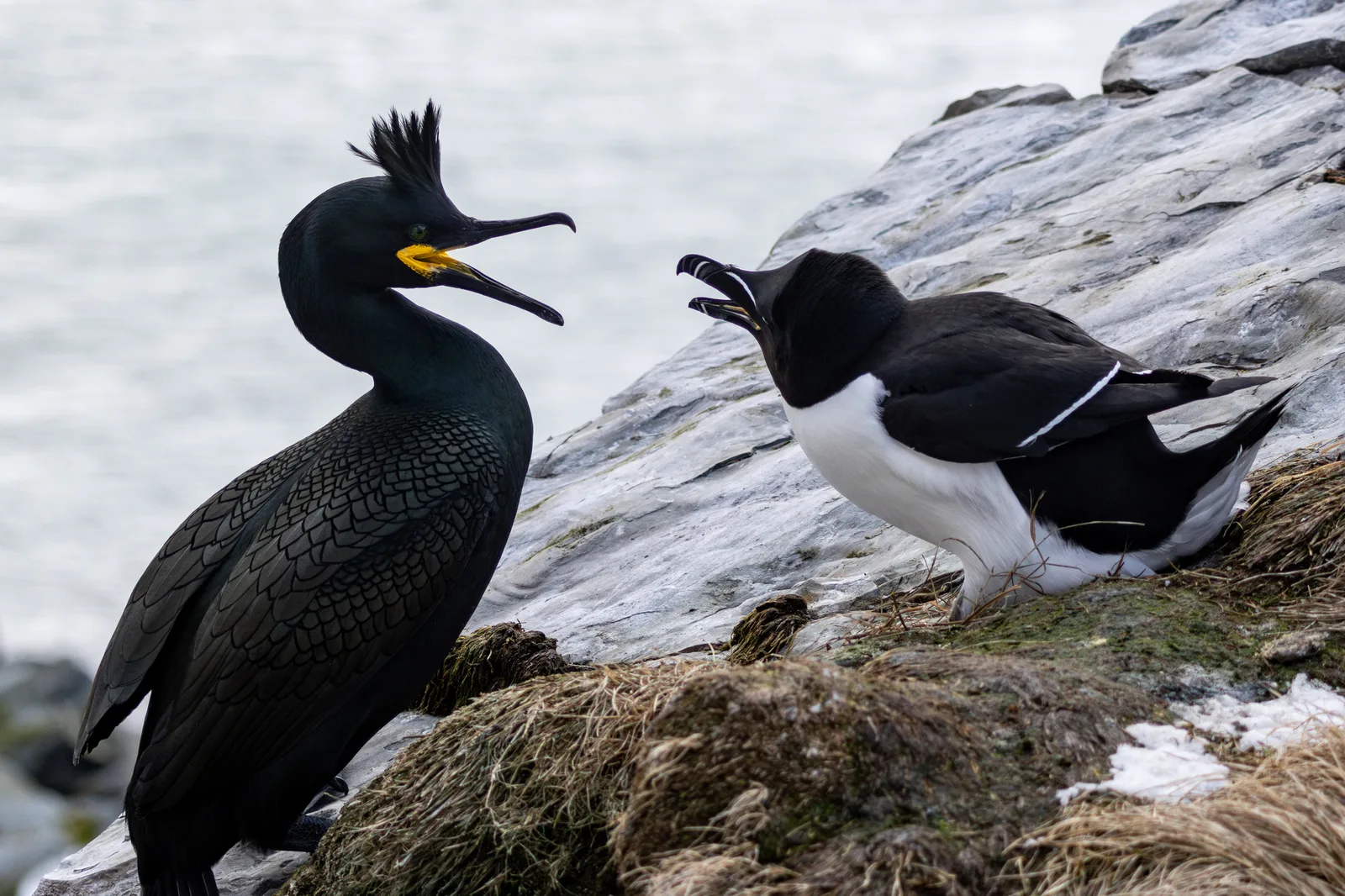
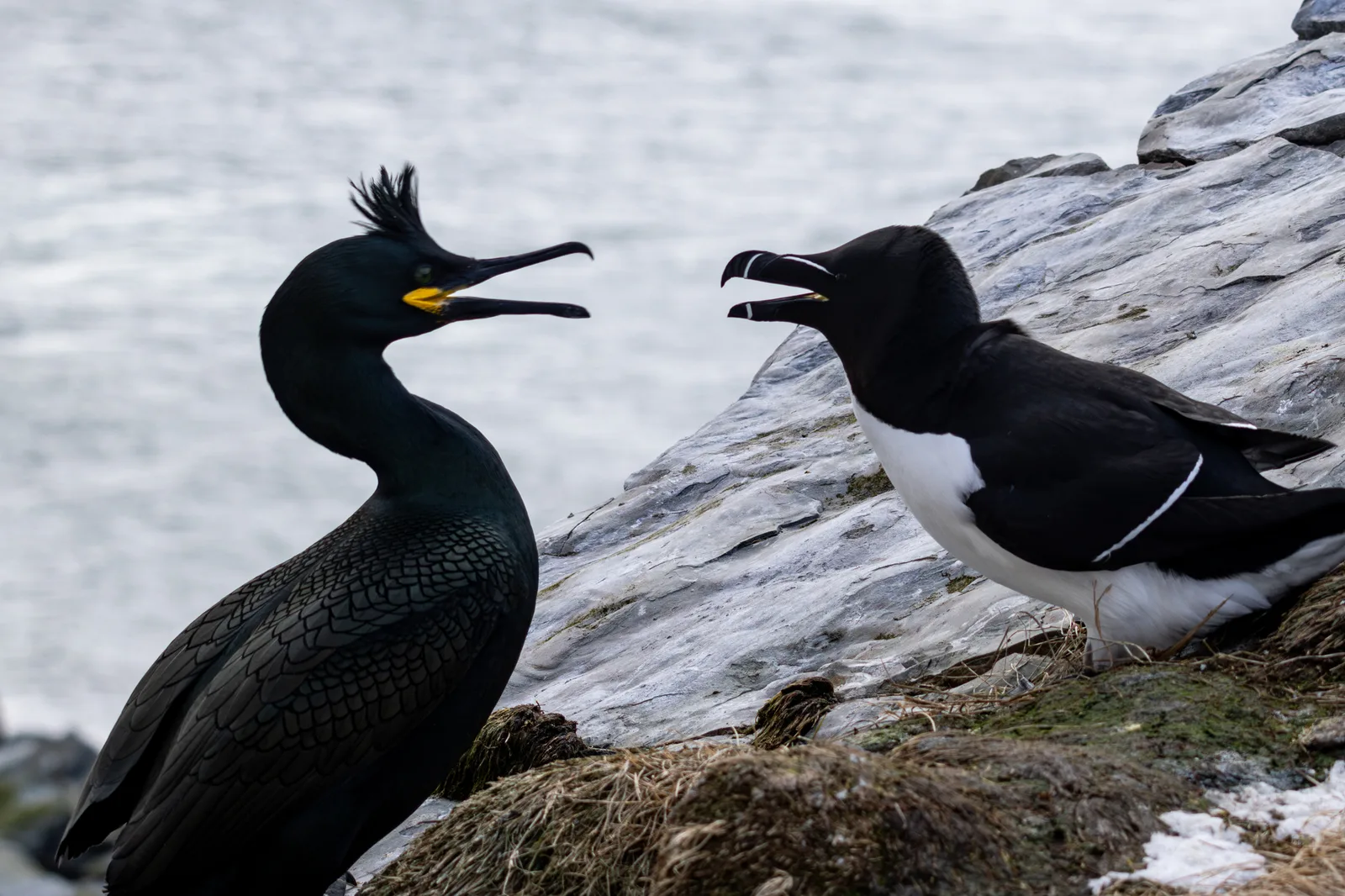
- Birds click the mandibles together while shaking the head slowly.
- A bird may throw its head back and vibrate the lower mandible.
- Pairs touch bills as part of courtship.
- Courting birds follow one another through looping display flights.
- Mutual preening probably keeps a long pair bond in working order.
Ecology
Ecological role
The razorbill is a mid-level hunter of the Atlantic shelf, taking small shoaling fish and feeding the cliff-top predators.
- It thins shoals of sandeels, sprats, capelin and young cod.
- Its eggs and chicks feed gulls, ravens, foxes and, in the north, polar bears.
- Colony guano probably enriches the cliff ledges and the water below them.
- Its breeding success appears to track local fish stocks, so surveys use it as a gauge.
Stories
Myths and legends
- In St Kildan practice the razorbill's egg was buried in peat ash as winter food.
- In Scottish island custom young men proved their climbing before they could marry.
- In Norwegian and Swedish naming the bird lent its own words, alke and torda, to science.
- In French usage the name petit pingouin probably preserves an old muddle between auks and penguins.
People
Relationship with humans
People
Living alongside us
People once harvested razorbills for eggs, meat and feathers, and the world population fell. The United States protected the bird in 1918, and organised harvests have ended. Cliff colonies now bring birdwatchers to coasts in Britain, Iceland and Canada. Oil spills, fishing nets and overfishing are the pressures that remain. Researchers study the species for what it shows about bird mating and about fish stocks.
- A razorbill flees from people and appears never to approach one.
- A handled bird may bite hard with its deep bill, so ringers wear gloves.
- The species carries ticks and lice, like most cliff-nesting seabirds.
People
Status, uses and products
- Domestication
- Wild
- As a pet
- Not suitable. No. The razorbill needs cold sea water, live fish and a cliff to breed on. It is protected across its range, and captive auks are rare even in public aquaria.
- Uses
- birdwatchingresearch
- Products
- None recorded
The full account
About the razorbill
The razorbill is a black and white seabird of the North Atlantic. It is the only living species in the genus Alca, and the closest living relative of the great auk. Adults are 37 to 39 centimetres long and weigh 0.505 to 0.89 kilograms. The bill gives the bird its name: deep, flattened from side to side, and crossed by a white line.
Razorbills spend the year at sea and come ashore only to breed. They nest in crevices on sea cliffs and among boulders, in colonies that can hold thousands of pairs. A pair raises one chick a year and stays together for life. About 60 to 70 percent of the world population breeds in Iceland.
Name and taxonomy
Carl Linnaeus set up the genus Alca in 1758, in the tenth edition of Systema Naturae. The name Alca comes from the Norwegian word alke, and torda from a Swedish dialect word of Gotland. Both words already meant this bird before Linnaeus used them. The type locality is Stora Karlsö, an islet off the west coast of Gotland.
Older English writing calls the species the auk, the razor-billed auk or the lesser auk. French speakers call it petit pingouin, Spanish speakers alca común and German speakers Tordalk. The IOC accepts two subspecies, and the one in warmer water is slightly smaller. A third form was dropped once its extra bill furrow turned out to come with age.
Evolution and relatives
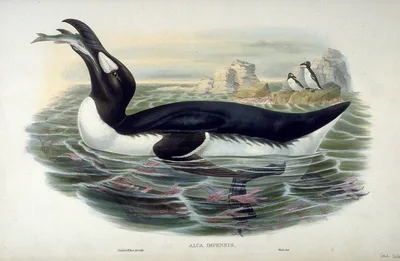
The razorbill belongs to the tribe Alcini with the two murres and the little auk. The great auk sat in the same group and went extinct in the middle of the nineteenth century. Some ornithologists would put the great auk back into Alca rather than keep it in Pinguinus. The razorbill is probably the nearest thing alive to a bird that people hunted out.
The genus was much richer in the Pliocene, and several fossil species are known. They have been found at Lee Creek Mine in the United States, in Belgium, in Italy and in Spain. Alca appears to have arisen in the western North Atlantic or the waters that are now the Caribbean. Its ancestors probably reached those seas through the open Isthmus of Panama during the Miocene.
Appearance
A breeding adult is black on the head, neck, back and feet, and white underneath. A thin white line runs from the eye to the tip of the bill. The bill is black, deep and flattened, with a blunt end and several vertical grooves. One groove carries a broken white mark that stands out at close range. The gape is bright yellow inside and the iris is dark brown.
The bird measures 37 to 39 cm and weighs 0.505 to 0.89 kg, which makes it heavy-set for an auk. The tail is long for the family, with the central feathers a little longer than the rest. In flight the feet do not stick out past the tail. Winter birds turn white on the throat and behind the eye, and the bill line fades. The bill also grows thinner out of the breeding season, and the grooves show less.
Habitat and range
The razorbill lives across the boreal and subarctic North Atlantic, with no counterpart in the Pacific. In North America it breeds from Hudson Strait and western Greenland down to the Gulf of Maine. In Europe it breeds from northwest Russia and Iceland south to Brittany and into the Baltic. Colonies sit on sea cliffs, boulder screes and offshore islands, always with a clear drop to the water. The species does well where the sea surface stays below 15 degrees Celsius.
North American birds winter offshore, from the Labrador Sea to New England. European birds gather in the North Sea, and some go as far as the western Mediterranean. Unlike other auks, razorbills will move into large estuaries with low salinity to feed. GBIF holds records from 48 countries, most of them from Britain, Sweden and the United States. Látrabjarg in Iceland held about 230,000 pairs in the mid-1990s, roughly 40 percent of the world total.
Diet and feeding
The razorbill eats mid-water schooling fish. Sandeels, capelin, sprats, herring and young cod make up most of the catch. Crustaceans and marine worms fill the gaps, and birds wintering off Newfoundland live mainly on crustaceans. In Labrador the diet shifts from capelin to small sculpins and krill once the chicks hatch.
The bird dives with its wings half folded and its feet spread, and it swims after fish underwater. Most feeding happens around 25 metres down, though a razorbill can reach 120 m. One study off the Isle of May measured an average dive of 35 seconds. Divers spread out rather than work in a group. A single dive can bring up several small fish at once.
Adults spend about 44 percent of their time at sea foraging. During incubation a bird may fly more than 100 kilometres out to feed. Once there is a chick to feed, the parents work closer in, around 12 km from the colony. A parent carries the fish crosswise in the bill, usually one to six at a time. Deliveries peak at dawn and fall away in the four hours before dark.
Behaviour and social life
Razorbills are colonial, but the nests sit metres apart rather than shoulder to shoulder. That spacing means less fighting than in a guillemot colony. On land the bird squats on its ankles and shuffles about, holding the body fairly level. It is more agile in the air and on the water than the other large auks. North American birds leave land for the whole winter, while many European birds stay near the cliffs.
Before laying, large groups gather on the water and behave in two set ways. In one, the birds dive and circle together and then come up head first with open bills. In the other, a long line of birds swims one way, weaving across each other. Pairs preen each other about the head and neck, sometimes for six or seven minutes. Both members of a pair defend the nest site through the season.
Communication and senses
Much of the signalling is done with the bill rather than the voice. In bill clicking a bird knocks its mandibles together while shaking its head slowly from side to side. In bill vibrating it throws the head back and shivers the lower mandible. Mutual preening settles tension between partners and is a ritual of its own.
Courting pairs touch bills and follow one another through long looping flights. The white line on the bill and face is brightest in the breeding season, which suggests it is a signal. Underwater the bird hunts by sight, so clear shelf water probably matters to it. A chick probably calls to its parent from the sea after it leaves the cliff.
Reproduction and life cycle
The female chooses her mate, often after letting several males compete for her. The pair then stays together for life, and their system is described as female-enforced monogamy. A pair may mate up to 80 times in the 30 days before the egg is laid. At least half of females also copulate with neighbouring males on another ledge. Birds first breed at three to five years old, and old pairs sometimes skip a season.
The nest is a crevice on a cliff or a gap under boulders, at least 10 centimetres back from the open ledge. Crevice sites lose fewer eggs to predators than open ledges. Some pairs drag a little stone, lichen or dried droppings to the spot, but most lay on bare rock. The same site is often used year after year. A pair may also take over an old puffin or rabbit burrow.
The female lays one egg a year, from late April into early June. It is pointed at one end, creamy white to pale brown, and blotched dark brown. Both parents incubate in turn for about 35 days. The chick hatches at about 60 grams and shelters under a parent's wing for its first days. After 17 to 23 days it jumps from the cliff, still flightless, and the father follows it to sea. Average life expectancy is about 13 years, and one ringed British bird lived at least 41 years.
Predators and threats
Adult razorbills are taken by great black-backed gulls, by peregrine falcons and by ravens, crows and jackdaws. Gulls and ravens take the eggs, which are large and rich in fat. Arctic foxes and polar bears kill adults, eggs and chicks in the north of the range. A chick that leaves the cliff alone, rather than with the others, is easier for a gull to catch. An adult in danger escapes by diving.
Oil spills are the threat that does the most harm at sea. Birds also drown after they become tangled in fishing nets. Overfishing thins the shoals of small fish the species depends on. Hungry birds have turned up well outside the usual range while searching for food. Damage to a cliff colony removes nest sites that pairs would otherwise reuse for years.
Population and conservation
The IUCN Red List rates the razorbill as Least Concern. The world total is put at 838,000 to 1,600,000 mature birds. Numbers fell between 2015 and 2021 and now appear stable or rising. Annual survival of an adult runs between 89 and 95 percent.
National lists are harsher than the global one in several countries. France lists the species as Critically Endangered, and Norway and Estonia as Vulnerable. The Norwegian list puts it at Endangered on Svalbard and Jan Mayen. The French colony on Île Rouzic fell from 600 pairs in 1960 to 30 pairs by 2006. Bempton Cliffs in Yorkshire held 30,673 pairs in 2022, so the picture varies with the coast.
Relationship with humans
People took razorbills for eggs, meat and feathers into the early twentieth century. That harvest cut the world population hard. The Migratory Bird Treaty Act protected the species in the United States in 1918. Cliff colonies probably draw more birdwatchers than any other use of the bird now.
Researchers use the razorbill as a model for the study of bird mating behaviour. Its habits at sea may make it a useful marker of the state of shelf fish stocks. No one keeps the bird, and it appears never to have been kept in any numbers. The threats that remain probably come from shipping, fishing and building on the coast.
In culture and myth
On St Kilda in Scotland, men climbed the sea stacks with ropes to gather eggs and birds. Razorbill and guillemot eggs were taken there until the late 1920s. The islanders buried the eggs in peat ash so that they would keep through the winter. People said the eggs tasted like duck eggs and fed a household as well. The last 36 islanders left St Kilda in 1930, and the fowling ended with them.
In Nordic naming the bird gave its own words to science, through Norwegian alke and Gotland torda. In British birdwatching the razorbill appears as a living echo of the great auk. In French the name petit pingouin probably keeps an old confusion between auks and penguins alive. In Icelandic seabird tradition the cliffs that hold the species appear to have been harvested for centuries.
A sentence with a dotted underline is inferred: it describes the group the animal belongs to, or is a reading of the sources, rather than a measured or reported fact about this species.
Questions
Razorbill questions, answered
What is a razorbill?
The razorbill is a black and white seabird of the North Atlantic and a member of the auk family. It is the only living species in the genus Alca.
Is the razorbill related to the great auk?
Yes. No other living bird is closer to the great auk, which people hunted to extinction in the mid-nineteenth century.
How big is a razorbill?
Adults are 37 to 39 centimetres long. They weigh between 0.505 and 0.89 kilograms, which makes them heavy for an auk.
How deep can a razorbill dive?
Most feeding happens around 25 metres down. The bird can reach 120 metres when it needs to.
What do razorbills eat?
Mid-water schooling fish, above all sandeels, capelin, sprats, herring and young cod. They also take crustaceans and marine worms.
Where do razorbills live?
Across the North Atlantic, from Greenland and Hudson Strait to Maine, and from Russia and Iceland to Brittany. Roughly 60 to 70 percent of them breed in Iceland.
Where do razorbills nest?
In crevices on sea cliffs and gaps among boulders, at least 10 centimetres back from an open ledge. Some pairs use an old puffin or rabbit burrow.
How many eggs does a razorbill lay?
One a year, laid from late April into early June. Both parents incubate it for about 35 days.
Do razorbill chicks really jump off cliffs?
Yes. At 17 to 23 days old the chick leaps to the sea before it can fly. Its father follows it down and looks after it at sea.
How long do razorbills live?
About 13 years on average. One bird ringed in Britain in 1967 lived at least 41 years.
Are razorbills endangered?
Globally no. The IUCN Red List rates the species Least Concern, though France lists it as Critically Endangered and Norway as Vulnerable.
How many razorbills are there?
Between 838,000 and 1,600,000 mature birds. Numbers fell from 2015 to 2021 and now look stable or rising.
What is the difference between a razorbill and a guillemot?
The razorbill has a deep, flat bill with a white line, a blacker head and a longer tail. It nests in crevices rather than on open ledges.
Do razorbills mate for life?
Yes. The female chooses the male and the pair stays together, although both birds also mate with neighbours.
Did people eat razorbill eggs?
Yes. On St Kilda in Scotland men climbed the cliffs for them until the late 1920s. The eggs were stored in peat ash for the winter.
Food web
Prey and food
- sandeels
- capelin
- sprats
- herring
- juvenile cod
Food web
Predators
- great black-backed gulls
 Peregrine falcon
- ravens
- arctic foxes
Ecological equivalents
Related species on this site
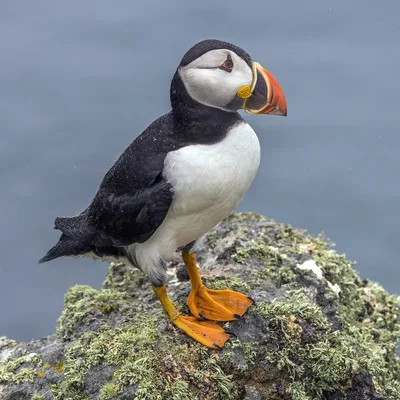
Atlantic puffin (same family), Great auk (same family), Puffin (same family), African Jacana (same order), Bronze-winged Jacana (same order), Comb-crested Jacana (same order), and more.
 VU
Birds
Atlantic puffin
Fratercula arctica
The Atlantic puffin is a small black and white seabird with a bright triangular bill.
Living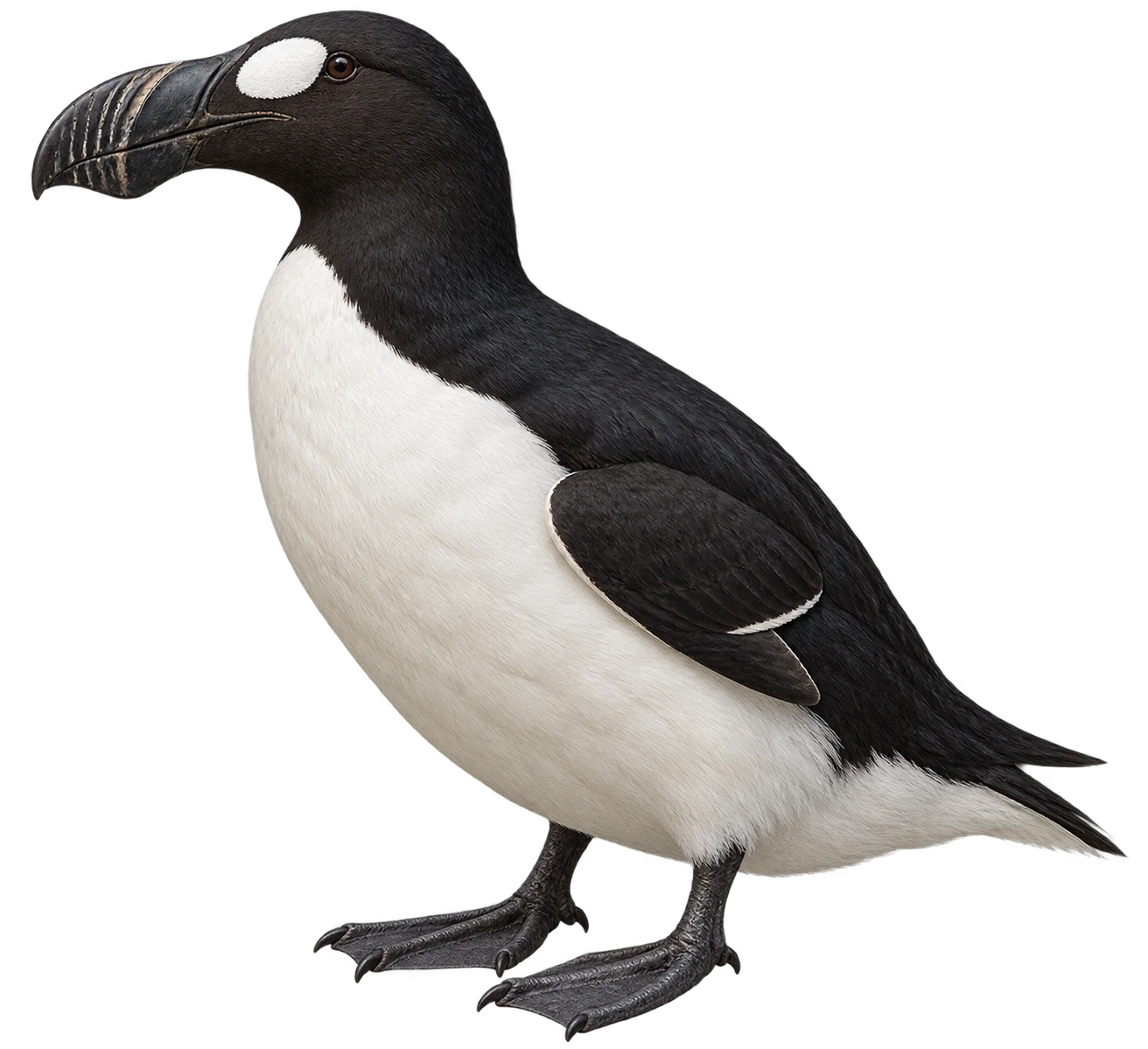 EX
Birds
Great auk
Pinguinus impennis
The great auk was a large flightless seabird of the North Atlantic that swam with its wings and caught fish under water.
ExtinctAI reconstruction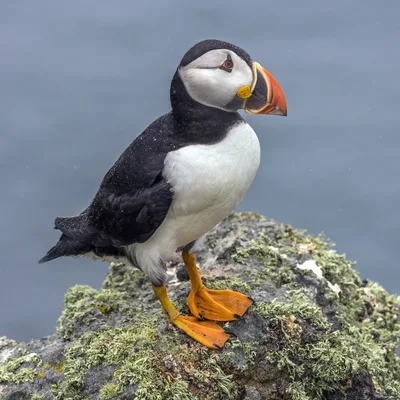
Birds
Puffin
Fratercula
Puffins are diving seabirds.
Living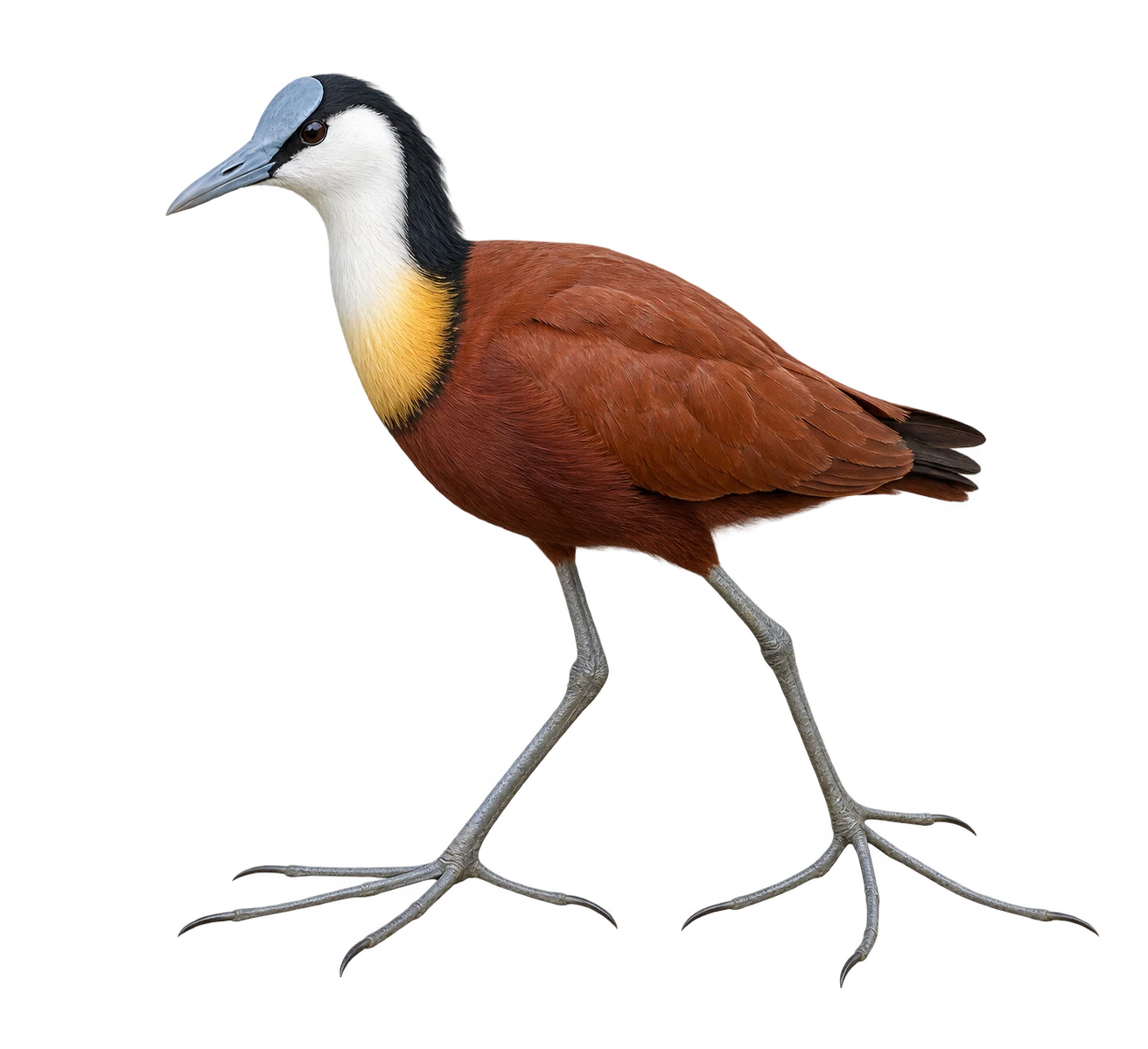
Birds
African Jacana
Actophilornis africanus
Classification and source reference
LivingAI illustration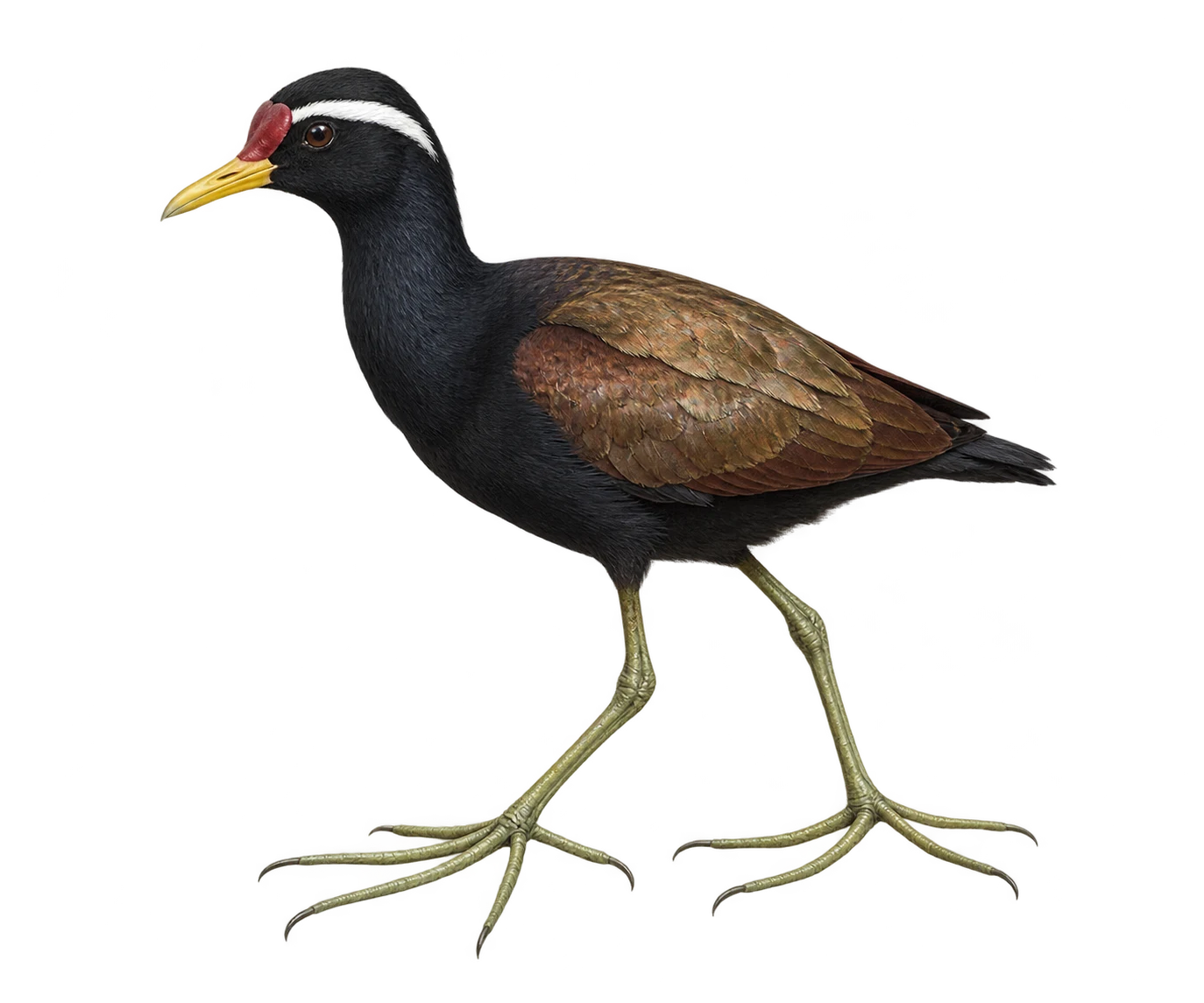
Birds
Bronze-winged Jacana
Metopidius indicus
Classification and source reference
LivingAI illustration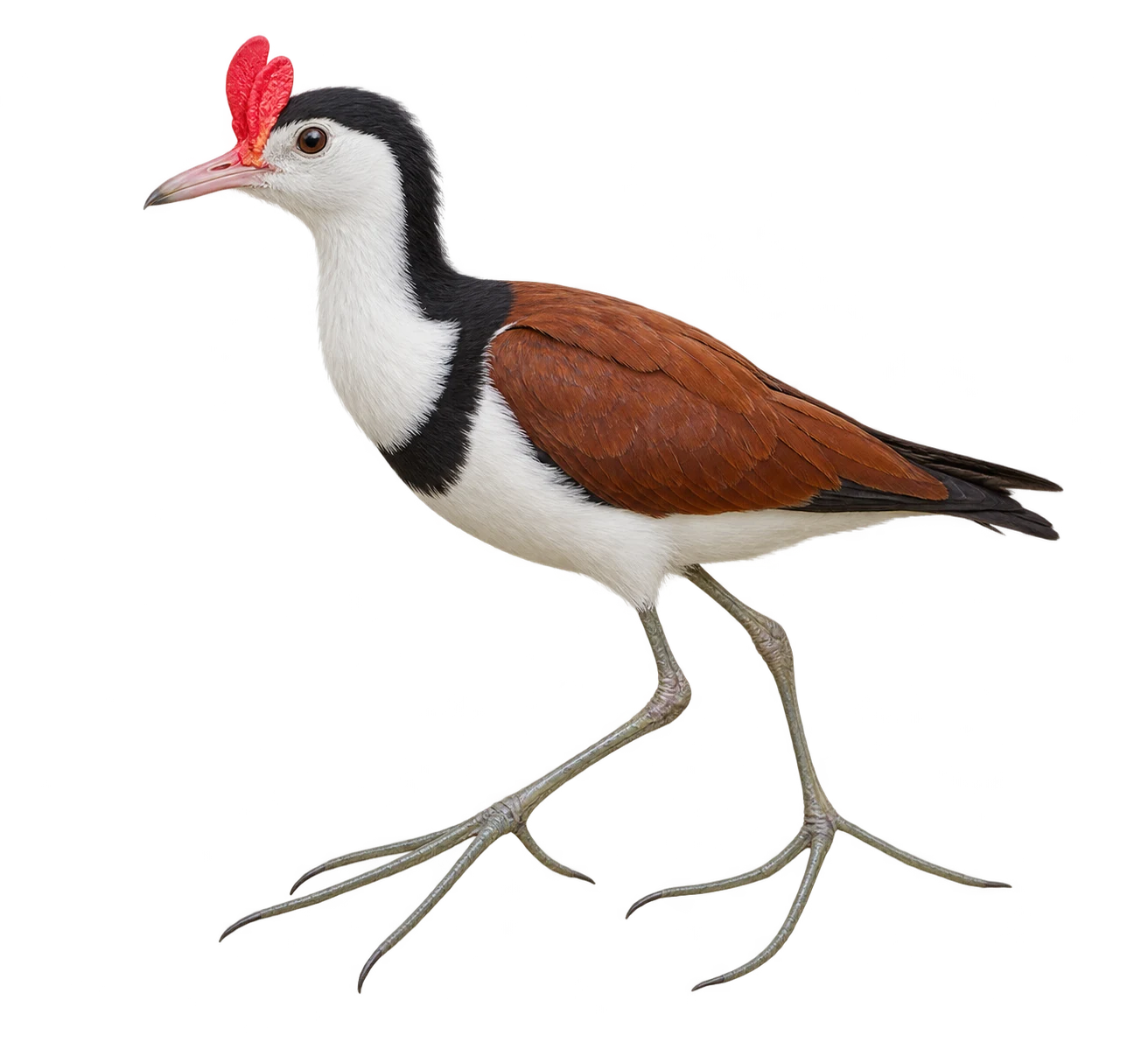
Birds
Comb-crested Jacana
Irediparra gallinacea
Classification and source reference
LivingAI illustration