Adélie penguin
The small bold penguin of the Antarctic coast
Pygoscelis adeliae
Also called Adelie penguin
Living individuals or members of this group exist today. This does not mean they are safe from extinction.
Meet the adélie penguin
The Adelie penguin is the most widespread penguin of the Antarctic coast. It nests on bare rock in huge colonies and lives on krill and small fish.
Images of the adélie penguin
Lifespan in the wild
5 to 16 years
Weight
3.8 to 8.2 kg
Length
70 to 73 cm
Top speed
About 8 km/h
Fact file
Adélie penguin
- Location
- The whole coast of Antarctica and nearby islands
- Habitat
- Polar ice, Coast, Open ocean
- Diet
- Carnivore
- Prey / food
- Antarctic krill, Antarctic silverfish, lanternfish, amphipods, squid, jellyfish
- Predators
- Leopard seal, orca, south polar skua, giant petrel, kelp gull, snowy sheathbill
- Lifestyle
- Colonial and migratory, active by day
- Group name
- Colony
- Name of young
- Chick
- Incubation
- Incubation 32 to 34 days
- Clutch size
- 2 eggs
- Population
- About 3.79 million breeding pairs
- Biggest threat
- Loss of sea ice, and now bird flu
- Distinctive feature
- A white ring around the eye and a bill hidden by black feathers
- Colour
- Black head and back with a white belly
- Skin type
- Feathers
Size
Next to a person
Measurements
Size and speed
- Length
- 70 to 73 cm
- Weight
- 3.8 to 8.2 kg Animal Diversity Web gives a narrower 3.62 to 4.99 kg
- Top speed
- About 8 km/h usual swimming speed
Typical adult ranges. Source: Wikipedia.
Life cycle
Lifespan
- In the wild5 to 16 years
- 016 years
Source: Animal Diversity Web.
Appearance
Colour and coat
- Primary colours
- blackwhite
- Secondary colours
- pink
- Skin type
- feathers
- Male and female
- Slight. The two sexes carry the same plumage. The female has shorter wings and a shorter bill and weighs noticeably less than the male.
Life cycle
Mating and family
- Mating system
- monogamous pairs, often reunited each year
- Social structure
- colonies of hundreds to hundreds of thousands of pairs
- Breeding
- one clutch a year, from October to February
Males reach the colony first and rebuild a nest of stones on the old site. The female lays two eggs, and the pair take turns to incubate in shifts of about 12 days. The sitting bird fasts throughout its shift. Chicks hatch after 32 to 34 days and stay at the nest for about 22 days. They then join a creche and go to sea after 50 to 60 days.
Classification
Taxonomy
- Kingdom
- Animalia
- Phylum
- Chordata
- Class
- Aves
- Order
- Sphenisciformes
- Family
- Spheniscidae
- Genus
- Pygoscelis
- Species
- Pygoscelis adeliae
Conservation
Red List status
- LC
- NT
- VU
- EN
- CR
- EW
- EX
Least Concern on the IUCN Red List
Range
Recorded in 1 country
Habitat layer: tundra, mangrove.
Countries from 1,662 wild records on GBIF (iNaturalist research grade), filtered and checked by hand. Country shapes: Natural Earth. Habitat: RESOLVE Ecoregions 2017, CC BY 4.0. Basemap: Natural Earth.
Habitats
Three things to know
- 1
It builds its nest from stones, because it will not lay on ice.
- 2
Birds in the Ross Sea travel about 13000 kilometres a year following the sunlight.
- 3
It switched from a fish diet to a krill diet about 200 years ago, after sealers and whalers cleared its competitors.
Did you know
Seven more facts
- 1
The bird can leap about 3 metres out of the sea onto an ice edge.
- 2
Its nasal glands strain salt out of its blood, which lets it drink seawater.
- 3
A parent removes salt from the food in its stomach before feeding a chick.
- 4
The stiff tail feathers brush the ground as the bird walks.
- 5
Colonies fertilise Antarctic soil and make it fit for bacteria to live in.
- 6
The penguin will not lay on ice and needs bare rock, however cold the site is.
- 7
A chick on Bechervaise Island puts on about 80 grams a day.
Field notes
How it looks and acts
Field notes
Distinguishing features
- A narrow white ring around a dark eye.
- A short bill almost hidden under black feathers.
- A wholly black head and throat with no stripe or crest.
- Pink legs and feet with black soles.
- A standing length of 70 to 73 cm, smaller than an emperor penguin.
- A stiff brush of tail feathers that sweeps the ground.
Field notes
Unique adaptations
- Nasal salt glands that dump concentrated brine and spare the kidneys.
- A stone nest that keeps the eggs above meltwater on bare rock.
- Thick fat laid down before a fast of two weeks or more on the nest.
- Wings shaped as flippers, driving the bird at about 8 km/h under water.
- A creche system that frees both parents to hunt at the same time.
Field notes
Interesting behaviours
- Tobogganing on its belly across snow to save effort.
- Porpoising through the surface to breathe without losing speed.
- Carrying stones one at a time to build and repair a nest.
- Hunting in groups, which finds krill faster and confuses seals.
- Waiting at an ice edge until one bird enters the water first.
Field notes
Temperament
- Bold, and it will face down an animal many times its size.
- Curious about people, dogs and machines, sometimes to its cost.
- Quarrelsome with neighbours at the nest, with pecking and loud calls.
- Highly social, and it travels, feeds and rests in company.
Field notes
Communication
- A salute display, with the bill thrust up and the body at full height.
- An excited joint display used only between an established pair.
- Calls that let a parent find its own chick in a crowded creche.
- Raised head feathers that signal unease.
- A sideways stare with the eyes rolled down as a threat.
Ecology
Ecological role
The Adelie penguin moves huge quantities of krill from the Southern Ocean onto the Antarctic coast, and its waste builds the soil there.
- It presses on krill, Antarctic silverfish and squid populations near its colonies.
- It feeds leopard seals, orcas, skuas, petrels, gulls and sheathbills.
- Its droppings carry salt and nitrogen ashore and make the ground fit for bacteria.
- Its colony sizes track sea ice, so scientists use it as a measure of change.
Stories
Myths and legends
- In British polar tradition, Cherry-Garrard wrote of the penguin fighting long odds with pluck.
- In the same tradition, the birds were said to push a companion into the water to test for seals.
- In Scott expedition writing, the penguin appears as a creature of fatal curiosity.
- In French naming tradition, the bird honours Adele Dumont d'Urville through a stretch of coast.
People
Relationship with humans
People
Living alongside us
People have met the Adelie penguin mostly at the edge of the world. Sealers and expedition crews ate it, burned its oil and dug its guano. Explorers on Scott's expeditions wrote about it more than any other Antarctic bird. It is now protected, and its colonies draw tourist ships each summer. Scientists count it from orbit as a measure of the state of the sea ice.
- The species has no recorded harmful effect on people.
- A bird defending its nest will peck, but it stands only about 70 cm tall.
- The risk runs the other way, since the birds walk up to dogs, vehicles and visitors.
People
Status, uses and products
- Domestication
- Wild
- As a pet
- Not suitable. No. The Adelie penguin is protected under the Antarctic Treaty and needs sea ice, cold water and live krill. No household can supply any of that.
- Uses
- ecotourismclimate research
- Products
- guano
The full account
About the adélie penguin
The Adelie penguin is the most widespread penguin of the Antarctic continent. It breeds along the whole Antarctic coast and on several sub-Antarctic islands. Adults stand 70 to 73 centimetres long and weigh 3.8 to 8.2 kilograms. The head, throat and back are black and the underside is white. A thin white ring circles each eye, which is the quickest way to name the bird.
It feeds on Antarctic krill, small fish, squid and amphipods. It nests on bare rock in colonies that can hold a quarter of a million pairs. Nests are piles of stones, because the birds will not lay on ice. The world total was put above 10 million mature birds in 2020. The IUCN lists the species as Least Concern, and the population is rising overall.
Name and taxonomy
Crew on the Antarctic voyage of Jules Dumont d'Urville collected the first specimens around 1840. Two French naval surgeons, Jacques Hombron and Honore Jacquinot, described the bird in 1841. They named it Catarrhactes adeliae, after the stretch of coast the ship had called Adelie Land. That coast carried the name of Adele, the wife of Dumont d'Urville. So the penguin probably honours, at two removes, a Frenchwoman who never saw it.
The species moved through several genera before it settled in Pygoscelis. The genus name joins two Greek words meaning rump and leg. Its members are called brush-tailed penguins, after their long stiff tail feathers. Those feathers sweep the ground as the bird walks and prop it up when it stands. No subspecies are recognised, but two genetic lines exist, one of them in the Ross Sea.
Evolution and relatives
The genus Pygoscelis holds three living species. The chinstrap and gentoo penguins are the other two. DNA work places the split of this line from other penguins about 38 million years ago. That split came about 2 million years later than the branching of the king and emperor line. The Adelie itself appeared about 19 million years ago. The chinstrap and gentoo split from each other some 5 million years later.
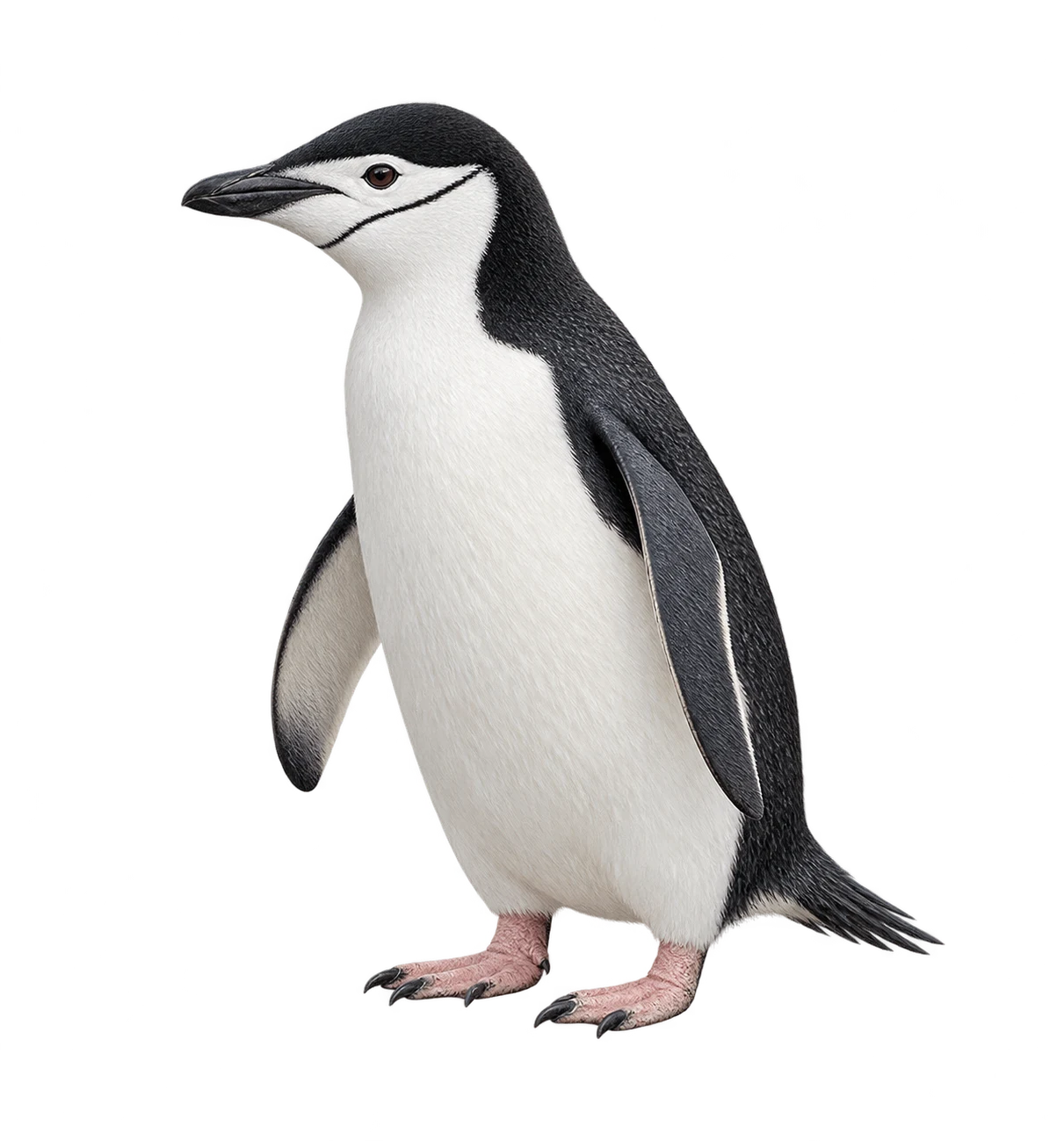
An adult Adelie is hard to confuse with anything else. A young bird with a white throat can pass for a chinstrap penguin at a distance. The chinstrap has a black line under the chin and a longer bill with no feathering. On the Adelie the black of the face runs below the eye. All three brush-tailed penguins eat krill and fish, which probably keeps them apart by area rather than by food.
Appearance
The Adelie is a middle-sized penguin, 70 to 73 cm long. Weight ranges from 3.8 to 8.2 kg across the year, and a bird is heaviest before it fasts. Animal Diversity Web gives a narrower band of 3.62 to 4.99 kg. The sexes look alike, though the female has shorter wings and a shorter bill. She also weighs noticeably less than her mate.
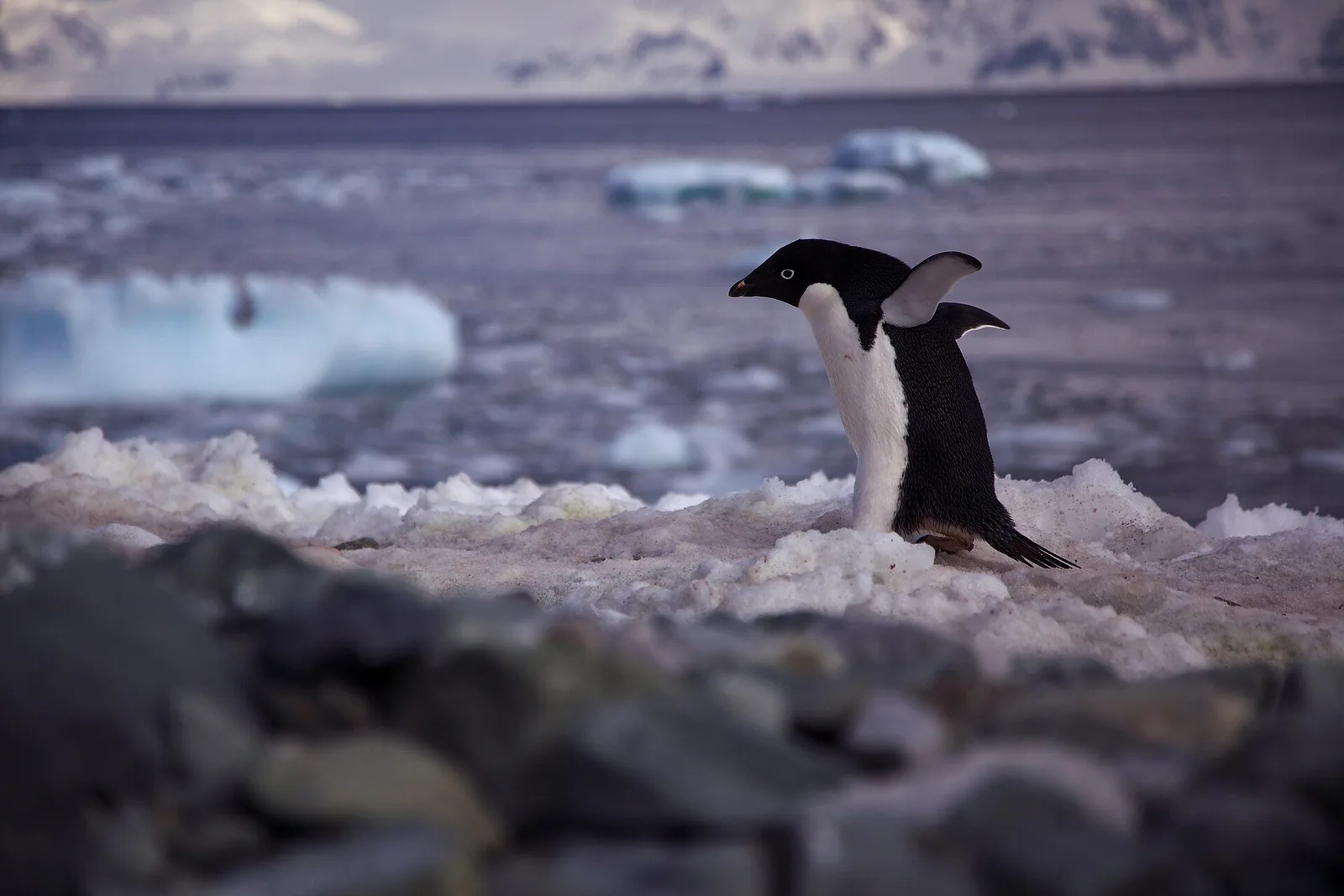
The back, head and throat are black and the belly is clean white. Black feathers cover most of the bill and leave only the tip bare. The bare tip is black, sometimes with faint reddish brown marks. The top of the flipper is black, edged white behind, and the underside is white with a thin black front line. The legs and feet are pink and mostly bare of feathers.
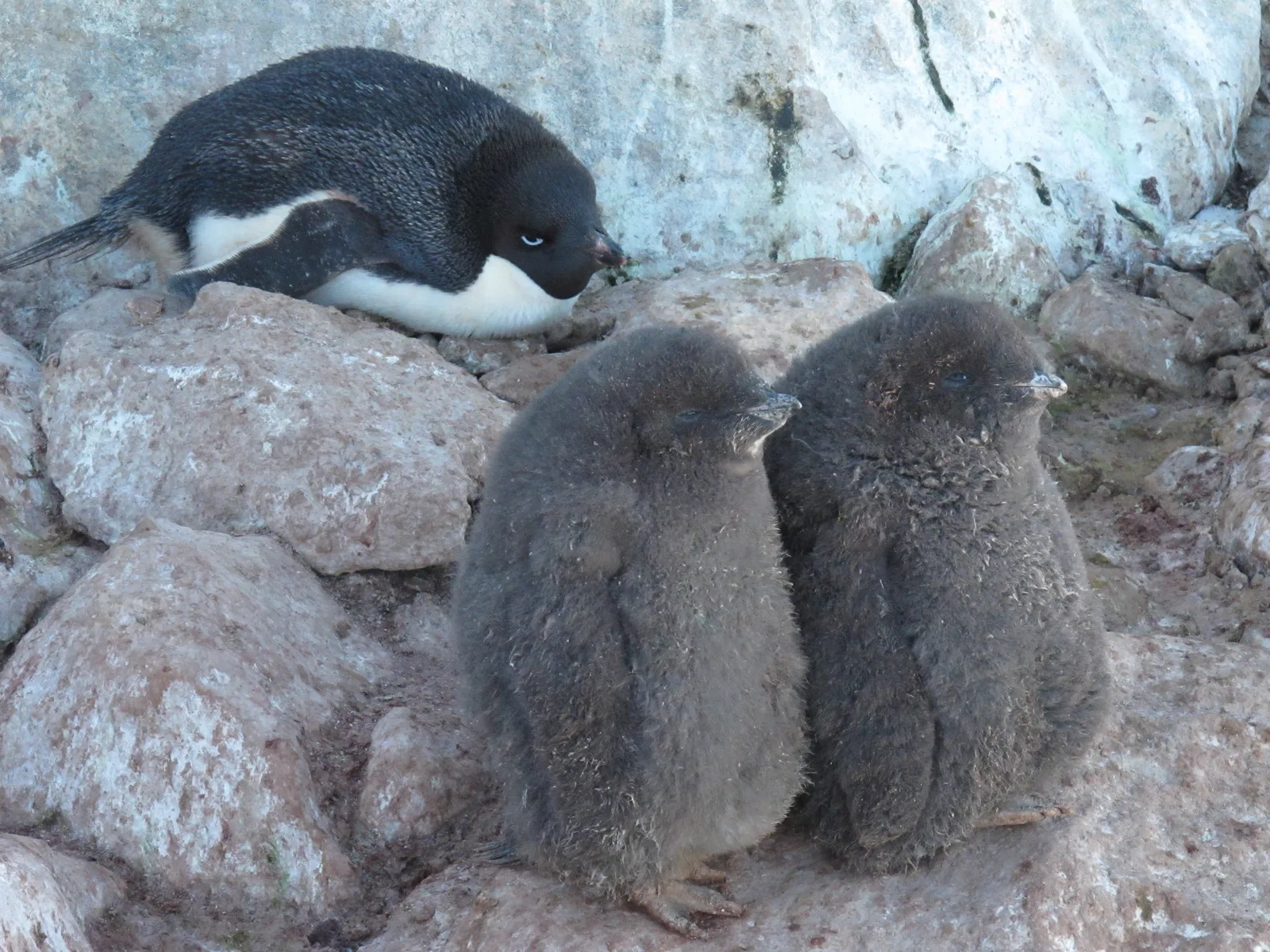
A newly hatched chick wears silvery grey down, darker on the head. Within about ten days it moults into a coat of smoky grey down. A third moult, 7 to 9 weeks after hatching, gives it the adult pattern. A young bird is smaller, bluer above, and has a white chin instead of a black one. It does not gain the full white eye ring until it is at least a year old.
Habitat and range
Only four penguins nest on the Antarctic continent, and this is one of them. Colonies ring the coast and reach the South Orkneys, South Shetlands and South Georgia. Birds are much scarcer north of 60 degrees south. Strays have reached Australia, New Zealand and southern South America. The British Antarctic Survey counts it among the few penguins that belong to the continent itself.
A breeding colony needs bare rocky ground that stays clear of drifting snow. Birds pick slopes where the wind or the angle of the sun keeps the drifts away. At the start of the season the colony may sit up to 100 km from open water. That distance shrinks through the summer as the pack ice breaks up. After breeding, most adults move onto floes or ice shelves to moult.
Winter is spent in the pack ice rather than on land. Most birds move north of about 73 degrees south, where some daylight still reaches them. They can live far south of open water as long as the ice keeps cracking open. Birds have been found feeding in winter where pack ice covers 80 per cent of the sea. In January 2026 a single Adelie turned up at a research station 200 km inland.
Diet and feeding
Antarctic krill is the main food, and ice krill and sea krill are taken too. Antarctic silverfish and lanternfish make up most of the fish in the diet. Amphipods, glacial squid and other cephalopods fill out the list. The mix changes from one part of the coast to another. Jellyfish were once thought to be swallowed by accident, and birds are now known to seek them out.
A breeding adult swims 5 to 120 km out from the colony to feed. It works the top 70 metres of the water column and can dive to 175 m. It brings back 300 to 650 grams of food for the chicks in one trip. Food is stored in the stomach and brought up part-digested at the nest. Birds hunt in groups, which finds food faster and keeps seals at bay.
Eggshell fragments in the colonies record 38000 years of diet. They show a sharp switch from fish to krill that began about 200 years ago. Sealers cut down the Antarctic fur seal from the late eighteenth century. Whalers then removed most of the baleen whales in the early twentieth century. Both groups ate krill, so their loss probably left a surplus the penguins now take.
Behaviour and social life
The Adelie is a social bird and spends its life among others of its kind. Groups travel together from the pack ice to the nesting beach each spring. Outside the nest site the birds hold no territory at all. A pair defends only the small patch of stones it has built. Neighbours fight often, and a bird will peck and yell to keep its ground.
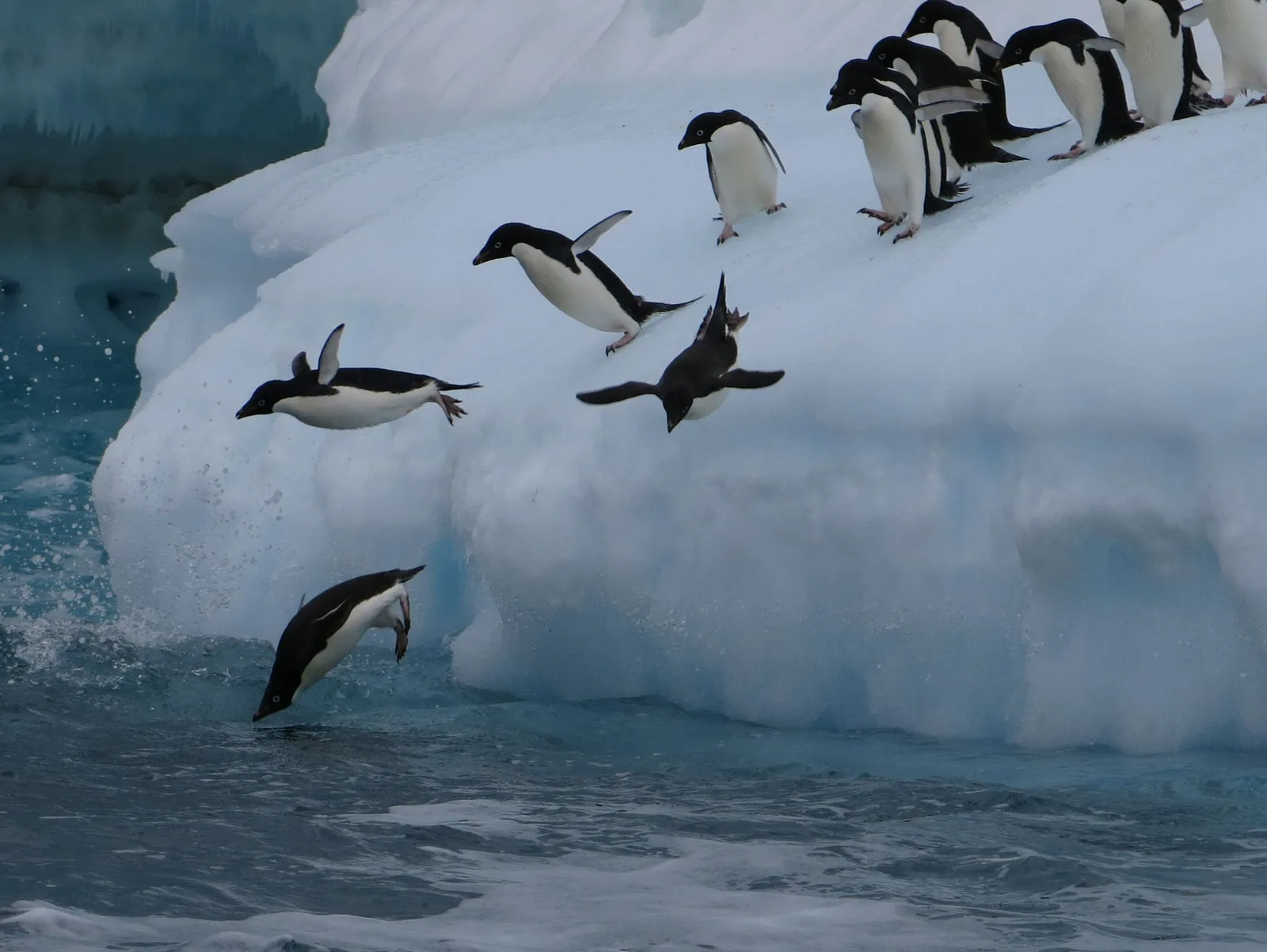
On land the bird walks upright with a rolling gait. It can also hop forward on both feet or toboggan on its belly across snow. In the water it usually swims at about 8 kilometres per hour. It porpoises, breaking the surface in a low arc to breathe without slowing. It can leap about 3 metres clear of the water onto a rock or an ice edge.
Early explorers wrote a great deal about the bird's nerve. Apsley Cherry-Garrard compared the penguins to self-important children in his book on Scott's expedition. Members of Scott's party watched penguins walk straight up to a team of sled dogs. A film crew in 2018 recorded one Adelie driving a giant petrel away from emperor penguin chicks. The bird will challenge animals far larger than itself.
Communication and senses
Display and posture carry most of the messages in a crowded colony. A male advertises with a salute, standing at his full height and thrusting his bill upward. He performs it about 4 metres from a female, and it also announces his patch of ground. A raised crest of head feathers signals unease. A sideways stare with the crest up and the eyes rolled down is a threat.
Calls carry identity as well as mood. A pair knows each other's voice, and each parent knows the call of its own chick. That skill probably matters most in a crowd of thousands, where sight alone would fail. Returning birds recognise both their mate and last year's nest site. Mates use a louder, more excited display that only the two of them use together.
Reproduction and life cycle
The season runs from October to February. Males arrive first and rebuild a nest of stones on last year's site. Before laying, both birds feed hard to lay down the fat they will need. The female lays two eggs, the second shortly after the first. Pairs often reunite year after year, unless one bird fails to return.
The two parents take turns to incubate, in shifts of about 12 days. The sitting bird eats nothing and does not even leave to pass waste. It fires its droppings clear of the nest instead. Incubation takes 32 to 34 days, and Animal Diversity Web gives about 36 days. The chicks hatch downy and helpless and cannot feed themselves.
Both parents feed the brood for about 22 days at the nest. The chicks then gather in a creche, which lets both adults go to sea. The parents keep feeding their own chick inside the creche. Chicks moult into their first proper plumage and go to sea after 50 to 60 days. Females first breed at 3 to 6 years old and males at 4 to 6. Birds that start young breed less successfully at first and better in later years.
Predators and threats
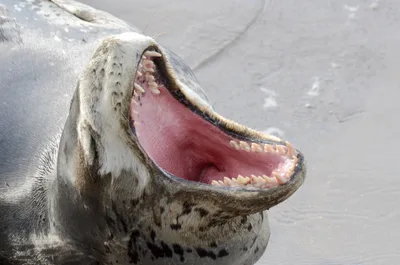
Leopard seals take adults, mostly at the edge of the pack ice. Penguins reduce the risk by swimming in groups and by leaving the water quickly near a beach. Orcas and giant petrels kill adults now and then. South polar skuas take eggs and unguarded chicks, and so do kelp gulls and sheathbills. A leopard seal is no danger ashore, since it comes on land only to rest.
Sea ice is the larger problem. The bird lives on the ice but must have bare land to breed, so both matter. Numbers on the Antarctic Peninsula fell by 65 per cent over 25 years as the ice thinned. Bird flu is a new arrival, having reached South America in 2022. Researchers found more than 532 dead Adelies on Heroina Island in 2024, with H5N1 suspected.
Population and conservation
The IUCN lists the Adelie penguin as Least Concern. The 2020 assessment put the total above 10 million mature birds. The habitat is continuous rather than broken into fragments, which helps. A census in 2014 combined satellite images with field counts. Guano stains the rock, so a colony shows up as a red-brown patch from orbit.
That census found 3.79 million breeding pairs in 251 colonies. More than 40 of those colonies had never been counted before. The total was 53 per cent higher than a count made 20 years earlier. Peninsula colonies have shrunk since the early 1980s, and East Antarctic ones have grown more. A colony of 1.5 million birds was found in 2018.
The Danger Islands hold 751527 pairs in at least five colonies. BirdLife International names the group an important bird area for that reason. The Windmill Islands colony grew from 30000 pairs in the 1950s to close to 200000. Single colonies swing widely, so a global figure probably hides a lot of local change. The species is protected across the Antarctic Treaty area.
Relationship with humans
Sealers and explorers used the birds from the eighteenth century to the early twentieth. They took them for food, for oil and for bait. Their guano was dug out and sold as fertiliser. The species is now protected in most countries. Colonies are a main draw for Antarctic tourism.
The bird has no harmful effect on people at all. Scientists watch it as a measure of a warming continent. Penguins now nest on beaches that used to stay under ice all year. George Murray Levick studied the largest colony at Cape Adare over one full season. His notes on their sexual behaviour were held back as indecent and published only in 2012.
In culture and myth
The Antarctic has no native human population, so the Adelie probably carries no old folklore. Its place in culture appears to come instead from the age of polar exploration. In British polar tradition, Apsley Cherry-Garrard wrote of the bird's gallant pluck against long odds. In the same tradition, Levick described birds pushing one of their number into the water first. In French naming tradition, the species carries the name of Adele Dumont d'Urville.
Cherry-Garrard called the penguins little people of the Antarctic world. Scott's diary complained that their curiosity walked them straight into the dog teams. Those accounts probably fixed the penguin in English writing as comic and brave at once. The 2018 BBC series Spy in the Snow showed one bird defending another species' chicks. That clip spread widely and probably gave the species a new reputation for nerve.
A sentence with a dotted underline is inferred: it describes the group the animal belongs to, or is a reading of the sources, rather than a measured or reported fact about this species.
Questions
Adélie penguin questions, answered
Where do Adelie penguins live?
Along the whole coast of Antarctica and on nearby islands such as the South Orkneys and South Shetlands. They spend the winter out in the pack ice. Only four penguin species nest on the continent itself.
How big is an Adelie penguin?
It is 70 to 73 cm long and weighs 3.8 to 8.2 kg. Animal Diversity Web gives a narrower range of 3.62 to 4.99 kg. It is one of the smaller penguins.
What do Adelie penguins eat?
Mostly Antarctic krill, with silverfish, lanternfish, amphipods and squid. They also seek out jellyfish. A parent brings back 300 to 650 g of food in one trip.
How fast can an Adelie penguin swim?
About 8 kilometres per hour on a normal journey. It can also leap roughly 3 metres clear of the water onto rock or ice.
How deep can an Adelie penguin dive?
It usually feeds in the top 70 metres of water. Dives to 175 m have been recorded.
Why do Adelie penguins build nests from stones?
Because they will not lay on ice and need bare ground. Stones lift the eggs clear of meltwater. Birds collect them one at a time and often steal from a neighbour.
How many eggs does an Adelie penguin lay?
Two, laid a short time apart. Both parents incubate in shifts of about 12 days. The eggs hatch after 32 to 34 days.
How long do Adelie penguins live?
Between 5 and 16 years in the wild. Birds that start breeding at three or four survive less well at first. Those that survive breed more successfully later.
Are Adelie penguins endangered?
No. The IUCN lists them as Least Concern, with more than 10 million mature birds. Colonies on the Antarctic Peninsula are shrinking, and East Antarctic colonies have grown more than enough to offset that.
What eats Adelie penguins?
Leopard seals take adults at the ice edge, and orcas and giant petrels take a few. South polar skuas, kelp gulls and sheathbills take eggs and chicks.
Why is it called an Adelie penguin?
It was named after Adelie Land in Antarctica. That coast was named by Jules Dumont d'Urville after his wife Adele. The bird was described for science in 1841.
Do Adelie penguins migrate?
Yes. Ross Sea birds cover about 13000 km a year, following the edge of the sea ice to stay in daylight. The longest track measured 17600 km.
How do Adelie penguins drink in Antarctica?
They take in seawater with their food and strip out the salt. Glands in the nose excrete a very concentrated brine. Adults also remove salt from food before feeding it to chicks.
How many Adelie penguins are there?
A 2014 census using satellite images found 3.79 million breeding pairs in 251 colonies. That was 53 per cent more than a count made 20 years earlier.
Do Adelie penguins mate for life?
Not strictly, but pairs often reunite. Both birds recognise the old nest site and each other's call. A pair splits when one of the two fails to return.
What is the difference between an Adelie and a chinstrap penguin?
A chinstrap has a thin black line under its chin and a longer bare bill. An adult Adelie has a wholly black head, a white eye ring and a bill covered in feathers.
Food web
Prey and food
- antarctic krill
- antarctic silverfish
- lanternfish
- amphipods
- squid
- jellyfish
Food web
Predators
 Leopard seal
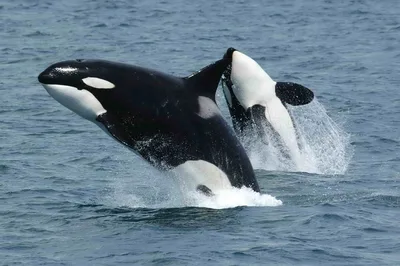 Orca
- south polar skua
- giant petrel
- kelp gull
- snowy sheathbill
Ecological equivalents
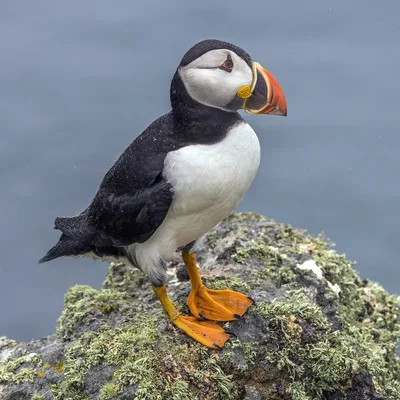
Related species on this site
Chinstrap Penguin (same genus), Gentoo penguin (same genus), African penguin (same family), Crested Penguin (same family), Emperor penguin (same family), Galapagos Penguin (same family), and more.
Birds
Chinstrap Penguin
Pygoscelis antarcticus
Classification and source reference
LivingAI illustration LC
Birds
Gentoo penguin
Pygoscelis papua
The gentoo penguin is the third largest penguin and the fastest swimmer of the family.
Living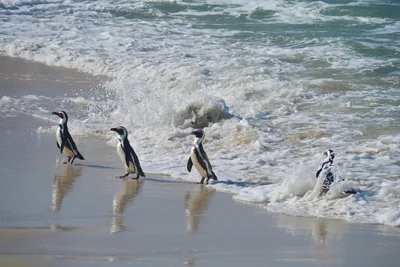 CR
Birds
African penguin
Spheniscus demersus
The African penguin is the only penguin that breeds on the African continent.
Living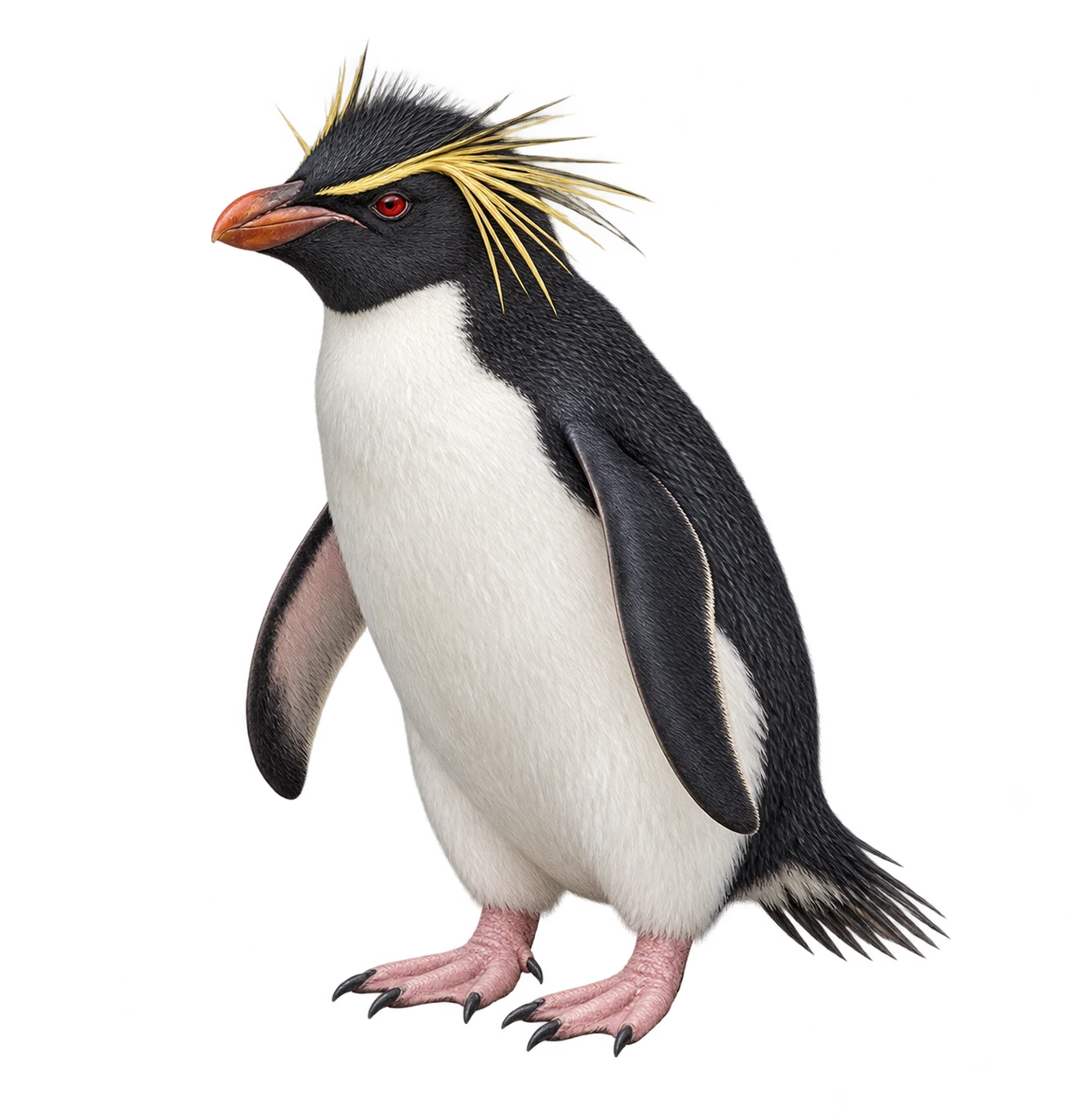
Birds
Crested Penguin
Eudyptes
Classification and source reference
LivingAI illustration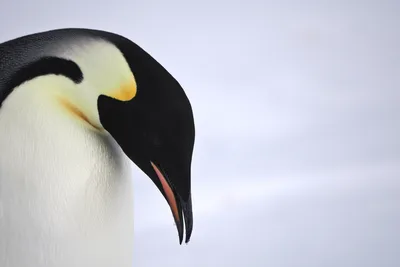 EN
Birds
Emperor penguin
Aptenodytes forsteri
The emperor penguin is the largest penguin and the only bird that breeds through the Antarctic winter.
Living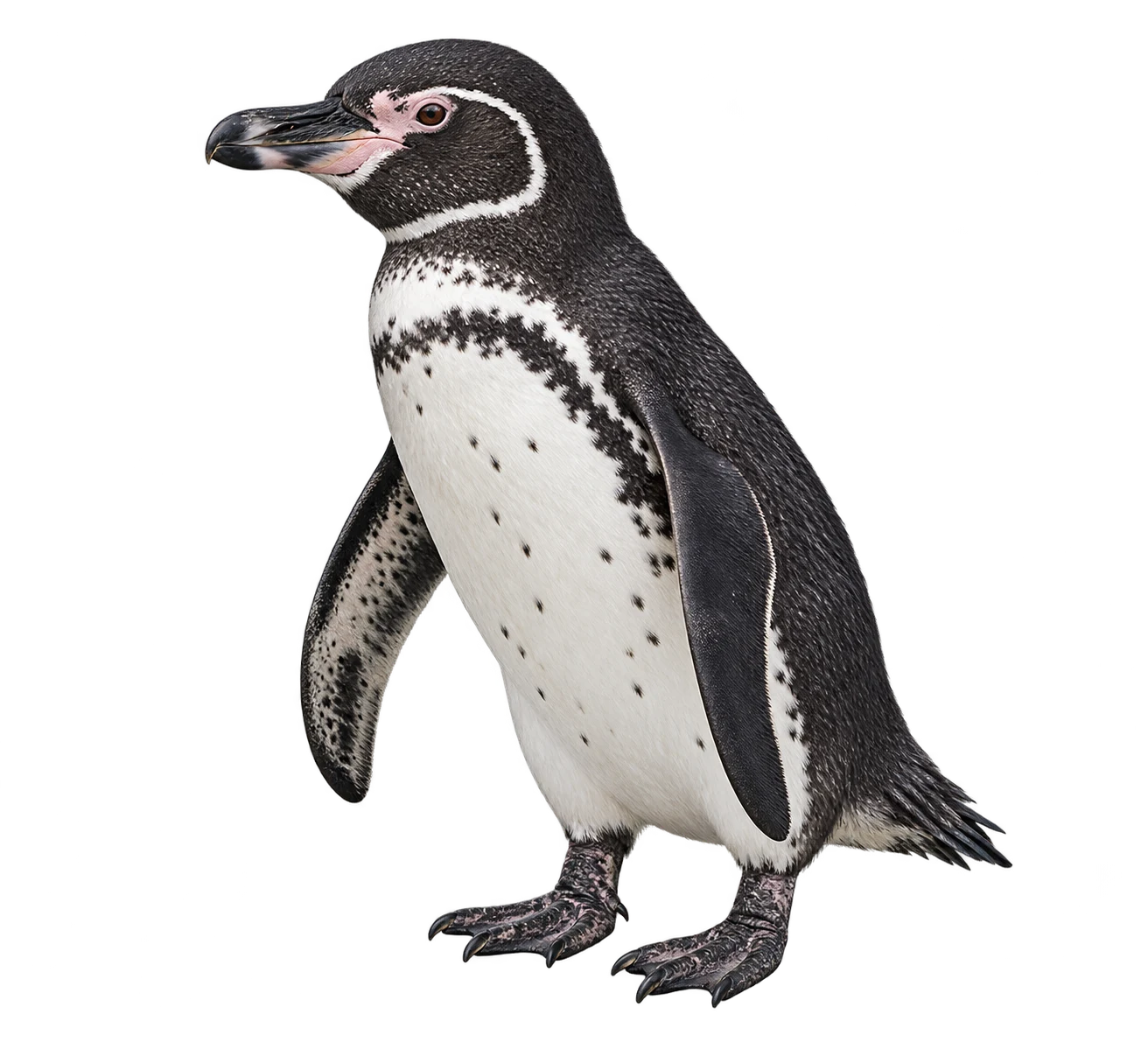
Birds
Galapagos Penguin
Spheniscus mendiculus
Classification and source reference
LivingAI illustration