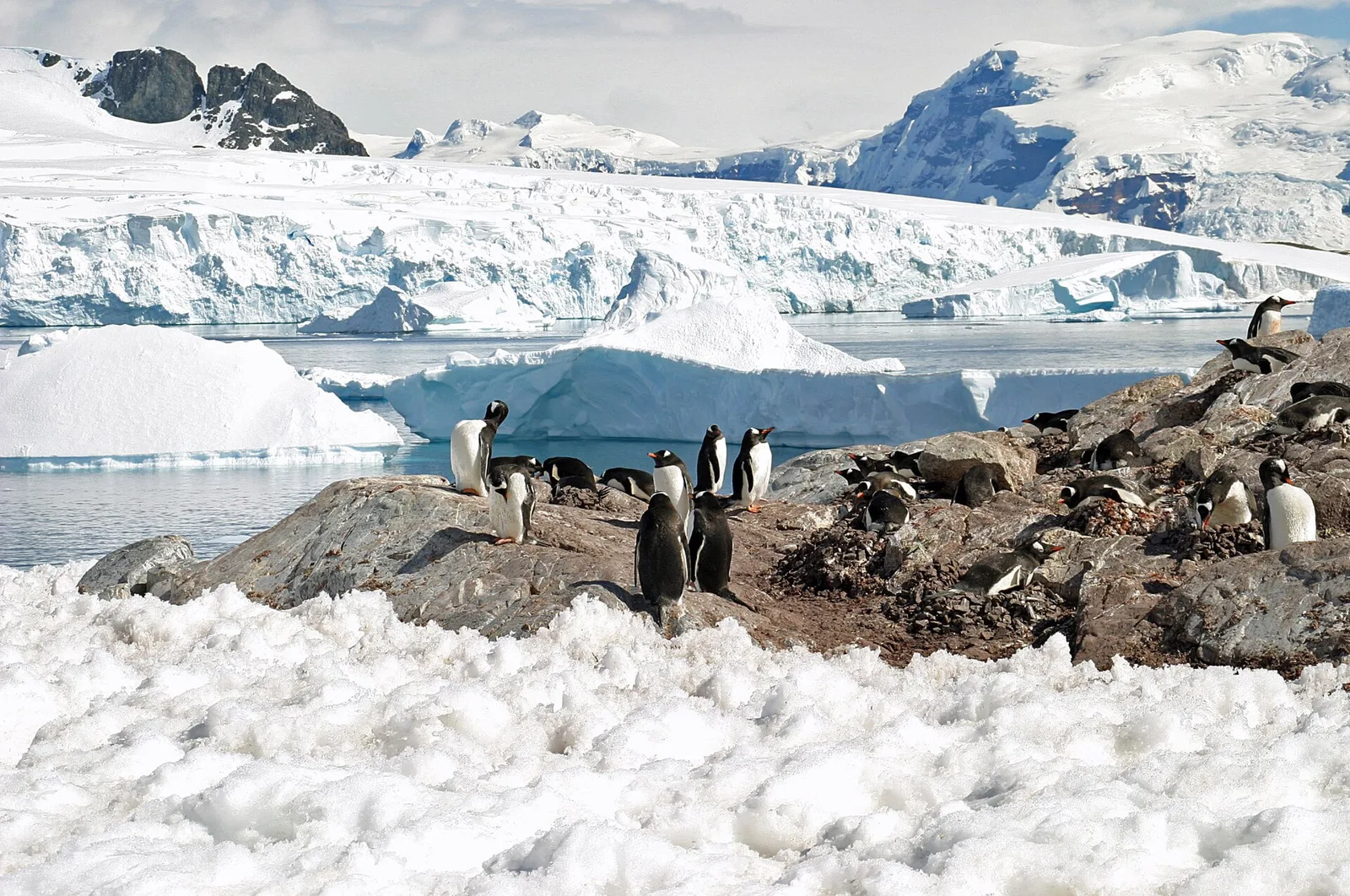
Gentoo penguin
The fastest swimmer of all the penguins
Pygoscelis papua
Also called Johnny penguin
Living individuals or members of this group exist today. This does not mean they are safe from extinction.
Meet the gentoo penguin
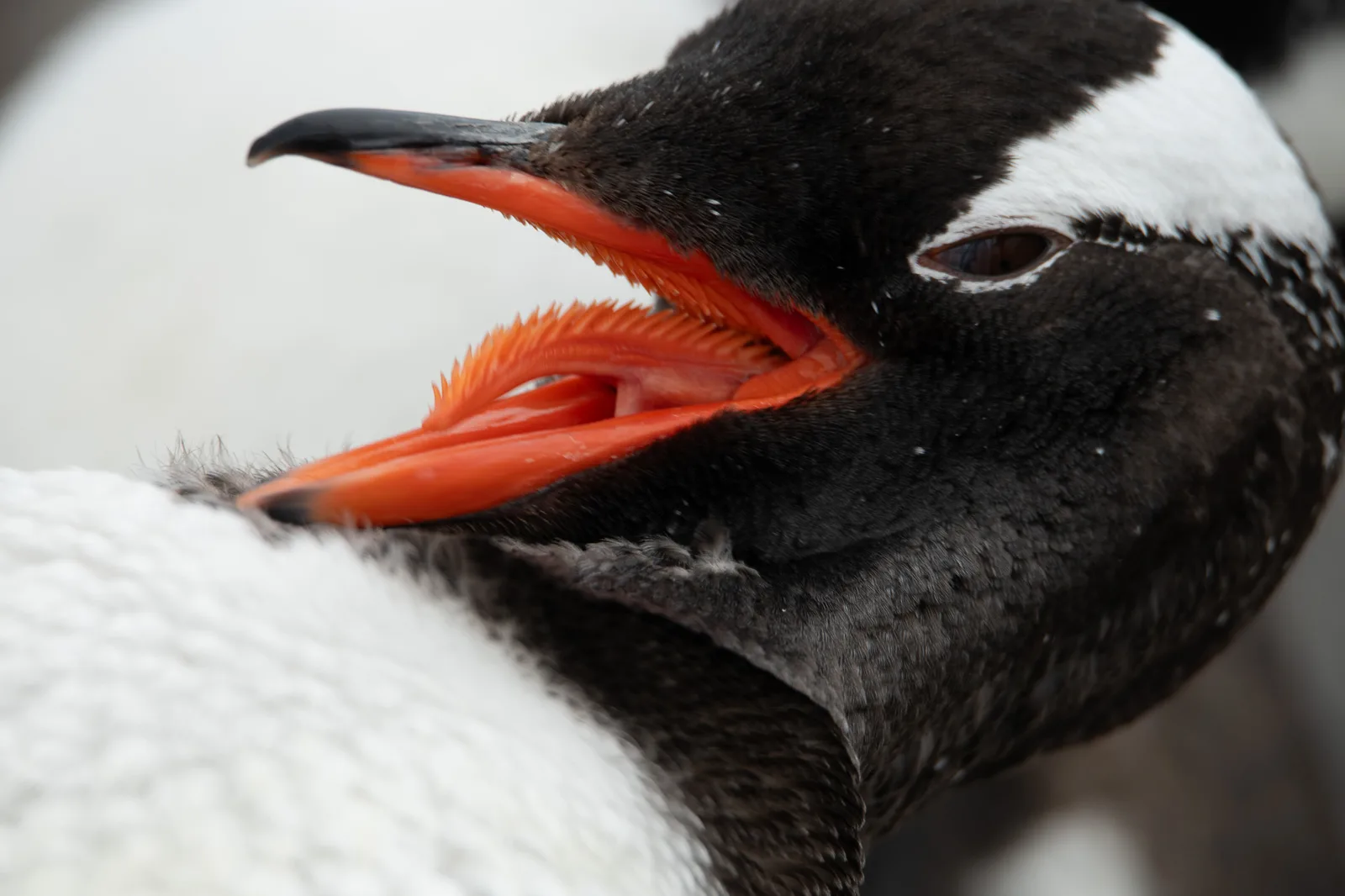
The gentoo penguin is the third largest penguin and the fastest swimmer of the family. A white band across the head and a bright orange-red bill separate it from every other penguin.
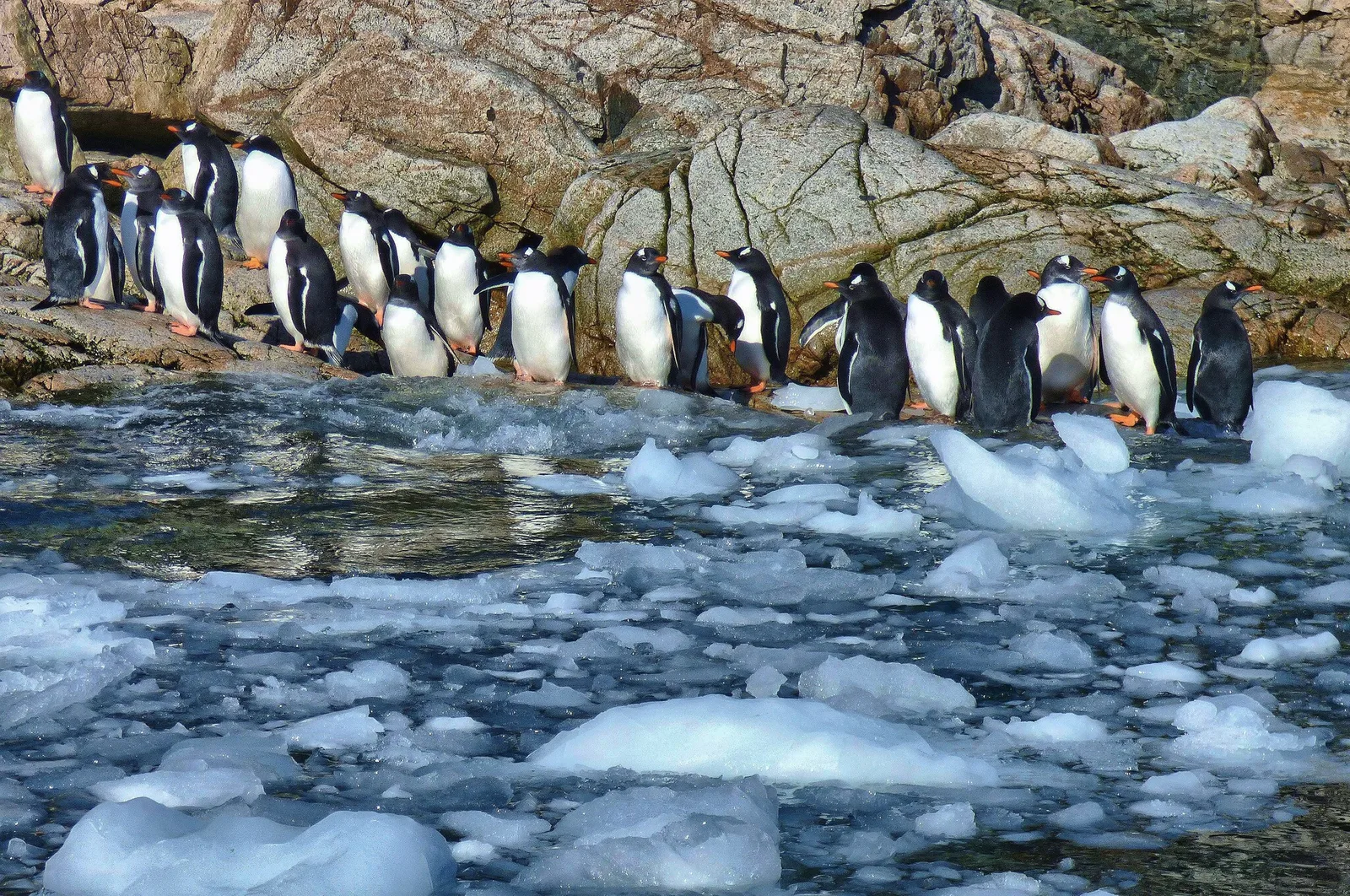
Images of the gentoo penguin
Lifespan in the wild
About 13 years
Weight
4.5 to 8.5 kg
Length
70 to 90 cm
Top speed
Up to 36 km/h
Fact file
Gentoo penguin
- Location
- Falkland Islands, South Georgia, Kerguelen and the Antarctic Peninsula
- Habitat
- Coast, Open ocean, Polar ice
- Diet
- Piscivore
- Prey / food
- Krill, shrimp, rockcod, icefish, squid, octopus
- Predators
- Leopard seals, sea lions and orcas; skuas take eggs and chicks
- Lifestyle
- Colonial, coastal and active by day
- Group name
- Colony
- Name of young
- Chick
- Incubation
- Incubation 34 to 36 days
- Clutch size
- Two eggs
- Population
- About 628,000 birds, or some 387,000 breeding pairs
- Biggest threat
- Fishing, pollution and disturbance at the colonies
- Distinctive feature
- A white band across the top of the head
- Colour
- Black above and white below, with an orange-red bill
- Skin type
- Feathers
Size
Next to a person
Measurements
Size and speed
- Length
- 70 to 90 cm
- Tail
- About 15 cm
- Weight
- 4.5 to 8.5 kg heaviest just before the moult
- Top speed
- Up to 36 km/h under water
Typical adult ranges. Sources: Wikipedia, Animal Diversity Web.
Life cycle
Lifespan
- In the wildAbout 13 years
- In captivityUp to 41 years
- 041 years
The pale bar is the record. Sources: Animal Diversity Web, AnAge.
Appearance
Colour and coat
- Primary colours
- blackwhite
- Secondary colours
- orangegrey
- Skin type
- feathers
- Male and female
- The two sexes look the same. Males are larger in bill length, flipper length and height, and their calls are higher and louder.
Life cycle
Mating and family
- Mating system
- monogamous within a season, with some lifelong bonds
- Social structure
- colonies of up to a few thousand pairs
- Breeding
- one clutch a year, with a replacement clutch if the first is lost
Males choose a flat, snow-free site and call females in. Both birds build a bowl of stones and the female lays two eggs three days apart. The pair swap incubation duty daily for 34 to 36 days. Chicks stay in the nest about 30 days and then join a crèche. They go to sea at 80 to 100 days and are independent by 85 to 105 days.
Classification
Taxonomy
- Kingdom
- Animalia
- Phylum
- Chordata
- Class
- Aves
- Order
- Sphenisciformes
- Family
- Spheniscidae
- Genus
- Pygoscelis
- Species
- Pygoscelis papua
Conservation
Red List status
- LC
- NT
- VU
- EN
- CR
- EW
- EX
Least Concern on the IUCN Red List
Range
Recorded in 7 countries
- Antarctica
- Argentina
- Ashmore and Cartier Islands
- Chile
- Falkland Islands
- South Georgia and the South Sandwich Islands
- French Southern and Antarctic Lands
Habitat layer: tundra, mangrove.
Countries from 3,618 wild records on GBIF (iNaturalist research grade), filtered and checked by hand. Country shapes: Natural Earth. Habitat: RESOLVE Ecoregions 2017, CC BY 4.0. Basemap: Natural Earth.
Habitats
Three things to know
- 1
A gentoo can swim at up to 36 kilometres per hour, faster than any other penguin.
- 2
Pairs build a nest from stones, and a good stone can win a male his mate.
- 3
The species name papua is a mistake, because no penguin has ever lived in New Guinea.
Did you know
Seven more facts
- 1
The gentoo has the longest tail of any penguin.
- 2
Its orange bill takes its colour from pigments in the krill it eats.
- 3
A moulting bird cannot swim and loses about 200 grams a day.
- 4
The Falkland Islands hold around 40% of the world population.
- 5
A chick can recognise its own parents' calls among thousands of birds.
- 6
The longest dive on record lasted only two minutes.
- 7
Gentoo Linux is named after this bird.
Field notes
How it looks and acts
Field notes
Distinguishing features
- A white band running across the crown between two white eye patches.
- A bright orange-red bill.
- A long stiff tail that sweeps from side to side on land.
- Pale webbed feet with long black claws.
- Black upperparts and a clean white front.
- Grey down on chicks until the first moult.
Field notes
Unique adaptations
- Countershading hides the bird from predators above and below.
- A salt gland removes the seawater that comes in with the food.
- Metabolism slows during a dive, which stretches the time under water.
- Oil from a gland near the tail keeps the fine plumage waterproof.
- Retinas tuned to blue and green suit the light at depth.
Field notes
Interesting behaviours
- Pairs collect stones and guard the pile against neighbours.
- Parents swap places on the eggs once a day.
- Older chicks gather into crèches while both parents fish.
- Adults fast on shore through the 25 days of the moult.
- Birds feed close inshore rather than far out to sea.
Field notes
Temperament
- Gentoos are noisy and quarrelsome inside the colony.
- A bird defends only the ground within reach of its own nest.
- Serious fighting is rare and most disputes end in hissing.
- The species appears calm around visitors on the breeding beaches.
Field notes
Communication
- A loud trumpet with the head thrown back is the best known call.
- A returning bird points its bill up and squawks to announce itself.
- Low hisses warn a mild intruder, and grunts follow a closer one.
- Chicks beg with sharp chirps and whistle until their first moult.
- Bowing at the nest signals that a bird is ready to take over the eggs.
Ecology
Ecological role
The gentoo penguin moves energy from the shallow sea onto the shore, and it feeds the predators of both.
- It takes krill, rockcod and squid from water close to the coast.
- It feeds leopard seals, orcas, sea lions, skuas and giant petrels.
- It shares its colonies with other penguins without competing, because each fishes at its own depth.
- Its colonies carry fleas, ticks and tapeworms that depend on the birds.
Stories
Myths and legends
- In Anglo-Indian usage, gentoo named a Hindu, and the bird probably picked the word up by accident.
- In Falkland Islands usage, the bird is the Johnny penguin and a local falcon is the Johnny rook.
- In free software culture, Gentoo Linux takes its name from the fastest swimming penguin.
- In eighteenth century natural history, Forster's name placed this bird in New Guinea by mistake.
- In modern cinema, six gentoos carried the 2011 film of Mr. Popper's Penguins.
People
Relationship with humans
People
Living alongside us
Sealers once killed gentoo penguins in huge numbers for oil, and skins became caps and slippers. Egg collecting went on into the late 1980s. Those uses have ended. The birds now draw tourists to the Falklands and the Antarctic Peninsula, and that traffic is itself listed as a pressure. Zoos keep the species, and the oldest known bird lived in one.
- The gentoo penguin has no known harmful effect on people.
- A bird at the nest will hiss and jab with its bill if crowded.
- Like other colonial seabirds, it carries ticks and fleas in large numbers.
People
Status, uses and products
- Domestication
- Wild
- As a pet
- Not suitable. A gentoo penguin needs cold seawater, a stony beach and a steady supply of fish and krill. Only a zoo with a chilled pool can hold one. The Antarctic Treaty and national law protect the species.
- Uses
- wildlife tourismzoo displayoil and skins, in the past
- Products
- None recorded
The full account
About the gentoo penguin
The gentoo penguin is a large penguin of the Southern Ocean. A broad white band crosses the top of its head like a bonnet. The bill is bright orange-red, and the tail is the longest of any penguin. Chicks are grey on the back and white in front.
An adult is 70 to 90 centimetres long and weighs 4.5 to 8.5 kilograms. That makes it the third largest penguin, after the emperor and the king. It swims faster than any other penguin, at up to 36 kilometres per hour. It breeds on the Falkland Islands, South Georgia, Kerguelen and the Antarctic Peninsula.
Pairs build a nest of small stones and defend it fiercely. The IUCN rates the species as Least Concern. Some colonies are growing and others are falling fast.
Name and taxonomy
The scientific name of the gentoo penguin is Pygoscelis papua. Pygoscelis means rump-tailed. The name fits the way the long tail sweeps from side to side as the bird walks. Johann Reinhold Forster gave the first description in 1781. He set the type locality in the Falkland Islands.
The species name is an error. Forster believed the bird lived in Papua, and no penguin has ever lived in New Guinea. The nearest gentoos are over 6,000 km to the south, on Macquarie Island. Some writers blame a doubtful claim made in 1776 by the French naturalist Pierre Sonnerat. He put the king penguin in the same place, and he had never been there.
The English word gentoo is also unclear. It was an Anglo-Indian term that marked out Hindus from Muslims. It may come from the Portuguese gentio, and the white head patch may have suggested a turban. Another idea traces it to Johnny penguin, an old sailors' name for the bird. The Johnny rook, a bird of prey that hunts near the colonies, probably took its name from that.
Evolution and relatives
Three species make up the genus Pygoscelis, and the gentoo is one of them. The other two are the Adelie penguin and the chinstrap penguin. DNA puts the split of the genus from other penguins at about 38 million years ago. That is roughly 2 million years after the line that led to the emperor and king penguins. The Adelie parted from the rest about 19 million years ago. The chinstrap and the gentoo separated about 14 million years ago.
Taxonomists once recognised only two subspecies. A study in 2020 argued that the gentoo is four separate species that look much alike. The proposed names cover northern, southern, eastern and South Georgia birds. The International Ornithological Congress took the results in 2021 but kept them as subspecies. A 2026 study of ten colonies again proposed four species, and it added the Kerguelen birds. The question is probably not settled yet.
Appearance
An adult measures 70 to 90 cm long and weighs 4.5 to 8.5 kg. Weight swings hard through the year. A male peaks near 8.5 kg just before the moult and drops to about 4.9 kg before mating. A female peaks at 8.2 kg and can fall to 4.5 kg while she guards the chicks. Northern birds average 700 g heavier and 10 cm longer than southern ones.
The head is black with two white wedges around the eyes, joined by a band over the crown. The bill is orange-red, and the colour comes from carotenoid pigments in the krill. The webbed feet are pale and carry long black claws. The tail holds 14 to 18 feathers and runs about 15 cm long. No other penguin has a tail that long, and the group is called the brush-tailed penguins.
The back is black and the front is white, a pattern known as countershading. The feathers are very fine, and a square inch of skin can carry up to 70 of them. Oil from a gland near the tail keeps the plumage waterproof. Males are larger than females in bill length, flipper length and height. A chick keeps grey down until its first moult at about 14 months.
Habitat and range
The gentoo penguin lives only in the Southern Hemisphere, between 45 and 65 degrees south. Only about 13% of the world total lives south of the Antarctic pack ice. The Falkland Islands hold around 40% of all gentoos. Other main colonies sit on South Georgia, the South Sandwich Islands and Kerguelen. Smaller groups breed on Macquarie, Heard, the Crozet Islands, the South Shetlands and the Antarctic Peninsula.
Colonies always sit on ice-free ground. Some are right on the shore and some are well inland, up to 2 km on South Georgia. Birds pick flat ground near 115 metres above the sea, where the snow melts first. A high, flat site is less likely to flood when the melt starts. North-facing slopes are preferred, which is thought to be about catching the sun.
The one thing every colony needs is small pebbles, usually under 5 centimetres across. Inland colonies nest between tufts of grass. Those colonies shift a little each year, because the birds trample the grass flat. The species is recorded in 20 countries on GBIF.
Diet and feeding
Gentoo penguins live on fish, crustaceans and cephalopods. The mixture changes sharply through the year. In February and March crustaceans supply about 10% of what a gentoo eats. From March to June that share rises to about 75%. From June to October grey rockcod supply 90% of what the birds eat. Cephalopods stay near 10% all year round.
Around the Falklands the birds take fish, squat lobsters and squid in roughly equal shares. They are opportunists and switch to whatever is close and plentiful. Most feeding happens in shallow water near the colony. A typical dive reaches only 3 to 20 metres, though some go to 70 metres. The longest recorded dive lasted two minutes. Metabolism slows under water, which stretches the time a bird can stay down.
The gentoo is the fastest underwater swimmer of all penguins, at up to 36 km/h. Seawater comes in with the food, so the diet is very salty. A gland above the eyes strips the salt out and drips brine from the bill tip. Parents bring food back and bring it up again for the chicks.
Behaviour and social life
Gentoo penguins breed in colonies that can hold over 2,000 pairs. Nests sit about a metre apart. A bird defends only the square metre around its own nest. Stones are the currency of the colony, and birds guard and steal them. A male can win a female by offering her a good stone.
A neighbour that comes too close gets a jab of the bill and a low hiss. Two birds may lock bills and try to twist each other away. Fights with bill and flipper happen, but they are rare.
Most gentoos stay near the breeding ground all year. They move only when ice closes the site. From January the adults make long feeding trips and put on weight fast. That period runs about 55 days and prepares them for the moult. The moult itself takes 25 days, during which the bird cannot swim and must fast. A moulting gentoo loses about 200 grams a day.
Communication and senses
The best known call is a loud trumpet, given with the head thrown back. Males call at a higher pitch and at greater volume than females. A bird returning from the sea points its bill up and squawks to announce itself. The mate on the eggs answers with a loud display or with a bow and a low hiss. The changeover on the nest usually takes about three minutes.
A mild threat draws a low hiss and a closer one draws grunts. Chicks beg with high chirps and use a whistle call until their first moult. A chick can pick out its own parents among thousands of calling adults. Bill rubbing and face rubbing appear to strengthen the bond between a pair.
Sight appears to be the leading sense in the water. The retina is most sensitive to green, blue and violet, the colours that reach depth. The same eye works poorly once the bird comes ashore.
Reproduction and life cycle
A male picks a flat patch with little snow and stands over it. He points his bill straight up and calls to bring females in. A female who approves joins him in trumpeting or bowing. Pairs stay together for the season, and some bonds last for life. The divorce rate is under 20 percent, which is low for a penguin. A female that changes mate usually picks one with a better breeding record.
Both birds build the nest, a shallow bowl of stones. It stands 10 to 20 cm high and measures about 45 cm across. A medium nest can hold over 1,700 pebbles, some of them stolen. Laying starts between June and mid-August and ends between late October and late November. The female lays two greenish-white eggs three days apart. Each egg weighs around 130 g.
Both parents incubate and swap duty every day. The eggs hatch after 34 to 36 days, usually together or a day apart. A newly hatched chick weighs about 96 grams and is very weak. Parents guard it in the nest for about 30 days. The chicks then gather with others in a crèche while both parents fish.
Young birds moult into subadult plumage and go to sea at 80 to 100 days. They reach independence between 85 and 105 days. A gentoo can breed at two years old, but most wait until three or four. If a clutch is lost, the female can lay again later in the same season. A wild bird lives about 13 years on average. The oldest bird on record, a zoo penguin called Olde, reached 41 years.
Predators and threats
No land animal takes a healthy adult gentoo. The danger is in the water. Leopard seals wait off the colony and catch birds as they come and go. They take most chicks in the days when the young first enter the sea. Sea lions, Weddell seals, fur seals and orcas all take gentoos as well.
Brown skuas are the main killers of eggs and chicks on land. They work the edge of the colony, where a chick stands alone. A crèche makes it hard to pick out one bird, so it works as a defence. Giant petrels kill chicks and finish off sick adults. Kelp gulls and snowy sheathbills also snatch eggs and young. Skuas on King George Island have injured adult gentoos in territorial disputes.
Crowded colonies carry heavy loads of fleas and ticks. The tick Ixodes uriae attacks bare skin on the feet, face and ear canals of chicks. Several tapeworms live in the gut and arrive with the crustaceans the birds eat.
Population and conservation
The IUCN listed the gentoo as Least Concern in 2019, with a stable trend. Animal Diversity Web gives a world total of about 628,000 birds. The Australian Antarctic Program counts roughly 387,000 breeding pairs. No other penguin of the sub-Antarctic islands has a smaller total than that.
Numbers are rising quickly in the maritime Antarctic. As the region warms, the birds settle ground further south that they could not use before. Some long-held sites are falling fast at the same time. On Bird Island, South Georgia, the colony lost two thirds of its birds over 25 years.
Pollution, fishing, hunting and visitor traffic all press on the species. Protected areas cover breeding ground on Macquarie Island and Heard Island. Longer monitoring of the colonies is the measure most often proposed. iNaturalist holds 5,588 observations of the species.
Relationship with humans
Sealers once boiled penguins down for oil to burn. Hundreds of thousands died, and some colonies never recovered. People also used gentoo skins for caps, clothes, slippers and purses. Sailors and islanders gathered the eggs in quantity into the late 1980s.
None of that trade appears to continue today. Farm animals have trampled nests on some islands. Tourism probably brings more people to the colonies now than any other activity. That traffic counts as one of the pressures on the species. The gentoo does no harm to people at all.
In culture and myth
The gentoo appears to carry two old confusions in its name. One placed the bird in New Guinea and the other borrowed a word from British India. Falkland sailors called it the Johnny penguin, and a local falcon became the Johnny rook.
The bird gave its name to Gentoo Linux. Daniel Robbins first called that project Enoch Linux and then renamed it. He picked the bird for its speed in the water, which no other penguin matches. The system builds its software from source and tunes it to each machine for speed. A penguin is also the general mascot of Linux.
Six gentoos appeared in the 2011 film of Mr. Popper's Penguins. The script named them Captain, Lovey, Loudy, Bitey, Stinky and Nimrod. The species is probably the penguin most visitors to the Falklands meet.
A sentence with a dotted underline is inferred: it describes the group the animal belongs to, or is a reading of the sources, rather than a measured or reported fact about this species.
Questions
Gentoo penguin questions, answered
What is a gentoo penguin?
It is the third largest penguin, marked by a white band across the head and an orange-red bill. It breeds on sub-Antarctic islands and on the Antarctic Peninsula.
How big is a gentoo penguin?
Adults stand 70 to 90 cm long and weigh 4.5 to 8.5 kg. Northern birds average 700 g heavier than southern ones.
How fast can a gentoo penguin swim?
Up to 36 km/h under water. No other penguin swims faster.
How deep do gentoo penguins dive?
Most dives reach only 3 to 20 metres, and a few go down to 70 metres. The longest dive recorded lasted two minutes.
What do gentoo penguins eat?
Fish, krill, shrimp and squid, in shares that change through the year. Grey rockcod supply 90% of the diet from June to October.
Where do gentoo penguins live?
They breed between 45 and 65 degrees south. The Falkland Islands hold around 40% of the world total.
Why do gentoo penguins collect stones?
They build the nest from a pile of small pebbles. Stones are scarce, so birds guard them, steal them and give them as courtship gifts.
How many eggs do gentoo penguins lay?
Two, laid three days apart and weighing around 130 g each. Both parents incubate them for 34 to 36 days.
How long do gentoo penguins live?
About 13 years in the wild. A zoo bird named Olde reached 41 years, the oldest penguin on record.
Do gentoo penguins mate for life?
They pair for a season and many keep the same mate for years. Fewer than 20 percent of pairs split up between seasons.
What eats gentoo penguins?
Leopard seals, sea lions, orcas and other seals take them at sea. Brown skuas and giant petrels take eggs and chicks on land.
Are gentoo penguins endangered?
No. The IUCN rated them Least Concern in 2019, though some colonies are falling fast while others grow.
Why is Gentoo Linux called Gentoo?
The system is named after this penguin because it is the fastest swimmer of the family. The name points at the speed gained from building software for one machine.
How do gentoo penguins cope with salt water?
A gland above the eyes pulls salt out of the blood. The brine runs out through the tip of the bill.
What is the difference between a gentoo and an Adelie penguin?
The two are close relatives in the same genus, but the gentoo is larger and has a white head band and an orange bill. The gentoo also stores less fat and hunts closer to shore.
Why is the gentoo penguin called papua?
Forster thought the bird lived in New Guinea when he named it in 1781. The nearest gentoos are over 6,000 km further south.
Food web
Prey and food
- krill
- shrimp
- rockcod
- icefish
- squid
- octopus
Food web
Predators
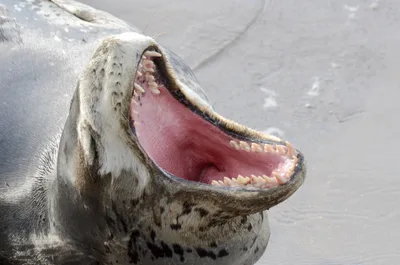 Leopard seal
- sea lions
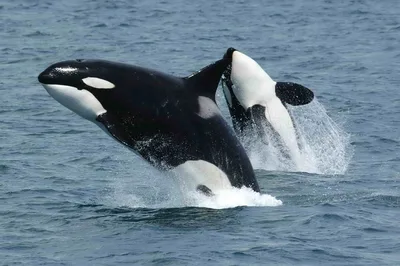 Orca
- skuas
Ecological equivalents
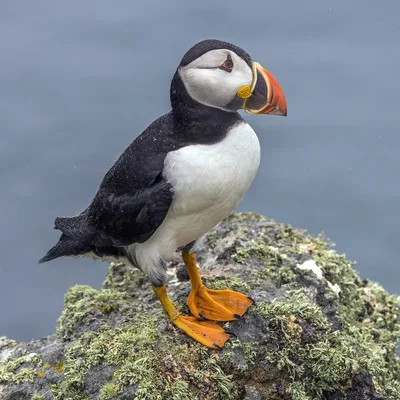
Related species on this site
Adélie penguin (same genus), Chinstrap Penguin (same genus), African penguin (same family), Crested Penguin (same family), Emperor penguin (same family), Galapagos Penguin (same family), and more.
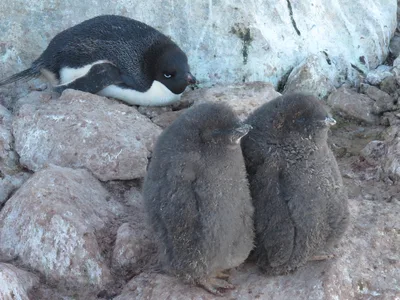 LC
Birds
Adélie penguin
Pygoscelis adeliae
The Adelie penguin is the most widespread penguin of the Antarctic coast.
Living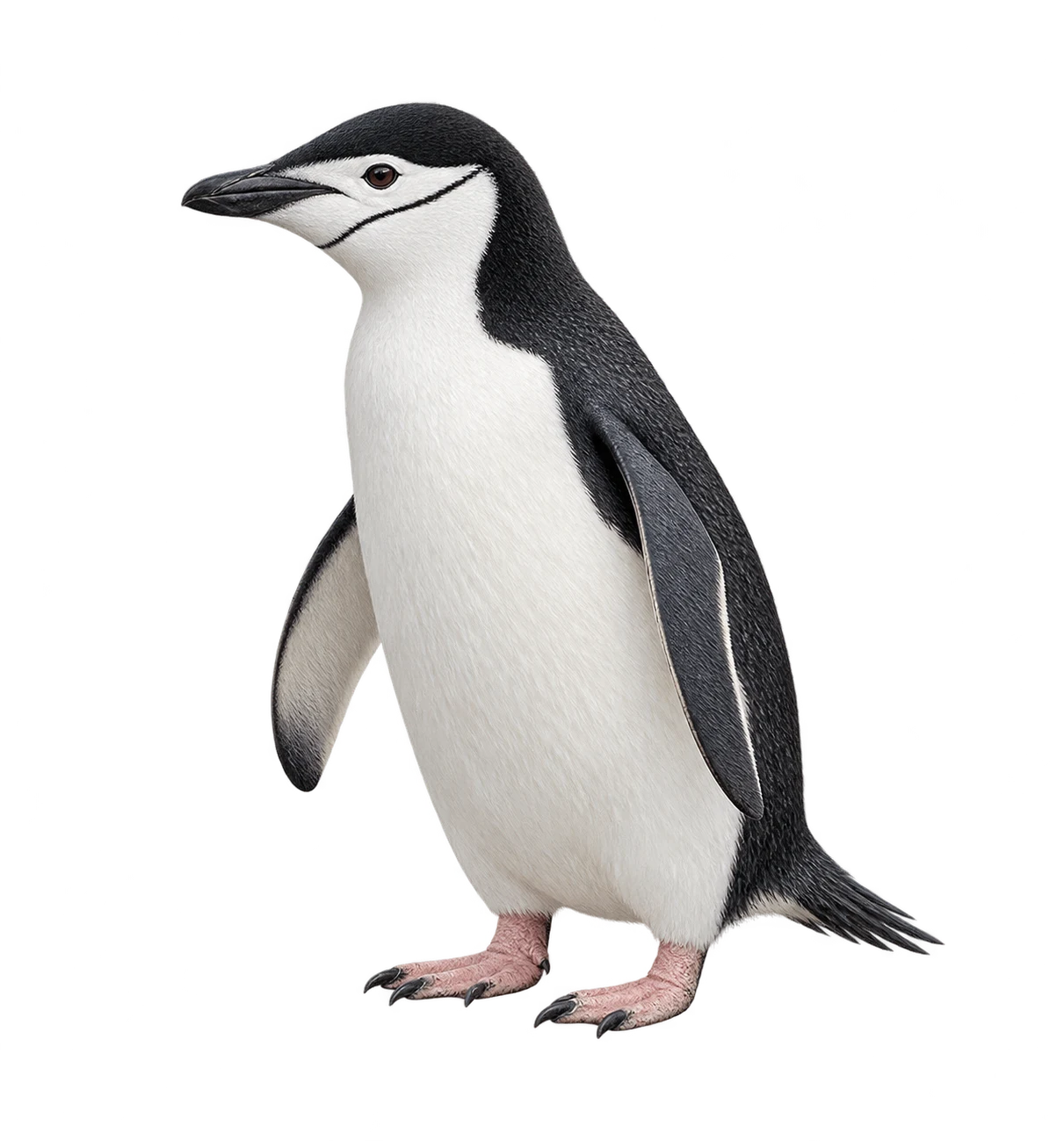
Birds
Chinstrap Penguin
Pygoscelis antarcticus
Classification and source reference
LivingAI illustration CR
Birds
African penguin
Spheniscus demersus
The African penguin is the only penguin that breeds on the African continent.
Living
Birds
Crested Penguin
Eudyptes
Classification and source reference
LivingAI illustration EN
Birds
Emperor penguin
Aptenodytes forsteri
The emperor penguin is the largest penguin and the only bird that breeds through the Antarctic winter.
Living
Birds
Galapagos Penguin
Spheniscus mendiculus
Classification and source reference
LivingAI illustration