Walrus
The tusked seal that hauls itself onto the Arctic ice
Odobenus rosmarus
Also called Atlantic walrus, Pacific walrus, Morse
Living individuals or members of this group exist today. This does not mean they are safe from extinction.
Meet the walrus
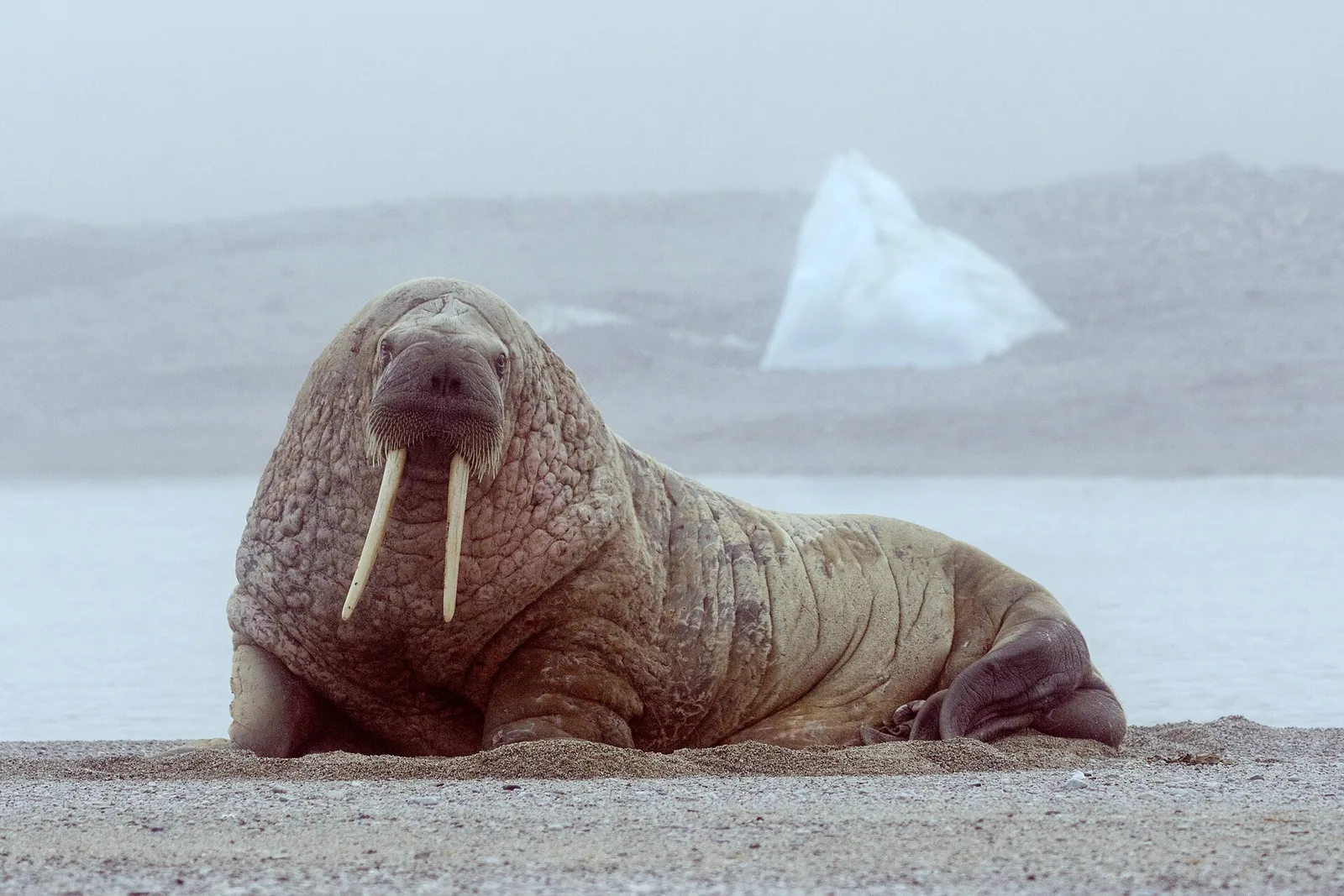
The walrus is a huge tusked seal of the Arctic seas that feeds on clams from the seabed and rests in crowds on the ice. It is the only living member of its family, and the loss of sea ice now threatens it.
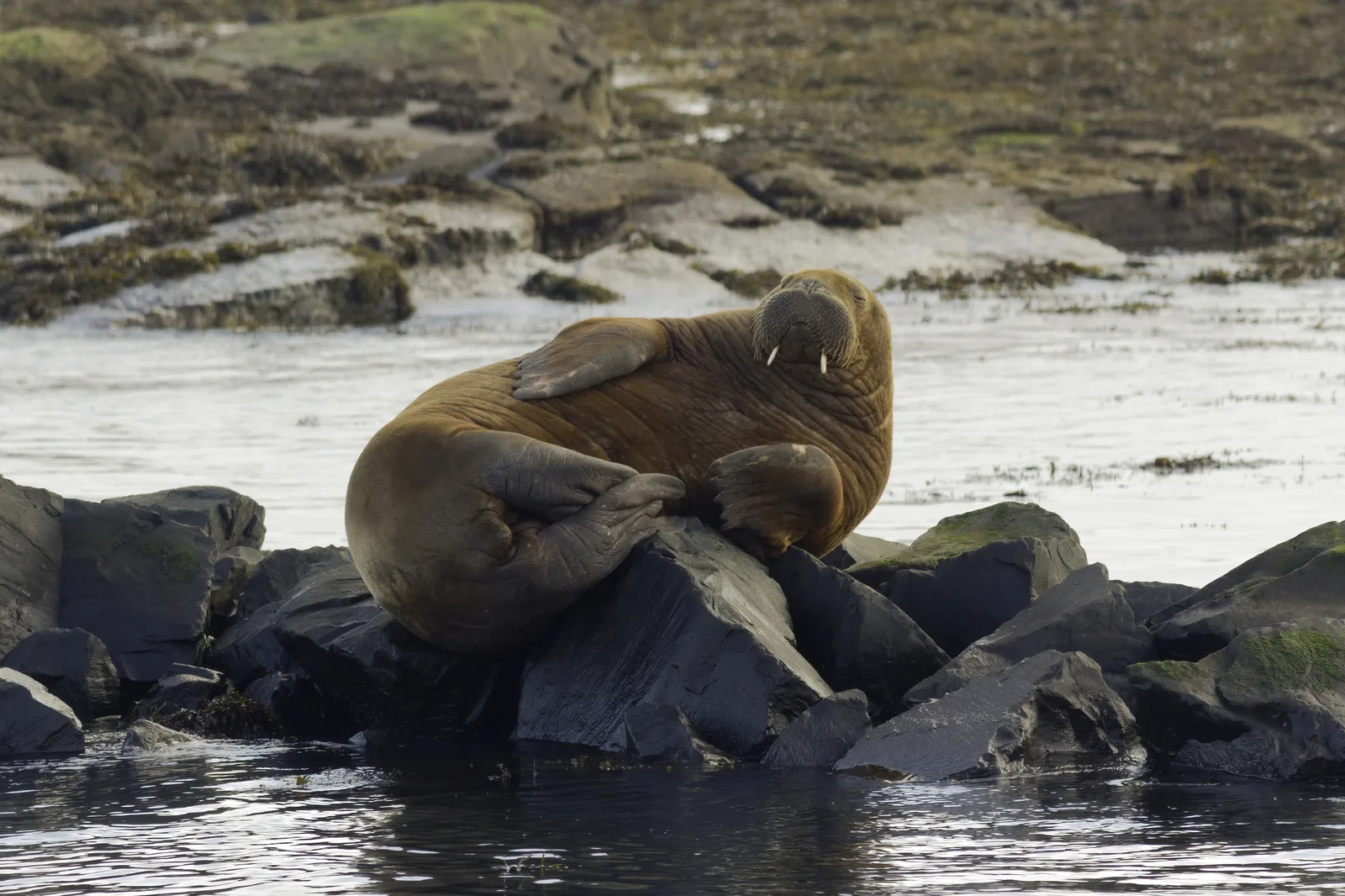
Images of the walrus
Lifespan in the wild
30 to 40 years
Weight
0.6 to 1.5 t
Length
2.7 to 3.2 m
Fact file
Walrus
- Location
- Arctic Ocean and nearby seas: Bering, Chukchi, Laptev, Canadian Arctic, Greenland, Svalbard
- Habitat
- Polar ice, Coast, Open ocean
- Diet
- Carnivore
- Prey / food
- Clams, sea snails, worms, shrimp, crabs, sea cucumbers, occasionally seals
- Predators
- Polar bear, orca; both mostly take calves
- Lifestyle
- Social; rests on ice and beaches, feeds on the seabed
- Group name
- Herd
- Name of young
- Calf
- Gestation
- 15 to 16 months, including a delay of 3 to 4 months
- Litter size
- 1 calf
- Population
- About 112,500 mature animals
- Biggest threat
- Loss of sea ice; hunting
- Distinctive feature
- Long ivory tusks and a mat of stiff whiskers
- Colour
- Cinnamon brown; old males turn pink
- Skin type
- Thick wrinkled skin with sparse hair
Size
Next to a person
Measurements
Size and speed
- Length
- 2.7 to 3.2 m females about 270 cm, males about 320 cm
- Length, male
- 2.7 to 3.2 m
- Weight
- 0.6 to 1.5 t females from 600 kg, large males to 1,500 kg; some Pacific bulls pass 2,000 kg
- Weight, male
- 1.2 to 1.5 t
- Weight, female
- 600 to 850 kg
Typical adult ranges. Source: Animal Diversity Web.
Life cycle
Lifespan
- In the wild30 to 40 years
- In captivityUp to 49 years
- 049 years
The pale bar is the record. Sources: Animal Diversity Web, Wikipedia.
Appearance
Colour and coat
- Primary colours
- cinnamon browngrey
- Secondary colours
- pinkdark brown
- Skin type
- thick wrinkled skin with sparse hair
- Male and female
- Strong. Males are about half as heavy again as females, with longer and thicker tusks, thicker skin and lumpy bosses on the neck and shoulders.
Life cycle
Mating and family
- Mating system
- polygynous
- Social structure
- large herds, with males and females apart outside the breeding season
- Breeding
- one calf every two to three years
Walruses mate in the water between January and April, mostly in February. Pregnancy lasts 15 to 16 months, because the embryo pauses for three to four months before it implants. One calf is born between April and June, on the spring migration. The mother nurses for over a year, and the calf may stay with her for up to five years. Wild walruses live 30 to 40 years.
Classification
Taxonomy
- Kingdom
- Animalia
- Phylum
- Chordata
- Class
- Mammalia
- Order
- Carnivora
- Family
- Odobenidae
- Genus
- Odobenus
- Species
- Odobenus rosmarus
Conservation
Red List status
- LC
- NT
- VU
- EN
- CR
- EW
- EX
Vulnerable on the IUCN Red List
Range
Recorded in 7 countries
Habitat layer: tundra, mangrove.
Countries from 1,038 wild records on GBIF (iNaturalist research grade), filtered and checked by hand. Country shapes: Natural Earth. Habitat: RESOLVE Ecoregions 2017, CC BY 4.0. Basemap: Natural Earth.
Habitats
Three things to know
- 1
Both sexes grow tusks, and a tusk can reach 1 metre and weigh up to 5.4 kilograms.
- 2
A walrus can take up to 60 clams in one dive by sucking the meat straight out of the shell.
- 3
An air sac under the throat lets a walrus sleep upright while floating in the sea.
Did you know
Seven more facts
- 1
The name Odobenus means tooth-walker, because the walrus climbs onto ice with its tusks.
- 2
A walrus can push its eyes forward to see both ahead and upward.
- 3
A swimming walrus can look almost white, because its skin blood vessels close in cold water.
- 4
The whiskers can tell apart objects only 3 millimetres thick.
- 5
Male walruses have been seen caring for orphaned calves.
- 6
A walrus called Thor visited the Netherlands, France and England in one winter before he returned to Iceland.
- 7
Most of the Lewis Chessmen were carved from walrus ivory in the 12th century.
Field notes
How it looks and acts
Field notes
Distinguishing features
- A pair of long ivory tusks in both sexes.
- A broad flat muzzle covered by 400 to 700 stiff whiskers.
- A thick, wrinkled, nearly hairless hide, cinnamon in adults and pink in old males.
- A barrel-shaped body of 600 to 1,500 kilograms.
- No outer ears, like a true seal.
- Lumpy skin nodules, called bosses, on the neck and shoulders of males.
Field notes
Unique adaptations
- A blubber layer up to 15 centimetres thick keeps the body warm in Arctic water.
- Sensitive whiskers find clams in mud where the eyes see nothing.
- A vaulted palate and a piston-like tongue create strong suction for pulling meat from shells.
- Tusks hook over ice, break through it and pull the body out of the water.
- Rear flippers that turn forward let it walk on all fours on land.
Field notes
Interesting behaviours
- Feeds on the seabed and rests on ice or beaches between dives.
- Lies in dense crowds, often piled on top of neighbours.
- Follows the ice north in summer and south in winter.
- Males fight with tusks to settle rank and win mates.
- Adults may form a group around calves when a threat appears.
Field notes
Temperament
- Highly social and tolerant of close contact with its own kind.
- Males become aggressive toward rivals in the rut.
- A cornered adult defends itself and can injure a polar bear.
- Prone to panic in a crowd, which leads to stampedes.
Field notes
Communication
- Grunts, barks and bellows on land.
- Bell-like tones and knocks underwater from rutting males.
- Calls between a mother and her calf.
- Visual displays of the tusks to claim rank.
Ecology
Ecological role
The walrus is a keystone species of the Arctic seabed.
- Eats huge numbers of clams and other seabed invertebrates.
- Stirs up the seabed as it feeds, which releases nutrients and mixes the animal community.
- Feeds polar bears and orcas, mostly through calves and weak animals.
- Carries parasites such as Trichinella, which probably pass to people who eat undercooked meat.
Stories
Myths and legends
- In Chukchi tradition, a girl thrown from a cliff by her father became the first walrus.
- In Chukchi and Inuit tradition, a walrus-headed woman rules the bottom of the sea, a figure tied to Sedna.
- In Chukotka and Alaska, the aurora is said to be the spirits of the dead playing ball with a walrus head.
- In Inuit tradition, the walrus is thought to stand for provision and the survival of the community.
People
Relationship with humans
People
Living alongside us
Arctic peoples have hunted the walrus for centuries for meat, oil, hide and ivory, and native hunts continue under quotas. Commercial hunting in the 18th and 19th centuries nearly destroyed the Atlantic walrus, and it is now banned. Walruses rarely harm people, but a vagrant on a European beach draws crowds and can suffer for it. Loss of sea ice is the main threat people now pose to the species.
- A walrus does not hunt or seek out people.
- A frightened adult may crush or gore a person who gets too close on a beach or in a small boat.
- Walrus meat can carry Trichinella, so it needs careful cooking.
People
Status, uses and products
- Domestication
- Wild
- As a pet
- Not suitable. A walrus weighs up to 1,500 kilograms, needs cold sea water and about 25 kg of shellfish a day, and lives in herds. Only a handful of marine parks can keep one.
- Uses
- subsistence huntingivory carvingecotourismzoo exhibition
- Products
- meativoryhideoil
The full account
About the walrus
The walrus, Odobenus rosmarus, is a large tusked seal of the Arctic seas. It is the last living member of its family, the Odobenidae. Both sexes carry a pair of long upper canine tusks, which no other living seal has. Adults weigh about 600 to 1,500 kilograms and measure 270 to 320 centimetres long. Among the pinnipeds, only the two elephant seals are larger.
Walruses live in shallow water over the continental shelves of the Arctic Ocean and the seas around it. They rest on sea ice and on beaches, and they feed on clams and other animals of the seabed. Two subspecies are recognised, the Atlantic walrus and the Pacific walrus. The IUCN lists the species as Vulnerable, and a 2018 estimate put the world population at 112,500 mature animals. The loss of sea ice is now the main worry for its future.
Name and taxonomy
Carl Linnaeus described the walrus in 1758, and the Atlantic subspecies still carries his name. The genus name Odobenus joins two Greek words, one for teeth and one for walking. Early observers saw the animal pull itself onto the ice with its tusks, so they called it the tooth-walker. The species name rosmarus is Scandinavian in origin. Olaus Magnus used the form ros marus on his 1539 map of the north, and Linnaeus adopted it.
The English word walrus comes from a Germanic language, probably Dutch or Old Norse. It combines the Old Norse words for whale and horse, so it means horse-whale. An older English name, morse, came through the Slavic languages and survives in Russian and French. The Inuktitut name is aiviq. GBIF lists vernacular names in many languages, including hvalros in Danish and morsa in Spanish.
Evolution and relatives
The walrus belongs to the order Carnivora and to the seal group, the Pinnipedia. Genetic studies place all three seal families on one branch, closest to the bears. The walrus line and the eared seals parted from the true seals about 20 to 26 million years ago. The walrus line then split from the eared seals about 15 to 20 million years ago. The family Odobenidae once held at least twenty species in three subfamilies.
Those early walruses fed by suction, but tusks came later and only in one subfamily. The modern walrus is the last species of that subfamily. Fossils suggest that its ancestor lived in warm water and moved into the cold Atlantic later. The Atlantic and Pacific subspecies separated about 500,000 to 785,000 years ago. A third form in the Laptev Sea was once called a subspecies, but genetic work now ties it to the Pacific walrus.
Appearance
The walrus is a heavy, barrel-shaped seal with a small head, a broad flat muzzle and no outer ears. Males weigh 1,200 to 1,500 kilograms and reach 320 centimetres, while females weigh 600 to 850 kg and reach 270 cm. Some Pacific bulls pass 2,000 kg, and the best-measured record is a male of 1,883 kg and 3.8 metres. Atlantic walruses weigh about 10 to 20% less than Pacific walruses. A newborn calf already weighs 45 to 75 kg.
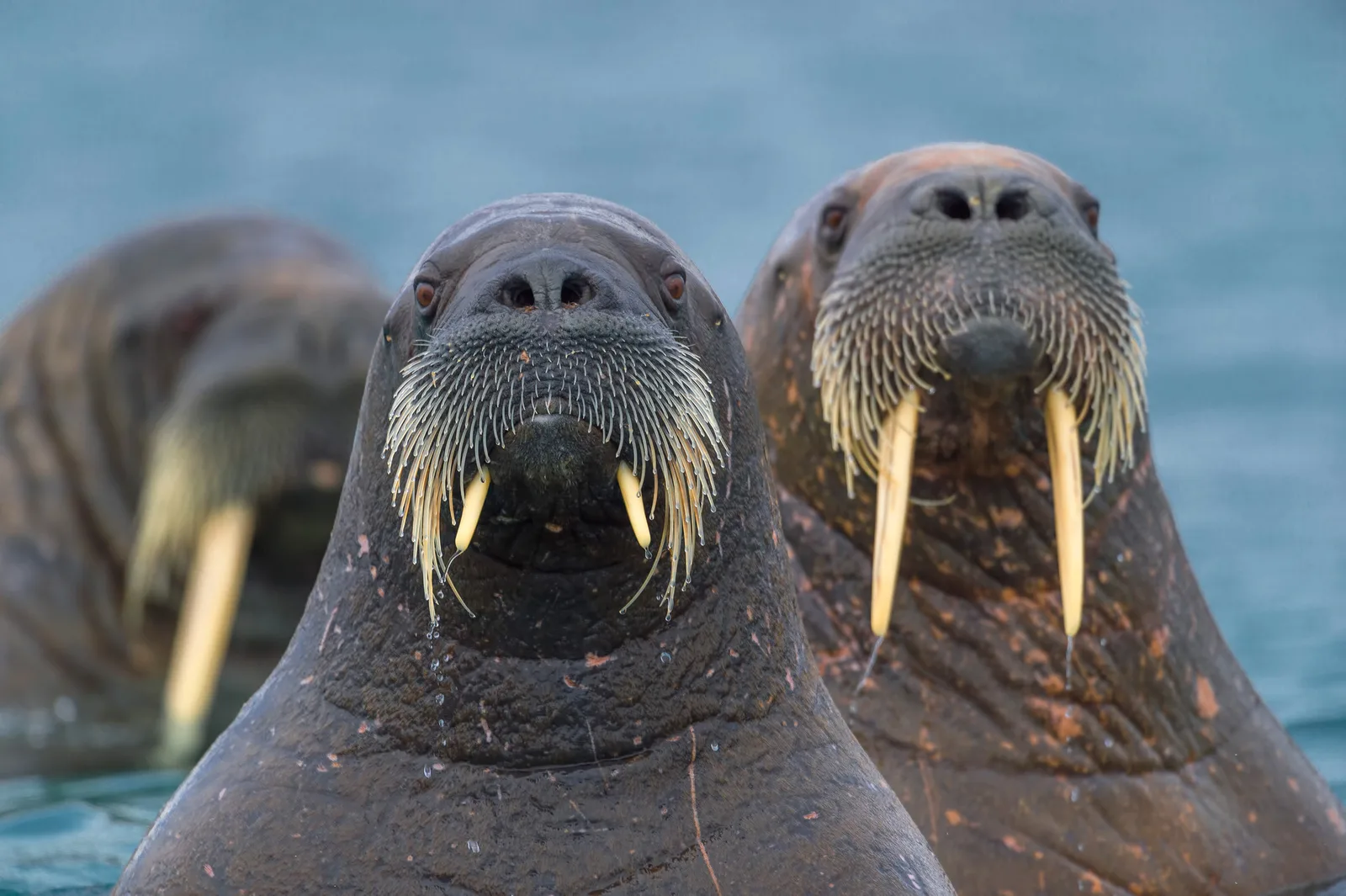
Both sexes grow tusks, which are enlarged upper canine teeth. A tusk can reach 1 metre and weigh up to 5.4 kg, and a male's tusks are longer and thicker than a female's. A mat of 400 to 700 stiff whiskers surrounds the tusks. The whiskers can tell apart shapes only 3 millimetres thick.
The skin is thick and deeply wrinkled, up to 10 cm thick on the neck of a male. A blubber layer up to 15 cm thick lies underneath. The coat is sparse, so the animal looks nearly bald. Young walruses are dark brown, adults turn a paler cinnamon, and old males can look almost pink. In cold water the skin blood vessels close, and a swimming walrus can look nearly white.
Habitat and range
The walrus lives around the Arctic Ocean, but its range is broken into separate populations. Pacific walruses spend the summer in the Chukchi Sea, off eastern Siberia and along the northern coast of Alaska. In spring and autumn they gather in the Bering Strait, and they winter in the Bering Sea. Each summer several hundred thousand of them pass north through the Bering Strait.
Atlantic walruses live from the Canadian Arctic across Greenland to Svalbard and western Arctic Russia. Scientists divide them into eight possible subpopulations, with five on the Canadian side of Greenland and three on the Atlantic side. A smaller isolated population stays all year in the Laptev Sea north of Siberia. The species once bred as far south as Sable Island off Nova Scotia and in the Gulf of St Lawrence. An Icelandic population died out after Norse settlement.
Walruses prefer shallow shelf water, where the seabed is within easy reach. They rest on pack ice for much of the year, and in late summer they crowd onto rocky beaches. Wandering animals turn up far south, and named visitors such as Wally and Thor have toured western Europe in recent years. GBIF holds records from 25 countries, which include vagrants and zoo animals.
Diet and feeding
The walrus feeds on the seabed, mostly on clams and other bivalve molluscs. It takes more than 60 genera of animals, including shrimp, crabs, worms, sea cucumbers, snails and slow fish. Seabed invertebrates make up 97 percent of the Pacific walrus diet. It finds food with its whiskers and clears mud away with jets of water and sweeps of its flippers.
To eat a clam, the walrus seals its lips around the shell and pulls its tongue back like a piston. The suction pulls the soft body out of the shell. Researchers measured mouth pressures as low as minus 87.9 kilopascals in air and minus 118.8 kPa underwater. An adult needs about 25 kg of small seabed animals a day and can take up to 60 clams in one dive. A feeding dive usually lasts 5 to 20 minutes and reaches about 70 metres.
Some walruses also eat seals, and one was seen with a bearded seal of about 200 kg. Seabirds such as Brunnich's guillemot are taken now and then. The tusks were once thought to dig for clams, but wear marks show the walrus digs with the edge of its snout.
Behaviour and social life
The walrus is the most social of all the seals. It is almost never alone, and animals on a haul-out lie pressed against one another. Outside the breeding season, males and females live in separate herds. Late summer herds on beaches can hold tens of thousands of animals.
Rank within a herd depends on age, body size and tusk length. Males settle disputes with tusk fights, which can leave deep wounds and sometimes kill. Walruses use their tusks to hook onto ice while they rest and to pull themselves out of the water. An air sac under the throat works as a float, so the walrus can sleep upright in the water.
On land the walrus can move on all four flippers, like an eared seal. In the water it swims with its whole body, more like a true seal. Walruses follow the ice edge, moving north as it melts in summer and south as it freezes. Adult males may help young animals learn to swim, and males have been seen caring for orphaned calves.
Communication and senses
The walrus has small eyes and sees well only at short range. It can push its eyes forward and see both ahead and above. Touch is its main sense, and its whiskers carry a rich supply of nerves and blood. It hears well in air, and underwater it hears through tissue conduction after the ear canal closes. Some studies suggest that walruses see in colour, but the range is not known.
Walruses are noisy animals that grunt, bark and bellow on land. During the rut, males produce bell-like tones and knocking sounds underwater to draw females and warn rivals. Mothers and calves call to each other. Atlantic and Pacific walruses have slightly different calls, and walruses can tell the two apart.
Reproduction and life cycle
Walruses are polygynous, and the largest, oldest males mate with most females. The rut runs from January to April, and males eat far less while it lasts. Males cluster in the water beside groups of females on the ice and compete with displays and calls. Mating takes place in the water, mostly in February.
A female can breed from about 4 to 6 years old, and a male matures at about 7 but rarely mates before 15. Pregnancy lasts 15 to 16 months, because the embryo waits three to four months before it implants. One calf is born on the spring migration, between April and June. A calf weighs about 60 kg and can swim at once.
The mother nurses for over a year, and the calf can stay with her for up to five years. Walrus milk holds less fat than the milk of true seals, so calves grow more slowly. A calf may suckle at sea, which no other seal does. A female gives birth at most every two years, the slowest rate of any pinniped. Wild walruses live 30 to 40 years, and one captive animal reached 49. That record holder was Slowpoke, a walrus at SeaWorld Orlando.
Predators and threats
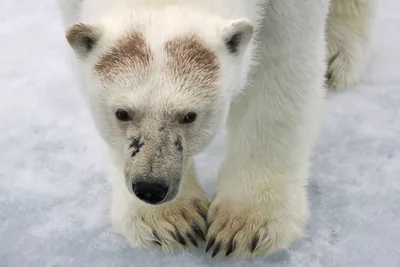
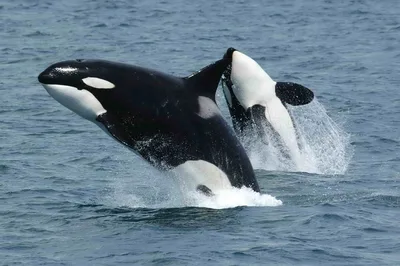
Only two animals hunt the walrus: the orca and the polar bear. Neither depends on walrus, and both mostly take calves. A polar bear will rush a crowded beach and feed on animals crushed in the panic. A healthy adult walrus can wound or kill a bear that follows it into the water. Orcas attack walruses more often and sometimes escape with no injury.
People have been the main predator for centuries. The biggest threat today is the loss of sea ice, which the walrus needs for rest, birth and breeding. Thin ice over the Bering Sea leaves fewer resting places near good feeding grounds. Mothers then separate more from their calves, and the young suffer. When ice is short, huge crowds gather on beaches, and stampedes crush calves. Parasites such as Trichinella and Toxoplasma also sicken and kill walruses.
Population and conservation
The IUCN lists the walrus as Vulnerable. A 2018 estimate gave 112,500 mature animals worldwide. The Pacific subspecies is the largest, with about 129,000 counted in 2006 and roughly 200,000 in 1990. Atlantic walruses probably number under 20,000, and the Laptev population is about 5,000 to 10,000.
Commercial hunting in the 18th and 19th centuries nearly wiped out the Atlantic walrus. By the 1950s and 1960s the Pacific population had fallen to 50,000 to 100,000. Hunting limits let numbers recover, but the population fell again after the 1980s. Svalbard walruses were nearly gone by 1952, and after protection they rose to about 5,503 by 2018.
Commercial hunting is now banned across the range, but Chukchi, Yupik and Inuit hunters may take some each year. About 4,000 to 7,000 Pacific walruses are taken each year in Alaska and Russia, and around 42% are struck and lost. Trade in walrus ivory is limited under CITES Appendix III. A 2012 study predicted a continuing decline and a shift northward as the ice retreats.
Relationship with humans
Arctic peoples have hunted the walrus for centuries and used every part of it. The meat feeds people through the winter, and the flippers are fermented as a delicacy. The hide made rope and boat covers, the gut made waterproof parkas, and the oil gave heat and light. Tusk and bone became tools and carvings, and ivory carving remains an important art.
European and American whalers killed walruses in huge numbers for oil, ivory and leather. Native hunters complained about the losses as early as 1871. Hunts are now managed by Russia, the United States, Canada and Greenland together with local communities. Walrus meat was not popular with European explorers, but the tongue was prized.
A walrus on a beach does not seek out people, but it is huge and it defends itself. Vagrant walruses in Europe draw large crowds, and the female Freya was shot near Oslo in 2022. Walruses are kept in some zoos and marine parks, where swallowed objects and tusk infections can shorten their lives.
In culture and myth
The walrus holds a central place in the religion and stories of Arctic peoples. In a Chukchi version of the Raven myth, a girl thrown from a cliff turns into a walrus as she falls. Her tears or her braids become the tusks. Chukchi tradition also tells of a walrus-headed old woman who rules the seabed, a figure linked to the Inuit sea goddess Sedna. In Chukotka and Alaska, the northern lights are said to be the dead playing ball with a walrus head.
Most of the 12th-century Lewis Chessmen were carved from walrus ivory. Lewis Carroll's poem The Walrus and the Carpenter, from 1871, shows a walrus that tricks and eats a crowd of oysters. The Beatles song I Am the Walrus refers to that poem. Rudyard Kipling's Sea Vitch, in The White Seal, is a rude and bloated old walrus of the North Pacific. The old name morse sounds like the Latin word for a bite, and that likely fed the walrus's early reputation as a monster.
A sentence with a dotted underline is inferred: it describes the group the animal belongs to, or is a reading of the sources, rather than a measured or reported fact about this species.
Questions
Walrus questions, answered
How big is a walrus?
An adult walrus weighs 600 to 1,500 kilograms and measures 270 to 320 centimetres long. Males are much larger than females, and some Pacific bulls pass 2,000 kg.
Is a walrus a seal?
Yes. The walrus is a pinniped, the group that holds the true seals and the eared seals. It sits in its own family, the Odobenidae, and it is the last living species in it.
What do walruses eat?
Walruses eat clams and other bivalves from the seabed, plus snails, worms, shrimp, crabs and sea cucumbers. A few also take seals or seabirds. An adult needs about 25 kg of food a day.
Why do walruses have tusks?
Both sexes use their tusks to haul out onto ice, to hook over ice while resting, and to break through it. Males also fight with them and show them off to claim rank. They do not dig for clams with the tusks.
Where do walruses live?
Walruses live in the Arctic Ocean and the seas around it. Pacific walruses use the Bering and Chukchi seas, and Atlantic walruses range from the Canadian Arctic across Greenland to Svalbard and northern Russia.
Are walruses endangered?
The IUCN gives the walrus a Vulnerable rating. About 112,500 mature animals remain, and the loss of sea ice is the main threat.
How long do walruses live?
A wild walrus lives 30 to 40 years. The oldest known captive walrus, Slowpoke at SeaWorld Orlando, reached 49.
How deep can a walrus dive?
Most feeding dives reach about 70 metres and last 5 to 20 minutes. One study recorded dives beyond 500 metres in Smith Sound between Greenland and Canada.
Are walruses dangerous to humans?
Walruses do not attack people on purpose, and no harm to humans is recorded as a regular problem. A frightened adult is still a huge animal with tusks, so boats and people keep their distance.
What eats a walrus?
Only polar bears and orcas hunt walruses, and both mostly take calves. An adult walrus can wound or kill a polar bear in the water. Human hunters have killed far more walruses than either animal.
How many walruses are left?
A 2018 estimate gave 112,500 mature walruses worldwide. The Pacific subspecies holds most of them, the Atlantic walrus probably numbers under 20,000, and the Laptev group is about 5,000 to 10,000.
Can a walrus walk on land?
Yes. Like an eared seal, the walrus turns its rear flippers forward and moves on all four flippers. It can manage a short run but it is slow and clumsy compared with its swimming.
How do walruses sleep in the water?
An air sac under the throat fills and works as a float. The walrus then hangs upright in the water with its head above the surface and sleeps.
How long is a walrus pregnant?
About 15 to 16 months. The embryo waits three to four months before it implants, so the calf is born in the spring migration between April and June.
What is the difference between the Atlantic and Pacific walrus?
The Pacific walrus is larger and has longer tusks, and its population is far bigger. The Atlantic walrus weighs about 10 to 20% less and has a flatter snout. Their calls also differ slightly.
Food web
Prey and food
- clams
- sea snails
- worms
- shrimp
- crabs
- sea cucumbers
- occasionally seals
Food web
Predators
 Polar bear
 Orca
- both mostly
Ecological equivalents
Related species on this site
Aardwolf (same order), Abyssinian (same order), Affenpinscher (same order), Afghan Hound (same order), African Civet (same order), African Golden Cat (same order), and more.
 LC
Mammals
Aardwolf
Proteles cristata
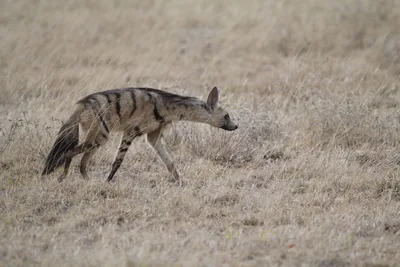
The aardwolf is the smallest member of the hyena family and eats almost nothing but termites.
Living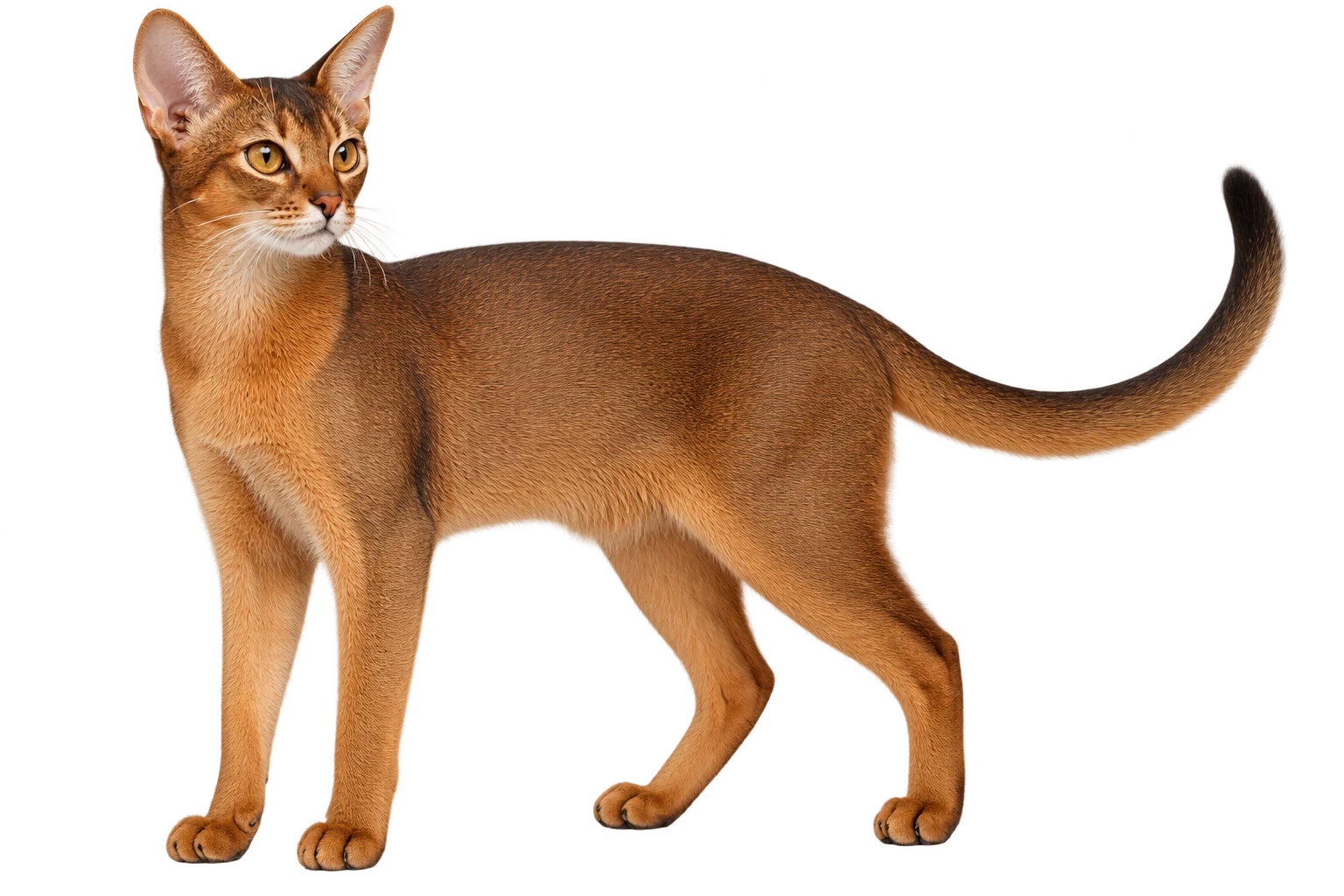
Mammals
Abyssinian
Felis catus
Classification and source reference
LivingAI illustration
Mammals
Affenpinscher
Canis lupus familiaris
Classification and source reference
LivingAI illustration
Mammals
Afghan Hound
Canis lupus familiaris
Classification and source reference
LivingAI illustration
Mammals
African Civet
Civettictis civetta
Classification and source reference
LivingAI illustration
Mammals
African Golden Cat
Caracal aurata
Classification and source reference
LivingAI illustration