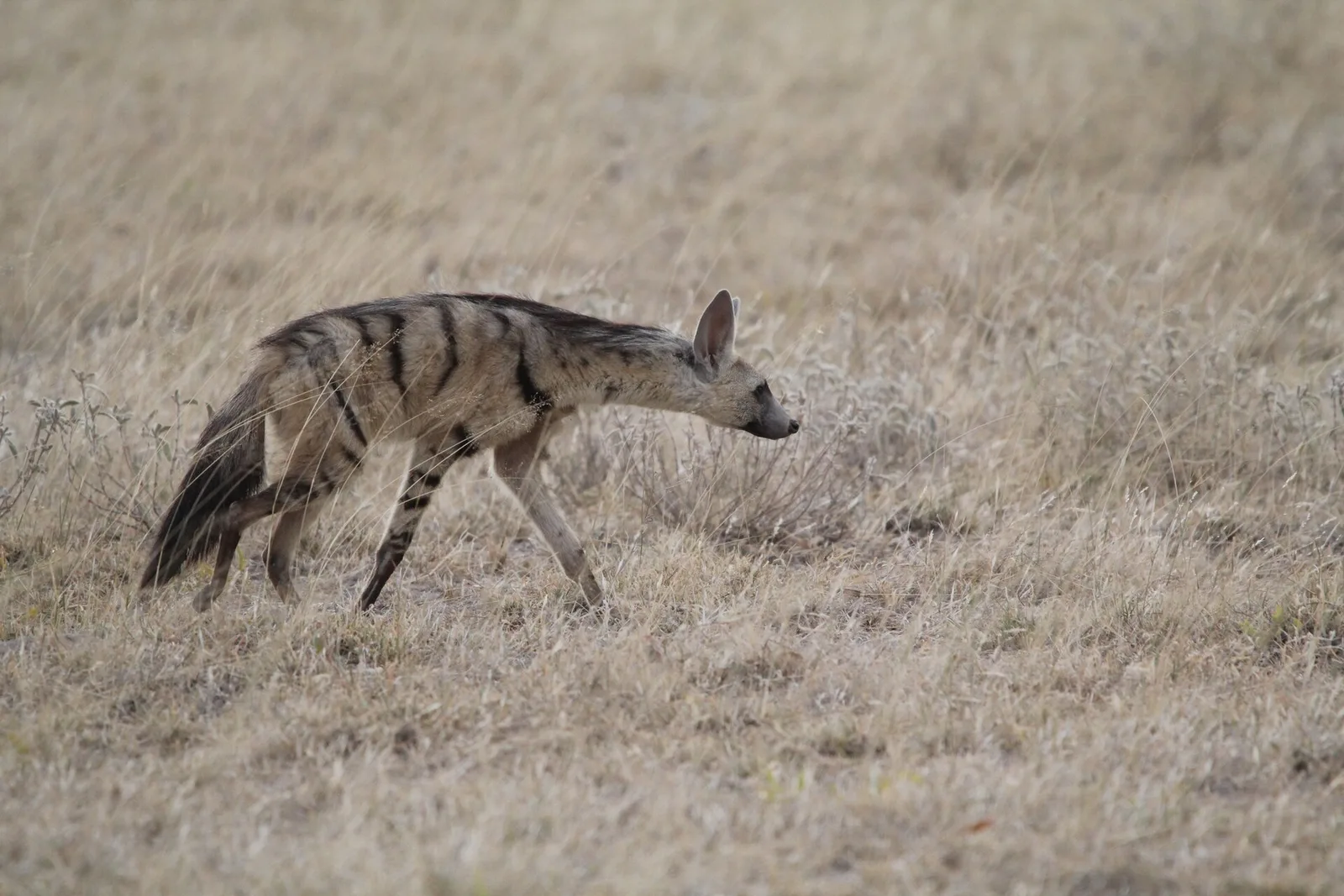
Aardwolf
The hyena that lives on termites
Proteles cristata
Also called Maanhaarjakkals, Termite-eating hyena, Civet hyena, Erdwolf
Living individuals or members of this group exist today. This does not mean they are safe from extinction.
Meet the aardwolf
The aardwolf is the smallest member of the hyena family and eats almost nothing but termites. It forages alone at night on the dry plains of eastern and southern Africa.
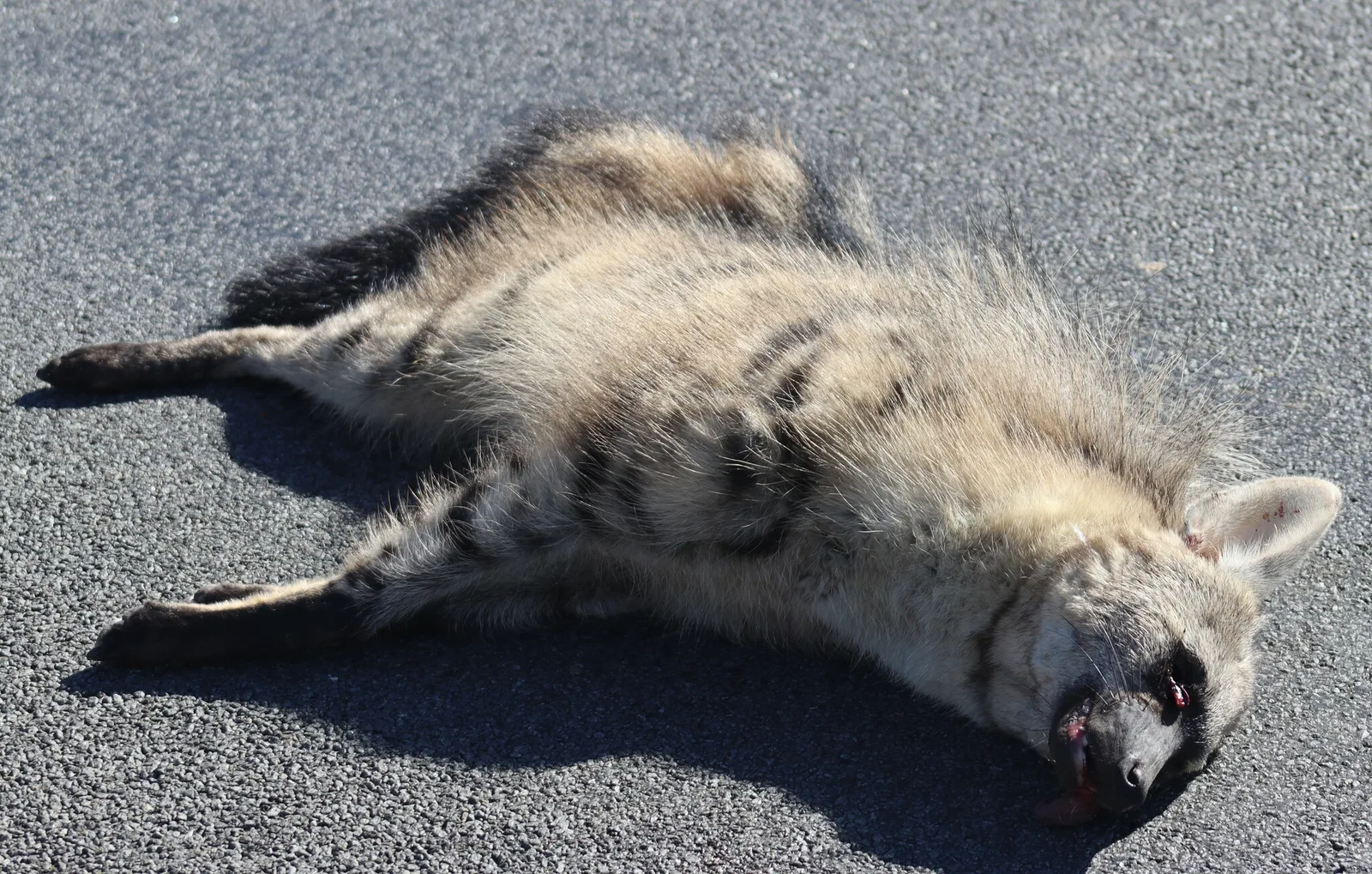
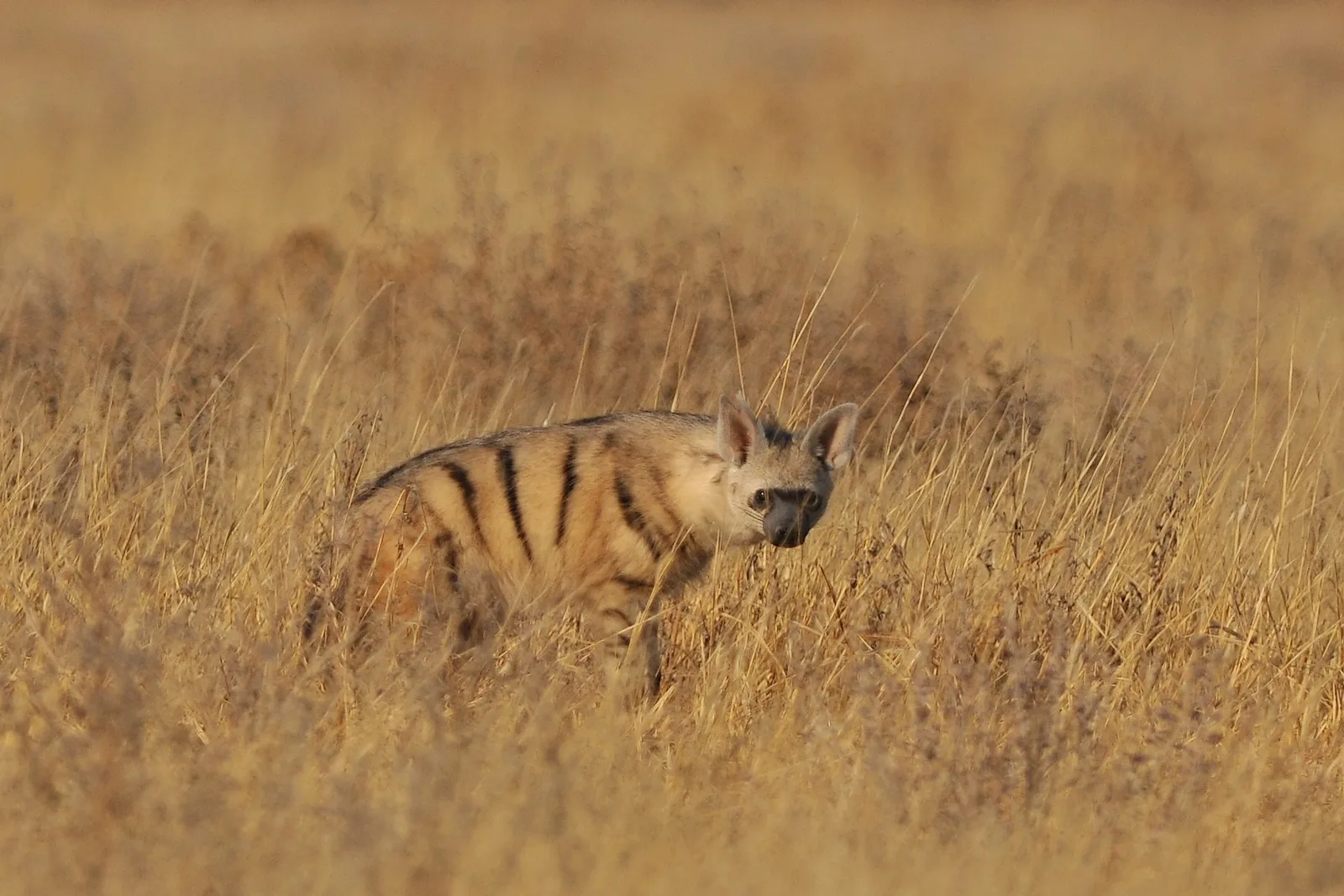
Images of the aardwolf
Lifespan
Up to 20 years a wild-born female died in captivity at about 20; no wild lifespan is recorded
Weight
8 to 14 kg
Length
55 to 80 cm
Height
40 to 50 cm
Fact file
Aardwolf
- Location
- Eastern and southern Africa, in two separate populations
- Habitat
- Savanna, Grassland
- Diet
- Insectivore
- Prey / food
- Termites, mainly Trinervitermes and Hodotermes, plus other insects and larvae
- Predators
- None as adults; black-backed jackals take cubs
- Lifestyle
- Nocturnal and mostly solitary
- Group name
- Pair
- Name of young
- Cub
- Gestation
- About 90 days
- Litter size
- 2 to 5 cubs, usually 2 or 3
- Population
- Stable; never more than about 1 adult per square kilometre
- Biggest threat
- Farmers who mistake it for a stock killer, dogs and insecticide
- Distinctive feature
- A long mane down the back that rises when it is threatened
- Colour
- Yellowish buff with black vertical stripes and black lower legs
- Skin type
- Fur
Size
Next to a person
Measurements
Size and speed
- Height
- 40 to 50 cm at the shoulder
- Length
- 55 to 80 cm head and body, excluding the tail
- Tail
- 20 to 30 cm
- Weight
- 8 to 14 kg, up to 15 kg Wikipedia gives a typical 7 to 10 kg and a record of 15 kg
Typical adult ranges. Sources: Animal Diversity Web, Wikipedia.
Life cycle
Lifespan
- In captivityUp to 20 years a wild-born female died in captivity at about 20; no wild lifespan is recorded
- 020 years
The pale bar is the record. Source: Animal Diversity Web.
Appearance
Colour and coat
- Primary colours
- yellowish buffblack
- Secondary colours
- pale greybrown
- Skin type
- fur
- Male and female
- None known. Males and females are alike in colour and size.
Life cycle
Mating and family
- Mating system
- socially monogamous pairs, with extra matings by dominant males
- Social structure
- a mated pair with its latest cubs on a shared territory; solitary foraging
- Breeding
- one litter a year
Aardwolves breed once a year, in late June and July in South Africa. After about 90 days the female bears two to five cubs in an underground den. The male guards the den at night while she forages. The cubs are weaned by about four months and forage alone from about seven. They leave the territory before the next litter and breed themselves at 18 months to two years.
Classification
Taxonomy
- Kingdom
- Animalia
- Phylum
- Chordata
- Class
- Mammalia
- Order
- Carnivora
- Family
- Hyaenidae
- Genus
- Proteles
- Species
- Proteles cristata
Conservation
Red List status
- LC
- NT
- VU
- EN
- CR
- EW
- EX
Least Concern on the IUCN Red List
Range
Recorded in 4 countries
Habitat layer: tropical grassland, savanna and shrubland, temperate grassland, savanna and shrubland.
Countries from 419 wild records on GBIF (iNaturalist research grade), filtered and checked by hand. Country shapes: Natural Earth. Habitat: RESOLVE Ecoregions 2017, CC BY 4.0. Basemap: Natural Earth.
Habitats
Three things to know
- 1
An aardwolf can lick up 300,000 termites in one night with its sticky tongue.
- 2
Its cheek teeth have shrunk to pegs, so it cannot chew meat, but it keeps its canines for fighting.
- 3
The name means earth wolf in Afrikaans, yet the animal is a hyena, not a wolf.
Did you know
Seven more facts
- 1
The genus name means "complete in front", because the front feet have five toes and the hind feet four.
- 2
Cubs are born with their eyes already open.
- 3
Mating can last from 1 to 4.5 hours.
- 4
A litter may have more than one father, because dominant males visit the females of weaker neighbours.
- 5
The aardwolf swallows sand with its termites, and the grit helps grind the food.
- 6
In cold winters it feeds in the afternoon, when a different termite comes to the surface.
- 7
A territory can hold up to ten dens, and the pair moves house about every six weeks.
Field notes
How it looks and acts
Field notes
Distinguishing features
- A yellowish coat with black vertical stripes on the body and diagonal stripes on the shoulders.
- A long mane of coarse hair from the neck to the tail that rises in a threat.
- Black lower legs and a bushy tail with a black tip.
- Large pointed ears like those of the striped hyena.
- A sloping back, because the front legs are longer than the hind legs.
- A head and body of 55 to 80 centimetres, about a quarter of the weight of a striped hyena.
Field notes
Unique adaptations
- A broad, sticky tongue that is tough enough to withstand termite bites.
- Cheek teeth reduced to pegs, since soft insects need no chewing.
- A tolerance for the terpene toxin that harvester termites spray at attackers.
- Little need for drinking water, because termites supply most of its fluid.
- Anal glands that mark territory and release a foul liquid in defence.
Field notes
Interesting behaviours
- Licking termites off the ground rather than digging into the mound.
- Scent-marking near mounds every 20 minutes and every 50 metres along a boundary.
- Doubling back on its own tracks to shake off a pursuer.
- Burying its droppings in shared middens.
- Rotating through its dens, and moving on after about six weeks in each.
Field notes
Temperament
- Shy and secretive, and rarely seen even where it is common.
- Peaceful toward people and livestock, with no record of harm.
- Territorial toward its own kind, with fights limited mostly to the mating season.
Field notes
Communication
- A black paste from the anal glands, smeared on grass and rock in short streaks.
- Clucks, hoarse barks and a roar, used only in a fight or a fright.
- A raised mane and a fluffed tail as a visual threat.
- Over-marking a mate's scent until it is covered.
Ecology
Ecological role
The aardwolf is a specialist predator of harvester termites, and it keeps their numbers in check across the grasslands it patrols.
- It removes up to 105,000,000 termites a year from its territory and so protects grazing.
- It leaves mounds intact, which lets colonies recover and keeps its own food supply going.
- It enlarges springhare burrows and reuses aardvark holes, which other animals later shelter in.
- It hosts two lice found only on aardwolves and brown hyenas, and a tick of burrowing mammals.
Stories
Myths and legends
- In Afrikaner farming tradition, the "mane jackal" was a stock thief, though it cannot kill a lamb.
- In the tales of pastoral communities, night raids on poultry were pinned on the aardwolf by mistaken identity.
- In the talk of safari guides, it is the "ghost of the termite mounds" that follows termite trails by moonlight.
- In modern spirit-animal writing, it probably stands for cleverness over strength, though no named tradition says so.
People
Relationship with humans
People
Living alongside us
People have never tamed or farmed the aardwolf. Farmers have shot it for generations in the belief that it takes lambs and chickens, which it cannot do. In truth it protects grazing by eating up to 105,000,000 termites a year. Education campaigns now spread that message in South Africa. A small number live in zoos, and there is a minor trade in pelts.
- No attack on a person is recorded, and its peg-like teeth cannot bite through skin.
- It keeps its canines for fights with other aardwolves, not for people.
- A cornered animal raises its mane and sprays a foul liquid, then runs.
People
Status, uses and products
- Domestication
- Wild
- As a pet
- Not suitable. An aardwolf needs up to 300,000 live termites a night, a burrow to sleep in and a territory to patrol. No home can supply that, and its scent glands make it unpleasant indoors.
- Uses
- pest controlzoo display
- Products
- fur
The full account
About the aardwolf
The aardwolf, Proteles cristata, is the smallest living member of the hyena family. It lives on the dry plains of eastern and southern Africa. Unlike its larger relatives, it eats almost nothing but termites. One animal can lick up 300,000 termites before dawn. Adults weigh 8 to 14 kilograms, and the body measures 55 to 80 centimetres without the tail.
The name means "earth wolf" in Afrikaans and Dutch. Afrikaans speakers also call it the maanhaarjakkals, the mane jackal. It sleeps in burrows by day and forages alone at night. A mated pair holds a territory, and both parents guard the cubs. The IUCN lists the aardwolf as Least Concern. Farmers sometimes kill it in the mistaken belief that it takes lambs or chickens.
Name and taxonomy
The genus name Proteles joins two Greek words that together mean "complete in front". The name refers to the five toes on each front foot, against four on each hind foot. The species name cristata is Latin for "crested" and describes the mane. Scientists place the aardwolf in the hyena family, Hyaenidae, within the order Carnivora. It is the only living species in its subfamily, Protelinae.
Zoologists once gave it a family of its own, Protelidae, because they thought it merely mimicked the striped hyena. A 2021 genetic study found that eastern and southern aardwolves differ enough to count as two species. The American Society of Mammalogists now treats the eastern form, Proteles septentrionalis, as a separate species. Other authorities keep one species and are unsure whether even the two subspecies are valid.
Evolution and relatives
The hyena family has only four living species: the spotted hyena, the brown hyena, the striped hyena and the aardwolf. A 2006 molecular analysis placed the aardwolf at the base of that family tree. It split from the other hyenas early, but fossils and genes disagree on the date by about 10 million years. The aardwolf looks like a small striped hyena, and the two share part of their range in northeast Africa. Some biologists have asked whether this likeness is a rare case of mimicry among mammals. No firm evidence supports that idea.
Like other hyenas, the aardwolf has front legs longer than its hind legs, which gives it a sloping back. Its skull has the hyena shape in miniature, but the teeth behind the canines have shrunk to pegs. That change probably marks a lineage that gave up bone and meat for insects long ago.
Appearance
The coat is yellowish or buff, with black vertical stripes on the body. One or two diagonal stripes cross the shoulders and the hindquarters, and more stripes ring the legs. Below the knee each leg is black, and the bushy tail ends in a black tip. A long mane of coarse hair runs along the neck and back to the tail. The animal raises this mane when it feels threatened, so that it looks bigger than it is. The ears are large and pointed, much like those of the striped hyena.
The head and body measure 55 to 80 centimetres, and the tail adds another 20 to 30 cm. An adult stands 40 to 50 cm at the shoulder. Weight ranges from 8 to 14 kilograms, and a heavy animal may reach 15 kg. Southern animals tend to be a little smaller than eastern ones. The cheek teeth are reduced to small pegs, because termites need no chewing. The canine teeth remain, but the aardwolf uses them for fighting rather than for feeding. Older animals often lose teeth, which matters little on a diet of soft insects. Males and females look alike in colour and size.
Habitat and range
Aardwolves live on open, dry plains and in bush country across eastern and southern Africa. They avoid mountains, dense forest and true desert. They are most common where yearly rainfall falls between 100 and 600 millimetres. Because they depend on harvester termites, they occur only where those termites live. Those termites thrive on heavily grazed grassland, so the aardwolf also does well on farmland.
The species forms two separate populations. One lives in southern Africa, from Angola and Zambia south to the Cape. The other runs from central Tanzania north through Kenya, Ethiopia and Somalia to Sudan and Egypt. Wet miombo woodland lies between the two populations, and no aardwolves live in it. GBIF holds records from 16 countries, most of them from South Africa.
A pair and its latest cubs hold a territory of 1 to 4 square kilometres. Territories in South Africa can be larger, up to 8 square kilometres, where termite mounds are sparse. A territory holds up to ten dens, most of them old springhare or aardvark burrows. The pair uses one or two dens at a time and moves on after about six weeks.
Diet and feeding
The aardwolf eats termites, chiefly of the genera Trinervitermes and Hodotermes. It licks them off the ground with a broad, sticky tongue rather than digging into the mound. The tongue is tough enough to bear the bites of soldier termites. A single animal can take 250,000 to 300,000 termites in one night. It finds a colony by sound, and by the scent that the soldiers release. It swallows a good deal of sand with the termites, which helps grind the food in the stomach.
The aardwolf never destroys a mound or eats a whole colony. It remembers where nests lie and returns every few months. Trinervitermes termites are scarce in the cold of midwinter and at the start of the rains. Southern aardwolves then switch to Hodotermes, a harvester termite that forages in the afternoon. This switch explains why aardwolves sometimes feed by day in winter.
They also take other insects and larvae, and very rarely a small mammal or bird. Contrary to a common belief, aardwolves do not eat carrion. An animal seen at a carcass is picking beetles and maggots off it. They refuse meat unless it is minced or cooked for them. A foraging aardwolf covers about 1 kilometre an hour, or 8 to 12 km on a summer night.
Behaviour and social life
Aardwolves are shy, and they spend the day underground. In summer they leave the den about an hour after sunset and stay out for 8 to 9 hours. In winter they are active for only 3 to 4 hours, often in the late afternoon. They forage alone, because their termite patches are too small to share.
The basic social unit is a mated pair with its most recent cubs. Pair bonds last 2 to 5 years. Both sexes defend the territory and mark its edges with scent. An intruder is chased for up to 400 metres or to the boundary. Fights are rare and happen mostly in the mating season. When two animals do fight, they drop to their wrists and bite at each other's necks. When food is short, the territorial system relaxes, and up to three pairs may share one range.
The aardwolf is neither fast nor a strong fighter. When a predator follows it, it may double back on its own tracks to confuse the trail. If cornered, it raises its mane and can release a foul liquid from its anal glands. Young animals leave home a month or two before the next litter is born.
Communication and senses
Scent is the main channel. Both sexes have anal glands that produce a black paste. They smear it on grass stalks and rocks in streaks about 5 millimetres long. Near termite mounds an animal marks about every 20 minutes. Along the boundary it marks every 50 metres, which can add up to 200 marks in a night. Extra glands on the front feet and the genital pad leave scent too. Pairs bury their droppings in shared middens, which they also mark.
Aardwolves are mostly silent. They call only when startled, stressed or fighting, with clucks, hoarse barks and a kind of roar. A raised mane and a fluffed tail send a visual warning. Cubs practise the tail fluff while they play with their siblings. Sharp hearing and night vision help the animal find termites in the dark.
Reproduction and life cycle
In South Africa mating takes place in late June and early July. Elsewhere the season shifts, so that cubs arrive in the rains when termites are active. A dominant male mates with his own partner and also with the females of weaker neighbours. He pastes scent inside rival territories as the breeding season nears. A female may accept the dominant male, and a litter can have more than one father. Mating itself lasts from 1 to 4.5 hours.
Gestation lasts about 90 days. The female gives birth to two to five cubs, and litters of two or three are the norm. Cubs are born with open eyes and weigh 200 to 350 grams. They stay in the den for the first six to eight weeks. The male guards the den for up to six hours a night while the female feeds.
At three months the cubs start to forage under supervision. Weaning is done by about four months, and the young forage alone from about seven months. They mature at about 18 months to two years of age. No one has measured lifespan in the wild. A captive female lived to about 20 years, and one at Frankfurt Zoo reached 18 years and 11 months.
Predators and threats
Adult aardwolves have no regular predator. Black-backed jackals take cubs when the male leaves the den unguarded. Lions, leopards and larger hyenas probably kill the odd adult, but such losses do not shape the population. Farm dogs trained to hunt jackals attack aardwolves by mistake. Vehicles kill some on roads, though the animals tend to avoid them.
People are the main threat. Some farmers believe the aardwolf kills lambs or poultry and shoot it on sight. Others know better but still kill it now and then for its fur. Insecticide sprayed against termites poisons the aardwolf through its food. Heavy spraying probably also empties a territory of termites and forces the pair to move.
Population and conservation
The IUCN Red List places the aardwolf in the Least Concern category. Numbers appear stable across most of the range. Even so, the animal is never common. Density seldom rises above one adult per square kilometre, even where termites are plentiful. Sightings are rare, because the animal is timid and comes out at night. Botswana lists the species on CITES Appendix III, which regulates trade from that country.
No park or programme exists only for the aardwolf. It gains protection inside reserves across its range, and it does well on grazed farmland. Education campaigns in South Africa tell farmers that the aardwolf eats termites, not stock. Zoos keep the southern form in about 15 collections worldwide. The eastern form is held in a single zoo, in Novosibirsk.
Relationship with humans
The aardwolf is a friend to the farmer. One animal eats up to 105,000,000 termites a year. Harvester termites strip the grass that cattle and sheep need, so the aardwolf protects grazing. It does no known harm to people or livestock. Still, its resemblance to a hyena and its night habits make it a target.
The Afrikaans name maanhaarjakkals, "mane jackal", shows how early settlers saw it. They counted it among the jackals and hyenas that raided the kraal. Its pelt has a small local trade. Zoos in Europe, North America, South Africa and the Gulf keep the southern form. It is unsuited to life as a pet, since it needs hundreds of thousands of live termites a night.
In culture and myth
The aardwolf plays a small part in African folklore compared with the hyena and the jackal. Southern African settlers named it the "earth wolf" for its burrows and its dog-like shape. The name misleads, because the animal is a hyena, not a wolf. Pastoral communities told of night raids on small stock and poultry, and they blamed the aardwolf. Safari guides have a nickname for it, the termite-mound ghost, for its silent moonlit foraging. Its hyena shape earned it the hyena's sinister reputation in some regions.
Modern spirit-animal websites make the aardwolf a symbol of cleverness, patience and finding food in unexpected places. These readings are recent inventions and are probably not rooted in any named tradition. One popular belief holds that the aardwolf eats carrion, which is false. Another says it kills lambs, which it cannot do with its peg-like teeth.
A sentence with a dotted underline is inferred: it describes the group the animal belongs to, or is a reading of the sources, rather than a measured or reported fact about this species.
Questions
Aardwolf questions, answered
What is an aardwolf?
The aardwolf is a small member of the hyena family that eats termites. It lives on the dry plains of eastern and southern Africa and comes out at night.
Is an aardwolf a hyena or a wolf?
It is a hyena. The name means earth wolf in Afrikaans, but the animal belongs to the family Hyaenidae and has no close link to wolves.
What do aardwolves eat?
Almost nothing but termites, mainly of the genera Trinervitermes and Hodotermes. A single animal can lick up 250,000 to 300,000 termites in a night. It also takes other insects and larvae.
Do aardwolves eat meat or carrion?
No. Their cheek teeth are worn to pegs and cannot chew meat. An aardwolf seen at a carcass is eating the beetles and maggots on it.
How big is an aardwolf?
The head and body measure 55 to 80 centimetres, with a tail of 20 to 30 cm. It stands 40 to 50 cm at the shoulder and weighs 8 to 14 kilograms.
Where do aardwolves live?
In two separate populations in Africa. One covers southern Africa from Angola to the Cape. The other runs from Tanzania north through Kenya and Ethiopia to Sudan and Egypt.
Are aardwolves dangerous to humans?
No. They are shy, they avoid people, and they cannot bite hard. No attack on a person is on record.
Do aardwolves kill sheep or chickens?
No. Farmers have long blamed them for lost stock, but their teeth cannot kill a lamb. They help farmers by eating the termites that strip grazing.
Are aardwolves endangered?
No. The IUCN lists them as Least Concern, and numbers seem stable. They are never common, though, with about one adult per square kilometre at most.
Why is it called an aardwolf?
Aardwolf is Afrikaans and Dutch for earth wolf. Settlers gave the name because it sleeps in burrows and looked to them like a small wolf.
Are aardwolves nocturnal?
Yes, for most of the year. In cold winters they also feed in the late afternoon, when a different termite species comes to the surface.
How long do aardwolves live?
No one has measured their lifespan in the wild. In captivity a female reached about 20 years, and one at Frankfurt Zoo lived 18 years and 11 months.
Do aardwolves live in groups?
Not really. A mated pair shares a territory with its latest cubs, but each adult forages alone. Pairs stay together for 2 to 5 years.
How many cubs does an aardwolf have?
Two to five, most often two or three, after a pregnancy of about 90 days. The cubs are born with their eyes open.
Can you keep an aardwolf as a pet?
No. It needs hundreds of thousands of live termites every night and a burrow to hide in. It also marks with a strong-smelling paste.
Food web
Prey and food
- termites
- mainly trinervitermes
- hodotermes
- plus insects
- larvae
Food web
Predators
- black-backed jackals
Ecological equivalents
Related species on this site
Brown Hyena (same family), Hyena (same family), Spotted hyena (same family), Striped hyena (same family), Abyssinian (same order), Affenpinscher (same order), and more.
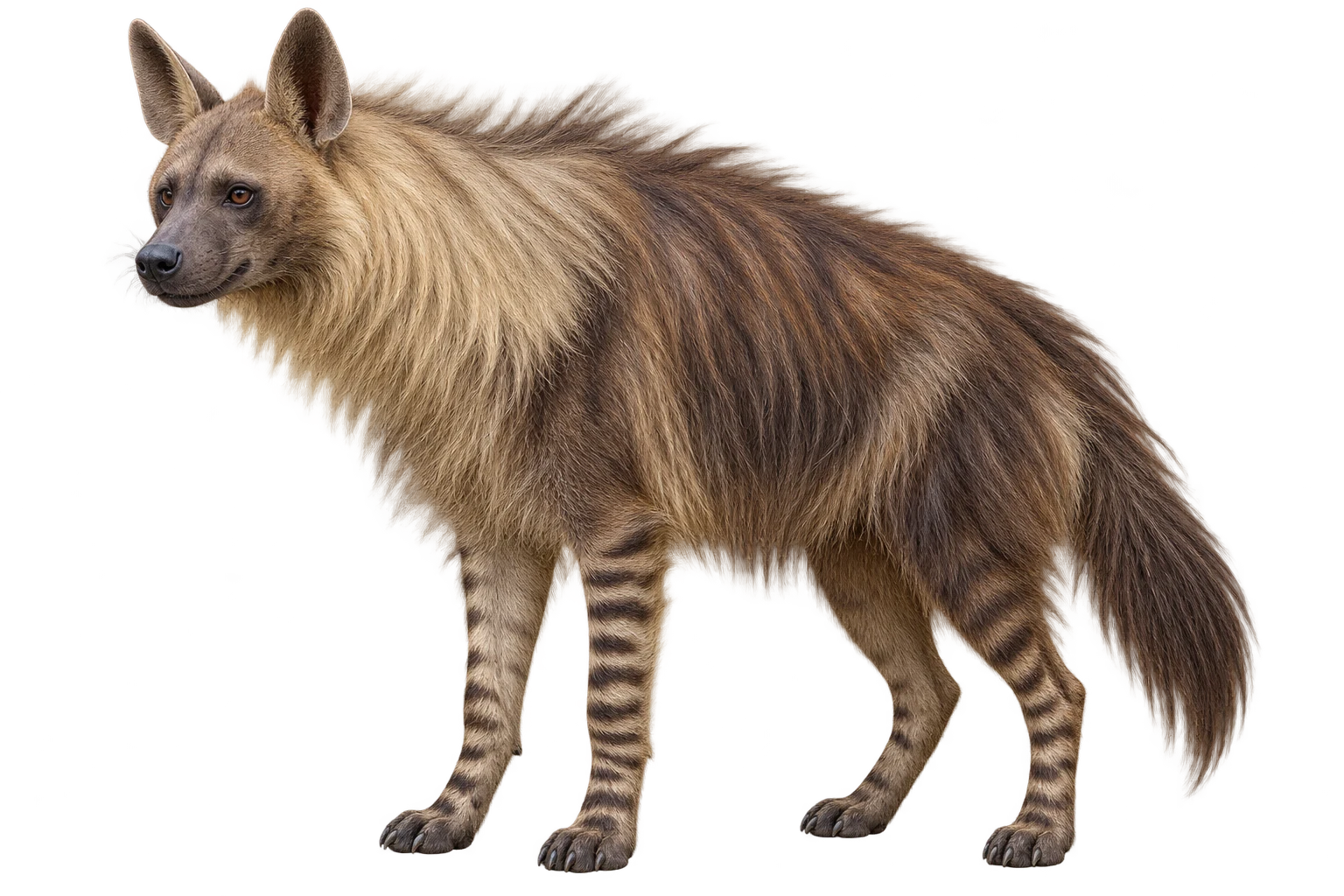
Mammals
Brown Hyena
Parahyaena brunnea
Classification and source reference
LivingAI illustration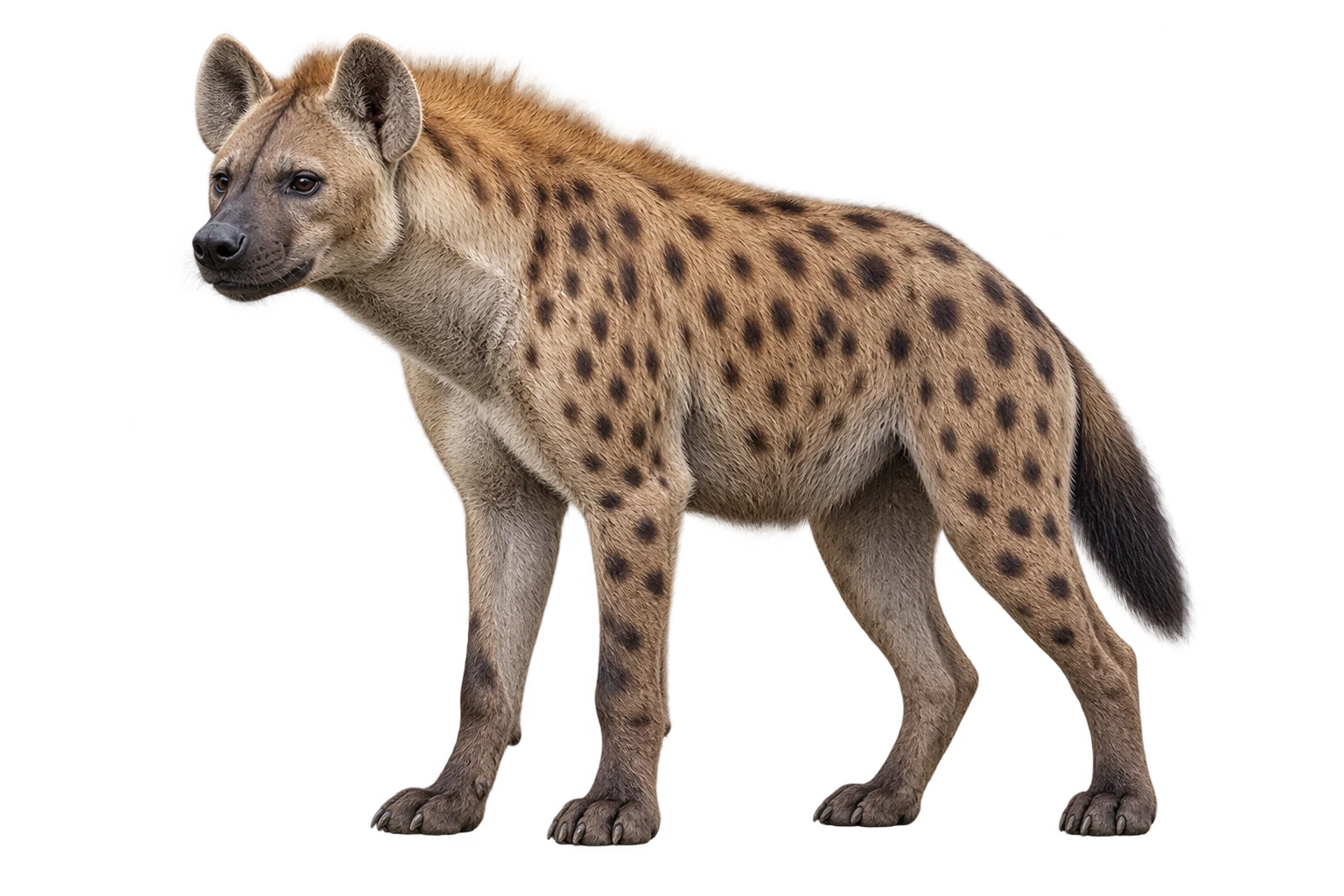
Mammals
Hyena
Hyaenidae
Classification and source reference
LivingAI illustration LC
Mammals
Spotted hyena
Crocuta crocuta
The spotted hyena is Africa's most common large carnivore and a hunter first, not a scavenger.
Living NT
Mammals
Striped hyena
Hyaena hyaena
The striped hyena is a small, shaggy scavenger of dry country from North Africa to India.
Living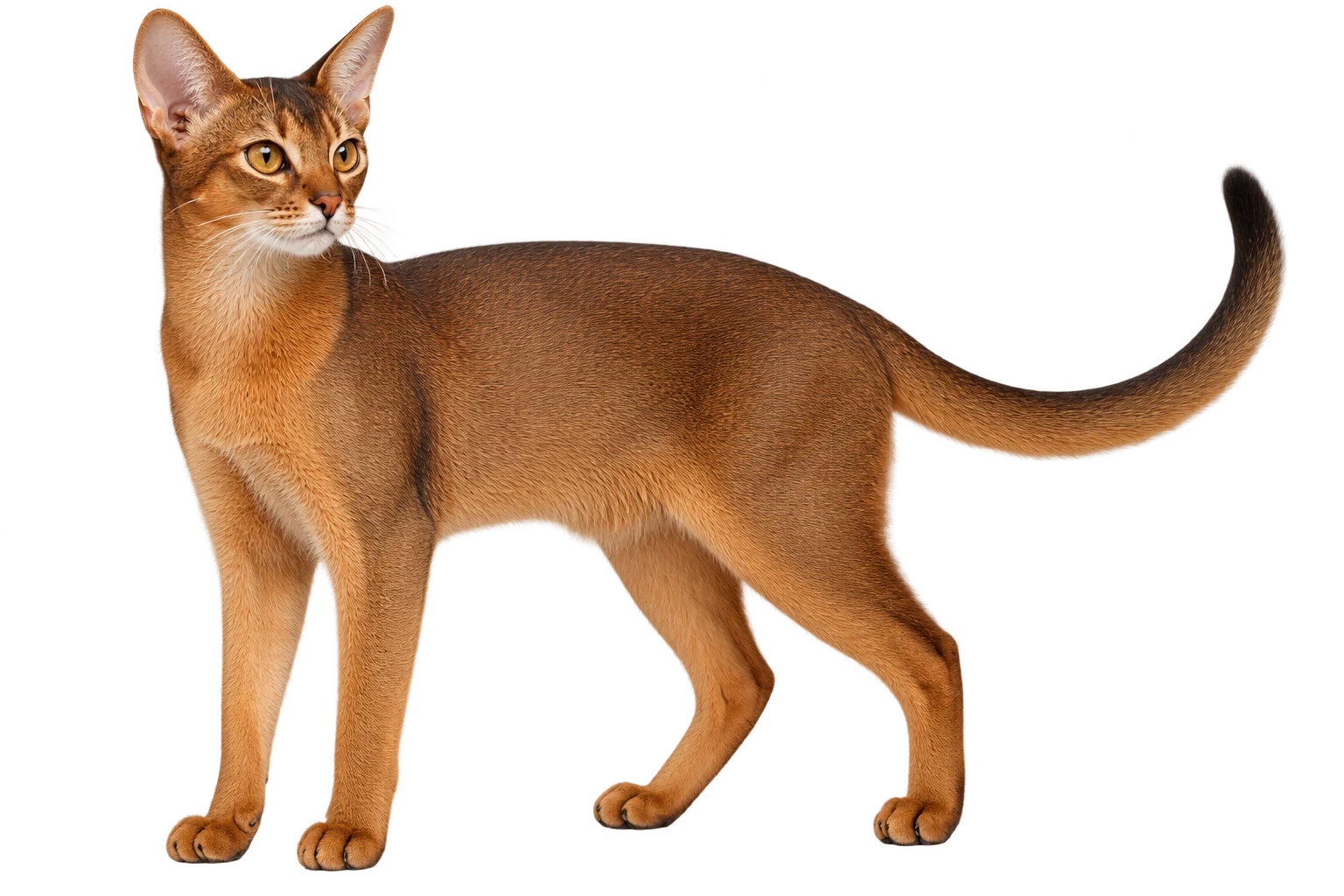
Mammals
Abyssinian
Felis catus
Classification and source reference
LivingAI illustration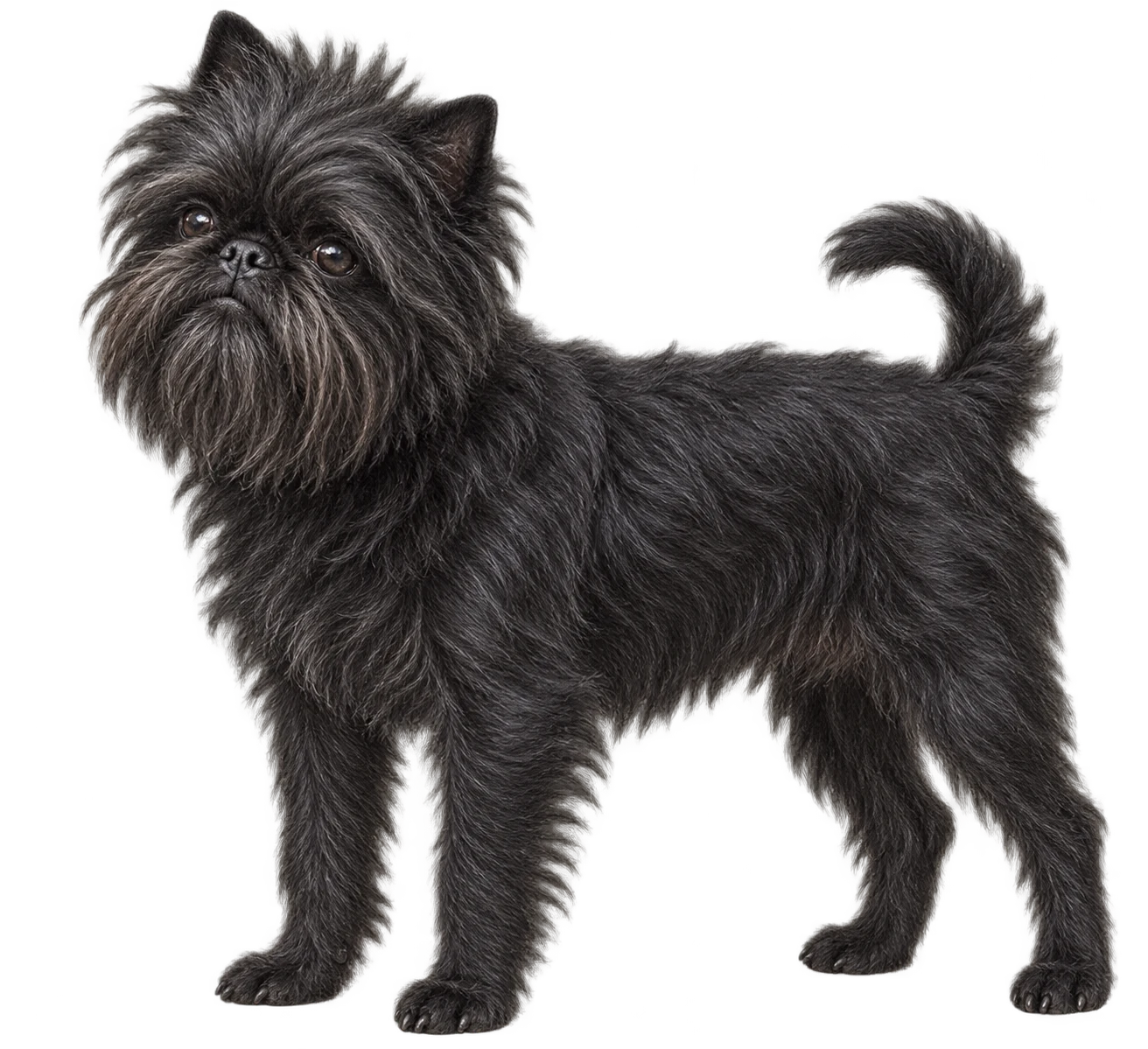
Mammals
Affenpinscher
Canis lupus familiaris
Classification and source reference
LivingAI illustration