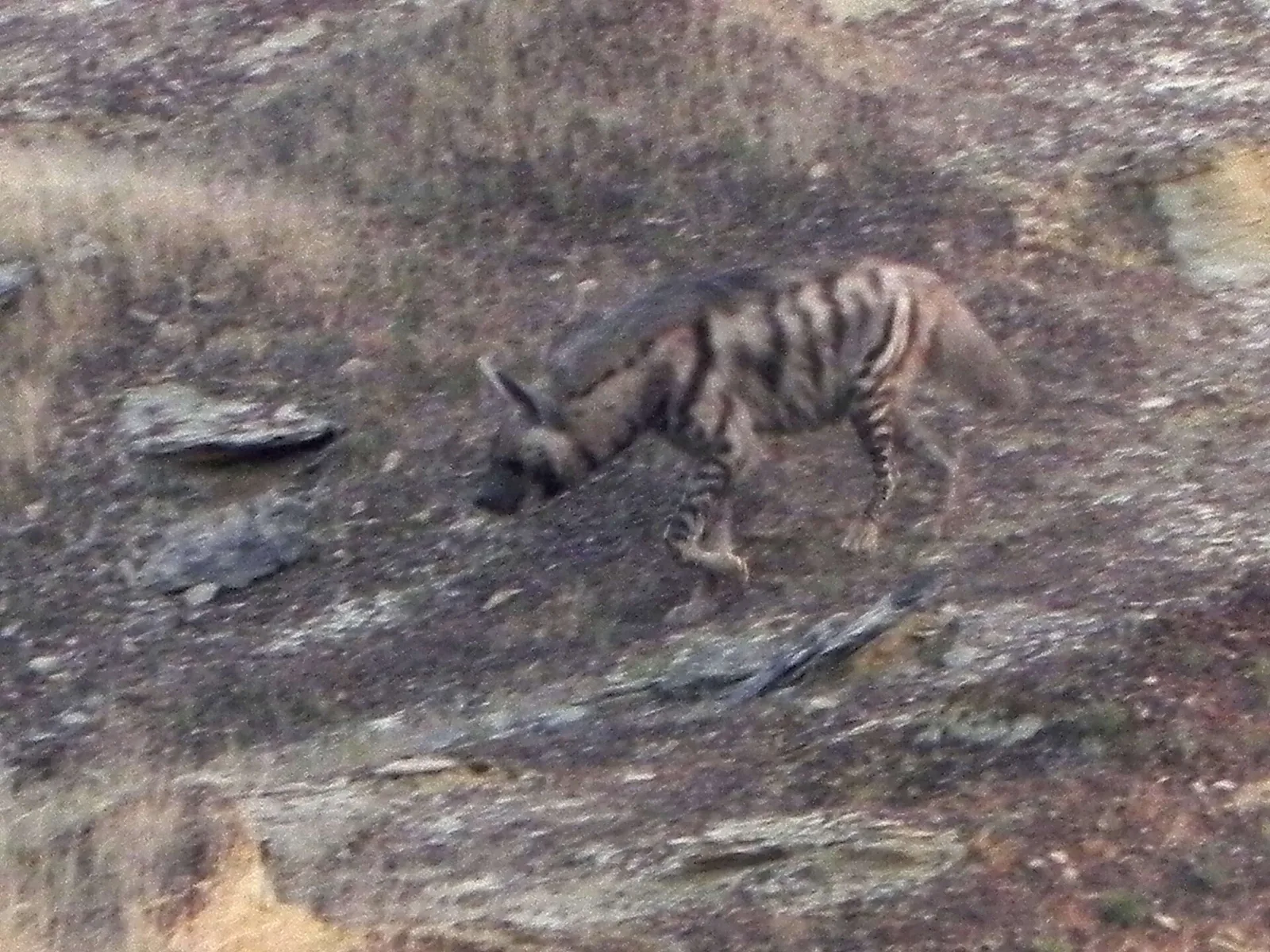
Striped hyena
The shy bone cracker that people mistook for a spirit
Hyaena hyaena
Also called Striped hyaena
Living individuals or members of this group exist today. This does not mean they are safe from extinction.
Meet the striped hyena
The striped hyena is a small, shaggy scavenger of dry country from North Africa to India. It scavenges carcasses by night, cracks bones with its jaws, and is listed as Near Threatened with fewer than 10,000 mature animals.
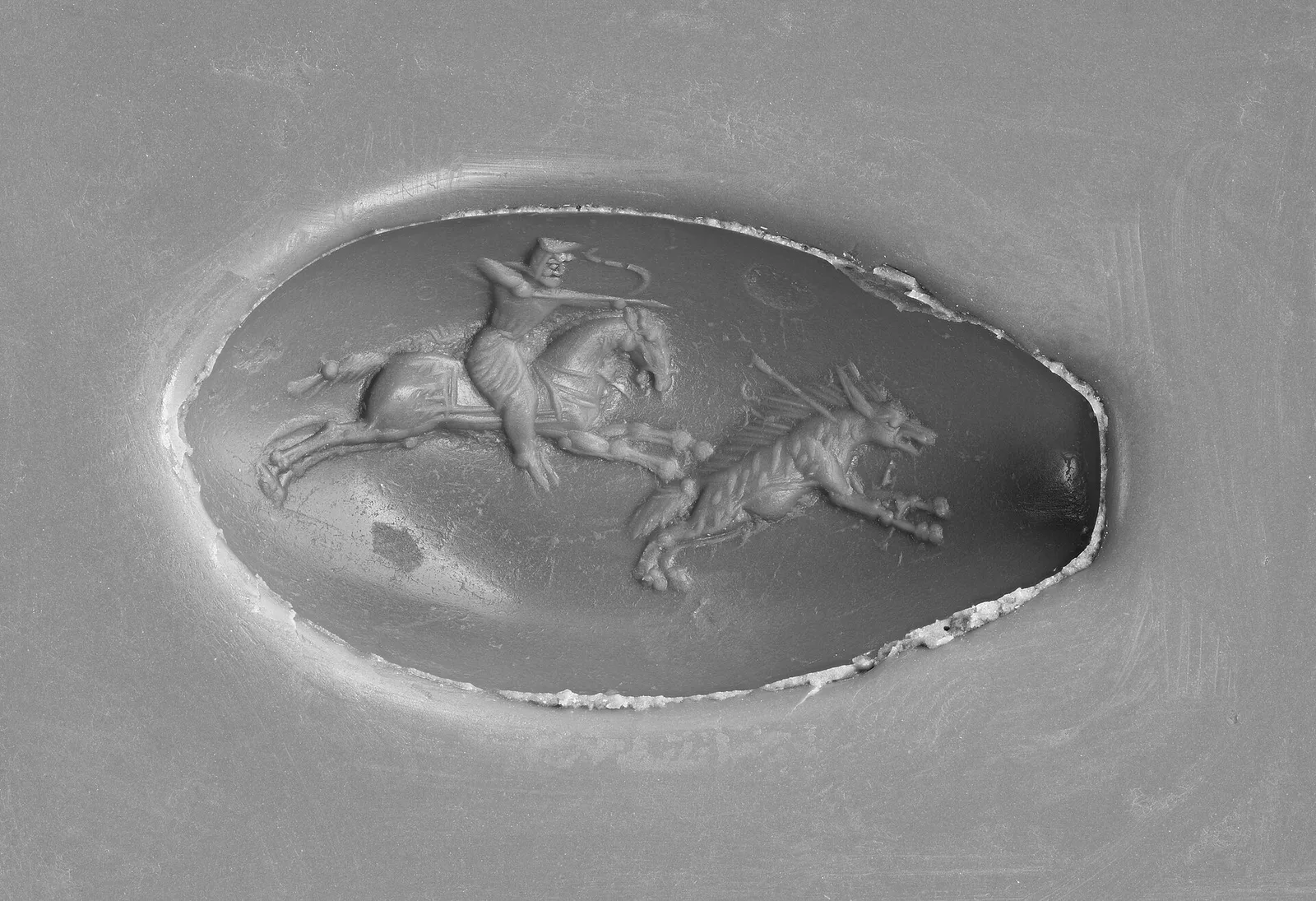
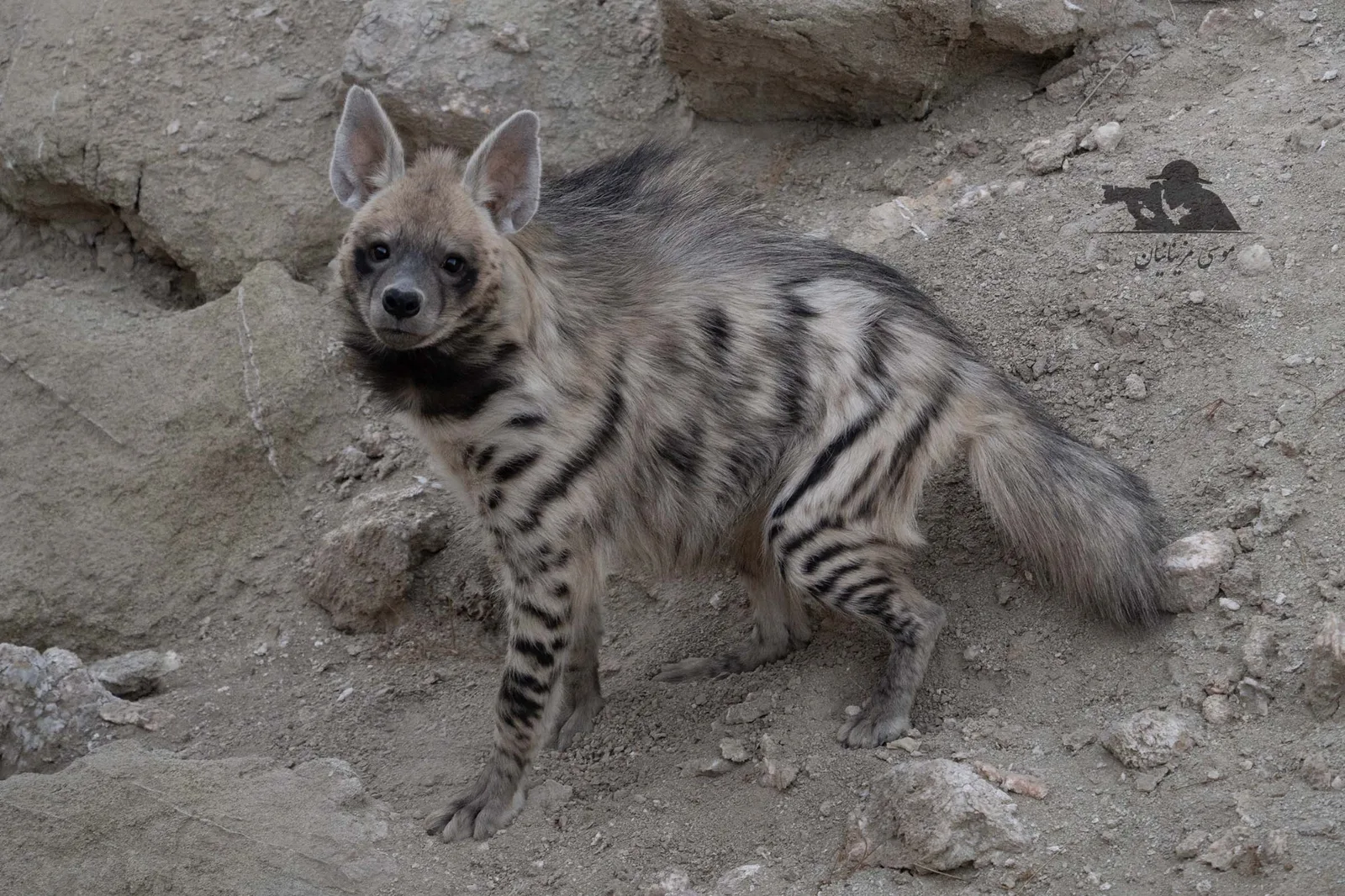
Images of the striped hyena
Lifespan in the wild
Up to 12 years
Weight
22 to 55 kg
Length
0.85 to 1.3 m
Height
60 to 80 cm
Fact file
Striped hyena
- Location
- North and East Africa, Middle East, Caucasus, Central Asia, India
- Habitat
- Desert, Savanna, Mountains, Grassland
- Diet
- Omnivore
- Prey / food
- Carrion, hare, rodents, reptiles, birds, tortoises, fruit, insects
- Predators
- Lions; people cause most adult deaths
- Lifestyle
- Nocturnal and mostly solitary
- Group name
- Pair or family group
- Name of young
- Cub
- Gestation
- About 90 days
- Litter size
- 1 to 4 cubs
- Population
- Under 10,000 mature animals
- Biggest threat
- Persecution and a shrinking supply of carrion
- Distinctive feature
- A long erectile mane and black vertical stripes
- Colour
- Grey or straw with black stripes
- Skin type
- Fur
Size
Next to a person
Measurements
Size and speed
- Height
- 60 to 80 cm at the shoulder
- Length
- 0.85 to 1.3 m head and body, without the tail
- Tail
- 25 to 40 cm
- Weight
- 22 to 55 kg the average adult is about 35 kg
Typical adult ranges. Source: Wikipedia.
Life cycle
Lifespan
- In the wildUp to 12 years
- In captivityUp to 23 years
- 023 years
The pale bar is the record. Source: Wikipedia.
Appearance
Colour and coat
- Primary colours
- greystraw
- Secondary colours
- blackwhite
- Skin type
- fur
- Male and female
- Males are slightly heavier than females, but the sexes match in height and length. Studies in Israel and Kenya found no clear size difference between them.
Life cycle
Mating and family
- Mating system
- monogamous pairs in Central Asia, polyandrous groups in Kenya
- Social structure
- solitary or a small family group at the den
- Breeding
- one litter of one to four cubs, in any month in most regions
A pair or a lone female raises one to four cubs after a gestation of about 90 days. The cubs are born blind with their stripes in place and leave the den at about two weeks. They take meat from 30 days but may nurse for over a year. They breed in their second or third year. A wild animal can reach 12 years, and a captive one reached 23.
Classification
Taxonomy
- Kingdom
- Animalia
- Phylum
- Chordata
- Class
- Mammalia
- Order
- Carnivora
- Family
- Hyaenidae
- Genus
- Hyaena
- Species
- Hyaena hyaena
Conservation
Red List status
- LC
- NT
- VU
- EN
- CR
- EW
- EX
Near Threatened on the IUCN Red List
Range
Recorded in 19 countries
- Djibouti
- Algeria
- Ethiopia
- Israel
- India
- Iraq
- Iran
- Kenya
- Lebanon
- Morocco
- Nepal
- Oman
- Pakistan
- Palestine
- Saudi Arabia
- Chad
- Tajikistan
- Tunisia
- Tanzania
Habitat layer: tropical grassland, savanna and shrubland, temperate grassland, savanna and shrubland, montane grassland and shrubland, desert and xeric shrubland.
Countries from 379 wild records on GBIF (iNaturalist research grade), filtered and checked by hand. Country shapes: Natural Earth. Habitat: RESOLVE Ecoregions 2017, CC BY 4.0. Basemap: Natural Earth.
Habitats
Three things to know
- 1
Strong jaws let it crack the thigh bone of a camel.
- 2
Attacked by dogs, it often feigns death rather than fight.
- 3
Lebanon chose it as the national animal.
Did you know
Seven more facts
- 1
The striped hyena is the only living species in the genus Hyaena.
- 2
Its bristling mane can make it look up to 38% larger.
- 3
Striped hyenas have travelled with wolf packs and shared their dens.
- 4
In Egypt it walks old caravan roads, where a dead camel is likely to lie.
- 5
It remembers where fruiting trees and rubbish dumps are and goes back to them.
- 6
Old Kingdom Egyptians may have force-fed hyenas to fatten them for the table.
- 7
The Greek word hyaina gave the animal its modern name.
Field notes
How it looks and acts
Field notes
Distinguishing features
- A grey or straw coat with five to nine black vertical stripes on each flank.
- A long mane of coarse hair from the ears to the tail.
- Large pointed ears and a black muzzle.
- A sloping back, because the front legs are longer than the hind legs.
- A black throat patch and striped legs.
- A bushy black and white tail.
Field notes
Unique adaptations
- Heavy cheek teeth and strong jaw muscles let it crush bone.
- A sharp nose finds carrion on the wind and tortoises in their hiding places.
- It can survive long spells without water and drink water of poor quality.
- A thick winter coat with underfur lets it live where winters are cold.
- Scent glands in an anal pouch let it mark its range with hyena butter.
Field notes
Interesting behaviours
- It rests by day in a cave, crevice or burrow and forages by night.
- It caches bones and pieces of skin in clumps of grass.
- It brings food back to cubs at the den.
- It uses latrines near feeding sites and along its paths.
- It plays dead when it cannot escape from dogs.
Field notes
Temperament
- Timid around people and quick to retreat.
- Bold over a carcass against a leopard or a lone wolf.
- Submissive towards the larger spotted hyena.
- Young animals tame easily and can bond with dogs.
Field notes
Communication
- A chattering laugh and a howl are its main calls.
- Scent marks from the anal pouch carry the identity of the animal.
- Showing the anal pouch signals submission.
- A raised mane signals threat in a fight.
Ecology
Ecological role
The striped hyena is a bone-cracking scavenger that removes carcasses and refuse from dry country.
- It clears carrion, bones and village rubbish.
- It hunts small mammals, birds, reptiles and tortoises.
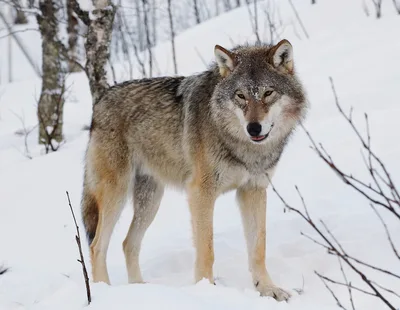
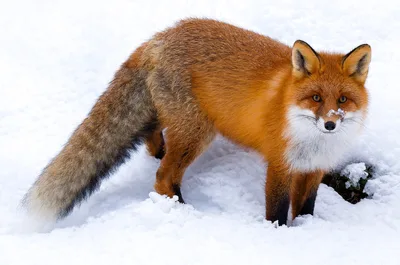
- It competes with wolves, red foxes and big cats over carcasses.
- It probably spreads the seeds of the fruit it eats, such as Balanites and oil willow.
Stories
Myths and legends
- In Near Eastern tradition, the striped hyena is a jinn in animal form.
- In Baloch tradition, witches ride striped hyenas at night.
- In ancient Greek and Roman tradition, hyena parts served as charms for love and against evil.
- In Iranian tradition, a stone from a hyena's body worn on the arm protects the wearer.
- In Egyptian tradition, one web source links the hyena with Anubis, though it may be a modern claim.
People
Relationship with humans
People
Living alongside us
People have hunted the striped hyena as a pest, trapped it for baiting and killed it for charms. It kills goats, sheep, dogs and poultry and raids melon and date crops. It also clears carrion and rubbish, and some villages leave refuse out for it. Its fur is worth little. Young animals tame easily, and ancient Egyptians may have used them in hunting.
- Attacks on people are rare and have mostly fallen on children sleeping outdoors at night.
- A five-year count in Madhya Pradesh recorded only three attacks by hyenas.
- It can kill a dog with one bite, and it sprays a foul liquid from its anal glands when cornered.
People
Status, uses and products
- Domestication
- Wild
- As a pet
- Not suitable. A hand-raised cub can become as biddable as a dog. It keeps a strong smell that no bath removes, and its bite can kill a dog.
- Uses
- hyena-baitingfolk medicinerefuse disposal
- Products
- skinsbody parts for charms
The full account
About the striped hyena
The striped hyena, Hyaena hyaena, is the smallest of the three hyenas that crack bones. It is the only living member of its genus. It lives across North and East Africa, the Middle East, the Caucasus, Central Asia and India. Most of its food is carrion, but a large animal can kill prey of its own. Unlike the spotted hyena, it lives alone or in a small family group and makes little noise.
An adult weighs 22 to 55 kilograms, and the head and body measure 85 to 130 centimetres. The coat is grey or straw coloured with dark vertical stripes and a long mane along the back. The IUCN lists the species as Near Threatened, with fewer than 10,000 mature animals left. People across its range have feared it as a grave robber and a carrier of spirits. Scientists know it less well than any other living hyena.
Name and taxonomy
Linnaeus described the species in 1758, and it keeps the name Hyaena hyaena. The type locality was given as India, and Thomas restricted it in 1911 to the Benna Mountains of Laristan in southern Iran. The family Hyaenidae holds four living species: the spotted hyena, the brown hyena, the aardwolf and this one. Ancient Greek writers called the animal glanos or hyaina, and the second word gave us the modern name. The Hebrew Bible names it tsavoa, a word that means a coloured creature. Hindi speakers call it lakadabagda, and Arabic speakers know it as daba'a moukhattat.
As of 2005, no subspecies are formally recognised. Some authorities still list five provisional forms, named for India, north-west Africa, north-east Africa, Arabia and Syria. Others argue that neither the bones nor the genes support such a split. Animals in the Middle East, Asia Minor, Central Asia and India grow largest, while those of East Africa and Arabia stay smaller.
Evolution and relatives
Fossils of the striped hyena are common in Africa and reach back to the Early Pleistocene. The species may descend from Hyaenictitherium namaquensis, a Pliocene hyena of Africa. No fossils are known from the Mediterranean region, so the species probably reached Eurasia late. One idea is that it left Africa only once spotted hyenas had died out in Asia, when the last glaciation ended. During the Pleistocene it lived in Europe, with many finds in France and Germany and others in Austria, Portugal and Gibraltar. The European form looked like living animals but was larger, about the size of a brown hyena.
Among living hyenas, its closest relative is the brown hyena of southern Africa. Its way of life, its breeding and its social habits resemble the brown hyena far more than the spotted hyena. It also keeps several primitive traits of the civet-like ancestors of the family, including a smaller and simpler skull.
Appearance
Adults weigh 22 to 55 kilograms, and a typical animal weighs about 35 kg. Head and body measure 85 to 130 centimetres, the tail adds 25 to 40 cm, and the shoulder stands 60 to 80 cm high. Males run slightly heavier than females, but the two sexes match in height and length. The body is short and heavy, and it sits on long thin legs. The forelegs are longer than the hind legs, so the back slopes down towards the tail. The head is large with a short muzzle, small eyes and big pointed ears set high on the skull.
The coat is coarse and grey or straw coloured, with a dark muzzle and a black patch under the chin. Five to nine dark vertical stripes cross the flanks, and more stripes ring the legs. A mane of long hairs runs from the ears to the tail, and single hairs reach 20 cm. When alarmed the hyena raises this mane and looks up to 38% bigger, according to Animal Diversity Web. The winter coat is long and soft with thick underfur, while the summer coat is short and coarse. Cubs are born with adult stripes but no mane, only a black line down the spine.
Habitat and range
The historical range ran from the Sahel and North Africa through the Middle East to the Caucasus, Central Asia and India. Today the range is patchy, and many populations are cut off from one another. The species is still continuous across large parts of Ethiopia, Kenya and Tanzania. In India it holds on in the open country of the Deccan Plateau. Its present status in Pakistan, Iran and Afghanistan is unknown. GBIF holds records from 44 countries, but that count includes zoo animals and old specimens.
The striped hyena prefers dry, rugged country and light thorn bush. In North Africa it uses open woodland, scrub and mountains. It avoids the central Sahara, the central Arabian desert, dense forest and high mountains. It has been recorded up to 2,250 metres in Iran and 3,300 metres in Pakistan. It keeps away from places where winter temperatures fall far below freezing for many days. In Israel it lives close to towns, and in Africa the spotted hyena pushes it out of open plains.
By day it rests in a cave, a rock crevice, a thicket or a burrow dug by a porcupine, wolf or aardvark. Bones piled at the entrance often give a den away. Dens in the Karakum desert are simple tunnels about 4 to 5 metres long. Dens in Israel are far larger and can run past 27 metres.
Diet and feeding
The striped hyena is mainly a scavenger. It feeds on carcasses of hoofed animals such as zebra, wildebeest, gazelle and impala in any state of decay. It cracks long bones into small pieces and swallows them, and sometimes it eats a bone whole. Its jaw muscles are strong enough to split the thigh bone of a camel. The one meat it refuses, according to Wikipedia, is vulture flesh. Because bones are rich in calcium, its droppings turn white within a short time.
It also kills what it can catch: hares, rodents, reptiles and birds. A hunt is a plain chase, followed by a grab at the flank or groin. Only the big hyenas of the Middle East, Central Asia and India seem to take large prey. In Turkmenistan it eats wild boar, kulan, porcupines and tortoises, and it can find a tortoise buried for the winter. Fruit matters too: oil willow in Uzbekistan and Tajikistan, Balanites in East Africa, and dates and melons in Israel. In the Caucasus it eats large numbers of grasshoppers, and near villages it eats refuse.
It needs more water than most carnivores because of its dry diet, but it can drink salty or soda water. It can also go without water for long spells and get moisture from melons. It hides bones and skin in grass clumps and carries food back to cubs at the den.
Behaviour and social life
The striped hyena leaves its den only in full darkness and returns before sunrise. Where people persecute it, the animal seems to keep even more strictly to the night. In the Serengeti it travels about 19 kilometres a night, with a range of 7 to 27 km. It follows animal tracks or zigzags across country, stopping often to sniff and to scent mark.
Most sightings are of one animal or a pair, though groups of up to seven are known from Libya. In Central Asia a male and a female form a bond that can last for years, and older cubs help feed younger ones. In Laikipia, Kenya, one female shares a home range with one to three males, but each animal spends over 90% of its time alone. Females there tolerate no other adult female once they reach puberty. The species is not territorial, and the ranges of different groups overlap. Recorded home ranges are 44 to 72 square kilometres in the Serengeti and about 61 in the Negev.
It marks grass, stones and tree trunks with a paste from its anal pouch, which is known as hyena butter. Bacteria in the pouch shape the smell, so each animal and each population smells a little different. It also leaves droppings in latrines near feeding sites and along its routes. When attacked it often plays dead, and it can hold that pose even when badly bitten. Yet over a carcass it will stand up to a leopard, a cheetah or a lone wolf.
Communication and senses
The striped hyena is far quieter than the spotted hyena. Its calls are limited to a chattering laugh, a howl, and soft growls during meetings. When seriously threatened it may screech or roar. Its sense of smell is sharp, but its eyesight and hearing are weak. It responds at once to the smell of carrion carried on the wind.
Much of its communication runs through scent and posture. Two hyenas that meet sniff noses, then sniff each other's rear ends, and one may push out its anal pouch. Showing the pouch is a sign of submission, and a young animal shows it to any adult. In a fight the mane bristles, and the animals bite at the throat and legs but leave the mane alone. A fight is mostly a wrestling match in which each tries to grip the other's cheek. A friendly greeting includes licking the middle of the back and pawing at the throat.
Reproduction and life cycle
The mating system varies from place to place. In Central Asia and the Caucasus, a pair stays together and both parents feed the cubs. In Laikipia, Kenya, females mate with several males, and males take no part in raising the young. Half the litters sampled there had more than one father. Females can breed all year, and oestrus lasts about one day. In captivity a female mates several times at gaps of at least 15 minutes.
Gestation lasts 90 to 91 days. A wild litter holds one to four cubs, and the median is three. A newborn weighs about 700 grams and comes into the world blind and deaf, with its stripes already in place. The eyes open after five to nine days, and the cubs first leave the den at about two weeks. Milk teeth appear on day 21, and the cubs start on meat at 30 days. Cubs may nurse for over a year, and by their first autumn they are half the size of their parents.
Young hyenas begin to follow their mother on foraging trips at 6 to 12 months. They breed for the first time in their second or third year. A wild striped hyena can live 12 years, and one in captivity reached 23. Breeding is seasonal in some regions: January to February in Transcaucasia and October to November in Turkmenistan.
Predators and threats
No predator specialises in the striped hyena. Lions and people cause most adult deaths. It keeps about 50 metres from lions and tigers, and it gives way to the larger spotted hyena at a carcass. An adult tiger drives it off, but it beats leopards, cheetahs and tiger cubs one to one. In the Middle East it competes with the grey wolf, and a lone hyena beats a lone wolf. A wolf pack can push a single hyena off a kill, yet the two species have shared dens and even travelled together.
Red foxes harass hyenas at carcasses and sometimes die for it. The main threats come from people: poison, snares, traps and shooting in reply to livestock losses. Less carrion is available as wild prey and large carnivores decline and as farmers change how they keep stock. Hunters also kill hyenas for body parts used in charms and folk medicine. Low density and large home ranges are likely to split populations into small pieces that cannot last.
Population and conservation
The IUCN Red List classes the striped hyena as Near Threatened. The global population is put at under 10,000 mature animals. Older estimates put the world total between 5,000 and 14,000. Numbers appear to be falling, and the species is already gone from many places. A decline of about 10% over three generations would bring it close to a higher threat category. The species is treated as threatened in most of its African range where data exist, except in Ethiopia and Kenya.
Only two density estimates exist for Africa, both from East Africa, and both are very low. The Barbary form of North Africa is listed as Endangered under the United States Endangered Species Act. In Syria the animal is widespread but uncommon, and nomads persecute it heavily. Field studies are under way in East Africa, India and the Middle East. Scientists say the first need is basic data on abundance, because almost none exists.
Relationship with humans
In normal conditions the striped hyena is very timid around people, though it can be bold at night. Attacks on live people are rare but real. In the 1880s one hyena wounded 25 children and 3 adults in a single year in the Erivan Governorate. In 1962 nine children were reported taken by hyenas at Bhagalpur in India within six weeks. A five-year count of animal attacks in Madhya Pradesh found only three by hyenas, fewer than by any other large animal. Hyenas dig up graves, so in Turkey people weigh graves down with stones.
It sometimes kills goats, sheep, dogs and poultry. Reports of larger stock being taken may often be scavenging mistaken for a kill. It raids melon fields in Turkmenistan and date palms in Israel and Egypt. On the other side, it clears carrion and refuse, and some African villages leave rubbish out for it.
Hunters have long regarded it as a pest rather than as game. Algerian and British hunters thought killing one was beneath them, because of its reputation for cowardice. In parts of Pakistan and Afghanistan people catch hyenas alive to pit them against dogs. Kandahar hunters enter a den on foot, murmur a charm, and slip a noose over the animal. The skin is coarse and worth little, and it was once sold as poor dog or wolf fur. Young animals tame easily and can become as biddable as a trained dog, but they never lose their strong smell.
In culture and myth
Middle Eastern literature treats the striped hyena as a symbol of treachery and stupidity. Across the Near and Middle East it is widely seen as a jinn in bodily form. The Arab writer al-Qazwini told of a tribe of hyena people, one of whom a hyena could pick from a crowd of 1,000. A Persian medical text of 1376 gave cures for kaftar, people said to be half man and half hyena. Al-Doumairy wrote in 1406 that hyenas drank blood from the necks of sleeping people at night. Arab folk tales say a hyena can mesmerise a victim with its eyes.
Greeks of the 19th century believed an undestroyed werewolf returned as a blood-drinking hyena on battlefields. In Afghanistan, India, Pakistan and Palestine the picture is mixed, and the animal also stands for love and fertility. Among the Baloch, witches and magicians are said to ride hyenas by night. Ancient Greeks and Romans used hyena parts to ward off evil and to secure love. In Iran a dried hyena pelt is held to make its owner irresistible. In Sindh a hyena tooth is placed over a churn to protect the milk.
Some scholars read two valleys named for hyenas in Israel as the Biblical Valley of Zeboim. The Bible word in Jeremiah 12:9, rendered as a speckled bird in the King James Version, is probably a hyena. The Gnostic archon Astaphaios was drawn with a hyena face. One web source links the striped hyena with Anubis, the Egyptian god of the dead, but that link is probably modern. Lebanon has made the striped hyena its national animal.
A sentence with a dotted underline is inferred: it describes the group the animal belongs to, or is a reading of the sources, rather than a measured or reported fact about this species.
Questions
Striped hyena questions, answered
How big is a striped hyena?
An adult weighs 22 to 55 kilograms, and about 35 kg is typical. The head and body measure 85 to 130 centimetres, with a tail of 25 to 40 cm. It stands 60 to 80 cm at the shoulder.
What do striped hyenas eat?
Mostly carrion, including the bones, from animals such as zebra, gazelle and livestock. They also kill hares, rodents, reptiles, birds and tortoises, and they eat fruit, insects and village refuse.
Are striped hyenas dangerous to humans?
Rarely. They are timid and usually flee from people. A few attacks on sleeping children were recorded in the Caucasus, Turkmenistan and India, and hyenas dig up graves, which adds to the fear.
Where do striped hyenas live?
They live in dry, rugged country across North and East Africa, the Middle East, the Caucasus, Central Asia and India. They avoid the central Sahara, dense forest and very cold uplands.
Are striped hyenas endangered?
The IUCN lists them as Near Threatened. Fewer than 10,000 mature animals are thought to remain, in many small and separate populations, and numbers are falling in most places.
Do striped hyenas hunt, or only scavenge?
They scavenge most of their food, but they also hunt. Small prey such as hares, rodents and tortoises is common, and the large hyenas of the Middle East and India can take bigger animals.
Do striped hyenas laugh?
They have a chattering laugh, but they are much quieter than the spotted hyena. Most of the time they make no sound at all, and they rely on scent to communicate.
How long do striped hyenas live?
A wild striped hyena can live about 12 years. In captivity one reached 23 years.
Is a hyena a dog or a cat?
Neither. Hyenas form their own family, Hyaenidae, in the order Carnivora. The striped hyena keeps some traits of the civet-like ancestors of the family, so it sits on the cat side of the carnivore tree.
How is a striped hyena different from a spotted hyena?
The striped hyena is smaller, quieter and mostly solitary, and it has stripes and a long mane instead of spots. Its cubs are born far less developed. Where the two meet, the spotted hyena dominates.
Do striped hyenas live in packs?
No. They forage alone and are usually seen singly or in pairs. Small family groups share a den, and Libya has records of up to seven together.
Why do striped hyenas play dead?
Feigning death is their usual answer to an attack they cannot escape, for example from hunting dogs. They can hold the pose for a long time even when bitten. Over food they are far bolder.
Can you keep a striped hyena as a pet?
It is not suitable. A cub raised firmly can become tame and even bond with dogs. It keeps a strong smell, needs bones and carrion, and can kill a dog with one bite.
Why do people fear the striped hyena?
It digs up graves, walks abroad at night and has an eerie laugh. Middle Eastern folklore made it a jinn in animal form, a blood drinker and the mount of witches. A few attacks on children kept the fear alive.
What is hyena butter?
It is the paste from the anal pouch that a hyena smears on grass, stones and tree trunks. Bacteria in the pouch give each animal its own smell, so the mark tells other hyenas who passed.
How fast can a striped hyena run?
No source gives a top speed. Animal Diversity Web says it travels at 2 to 4 kilometres per hour while foraging and trots at about 8 km/h. It could not outrun a horse, but it doubled back so often that chases ran long.
Food web
Prey and food
- carrion
- hare
- rodents
- reptiles
- birds
- tortoises
- fruit
- insects
 Nilgai
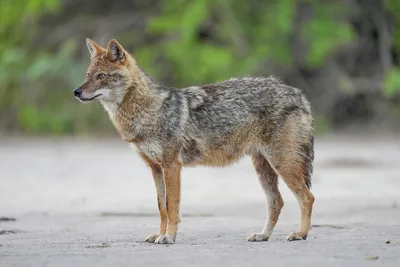 Golden jackal
Food web
Predators
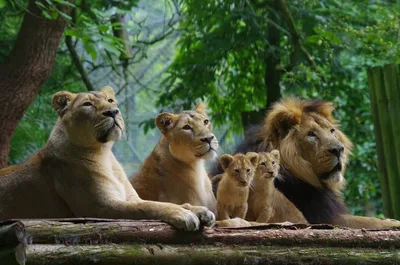 Lion
- people cause most deaths
Ecological equivalents
Related species on this site
Brown Hyena (same genus), Aardwolf (same family), Hyena (same family), Spotted hyena (same family), Abyssinian (same order), Affenpinscher (same order), and more.
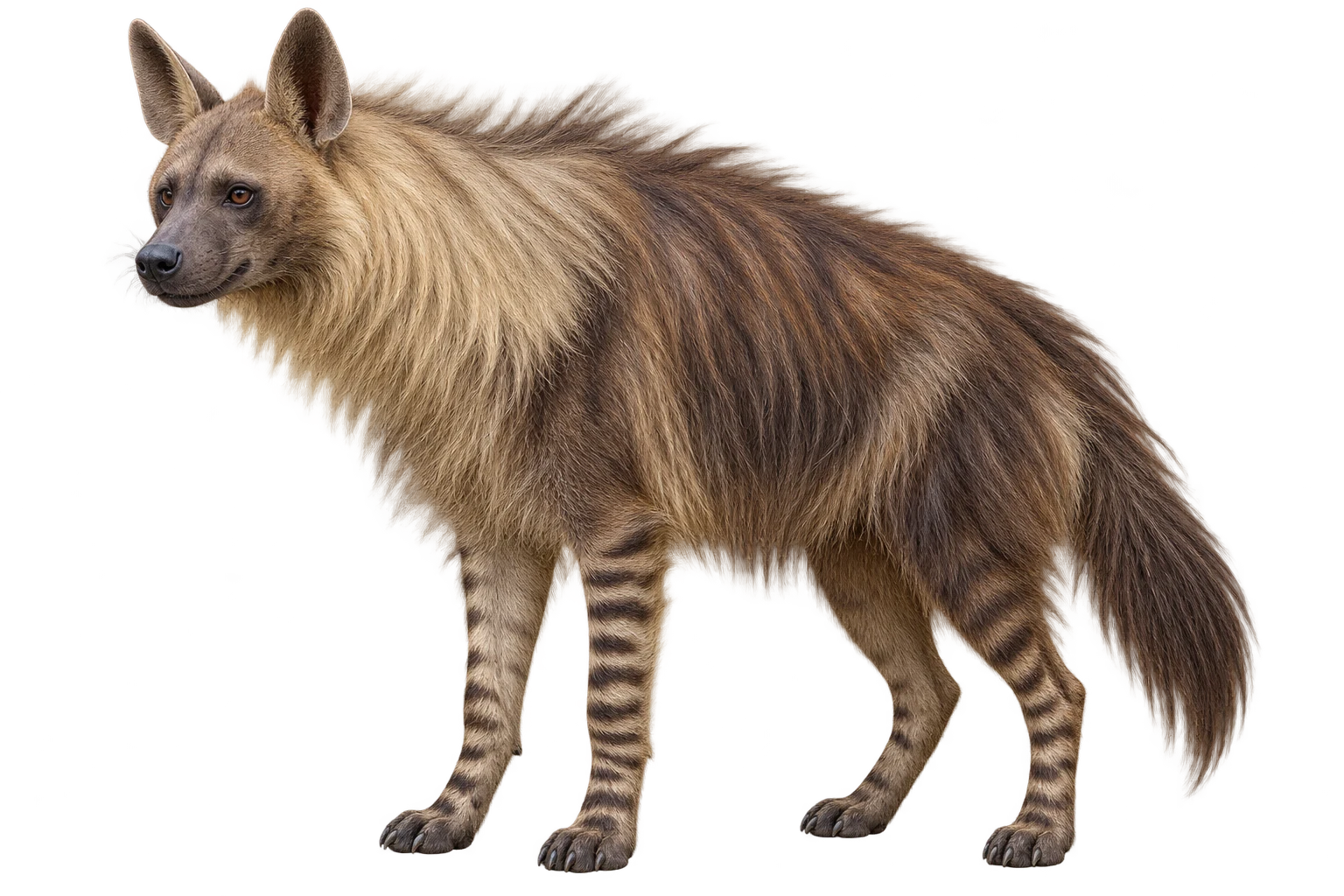
Mammals
Brown Hyena
Parahyaena brunnea
Classification and source reference
LivingAI illustration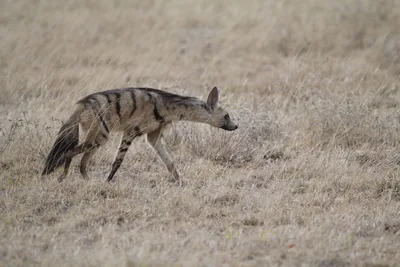 LC
Mammals
Aardwolf
Proteles cristata
The aardwolf is the smallest member of the hyena family and eats almost nothing but termites.
Living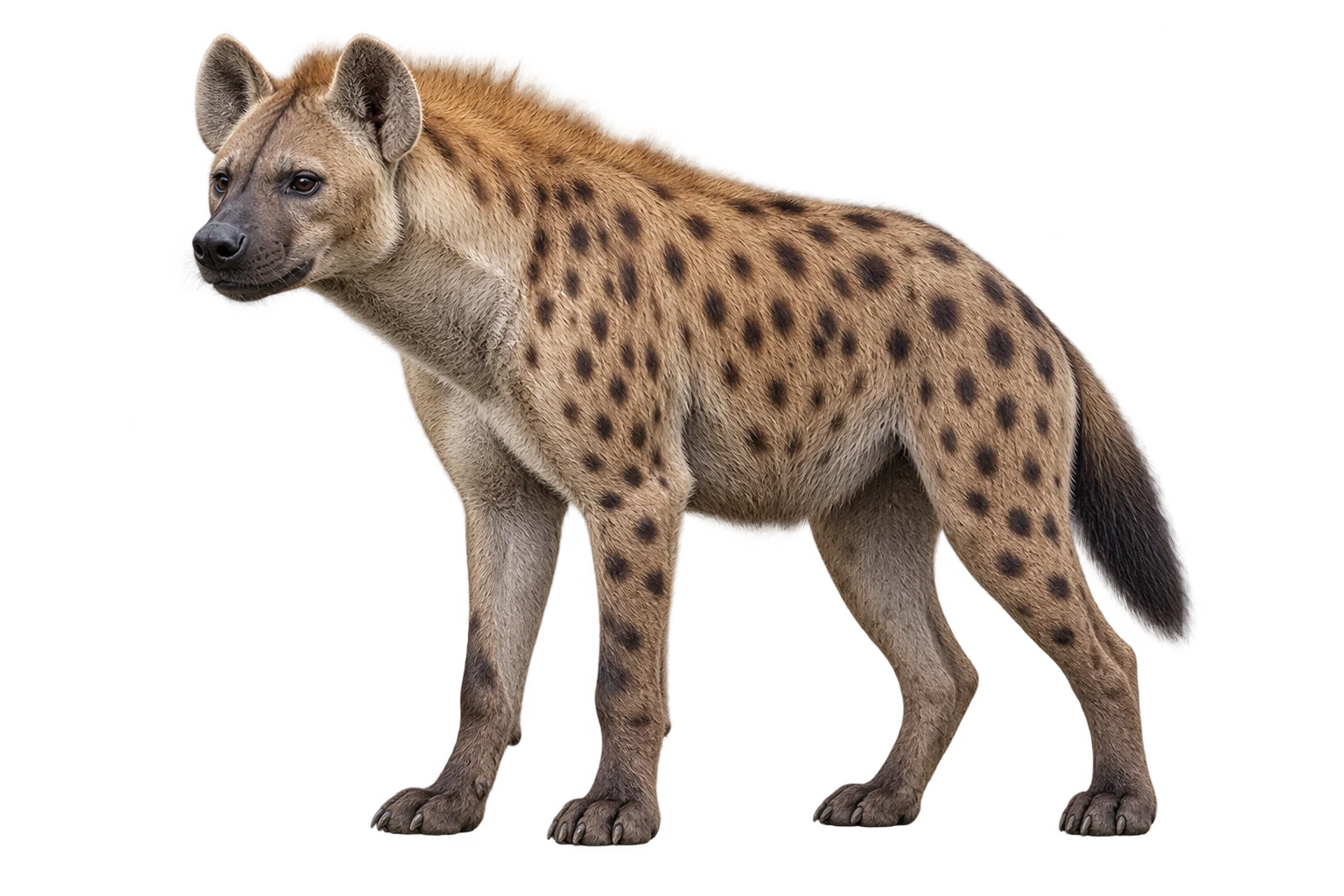
Mammals
Hyena
Hyaenidae
Classification and source reference
LivingAI illustration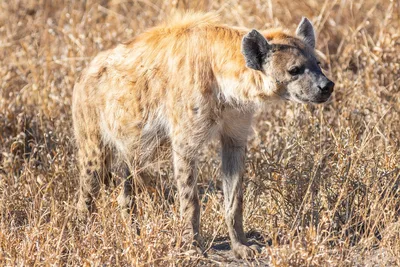 LC
Mammals
Spotted hyena
Crocuta crocuta
The spotted hyena is Africa's most common large carnivore and a hunter first, not a scavenger.
Living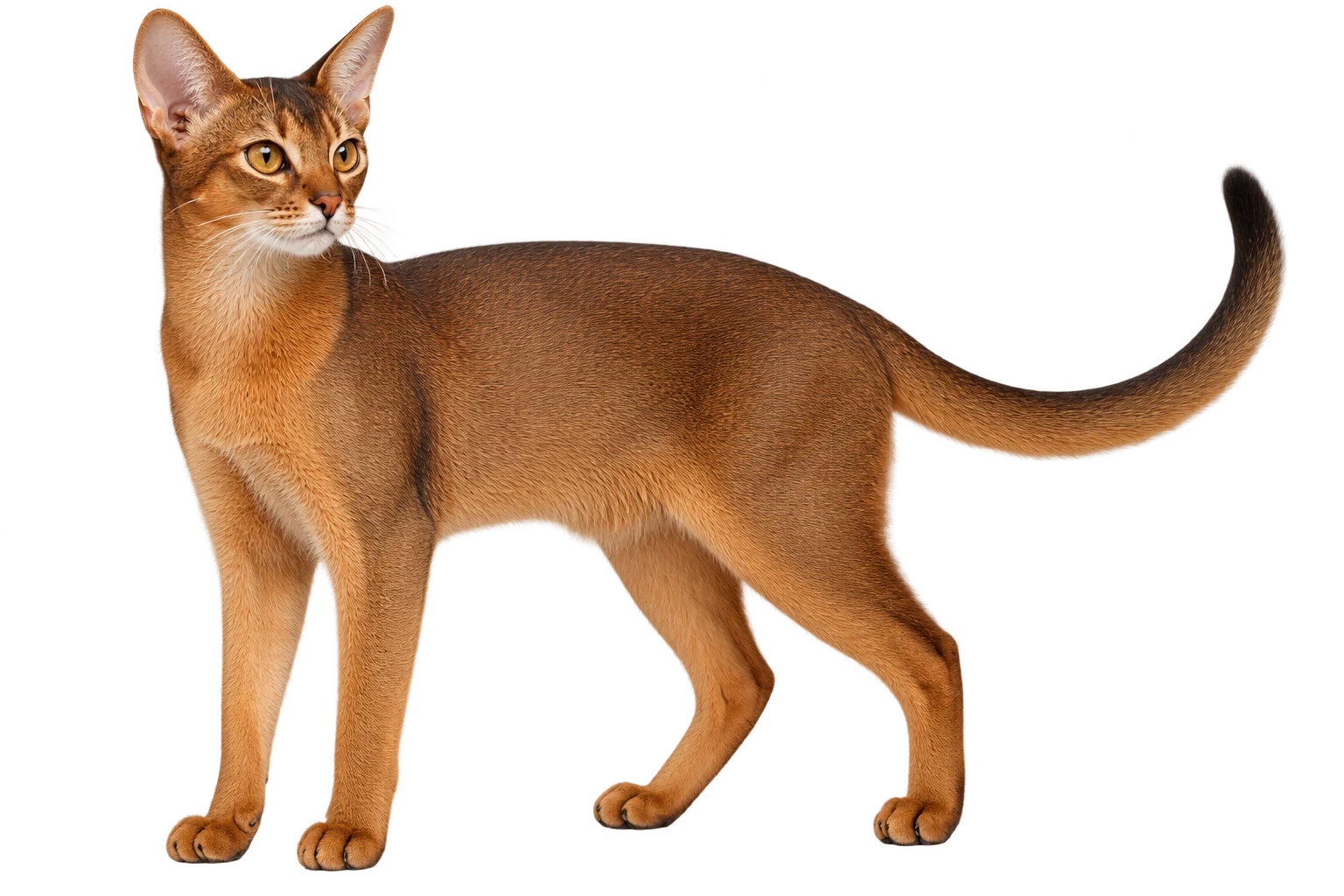
Mammals
Abyssinian
Felis catus
Classification and source reference
LivingAI illustration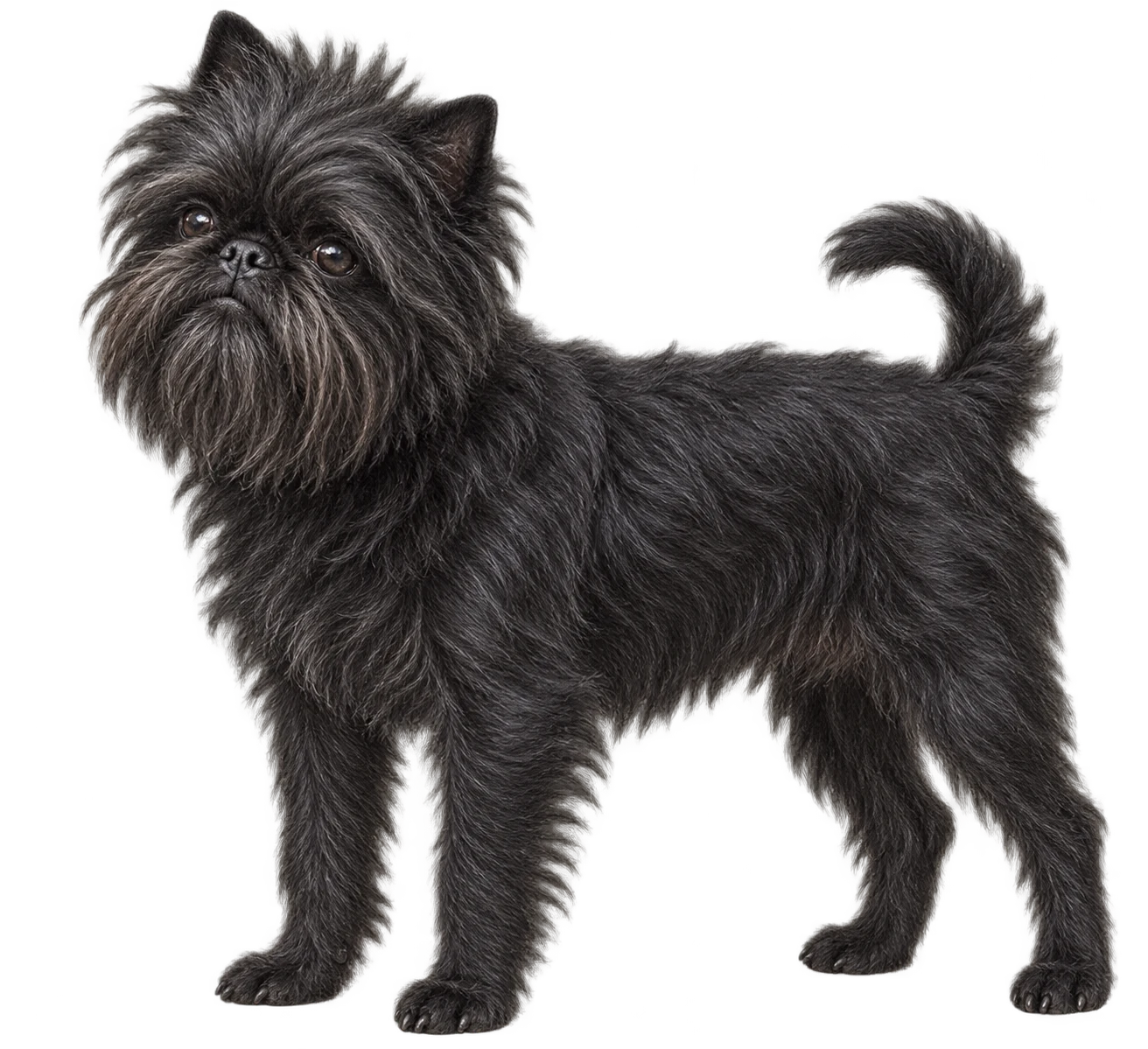
Mammals
Affenpinscher
Canis lupus familiaris
Classification and source reference
LivingAI illustration