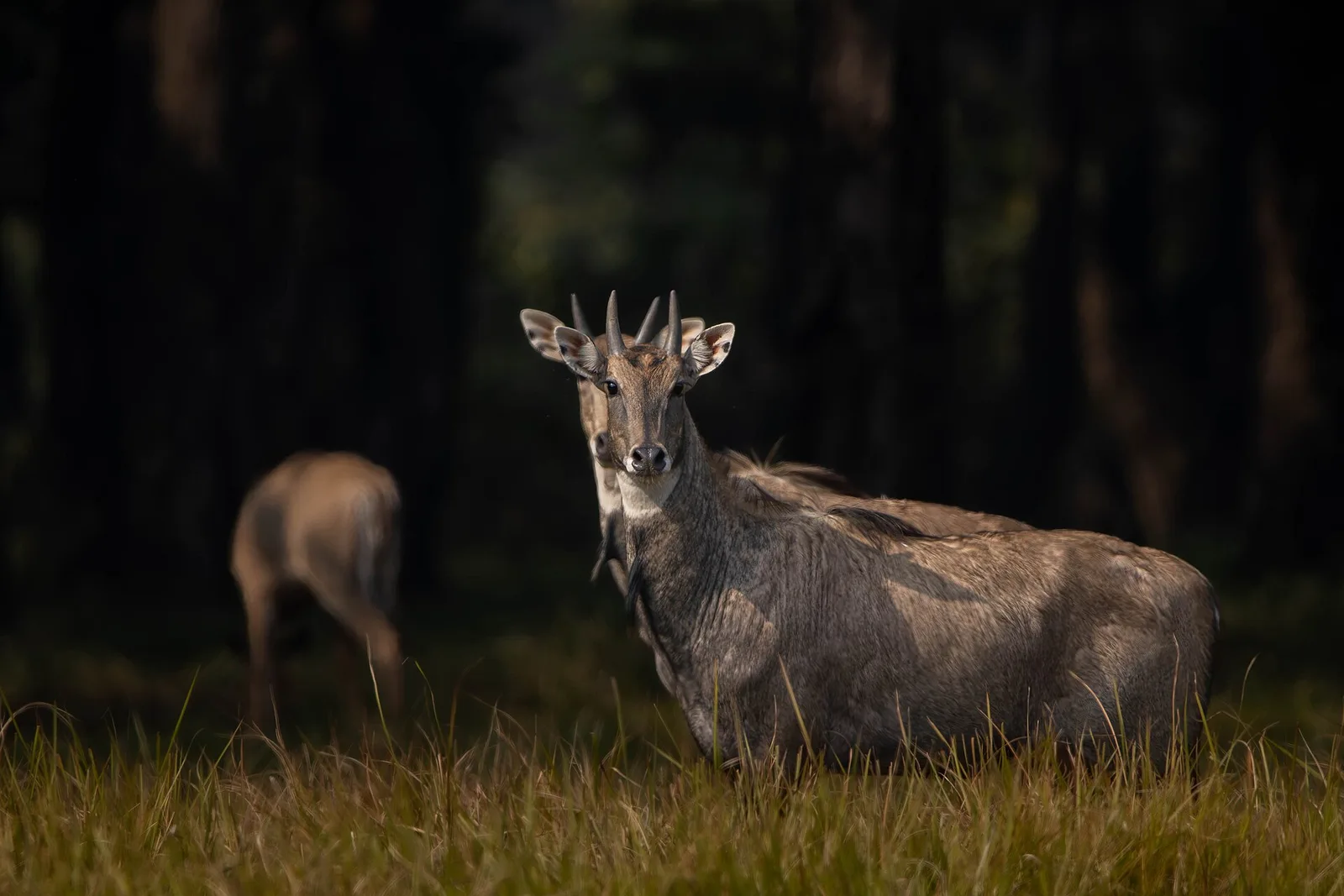
Nilgai
The blue bull, Asia's largest antelope
Boselaphus tragocamelus
Also called Blue bull, Bluebuck, White-footed antelope, Nilgau, Nilghor
Living individuals or members of this group exist today. This does not mean they are safe from extinction.
Meet the nilgai
The nilgai is Asia's largest antelope, a heavy, thin-legged grazer of the scrub and farmland of northern India and Nepal. Bulls turn blue grey with age, which gives the animal its Hindi name, blue cow.
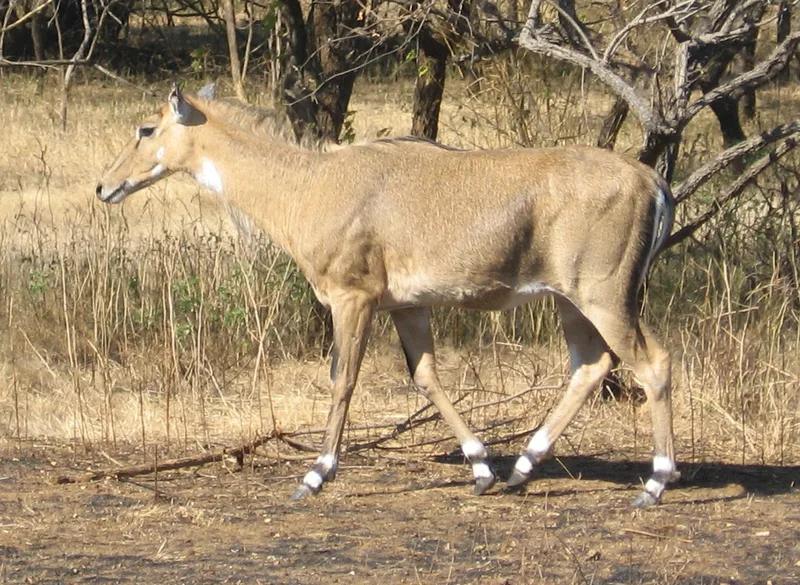
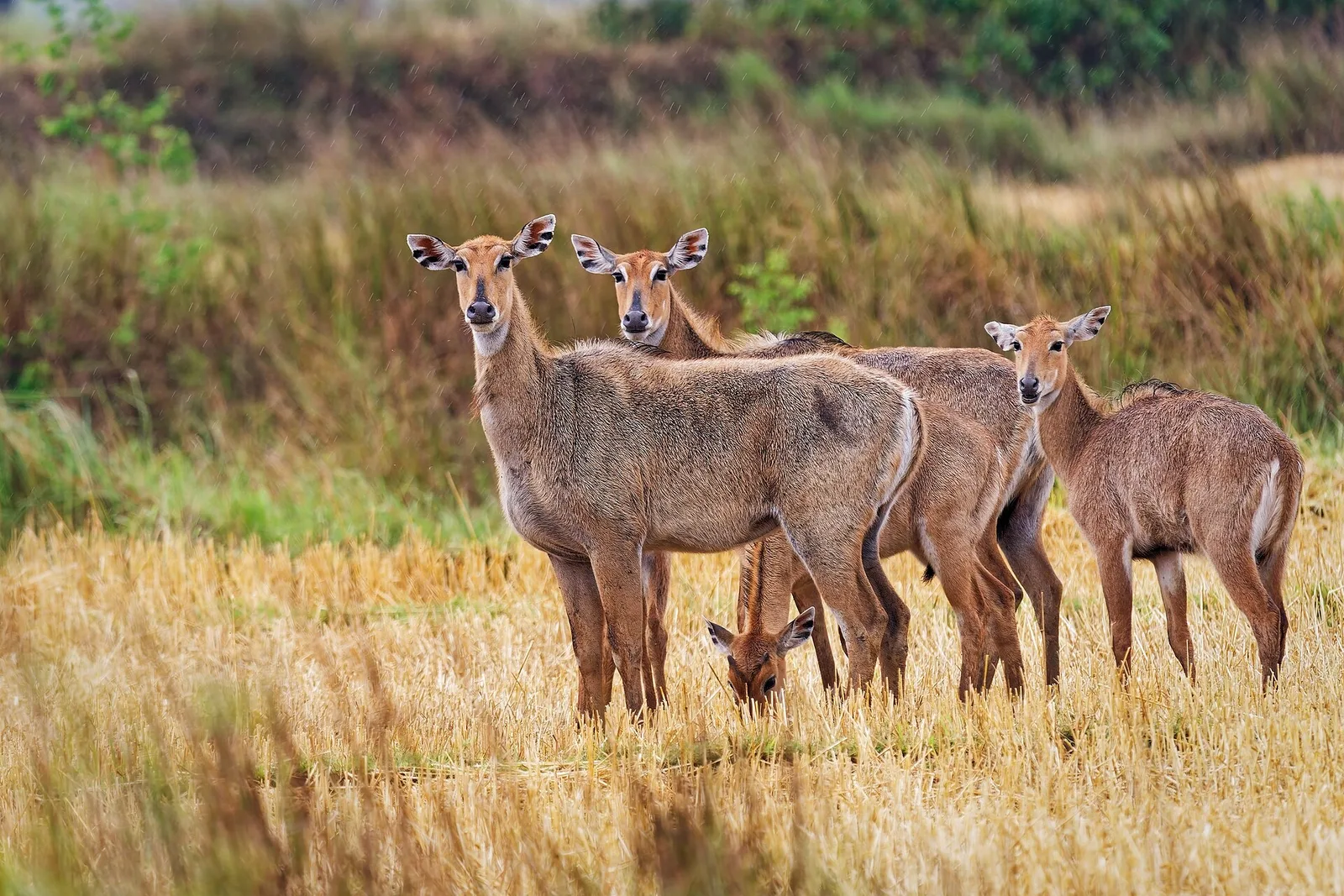
Images of the nilgai
Lifespan in the wild
About 10 years
Weight
100 to 288 kg
Length
1.7 to 2.1 m
Top speed
Up to 47 km/h
Fact file
Nilgai
- Location
- Northern India, the Nepal Terai, eastern Pakistan; feral in southern Texas
- Habitat
- Grassland, Temperate forest, Savanna
- Diet
- Herbivore
- Prey / food
- Grasses, herbs, leaves, pods, flowers and fruit
- Predators
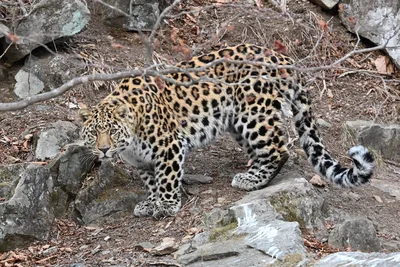
- Tiger, leopard, dhole, Indian wolf, striped hyena
- Lifestyle
- Diurnal, in small herds
- Group name
- Herd
- Name of young
- Calf
- Gestation
- 8 to 9 months
- Litter size
- 1 calf, often twins
- Population
- About one million in India (2001 estimate); about 37,000 feral in Texas
- Biggest threat
- Culling as a crop pest; hunting and habitat loss in Nepal and Pakistan
- Distinctive feature
- White throat patch with a tuft of coarse hair below it; blue grey bulls
- Colour
- Blue grey (bulls), orange to tawny (cows and calves)
- Skin type
- Fur
Size
Next to a person
Measurements
Size and speed
- Height
- 1 to 1.5 m at the shoulder
- Length
- 1.7 to 2.1 m head and body, without the tail
- Tail
- Up to 54 cm
- Weight
- 100 to 288 kg, up to 308 kg the low figure is a light cow, the high figure a heavy bull
- Weight, male
- 109 to 288 kg, up to 308 kg
- Weight, female
- 100 to 213 kg
- Top speed
- Up to 47 km/h converted from 29 miles per hour, when chased
Typical adult ranges. Sources: Wikipedia, Animal Diversity Web.
Life cycle
Lifespan
- In the wildAbout 10 years
- In captivityUp to 21.7 years
- 021.7 years
Appearance
Colour and coat
- Primary colours
- blue greytawny
- Secondary colours
- whiteblack
- Skin type
- fur
- Male and female
- Strong. Bulls are larger, blue grey, and carry horns and a throat tuft. Cows are tawny and almost always hornless.
Life cycle
Mating and family
- Mating system
- polygynous, a dominant bull guarding receptive cows
- Social structure
- small herds of cows and calves; separate bull groups
- Breeding
- one calf, often twins, roughly once a year
Cows breed from about two to three years old and can calve again a year later. Mating happens all year with a regional peak of three to four months. A cow carries her calf for eight to nine months. The single calf or twins hide for their first weeks and graze by the fourth week. Wild nilgai live about 10 years.
Classification
Taxonomy
- Kingdom
- Animalia
- Phylum
- Chordata
- Class
- Mammalia
- Order
- Artiodactyla
- Family
- Bovidae
- Genus
- Boselaphus
- Species
- Boselaphus tragocamelus
Conservation
Red List status
- LC
- NT
- VU
- EN
- CR
- EW
- EX
Least Concern on the IUCN Red List
Range
Recorded in 3 countries
Habitat layer: temperate broadleaf and mixed forest, temperate conifer forest, boreal forest and taiga, tropical grassland, savanna and shrubland, temperate grassland, savanna and shrubland.
Countries from 2,426 wild records on GBIF (iNaturalist research grade), filtered and checked by hand. Country shapes: Natural Earth. Habitat: RESOLVE Ecoregions 2017, CC BY 4.0. Basemap: Natural Earth.
Habitats
Three things to know
- 1
Many Hindus treat the nilgai as a cow and will not kill or eat it, so herds of a million animals roam northern India.
- 2
In 1924 a Texas ranch released nilgai onto its land, and about 37,000 now live wild in that state.
- 3
A newborn calf stands within 40 minutes of birth, and twins are common.
Did you know
Seven more facts
- 1
A calf can stand within 40 minutes of birth.
- 2
The nilgai can go for long periods without drinking, even in summer.
- 3
Its horns lack the rings that mark the horns of most other bovids.
- 4
Under Aurangzeb it was called nilghor, the blue horse.
- 5
Its closest relatives are cattle and the eland, not the gazelles.
- 6
Nilgai dung holds about 1.6 percent nitrogen and improves the soil beneath it.
- 7
A frightened calf gives a coughing roar that other herds can hear 500 metres away.
Field notes
How it looks and acts
Field notes
Distinguishing features
- A sloping back, with forelegs longer than the hind legs.
- A white throat patch with a tuft of coarse hair below it on bulls.
- Blue grey bulls and tawny cows.
- Short, straight, smooth black horns on bulls only.
- White spots on the face and white lower legs.
- A tufted tail with a black tip.
Field notes
Unique adaptations
- A mixed diet of grass, leaves, pods and fruit lets it live where grass alone would fail.
- It tolerates long spells without water in a hot, dry climate.
- Thick skin on the head and neck of bulls absorbs blows in fights.
- Sharp eyesight and hearing make up for a weak nose.
- A galloping flight of several hundred metres carries it clear of predators in open country.
Field notes
Interesting behaviours
- Feeds in four daily peaks, from dawn to evening.
- Keeps cows and bulls in separate groups outside the rut.
- Builds dung piles to mark territory.
- Fights by neck wrestling and horn ramming.
- Hides newborn calves for the first weeks of life.
Field notes
Temperament
- Calm and tame where nobody hunts it.
- Wary and quick to flee where it is harassed.
- Bulls turn aggressive in the rut.
Field notes
Communication
- Stays silent most of the time.
- Grunts when alarmed, and calves give a coughing roar.
- Cows click to their calves while nursing.
- Bulls display the throat patch and beard and point the horns at rivals.
Ecology
Ecological role
The nilgai is a large mixed feeder that feeds the tiger and spreads the seeds of the trees it eats.
- Is a major prey species for tigers, and also feeds leopards, dholes and wolves.
- Carries acacia, mesquite and grass seeds in its dung, where they sprout.
- Enriches the soil with nitrogen-rich droppings.
- Competes with chinkara and chital for acacia scrub in Ranthambore.
Stories
Myths and legends
- In Hindu tradition, the nilgai is treated as a cow and is rarely eaten.
- In the Aitareya Brahmana, a Prajapati takes the shape of a nilgai.
- In north Indian village tradition, a lone nilgai near a field warns of crop raids to come.
- In Mughal tradition, the animal was prized game and appears on dagger hilts and in paintings.
People
Relationship with humans
People
Living alongside us
People in India have hunted, painted and protected the nilgai for thousands of years. Its cow-like name gives it religious cover, and many Hindus will not eat it. As a result herds raid crops across northern India, and several states now permit culling. In Texas the animal is game on private ranches. It poses no real danger to people.
- It runs away from people and does not attack.
- A bull's horns are short and straight, and injuries to people appear to be rare.
- The main harm it does is to crops, which it raids and tramples.
People
Status, uses and products
- Domestication
- Wild
- As a pet
- Not suitable. A nilgai is a 100 to 288 kilogram antelope that needs open range and a herd. Zoos keep it, and Texas ranches farm it, but it is not a household animal.
- Uses
- trophy huntinggame meatzoo exhibition
- Products
- meathides
The full account
About the nilgai
The nilgai, Boselaphus tragocamelus, is the largest antelope in Asia. Its name comes from Hindi and means blue cow. The name fits the adult bull, whose coat turns a dark blue grey. Cows and calves stay orange to tawny.
It stands 100 to 150 centimetres at the shoulder. Bulls weigh 109 to 288 kilograms, and cows 100 to 213 kg. The build is odd for an antelope: a deep chest, a sloping back and thin legs. A white patch marks the throat, and a tuft of coarse hair hangs below it.
The nilgai lives across northern India, the Nepal Terai and eastern Pakistan. It thrives in scrub, open woodland and farmland, where it is often a serious crop pest. A feral herd of about 37,000 also roams southern Texas. The IUCN lists the species as Least Concern.
Name and taxonomy
Peter Simon Pallas described the species in 1766 as Antilope tragocamelus. He worked from an account by James Parsons of a bull kept in London. The genus name Boselaphus joins the Latin word for ox with the Greek word for deer. The species name tragocamelus joins the Greek words for he-goat and camel. Philip Sclater first used the present combination in 1883. The nilgai is the only living member of its genus.
The English word nilgai fuses the Hindi nil, blue, with gai, cow, and was first recorded in 1882. Older spellings include nylghau, nilgau and neelghae. Under the Mughal emperor Aurangzeb it was called nilghor, the blue horse. English speakers also call it the blue bull or the white-footed antelope.
Evolution and relatives
The nilgai belongs to the tribe Boselaphini, together with the four-horned antelope of India. Studies of mitochondrial DNA in 1992 and 1999 grouped this tribe with the cattle tribe Bovini and the spiral-horned antelopes. So the nearest relatives of the nilgai are cattle, buffalo, bison and the eland, not the gazelles. The tribe arose at least 8.9 million years ago, near the present home of the four-horned antelope. It may be the least changed of all living bovid lineages.
Fossil boselaphines such as Miotragocerus and Tragoportax are common in the Siwalik Hills of India and Pakistan. Others turn up in southern Europe and in Miocene beds in Kenya, so the group once lived in Africa. Extinct relatives had horned females, though modern nilgai cows are almost always hornless. Pleistocene nilgai bones have been found in the Kurnool caves of southern India. People hunted the animal in the Mesolithic, between 5,000 and 8,000 years ago.
Appearance
An adult stands 100 to 150 centimetres at the shoulder, with a head and body length of 170 to 210 cm. Bulls weigh 109 to 288 kilograms, and the heaviest on record reached 308 kg. Cows are lighter, at 100 to 213 kg. The tufted tail reaches 54 cm and ends in black. The forelegs are usually longer than the hind legs, which gives the back its slope.
Bulls are blue grey, while cows and young are orange to tawny. Both sexes carry a white throat patch, white spots on the face and ears, and white lower legs. The belly, inner thighs and tail are white. A short mane runs along the neck, and a column of coarse hair about 13 cm long hangs from a bull's throat. The ears are 15 to 18 cm long and tipped with black. The coat hairs are brittle, and the animal carries little fat under the skin, so a hard winter can kill it.
Only bulls normally carry horns. The horns are smooth, straight and black, usually 15 to 24 cm long and rarely more than 30 cm. They lack the rings seen on the horns of most other bovids. Bulls have thicker skin on the head and neck, which protects them in fights. Almost white animals have been seen in Sariska, but they are not albinos.
Habitat and range
The nilgai is native to the Indian subcontinent. The main populations live in India and the Terai lowlands of Nepal, with smaller numbers along the Pakistan border. It is abundant across northern India and rare in Nepal and Pakistan. Bangladesh lost its nilgai, but a few have since walked back over the border from India and Nepal. Old records from Coimbatore and Salem in the south may describe a feral herd that escaped from a ruler's game park.
It prefers ground with short bushes and scattered trees: scrub forest, grassy plains and dry open woodland. It is common on farmland and rare in dense forest. It needs little water and can hold a territory through the dry season, though it leaves when every pool dries. Densities range from 0.23 animals per square kilometre in Indravati to 11.36 in Ranthambhore.
In 1924 Caesar Kleberg released nilgai on the King Ranch in southern Texas. The herd grew fast in the late 1940s and spread to neighbouring ranches. By 2008 Texas held nearly 37,000 feral nilgai, and about 30,000 lived along the Mexican border in 2011. Escapes from exotic ranches have founded small herds in Alabama, Florida, Mississippi and Tamaulipas. Texas territories cover 0.6 to 8.1 square kilometres.
Diet and feeding
The nilgai both grazes and browses. It prefers grasses and herbs but turns to woody plants in the dry forests of India. In Texas it is mainly a grazer, with mesquite and oak in the mix. Its diet needs at least seven percent protein. It goes for long periods without drinking, even in summer.
In Sariska, grass matters most in the rains. In winter and summer the animals add the flowers of the flame of the forest tree, acacia pods and jujube fruit. Seeds pass through the gut and sprout from the dung, which spreads acacia and mesquite across the landscape. A 1991 study found four feeding peaks: dawn, morning, afternoon and evening. Where herds feed on crops they shift much of their activity to the night.
Behaviour and social life
The nilgai is active by day. Cows and calves keep apart from bulls for most of the year. Three kinds of group form: cows with young calves, three to six cows with older calves, and bull groups of two to 18. Most herds hold 10 animals or fewer, though gatherings of 20 to 70 occur. A 1980 study in Bardiya National Park found an average herd of three.
Bulls mark a territory with dung piles up to 50 cm across. The act is a ritual. The bull plants its legs about a metre apart, drops its rump, raises its tail and holds the pose for 10 seconds. Fights involve neck pushing and horn ramming, and both sexes fight. Despite the thick skin, deep wounds and deaths happen. A young bull in Sariska was seen kneeling before an adult, which appears to be a submissive display.
The animal is usually calm around people but grows wary where it is harassed. When alarmed it does not hide. It gallops away for 300 metres, and sometimes 700, before it stops. ADW gives its top speed as about 47 kilometres per hour. It shares its range with chital, blackbuck, chinkara and the four-horned antelope.
Communication and senses
The nilgai sees and hears well, but its sense of smell is poor. It is normally silent. Alarmed animals give short guttural grunts, and cows click to their calves while nursing. Frightened calves under five months give a coughing roar that lasts half a second and carries 500 metres. Other herds within earshot answer it.
Visual display matters more than sound. A bull shows off the white throat patch and the beard, holds its head high and points its horns at a rival. Dung piles carry scent and a visual signal at the same time, which probably marks the edge of a territory. Like other bovids, the bull tests a cow's readiness with a flehmen grimace after licking her.
Reproduction and life cycle
Cows have working ovaries by two years and usually calve for the first time a year later. A few conceive at 18 months. Bulls have active testes at three, but they cannot hold their own against older bulls until four or five. Mating can occur all year, with a peak of three to four months that shifts by region. Texas peaks from December to March, and Bharatpur from October to February.
In the rut, bulls roam in search of receptive cows and fight for dominance. The winner guards the cow from other bulls. Courtship lasts about 45 minutes and ends when the bull presses his chest to her rump and mounts.
Gestation lasts eight to nine months. One calf is usual, but twins are common and triplets occur. In a 2004 study at Sariska, twins made up 80 percent of the calves. A pregnant cow leaves the herd to give birth. The calf stands within 40 minutes, hides for its first weeks and starts to forage by the fourth week. Young bulls leave their mothers at ten months for bachelor groups. A nilgai lives about 10 years in the wild, and one captive animal reached 21.7 years.
Predators and threats
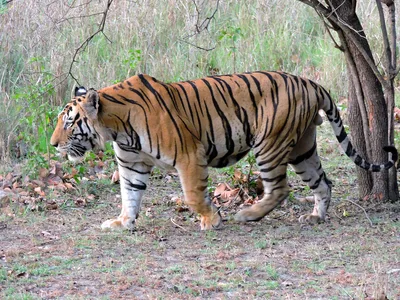
In India the tiger is the main predator of adult nilgai. The Asiatic lion also takes them, though not often. Leopards prefer smaller prey but kill nilgai when they can. Dholes attack calves, and the Indian wolf and striped hyena take their share. Feral nilgai in Texas probably face few predators beyond people and the occasional coyote.
Hunting, forest clearance and habitat damage in the 20th century cut numbers hard in Nepal and Pakistan. In India the threat runs the other way: herds raid and trample crops across seven states. Farmers string live electric wires around fields, which kill other animals too. In 2015 farmers in Neemuch went on hunger strike to demand compensation for nilgai damage. Cold is a natural threat: the animal carries little fat and can die in a hard winter.
Population and conservation
The IUCN lists the nilgai as Least Concern, and CITES places it on Appendix III. India's population was put at about one million in 2001. India protects it under Schedule III of the Wildlife Protection Act of 1972. It lives in many reserves, including Gir, Kanha, Ranthambore, Sariska and Keoladeo.
The problem in India is abundance, not scarcity. Bihar, Maharashtra and Uttarakhand asked the national government to declare the animal vermin. Bihar now permits hunting, and Uttar Pradesh lets farmers and licensed gun owners cull it. Animal rights groups objected, and a 2019 video of a nilgai buried alive by an excavator in Bihar caused outrage. Rajasthan proposed contraceptive darts in 2015 as a gentler control. Madhya Pradesh and Haryana want to rename it rojad or roze, so that the word cow no longer stands in the way of culling.
Relationship with humans
Bones from Pandu Rajar Dhibi in West Bengal suggest that people hunted or kept nilgai in the Neolithic and in the Indus Valley Civilisation. Mughal painters and armourers put it on canvases and dagger hilts, though less often than horses and camels. The emperor Jahangir wrote of his anger when a nilgai hunt was disturbed. Villagers have long linked the animal with the cow, and most Hindus will not eat it. The Bishnoi community traditionally protects it along with other wildlife.
That protection is why the species thrives while other Indian antelopes decline. It also means that herds raid fields with little fear. In Texas ranches sell nilgai hunts, and the meat is described as milder than blackbuck. Its dung holds about 1.6 percent nitrogen and improves soil to a depth of 30 centimetres, so it may help replanting. It is not dangerous to people, though a cornered bull could probably injure someone with its horns.
In culture and myth
In Hindu tradition the nilgai shares the sanctity of the cow because of its name and its cattle-like shape. The Aitareya Brahmana, a text from 500 to 1000 BCE, tells of a Prajapati who took the form of a nilgai. In the villages of northern India a lone nilgai near a field is read as a warning that crop raids will follow. Mughal and princely hunting tales present it as prized big game.
Some spirit-animal websites tie the nilgai to the goddess Durga or to Shani, and one suggests that a Saturday sighting brings luck. Those claims seem to be modern inventions rather than recorded folklore. The animal's real cultural weight lies in the word gai, which has kept it off most dinner tables for centuries. State governments now try to change that word, which suggests how much a name can matter.
A sentence with a dotted underline is inferred: it describes the group the animal belongs to, or is a reading of the sources, rather than a measured or reported fact about this species.
Questions
Nilgai questions, answered
How big is a nilgai?
It stands 100 to 150 centimetres at the shoulder, with a head and body of 170 to 210 cm. A bull weighs 109 to 288 kilograms and a cow 100 to 213 kg. No antelope in Asia is larger.
Why is the nilgai called the blue bull?
Adult bulls turn blue grey. The Hindi name joins nil, blue, with gai, cow. English speakers turned that into blue bull.
Where do nilgai live?
They live across northern India, the Terai of Nepal and the Pakistan border. A feral population of about 37,000 lives in southern Texas, with smaller herds in a few other US states and Mexico.
What do nilgai eat?
They eat grasses, herbs and the leaves, pods, flowers and fruit of trees such as acacia and jujube. In Texas they graze mostly on grass.
Are nilgai endangered?
No. The IUCN lists them as Least Concern, and India alone had about one million in 2001. They are scarce only in Nepal and Pakistan.
Are nilgai dangerous?
Not to people. They flee from danger rather than fight. Their real damage is to crops, which they raid and trample.
How fast can a nilgai run?
About 47 kilometres per hour when chased, by ADW's figure. It gallops 300 metres or more before it stops.
Why do Hindus not eat nilgai?
Villagers have long seen it as a kind of cow, and its name contains the Hindi word for cow. Cows are sacred to Hindus, so the antelope shares that protection.
Do female nilgai have horns?
Almost never. Horns are a feature of bulls, though an occasional cow grows them. Fossil relatives had horned females.
How many calves does a nilgai have?
Usually one, but twins are common and triplets occur. One study at Sariska found twins in 80 percent of calves.
How long do nilgai live?
About 10 years in the wild. A captive animal has reached 21.7 years.
Why are nilgai culled in India?
Herds destroy crops across northern India. Bihar has declared the animal vermin, and Uttar Pradesh lets farmers shoot it. The decision is contested by animal rights groups.
How did nilgai get to Texas?
Caesar Kleberg released them on the King Ranch in 1924. The herd grew in the 1940s and spread to neighbouring land.
Is the nilgai a deer or an antelope?
It is an antelope in the family Bovidae. Its nearest relatives are cattle, buffalo and the eland rather than deer.
Do nilgai live in herds?
Yes, but small ones. Most groups hold 10 or fewer animals, and bulls live apart from cows outside the breeding season.
Food web
Prey and food
- grasses
- herbs
- leaves
- pods
- flowers
- fruit
Food web
Predators
 Tiger
 Leopard
- dhole
- indian wolf
 Striped hyena
Ecological equivalents
Related species on this site
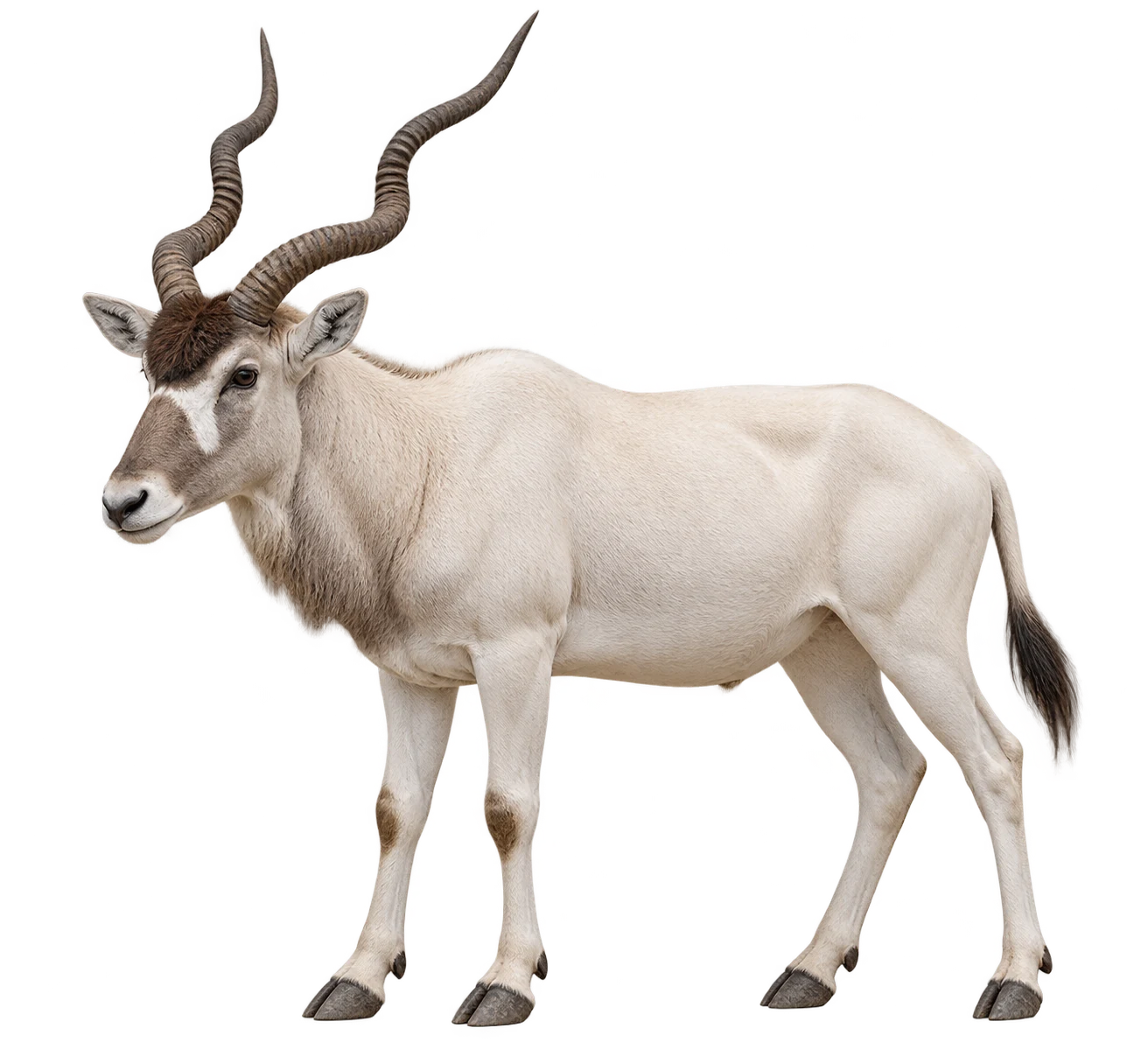
Addax (same family), African buffalo (same family), Alpine Goat (same family), American bison (same family), American Pygmy Goat (same family), Antelope (same family), and more.
Mammals
Addax
Addax nasomaculatus
Classification and source reference
LivingAI illustration NT
Mammals
African buffalo
Syncerus caffer
The African buffalo is a heavy wild ox of sub-Saharan Africa that lives in herds of dozens to thousands and must drink every day.
Living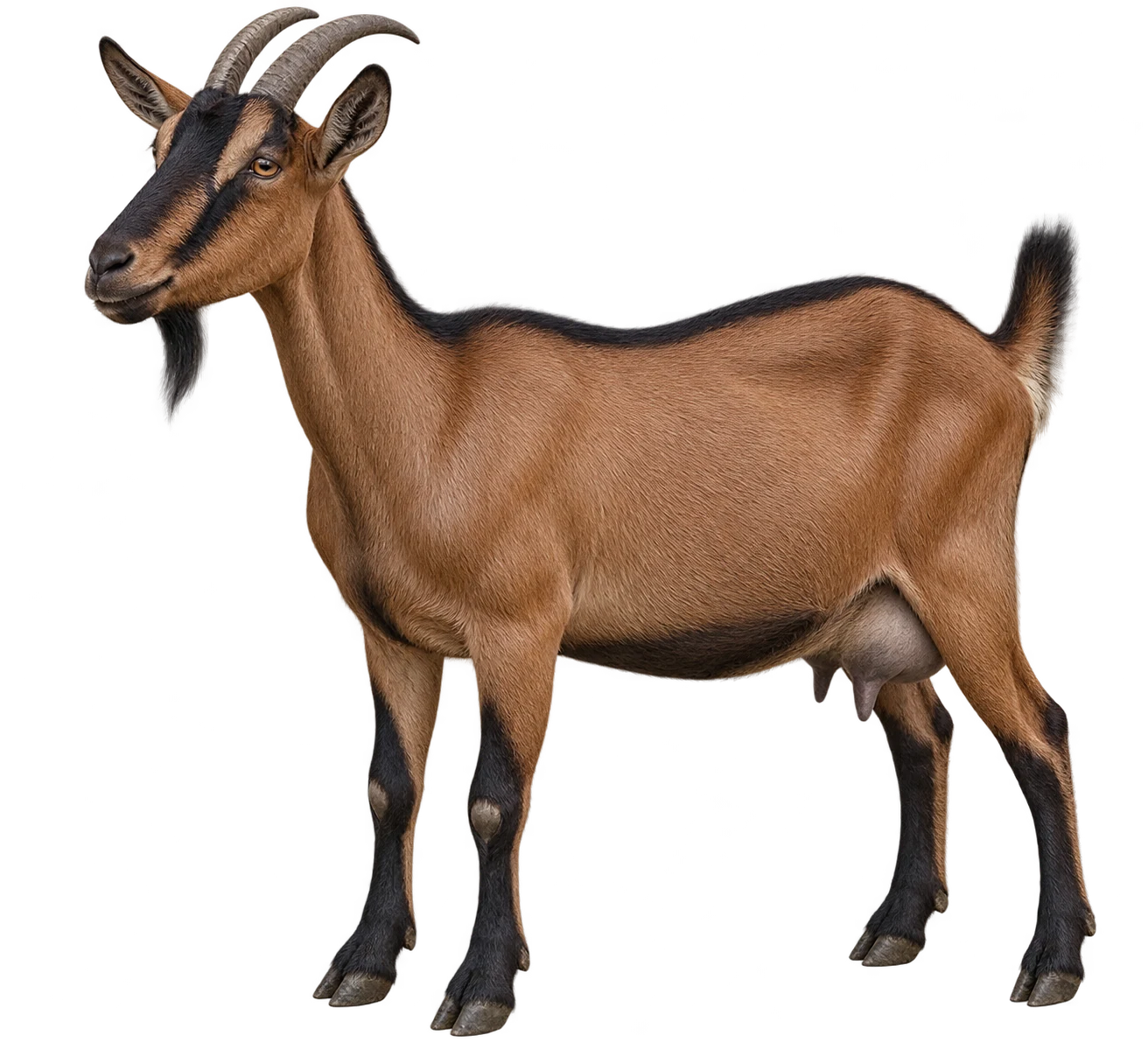
Mammals
Alpine Goat
Capra hircus
Classification and source reference
LivingAI illustration NT
Mammals
American bison
Bison bison
The American bison is the heaviest land animal in North America and the national mammal of the United States.
Living
Mammals
American Pygmy Goat
Capra hircus
Classification and source reference
LivingAI illustration
Mammals
Antelope
Bovidae
Classification and source reference
LivingAI illustration