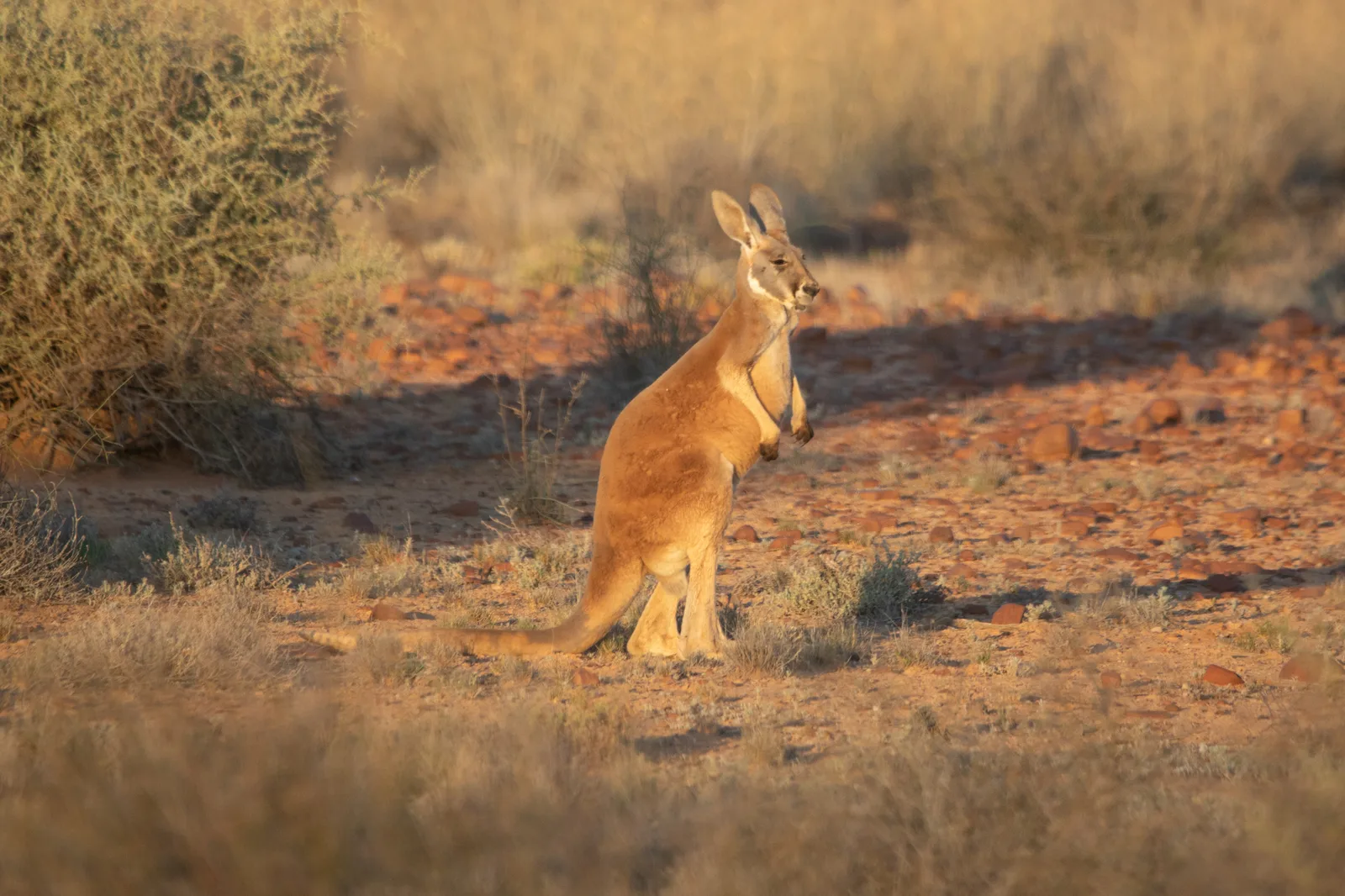
Red kangaroo
The largest marsupial, built to bound across the desert
Osphranter rufus
Living individuals or members of this group exist today. This does not mean they are safe from extinction.
Meet the red kangaroo
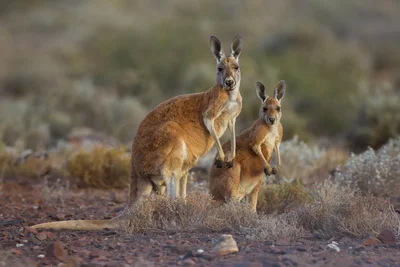
The red kangaroo is the largest marsupial and the largest animal in Australia. It bounds across the dry interior at highway speed on two powerful hind legs.
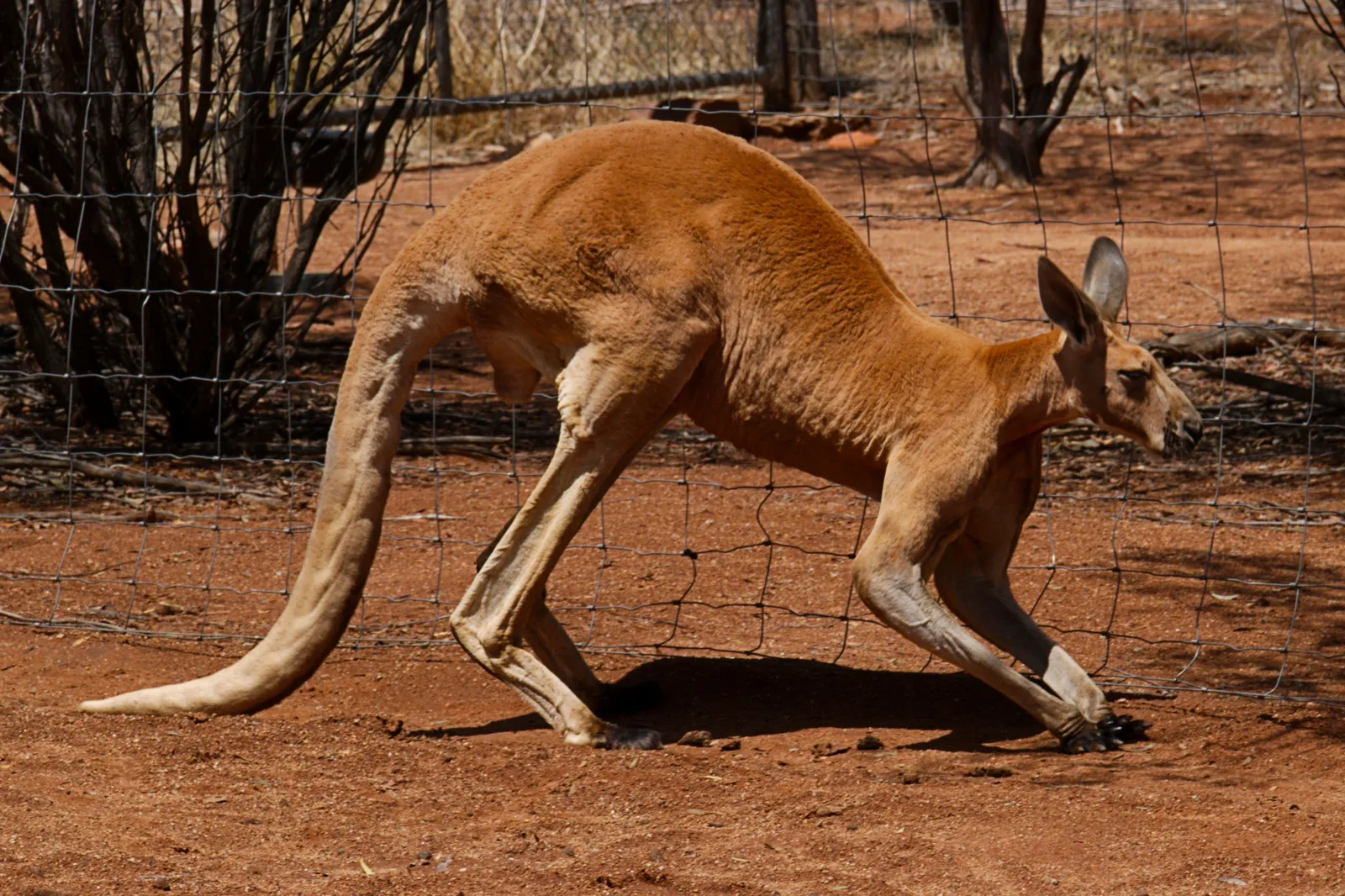
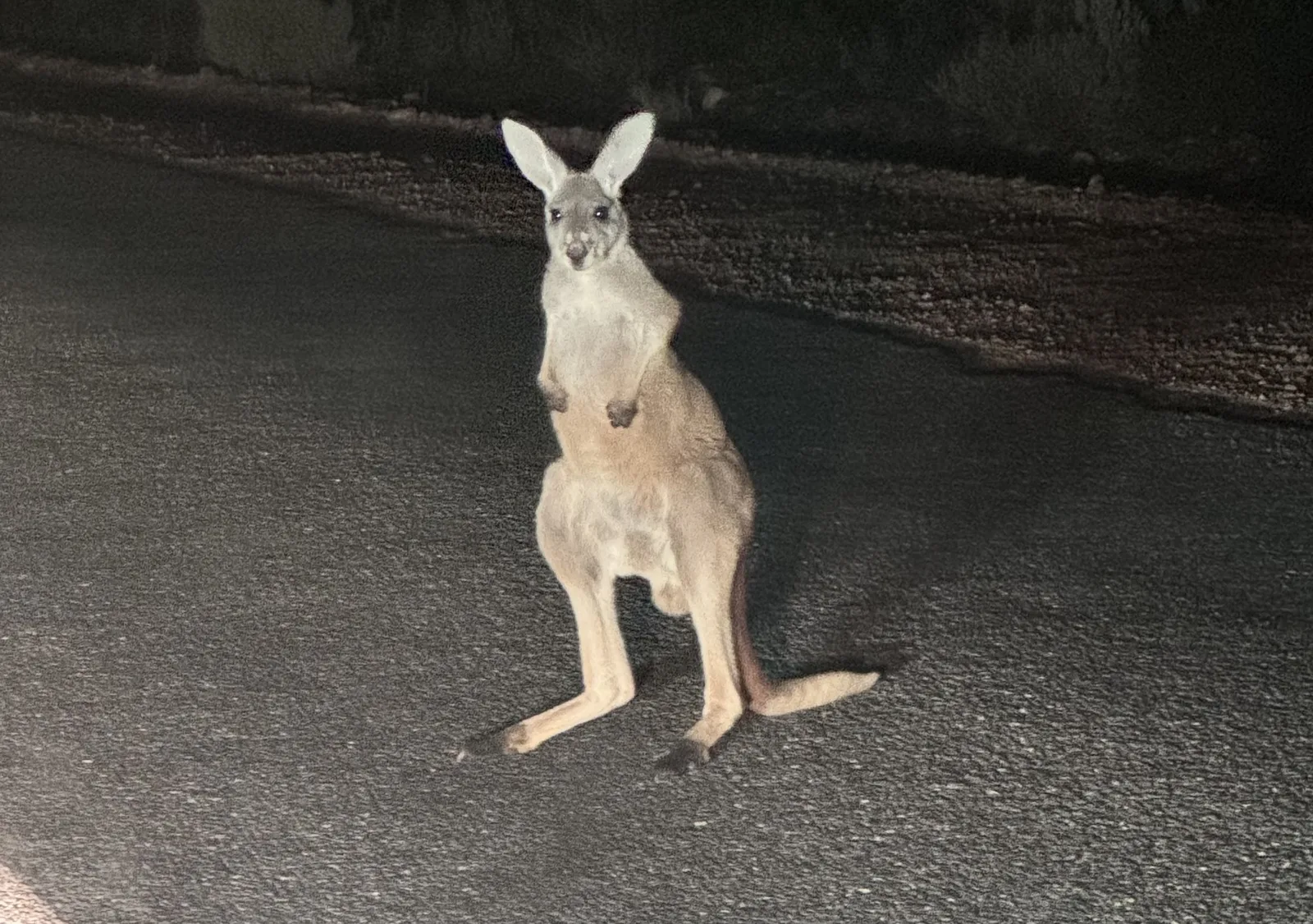
Images of the red kangaroo
Lifespan in the wild
Up to 22 years
Weight
18 to 90 kg
Length
0.85 to 1.6 m
Top speed
Up to 60 km/h
Fact file
Red kangaroo
- Location
- The interior of mainland Australia
- Habitat
- Desert, Grassland, Savanna
- Diet
- Herbivore
- Prey / food
- Grasses and shrubs
- Predators
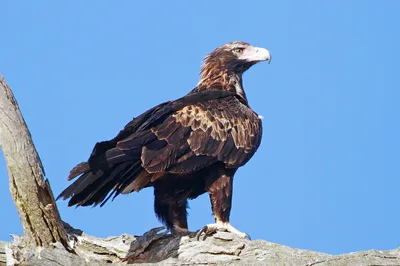
- Dingoes, wedge-tailed eagles take joeys
- Lifestyle
- Crepuscular
- Group name
- Mob
- Name of young
- Joey
- Gestation
- About 33 days, then up to 8 months in the pouch
- Litter size
- 1 joey
- Population
- Several million
- Biggest threat
- Drought and hunting
- Distinctive feature
- A thick tail used as a fifth leg
- Colour
- Red-brown males, blue-grey females
- Skin type
- Fur
Size
Next to a person
Measurements
Size and speed
- Height
- 1.5 to 1.8 m, up to 2.1 m standing
- Length
- 0.85 to 1.6 m head and body
- Length, male
- 1.3 to 1.6 m head and body
- Length, female
- 0.85 to 1.05 m head and body
- Tail
- 0.65 to 1.2 m
- Weight
- 18 to 90 kg, up to 91 kg
- Weight, male
- 55 to 90 kg
- Weight, female
- 18 to 40 kg
- Top speed
- Up to 60 km/h
Typical adult ranges. Source: Wikipedia.
Life cycle
Lifespan
- In the wildUp to 22 years
- 022 years
The pale bar is the record. Source: Animal Diversity Web.
Appearance
Colour and coat
- Primary colours
- red-brownblue-grey
- Secondary colours
- buffwhite
- Skin type
- fur
- Male and female
- Strong. Males weigh 55 to 90 kilograms and are red-brown, while females weigh 18 to 40 kg and are usually blue-grey. Males also grow much larger shoulders and forearms.
Life cycle
Mating and family
- Mating system
- polygynous, with a dominant male guarding females in heat
- Social structure
- loose mobs of 2 to 4, mostly females and young
- Breeding
- one joey at a time, about three young every two years in good seasons
Red kangaroos breed all year when food allows. A joey is born after 33 days, weighing under a gram, and climbs into the pouch. It leaves the pouch at about 235 days and suckles until about 12 months. The mother mates again soon after each birth and holds the next embryo in pause until the pouch is free. Wild animals have lived up to 22 years.
Classification
Taxonomy
- Kingdom
- Animalia
- Phylum
- Chordata
- Class
- Mammalia
- Order
- Diprotodontia
- Family
- Macropodidae
- Genus
- Osphranter
- Species
- Osphranter rufus
Conservation
Red List status
- LC
- NT
- VU
- EN
- CR
- EW
- EX
Least Concern on the IUCN Red List
Range
Recorded in 1 country
Habitat layer: tropical grassland, savanna and shrubland, temperate grassland, savanna and shrubland, desert and xeric shrubland.
Countries from 1,293 wild records on GBIF (iNaturalist research grade), filtered and checked by hand. Country shapes: Natural Earth. Habitat: RESOLVE Ecoregions 2017, CC BY 4.0. Basemap: Natural Earth.
Habitats
Three things to know
- 1
A single bound can cover 8 m.
- 2
A newborn joey is about the size of a jelly bean and crawls to the pouch unaided.
- 3
A kangaroo cannot walk backwards.
Did you know
Seven more facts
- 1
A female can freeze the growth of an embryo until the pouch is free, a trick called embryonic diapause.
- 2
Each teat gives milk matched to the age of the joey that drinks from it.
- 3
A kangaroo chased into water may drown its pursuer with its forepaws.
- 4
Males test a female's readiness by sniffing her urine and curling the lip.
- 5
The species can enter torpor to survive hard times.
- 6
Kangaroos moved 13 to 20 kilometres away find their way home.
- 7
iNaturalist holds 2,870 observations of the species.
Field notes
How it looks and acts
Field notes
Distinguishing features
- Red-brown fur in males and blue-grey fur in most females.
- A short square muzzle with black and white marks on the sides.
- Long pointed ears.
- A standing height of 1.5 to 1.8 metres in adults, and up to 2.1 m in the largest male.
- A thick tail of 65 to 120 centimetres that props the body up.
- Huge hind legs and small clawed forepaws.
Field notes
Unique adaptations
- Kidneys that concentrate urine and let it go without water for long spells.
- Achilles tendons that stretch and spring back to power each hop with little effort.
- Panting, sweating and forearm licking keep the body near 36 degrees in desert heat.
- Embryonic diapause lets breeding pause in drought and restart with rain.
- A wide field of view of about 300 degrees to spot danger on open plains.
Field notes
Interesting behaviours
- Grazes at dusk, through the night and around dawn.
- Rests in the shade of saltbush or mulga during the heat of the day.
- Digs a hip hole in cool ground to lie in.
- Hops on both hind legs, using the tail for balance.
- Travels 25 to 30 kilometres to find fresh growth after patchy rain.
Field notes
Temperament
- Calm and gregarious in loose, changing groups.
- Males are not territorial but fight hard over a female in heat.
- Defends itself with powerful kicks when cornered.
Field notes
Communication
- Males sniff urine and curl the lip to read a female's breeding state.
- Ritual grooming, display and sparring settle rank among males.
- Like most mammals, it probably uses scent widely, though little is recorded.
- Animals in a group share the watch, so each spends less time scanning.
Ecology
Ecological role
The red kangaroo is the main native grazer of the Australian interior, and its grazing shapes the plant communities of the plains.
- Grazes green grass and forbs, and shifts to shrubs in drought.
- Provides prey for dingoes and wedge-tailed eagles, mainly as joeys.
- Competes with sheep and rabbits for grass.
- Its numbers rise and fall with rain, so it likely tracks the productivity of the whole plain.
Stories
Myths and legends
- In Guugu Yimithirr tradition, gangurru is the name of a grey kangaroo, not the phrase I do not know.
- In Australian popular tradition, the tale that Cook was told I do not know is false.
- In Australian national tradition, the kangaroo stands on the coat of arms and flies on the national airline.
- In Aboriginal tradition of central Australia, the red kangaroo is a hunted animal and a food of the country.
People
Relationship with humans
People
Living alongside us
Aboriginal people have hunted the red kangaroo for food for thousands of years. Since European settlement it has spread with pasture and farm dams, and graziers now treat it as a pest. Australia harvests it under management plans for meat and leather, more than a million in some years. It is the emblem of the nation and appears on the coat of arms. Road collisions with kangaroos injure people and wreck cars.
- A cornered kangaroo kicks with both hind feet and can injure a person or a dog.
- Collisions with kangaroos wreck cars and can kill occupants when the animal comes through the windscreen.
- A kangaroo chased into water can hold a dog under and drown it.
People
Status, uses and products
- Domestication
- Wild
- As a pet
- Not suitable. A red kangaroo needs open plains, a mob and room to hop at 60 kilometres per hour. It is a protected native animal in Australia.
- Uses
- meatleatherecotourismsubsistence hunting
- Products
- meatleatherpet food
The full account
About the red kangaroo
Osphranter rufus, the red kangaroo, is the largest living marsupial and the largest land mammal native to Australia. It lives across the dry interior of the mainland, in scrub, grassland and desert. It moves by hopping on two huge hind legs, with a thick tail for balance. A male is red-brown, while a female is smaller and blue-grey, which earned her the name blue flier. Mobs of a few animals graze at dusk and dawn and rest in shade through the heat of the day.
A large male weighs 55 to 90 kilograms and stands about 1.5 metres tall, and the largest confirmed stood 2.1 m. Females weigh 18 to 40 kg. At full stretch the animal reaches about 60 kilometres per hour and covers 8 to 9 metres in a bound. The IUCN lists the species as Least Concern, and there are several million. Farmers regard it as a pest, and Australia harvests hundreds of thousands a year for meat and leather.
Name and taxonomy
Anselme Desmarest described the species in 1822 from an animal taken somewhere west of the Blue Mountains. He placed it in the genus Kangurus. John Gould moved it to Osphranter in 1842, a name later sunk into Macropus as a subgenus. A 2015 revision of Australian mammals raised Osphranter to a full genus again, and genetic work in 2019 agreed. So the red kangaroo now shares its genus with the wallaroos rather than the grey kangaroos.
The word kangaroo comes from gangurru in the Guugu Yimithirr language of north Queensland, the name of a grey kangaroo. The old story that it means I do not know, told of Cook and Banks, is false. Australians call a big male a Big Red, a female a flier and a male a boomer. No subspecies is recognised, so the species is monotypic.
Evolution and relatives
Kangaroos belong to the order Diprotodontia, along with koalas, wombats and possums. Within it, the family Macropodidae holds the kangaroos, wallaroos and wallabies. The red kangaroo sits in the genus Osphranter with the common wallaroo and its relatives. Its diploid chromosome number is 20. Like other kangaroos, it descends from small possum-like ancestors that came down to the ground as Australia dried.
Body size in the species increases with latitude, following Bergmann's rule. Blue-grey males, red females and mixed forms occur, so colour alone does not fix the sex. Genetic studies show female gene flow across distances of up to 1,000 kilometres, so populations mix widely.
Appearance
The red kangaroo is large, lean and muscular, with long pointed ears and a short square muzzle. Black and white marks line the side of the muzzle, and a pale stripe runs from mouth to ear. A male measures 130 to 160 centimetres from head to rump, plus a tail of up to 120 cm. A female measures 85 to 105 cm, with a tail of 65 to 85 cm. Males weigh 55 to 90 kilograms, about twice a female's 18 to 40 kg. Standing, a typical adult reaches 1.5 metres and a big male more than 1.8 m.
Males are brick red with pale buff underparts and limbs, and females are blue-grey with a brown tinge. In the arid zone many females are coloured like males. The fur is short and dense. Adult males often show pink staining on the chest and neck.
The forelimbs are short with small clawed paws, used to eat, groom and fight. The hind limbs are heavily muscled, and the second and third toes are fused into a grooming claw. The tail is thick enough to hold the body upright as a third leg of a tripod. The eyes give a field of view of about 300 degrees. Males grow far larger shoulders and arms than females, which helps in fights.
Habitat and range
The red kangaroo lives across western and central Australia, wherever the country is dry. It is absent from the wetter margins: the south-west of Western Australia, the east and south-east coasts, and the northern rainforest. It favours open plains where annual rainfall averages under 500 millimetres. Typical country is chenopod shrubland, mulga, brigalow, sandplain and hummock grassland, and floodout plains near ranges. It almost never enters hilly ground, and it needs scattered trees or shrubs for shade.
Density is highest in the semi-arid rangelands of New South Wales and Queensland. Two studies put density at 4.18 animals per square kilometre and at one animal per 89 hectares. Weekly home ranges in New South Wales cover 258 to 560 hectares, with the largest belonging to adult males. In arid country ranges are far bigger: 1,840 hectares for males and 3,680 for females on average. GBIF holds records from only 3 countries, which shows how confined the species is to Australia.
When grass fails and rain falls in patches, kangaroos travel 25 to 30 kilometres to fresh growth, then often return. One animal was recorded moving 216 km, and spontaneous journeys over 300 km are known. Kangaroos moved 13 to 20 km away found their way home.
Diet and feeding
The red kangaroo is a grazer that eats green grass, forbs and other flowering plants. In central Australia green grass made up 75 to 95 percent of the diet in one study, with Eragrostis setifolia alone at 54 percent. That grass stays green into the dry season. In western New South Wales the grass Enneapogon avenaceus formed 21 to 69 percent of the diet. Forbs can make up 38 to 99 percent of the food, depending on season.
The animal selects carefully, preferring grass and forbs and avoiding saltbush, bluebush and trees when it can. In drought it turns to those shrubs and to acacia, cassia and eremophila. Females in drought eat a higher share of grass and forbs than males do. It finds enough green feed even when the country looks brown.
The red kangaroo can go a long time without drinking, because its kidneys concentrate urine and it takes water from plants. It tolerates plants high in salt. In hot weather it visits water for brief drinks of about 9 to 12 minutes, mostly at dusk. Grazing fills most of its active hours, with feeding peaks 3 to 5 hours after sunset and around sunrise.
Behaviour and social life
Red kangaroos live in loose groups called mobs, most often of 2 to 4 animals. Membership changes constantly, and a group can reach 25. The usual group is females with their young, sometimes with a male. Where forage is rich, gatherings of up to 1,500 have been seen. In a bigger group each animal scans less and feeds more.
The species is crepuscular and nocturnal, and it rests in shade through the day. In extreme heat it shelters under saltbush or mulga rather than in caves or rocks. It cools itself by panting, sweating, licking its forearms and digging hip holes in the shade. It can also enter torpor to save energy. The body stays close to 36 degrees Celsius.
Males are not territorial, and they fight only over females in heat. Young males box: they stand on their hind legs and jab, lock forearms or push to unbalance a rival. If a fight escalates, a male leans back on his tail and kicks with both hind feet. Red kangaroo fights involve more wrestling than those of other kangaroos. A defeated male lives alone and avoids contact. Large males rove alone through their ranges to check on the breeding state of females.
Communication and senses
Little is recorded about red kangaroo calls. Males test a female's condition by making her urinate, sniffing the stream and curling the lip in a flehmen grimace. Like most mammals, they probably rely heavily on scent for social information. Vision and hearing are excellent, and the eyes cover about 300 degrees. A kangaroo in a big group looks up less often, which suggests the group shares the watch.
Reproduction and life cycle
The red kangaroo breeds all year when conditions allow. Females mature from 15 to 20 months and males from 20 to 24 months, though drought can delay both. A female first breeds at about two and a half years in normal times, or as late as five years in drought. The dominant male guards a female in heat against up to ten rivals. Mating lasts 10 to 25 minutes, sometimes in several short bouts.
Gestation is only 33 days. The newborn is blind, hairless and about 2.5 centimetres long, weighing around 0.75 grams. It climbs through its mother's fur into the forward-facing pouch in three to five minutes and fixes on one of four teats. Within a day or two the mother mates again, and the new embryo halts at the blastocyst stage. This pause, called embryonic diapause, lasts until the pouch joey is about 204 days old or is lost.
The joey first pokes its head out at about 190 days and leaves the pouch for good at about 235 days. It suckles as a young-at-foot until about 12 months. A mother can support three young at once: one at foot, one in the pouch and one embryo on hold. The milk from each teat matches the age of the joey drinking it. In good seasons a female raises about three young every two years. Wild red kangaroos have lived up to 22 years, though most die in their first year.
Predators and threats
An adult red kangaroo is too big for most predators. Dingoes and wedge-tailed eagles take joeys, and a dingo pack or a pair of eagles occasionally kills an adult. Saltwater crocodiles take kangaroos where the two meet. A kangaroo defends itself with kicks and blows, and it swims well. If chased into water, it may hold the attacker under with its forepaws.
People are the main predator today, through hunting, culling and road kills. Livestock and rabbits compete for the same grass. Drought is the natural check on numbers, because it stops breeding and kills young. Some habitat has gone to towns and intensive farming.
Population and conservation
The IUCN rates the red kangaroo as Least Concern. It is widespread and locally common, well represented in reserves, and faces no major threat. Farm dams, cleared pasture and fewer dingoes have let it spread and grow denser in places. Nearly 3 million square miles of Australia lies inside national parks.
All Australian states regulate kangaroo hunting, and shooting on farms needs a permit in Queensland and New South Wales. Commercial harvest runs in New South Wales, Queensland, South Australia and Western Australia under national management plans. In 2000, 1,173,242 red kangaroos were killed. In 2009 the government set a limit of 1,611,216 for commercial use. In 2023 over half a million were harvested across Australia. The harvest is controversial because the animal is so popular.
Relationship with humans
Aboriginal people in central Australia have hunted the red kangaroo for food for a very long time, and still do. The kangaroo industry is worth about 270 million Australian dollars a year and employs over 4,000 people. The meat feeds people and pets, and it is lean, with only about 2 percent fat. The skins make strong leather.
Kangaroos dazzled by headlights leap in front of cars, and a strike through the windscreen can kill the occupants. Crashes peak between 5 and 10 in the evening, in winter, and after long dry spells. Kangaroo crossing signs stand along roads across the country. Graziers see the animal as a pest that eats grass meant for sheep. Yet it avoids paddocks where sheep graze heavily, while it shares ground with cattle.
The red kangaroo is protected by law like all Australian wildlife, and it is a national icon. It appears on the coat of arms and on the tail of the national airline.
In culture and myth
The kangaroo is one of the emblems of Australia, and the red kangaroo is the biggest of them. It stands with the emu on the national coat of arms, and the flying kangaroo marks Qantas aircraft. The word came into English from the Guugu Yimithirr people of north Queensland at the time of Cook's voyage. A popular tale says the locals answered I do not know, but gangurru really names a grey kangaroo.
In Aboriginal tradition the kangaroo is a food animal, and it probably features in Dreaming stories and rock art across the interior. The boxing of males is likely the origin of the boxing kangaroo image used by Australian sports fans. The blue flier and the Big Red are folk names that entered bush speech. With the koala, the kangaroo is likely the first animal most people picture when they think of Australia.
A sentence with a dotted underline is inferred: it describes the group the animal belongs to, or is a reading of the sources, rather than a measured or reported fact about this species.
Questions
Red kangaroo questions, answered
How fast can a red kangaroo go?
About 60 kilometres per hour at full speed, in bounds of 8 to 9 metres. A normal hop rises 1.2 to 1.9 metres.
How big is a red kangaroo?
A male weighs 55 to 90 kilograms and stands about 1.5 metres, sometimes more than 1.8 m. Females weigh 18 to 40 kg. The largest confirmed male stood about 2.1 m and weighed 91 kg.
What do red kangaroos eat?
Green grass and forbs, chosen carefully for freshness. In drought they eat saltbush, bluebush and acacia. They get most of their water from plants.
Are red kangaroos endangered?
No. The IUCN lists the species as Least Concern. There are several million, and Australia harvests hundreds of thousands a year under quota.
Where do red kangaroos live?
Across the dry interior of mainland Australia, in scrub, grassland and desert with scattered shade trees. They avoid the wet coasts and the northern rainforest.
How long is a red kangaroo pregnant?
Only 33 days. The newborn then spends about 235 days in the pouch and suckles until about 12 months old.
Why do kangaroos box?
Young males box to settle rank, standing tall and jabbing or wrestling. The winner gets access to females in heat. A serious fight ends with kicks delivered from a tail-supported stance.
Can a kangaroo walk backwards?
No. Its long feet and heavy tail are built for hopping forward, and the animal cannot reverse.
Do red kangaroos drink water?
Rarely. They take water from green plants and concentrate their urine. In hot weather they visit water for brief drinks of 9 to 12 minutes, mostly at dusk.
Are red kangaroos dangerous?
Usually not, but a cornered kangaroo kicks hard and can injure a person or a dog. The bigger risk is a road collision, especially at dusk in winter.
What is a group of kangaroos called?
A mob. Red kangaroo mobs are small, usually 2 to 4 animals, but rich pasture can draw 1,500 together.
Why is the red kangaroo red?
Males carry short red-brown fur, while most females are blue-grey. In the arid zone many females are red too, and some males are grey.
How long do red kangaroos live?
Up to 22 years in the wild, though most joeys die in their first year.
What does the word kangaroo mean?
It comes from gangurru, which the Guugu Yimithirr people use for a grey kangaroo. The story that it means I do not know is a myth.
Do kangaroos swim?
Yes. Red kangaroos swim well and flee into water when chased. A kangaroo may hold a pursuing dog under water with its forepaws.
How many joeys does a red kangaroo have?
One at a time, but a mother can have a joey at foot, a joey in the pouch and a paused embryo all at once. In good seasons she raises about three young every two years.
Food web
Prey and food
- grasses
- shrubs
Food web
Predators
- dingoes
 Wedge-tailed eagle
Ecological equivalents
Related species on this site
Kangaroo (same family), Nabarlek (same family), Pademelon (same family), Procoptodon (same family), Quokka (same family), Tree Kangaroo (same family), and more.
Mammals
Kangaroo
Macropodidae
Kangaroos are hopping marsupials in the macropod family.
Living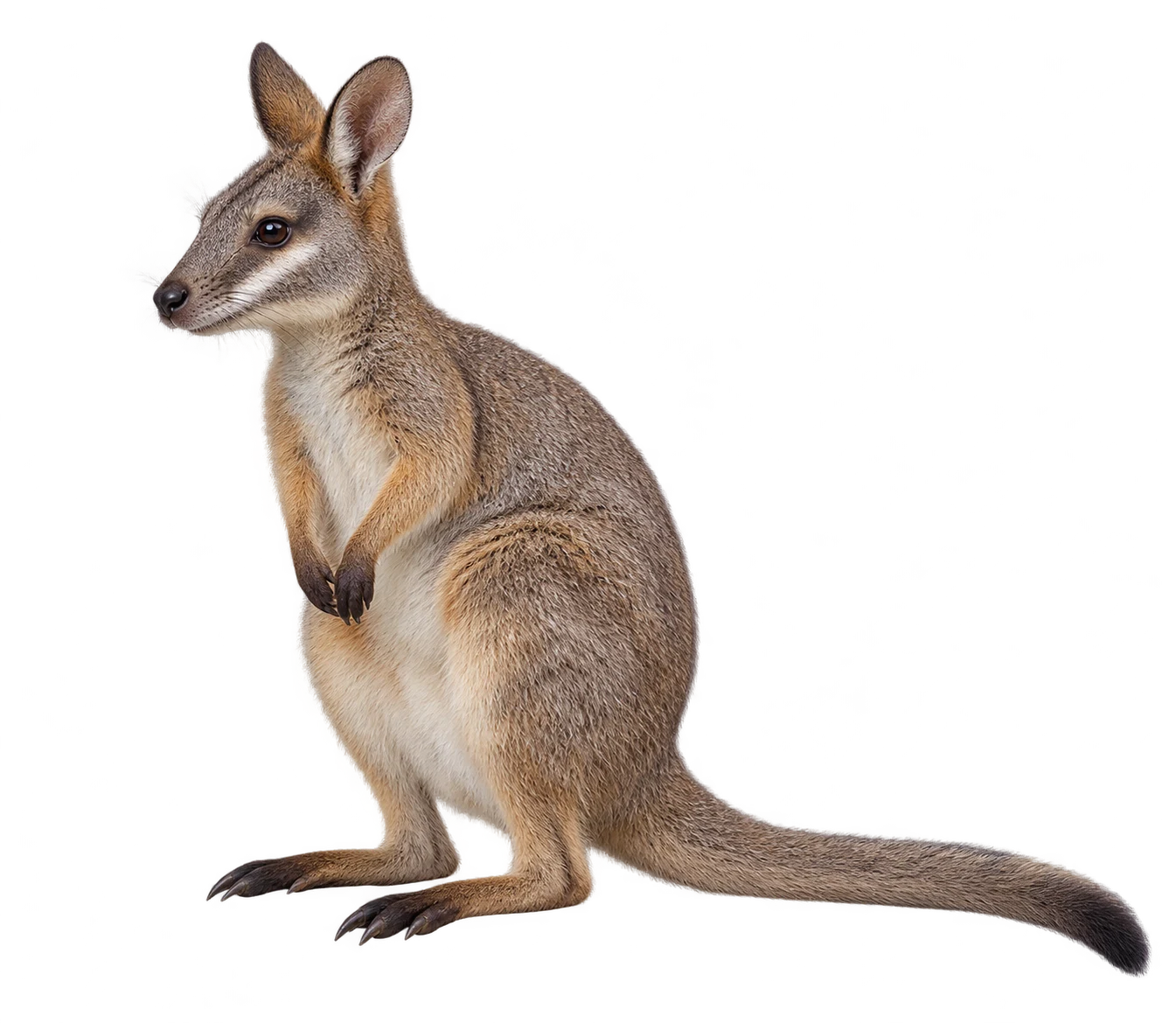
Mammals
Nabarlek
Petrogale concinna
Classification and source reference
LivingAI illustration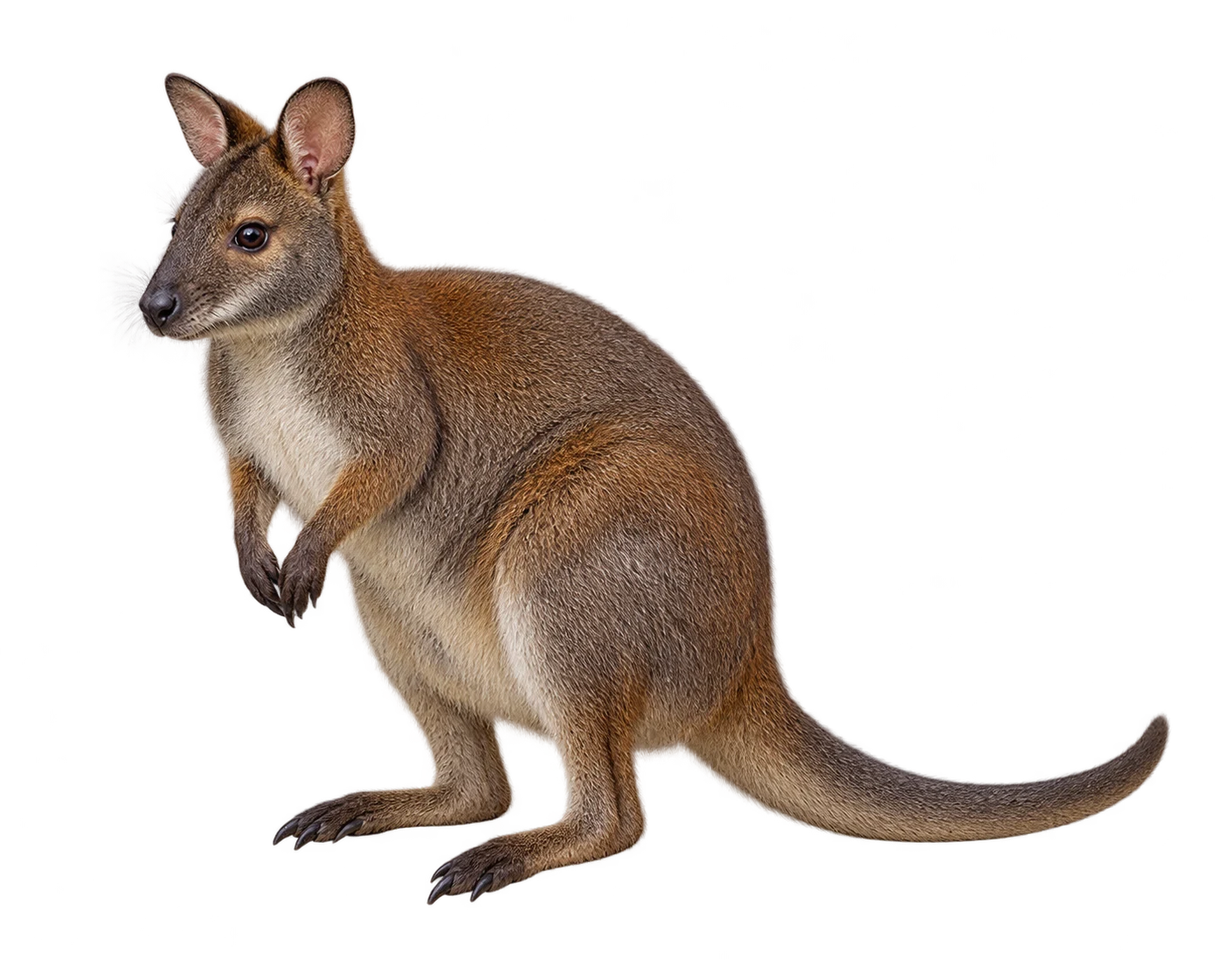
Mammals
Pademelon
Thylogale
Classification and source reference
LivingAI illustration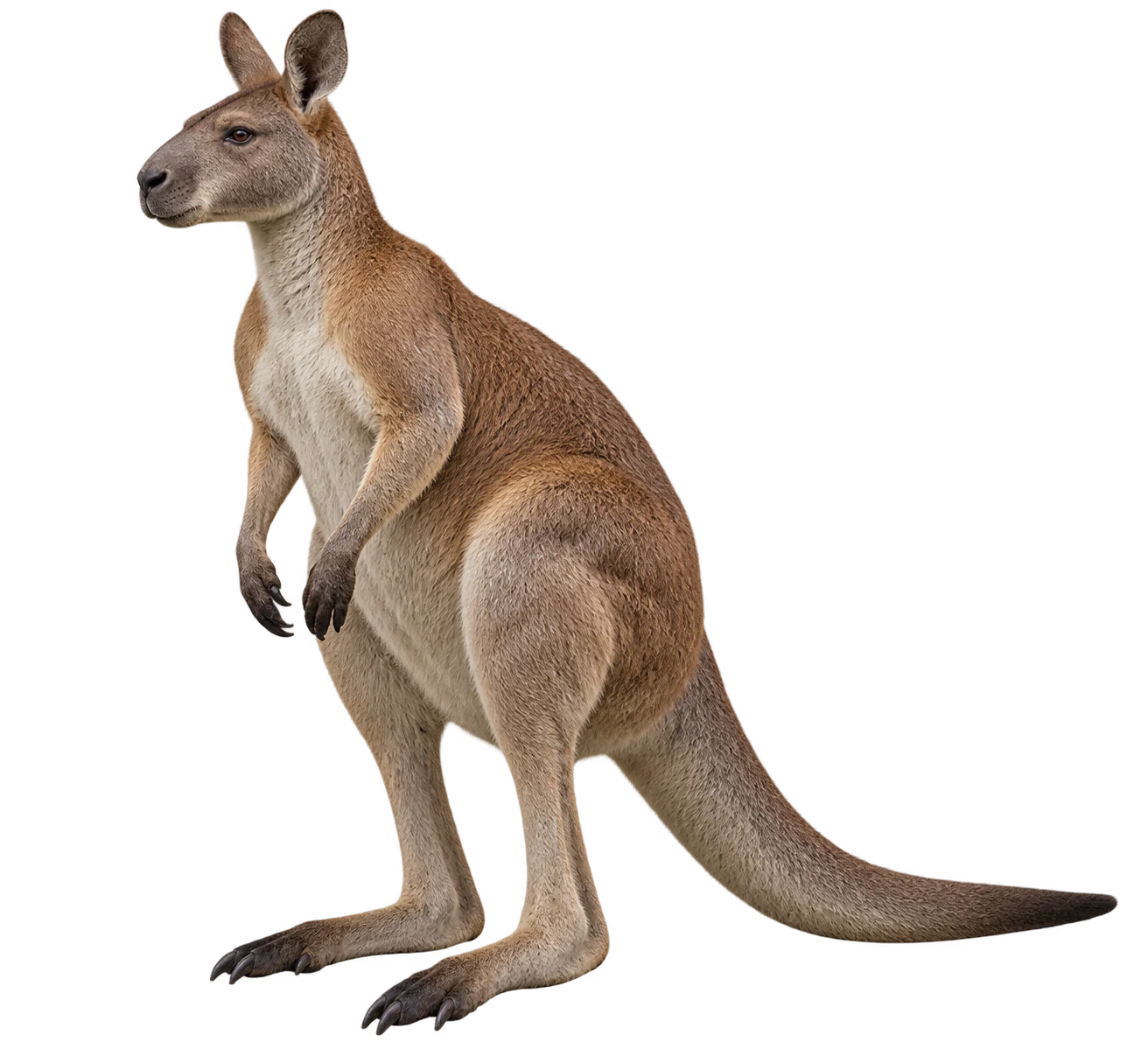
Mammals
Procoptodon
Procoptodon
Classification and source reference
ExtinctAI reconstruction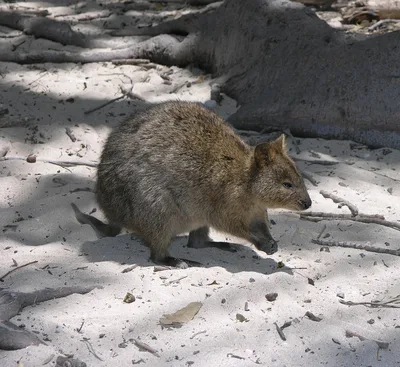 VU
Mammals
Quokka
Setonix brachyurus
The quokka is a small, stocky wallaby of south-western Australia, best known from Rottnest Island near Perth.
Living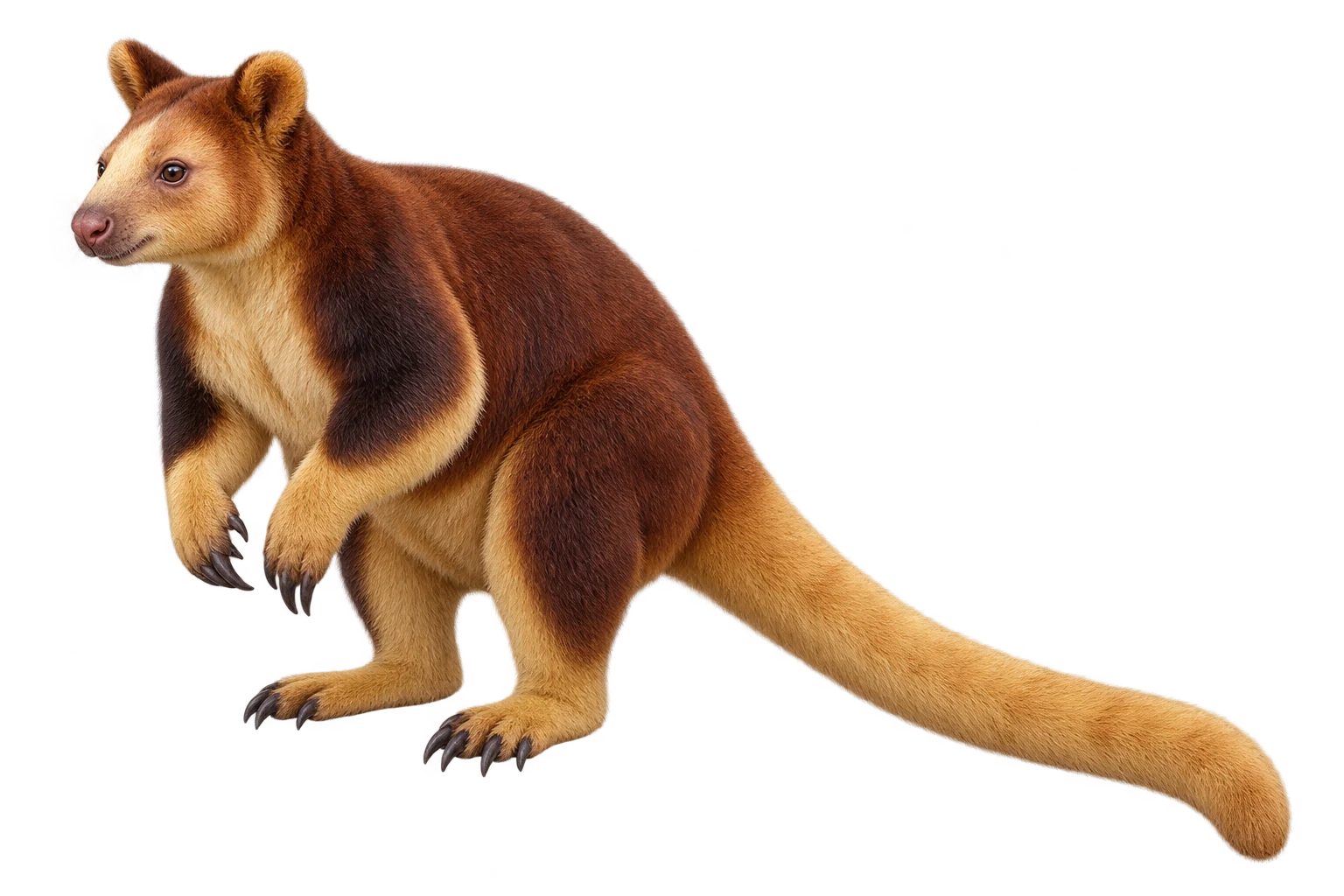
Mammals
Tree Kangaroo
Dendrolagus
Classification and source reference
LivingAI illustration