Kangaroo
Macropodidae
Living individuals or members of this group exist today. This does not mean they are safe from extinction.
Kangaroos are hopping marsupials in the macropod family. The red kangaroo provides the example used in this account.
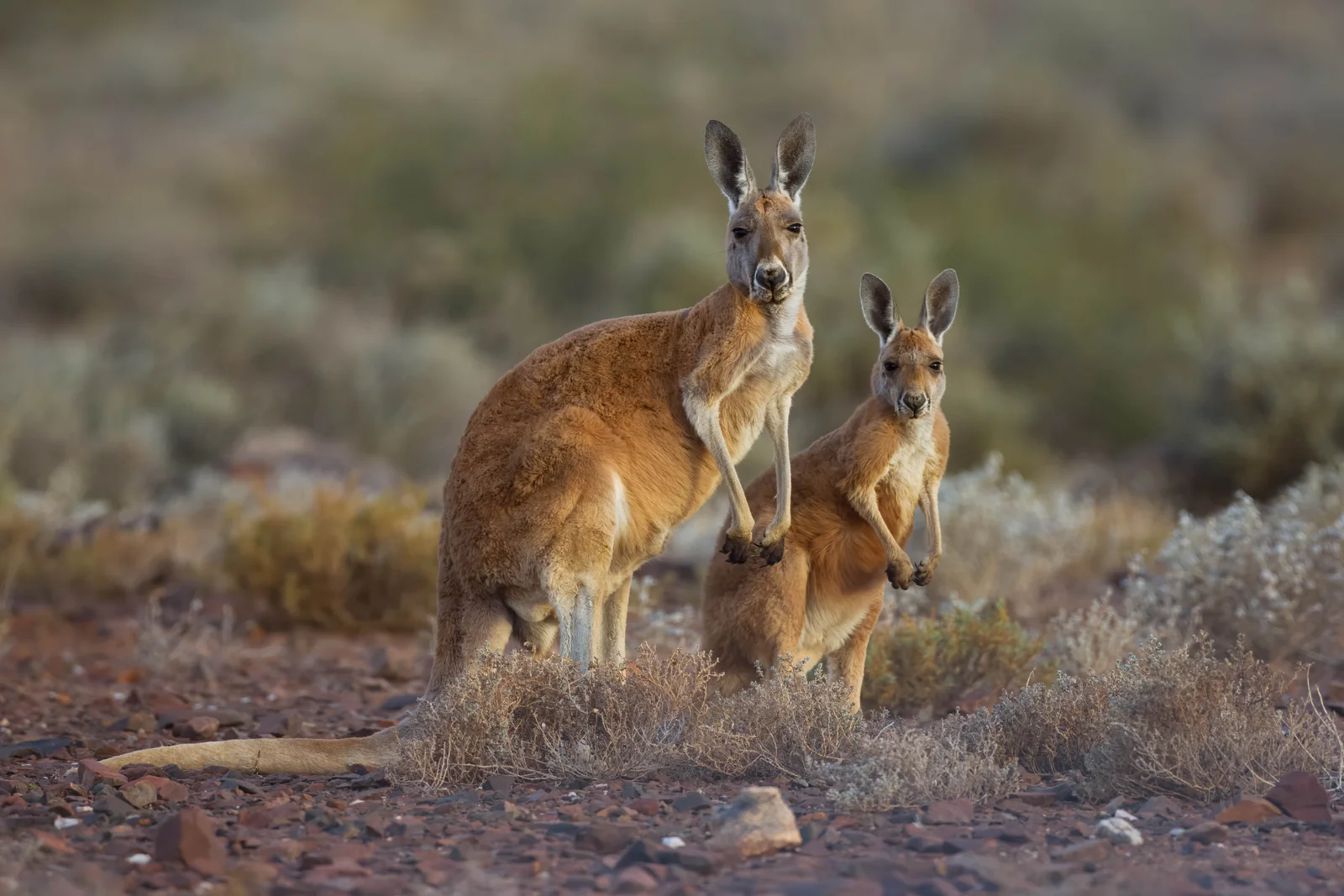
Red kangaroo with a joey, one example from the macropod family.
At a glance
- Location
- Australia; red kangaroos are especially associated with open, dry interior landscapes.
- Habitat
- Grassland, Desert
- Diet
- Herbivore
- Food
- Grasses and other green vegetation.
Classification
- Common name
- Kangaroo
- Browse group
- Mammals
- Scientific name or taxon
- Macropodidae
- Taxon rank
- family
- Order
- Diprotodontia
- Family
- Macropodidae
- Source classification
- Mammalia
Taxonomy checked against GBIF. For breeds and hybrids, this describes the listed parent taxon.
Three things to know
- Red kangaroo groups are called mobs.
- Young develop further inside the pouch.
- Strong hind limbs power hopping.
Habitat and range
Australia; red kangaroos are especially associated with open, dry interior landscapes.
Appearance and adaptations
Powerful hind limbs drive hopping, while a large tail aids balance and support. Developing young continue growing in the mother’s pouch.
Diet and behaviour
Red kangaroos gather in groups called mobs. Feeding activity often increases around dusk, dawn and night, when conditions are cooler.
Sources
- Animal Diversity Web: Macropus rufus
- A–Z Animals: Kangaroo · Directory entry
Explore mammals
Browse all mammals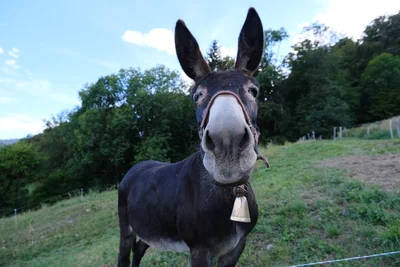
Mammals
Donkey
Equus asinus
The domestic donkey is an herbivorous equid with long ears and sturdy hooves.
Living LC
Mammals
Red kangaroo
Osphranter rufus
The red kangaroo is the largest marsupial and the largest animal in Australia.
Living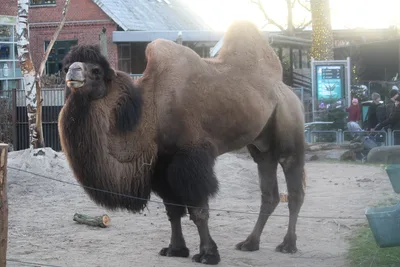
Mammals
Bactrian Camel
Camelus bactrianus
The domestic Bactrian camel is a two-humped camel associated with Central Asia.
Living LC
Mammals
Bighorn sheep
Ovis canadensis
The bighorn sheep is a wild sheep of the mountains and deserts of western North America.
Living