Bactrian Camel
Camelus bactrianus
Living individuals or members of this group exist today. This does not mean they are safe from extinction.
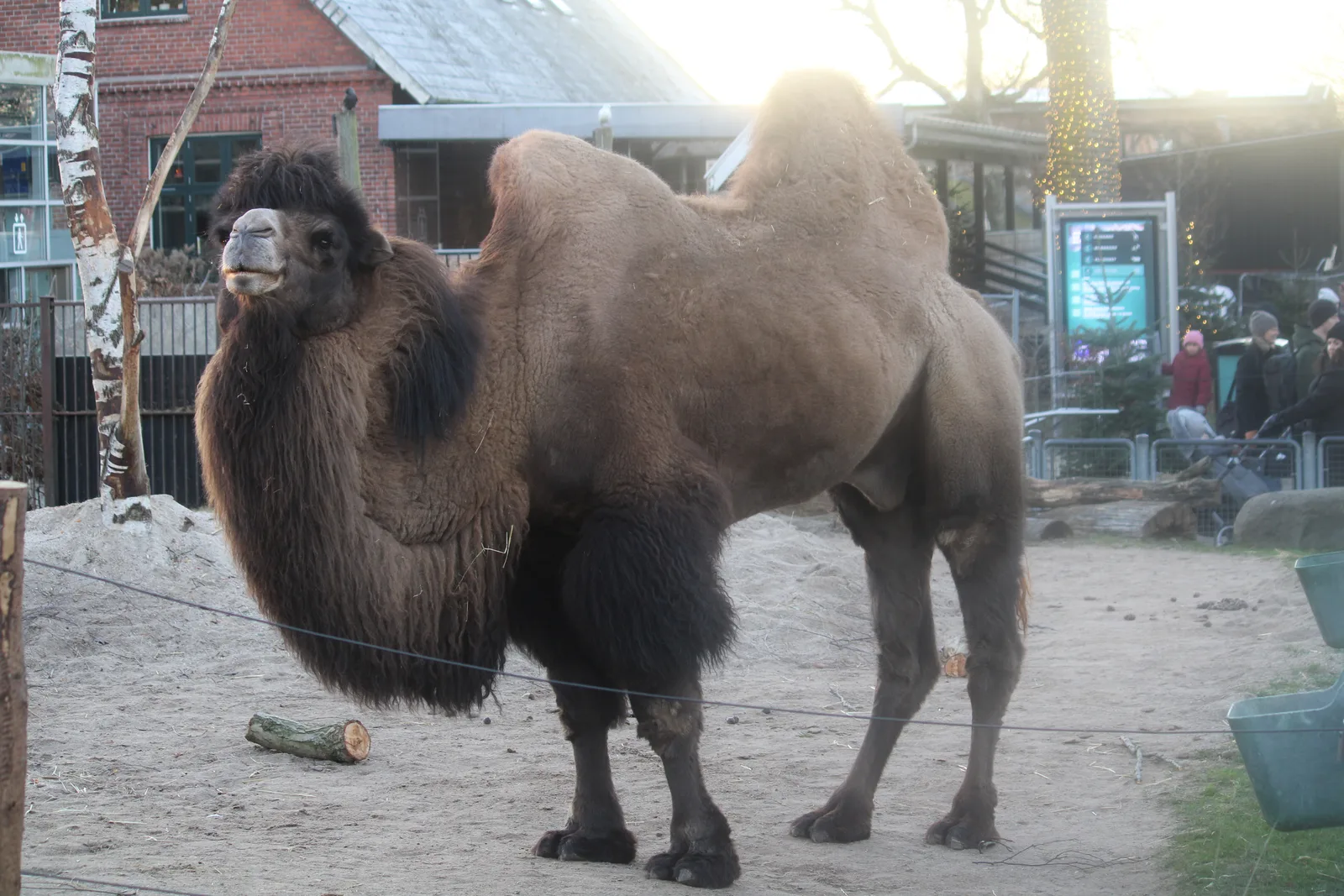
The domestic Bactrian camel is a two-humped camel associated with Central Asia. A heavy seasonal coat and stored fat help it cope with harsh conditions.
At a glance
- Location
- Domestic Bactrian camels are kept in Asian drylands and steppe environments. Domestic herds should not be confused with the separate wild camel.
- Habitat
- Desert, Grassland
- Diet
- Herbivore
- Food
- Grasses and other dryland plants provide most food, including tough or thorny vegetation.
Classification
- Common name
- Bactrian Camel
- Browse group
- Mammals
- Scientific name or taxon
- Camelus bactrianus
- Taxon rank
- species
- Order
- Artiodactyla
- Family
- Camelidae
- Genus
- Camelus
- Source classification
- Mammalia
Taxonomy checked against GBIF. For breeds and hybrids, this describes the listed parent taxon.
Three things to know
- Its humps hold fat rather than water.
- It sheds its heavy coat seasonally.
- Padded feet support travel over rough ground.
Habitat and range
Domestic Bactrian camels are kept in Asian drylands and steppe environments. Domestic herds should not be confused with the separate wild camel.
Appearance and adaptations
Two humps distinguish it from the dromedary. Thick hair protects against cold, while broad, cushioned feet support its weight.
Diet and behaviour
Grasses and other dryland plants provide most food, including tough or thorny vegetation. It browses and grazes in groups. The cited older ADW account combines wild and domestic animals, so its wild population range and status are not applied here.
Sources
Explore mammals
Browse all mammals
Mammals
Donkey
Equus asinus
The domestic donkey is an herbivorous equid with long ears and sturdy hooves.
Living
Mammals
Dromedary
Camelus dromedarius
The dromedary is the one-humped domestic camel.
Living LC
Mammals
African wildcat
Felis lybica
The African wildcat is a small striped cat of dry Africa and Asia, and the ancestor of every domestic cat.
Living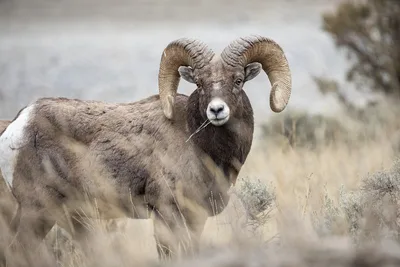 LC
Mammals
Bighorn sheep
Ovis canadensis
The bighorn sheep is a wild sheep of the mountains and deserts of western North America.
Living