Dromedary
Camelus dromedarius
Living individuals or members of this group exist today. This does not mean they are safe from extinction.
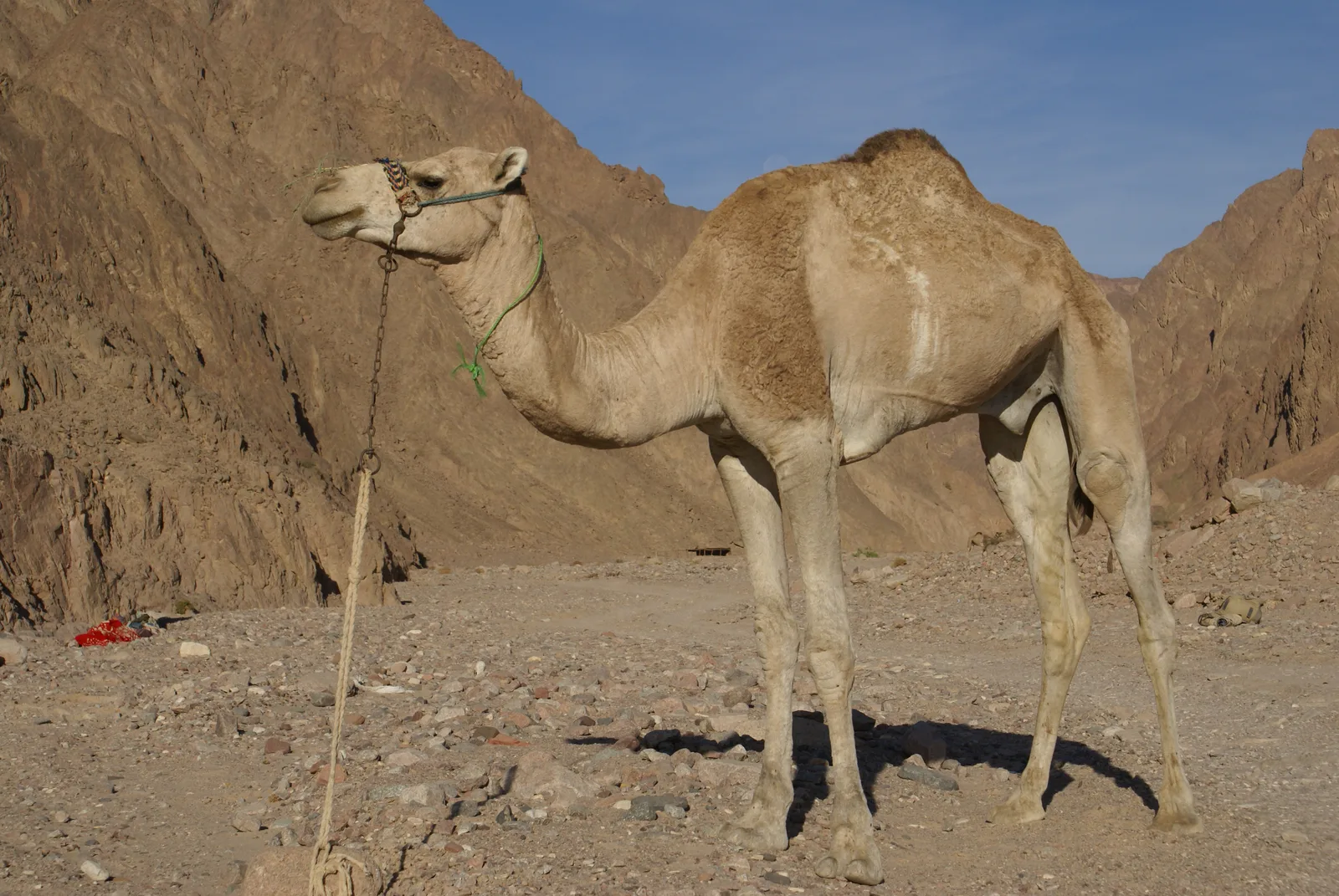
The dromedary is the one-humped domestic camel. Fat stored in its hump provides an energy reserve when food becomes scarce.
At a glance
- Location
- Dry regions of northern Africa and southwestern Asia, with introduced populations elsewhere.
- Habitat
- Desert, Grassland
- Diet
- Herbivore
- Food
- Desert shrubs, dry grasses and other vegetation.
Classification
- Common name
- Dromedary
- Browse group
- Mammals
- Scientific name or taxon
- Camelus dromedarius
- Taxon rank
- species
- Order
- Artiodactyla
- Family
- Camelidae
- Genus
- Camelus
- Source classification
- Mammalia
Taxonomy checked against GBIF. For breeds and hybrids, this describes the listed parent taxon.
Three things to know
- Its hump stores fat.
- Thick lips help it eat thorny plants.
- Dromedaries ruminate after feeding.
Habitat and range
Dry regions of northern Africa and southwestern Asia, with introduced populations elsewhere.
Appearance and adaptations
Thick lips help it browse coarse, thorny plants. A long neck and a single fat-filled hump give it a distinctive outline.
Diet and behaviour
It browses across wide areas and ruminates after feeding. Family groups usually include a male, females and young.
Sources
- Animal Diversity Web: Camelus dromedarius
- GBIF: Dromedary · Directory entry
Explore mammals
Browse all mammals
Mammals
Donkey
Equus asinus
The domestic donkey is an herbivorous equid with long ears and sturdy hooves.
Living LC
Mammals
African wildcat
Felis lybica
The African wildcat is a small striped cat of dry Africa and Asia, and the ancestor of every domestic cat.
Living
Mammals
Bactrian Camel
Camelus bactrianus
The domestic Bactrian camel is a two-humped camel associated with Central Asia.
Living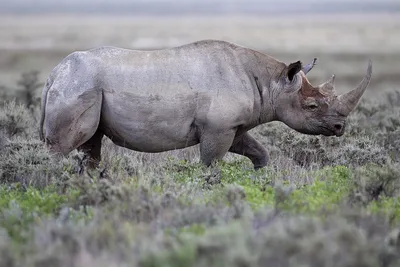 CR
Mammals
Black rhinoceros
Diceros bicornis
The black rhinoceros is a two-horned browser of eastern and southern Africa with a pointed, gripping upper lip.
Living