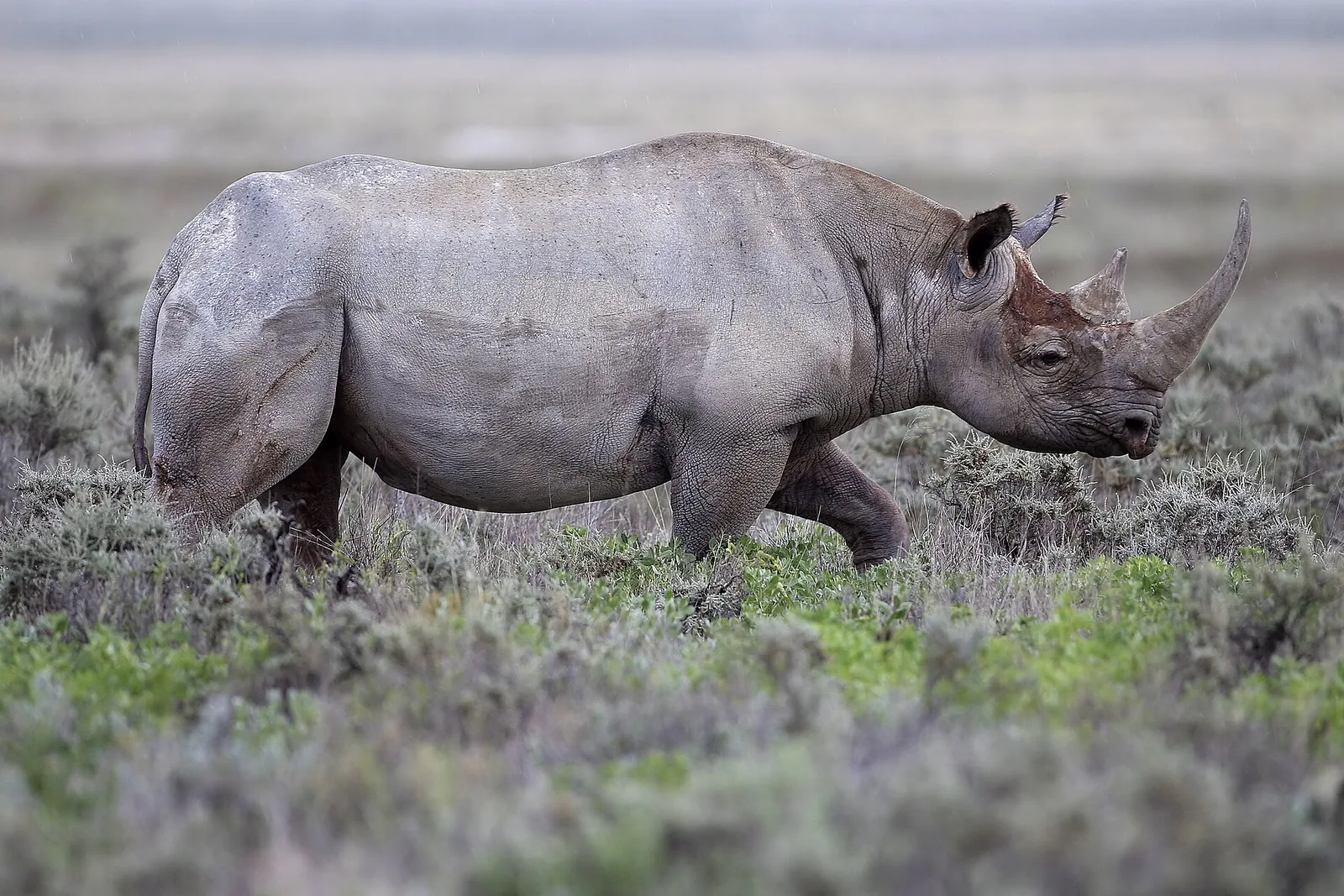
Black rhinoceros
The hook-lipped browser hunted for a horn of hair
Diceros bicornis
Also called Black rhino, Hook-lipped rhinoceros, Browse rhinoceros
Living individuals or members of this group exist today. This does not mean they are safe from extinction.
Meet the black rhinoceros
The black rhinoceros is a two-horned browser of eastern and southern Africa with a pointed, gripping upper lip. Poaching for its horn cut the species by 96 percent between 1970 and 1992, and it remains Critically Endangered.
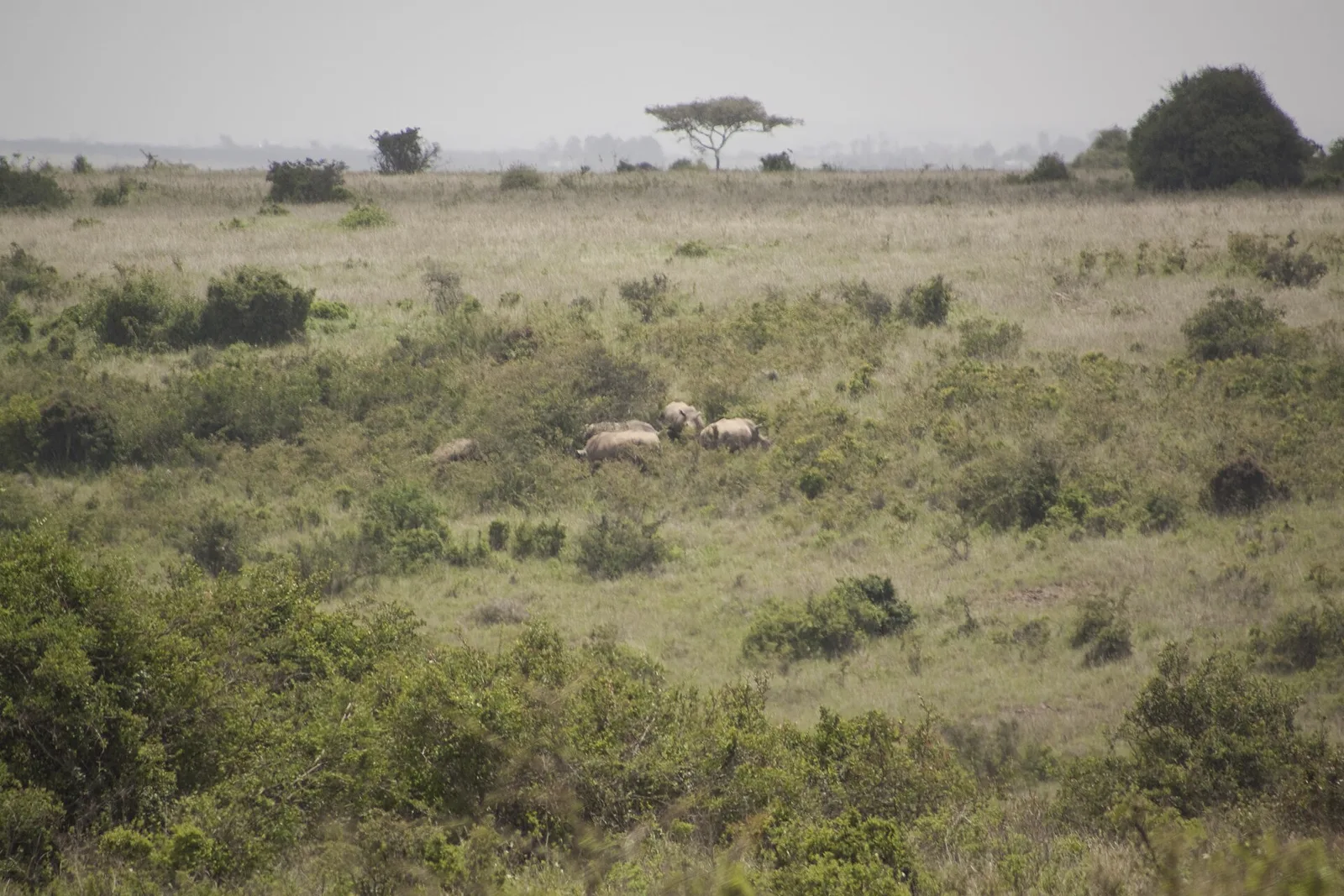
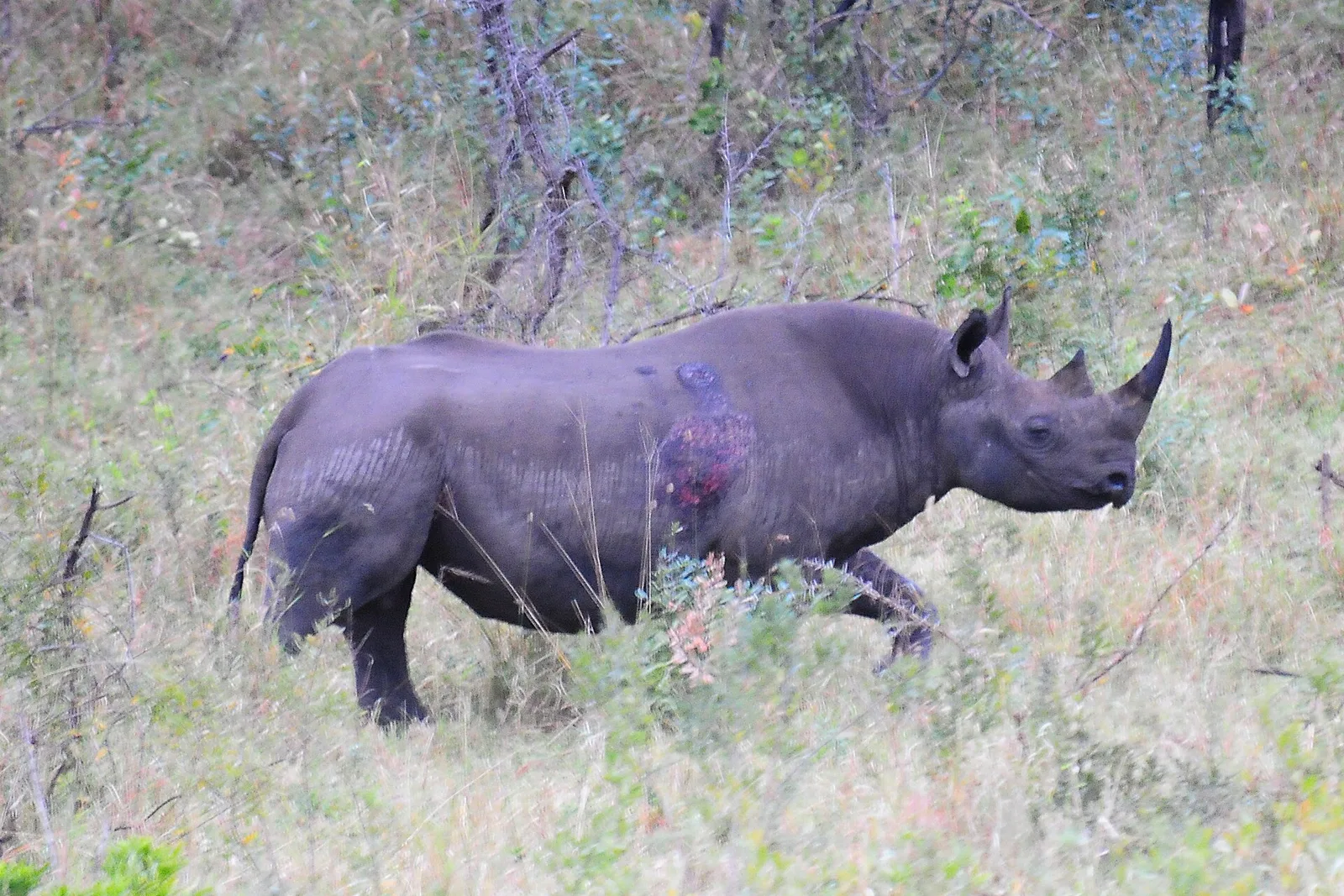
Images of the black rhinoceros
Lifespan in the wild
30 to 35 years Fausta, a wild-born female in Ngorongoro, reached 57
Weight
0.8 to 1.4 t
Length
3 to 3.75 m
Top speed
Up to 55 km/h
Fact file
Black rhinoceros
- Location
- Reserves in Namibia, South Africa, Kenya, Zimbabwe, Tanzania and nearby countries
- Habitat
- Savanna, Temperate forest, Desert, Grassland
- Diet
- Herbivore
- Prey / food
- None; browses leaves, twigs, shoots and fruit of about 220 plant species
- Predators
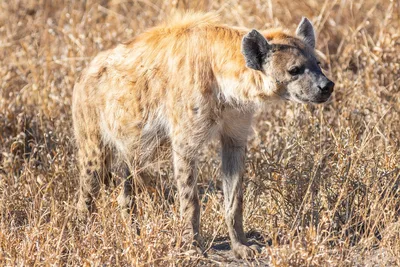
- None as adults; lions and spotted hyenas take calves
- Lifestyle
- Mostly solitary; feeds in the morning and evening, rests at midday
- Group name
- Crash
- Name of young
- Calf
- Gestation
- About 15 months
- Litter size
- 1 calf
- Population
- About 6,788; 3,142 mature animals on the IUCN count
- Biggest threat
- Poaching for horn sold in Asia and the Middle East
- Distinctive feature
- Pointed, prehensile upper lip and two keratin horns
- Colour
- Grey to brown, tinted by the local mud
- Skin type
- Thick, almost hairless skin
Size
Next to a person
Measurements
Size and speed
- Height
- 1.4 to 1.8 m at the shoulder
- Length
- 3 to 3.75 m head and body
- Tail
- About 70 cm
- Weight
- 0.8 to 1.4 t, up to 2.9 t the heaviest reported bulls reached 2.9 tonnes, Wikipedia
- Top speed
- Up to 55 km/h
Typical adult ranges. Sources: Animal Diversity Web, Wikipedia.
Life cycle
Lifespan
- In the wild30 to 35, up to 57 years Fausta, a wild-born female in Ngorongoro, reached 57
- In captivity30 to 45, up to 49 years
- 057 years
The pale bar is the record. Source: Animal Diversity Web.
Appearance
Colour and coat
- Primary colours
- grey
- Secondary colours
- brown
- Skin type
- thick hairless skin
- Male and female
- Slight. A bull is somewhat bigger than a cow, and cows tend to have longer and thinner horns.
Life cycle
Mating and family
- Mating system
- polygynous
- Social structure
- solitary, with a cow and calf as the only lasting unit
- Breeding
- one calf every 2 to 2.5 years in good conditions, up to 4 years apart
Black rhinos mate in any month. A bull follows a cow for one or two weeks, and the pair stays together for 2 to 3 days. After about 15 months the cow bears one calf of 35 to 50 kilograms. The calf nurses for about 18 months and stays with its mother for 2 to 4 years. Cows breed from 5 to 7 years, bulls from 7 to 8, and wild rhinos live 30 to 35 years.
Classification
Taxonomy
- Kingdom
- Animalia
- Phylum
- Chordata
- Class
- Mammalia
- Order
- Perissodactyla
- Family
- Rhinocerotidae
- Genus
- Diceros
- Species
- Diceros bicornis
Conservation
Red List status
- LC
- NT
- VU
- EN
- CR
- EW
- EX
Critically Endangered on the IUCN Red List
Range
Recorded in 6 countries
Habitat layer: temperate broadleaf and mixed forest, temperate conifer forest, boreal forest and taiga, tropical grassland, savanna and shrubland, temperate grassland, savanna and shrubland, desert and xeric shrubland.
Countries from 1,974 wild records on GBIF (iNaturalist research grade), filtered and checked by hand. Country shapes: Natural Earth. Habitat: RESOLVE Ecoregions 2017, CC BY 4.0. Basemap: Natural Earth.
Habitats
Three things to know
- 1
Black rhinos have the highest rate of fatal fighting recorded for any mammal.
- 2
The hooked upper lip grips twigs and strips leaves like a finger.
- 3
Poaching cut the species from about 65,000 in 1970 to about 2,400 in 1992.
Did you know
Seven more facts
- 1
The black rhino is not black; its grey skin takes the colour of the local mud.
- 2
It has been recorded eating up to 220 plant species.
- 3
A calf can follow its mother three days after birth.
- 4
A black rhino calf walks behind its mother, while a white rhino calf walks in front.
- 5
The chemistry of a horn can tell police which region a poached rhino came from.
- 6
Linnaeus probably named the species from an Indian rhino skull with a fake second horn.
- 7
A wild-born cow named Fausta lived to 57 years.
Field notes
How it looks and acts
Field notes
Distinguishing features
- A pointed, prehensile upper lip.
- Two horns of keratin, the front one longer.
- Thick grey to brown skin with almost no hair.
- A smaller head and shorter ears than the white rhino, held higher off the ground.
- Tube-shaped ears that rotate in all directions.
- A tail of about 0.7 metres.
Field notes
Unique adaptations
- The hooked lip works like a finger to grip twigs and strip leaves.
- Thick skin protects the body from thorns and sharp grass.
- Cheek teeth cut and grind in two phases to break down woody food.
- A strong sense of smell warns of predators and reads the marks of other rhinos.
- It can survive up to 5 days without water in a drought.
Field notes
Interesting behaviours
- Browses in the morning and evening and rests through the hottest hours.
- Wallows in mud to cool down and to smother ticks.
- Adds its dung to shared piles and sniffs who has passed.
- Charges at threats, sometimes at tree trunks and termite mounds.
- Uses elephant trails to reach water holes.
Field notes
Temperament
- Aggressive and quick to charge when startled.
- Curious once the first fright passes, and it will come back to inspect a threat.
- Solitary, with little tolerance between adult bulls.
- Cows are calmer with each other and may nudge horns and part.
Field notes
Communication
- Dung piles and urine spray carry the age, sex and identity of each rhino.
- A mother pants and her calf squeals so that they can find each other.
- A loud roar signals aggression between bulls.
- Snorts and a curled tail signal alarm during a retreat.
Ecology
Ecological role
The black rhino shapes African bushland by what it eats.
- Its browsing thins woody plants, which opens ground for grass and helps grazers.
- It carries ticks and mites that feed oxpeckers and egrets.
- Its calves are occasional prey for lions and hyenas.
- Its dung probably spreads the seeds of the fruit it eats across its range.
Stories
Myths and legends
- In Malay, Burmese and Indian legend, the rhino badak api puts out forest fires by trampling them.
- In Khmer and Thai tradition, the fire god Agni rides a rhinoceros.
- In an old Chinese belief, the hollow horn gave a direct path to Heaven.
- In European tradition, Dürer's armoured rhino of 1515 was taken as accurate until the late 18th century.
People
Relationship with humans
People
Living alongside us
People have hunted rhinos for horn for more than three thousand years, first for cups and armour, later for dagger handles and medicine. That trade cut the black rhino by 96 percent between 1970 and 1992. Trade in horn has been banned since 1977, and reserves now guard, fence and dehorn their animals. The rhino also draws tourists, and a charge can injure or kill a person who gets too close.
- A black rhino charges readily at people and vehicles, and some charges cause injury or death.
- It can reach 55 kilometres per hour, faster than a person can run.
- A cow with a calf is the most likely to attack, so keep well back and stay downwind.
People
Status, uses and products
- Domestication
- Wild
- As a pet
- Not suitable. A black rhino weighs more than a tonne, eats about 23.6 kilograms of browse a day and is protected under CITES Appendix I. Private ownership is illegal, and captive rhinos suffer iron overload and disease.
- Uses
- ecotourismtrophy hunting (a few permits)
- Products
- horn (illegal)hide (historical)
The full account
About the black rhinoceros
The black rhinoceros is the smaller of Africa's two rhinos. Its skin is not black but grey to brown, coloured by the mud of its home. The name that fits it best is hook-lipped rhinoceros, for the pointed upper lip it uses to pull leaves from bushes. An adult weighs 800 to 1,400 kilograms and stands 1.4 to 1.8 metres at the shoulder.
Two horns of keratin grow on the nose. The front horn is usually about 50 centimetres long, and the longest known measured nearly 1.5 metres. Those horns are the reason the species is in danger. Poaching cut the population by 96 percent between 1970 and 1992, and the IUCN lists the black rhino as Critically Endangered.
The animal has a reputation for temper. It charges at threats, at tree trunks and even at termite mounds. Rhinos also fight each other to the death more often than any other mammal. Yet it lives quietly for most of the day, browsing in the cool hours and wallowing in mud at noon.
Name and taxonomy
Carl Linnaeus named the species Rhinoceros bicornis in 1758, and the name means two-horned rhinoceros. He probably worked from the skull of an Indian rhino to which a collector had added a false second horn. Once it was clear that India had only a one-horned rhino, the name passed to the African animal. In 1911 the Cape of Good Hope was fixed as the type locality. Today it is the only living species in the genus Diceros, in the family Rhinocerotidae.
The word rhinoceros is Greek, from rhino for nose and keras for horn. The word black probably arose to contrast the animal with the white rhino, whose name may come from the Afrikaans word for wide. Authors recognise between five and eight subspecies. Three are extinct, including the western black rhino, which the IUCN declared extinct on 10 November 2011.
Evolution and relatives
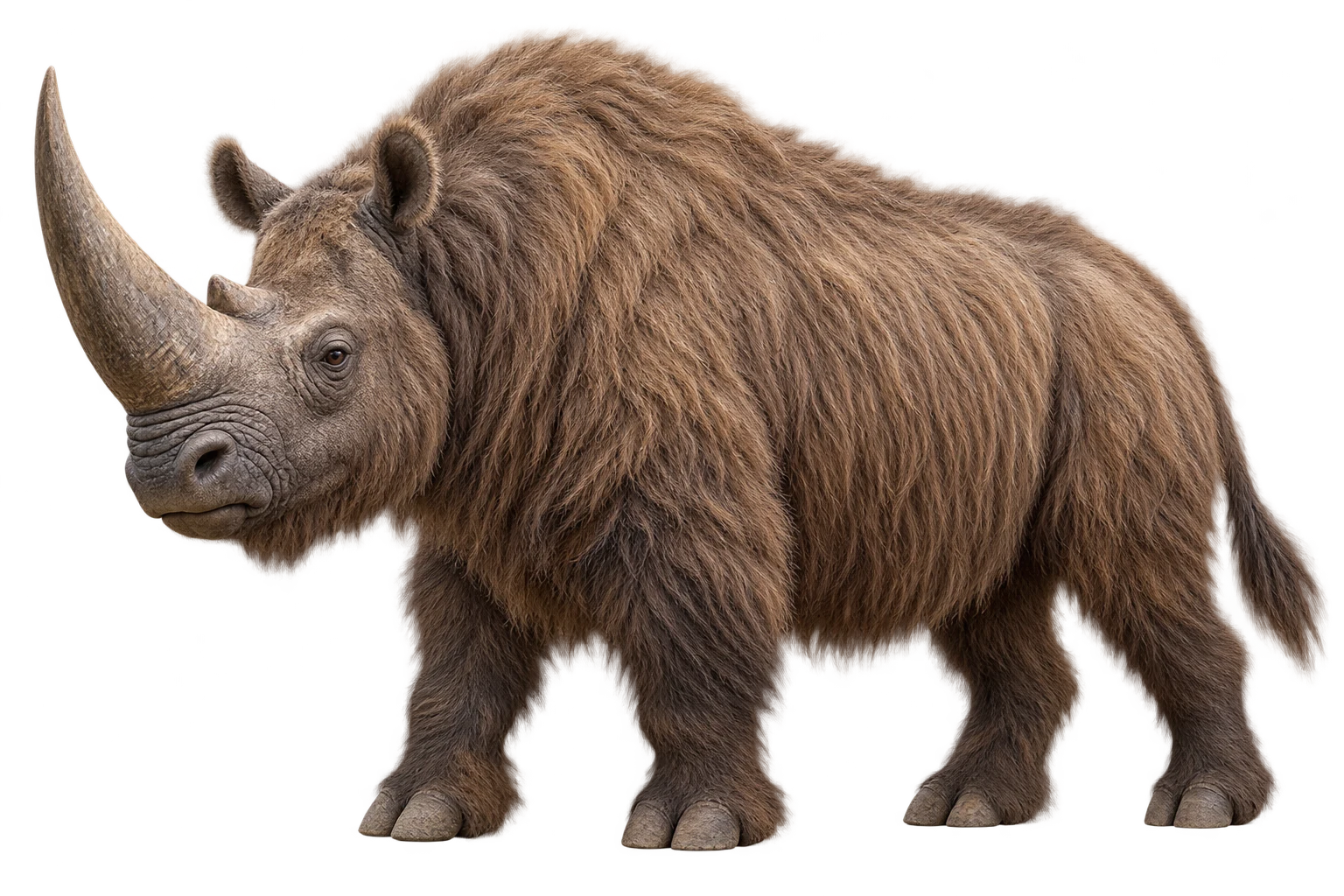
Rhinos are odd-toed ungulates, so their closest living relatives are tapirs and horses. The rhino family first appears in Eocene rocks of Asia and North America, about 39 to 40 million years old. Rhinos vanished from North America about 5 million years ago. Extinct relatives include the woolly rhinoceros and Elasmotherium, which weighed about 4,500 kilograms.
The black and white rhinos are closer to each other than to the Asian species. A 2021 genetic study put their split at about 7 million years ago. The direct ancestor, Diceros praecox, lived in the Pliocene of Ethiopia, Kenya and Tanzania. The oldest definite black rhino fossil comes from Koobi Fora in Kenya, about 2.5 million years old.
Appearance
An adult measures 3 to 3.75 metres in head and body, with a tail of about 0.7 metres. It weighs 800 to 1,400 kg, and a few very large bulls have been reported at up to 2.9 tonnes. Bulls are a little larger than cows. The skin is thick and almost hairless, with a fringe of short hair on the rounded ears. It shields the animal from thorns, but ticks and mites live on it.
The front horn measures 42 to 128 centimetres, the rear horn 20 to 50. Cows tend to grow longer, thinner horns than bulls, and some animals grow a small third horn. The horns are keratin, the same material as hair and fingernails, not bone. The black rhino has a smaller head, shorter ears and a higher head carriage than the white rhino. The pointed, gripping upper lip is the surest way to tell the two apart.
Habitat and range
The species once lived across most of southern and eastern Africa, and north to Sudan, Eritrea and Lake Chad. It avoided the Congo Basin, the coastal rainforest and the Ethiopian Highlands. Rock carvings in the Eastern Desert of Egypt suggest it once lived there too.
Today it survives only in guarded reserves. Namibia, South Africa, Kenya, Zimbabwe and Tanzania hold most of the animals, with smaller groups in several other countries. Malawi, Zambia, Botswana and Rwanda have all received rhinos after losing their own. In 2017 South Africa moved 18 eastern black rhinos to Akagera National Park in Rwanda, and a calf soon made 19.
The best habitat is thick scrub and bushland with some woodland. The animal also uses riverine woodland, marsh and, least of all, open grassland. One subspecies in Namibia lives in desert and semi-desert. Most rhinos stay within 25 kilometres of water, though they can go 5 days without it in a drought.
Diet and feeding
The black rhino is a browser. It eats leaves, twigs, shoots, thorny bushes, small trees, legumes and fruit, and takes grass only when it must. It has been recorded eating up to 220 plant species, with a preference for acacias and euphorbias. An adult eats about 23.6 kilograms of plant matter a day.
The hooked lip grips a branch and strips the leaves. The horns break high branches, dig up roots and scrape bark. The cheek teeth cut with one ridge and grind with others, in a two-phase chew suited to woody food. The animal feeds in the morning and evening and rests through the heat of the day.
The rhino picks quality over quantity and chooses leafy plants in the dry season. Where elephants share the range, they eat a wider menu and push the rhino toward dwarf shrubs. Rhinos also visit salt licks for minerals. Diet leaves a chemical signature in the horn, which lets police trace a seized horn to its region.
Behaviour and social life
Adults live alone. The only lasting bond is between a cow and her calf, though young animals often tag along with older ones. Cows without calves sometimes gather, and the largest group ever seen held 13 rhinos for a short time. Home ranges run from 2.6 to 133 square kilometres, smaller where food and water are close.
The rhino is not strongly territorial, and ranges overlap. Dominant bulls do challenge each other, and a meeting of two bulls can turn violent. They charge horn first and groan loudly, and the loser usually retreats. About 50 percent of bulls and 30 percent of cows die of wounds from fighting, the highest rate known in any mammal.
A startled rhino runs off with a string of snorts and its tail curled. Once calm, it often returns to inspect the cause with short curious charges. It can reach 55 kilometres per hour, running on its toes. At midday it sleeps or wallows in mud, which cools the skin and smothers parasites. Rhinos follow elephant trails between feeding grounds and water holes.
Communication and senses
Smell is the main sense. Rhinos leave dung on shared piles near feeding spots and water, and each visitor sniffs the pile before adding to it. Dung and urine tell another rhino the age, sex and identity of the animal that left them. Bulls kick through their dung to carry the scent on their feet around the range. Cows spray urine more often when they are ready to mate.
The tube-shaped ears turn in every direction and pick up sound over long distances. Eyesight is weaker, with a useful range of about 25 to 30 metres, though studies of the retina show it is better than once thought. Calls run from the pant of a mother and the squeal of her calf to a loud roar of aggression. Oxpeckers on the back may act as an early warning of danger, though some research suggests the birds also drink rhino blood.
Reproduction and life cycle
Rhinos mate in any month, but births cluster at the end of the rains in dry country. A bull follows a cow for one or two weeks, walking stiff-legged and dragging his horn along the ground. If she is not ready she charges him. When she defecates he scatters the dung so that rival bulls cannot follow her scent. A pair stays together for 2 to 3 days and mates several times, each mating lasting 20 to 40 minutes or longer.
Gestation lasts about 15 months. The single calf weighs about 35 to 50 kilograms and can follow its mother after three days. For the first week the mother hides it, and after that the two find each other by pant and squeal. The calf walks behind its mother, unlike a white rhino calf, which walks in front.
The calf browses at one month and drinks water at 4 to 5 months, but nurses for about 18 months. It stays with its mother for 2 to 4 years, until the next calf arrives. Cows first breed at 5 to 7 years and bulls at 7 to 8. A cow calves every 2 to 2.5 years in good conditions. Wild rhinos live 30 to 35 years, and a female named Fausta reached 57.
Predators and threats
An adult black rhino has no natural predators. Lions and spotted hyenas take calves, and a lion will sometimes attack an adult. A crocodile has killed an adult in rare cases. A cow defends her calf by charging, and calves probably die less often than fighting adults.
People are the real danger. Poachers kill rhinos for the horn, which sells in China and Vietnam for about 60,000 dollars a pound, about three times the price of gold. South Africa lost 1,215 rhinos to poachers in 2014, and 394 in 2020. War in Chad, Cameroon, Rwanda, Mozambique and Somalia wiped out whole populations after the 1960s. Habitat loss and competition with elephants add pressure, and captive rhinos suffer from iron overload and disease.
Population and conservation
Around 1900 several hundred thousand black rhinos probably lived in Africa, more than any other rhino. About 70,000 remained in the late 1960s and only 10,000 to 15,000 by 1981. The count fell below 2,500 in the early 1990s. It climbed back to 4,240 by 2008 and 5,500 by 2009. Save the Rhino now gives about 6,788 animals, and the IUCN counts 3,142 mature individuals.
The species as a whole is Critically Endangered, though the south-western subspecies is only Near Threatened. International trade in horn has been banned under CITES Appendix I since 1977. Reserves keep armed guards, and many move rhinos into fenced sanctuaries. Managers also saw the horn off under sedation. Research published in 2025 measured a 75 to 78 percent drop in poaching on dehorned reserves.
Namibia sold a permit to shoot one old bull for 350,000 dollars in 2014 and spent the money on anti-poaching work. The sale drew protests and death threats. In 2022 South Africa issued 10 hunting permits, saying the population was growing. Scientists have recovered eggs and sperm from dead rhinos to make embryos.
Relationship with humans
Chinese records of rhino hunting go back to 1200 BC, when horn became wine cups and hide became armour and crowns. In Yemen the horn was carved into handles for the jambiya dagger, and demand exploded in the 1970s. Traditional Chinese medicine prescribed horn for fever and convulsions, never as an aphrodisiac. China dropped horn from its pharmacopoeia in 1993, but buyers still use it for headaches, fever and cancer. No medical study supports any of these uses.
The rhino also brings tourists and money to the parks that guard it. It can be dangerous. Most charges at people and vehicles end without harm, but some cause injury, death or a wrecked car. In many reserves rangers probably know each animal by sight, and monitoring teams follow them daily.
In culture and myth
Rhinos appear in some of the oldest art on Earth. Woolly rhinos are painted on the walls of Chauvet Cave in France, about 30,000 to 40,000 years old. Carvings across the Sahara show rhinos, though it is hard to tell which species. In Khmer and Thai art the fire god Agni rides a rhinoceros. Malay, Burmese and Indian legends tell of a rhino, the badak api, that stamps out forest fires.
Europe's idea of the rhino came from a print. In 1515 the Sultan of Cambay sent an Indian rhinoceros to the king of Portugal in Lisbon. Albrecht Dürer never saw it, but he cut a woodcut from a letter and sketch and gave the animal armour plates and rivets. The rhino drowned in a shipwreck on its way to the Pope, and Dürer's picture stood as the truth until the late 18th century.
A Chinese superstition held that the hollow horn gave a direct line to Heaven. In Boston in 1974 a lavender rhinoceros became a symbol of gay visibility. Today the black rhino is probably the best known face of the poaching crisis, the animal on the posters of every anti-poaching campaign.
A sentence with a dotted underline is inferred: it describes the group the animal belongs to, or is a reading of the sources, rather than a measured or reported fact about this species.
Questions
Black rhinoceros questions, answered
Why is it called a black rhino?
The name is a contrast with the white rhino, whose name may come from an Afrikaans word for wide. Both species are grey.
How many black rhinos are left?
About 6,788 by the Save the Rhino count, of which the IUCN counts 3,142 mature animals. There were about 65,000 in 1970.
Are black rhinos endangered?
Yes. The IUCN lists the species as Critically Endangered, and three subspecies are already extinct.
How big is a black rhino?
An adult is 3 to 3.75 metres long, stands 1.4 to 1.8 metres at the shoulder and weighs 800 to 1,400 kilograms.
What is the difference between a black rhino and a white rhino?
The black rhino has a pointed lip for browsing bushes, a smaller head and shorter ears. The white rhino has a square lip for grazing grass and is larger.
What do black rhinos eat?
Leaves, twigs, shoots, thorny bushes, fruit and legumes from up to 220 plant species. They prefer acacias and euphorbias and eat grass only when they must.
How fast can a black rhino run?
Up to 55 kilometres per hour, running on its toes.
Are black rhinos aggressive?
Yes. They charge at threats, and about 50 percent of bulls die from fighting wounds, the highest rate known for any mammal.
Why are black rhinos poached?
For the horn, which sells in China and Vietnam for about 60,000 dollars a pound. Buyers use it as a medicine, though no study shows any benefit.
What is a rhino horn made of?
Keratin, the same protein as hair and fingernails. It has no bone core.
How long do black rhinos live?
About 30 to 35 years in the wild and up to 49 in captivity. A wild-born cow named Fausta reached 57.
How long is a black rhino pregnant?
About 15 months. The cow bears a single calf of 35 to 50 kilograms.
Do black rhinos live in groups?
No. Adults are solitary, and the only lasting bond is between a cow and her calf.
Does dehorning stop poaching?
It helps. Research published in 2025 measured a 75 to 78 percent fall in poaching on reserves that dehorned their rhinos.
Where can I see a black rhino?
In guarded reserves in Namibia, South Africa, Kenya, Zimbabwe and Tanzania, and in a few zoos.
Food web
Prey and food
- browses leaves
- twigs
- shoots
- fruit of about 220 plant species
Food web
Predators
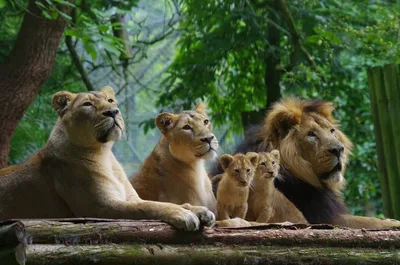 Lion
 Spotted hyena
Ecological equivalents
Related species on this site
Elasmotherium (same family), Indian rhinoceros (same family), Javan Rhinoceros (same family), Rhinoceros (same family), Sumatran Rhinoceros (same family), White rhinoceros (same family), and more.
Mammals
Elasmotherium
Elasmotherium
Classification and source reference
ExtinctAI reconstruction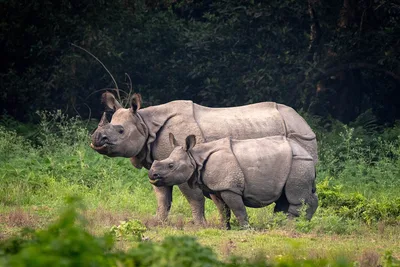 VU
Mammals
Indian rhinoceros
Rhinoceros unicornis
The Indian rhinoceros is the largest rhino in Asia, a one-horned grazer with thick, folded grey skin.
Living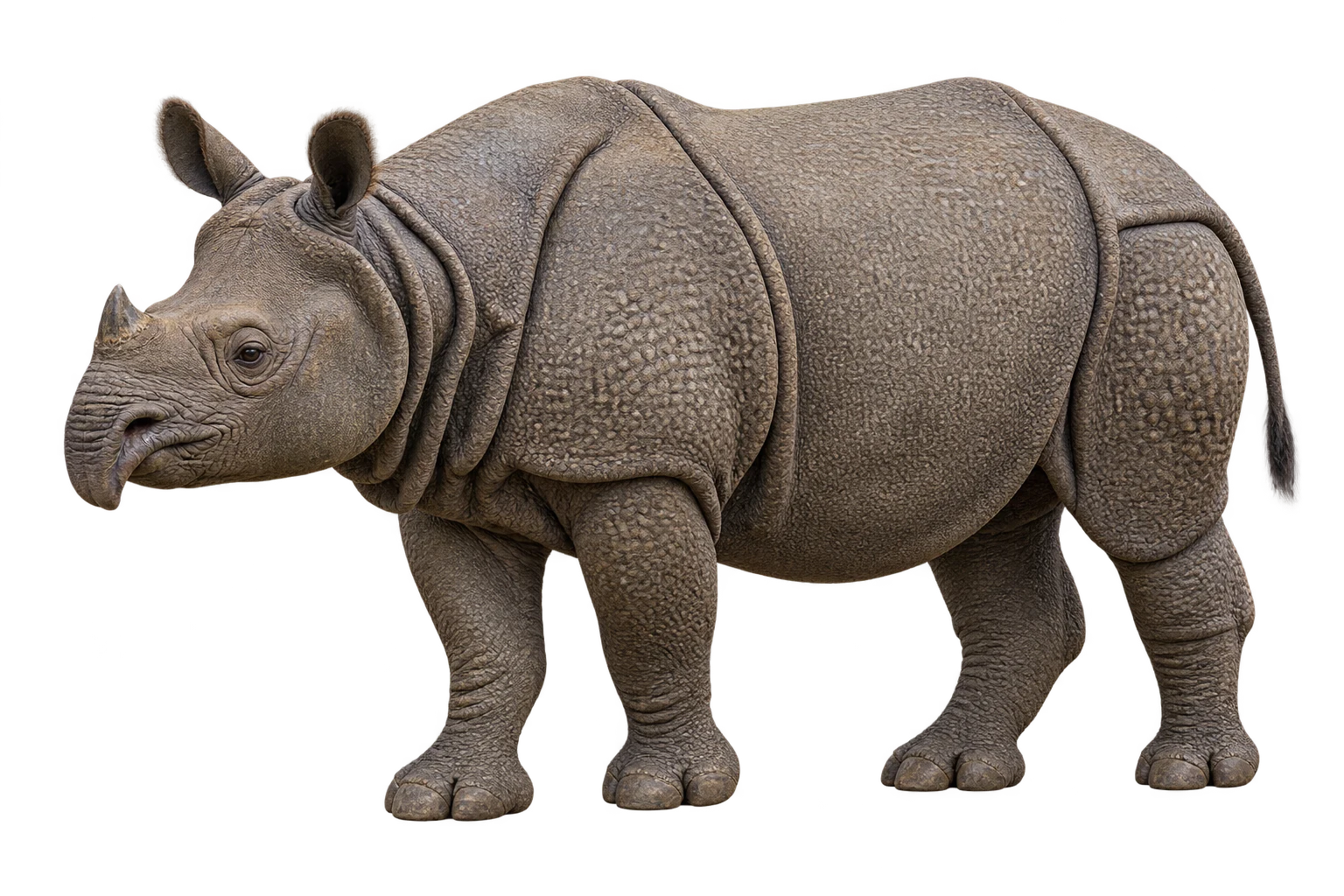
Mammals
Javan Rhinoceros
Rhinoceros sondaicus
Classification and source reference
LivingAI illustration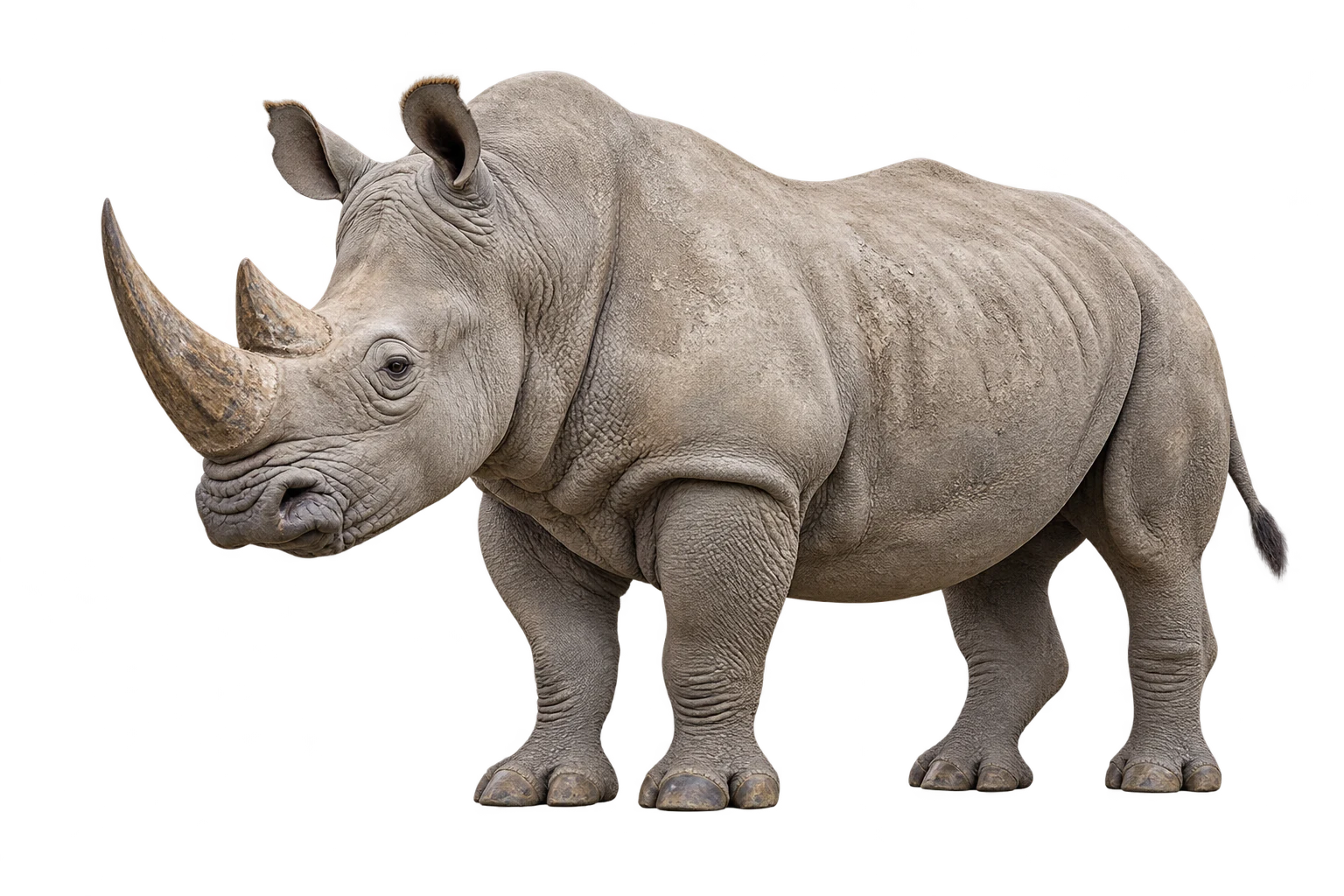
Mammals
Rhinoceros
Rhinocerotidae
Classification and source reference
LivingAI illustration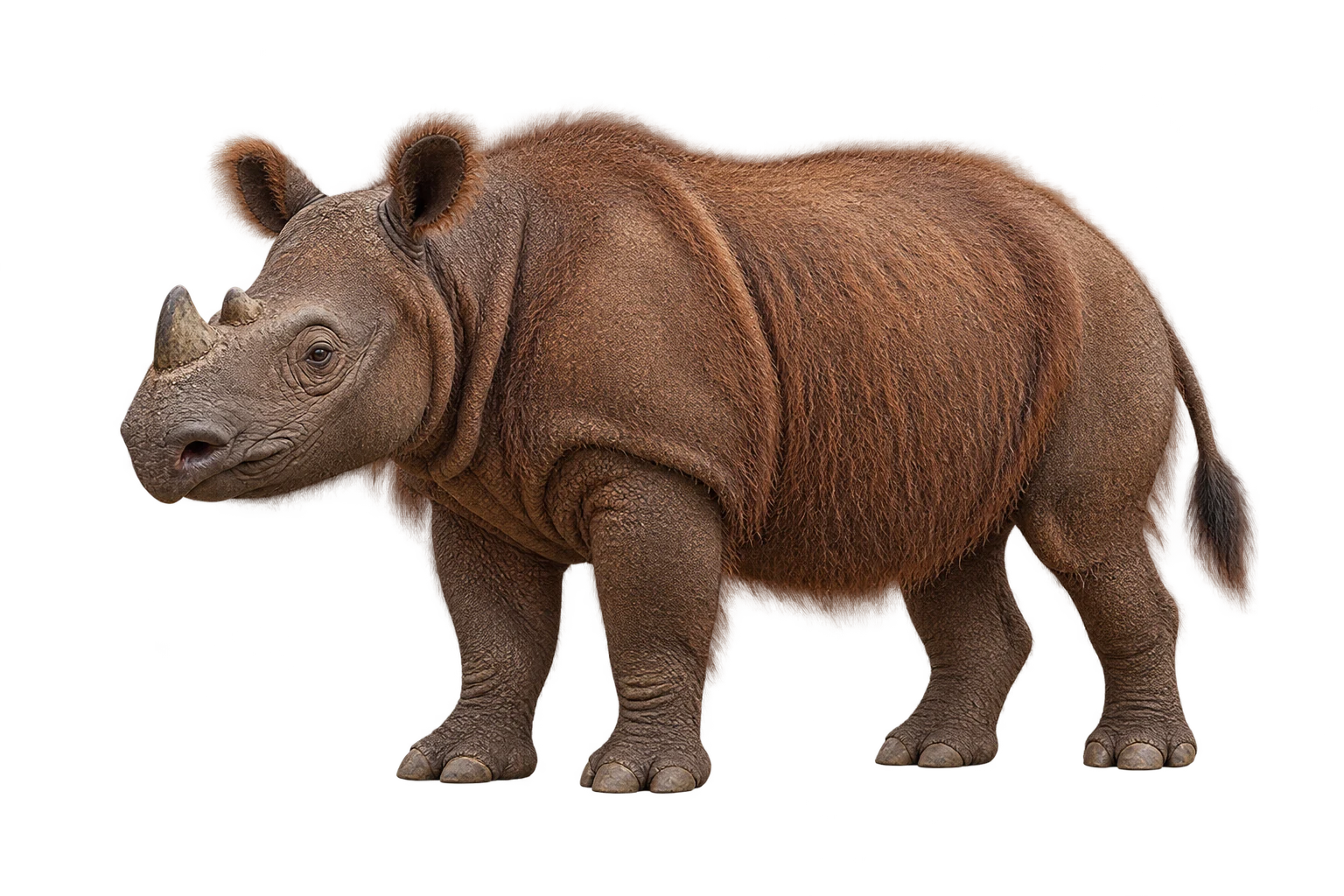
Mammals
Sumatran Rhinoceros
Dicerorhinus sumatrensis
Classification and source reference
LivingAI illustration NT
Mammals
White rhinoceros
Ceratotherium simum
The white rhinoceros is the biggest and most social of the five living rhinos.
Living