Indian rhinoceros
The armoured grazer of the Ganges floodplain
Rhinoceros unicornis
Also called Greater one-horned rhinoceros, Great Indian rhinoceros, Indian rhino
Living individuals or members of this group exist today. This does not mean they are safe from extinction.
Meet the indian rhinoceros
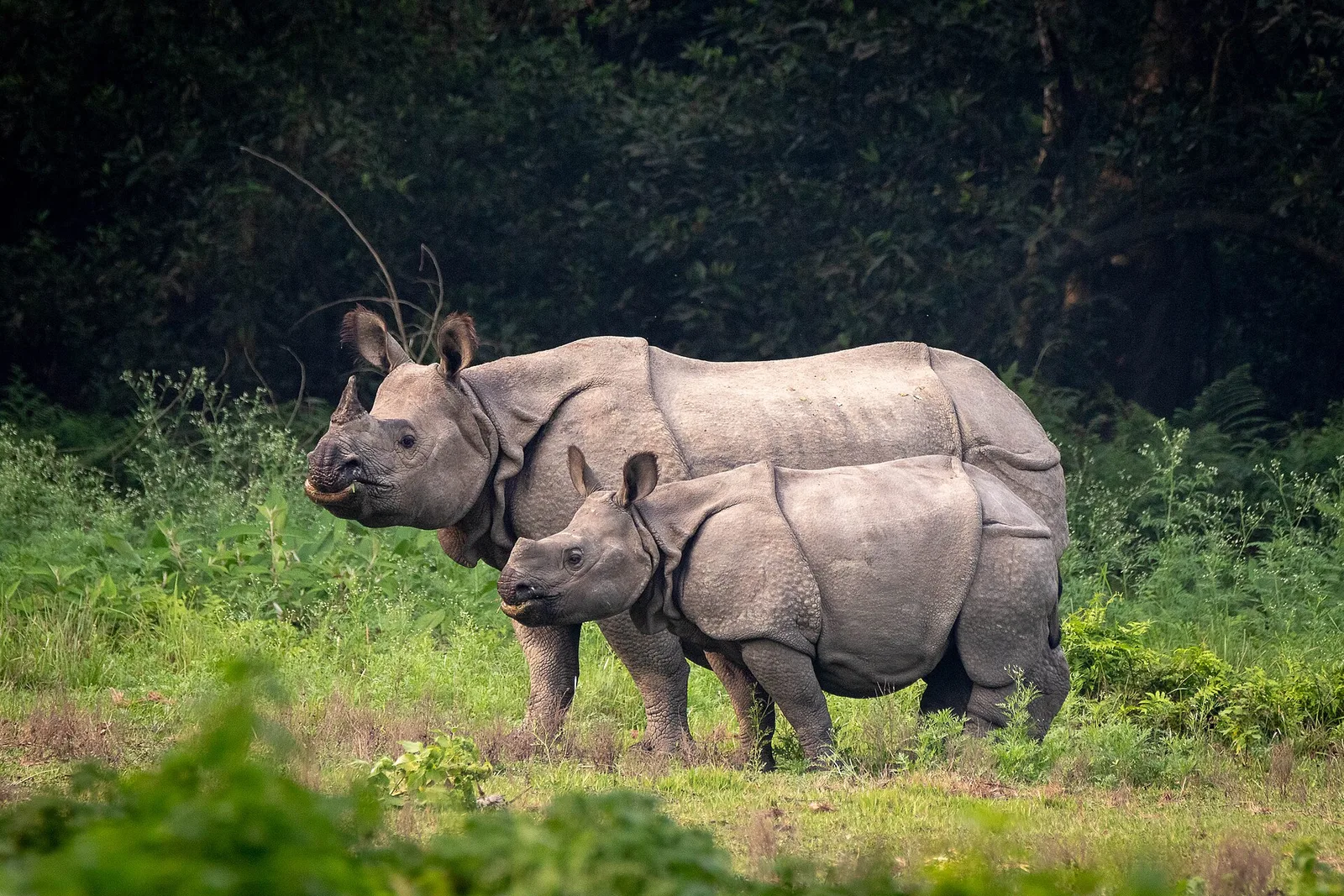
The Indian rhinoceros is the largest rhino in Asia, a one-horned grazer with thick, folded grey skin. It survives in a few protected floodplain grasslands in northern India and southern Nepal.
Images of the indian rhinoceros
Lifespan in the wild
Up to 40 years
Weight
1.5 to 2.4 t
Length
3.1 to 4.1 m
Top speed
Up to 55 km/h
Fact file
Indian rhinoceros
- Location
- Terai of Nepal; Assam and West Bengal, India
- Habitat
- Grassland, Wetlands, Temperate forest
- Diet
- Herbivore
- Prey / food
- Grass, reeds, bamboo, leaves, twigs, fruit, water plants
- Predators
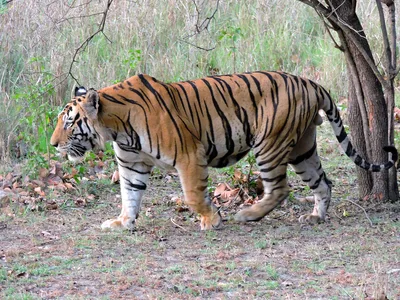
- Tigers take calves; adults have no regular predator
- Lifestyle
- Most active at dawn, dusk and night; wallows by day
- Group name
- Crash
- Name of young
- Calf
- Gestation
- About 15.7 months
- Litter size
- 1 calf
- Population
- About 4,075 in the wild (2025)
- Biggest threat
- Poaching for the horn; loss of grassland
- Distinctive feature
- One horn and deep skin folds that look like armour plates
- Colour
- Grey-brown with pink skin in the folds
- Skin type
- Thick, almost hairless skin
Size
Next to a person
Measurements
Size and speed
- Height
- 1.47 to 1.93 m shoulder height, from a small cow to a large bull
- Length
- 3.1 to 4.1 m head and body, without the tail
- Length, male
- 3.68 to 3.8 m head and body
- Length, female
- 3.1 to 3.4 m head and body
- Tail
- 70 to 80 cm
- Weight
- 1.5 to 2.4 t
- Weight, male
- 2.07 to 2.2 t typical adult bull
- Weight, female
- About 1.6 t
- Top speed
- Up to 55 km/h a short charge
Typical adult ranges. Sources: Animal Diversity Web, Wikipedia.
Life cycle
Lifespan
- In the wildUp to 40 years
- In captivityUp to 47 years one disputed record; four animals passed 40
- 047 years
The pale bar is the record. Source: Animal Diversity Web.
Appearance
Colour and coat
- Primary colours
- grey-brown
- Secondary colours
- pink
- Skin type
- thick, almost hairless skin
- Male and female
- Moderate. Bulls are larger and carry huge neck folds that cows lack or show only faintly. Both sexes have a horn.
Life cycle
Mating and family
- Mating system
- polygynandrous, both sexes with several mates
- Social structure
- solitary adults, with cows accompanied by their calves
- Breeding
- one calf every 34 to 51 months
Indian rhinos breed at any time of year. A cow in heat whistles and urinates often, and a bull chases her for a long distance before mating. After about 15.7 months she gives birth to a single calf of 40 to 81 kilograms. The calf suckles for 12 to 18 months and stays with its mother for years. A wild rhino can live to about 40 years, and one captive animal reportedly reached 47.
Classification
Taxonomy
- Kingdom
- Animalia
- Phylum
- Chordata
- Class
- Mammalia
- Order
- Perissodactyla
- Family
- Rhinocerotidae
- Genus
- Rhinoceros
- Species
- Rhinoceros unicornis
Conservation
Red List status
- LC
- NT
- VU
- EN
- CR
- EW
- EX
Vulnerable on the IUCN Red List
Range
Recorded in 2 countries
Habitat layer: temperate broadleaf and mixed forest, temperate conifer forest, boreal forest and taiga, tropical grassland, savanna and shrubland, temperate grassland, savanna and shrubland, flooded grassland and savanna, mangrove.
Countries from 1,266 wild records on GBIF (iNaturalist research grade), filtered and checked by hand. Country shapes: Natural Earth. Habitat: RESOLVE Ecoregions 2017, CC BY 4.0. Basemap: Natural Earth.
Habitats
Three things to know
- 1
Its skin folds hold water after a wallow, which keeps the animal cool.
- 2
Bulls fight with the long lower incisors rather than the horn.
- 3
The species fell to about 100 animals in the early 1900s and now numbers 4,075.
Did you know
Seven more facts
- 1
The skin folds hold water after a wallow and keep the animal cool for longer.
- 2
Bulls fight with the long lower incisors, and the horn is a secondary weapon.
- 3
The horn starts to show only after about six years and is made of keratin.
- 4
In captive animals the horn often wears down to a thick knob.
- 5
A newborn calf weighs 40 to 81 kilograms and doubles that within a month.
- 6
Mynas and cattle egrets pick parasites off a rhino's skin and feet.
- 7
More than 70% of all Indian rhinos live in one park, Kaziranga.
Field notes
How it looks and acts
Field notes
Distinguishing features
- A single horn on the nose, in both sexes.
- Deep skin folds on the neck, shoulders and legs that look like armour plates.
- Rivet-like bumps on the shoulders and upper legs.
- Grey-brown skin with pink inside the folds.
- A shoulder height of 147 to 193 centimetres.
- Almost no hair except the eyelashes, ear fringes and tail brush.
Field notes
Unique adaptations
- A semi-prehensile upper lip grips and bends grass stems.
- Skin folds increase the surface area and help to control body temperature.
- Flat, grooved molars grind coarse grass.
- A large body keeps adults safe from tigers.
- Strong swimming and diving let it feed in flooded grassland during the monsoon.
Field notes
Interesting behaviours
- Wallows in mud and water during the hot part of the day.
- Grazes in the early morning, the late afternoon and at night.
- Adds dung to shared heaps and sniffs them for news of other rhinos.
- Rubs its body against trees to shed dead skin.
- Walks over tall plants to push them down to mouth level.
Field notes
Temperament
- Solitary as an adult, but calm and even playful in a shared wallow.
- Usually runs from a disturbance rather than charging.
- Bulls are aggressive to rivals and to cows during courtship.
- A cow with a young calf attacks people who come too close.
Field notes
Communication
- More than 10 distinct calls, from snorts and honks to roars and shrieks.
- Scent in urine, dung and foot glands marks the shared latrines.
- A bull drags his hind feet while spraying urine to draw a three-line furrow for cows.
- Head bobbing, nose touching and licking serve as greetings.
- Flattened ears signal a threat to other rhinos.
Ecology
Ecological role
The Indian rhinoceros is the largest grazer of the Terai grasslands and shapes the plant cover where it lives.
- Heavy grazing on grass, shrubs and saplings probably slows the spread of woodland into grassland.
- Shared dung heaps probably concentrate nutrients and seeds in a few spots.
- Mynas and cattle egrets feed on the ticks and flies that live on its skin.
- Calves are an occasional prey of the Bengal tiger.
Stories
Myths and legends
- In Buddhist tradition, the Rhinoceros Sutra holds up the solitary rhino as a model for the wandering monk.
- In Tharu tradition, the god Vishwakarma put the rhino together from pieces of other animals.
- In Karbi tradition, a rhino that eats the paddy brings good fortune to the farmer.
- In Hindu tradition, the Mahabharata says Arjuna's bow was made from rhino hide.
- In Persian and Arabic tradition, the one-horned karkadann is thought to be a memory of this rhino.
People
Relationship with humans
People
Living alongside us
People have hunted, tamed and pictured the Indian rhino for thousands of years. Sport hunting and poaching for the horn nearly wiped it out by the early 1900s. India and Nepal now guard the survivors in a few parks, and the count has risen to about 4,075. Rhinos still leave the parks to graze in crops, and they kill several people each year. Tourists visit Kaziranga and Chitwan to see them.
- In a typical year a few people in India and Nepal die from rhino attacks.
- A cow with a young calf is the most likely animal to attack.
- Most rhinos run from people, and poor eyesight means a still person is hard for them to see.
People
Status, uses and products
- Domestication
- Wild
- As a pet
- Not suitable. An adult needs about 150 to 200 kilograms of plants a day, a wallow and a range of several square kilometres. It is also protected under CITES Appendix I, so trade is banned.
- Uses
- ecotourismzoo exhibitionhistoric draught work
- Products
- horn
The full account
About the indian rhinoceros
The Indian rhinoceros, Rhinoceros unicornis, is the largest rhino in Asia and the second largest rhino alive. Only the white rhinoceros of Africa is bigger. It carries one horn on its nose, and its thick grey skin hangs in deep folds. The folds make it look like an animal in plate armour, and many people call it the greater one-horned rhinoceros.
Wild Indian rhinos live on the floodplain grasslands of northern India and southern Nepal. An adult weighs 1,500 to 2,400 kilograms and measures 3.1 to 4.1 metres from head to rump. It eats grass, and it spends the hot hours of the day in water or mud. Hunting and farming cut the species down to about 100 animals in the early 1900s. Strict protection brought the count back to 4,075 by 2025, and the IUCN lists it as Vulnerable.
Name and taxonomy
Carl Linnaeus gave the species its scientific name in 1758. The genus name Rhinoceros comes from two Greek words that mean nose and horn. The species name unicornis is Latin for one-horned. English speakers first used the word rhinoceros in the fourteenth century. Common English names include greater one-horned rhinoceros, great Indian rhinoceros and Indian rhino.
Zoologists later described the same animal under other names, such as R. indicus in 1817 and R. bengalensis in 1970. All of those names are now treated as synonyms, and the species has no subspecies. Its closest living relative is the Javan rhinoceros, which shares the genus Rhinoceros. The family Rhinocerotidae sits in the order Perissodactyla, the odd-toed hoofed mammals.
Evolution and relatives
Rhinos share the order Perissodactyla with horses and tapirs. DNA studies suggest that the rhino line split from the horse line about 50 million years ago. The rhino family appeared in Eurasia in the Late Eocene. The ancestors of the genus Rhinoceros branched off from the other living rhinos about 15 million years ago. Genome work shows that the Asian one-horned rhinos sit slightly closer to the Sumatran rhino than to the African rhinos. They are also close to the extinct woolly rhinoceros.
The Indian and Javan rhinos separated from each other about 4.3 million years ago. The earliest fossils of the modern species date from the Early Pleistocene. Pleistocene fossils show that it once lived far to the east, in mainland Southeast Asia, southern China and Java. A partial skeleton found in Thailand was described in 2018.
Appearance
The skin is thick and grey-brown, with a pink tint inside the folds where blood vessels lie close to the surface. Deep folds cross the neck, the shoulders and the tops of the legs. Rounded bumps that look like rivets cover the shoulders and upper legs. Apart from eyelashes, ear fringes and a brush on the tail, the body is almost hairless. The horn is made of keratin, the same material as fingernails, and both sexes grow one. In most adults it is about 25 centimetres long, but the record is 61.6 cm.
The head and body of an adult measure 3.1 to 4.1 metres, and the tail adds 70 to 80 centimetres. Shoulder height runs from 147 centimetres in a small cow to 193 cm in a big bull. Bulls average about 2,070 to 2,200 kilograms, and cows about 1,600 kg. Bulls also carry huge neck folds that cows lack or show only faintly. The largest bulls on record reached 436 cm in body length and 4,000 kg. Calves are born without folds, and the horn appears only after about six years.
Habitat and range
The species once lived along the Indus, Ganges and Brahmaputra rivers, from Pakistan east to the border of Myanmar. By the nineteenth century it survived only in the Terai lowlands of Nepal and northern India, and in the Brahmaputra valley of Assam. Today it occupies about 12 protected areas in the same region. Kaziranga National Park in Assam holds more than 2,000 animals, the largest single population. Chitwan National Park is the main site in Nepal.
The preferred habitat is tall wet grassland on a river floodplain, with pools and channels for wallowing. Rhinos also use dry savanna grassland, swamp forest in the rainy season and deciduous forest at the foot of the Himalayas. The best sites lie below 50 metres above sea level and within 500 m of water. Farms, pastures and villages now surround most rhino areas, so animals often graze in crops and secondary forest. GBIF holds occurrence records from 13 countries, but many of those records come from zoos.
Diet and feeding
The Indian rhino is a grazer, and grass makes up almost all of its diet. It also takes leaves, twigs, shrubs, flowers, fruit and water plants. Cultivated rice and Bermuda grass are among the grasses it eats. Animal Diversity Web estimates that an adult needs 150 to 200 kilograms of food a day.
The upper lip is semi-prehensile, and the rhino uses it to hook a grass stem, bend it and bite off the top. To reach a very tall plant, it walks over the stem and pushes it down with its body weight. Mothers use the same trick to bring food within reach of a calf. During the monsoon the grass floods, so rhinos turn to taller bamboo, reeds and tree leaves. They can also put the head under water to crop submerged plants. Flat, grooved molars grind the tough plant material.
Behaviour and social life
Adult bulls live alone for most of the year. Cows travel with their calves and stay with a calf for up to four years, sometimes longer. Young animals form small groups, and two or three young bulls often keep together at the edge of a dominant bull's range. Up to 10 rhinos can share a wallow, especially in the monsoon. In these gatherings the animals are usually calm and greet each other by bobbing the head, touching noses or licking.
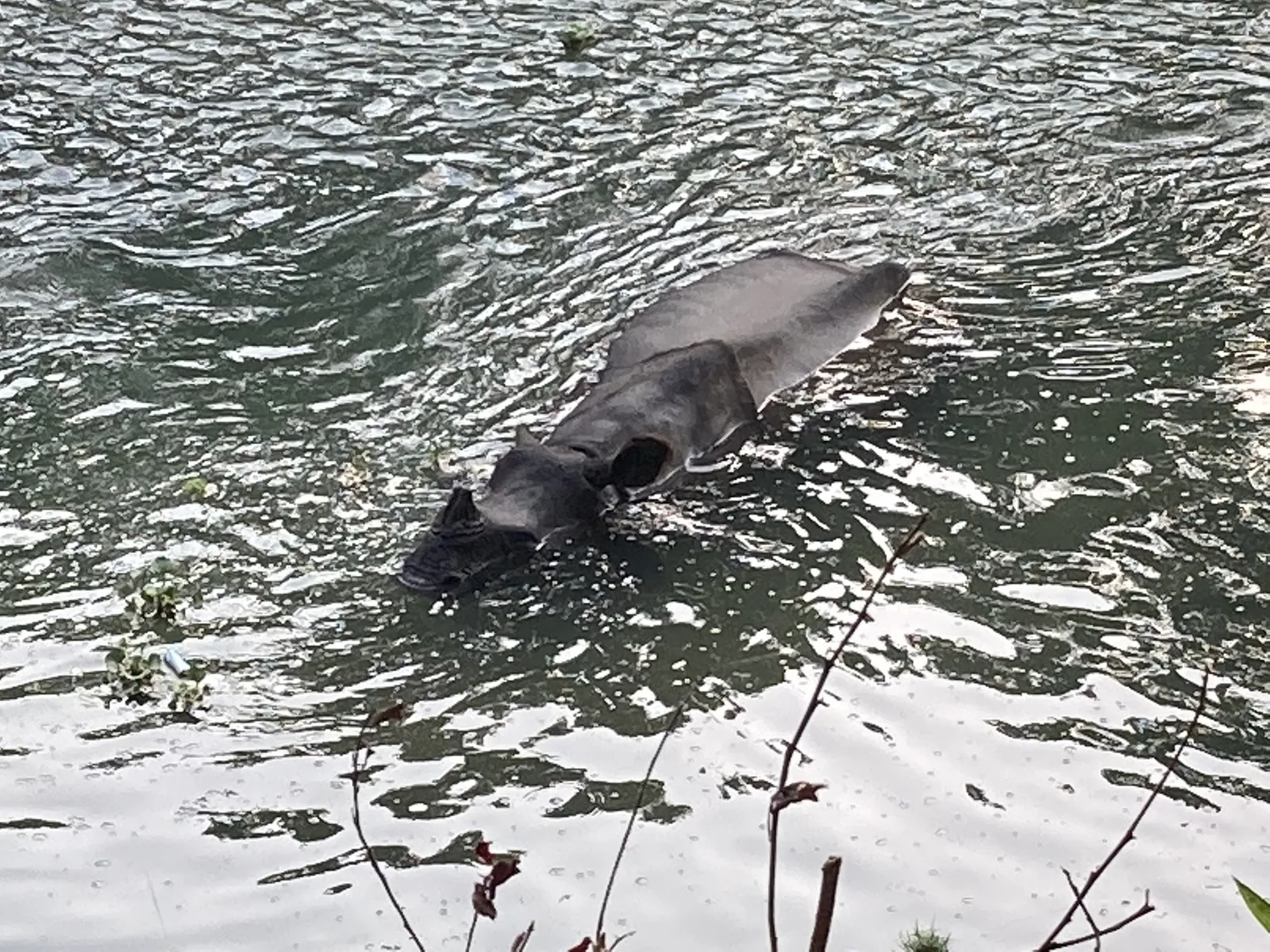
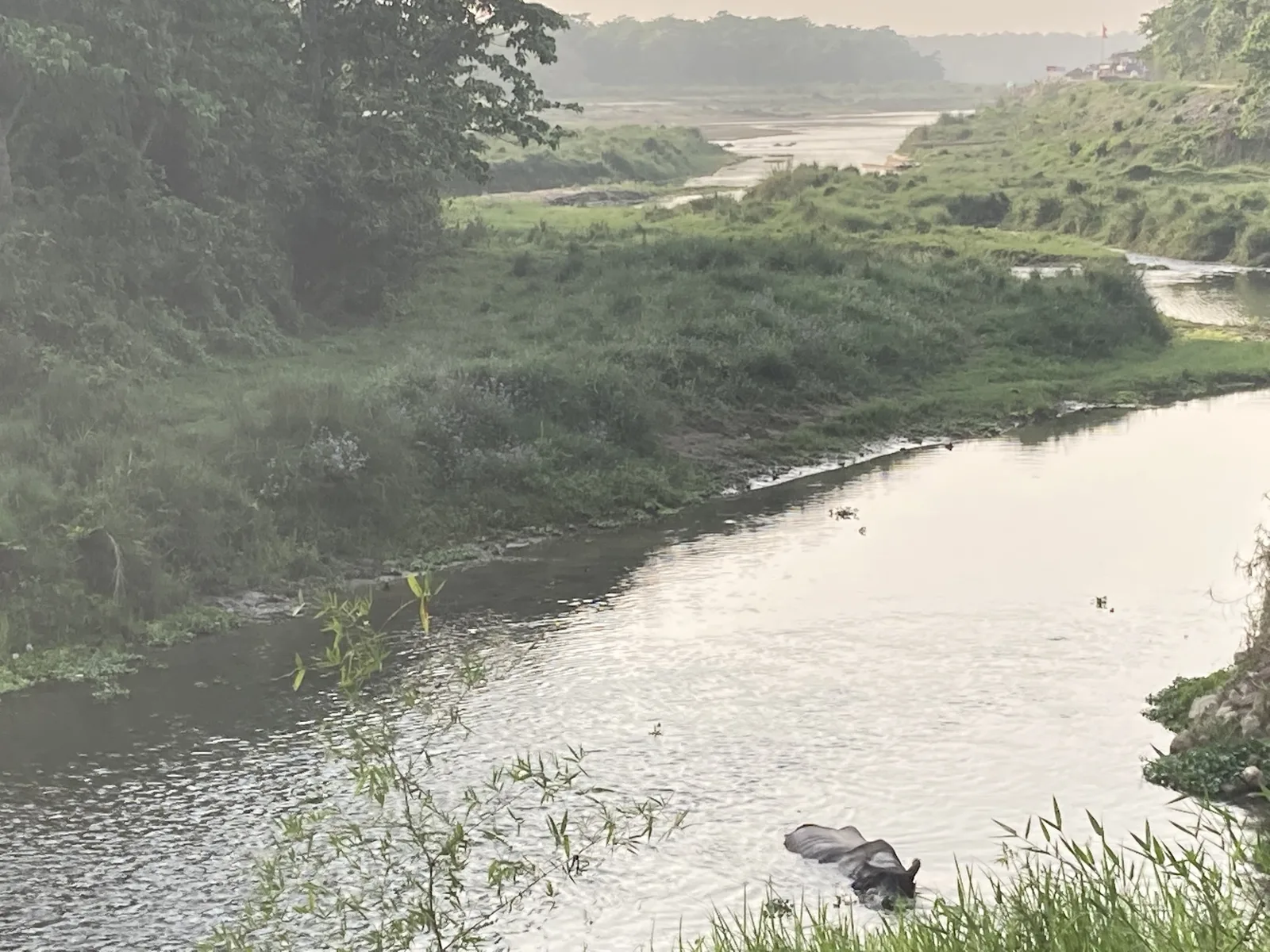
The species is most active in the early morning, the late afternoon and at night. In the heat of the day it rests in shade or lies in water or mud. Wallowing cools the body, keeps the skin from drying and helps to shed biting insects. The skin folds hold water for a while after the animal climbs out. Rhinos swim well, and a charging animal can reach 55 kilometres per hour for a short distance.
A bull holds a home range of about 2 to 8 square kilometres, which overlaps the ranges of other bulls. Outside the mating season a dominant bull lets other bulls pass through. When a cow is in heat, bulls fight, and these fights are the most common cause of adult death. Rhinos usually strike with the long lower incisors rather than the horn. A disturbed rhino more often runs away than attacks.
Communication and senses
Hearing and smell are sharp, but eyesight is poor. Researchers have recorded more than 10 distinct calls, among them snorts, honks, bleats, roars, grunts and shrieks. A snort is a first contact call, and a calf grunts to find its mother. Rival bulls honk, bleat and roar at each other during a standoff. A scream or a panting sound warns of danger.
Scent carries much of the message. All rhinos in an area add dung to shared heaps, and each animal sniffs a heap before it uses it. Glands on the feet leave a trace at these latrines. A bull can spray urine 3 to 4 metres behind him, and he often does so when observers disturb him. Flattened ears warn other rhinos of a threat.
Reproduction and life cycle
There is no fixed breeding season. A cow in heat urinates often and gives a loud whistle, and a bull usually arrives within 8 to 10 hours. The bull tests the urine, then chases the cow for 1 to 2 kilometres before mating. Both sexes mate with several partners over a lifetime, and pairs do not stay together.
Gestation lasts about 15.7 months, or 425 to 496 days. The cow gives birth to a single calf that weighs 40 to 81 kilograms. A calf doubles its birth weight within a month. It suckles for 12 to 18 months and stays with its mother for years afterwards. The next calf arrives after a gap of 34 to 51 months. About 10% of calves die before they grow up, mostly to tigers.
Wild cows first breed at about six years old. Bulls can breed at five in captivity, but in one field study almost no bull under 15 years old mated. A wild rhino lives up to about 40 years. In captivity four animals passed 40 years, and the record is 47.
Predators and threats
An adult Indian rhino has no regular predator apart from people. Tigers kill unguarded calves, and a calf up to about six months old is at most risk. In 2017 a group of four tigers killed an adult bull in Dudhwa Tiger Reserve, but such an event is rare. Disease is a bigger danger: anthrax and blood poisoning both occur, and leeches, ticks and worms live on and in the rhino. Horseflies bite through the thick skin.
Poaching for the horn is the main human threat, because powdered horn is sold in traditional Chinese medicine. Between 1980 and 1993 poachers killed 692 rhinos in India. Floods, invasive plants and grazing by cattle degrade the grasslands. More than 70% of all Indian rhinos live in one park, so a single epidemic or flood could hit most of the species at once.
Population and conservation
The IUCN lists the Indian rhinoceros as Vulnerable, and the species has been on CITES Appendix I since 1975. Sport hunting in the nineteenth century drove the animal close to extinction. Some British officers each shot more than 200 rhinos in Assam. By 1908 Kaziranga held about 12 rhinos. India banned all rhino hunting in 1910.
In the early 1990s, the world population stood at about 1,870 to 1,895 animals. A count in 2022 found 4,014, and the estimate for March 2025 is 4,075, with 3,323 in India and 752 in Nepal. Nepal set up an armed rhino patrol and made Chitwan a national park in the early 1970s. Since 1986 Nepal has moved rhinos from Chitwan to Bardia and Shuklaphanta as insurance against an epidemic. The Indian Rhino Vision 2020 programme moves animals into parks such as Manas to found new populations. Zoos breed the species well, and Zoo Basel in Switzerland keeps the international studbook.
Relationship with humans
Seals and figurines of the Indus Valley Civilisation show the rhino, so people have known it for thousands of years. Ancient Indian kings reportedly rode rhinos into battle. Tamed rhinos have pulled ploughs, carried loads and performed in circuses. Rhinos graze in fields around the parks, and farmers have long hunted them to protect crops. Every year a few people in India and Nepal die from rhino attacks, and the attacker is most often a cow with a young calf.
Horn prices rose from about 35 dollars a kilogram in 1972 to about 18,000 dollars in 1991. Rhino viewing in Kaziranga and Chitwan is thought to support many local jobs. Zoos hold the species around the world, and most captive animals descend from the Basel line. The first captive birth took place in Kathmandu in 1826. In 2010 a calf was born in Cincinnati from frozen sperm, a first for the species.
In culture and myth
The Rhinoceros Sutra, an early Buddhist text, tells the seeker to wander alone like the rhino. The text praises the animal's solitary life and its calm. In the Rigveda the animal is called khadga, a word that also means sword. In the Mahabharata, rhino hide is the material of Arjuna's great bow, the Gandiva. In Gujarat a folk goddess, Dhavdi Mata, rides a rhinoceros.
The Tharu people of the Terai say that the god Vishwakarma built the rhino from parts of other animals. The Karbi people of Assam treat the rhino as a lucky animal, and a rhino in the paddy is a good sign. Persian and Arabic writers described a one-horned beast, the karkadann, which probably grew from travellers' tales of this rhino. Albrecht Dürer made his famous woodcut in 1515 from a description of a rhino sent to Portugal. Clara, a female rhino, toured Europe for 17 years from 1741, and Pietro Longhi painted her in Venice. For most Europeans of that time, a rhino was probably an animal known only from pictures.
A sentence with a dotted underline is inferred: it describes the group the animal belongs to, or is a reading of the sources, rather than a measured or reported fact about this species.
Questions
Indian rhinoceros questions, answered
How big is an Indian rhinoceros?
Adults weigh 1,500 to 2,400 kilograms. Head and body length is 3.1 to 4.1 metres, and shoulder height is 147 to 193 centimetres. Bulls are larger than cows.
How many Indian rhinos are left?
A census in March 2025 estimated 4,075 animals, with 3,323 in India and 752 in Nepal. The species fell to about 100 in the early 1900s.
Is the Indian rhinoceros endangered?
The IUCN lists it as Vulnerable, one step below Endangered. Numbers are rising, but most animals live in a single park, and poaching continues.
Where do Indian rhinos live?
They live in tall wet grassland on the floodplains of northern India and southern Nepal. Kaziranga National Park in Assam holds the largest population, and Chitwan is the main park in Nepal.
What do Indian rhinos eat?
Mostly grass, including cultivated rice. They also eat leaves, twigs, bamboo, fruit and water plants. An adult needs about 150 to 200 kilograms of food a day.
How fast can an Indian rhino run?
A charging rhino reaches up to 55 kilometres per hour for a short distance. It is also a strong swimmer.
How long do Indian rhinos live?
Wild rhinos live up to about 40 years. In captivity four animals passed 40, and one reportedly reached 47.
Why does the Indian rhino have only one horn?
The two Asian species in the genus Rhinoceros grow a single nasal horn, while African rhinos grow two. The horn is keratin, appears after about six years and reaches about 25 centimetres in most adults.
Are Indian rhinos dangerous to humans?
Yes. A few people die each year in India and Nepal, usually after they meet a cow with a calf. Most rhinos run from a disturbance rather than attack.
Do Indian rhinos live in groups?
Adults are mostly solitary. A cow keeps her calf with her for years, young animals form small groups, and up to 10 rhinos can share a wallow.
How long is an Indian rhino pregnant?
Pregnancy lasts about 15.7 months, which is 425 to 496 days. The cow has one calf, and the next arrives 34 to 51 months later.
What are the skin folds for?
The folds increase the skin surface and help the animal to shed heat. They also trap water after a wallow. Blood vessels near the surface give them a pink colour.
Why are Indian rhinos poached?
The horn is ground into powder for traditional Chinese medicine. Its price rose from about 35 dollars a kilogram in 1972 to about 18,000 dollars in 1991.
Do tigers hunt Indian rhinos?
Tigers take unguarded calves, and about 10% of calves die before adulthood, mostly to tigers. An adult is too large, and a tiger kill of an adult is very rare.
What is the difference between an Indian rhino and a white rhino?
The white rhino of Africa is larger and has two horns. The Indian rhino has one horn, deep skin folds and rivet-like bumps on the shoulders.
Can you see Indian rhinos in the wild?
Yes. Kaziranga National Park in Assam and Chitwan National Park in Nepal are the main places. Both parks run guided visits.
Food web
Prey and food
- grass
- reeds
- bamboo
- leaves
- twigs
- fruit
- water plants
Food web
Predators
 Tiger
- adults have no regular predator
Ecological equivalents
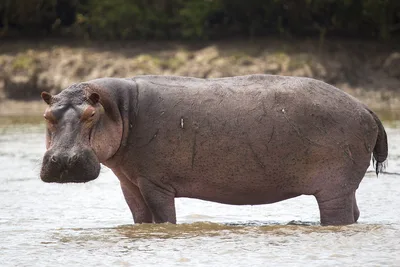
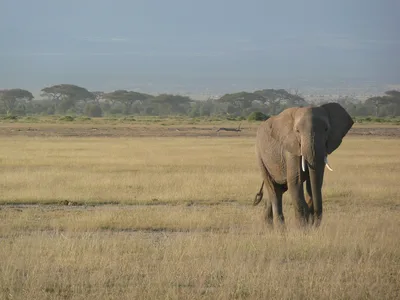
Related species on this site
Javan Rhinoceros (same genus), Black rhinoceros (same family), Elasmotherium (same family), Rhinoceros (same family), Sumatran Rhinoceros (same family), White rhinoceros (same family), and more.
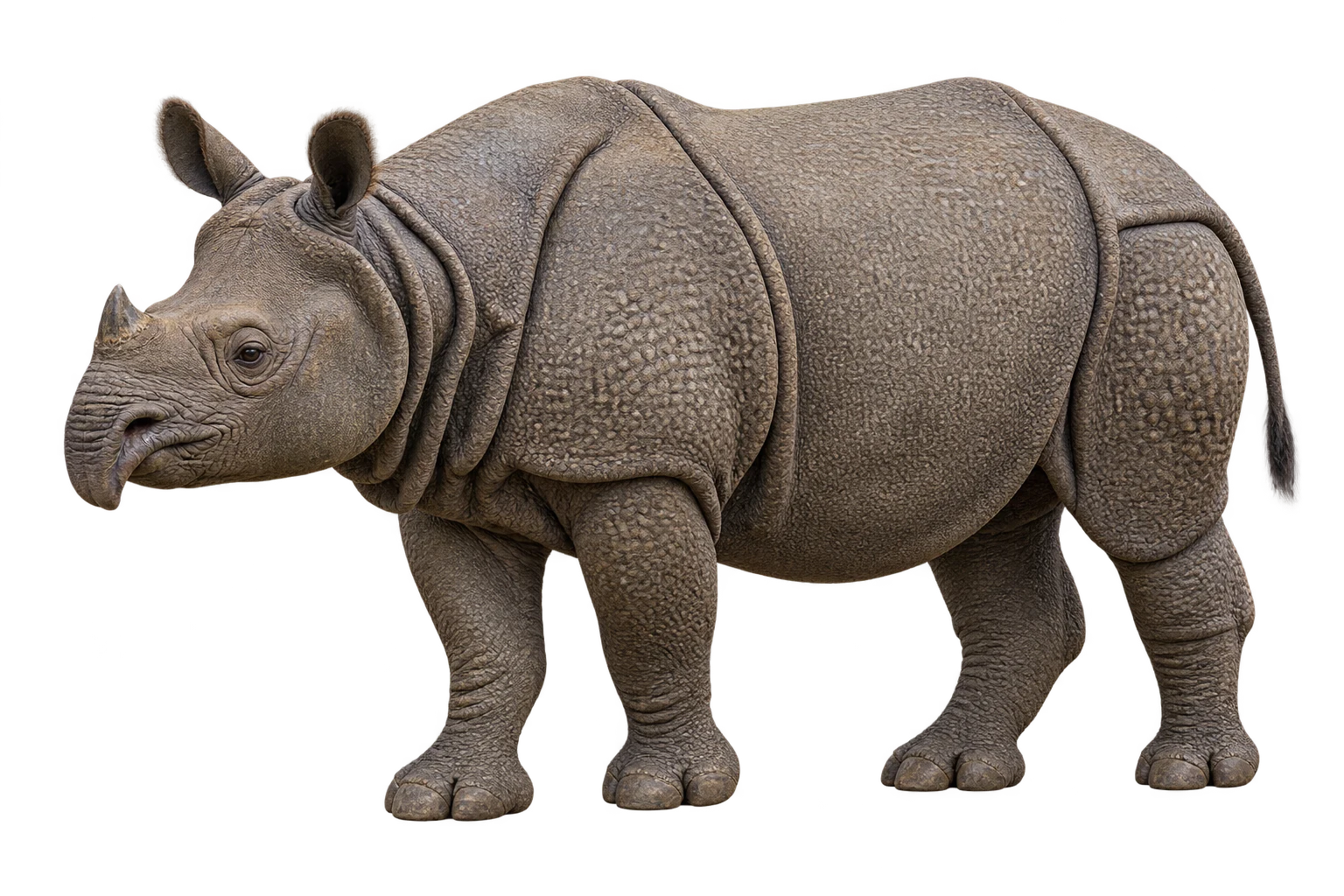
Mammals
Javan Rhinoceros
Rhinoceros sondaicus
Classification and source reference
LivingAI illustration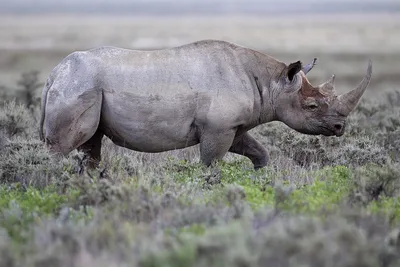 CR
Mammals
Black rhinoceros
Diceros bicornis
The black rhinoceros is a two-horned browser of eastern and southern Africa with a pointed, gripping upper lip.
Living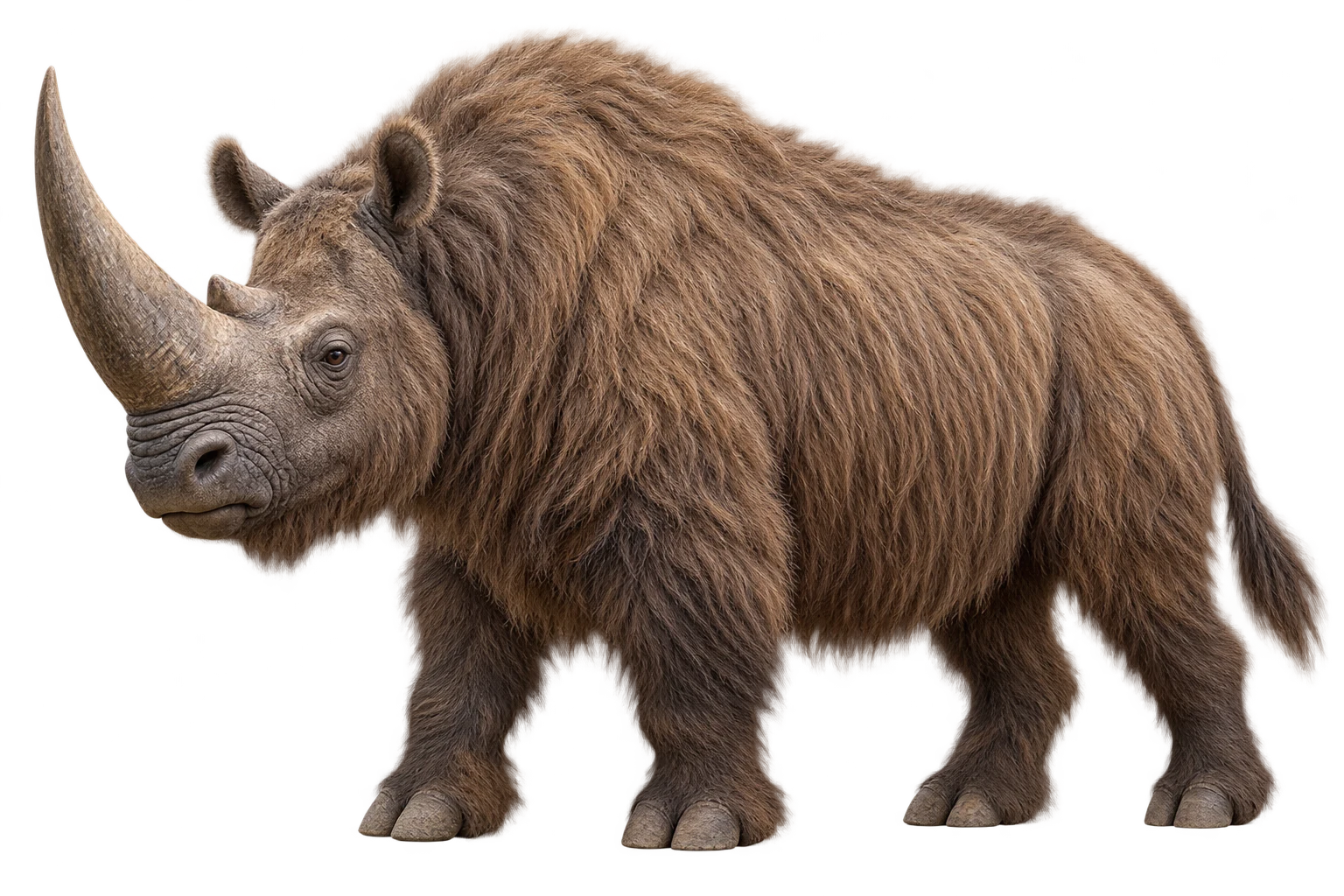
Mammals
Elasmotherium
Elasmotherium
Classification and source reference
ExtinctAI reconstruction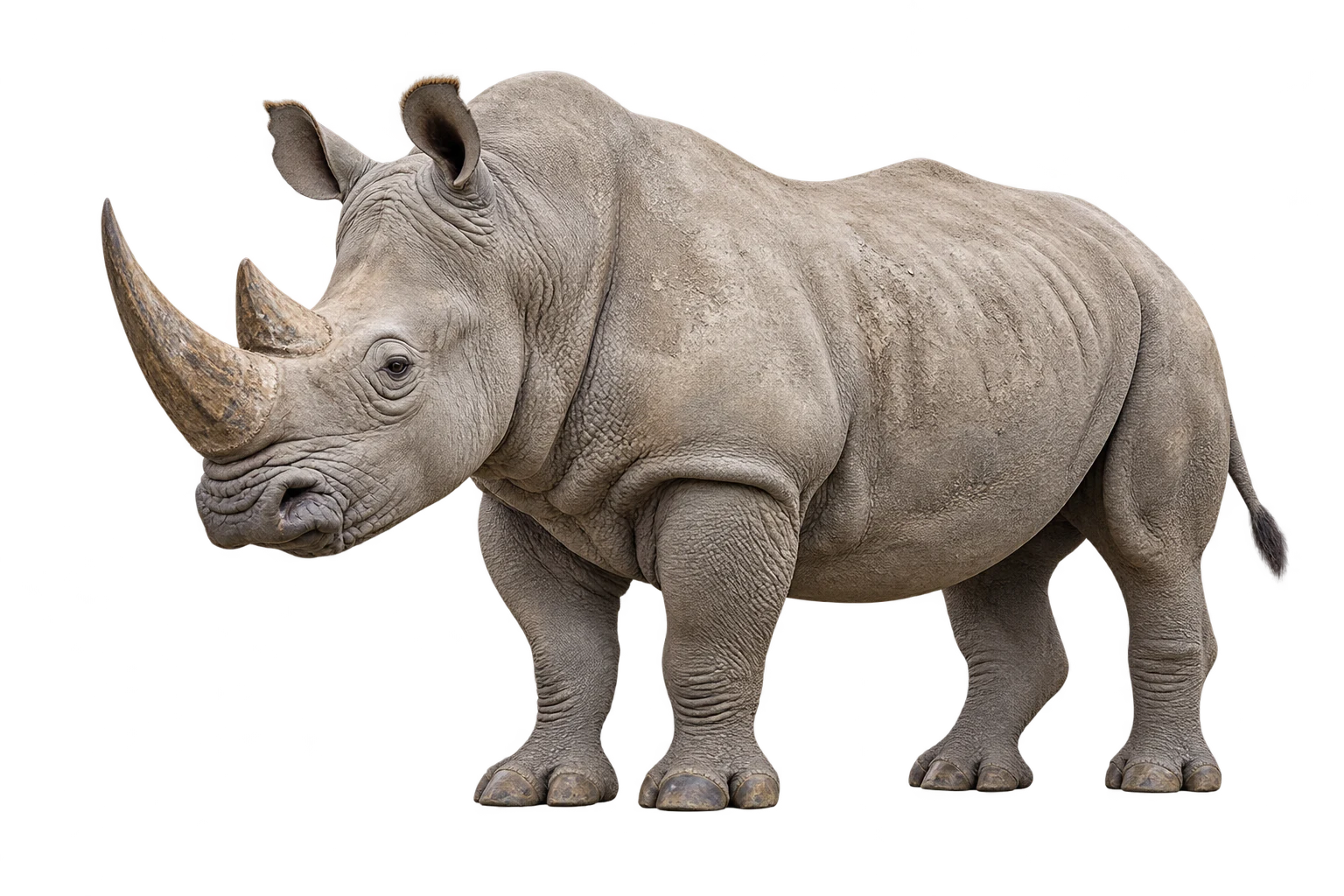
Mammals
Rhinoceros
Rhinocerotidae
Classification and source reference
LivingAI illustration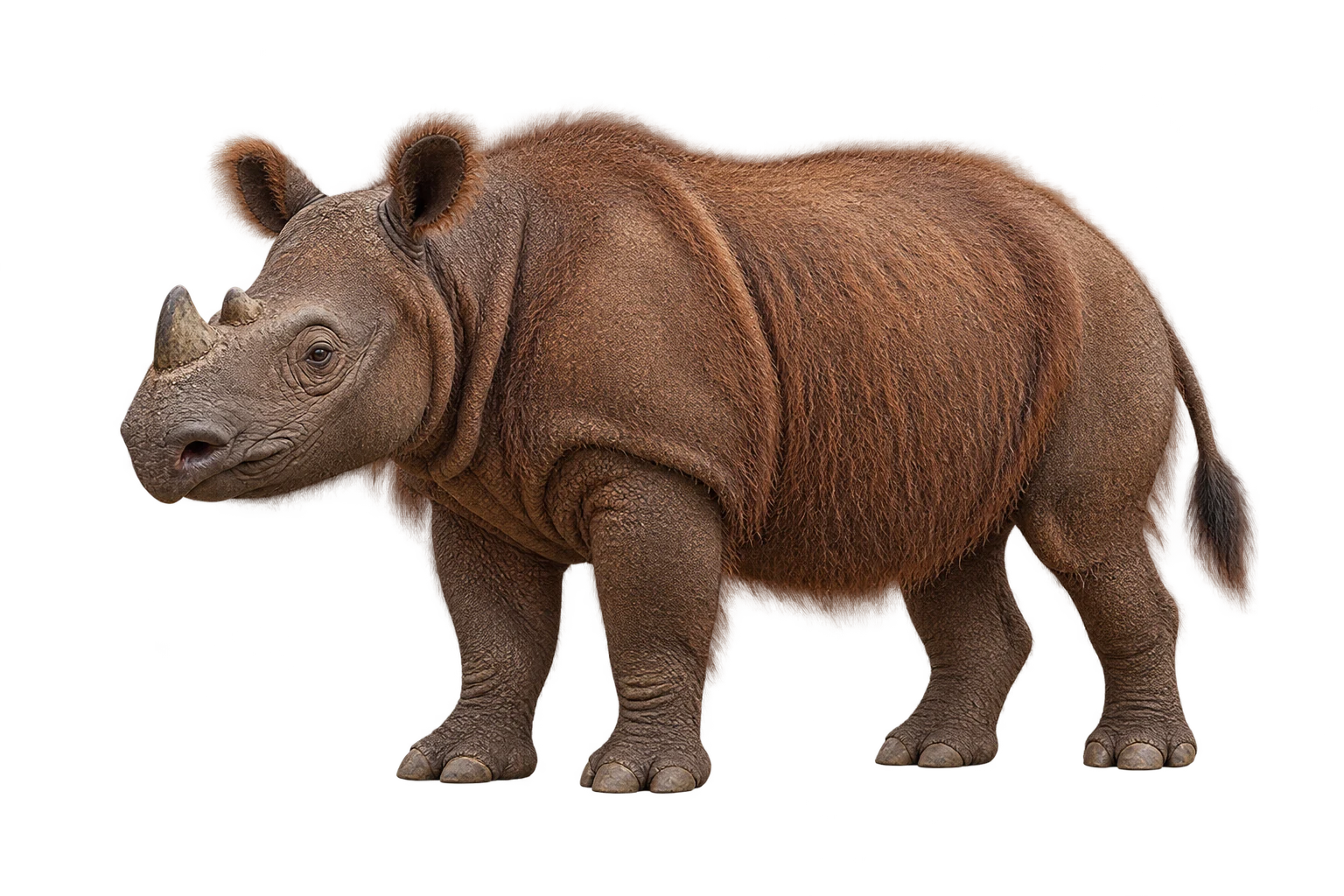
Mammals
Sumatran Rhinoceros
Dicerorhinus sumatrensis
Classification and source reference
LivingAI illustration NT
Mammals
White rhinoceros
Ceratotherium simum
The white rhinoceros is the biggest and most social of the five living rhinos.
Living