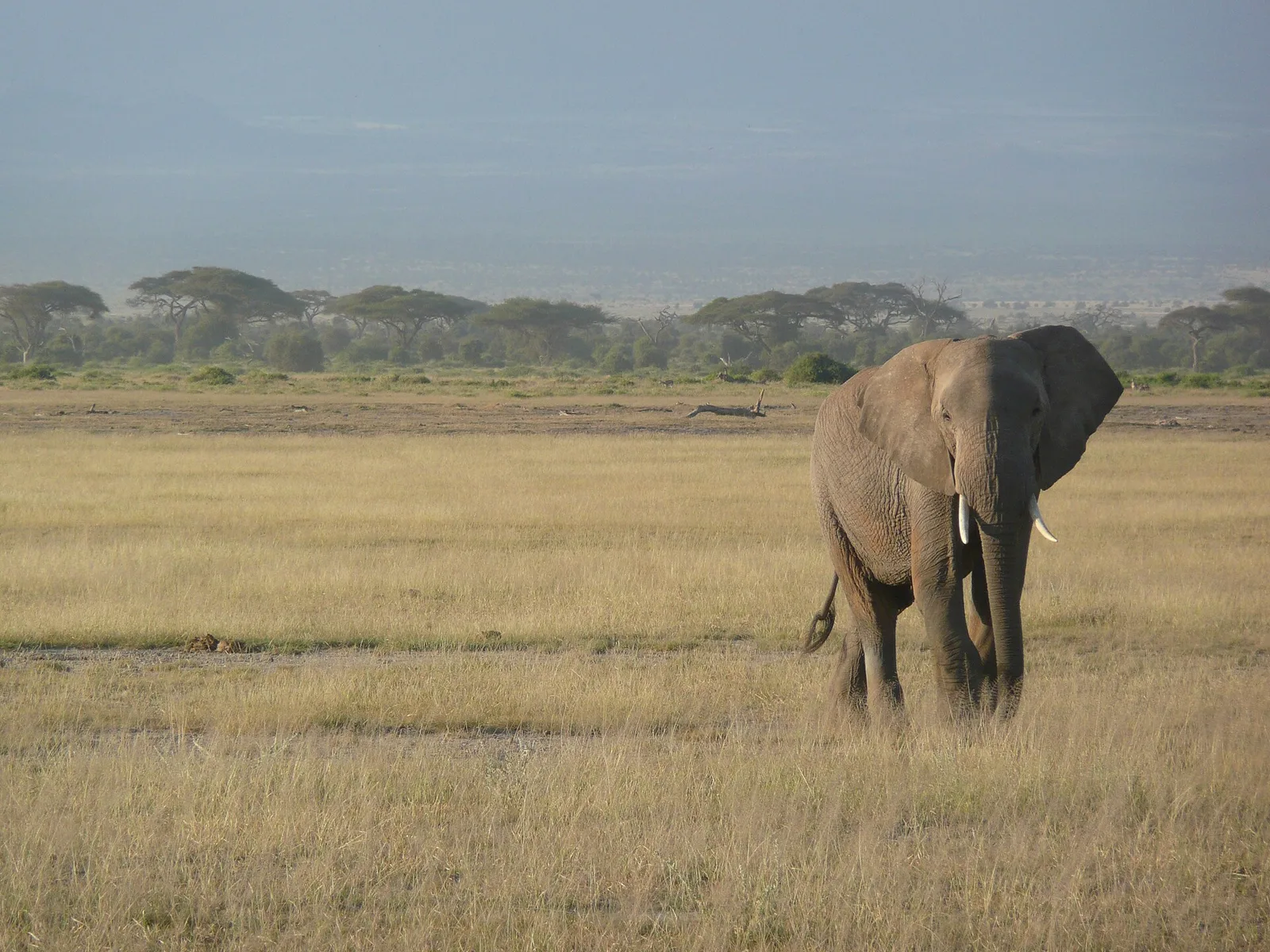
African bush elephant
The largest animal on land, led by its oldest female
Loxodonta africana
Also called African savanna elephant
Living individuals or members of this group exist today. This does not mean they are safe from extinction.
Meet the african bush elephant
The African bush elephant is the largest land animal alive. Family herds led by an old female walk long distances between water and food across the savanna.
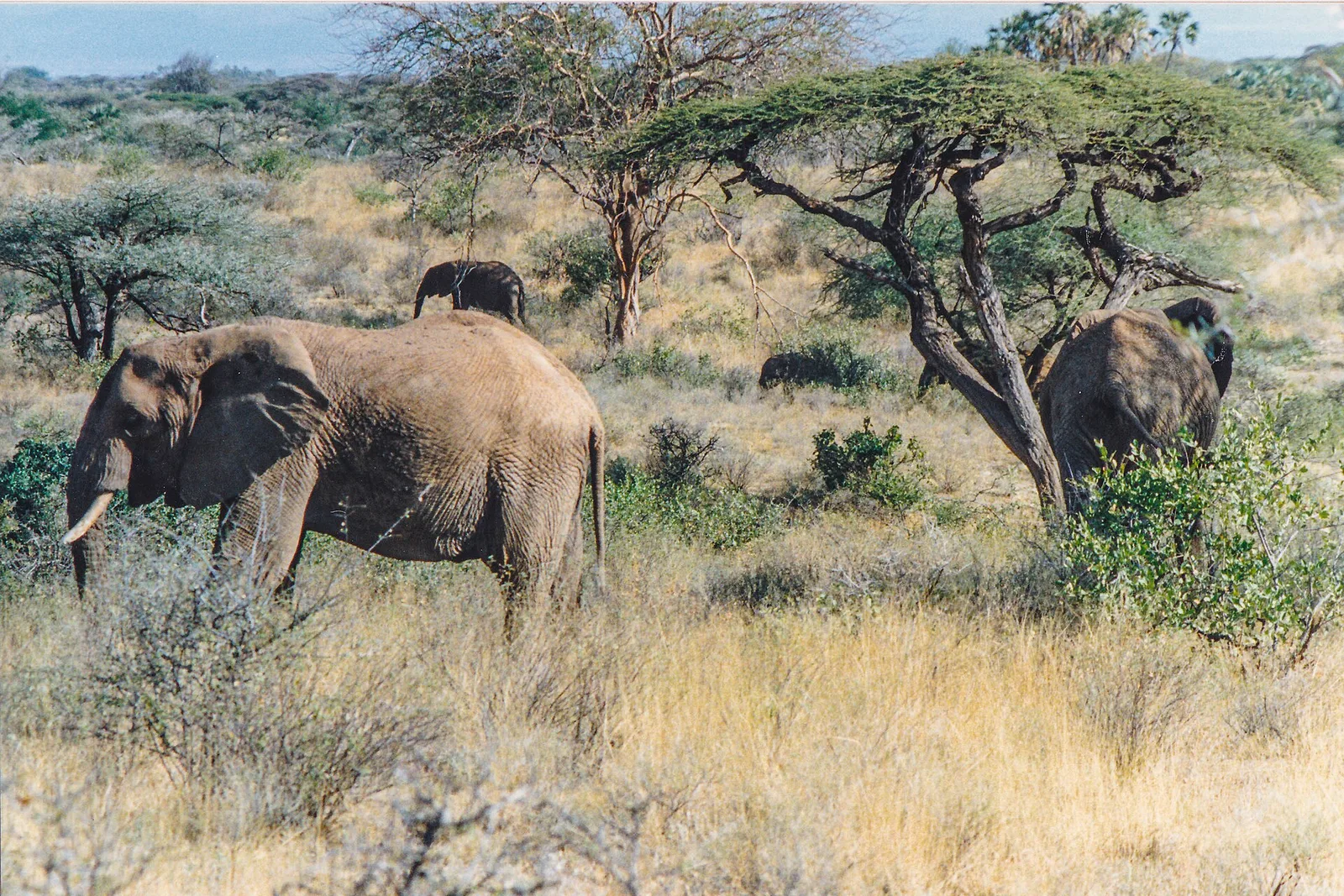
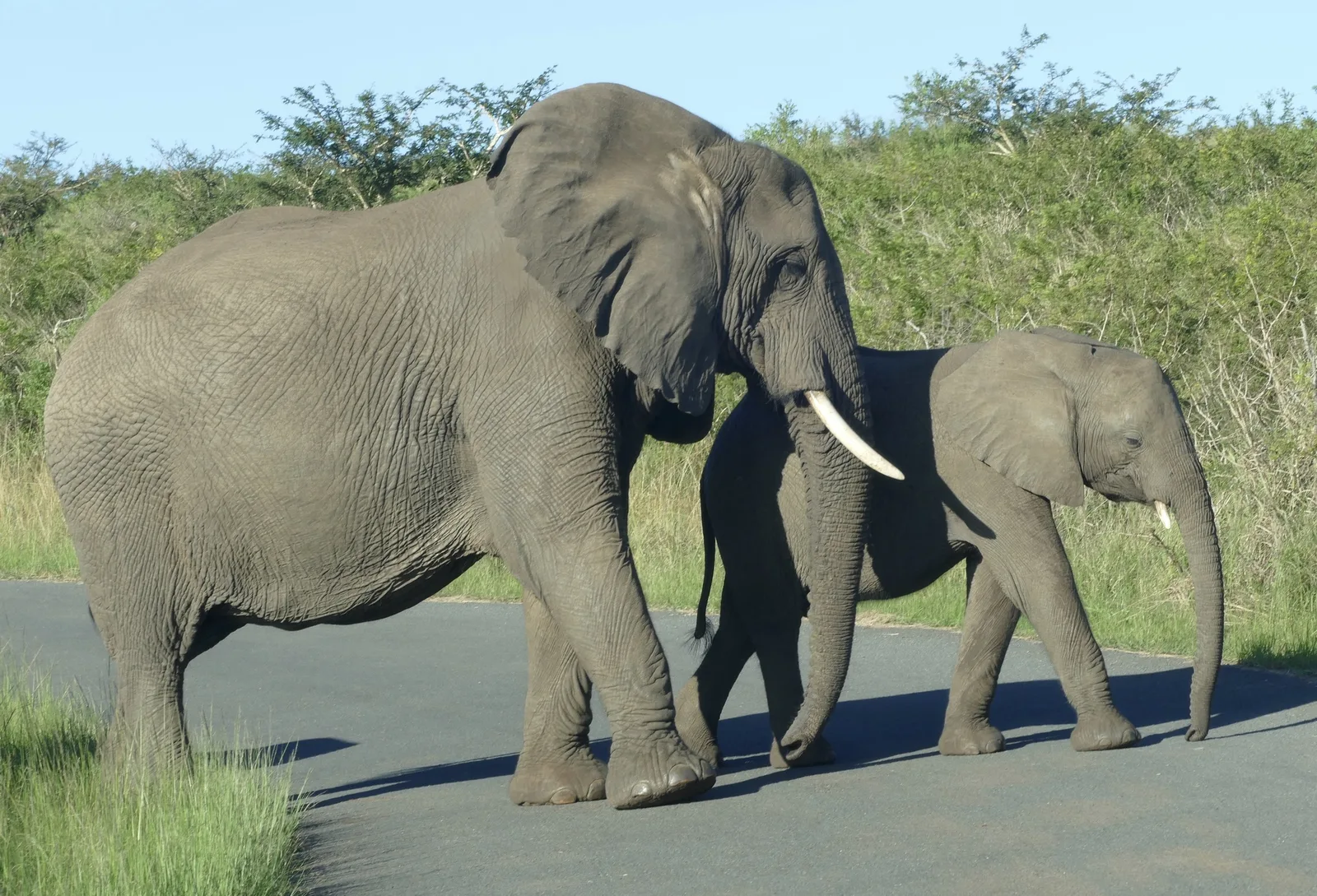
Images of the african bush elephant
Lifespan in the wild
60 to 70 years
Weight
2 to 6.1 t
Height
2.47 to 3.36 m
Fact file
African bush elephant
- Location
- Eastern, central and southern Africa
- Habitat
- Savanna, Grassland, Temperate forest, Wetlands
- Diet
- Herbivore
- Prey / food
- Grass, leaves, bark, fruit
- Predators
- Lions and hyenas take calves
- Lifestyle
- Diurnal and crepuscular
- Group name
- Herd
- Name of young
- Calf
- Gestation
- About 22 months
- Litter size
- 1 calf
- Population
- About 415,000 African elephants of both species
- Biggest threat
- Ivory poaching and habitat loss
- Distinctive feature
- Large ears shaped like the continent of Africa
- Colour
- Grey
- Skin type
- Thick, wrinkled skin
Size
Next to a person
Measurements
Size and speed
- Height
- 2.47 to 3.36 m, up to 3.96 m at the shoulder
- Height, male
- 3.04 to 3.36 m, up to 3.96 m at the shoulder
- Height, female
- 2.47 to 2.73 m at the shoulder
- Weight
- 2 to 6.1 t
- Weight, male
- 5.2 to 6.9 t, up to 10.4 t
- Weight, female
- 2.6 to 3.5 t
Typical adult ranges. Sources: Animal Diversity Web, Wikipedia.
Life cycle
Lifespan
- In the wild60 to 70 years
- In captivityUp to 65 years
- 070 years
The pale bar is the record. Source: Animal Diversity Web.
Appearance
Colour and coat
- Primary colours
- grey
- Secondary colours
- brown
- Skin type
- thick wrinkled skin
- Male and female
- Strong. Bulls are about twice the weight of cows, at 5.2 to 6.9 tonnes against 2.6 to 3.5. They stand taller, carry thicker tusks and have a rounded rather than angular forehead.
Life cycle
Mating and family
- Mating system
- polygynandrous, with cows choosing bulls in musth
- Social structure
- family units of related cows and calves led by a matriarch; bulls alone or in bachelor groups
- Breeding
- one calf about every four years
A cow comes into heat for a few days every 14 to 16 weeks and mates mostly with bulls in musth. She carries one calf for about 22 months and gives birth standing, with the family gathered round. The calf stands within half an hour and suckles for years, while aunts and sisters help guard it. Daughters stay with the family for life, and sons leave between 10 and 19 years. Wild elephants live 60 to 70 years.
Classification
Taxonomy
- Kingdom
- Animalia
- Phylum
- Chordata
- Class
- Mammalia
- Order
- Proboscidea
- Family
- Elephantidae
- Genus
- Loxodonta
- Species
- Loxodonta africana
Conservation
Red List status
- LC
- NT
- VU
- EN
- CR
- EW
- EX
Endangered on the IUCN Red List
Range
Recorded in 21 countries
- Angola
- Burkina Faso
- Benin
- Botswana
- Democratic Republic of the Congo
- Cameroon
- Ethiopia
- Ghana
- Kenya
- Malawi
- Mozambique
- Namibia
- Niger
- Rwanda
- South Sudan
- Chad
- Tanzania
- Uganda
- South Africa
- Zambia
- Zimbabwe
Habitat layer: temperate broadleaf and mixed forest, temperate conifer forest, boreal forest and taiga, tropical grassland, savanna and shrubland, temperate grassland, savanna and shrubland, flooded grassland and savanna, mangrove.
Countries from 21,245 wild records on GBIF (iNaturalist research grade), filtered and checked by hand. Country shapes: Natural Earth. Habitat: RESOLVE Ecoregions 2017, CC BY 4.0. Basemap: Natural Earth.
Habitats
Three things to know
- 1
An adult eats up to 150 kg of plants a day.
- 2
The trunk has about 40,000 muscles and no bones.
- 3
Elephants can hear low rumbles from other herds several kilometres away.
Did you know
Seven more facts
- 1
The ears can grow to 2 by 1.5 metres and act as radiators that shed body heat.
- 2
An elephant has six sets of molars in a lifetime, and when the last set wears out it starves.
- 3
Elephants sleep only about 4 hours a day, mostly around three in the morning.
- 4
A newborn calf weighs 90 to 120 kilograms and walks within an hour.
- 5
Elephants in Kruger and by Lake Kariba eat wood ash for its sodium.
- 6
Playing recordings of angry bees is enough to send a herd away from a village.
- 7
iNaturalist holds 30,254 observations of the species, and GBIF has records from 50 countries.
Field notes
How it looks and acts
Field notes
Distinguishing features
- A shoulder height of 2.47 to 3.36 metres, the tallest of any land animal.
- Large triangular ears that cover the whole shoulder.
- A trunk that ends in two finger-like tips.
- Curved tusks in both sexes that point forward and grow for life.
- A concave back and a bulbous forehead in bulls.
- Grey creased skin with only a few hairs.
Field notes
Unique adaptations
- Cracks in the skin hold water and cool the body by evaporation.
- Blood vessels near the surface of the ears dump heat when the ears flap.
- A huge gut digests poor dry-season forage that other grazers cannot use.
- Molars that move forward like a conveyor belt replace worn teeth six times.
- Infrasonic rumbles carry messages across kilometres of savanna.
Field notes
Interesting behaviours
- Feeds for over 17 hours a day on grass, leaves, bark and roots.
- Pushes over trees to reach the crown or the roots.
- Bathes in water and coats itself in mud and dust.
- Greets a superior by putting its trunk tip in the other's mouth.
- Mobs lions as a herd to protect calves.
Field notes
Temperament
- Calm and cooperative within the family, with cows sharing the care of calves.
- Bulls in musth are aggressive and will chase other bulls and people.
- A cornered or crop-raiding elephant may charge and kill a person.
- Shows grief for dead companions and comforts distressed herd members.
Field notes
Communication
- Rumbles at around 20 hertz to reach herds and mates far away.
- Trumpets through the trunk when excited, upset or angry.
- Growls in greeting and roars as a threat.
- Touches, embraces and twines trunks with family members and mates.
- Bulls in musth leave urine trails and tusk marks on trees that cows follow.
Ecology
Ecological role
The bush elephant is a keystone species and an ecosystem engineer that reshapes the land it feeds on.
- Fells and strips trees, which turns woodland into grassland and opens habitat for other animals.
- Spreads seeds and nutrients in its dung across long distances.
- Broken trees and trampled ground create more varied habitat for reptiles and amphibians.
- Digs for water in dry riverbeds, which probably helps other animals through drought.
Stories
Myths and legends
- In Maasai tradition, the first elephant was a bride who turned back from her wedding journey and changed shape.
- In Southern and East African tradition, the elephant's trunk was stretched long at a riverbank.
- In San tradition, elephants were painted in caves and seen as kin whose family life mirrored human life.
- In popular belief, elephants fear mice, but this is false.
People
Relationship with humans
People
Living alongside us
People have hunted elephants for ivory for thousands of years. The ivory trade drove the great poaching waves of the 1970s and 1980s and again after 2006. Farmers kill elephants that raid crops, and elephants kill people who chase them. Trophy hunting and safari tourism both bring money to range countries. Zoos keep mostly cows, because bulls are hard to house. The African elephant has never been tamed on any scale.
- An elephant that is chased from a crop field may turn on people and kill them.
- Bulls in musth are unpredictable and aggressive toward anything in their way.
- Most herds avoid people and move away, especially where they share water with villages.
People
Status, uses and products
- Domestication
- Wild
- As a pet
- Not suitable. An elephant eats about 150 kilograms of plants and drinks up to 230 litres a day, walks tens of kilometres and needs a family. No private owner can meet those needs, and the species is protected under CITES.
- Uses
- ecotourismtrophy huntingzoo exhibitionmeat
- Products
- ivoryhidemeat
The full account
About the african bush elephant
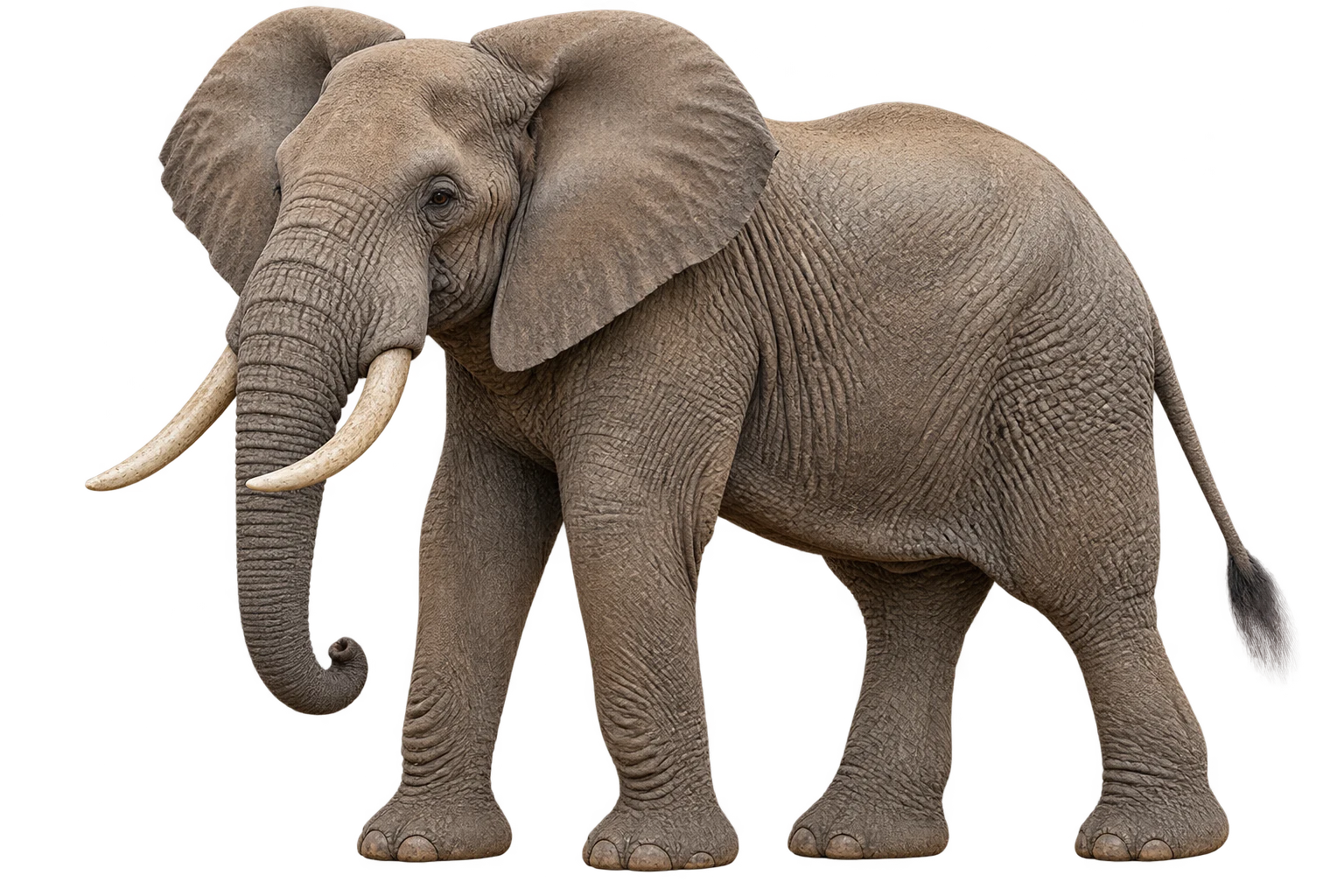
The African bush elephant, Loxodonta africana, is the largest living land animal. A full-grown bull stands 3.04 to 3.36 metres at the shoulder and weighs 5.2 to 6.9 tonnes. The biggest bull ever measured, shot in Angola in 1974, stood 3.96 metres and weighed an estimated 10.4 tonnes. It is known for its trunk with two finger-like tips, its huge ears and its curved tusks. It is also called the African savanna elephant, to set it apart from the smaller forest elephant.
Bush elephants roam the savannas, woodlands, wetlands and even deserts of Africa south of the Sahara. An adult eats about 150 kilograms of plants and drinks up to 230 litres of water a day. Families of related cows and calves follow an old matriarch, while bulls live alone or in loose groups. Pregnancy lasts about 22 months, longer than in any other mammal. The IUCN has listed the species as Endangered since 2021, because ivory poaching and habitat loss cut its numbers by more than half.
Name and taxonomy
The genus name Loxodonta probably refers to the lozenge-shaped ridges on the elephant's molars. The type locality was fixed on the Orange River in South Africa in 1926. During the 19th and 20th centuries, museum curators named many local forms as subspecies. Paul Matschie described two in 1900, and Richard Lydekker named six more in 1907 on the basis of ear size. A North African form was named from Fayum in Egypt in 1948. All those names are now treated as synonyms, and no subspecies are recognised.
For most of the 20th century the bush elephant and the forest elephant counted as one species. Nuclear DNA shows the two lines parted at least 1.9 million years ago, so they are now separate species. The IUCN assessed them separately for the first time in 2021. The bush elephant belongs to the order Proboscidea and the family Elephantidae, which it shares with the Asian elephant. iNaturalist holds 30,254 observations of the species, more than for most large mammals.
Evolution and relatives
African and Asian elephants split about 7.6 million years ago, according to a study of mitochondrial genomes. The woolly mammoth and the American mastodon are extinct cousins on the same family tree. Some authors think L. africana descends from Loxodonta atlantica, an older African elephant. The fossil record of the species is thin. The earliest possible remains come from the Shungura Formation near the Omo River in Ethiopia, dated to about 2.44 to 2.27 million years ago.
Another early record comes from Kanjera in Kenya, around 500,000 years ago. Genetic analysis points to a large expansion of the population between 500,000 and 100,000 years ago. Bush and forest elephants may have exchanged genes after their split, which is why the line between them stays disputed.
Appearance
A bull stands 3.04 to 3.36 metres at the shoulder and weighs 5.2 to 6.9 tonnes. A cow stands 2.47 to 2.73 metres and weighs 2.6 to 3.5 tonnes. Across the species, shoulder height runs from 2.47 to 3.36 metres, with a record of 3.96. The back is markedly concave, and the forehead is bulbous in a bull and more angular in a cow. The skin is grey, thick and creased, with few hairs, and a mud bath leaves it the colour of the local soil.
The ears are pointed and triangular and cover the whole shoulder, growing up to 2 by 1.5 metres. Large blood vessels run close to the surface on the inner side, and flapping the ears sheds heat. The trunk is a fused nose and upper lip, and it ends in two finger-like tips that can pick up small objects. The cracks in the skin hold water and help cool the animal by evaporation. The tail is 100 to 150 centimetres long with a bulb of coarse hair at the end.
Both sexes carry tusks, which are upper incisors that grow for life. They erupt at 1 to 3 years, and bull tusks grow faster than cow tusks. At 60 years a bull's tusks average 109 kilograms and a cow's 17.7 kg. The longest known tusk measured 3.51 metres and weighed 117 kg. Six molars per jaw quarter move forward and wear out one after another, like a conveyor belt. When the sixth molar is gone, the elephant can no longer chew and starves.
Habitat and range
The bush elephant uses almost every habitat in Africa except the driest desert and the deep rainforest. It lives in dry and flooded grassland, woodland, wetland, scrub, mountain forest and farmland, from sea level up to 4,000 metres. In Mali and Namibia small populations live in desert and semi-desert. Human density decides where elephants survive, so they persist mostly in land too poor or too disease-ridden for farming.
The species survives in about 30 countries, between Senegal, Somalia and South Africa. It has gone from Burundi, the Gambia and Mauritania, and it was shot out of Eswatini before being brought back. Botswana holds more than any other country, at about 130,000 animals. East Africa holds roughly 137,000 across six countries, and 80% of those live in Tanzania. Kruger National Park in South Africa holds at least 17,000, and its herds grew by 4.2% a year between 2003 and 2015.
Home ranges are vast: one study recorded ranges of 102 to 5,527 square kilometres over 25 months. GBIF holds records from 50 countries, but that count includes zoos and does not show the native range.
Diet and feeding
The bush elephant is a mixed feeder that eats both grass and browse. One study recorded more than 150 plant species eaten over a year. In grassland, grass can make up over 70% of the diet, while in dense forest the diet is all browse. On the savanna the herds switch to grass in the rains and back to leaves, bark and roots in the dry season. An adult eats about 150 kilograms of plants a day and spends over 17 hours a day feeding.
The trunk pulls up grass, strips leaves and lifts food to the mouth. The tusks break branches, peel bark and dig for roots. An elephant will push over a whole tree to reach its crown or its roots, and this habit can turn woodland into grassland.
Elephants drink 180 to 230 litres of water a day. The trunk draws up about 3 litres at a time and sprays it into the mouth. They seek out salt: mineral licks, termite mounds, waterholes rich in sodium and even wood ash in Kruger and by Lake Kariba. Fruit passes through the gut, so elephants plant seeds wherever they leave dung.
Behaviour and social life
The heart of elephant society is the family unit: several adult cows, their daughters and their young sons. The oldest cow, the matriarch, leads the family and often a wider kinship group of two or more families with close ties. Groups share the work of finding food and water, defending calves and raising them, a habit called allomothering. Herds swell in the wet season and in open country, and shrink in the dry season.
Young bulls drift away from the family between 10 and 19 years of age. They wander alone for a while or join small groups of other bulls. A 2020 study found that old bulls guide these groups and matter for their survival, which raises concern about trophy hunting. When orphaned young bulls grew up without elders in two South African parks, they killed 63 rhinoceroses in the 1990s. The killing stopped when older bulls were brought in, because elders suppress the musth of younger males.
Elephants are active for most of the 24 hours and sleep only about 4 hours in total. They walk at about 6 kilometres per hour and can run at up to 24 km/h. A herd may move only 1.5 kilometres a day when food is close, or up to 40 km when it is scarce. They bathe in water and coat themselves in mud and dust, which keeps the skin moist and holds off parasites. Elephants show grief, play, tool use, mimicry and cooperation, and they seem to understand human pointing.
Communication and senses
Elephants talk mostly in rumbles, and most of the rumble lies below what a human ear can hear. These infrasonic calls, at around 20 hertz, travel long distances and carry news of mates and rivals. Other elephants can hear such a call from more than 2 kilometres away. Audible growls serve as greetings, and a growl can build into a roar as a threat. A trumpet, blown through the trunk, means excitement, distress or anger. Calves squeal when frightened and gurgle in play, while adults scream to intimidate.
Touch matters as much as sound. A lower ranking elephant greets a superior by placing the tip of its trunk in the other's mouth. Mothers reassure calves with touches and foot rubs, and slap them to discipline. Courting pairs twine their trunks, and fighting bulls wrestle with them. Bulls in musth mark trees with their tusks and leave trails of strong-smelling urine, which cows follow by scent.
Reproduction and life cycle
Cows first ovulate at about 11 years and come into heat for 2 to 6 days every 14 to 16 weeks. Bulls can produce sperm from about 15, but they rarely breed until their first musth at 25 or 30. Musth is a period of high testosterone: the temporal glands swell and stream, urine dribbles, and the bull turns aggressive. Young bulls have short bouts of a few days, while old bulls stay in musth for 2 to 5 months a year. Cows prefer bulls in musth, and most mating happens in and just after the rains.
A bull in musth walks long distances after the low calls of cows and joins large family groups. A cow may run from bulls she does not want, and once she chooses, the favoured bull chases the others off. Gestation lasts about 22 months. One calf is usual, and twins are rare. In Hwange National Park a cow calves every 3.9 to 4.7 years, and in Amboseli once in 5 years on average.
A newborn weighs 90 to 120 kilograms, stands within 30 minutes and walks 20 minutes later. It drinks only milk for its first three months, then starts to feed itself, though suckling can go on for up to three years. Cows lactate for about 4.8 years, and the whole herd helps teach the calf to use its trunk. A calf is fully independent at about 8 years. Wild elephants live 60 to 70 years, and the captive record is 65. The maximum lifespan is put at 70 to 75 years, when the last molars wear out.
Predators and threats
An adult elephant has no natural predator, and a herd mobs any lion that comes near. Lions and spotted hyenas take calves under two years, usually ones that lag behind at night. In Chobe National Park in Botswana, lions killed 74 elephants between 1993 and 1996, and 26 of them were older than nine. Those hunts succeeded after dark, when the pride had more than 27 lions and the herd fewer than 5 elephants.
Disease kills more. Anthrax strikes at the end of the dry season, and a 2019 outbreak in Botswana killed more than 100 animals. In 2020 more than 400 died in the Okavango Delta after drinking from shrinking waterholes full of toxic cyanobacteria.
The largest threats are people. Farms, plantations, roads and towns break the range into pieces, and the elephants raid crops in return. Poachers kill bulls for their tusks, which skews the sex ratio and removes the elders herds depend on. Rangers in 29 countries reported 14,606 elephants poached between 2003 and 2015. In Chad's Zakouma National Park, more than 3,200 of 3,900 elephants died in five years after 2005. Heavy poaching selects for tuskless cows, as seen in Gorongosa in Mozambique after the civil war.
Population and conservation
The IUCN Red List has rated the African bush elephant Endangered since 2021. The reason is a fall of more than 50% over three generations, or about 75 years. The 2016 census put the combined African elephant population at about 415,000. Only 30% of that area is protected, and more than half the range lies outside parks.
About 42% of all African elephants, some 293,447, live in nine southern African countries. Botswana's 131,626 is the largest national herd, and South Africa rates its own elephants Least Concern. East Africa lost 62% of its elephants to poaching between 2006 and 2013, and Somalia lost them all. Ethiopia fell from 6,000 to 10,000 in the 1970s to about 1,900 to 2,151 in 2015. The IUCN lists the species as extinct in Burundi, the Gambia and Mauritania.
Both African elephants have sat on CITES Appendix I since 1989, which bans international trade in ivory. Botswana, Namibia and Zimbabwe moved to Appendix II in 1997, and South Africa in 2000. The African Elephant Database, started in 1986, pools aerial surveys, dung counts and poaching data. Community programmes have eased conflict, and playing recorded bee sounds drives elephants away from villages. Where herds grow too large, as in Kruger, managers now use contraception and relocation rather than culling.
Relationship with humans
Ivory has drawn people to elephants for thousands of years, and the tusks remain the most valued part of the animal. Ivory went into billiard balls, dice, piano keys, stamps and carvings. The trade was banned in 1989, but the illegal trade doubled between 2007 and 2014. In June 2002 a container seized in Singapore held more than 6.5 tonnes of ivory, including 42,120 stamp blanks and 532 tusks.
Elephants raid crops, and a raiding elephant that is chased may turn and kill the farmer. Villagers often kill elephants that enter fields, so conflict adds to the losses from poaching. Poachers sometimes poison carcasses to kill the vultures that would give them away. In June 2019 in Botswana, 537 vultures and two eagles died on three poisoned elephant carcasses.
Trophy hunting is legal in several southern African countries and brings in money, but it removes the old bulls herds rely on. Elephants are the biggest draw for safari tourism in East and southern Africa. In zoos, cows are kept in groups and bulls apart, because bulls are costly and dangerous to house. It appears the African elephant has never been domesticated on any scale, unlike its Asian cousin.
In culture and myth
People painted elephants on rock long before they wrote. A carving at Tadrart Acacus in Libya dates from 12,000 to 8000 BC and shows the animal with striking realism. San painters left a white elephant in Phillip's Cave in Namibia and many elephant images in the Cederberg of South Africa.
In Maasai tradition the elephant is Arkanjowe, a great and powerful being, and is regarded as close to human. A Maasai legend says the first elephant was a bride who turned back on the way to her husband's home. Southern and East African tales explain the trunk as a nose stretched at a riverbank, usually by a crocodile. Across Africa, royal emblems, totems, proverbs and masks use the elephant to mean power, memory and leadership.
Some famous beliefs are false. Elephants are not afraid of mice, and they have no special love of peanuts. They do not drink through the trunk like a straw, but suck water part way up and squirt it into the mouth. The saying that an elephant never forgets probably grew from the matriarch's long memory of water sources in drought.
A sentence with a dotted underline is inferred: it describes the group the animal belongs to, or is a reading of the sources, rather than a measured or reported fact about this species.
Questions
African bush elephant questions, answered
How big is an African bush elephant?
Shoulder height runs from 2.47 metres in a small cow to 3.36 metres in a big bull. Bulls weigh 5.2 to 6.9 tonnes and cows 2.6 to 3.5 tonnes. The largest bull on record stood 3.96 metres and weighed about 10.4 tonnes.
Is the African bush elephant the largest land animal?
Yes. It is the largest and heaviest animal that lives on land. The African forest elephant and the Asian elephant are both smaller.
What do African elephants eat?
Grass, leaves, bark, roots, fruit and seeds, about 150 kilograms a day. They eat mostly grass in the rains and switch to leaves and bark in the dry season. They also drink 180 to 230 litres of water a day.
Are African elephants endangered?
Yes. The IUCN has listed the African bush elephant as Endangered since 2021, after numbers fell by more than half over three generations. The 2016 count put all African elephants at about 415,000.
Where do African bush elephants live?
Across Africa south of the Sahara, in about 30 countries from Senegal to Somalia and south to South Africa. Botswana holds about 130,000, the most of any country. They live in savanna, woodland, wetland and even desert.
How long do elephants live?
Wild African elephants live 60 to 70 years, and the maximum is 70 to 75. The captive record is 65 years. Death often comes when the last set of molars wears out.
How long is an elephant pregnant?
About 22 months, the longest pregnancy of any mammal. A cow has one calf at a time and gives birth about every four years.
Do elephants really never forget?
Elephants have excellent memories, and an old matriarch remembers water sources across decades of drought. The saying is a simplification, but it rests on real ability.
Are elephants afraid of mice?
No. The idea is a myth. Elephants may startle at any sudden movement, but they have no special fear of mice.
How do elephants communicate?
Mostly by rumbles, many of them below the range of human hearing, which other elephants can hear from over 2 kilometres away. They also trumpet, growl, roar and scream, and they touch each other with their trunks.
What is musth?
Musth is a period when a bull's testosterone rises sharply. His temporal glands swell and stream, he dribbles urine and he becomes aggressive. Old bulls stay in musth for 2 to 5 months a year, and cows prefer to mate with them.
Do female elephants have tusks?
Yes. Both sexes have tusks, but a bull's are much larger, about 109 kilograms against 17.7 kg at 60 years of age. Heavy poaching has made tuskless cows more common in some parks.
Are elephants dangerous to humans?
Yes. An elephant chased from a crop field can turn and kill people, and bulls in musth are aggressive. Most herds avoid people where they can.
How fast can an elephant run?
An elephant walks at about 6 kilometres per hour and can run at up to 24 km/h. A herd may walk up to 40 km in a day when food is scarce.
What is the difference between African and Asian elephants?
The African bush elephant is larger, with bigger ears, a concave back and tusks in both sexes. The two lines split about 7.6 million years ago. Asian elephants have been tamed for work, while African elephants have not.
Why are elephants poached?
For their ivory tusks, which are carved into ornaments and stamps and sell for high prices in Asia. Rangers reported 14,606 elephants poached between 2003 and 2015, and the illegal trade doubled between 2007 and 2014.
Food web
Prey and food
- grass
- leaves
- bark
- fruit
Food web
Predators
 Lion
- hyenas
Ecological equivalents
Related species on this site
African Elephant (same genus), African Forest Elephant (same genus), Asian Elephant (same family), Elephant (same family), Indian Elephant (same family), Sri Lankan Elephant (same family), and more.
Mammals
African Elephant
Loxodonta africana
Classification and source reference
LivingAI illustration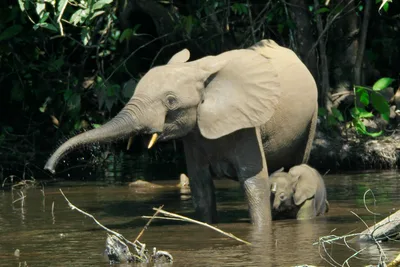
Mammals
African Forest Elephant
Loxodonta cyclotis
The African forest elephant moves through the rainforests of western and central Africa.
Living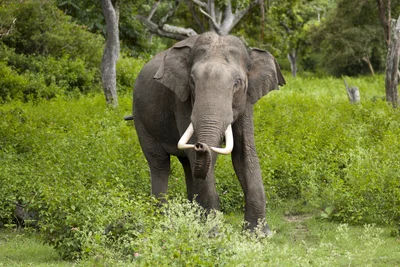
Mammals
Asian Elephant
Elephas maximus
The Asian elephant is a large herbivore native to southern and southeastern Asia.
Living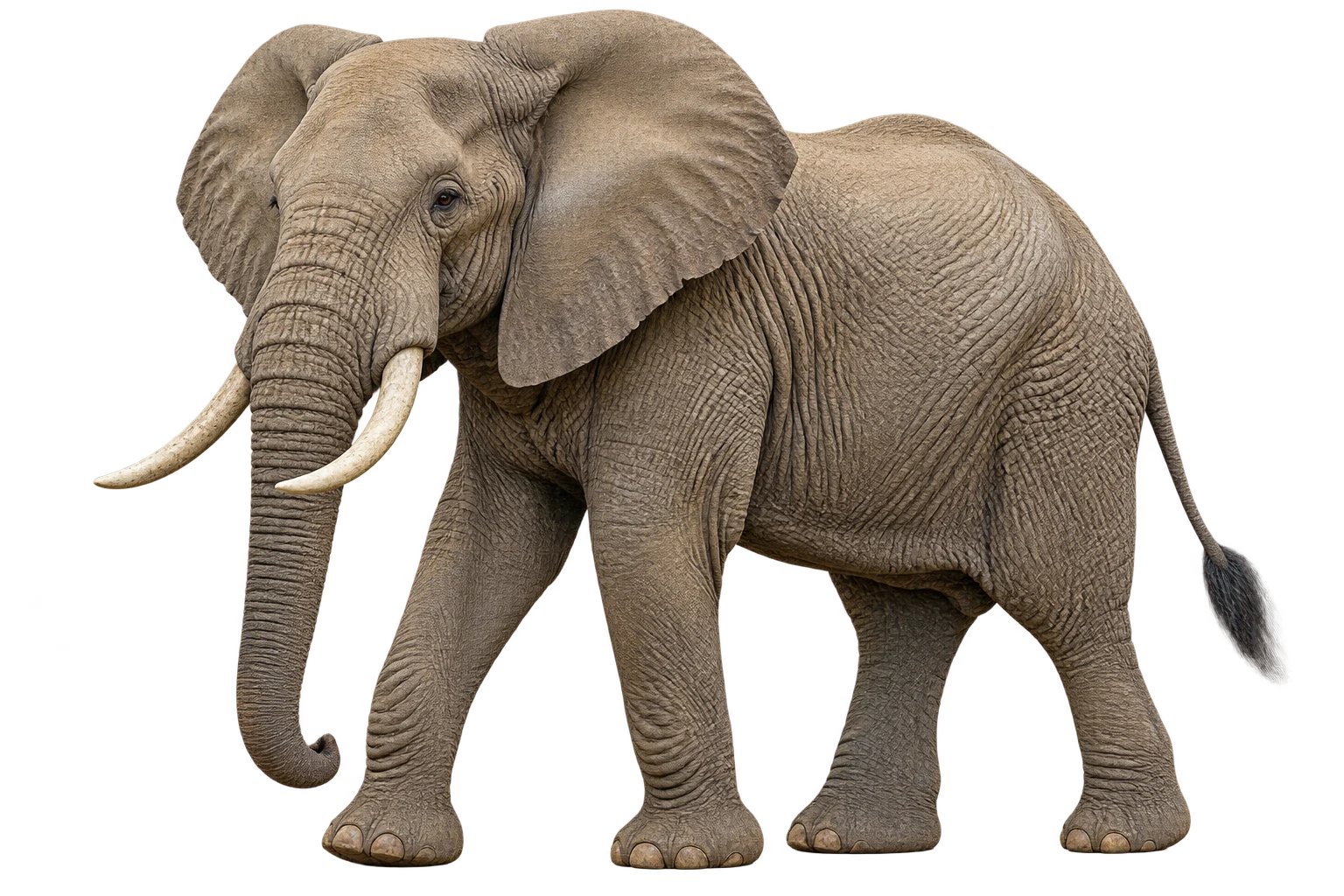
Mammals
Elephant
Elephantidae
Classification and source reference
LivingAI illustration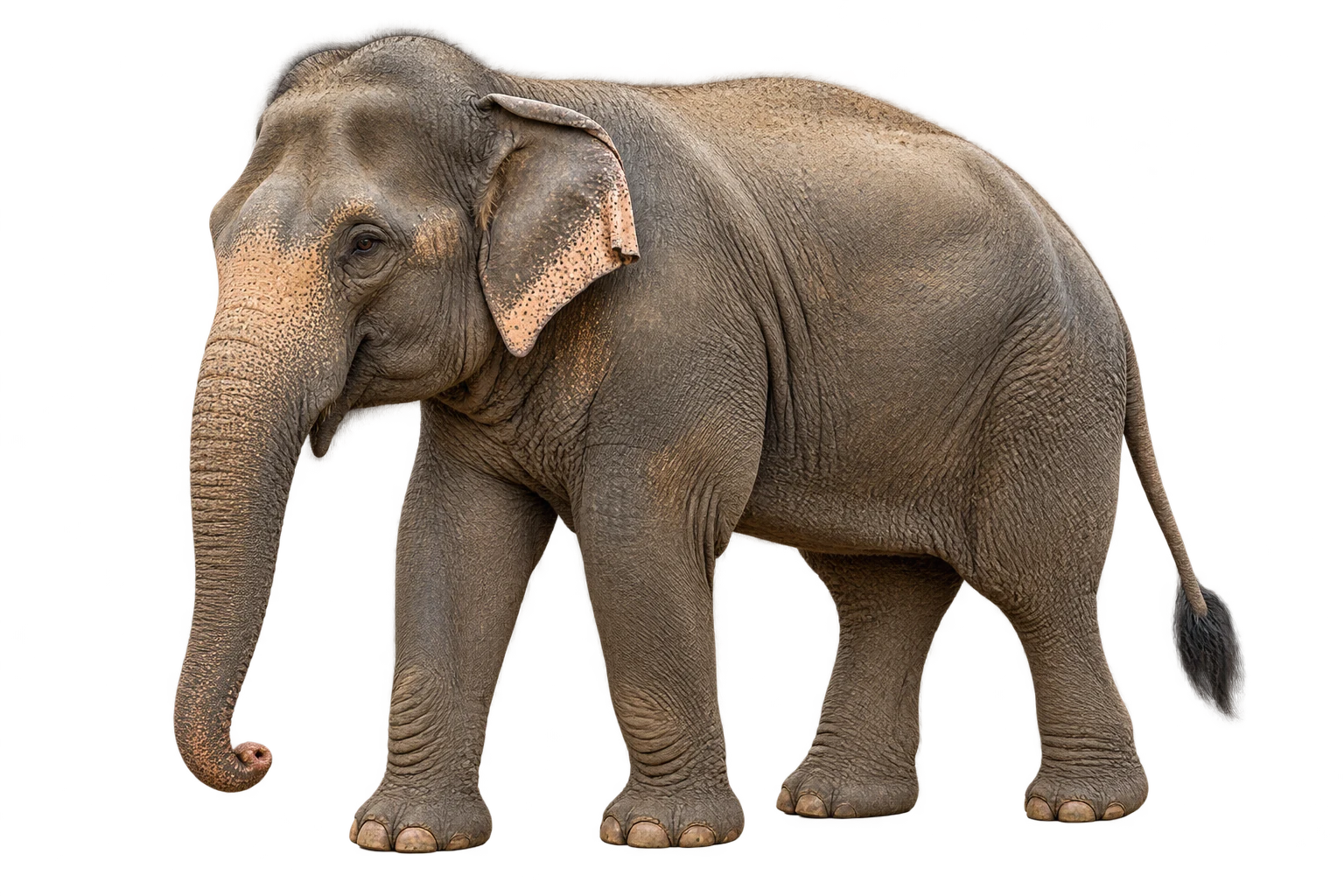
Mammals
Indian Elephant
Elephas maximus indicus
Classification and source reference
LivingAI illustration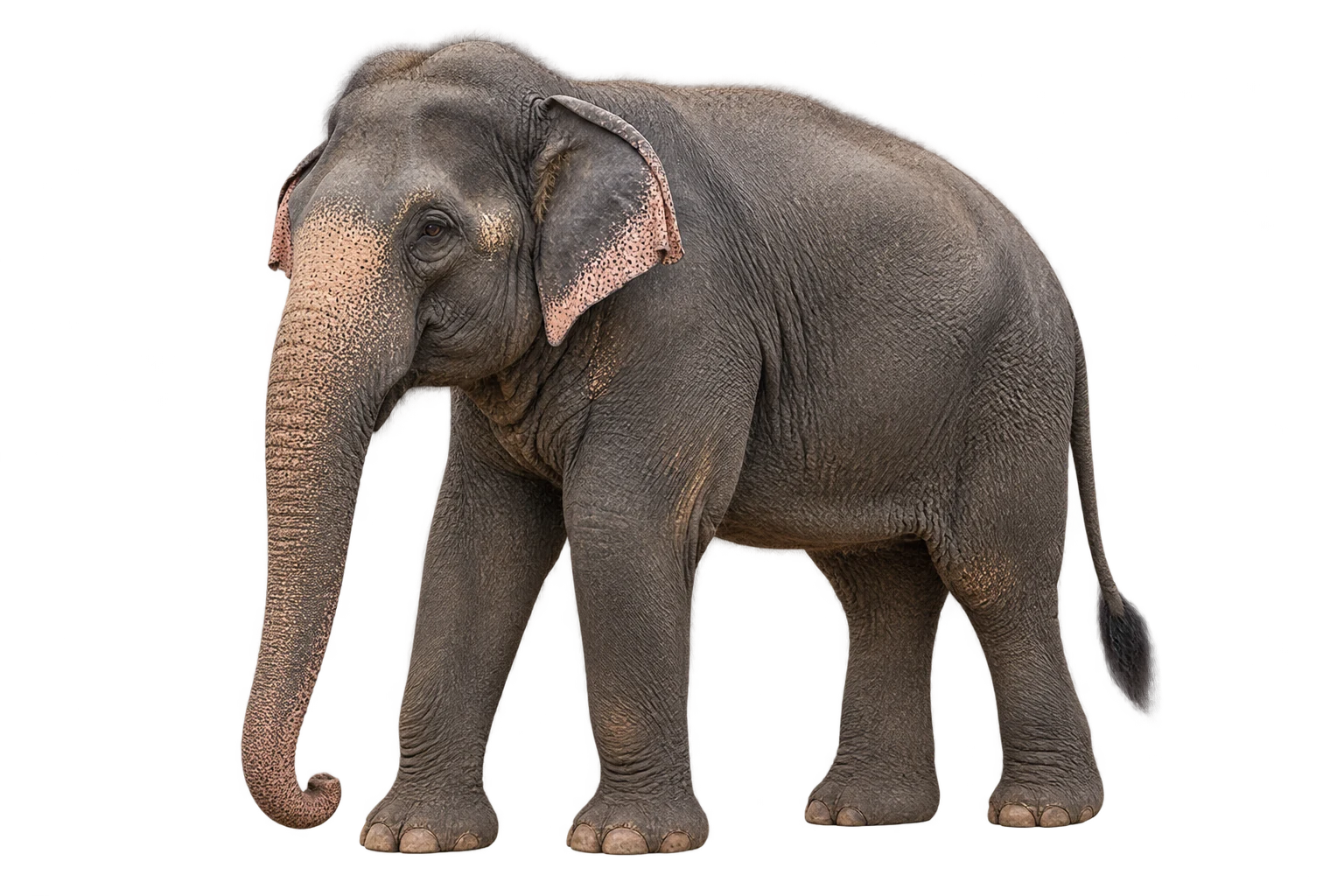
Mammals
Sri Lankan Elephant
Elephas maximus maximus
Classification and source reference
LivingAI illustration