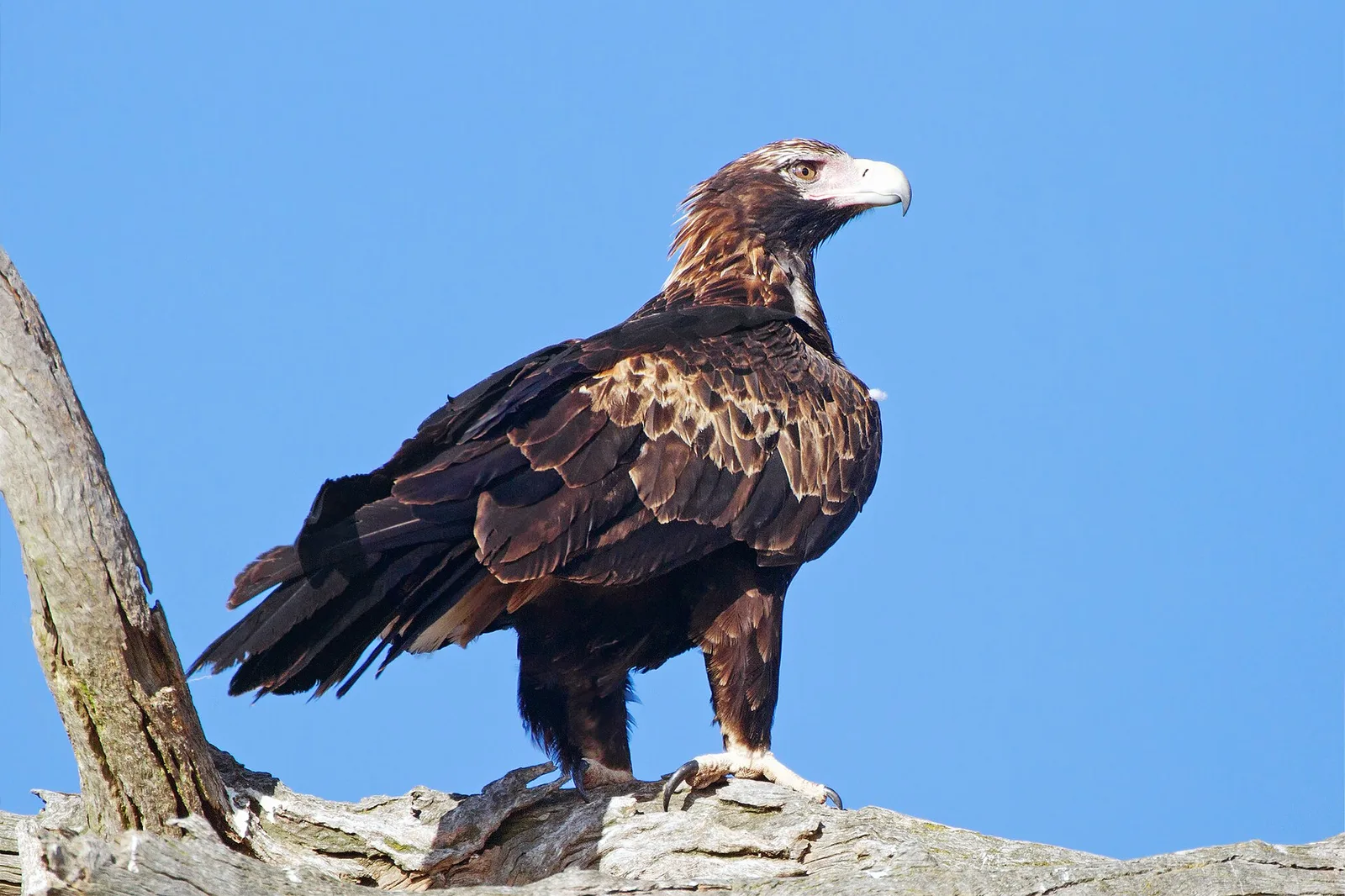
Wedge-tailed eagle
Australia's largest raptor, named for its diamond tail
Aquila audax
Also called Eaglehawk, Waalitj, Wildu, Aigle d'Australie
Living individuals or members of this group exist today. This does not mean they are safe from extinction.
Meet the wedge-tailed eagle
The wedge-tailed eagle is Australia's largest bird of prey, named for its long diamond-shaped tail. It hunts rabbits and young kangaroos, eats carrion and builds a huge stick nest that it reuses for years.
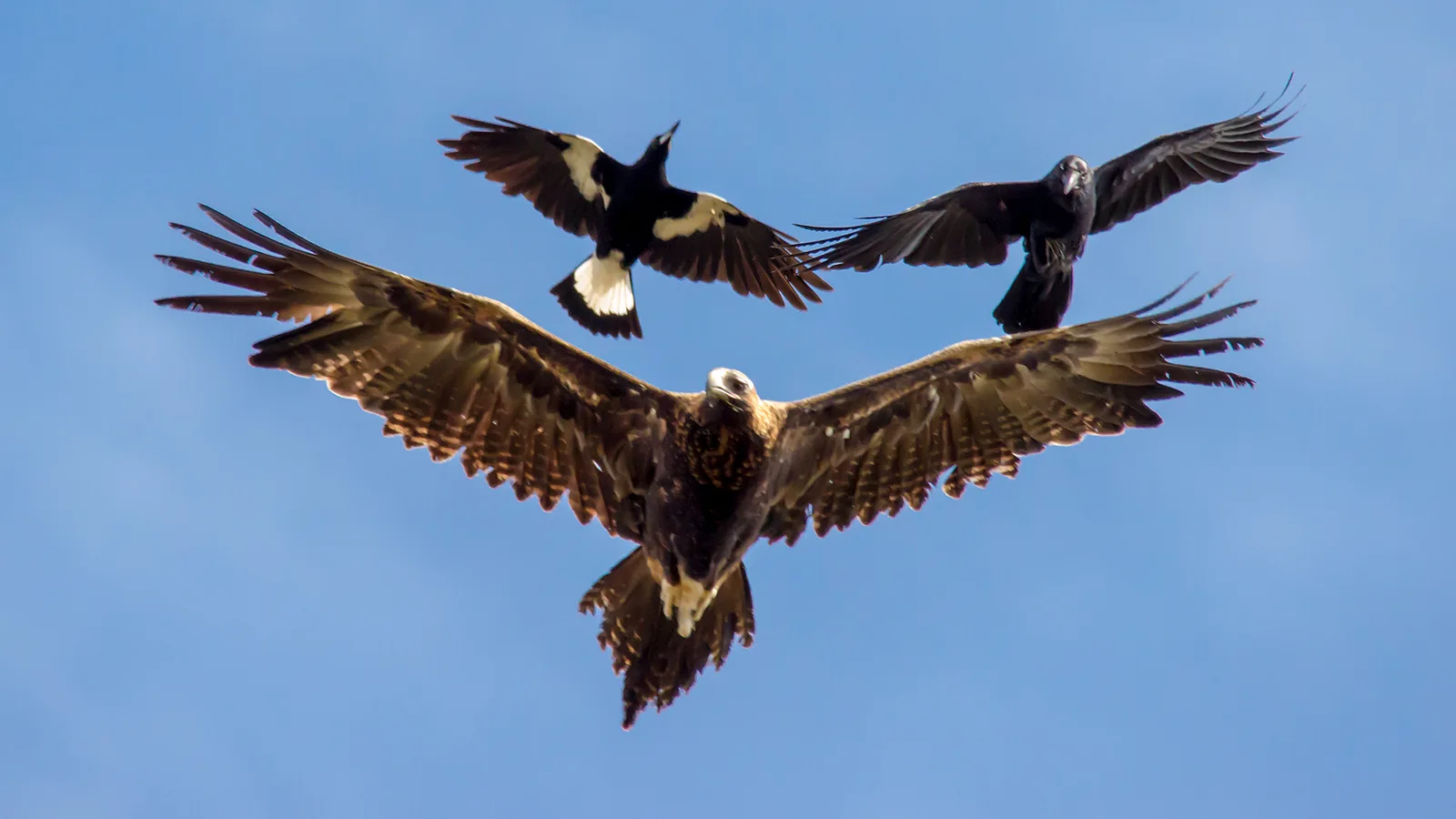
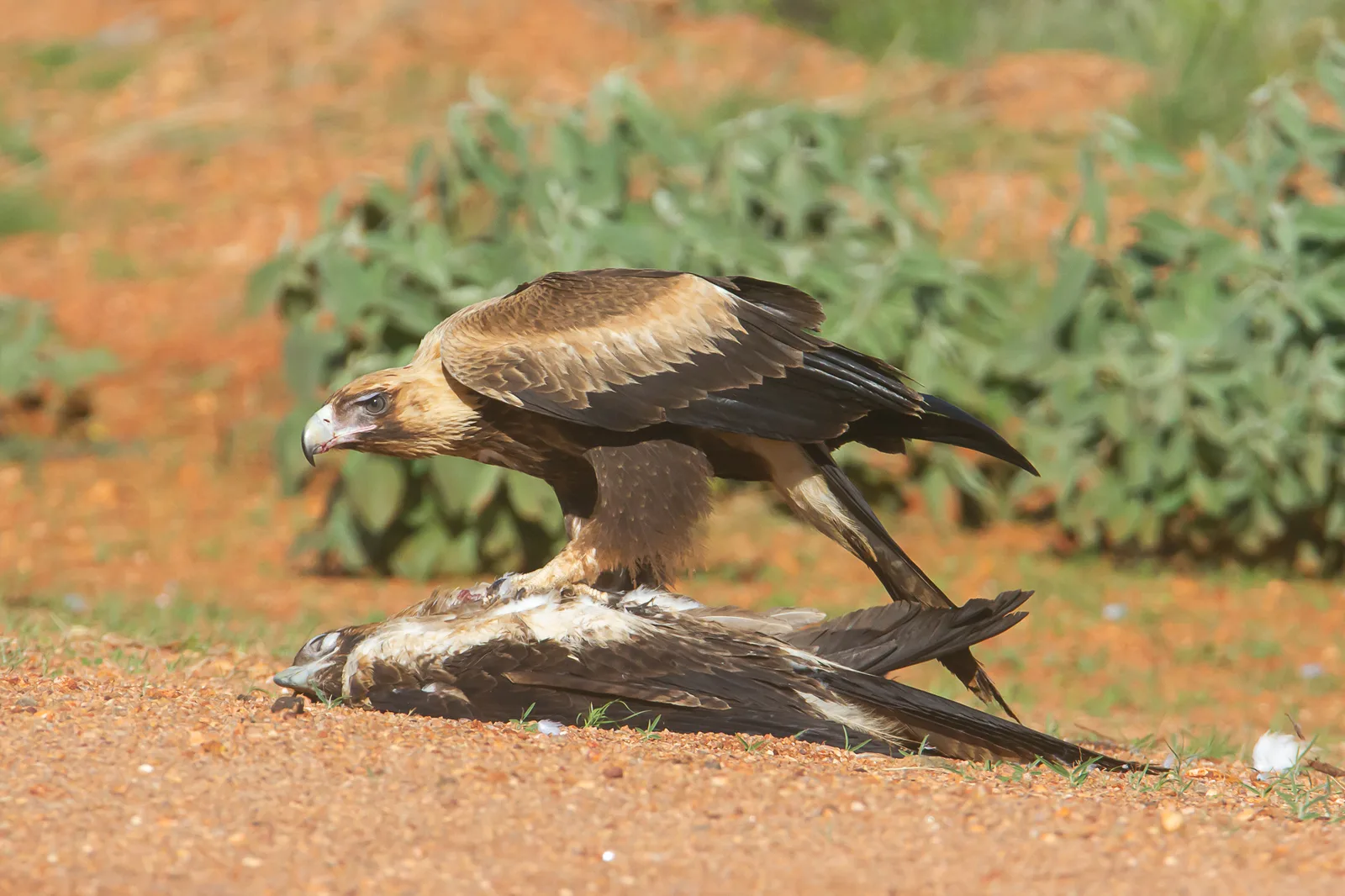
Images of the wedge-tailed eagle
Lifespan in the wild
About 5.9 years an average from banding records; the oldest banded wild bird was about 11 years
Weight
2 to 5.8 kg
Length
0.81 to 1.06 m
Wingspan
1.82 to 2.32 m
Fact file
Wedge-tailed eagle
- Location
- All of Australia and Tasmania, plus southern New Guinea
- Habitat
- Temperate forest, Desert, Grassland, Mountains
- Diet
- Carnivore
- Prey / food
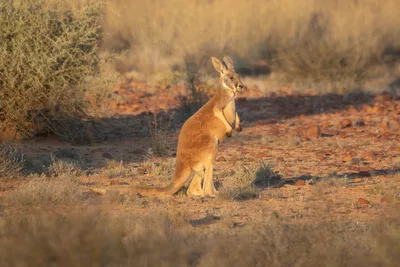
- Rabbits, hares, kangaroos, wallabies, possums, ravens, magpies, bearded dragons
- Predators
- None as an adult; goannas take eggs and small chicks
- Lifestyle
- Soars by day; adults sedentary, young birds wander
- Group name
- Pair
- Name of young
- Eaglet
- Incubation
- 42 to 48 days of incubation
- Clutch size
- 1 to 3 eggs, usually 2
- Population
- About 100,000 mature birds, possibly increasing
- Biggest threat
- Loss of nest trees and disturbance at the nest
- Distinctive feature
- Long diamond-shaped tail and legs feathered to the toes
- Colour
- Dark brown to black, with a paler nape
- Skin type
- Feathers
Size
Next to a person
Measurements
Size and speed
- Length
- 0.81 to 1.06 m total length
- Wingspan
- 1.82 to 2.32 m, up to 2.84 m the record span belonged to a Tasmanian female killed in 1931
- Weight
- 2 to 5.8 kg males 2 to 4 kilograms, females 3 to 5.8
- Weight, male
- 2 to 4 kg
- Weight, female
- 3 to 5.8 kg
Typical adult ranges. Source: Wikipedia.
Life cycle
Lifespan
- In the wildAbout 5.9, up to 11 years an average from banding records; the oldest banded wild bird was about 11 years
- In captivityUp to 40 years
- 040 years
The pale bar is the record. Sources: Animal Diversity Web, AnAge.
Appearance
Colour and coat
- Primary colours
- blackbrown
- Secondary colours
- buffrufous
- Skin type
- feathers
- Male and female
- Strong. Females weigh 3 to 5.8 kilograms and males 2 to 4 kg, and the female is also longer winged. The plumage of the two sexes is the same.
Life cycle
Mating and family
- Mating system
- monogamous pairs, probably for life
- Social structure
- solitary pairs in large territories
- Breeding
- one clutch a year, and none at all in drought
A pair holds a territory and builds a stick nest in the largest tree it can find. The female lays one to three eggs, usually two, and incubates them for 42 to 48 days. The first chick hatches ahead of the second and often kills it when food is short. Young birds fledge at 75 to 95 days and stay with their parents for another three to six months. They wander widely and do not usually breed until six years old.
Classification
Taxonomy
- Kingdom
- Animalia
- Phylum
- Chordata
- Class
- Aves
- Order
- Accipitriformes
- Family
- Accipitridae
- Genus
- Aquila
- Species
- Aquila audax
Conservation
Red List status
- LC
- NT
- VU
- EN
- CR
- EW
- EX
Least Concern on the IUCN Red List
Range
Recorded in 1 country
Habitat layer: temperate broadleaf and mixed forest, temperate conifer forest, boreal forest and taiga, tropical grassland, savanna and shrubland, temperate grassland, savanna and shrubland, montane grassland and shrubland, desert and xeric shrubland.
Countries from 8,873 wild records on GBIF (iNaturalist research grade), filtered and checked by hand. Country shapes: Natural Earth. Habitat: RESOLVE Ecoregions 2017, CC BY 4.0. Basemap: Natural Earth.
Habitats
Three things to know
- 1
The record wingspan for the species is 284 centimetres.
- 2
Groups of these eagles hunt together and can kill an adult kangaroo.
- 3
Bounty hunters killed tens of thousands a year before the bird was protected.
Did you know
Seven more facts
- 1
Its eye is about the size of a small human eye and sees roughly three times as sharply.
- 2
A full eagle can go for weeks without another meal.
- 3
Bounty hunters were paid for 120,000 eagles in two states between 1958 and 1967.
- 4
Pilots of gliders report the eagle circling three kilometres above the ground.
- 5
One young eagle travelled over 850 kilometres before settling.
- 6
About 80 percent of clutches hold two eggs, but usually only one chick survives.
- 7
The Royal Australian Air Force named an aircraft the Wedgetail after the bird.
Field notes
How it looks and acts
Field notes
Distinguishing features
- The long tail is diamond-shaped and unlike any other Australian raptor's.
- The legs are feathered all the way down to the toes.
- Adults are dark brown to black with a paler nape.
- The wings span 182 to 232 centimetres in a typical adult.
- The upper mandible is unusually long for an eagle.
- Young birds are mid-brown with a reddish head.
Field notes
Unique adaptations
- Long broad wings let the bird soar for hours without a wingbeat.
- Sight into the ultraviolet helps it find prey from a great height.
- A huge crop lets it swallow 1 to 1.5 kilograms at one meal.
- Heavy feet and a strong beak handle prey many times its own weight.
- Tolerance of carrion carries the bird through seasons when hunting fails.
Field notes
Interesting behaviours
- Pairs hunt in tandem, one driving prey towards the other.
- Birds follow wildfires and tractors to catch fleeing animals.
- Eagles cover heavy carcasses with vegetation and return to them.
- Young birds gather at a carcass, sometimes 40 at once.
- Territory holders circle high and roll to show their talons at intruders.
Field notes
Temperament
- The eagle is bold with prey and wary with people.
- It deserts its nest readily when a person comes close.
- It usually ignores the smaller birds that mob it.
- It defends the airspace over the nest against anything that flies through.
Field notes
Communication
- The main call is a high thin whistle with a short falling note after it.
- Birds may stay silent for months outside the breeding season.
- Yelps and squeals are added near the nest and during display.
- A soaring flight advertises ownership of a territory.
- Female calls are lower and harsher than male calls.
Ecology
Ecological role
The wedge-tailed eagle is Australia's top avian predator and one of its most effective scavengers.
- It kills large numbers of introduced rabbits and hares.
- It takes young, small and sick macropods, which shapes kangaroo populations.
- It clears roadkill and other carrion from the landscape.
- It probably suppresses smaller raptors and ravens by holding large territories.
Stories
Myths and legends
- In Kulin tradition the creator Bunjil is a wedge-tailed eagle.
- In Kulin story Bunjil rose to the sky and became the star Altair.
- In Kulin kinship Bunjil the eagle and Waang the crow head the two moieties.
- In Noongar and other Aboriginal languages the bird carries names such as Waalitj and Wildu.
- In Australian military tradition an eagle called Courage serves as a regimental mascot.
People
Relationship with humans
People
Living alongside us
Australian sheep farmers persecuted this eagle for a century, believing it killed lambs. Bounty schemes paid for tens of thousands of birds a year. Studies later showed the eagle takes lambs that are already sick or dying. The species is now protected across Australia and has recovered well. The Tasmanian race is still endangered, mainly because logging removes its nest trees.
- The eagle attacks hang gliders and drones over its territory, but not the pilot.
- A bird defending a nest may swoop repeatedly at a person on foot.
- Its feet can hold prey of 5 kilograms, so a handled bird may injure a person.
People
Status, uses and products
- Domestication
- Wild
- As a pet
- Not suitable. No. The wedge-tailed eagle is protected by law across Australia, and it is illegal to take or keep one. It needs a large territory, several kilograms of meat a week and space to soar.
- Uses
- national and state emblemswildlife tourism
- Products
- None recorded
The full account
About the wedge-tailed eagle
No Australian bird of prey is larger than the wedge-tailed eagle. It also lives in Tasmania and in a small part of southern New Guinea. Adults span 182 to 232 centimetres across the wings, and the widest bird measured 284 cm. The long tail is shaped like a wedge, and no other Australian raptor carries one like it.
The species hunts rabbits, young kangaroos, lizards and birds, and it eats a great deal of carrion. It nests in the tallest tree of a stand and adds to the nest year after year. Farmers once shot and poisoned it in enormous numbers, wrongly blaming it for killing lambs. The bird recovered, and it may now be more common than it was before Europeans arrived.
Name and taxonomy
The English ornithologist John Latham described the species in 1801 as Vultur audax. The Latin word audax means bold, which suited the bird's reputation as a hunter. In fact the eagle is wary of people and often timid near them. It was once placed in a genus of its own, Uroaetus, because of its odd shape.
Two subspecies are recognised, though some researchers doubt the split. The Tasmanian race, named for the naturalist David Fleay in 1954, is larger and deep chocolate brown. Genetic work shows no gene flow between Tasmanian and mainland birds. Aboriginal names for the bird include Waalitj, Wildu, Mibayn and Garriirl.
Evolution and relatives
The wedge-tailed eagle is one of 12 large dark eagles in the genus Aquila. These are the booted eagles, named for the feathers that cover their legs to the toes. Its nearest relative is probably the Gurney's eagle of New Guinea, which looks much like it. Genetic work also puts it close to the Verreaux's eagle of Africa.
Those three sit in a group with the golden eagle, the most widespread eagle of all. The Bonelli's eagle and two African hawk-eagles belong to the same clade. The wedge-tailed eagle faces fewer rivals than any other Aquila, because Australia holds so few large raptors. That freedom probably explains why it uses more habitats than any relative.
Appearance
An adult is dark brown to almost black, with a paler nape and fully feathered legs. The upper mandible is long, and the beak and feet are heavy. Total length runs from 81 to 106 centimetres, and the wings span 182 to 232 cm. A female killed in Tasmania in 1931 spanned 284 centimetres, the record for the species. Claims of much wider birds were checked and rejected as unreliable.
Females weigh 3 to 5.8 kilograms, and the smaller males weigh 2 to 4 kg. One sample from the Nullarbor Plain averaged 3.13 kg for males and 3.8 kg for females. The wings, at more than 65 centimetres, and the tail, at up to 45 cm, are long for the body weight. Nine or ten other eagles outweigh this one, despite its great length and span. Young birds are mid-brown with reddish heads and darken to blackish-brown over about ten years.
Habitat and range
The bird lives across the whole of Australia, from Cape York to the southern capes. It reaches Tasmania, many offshore islands, and the Trans-Fly savanna of southern New Guinea. GBIF holds records from 8 countries, and almost all of them come from Australia. It is scarce only in the driest interior, such as the Lake Eyre Basin.
Few raptors use as many habitats as this one. It lives in open woodland, savanna, heath, grassland, semi-desert, subalpine forest and mountain tops. It prefers rough country with rocky ground, some open ground and stands of eucalypts. Dense forest is avoided, and the bird works the glades and the edges instead. It occurs from sea level up to about 2000 metres with no clear preference for height.
Diet and hunting
This is one of the most powerful bird predators in the world. More than 200 prey species have been recorded for it. Across 21 diet studies, mammals made up 61.3 percent of prey items, birds 21.6 percent and reptiles 13.2 percent. By weight, mammals came to almost 90 percent of everything taken. The bird generally ignores birds and reptiles under 100 grams and mammals under 500 g.
The introduced European rabbit is now the staple over most of the country. Rabbits usually make up 30 to 70 percent of the diet and once reached 92 percent at one site. Native prey means marsupials, above all young, small or sick kangaroos and wallabies. Ravens, Australian magpies, wood ducks and galahs are the birds taken most often. Bearded dragons are the favoured reptile and can dominate the diet in arid country.
The eagle snatches prey from the ground after a glide, a low quartering flight or a slanting stoop. It may spot an animal from more than a kilometre away. Pairs and groups hunt together, and one bird drives prey towards another that waits unseen. One record describes 15 eagles working a mob of kangaroos in relays. A bird can carry prey of at least 5 kilograms.
Carrion matters as much as hunting, and young eagles take most of it. The birds watch ravens gather at a carcass and glide down to take it over. An eagle can swallow 1 to 1.5 kg at one sitting and then go for weeks without another meal. Heavy carcasses are sometimes covered with vegetation and left for later.
Behaviour and social life
Adults perch for much of the day on a tree, a rock or a termite mound with a wide view. Outside the breeding season they spend hours in the air. They soar without a wingbeat, often at 1800 metres and sometimes far higher. Glider pilots have met wedge-tailed eagles above 3000 metres. Adults are sedentary, but a young bird may travel more than 850 kilometres before it settles.
Pairs hold a territory and defend the ground within about 1 kilometre of the nest hardest. Disputes usually stay in the air, with high circling, rolls and talons presented. Young birds are more sociable, and up to 40 have gathered at one carcass. Smaller birds mob the eagle noisily, and magpies are among the boldest. The eagle usually ignores them and only sometimes rolls over to show its feet.
This is the one bird with a name for attacking hang gliders and paragliders. It has torn the fabric of a glider with its talons, though it does not hurt the pilot. Eagles have also destroyed survey drones flown over mine sites. Young birds appear to play, fetching thrown sticks and teasing dogs from the air.
Communication and senses
For a bird of this size the voice is weak, and it is seldom heard. A pair may stay silent for months outside the breeding season. The usual call is a high thin whistle, followed by a short falling note. Yelps, squeals and a rolling series are added near the nest and in display. The female's calls are lower and harsher than the male's.
Sight probably does the work that the voice does not. The eye is about as large as a small human eye and sees roughly three times as sharply. Vision reaches into the ultraviolet, and the bird carries one of the largest pectens of any bird. Flight probably carries the message instead, because a soaring eagle is visible to every neighbour.
Reproduction and life cycle
Pairs stay together for years and probably for life. The breeding season runs from July to December over most of the range. In dry years in Western Australia a pair may skip breeding for up to 4 years. Display is modest for an eagle, with mutual soaring, undulating dives and tandem flights. Mating happens on a bare branch near the nest, not in the air.
The nest is a stick platform in the largest tree of a stand, usually 12 to 30 metres up. It starts at 70 to 100 centimetres across and grows with each season. An old nest can reach 2.5 metres across and nearly 4 m deep, and weigh over 400 kilograms. Green leaves are laid in the cup, as other hawks do. A pair often keeps two or three nests in one territory and uses them in turn.
The clutch is one to three eggs, and about 80 percent of clutches hold two. Each egg weighs about 120 to 150 grams and is blotched purple-brown on white or buff. Incubation lasts 42 to 48 days and falls mostly to the female. Because she starts sitting with the first egg, the first chick hatches ahead of the second. In poor years the older chick kills or starves out the younger one.
Chicks hatch in white down and are nearly feathered by 49 days. They fledge at 75 to 95 days and then depend on the adults for another 3 to 6 months. Goannas take most of the eggs and chicks that are lost, because the parents guard the nest poorly. Birds are mature at about three years but usually do not breed until six. The oldest banded wild bird was about 11 years old, and captive eagles reach 40 years.
Predators and threats
An adult wedge-tailed eagle has no natural predator. Goannas are the main nest robber, and they take eggs and small chicks. White-bellied sea eagles fight wedge-tailed eagles at the edges of their ranges. Those fights can turn into talon grappling and cartwheeling in the air.
The threats that matter now come from people and from land use. Clearing of mature trees removes nest sites, and disturbance makes a pair desert its young. Dingo baits and pesticides poison birds that scavenge. Eagles are also killed by power lines, vehicles, fences and wind turbines. The calicivirus crash in rabbit numbers cut the main food supply in some districts.
Population and conservation
The IUCN Red List rates the species Least Concern. BirdLife International put the total at about 100,000 mature birds in 2009 and called the trend possibly increasing. The range covers more than 10.5 million square kilometres, so the true figure is likely in the hundreds of thousands. Rabbits, thinner forest and roadkill have all helped the species since European settlement.
Tasmania is the exception, and its race is listed as endangered by the state. Numbers there fell from about 140 pairs in the 1980s to 60 or 80 pairs by the mid-1990s. Surveys comparing two periods found a decline of around 28 percent. Tasmanian birds nest in old-growth forest and desert the nest readily when disturbed. Forestry there must now leave a nest reserve of at least 10 hectares and keep out of a 500 metre buffer in the breeding season.
Relationship with humans
Sheep farming turned the eagle into a target from the closing decades of the nineteenth century. In 1903 a single Queensland station said it had poisoned 1060 eagles over eight months. Laws passed between 1909 and 1925 obliged landowners to kill the bird as vermin. Between 1958 and 1967, Queensland and Western Australia paid 120,000 bounties, about 13,000 a year. An estimated 30,000 were killed across Australia in 1969 alone.
The charge was largely false, because the eagle takes lambs that are already dying or sick. Legal protection began in Western Australia in the 1950s and spread later to the other states. Killing still happens, and it accounted for 54 percent of recovered dead eagles in the 1980s. The bird is now protected everywhere in Australia and cannot be hunted or harmed. Falconers appear not to keep it, and only licensed centres hold one.
In culture and myth
For the Kulin nation of central Victoria, the creator Bunjil takes the form of a wedge-tailed eagle. Bunjil pairs with Waang the crow, and the two divide the people into moieties. In one story he lifts his spear and halts a flood, once people promise to keep the law. In another, whirlwinds carry him upward, and he turns into the star Altair. A rock art cave near Stawell, in Gariwerd, carries the name Bunjil's Shelter.
The bird is also an emblem of the Northern Territory and of the New South Wales Police Force. The Australian Defence Force uses it on its flag, and the air force uses it on badges. The Royal Australian Air Force named its Boeing E-7 Wedgetail radar aircraft after the eagle. The 2nd Cavalry Regiment keeps a live eagle called Courage as its mascot. One mascot flew off during training in 1997, was charged with being absent without leave and lost his rank.
A sentence with a dotted underline is inferred: it describes the group the animal belongs to, or is a reading of the sources, rather than a measured or reported fact about this species.
Questions
Wedge-tailed eagle questions, answered
How big is a wedge-tailed eagle?
Adults are 81 to 106 centimetres long and span 182 to 232 cm across the wings. Females weigh 3 to 5.8 kilograms and males 2 to 4 kg.
What is the largest wedge-tailed eagle ever recorded?
A female killed in Tasmania in 1931 spanned 284 centimetres. Wider claims were checked and rejected.
What do wedge-tailed eagles eat?
Mostly mammals, and above all introduced rabbits. They also take young kangaroos and wallabies, ravens, magpies, bearded dragons and a great deal of carrion.
Can a wedge-tailed eagle kill a kangaroo?
A group working together can kill an adult kangaroo. A single bird usually takes young, small or sick animals instead.
How much can a wedge-tailed eagle carry?
At least 5 kilograms, which is roughly half its own weight. It covers heavier carcasses with vegetation and comes back to them.
Do wedge-tailed eagles attack people?
Not really. They attack hang gliders, gliders and drones that enter a territory, but they do not injure the pilot.
Where do wedge-tailed eagles live?
All over Australia, including Tasmania, and in the Trans-Fly savanna of southern New Guinea. They use nearly every habitat except dense rainforest and cities.
How high can a wedge-tailed eagle fly?
It soars regularly at about 1800 metres. Glider pilots have met the bird above 3000 metres.
How long do wedge-tailed eagles live?
The oldest banded wild bird was about 11 years old. Captive eagles have reached 40 years.
How many eggs does a wedge-tailed eagle lay?
One to three, and about 80 percent of clutches hold two. Incubation takes 42 to 48 days.
Do wedge-tailed eagles kill lambs?
Very rarely, and studies show they take lambs that are already sick or dying. The old belief cost the species hundreds of thousands of lives.
Are wedge-tailed eagles endangered?
The species is rated Least Concern. The Tasmanian subspecies is listed as endangered by the state, with only 60 to 80 pairs left by the mid-1990s.
How many wedge-tailed eagles are there?
BirdLife International put the total at about 100,000 mature birds. The range is so large that the true number is likely higher.
Why is it called a wedge-tailed eagle?
Its long tail is shaped like a wedge or a diamond. No other Australian bird of prey has one.
What does the wedge-tailed eagle mean in Aboriginal culture?
For the Kulin nation of central Victoria the creator Bunjil takes the form of this eagle. Bunjil and Waang the crow head the two halves of Kulin society.
Food web
Prey and food
- rabbits
- hares
 Red kangaroo
- wallabies
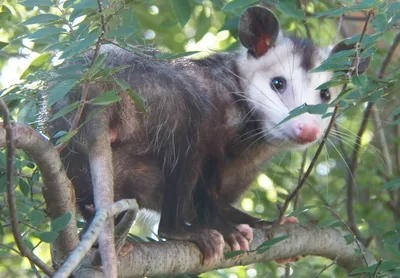 Virginia opossum
- ravens
- magpies
- bearded dragons
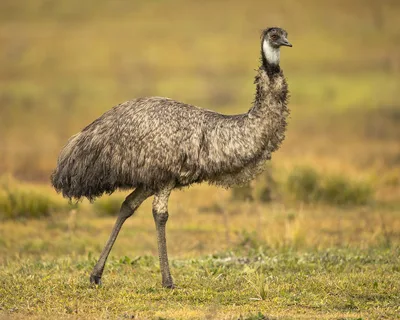 Emu
Food web
Predators
- none as an
- goannas
Ecological equivalents
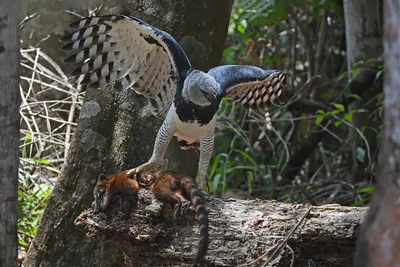
Related species on this site
Golden eagle (same genus), Mexican Eagle (Northern crested caracara) (same genus), African Fish Eagle (same family), Australian Firehawk (same family), Bald eagle (same family), Bearded vulture (same family), and more.
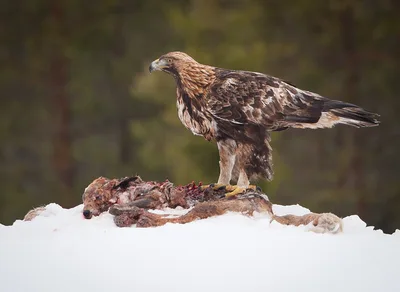 LC
Birds
Golden eagle
Aquila chrysaetos
The golden eagle is a large dark brown raptor of open country across the Northern Hemisphere.
Living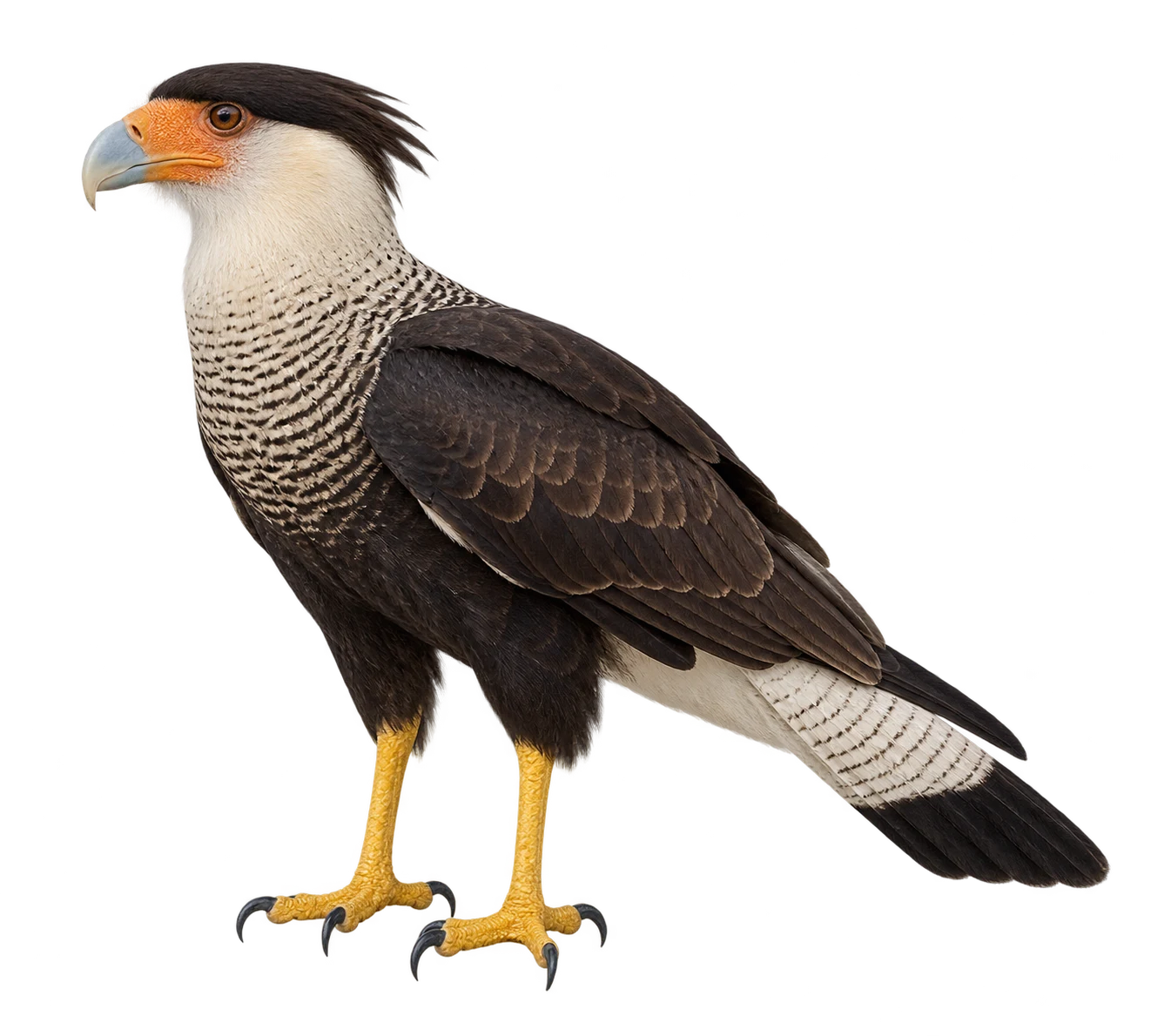
Birds
Mexican Eagle (Northern crested caracara)
Aquila chrysaetos
Classification and source reference
LivingAI illustration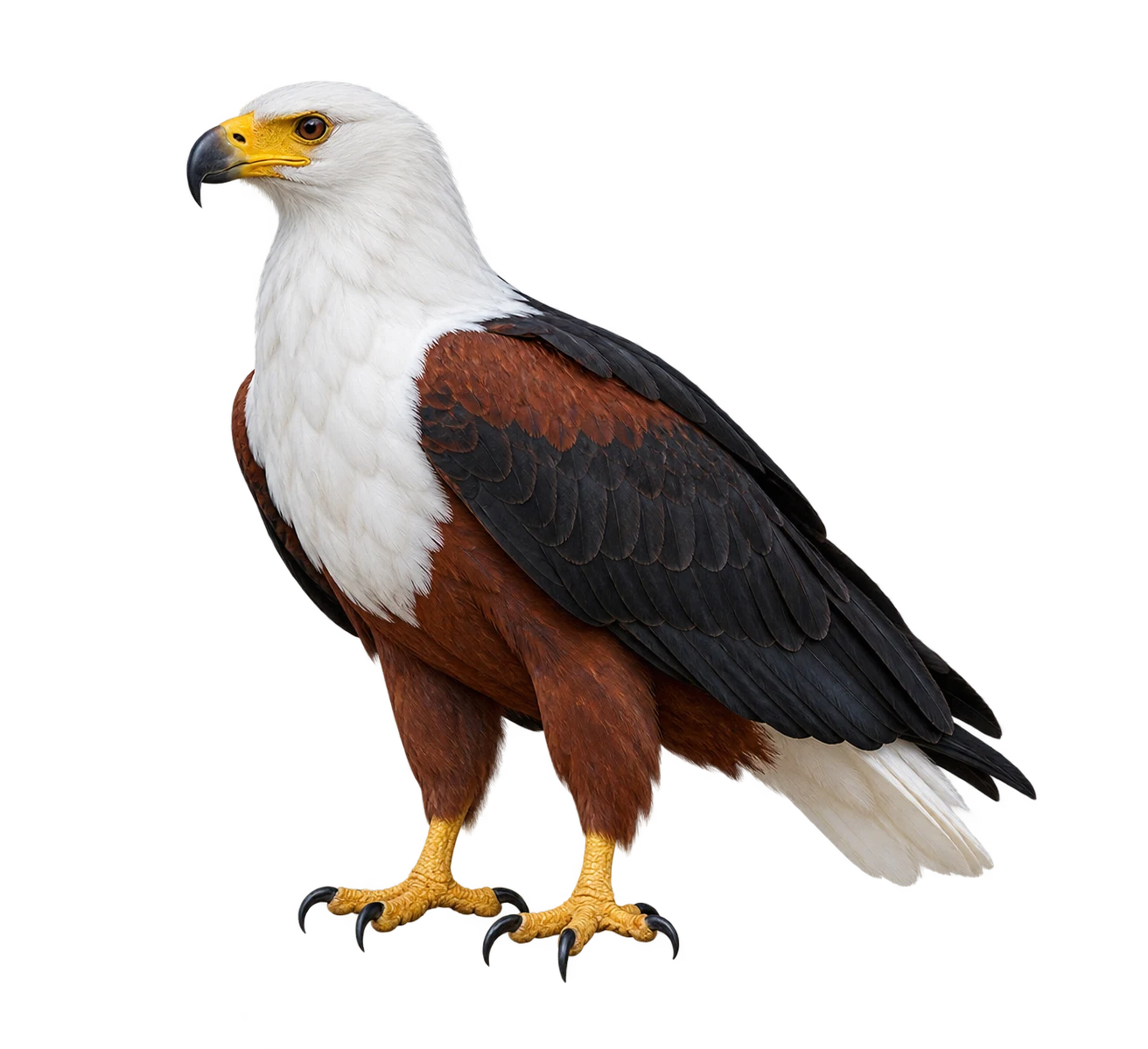
Birds
African Fish Eagle
Haliaeetus vocifer
Classification and source reference
LivingAI illustration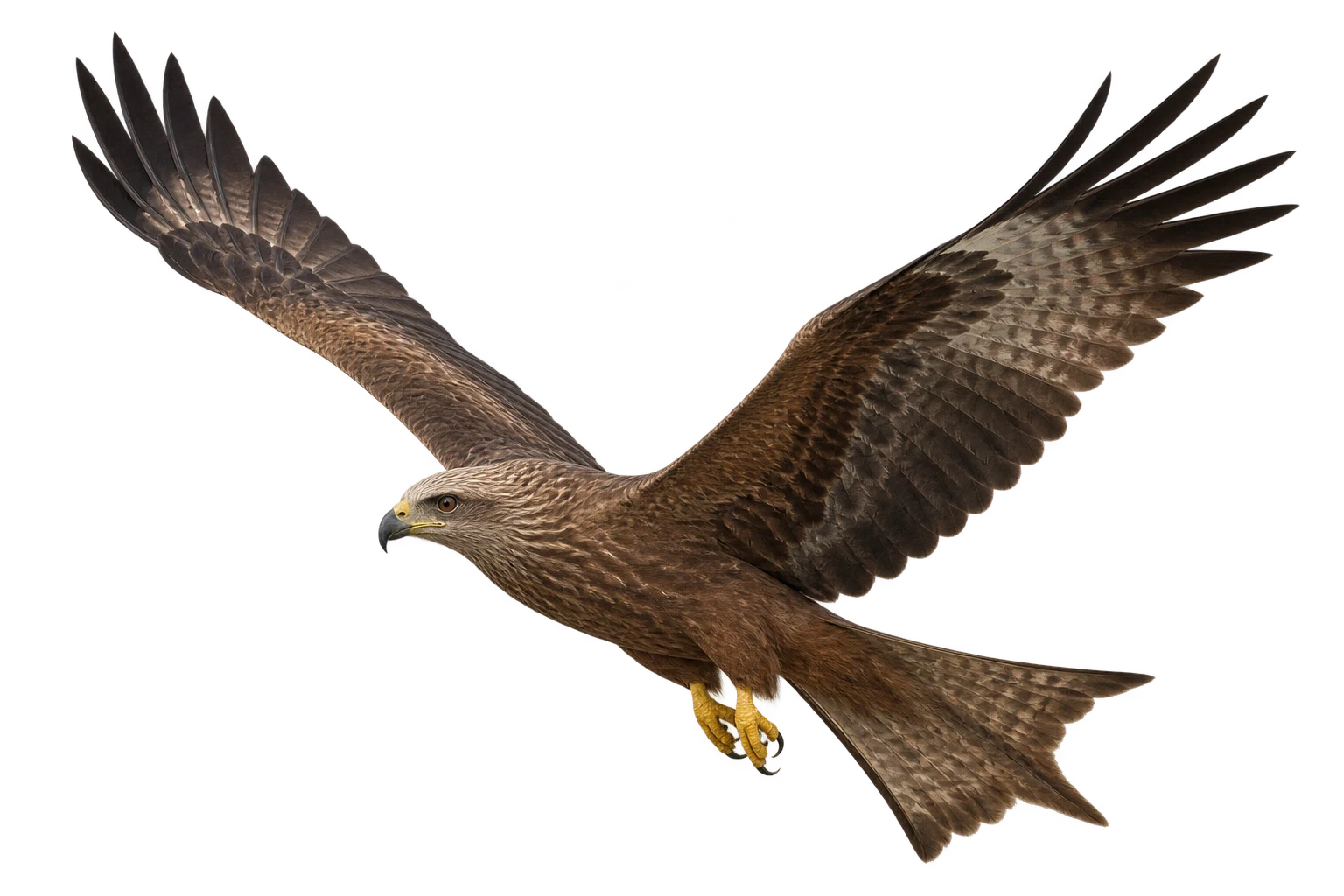
Birds
Australian Firehawk
Milvus migrans
Classification and source reference
LivingAI illustration LC
Birds
Bald eagle
Haliaeetus leucocephalus
The bald eagle is the national bird of the United States.
Living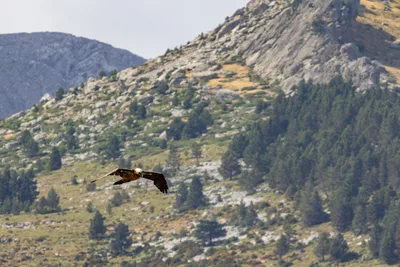 NT
Birds
Bearded vulture
Gypaetus barbatus
The bearded vulture is a huge mountain raptor that lives almost entirely on bone.
Living