Bearded vulture
The bird that drops bones on rock to open them
Gypaetus barbatus
Also called Lammergeier, Ossifrage, Homa
Living individuals or members of this group exist today. This does not mean they are safe from extinction.
Meet the bearded vulture
The bearded vulture is a huge mountain raptor that lives almost entirely on bone. It drops bones from a height onto rock to break them open and reach the marrow.
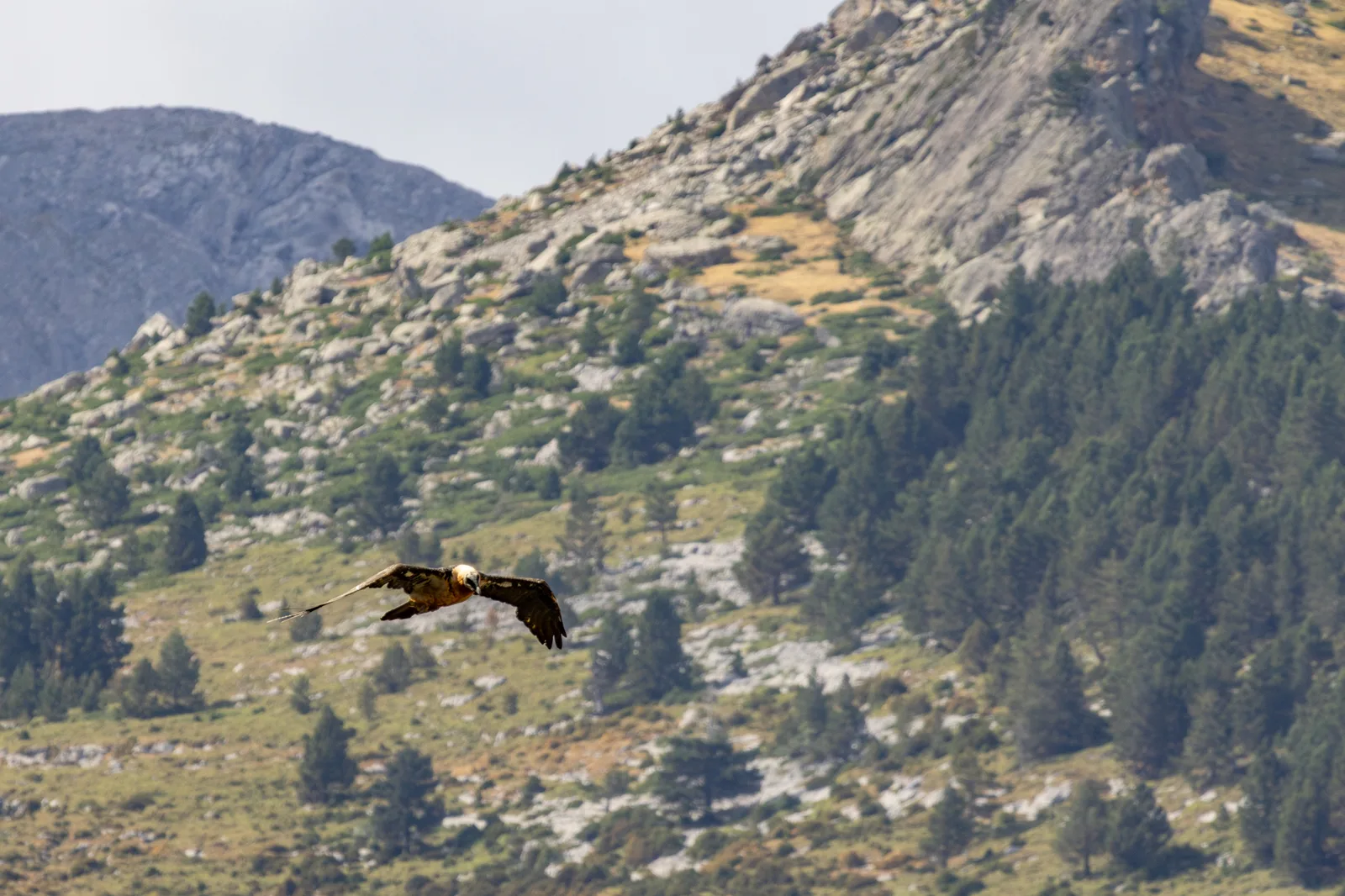
Images of the bearded vulture
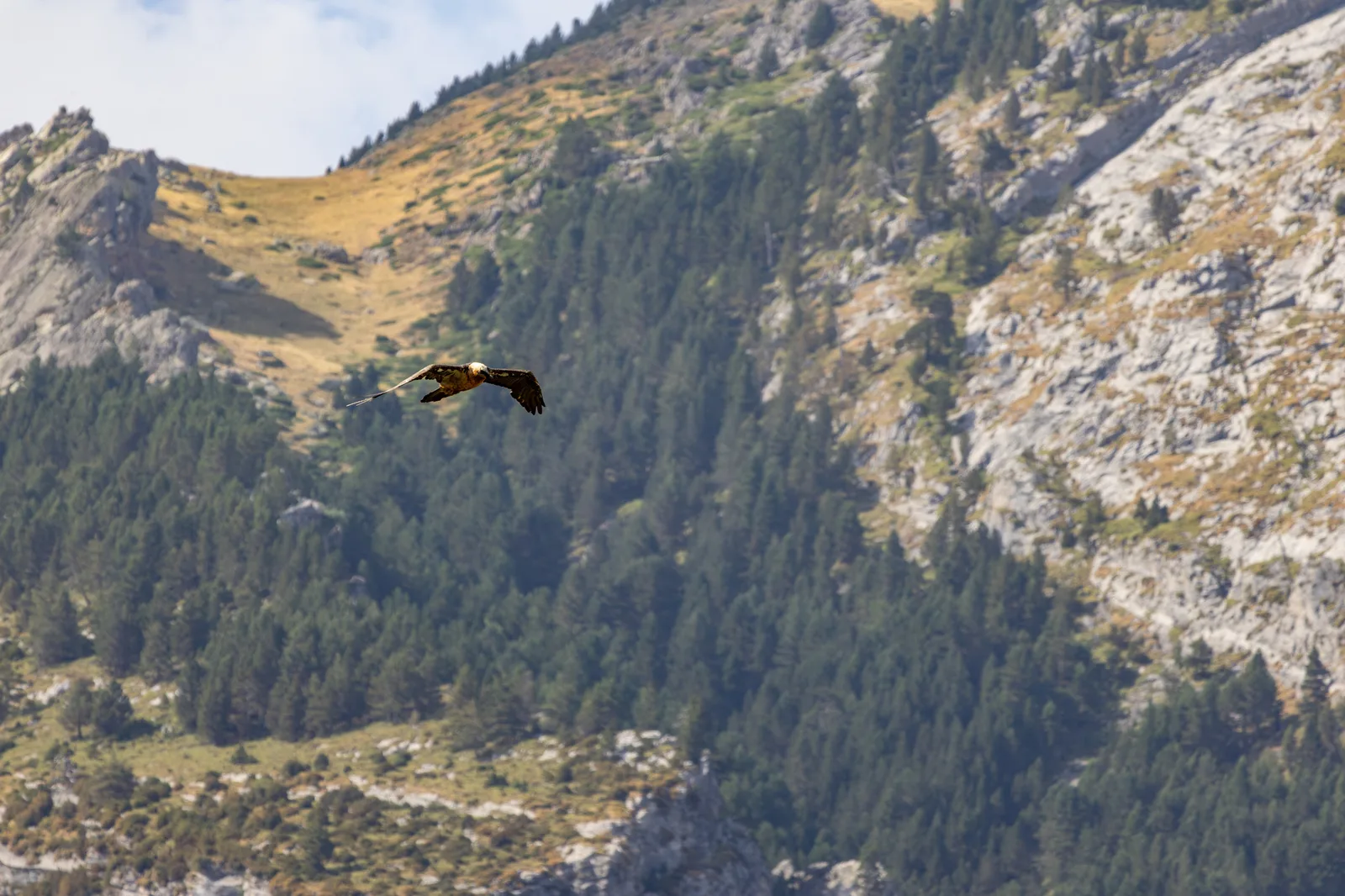
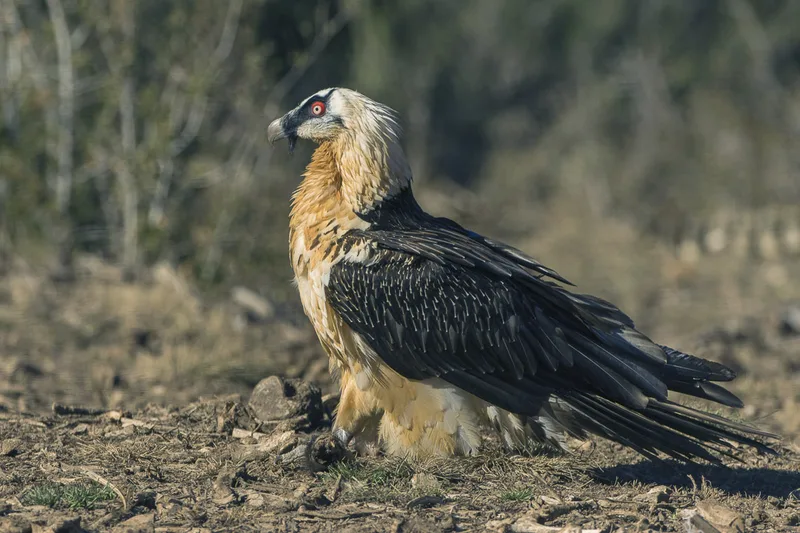
Lifespan in the wild
About 21.4 years
Weight
4.5 to 7.8 kg
Length
0.94 to 1.25 m
Wingspan
2.31 to 2.83 m
Fact file
Bearded vulture
- Location
- High mountains of Europe, Africa and Asia
- Habitat
- Mountains
- Diet
- Carnivore
- Prey / food
- Bone and carrion, plus tortoises, hyraxes, hares and marmots
- Predators
- None as adults
- Lifestyle
- Solitary and territorial, and soaring by day
- Group name
- Pair
- Name of young
- Chick
- Incubation
- Incubation 53 to 60 days
- Clutch size
- 1 or 2 eggs
- Population
- Sparse, with 1,400 to 2,200 pairs in Ethiopia alone
- Biggest threat
- Poisoned bait, power lines and shooting
- Distinctive feature
- A beard of black bristles under the bill
- Colour
- Grey-black above, with a rust-orange head and breast
- Skin type
- Feathers
Size
Next to a person
Measurements
Size and speed
- Length
- 0.94 to 1.25 m
- Wingspan
- 2.31 to 2.83 m
- Tail
- 42.7 to 52 cm
- Weight
- 4.5 to 7.8 kg the nominate race averages 6.21 and the African race 5.7
Typical adult ranges. Source: Wikipedia.
Life cycle
Lifespan
- In the wildAbout 21.4 years
- In captivityUp to 45 years
- 045 years
The pale bar is the record. Source: Wikipedia.
Appearance
Colour and coat
- Primary colours
- grey-blackrust-orange
- Secondary colours
- creamblackwhite
- Skin type
- feathers
- Male and female
- The sexes look alike, and females are slightly larger than males. A young bird is dark black-brown. It takes five to seven years to reach adult plumage.
Life cycle
Mating and family
- Mating system
- monogamous pairs, with rare polyandry
- Social structure
- solitary pairs on a very large territory
- Breeding
- one clutch a year, and often only every second year
A pair builds a huge stick nest on a ledge or inside a cave. The female lays one or two eggs in midwinter. Both birds share an incubation of 53 to 60 days. The chick then spends three to four months in the nest. A young bird may depend on its parents for two more years.
Classification
Taxonomy
- Kingdom
- Animalia
- Phylum
- Chordata
- Class
- Aves
- Order
- Accipitriformes
- Family
- Accipitridae
- Genus
- Gypaetus
- Species
- Gypaetus barbatus
Conservation
Red List status
- LC
- NT
- VU
- EN
- CR
- EW
- EX
Near Threatened on the IUCN Red List
Range
Recorded in 20 countries
- Armenia
- Austria
- Switzerland
- People's Republic of China
- Spain
- Ethiopia
- France
- Georgia
- India
- Iran
- Italy
- Kyrgyzstan
- Kazakhstan
- Lesotho
- Mongolia
- Nepal
- Russia
- Turkey
- Uzbekistan
- South Africa
Habitat layer: montane grassland and shrubland.
Countries from 5,261 wild records on GBIF (iNaturalist research grade), filtered and checked by hand. Country shapes: Natural Earth. Habitat: RESOLVE Ecoregions 2017, CC BY 4.0. Basemap: Natural Earth.
Habitats
Three things to know
- 1
No other animal with a backbone eats a diet of mostly bone.
- 2
The bird has feathers on its head and neck, unlike other vultures.
- 3
One Spanish nest had been in use since at least the 13th century.
Did you know
Seven more facts
- 1
Bone and marrow make up 70 to 90 percent of the diet.
- 2
The bird can carry a bone that weighs over 4 kilograms, close to its own weight.
- 3
The wingspan reaches 2.83 metres.
- 4
The closest relative is the Egyptian vulture, not the other Old World vultures.
- 5
One nest in Spain held shoes dated between the 13th and 19th centuries.
- 6
The bird drops tortoises on rock to crack their shells.
- 7
Wild birds average 21.4 years, and a captive bird reached 45.
Field notes
How it looks and acts
Field notes
Distinguishing features
- A feathered head and neck, unlike any other vulture.
- A beard of black bristles under the bill.
- A black band across the eyes on a cream forehead.
- Long narrow wings and a long wedge-shaped tail.
- Rust-orange feathers on the head, breast and legs.
- Short legs with large, powerful feet.
Field notes
Unique adaptations
- Stomach acid near pH 1, which dissolves bone.
- The habit of dropping bones onto rock to break them.
- A gut that draws energy from marrow, which beats meat by weight.
- Long narrow wings, which probably suit soaring on mountain updraughts.
- Cliff nests that mammals cannot reach.
Field notes
Interesting behaviours
- Carries a bone high and drops it onto a slab of rock.
- Spirals down to check whether the bone broke.
- Rubs iron-rich mud into its feathers.
- Locks feet with another bird and falls through the air.
- Searches two to four metres above the ground.
Field notes
Temperament
- Solitary and territorial for most of the year.
- Silent, except in display and at the nest.
- Bold enough to attack live prey, unlike most vultures.
- Closely bonded to its mate.
Field notes
Communication
- A shrill whistle used in the breeding display.
- A falcon-like cheek-acheek call near the nest.
- Tumbling and spiralling display flights.
- Talons shown in flight to a rival or a mate.
Ecology
Ecological role
The bearded vulture closes the last stage of decay in a mountain food chain.
- It removes bone that no other scavenger can use.
- It returns to a skeleton months after every other animal has finished.
- It breaks bones on rock, which probably spreads fragments across a slope.
- It probably keeps carcass remains from building up on grazing land.
Stories
Myths and legends
- In Iranian tradition the bird is the Homa, and its shadow promises a crown.
- In Sufi poetry the Homa is a bird nobody can catch, though its shadow brings happiness.
- In Tibetan practice the dead are offered to vultures in the rite of sky burial.
- In Jewish law the ossifrage stands among the birds that may not be eaten.
- In German folk naming it is the lamb-vulture, a bird said to steal lambs.
People
Relationship with humans
People
Living alongside us
The bearded vulture clears bone from mountain pastures across three continents. People shot and poisoned it out of central Europe within a century. Release schemes have since brought it back to the Alps and to parts of Spain. Poison and power lines remain the main causes of death.
- The bird does not attack people.
- A falling bone or tortoise may be the only real hazard.
- Old reports of people knocked off cliffs are unconfirmed.
People
Status, uses and products
- Domestication
- Wild
- As a pet
- Not suitable. This is a protected wild raptor with a wingspan close to three metres. It cannot be kept outside a licensed breeding centre or zoo.
- Uses
- ecotourismcarcass disposal
- Products
- None recorded
The full account
About the bearded vulture
The bearded vulture, Gypaetus barbatus, lives on the crags of high mountains from Spain to Tibet. It is the only animal with a backbone that lives mainly on bone. Bone makes up 70 to 90 percent of what it eats. The bird measures 94 to 125 centimetres long, with a wingspan of 2.31 to 2.83 metres. It weighs 4.5 to 7.8 kilograms.
Unlike other vultures, it keeps feathers on its head and neck. A tuft of black bristles hangs under the bill, and that beard gave the bird its English name. Many adults look rust-orange, because they rub iron-rich mud into their plumage. The IUCN lists the species as Near Threatened. Numbers are falling across most of the range.
Name and taxonomy
Carl Linnaeus described the bird in 1758 and placed it in the genus Vultur. He worked from a picture George Edwards made in 1750. Edwards drew a specimen collected near Oran in Algeria. Gottlieb Storr set up the genus Gypaetus in 1784, and the species has held it alone ever since. Gypaetus comes from a Greek word for an eagle or a vulture. Barbatus is Latin for bearded.
Lammergeier comes from the German for lamb-vulture. The name records an old belief that the bird carries off lambs. Ossifrage comes from a Latin word meaning bone-breaker. The same root gave English the word osprey. Two subspecies are accepted today, out of five that people have proposed. The African form is smaller and lacks the black ear tuft and the chin bristles.
Evolution and relatives
The bearded vulture is not a true Old World vulture. It forms a small branch of the family Accipitridae with the Egyptian vulture. That bird is its closest living relative. It stands no closer to the other Old World vultures than a hawk does.
The feathered neck is the clearest difference from those birds. Both this bird and the Egyptian vulture carry a lozenge-shaped tail, which is odd in a bird of prey. The whole shape has been compared to a falcon built at enormous size. The bone diet is unique among living birds, so it is probably a late specialisation.
Appearance
An adult is grey-blue to grey-black across the back. The forehead is cream, and a black band crosses the eyes. Black bristles hang under the chin as a beard. Head, breast and leg feathers are often orange or rust. That colour is not pigment in the feather. The bird works iron-rich mud into its plumage, and some of it rubs off onto the eggs.
The wings are long and narrow, and the wing chord runs 71.5 to 91 centimetres. The tail is wedge-shaped and measures 42.7 to 52 cm. It is longer than the wing is wide, which is unusual. The legs are short for the size of the bird, with a tarsus of 8.8 to 10 cm. The feet are large and powerful, and the walk on the ground is a waddle.
A young bird is dark black-brown, with a grey-brown breast. It gains adult plumage over several years. Full maturity takes five to seven years, and first breeding comes at eight or later. Females are a little larger than males. Birds around the Himalayas run slightly larger than birds from other ranges.
Habitat and range
The bird is spread thinly over an enormous range. It breeds in the Pyrenees, the Alps, the Caucasus, the Zagros, the Altai and the Himalayas. It also holds ground in Arabia, Afghanistan, Ladakh and western China. In Africa it lives in the Atlas Mountains and the Ethiopian Highlands. It runs south from Sudan to central Kenya and northern Tanzania. An isolated group holds the Drakensberg in South Africa.
The bird keeps to the tree line and above it. It is rare below 1,000 metres and usually stays above 2,000 metres. It reaches 4,500 metres in Africa and 5,000 metres in central Asia. One bird was recorded living at 7,500 metres in the Himalayas. Another was watched flying at 7,300 metres. In southern Armenia it will nest below 1,000 metres where cliffs allow.
Cliffs probably matter more to this bird than any particular plant cover. In Ethiopia it is common at rubbish tips outside small towns. The species is recorded in 67 countries on GBIF. Wandering birds from the Alps release schemes have reached Britain and Sweden. Those birds count as escapes rather than wild vagrants.
Diet and hunting
Bone is the whole trade of this bird. Mammals give 93 percent of the diet, birds 6 percent and reptiles 1 percent. Medium-sized hoofed animals supply most of that. The bird usually leaves the meat, and 85 to 90 percent of its food is bone and marrow. It swallows a bone up to the size of a lamb's thigh bone whole. Fatty, elongated bones are preferred, because they hold the most marrow.
A bone too large to swallow gets carried up 50 to 150 metres and dropped onto rock. The bird spirals down to check the pieces, and drops the bone again if it held together. It can carry a bone 10 centimetres thick that weighs over 4 kilograms. That load is close to the weight of the bird itself. Young birds need up to seven years of practice to learn the skill. Some birds hammer a bone against rock from a perch instead.
The stomach runs at about pH 1 and dissolves a large bone in about 24 hours. Dry bone is better food than it looks. About 140 grams of it hold the protein of 111 grams of muscle. By weight, fresh bone carries about 108 percent of the energy that fresh meat holds. A skeleton left on a mountain dries out and resists bacteria. The vulture can return months later and still make a meal of it.
This bird also kills, more often than most vultures do. Tortoises are the favourite target, and it drops them on rock like a bone. Hyraxes, hares and marmots have all been taken, and once a monitor lizard 62 centimetres long. Ibex, chamois and wild goats have been battered with the wings until they fell from a ledge. Most of those victims were young, sick or already hurt. The bird searches low, at 2 to 4 metres above the rock.
Behaviour and social life
The bearded vulture is solitary for most of the year. A pair holds an enormous territory and may forage over 2 square kilometres in a day. The bond between the two birds is close all the same. They sometimes hunt and forage together.
Display flights involve tumbling, spiralling and showing the talons. Two birds will lock feet and fall together through the sky. The bird bathes in dust and mud rather than in water. It carries food to the nest in its feet, unlike vultures that feed young by regurgitation. In the Ethiopian Highlands it now lives largely off human refuse.
Communication and senses
The bearded vulture has very little to say. Adults are silent for most of the year. A shrill whistle belongs to the breeding display. Near the nest the birds make a falcon-like call, written as cheek-acheek.
Most of the message goes by sight instead. A display flight probably shows the talons and the size of the bird at once. Locked feet and a shared fall probably serve both pairing and territory. Sight leads the search for food, and the bird flies low over rock to find it. It arrives late at a carcass, when the soft parts have gone.
Reproduction and life cycle
The breeding season varies from region to region. It runs December to September in Eurasia and November to June in the Indian subcontinent. In Ethiopia it runs October to May, and in eastern Africa it never stops. In southern Africa it runs May to January. Pairs are monogamous, and both birds care for the young. Polyandry has been recorded a few times.
The nest is a heap of sticks on a ledge, an outcrop or inside a cave. A new nest is about 1 metre across and 69 centimetres deep. After repeated use it grows to 2.5 metres across and 1 metre deep. Layers of animal remains from meals build up inside it. A cliff site keeps nest-robbing mammals out. One Spanish nest held shoes dated between the 13th and the 19th centuries.
A female lays one or two eggs, and three have been recorded on rare occasions. Incubation lasts 53 to 60 days, and the eggs hatch at the start of spring. The chicks stay in the nest for 100 to 130 days. A chick eats more meat and skin than an adult does. A young bird may depend on its parents for two years, so many pairs breed in alternate years.
A wild bearded vulture lives about 21.4 years on average. Captive birds have reached at least 45 years. Females first breed at about 7.7 years and males at about 8.9. A pair fledges about 0.43 young a year.
Predators and threats
An adult has no natural predator. People are the whole problem. Hunting and poisoning wiped the bird out of central Europe during the 20th century. Shooting went on in the Alps until 1913. The last Carpathian birds were shot in 1927. Israel lost its breeding birds in 1981.
Poison put out for carnivores still kills vultures. Power lines kill birds by collision. Roads and houses take away nesting ground. Less food is available where livestock has left the high pastures. Trophy hunting continues in some places. Low genetic diversity and inbreeding are worst in the southern African birds.
Population and conservation
The IUCN listed the species as Least Concern in 2004 and moved it to Near Threatened in 2014. It is one of the most endangered birds in Europe. Densities are naturally low, from a dozen to 500 pairs in a mountain range. Ethiopia holds the most, with an estimated 1,400 to 2,200 pairs. Southern Africa held about 632 birds in 2010. Naturalists have logged 7,930 records on iNaturalist.
Spain fell to 30 birds by the end of the 20th century. A foundation set up there in 1995 has brought the national total above 1,000. Reintroduction in the Alps began in the 1970s with birds caught in Afghanistan. That attempt failed, because the birds were hard to catch and many died in transport. A second scheme from 1987 placed young zoo birds on protected cliffs and hand-fed them. Over 200 birds went out in the Alps between 1987 and 2015, and the population has held.
Relationship with humans
The bird cleans bone off the mountain, and no other animal does that work. Farmers once believed it carried lambs away, and the German name still says so. It does not take healthy livestock. It does take carrion near villages, and Ethiopian birds work the rubbish tips. Feeding stations now support several populations.
Conservation plans target poison, power lines and persecution. South Africa has a national management plan for the species. Outreach work tries to cut the number of poisoning incidents. Zoos hold the breeding stock that supplies the release schemes. Like other large raptors, it makes an impossible pet and the law protects it.
In culture and myth
In Iranian tradition the bird is the Homa, a sign of luck and happiness. The story says the shadow of a Homa falling on a person foretells a crown. It also says that anyone who shoots the bird will die within forty days. Sufi poetry treats the Homa as a goal nobody can catch. In Mughal India a Homa that landed on someone was read as a promise of kingship.
Sa'di noted the bone diet in the Gulistan, written in 1258. Emperor Jahangir had a bird's crop opened in 1625 and found it full of bones. Greek soothsayers counted the ossifrage among the few birds that could give a valid sign. Aeschylus is said to have died when an eagle dropped a tortoise on his bald head. If that story is true, this bird is the likely culprit.
In Tibet the dead are given to vultures in a rite called sky burial. Prayers and mantras go with the rite, and the birds themselves are blessed. Tibetan calls the bird jagod. In Leviticus the ossifrage is on the list of birds that may not be eaten. Shimon Persky found a nest of these birds in the Negev in 1944. The Hebrew name is peres, and he took it as his surname.
A sentence with a dotted underline is inferred: it describes the group the animal belongs to, or is a reading of the sources, rather than a measured or reported fact about this species.
Questions
Bearded vulture questions, answered
What does a bearded vulture eat?
Mostly bone. Bone and marrow are 70 to 90 percent of the diet, and the rest is meat, skin and live prey.
How does a bearded vulture break bones?
It carries a bone 50 to 150 metres up and drops it onto rock. It then spirals down to check the pieces.
How big is a bearded vulture?
The body is 94 to 125 centimetres long. The wingspan is 2.31 to 2.83 metres.
How much does a bearded vulture weigh?
Between 4.5 and 7.8 kilograms. Females are a little heavier than males.
Why is it called a lammergeier?
Lammergeier is German for lamb-vulture. The name records an old belief that the bird stole lambs, which it does not.
Why is the bearded vulture orange?
The rust colour is mud. The bird rubs iron-rich soil into its feathers, and the colour transfers to the eggs.
Is the bearded vulture endangered?
The IUCN lists it as Near Threatened. Few European birds are in worse trouble.
Where do bearded vultures live?
On crags in high mountains, from the Pyrenees and the Alps to Ethiopia, the Caucasus and the Himalayas.
How high do bearded vultures fly?
They live around and above the tree line. One bird was recorded at 7,500 metres and another was seen flying at 7,300 metres.
How long do bearded vultures live?
A wild bird averages about 21.4 years. In captivity the record stands at 45 years or more.
How many eggs does a bearded vulture lay?
One or two, in midwinter. Three eggs have been recorded on rare occasions.
How long do bearded vulture eggs take to hatch?
Between 53 and 60 days. Both parents share the sitting.
Do bearded vultures kill live animals?
Sometimes, and more often than other vultures. Tortoises, hyraxes, hares and marmots have all been taken.
Did a bearded vulture kill Aeschylus?
The old story says an eagle dropped a tortoise on his bald head. If it happened, this bird is the likely culprit.
Are bearded vultures dangerous to people?
No. Reports of the bird knocking a person off a cliff are unconfirmed, and would be accidents.
Why was the bearded vulture reintroduced to the Alps?
Shooting wiped it out there by the 1930s. Releases of young zoo birds began in 1987, and the population has taken hold.
Food web
Prey and food
- bone
- carrion
- plus tortoises
- hyraxes
- hares
- marmots
Food web
Predators
No natural predator is recorded.
Ecological equivalents
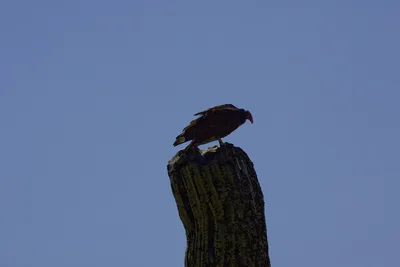
Related species on this site
African Fish Eagle (same family), Australian Firehawk (same family), Bald eagle (same family), Black kite (same family), Cinereous Vulture (same family), Common buzzard (same family), and more.
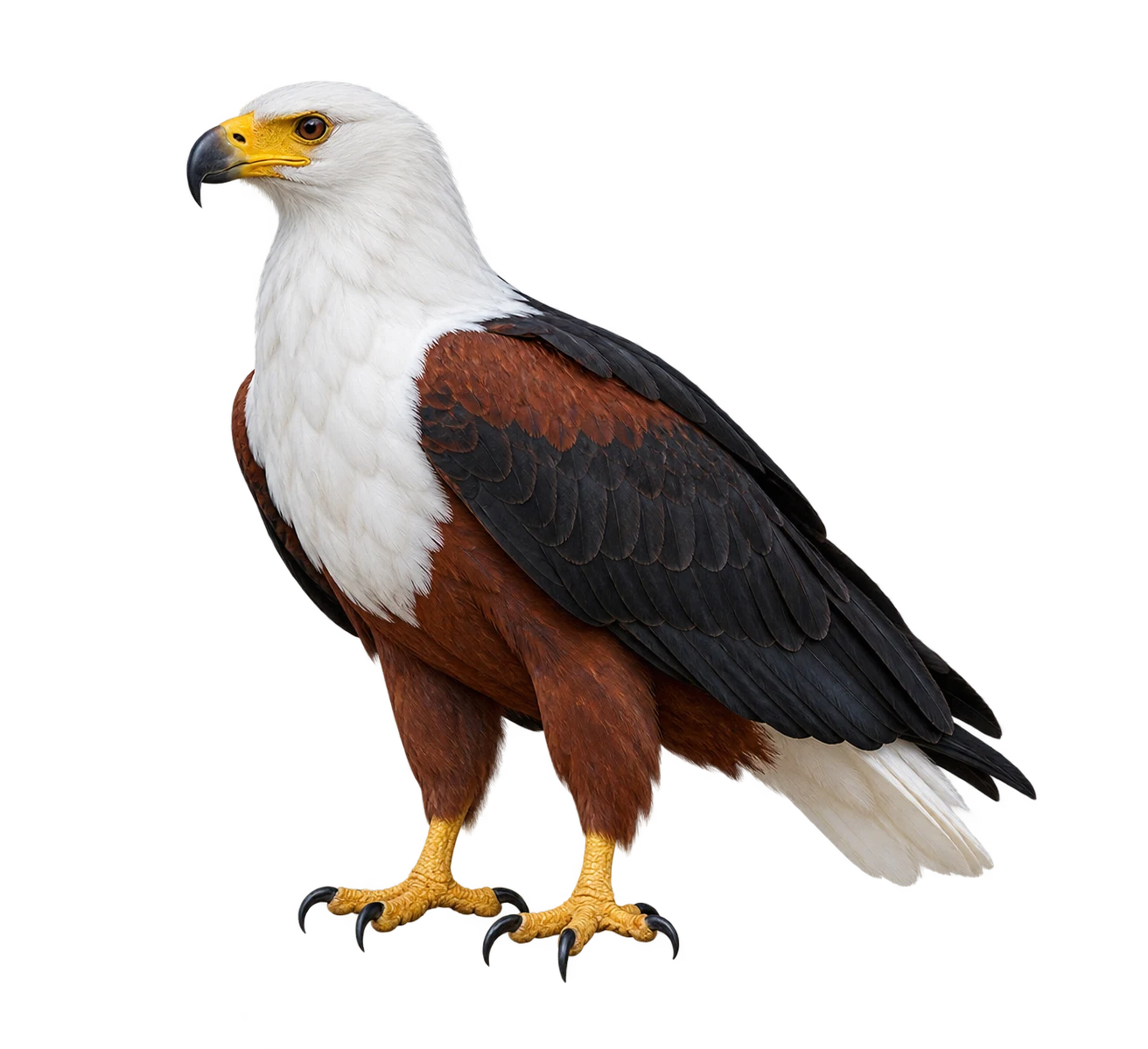
Birds
African Fish Eagle
Haliaeetus vocifer
Classification and source reference
LivingAI illustration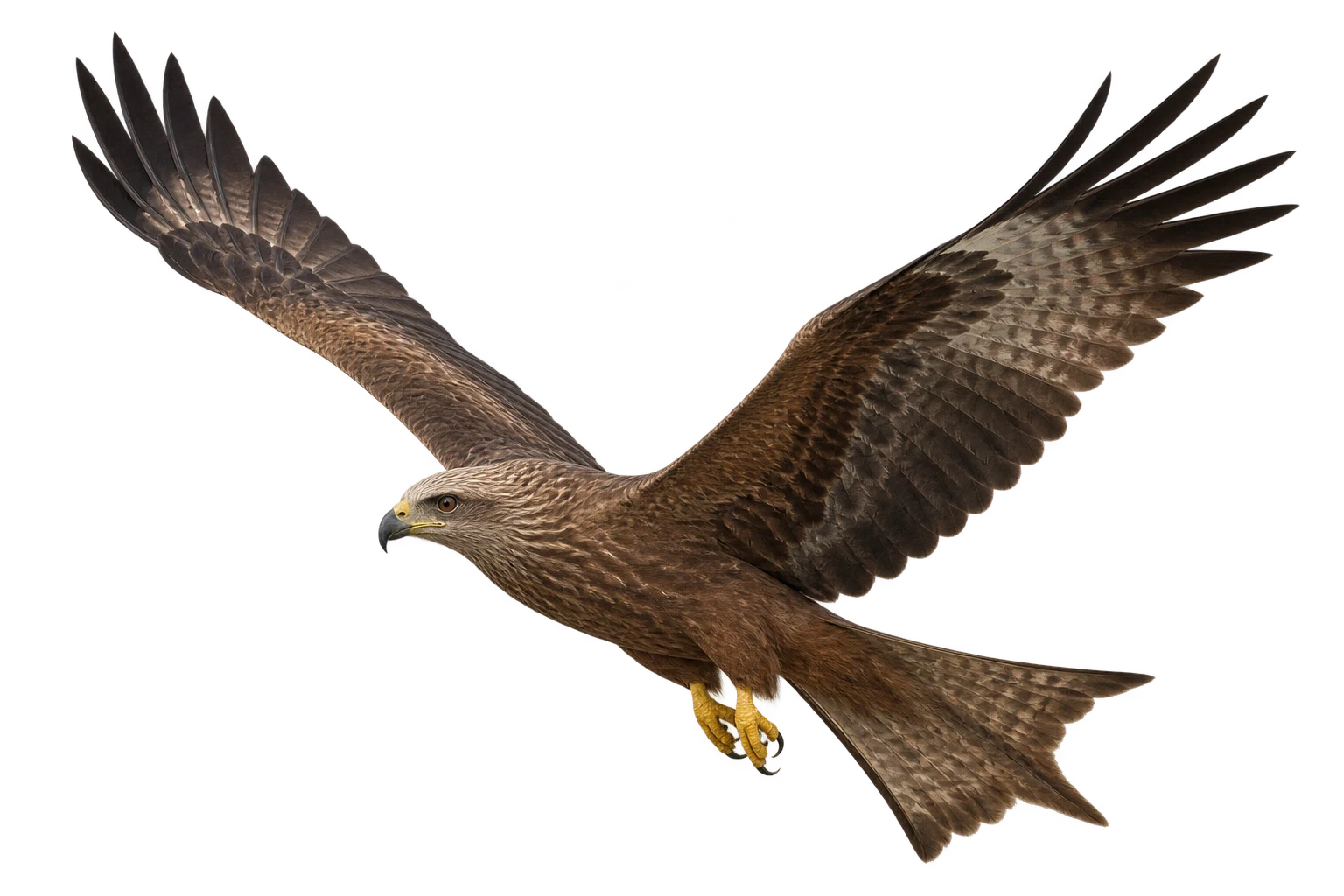
Birds
Australian Firehawk
Milvus migrans
Classification and source reference
LivingAI illustration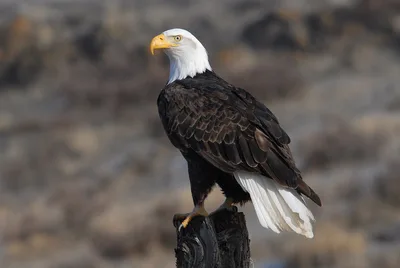 LC
Birds
Bald eagle
Haliaeetus leucocephalus
The bald eagle is the national bird of the United States.
Living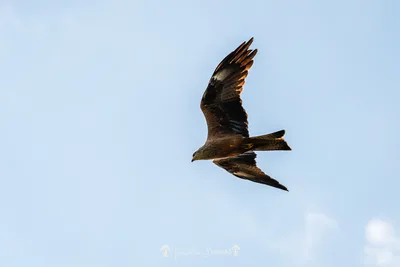 LC
Birds
Black kite
Milvus migrans
The black kite is a medium-sized raptor with angled wings and a forked tail.
Living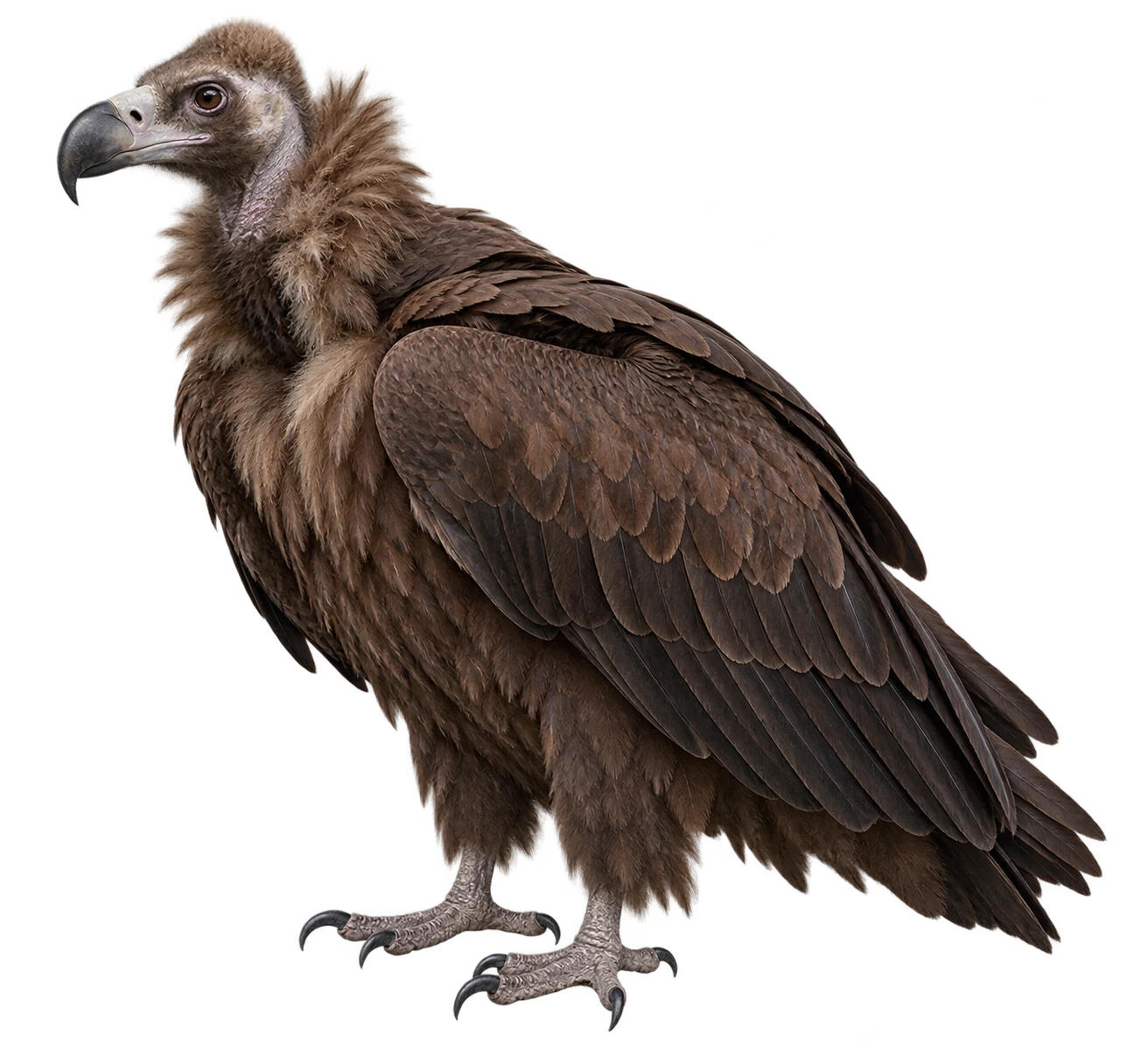
Birds
Cinereous Vulture
Aegypius monachus
Classification and source reference
LivingAI illustration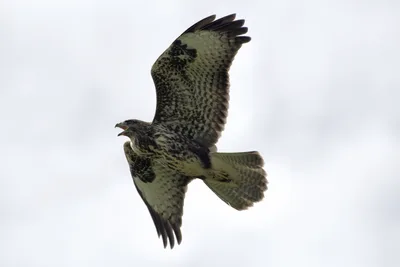 LC
Birds
Common buzzard
Buteo buteo
The common buzzard is a broad-winged hawk of Europe and northern Asia, and the commonest bird of prey across most of that range.
Living