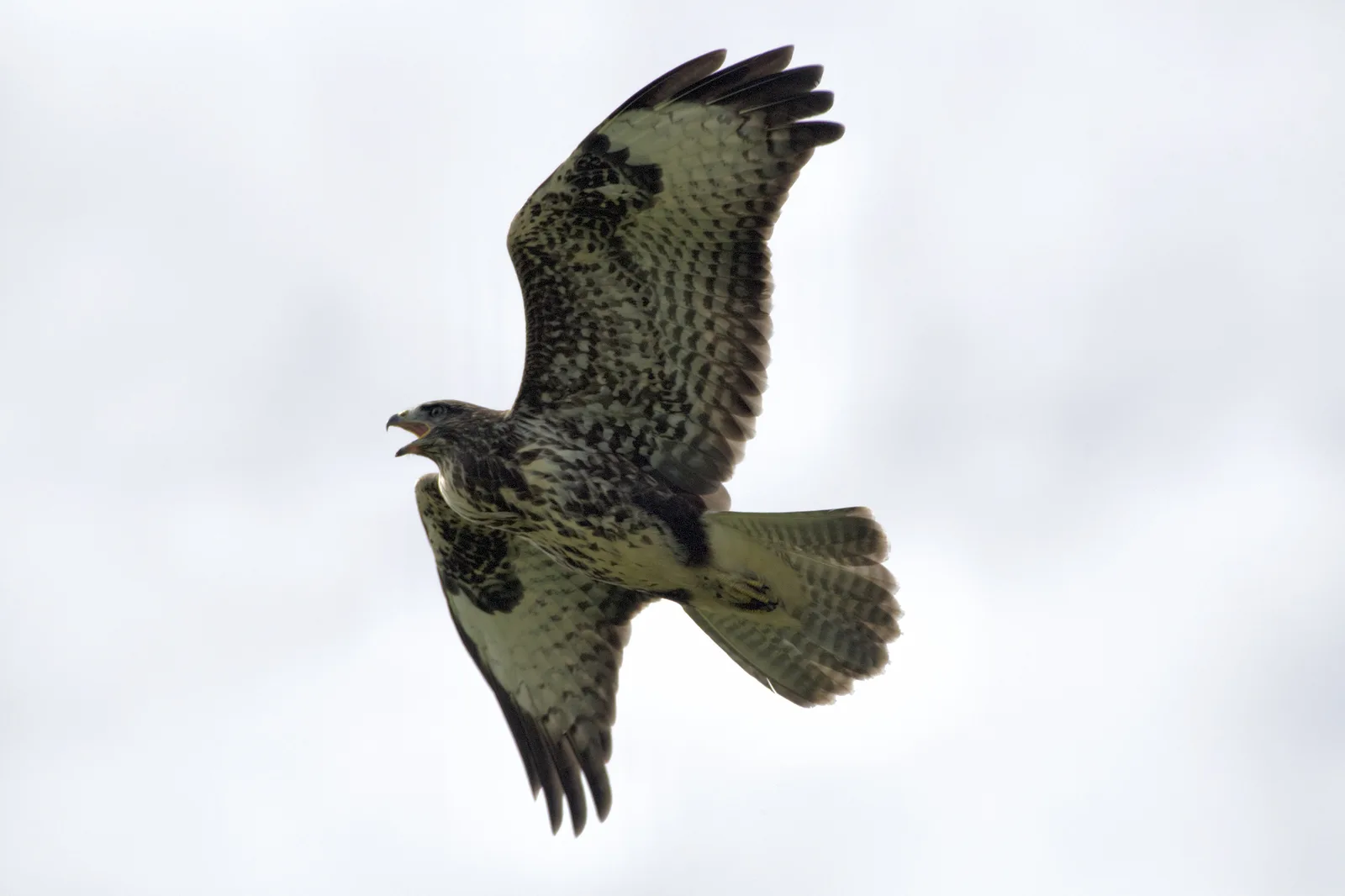
Common buzzard
Europe's commonest bird of prey, and its mewing voice
Buteo buteo
Also called Eurasian buzzard, Steppe buzzard
Living individuals or members of this group exist today. This does not mean they are safe from extinction.
Meet the common buzzard
The common buzzard is a broad-winged hawk of Europe and northern Asia, and the commonest bird of prey across most of that range. It drops on voles and rabbits from a perch, soars over farmland with its wings raised, and calls with a long cat-like mew.
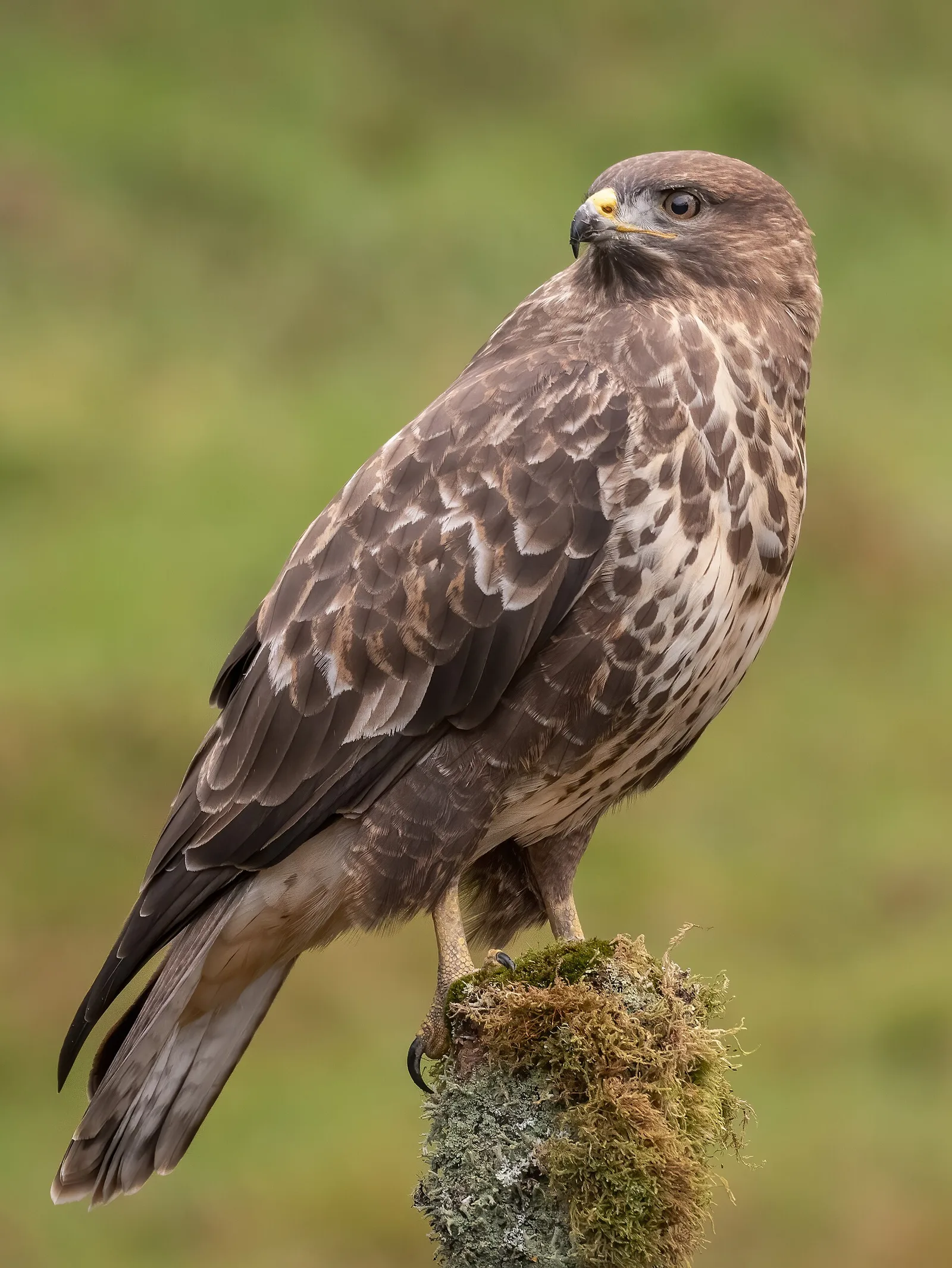
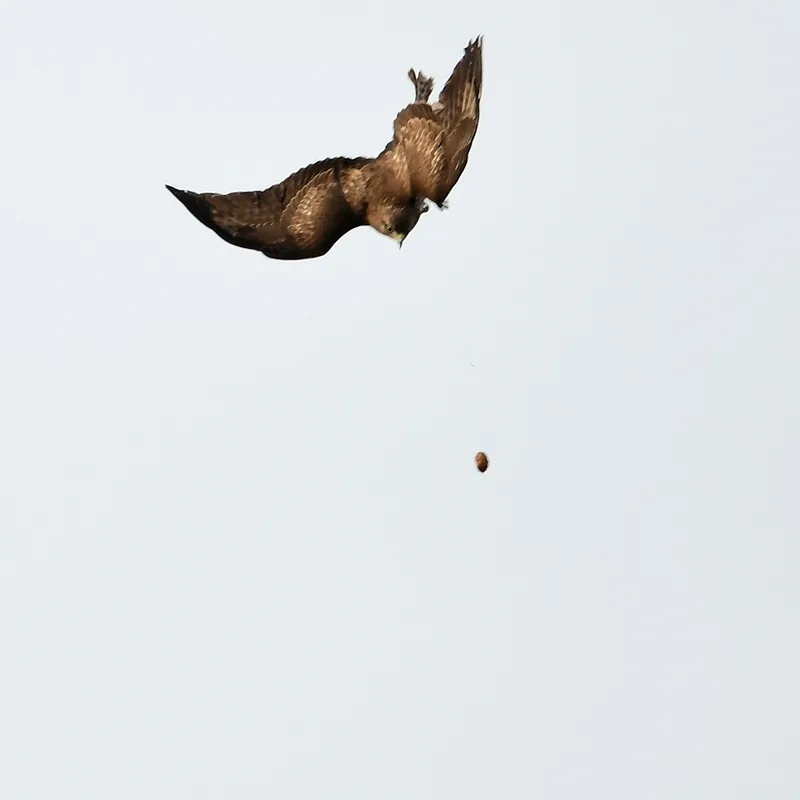
Images of the common buzzard
Lifespan in the wild
6.3 to 10 years the mean life expectancy was 6.3 years in the 1950s under heavy persecution, and the longevity record is 28.8 years
Weight
0.43 to 1.37 kg
Length
40 to 58 cm
Wingspan
1.09 to 1.4 m
Fact file
Common buzzard
- Location
- Europe and northern Asia; many winter in Africa
- Habitat
- Temperate forest, Grassland, Mountains
- Diet
- Carnivore
- Prey / food
- Voles, mice, moles, rabbits, small birds, lizards, earthworms and insects
- Predators
- Goshawks and eagle-owls kill adults and nestlings
- Lifestyle
- A perch hunter that soars over farmland by day
- Group name
- Pair
- Name of young
- Chick
- Incubation
- Incubation 33 to 35 days
- Clutch size
- 2 to 4 eggs
- Population
- About 2.1 to 3.7 million birds
- Biggest threat
- Illegal poisoning and shooting, plus collisions with power lines
- Distinctive feature
- Broad rounded wings and a pale U across the breast
- Colour
- Brown above, and anything from near white to blackish below
- Skin type
- Feathers
Size
Next to a person
Measurements
Size and speed
- Length
- 40 to 58 cm
- Wingspan
- 1.09 to 1.4 m
- Tail
- 17 to 23.6 cm
- Weight
- 0.43 to 1.37 kg British birds: males 427 to 1,183 grams, females 486 to 1,370 grams
- Weight, male
- 0.43 to 1.18 kg
- Weight, female
- 0.49 to 1.37 kg
Typical adult ranges. Source: Wikipedia.
Life cycle
Lifespan
- In the wild6.3 to 10, up to 28.8 years the mean life expectancy was 6.3 years in the 1950s under heavy persecution, and the longevity record is 28.8 years
- 028.8 years
The pale bar is the record. Source: AnAge.
Appearance
Colour and coat
- Primary colours
- brown
- Secondary colours
- whitegreyblack
- Skin type
- feathers
- Male and female
- Slight in size and none in colour. The female runs about 2 to 7% larger than the male and weighs about 15% more. Colour varies far more between individuals than between the sexes.
Life cycle
Mating and family
- Mating system
- monogamous pairs on a permanent territory
- Social structure
- solitary or in a pair, though migrants travel in loose flocks
- Breeding
- one clutch a year, from March to July
Display flights start in February and the pair renews its claim on a territory. The female lays 2 to 6 white eggs in a bulky stick nest and incubates them for 33 to 35 days. The male brings all the food until the chicks can be left alone. Young birds fly at 43 to 54 days and become independent 6 to 8 weeks later. Most first breed in their third summer.
Classification
Taxonomy
- Kingdom
- Animalia
- Phylum
- Chordata
- Class
- Aves
- Order
- Accipitriformes
- Family
- Accipitridae
- Genus
- Buteo
- Species
- Buteo buteo
Conservation
Red List status
- LC
- NT
- VU
- EN
- CR
- EW
- EX
Least Concern on the IUCN Red List
Range
Recorded in 20 countries
- Austria
- Belgium
- Switzerland
- Czech Republic
- Germany
- Denmark
- Spain
- France
- United Kingdom
- Greece
- Hungary
- Italy
- Luxembourg
- Netherlands
- Poland
- Portugal
- Romania
- Russia
- Ukraine
- South Africa
Habitat layer: temperate broadleaf and mixed forest, temperate conifer forest, boreal forest and taiga, tropical grassland, savanna and shrubland, temperate grassland, savanna and shrubland, montane grassland and shrubland.
Countries from 115,307 wild records on GBIF (iNaturalist research grade), filtered and checked by hand. Country shapes: Natural Earth. Habitat: RESOLVE Ecoregions 2017, CC BY 4.0. Basemap: Natural Earth.
Habitats
Three things to know
- 1
Its plumage runs from almost black to almost white, with every shade in between.
- 2
Steppe buzzards fly from Finland to southern Africa, a trip of over 13,000 kilometres.
- 3
Up to 466,000 buzzards have passed over Israel in a single spring.
Did you know
Seven more facts
- 1
The call sounds so like a cat that people often look for one in the field.
- 2
In American English the word buzzard means the turkey vulture, a bird from another family.
- 3
Steppe buzzards will not cross open water, so they detour around a gulf on Lake Victoria.
- 4
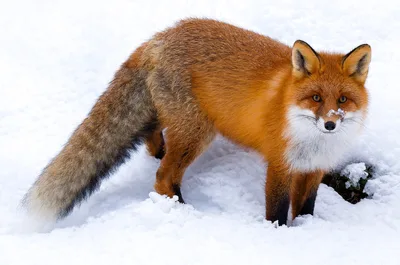
In Poland the buzzard and the red fox share 61.9% of their prey species.
- 5
A sky-dancing male can drop 60 metres on almost closed wings before climbing again.
- 6
Intermediate-coloured buzzards in Westphalia raise more young than pale or dark ones.
- 7
One nest in Estonia was found in 1982 and is still in use.
Field notes
How it looks and acts
Field notes
Distinguishing features
- Broad, rounded wings held in a shallow V while soaring.
- A short tail with a broad dark band near the tip.
- A pale U across the breast on most birds.
- Dark patches at the wrist of each wing from below.
- Yellow legs and a yellow bill tipped in black.
- A wingspan of 109 to 140 cm on a bird 40 to 58 cm long.
Field notes
Unique adaptations
- Broad wings and a light body probably make long soaring cheap.
- Perch hunting saves energy in a landscape full of posts and trees.
- A wide prey list carries the bird through a year when voles fail.
- Bare legs may suit a bird that walks in wet grass after worms.
- Migration lets eastern birds leave a frozen landscape for African grassland.
Field notes
Interesting behaviours
- Sitting still on a fence post for hours while watching the grass.
- Circling high on a thermal with the wings raised.
- Sky-dancing in a run of climbs and dives above the territory.
- Walking over ploughed ground to pick up earthworms.
- Grappling talons with a rival and tumbling down together.
Field notes
Temperament
- Territorial from February onward, and vocal about it.
- Described by ornithologists as sluggish and not very bold.
- Submissive to goshawks, which take its nests and its space.
- Tolerant of farmland and traffic, but wary of city centres.
Field notes
Communication
- A long mewing pee-yow used as a contact call and in display.
- A sharper, yelping version as a warning near the nest.
- A repeated note exchanged between the two birds of a pair.
- Chuckles and croaks at the nest itself.
- High circling and sky-dancing as a visual claim on a territory.
Ecology
Ecological role
The buzzard is the main daylight predator of voles across European farmland and woodland edge.
- It tracks vole numbers, and its breeding success rises and falls with them.
- It competes with the red fox for the same rodents in the same fields.
- It clears carrion from roads and fields.
- Its tissues serve scientists as a measure of pesticides and metals in the countryside.
Stories
Myths and legends
- In Roman usage, the word buteo named this bird, and it became the genus name.
- In American usage, buzzard means the turkey vulture rather than any hawk.
- In British tradition, the bird's cry is likened to a cat rather than to a hawk.
- In British gamekeeping tradition, the buzzard counted as vermin and was shot on sight.
- In Irish memory the bird was absent for generations, and it returned only in the 1950s.
People
Relationship with humans
People
Living alongside us
The buzzard has swung between persecution and recovery. Gamekeepers poisoned and shot it for generations, and it disappeared from much of Britain and Ireland. Protection, more rabbits and less poison let it return, and it is now the commonest British raptor. Illegal killing still occurs, and power lines and traffic take many birds. Researchers value the species as a measure of pollution in the countryside.
- The bird takes prey of a few hundred grams and probably never threatens a person.
- A parent may dive at an intruder who climbs to the nest.
- Buzzards are described as sluggish and not very bold, even in defence.
People
Status, uses and products
- Domestication
- Wild
- As a pet
- Not suitable. The species is protected across Europe and needs a licence to keep. It requires a large aviary and whole prey, and it takes badly to handling. Injured birds belong with a licensed rehabilitator.
- Uses
- birdwatchingfalconrypollution monitoring
- Products
- None recorded
The full account
About the common buzzard
The common buzzard, Buteo buteo, is a broad-winged hawk of Europe and northern Asia. Adults measure 40 to 58 centimetres long, with a wingspan of 109 to 140 cm. British birds weigh 427 to 1,183 grams as males and 486 to 1,370 g as females. The wings are broad and rounded, the tail is short and the head looks round. Plumage varies more than in almost any other day-flying raptor, from near black to near white.
The buzzard lives where woodland meets open ground, and it hunts mostly from a perch. Voles make up the core of its food, and it also takes rabbits, birds, lizards and worms. Western birds stay put all year, while the steppe buzzards of the east fly to Africa. The IUCN counts 2.1 to 3.7 million birds and lists the species as Least Concern. It is the most numerous day-flying bird of prey in Europe.
Name and taxonomy
Carl Linnaeus first described the bird in 1758, under the name Falco buteo. Bernard Germain de Lacepede set up the genus Buteo in 1799. Buteo is simply the Latin word for a buzzard. European and African members of the genus are called buzzards, and American ones are called hawks. Americans attach the same word to the turkey vulture, a bird from another family.
The genus holds about 28 species, second only to Accipiter among hawk genera. The nominate race covers most of Europe, and the steppe buzzard covers the east. The steppe buzzard takes its scientific name from the Latin for fox, after its rufous plumage. Eastern and Himalayan buzzards were once counted here and are now separate species.
Evolution and relatives
The subfamily that holds Buteo arose in the Americas and is still richest there. DNA work places the common buzzard close to the red-tailed hawk of North America. That hawk fills the same role on its continent, and the two may form one species complex. Three African birds are close relatives: the mountain, forest and Madagascar buzzards. They are so close that some authors have asked whether they count as full species.
Genetic work suggests the buzzards of Eurasia and Africa split about 300,000 years ago. Fossil Buteo birds lived in Europe more than 5 million years ago, in the late Miocene. Those older fossils may not belong to the living group at all. One study links the huge plumage variation to low diversity at a single gene site.
Appearance
A typical European buzzard is dark brown above and paler below. A pale U runs across the breast, with a lighter line down the belly between dark flanks. The tail is barred grey-brown with a broad dark band near the tip. In flight the wings show a dark trailing edge and dark patches at the wrist. The bill is yellow with a black tip and the legs are yellow.
Adults measure 40 to 58 cm long with a wingspan of 109 to 140 cm. The tail is 17 to 23.6 cm long. Females run about 2 to 7% larger than males and weigh about 15% more. Extreme birds range from chocolate brown all over to almost white with a few brown arrowheads. Across Europe from 2000 to 2022, fewer very pale and very dark birds appeared and more intermediate ones.
Habitat and range
The species lives where woodland meets grassland, arable land or moor. It needs trees to nest and perch in, and open ground to hunt over. It is absent from treeless tundra, where the rough-legged buzzard replaces it. Birds breed from sea level to about 2,000 metres and mostly below 1,000 m. Buzzards in eastern Poland kept to mature stands within 30 to 90 metres of a clearing.
The range covers nearly all of Europe, including Ireland, Britain and the Mediterranean islands. It reaches east to western Siberia, northwestern China and northwestern Mongolia. Wintering birds spread across eastern and southern Africa as far as the Cape. Heavy urban development harms the species, which handles cities less well than the red-tailed hawk. Farms with hedges, woodlots and rough grass suit it, and clearing those causes local declines. GBIF holds records of the species from 139 countries.
Diet and hunting
The buzzard is a generalist and more than 300 prey species have been recorded. Voles matter most, above all the common vole and the field vole. Mean weight of vertebrate prey in Belarus came to 179.6 grams. Rabbits are important in Britain and Spain, and most taken weigh 159 to 550 g. The European mole is one of the main non-rodent items in the north.
Birds are taken too, mostly fledglings of chaffinches, pipits, blackbirds and wood pigeons. Very few of the birds it kills weigh more than 500 g. The largest known kill was a female capercaillie of about 1,985 g. Lizards can dominate the diet in the south, and slowworms did so in Norway in poor vole years. The bird also eats earthworms, beetles and carrion, including roadkill.
Most prey is caught by dropping from a perch onto the ground. The bird does not stoop hard like a falcon, but slides down with the wings held high. Open ground raises the hunting success rate, and thick shrub lowers it. Buzzards also walk about on the ground, and up to 30 have fed in one large field. Hovering is the rarest method, and one British study found that it caught no extra prey.
Behaviour and social life
A resident buzzard may spend more than half its day perched and still. It sits on tree tops, bare branches, poles, fence posts and rocks. Once airborne it soars well, though level flapping flight looks heavy. A home range covers about 0.5 to 2 square kilometres. Pairs hold their ground with display flights that begin in February.
In the display a bird circles upward on slightly raised wings, calling as it goes. The sky-dance is a series of climbs and dives that can be repeated 10 to 20 times. A dive may drop 60 metres before the bird spreads its wings and shoots up again. Rival males sometimes lock talons and tumble downward together. Densities vary widely, from 0.6 pairs per 100 square kilometres in Russia to 129 in Slovakia.
Communication and senses
The main call is a long, falling pee-yow that carries a long way. Listeners often mistake the sound for the cry of a cat. The same call sharpens in anger and grows wavering when the bird chases an intruder. A short, explosive version serves as an alarm near the nest. A pair may answer each other with a repeated note, and both chuckle and croak at the nest.
Resident birds call all year, while migrants call mainly in the breeding season. Young birds sound rougher than adults, which is how observers tell them apart. Like other hawks, the buzzard finds its prey by sight from a perch or on the wing. Display flight is also a signal, and a low pass shows the underwing pattern to a rival below. Up to 14 adults have gathered over one established display site.
Reproduction and life cycle
The pair builds a bulky nest of sticks, twigs and heather, usually in a tree. A nest measures about 1 to 1.2 metres across and 60 cm deep. Years of reuse can push it past 1.5 m across and over 200 kilograms in weight. Nests sit 3 to 25 metres up, and pairs often keep two to four alternatives. Where trees are missing the birds use crags, and 81% of 108 nests in the Italian Alps were on cliffs.
The season runs from March to July over most of the range. The female lays 2 to 6 eggs at intervals of two or three days. The eggs are white with sparse red-brown marks and average about 55 by 44 millimetres. She does most of the incubating, which lasts 33 to 35 days. The male brings all the food while she broods the small chicks.
A chick weighs about 45 grams at hatching and takes 48 hours to break out. Proper feathers appear at 12 to 15 days and the young are fully feathered at about a month. The youngest chick often starves in a brood of three or more. Birds fledge at 43 to 54 days and stay independent 6 to 8 weeks later. Most start breeding in their third summer, and siblings stay together for about a year.
Predators and threats
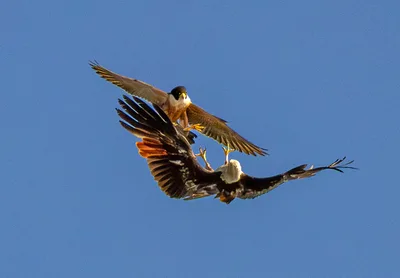
The northern goshawk is larger and more aggressive, and it drives buzzards out of good nest sites. A dummy goshawk near a buzzard nest was enough to lower breeding success. Reintroduced eagle-owls in Westphalia now take buzzard nestlings and brooding females. Black kites, booted eagles and lesser spotted eagles take over active buzzard nests. Peregrine falcons in southwestern England harass buzzards hard enough to injure them.
People remain the largest danger, mostly through poison and shot. At least 238 poisoned or persecuted buzzards were recovered in England from 1975 to 1989. The species is the raptor most often killed on Spanish power lines. Buzzards and ravens together made up nearly a third of recorded electrocutions there. Rabbit diseases cut breeding success in old rabbit country from 2.6 young a pair to 0.9.
Population and conservation
The IUCN estimates 2.1 to 3.7 million common buzzards. Europe holds at least 700,000 pairs, more than twice the next commonest raptor. Germany alone had about 140,000 pairs, and European Russia perhaps 500,000. Britain held 44,000 to 61,000 pairs by 2001, after decades of recovery. The bird returned to Ireland in the 1950s and had reached 26 pairs by the 1990s.
Numbers in Westphalia have nearly tripled over recent decades. A warmer climate may help by leaving voles more exposed to a hunting bird. Feeding stations helped the Irish population where rabbits had declined. Researchers use the buzzard as a bioindicator for pesticides and metals. Its short food chain on land keeps contamination lower than in fish-eating or bird-eating raptors.
Relationship with humans
Gamekeepers and landowners shot and poisoned buzzards for generations. Persecution, habitat change and falling prey stocks emptied much of Britain of the bird. Today no other British raptor is as numerous or as widely spread. British assessments now place it on the green list, the lowest level of concern. Illegal killing still happens, though probably less often than in the 1980s.
Motorists probably see buzzards more than any other raptor, perched on posts beside the road. The birds also feed on roadkill, which puts them in the path of traffic. They avoid city centres and rarely nest on buildings. Some Spanish pairs do nest around the walls of abandoned buildings. Farmers probably gain from a bird that eats voles, mice and rabbits.
In culture and myth
The English name follows the Latin buteo, which the Romans used for this bird. Settlers appear to have moved the word to the turkey vulture, so buzzard now means two birds. British writers describe the call as a mournful mew rather than a hawk's scream. That likeness to a cat seems to be the first thing a listener notices. In Britain the bird was long treated as vermin, and the law protects it only in modern times.
The spring passage over Israel is probably one of the great wildlife spectacles on Earth. Between 150,000 and nearly 466,000 steppe buzzards have crossed in a single spring. Watchers at Falsterbo in southern Sweden have counted up to 41,000 birds in autumn. In northeastern Turkey a single autumn count reached 205,000 birds. Such counts appear to draw birdwatchers back to the same headlands each year.
A sentence with a dotted underline is inferred: it describes the group the animal belongs to, or is a reading of the sources, rather than a measured or reported fact about this species.
Questions
Common buzzard questions, answered
How big is a common buzzard?
It is 40 to 58 cm long with a wingspan of 109 to 140 cm. British males weigh 427 to 1,183 g and females 486 to 1,370 g. The female is the larger sex.
What does a buzzard sound like?
It gives a long, falling mew, written as pee-yow, that carries far over open ground. Many listeners mistake it for a cat. Resident birds call all year.
What do buzzards eat?
Mostly voles, with mice, moles, rabbits, small birds, lizards, earthworms and insects as well. More than 300 prey species have been recorded. They also eat carrion, including roadkill.
Do buzzards take pets?
No. Very few birds it kills weigh over 500 g, and most mammal prey is vole-sized. A cat or a dog is far beyond what a buzzard can handle.
Where do buzzards live?
Across almost all of Europe and east to western Siberia, northwestern China and Mongolia. They like the edge between woodland and open ground. Eastern birds winter across eastern and southern Africa.
Do buzzards migrate?
Only some. Most western and central European birds stay on their territory all year. Steppe buzzards migrate the whole way to southern Africa, over 13,000 km in one season.
Are buzzards endangered?
No. The IUCN rates the species Least Concern on an estimate of 2.1 to 3.7 million birds. It is the commonest day-flying raptor in Europe.
How many buzzards are there in Britain?
Between 44,000 and 61,000 pairs bred there by 2001, and numbers have risen since. That makes it by far the most abundant British bird of prey. It sits on the green conservation list.
How long do buzzards live?
Life expectancy was about 6.3 years in the 1950s, when persecution was heavy, and can now exceed 10 years. The longevity record is 28.8 years. Most deaths in the first year come from starvation and collisions.
How many eggs does a buzzard lay?
Two to six, and most often two or three. The female lays at two or three day intervals and incubates for 33 to 35 days. Replacement clutches are rare.
Where do buzzards nest?
In a bulky stick nest in a tree, usually 3 to 25 metres up. Where trees are scarce they use cliff ledges, and 81% of nests in one Italian Alps study were on rock. A pair often keeps several nests.
What is the difference between a buzzard and a red kite?
The buzzard has broad rounded wings and a short, fanned tail. The red kite has longer, narrower wings and a deeply forked tail. The buzzard's mewing call is also quite different.
Why is the turkey vulture called a buzzard in America?
Settlers carried the English word across the Atlantic and attached it to the vultures they found. The two birds are not related. In Europe and Africa, buzzard means a Buteo hawk.
Do buzzards hover?
Rarely. They hunt mostly by dropping from a perch, and one British study found that hovering brought them no extra prey. The rough-legged buzzard hovers far more.
What kills buzzards?
Goshawks and eagle-owls kill adults and nestlings. Illegal poison and shot still take many. Power lines are a serious hazard, and in Spain the buzzard is the raptor killed most often on them.
Why do buzzards vary so much in colour?
Individuals range from almost black to almost white, and one study links that spread to low diversity at a single gene site. Since 2000 fewer extreme birds have been recorded and more intermediate ones.
Food web
Prey and food
- voles
- mice
- moles
- rabbits
- birds
- lizards
- earthworms
- insects
 Common swift
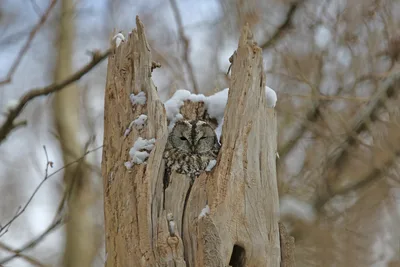 Tawny owl
Food web
Predators
- goshawks
- eagle-owls kill adults
- nestlings
Ecological equivalents
Related species on this site
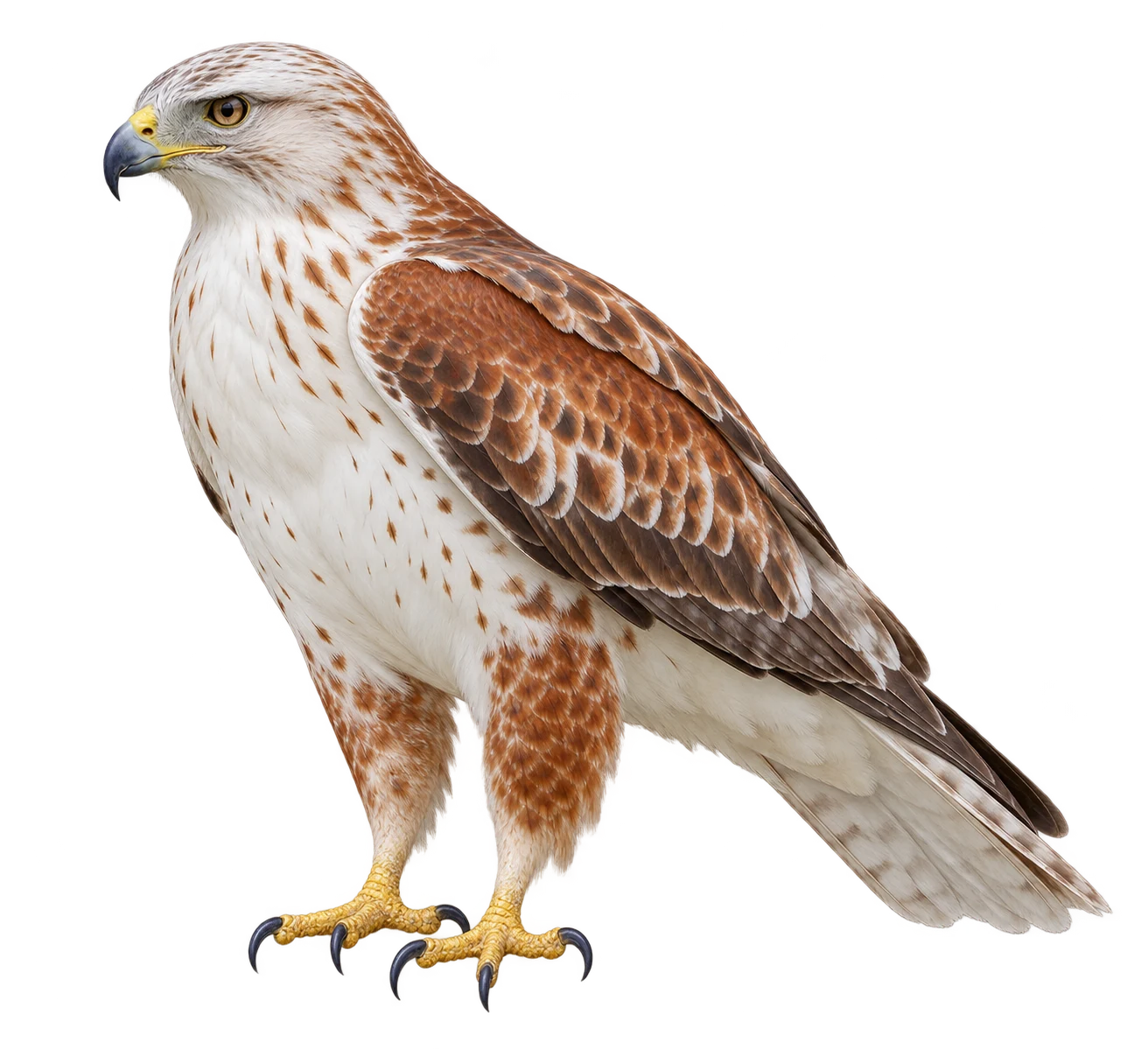
Ferruginous Hawk (same genus), Red-Shouldered Hawk (same genus), Red-tailed hawk (same genus), Rough-Legged Hawk (same genus), Swainson's Hawk (same genus), African Fish Eagle (same family), and more.
Birds
Ferruginous Hawk
Buteo regalis
Classification and source reference
LivingAI illustration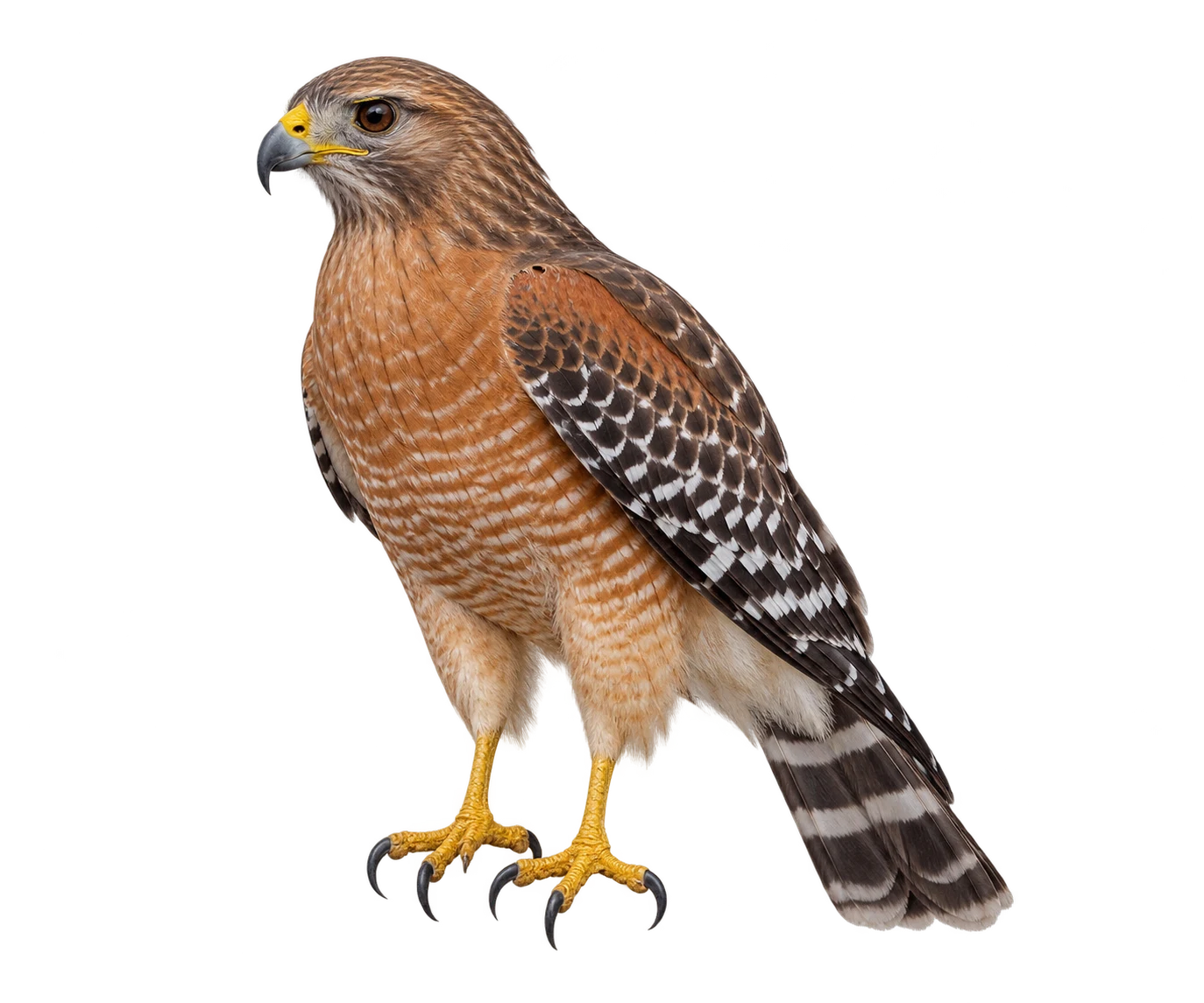
Birds
Red-Shouldered Hawk
Buteo lineatus
Classification and source reference
LivingAI illustration LC
Birds
Red-tailed hawk
Buteo jamaicensis
The red-tailed hawk is the common broad-winged hawk of North America, named for the brick-red tail of the adult.
Living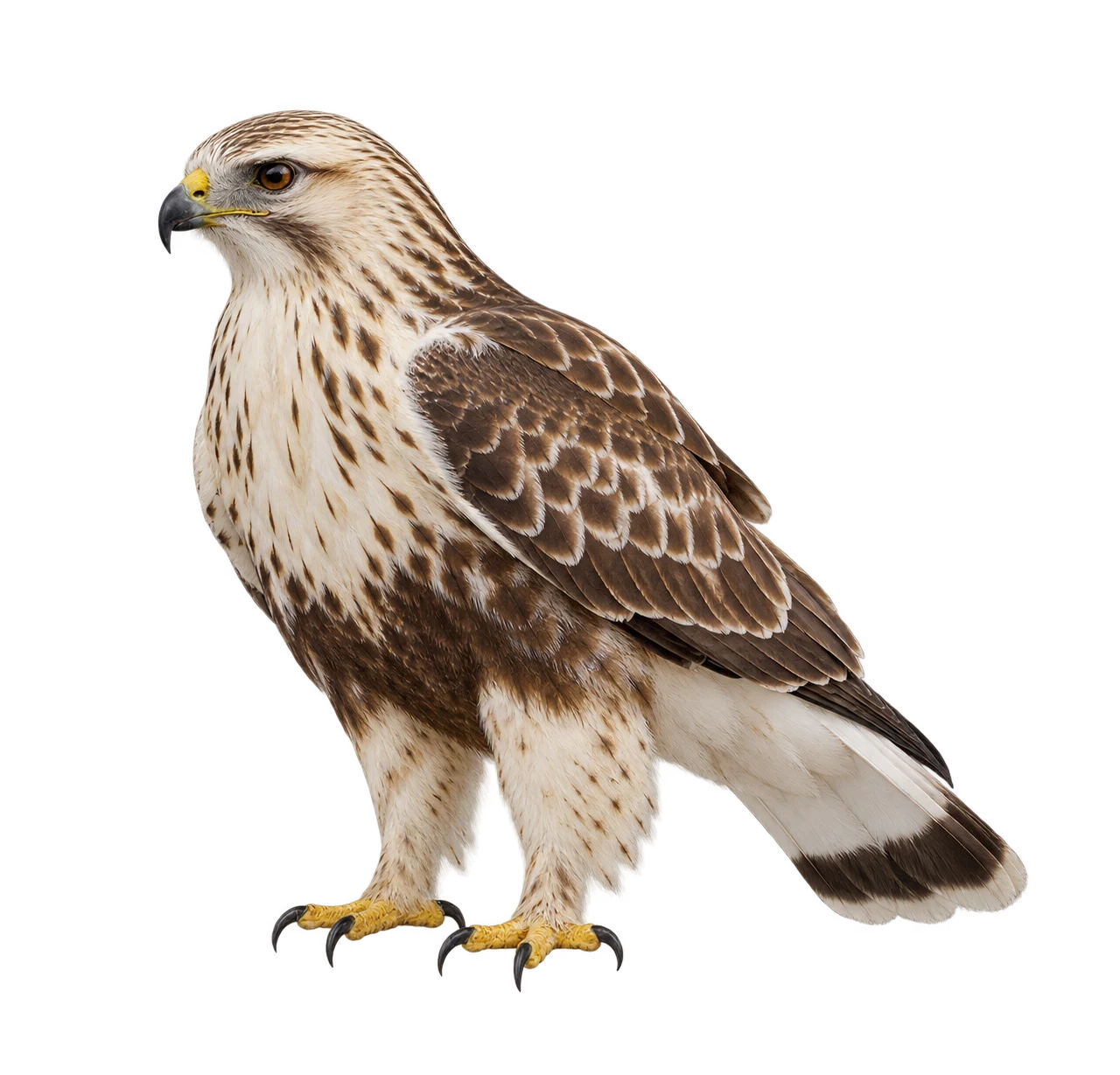
Birds
Rough-Legged Hawk
Buteo lagopus
Classification and source reference
LivingAI illustration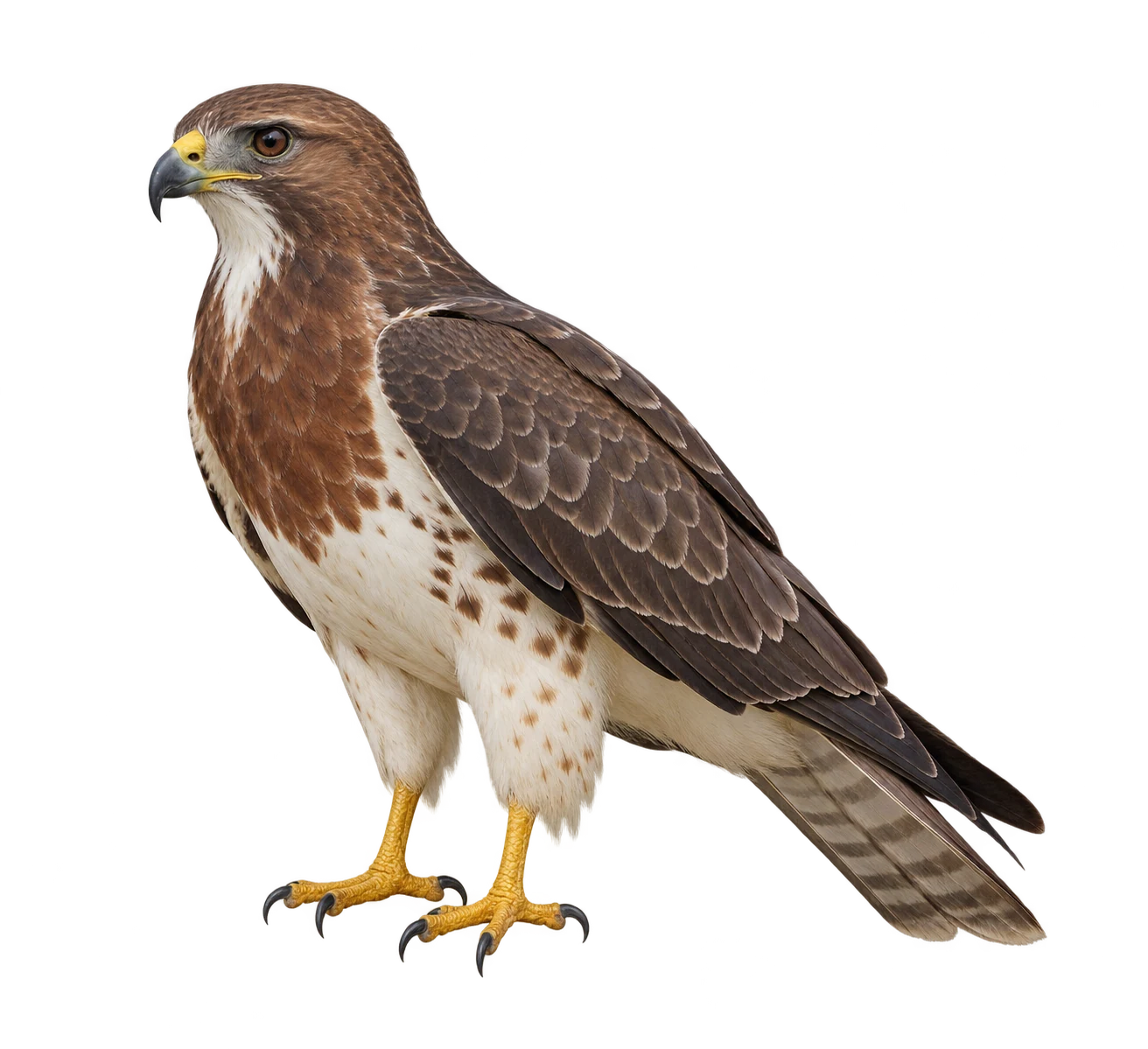
Birds
Swainson's Hawk
Buteo swainsoni
Classification and source reference
LivingAI illustration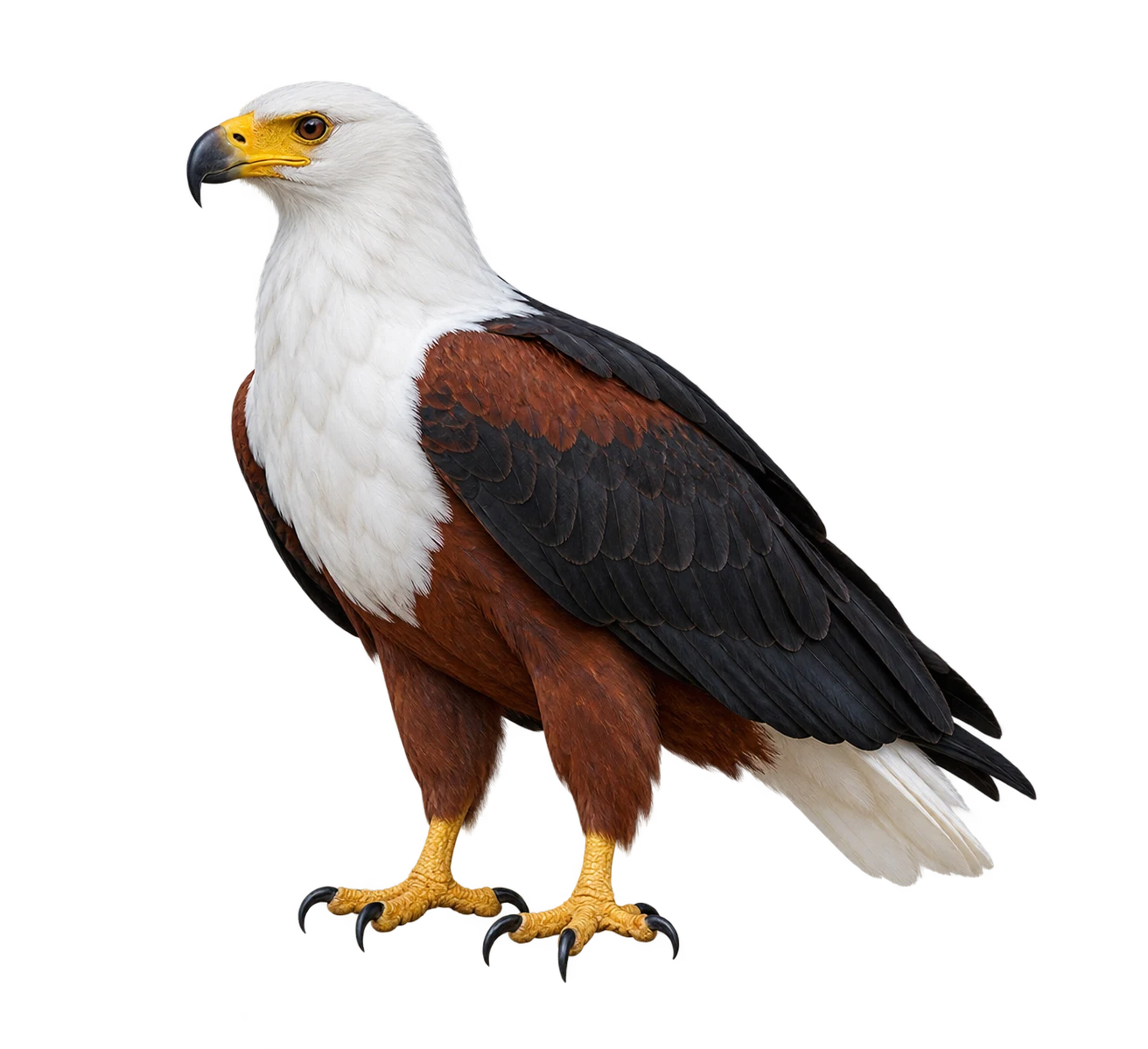
Birds
African Fish Eagle
Haliaeetus vocifer
Classification and source reference
LivingAI illustration