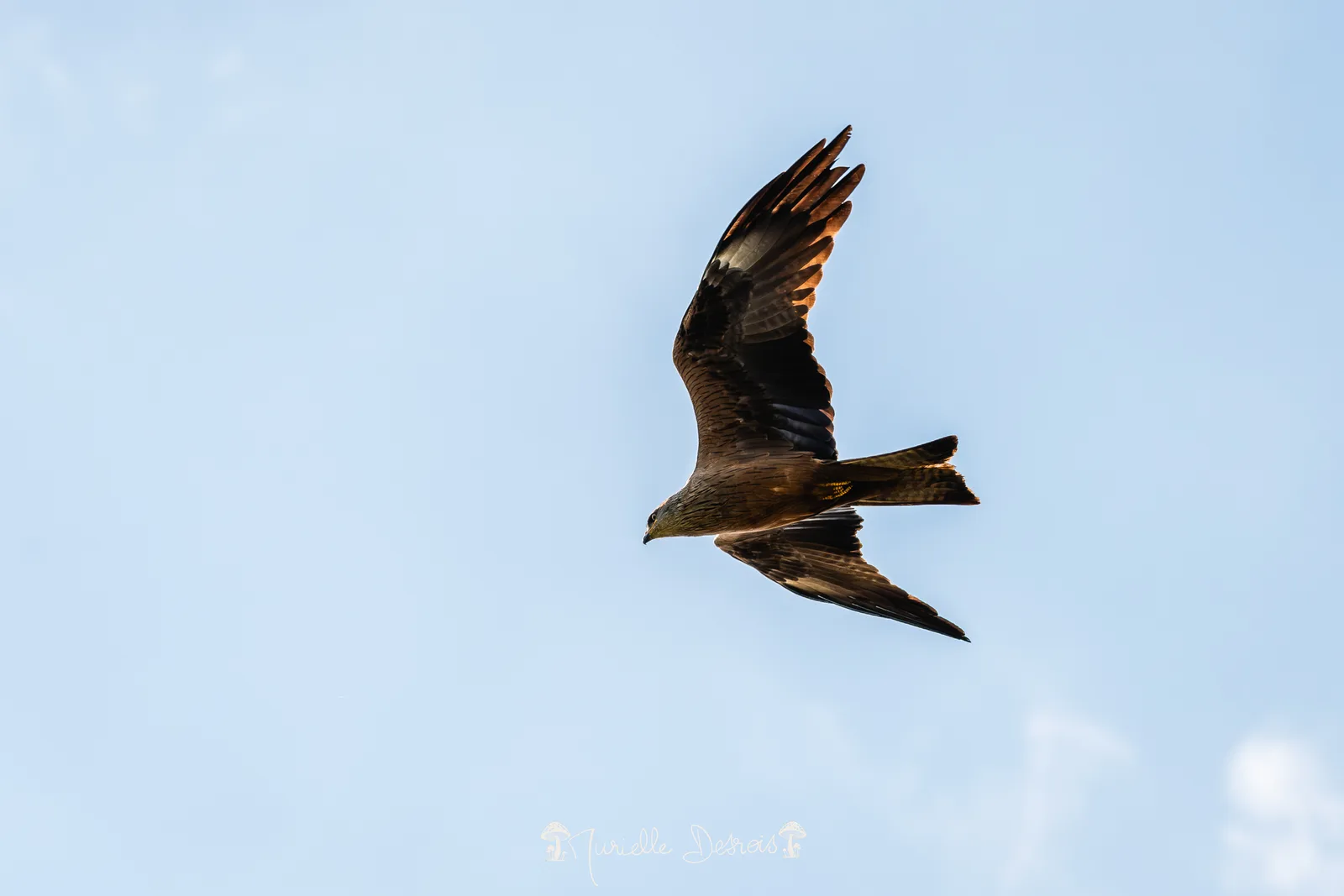
Black kite
The most numerous bird of prey on Earth
Milvus migrans
Also called Fire kite, Fork-tailed kite, Black-eared kite, Small Indian kite, Shite-hawk
Living individuals or members of this group exist today. This does not mean they are safe from extinction.
Meet the black kite
The black kite is a medium-sized raptor with angled wings and a forked tail. It is probably the most numerous bird of prey on Earth, and it scavenges as readily as it hunts.
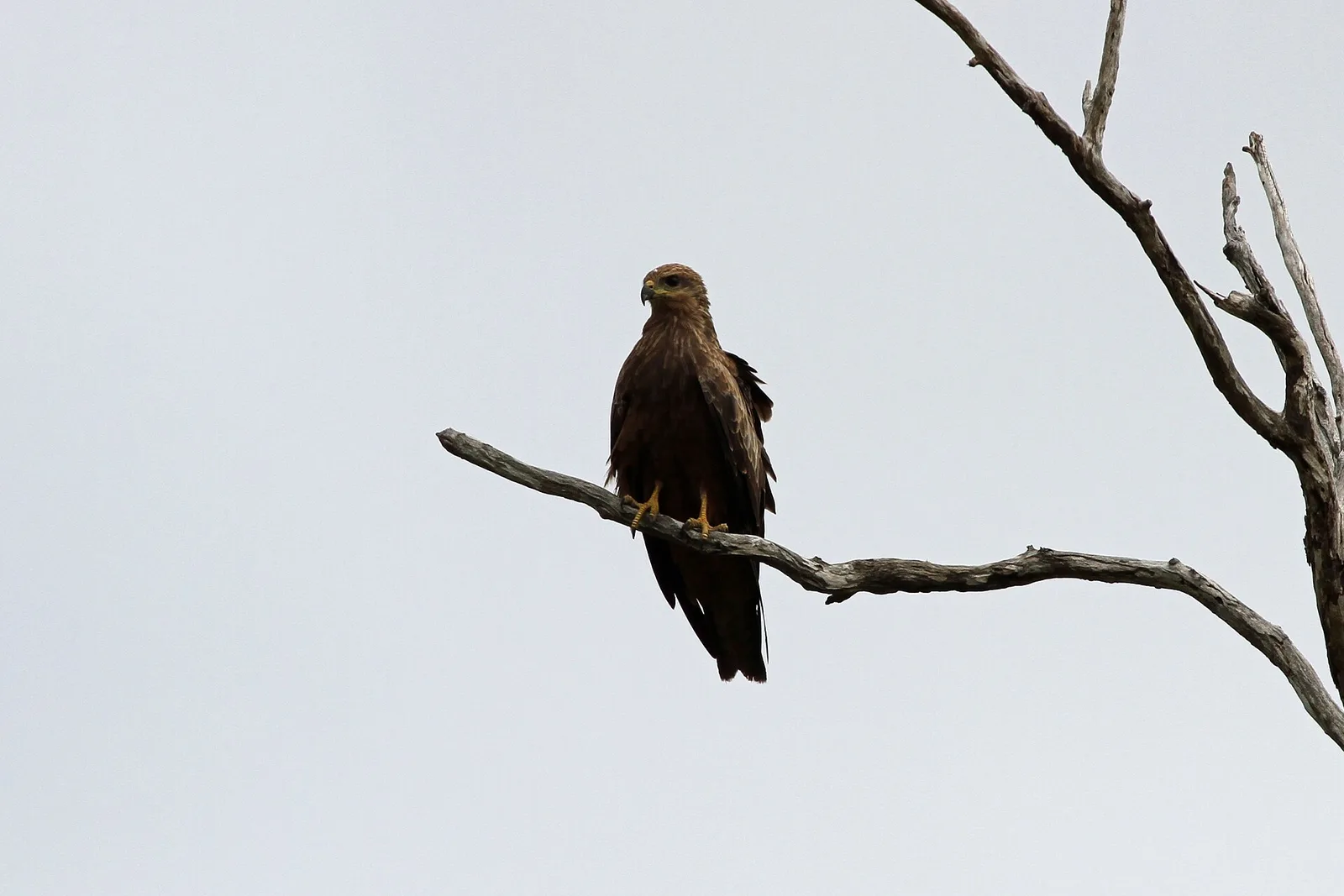
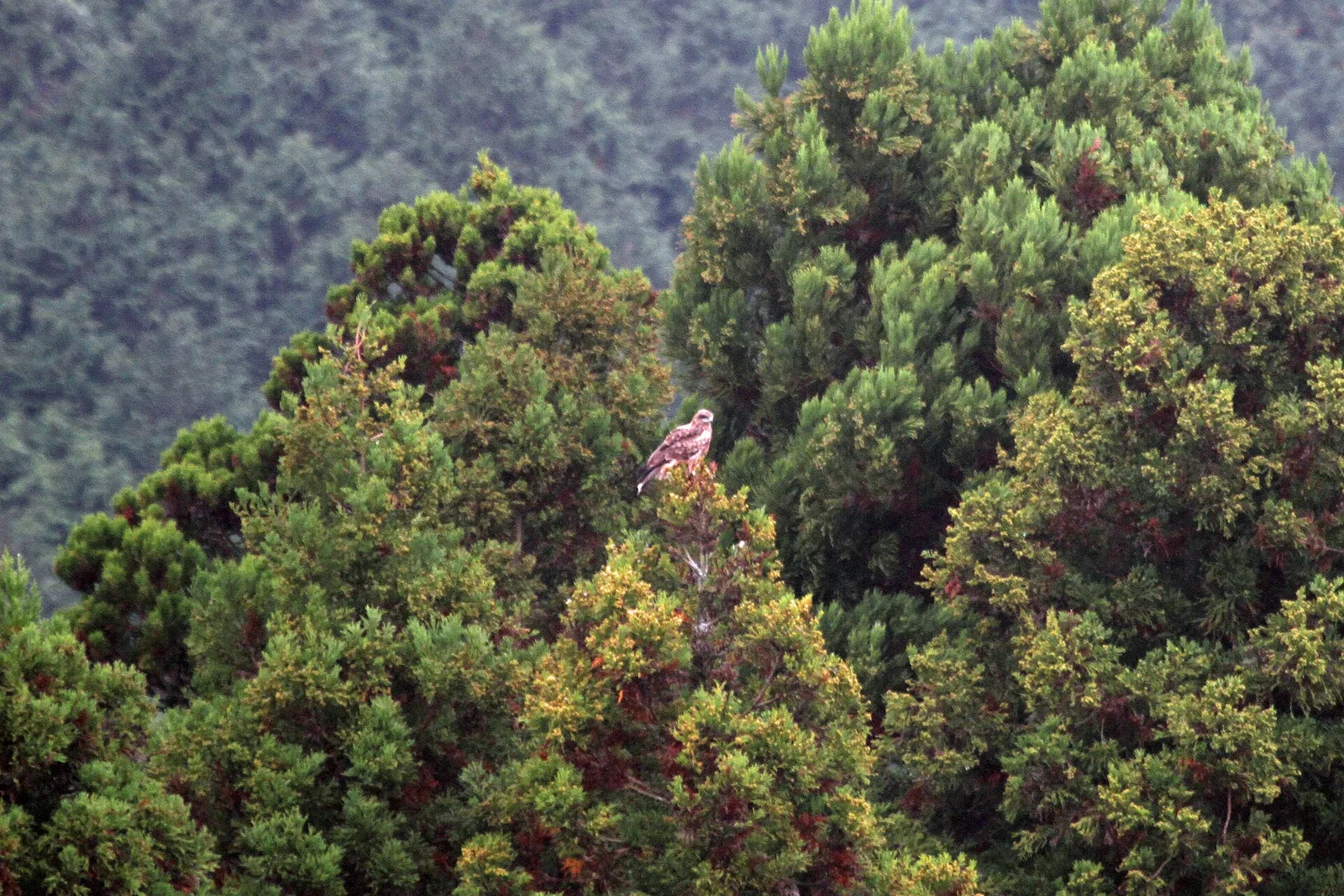
Images of the black kite
Lifespan in the wild
About 22 years
Weight
About 735 g
Length
47 to 60 cm
Wingspan
1.4 to 1.5 m
Fact file
Black kite
- Location
- Europe, Asia, Africa and Australia
- Habitat
- Rivers and lakes, Wetlands, Grassland, Towns and cities
- Diet
- Carnivore
- Prey / food
- Rats, mice, bats, small birds, fish, lizards, insects, carrion and refuse
- Predators
- Eurasian eagle-owl; other black kites take eggs and chicks
- Lifestyle
- Soaring scavenger, social and often urban
- Group name
- A roost
- Name of young
- Chick
- Incubation
- Incubation 30 to 34 days
- Clutch size
- 2 or 3 eggs
- Population
- Up to 6.7 million birds
- Biggest threat
- Poisoning, electrocution and vehicle strikes
- Distinctive feature
- A shallow forked tail and angled wings
- Colour
- Brown all over, with a paler head and neck
- Skin type
- Feathers
Size
Next to a person
Measurements
Size and speed
- Length
- 47 to 60 cm
- Wingspan
- 1.4 to 1.5 m
- Weight
- About 735 g Animal Diversity Web gives an average of 560 grams and Wikidata 828 grams
Typical adult ranges. Sources: Animal Diversity Web, Wikipedia.
Life cycle
Lifespan
- In the wildAbout 22, up to 24 years
- 024 years
The pale bar is the record. Source: Animal Diversity Web.
Appearance
Colour and coat
- Primary colours
- brown
- Secondary colours
- blackyellow
- Skin type
- feathers
- Male and female
- Slight. The two sexes share the same brown plumage. The female is a little longer than the male and has a slightly greater wingspan.
Life cycle
Mating and family
- Mating system
- monogamous pairs, with frequent mating outside the pair
- Social structure
- flocks and communal roosts outside the breeding season
- Breeding
- one clutch a year, in winter in India and in summer in Europe
A pair builds a stick platform in a tree, on a cliff or on a pylon. The female lays 2 or 3 spotted eggs and does most of the incubating for 30 to 34 days. The male brings food to her and to the chicks. The young stay in the nest for 42 to 56 days and are fed for weeks after that. Birds first breed at two or three years old.
Classification
Taxonomy
- Kingdom
- Animalia
- Phylum
- Chordata
- Class
- Aves
- Order
- Accipitriformes
- Family
- Accipitridae
- Genus
- Milvus
- Species
- Milvus migrans
Conservation
Red List status
- LC
- NT
- VU
- EN
- CR
- EW
- EX
Least Concern on the IUCN Red List
Range
Recorded in 18 countries
- Ashmore and Cartier Islands
- Switzerland
- People's Republic of China
- Germany
- Spain
- France
- Hong Kong
- India
- Italy
- Japan
- Kenya
- Kazakhstan
- Portugal
- Russia
- Taiwan
- Ukraine
- Vietnam
- South Africa
Habitat layer: tropical grassland, savanna and shrubland, temperate grassland, savanna and shrubland, flooded grassland and savanna, mangrove.
Countries from 93,448 wild records on GBIF (iNaturalist research grade), filtered and checked by hand. Country shapes: Natural Earth. Habitat: RESOLVE Ecoregions 2017, CC BY 4.0. Basemap: Natural Earth.
Habitats
Three things to know
- 1
It is the most abundant member of the hawk family, with up to 6.7 million birds.
- 2
In northern Australia it carries burning twigs and drops them to drive prey out of cover.
- 3
New Delhi held about 2200 pairs in 1967, roughly 15 pairs for every square kilometre.
Did you know
Seven more facts
- 1
Some pairs decorate the nest with white plastic, which may warn other kites away.
- 2
The bird gets its Latin name from migrare, meaning to migrate.
- 3
British troops in the tropics called it the shite-hawk, after its taste for refuse.
- 4
A parent that finds an unfairly small chick will feed that chick first.
- 5
Black kites have been recorded stealing eggs from the nests of other black kites.
- 6
A wanderer from Australia has now lived in New Zealand for about 21 years.
- 7
The species is one of the worst birdstrike hazards at some airports.
Field notes
How it looks and acts
Field notes
Distinguishing features
- A shallow forked tail, less deeply cut than a red kite's.
- Wings held at an angle, with fingered tips, while soaring.
- Plain brown plumage with no rust colour anywhere.
- A black bill with a yellow cere above it.
- A wingspan of 140 to 150 cm on a body of 47 to 60 cm.
- A pale head and neck against a darker back.
Field notes
Unique adaptations
- Long broad wings that hold a thermal for hours with almost no effort.
- A forked tail that steers the bird through a tight turn.
- A gut that probably copes with carrion, refuse and roadkill.
- Sharp eyes that pick out food from a great height.
- A weight near 0.735 kg, light enough to soar all day on rising air.
Field notes
Interesting behaviours
- Circling on a thermal above a town or a rubbish tip.
- Dropping with the legs down to snatch food off the ground or the water.
- Gathering at a fire front to take animals as they flee.
- Roosting communally in large numbers through the winter.
- Diving at anyone who approaches the nest tree.
Field notes
Temperament
- Bold around people, and it will take food from a hand.
- Opportunistic, and it prefers a free meal to a chase.
- Aggressive at the nest, where it singles out an intruder for repeated dives.
- Sociable, and it feeds, travels and roosts in company.
Field notes
Communication
- A long shrill whistle that runs into a rapid whinny.
- A sharper repeated note used at the roost and in flight.
- Loud calling between a pair before and after breeding.
- A talon-locking display that spirals down from a height.
- White material worked into the nest as a signal to rivals.
Ecology
Ecological role
The black kite is the daytime clean-up crew of the Old World. It is one of the few raptors that has gained from human cities.
- It removes carrion and refuse before it rots, which probably limits disease.
- It kills rats and mice around towns and farms.
- It preys on nestling waterfowl and on the chicks of other kites.
- It hosts flatworm parasites that reach it through the fish in its diet.
Stories
Myths and legends
- In Aboriginal Australian tradition, hawks are said to carry fire and set new ground alight.
- In British military tradition, the bird was the shite-hawk, named for its diet.
- In English naming tradition, the word kite imitates the call of a soaring raptor.
- In Indian usage, the bird carried the name pariah kite, drawn from the caste system.
People
Relationship with humans
People
Living alongside us
The black kite has followed people for as long as people have thrown food away. It nests in cities, feeds at tips and abattoirs, and clears carrion off roads. In parts of India crowds feed the birds by throwing meat into the air. That habit has removed the bird's fear of people and led to injuries from its talons. Power lines, traffic and poison now kill more kites than any predator.
- Kites diving for thrown meat have cut bystanders badly with their talons.
- A pair will dive at anyone who climbs to the nest and appears to remember that person.
- The bird does not hunt people, and it weighs about 735 g.
People
Status, uses and products
- Domestication
- Wild
- As a pet
- Not suitable. No. The black kite is a protected wild raptor across most of its range. It eats carrion and live prey, soars for hours each day, and its talons injure people even by accident.
- Uses
- carrion clearancerodent controlbirdwatching
- Products
- None recorded
The full account
About the black kite
The black kite is a medium-sized bird of prey found across the Old World. It is thought to be the most abundant member of the hawk family, Accipitridae. Estimates of the world population run up to 6.7 million birds. Adults measure 47 to 60 centimetres long with a wingspan of 140 to 150 cm. The average weight is about 735 grams.
The plumage is brown throughout, with a paler head and neck. The angled wings and the shallow forked tail identify the bird in the air. It scavenges more than it hunts, and it takes refuse, carrion and roadkill. It lives easily in cities, and Indian towns hold some of the densest populations anywhere. The IUCN lists the species as Least Concern, though some local populations swing sharply.
Name and taxonomy
Buffon described the bird in his natural history of birds in 1770, without giving it a scientific name. The Dutch naturalist Pieter Boddaert supplied the name Falco migrans in 1783. Bernard Germain de Lacepede set up the genus Milvus in 1799. Milvus is a Latin name for the red kite, and migrans means migrating. The type specimen came from France.
The English word kite comes from cyta in Old English, a name that copies the call. The word first belonged to the buzzard, and it moved across to the red kite around the 1700s. British service personnel in the tropics called the black kite a shite-hawk, after its taste for refuse. Other names in use include fire kite, fork-tailed kite and black-eared kite. The old name pariah kite came from the Indian caste system and is no longer used.
Evolution and relatives
The genus Milvus holds the black kite, the red kite and the yellow-billed kite. Kites as a whole form no single natural group, and the label sits on several branches of the hawk family. The red kite and the black kite have produced hybrids in captivity and on the Cape Verde Islands. DNA work separates the yellow-billed African birds from the Eurasian ones. Many authorities now treat those African birds as a species of their own.
Five subspecies of the black kite are recognised. The European bird breeds from Europe to the Tien Shan and winters south of the Sahara. The black-eared kite runs from Siberia to Japan and south around the Himalayas. The small Indian kite is resident from Pakistan to the Malay Peninsula. The fork-tailed kite lives in New Guinea and eastern Australia, and a fifth race holds Taiwan and Hainan. The Taiwan birds are now probably a blend of that race and the black-eared kite.
Appearance
The body measures 47 to 60 cm, with an average of about 55 cm. The wingspan runs from 140 to 150 cm. Birds average about 735 g, and Animal Diversity Web gives a lighter 560 g. The sexes wear the same plumage. The female is a little longer than the male and has a slightly wider span.
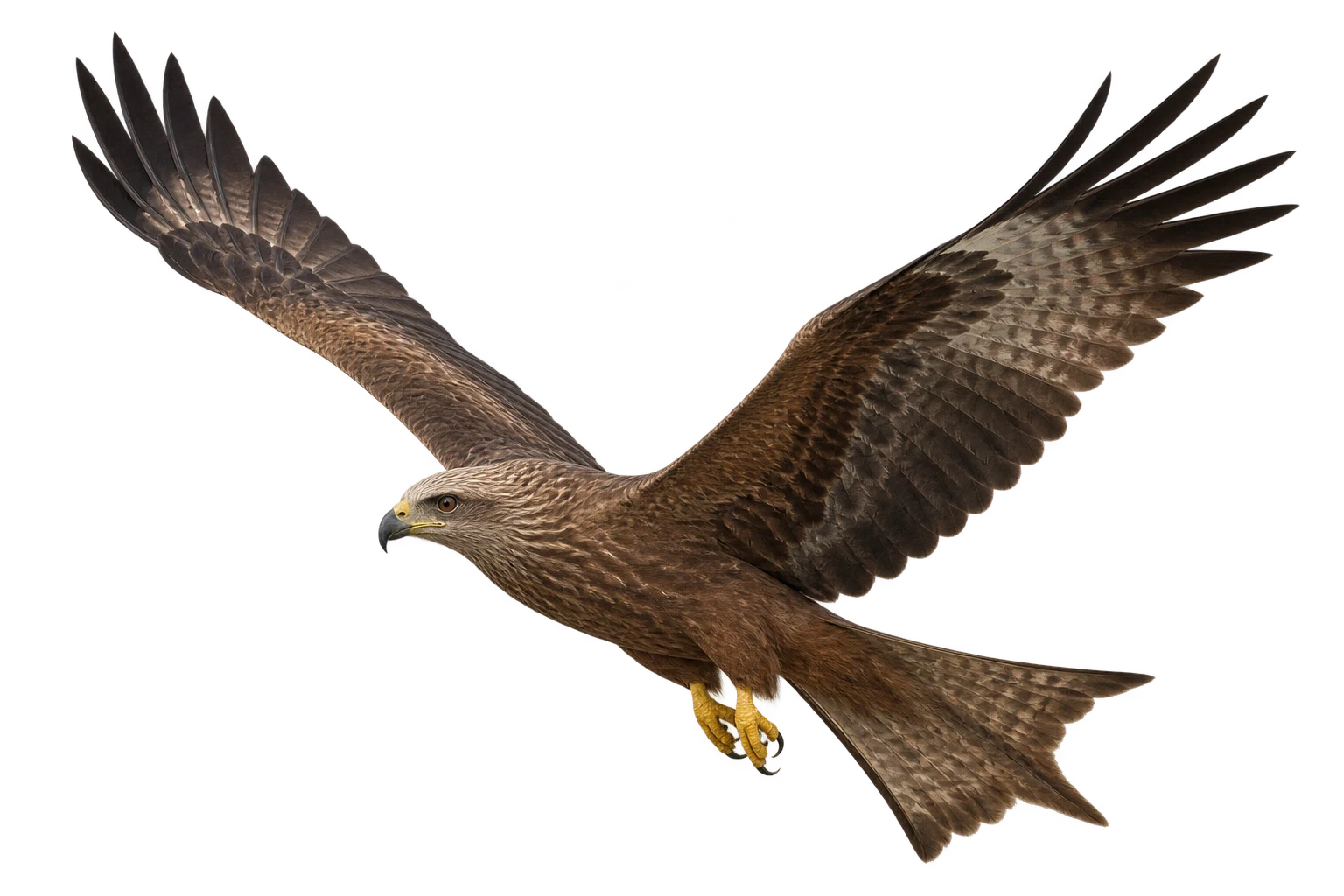
The upperside is brown and darkens towards the wingtips and the tail. The head and neck are paler, and a darker patch sits behind the eye. The outermost flight feathers are black, and the rest carry dark bars across them. Dark shafts in the body feathers give the underside a streaked look. The underparts are pale brown and grow lighter towards the chin.
The bill is black and strongly hooked, and the cere and gape are yellow. That black bill separates the species from the yellow-billed kite of Africa. The legs are yellow, and the claws on them are black. The eyes are small, dark and bead-like. The tail forks shallowly, less deeply than the tail of a red kite. A young bird is paler and its tail fork is shorter.
Habitat and range
The species covers Europe, Asia, Africa and Australia. It is missing from the Indonesian islands between mainland Southeast Asia and the Wallace Line. Stray black-eared kites have reached as far east as Hawaii. In Britain the bird appears only as a wanderer on migration. A juvenile of the eastern race turned up in Lincolnshire in November 2006, the first for western Europe.
Open ground near water is the core habitat. River edges, ponds, lakes and wetlands all draw the bird. It also uses woodland edges, open savanna and farmland. It avoids dense forest, true desert and high mountains. Cities suit it, because rats and roadkill are steady food.
Temperate populations migrate and tropical ones stay put. European and central Asian birds move to the tropics for the winter. Indian and Australian birds hold their ground all year. Indian numbers rise sharply from July to October, after the monsoon. A survey of New Delhi in 1967 found about 2200 pairs in 150 square kilometres. A later survey in 2013 counted 150 pairs for every 10 square kilometres.
Diet and hunting
The black kite eats almost anything it can carry. Carrion, refuse, roadkill and dead fish make up much of the diet. It also kills rodents, bats, small birds, lizards, frogs and insects. It robs other kites' nests and has torn open weaver nests to reach the eggs and chicks. Black kites in Spain take young waterfowl, especially while feeding their own brood.
Most of the day is spent gliding on thermals with the wings held at an angle. The flight is buoyant, and the bird changes direction with a twist of the tail. It drops with its legs lowered to snatch food from the ground or the water surface. Sight is its main sense, and it can pick out food at a great distance. In cities it will take meat from a person's hand or from the air.
Fire is a hunting tool as well as a signal. Kites collect over smoke and along a fire front to catch the animals that run out. In northern Australia they carry burning sticks and drop them in unburnt grass. The new fire flushes more prey, and this habit has earned the birds the name firehawks. In some Indian towns people throw meat into the air for the kites to catch. That habit has made the birds bold, and their talons have caused serious injuries.
Behaviour and social life
The black kite is social for most of the year. In winter it gathers in large communal roosts, and flocks circle before they settle. On migration it forms bigger flocks than most other travelling raptors. Those flocks build up before a crossing over open water. During the breeding season a pair may live alone or in a loose group.
The bird is loud and calls often, both at the roost and while hunting. A pair defends the ground around its nest and watches for anything that comes near. Away from the nest it holds no territory that anyone has measured. Its home range sits close to the roost when it is not travelling. Among chicks, rank follows hatching order and egg size, and the first out leads.
Communication and senses
The call is a long shrill whistle that runs into a fast whinnying trill. Animal Diversity Web writes the first part as a drawn-out kleee-errr. The second part breaks into a sharper repeated note. Birds call at the roost, in courtship and while hunting in company. The calls resemble those of the red kite, and captive birds of the two species answer each other.
Courtship is loud and acrobatic. A pair grapples in the air, locking their feet together and spinning down towards the ground. The two birds probably break apart well before they reach the ground. Eyesight is the leading sense and finds food far below. Some nests are decorated with white plastic, and a Spanish study reads that as a warning to rival kites.
Reproduction and life cycle
European birds breed in summer, and Indian birds start in January and February. Indian chicks fledge before the monsoon arrives. Courtship begins in March in Europe, and the eggs follow in April and May. Both birds build a rough platform of sticks in a tree, usually near the trunk. Nests sit 2 to 30 metres up, and most are between 8 and 15 m. Cliff ledges and electricity pylons are used as well.
The nest is lined with paper, feathers, plastic and almost anything else the birds find. A pair often reuses a site, and sometimes takes over an old nest from another bird. Pairs may nest close to each other and beside heron or cormorant colonies. The clutch is 2 or 3 off-white eggs freckled with brown, and 1 to 5 have been recorded. Incubation runs 30 to 34 days, and the female does most of the sitting.
The male brings food while the female incubates and broods. Chicks feed on scraps at the bottom of the nest before they learn to tear flesh at 33 to 39 days. They stand at 17 to 19 days and flap their wings at 27 to 31 days. After 50 days they climb out onto branches beside the nest. The brood stays in the nest for 42 to 56 days and depends on the parents for weeks longer. Siblings fight, and the weaker chick is often killed, though parents will favour a small chick with food.
Predators and threats
A full-grown black kite has almost no natural predator. The Eurasian eagle-owl is the exception and kills kites of any age. In the Italian Alps, eagle-owls nesting within a few kilometres cut kite breeding success sharply. Other black kites are a danger too, because they rob nests of eggs and chicks. The birds carry flatworm parasites picked up from the fish they eat.
Most deaths now come from people rather than predators. The birds perch on power lines and are electrocuted in numbers. Swooping for roadkill puts them in front of vehicles. Mass poisonings have followed the eating of poisoned voles on farmland. They are a serious birdstrike hazard at some airports, because of their size and their habit of soaring. Japanese black-eared kites store about 70 per cent of the mercury they swallow in their feathers.
Population and conservation
The IUCN lists the black kite as Least Concern. The range is enormous and the total may reach 6.7 million birds. That makes it the most numerous bird in the hawk family. iNaturalist alone carries more than 127471 observations of the species. The bird has been recorded in 177 countries on GBIF.
The picture is uneven under that large total. European populations are small, and the South Asian population is very large. Some local groups have crashed and others have swung up and down. Water pollution, farm pesticides, shooting and poisoned carcasses drive the local falls. Numbers in Taiwan dropped through the twentieth century and left a mixed population behind.
Cities appear to have been good to the species, unlike almost every other raptor. Rubbish tips, slaughter waste and rats support very high densities. That closeness probably raises the toll from wires, traffic and poison. Birds reach breeding age at 2 to 3 years old. A wild bird can live 24 years, and one Australian stray in New Zealand is about 21.
Relationship with humans
Few wild raptors appear to live as close to people as this one. It nests in city trees, feeds at tips and follows fishing boats and abattoirs. It clears carrion and roadkill, which probably slows the spread of disease. It takes rats and mice in places where those animals damage stored food. Animal Diversity Web records no harmful effect of the species on people.
The exception is the food snatch. In parts of India people toss meat up for the kites, and the birds dive to catch it. Feeding has worn away their fear, and they now take food straight from a hand. Bystanders have been badly cut by the talons during these dives. Kites also dive at anyone who climbs to a nest, and they seem to remember the individual.
In culture and myth
In Aboriginal Australian tradition, birds are said to carry fire and spread it across country. Field reports from northern Australia describe black kites doing exactly that with burning sticks. The name firehawk covers the black kite and two other raptors that behave the same way. The English name fire kite probably comes from the same habit of working a fire front. The bird appears to sit at the meeting point of a story and a measurement.
In British military tradition, servicemen in hot countries named the bird the shite-hawk. The word passed into general slang and probably lost its link with the bird. In English naming tradition, the word kite began as an imitation of a raptor's call. In Indian tradition, the bird was long called the pariah kite, after a term for low caste. That name has now been dropped in favour of small Indian kite.
A sentence with a dotted underline is inferred: it describes the group the animal belongs to, or is a reading of the sources, rather than a measured or reported fact about this species.
Questions
Black kite questions, answered
How many black kites are there?
Estimates run up to 6.7 million birds. That is thought to make it the most abundant species in the hawk family. Numbers are largest in South Asia and small in Europe.
How big is a black kite?
It is 47 to 60 cm long, about 55 cm on average, with a wingspan of 140 to 150 cm. It weighs about 735 g. Animal Diversity Web gives a lighter average of 560 g.
What do black kites eat?
Mostly carrion, refuse, roadkill and dead fish. They also kill rats, bats, small birds, lizards and insects. They rob other birds' nests when they can.
Do black kites really start fires?
Reports from northern Australia say they do. Birds pick up burning sticks from a fire front and drop them in unburnt grass, which flushes more prey. This is why they are called firehawks.
How can I tell a black kite from a red kite?
The black kite is slightly smaller, plain brown with no rust colour, and its tail fork is shallow. A red kite is more strongly forked and shows rufous tones.
Where do black kites live?
Across Europe, Asia, Africa and Australia, in open country near water and in cities. They avoid dense forest, desert and high mountains. They are missing from the Indonesian islands west of the Wallace Line.
Are black kites dangerous to humans?
They do not hunt people, but they can injure them. Kites diving for thrown meat have cut bystanders with their talons. A pair will also dive at anyone who climbs to the nest.
How long do black kites live?
Up to 24 years in the wild, with an average around 22. They start breeding at two or three years old. One bird in New Zealand is about 21 years old.
Do black kites migrate?
Some do. European and central Asian birds fly to the tropics for the winter. Indian and Australian birds stay put all year.
Where do black kites nest?
In a stick platform in a tree, usually near the trunk, between 2 and 30 metres up. They also nest on cliff ledges and electricity pylons. Old nests are often reused.
How many eggs does a black kite lay?
Usually 2 or 3, off-white with brown freckles. Clutches of 1 to 5 have been recorded. Incubation takes 30 to 34 days.
Are black kites endangered?
No. The IUCN lists the species as Least Concern because of its huge range and population. Some local groups have declined from poisoning, pesticides and shooting.
Why do black kites live in cities?
Because cities feed them. Rubbish tips, slaughter waste, rats and roadkill all provide steady food. Indian cities hold some of the densest raptor populations anywhere.
What sound does a black kite make?
A long shrill whistle that runs into a fast whinnying trill. Birds call loudly at roosts, during courtship and while hunting together.
Why do black kites lock talons in the air?
It is a courtship display. Two birds grip each other's feet and spiral down from a great height before separating. They call loudly while they do it.
What kills black kites?
Mostly people, without meaning to. Power lines electrocute them, vehicles hit them while they take roadkill, and poisoned voles kill them in numbers. The Eurasian eagle-owl is the one serious natural predator.
Food web
Prey and food
- rats
- mice
- bats
- birds
- fish
- lizards
- insects
- carrion
- refuse
 Black kite
Food web
Predators
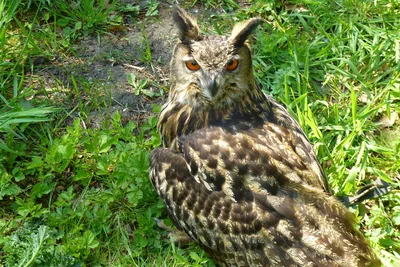 Eurasian eagle-owl
Ecological equivalents
Related species on this site
Australian Firehawk (same genus), Red Kite (same genus), African Fish Eagle (same family), Bald eagle (same family), Bearded vulture (same family), Cinereous Vulture (same family), and more.
Birds
Australian Firehawk
Milvus migrans
Classification and source reference
LivingAI illustration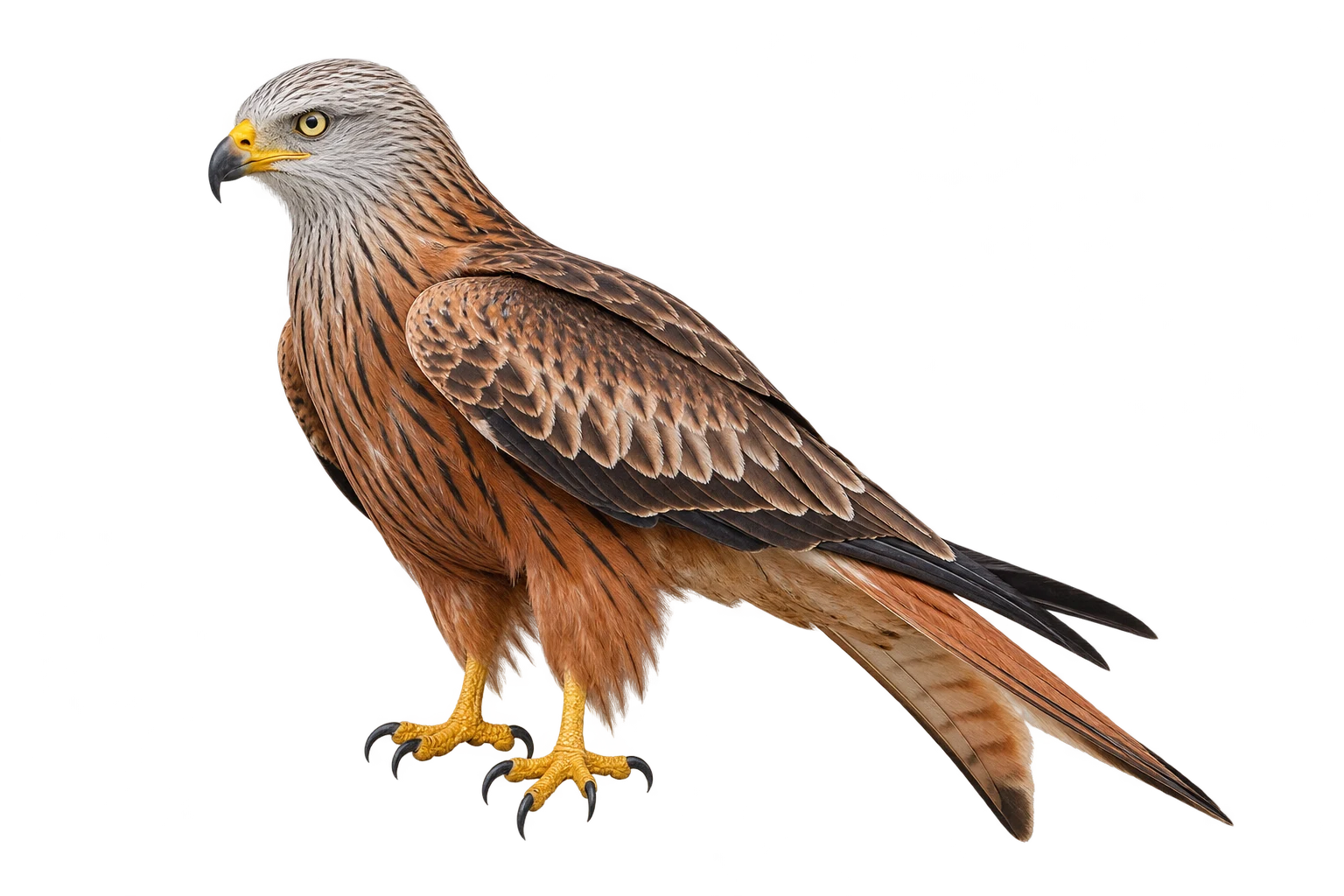
Birds
Red Kite
Milvus milvus
Classification and source reference
LivingAI illustration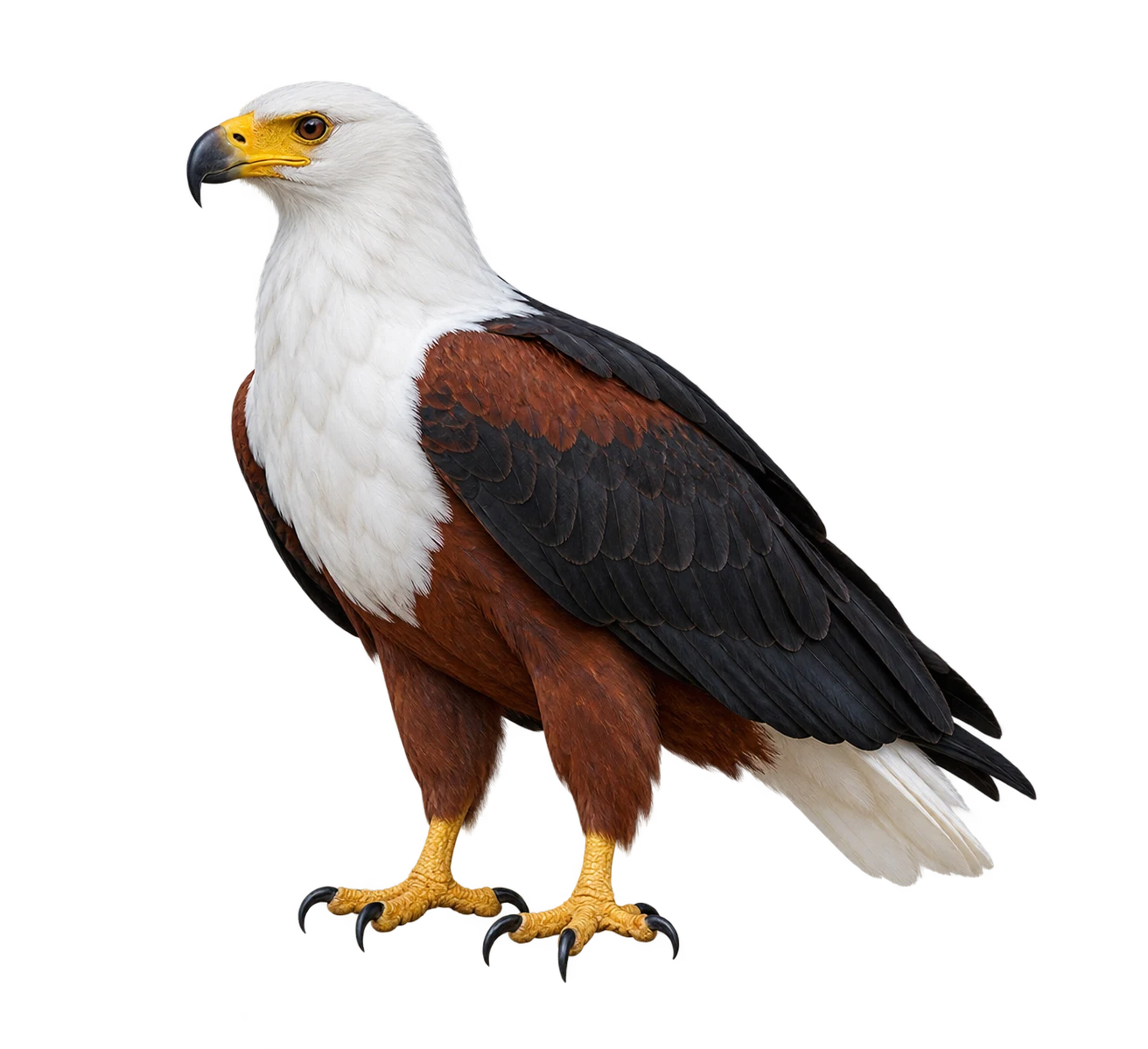
Birds
African Fish Eagle
Haliaeetus vocifer
Classification and source reference
LivingAI illustration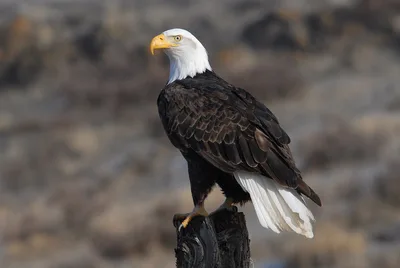 LC
Birds
Bald eagle
Haliaeetus leucocephalus
The bald eagle is the national bird of the United States.
Living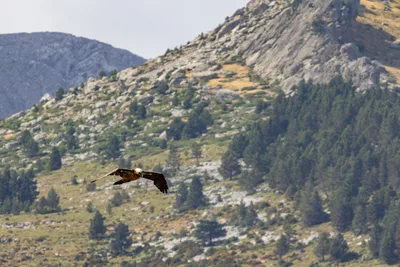 NT
Birds
Bearded vulture
Gypaetus barbatus
The bearded vulture is a huge mountain raptor that lives almost entirely on bone.
Living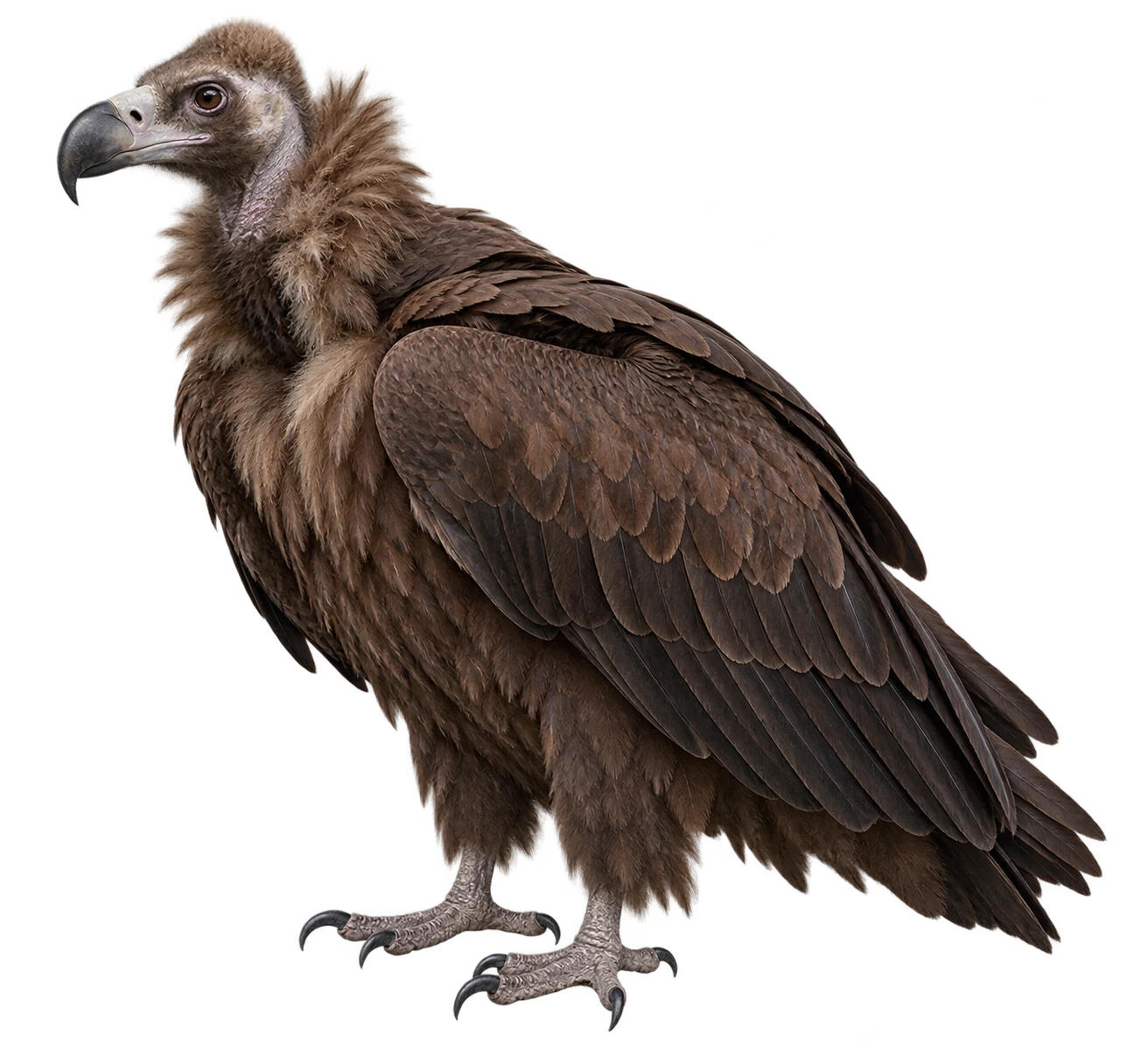
Birds
Cinereous Vulture
Aegypius monachus
Classification and source reference
LivingAI illustration