
Common raven
The heaviest songbird, and one of the cleverest
Corvus corax
Also called Northern raven, Western raven, American raven, Corbie
Living individuals or members of this group exist today. This does not mean they are safe from extinction.
Meet the common raven
The common raven is a large black crow that lives right across the northern half of the world. It is the heaviest of the songbirds, and one of the few animals that solves new problems by thinking them through.
Images of the common raven
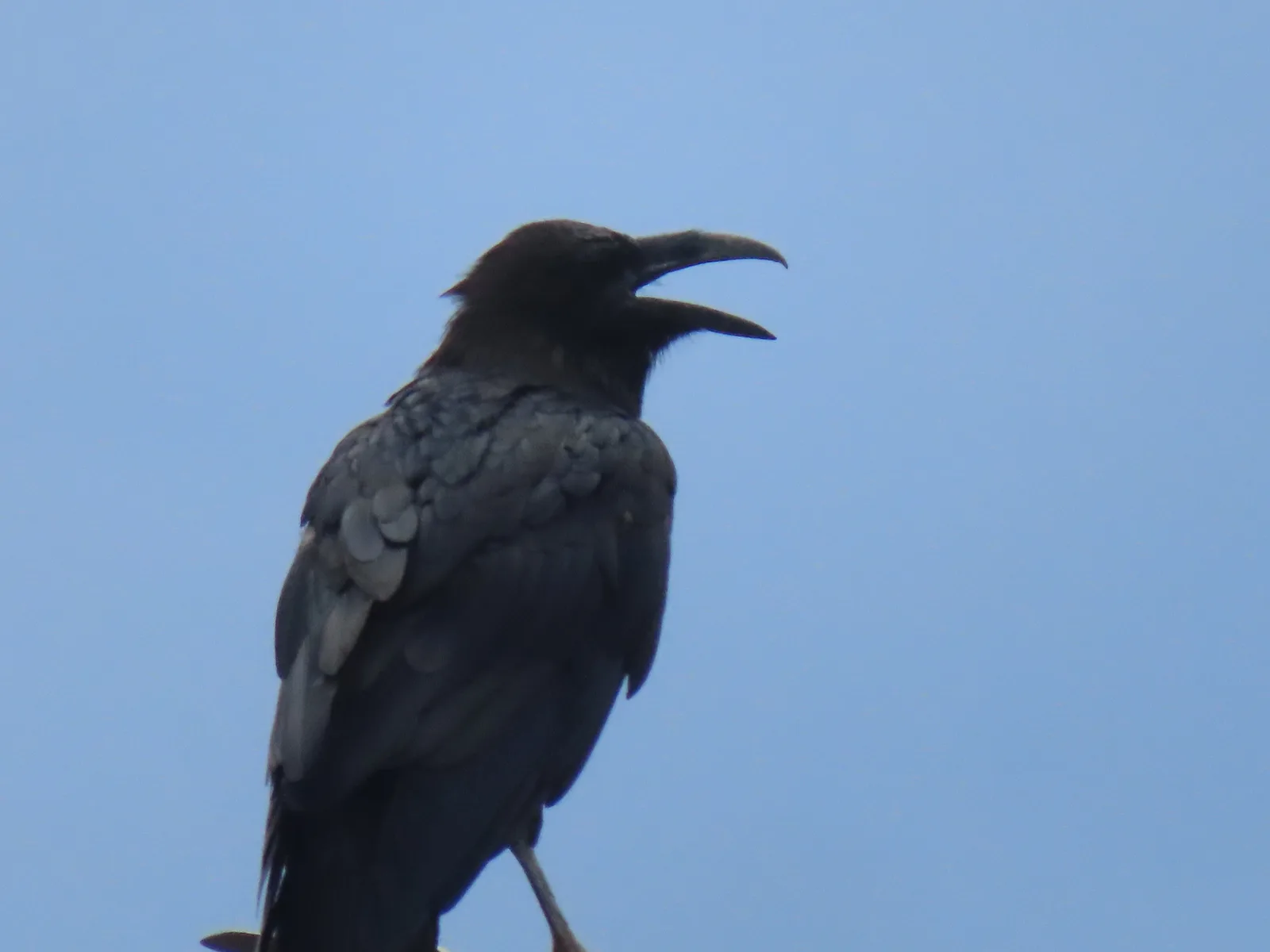
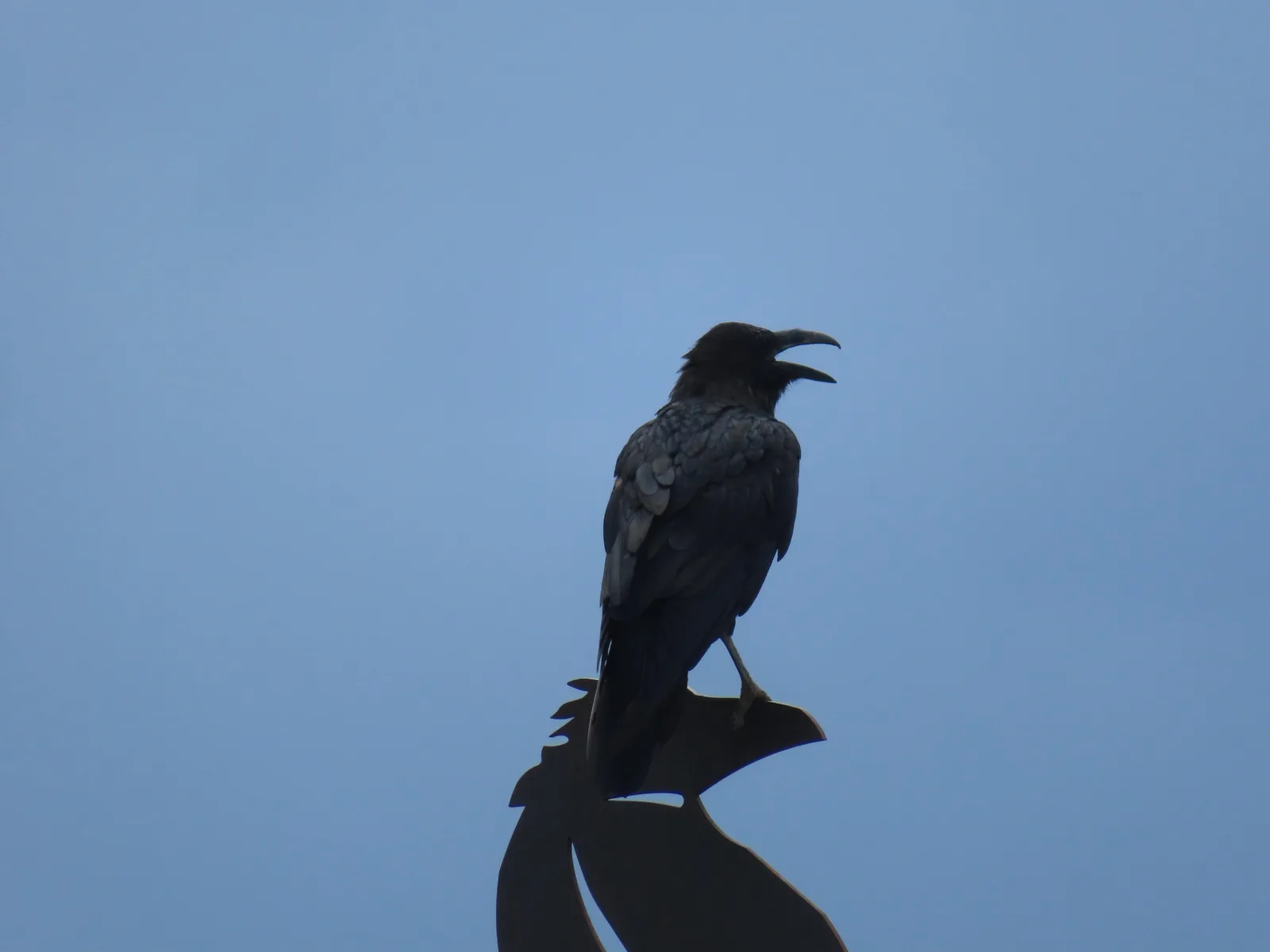
Lifespan in the wild
10 to 15 years
Weight
0.69 to 1.63 kg
Length
54 to 71 cm
Wingspan
1.16 to 1.53 m
Fact file
Common raven
- Location
- North America, Europe, Asia, North Africa, Greenland, Iceland
- Habitat
- Temperate forest, Mountains, Tundra, Coast
- Diet
- Omnivore
- Prey / food
- Rodents, lizards, frogs, insects, eggs, nestlings, carrion
- Predators
- Golden eagle, great horned owl, marten, coyote; mostly at the nest
- Lifestyle
- Active by day, in pairs on a held territory
- Group name
- Unkindness
- Name of young
- Chick
- Incubation
- Incubation about 18 to 21 days
- Clutch size
- 3 to 7 eggs, usually 4 to 6
- Population
- Least Concern and rising across much of the range
- Biggest threat
- Shooting, poisoning and trapping by people
- Distinctive feature
- Wedge-shaped tail and shaggy throat feathers
- Colour
- Glossy black with a purple and green sheen
- Skin type
- Feathers
Size
Next to a person
Measurements
Size and speed
- Length
- 54 to 71 cm
- Wingspan
- 1.16 to 1.53 m
- Tail
- 20 to 26.3 cm
- Weight
- 0.69 to 1.63 kg, up to 2.25 kg the low and high are the recorded adult range; the max is the heaviest bird on record
Typical adult ranges. Source: Wikipedia.
Life cycle
Lifespan
- In the wild10 to 15, up to 23 years
- In captivityUp to 44 years
- 044 years
The pale bar is the record. Sources: Wikipedia, Animal Diversity Web.
Appearance
Colour and coat
- Primary colours
- black
- Secondary colours
- purplegreengrey
- Skin type
- feathers
- Male and female
- Very slight. Males average a little larger than females, but the two sexes share the same black plumage and cannot be told apart in the field.
Life cycle
Mating and family
- Mating system
- monogamous pairs, usually for life
- Social structure
- territorial pairs, with unpaired young birds in flocks and shared roosts
- Breeding
- one clutch a year, laid between mid-February and May
A pair holds one territory and returns to the same nest site year after year. The female lays 3 to 7 eggs and sits on them alone for about 18 to 21 days. Both parents feed the chicks, which leave the nest at 35 to 49 days old. The young stay with their parents for roughly six months, then join a flock of other young birds. Most ravens first breed at about 3 years old.
Classification
Taxonomy
- Kingdom
- Animalia
- Phylum
- Chordata
- Class
- Aves
- Order
- Passeriformes
- Family
- Corvidae
- Genus
- Corvus
- Species
- Corvus corax
Conservation
Red List status
- LC
- NT
- VU
- EN
- CR
- EW
- EX
Least Concern on the IUCN Red List
Range
Recorded in 11 countries
- Austria
- Canada
- Germany
- Spain
- France
- United Kingdom
- Italy
- Mexico
- Russia
- Ukraine
- United States of America
Habitat layer: temperate broadleaf and mixed forest, temperate conifer forest, boreal forest and taiga, montane grassland and shrubland, tundra, mangrove.
Countries from 127,646 wild records on GBIF (iNaturalist research grade), filtered and checked by hand. Country shapes: Natural Earth. Habitat: RESOLVE Ecoregions 2017, CC BY 4.0. Basemap: Natural Earth.
Habitats
Three things to know
- 1
A raven can pull a hanging string up loop by loop to reach meat tied to the end.
- 2
Ravens hide surplus food, and they move a cache when another raven is watching.
- 3
Young ravens slide down snowbanks and break off twigs to play with.
Did you know
Seven more facts
- 1
A group of ravens is called an unkindness or a conspiracy.
- 2
The flight feathers creak, and the sound carries a long way on a still day.
- 3
Ravens lead wolves to carcasses that the birds can see from the air.
- 4
Odin's ravens are named Huginn and Muninn, thought and memory.
- 5
A ringed wild raven lived 23 years, a record for a northern songbird.
- 6
Ravens collect shiny objects, and one idea is that these resemble eggs.
- 7
The species has been recorded in 99 countries on GBIF.
Field notes
How it looks and acts
Field notes
Distinguishing features
- The tail is wedge-shaped, not fanned like a crow's tail.
- Shaggy pointed feathers stand out from the throat.
- The bill is deep, heavy and slightly hooked at the tip.
- The wings span 116 to 153 cm, far wider than any crow's.
- The call is a deep croak rather than a flat caw.
- Ravens soar on flat wings and flap much less than crows do.
Field notes
Unique adaptations
- An omnivorous gut lets the bird switch between grain, insects and meat.
- Food caching probably carries a good day's find into a bad week.
- A large forebrain supports problem-solving and learning by watching.
- Thick dark plumage likely holds heat in Arctic and mountain air.
- Broad wings and a long tail let the bird ride ridge lift with little effort.
Field notes
Interesting behaviours
- Pairs defend one territory year after year.
- Unpaired birds roost together and forage alone by day.
- A finder calls other young birds to a big carcass with loud yells.
- Ravens raid the caches of other ravens and of Arctic foxes.
- Birds slide down snowbanks and play chase with other animals.
Field notes
Temperament
- Adults are bold near food but very wary of anything unfamiliar.
- Neighbouring birds squabble constantly over territory edges.
- Parents are fearless at the nest and attack much larger animals.
- Young birds are curious and handle almost every new object they find.
Field notes
Communication
- The deep croak is the call most people know.
- Between 15 and 33 call types have been described for the species.
- Wing whistles and bill snapping add sound without the voice.
- Threat and appeasement displays sort out rank between birds.
- Mutual preening appears to keep a pair bond in repair.
Ecology
Ecological role
The raven works both ends of the food chain, as a scavenger that cleans up and as a predator that limits smaller animals.
- Eating carrion returns nutrients to the soil and removes possible disease sources.
- The bird preys on insects, small mammals and other birds across its whole range.
- Buried seeds and nuts that are never recovered may grow into new plants.
- Where people boost raven numbers, the extra birds press hard on tortoises and condors.
Stories
Myths and legends
- In Norse tradition, two ravens gather news for Odin and speak it into his ear.
- In Irish tradition, the war goddess Morrigan takes raven form over the battlefield.
- In Haida and Tlingit tradition, Raven steals the sun and releases daylight.
- In Bhutanese tradition, the raven is an aspect of Mahakala and crowns the king.
- In Swedish tradition, ravens are the restless ghosts of murdered people.
People
Relationship with humans
People
Living alongside us
Ravens have followed people, herds and hunting camps for a very long time. Farmers treat them as pests where they take grain or attack newborn stock. Finland paid a bounty on the bird until 1923, and shooting and poisoning still happen. Towns and landfills now feed large numbers, and birds nesting near waste raise more young. Britain keeps a famous group of captive ravens at the Tower of London.
- A raven will dive at a person who comes close to its nest.
- The bill can draw blood, but serious injury to people is very unlikely.
- The bird carries West Nile virus, which mosquitoes and not ravens pass to people.
People
Status, uses and products
- Domestication
- Wild
- As a pet
- Not suitable. A raven is a large, loud, long-lived wild bird that needs space and constant mental work. It is protected by law in most of its range, and adults become very wary of people.
- Uses
- pest control researchwildlife tourism
- Products
- None recorded
The full account
About the common raven
The common raven is a large black bird of the crow family. It is a songbird by anatomy, and it is the heaviest songbird alive. Adults measure 54 to 71 centimetres from bill to tail tip. The wings span 116 to 153 cm, wide enough to soar without flapping. The plumage is black all over, with a purple and green sheen in sunlight.
No other member of the genus Corvus covers so much ground. The species lives from the high Arctic to the deserts of North Africa. It eats carrion, grain, berries, insects, eggs and any small animal it can catch. That flexible diet is probably the main reason the bird is everywhere.
Ravens are also famous for what they do with their brains. They solve puzzles they have never met, hide food from watchers and remember a cheat. People have likely written the bird into myth for as long as they have written.
Name and taxonomy
Carl Linnaeus named the species in the tenth edition of Systema Naturae in 1758. He gave Europe as the type locality, and the name Corvus corax has never changed. The bird is the type species of Corvus, the genus that holds every crow and raven. Corvus is simply the Latin word for a raven. The second half, corax, is a Latin spelling of the Greek word for the same bird.
The English name has close relatives in the other Germanic languages. Old Norse had hrafn, and Old High German had raban. An older Scots word for the bird is corby, which matches the French corbeau. Most authorities now accept 11 subspecies, and some accept only 8. The subspecies differ little in looks, though northern birds run larger. English also keeps two odd collective nouns for a group: an unkindness and a conspiracy.
Evolution and relatives
The nearest relatives are the brown-necked raven, the pied crow and the Chihuahuan raven. The species arose in the Old World and later crossed the Bering land bridge. Genetic work splits living birds into two main groups. One group is confined to California and the American southwest. The other covers the whole rest of the northern hemisphere.
The two groups look the same, but they began to separate about two million years ago. The Californian birds are closer to the Chihuahuan raven than to birds from Europe. That makes the species paraphyletic as it is currently drawn. A study in 2011 found no barrier to breeding between the two groups. The split may therefore be closing again rather than widening. Ravens of the Holarctic group probably reached North America late, perhaps 15,000 years ago.
Appearance
A full-grown raven is 54 to 71 cm long and weighs 689 to 1,625 grams. The heaviest bird on record reached 2.25 kilograms. The tail alone runs 20 to 26.3 cm and ends in a blunt wedge. That wedge is the quickest way to tell a raven from a crow overhead. The bill is heavy, deep and slightly curved, with a culmen of 5.7 to 8.5 cm.
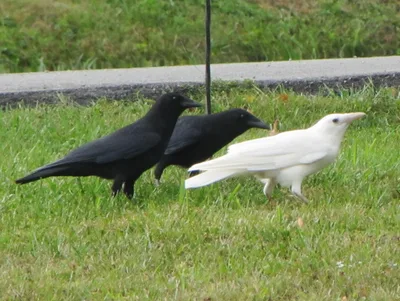
Long pointed feathers on the throat form a shaggy beard, called hackles. The bird raises them when it displays to another raven. Stiff bristles cover the base of the bill, and the legs and feet are thick. The eye of an adult is dark brown, while a young bird has a blue-grey iris. Juvenile plumage is duller and the gape is pink at first. White or pale birds turn up now and then, most of them leucistic rather than albino. A pied form once lived in the Faroe Islands and is now gone.
Habitat and range
The raven holds the widest range of any bird in its genus. It breeds across northern Europe, Iceland, Greenland, Siberia and most of North America. The range reaches south to the Himalayas, northwest India, North Africa and the Canary Islands. In the Americas it thins out southward and stops around Nicaragua. GBIF holds records from 99 countries, a figure that includes captive and stray birds.
The bird accepts tundra, mountain forest, sea cliff, plain, scrub and true desert. Rainforest is about the only habitat it avoids. It prefers broken, hilly ground with open feeding country and tall nest sites nearby. In Tibet ravens have been logged at 5,000 metres, and at 6,350 m on Everest. Coastal pairs often space themselves evenly along a cliff line. Most birds stay on the same ground all year, and young birds wander only locally.
Diet and feeding
The raven eats almost anything, and its menu changes with place and season. Carrion is the staple in many areas, along with the maggots and beetles on it. The bill cannot open a large hide, so the bird waits for a wolf or a vulture. Plant food includes cereal grain, acorns, buds, berries and fruit. Ravens also hunt insects, frogs, lizards, small mammals and nesting birds. On the Arctic slope of Alaska, about half their energy comes from hunting.
Surplus food is cached, and fatty items are hidden first. A bird that is being watched will carry its food further before burying it. Ravens rob the stores of other ravens and of Arctic foxes. They follow wolf packs in winter and feed on what the wolves open. Observers have seen ravens lead wolves to prey that only the birds could see. Raven predation on eggs is a real problem for the California condor. Near landfills and roads, waste and roadkill take over much of the diet.
Behaviour and social life
An adult raven usually lives with one partner on a defended territory. The pair drives out other ravens and chases intruders for kilometres. Territory size tracks how much food the ground holds. Young unpaired birds live differently, in loose flocks and shared night roosts. A young bird that finds a guarded carcass returns to the roost and calls the others. The flock arrives the next day and drives the resident pair off the food.
Ravens play more than almost any other bird. They slide down snowbanks and repeat the slide without any reward. They break twigs off branches and pass them about in games. Some birds play chase with wolves, otters and dogs. In the air they roll, fly loops and lock feet with a partner in flight. Over ridges they ride the rising air for long stretches without a wingbeat. Relations between neighbours are quarrelsome, yet family bonds are strong.
Communication and senses
Researchers have sorted raven calls into 15 to 33 categories. Most of the calls carry social meaning rather than warning. The best known is a deep rolling croak, far heavier than any crow call. The bird also has a knocking note, a dry rasp and a low rattle. Some calls are close to musical.
Ravens copy sounds around them, and captive birds have learned human words. A bird that loses its mate will call in the lost partner's voice. Not every sound comes from the throat. The wings whistle in flight, and the bill snaps and clicks. Females click more often than males. Pairs preen each other, which seems to hold the bond together. Sight is the leading sense, backed by hearing and touch.
Reproduction and life cycle
Young ravens start courting early but may not pair for two or three years. Courtship turns on aerial display and on bringing food to the other bird. A pair that forms usually keeps the same partner and the same site for life. Males do sometimes visit a neighbour's female while her mate is away. The pair must hold a territory before it can build.
The nest is a deep bowl of sticks bound with mud, roots and bark. The lining is soft, and deer hair is a favourite. Sticks up to 150 cm long go into the frame. Sites are cliff ledges and big trees, and sometimes poles or old buildings. The female lays 3 to 7 eggs, most often 4 to 6, pale bluish-green with brown blotches.
She alone sits on the eggs, for about 18 to 21 days. The male stands over the chicks but does not brood them. Both parents feed the brood, which leaves the nest at 35 to 49 days. Fledged young stay with the parents for roughly another six months. Birds breed at about 3 years old, once a year. Wild ravens typically live 10 to 15 years, and a ringed bird reached 23. Protected birds do far better, and captives have passed 44 years.
Predators and threats
An adult raven is large, alert and rarely eaten. Most losses happen at the nest, to martens, big owls and eagles. Coyotes, great horned owls and golden eagles all take nestlings and fledglings. In Eurasia the list adds eagle-owls, white-tailed eagles and gyrfalcons. A raptor must take a raven by surprise, so most kills are of fledglings.
The parents fight back hard and usually win. They fly at an intruder and stab with the heavy bill. Ravens have also been seen dropping stones on animals near the nest. A person who walks under a nest may be struck, but serious injury is unlikely. People remain the main threat, through shooting, poison and traps. The birds also carry West Nile virus and can die from it.
Population and conservation
The IUCN lists the common raven as Least Concern. The range is enormous and the trend in much of it is upward. Legal protection has let British numbers grow and spread south again. Illegal killing by gamekeepers still holds the bird back in places. Naturalists have logged 189,212 sightings on iNaturalist.
The picture at state level appears patchier than the global one. NatureServe treats the bird as gone from Illinois, Missouri and Alabama. It ranks the raven as critically imperilled in Connecticut and Kentucky. Elsewhere the problem is the opposite one. Settlement in the western Mojave lifted raven numbers about 16-fold in 25 years. Those extra birds eat young desert tortoises, which are themselves threatened. Managers there shoot and trap ravens and press landfills to cover their waste.
Relationship with humans
Ravens and people have lived alongside each other for thousands of years. Farmers count the bird as a pest where it is numerous. It takes grain and nuts and will attack the face of a newborn lamb or kid. Some blame is probably misplaced, because a raven feeding on a dead lamb looks guilty. Finland paid a bounty on ravens from the mid-18th century until 1923.
Towns, tips, sewage works and farm ponds now feed a great many ravens. Birds that nest near rubbish raise more young than birds that nest away from it. Even so, the species keeps to wild ground more than crows do. Britain keeps captive ravens at the Tower of London, where some have passed 40 years. The bird is not a pet, and adults are wary of anything new. Its value to people is as a scavenger that clears carcasses and spreads seed.
In culture and myth
Few animals, arguably, carry as much story as this one probably does. In Norse myth Odin keeps two ravens, Huginn and Muninn. Their names stand for thought and for memory. They fly over the world of people each day and report to the god at evening. Norse leaders carried raven banners, among them Cnut the Great and Harald Hardrada.
Celtic tradition ties the bird to war and to prophecy. In Irish story the goddess Morrigan settles on the dead hero Cu Chulainn as a raven. The Welsh god Bran the Blessed carries a name that means raven. The Mabinogion says his head lies under the White Hill in London as a guard. The legend that England falls if the Tower ravens leave looks Victorian, not ancient.
On the Northwest Coast of North America, Raven is a creator and a trickster at once. Haida, Tlingit, Tsimshian and Kwakiutl carvers put him on totem poles as a clan crest. The best known story has him steal the sun and give the world daylight. In Siberia and Kamchatka the raven god Kutkh plays a similar part. The Bible sends a raven out of Noah's ark first, and names the bird 12 times. The Quran has a raven show Cain how to bury his brother. Bhutan makes the raven its national bird, and the kings wear a raven crown. Sweden calls ravens the ghosts of murdered people, and Germany the souls of the damned.
A sentence with a dotted underline is inferred: it describes the group the animal belongs to, or is a reading of the sources, rather than a measured or reported fact about this species.
Questions
Common raven questions, answered
How big is a common raven?
Adults are 54 to 71 cm long, with a wingspan of 116 to 153 cm. They weigh 689 to 1,625 grams, and the heaviest bird on record reached 2.25 kg.
What is the difference between a raven and a crow?
A raven is much bigger, with a heavier bill and shaggy throat feathers. In flight its tail forms a wedge, and it soars instead of flapping steadily.
How long do ravens live?
Wild birds usually live 10 to 15 years. One ringed wild raven reached 23, and protected captive birds have passed 44 years.
What do ravens eat?
They eat carrion, insects, grain, berries, fruit, eggs and small animals. Near towns a large part of the diet is food waste and roadkill.
Are ravens really intelligent?
Yes. They solve new puzzles without trial and error, hide food from onlookers and remember an unfair trade for a long time.
Can ravens talk?
They can copy sounds from around them, including human speech. Captive birds do this far more often than wild ones.
Are common ravens endangered?
No. The IUCN lists the species as Least Concern, and numbers are rising across much of the range.
Where do ravens live?
They live right across the northern hemisphere, from Arctic tundra to North African desert. They avoid only rainforest.
Do ravens mate for life?
Usually yes. A pair holds the same territory and nest site year after year, though a male sometimes visits a neighbour's female.
How many eggs does a raven lay?
The female lays 3 to 7 eggs, most often 4 to 6. She sits on them alone for about 18 to 21 days.
Why are ravens black?
The feathers hold heavy dark pigment, which also shows a purple and green sheen in sunlight. Pale birds appear rarely and are usually leucistic.
Are ravens dangerous to people?
Hardly ever. A parent bird may dive at someone near its nest, but real injuries are very unlikely.
Do ravens really steal shiny things?
Young ravens collect bright round objects such as pebbles, metal and golf balls. Adults lose interest and grow suspicious of anything new.
What is a group of ravens called?
An unkindness, or a conspiracy. Most of the time you see only a pair, because adults hold separate territories.
Why is the raven in so many myths?
The bird is large, black, vocal and it feeds on the dead. Cultures from Norway to the Northwest Coast made it a messenger, a creator or an omen.
Do ravens follow wolves?
Yes. They trail wolf packs in winter and feed on the kills, and they have been seen guiding wolves to prey.
Food web
Prey and food
- rodents
- lizards
- frogs
- insects
- eggs
- nestlings
- carrion
Food web
Predators
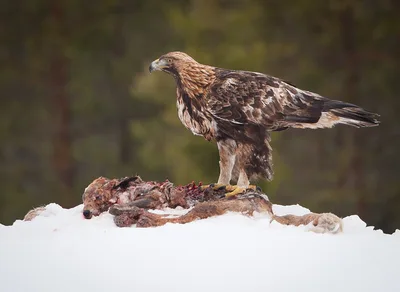 Golden eagle
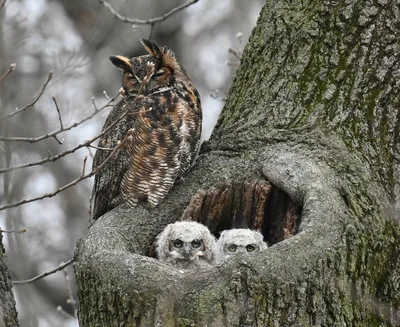 Great horned owl
- marten
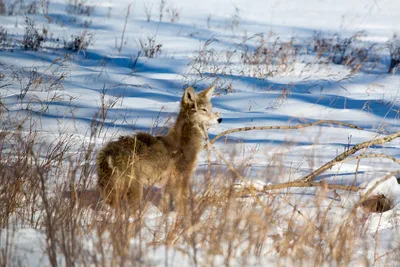 Coyote
- mostly at the nest
Ecological equivalents
Related species on this site
American crow (same genus), Carrion crow (same genus), Hawaiian Crow (same genus), Rook (same genus), Blue jay (same family), Common Green Magpie (same family), and more.
 LC
Birds
American crow
Corvus brachyrhynchos
The American crow is a large all-black bird of farms, woods and city streets across North America.
Living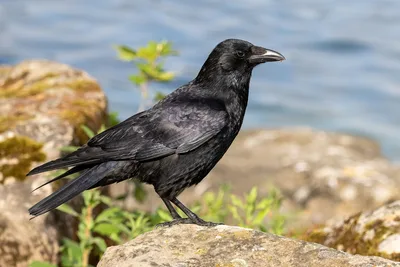 LC
Birds
Carrion crow
Corvus corone
The carrion crow is an all-black crow of western Europe and eastern Asia with a heavy bill and a harsh croak.
Living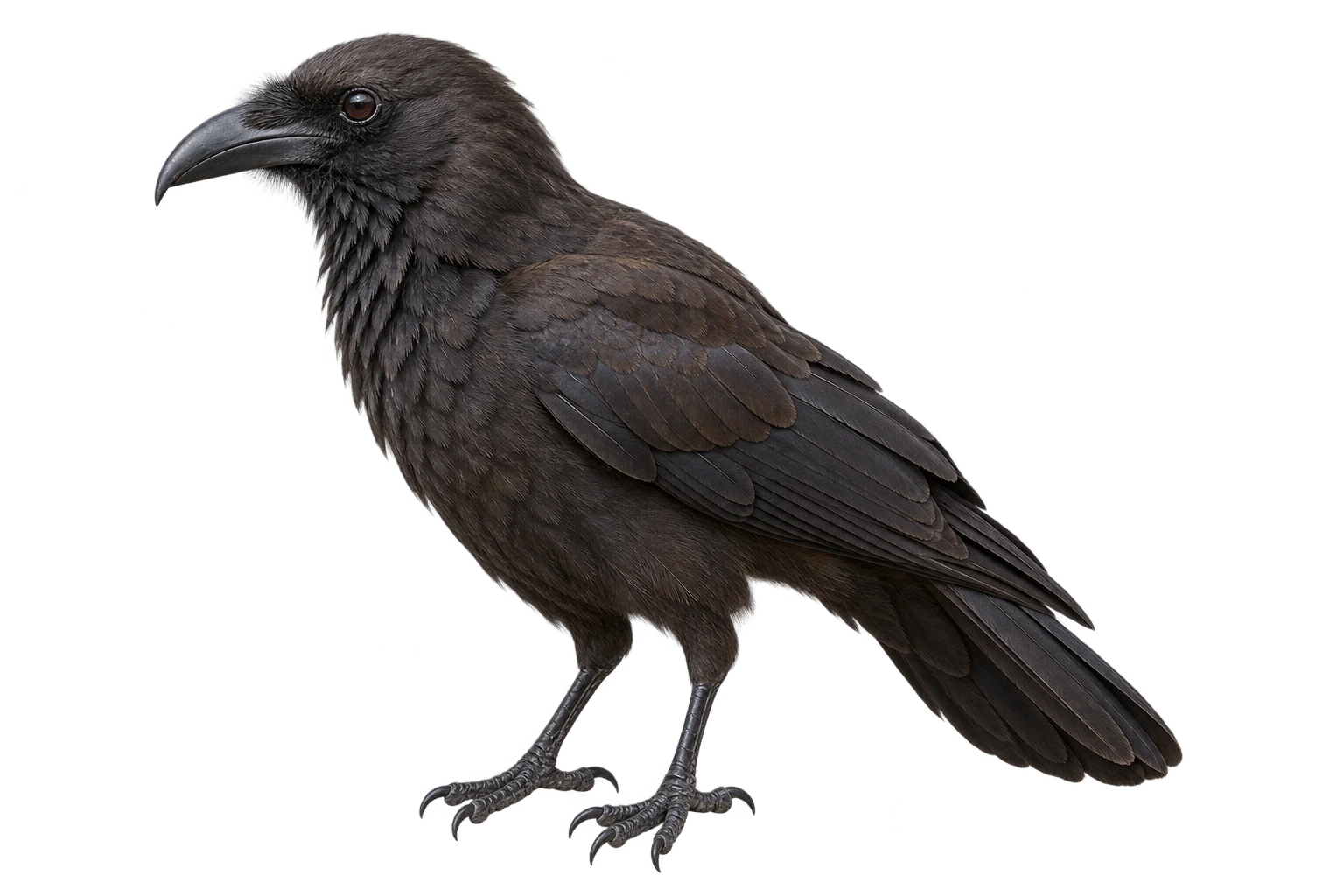
Birds
Hawaiian Crow
Corvus hawaiiensis
Classification and source reference
LivingAI illustration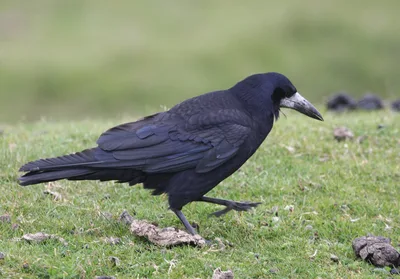 LC
Birds
Rook
Corvus frugilegus
The rook is a large black crow of European and Asian farmland, known by the bare pale skin around the base of its bill.
Living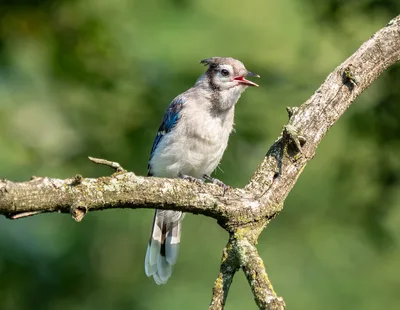 LC
Birds
Blue jay
Cyanocitta cristata
The blue jay is a loud blue songbird of the crow family, native to eastern and central North America.
Living
Birds
Common Green Magpie
Cissa chinensis
Classification and source reference
LivingAI illustration