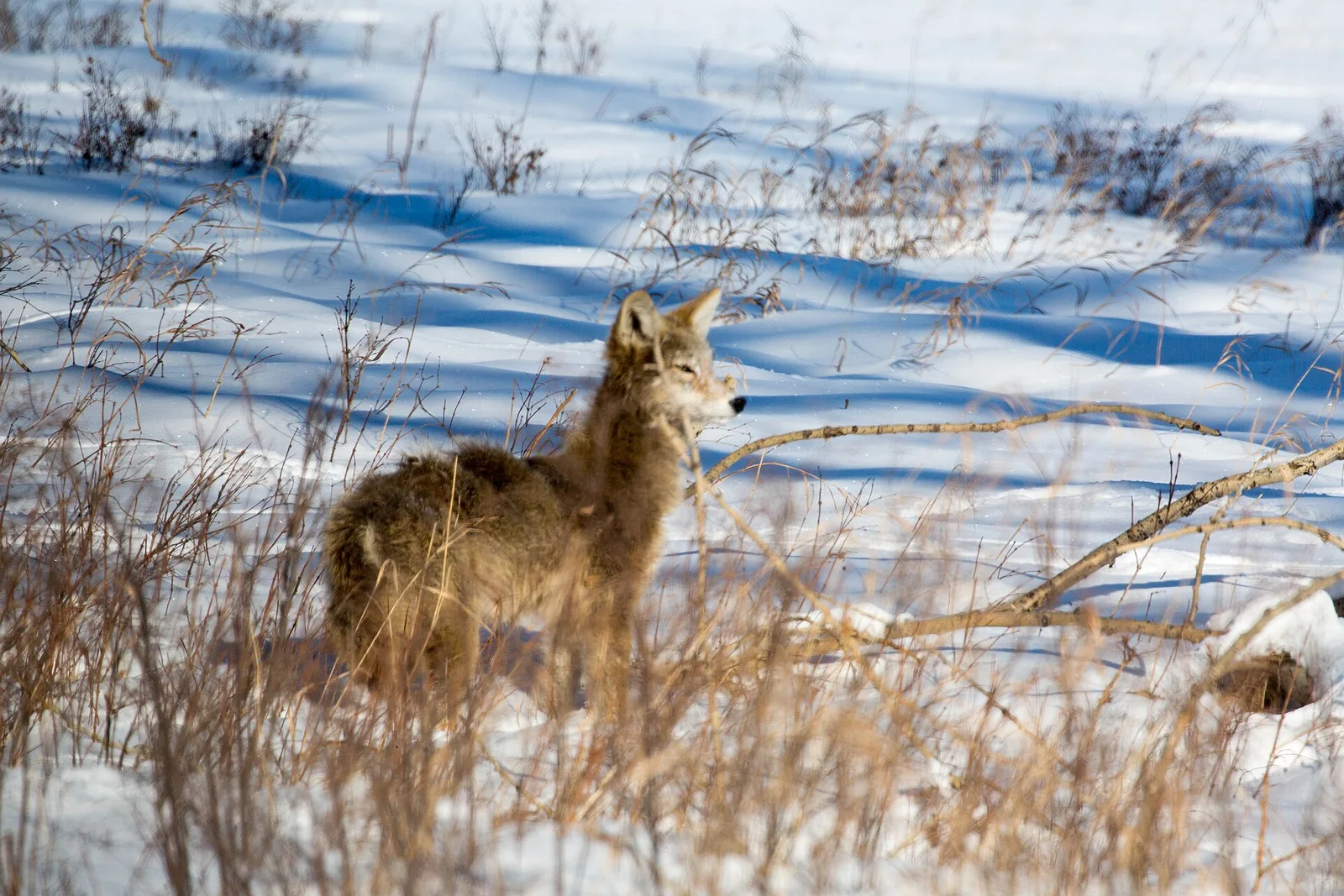
Coyote
The wild dog that thrives wherever people go
Canis latrans
Also called Prairie wolf, Brush wolf, American jackal, Little wolf
Living individuals or members of this group exist today. This does not mean they are safe from extinction.
Meet the coyote
The coyote is a mid-sized wild dog of North and Central America, smaller than a wolf and larger than a fox. It has spread from the western plains to almost the whole continent, including its cities.
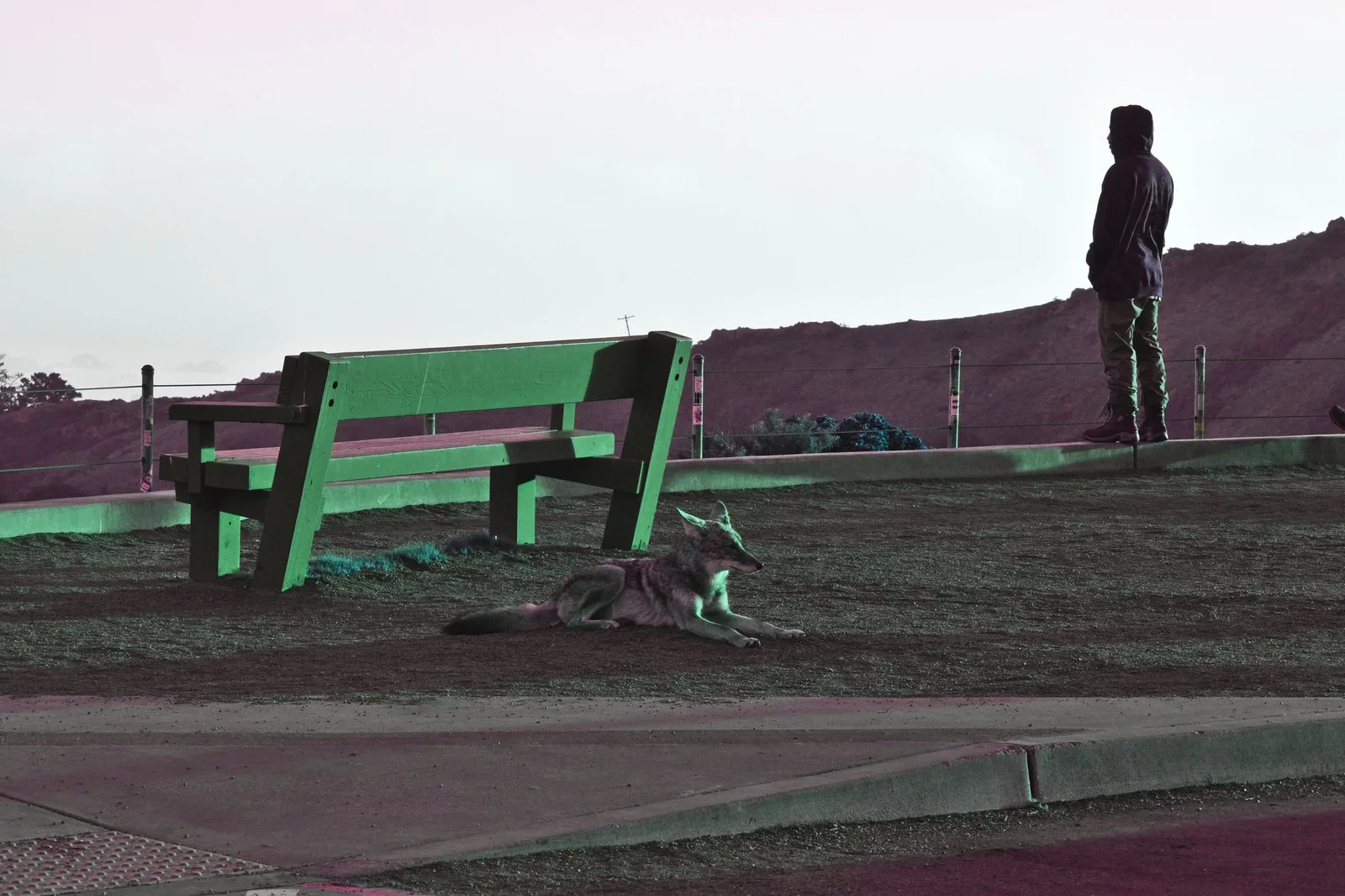
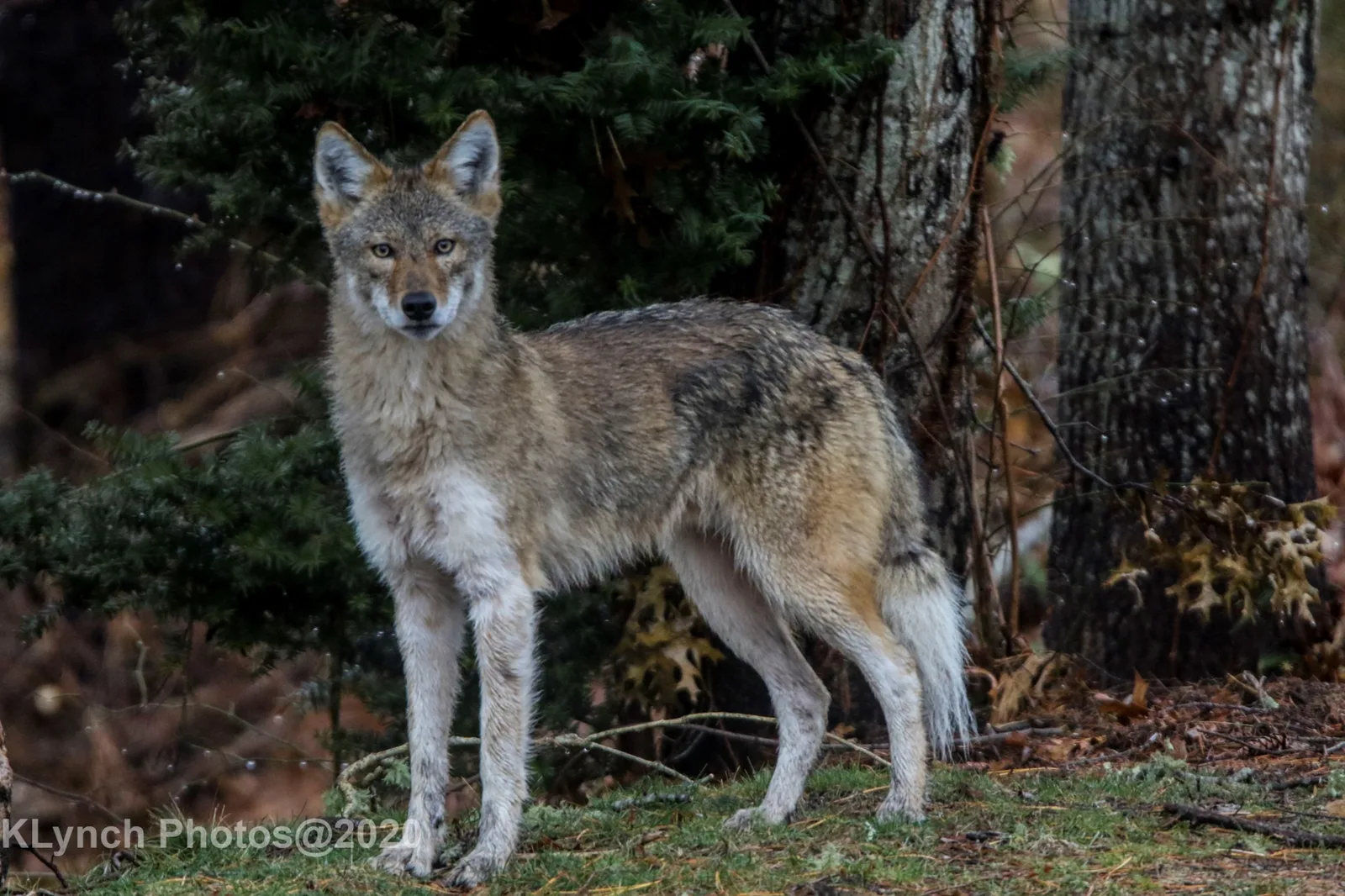
Images of the coyote
Lifespan in the wild
Up to 10 years
Weight
7 to 20 kg
Length
1 to 1.35 m
Top speed
Up to 65 km/h
Fact file
Coyote
- Location
- North and Central America, from northern Alaska to Panama
- Habitat
- Grassland, Desert, Temperate forest, Towns and cities
- Diet
- Carnivore
- Prey / food
- Rabbits, hares, mice, ground squirrels, deer fawns, birds, carrion, fruit
- Predators
- Gray wolf, cougar; bears, golden eagles and alligators at times
- Lifestyle
- Mostly active at dusk and by night; pairs and family groups
- Group name
- Pack
- Name of young
- Pup
- Gestation
- About 63 days
- Litter size
- About 6 pups, from 1 to 19
- Population
- Abundant and still spreading; not counted
- Biggest threat
- People, who shoot, trap and poison about 90,000 a year in the US
- Distinctive feature
- Long pointed ears and a drooping, black-tipped tail
- Colour
- Grey-brown with reddish legs and ears
- Skin type
- Fur
Size
Next to a person
Measurements
Size and speed
- Length
- 1 to 1.35 m, up to 1.5 m nose to tail tip, including a tail of about 40 cm
- Tail
- About 40 cm
- Weight
- 7 to 20 kg, up to 34 kg females 7 to 18 kg, males 8 to 20 kg; the record male weighed 34 kg
- Weight, male
- 8 to 20 kg
- Weight, female
- 7 to 18 kg
- Top speed
- Up to 65 km/h
Typical adult ranges. Sources: Wikipedia, Animal Diversity Web.
Life cycle
Lifespan
- In the wildUp to 10 years
- In captivityUp to 21.8 years
- 021.8 years
The pale bar is the record. Sources: Animal Diversity Web, AnAge.
Appearance
Colour and coat
- Primary colours
- greyreddish buff
- Secondary colours
- blackwhite
- Skin type
- fur
- Male and female
- Slight. Males are a little heavier, at 8 to 20 kilograms against 7 to 18 for females, and females are shorter in body and height.
Life cycle
Mating and family
- Mating system
- monogamous pairs
- Social structure
- a mated pair with its pups and some grown daughters; temporary packs of unrelated adults
- Breeding
- one litter a year
Coyotes pair in midwinter and mate between late January and March. After about 63 days the female bears an average of six pups in a den, and both parents feed them regurgitated meat. The pups are weaned by 35 days and leave the den in early summer. Males disperse at six to nine months, and most breed at one year. A wild coyote lives up to 10 years.
Classification
Taxonomy
- Kingdom
- Animalia
- Phylum
- Chordata
- Class
- Mammalia
- Order
- Carnivora
- Family
- Canidae
- Genus
- Canis
- Species
- Canis latrans
Conservation
Red List status
- LC
- NT
- VU
- EN
- CR
- EW
- EX
Least Concern on the IUCN Red List
Range
Recorded in 3 countries
Habitat layer: temperate broadleaf and mixed forest, temperate conifer forest, boreal forest and taiga, tropical grassland, savanna and shrubland, temperate grassland, savanna and shrubland, desert and xeric shrubland.
Countries from 93,431 wild records on GBIF (iNaturalist research grade), filtered and checked by hand. Country shapes: Natural Earth. Habitat: RESOLVE Ecoregions 2017, CC BY 4.0. Basemap: Natural Earth.
Habitats
Three things to know
- 1
The coyote is the most vocal wild mammal in North America, with at least 11 distinct calls.
- 2
Its range grew across the whole continent after wolves were wiped out, and it now lives in most big cities.
- 3
Coyotes sometimes hunt alongside badgers, and one has been seen licking its badger partner's face.
Did you know
Seven more facts
- 1
A coyote holds its tail down when it runs, while a wolf holds it level.
- 2
Black coyotes carry a gene that first appeared in domestic dogs.
- 3
Coyote pups fight for real before they learn to play, the reverse of wolf pups.
- 4
A coyote swam more than a mile to Alcatraz Island in 2026.
- 5
About 75 to 80% of the red wolf's genome comes from the coyote.
- 6
A coyote cannot see red or green, only greys and faint blues.
- 7
Coyotes reached eastern Panama, beyond the canal, in 2013.
Field notes
How it looks and acts
Field notes
Distinguishing features
- Large pointed ears on a narrow, fox-like face.
- A bushy black-tipped tail of about 40 centimetres, carried low.
- A grey and reddish-buff coat with a dark stripe down the back.
- A whitish throat and belly, with reddish legs and ears.
- A slighter frame and thinner muzzle than a wolf, at 7 to 20 kilograms.
- Oval tracks about 6.35 centimetres long that run in a straight line.
Field notes
Unique adaptations
- Eats almost anything, so it survives where specialist predators starve.
- Switches between hunting alone, in pairs and in packs to match the prey.
- Shifts to night activity in cities to avoid people.
- Breeds at one year and raises large litters, which probably lets numbers recover fast after culls.
- Broad grinding molars handle fruit and grain as well as meat.
Field notes
Interesting behaviours
- Stalks a mouse, freezes, and pounces with all four feet together.
- Hunts deer in pairs, taking turns in the chase.
- Marks territory with raised-leg urine and scratched ground.
- Howls in chorus when the family reunites.
- Buries surplus food and sometimes urinates on it to claim it.
Field notes
Temperament
- Wary and secretive near people, bold where it is fed.
- Strictly faithful to its mate.
- Playful, especially in the eastern coyote.
- Chases rivals rather than killing them.
Field notes
Communication
- A lone howl to announce a separated animal.
- A group yip howl when the pack meets again.
- Woofs and barks as alarms near the den.
- Scent posts of urine and droppings on rocks and stumps.
- An arched back and lowered tail to show aggression.
Ecology
Ecological role
The coyote is a mid-level predator that keeps rodents and rabbits in check across most of a continent.
- Controls mice, voles, rabbits and ground squirrels, which protects grassland from overgrazing.
- Suppresses foxes and bobcats where it is common, which shapes the whole small-carnivore community.
- Cleans up carrion, including winter-killed deer and bison.
- Spreads the seeds of the fruit it eats, probably including prickly pear and persimmon.
Stories
Myths and legends
- In Navajo tradition, Coyote brings death into the world so that there is room to grow corn.
- In Zuni tradition, Coyote steals light from the kachinas and lets winter in.
- In Crow tradition, Old Man Coyote is the Creator.
- In Aztec tradition, Huehuecoyotl, Old Coyote, is the god of dance, music and desire.
- In Tohono O'odham tradition, Coyote helps Montezuma survive a flood and then teaches people how to live.
People
Relationship with humans
People
Living alongside us
People have fought the coyote for two centuries and lost. Government agents kill about 90,000 a year in the United States, and ranchers lose sheep, goats and calves to it. It has answered by spreading into every state and most cities. Attacks on people are rare and almost never fatal. Its pelt trims coats, and its howl is the sound of the American West.
- Only two fatal attacks on people are confirmed, one on a small child in California and one on a young woman in Nova Scotia.
- At least 160 attacks were recorded in the United States in 30 years, mostly bites on small children in Los Angeles suburbs.
- Coyotes that people feed lose their fear and may chase joggers, cyclists and dog walkers.
People
Status, uses and products
- Domestication
- Wild
- As a pet
- Not suitable. A pup tames easily and can be playful with its owner, but an adult turns destructive and stays shy of strangers. A tame coyote named Butch acted in two films and was then shot raiding a henhouse.
- Uses
- fur trappingpredator hunting
- Products
- fur
The full account
About the coyote
The coyote, Canis latrans, is a wild dog of North and Central America. It is smaller than the gray wolf and larger than any fox, and it fills the role that the golden jackal plays in Eurasia. A male weighs 8 to 20 kilograms, and a female 7 to 18 kg. From nose to tail tip an adult measures 100 to 135 centimetres. The scientific name means barking dog, and the coyote earns it with a wider range of calls than any other wild mammal on the continent.
Before Europeans arrived, coyotes lived on the plains and deserts of the west. When settlers cleared the forests and killed the wolves, the coyote moved in, and today it lives from Alaska to Panama. It eats almost anything, from deer and rabbits to fruit and rubbish, and it raises pups in cities as well as in canyons. The IUCN lists it as Least Concern, and people, not predators, are its main threat.
Name and taxonomy
The word coyote comes from coyotl, the animal's name in Nahuatl, the language of the Aztecs, by way of Spanish. It first appeared in print in a Mexican history of 1780 and reached English in 1824. Americans say it with two or three syllables, and both forms are correct. Older English names include prairie wolf, brush wolf, little wolf and American jackal. Canis latrans means barking dog.
Meriwether Lewis described the animal in his journal on 5 May 1805 in what is now Montana. The naturalist Thomas Say gave it a scientific name in 1819, on the Missouri River, and published it in 1823. Say was the first to set down how the prairie wolf differed from the true wolf of the plains. Nineteen subspecies are recognised, and the eastern ones are large and dark, while the desert forms are small and pale.
Evolution and relatives
The genus Canis appears to descend from a coyote-like animal, Eucyon davisi. Its remains date to 6 million years ago in the southwest of the United States. The larger Canis lepophagus followed about 5 million years ago, and the coyote itself existed by 1 million years ago. The oldest fossils that match the modern animal come from caves in West Virginia and California and are about 0.73 to 0.85 million years old. Ice age coyotes were bigger and more heavily built, with teeth better suited to slicing meat. They shrank within 1,000 years of the extinction of their large prey, probably because gray wolves took over the big-game niche.
The coyote keeps a narrower skull and weaker bite than the wolf, and broader grinding molars that suit a diet with fruit in it. A 2016 genome study put the split between North American wolves and coyotes at about 51,000 years ago, which clashes with the fossil dates. Coyotes interbreed with eastern wolves and red wolves, and the eastern coyote of the northeast carries wolf genes. Genetic work suggests that about 75 to 80% of the red wolf's genome comes from the coyote. Crosses with domestic dogs, called coydogs, are rare in the wild because the breeding cycles do not match.
Appearance
A coyote looks like a lean, long-legged dog with a narrow muzzle and big pointed ears. Northern animals average about 18 kilograms, and Mexican ones about 11.5 kg. The record was a male shot near Afton, Wyoming, in 1937, which measured 150 centimetres and weighed 34 kg. The tail is about 40 cm long, bushy, and tipped with black, and the animal carries it low when it runs. A wolf holds its tail level, which is one quick way to tell the two apart.
The coat is mostly light grey and reddish buff, mixed with black and white hairs. Long black-tipped guard hairs form a dark stripe down the back and a dark cross over the shoulders. The throat and belly are whitish, and the legs, ears and muzzle are reddish brown. Mountain coyotes run darker and greyer, and desert coyotes paler and more yellow. The eyes have a yellow iris and a round pupil, and there is one moult a year, from May to July.
Black coyotes owe their colour to a gene that first arose in domestic dogs. A group of white coyotes in Newfoundland carries a mutation inherited from golden retrievers. True albinos are almost unknown: only two turned up among 750,000 coyotes killed by federal hunters between 1938 and 1945.
Habitat and range
The coyote now occupies most of the land between 8 degrees north in Panama and 70 degrees north in Alaska. Its original home was the plains, the deserts and the dry mountains of the west and of Mexico. As wolves and cougars were killed off, coyotes spread north, east and south through the 19th and 20th centuries. Two waves reached the east: one from the northern plains through the Great Lakes, and one from Texas to the Carolinas by the 1980s. In 2013 a coyote was recorded east of the Panama Canal, and biologists worry that it may one day reach South America.
It uses forest, prairie, desert, swamp and farmland, and it does well in suburbs and city centres. It is usually absent where wolves are numerous. A coyote walks 5 to 16 kilometres a day along trails, logging roads and frozen rivers. It swims well, and one crossed more than a mile of San Francisco Bay to Alcatraz Island in 2026. GBIF holds records from 18 countries, most of them in the United States, Canada and Mexico.
Diet and hunting
About 90% of the coyote's food is meat, and most of that is small mammals. Cottontail rabbits, ground squirrels, mice, voles and prairie dogs are the staples, along with birds, snakes, insects and carrion. A coyote needs about 600 grams of food a day, or 250 kilograms a year, not counting fruit and grass. In autumn and winter it eats large amounts of fruit, from berries and apples to melons and prickly pears. In towns it takes rubbish, pet food and pets.
For a mouse the coyote stalks slowly through the grass, freezes, and pounces with all four feet together. For a deer it works in a pair or a family group, taking turns to chase or driving the animal to a hidden partner. Groups can kill prey of 100 to 200 kilograms, but usually they take fawns, calves and animals weakened by winter. Studies show that sight, not smell, is the main sense used in the hunt. Like other canids, it buries what it cannot eat.
Some coyotes hunt alongside American badgers. The coyote chases rodents above ground, and the badger digs them out below, so together they leave the prey nowhere to go. A Mexican jar from about 1250 to 1300 shows the pair, so the partnership was known long before Europeans arrived. Old coyotes kill porcupines by flipping them onto their backs, but young ones often end up with a face full of quills.
Behaviour and social life
The coyote is social, but less so than the wolf. The core unit is a mated pair and its pups, and grown daughters often stay to help. Unrelated animals sometimes form a loose pack to bring down large prey, but such groups do not last. Each pair holds a feeding territory of 0.4 to 62 square kilometres, marked with raised-leg urine and scratched ground. Outside the denning season a coyote chases an intruder rather than fights it, and it rarely kills a rival.
It is most active at dusk and in the early night, and city coyotes shift further into the dark to avoid people. A night's hunting covers about 4 kilometres on average. It can run at up to 65 kilometres per hour and jump a gap of 4 metres. It digs its own den or enlarges the burrow of a badger, marmot or woodchuck, and one den may serve for years. A den has several entrances, and the mother moves the pups if fleas or people disturb it.
Play begins with a bow, then side-to-side head flicks, spins and dives. Unlike wolf pups, coyote pups fight in earnest before they learn to play, and by three weeks they bite each other hard. Adults fight only with their own sex, and fights between females are the more serious.
Communication and senses
Adult coyotes make at least 11 distinct sounds. Woofs, growls, huffs and barks serve as threats and alarms, and a woof near the den sends the pups underground. Yelps signal submission, and a low whine with a wagging tail is a greeting. The lone howl announces an animal separated from its group. The group yip howl, a chorus of yelps and a rising falsetto, rings out when pack members meet again.
Hearing and smell are acute, and eyesight is tuned to movement. The coyote is colour-blind and sees only greys and faint blues, which hunters exploit with plain camouflage. It leaves urine and droppings on stumps, posts and rocks as scent posts. A scent gland at the base of the tail adds its own mark.
Reproduction and life cycle
Coyotes pair in midwinter and stay strictly monogamous, even where food is rich and numbers are high. A female comes into heat once a year, for 2 to 5 days, from the end of January to the end of March. She attracts suitors by scent and howling, and up to seven males may follow her for a month. Once she chooses, the rejected males leave without a fight. The pair may stay together for several years, though not always for life.
Pregnancy lasts about 63 days, and the average litter is six pups, from a minimum of 1 to a record of 19. A newborn weighs 200 to 500 grams and is blind, with limp ears. The eyes open at 10 days, and both parents feed the pups regurgitated meat from about two weeks. Pups leave the den at three to four weeks and are weaned by about 35 days. The male hunts for the family and guards the den, but he abandons the pups if the mother dies before weaning.
The family leaves the den by June or July, and the pups follow their parents on patrol. Young males disperse between six and nine months, while daughters often stay. Adult size arrives at eight to nine months, and breeding age at about a year, though eastern coyotes wait until two. A wild coyote lives up to 10 years, and one captive animal reached 21.8.
Predators and threats
Gray wolves and cougars are the only regular killers of adult coyotes. Wolves will not tolerate coyotes near them, and after wolves returned to Yellowstone in the 1990s the coyotes of the Lamar Valley fell by 39%. Coyotes vanished from Isle Royale after wolves reached the island in the 1940s. Black bears, grizzlies, alligators, lynx and golden eagles take a coyote now and then. At a carcass a lone coyote gives way to wolves, cougars, bears and wolverines.
People kill far more coyotes than any predator does. United States government agents shoot, trap and poison about 90,000 a year to protect livestock. Utah paid bounties on more than 11,000 in one year. The coyote also carries more diseases and parasites than any other large carnivore on the continent, including rabies, distemper and mange. Tapeworms infest 60 to 95% of the coyotes examined.
Population and conservation
The IUCN lists the coyote as Least Concern because it is abundant across a huge range. No one has counted the total population, and the range is still growing. Heavy hunting has never reduced it for long, probably because survivors breed earlier and raise larger litters. Coyote numbers are lower where wolves live: 33% lower in the wolf areas of Grand Teton than elsewhere in the park.
Conservation concern runs the other way. Coyote genes have flowed into eastern wolves, red wolves and the Great Lakes wolves, and that threatens the identity of the rarer species. Hunters who shoot coyotes sometimes shoot gray wolves by mistake where the two overlap. The coyote itself needs no protection anywhere in its range.
Relationship with humans
Coyotes are the main livestock predator in western North America. In 2004 they accounted for 60.5% of the 224,000 sheep lost to predators in the United States. Ranchers answer with guard dogs, which 82% of sheep producers in one survey rated an economic asset. In suburbs coyotes take cats and small dogs, and one clinic in Orange County, California, treats three to five pets a week after coyote attacks. Rubbish, pet food and bird feeders draw them into gardens.
Attacks on people are uncommon and seldom serious, because the animal is small. Only two deaths are confirmed: a three-year-old girl in Glendale, California, and a young singer in Nova Scotia in 2009. At least 160 attacks were recorded in the United States in the 30 years to 2006, most of them around Los Angeles. Urban coyotes that are fed lose their fear and may chase joggers or stalk small children.
Coyote fur was worth nothing until the beaver ran out, and by 1860 a skin fetched 75 cents to a dollar and a half. Pelts still go into coat trims, collars and cuffs, and some are dyed to imitate silver fox. A coyote pup tames easily, and pre-Columbian villages probably kept some, but an adult grows destructive.
In culture and myth
Coyote is the great trickster of Native American storytelling, above all in the Southwest and on the Plains. He appears as an animal or as a man, breaks every rule, and often does good by accident. In Maidu tradition he brings work, suffering and death into the world. In Zuni tradition he steals light from the kachinas and so lets winter in. The Crow tell of Old Man Coyote as the Creator himself, and the Tohono O'odham say he helped Montezuma survive a great flood.
In Navajo tradition Coyote was present in the First World, and he explains death: without it there would be no room to plant corn. In Aztec tradition the god Huehuecoyotl, Old Coyote, ruled dance, music and desire and wore a coyote's head. Warriors at Teotihuacan dressed as coyotes to borrow the animal's hunting power. Anglo-American settlers saw only a cowardly thief, and that view has softened far less than the wolf's.
Wile E. Coyote chases the Road Runner through the Looney Tunes cartoons and never catches him. The coyote is the mascot of the San Antonio Spurs and the University of South Dakota. Its howl inspired the famous scream in The Good, the Bad and the Ugly.
A sentence with a dotted underline is inferred: it describes the group the animal belongs to, or is a reading of the sources, rather than a measured or reported fact about this species.
Questions
Coyote questions, answered
How big is a coyote?
Males weigh 8 to 20 kilograms and females 7 to 18 kg. Nose to tail tip, an adult measures 100 to 135 centimetres, of which the tail is about 40 cm. The record was a 34 kg male from Wyoming.
What is the difference between a coyote and a wolf?
A coyote is much smaller, with longer ears, a thinner muzzle and a narrower skull. It carries its tail down when running, while a wolf holds it level. Wolves hunt large prey in packs, and coyotes mostly hunt small mammals alone or in pairs.
What do coyotes eat?
About 90% of the diet is meat: rabbits, hares, mice, ground squirrels, deer fawns, birds, snakes and carrion. In autumn and winter they eat a lot of fruit. In towns they take rubbish, pet food and pets.
Are coyotes dangerous to humans?
Rarely. Only two fatal attacks are confirmed, and most incidents are bites on small children in suburbs where coyotes have been fed. Keep pets and food indoors and never feed a coyote.
How fast can a coyote run?
Up to 65 kilometres per hour, and it can jump a gap of 4 metres. It walks 5 to 16 km a day along regular trails.
Where do coyotes live?
Across North and Central America, from northern Alaska to Panama. They use prairie, desert, forest, farmland and cities. Their original range was the western plains and deserts, and they spread as wolves were killed off.
Do coyotes live in cities?
Yes, urban coyotes are common in many cities. They become more nocturnal to avoid people and den in parks, drainage pipes and vacant lots. Garbage, pet food and small pets draw them in.
Why do coyotes howl?
A lone howl tells the family where a separated animal is. A group yip howl marks a reunion and may warn other packs off the territory. A female in heat also howls to draw males.
Do coyotes mate for life?
They are strictly monogamous while paired, and a pair can stay together for several years. The bond does not always last for life.
How many pups does a coyote have?
About six on average, after a pregnancy of about 63 days. Litters range from 1 to 19 depending on food and how crowded the area is.
How long do coyotes live?
Up to 10 years in the wild. One captive coyote reached 21.8 years.
Are coyotes endangered?
No. The IUCN lists them as Least Concern, and they are abundant and still spreading. People kill about 90,000 a year in the United States without denting the population.
What is a coywolf?
A hybrid of a coyote and an eastern or red wolf. The eastern coyote of New England and eastern Canada carries wolf genes and is larger than the western coyote. Coyotes do not breed with gray wolves in the wild.
Do coyotes hunt with badgers?
Sometimes. The coyote chases rodents that flee above ground, and the badger digs out those that stay below. A Mexican jar from about 1250 to 1300 shows the partnership.
Do coyotes kill pets?
Yes. They take cats and small dogs, and one animal hospital in Orange County, California, sees three to five such pets a week. Dogs larger than a coyote usually drive it off.
Can you keep a coyote as a pet?
No. A pup tames easily, but an adult is destructive and shy of strangers. Keeping one is illegal in most places.
Food web
Prey and food
- rabbits
- hares
- mice
- ground squirrels
- deer fawns
- birds
- carrion
- fruit
 Red fox
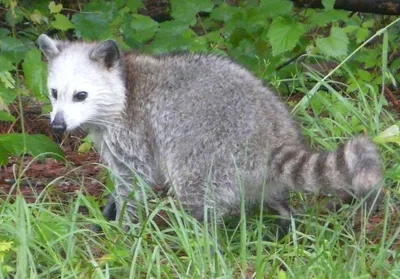 Raccoon
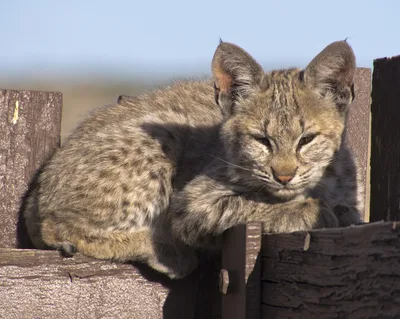 Bobcat
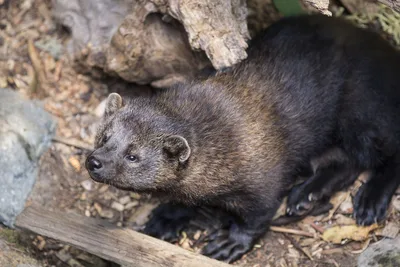 Fisher
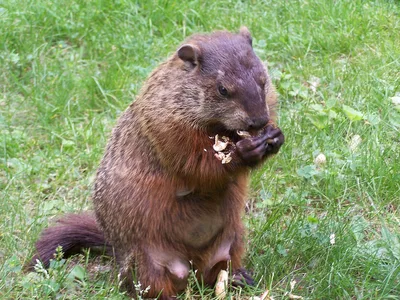 Groundhog
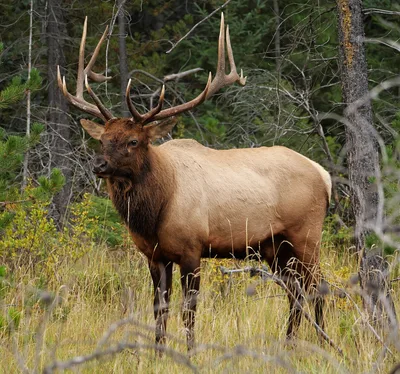 Elk
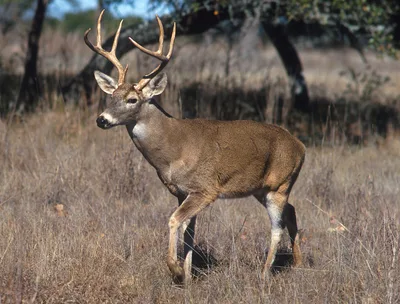 White-tailed deer
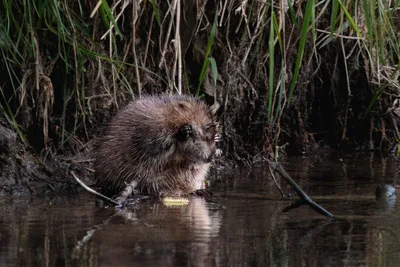 Muskrat
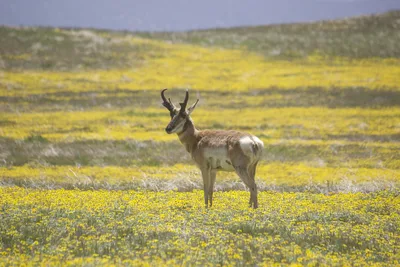 Pronghorn
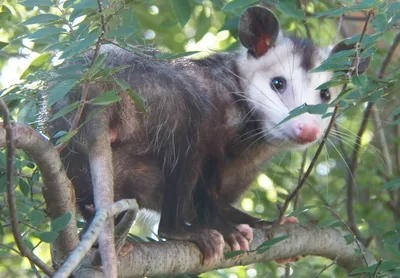 Virginia opossum
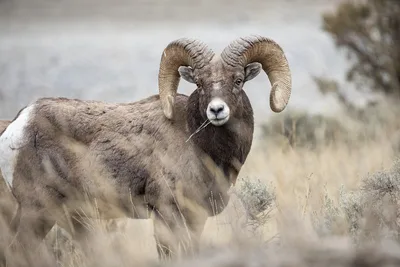 Bighorn sheep
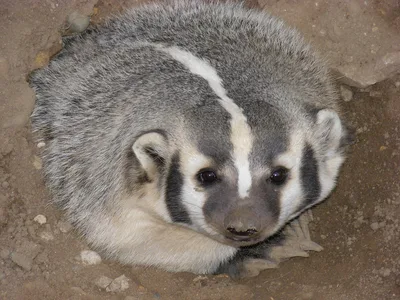 American badger
 Common raven
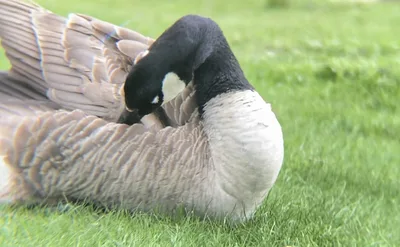 Canada goose
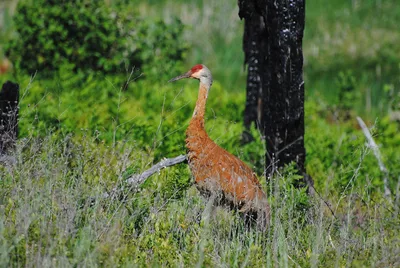 Sandhill crane
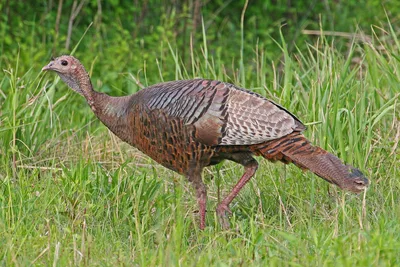 Wild turkey
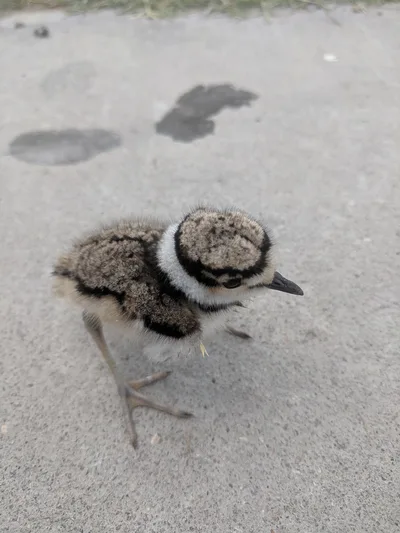 Killdeer
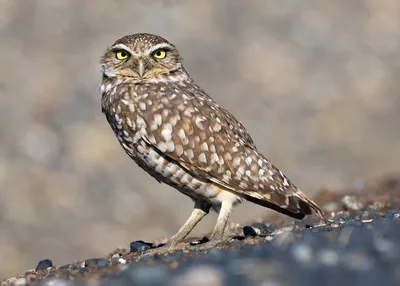 Burrowing owl
Food web
Predators
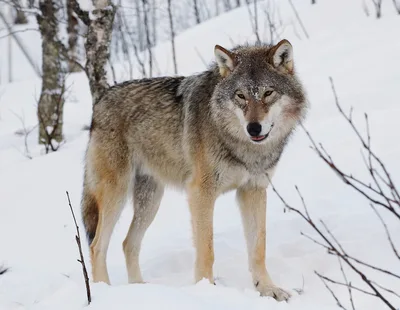 Gray wolf
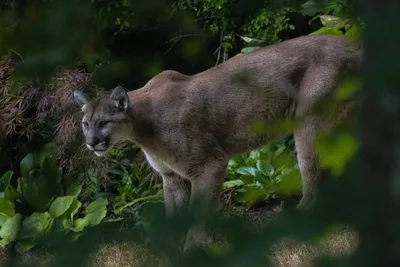 Cougar
- bears
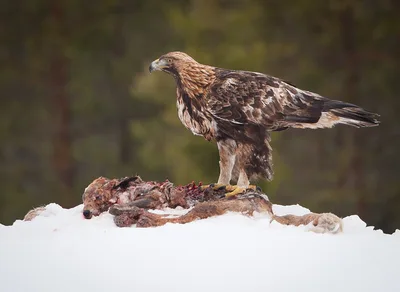 Golden eagle
- alligators at times
Ecological equivalents
Related species on this site
Affenpinscher (same genus), Afghan Hound (same genus), Aidi (same genus), Ainu (same genus), Airedale Terrier (same genus), Airedoodle (same genus), and more.
Mammals
Affenpinscher
Canis lupus familiaris
Classification and source reference
LivingAI illustration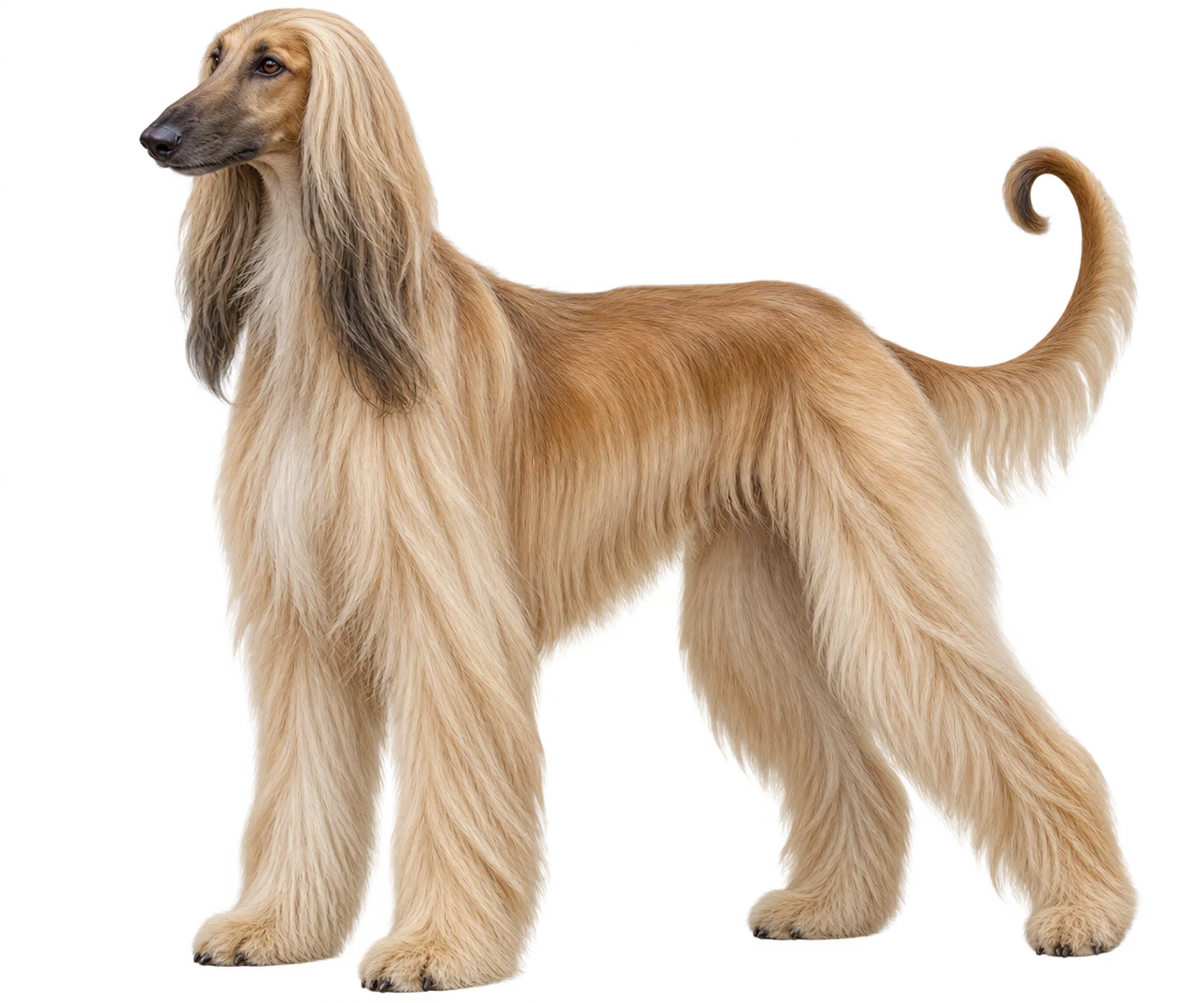
Mammals
Afghan Hound
Canis lupus familiaris
Classification and source reference
LivingAI illustration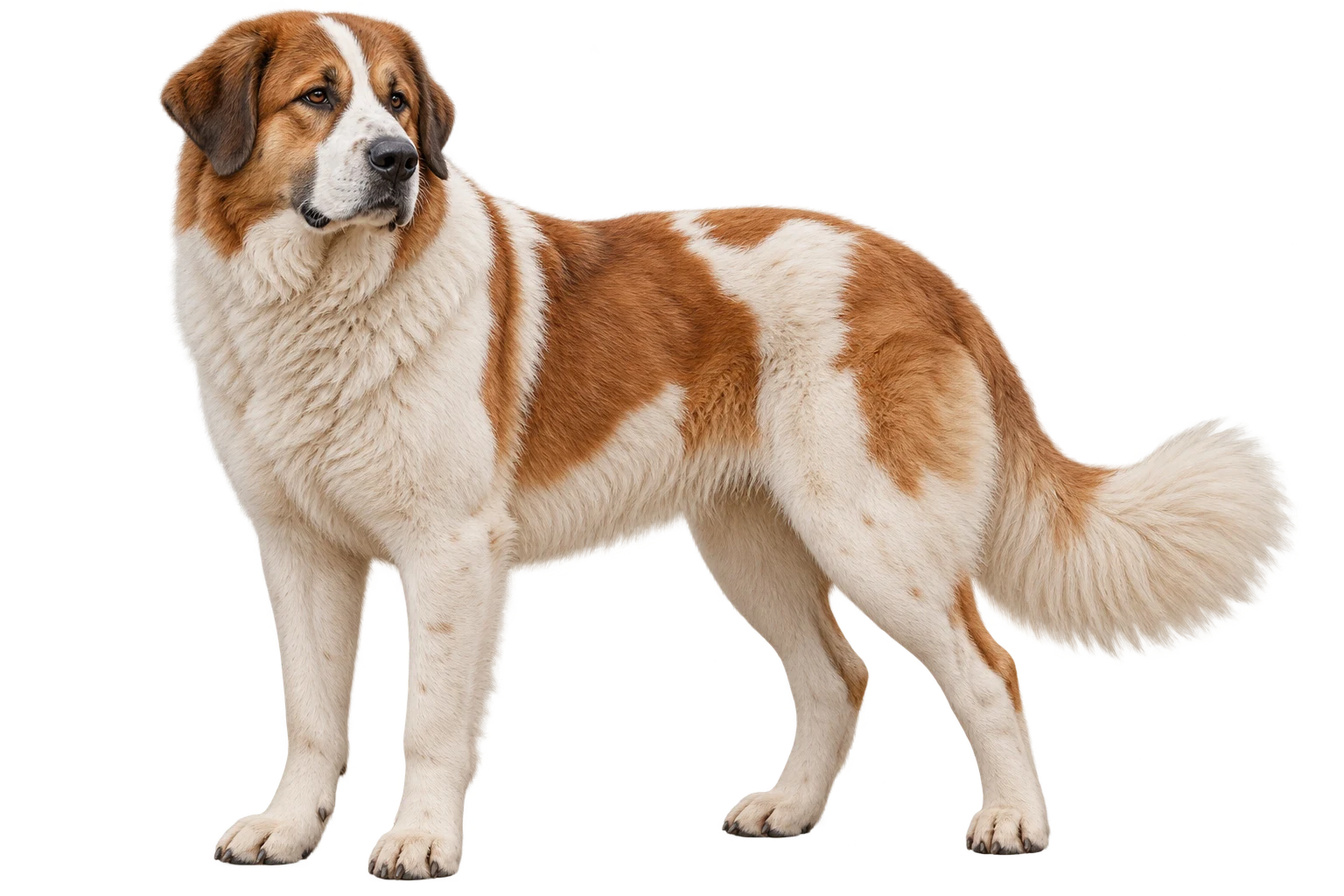
Mammals
Aidi
Canis lupus familiaris
Classification and source reference
LivingAI illustration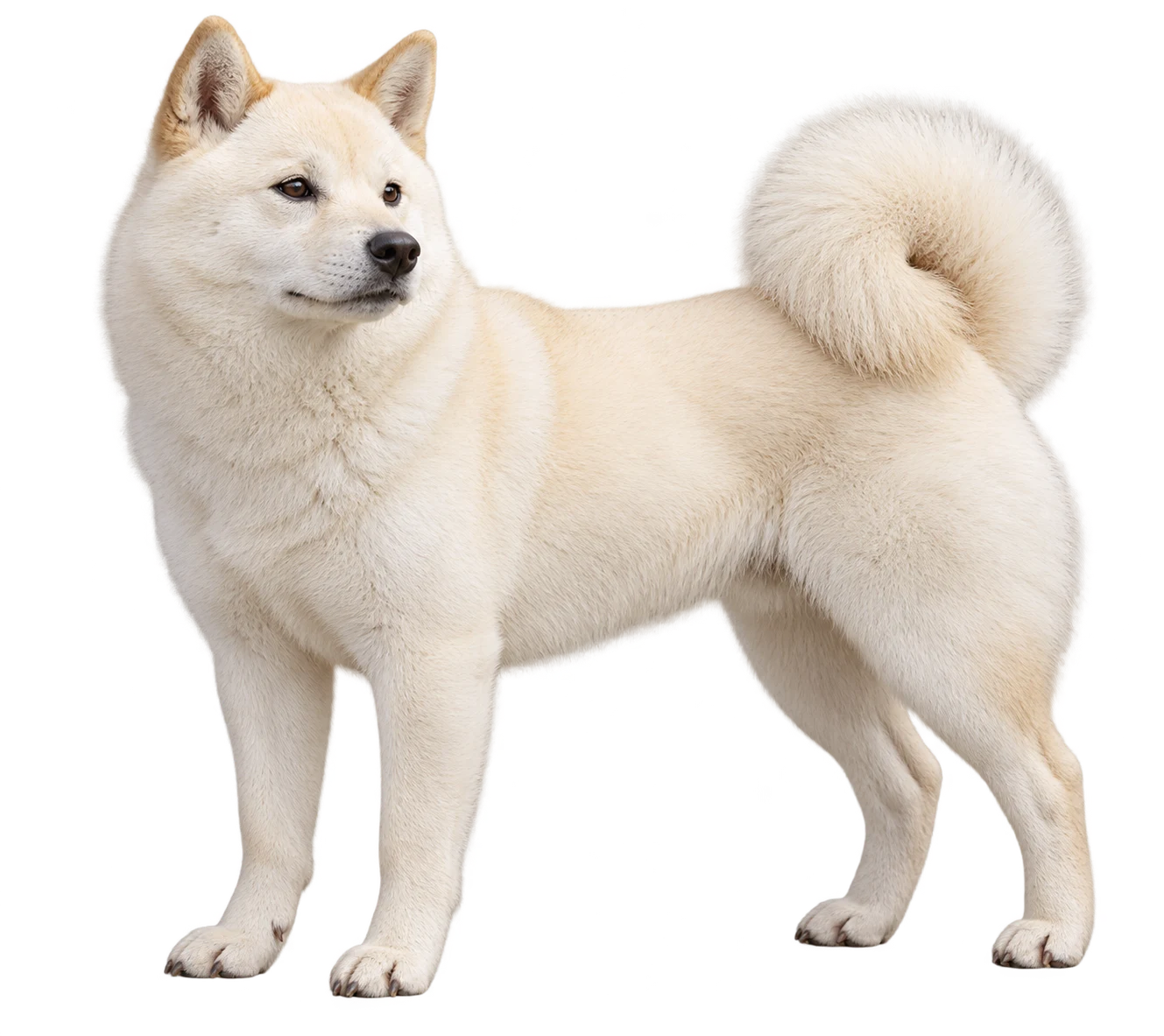
Mammals
Ainu
Canis lupus familiaris
Classification and source reference
LivingAI illustration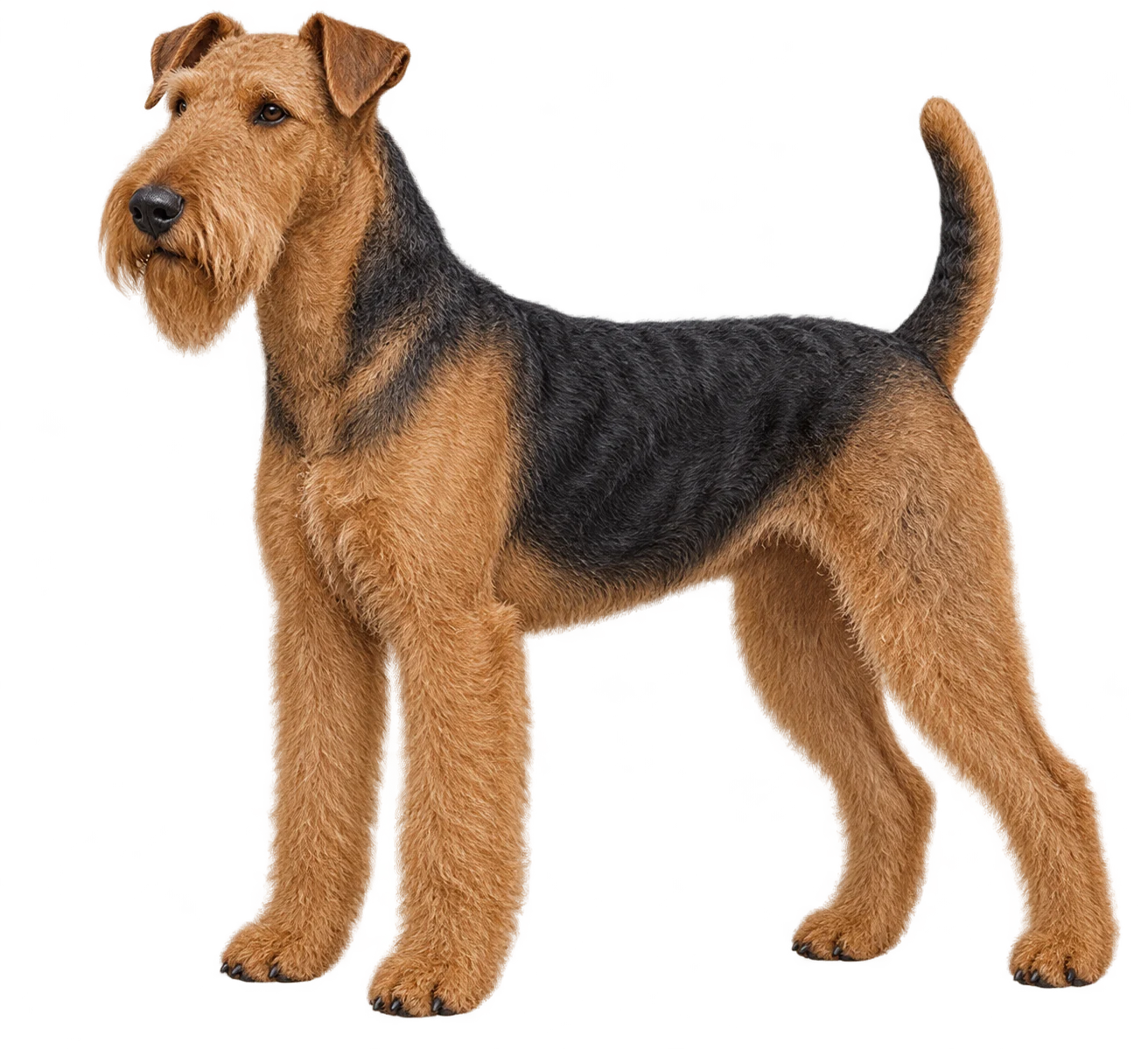
Mammals
Airedale Terrier
Canis lupus familiaris
Classification and source reference
LivingAI illustration
Mammals
Airedoodle
Canis lupus familiaris
Classification and source reference
LivingAI illustration