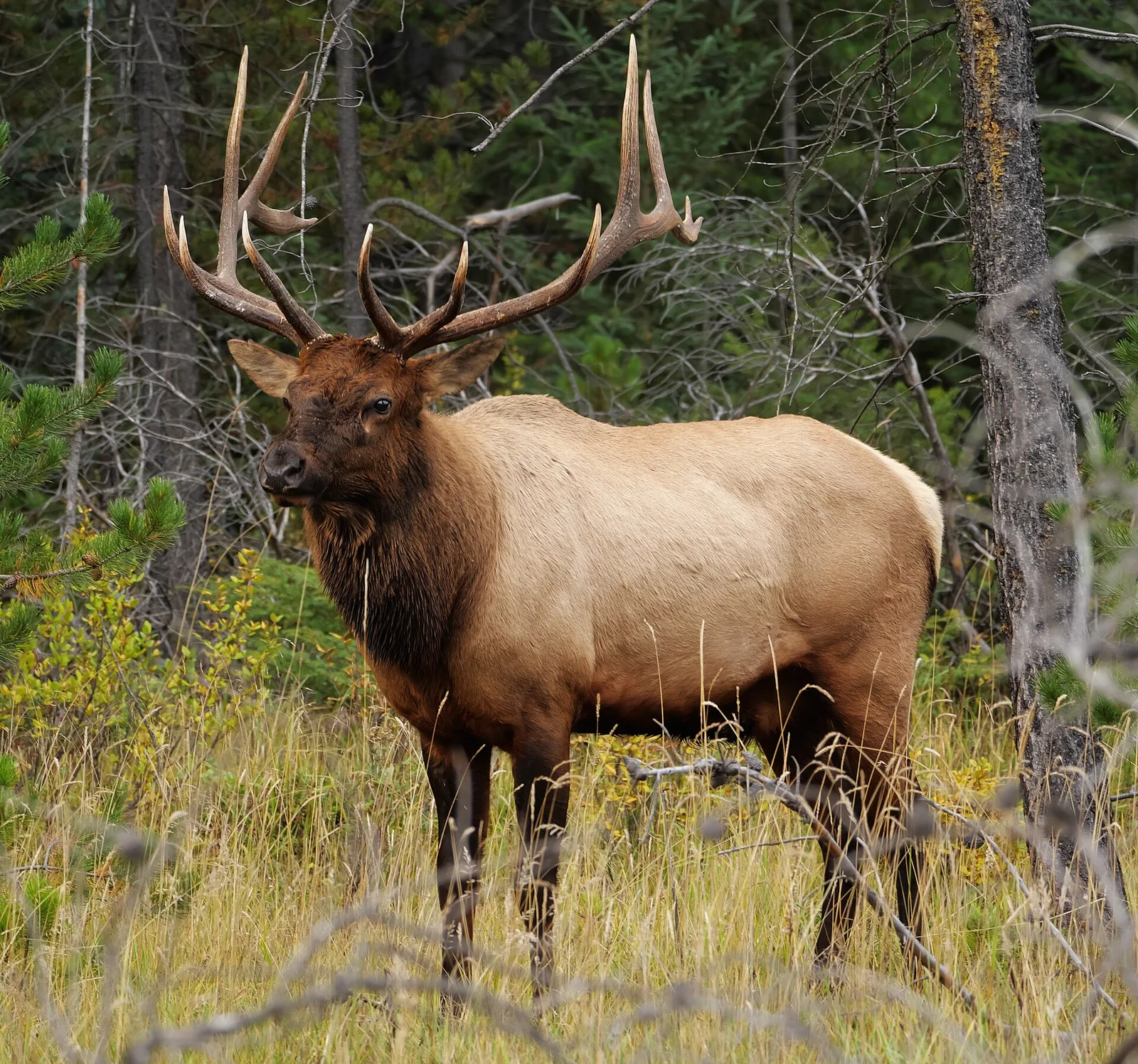
Elk
The bugling deer of the mountain west
Cervus canadensis
Also called Wapiti, American elk
Living individuals or members of this group exist today. This does not mean they are safe from extinction.
Meet the elk
The elk, or wapiti, is the second largest deer in the world. It lives in herds on forest edges in western North America and in Central and East Asia. In autumn the bulls bugle, wallow and fight with their antlers for harems of cows.
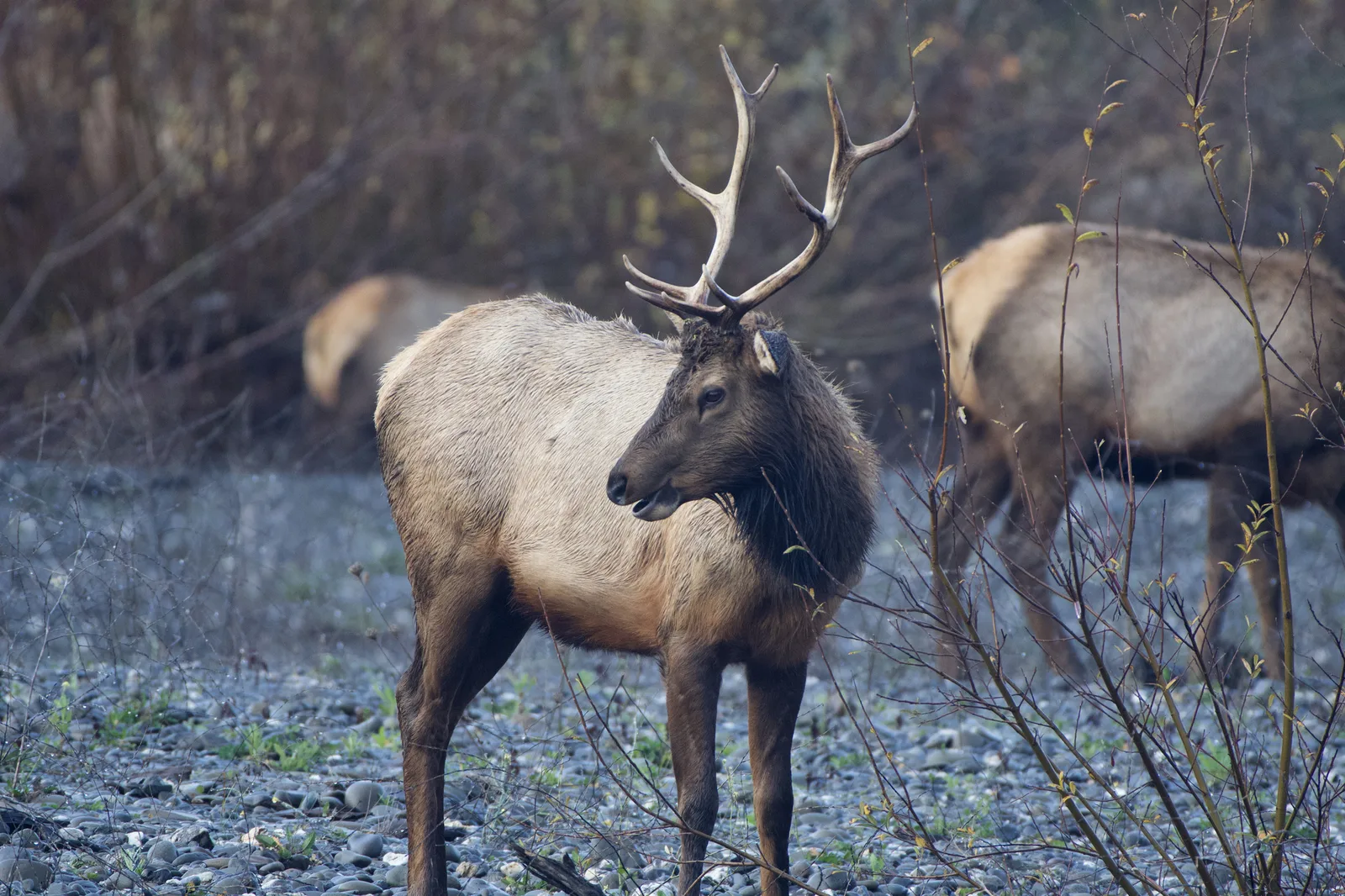
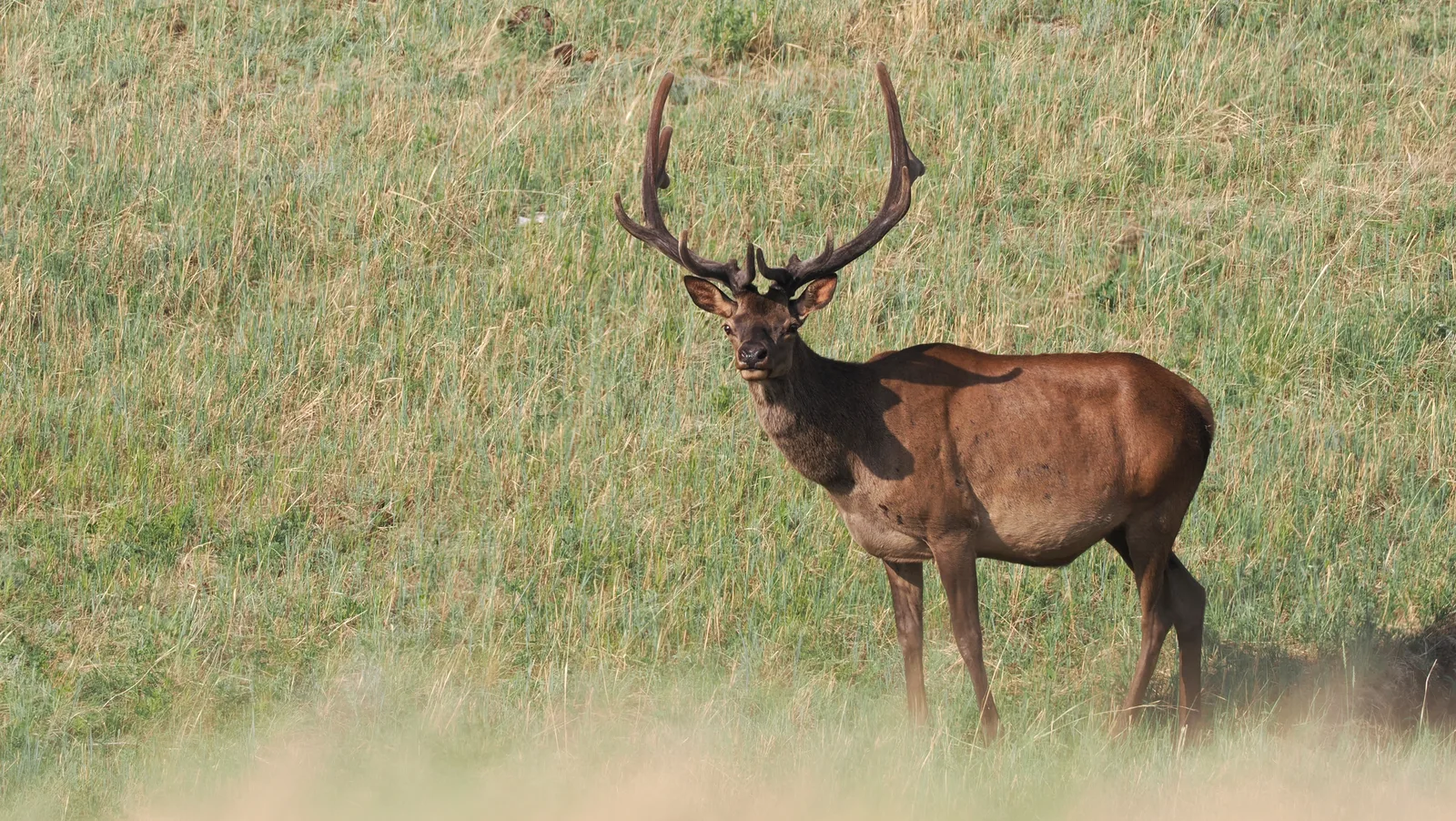
Images of the elk
Lifespan in the wild
10 to 13 years an average of 15 where predators are few
Weight
171 to 497 kg
Length
1.6 to 2.7 m
Height
0.75 to 1.5 m
Fact file
Elk
- Location
- Western North America; Central and East Asia; introduced to New Zealand and Argentina
- Habitat
- Temperate forest, Grassland, Mountains
- Diet
- Herbivore
- Predators
- Wolves, cougars, brown bears, black bears, coyotes, Siberian tigers
- Lifestyle
- Herds; feeds at dawn and dusk; migrates with the seasons
- Group name
- Herd
- Name of young
- Calf
- Gestation
- 8 to 9 months
- Litter size
- 1 calf, very rarely 2
- Population
- About one million in North America
- Biggest threat
- Chronic wasting disease and loss of winter range
- Distinctive feature
- Pale rump patch and large branching antlers on the bulls
- Colour
- Yellow-brown body with dark brown head, neck and legs
- Skin type
- Fur
Size
Next to a person
Measurements
Size and speed
- Height
- 0.75 to 1.5 m at the shoulder
- Length
- 1.6 to 2.7 m nose to tail
- Weight
- 171 to 497 kg, up to 600 kg cows from 171 kg, bulls to 497 kg; Roosevelt bulls in Alaska are estimated at up to 600 kg
- Weight, male
- 178 to 497 kg, up to 600 kg
- Weight, female
- 171 to 292 kg
Typical adult ranges. Source: Wikipedia.
Life cycle
Lifespan
- In the wild10 to 13, up to 15 years an average of 15 where predators are few
- In captivityAbout 20 years 20 years or more
- 015 years
The pale bar is the record. Source: Wikipedia.
Appearance
Colour and coat
- Primary colours
- yellow-browndark brown
- Secondary colours
- creamgrey
- Skin type
- fur
- Male and female
- Bulls are much larger than cows and carry antlers, which cows never grow. Bulls reach 497 kilograms against 292 kg for cows.
Life cycle
Mating and family
- Mating system
- polygynous; a bull guards a harem of 20 or more cows
- Social structure
- cow and calf herds of up to 400; bulls in small bands or alone
- Breeding
- one calf a year, born in late spring after an 8 to 9 month pregnancy
Elk mate in the autumn rut, when a dominant bull holds a harem of cows. The single calf is born after eight to nine months and weighs about 16 kilograms. It joins the herd at two weeks and is weaned by two months. Young elk leave their birth range before the age of three. A wild elk lives about 10 to 13 years, and a captive one 20 or more.
Classification
Taxonomy
- Kingdom
- Animalia
- Phylum
- Chordata
- Class
- Mammalia
- Order
- Artiodactyla
- Family
- Cervidae
- Genus
- Cervus
- Species
- Cervus canadensis
Conservation
Red List status
- LC
- NT
- VU
- EN
- CR
- EW
- EX
Least Concern on the IUCN Red List
Range
Recorded in 3 countries
Habitat layer: temperate broadleaf and mixed forest, temperate conifer forest, boreal forest and taiga, tropical grassland, savanna and shrubland, temperate grassland, savanna and shrubland, montane grassland and shrubland.
Countries from 40,514 wild records on GBIF (iNaturalist research grade), filtered and checked by hand. Country shapes: Natural Earth. Habitat: RESOLVE Ecoregions 2017, CC BY 4.0. Basemap: Natural Earth.
Habitats
Three things to know
- 1
A bull's bugle reaches 4000 hertz, an unusually high pitch for so large an animal.
- 2
Antlers are bone and can lengthen by 2.5 centimetres a day while they grow.
- 3
About 10 million elk lived in North America before European settlement, and about one million live there today.
Did you know
Seven more facts
- 1
The word elk once meant the moose, and the colonists gave it to the wrong deer.
- 2
Wapiti means white rump in Shawnee and Cree.
- 3
Elk and red deer can interbreed, and their hybrids have all but replaced pure elk in Fiordland, New Zealand.
- 4
A cow is in heat for only a day or two each autumn.
- 5
A newborn calf weighs about 16 kilograms and can stand within about 20 minutes.
- 6
The Boy Scouts have collected shed antlers on the National Elk Refuge since 1967.
- 7
The IUCN counts the elk among the 100 worst invasive species because of its damage in Argentina and New Zealand.
Field notes
How it looks and acts
Field notes
Distinguishing features
- A pale rump patch around a short tail.
- Large branching antlers on the bulls, with about six points a side.
- A two-tone coat, pale on the body and dark brown on the head, neck and legs.
- A thin mane on the neck of both sexes in North America.
- A thick body on slender legs, second in size only to the moose.
Field notes
Unique adaptations
- A four-chambered stomach digests grass, bark and twigs.
- A thick winter coat grows each autumn and is shed in early summer.
- Antlers regrow every year, so a bull can carry a bigger set as he matures.
- Herd life gives many eyes and ears against wolves and bears.
- Seasonal migration follows the snow line to fresh grazing.
Field notes
Interesting behaviours
- Grazes at dawn and dusk and rests under cover between meals.
- Bulls bugle, spar and wallow in the autumn rut.
- Cows and calves herd together while bulls stay in small bands.
- Moves uphill in spring and downhill in autumn.
- Rubs against trees to loosen the old winter coat.
Field notes
Temperament
- Calm and watchful in the herd for most of the year.
- Bulls turn aggressive in the rut and fight rivals hard.
- A cow with a calf is likely to defend it against a dog or a person.
Field notes
Communication
- The bull's bugle, a whistle that can reach 4000 hertz.
- A cow's alarm bark warns the herd.
- A calf screams when attacked.
- The raised rump patch signals alarm or excitement.
- Urine scent from wallows advertises a bull's condition.
Ecology
Ecological role
The elk is a major grazer of the western mountains and a key prey animal for wolves, cougars and bears.
- Heavy grazing and browsing shape grassland and aspen groves.
- Calves feed bears and coyotes, and adults feed wolves and cougars.
- Its return to eastern states restores a large herbivore lost for a century.
- Outside its native range it competes with native deer such as the huemul.
Stories
Myths and legends
- In Lakota tradition, the bull elk gives a man the power to win a mate, and courting flutes imitate its bugle.
- In a Sioux story, the elk brought people the first love flute.
- In Pacific Northwest traditions, the elk is a protector of women.
- In Neolithic Asian rock art, female elk stood for life and food, and boats drawn over them may have marked a path to the underworld.
People
Relationship with humans
People
Living alongside us
People have hunted elk since the Stone Age, and it is now the most valuable game animal in western North America. Farms raise it for lean meat and for antler velvet sold in East Asia. Hunters' groups have paid to return elk to nine eastern states. Elk can pass brucellosis to cattle, which keeps ranchers and wildlife agencies wary near Yellowstone.
- A rutting bull may charge people who approach his harem.
- A cow with a newborn calf is likely to attack a person or a dog that comes close.
- Elk on roads are likely to cause serious collisions because of their size.
People
Status, uses and products
- Domestication
- Wild
- As a pet
- Not suitable. The elk is a farm animal, not a pet. It needs hectares of pasture and strong fencing, and a bull in the rut is dangerous.
- Uses
- huntingecotourismfarming
- Products
- meatantler velvetantlershides
The full account
About the elk
The elk, Cervus canadensis, is the second largest deer in the world, and only the moose is bigger. North Americans also call it the wapiti, a Shawnee and Cree word for its pale rump. An adult stands 0.75 to 1.5 metres at the shoulder and measures 1.6 to 2.7 metres from nose to tail. Bulls weigh 178 to 497 kilograms, and cows weigh 171 to 292 kg. Each spring a bull grows a new pair of branching antlers, and each winter he drops them.
Elk live in open forest and along forest edges in western North America and across Central and East Asia. They graze grasses and sedges much as cattle do, but they also browse leaves, twigs and bark. In autumn the bulls bugle, a whistling scream that carries across a valley. The IUCN lists the elk as Least Concern, and about one million live in North America. Zoologists long treated the elk as a subspecies of the red deer, but DNA shows that it is a species of its own.
Name and taxonomy
The English word elk first meant the moose of northern Europe. Colonists in North America met a large deer they did not know and gave it the old name. Early writers such as Richard Hakluyt in 1584 and John Smith in 1616 called the animal a red deer. Thomas Jefferson still wrote red deer for it in 1785. The Oxford English Dictionary calls the history of the word elk obscure. The name wapiti comes from waapiti, a Shawnee and Cree word that means white rump.
Erxleben gave the species its scientific name, Cervus canadensis, in 1777. For most of the 20th century zoologists treated the elk as one of many subspecies of the red deer, Cervus elaphus. Mitochondrial DNA studies from 1998 onward showed that the two are separate species. A 2004 study of hundreds of samples confirmed the split. The elk has a broader rump patch and paler antlers than the red deer. Six subspecies were described from North America and four from Asia, but DNA suggests that only three or four are real. The eastern elk and Merriam's elk of North America died out at least a century ago.
Evolution and relatives
The genus Cervus appears in the fossil record of Eurasia 25 million years ago, in the Oligocene. Its members reached North America in the early Miocene. The giant Irish elk, Megaloceros, was the largest deer known from fossils, but it was not a Cervus. DNA places the elk closer to Thorold's deer and the sika deer than to the red deer. Elk and red deer still produce fertile young together, and the two have mixed freely in Fiordland, New Zealand. Almost no pure elk remain there as a result.
In the Late Pleistocene the elk ranged across Eurasia as far west as France. Those populations were probably cold-steppe specialists, and they shrank as forest spread at the start of the Holocene. Small groups survived in southern Sweden and the Alps until about 3000 years ago. Elk also lived in central Alaska early in the Holocene and held on in Yukon until about 550 AD.
Appearance
The elk has a thick body, slender legs and a short tail. Shoulder height runs from 0.75 to 1.5 metres, and nose-to-tail length from 1.6 to 2.7 metres. A bull weighs from 178 to 497 kilograms, while a cow weighs 171 to 292 kg. The Roosevelt elk of the Pacific coast is the largest subspecies, and bulls moved to Alaska may reach 600 kg. The tule elk of California is the smallest, with bulls of 204 to 318 kg. The summer coat is yellow-brown to orange-brown on the body, and the head, neck and legs are dark brown. In winter the coat grows thicker and turns greyer. A pale patch surrounds the short tail, and the elk can raise the hair there as a signal. Both sexes in North America grow a thin mane on the neck. Calves are born with spots, which fade by late summer.
Only bulls grow antlers, which are bone and can lengthen by 2.5 centimetres a day. A soft skin called velvet feeds the growing antler and is rubbed off in summer. A mature bull carries about six points on each antler, and a Roosevelt bull's antlers can weigh 18 kg. Testosterone drives antler growth, and when the level falls in late winter the antlers drop. The Siberian and North American elk carry the biggest antlers, and the Altai wapiti the smallest.
Habitat and range
The elk lives in western North America and in a broad band of Asia from central Asia through Siberia to China, Mongolia and Korea. It uses open deciduous woodland, boreal forest, upland moors, mountains and grassland. The Siberian elk lives in country much like that of the Rocky Mountain elk. Forest edges suit it best, because it can graze in the open and shelter under trees. GBIF holds occurrence records from 15 countries.
Before European settlement about 10 million elk lived across most of North America. Hunting and farming pushed them into the western mountains, and the eastern subspecies vanished. Since 1913 hunters' groups and state agencies have returned elk to Pennsylvania, Michigan, Kentucky and other eastern states. Kentucky's herd passed 15,000 animals in 2022. In 2016 a bull walked into South Carolina, the first elk seen there in nearly 300 years.
People also released elk far outside the native range. Eighteen American elk went to George Sound in Fiordland, New Zealand, in 1905. Elk and red deer reached Argentina early in the 20th century and now compete with the native huemul. The IUCN names the elk among the world's 100 worst invasive species for this reason.
Like many mountain deer, elk move uphill in spring behind the melting snow and downhill in autumn. The Yellowstone herds hold up to 40,000 animals and travel as much as 270 kilometres between summer and winter range. The Teton herd of 9,000 to 13,000 elk winters on the National Elk Refuge in Wyoming. In winter they favour wooded ground, where more food is within reach.
Diet and feeding
The elk is a ruminant with a four-chambered stomach. The moose and the white-tailed deer mostly browse, but the elk mostly grazes, much as cattle do. It still browses leaves, twigs and bark when grass is scarce. An adult eats about 9.1 kilograms of plant matter a day. Grass is a year-round food. In summer the elk adds sedges, forbs and young tree shoots, and it likes dandelions, clover, aster and violets. In winter it strips bark from cedar, hemlock, maple, pine and other trees.
Elk feed mostly in the morning and evening and rest under cover between meals to chew the cud. Their taste for aspen shoots has thinned aspen groves in parts of their range. Managers count pellet groups to track numbers and grazing pressure. In Yellowstone, elk fed on alfalfa pellets at feed grounds show changes in their gut bacteria. Fewer fibre-digesting bacteria may leave them less able to digest wild forage.
Behaviour and social life
Elk are among the most social deer. Summer herds can reach 400 animals. For most of the year cows and calves form large herds while bulls live in small bands or alone. Young bulls may follow either older bulls or the cow herds. The sexes meet in the rut, which can start in late August and run into early winter.
A dominant bull gathers a harem of 20 or more cows and guards them from rivals and predators. Bulls challenge each other by bugling and by showing their antlers. If neither backs down, they lock antlers and wrestle, and some bulls are badly hurt. A bull digs a wallow, urinates in it and rolls, so that the scent soaks his coat and draws cows. When a cow strays, the bull runs ahead of her, blocks her and drives her back with his neck stretched low. In courtship he approaches with his head high and flicks his tongue to test whether she is ready. A cow that is not ready lowers her head, weaves from side to side and opens and shuts her mouth.
Young bulls with unforked spike antlers pester unguarded cows and skip the courtship. They father few calves, and a cow may keep near the harem bull to escape them. As in other deer, the herds spend most of the day feeding, resting and moving between pastures outside the rut. Elk rub against trees to shed the winter coat in early summer.
Communication and senses
The bugle is a loud, high whistle that a bull uses to advertise his strength across a valley. It reaches 4000 hertz, an unusually high pitch for so large an animal. The bull makes it by forcing air from the glottis through the nasal passages. He can also produce deep sounds of about 150 Hz with the larynx. A cow gives a sharp bark to warn the herd of danger. A calf under attack screams at a high pitch.
The pale rump patch is a visual signal, and the elk fluffs it up when alarmed or when bulls spar. Scent matters too, because the urine-soaked coat of a rutting bull tells cows about his condition. Like other deer, the elk probably relies on hearing and smell more than on sight to detect a predator. A grazing elk sees little with its head down, so life in a herd gives it more eyes.
Reproduction and life cycle
A cow comes into heat for only a day or two, and mating usually takes a dozen or more attempts. A cow can breed in the autumn of her second year, and most conceive once they weigh at least 200 kilograms. Pregnancy lasts eight to nine months, and the calf weighs about 16 kg at birth. Twins are very rare. A cow leaves the herd to give birth and stays apart until the calf can outrun predators. A newborn calf can stand within about 20 minutes.
The calf is spotted at birth and loses the spots by the end of summer. After two weeks it joins the herd, and by two months it is weaned. At six months it is as big as an adult white-tailed deer. Young elk leave their birth range before they turn three, and males leave more often than females. Cows tolerate their daughters from earlier years, so female lines stay together. Wild elk live 10 to 13 years on average, and up to 15 where predators are few. In captivity they live 20 years or more.
Predators and threats
Wolves, cougars, brown bears, black bears and coyotes hunt elk in North America, and the Siberian tiger hunts them in Asia. Coyote packs mostly take calves, though they can pull down a sick or winter-weak adult. In the Greater Yellowstone Ecosystem, bears kill more calves than any other predator. No healthy bull has been recorded killed by a bear there, and a bear that tries may die. Wolves take bulls most often in late winter, when months of rutting have worn them down. A bull that has just dropped its antlers is also easier prey.
Elk switch from grazing to browsing when predators are near, because a raised head sees further. Herd life spreads the risk, and cows with calves keep to the biggest groups. Disease is a threat as well. Chronic wasting disease, caused by a prion, has spread through elk across North America. Brucellosis persists in the Yellowstone herds and has passed to cattle and horses. Hoof disease has crippled elk in Washington and Oregon since the late 1990s. At least 53 kinds of parasite have been found in elk, and brainworm among them can kill.
Population and conservation
The IUCN lists the elk as Least Concern. About one million elk lived in North America in 2014. That is far below the 10 million before European settlement, but well above the low point that followed it. Reintroductions have restored herds to Pennsylvania, Kentucky, Wisconsin, North Carolina, Tennessee, Virginia, West Virginia, Georgia and Missouri. Pennsylvania's herd is stable at about 1,400 animals. Ontario has tried since the early 20th century with limited success.
In Asia the picture is less clear, and some Chinese forms may deserve species rank of their own. Chronic wasting disease and the loss of winter range are probably the main worries in North America. In New Zealand and Argentina the elk is an invasive species, and managers there work to reduce it.
Relationship with humans
People have hunted elk for thousands of years, and in early Holocene Alaska it was the main game animal beside the bison. Native Americans used the hides for tepee covers, clothing and footwear. Today the elk is a prized game species across the western United States and Canada. The meat is lean, with more protein and less fat than beef, pork or chicken. Farms in North America, New Zealand and Asia raise elk for meat and for antler velvet. A bull yields 10 to 11 kilograms of velvet a year, sold in East Asia as medicine. Velvet from an animal with chronic wasting disease may carry prions, and South Korea banned imports in 2002.
Shed antlers become art, furniture and other goods. Since 1967 Boy Scouts have gathered shed antlers on the National Elk Refuge for an auction that funds the refuge. In 2010 they sold 2,520 kg of antlers for more than 46,000 dollars. Elk can carry brucellosis to cattle, so ranchers and wildlife agencies watch the Yellowstone herds closely. A rutting bull may charge a person who comes too close, so park visitors are told to keep their distance.
In culture and myth
Neolithic rock carvings in Asia show antlerless female elk, which archaeologists read as symbols of life and food. Many of these carvings are overlaid with boats or placed by rivers, and they may have marked a path to the underworld. The Ancestral Puebloans carved elk into cliffs in the American Southwest hundreds of years ago. In Lakota tradition the bull elk stands for the power to attract a mate. A Lakota man played a courting flute that imitated the bugle, and he carried antler charms and wore elk images. A Sioux story tells how the elk gave people the first love flute. Plains nations linked the elk with endurance and bravery, and peoples of the Pacific Northwest saw it as a guardian of women. The Menominee, Ottawa and Osage had elk clans, and the Blackfoot Elk Horn Society is a warrior society.
The Rocky Mountain elk is the state animal of Utah, and Michigan's seal and flag show an elk beside a moose. The Benevolent and Protective Order of Elks took the animal as its name, and members prize elk teeth set in gold. Spirit-animal websites read the elk as a sign of stamina and pride, a reading that probably owes little to older tradition.
A sentence with a dotted underline is inferred: it describes the group the animal belongs to, or is a reading of the sources, rather than a measured or reported fact about this species.
Questions
Elk questions, answered
How big is an elk?
Shoulder height is 0.75 to 1.5 metres and length from nose to tail is 1.6 to 2.7 metres. Bulls weigh 178 to 497 kilograms and cows 171 to 292 kg.
Is an elk the same as a moose?
No. In North America the elk is Cervus canadensis and the moose is Alces alces. In Europe, though, the word elk means the moose, which is how the confusion began.
What is a wapiti?
Wapiti is another name for the elk. It comes from a Shawnee and Cree word that means white rump.
What do elk eat?
Mostly grass, which they graze like cattle. They also eat sedges, forbs and tree shoots in summer and strip bark in winter. An adult eats about 9.1 kilograms of plants a day.
Why do elk bugle?
A bull bugles in the autumn rut to warn rival bulls and to attract cows. The call can reach 4000 hertz and carries a long way.
Do female elk have antlers?
No. Only bulls grow antlers. They drop them in late winter and grow a new set each spring.
How much do elk antlers weigh?
The antlers of a big Roosevelt bull can weigh about 18 kilograms. They are bone and grow up to 2.5 centimetres a day.
Where do elk live?
In western North America and across Central and East Asia, from Siberia to China, Mongolia and Korea. They favour forest edges, mountains and grassland.
Are elk endangered?
No. The IUCN code is LC, Least Concern, and North America holds about one million elk. Two eastern subspecies are extinct, though.
How long do elk live?
About 10 to 13 years in the wild, and up to 15 where predators are few. Captive elk live 20 years or more.
What eats elk?
Wolves, cougars, brown bears, black bears and coyotes in North America, and the Siberian tiger in Asia. Bears take most of the calves in Yellowstone.
Do elk migrate?
Yes. Elk move uphill in spring and downhill in autumn. The Yellowstone herds travel up to 270 kilometres between summer and winter ranges.
How many calves does an elk have?
One calf a year, and twins are very rare. The calf weighs about 16 kilograms at birth.
Are elk dangerous to people?
They can be. A bull in the rut and a cow with a calf will both charge, and elk on roads cause serious crashes. Keep well back in parks.
Can you eat elk meat?
Yes. Elk meat is lean and has more protein than beef, pork or chicken. Farms and hunters supply it to restaurants and shops.
What is elk velvet used for?
The soft skin on growing antlers is cut on farms and sold in East Asia as a traditional medicine. A bull gives 10 to 11 kilograms a year.
Food web
Prey and food
Not recorded.
Food web
Predators
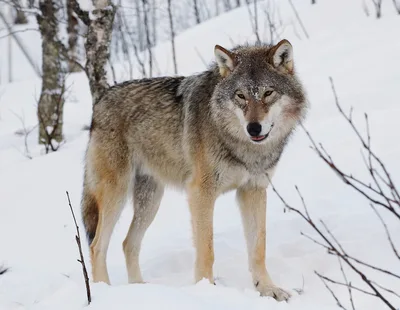 Gray wolf
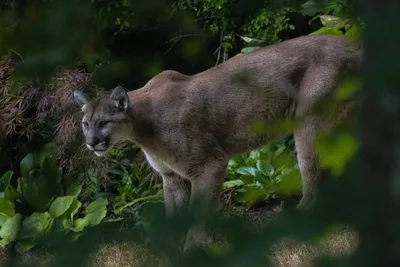 Cougar
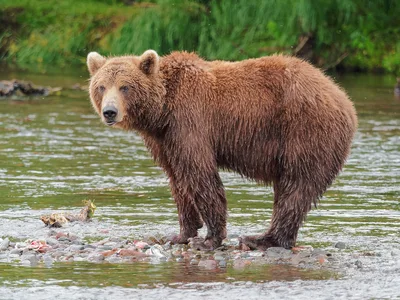 Brown bear
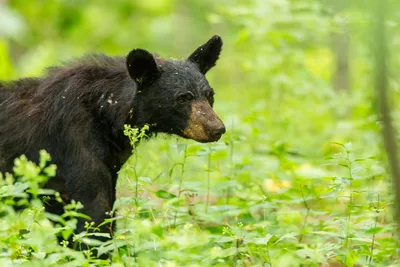 American black bear
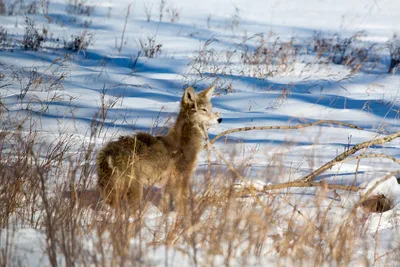 Coyote
- siberian tigers
Ecological equivalents
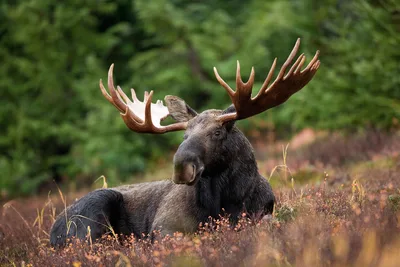
Related species on this site
Red deer (same genus), Sika Deer (same genus), Cervalces latifrons (Broad-Fronted Moose) (same family), Chinese Water Deer (same family), Coues Deer (same family), Deer (same family), and more.
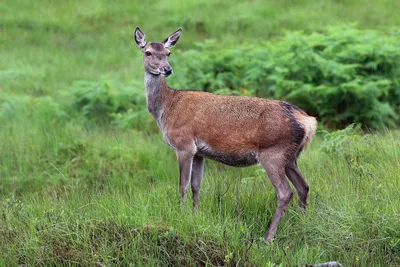 LC
Mammals
Red deer
Cervus elaphus
The red deer is one of the largest deer, found across Europe, western Asia and the Atlas Mountains of North Africa.
Living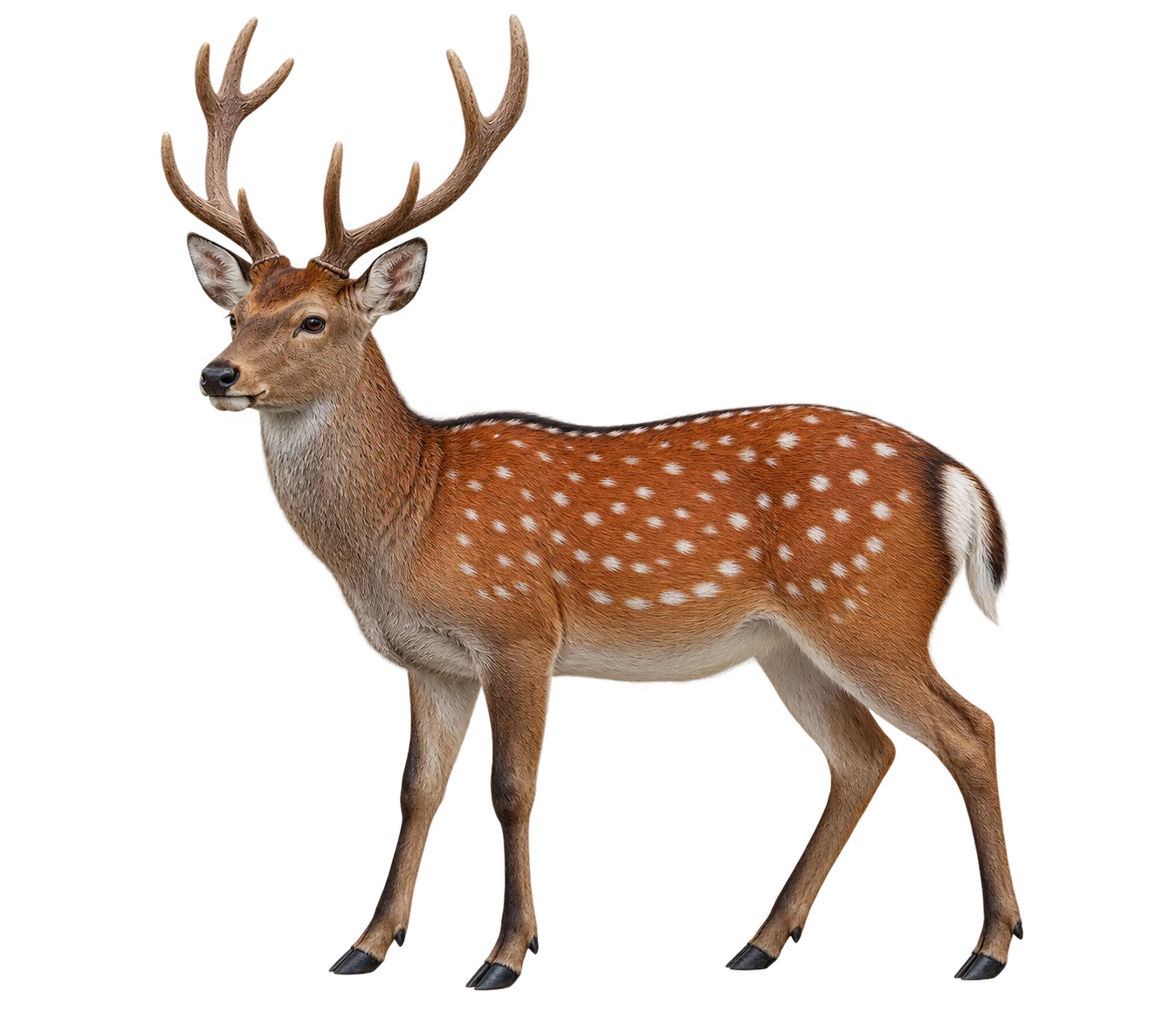
Mammals
Sika Deer
Cervus nippon
Classification and source reference
LivingAI illustration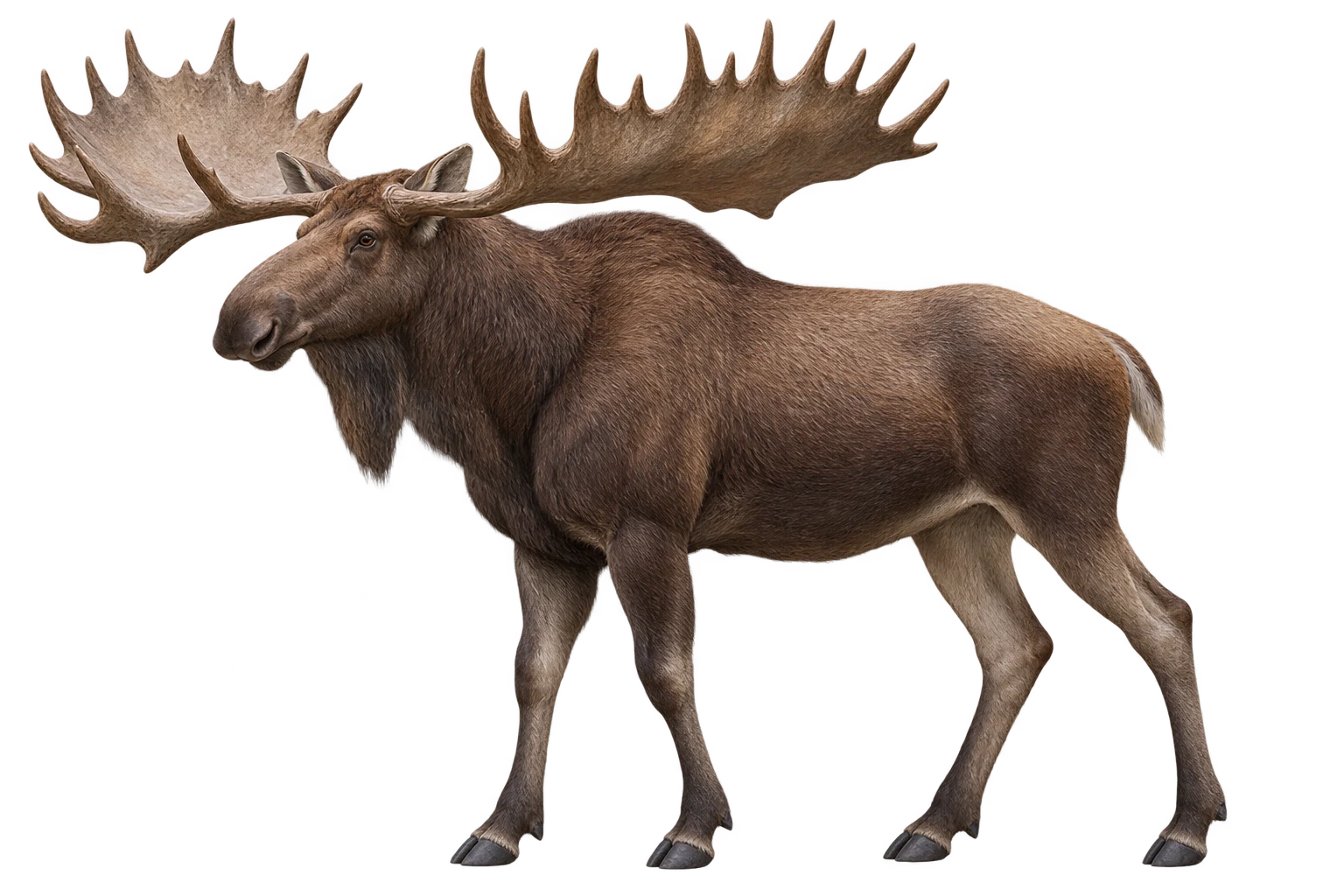
Mammals
Cervalces latifrons (Broad-Fronted Moose)
Cervalces latifrons
Classification and source reference
ExtinctAI reconstruction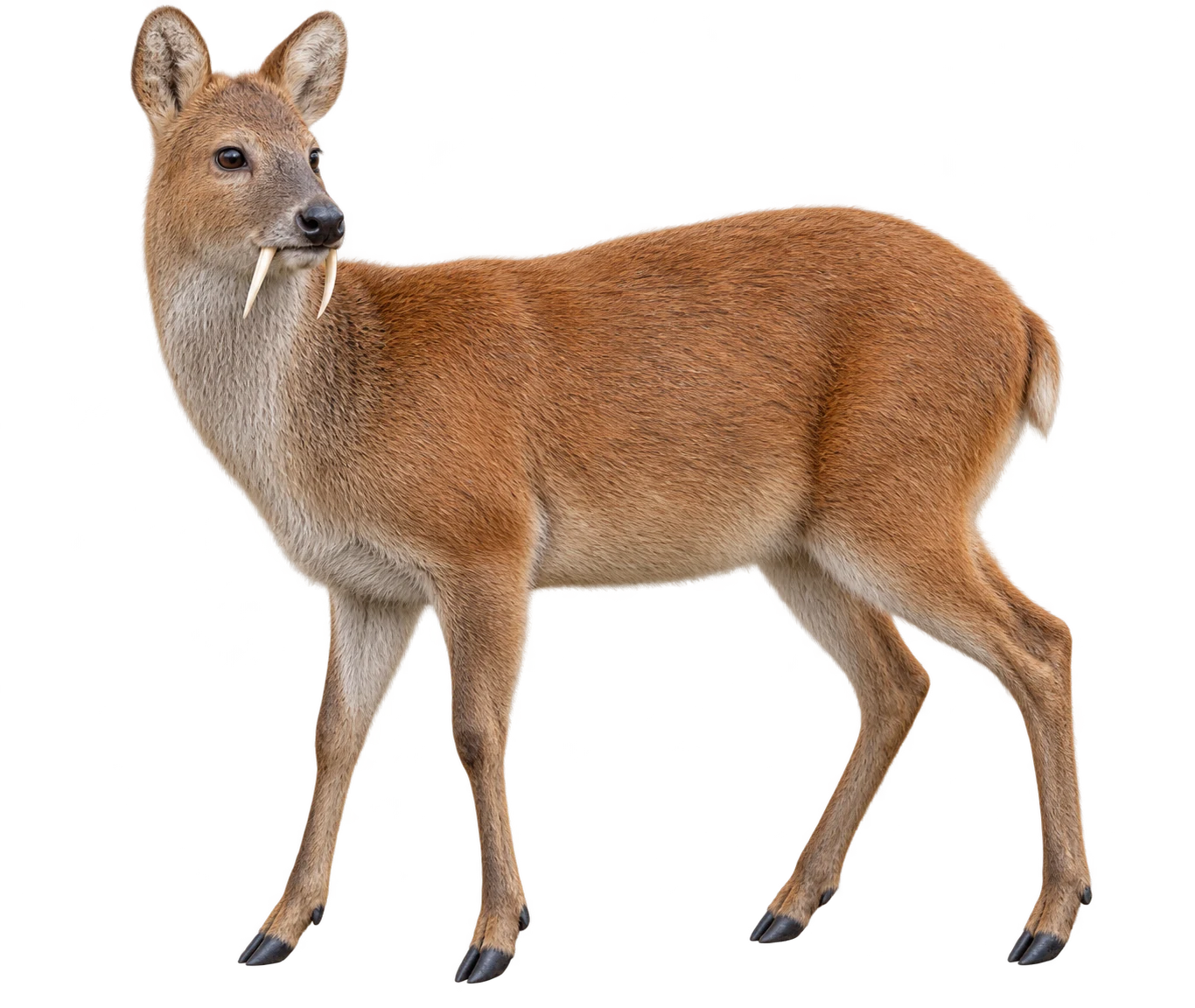
Mammals
Chinese Water Deer
Hydropotes inermis
Classification and source reference
LivingAI illustration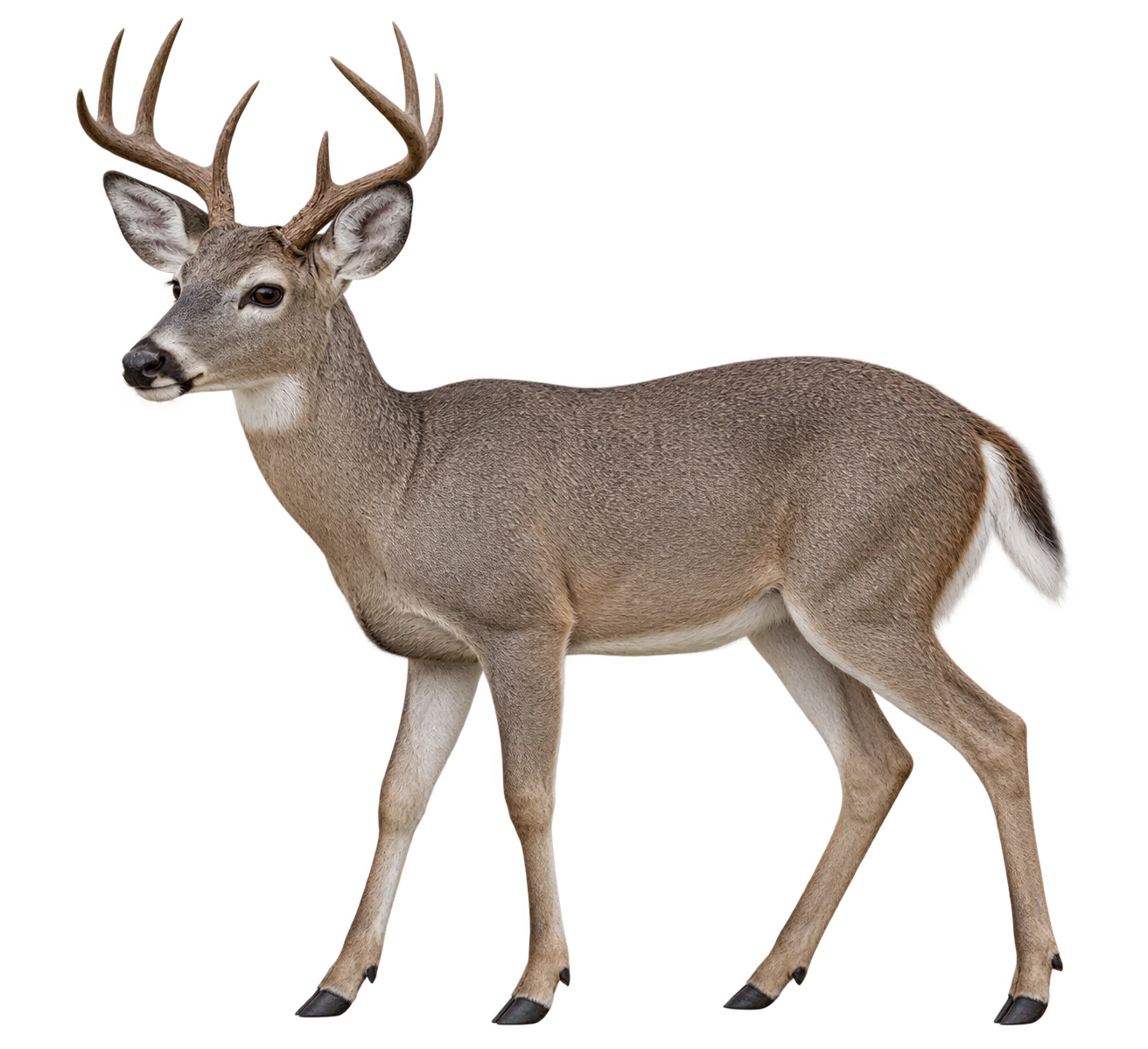
Mammals
Coues Deer
Odocoileus virginianus couesi
Classification and source reference
LivingAI illustration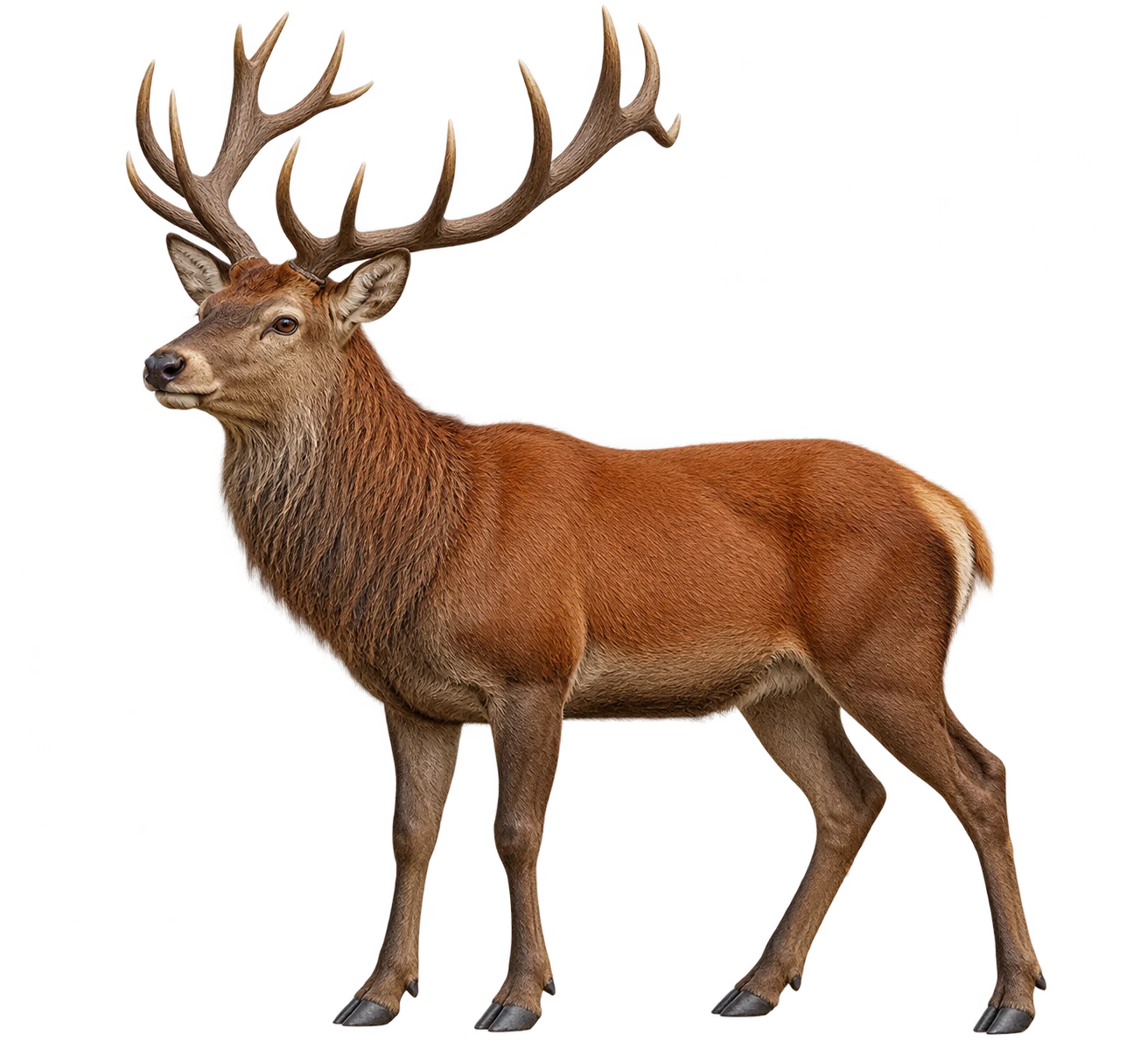
Mammals
Deer
Cervidae
Classification and source reference
LivingAI illustration