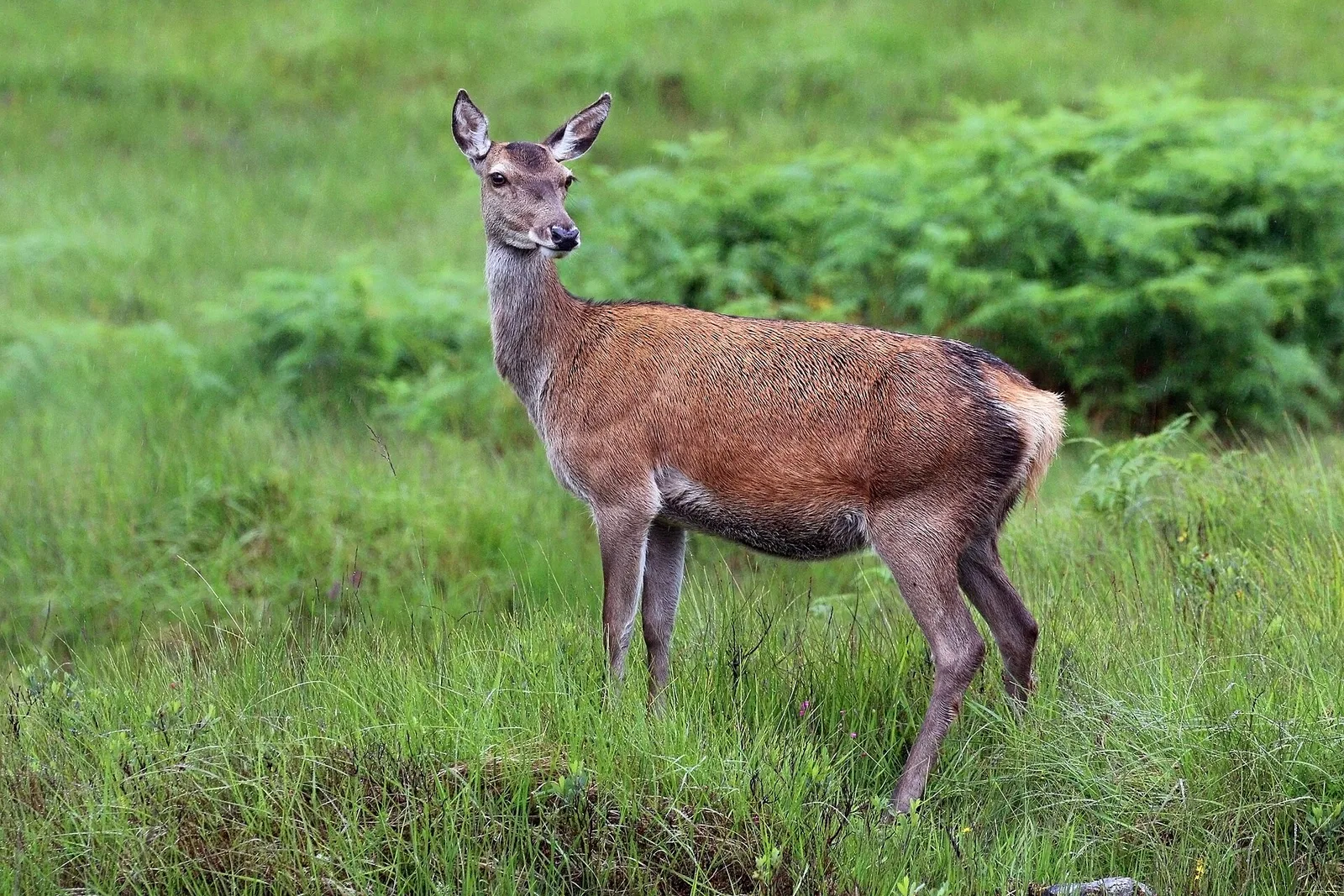
Red deer
The roaring stag of Europe's forests and Scottish glens
Cervus elaphus
Also called European red deer, Stag, Hart, Hind, Maral, Barbary red deer
Living individuals or members of this group exist today. This does not mean they are safe from extinction.
Meet the red deer
The red deer is one of the largest deer, found across Europe, western Asia and the Atlas Mountains of North Africa. Stags grow branched antlers each year and roar to hold groups of hinds in the autumn rut.
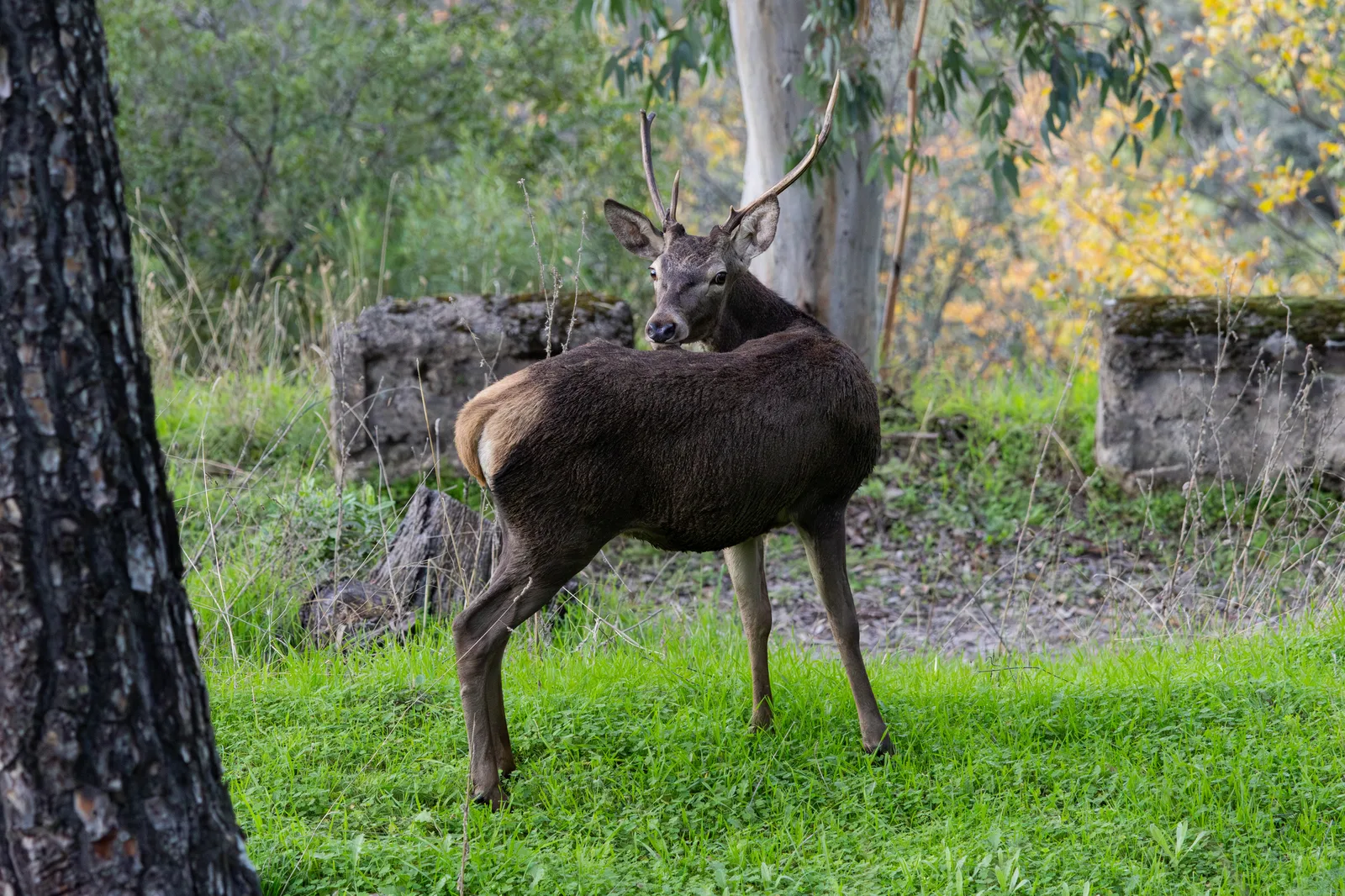
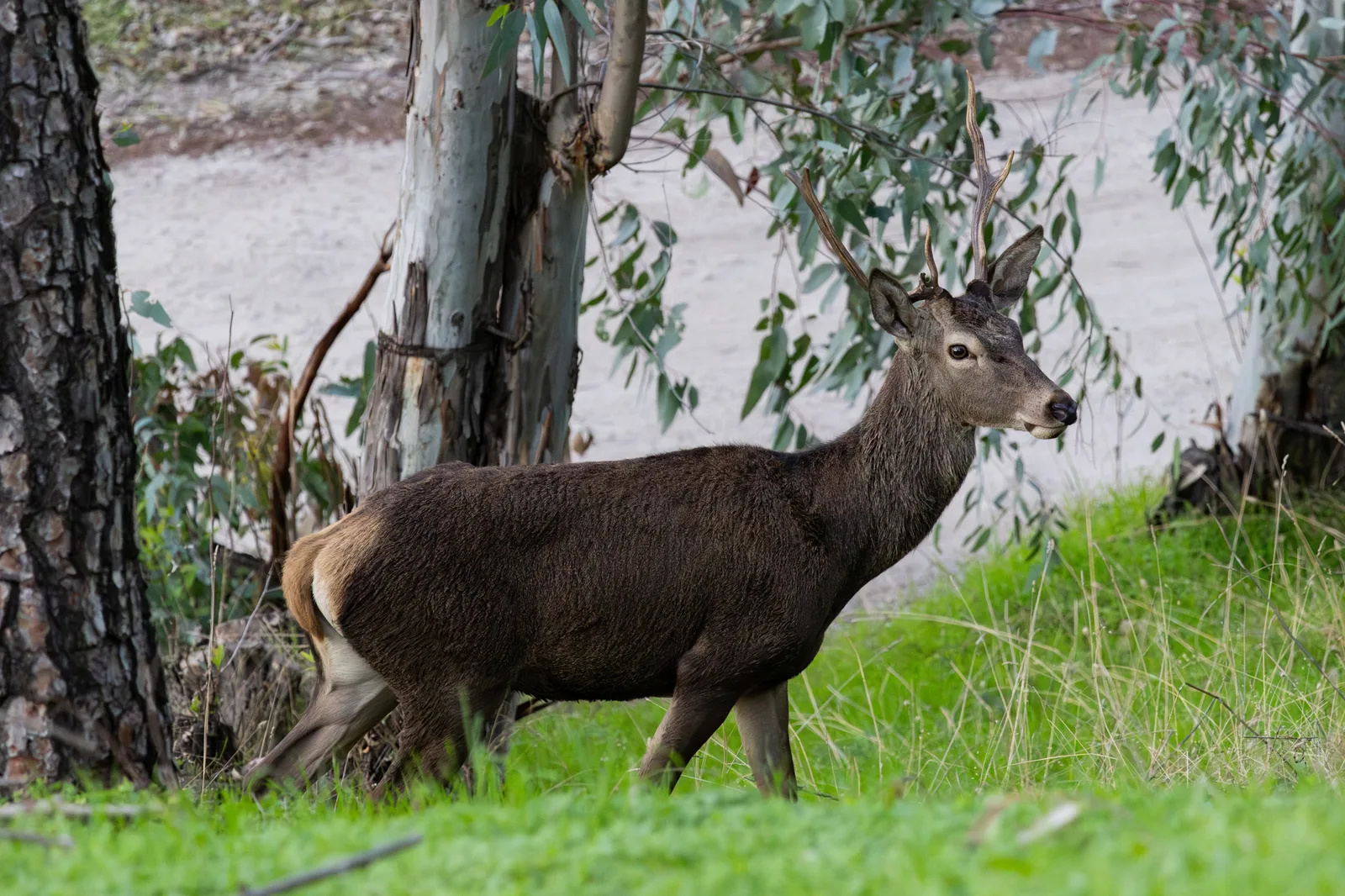
Images of the red deer
Lifespan in the wild
10 to 13 years some populations with few predators average 15
Weight
120 to 240 kg
Length
1.6 to 2.5 m
Height
0.95 to 1.3 m
Fact file
Red deer
- Location
- Europe, Anatolia, Caucasus, Iran; Atlas Mountains of Algeria and Tunisia
- Habitat
- Temperate forest, Grassland, Mountains
- Diet
- Herbivore
- Prey / food
- Grasses, sedges, heather, tree shoots, bark, fruit
- Predators
- Gray wolf, brown bear, Eurasian lynx, domestic dogs, humans
- Lifestyle
- Most active at dawn and dusk
- Group name
- Herd
- Name of young
- Calf
- Gestation
- About 240 to 262 days
- Litter size
- 1 calf, very rarely 2
- Population
- About 2 to 4 million in Europe outside Russia
- Biggest threat
- Habitat loss, hunting and hybridisation with sika deer
- Distinctive feature
- Branched antlers on the stag, up to 115 cm long
- Colour
- Reddish brown in summer, greyish brown in winter
- Skin type
- Fur
Size
Next to a person
Measurements
Size and speed
- Height
- 0.95 to 1.3 m at the shoulder
- Length
- 1.6 to 2.5 m head and body, without the tail; hinds from 160 cm, stags to 250 cm
- Length, male
- 1.75 to 2.5 m head and body
- Length, female
- 1.6 to 2.1 m head and body
- Tail
- 12 to 19 cm
- Weight
- 120 to 240 kg, up to 500 kg hinds from 120 kg, stags to 240 kg; a Carpathian stag can reach 500 kg
- Weight, male
- 160 to 240 kg, up to 500 kg
- Weight, female
- 120 to 170 kg
Typical adult ranges. Source: Wikipedia.
Life cycle
Lifespan
- In the wild10 to 13 years some populations with few predators average 15
- In captivityUp to 31.5 years
- 031.5 years
Appearance
Colour and coat
- Primary colours
- reddish browngreyish brown
- Secondary colours
- creamdark brownorange
- Skin type
- fur
- Male and female
- Strong. Only the stag grows antlers and a neck mane, and he is much heavier than the hind. Stags weigh 160 to 240 kilograms against 120 to 170 kg for hinds.
Life cycle
Mating and family
- Mating system
- polygynous, with harems held by mature stags
- Social structure
- hind family groups led by an old female, with stags in separate bachelor bands
- Breeding
- one calf a year, born in May or June
Stags gather harems of hinds in the autumn rut and roar and fight to keep them. A hind carries her calf for 240 to 262 days and gives birth alone in cover in early summer. The calf lies hidden for about a week, joins the herd at two weeks and is weaned by two months. It stays with its mother for nearly a year. Wild red deer live 10 to 13 years, and one captive animal reached 31.5.
Classification
Taxonomy
- Kingdom
- Animalia
- Phylum
- Chordata
- Class
- Mammalia
- Order
- Artiodactyla
- Family
- Cervidae
- Genus
- Cervus
- Species
- Cervus elaphus
Conservation
Red List status
- LC
- NT
- VU
- EN
- CR
- EW
- EX
Least Concern on the IUCN Red List
Range
Recorded in 15 countries
- Austria
- Ashmore and Cartier Islands
- Canada
- Germany
- Denmark
- Spain
- France
- United Kingdom
- Italy
- New Zealand
- Poland
- Portugal
- Russia
- Ukraine
- United States of America
Habitat layer: temperate broadleaf and mixed forest, temperate conifer forest, boreal forest and taiga, tropical grassland, savanna and shrubland, temperate grassland, savanna and shrubland, montane grassland and shrubland.
Countries from 55,130 wild records on GBIF (iNaturalist research grade), filtered and checked by hand. Country shapes: Natural Earth. Habitat: RESOLVE Ecoregions 2017, CC BY 4.0. Basemap: Natural Earth.
Habitats
Three things to know
- 1
A stag's antlers can grow 2.5 centimetres a day and are shed and regrown every year.
- 2
The Barbary stag of the Atlas Mountains is the only deer native to Africa.
- 3
A stag holding hinds in the rut can lose up to 20% of its body weight.
Did you know
Seven more facts
- 1
A stag without antlers is called a hummel, and one with unbranched spikes is called a switch.
- 2
Red deer and elk were counted as one species until genetic studies split them.
- 3
A red deer can eat up to 300 kinds of plants.
- 4
In New Zealand, 1,124,297 red deer were shot in official control work between 1931 and 1975.
- 5
The Corsican red deer is the smallest form and weighs only 80 to 100 kilograms.
- 6
A hind is receptive for only 6 to 24 hours in each 18 day cycle.
- 7
GBIF holds occurrence records for the species from 84 countries.
Field notes
How it looks and acts
Field notes
Distinguishing features
- Large branched antlers on the stag, with a crown of tines at the top in big males.
- A reddish brown summer coat that turns greyish brown in winter.
- A pale rump patch, orange above and whitish below, edged with dark brown.
- A short tail of 12 to 19 centimetres.
- A shaggy neck mane on many stags in autumn.
- A shoulder height of 95 to 130 cm on long, slender legs.
Field notes
Unique adaptations
- A four-chambered stomach lets it digest coarse grass, bark and heather.
- A thick winter coat grows in each autumn to hold heat through the cold months.
- Seasonal movement between low winter woods and high summer pasture follows the food.
- A deep roar carries through forest, where a high call would be lost.
- Newborn calves are spotted and lie still in tall plants, which probably hides them from predators.
Field notes
Interesting behaviours
- Feeds at dawn and dusk and lies up to chew the cud in between.
- Lives in hind groups led by an old female, while stags keep to bachelor bands.
- Rubs against trees to shed the heavy winter coat.
- Roars and walks in parallel with a rival before any fight.
- Posts one or more lookouts while the rest of the herd feeds.
Field notes
Temperament
- Wary and quick to run, especially where it is hunted.
- Stags are aggressive only in the rut and tolerate each other for the rest of the year.
- Hinds defend calves and will kick at a wolf or a dog.
Field notes
Communication
- The stag roars to draw hinds and to warn rivals.
- Hinds bark and grunt, and calves bleat and squeal.
- Rutting stags spray urine on themselves and rely on scent glands near the eyes.
- Rivals judge each other by walking side by side before they lock antlers.
Ecology
Ecological role
The red deer is the main large plant eater in many European forests and a key prey of the wolf.
- Shapes the forest by browsing young trees and shrubs, and at high density it stops woodland regrowth.
- Feeds wolves, bears and lynx, and its carcasses feed scavengers.
- Probably carries seeds and nutrients between winter valleys and summer pasture.
- In Argentina and Chile it competes with the native huemul and damages native plants.
Stories
Myths and legends
- In Scottish Highland tradition, red deer were fairy cattle, milked by fairies on the hilltops.
- In Irish tradition, Sadhbh was turned into a deer and bore the hero Fionn a son, Oisin.
- In Norse tradition, four stags feed on the branches of the world tree Yggdrasil.
- In Christian tradition, Saint Hubert and Saint Eustace each met a stag with a cross between its antlers.
- In Celtic tradition, the stag stands for leadership and renewal, and the hind for grace.
People
Relationship with humans
People
Living alongside us
People have hunted the red deer for at least 40,000 years, and it is still the most important game animal in Europe. Its meat is sold as venison, and farms in New Zealand and Asia raise it for meat and antler velvet. Hunting, culling rules and reintroductions have rebuilt European herds since the 1950s. Where it has been released overseas, it damages native plants and is treated as a pest. Some Scottish herds are farmed, but the species is not domesticated.
- A wild red deer runs from people and almost never attacks.
- A rutting stag or a hind with a calf may charge if cornered, and the antlers and hooves can injure.
- The greater risk is on the road, where deer collisions are a serious traffic hazard in Australia and Europe.
People
Status, uses and products
- Domestication
- Wild
- As a pet
- Not suitable. A red deer needs many hectares of grazing and browse, a herd of its own kind, and a fence a stag cannot clear. In the rut a stag is dangerous to handle. Deer farming under licence is the only practical way to keep one.
- Uses
- huntingdeer stalkingvenison farmingecotourism
- Products
- venisonantler velvetantlershidesdeer hair for fishing flies
The full account
About the red deer
The red deer, Cervus elaphus, is one of the largest deer in the world. Only the moose, the elk and the sambar are bigger. A male is called a stag or a hart, a female is a hind, and the young is a calf. Each spring the stag grows a new pair of branched antlers, and each winter he drops them. In the autumn rut he roars across the hills to gather hinds and to warn other stags.
Red deer live across most of Europe, in Anatolia, the Caucasus and Iran, and in the Atlas Mountains of North Africa. It is the only living deer native to Africa. People have also released it in Australia, New Zealand, North America and South America. A stag weighs 160 to 240 kilograms, and a hind weighs 120 to 170 kg. The IUCN lists the species as Least Concern, and numbers in Europe are rising.
Name and taxonomy
Carl Linnaeus named the species Cervus elaphus in 1758, and the type locality is southern Sweden. Cervus is the Latin word for a deer, and elaphus is probably from the Greek word for one. The species sits in the family Cervidae and the order Artiodactyla, the even-toed hoofed mammals. Local names are many: hart and stag in English, maral in Turkish and Mongolian, and cerf in French. GBIF lists more than fifty vernacular names for the species in dozens of languages.
For a long time biologists treated the red deer and the North American elk, or wapiti, as one species. The two breed freely in captivity and give fertile young, which seemed to settle the question. Genetic work now separates them, and the elk is Cervus canadensis. The Central Asian deer may also be a species of their own, Cervus hanglu, though not every study agrees. Within the red deer, the IUCN once listed nine subspecies, including the Barbary stag of North Africa and the Corsican red deer.
Evolution and relatives
The ancestor of the red deer probably came from central Asia, and one study points to the Tarim region of China. Red deer reached Europe about 900,000 years ago, in the late Early Pleistocene. Those early deer carried five-tined antlers that ended in a fork. Later, in the Middle Pleistocene, the European line began to grow a crown of tines at the antler tip. Several island forms lived in Pleistocene Italy and Sicily, and one of them shrank to about 100 kilograms.
During the last ice age, about 20,000 years ago, European red deer survived in refuges in Spain, southern France and the Balkans. As the ice went, they spread north again from those refuges. The deer of Corsica, Sardinia and North Africa carry a third, older lineage. The closest living relatives are the elk, the sika deer and the sambar. In Scotland and New Zealand the red deer has hybridised with introduced sika and elk.
Appearance
The red deer is a big, long-legged deer with a long head and large ears. A stag measures 175 to 250 centimetres from nose to tail base, and a hind measures 160 to 210 cm. The tail adds 12 to 19 cm, and the shoulder stands 95 to 130 cm high. Stags weigh 160 to 240 kilograms, and hinds weigh 120 to 170 kg. The largest stags, in the Carpathian Mountains, can reach 500 kg. At the other extreme, the Corsican red deer weighs only 80 to 100 kg.
The summer coat is reddish brown, sometimes with a few pale spots on the back. In autumn the deer grows a thicker, greyish brown winter coat. A pale rump patch, orange above and whitish below, is edged with dark brown. Many stags grow a short neck mane in autumn, and British and Norwegian stags carry the thickest ones. Calves are born with white spots, which fade by the end of their first summer.
Only the stag grows antlers, which are bone and sprout in spring. A typical pair is about 71 cm long and weighs about 1 kg, but big antlers reach 115 cm and 5 kg. While growing, the antler is wrapped in a soft skin called velvet, which carries blood to the bone. Growth can reach 2.5 cm a day. A European stag's antler is fairly straight, and the top tines of a large male form a cup or crown.
Habitat and range
The natural range covers most of continental Europe, from southern Norway and Sweden south to Spain and east to Ukraine. It continues through Anatolia and the Caucasus into northern Iran. In North Africa, the Barbary stag survives in the Atlas Mountains of Algeria and Tunisia. Red deer lived in the Levant until the 16th century but are now extinct there. Britain has native herds in Scotland, the Lake District and Exmoor, and Ireland has its own subspecies.
The species first evolved at the edge between woodland and grassland, and it still does best there. It prefers broadleaved forest broken up by large meadows. It also lives in Mediterranean scrub, on alpine meadows up to 2,800 metres, and on the treeless moors of Scotland. In the deserts of Central Asia it keeps to thickets along rivers. In the mountains, herds spend winter in low wooded valleys and climb to high pastures in summer.
People have carried the red deer around the world. New Zealand received its first pair in 1851, and more than 800 deer followed in 220 separate releases. Australia's herds began with six deer sent from Windsor Great Park in 1860. Deer also run wild in Argentina, Chile, Peru, Uruguay, the United States and Canada. GBIF holds records from 84 countries, though that count includes farms and zoos.
Diet and feeding
The red deer is a ruminant with a four-chambered stomach. It swallows food quickly, then brings it back up and chews it again while resting. It is an intermediate feeder, taking roughly 30% grass and sedge and 65% browse. Browse means the leaves, shoots and bark of trees and shrubs, and on Scottish moors it likely includes heather. Fruits and seeds matter in autumn, and one count found up to 300 plant species in the diet.
A stag eats about 14 to 16 kilograms of fresh plant matter a day, and a hind eats 9 to 10 kg. Hinds pick better quality food than stags. A hind feeding a calf needs more than twice her usual energy. Appetite follows the seasons, peaking from March to June and falling in late autumn. Feeding takes 7 to 12 hours of each day, split into six to eight bouts.
Behaviour and social life
For most of the year, stags and hinds live apart. The core social unit is a family of hinds: an old hind, her daughters and granddaughters, and their calves. Stags form small, loose bachelor bands once they have shed their antlers. In open country several hind groups may merge, and winter gatherings can be large. After the rut, hinds form herds of up to 50 animals.
Home ranges vary from 2 to 5 square kilometres in rich habitat to 40 km2 or more in poor country. Mountain herds may move 10 to 60 km between winter and summer ground. The deer is most active at dawn and dusk, and it lies up to chew the cud through the middle of the day. Where people disturb it, it feeds more at night. One or more herd members keep watch while the rest feed and rest.
The rut runs from late September into October, and in some places from August into early winter. A mature stag leaves his summer range for a traditional rutting stand and gathers a harem of hinds. He may hold as many as 20 hinds and drive off rival males. Rivals size each other up by roaring and by walking side by side, and a fight follows if neither backs down. A harem stag hardly eats, and he can lose up to 20% of his body weight during the rut. Breeding success peaks at about eight years old, and stags over 11 rarely hold a harem.
Communication and senses
The stag's roar is the best known sound of the species. It is a deep bellow suited to forest, unlike the high bugle of the elk in open country. Hinds are drawn to the stags that roar most often and most loudly. Roaring peaks at dawn and in the evening. Hinds bark and grunt, and a calf bleats to its mother.
Hinds and calves keep in touch by calling, and a large nursery hums with sound through the day. Smell matters too: rutting stags urinate on themselves, and scent glands sit in front of the eyes and on the legs. Like other deer, the red deer has keen hearing and a strong sense of smell, which serve it well in cover. Posture carries a message as well, from the parallel walk of rival stags to a hind's guttural grunt at a predator.
Reproduction and life cycle
Hinds come into season in autumn, and each cycle lasts about 18 days. A hind accepts a stag for only 6 to 24 hours in each cycle. Mating is well timed, and about 80% of hinds conceive within three to four weeks of each other. A stag usually needs a dozen or more attempts before the first successful mating. Some stags father a dozen calves in a season, and others father none.
Pregnancy lasts 240 to 262 days, the same in every subspecies. Most calves are born in May and June, after the hind has left her group to find cover. She almost always has a single calf, and twins are very rare. A calf weighs about 15 kilograms at birth in good habitat, and as little as 8 to 9 kg on poor ground. It lies hidden in tall plants for the first week or so, then follows its mother.
The calf joins the herd after about two weeks and is weaned at about two months. It stays with its mother for almost a year, until the next calf arrives. Hinds can breed at 16 months in good habitat, and most first calve at two years. Stags mature at a similar age but seldom breed before about five, when they can compete. Wild red deer live 10 to 13 years, and the oldest captive animal reached 31.5.
Predators and threats
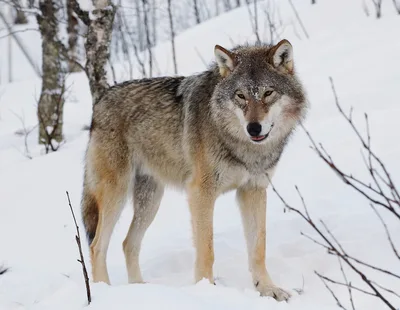
Apart from people and their dogs, the gray wolf is the most serious predator of European red deer. Brown bears take deer now and then, and lynx take calves where the two overlap. Healthy adults are rarely killed, because the herd keeps watch and the deer is big and fast. Both sexes kick hard with the front legs, and a stag also uses his antlers. The largest hinds will stand and face an attacker to protect the calves.
Hunting is the main cause of death in most populations, and it is legal and managed across Europe. Habitat loss and heavy hunting cut the range sharply in the 18th and 19th centuries. In Scotland, breeding with introduced sika deer threatens the purity of native herds. Several Asian and African subspecies are Endangered or Vulnerable, and the Bactrian deer is on CITES Appendix I.
Population and conservation
The IUCN lists the red deer as Least Concern, and the species as a whole is increasing. In Europe outside Russia there were about 2 to 4 million red deer in 2005. Hunters took about 500,000 a year at that time, up from 270,000 in 1985. France went from 30,000 deer in 1970 to about 160,000 in 2014. Italy had only 3,000 in 1970 and about 57,000 by 2005.
The picture is worse at the edges of the range. The Barbary stag of North Africa is still declining, and the species is extinct in Albania and the Near East. The Corsican red deer died out on Corsica and was brought back from Sardinia in 1985. In Korea the deer was common in the early 1900s and rare by the 1960s. Hunting seasons, culling rules and reintroductions drove the European recovery from the 1950s onward.
Relationship with humans
People have hunted red deer since the Stone Age, and the meat, venison, is still eaten widely. Venison has more protein and less fat than beef or chicken. In Britain the meat was once limited to the gentry and to poachers, but supermarkets now sell it. Scottish estates sell deer stalking on open hill, and other estates run as venison farms. Farms in New Zealand, China and Siberia harvest 10 to 15 kilograms of antler velvet a year from each stag for East Asian medicine.
Antlers become furniture, chandeliers, coat hooks and decoration, a fashion that spread through Europe in the 19th century. Deer hair is tied into fishing flies. Farmers count the deer a pest, because it strips crops and young trees, and it can pass bovine tuberculosis to cattle. In New Zealand it is an official noxious pest, and over a million were shot in government operations between 1931 and 1975. In Argentina and Chile it competes with the native huemul, and the IUCN counts it among the 100 worst invasive species.
In culture and myth
Red deer appear in European cave paintings from as early as 40,000 years ago. At Star Carr in Yorkshire, people made head-dresses from red deer skulls about 11,000 years ago, perhaps for ritual or for hunting. Pictish stones in Scotland, carved between 550 and 850 AD, often show the deer as prey. In medieval England the mature stag, the hart, was the most prized quarry of all.
In the Scottish Highlands, the deer were known as fairy cattle, which the fairies milked on the high tops. In Irish legend the hind Sadhbh became the wife of Fionn mac Cumhaill and the mother of the poet Oisin. In Norse myth four stags browse on the world tree Yggdrasil. In Christian legend Saint Hubert saw a cross between the antlers of a stag and gave up hunting. Landseer's painting The Monarch of the Glen, from 1851, made the Scottish stag a symbol of the Highlands.
A sentence with a dotted underline is inferred: it describes the group the animal belongs to, or is a reading of the sources, rather than a measured or reported fact about this species.
Questions
Red deer questions, answered
How big is a red deer?
A stag weighs 160 to 240 kilograms and measures 175 to 250 centimetres from nose to tail base. A hind weighs 120 to 170 kg. The shoulder stands 95 to 130 cm high, and the biggest Carpathian stags reach 500 kg.
What do red deer eat?
Red deer eat grass, sedges, heather, leaves, shoots, bark, fruit and seeds. About 65% of the diet is browse from trees and shrubs and 30% is grass. A stag eats about 14 to 16 kilograms of fresh plants a day.
Where do red deer live?
Red deer live across Europe, in Anatolia, the Caucasus and Iran, and in the Atlas Mountains of Algeria and Tunisia. People have also released them in Australia, New Zealand, North America and South America. They favour forest edges, open woodland, moorland and mountain meadows.
Are red deer endangered?
No. The IUCN lists the red deer as Least Concern, and numbers in Europe are rising. A few subspecies are in trouble, including the Barbary stag of North Africa and the Corsican red deer.
How long do red deer live?
A wild red deer lives 10 to 13 years, and some herds with few predators average 15. The oldest captive animal reached 31.5 years.
How fast can a red deer run?
No source used here gives a measured top speed. Web pages suggest up to 64 kilometres per hour, but treat that as a rough figure. The deer relies on speed and on the herd's lookouts to escape wolves.
Why do red deer roar?
A stag roars in the autumn rut to draw hinds and to warn rival stags. Hinds prefer the stag that roars most often and most loudly. Most roaring happens at dawn and in the evening.
When do red deer shed their antlers?
A stag drops his antlers at the end of winter and starts growing a new pair in spring. The new antlers grow under velvet skin and harden by autumn.
What is a male red deer called?
A male is a stag, or in older English a hart. A female is a hind, and a young one is a calf.
How many calves does a hind have?
Almost always one, and twins are very rare. The calf is born in May or June after a pregnancy of 240 to 262 days.
Are red deer and elk the same species?
Not any more. Biologists once grouped them as one species because they breed together in captivity. Genetic studies now treat the elk as Cervus canadensis and the red deer as Cervus elaphus.
Do red deer live in Africa?
Yes. The Barbary stag lives in the Atlas Mountains of Algeria and Tunisia. It is the only living deer native to Africa, and its numbers are falling.
Are red deer dangerous to humans?
Rarely. Wild deer run from people. A rutting stag or a cornered hind may charge, and deer on roads cause serious accidents.
What eats red deer?
The gray wolf is the main natural predator, and brown bears and lynx take some. People and their dogs kill far more. Healthy adults are hard to catch, so calves are the usual victims.
Why are red deer a pest in New Zealand?
They were released there in the 1800s and have no natural predators. They strip native forest, so the government treats them as a noxious pest and culls them by helicopter and poison.
What is antler velvet used for?
Velvet is the soft skin on a growing antler. Deer farms in New Zealand, China and Siberia collect 10 to 15 kilograms a year from each stag. They sell it to East Asia for traditional medicine.
Food web
Prey and food
- grasses
- sedges
- heather
- tree shoots
- bark
- fruit
Food web
Predators
 Gray wolf
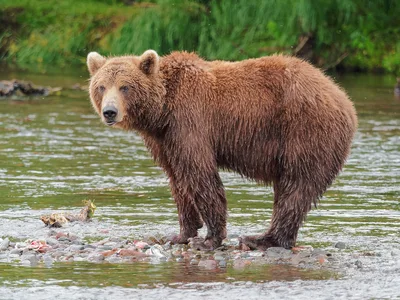 Brown bear
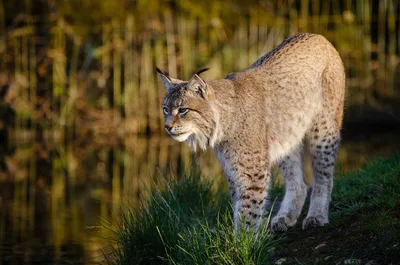 Eurasian lynx
- domestic dogs
- humans
Ecological equivalents
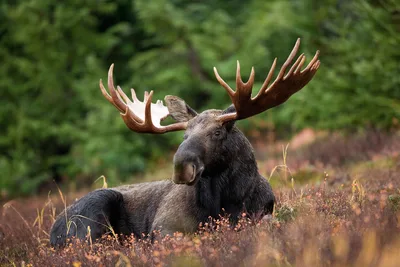
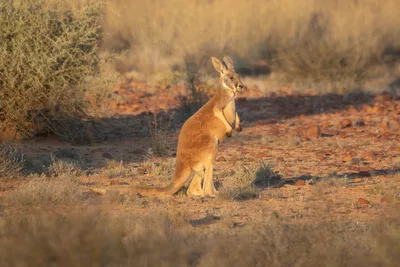
Related species on this site
Elk (same genus), Sika Deer (same genus), Cervalces latifrons (Broad-Fronted Moose) (same family), Chinese Water Deer (same family), Coues Deer (same family), Deer (same family), and more.
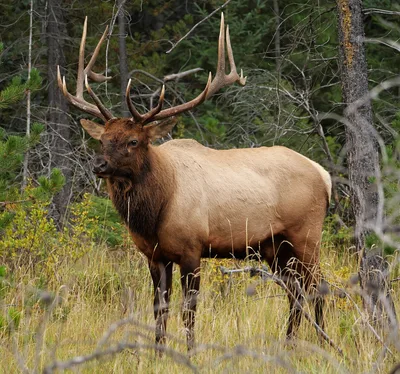 LC
Mammals
Elk
Cervus canadensis
The elk, or wapiti, is the second largest deer in the world.
Living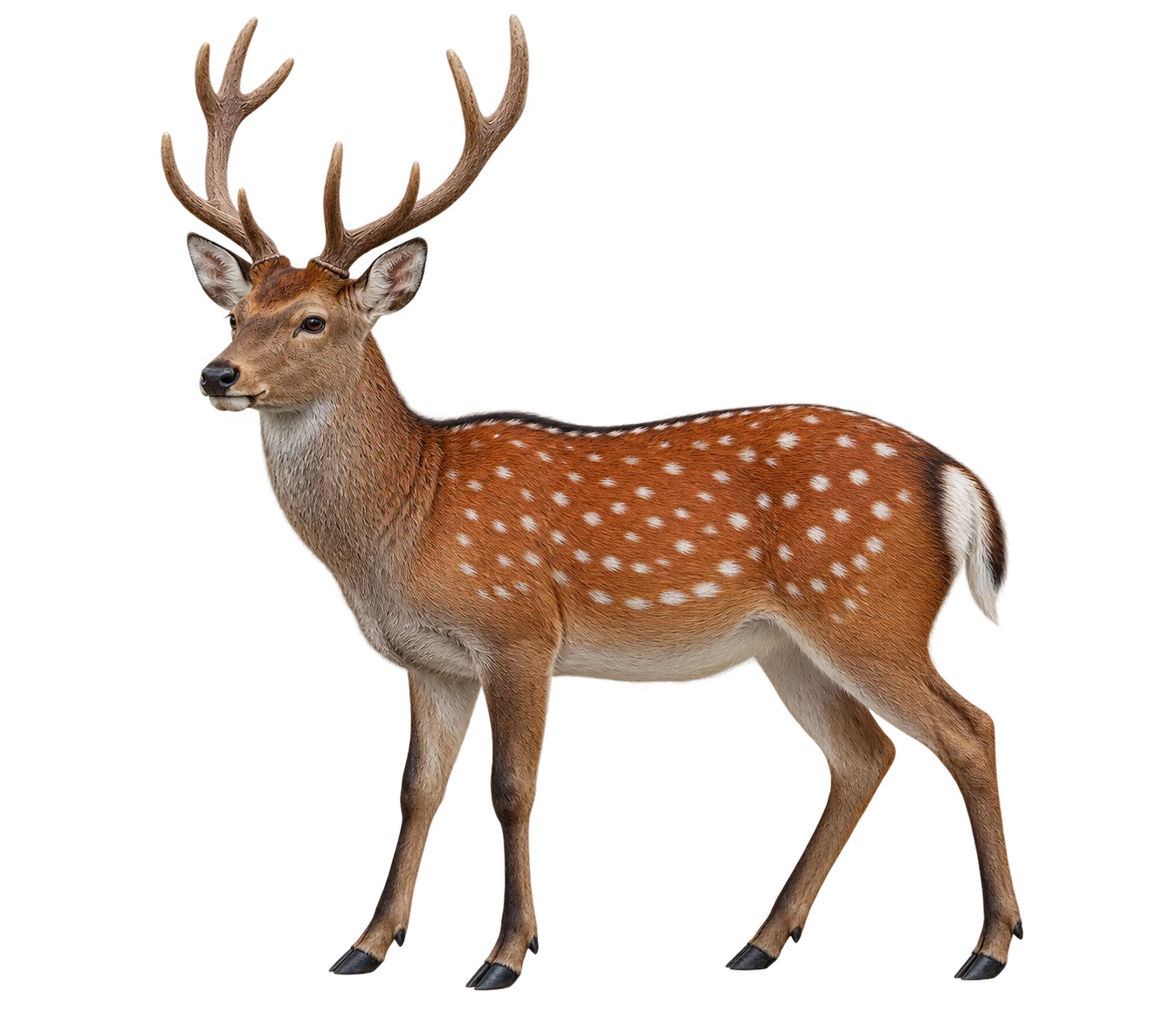
Mammals
Sika Deer
Cervus nippon
Classification and source reference
LivingAI illustration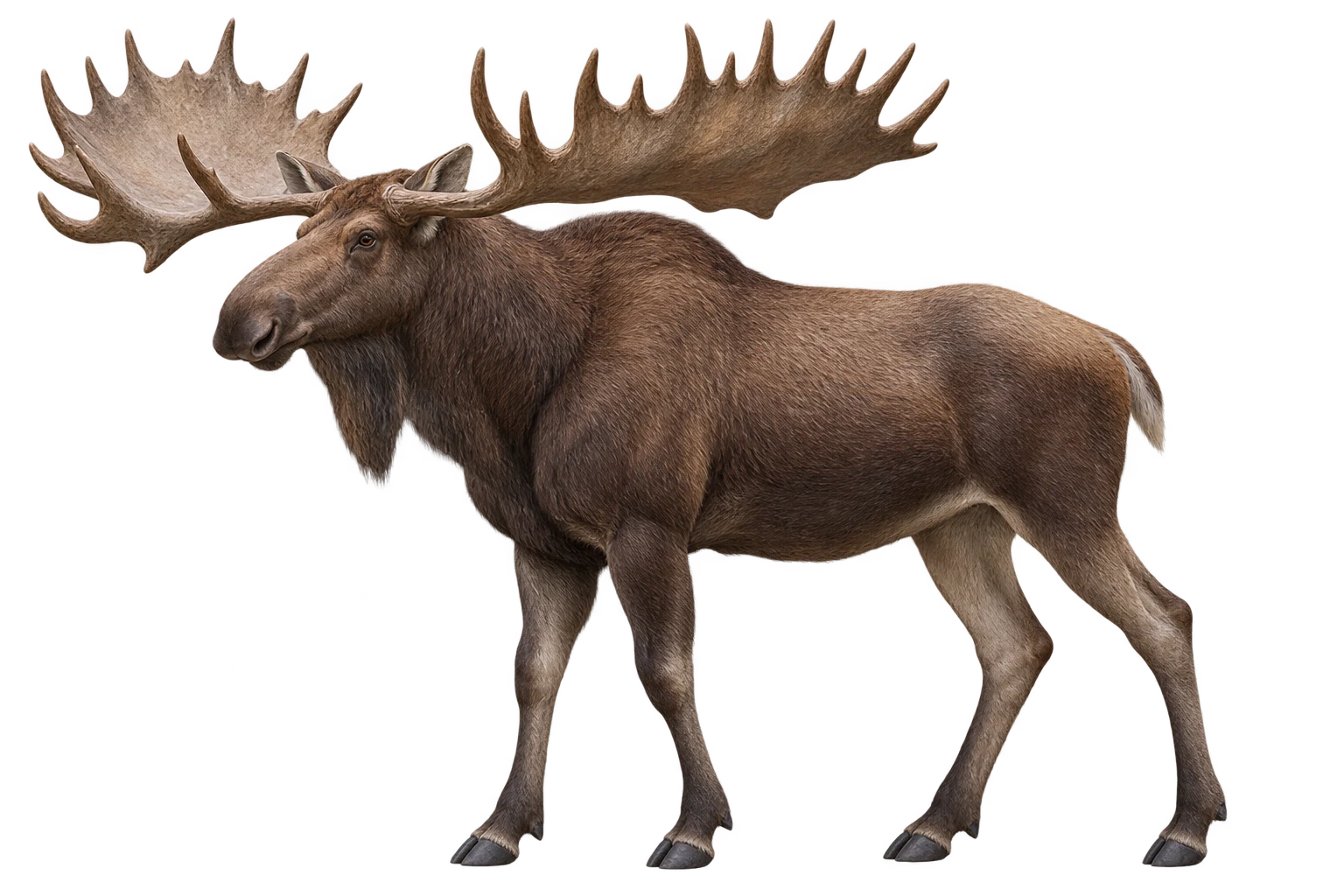
Mammals
Cervalces latifrons (Broad-Fronted Moose)
Cervalces latifrons
Classification and source reference
ExtinctAI reconstruction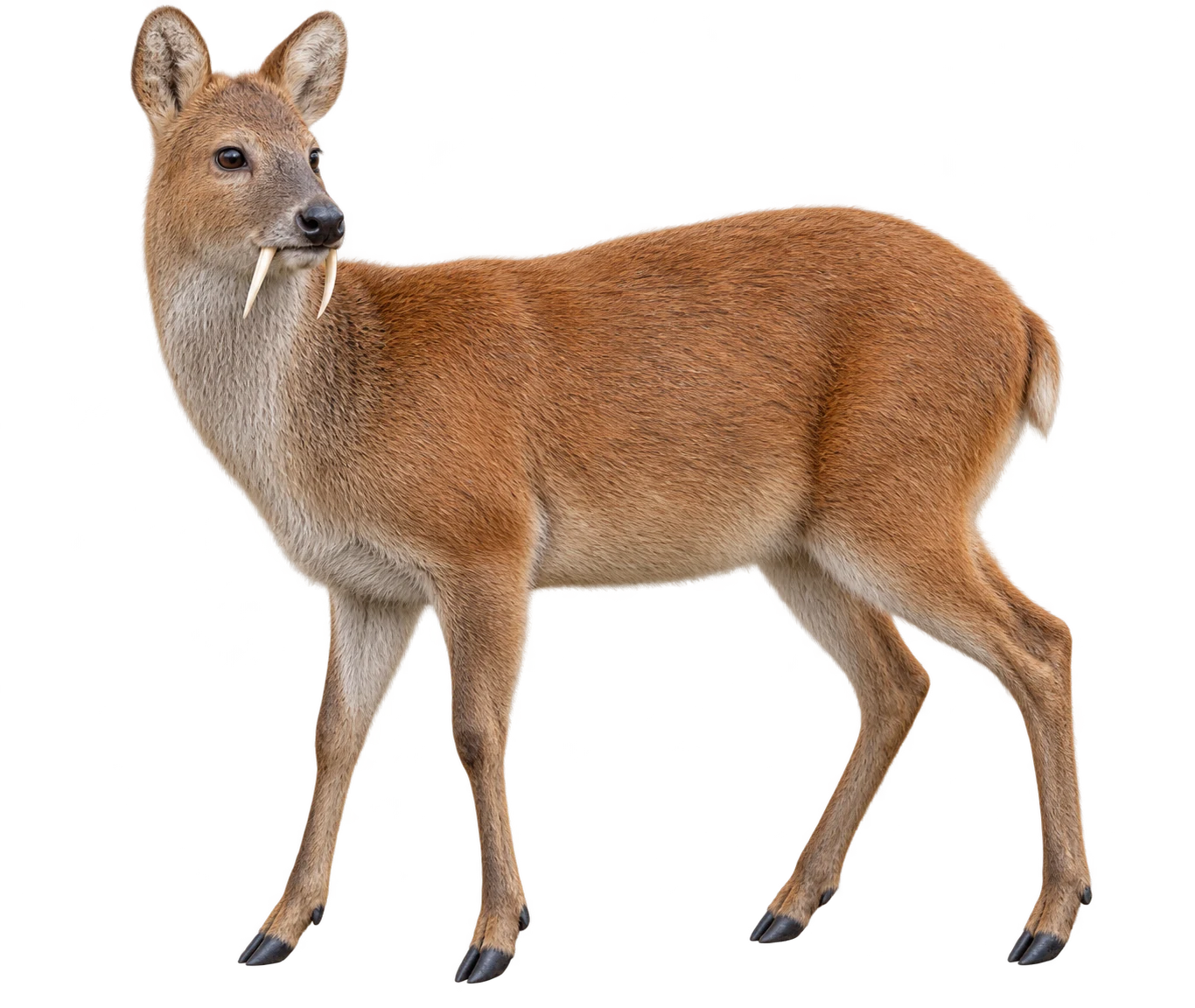
Mammals
Chinese Water Deer
Hydropotes inermis
Classification and source reference
LivingAI illustration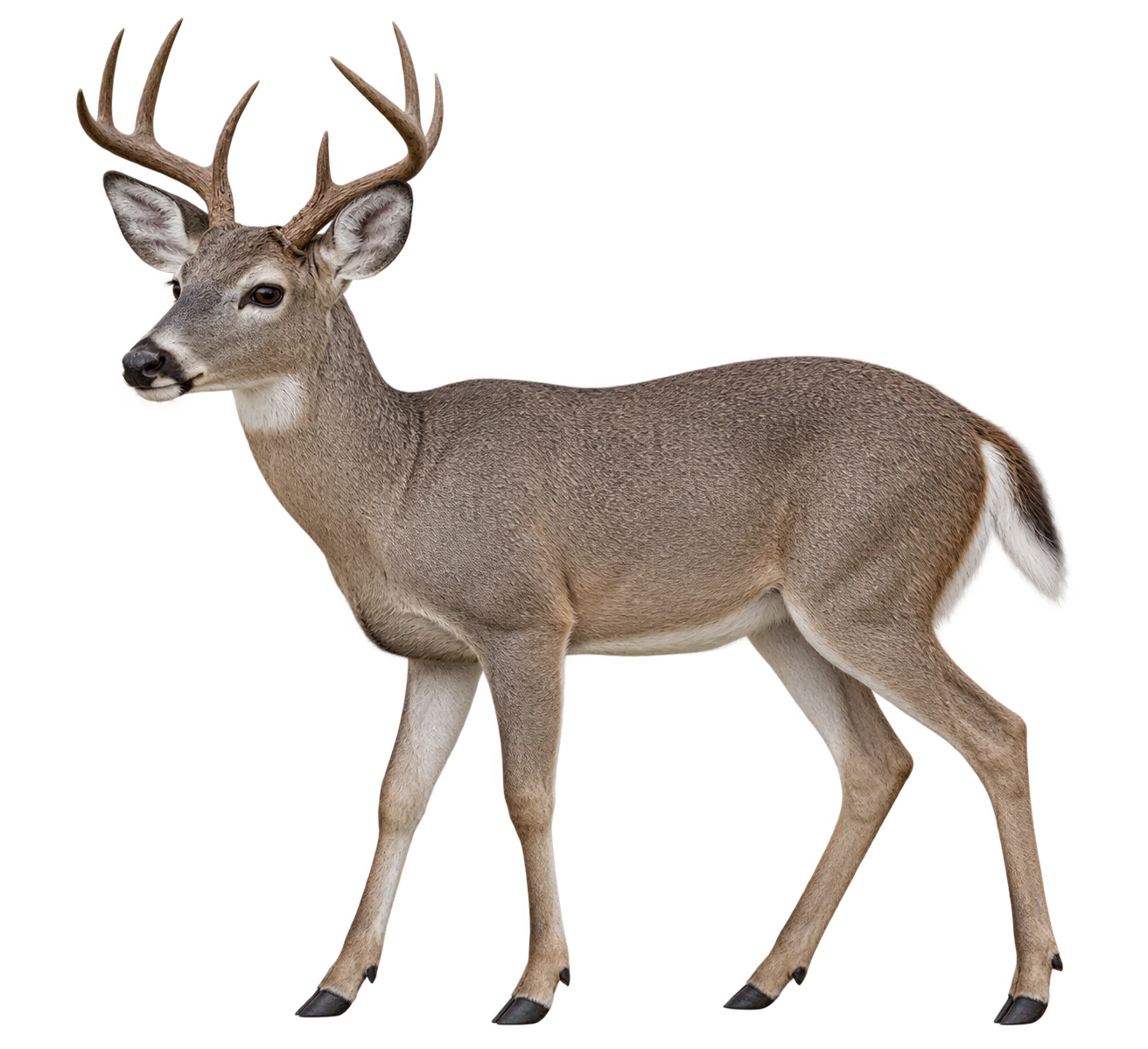
Mammals
Coues Deer
Odocoileus virginianus couesi
Classification and source reference
LivingAI illustration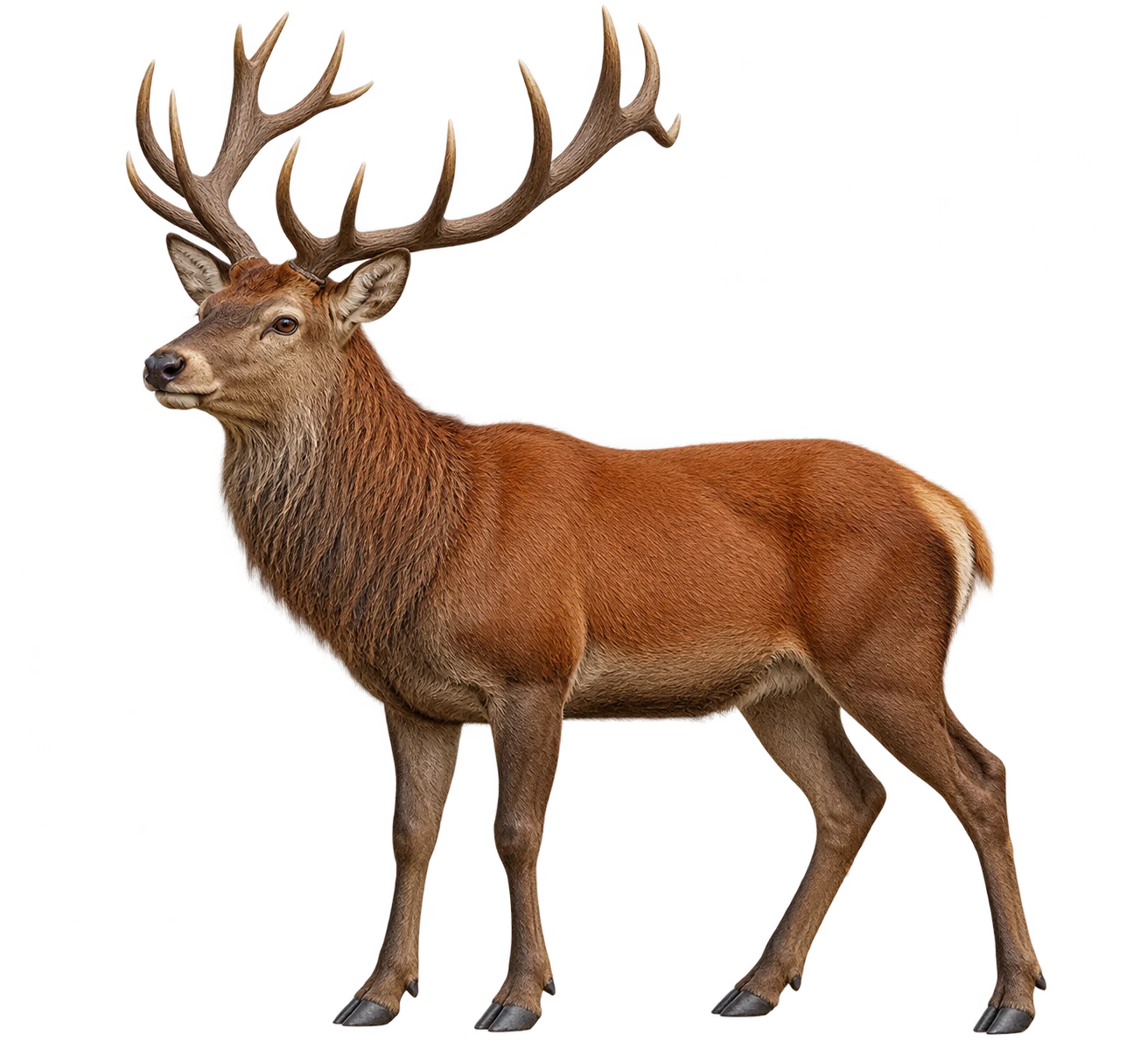
Mammals
Deer
Cervidae
Classification and source reference
LivingAI illustration