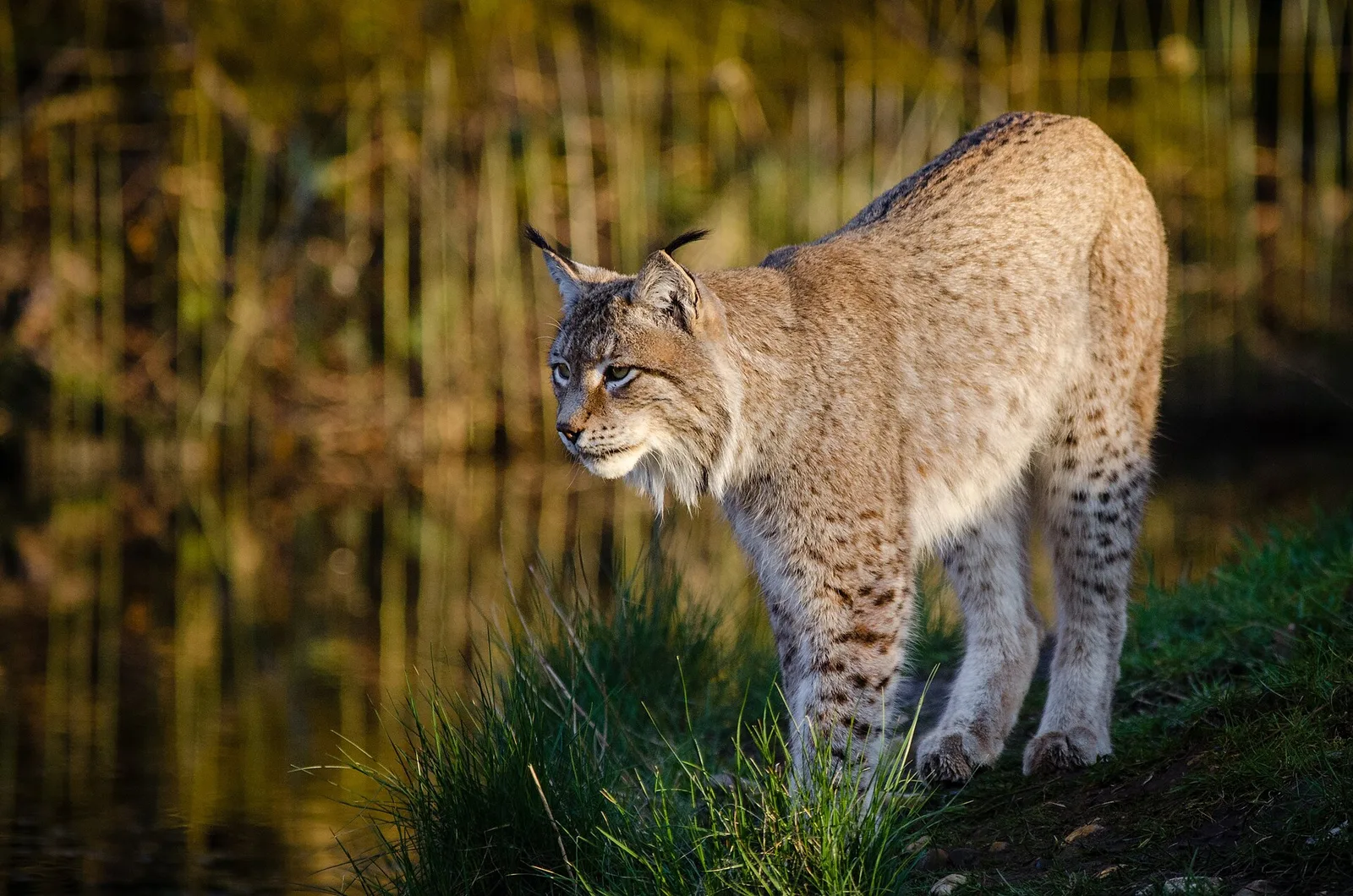
Eurasian lynx
The largest lynx, a silent stalker of roe deer
Lynx lynx
Also called European lynx, Eurasiatic lynx
Living individuals or members of this group exist today. This does not mean they are safe from extinction.
Meet the eurasian lynx
The Eurasian lynx is the biggest of the four lynx species and the largest wild cat in Europe. It hunts roe deer and other small hoofed animals alone, from Scandinavia across Siberia to the Himalayas.
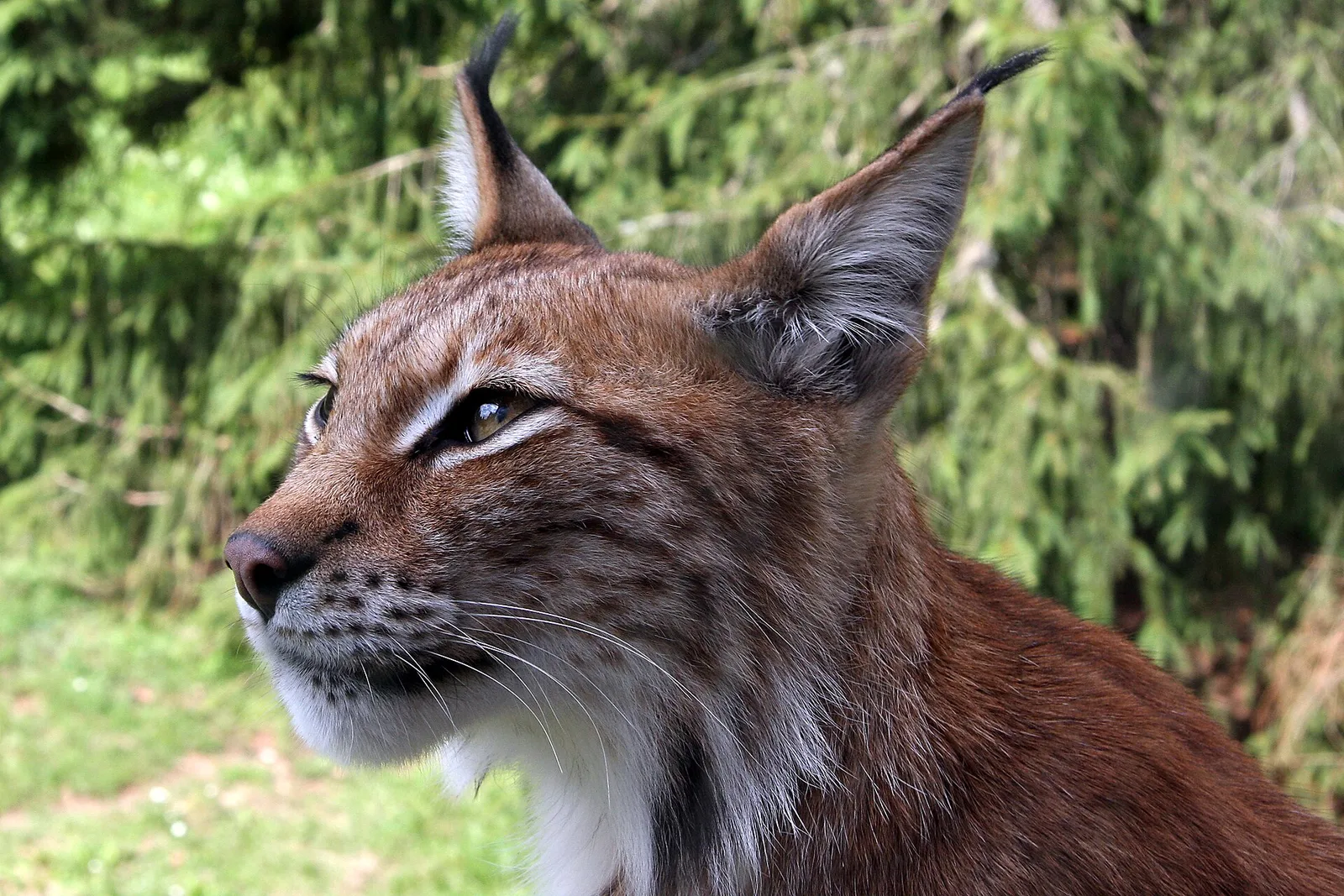
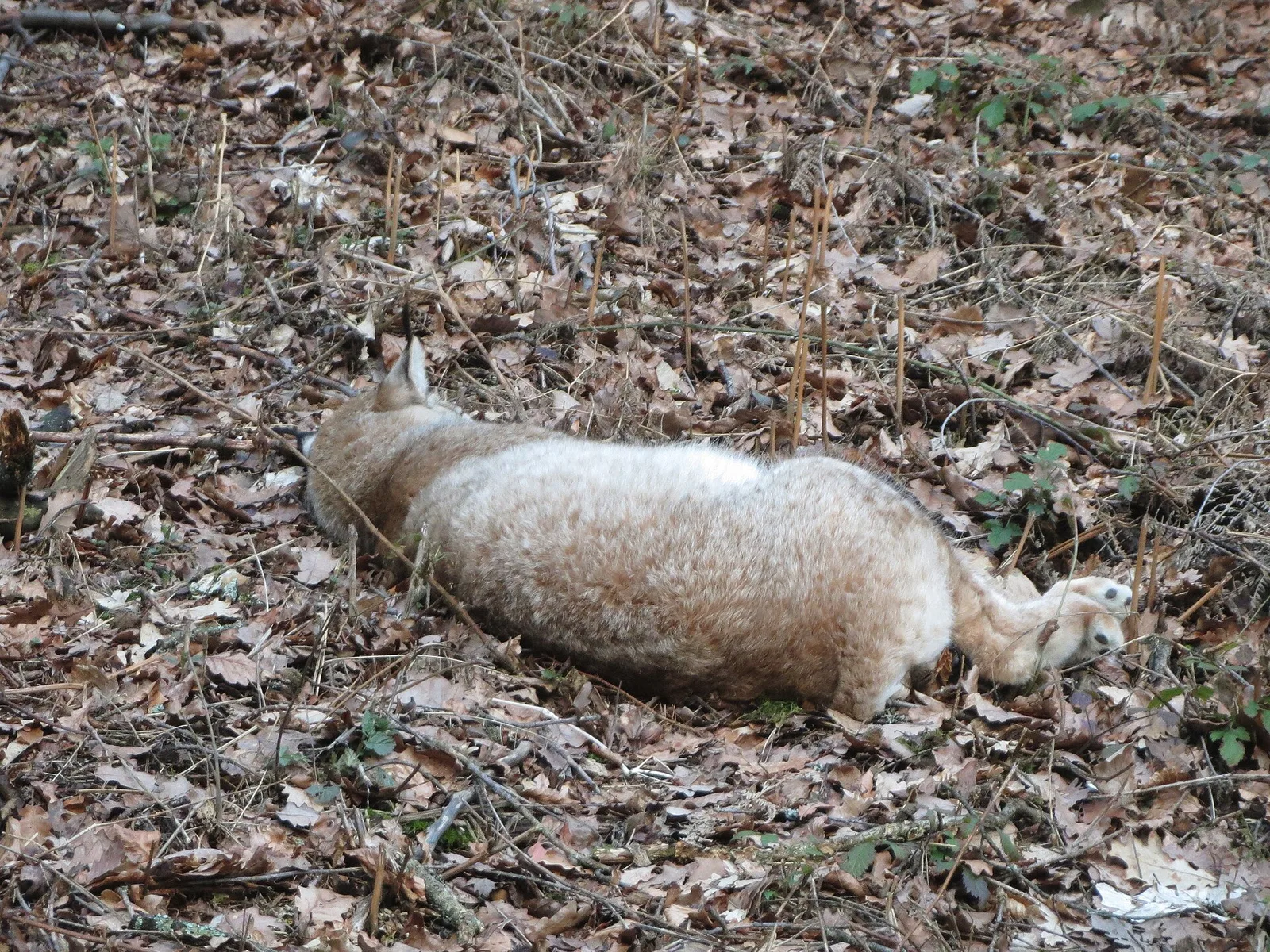
Images of the eurasian lynx
Lifespan in the wild
Up to 17 years
Weight
18 to 36 kg
Length
0.7 to 1.3 m
Height
55 to 75 cm
Fact file
Eurasian lynx
- Location
- Northern and eastern Europe, Siberia, Central Asia, the Himalayas
- Habitat
- Temperate forest, Mountains
- Diet
- Carnivore
- Prey / food
- Roe deer, chamois, musk deer, red deer, hares, red fox, raccoon dog, grouse
- Predators
- Grey wolf, wolverine; tigers and leopards on occasion
- Lifestyle
- Mostly nocturnal and crepuscular
- Group name
- None; solitary
- Name of young
- Kitten
- Gestation
- 67 to 74 days
- Litter size
- 1 to 5 kittens, usually 2 or 3
- Population
- Tens of thousands; Russia alone held about 22,510 in 2013
- Biggest threat
- Poaching, habitat loss and the loss of deer prey
- Distinctive feature
- Black ear tufts and a short black-tipped tail
- Colour
- Reddish brown to grey with black spots
- Skin type
- Fur
Size
Next to a person
Measurements
Size and speed
- Height
- 55 to 75 cm at the shoulder
- Length
- 0.7 to 1.3 m body length; Wikipedia gives up to 130 cm as the total length of the largest males
- Tail
- 11 to 24.5 cm
- Weight
- 18 to 36 kg
Typical adult ranges. Sources: Animal Diversity Web, Wikipedia.
Life cycle
Lifespan
- In the wildUp to 17 years
- In captivityUp to 26 years
- 026 years
The pale bar is the record. Sources: Animal Diversity Web, AnAge.
Appearance
Colour and coat
- Primary colours
- reddish browngrey
- Secondary colours
- blackwhite
- Skin type
- fur
- Male and female
- Males are larger and more robust than females, and about 25% heavier by one estimate. The coat is the same in both sexes.
Life cycle
Mating and family
- Mating system
- polygynous; a male mates with the females whose ranges overlap his, and a female takes one mate a season
- Social structure
- solitary
- Breeding
- one litter of 2 or 3 kittens a year, or about every 3 years after a successful litter
Lynx mate in late winter and early spring, and the female is receptive for only a few days. She gives birth to 1 to 5 kittens in May or June after 67 to 74 days. The kittens leave the den at two to three months and stay with her until about 10 months. Females breed at 2 years and males at 3. Few wild lynx pass 17 years.
Classification
Taxonomy
- Kingdom
- Animalia
- Phylum
- Chordata
- Class
- Mammalia
- Order
- Carnivora
- Family
- Felidae
- Genus
- Lynx
- Species
- Lynx lynx
Conservation
Red List status
- LC
- NT
- VU
- EN
- CR
- EW
- EX
Least Concern on the IUCN Red List
Range
Recorded in 26 countries
- Albania
- Austria
- Belarus
- Switzerland
- People's Republic of China
- Czech Republic
- Germany
- Estonia
- Finland
- France
- Georgia
- Croatia
- India
- Kyrgyzstan
- Kazakhstan
- Lithuania
- Latvia
- Mongolia
- Norway
- Poland
- Romania
- Russia
- Slovenia
- Slovakia
- Turkey
- Ukraine
Habitat layer: temperate broadleaf and mixed forest, temperate conifer forest, boreal forest and taiga, montane grassland and shrubland.
Countries from 740 wild records on GBIF (iNaturalist research grade), filtered and checked by hand. Country shapes: Natural Earth. Habitat: RESOLVE Ecoregions 2017, CC BY 4.0. Basemap: Natural Earth.
Habitats
Three things to know
- 1
A Eurasian lynx has killed adult deer of at least 150 kilograms, several times its own weight.
- 2
An adult lynx in Estonia takes about 60 roe deer over one year.
- 3
The lynx is so secretive that it can live in an area for years before anyone sees it.
Did you know
Seven more facts
- 1
A newborn kitten weighs 240 to 430 grams and cannot see for its first 10 days.
- 2
The kittens are born plain greyish brown and gain their spots at about 11 weeks.
- 3
The lynx chatters at prey it cannot reach, just as a house cat does at a window.
- 4
The Balkan lynx appears on the 5 denar coin of North Macedonia.
- 5
GBIF holds records from 54 countries, including zoos and escaped animals.
- 6
Lynx in Fennoscandia weigh only 7 to 26 kilograms, far less than Altai animals.
- 7
A lynx can jump up to 2 metres high, according to a wildlife magazine.
Field notes
How it looks and acts
Field notes
Distinguishing features
- Black tufts of hair on the tips of the ears.
- A short tail with a solid black tip.
- A broad ruff of grey and white fur around the face.
- Long legs and large furred paws.
- A body length of 70 to 130 centimetres, the largest of the lynxes.
- A spotted, striped or plain coat that turns grey in winter.
Field notes
Unique adaptations
- Wide furred paws spread its weight on snow.
- A much thicker winter coat keeps it warm in boreal forest.
- Keen eyesight and hearing let it find prey in the dark.
- Retractable claws and a strong neck bite kill prey up to 3 to 4 times its size.
- Its spotted coat probably hides it in dappled forest light.
Field notes
Interesting behaviours
- Hunts mostly at dusk and by night, and rests in cover by day.
- Climbs a rock or a fallen tree to scan for prey.
- Caches a kill in cover and feeds on it for several days.
- Patrols its whole range and leaves scent marks on the boundary.
- Climbs a tree to escape wolves.
Field notes
Temperament
- Secretive and hard to see, even where common.
- Solitary, and tolerant only of its own kittens.
- Avoids people and attacks only when injured, trapped or ill.
Field notes
Communication
- Mews, hisses, growls and purrs at close range.
- Gives loud mating calls in late winter and spring.
- Marks its range with urine, faeces, scrapes and gland scent.
- Stays silent for most of the year.
Ecology
Ecological role
The Eurasian lynx is the third largest carnivore across most of its range and the main predator of roe deer.
- Can remove 10 to 40% of local roe deer, red deer and chamois in a year where people do not hunt.
- Kills red foxes, martens and raccoon dogs, so it probably limits smaller carnivores.
- Leaves carcasses that feed wild boar, bears, foxes and eagles.
- Hosts many internal and external parasites.
Stories
Myths and legends
- In Greek tradition, Theophrastus claimed that lynx urine turned into the gemstone lyngurium.
- In medieval European tradition, bestiary writers saw the secretive lynx as a holder of occult wisdom.
- In Finnish and Karelian tradition, the ilves has links to the spirit world.
- In ancient Macedonian tradition, the tribe of Lynkestis took its name from the lynx.
People
Relationship with humans
People
Living alongside us
People hunted the lynx for fur and as a pest until it vanished from most of western Europe. Reintroductions since the 1970s have brought it back to the Alps, the Jura and several German forests. Farmers still lose sheep to lynx, and most countries pay compensation. Regulated hunting continues in Russia, Estonia, Latvia and a few other states.
- Does not attack people unless it is injured, trapped or ill.
- Avoids settlements, roads and railways.
- Kills sheep and other domestic animals in some areas.
People
Status, uses and products
- Domestication
- Wild
- As a pet
- Not suitable. A lynx is a wild predator that needs a range of many square kilometres and a diet of whole prey. It is protected by law in most countries and by CITES Appendix II.
- Uses
- regulated huntingdeer control
- Products
- fur
The full account
About the eurasian lynx
The Eurasian lynx, Lynx lynx, is the biggest of the four species in its genus. It is a medium-sized cat with a short tail, tufted ears and a broad ruff of fur around the face. Its range runs from Scandinavia and the Carpathians across Siberia to the Tibetan Plateau and the Himalayas. It lives in temperate and boreal forest up to 5,500 metres above sea level.
Adults weigh 18 to 36 kilograms and have a body length of 70 to 130 centimetres. The lynx hunts alone, mostly at dusk and at night, and takes roe deer, chamois, hares and other small prey. Wolves and wolverines kill lynx now and then, but people are the main cause of death. The IUCN lists the species as Least Concern, although several small European populations remain endangered. Russia alone holds an estimated 22,510 lynx, and the species is recovering in much of Europe.
Name and taxonomy
Carl Linnaeus described the species as Felis lynx in 1758 in Systema Naturae. The type locality was later fixed at Wennersborg in southern Sweden. Lynx lynx is one of four living lynx species, and taxonomists keep the Iberian lynx and the Canada lynx as separate species. GBIF lists English names that include European lynx and Eurasiatic lynx, and Finns call the animal ilves.
Naturalists proposed many subspecies in the 19th and 20th centuries. One handbook recognises seven, including the Carpathian lynx, the Caucasian lynx and the Central Asian form L. l. isabellinus. Names such as the Altai lynx, the Baikal lynx and the Sardinian lynx are no longer accepted as valid. The Balkan lynx is a subspecies that survives in the mountains of North Macedonia and Albania.
Evolution and relatives
The lynx belongs to the cat family, Felidae, in the order Carnivora. Its skull shows the standard cat plan: a short muzzle, a rounded top and large canine teeth. Unlike most other cats, it has lost one upper premolar on each side. Like other lynx, it is thought to descend from a shared ancestor with the Canada lynx of North America.
Fossils of the Eurasian lynx, or a close relative, occur in Late Pleistocene deposits across Japan. It probably vanished from the Japanese islands during the Jōmon period, because no later remains are known. Genetic tests show that the Eurasian and Iberian lynx lived side by side in Spain until recent centuries. The Spanish Eurasian lynx formed a distinct lineage, closest to the Carpathian and Baltic animals, and it is now extinct.
Appearance
The summer coat is short and reddish or brown, with black spots that vary greatly in number and pattern. Three main coat types occur: spotted, striped and plain. Animals in the south of the range are brighter and more heavily spotted. In winter the fur grows much thicker and turns silver-grey to greyish brown. The chin, throat, belly and the inside of the legs are whitish.
Adults stand 55 to 75 centimetres at the shoulder, and the short tail measures 11 to 24.5 centimetres. The tail ends in a solid black tip, and each ear carries a black tuft of hair. Males are larger and heavier than females, by about 25% in one handbook's estimate. Lynx in Fennoscandia are smaller, at 7 to 26 kilograms, while Carpathian and Altai animals are the biggest. The legs are long, and the large furred paws spread on snow in the way that snowshoes do.
Habitat and range
The species lives across northern, central and eastern Europe, Central Asia, Siberia, the Tibetan Plateau and the Himalayas. In Europe and Siberia it keeps to forest with plenty of deer. In Central Asia it lives in open, thinly wooded hills and rocky mountains, even in desert regions. In northern Pakistan it has been recorded between 1,067 and 5,000 metres. In Nepal it occurs above 3,800 metres in Humla, Mustang and Dolpa.
It needs rugged ground with cover for stalking and resting. In mountain regions it moves down to the lowlands in winter, following prey and avoiding deep snow. It cannot live where snow lies deeper than 100 centimetres. Roads, railways and settlements cut its range, and it avoids open farmland.
By the 1950s the lynx was extinct across most of western and central Europe. Reintroductions began in Switzerland in 1971 and in Slovenia in 1973, using animals from the Carpathians and Slovakia. Germany, Austria, France and Italy now hold small populations that descend from these releases. In Britain, remains date to the early Middle Ages, and reintroduction to Scotland and Northumberland has been proposed. GBIF holds occurrence records from 54 countries, a figure that includes zoos and escapes.
Diet and hunting
The Eurasian lynx is a strict carnivore, like every other cat. It is the only lynx that prefers hoofed prey over hares and rabbits. Roe deer are the main prey wherever they are common, followed by chamois and musk deer. In Poland and Austria red deer are often taken, and in Switzerland chamois. It has killed adult deer of at least 150 kilograms, several times its own weight.
It hunts by ambush and by stalking, using both sight and hearing. It often climbs onto a rock or a fallen tree to scan the ground below. The kill comes from a bite to the neck, or a grip on the snout that suffocates the animal. It drags the carcass into cover and returns to it over several days. An adult needs 1.1 to 2 kilograms of meat a day.
In Anatolia the lynx behaves as a hare specialist, and European hare makes up 79% to 99% of the meat it eats. In Estonia one adult kills about 60 roe deer a year. When deer are scarce, it switches to beaver, hares, foxes, raccoon dogs and game birds. In the Nepal Himalayas its scat holds woolly hare, pika, voles, marmot and domestic goat.
Behaviour and social life
The lynx is mainly nocturnal and crepuscular, and it rests by day in a thicket or on a rock. It may hunt by daylight when food is short. Adults live alone, and the only lasting bond is between a mother and her kittens. It is a good climber and swimmer, but it spends most of its time on the ground.
A hunting range covers anything from 20 to 450 square kilometres, depending on prey. Males use much larger areas than females, whose ranges seldom overlap with each other. A male range often overlaps with those of one or two females and their young. A lynx can walk up to 20 kilometres in a night, though about half that is more usual. It patrols the whole range and leaves scent marks to signal its presence.
Like other cats, it marks with urine, faeces and scrapes, and it places faeces at prominent points on the boundary. It is secretive, and its presence in an area can go unnoticed for years. Tracks in snow and the remains of a kill are usually found long before the cat itself is seen.
Communication and senses
The lynx is usually silent outside the breeding season. It mews, hisses, growls and purrs, and like a house cat it chatters at prey it cannot reach. During the mating season the male gives deep growls and the female gives loud calls that sound like a meow. It cannot roar.
Eyesight and hearing are sharp, and both serve to find prey and mates. One wildlife magazine claims that a lynx sees a mouse at 75 metres. Both sexes mark their ranges with urine and gland secretions. Little is known about how lynx communicate beyond these marks and calls.
Reproduction and life cycle
Mating runs from late winter into April. A female is in oestrus only once a season, for four to seven days. If she loses her first litter, she often comes into oestrus again. A pair follows each other for days and mates many times a day, then the male leaves. Females take only one mate a season.
Gestation lasts 67 to 74 days, and kittens are born in May or early June. The mother chooses a sheltered den under roots or overhanging branches, or in a hollow log. She lines it with feathers, deer hair and dry grass. A litter holds 1 to 5 kittens, usually 2 or 3. A newborn weighs 240 to 430 grams and opens its eyes after 10 to 12 days.
The kittens are plain greyish brown at first and gain the adult pattern at about 11 weeks. They take solid food at six or seven weeks but suckle for five or six months. The family leaves the den two to three months after the birth. Young lynx stay with their mother until about 10 months old, and they learn to hunt by following her. Females breed at 2 years and males at 3, and a female with a litter breeds again about every 3 years. Wild lynx live up to 17 years, and one captive animal reached 26.
Predators and threats
The grey wolf is the main natural enemy, joined by the wolverine in the north. In Russian forests, a lynx that cannot reach a tree may be killed and eaten by wolves. The lynx escapes by climbing, or by dropping down a cliff or ravine, and it eats its kill on a ledge or in a tree. Lynx numbers fall when wolves move into an area, as seen in the Altai Mountains and in eastern Slovakia. Yet in Belarus a male lynx drove off an adult male wolf, which then vanished from the record.
Amur leopards and Siberian tigers have eaten lynx in the Russian Far East. In Anatolia lynx eat other lynx, and sub-adults formed 5% to 8% of prey biomass in two study areas. Red foxes, eagle owls, golden eagles and wild boar compete for the same prey or scavenge lynx kills. Brown bears often take over a deer carcass before the lynx has finished with it.
People kill far more lynx than any predator or disease does. Poaching, road deaths, habitat loss and the loss of deer are the main threats. In Sweden, of 33 lynx deaths studied, only one was probably caused by a wolverine.
Population and conservation
The IUCN lists the Eurasian lynx as Least Concern because of its huge range and its large Russian population. Russia held an estimated 22,510 lynx in 2013, about 9,000 of them in European Russia. The Carpathians hold about 2,800, the largest connected population west of Russia. Romania claims more than 2,000, though some experts think this figure is too high. Finland had about 2,200 to 2,300 in 2009, and its population has grown every year since 1991.
Estonia has the highest density in Europe, with about 900 animals in 2001. Sweden counted 1,400 in 2006 and 1,250 in 2011. Norway paid a bounty on lynx from 1846 to 1980 and now sets population targets and hunting quotas. Switzerland had around 250 lynx in 2019, a third of them in the Jura. Poland reported about 285 in 2010, in two main populations.
The Balkan lynx numbers about 100 and has been close to extinction for nearly a century. Hungary holds only 10 to 12 animals, and Slovenia about 40. The species is on CITES Appendix II and on Appendix III of the Berne Convention. Hunting is illegal in most range countries, but Estonia, Latvia, Russia, Armenia and Iraq allow it. In 2010 Estonia licensed the hunting of 180 lynx.
Relationship with humans
The lynx almost disappeared from Europe in the 1800s and early 1900s because of fur hunting and persecution. Germany lost its last lynx in 1850 and Switzerland in 1904. Farmers complain that lynx kill sheep and reduce game, and most European countries pay compensation. Norway introduced its compensation scheme in 1994.
The lynx does not attack people unless it is injured, trapped or ill. It avoids settlements, roads and railways, so it lives at low density near people. Commercial fur hunting is illegal everywhere except Russia, though illegal trade continues in some countries. In Afghanistan all hunting and trade in lynx is banned.
Reintroductions to Germany, France, Austria and Switzerland in the 1960s and 1970s succeeded in several areas. The first wild birth in modern Germany was announced in 2002, in the Harz National Park. In January 2025 several lynx were released illegally in the Cairngorms, recaptured, and sent to Edinburgh Zoo. Where deer are not hunted, lynx can remove 10 to 40% of the roe deer, red deer and chamois each year.
In culture and myth
The Balkan lynx is a national symbol of North Macedonia and appears on the 5 denar coin issued in 1993. The name of Lynkestis, an ancient Macedonian tribe, means Land of the Lynx. The Croatian massif Risnjak takes its name from ris, the Croatian word for lynx. A Welsh poem of the 7th or 8th century, Dinogad's Smock, probably refers to lynx in Cumbria.
In Greek tradition, the philosopher Theophrastus wrote that lynx urine hardened into a precious stone called lyngurium. Medieval bestiaries repeated this tale and read the cat's secretive habits as proof of hidden wisdom. In Norse and Greek myth the lynx stands for keen sight, and a common belief held that it could see through solid objects. Finnish and Karelian folklore links the ilves to the spirit world. Some Native American stories call the lynx a keeper of secrets, and these probably refer to the Canada lynx. In northern Spain, old reports of a deer-hunting cat called a tiger or a deer's wolf are thought to describe this species.
A sentence with a dotted underline is inferred: it describes the group the animal belongs to, or is a reading of the sources, rather than a measured or reported fact about this species.
Questions
Eurasian lynx questions, answered
How big is a Eurasian lynx?
An adult weighs 18 to 36 kilograms and has a body length of 70 to 130 centimetres. It stands 55 to 75 centimetres at the shoulder and outweighs the other three lynx species.
Where do Eurasian lynx live?
They live in forest and mountain country from Scandinavia and the Carpathians across Siberia to Central Asia and the Himalayas. They reach 5,500 metres in the Himalayas.
What do Eurasian lynx eat?
Roe deer are the main prey in most of Europe, with chamois, musk deer and red deer in places. They also take hares, foxes, rodents and birds. An adult eats 1.1 to 2 kilograms of meat a day.
Are Eurasian lynx dangerous to humans?
No. A lynx attacks a person only when it is injured, trapped or ill. It avoids people and is rarely seen.
Are Eurasian lynx endangered?
The IUCN lists the species as Least Concern. Some populations are still small, such as the Balkan lynx with about 100 animals.
How many Eurasian lynx are left?
Russia held about 22,510 in 2013. The Carpathians hold about 2,800, Finland 2,200 to 2,300, and Sweden about 1,250.
How long do Eurasian lynx live?
Wild lynx live up to 17 years. One captive animal reached 26 years.
Do Eurasian lynx live in groups?
No. An adult lynx lives alone, and a mother stays with her kittens only until they leave at about 10 months.
Can a Eurasian lynx kill a deer?
Yes. It regularly kills roe deer and chamois, and it has killed adult deer of at least 150 kilograms. It bites the neck or grips the snout.
Do wolves kill lynx?
Yes, in Russian forests wolves kill lynx that cannot reach a tree. Lynx numbers tend to fall where wolves are common.
Can Eurasian lynx roar?
No. A lynx mews, hisses, growls and purrs. During the mating season the male growls deeply and the female gives loud meow-like calls.
How many kittens does a lynx have?
A female gives birth to 1 to 5 kittens, most often 2 or 3. They are born in May or June after 67 to 74 days of pregnancy.
Are there lynx in Britain?
Not in the wild. Remains show the lynx lived in Britain into the early Middle Ages. In January 2025 several released lynx were recaptured in the Cairngorms.
Can Eurasian lynx climb trees?
Yes. It climbs well and often escapes wolves by going up a tree. It also swims well.
Are Eurasian lynx hunted?
Hunting is illegal in most range countries. Estonia, Latvia, Russia, Armenia and Iraq allow it, and Norway and Finland set quotas.
What is the difference between a Eurasian lynx and an Iberian lynx?
The Eurasian lynx is much larger and prefers deer. The Iberian lynx is a smaller species of Spain and Portugal that hunts rabbits.
Food web
Prey and food
 Roe deer
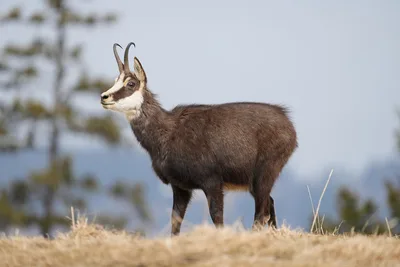 Chamois
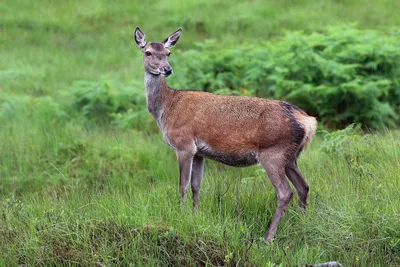 Red deer
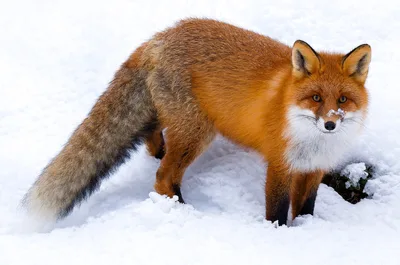 Red fox
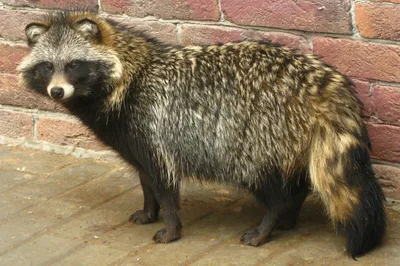 Common raccoon dog
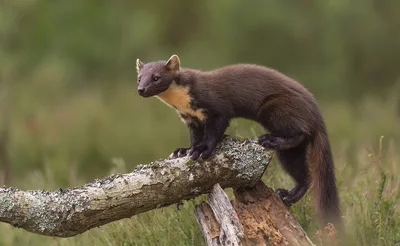 European pine marten
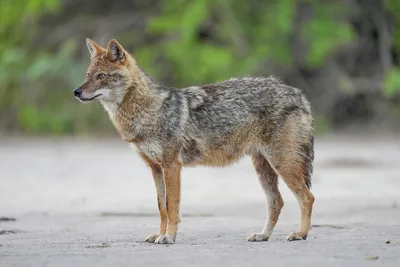 Golden jackal
Food web
Predators
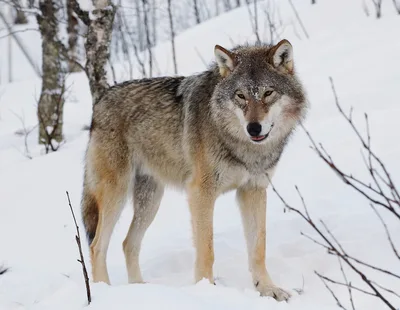 Gray wolf
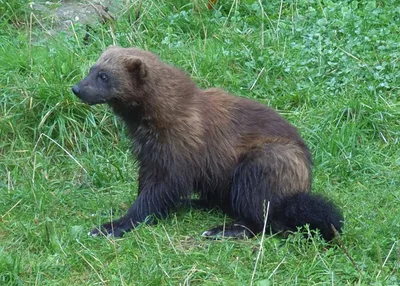 Wolverine
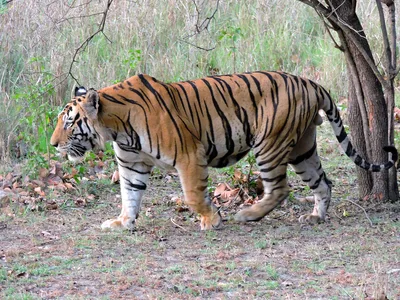 Tiger
Ecological equivalents
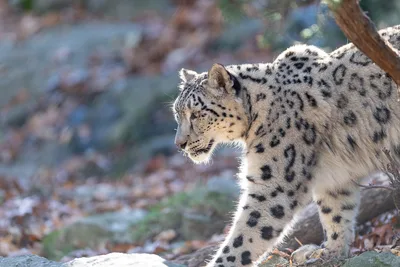
Related species on this site
Balkan Lynx (same genus), Bobcat (same genus), Canada lynx (same genus), Iberian lynx (same genus), Lynx (same genus), Abyssinian (same family), and more.
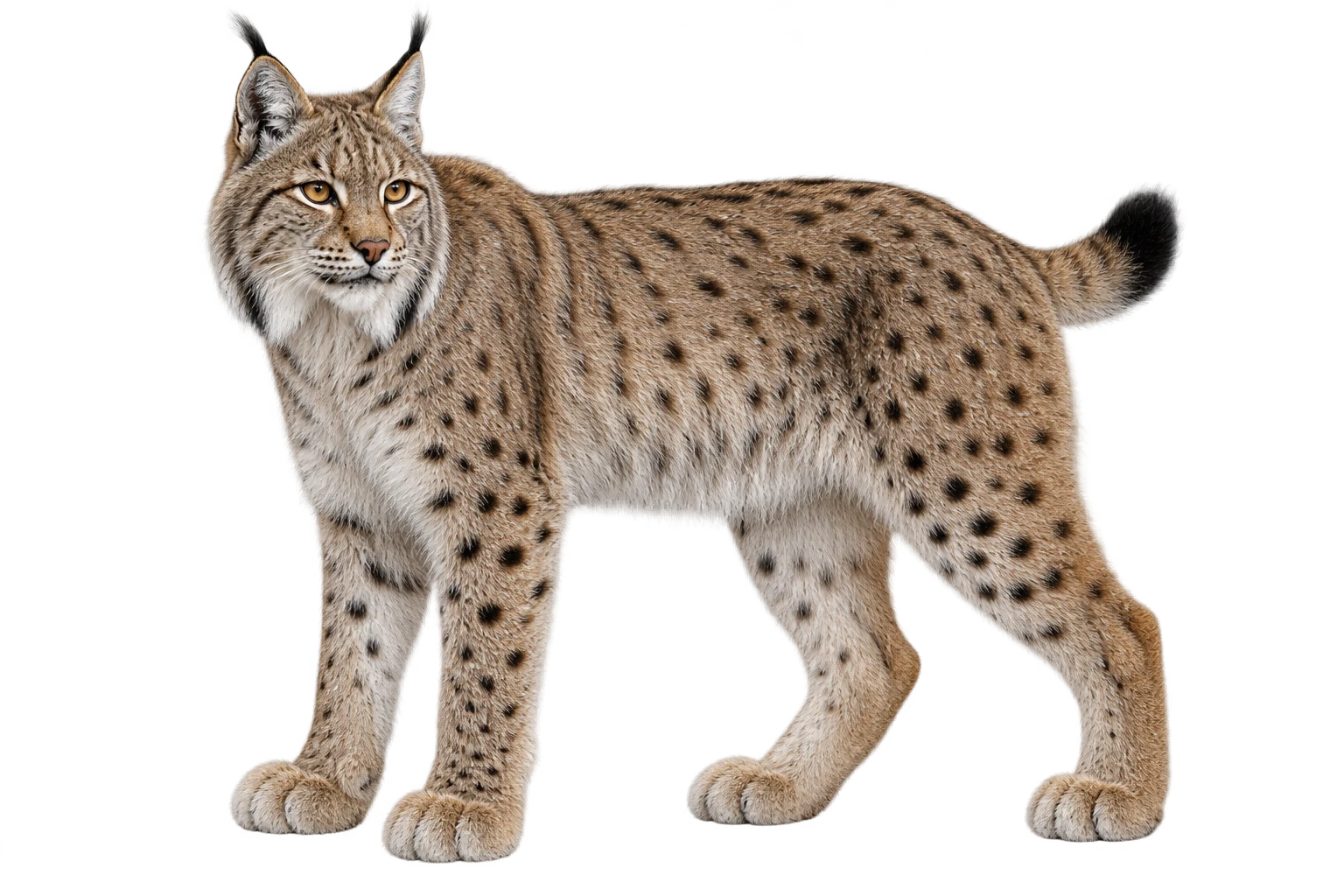
Mammals
Balkan Lynx
Lynx lynx balcanicus
Classification and source reference
LivingAI illustration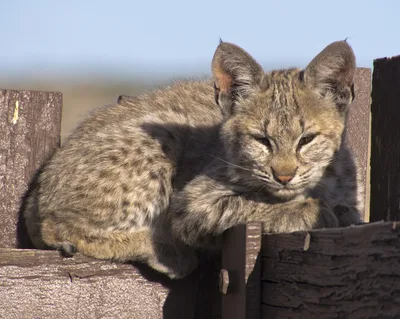 LC
Mammals
Bobcat
Lynx rufus
The bobcat is a medium-sized lynx with a short black-tipped tail, found from southern Canada to southern Mexico.
Living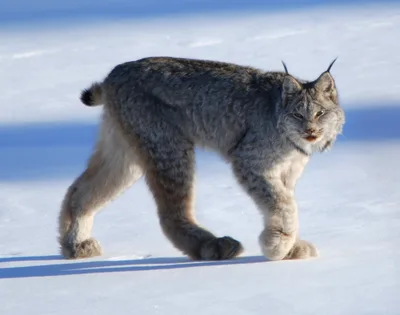 LC
Mammals
Canada lynx
Lynx canadensis
The Canada lynx is a thick-furred cat of the boreal forest with tufted ears and huge snowshoe paws.
Living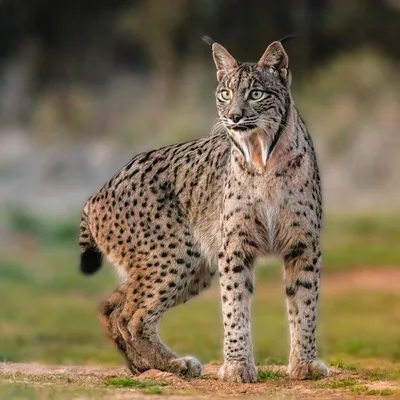 VU
Mammals
Iberian lynx
Lynx pardinus
The Iberian lynx is a spotted, tufted-eared cat found only in Spain and Portugal.
Living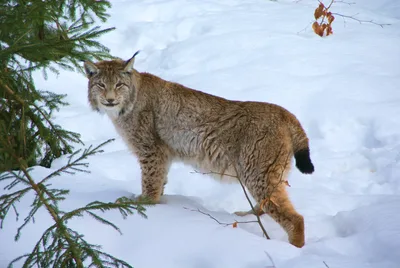
Mammals
Lynx
Lynx
Lynx are short-tailed wild cats with tufted ears.
Living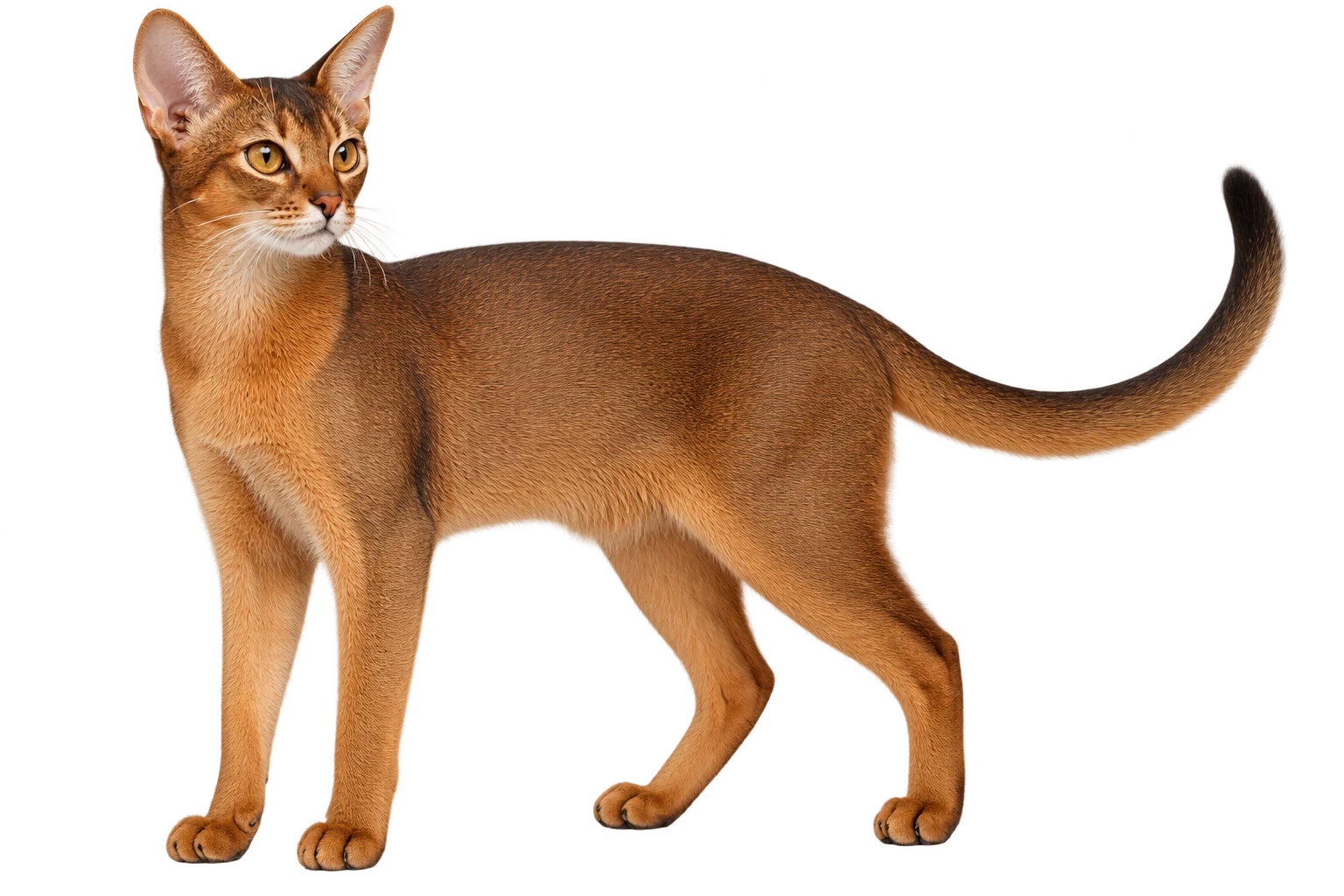
Mammals
Abyssinian
Felis catus
Classification and source reference
LivingAI illustration