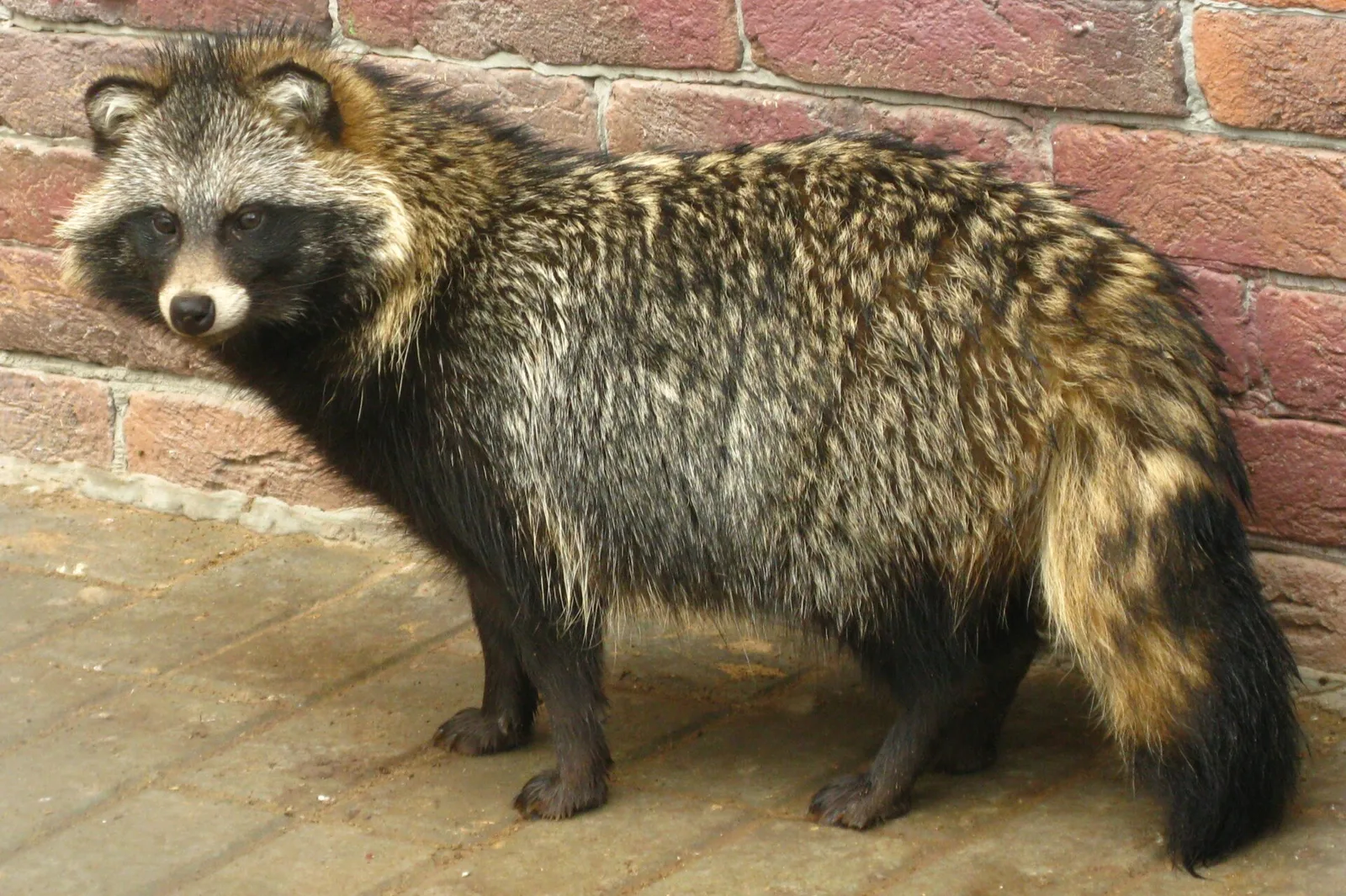
Common raccoon dog
The only dog that sleeps through winter
Nyctereutes procyonoides
Also called Raccoon dog, Asian raccoon dog, Chinese raccoon dog, Mangut, Marten-dog
Living individuals or members of this group exist today. This does not mean they are safe from extinction.
Meet the common raccoon dog
The common raccoon dog is a stocky, fox-like canid of East Asia with a black face mask like a raccoon's. It eats almost anything, climbs trees, hibernates in winter and has spread across Europe from fur farms.
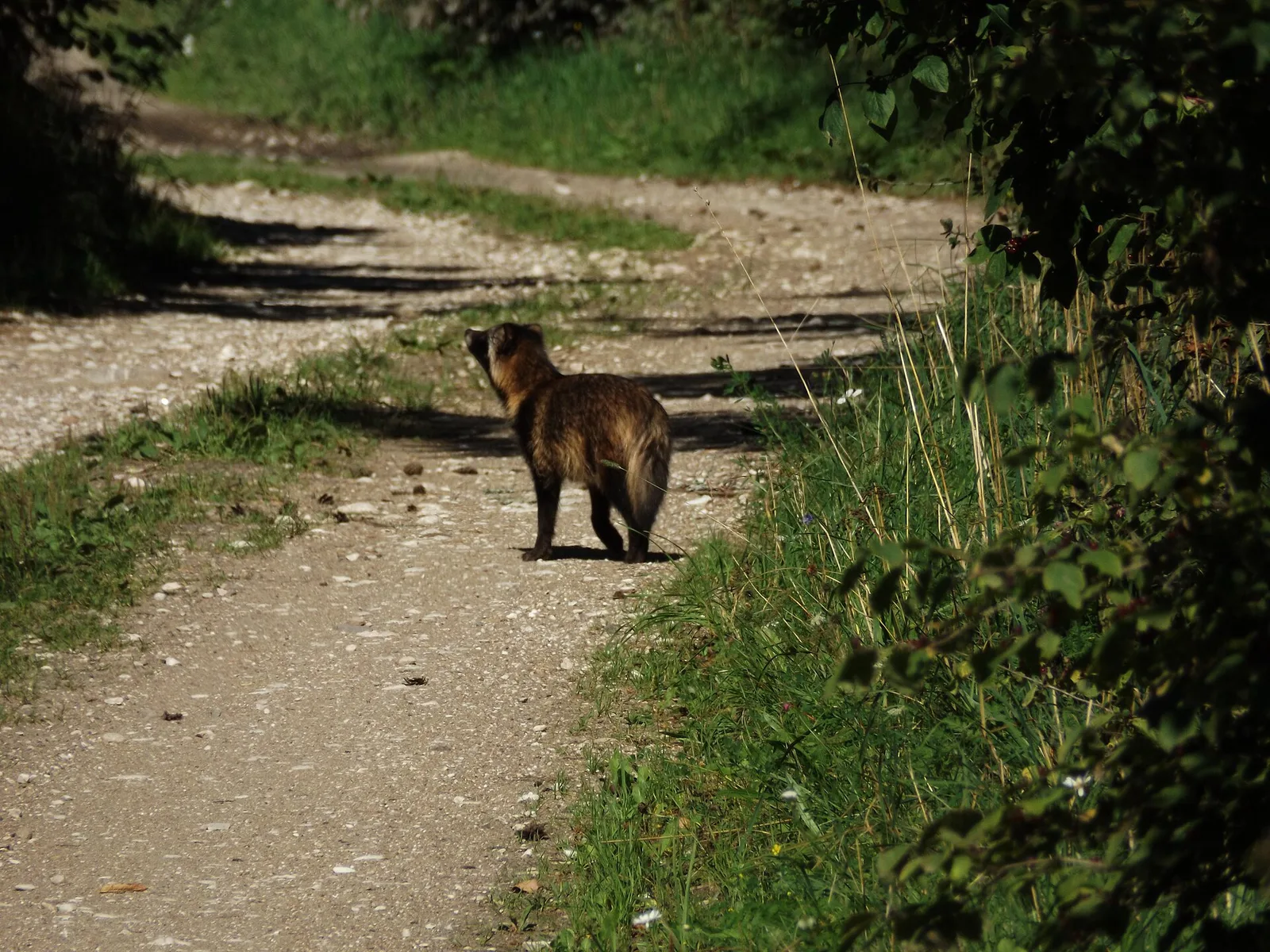
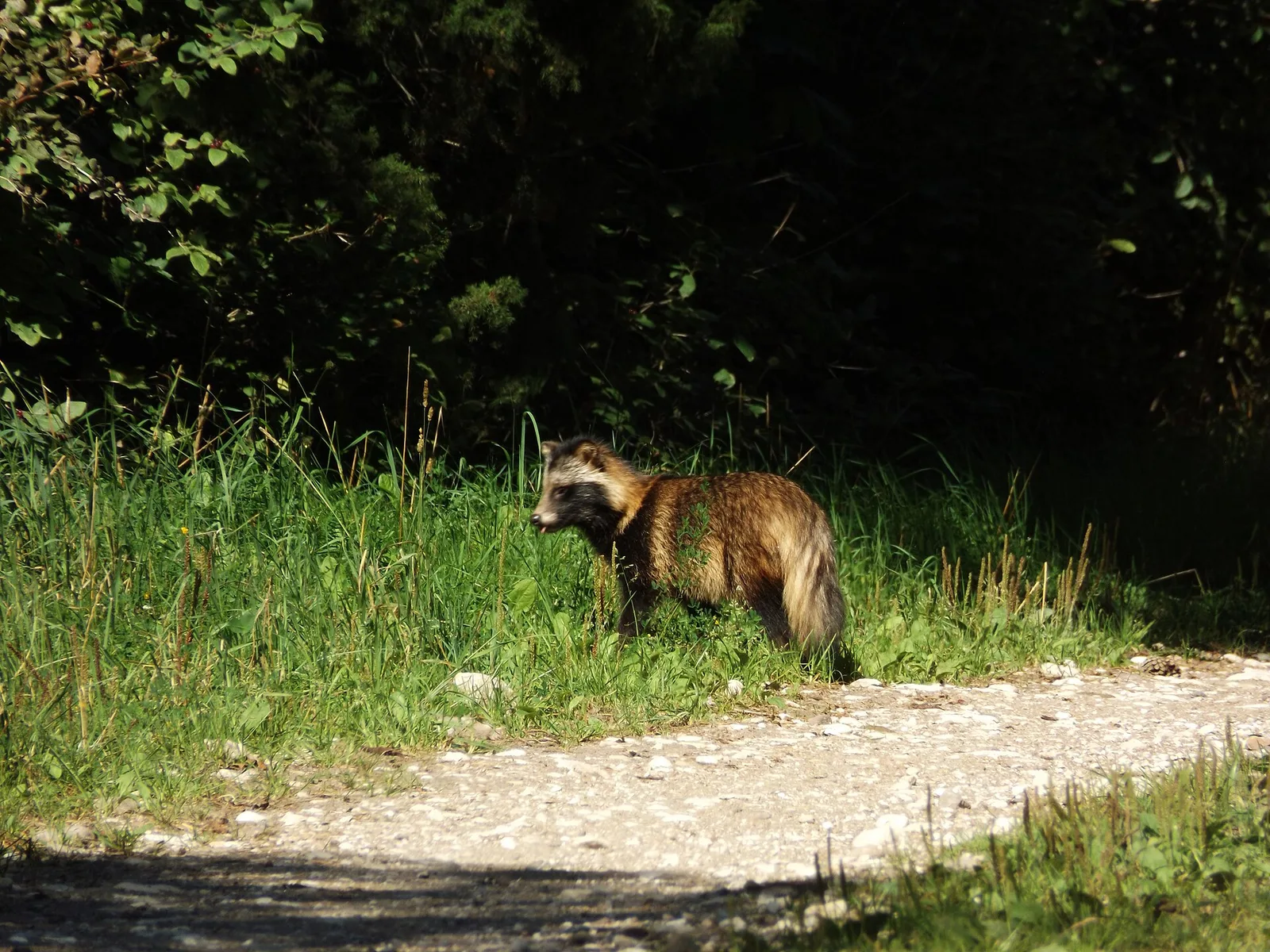
Images of the common raccoon dog
Lifespan in the wild
Up to 7.5 years the oldest trapped female; Wikipedia records animals of 6 to 7 years
Weight
3 to 7 kg
Length
45 to 71 cm
Height
38.1 to 50.8 cm
Fact file
Common raccoon dog
- Location
- China, Korea, Japan, eastern Siberia; introduced across Europe
- Habitat
- Temperate forest, Wetlands, Grassland, Towns and cities
- Diet
- Omnivore
- Prey / food
- Voles, frogs, insects, birds, eggs, fish, fruit, berries, carrion
- Predators
- Gray wolf, red fox, Eurasian lynx, golden eagle, eagle owl, domestic dog
- Lifestyle
- Mostly nocturnal, in pairs; hibernates in cold winters
- Group name
- Pair
- Name of young
- Pup
- Gestation
- 59 to 70 days
- Litter size
- 6 to 8 pups, up to 19
- Population
- Not counted; abundant and spreading in Europe
- Biggest threat
- Hunting and fur farming; none to the species as a whole
- Distinctive feature
- Raccoon-like black face mask on a fox-like body
- Colour
- Earth brown to brownish grey with black guard hairs
- Skin type
- Fur
Size
Next to a person
Measurements
Size and speed
- Height
- 38.1 to 50.8 cm
- Length
- 45 to 71 cm total length; ADW gives 50 to 68 cm head and body
- Tail
- 12 to 18 cm
- Weight
- 3 to 7 kg, up to 10 kg about 3 kg in March, 6.5 to 7 kg in late summer; the fattest reach 9 to 10 kg before winter
Typical adult ranges. Sources: Wikipedia, Animal Diversity Web.
Life cycle
Lifespan
- In the wildUp to 7.5 years the oldest trapped female; Wikipedia records animals of 6 to 7 years
- In captivityUp to 16.6 years
- 016.6 years
The pale bar is the record. Sources: Animal Diversity Web, AnAge.
Appearance
Colour and coat
- Primary colours
- earth brownbrownish grey
- Secondary colours
- blackwhiteyellowish brown
- Skin type
- fur
- Male and female
- Slight. Males average 6.5 to 7 kilograms in late summer, and ADW reports that females in China and Japan are 0.5 kg heavier than males. The sexes look alike.
Life cycle
Mating and family
- Mating system
- monogamous pairs
- Social structure
- pairs and small family groups
- Breeding
- one litter a year, in April or May
Pairs form in autumn and mate between January and April, after hibernation. The female bears 6 to 8 blind pups after 59 to 70 days, in a burrow or thick cover. The male feeds her and guards the litter while she forages. Pups eat solid food from three weeks, reach full size at 4.5 months and leave in late summer. They can breed at 8 to 11 months, and few wild animals live past 7.5 years.
Classification
Taxonomy
- Kingdom
- Animalia
- Phylum
- Chordata
- Class
- Mammalia
- Order
- Carnivora
- Family
- Canidae
- Genus
- Nyctereutes
- Species
- Nyctereutes procyonoides
Conservation
Red List status
- LC
- NT
- VU
- EN
- CR
- EW
- EX
Least Concern on the IUCN Red List
Range
Recorded in 13 countries
- Belarus
- People's Republic of China
- Germany
- Denmark
- Estonia
- Finland
- South Korea
- Lithuania
- Latvia
- Poland
- Romania
- Russia
- Ukraine
Habitat layer: temperate broadleaf and mixed forest, temperate conifer forest, boreal forest and taiga, tropical grassland, savanna and shrubland, temperate grassland, savanna and shrubland, flooded grassland and savanna, mangrove.
Countries from 1,890 wild records on GBIF (iNaturalist research grade), filtered and checked by hand. Country shapes: Natural Earth. Habitat: RESOLVE Ecoregions 2017, CC BY 4.0. Basemap: Natural Earth.
Habitats
Three things to know
- 1
It is the only member of the dog family that hibernates through the winter.
- 2
From 1928 to 1958 the Soviet Union released 10,000 raccoon dogs for fur, and the species now lives across Europe.
- 3
It eats poisonous toads by drooling enough saliva to dilute their venom.
Did you know
Seven more facts
- 1
Its gut is 1.5 to 2.0 times longer than that of other canids.
- 2
It can gain 50% of its body weight before winter.
- 3
A raccoon dog family shares a latrine that works as a message board.
- 4
The winter coat keeps out cold down to minus 25 degrees Celsius.
- 5
Latvia started with 35 animals in 1948 and shot 4,210 in 1960 alone.
- 6
Fur sold as faux fur in the United States has turned out to be raccoon dog several times.
- 7
It carries 32 different parasitic worms.
Field notes
How it looks and acts
Field notes
Distinguishing features
- A black mask across the eyes on a white face.
- A dark cross on the shoulders and back.
- Short legs and a long body 45 to 71 centimetres long.
- A short, bushy tail of 12 to 18 cm that does not reach the ground.
- Small rounded ears that barely show above the thick fur.
- Long whiskery hair on the cheeks.
Field notes
Unique adaptations
- A thick winter coat and a heavy fat layer for hibernation.
- A long gut and flat molars that handle fruit, grain and roots.
- Copious saliva that neutralises the skin toxins of toads.
- A keen nose that finds small food where eyesight would fail.
- Paws that scoop fish from shallow water and grip tree bark.
Field notes
Interesting behaviours
- It forages slowly with its nose to the ground.
- Pairs hibernate together from November to April in cold regions.
- It fishes with its paws and dives for prey.
- Males bring food to pregnant mates and guard the pups.
- It takes over old fox and badger burrows for its den.
Field notes
Temperament
- Shy and quiet, and it avoids people.
- Not territorial, and neighbours ignore one another.
- Males fight only briefly over mates.
- Bold enough to raid gardens, vineyards and rubbish near villages.
Field notes
Communication
- Shared latrines carry scent messages between families and strangers.
- Whines, whimpers and mews signal friendliness or submission.
- Growls signal fear or aggression, and it never barks.
- An inverted-U tail in males signals dominance and readiness to mate.
Ecology
Ecological role
The raccoon dog is a generalist omnivore and scavenger that feeds larger predators and, in Europe, presses hard on ground-nesting birds.
- It is an important prey for wolves and eagles.
- It thins insect and rodent numbers without hitting any single species hard.
- In its introduced range it eats the eggs and chicks of waterbirds and game birds.
- It spreads parasites and viruses, including rabies and Echinococcus, among wildlife.
Stories
Myths and legends
- In Japanese tradition, the tanuki is a shapeshifting trickster that drums on its belly.
- In the Japanese tale Bunbuku Chagama, a tanuki becomes a kettle that never empties.
- In Japanese shop culture, a ceramic tanuki with a straw hat and sake bottle brings luck.
- In Edo-period Kanazawa, goldsmiths gave the tanuki its comic giant scrotum.
People
Relationship with humans
People
Living alongside us
People value the raccoon dog for its fur and fear it as an invader and a carrier of disease. Fur farms in the Soviet Union released it across Europe, and China still raises it in the millions. The European Union bans its trade and release, and Finland shot 170,000 in 2009 alone. It is also a suspect in the origin of SARS and COVID-19 through live-animal markets.
- It is shy and avoids people, and no attack on a person is on record.
- It can carry rabies, and cases are known from Russia and Lithuania.
- It hosts the tapeworm Echinococcus, which can infect people who handle carcasses.
People
Status, uses and products
- Domestication
- Wild
- As a pet
- Not suitable. It is a wild canid that needs space, cover and a varied diet, and it carries diseases that pass to dogs and people. Keeping, breeding or selling one is illegal across the European Union.
- Uses
- fur farmingfur trappinghuntingcalligraphy brushesfood
- Products
- furwoolhair
The full account
About the common raccoon dog
The common raccoon dog, Nyctereutes procyonoides, is a short-legged, heavy-bodied canid from East Asia. Its name comes from the black mask across its eyes, which looks like a raccoon's. It is not a raccoon at all: its nearest relatives are the true foxes. An adult measures 45 to 71 centimetres and weighs 3 to 7 kilograms, and the fattest animals reach 10 kg before winter.
Two habits set it apart from every other dog. It climbs trees, and in cold country it hibernates. It eats almost anything, from voles and frogs to berries, fish, eggs and rubbish. Fur farmers carried it to the Soviet Union in the twentieth century, and from there it spread across Europe. The European Union now lists it as an invasive species of concern. The IUCN lists it as Least Concern, because it is common across a huge and growing range.
Name and taxonomy
John Edward Gray described the species in 1834 from a Chinese specimen. The genus name Nyctereutes is thought to mean night wanderer in Greek, and procyonoides means raccoon-like. Writers call it the Chinese or the Asian raccoon dog when they need to separate it from the Japanese one. Mammal Species of the World recognised four subspecies in 2005. GBIF lists five, named by Gray, Mori, Thomas, Matschie and Temminck between 1834 and 1923.
The Japanese raccoon dog, the tanuki, was long counted as one of those subspecies. Most authorities now give it species rank as Nyctereutes viverrinus. The Japanese animal has 38 chromosomes and the mainland animal 54, so the two probably cannot interbreed. In Sweden, Norway and Denmark the animal is the marten-dog. Furriers sell its pelt as Finn raccoon, Asiatic raccoon, murmansky or tanuki.
Evolution and relatives
The genus Nyctereutes is one of the oldest dog lineages of the Old World. It arose in northern China about 5.5 million years ago, late in the Miocene. Fossil species lived across Eurasia and Africa, from Spain to Ethiopia and Morocco. Nyctereutes donnezani lived in Europe from 9.0 to 3.4 million years ago, and N. sinensis in East Asia until about 781,000 years ago.
The genus belongs to the tribe Vulpini, beside the true foxes of the genus Vulpes. Its skull looks much like that of the South American crab-eating fox, but genes show the two are not close. The mainland and Japanese lineages parted about 0.5 million years ago, well ahead of the final glaciation. Among all canids, only the North American gray fox shares its habit of climbing trees, and that fox is not a close relative either. The real raccoon is a musteloid, on a different branch of the carnivores altogether.
Appearance
The raccoon dog has a long body, short legs and a short, bushy tail. Total length runs from 45 to 71 centimetres, with a tail of 12 to 18 cm. It stands 38.1 to 50.8 cm at the shoulder. Weight changes with the season: about 3 kilograms in March and 6.5 to 7 kg in late summer. The heaviest animals reach 9 to 10 kg before winter. Animals from Japan and Russia average larger than those from China.
The winter coat is long and thick, with guard hairs up to 120 millimetres, and keeps out cold down to minus 20 to 25 degrees. It is a dirty earth brown or brownish grey, and the guard hairs are tipped black. A dark stripe runs down the back and widens over the shoulders into a cross. The face carries a black mask around the eyes, a white muzzle and long whiskery cheek hair. The chest and legs are blackish brown, and the belly is yellowish brown. The summer coat is thinner and a brighter reddish straw colour.
The ears are short and round and barely show above the fur. The teeth suit an omnivore: small canines, weak carnassials and flat molars. The gut is 1.5 to 2.0 times longer than in other canids, to digest plant food. A rare white form occurs in China, and yellow animals also appear.
Habitat and range
The native range covers eastern Siberia, northern China, Korea, Mongolia and northern Vietnam. Japan holds the closely related Japanese raccoon dog. Between 1928 and 1958 the Soviet Union released 10,000 animals in 76 districts to improve the fur supply. Releases in Siberia and the mountains of the Caucasus failed, but those in European Russia, Ukraine and the Baltic states thrived. Latvia received 35 animals in 1948, and by 1960 hunters there took 4,210 in a year.
The species is now abundant in Finland, Estonia, Latvia and Lithuania. It has reached Scandinavia, Germany, the Low Countries, France, Switzerland and the Balkans. Denmark aimed for zero breeding by 2015, yet by 2018 the animal was established across Jutland. A 2021 British study named it one of 20 invasive species likely to reach the United Kingdom. GBIF holds occurrence records from 41 countries.
It favours forest, forest edge, marsh and reedbed, wherever there is thick cover near water. It lives from sea level to above 3,000 metres. It also scavenges around villages and town edges. For its den it takes over burrows left by foxes and badgers.
Diet and feeding
The raccoon dog is a gatherer rather than a hunter. It walks with its nose to the ground and eats whatever it finds. The list includes insects, voles, gerbils, shrews, hedgehogs, frogs, toads, birds, eggs, fish, snakes, lizards, molluscs, crabs and sea urchins. Plant food covers bulbs, roots, oats, millet, maize, nuts, berries, grapes, melons, pumpkins and tomatoes. It also eats carrion, droppings and household rubbish.
The menu shifts with the season. Rodents and carrion dominate in late autumn and winter, frogs and insects in spring, and nesting birds, fruit and grain in summer. Voles lead the diet in marshes, and gerbils replace them on the dry plains near Astrakhan. Large moles are the main food in the Ussuri region. It can eat toads with poisonous skin by producing a flood of saliva that dilutes the toxin.
It fishes in lakes and streams, scooping prey out with its paws, and it will dive for food. On the coast it eats beached fish and anything the tide leaves. In Japan it relies heavily on rubbish, insects, crabs and the fruit of buckthorn and hornbeam. In floodplains and estuaries it eats little but eggs and chicks in spring, and birds reach 48.6% of the diet in the Voronezh Reserve.
Behaviour and social life
Raccoon dogs live and forage in pairs or small family groups, though people usually see one alone. A pair shares one home range and often stays close while active. Neighbours whose ranges overlap ignore each other, so the species is not territorial. Home ranges vary from 2.8 to 200 hectares. Resting pairs stay in contact, and social grooming matters to them.
It is active mainly at night, but recent studies record activity at dusk and by day too. It is slow, never runs prey down, and swims and climbs well. It is the only canid known to hibernate. In early winter it adds 18 to 23% to its fat under the skin, and an animal may gain 50% of its body weight. Animals that fail to fatten usually die before spring.
Pairs hibernate together from November to as late as early April, and the metabolism drops by 25%. Once snow reaches 15 to 20 centimetres, activity falls and the animal stays within 150 to 200 metres of its den. In milder regions, and in most of its European range, it sleeps only through severe snowstorms. In the south of the range it does not hibernate at all. Activity picks up in February, when females come into season and food returns.
Communication and senses
Smell is the main sense, because the raccoon dog's eyesight is poor for a canid. Families share latrines, fixed spots where every member urinates and defecates. The latrine works as a notice board, and animals change their behaviour after they smell a known or unknown neighbour there. Scent marking rises before the mating season.
Unlike every other canid, the raccoon dog does not bark. It whines, whimpers and mews in friendly or submissive moods, and growls when frightened or angry. Males in rut yelp and growl, but otherwise the animal is usually silent. A male holds his tail in an inverted U to show arousal and dominance. Touch is probably important between mates and between parents and pups.
Reproduction and life cycle
Raccoon dogs are monogamous, and pairs form in autumn. Captive males, though, have mated with four or five females. Mating runs from January to April, depending on latitude, and follows hibernation. Males fight briefly for mates, but not to the death. A female is in heat for a few hours to six days and may mate up to five times. Mating happens at night or at dawn and lasts 6 to 9 minutes.
Gestation lasts 59 to 70 days, and pups arrive in April or May in a burrow or dense cover. A litter usually holds 6 to 8 pups, and ADW records a record of 19. First-time mothers bear fewer. Newborns weigh 60 to 110 grams and are blind, with soft black wool. Eyes open at 9 to 10 days and teeth appear at 14 to 16 days. The mother suckles for 45 to 60 days, but pups take solid food from three weeks.
The father matters. He brings food to the pregnant female and guards the pups while she forages. Early Soviet releases of pregnant females without males failed, and releases of pairs succeeded. Pups reach full size at 4.5 months and leave their parents in late August or September. They pair up by October and can breed at 8 to 11 months. Wild animals seldom pass 7.5 years, and one captive animal lived 16.6 years.
Predators and threats
Wolves are the main predator and kill large numbers in spring and summer. In Tatarstan wolves cause more than half of raccoon dog deaths, and in northwestern Russia almost two thirds. Red foxes kill pups and sometimes adults, and badgers kill raccoon dogs that enter their setts. Eagle owls, goshawks and both golden and white-tailed eagles take them, and lynx do so rarely. Domestic dogs and hunters are major killers in Finland and the former Soviet Union.
The animal carries 32 kinds of parasitic worm, including the dangerous tapeworm Echinococcus. Rabies has been recorded in raccoon dogs in Lithuania, Voronezh and the lower Volga, and distemper in the northern Caucasus. Its introduction to Europe is thought to have brought ticks carrying the Asian tick-borne encephalitis virus. Mange infects it but does not cut its numbers the way it does in foxes. None of these threatens the species as a whole.
Population and conservation
The IUCN lists the common raccoon dog as Least Concern. It is common throughout its native range and still spreading in Europe. In Japan the related species reaches densities of 0.46 to 0.86 per hectare, far above the 0.0014 to 0.048 recorded in Europe. Nobody appears to have estimated the world population.
In Europe the effort runs the other way: governments try to remove it. Since 2019 the European Union has banned its import, breeding, sale and release. Finland hunted 60,000 to 70,000 in 2000 and 170,000 in 2009. Poland shot 6,200 in 2002 to 2003, and Sweden and Denmark catch only two to seven a year. Japan culled an average of 4,529 tanuki a year between 1990 and 1998. It harms ground-nesting birds, muskrat colonies, vineyards and melon fields, which is the main reason for control.
Relationship with humans
Fur is the reason people moved this animal across a continent. World trade in its pelts reached 260,000 to 300,000 a year in 1907 to 1910. Soviet farms began breeding it in 1928, with 15 state farms by 1934, and Ukraine made it the chief farmed furbearer. China raised about 1.5 million raccoon dogs for fur in 2004 to 2005, by one animal welfare estimate. The coarse guard hairs mean the pelt goes mostly into trim on hoods and collars.
Its fur has been sold as fake fur more than once. In 2006 Macy's withdrew Sean John jackets labelled faux fur that were raccoon dog. In 2013 three American retailers settled with the Federal Trade Commission over the same mislabelling. In Japan people have eaten the animal and used its hair for calligraphy brushes. In the Far East hunters run it down at night with laika dogs. Dogs succeed in 80 to 90% of hunts, guns in 8 to 10%.
The species entered public health news through live-animal markets. A SARS-like virus was isolated from a raccoon dog in a Guangdong market in 2003. Swabs from the Huanan market in Wuhan in early 2020 held SARS-CoV-2 and raccoon dog genetic material together. Virologists such as Christian Drosten consider it a likely intermediate host between bats and people, though this is not proven.
In culture and myth
The folklore belongs to the tanuki, the Japanese raccoon dog, a close relative once counted as a subspecies. In Japanese tradition the tanuki changes shape and plays tricks for fun, where the fox tempts people. It drums on its belly, a sound the stories write as pom poko. Pictures give it an enormous scrotum, a joke that started with Kanazawa goldsmiths who beat gold thin inside tanuki skin. Written tanuki stories go back to the Nara period.
In the tale Bunbuku Chagama a tanuki becomes a monk's teakettle that never runs dry. In Kachi-kachi Yama it is the foolish villain, and a children's song has tanuki drumming under the moon at Shojoji temple. Ceramic tanuki stand outside shops and restaurants across Japan. Their eight lucky traits, from the straw hat to the sake bottle, were invented in 1952 by Shigaraki potters. The 1994 Studio Ghibli film Pom Poko carried the shapeshifting tanuki to the world, where many viewers took it for a raccoon.
A sentence with a dotted underline is inferred: it describes the group the animal belongs to, or is a reading of the sources, rather than a measured or reported fact about this species.
Questions
Common raccoon dog questions, answered
Is a raccoon dog a raccoon?
No. It is a canid, a member of the dog family, and its closest relatives are the true foxes. Only the black face mask looks like a raccoon's.
Do raccoon dogs hibernate?
Yes, and they are the only canids that do. In cold regions pairs sleep from November to early April, and their metabolism drops by 25%. In mild regions they sleep only through storms.
How big is a raccoon dog?
An adult is 45 to 71 centimetres long with a 12 to 18 cm tail. It weighs about 3 kilograms in spring and 6.5 to 7 kg by late summer, and the fattest reach 10 kg.
What do raccoon dogs eat?
Almost anything: voles, frogs, insects, birds and their eggs, fish, crabs, fruit, berries, grain, carrion and rubbish. The diet changes with the season.
Where do raccoon dogs live?
They are native to China, Korea, Mongolia and eastern Siberia. Fur farming spread them across Russia and Europe, and they are now common from Finland to Germany.
Why are raccoon dogs a problem in Europe?
They eat the eggs and chicks of ground-nesting birds, raid crops, and carry rabies, tapeworms and ticks. The European Union has listed them as an invasive species of concern since 2019.
Is a tanuki the same as a raccoon dog?
Almost. The tanuki is the Japanese raccoon dog, a close relative now treated as a separate species. Japanese folklore about shapeshifting tanuki refers to it.
Can raccoon dogs climb trees?
Yes. Among canids only the raccoon dog and the North American gray fox climb regularly.
Do raccoon dogs bark?
No. They whine, whimper, mew and growl, but they are the one canid that never barks.
Are raccoon dogs dangerous to people?
Not directly. They are shy and avoid people. The risk is disease, since they can carry rabies and the tapeworm Echinococcus.
How many pups does a raccoon dog have?
Usually 6 to 8, born in April or May after 59 to 70 days. Litters of 15 or 16 occur, and ADW records one of 19.
How long do raccoon dogs live?
Wild animals rarely pass 7.5 years, and most die younger. One captive animal reached 16.6 years.
Did raccoon dogs cause COVID-19?
That is not proven. Swabs from the Huanan market in Wuhan held the virus and raccoon dog DNA together, and some virologists think the animal was an intermediate host.
Is raccoon dog fur sold as fake fur?
It has been. American retailers pulled jackets labelled faux fur in 2006 and settled with regulators in 2013 after tests showed raccoon dog.
Are raccoon dogs endangered?
No. The IUCN lists them as Least Concern. They are common in Asia and spreading in Europe, where governments hunt them to slow the spread.
Food web
Prey and food
- voles
- frogs
- insects
- birds
- eggs
- fish
- fruit
- berries
- carrion
 Japanese macaque
 Mandarin duck
Food web
Predators
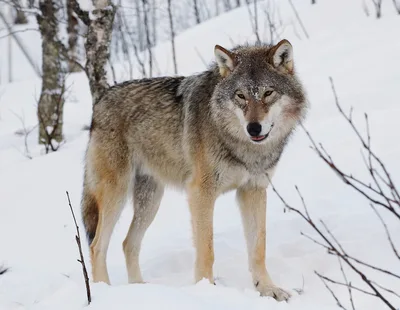 Gray wolf
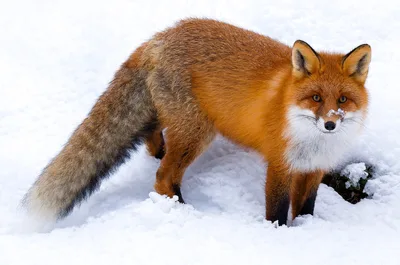 Red fox
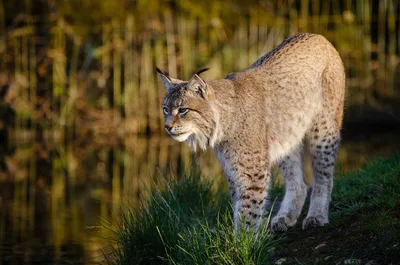 Eurasian lynx
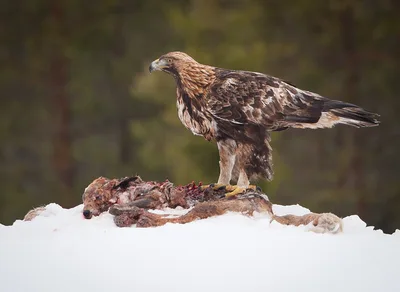 Golden eagle
- eagle owl
- domestic dog
Ecological equivalents
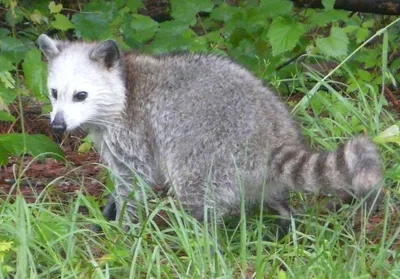
Related species on this site
Affenpinscher (same family), Afghan Hound (same family), African Wild Dog (same family), Aidi (same family), Ainu (same family), Airedale Terrier (same family), and more.
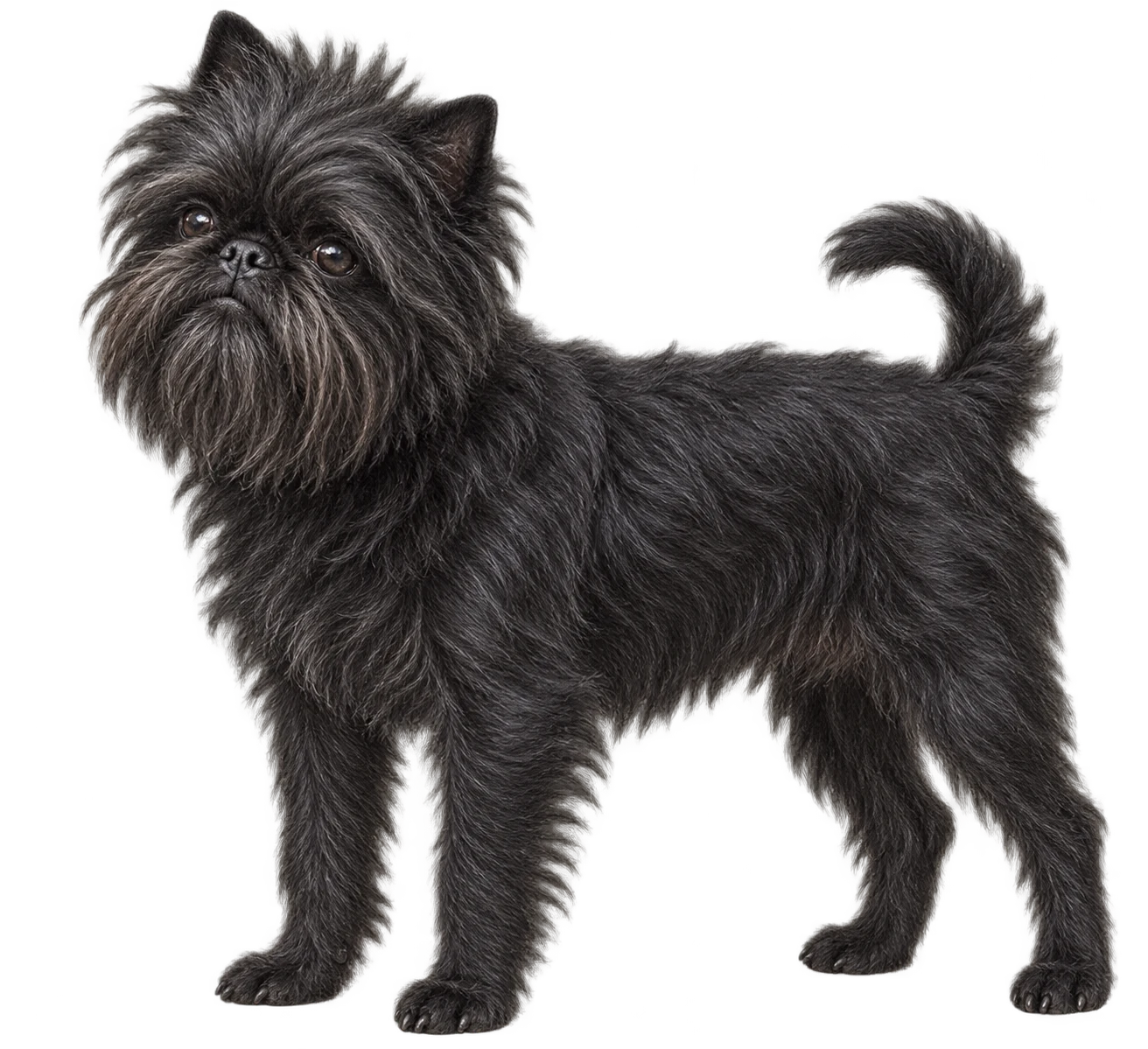
Mammals
Affenpinscher
Canis lupus familiaris
Classification and source reference
LivingAI illustration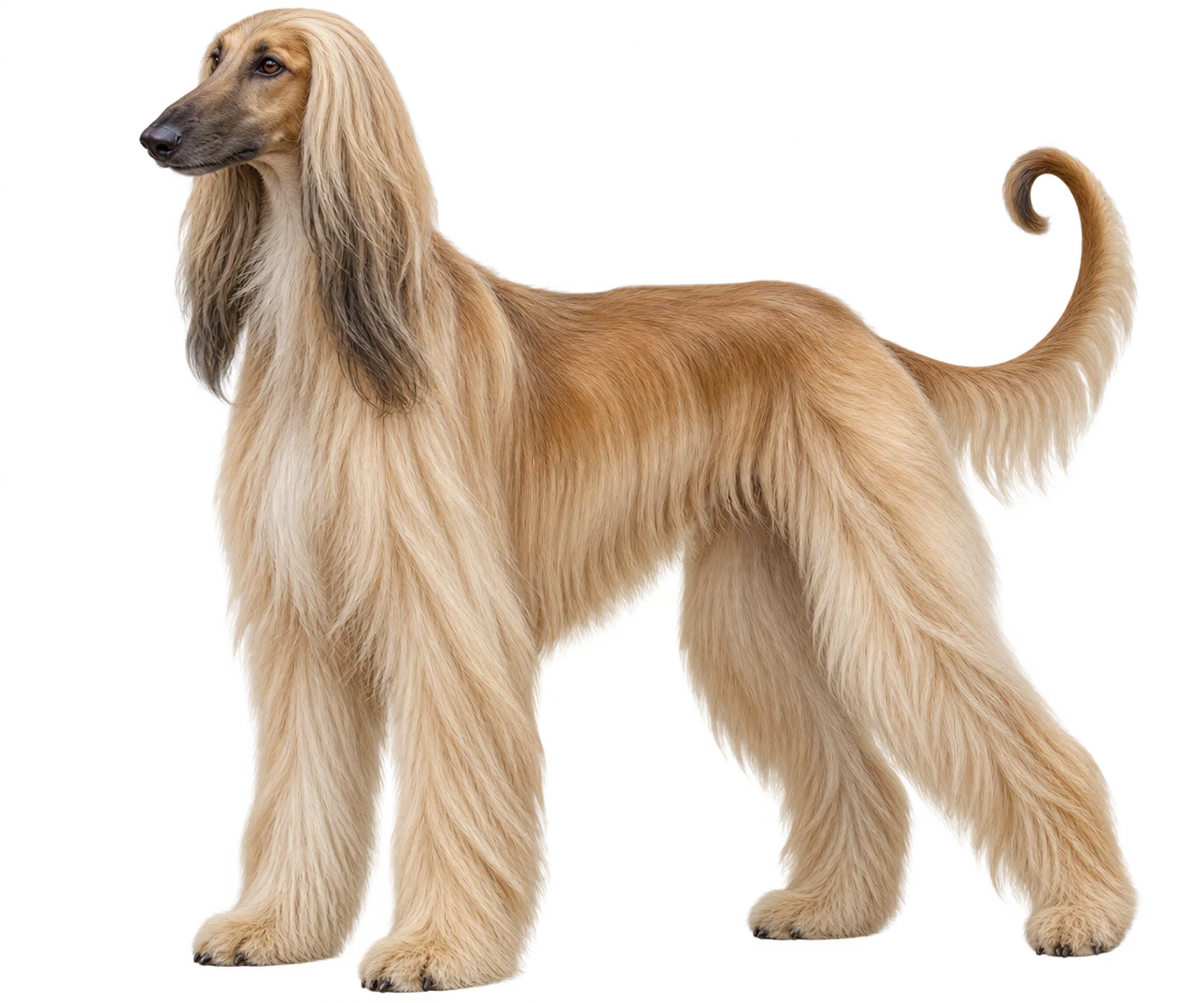
Mammals
Afghan Hound
Canis lupus familiaris
Classification and source reference
LivingAI illustration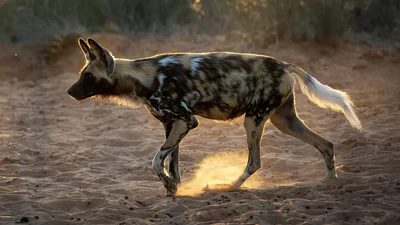
Mammals
African Wild Dog
Lycaon pictus
The African wild dog is a social canid with an irregularly patterned coat.
Living
Mammals
Aidi
Canis lupus familiaris
Classification and source reference
LivingAI illustration
Mammals
Ainu
Canis lupus familiaris
Classification and source reference
LivingAI illustration
Mammals
Airedale Terrier
Canis lupus familiaris
Classification and source reference
LivingAI illustration