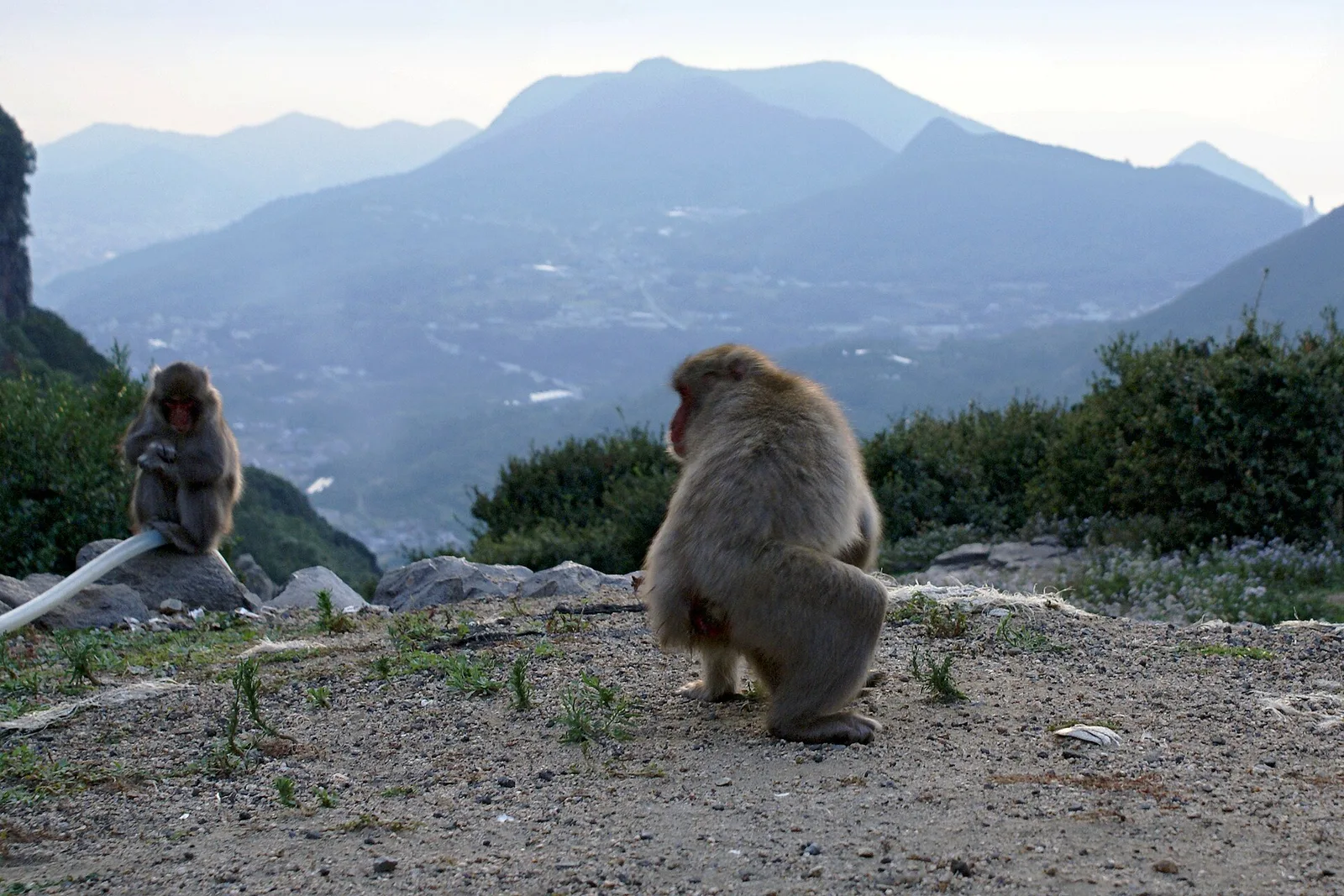
Japanese macaque
The northernmost monkey, and it bathes in hot springs
Macaca fuscata
Also called Snow monkey, Japanese monkey, Nihonzaru
Living individuals or members of this group exist today. This does not mean they are safe from extinction.
Meet the japanese macaque
The Japanese macaque, or snow monkey, is the only monkey native to Japan and the most northerly primate apart from people. It lives in large female-led troops, and some troops warm themselves in hot springs.
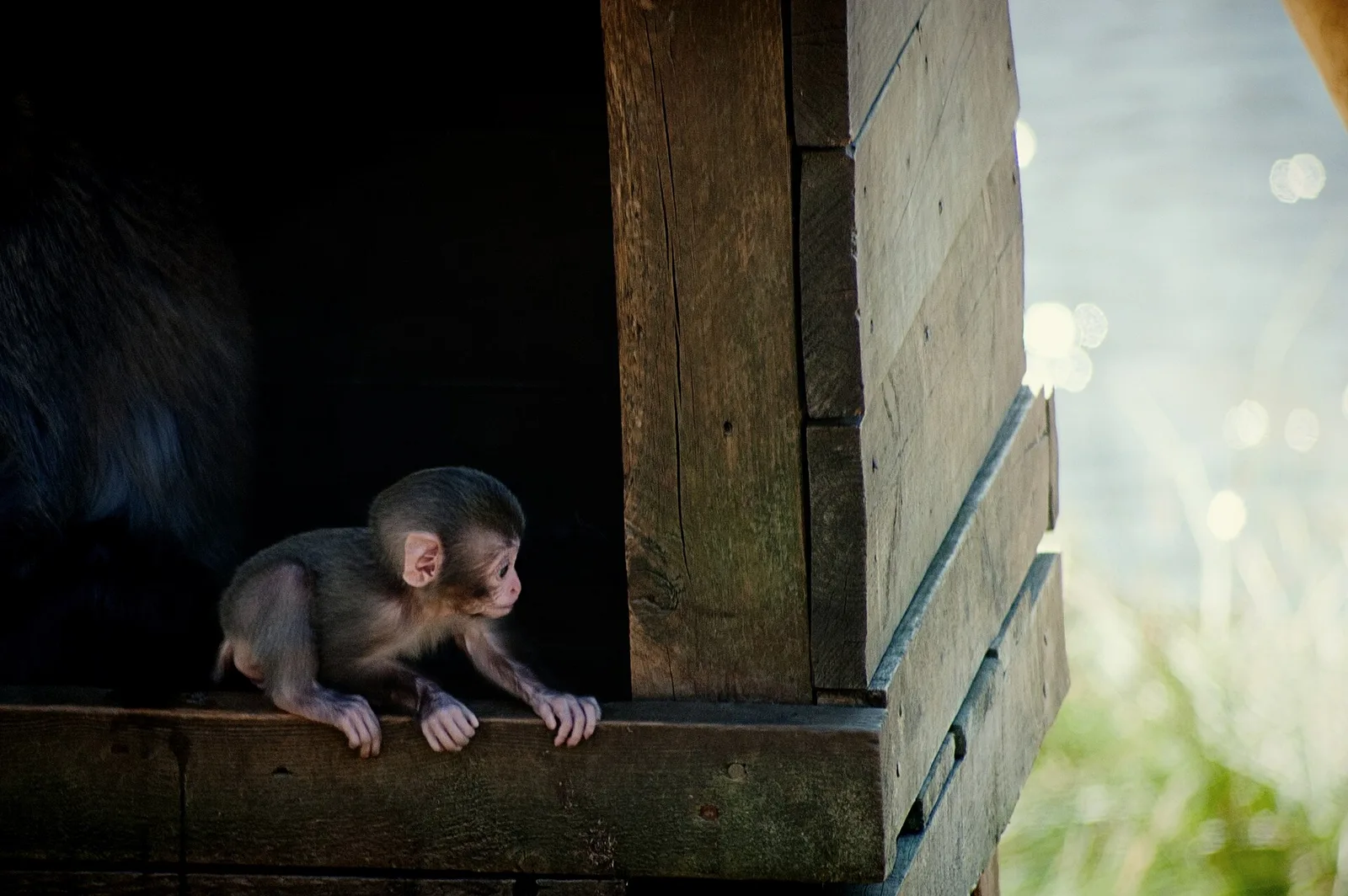
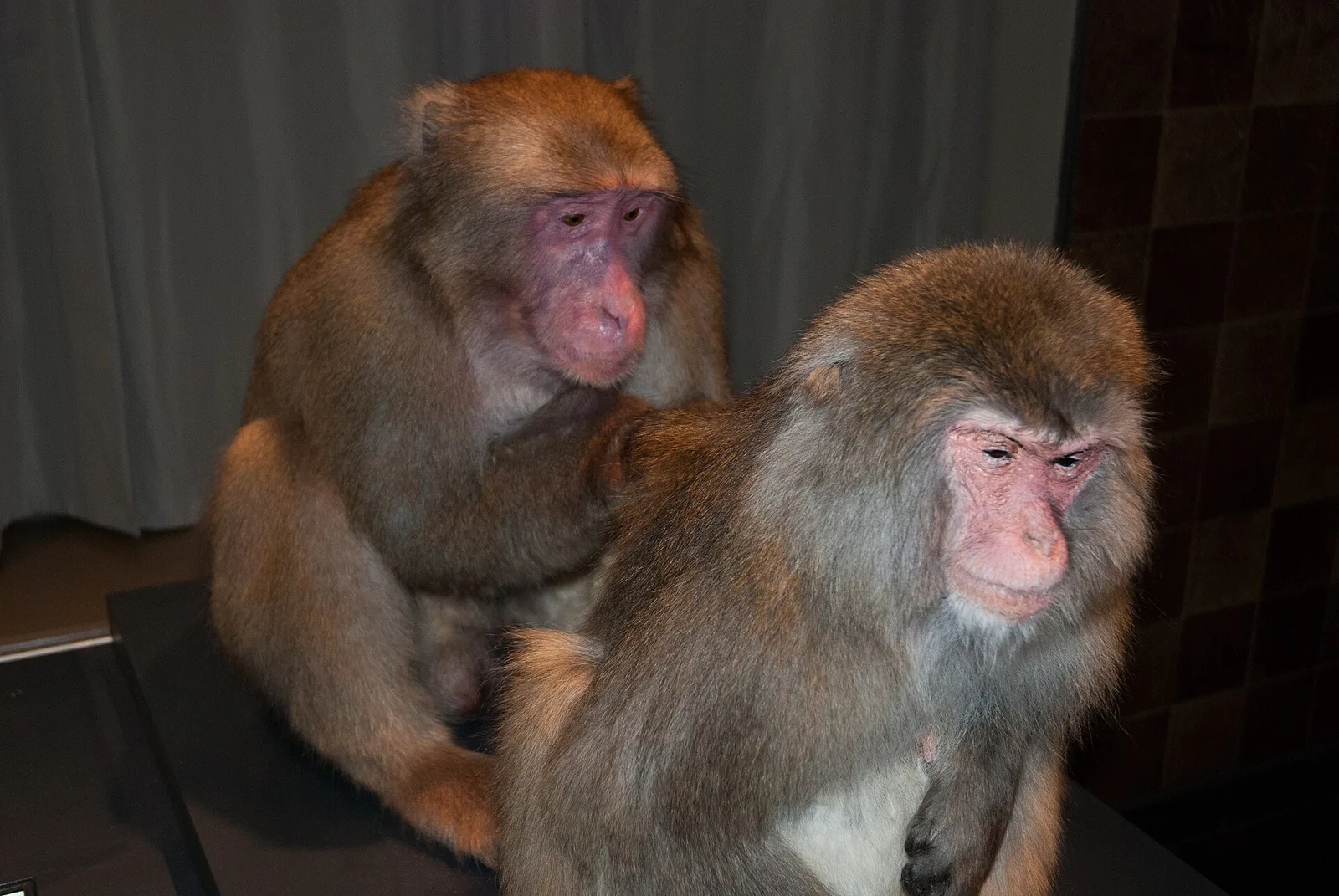
Images of the japanese macaque
Lifespan in the wild
Up to 32 years the oldest known female was 32, the oldest male 28
Weight
8.4 to 11.3 kg
Length
52.3 to 57 cm
Fact file
Japanese macaque
- Location
- Honshu, Shikoku, Kyushu and Yakushima, Japan
- Habitat
- Temperate forest, Mountains
- Diet
- Omnivore
- Prey / food
- Fruit, seeds, nuts, leaves, flowers, bark, fungi, insects, crabs, fish, eggs
- Predators
- Mountain hawk-eagle, feral dogs, raccoon dogs; people cull them
- Lifestyle
- Diurnal, in matrilineal troops
- Group name
- Troop
- Name of young
- Infant
- Gestation
- About 172 days
- Litter size
- 1 infant
- Population
- About 100,000 in the wild
- Biggest threat
- Culling as a crop pest and loss of natural forest to plantations
- Distinctive feature
- Red face, thick grey-brown coat and a stumpy tail
- Colour
- Brown to grey with a pink-red face
- Skin type
- Fur
Size
Next to a person
Measurements
Size and speed
- Length
- 52.3 to 57 cm average head and body, female to male
- Length, male
- About 57 cm
- Length, female
- About 52.3 cm
- Tail
- 7.91 to 9.25 cm female average to male average
- Weight
- 8.4 to 11.3 kg female average to male average
- Weight, male
- About 11.3 kg
- Weight, female
- About 8.4 kg
Typical adult ranges. Sources: Animal Diversity Web, Wikipedia.
Life cycle
Lifespan
- In the wildUp to 32 years the oldest known female was 32, the oldest male 28
- In captivityUp to 38.5 years
- 038.5 years
The pale bar is the record. Sources: Animal Diversity Web, AnAge.
Appearance
Colour and coat
- Primary colours
- browngrey
- Secondary colours
- redwhite
- Skin type
- fur
- Male and female
- Moderate. Males are about 32 percent heavier and 9 percent longer than females, with a redder face and scrotum in the mating season.
Life cycle
Mating and family
- Mating system
- polygynandrous, both sexes with several consorts a season
- Social structure
- matrilineal troops of several female lines with a few adult males
- Breeding
- one infant every two to three years
Mating runs from autumn into winter, and a female pairs with about four males in turn. Gestation lasts about 172 days, and a single infant is born on the ground in spring or summer. The mother carries it on her belly for four weeks and then on her back. Weaning ends by about 18 months, and a wild female bears her first infant at five or six. The oldest wild female known reached 32.
Classification
Taxonomy
- Kingdom
- Animalia
- Phylum
- Chordata
- Class
- Mammalia
- Order
- Primates
- Family
- Cercopithecidae
- Genus
- Macaca
- Species
- Macaca fuscata
Conservation
Red List status
- LC
- NT
- VU
- EN
- CR
- EW
- EX
Least Concern on the IUCN Red List
Range
Recorded in 1 country
Habitat layer: temperate broadleaf and mixed forest, temperate conifer forest, boreal forest and taiga, montane grassland and shrubland.
Countries from 1,959 wild records on GBIF (iNaturalist research grade), filtered and checked by hand. Country shapes: Natural Earth. Habitat: RESOLVE Ecoregions 2017, CC BY 4.0. Basemap: Natural Earth.
Habitats
Three things to know
- 1
No wild monkey lives further north or in deeper snow than the Japanese macaque.
- 2
A female named Imo on Koshima island began washing sweet potatoes, and the whole troop copied her.
- 3
In 2021 a nine-year-old female called Yakei took charge of a troop of 677 monkeys at Takasakiyama.
Did you know
Seven more facts
- 1
A daughter ranks above her older sisters but below her mother.
- 2
Macaques swim well, even in the sea, and one covered more than half a kilometre.
- 3
A fed troop at Takasakiyama once held 1,255 monkeys.
- 4
Twins are born about once in 488 births.
- 5
A troop moved to Texas in 1972 learnt to eat cactus fruit and dodge rattlesnakes.
- 6
Young monkeys roll snowballs and handle stones for fun.
- 7
The three wise monkeys of Nikko are Japanese macaques.
Field notes
How it looks and acts
Field notes
Distinguishing features
- A bare pink-red face and rump that flush brighter in the mating season.
- A thick brown to grey coat that grows denser as winter deepens.
- A stumpy furred tail of about 7.91 to 9.25 centimetres.
- Pale side whiskers and a small crest of hair by the jaw.
- A stocky body of about 52.3 to 57 cm, with males a third heavier than females.
Field notes
Unique adaptations
- A dense winter coat that lets it endure minus 20 degrees Celsius without hibernating.
- Autumn feasting on nuts and fruit to build fat for the snow months.
- Huddling and hot-spring bathing to hold body heat and cut stress.
- A flexible diet of more than 213 plants plus insects, crabs and fish.
- Social learning, so useful tricks such as potato washing spread through a troop.
Field notes
Interesting behaviours
- Grooms troop mates for hours, mostly within the family.
- Sits in hot springs in winter at Jigokudani.
- Washes sweet potatoes and seasons them in seawater on Koshima.
- Huddles in groups on cold nights.
- Gives birth away from the troop, on the ground.
Field notes
Temperament
- Social and hierarchical, with strict ranks among females.
- Bold around people once habituated, and hard to scare off crops.
- Curious and inventive, quick to copy a new trick.
- Aggressive at times, and in 2022 monkeys in Yamaguchi attacked dozens of people.
Field notes
Communication
- Coos to keep the troop in touch while feeding and moving.
- Girney calls before grooming and to calm a fight.
- Alarm hollers at hawk-eagles and other threats.
- Bared teeth, raised brows and flattened ears as threats.
- Lip-smacking and rump display as submission.
Ecology
Ecological role
The Japanese macaque is the largest wild primate of Japan's forests and a spreader of the seeds it eats.
- It scatters seeds in its droppings, and about 36 percent pass through intact.
- It also crushes and destroys many seeds.
- Leaves it knocks from treetops feed the sika deer below.
- It competes with deer for plants on small islands.
Stories
Myths and legends
- In Shinto tradition the monkey god Sarugami carries messages for the mountain god Sanno.
- In the Koshin folk tradition the three wise monkeys see, hear and speak no evil.
- In Japanese folk tales the monkey helps Momotaro but cheats the crab.
- In Japanese custom, borrowed from China, a monkey in the stable kept horses healthy.
People
Relationship with humans
People
Living alongside us
The Japanese macaque is sacred in Shinto lore, a star of tourism at the snow monkey park, and a serious crop pest. Japan banned hunting it in 1947 but culls more than 10,000 a year for raiding farms. It is one of the most studied primates, from the potato washers of Koshima to laboratory work in neuroscience. Habituated monkeys sometimes bite people.
- In 2022 monkeys in Yamaguchi attacked at least 50 people, biting and scratching.
- Habituated monkeys snatch food and stand their ground against people.
- They carry diseases similar to those of humans.
People
Status, uses and products
- Domestication
- Wild
- As a pet
- Not suitable. A macaque needs a troop, a large territory and a varied diet, and it grows strong and aggressive as an adult. It is protected in Japan and listed on CITES Appendix II.
- Uses
- wildlife tourismscientific researchmonkey performances
- Products
- None recorded
The full account
About the japanese macaque
The Japanese macaque, Macaca fuscata, is the only monkey native to Japan. People call it the snow monkey, because some troops live where snow lies on the ground for months. No other primate apart from humans lives so far north or in such cold. It has a thick brown-grey coat, a bare pink-red face and a stump of a tail. A male averages 11.3 kilograms and a female 8.4 kg. Head and body measure about 57 centimetres in a male and 52.3 cm in a female.
The species lives on Honshu, Shikoku and Kyushu, on several small islands, and on Yakushima as a separate subspecies. Troops are built around related females, and daughters inherit their mother's rank. Males leave home before they mature and move between troops. The macaque eats fruit, seeds, leaves, bark, fungi and insects, and it raids crops. The IUCN lists it as Least Concern, with about 100,000 in the wild. Japan culls more than 10,000 a year as farm pests.
Name and taxonomy
In Japanese the animal is Nihonzaru, Japan monkey, but most people just say saru, monkey, because it is the only one they know. Edward Blyth described the species in 1875, and the type locality is simply Japan. An older name, speciosus of 1825, was suppressed by the zoological commission in 1970. The Yakushima macaque, Macaca fuscata yakui, was named by Kuroda in 1941. It has blackish fur on the backs of the hands, darker than its body, and lives only on Yakushima, about 60 km south of Kyushu.
The species belongs to the family Cercopithecidae, the Old World monkeys. Within the genus Macaca it falls in the fascicularis group, beside the rhesus macaque, the crab-eating macaque and the Formosan rock macaque. It is listed on CITES Appendix II and as Threatened under the United States Endangered Species Act.
Evolution and relatives
The macaque's ancestor was probably a monkey much like the rhesus macaque, living on the Korean peninsula. It crossed to Kyushu and western Honshu over land bridges that appeared when sea levels fell in the Middle Pleistocene. Those crossings happened during one or two glacial low stands of the sea. The oldest macaque fossils in Japan are a molar and an upper arm bone that look like the living species. Fossil macaques from Korea date from the same era, yet no monkey lives in Korea today.
Two subspecies are recognised: the mainland form and the Yakushima form. Like other macaques, the species probably spread north as forests shifted with the climate, and cold now sets its limit. The species has evolved a thick coat that grows denser as the temperature falls, and it copes with minus 20 degrees Celsius.
Appearance
The coat is long on the back and ranges from pale yellow-brown through grey-brown to dark golden brown. The belly and inner limbs are whitish to pale grey or buff. Pale side whiskers frame the face, and the hair often forms a small crest near the angle of the jaw. The face and rump are bare and pink to red, and both flush deeper in the mating season. The tail is very short and furry, and it may carry a white tuft at the tip. Northern monkeys tend to be paler and heavier than southern ones, and the whole coat is moulted in late spring.
Males average 11.3 kg and 57 cm, and females 8.4 kg and 52.3 cm. A male's body is about 9 percent longer and about 32 percent heavier than a female's. The tail averages about 9.25 cm in a male and 7.91 cm in a female. The brain weighs about 95 grams. Newborns are dark brown to blackish, much darker than adults, and take their adult colour by 4 to 5 months. Monkeys fed by people grow larger skulls than wild ones.
Habitat and range
The macaque lives on three of Japan's four main islands: Honshu, Shikoku and Kyushu. It is absent from Hokkaido, north of the Blakiston Line, and its northern limit is the Shimokita Peninsula at the tip of Honshu. Small islands such as Koshima, Kinkasan, Awaji and Shodoshima also hold troops. Three small islands, Omishima, Hiradoshima and Tanegashima, lost their monkeys in the middle of the 20th century. A 1989 survey estimated 114,431 wild monkeys in Japan.
In the south it lives in warm evergreen broadleaf forest, where the average temperature is about 20 degrees and rain reaches 3,000 millimetres a year. In the north it lives in cool deciduous forest, with an average of 10.9 degrees and about 1,500 mm of rain. It has been seen as high as 3,180 metres, but in winter it stays below about 1,800 m. Lowland forest was once its home too, but people cleared most of it long ago. Conifer plantations that replace natural forest make poor habitat.
In 1972 about 150 monkeys were moved from Kyoto to a ranch in the dry brushland of south Texas. Many died at first, but the survivors learnt to eat mesquite beans and cactus fruit and to avoid eagles, coyotes and rattlesnakes. By 1995 the troop numbered 500 to 600, and after hunters shot escaped monkeys in 1996 a 75-hectare sanctuary was set up near Dilley.
Diet and feeding
The Japanese macaque is an omnivore with a diet of more than 213 plant species. It eats fruit, seeds, nuts, leaves, flowers, buds, shoots and bark, plus fungi, ferns and roots. Animal food includes insects, spiders, crabs, molluscs, fish and birds' eggs. When better food is scarce it digs up roots and rhizomes or even eats soil.
The diet turns with the seasons. Fruit dominates in June and from September to November, and flowers and nectar in spring and midwinter. In winter the monkeys chew tough mature leaves, and in the north they fatten on nuts and fruit in autumn to survive the snow. On Kinkasan they live largely on Japanese barberry and zelkova, plants the island's sika deer will not eat. On Koshima a young female named Imo started washing sand off sweet potatoes in the sea, and the troop copied her. She also threw handfuls of wheat and sand into the water so the grain floated free, and that trick spread too.
Behaviour and social life
The macaque is diurnal and moves on all fours, with females spending more time in trees and males more on the ground. One study of daily time found 23.5 percent feeding, 22.8 percent travelling, 27.9 percent grooming others and 20.9 percent resting. It usually sleeps in trees, but on predator-free islands it sleeps on the ground. In winter the monkeys huddle together on their sleeping sites. They swim well, even in the sea, and one was recorded swimming more than half a kilometre.
Troops hold several matrilines, and wild troops average about 41 animals, from 10 to 161. A fed troop at Takasakiyama once reached 1,255. Females stay in their birth troop for life and rank below their mother but above their older sisters. Males leave by about five years old and may drift between troops or live alone. One male usually holds alpha rank, and his position changes when he dies or leaves or the troop splits. In 2021 a female named Yakei, aged nine, deposed the males and her own mother to lead a troop of 677 at Takasakiyama.
Grooming holds the troop together, and most of it passes between mothers and daughters. High-ranking families groom each other more and hold together better. At Jigokudani in Nagano the monkeys sit in a hot spring in winter. The habit began in the 1960s, after people lured them there to keep them off the crops. Bathing lowers their stress hormones, and top-ranking females hog the pool. Young monkeys roll snowballs and play with stones for no practical reason.
Communication and senses
Macaques coo while they feed or travel, and others coo back, which keeps the troop together. A softer girney call comes before grooming and calms a quarrel. Alarm calls warn of predators, and threat calls sound during fights, often from supporters on the sidelines. Researchers sort the calls into six groups, and more than half of them are peaceful. Troops in different regions call at different pitches, which scientists compare to human accents.
Faces and bodies speak too. A threatened monkey flattens its ears, raises its brows and opens its mouth to bare the teeth. A subordinate grimaces, smacks its lips, shows its rump or looks away. Displays of kicking, shaking and leaping rise in males during the mating season. Like other Old World monkeys, the macaque probably sees in full colour and relies on sight more than smell.
Reproduction and life cycle
Mating runs from autumn into winter, and births come in spring and summer, earlier in the north. A male and a female form a consortship, feeding, resting and travelling together for about 16 days on average. A female takes about four such partners in a season, and dominant males keep her longer. The female decides whether mating happens, and rank does not guarantee a male success. Her face and rump turn scarlet in the season, and she signals by looking back over her shoulder or walking backwards towards the male. Females also mount other females outside the season.
Gestation averages about 172 days, and the mother gives birth on the ground at the edge of the troop. One infant is the rule, and twins occur about once in 488 births. A newborn weighs a little over half a kilogram and clings to the belly for four weeks, then rides on the back. It tastes solid food at five to six weeks and can forage alone by seven weeks. Weaning starts at seven months and is complete by 18 months, though some infants nurse to 2.5 years. Childless females and, in some troops, older males help to carry and groom infants.
About 28.4 percent of infants die before their first birthday. Females mature at about 3.5 years and males at about 4.5, and a wild female has her first infant at five or six. Females in fed troops give birth more often than females in wild troops. The oldest wild female known reached 32 and the oldest male 28. A captive animal lived 38.5 years.
Predators and threats
The mountain hawk-eagle takes macaques from above, and the monkeys holler in alarm even at a gliding flying squirrel. Feral dogs once killed many, but the government now controls dog numbers. Raccoon dogs may take infants. The Japanese wolf was the natural predator until people wiped it out in the early 1900s. People are now the deadliest predator by far.
Since 1998 Japan has killed more than 10,000 macaques a year as crop pests, and recent culls pass 20,000. Biologists worry that the culls are shrinking the species' range. Conifer plantations that replace natural forest reduce its food. Before 1945 hunting for food and medicine and slash-and-burn farming pushed the range back. Males sometimes kill infants, which brings the mother back into breeding sooner.
Population and conservation
The IUCN lists the Japanese macaque as Least Concern, including both subspecies. It was once listed as Data Deficient because nobody knew whether the culls were sustainable. About 100,000 live in the wild, and a 1989 count gave 114,431. Hunting for sport or trade has been banned since 1947, but the same law allows the removal of nuisance animals. Numbers have grown since the 1940s thanks to protection, new forest and the loss of the wolf.
Populations have expanded in eastern Japan, while in the west some local troops have grown and others have vanished. Yakushima became a World Heritage Site in 1993, which protects the island subspecies but also brings tourists. The status of troops on high mountain slopes is unknown.
Relationship with humans
The macaque is the third worst crop pest in Japan, after wild boar and deer. It climbs ordinary fences and soon learns that scarecrows are harmless, so farmers need electric fences. In 2019 crop damage cost about 900 million yen. Monkeys wander into towns, and one lived in central Tokyo for months. In 2022 monkeys in the city of Yamaguchi attacked at least 50 people.
The species is one of the most studied primates in the world. Koshima island has been a study site since 1947, and every monkey there has been marked since 1952. Kawamura described the spread of potato washing there in 1959, and a garbled version later became the hundredth monkey myth. Macaques are used in neuroscience and drug testing, and culled animals go to medical and dental schools. Jigokudani Monkey Park, at 850 metres in Nagano, draws visitors up a 2 km path to watch the monkeys bathe. Monkeys habituate to people quickly, some within a week.
In culture and myth
The monkey runs through Shinto belief, folklore, art and everyday Japanese speech. Sarutahiko is a monkey-like god of crossroads who stands between heaven and earth. At Hiyoshi Taisha shrine the monkey god Sarugami serves as messenger of the mountain god Sanno. The three wise monkeys carved at Toshogu shrine in Nikko see, hear and speak no evil. The figure rests on a pun, since saru means monkey and echoes an old negative ending. In the Koshin folk faith the monkey is a go-between for people and gods. Following Chinese custom, monkeys were kept in stables to guard horses from sickness.
The peach boy Momotaro recruits a monkey, along with a dog and a pheasant, to fight the ogres. A second tale pits a crab against a monkey, and there the monkey plays the cheat. The warlord Toyotomi Hideyoshi, master of Japan by 1590, bore the nickname Kosaru, little monkey, because of his face. The proverb that even monkeys fall from trees means that anyone can slip. Edo-period artists such as Watanabe Kazan and Yoshitoshi painted macaques, and carvers shaped them into netsuke toggles. Trained monkeys still perform in sarumawashi shows, a trade that began with horse healers.
A sentence with a dotted underline is inferred: it describes the group the animal belongs to, or is a reading of the sources, rather than a measured or reported fact about this species.
Questions
Japanese macaque questions, answered
Why are they called snow monkeys?
Because some troops live in the mountains of northern Honshu, where deep snow lies for months. No other wild primate lives so far north.
Where do Japanese macaques live?
On Honshu, Shikoku and Kyushu in Japan, on several small islands, and on Yakushima as a separate subspecies. They are absent from Hokkaido.
Do snow monkeys really bathe in hot springs?
Yes. The troop at Jigokudani Monkey Park in Nagano soaks in a hot spring during the winter. The habit dates from the 1960s, and bathing lowers their stress hormones.
What do Japanese macaques eat?
Fruit, seeds, nuts, leaves, flowers, bark, fungi and roots, plus insects, crabs, fish and eggs. The diet includes more than 213 plant species.
How big is a Japanese macaque?
A male averages 11.3 kilograms and 57 centimetres in head and body, a female 8.4 kg and 52.3 cm. The tail is only about 8 to 9 cm.
How cold can a Japanese macaque survive?
Down to about minus 20 degrees Celsius. The coat thickens as the temperature drops, and the monkeys huddle and bathe to keep warm.
Who leads a macaque troop?
Females form the core, and a daughter takes her mother's rank. Usually one alpha male sits on top, but in 2021 a female named Yakei took over a troop of 677.
Did a macaque really invent potato washing?
Yes. On Koshima island a young female named Imo began washing sweet potatoes, and the troop copied her. The hundredth monkey story is a garbled version of this.
How long do Japanese macaques live?
Wild females have reached 32 years and wild males 28. One captive animal lived 38.5 years.
Are Japanese macaques endangered?
No. The IUCN lists them as Least Concern, with about 100,000 in the wild. Japan culls more than 10,000 a year as crop pests.
Are snow monkeys dangerous?
They can be. Habituated monkeys snatch food and bite, and in 2022 monkeys in Yamaguchi attacked at least 50 people.
Do Japanese macaques have tails?
Only a furry stump, averaging about 9.25 cm in males and 7.91 cm in females.
How many babies does a macaque have?
One at a time, after a pregnancy of about 172 days. Twins occur about once in 488 births.
What are the three wise monkeys?
Carvings at Toshogu shrine in Nikko of monkeys that see, hear and speak no evil. They are Japanese macaques and belong to the Koshin folk faith.
Do Japanese macaques live outside Japan?
One troop was moved to Texas in 1972 and now lives in a sanctuary near Dilley. Otherwise the species is found only in Japan.
Food web
Prey and food
- fruit
- seeds
- nuts
- leaves
- flowers
- bark
- fungi
- insects
- crabs
- fish
- eggs
Food web
Predators
- mountain hawk-eagle
- feral dogs
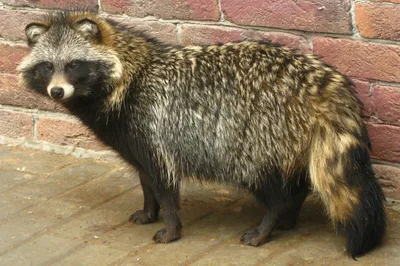 Common raccoon dog
- people cull them
Ecological equivalents
Related species on this site
Crab-Eating Macaque (same genus), Macaque (same genus), Rhesus macaque (same genus), De Brazza's Monkey (same family), Douc (same family), Mandrill (same family), and more.
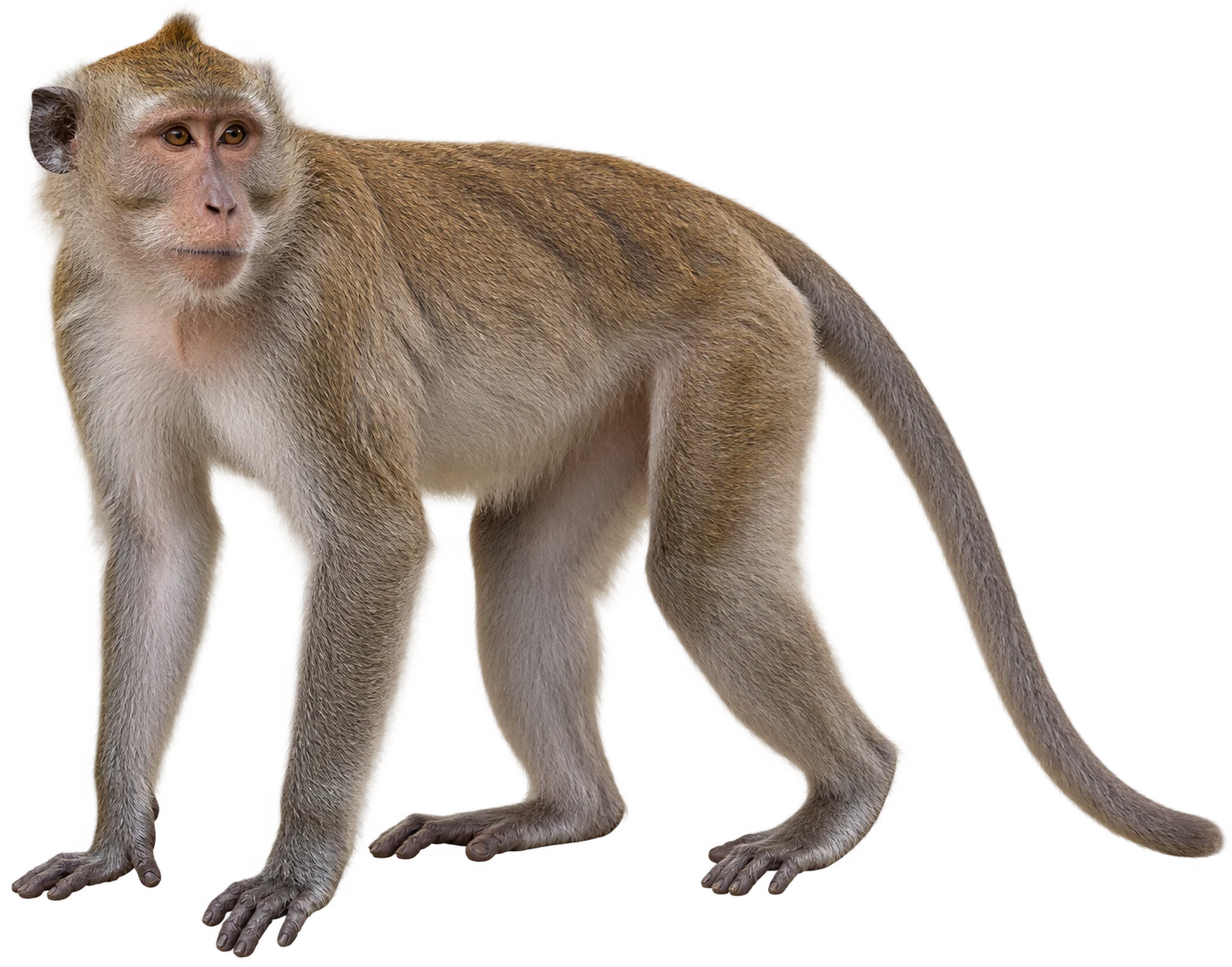
Mammals
Crab-Eating Macaque
Macaca fascicularis
Classification and source reference
LivingAI illustration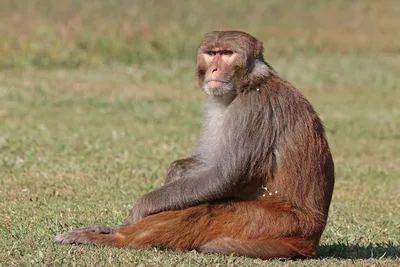
Mammals
Macaque
Macaca
Macaques are adaptable monkeys with many different species across Asia and beyond.
Living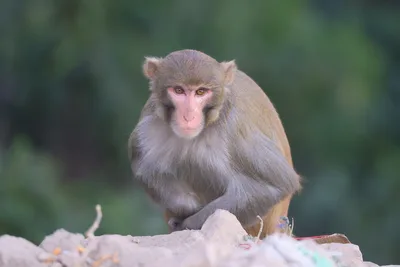 LC
Mammals
Rhesus macaque
Macaca mulatta
The rhesus macaque is a brown monkey with a pink face that lives in large, rank-ordered troops across South and East Asia.
Living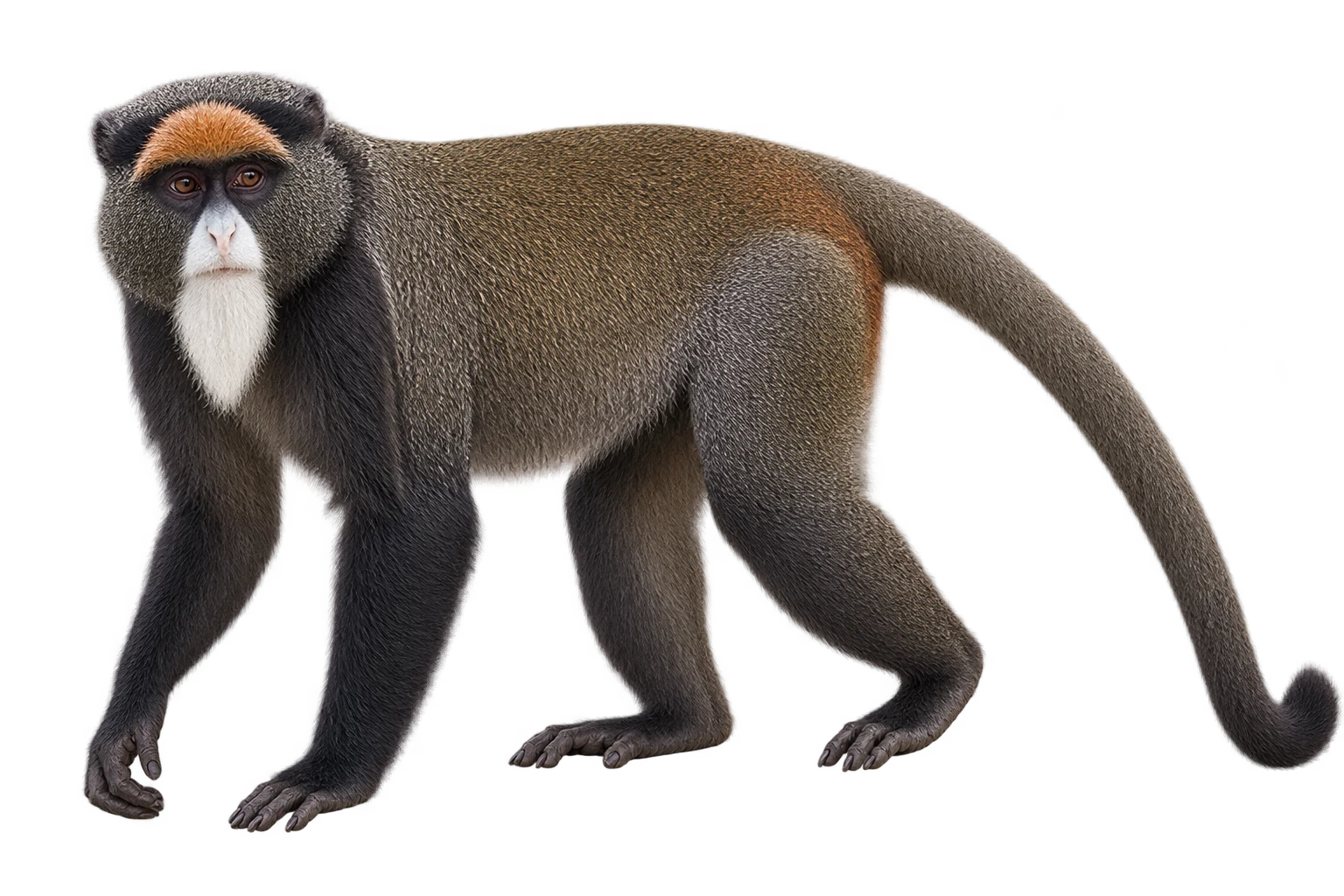
Mammals
De Brazza's Monkey
Cercopithecus neglectus
Classification and source reference
LivingAI illustration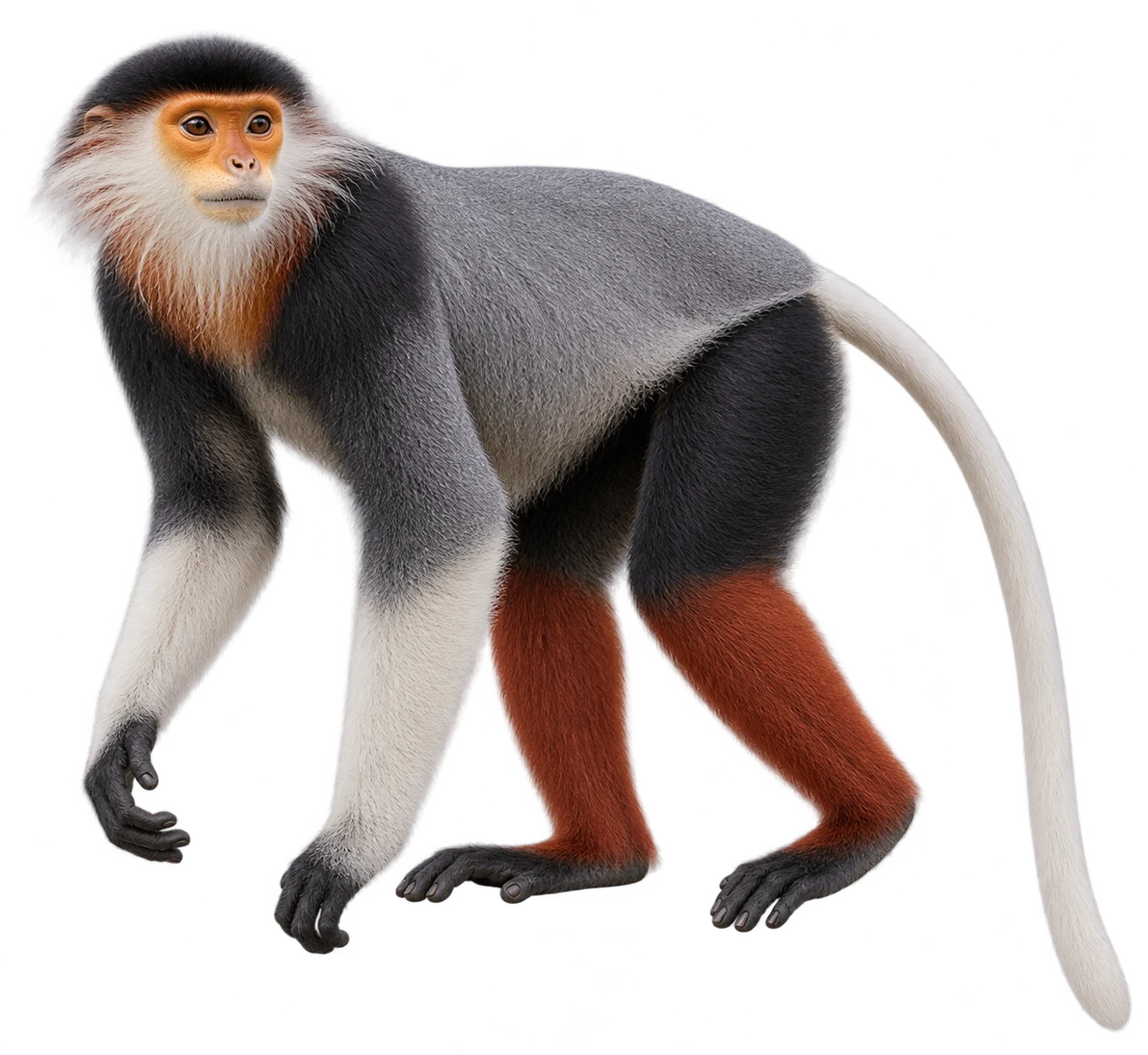
Mammals
Douc
Pygathrix
Classification and source reference
LivingAI illustration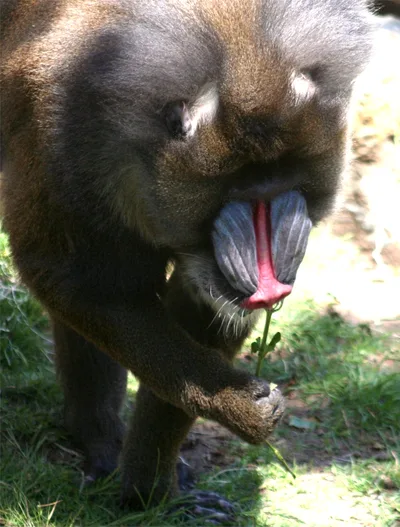 VU
Mammals
Mandrill
Mandrillus sphinx
The mandrill is the largest monkey and one of the most colourful mammals, with a red and blue face and a rump to match.
Living