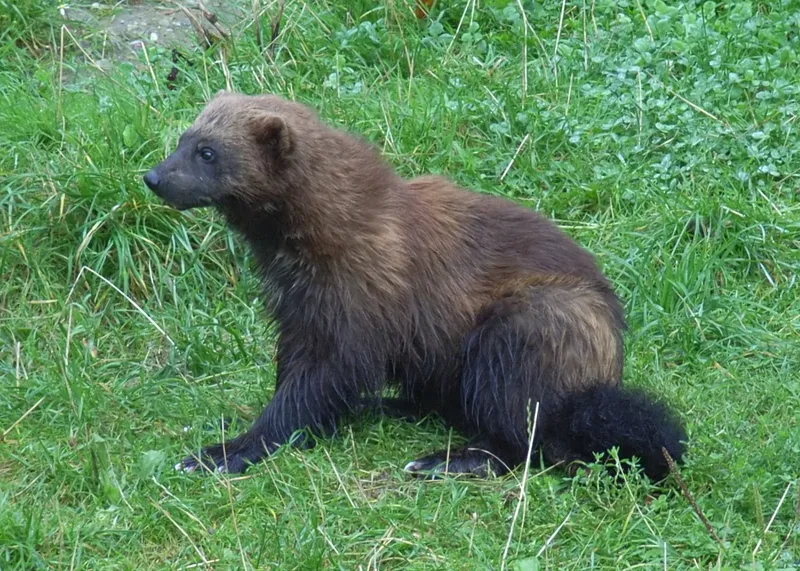
Wolverine
A scavenger that fights bears for a frozen carcass
Gulo gulo
Also called Glutton, Carcajou, Quickhatch, Skunk bear
Living individuals or members of this group exist today. This does not mean they are safe from extinction.
Meet the wolverine
The wolverine is the largest weasel that lives on land, a solitary scavenger and hunter of the far north. It ranges across huge areas of boreal forest, tundra and mountain in Canada, Alaska, Scandinavia and Russia.
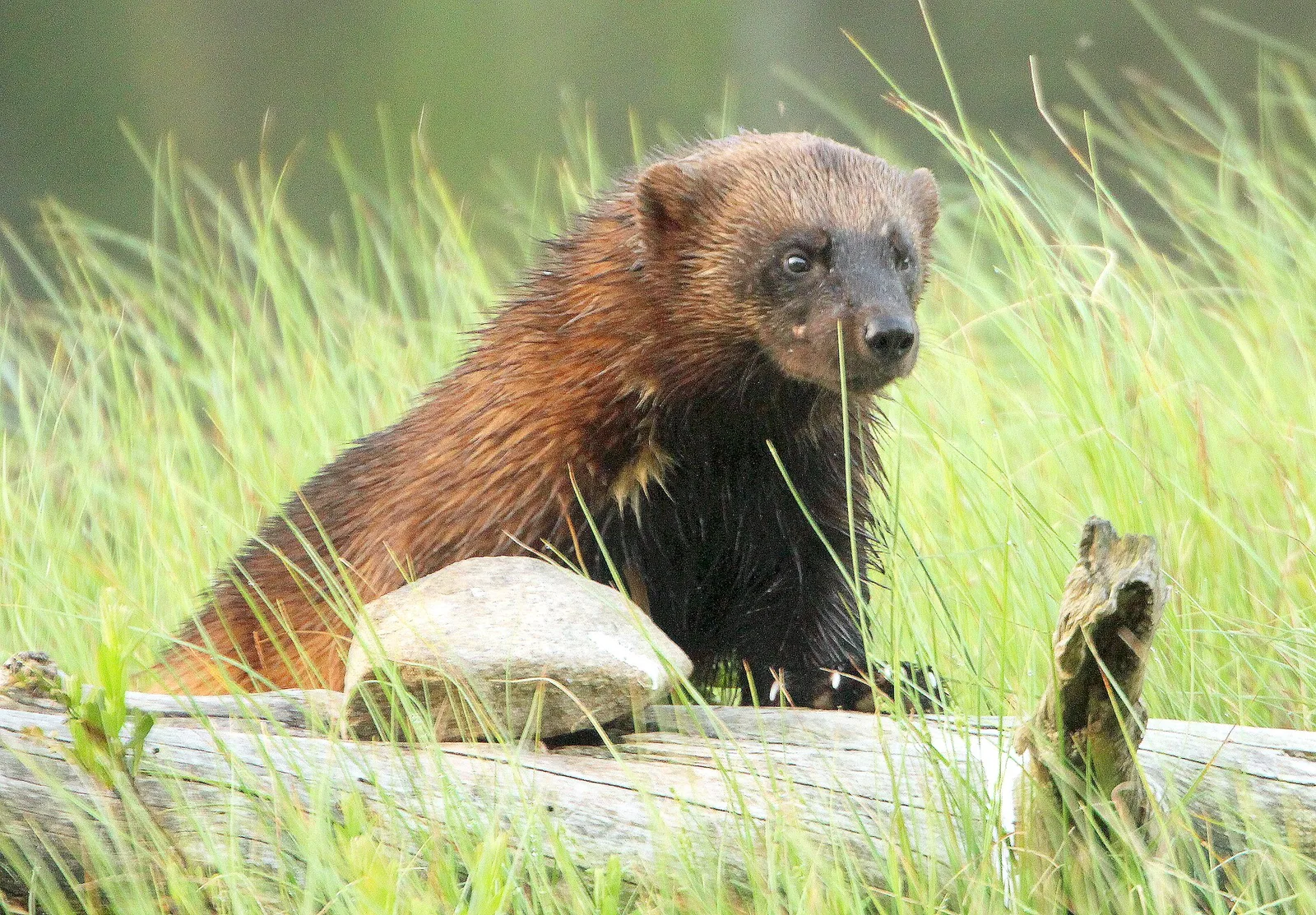
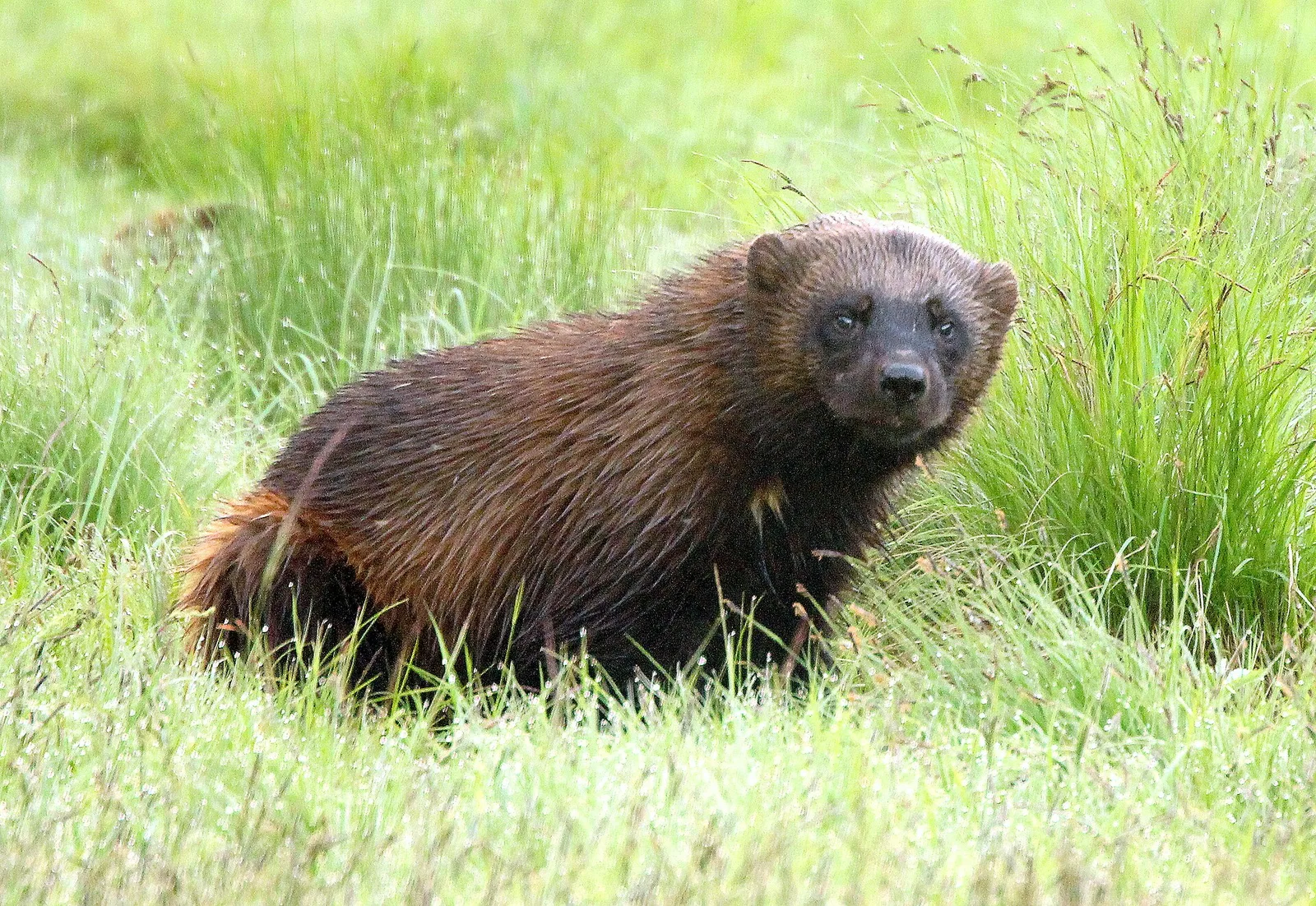
Images of the wolverine
Lifespan in the wild
5 to 7 years
Weight
8 to 18 kg
Length
0.65 to 1.05 m
Top speed
Up to 48 km/h
Fact file
Wolverine
- Location
- Northern Canada, Alaska, Fennoscandia, Russia, Siberia, Mongolia
- Habitat
- Temperate forest, Tundra, Mountains
- Diet
- Carnivore
- Prey / food
- Caribou, deer, moose, hares, marmots, ground squirrels, lemmings, carrion
- Predators
- Gray wolf, brown bear, cougar; golden eagle takes kits
- Lifestyle
- Solitary; active by day and night, all year round
- Name of young
- Kit
- Gestation
- 30 to 50 days after delayed implantation
- Litter size
- 2 to 3 kits, up to 5
- Population
- Unknown; low density across a huge northern range
- Biggest threat
- Trapping, and the loss of spring snow cover
- Distinctive feature
- A pale stripe from each shoulder to the rump on a dark coat
- Colour
- Dark brown
- Skin type
- Fur
Size
Next to a person
Measurements
Size and speed
- Height
- 36 to 45 cm at the shoulder
- Length
- 0.65 to 1.05 m head and body, without the tail
- Tail
- 13 to 26 cm
- Weight
- 8 to 18 kg, up to 20 kg females 8 to 12 kg, males 11 to 18 kg; up to 20 kg claimed for Eurasia
- Weight, male
- 11 to 18 kg
- Weight, female
- 8 to 12 kg
- Top speed
- Up to 48 km/h a short burst on the attack; a long gallop is far slower
Typical adult ranges. Sources: Wikipedia, Animal Diversity Web.
Life cycle
Lifespan
- In the wild5 to 7, up to 13 years
- In captivityUp to 19.5 years
- 019.5 years
The pale bar is the record. Sources: Animal Diversity Web, AnAge.
Appearance
Colour and coat
- Primary colours
- dark brownblackish brown
- Secondary colours
- buffgoldsilver
- Skin type
- fur
- Male and female
- Moderate. Males are about 10 to 15% longer and 30 to 40% heavier than females, but the two look alike.
Life cycle
Mating and family
- Mating system
- polygynous
- Social structure
- solitary, with one male's range covering several females' ranges
- Breeding
- one litter every two years
Wolverines mate between May and August, but the embryo does not implant until early winter. Growth then takes 30 to 50 days, and two or three kits are born in a snow den between January and April. The kits are weaned at about three months, forage alone at five to seven months and reach adult size within a year. A female breeds only in alternate years. A wild wolverine lives 5 to 7 years as a rule, with a record of 13, and one captive animal reached 19.5.
Classification
Taxonomy
- Kingdom
- Animalia
- Phylum
- Chordata
- Class
- Mammalia
- Order
- Carnivora
- Family
- Mustelidae
- Genus
- Gulo
- Species
- Gulo gulo
Conservation
Red List status
- LC
- NT
- VU
- EN
- CR
- EW
- EX
Least Concern on the IUCN Red List
Range
Recorded in 7 countries
Habitat layer: temperate broadleaf and mixed forest, temperate conifer forest, boreal forest and taiga, montane grassland and shrubland, tundra.
Countries from 609 wild records on GBIF (iNaturalist research grade), filtered and checked by hand. Country shapes: Natural Earth. Habitat: RESOLVE Ecoregions 2017, CC BY 4.0. Basemap: Natural Earth.
Habitats
Three things to know
- 1
A wolverine can kill a deer stuck in deep snow, an animal several times its own weight.
- 2
A special rotated molar lets it tear meat from a carcass that has frozen solid.
- 3
Its broad furred feet spread its weight, so it runs over soft snow that stalls larger animals.
Did you know
Seven more facts
- 1
The genus name Gulo means glutton in Latin.
- 2
A newborn kit weighs about 85 grams, less than a bar of soap.
- 3
Wolverine fur does not hold frost, which is why it lined Arctic parka hoods.
- 4
A wolverine can spring a fur trap by dropping a stick into it, then carry the trap off and bury it.
- 5
It sprays its buried food with gland scent to warn other animals off.
- 6
A radio-collared male, M-56, walked from Wyoming to Colorado and on to North Dakota, about 1,300 kilometres in all.
- 7
Colorado plans to release 15 wolverines a year from 2026, the first reintroduction of the species anywhere.
Field notes
How it looks and acts
Field notes
Distinguishing features
- A dark brown coat with a pale stripe from each shoulder to the rump.
- A long, low body on short powerful legs, with a bushy tail of 13 to 26 centimetres.
- A broad round head with small eyes and short rounded ears.
- Wide five-toed paws with long curved claws, planted flat on the ground.
- A silvery mask on the face and white throat patches in some animals.
- A shoulder height of 36 to 45 centimetres, about that of a medium dog.
Field notes
Unique adaptations
- Wide furred feet spread its weight so it runs over snow that stalls a deer.
- A sideways molar and a very strong bite let it eat frozen meat and crush bone.
- Oily, dense fur sheds water and resists frost in the coldest weather.
- Delayed implantation times the birth to spring, whatever the date of mating.
- A keen nose finds carcasses across a huge range, and cold caches keep them edible for weeks.
Field notes
Interesting behaviours
- Follows wolf and lynx trails to scavenge what those hunters leave.
- Buries surplus food and marks the cache with scent.
- Gallops for 10 to 15 kilometres without a rest, and may cover 45 km in a day.
- Climbs a tree to escape wolves.
- Digs a birth den into deep snow in February and keeps it until May.
Field notes
Temperament
- Solitary and hostile to adults of its own sex.
- Bold at a carcass, where it will face down a bear or a wolf pack.
- Avoids wolves and bears away from food, because a fight can be fatal.
- Playful with mates, siblings and kits, and with objects in captivity.
Field notes
Communication
- Marks range borders and food caches with anal gland scent.
- Leaves urine marks that carry terpenes from conifer needles.
- Signals readiness to mate through gland scent.
- Grunts and growls when annoyed, and is otherwise silent.
Ecology
Ecological role
The wolverine is the clean-up crew of the boreal forest, and it also keeps small mammals in check.
- Removes carcasses left by wolves, lynx and winter, which limits disease and waste.
- Preys on rodents, hares and marmots, and on deer weakened by snow.
- Its scent marks change where deer and hares feed.
- Its numbers rise and fall with the wolves that supply its winter food.
Stories
Myths and legends
- In Innu tradition, the wolverine Kuekuatsheu made the world from mud after a great flood.
- In Mi'kmaq and Passamaquoddy tradition, the wolverine Lox is a dangerous trickster and thief.
- In Dene tradition, the wolverine is a trickster and transformer like the coyote of the Navajo.
- In Athabaskan tradition in Alaska, a wolverine tooth on a baby's basket brings strength and protection.
- In some northern California traditions, seeing a wolverine was a sign of luck to come.
People
Relationship with humans
People
Living alongside us
People have trapped the wolverine for its frost-proof fur and shot it as a pest for centuries. It raids fur traps, cabins and food stores, and reindeer herders in Scandinavia hunt it. The animal lives far from towns and is rarely seen. It is a mascot for the state of Michigan and a Marvel superhero. Colorado now plans to bring it back to the southern Rockies.
- No source records an unprovoked wolverine attack on a person, and the animal is thought to avoid people entirely.
- It will defend a carcass or a den, and its bite can crush bone.
- It raids cabins and food caches in the backcountry, and it eats animals caught in traps.
People
Status, uses and products
- Domestication
- Wild
- As a pet
- Not suitable. A wolverine needs hundreds of square kilometres, a diet of carcasses and a den in deep snow. It sprays a strong scent, breaks into stores and bites through tins. Even zoos breed it only with difficulty.
- Uses
- fur trappinglicensed huntingzoo exhibition
- Products
- fur
The full account
About the wolverine
The wolverine, Gulo gulo, is the largest member of the weasel family that lives on land. It looks like a small bear with a long body, short legs and a bushy tail. Adults weigh 8 to 18 kilograms, and males are heavier than females. The head and body measure 65 to 105 centimetres, and the tail adds another 13 to 26 cm. Despite that modest size, a wolverine can kill a deer stuck in deep snow and can drive a bear from a carcass.
Wolverines live across the cold north of the world, from Alaska and Canada to Scandinavia, Russia and Siberia. They need huge areas of wild country with snow that lasts into spring. Most of their food is carrion, which they find by smell or take from wolves and lynx. Each animal lives alone in a home range that can exceed 620 square kilometres. The IUCN lists the species as Least Concern, but it has vanished from the southern parts of its old range.
Name and taxonomy
Linnaeus described the wolverine in 1758, and it now stands alone in the genus Gulo. Gulo is the Latin word for glutton, and the animal carries that label in many languages. The French call it glouton, the Italians ghiottone and the Germans Vielfrass. Wikipedia traces the German name to a Norwegian word, fjellfross, that meant mountain cat, so the gluttony may rest on a mistranslation. The English name probably means a little wolf, and the Finnish ahma also means glutton.
In French-speaking Canada the animal is the carcajou, a word borrowed from the Innu language. Quickhatch, another Canadian name, comes from East Cree. Its strong smell earned it the nicknames skunk bear and nasty cat. Two subspecies are usually accepted: G. g. gulo in Eurasia and G. g. luscus in North America. Some authors treat the whole species as one population that circles the pole.
Evolution and relatives
The wolverine belongs to the family Mustelidae, with the weasels, otters, badgers and martens. Genetic work places its closest relatives among the martens and the tayra of Central and South America. All of them descend from a common ancestor that lived in Eurasia. Only the sea otter, the giant otter and the African clawless otter grow larger among living mustelids. A European badger can match a wolverine's weight in autumn, when it is fat for winter.
Most North American wolverines seem to descend from one founding group. That group probably spread out from Beringia, the land bridge region, after the last ice age. The conclusion is uncertain, because samples from the depleted southern range are hard to collect. Like other mustelids, the wolverine keeps a low, long body plan that suits a life of digging, climbing and squeezing into dens.
Appearance
A wolverine is built low and long, with a broad round head, small eyes and short rounded ears. It stands 36 to 45 centimetres at the shoulder, about the height of a medium dog. A male usually weighs 11 to 18 kilograms, and a female 8 to 12 kg. Soviet writers mentioned males of 32 kg, but the standard reference on Soviet mammals doubted those figures. Males run about 10 to 15% longer than females and can be 30 to 40% heavier.
The fur is thick, dark and oily, and it sheds water so well that frost does not settle on it. A pale buff or gold stripe runs from each shoulder along the flank to the rump, where the two stripes meet above the tail. Some animals wear a silvery mask on the face, and some have white patches on the throat or chest. Each paw has five toes and long curved claws, and the animal walks on the flat of its foot. Those wide feet spread its weight over snow, so it can travel where hooved prey sinks and stalls.
The jaws are unusually strong for the size of the skull. A study of bone strength at the jaw joint gave the wolverine the highest value of any carnivore tested, 940.8 newtons, ahead of the cheetah. One upper molar is turned sideways, and this tooth lets the animal shear meat off a carcass that has frozen hard.
Habitat and range
The wolverine lives in the boreal forest, the alpine zone and the tundra all around the northern hemisphere. The largest numbers are in northern Canada, Alaska, the Nordic countries and across Russia into Siberia. It also occurs in the Baltic states, the Russian Far East, northeast China and Mongolia. In Europe and Russia it reaches south to about 50 degrees north. GBIF holds records from 23 countries, but many of those are zoo animals or single wanderers.
It prefers open forest near the tree line, high grassland and rocky slopes with few people. Cold matters more than the type of vegetation, because cold keeps a cached carcass fresh for weeks. Females dig their birth dens into deep snow in February and use them until the kits are weaned in May. So breeding is limited to places where the snowpack survives into late spring. A warming climate is expected to shrink that zone.
Wolverines once lived south into Colorado, Indiana, Pennsylvania and New England. Trapping and forest clearance pushed them out of those areas in the 19th and early 20th centuries. Small numbers persist in the North Cascades of Washington and the northern Rocky Mountains of Idaho, Montana and Wyoming. Single animals have reached California, Colorado and Utah, but none of those states has a breeding population. In 2020 a female with two kits was seen on Mount Rainier, the first there in over a century.
Diet and hunting
The wolverine is first of all a scavenger. In winter and early spring almost all of its food is carrion. It follows the trails of wolves and lynx and cleans up what those hunters leave. It will also steal a fresh kill, and hunters have watched it chase bears, cougars and even wolf packs off a carcass. Its fast, messy feeding gave it the glutton name, but that habit probably reflects a hard climate where a meal is rare.
It is a capable hunter too. Most prey is small or medium sized: voles, lemmings, hares, marmots, ground squirrels, beavers and porcupines. In deep snow it can bring down caribou, roe deer, wild sheep, red deer and even moose. The hooved animal sinks, and the wolverine does not. It kills a large animal with a bite to the neck that cuts the tendons or crushes the windpipe. On the attack it can run at up to 48 kilometres per hour for a short distance. It also takes eggs, geese, insect larvae, roots and berries when it finds them.
A wolverine in Denali National Park was recorded eating golden eagle nestlings, and one in Sweden killed an adult eagle on its nest. When food is plentiful the animal buries the surplus and sprays the cache with scent. A nursing female in late winter depends on those stores. Wolverines in Scandinavia hunt more than those in North America, perhaps because there are fewer wolves to leave kills behind.
Behaviour and social life
The wolverine lives alone, and adults meet only to mate. Each adult defends a range against others of its own sex and marks it with urine and gland scent. A male's range can pass 620 square kilometres and takes in the smaller ranges of several females. ADW gives male ranges of 600 to 1000 square kilometres and female ranges of 50 to 350, and a winter range can reach 2,000. Radio collars show an animal can cover hundreds of kilometres in a few months.
It is active in the dark and in daylight, and it does not slow down in winter. Where the sun does not set or rise for weeks, it may alternate bouts of three to four hours of activity and sleep. It moves at a loping gallop that it can hold for 10 to 15 kilometres without a rest, at perhaps 15 km per hour. A day's travel can total 45 km. It climbs trees quickly and swims well, but most of its life is spent on the ground.
For all its reputation, a wolverine avoids wolves and bears when it can, because a fight with them can kill it. Play has been seen between mates, between siblings and between a mother and her kits. Captive animals also play with objects.
Communication and senses
Scent is the main language of the wolverine. Like most mustelids, it has a pair of anal glands. Their secretion marks the borders of a range, a food cache and a female in season. Chemists found 123 different compounds in that secretion across six animals, with only six shared by all. Urine carries a second set of signals, including pine-scented terpenes that come from the conifer needles the animal swallows. That urine keeps black-tailed deer and snowshoe hares away from a marked spot.
A scavenger must find carcasses at long range, so the sense of smell is excellent. Hearing is good, and eyesight is thought to be poor. The wolverine is quiet, and it only grunts or growls when it is annoyed.
Reproduction and life cycle
Mating takes place from May to August, and the female chooses the moment. Copulation triggers ovulation, as in many mustelids. The fertilised egg then waits for about six months and implants in early winter. Once it implants, the embryo grows for only 30 to 50 days, so the whole pregnancy can last from 120 to 272 days. A female that cannot find enough food does not carry the litter to term.
She gives birth in a snow den between January and April, usually to two or three kits, and at most five. A newborn weighs about 85 grams and is covered in white fur. The kits are weaned at about three months and begin to forage for themselves at five to seven months. They reach adult size within their first year and become mature at two to three years. A female breeds only every second year.
The father visits the den until weaning, and some kits travel with him for a while at about six months. A successful male keeps a lasting bond with two or three females, while other males never breed. Wild wolverines typically live 5 to 7 years, and the oldest wild animal on record reached 13. One captive wolverine lived to 19.5 years.
Predators and threats
The gray wolf is the most important natural predator, with many recorded deaths in both North America and Eurasia. A pack may kill a wolverine to defend a kill or a den of pups. Cougars, black bears and brown bears kill adults now and then, and a golden eagle can take a young animal. A wolverine that can reach a tree usually escapes, so wolves succeed mostly in open country. When wolves move into an area, the resident wolverine is thought to leave.
People are the greater threat. Trappers shoot wolverines that raid fur traps, and herders shoot them for taking reindeer. Roads, mines and resorts break up the huge ranges the animal needs. Starvation and trapping are the main causes of death in the wild. The animal also hosts many parasites, from tapeworms and roundworms to ticks and ear mites.
Population and conservation
Nobody knows how many wolverines exist. The species lives at very low density, and in Scandinavia the estimate is one animal per 200 to 500 square kilometres. The IUCN lists it as Least Concern. It covers a vast area, holds large populations and is not falling fast enough to qualify as Near Threatened. The European populations are at greater risk than the global picture suggests.
In the United States it has gone from almost all of its old range, and hunting is legal only in Alaska and Montana. In November 2023 the US Fish and Wildlife Service listed the animals of the lower 48 states as threatened. Colorado passed a reintroduction law in 2024 and plans to release 15 wolverines a year for three years. That will be the first attempt to return the species to a region it had lost.
Russia manages the wolverine as a game animal, and heavy hunting there has cut numbers. Sweden pays farmers and herders who find and report a den. Other Nordic countries control numbers in reindeer country through licensed hunting. About 100 wolverines live in zoos, and captive breeding works only with difficulty and high losses of kits.
Relationship with humans
Wolverine fur does not frost up, so trappers and Arctic peoples used it to line parka hoods. The trade is small today. The animal is a famous nuisance to trappers, because it eats animals caught in traps and can spring a trap with a stick. It breaks into cabins and food stores, eats what it can and sprays the rest. It has even bitten open tinned food.
Wolverines live far from people and are rarely seen even where they are common. No source records an unprovoked attack on a person, and the animal is thought to slip away long before a hiker notices it. In 2009 a collared young male, M-56, walked about 800 kilometres from Wyoming into Colorado. A ranch hand shot it in North Dakota in 2016, the first wolverine confirmed there in 150 years.
In culture and myth
In Innu tradition the wolverine is Kuekuatsheu, a trickster who made the world. After a great flood he built a boat for the animals, then sent a mink to bring up mud and shaped an island from it. Many of his stories are rude and funny. The Mi'kmaq and Passamaquoddy know the wolverine as Lox, a thief and trickster who often travels with the wolf. The Dene of northwestern Canada tell of it as a trickster and shaper of the world, much as the Navajo tell of the coyote.
Alaskan Athabaskan people respect its strength, and some hang a wolverine tooth on a baby's basket as a charm. In parts of northern California the wolverine was a lucky animal and a clever gambler in stories. A few spirit-animal websites call it the totem of the Norse god Tyr, but no early source appears to support that.
Michigan calls itself the Wolverine State, and the University of Michigan uses the animal as its mascot. The link may come from an 18th century fur trade at Sault Ste. Marie, or from an insult aimed at early settlers. Wild wolverines are almost unknown in the state, and the one seen in 2004 was the first in 200 years. Marvel's Wolverine, the clawed mutant Logan, took his name from the animal's ferocity and short stature.
A sentence with a dotted underline is inferred: it describes the group the animal belongs to, or is a reading of the sources, rather than a measured or reported fact about this species.
Questions
Wolverine questions, answered
How big is a wolverine?
An adult weighs 8 to 18 kilograms, with males heavier than females. The head and body measure 65 to 105 centimetres and the tail 13 to 26 cm. It stands 36 to 45 cm at the shoulder.
Is a wolverine a bear?
No. It looks like a small bear, but it belongs to the weasel family with the otters, badgers and martens. It is the largest weasel that lives on land.
What do wolverines eat?
Mostly carrion, especially in winter, which they scavenge from wolf and lynx kills. They also hunt voles, hares, marmots and ground squirrels, and in deep snow they can kill deer, caribou and moose. Berries, eggs and roots fill in the gaps.
Can a wolverine kill a wolf or a bear?
It can drive a single wolf or a bear from a carcass, and it has killed wolf pups. But wolves are its main predator, and it avoids both wolves and bears when it can.
Where do wolverines live?
In boreal forest, tundra and high mountains across the north. Most live in Canada, Alaska, Norway, Sweden, Finland and Russia. A few hundred remain in the northern Rocky Mountains and the North Cascades of the United States.
Are wolverines endangered?
The IUCN lists the species as Least Concern because it covers a huge area. But it has gone from most of its old range in the United States. The lower 48 population was listed as threatened in 2023, and the European populations are at higher risk.
How fast can a wolverine run?
About 48 kilometres per hour in a short charge. Over long distances it gallops at around 15 km/h, and it can keep that up for 10 to 15 km without stopping.
How long do wolverines live?
A wild wolverine usually lives 5 to 7 years, and the oldest wild animal recorded reached 13. The captive record is 19.5 years.
Why is the wolverine called a glutton?
It eats fast and messily and takes far more than it needs, then buries the surplus. The genus name Gulo means glutton in Latin, and the French, German and Finnish names all mean the same thing.
Are wolverines dangerous to humans?
Not in practice. They live far from people, avoid contact and are rarely even seen. A cornered animal can bite hard, so nobody should approach a den or a carcass.
How many babies does a wolverine have?
Usually two or three kits, and up to five, born in a snow den between January and April. The mother breeds only every second year.
Why do wolverines need snow?
A female digs her birth den into deep snow and uses it until the kits are weaned in May. Snow also keeps cached meat fresh and lets the wolverine catch deer that flounder in drifts. Warming springs threaten all of that.
Do wolverines live in Michigan?
Almost never, despite the Wolverine State nickname. A wolverine seen near Ubly in 2004 was the first confirmed in the state in 200 years, and it was found dead in 2010.
How big is a wolverine's territory?
Enormous. A male's range can exceed 620 square kilometres and overlaps the ranges of several females, which are smaller. One collared male walked about 800 kilometres from Wyoming to Colorado.
Is the wolverine related to the Marvel character?
Only by name. The comic character Logan got the nickname for his short stature, sharp senses, ferocity and claws, all traits people associate with the animal.
Food web
Prey and food
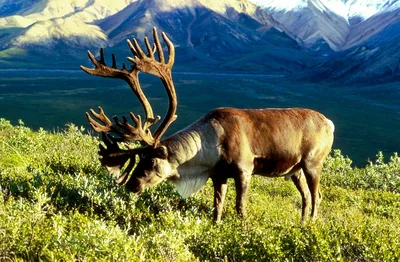 Reindeer
- deer
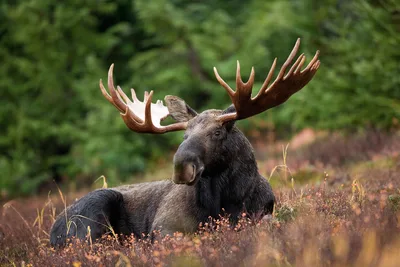 Moose
- hares
- marmots
- ground squirrels
- lemmings
- carrion
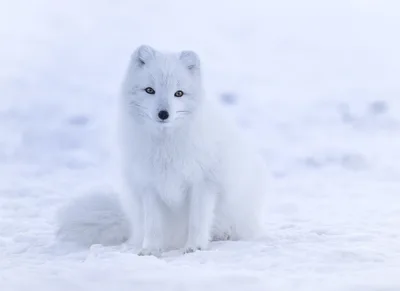 Arctic fox
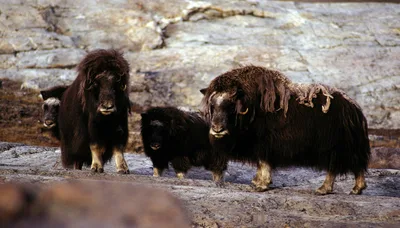 Muskox
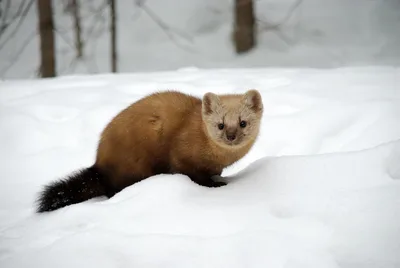 Sable
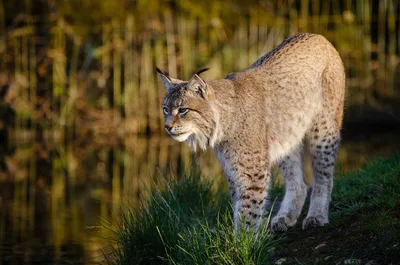 Eurasian lynx
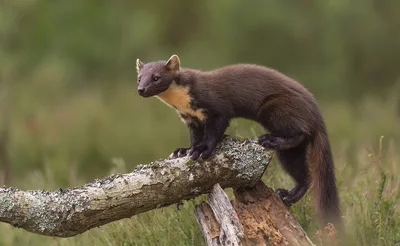 European pine marten
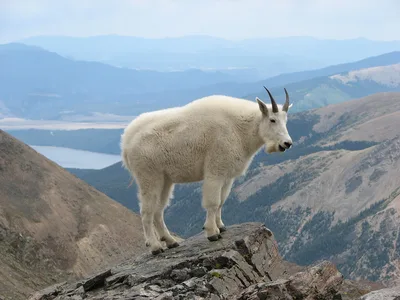 Mountain goat
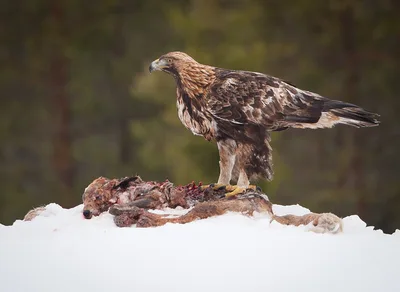 Golden eagle
Food web
Predators
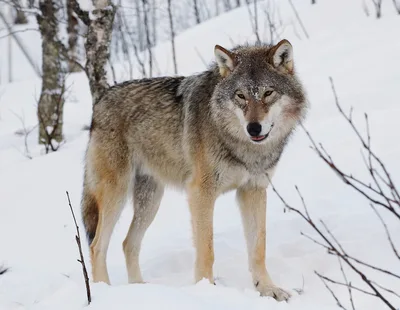 Gray wolf
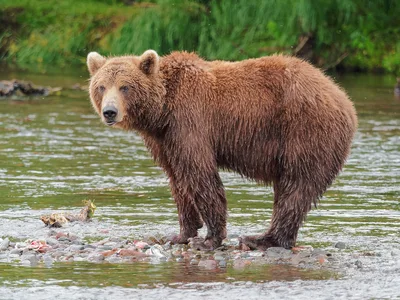 Brown bear
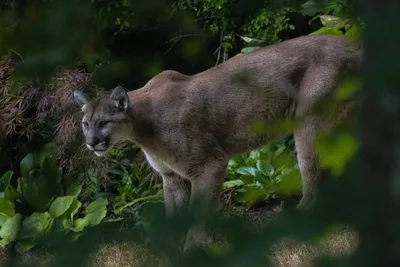 Cougar
Ecological equivalents
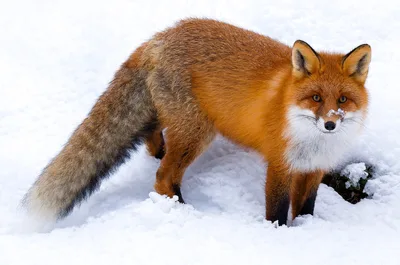
Related species on this site
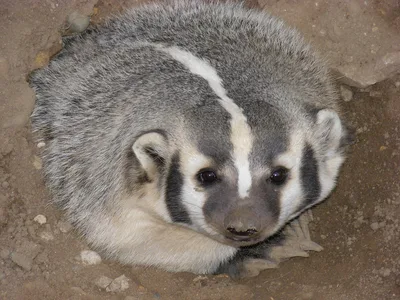
American badger (same family), Angora Ferret (same family), Black-Footed Ferret (same family), Cinnamon Ferret (same family), European badger (same family), European pine marten (same family), and more.
 LC
Mammals
American badger
Taxidea taxus
The American badger is a flat, powerful digger of the North American grassland that tunnels after gophers and ground squirrels.
Living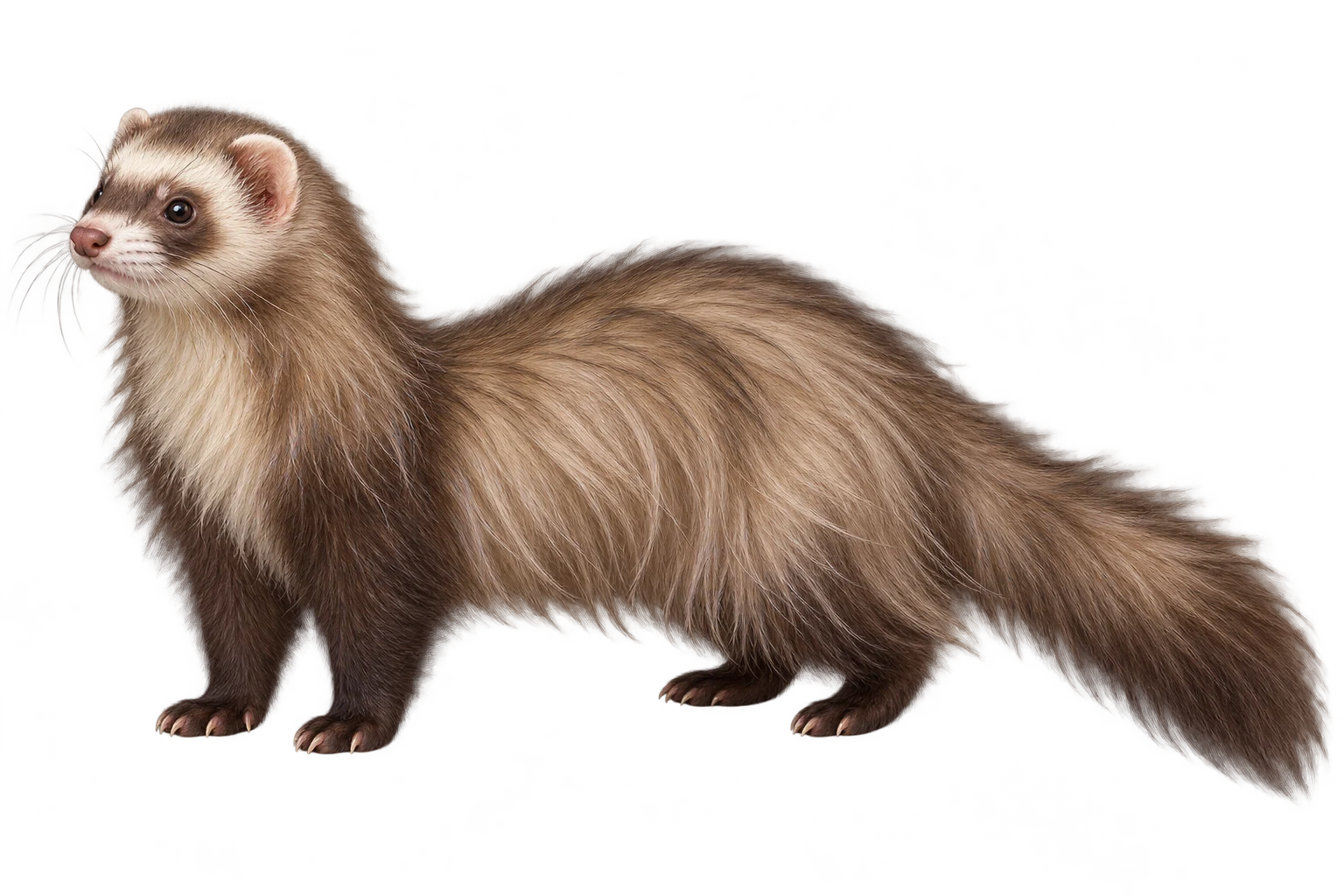
Mammals
Angora Ferret
Mustela putorius furo
Classification and source reference
LivingAI illustration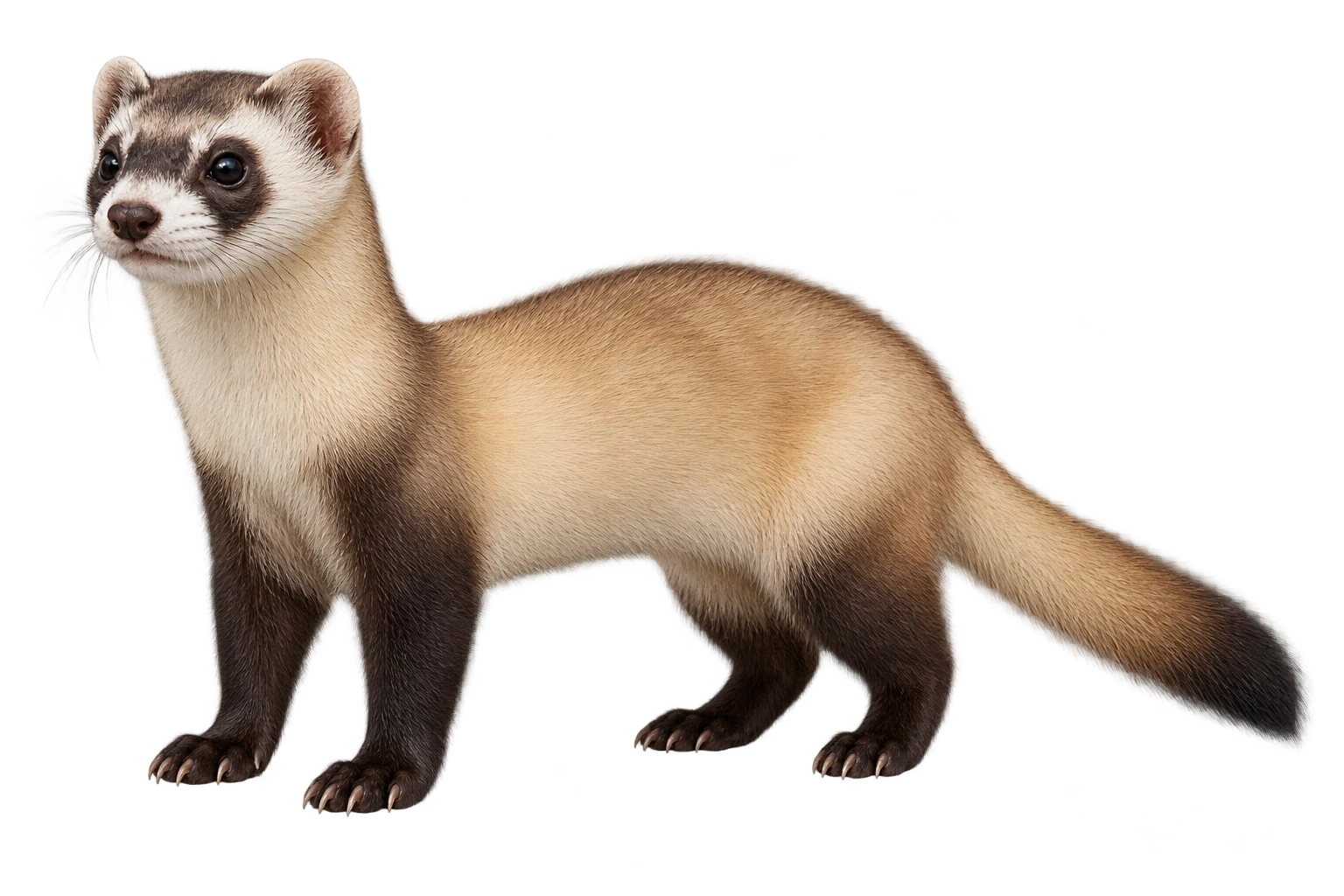
Mammals
Black-Footed Ferret
Mustela nigripes
Classification and source reference
LivingAI illustration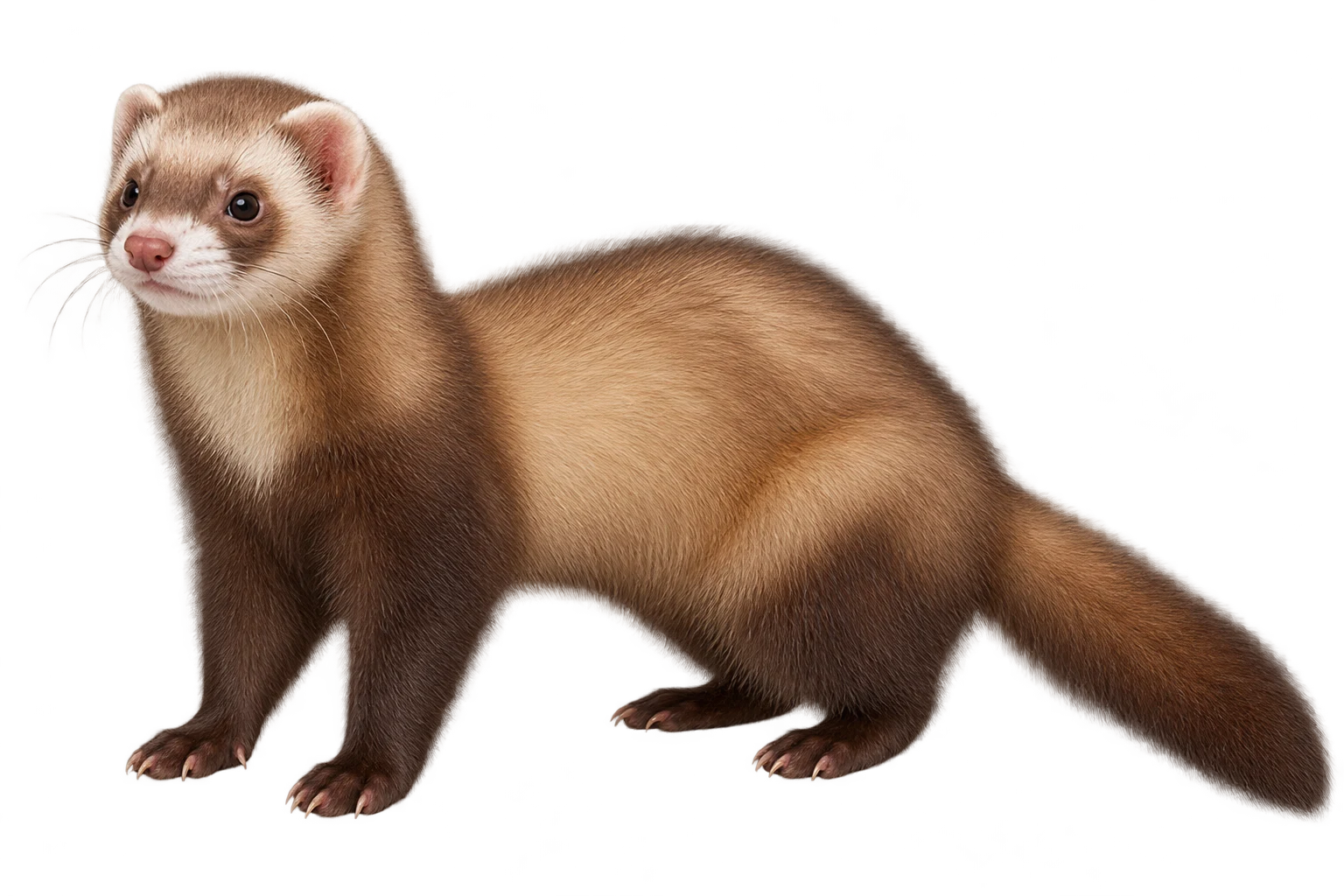
Mammals
Cinnamon Ferret
Mustela putorius furo
Classification and source reference
LivingAI illustration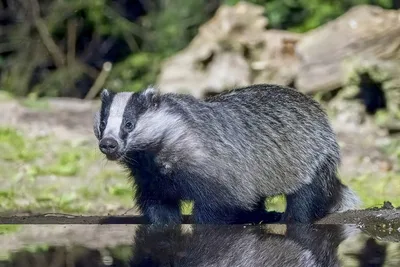 LC
Mammals
European badger
Meles meles
The European badger is a stocky, striped-faced mustelid that lives in family clans across Europe and western Asia.
Living- LC
Mammals
European pine marten
Martes martes
The European pine marten is a cat-sized mustelid with a brown coat and a cream bib.
Living