Lynx
Lynx
Living individuals or members of this group exist today. This does not mean they are safe from extinction.
Lynx are short-tailed wild cats with tufted ears. This account describes the Eurasian lynx (Lynx lynx), a solitary predator of woodland and mountain landscapes.
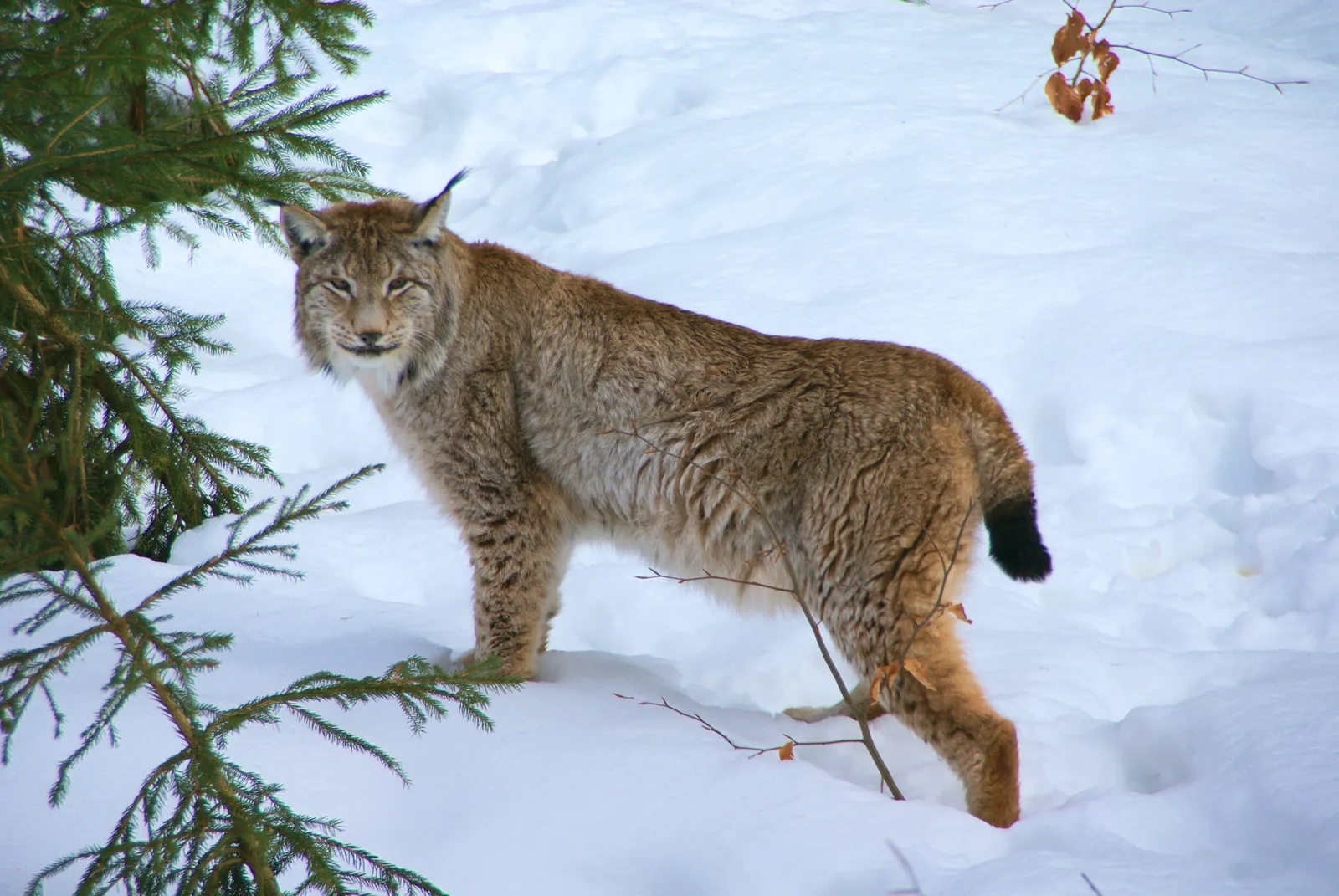
Representative species: Lynx lynx.
At a glance
- Location
- Eurasian lynx inhabit parts of Europe and Asia, using forest, wooded uplands and rocky country. Other lynx species occupy different ranges.
- Habitat
- Temperate forest, Mountains
- Diet
- Carnivore
- Food
- Small deer and other hoofed mammals are important prey, supplemented by smaller animals.
Classification
- Common name
- Lynx
- Browse group
- Mammals
- Scientific name or taxon
- Lynx
- Taxon rank
- genus
- Order
- Carnivora
- Family
- Felidae
- Genus
- Lynx
- Source classification
- Mammalia
Taxonomy checked against GBIF. For breeds and hybrids, this describes the listed parent taxon.
Three things to know
- Males are generally larger than females.
- Coat patterns vary between individuals.
- It can climb and swim.
Habitat and range
Eurasian lynx inhabit parts of Europe and Asia, using forest, wooded uplands and rocky country. Other lynx species occupy different ranges.
Appearance and adaptations
A short tail, ear tufts and dense fur create its characteristic outline. Coat colour ranges from grey to reddish tones, with variable spotting.
Diet and behaviour
Small deer and other hoofed mammals are important prey, supplemented by smaller animals. It usually hunts and travels alone. Early morning and evening are important activity periods, while vegetation offers daytime cover.
Sources
- Animal Diversity Web: Lynx lynx
- A–Z Animals: Lynx · Directory entry
Explore mammals
Browse all mammals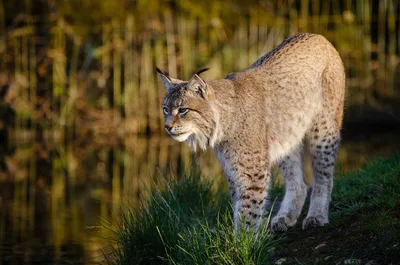 LC
Mammals
Eurasian lynx
Lynx lynx
The Eurasian lynx is the biggest of the four lynx species and the largest wild cat in Europe.
Living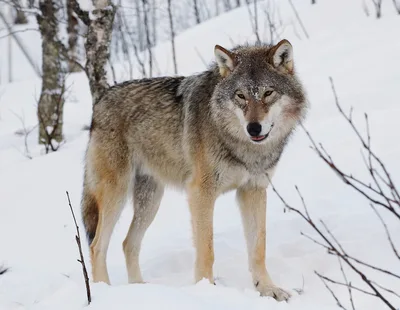 LC
Mammals
Gray wolf
Canis lupus
The gray wolf is the largest wild member of the dog family and the ancestor of every domestic dog.
Living LC
Mammals
Least weasel
Mustela nivalis
The least weasel is the smallest carnivore in the world, a tube-shaped hunter that follows voles and mice down their own tunnels.
Living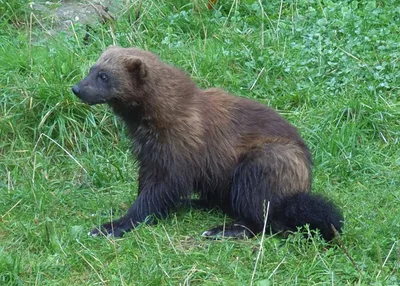 LC
Mammals
Wolverine
Gulo gulo
The wolverine is the largest weasel that lives on land, a solitary scavenger and hunter of the far north.
Living