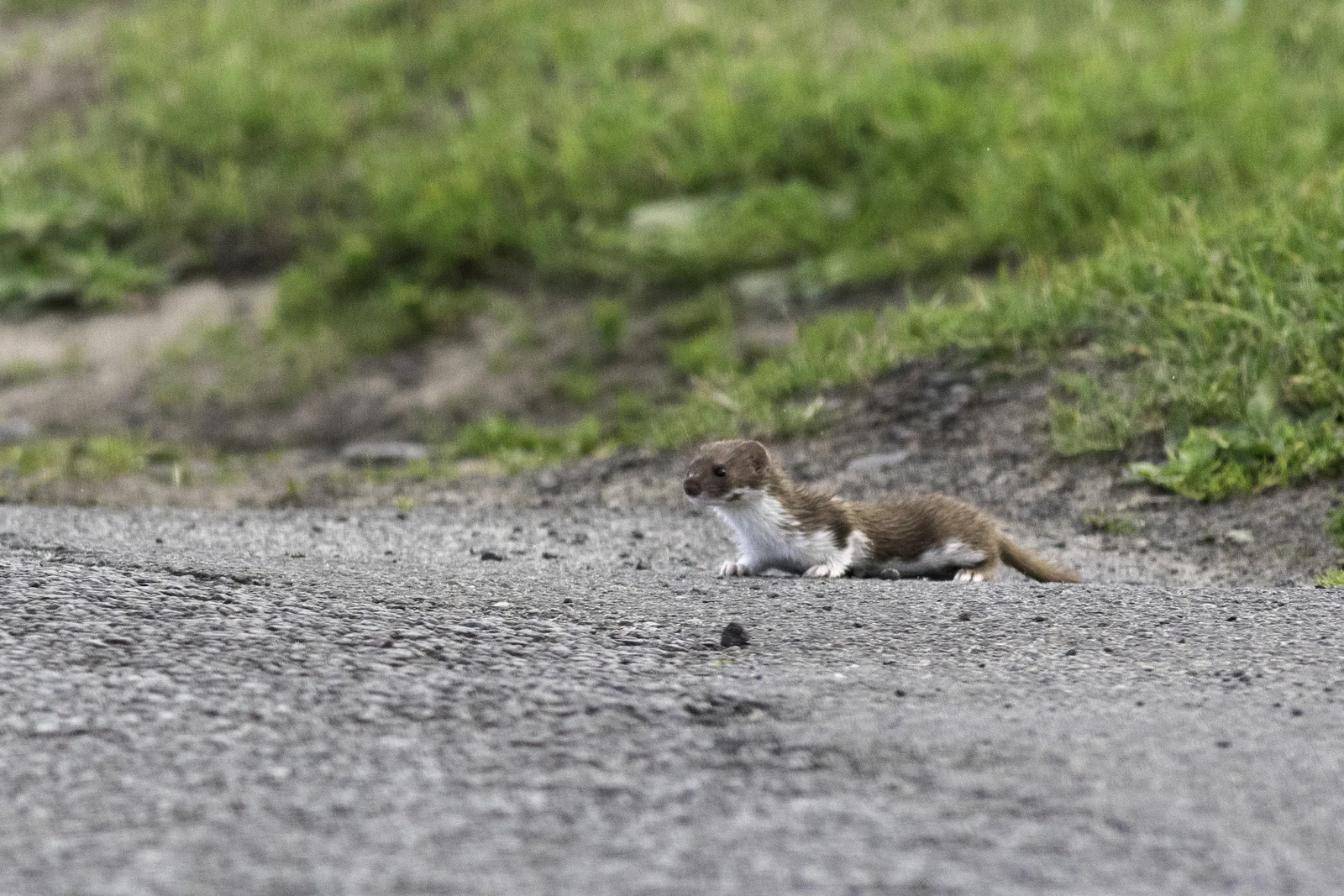
Least weasel
The smallest carnivore on Earth, and one of the fiercest
Mustela nivalis
Also called Common weasel, Little weasel, Weasel
Living individuals or members of this group exist today. This does not mean they are safe from extinction.
Meet the least weasel
The least weasel is the smallest carnivore in the world, a tube-shaped hunter that follows voles and mice down their own tunnels. It lives right around the Northern Hemisphere and turns white in a northern winter.
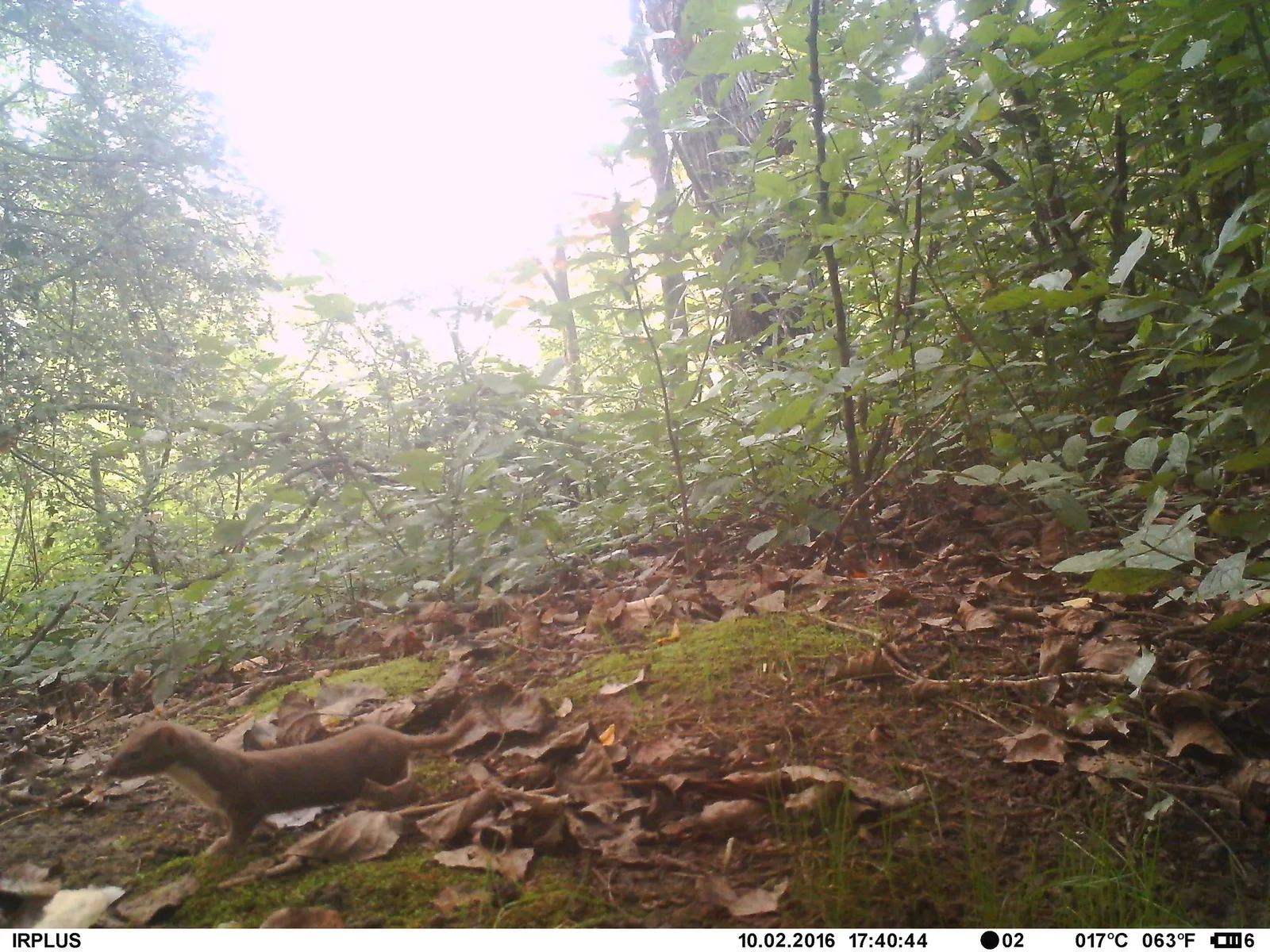
Images of the least weasel

Lifespan in the wild
1 to 2 years
Weight
30 to 100 g
Length
11.4 to 26 cm
Fact file
Least weasel
- Location
- Europe, North Africa, northern Asia, northern North America
- Habitat
- Grassland, Temperate forest, Tundra, Mountains
- Diet
- Carnivore
- Prey / food
- Voles, mice, lemmings, young rabbits, birds, eggs
- Predators
- Owls, hawks, foxes, stoats, snakes
- Lifestyle
- Active day and night; hunts in tunnels and under snow
- Group name
- None; solitary
- Name of young
- Kit
- Gestation
- 34 to 37 days
- Litter size
- 1 to 13 kits, usually 4 to 6
- Population
- Large and stable across the Northern Hemisphere
- Biggest threat
- None at the species level; owls and foxes take many
- Distinctive feature
- Long thin body, short tail with no black tip
- Colour
- Brown above, white below; pure white in a northern winter
- Skin type
- Fur
Size
Next to a person
Measurements
Size and speed
- Length
- 11.4 to 26 cm head and body, from a small female to a large male
- Length, male
- 13 to 26 cm head and body
- Length, female
- 11.4 to 20.4 cm head and body
- Tail
- 1.2 to 8.7 cm
- Tail, male
- 1.2 to 8.7 cm
- Tail, female
- 1.7 to 6 cm
- Weight
- 30 to 100 g 30 to 100 grams; size varies more than in almost any other mammal
Typical adult ranges. Sources: Animal Diversity Web, Wikipedia.
Life cycle
Lifespan
- In the wild1 to 2, up to 4 years
- In captivity5 to 6, up to 10 years
- 010 years
The pale bar is the record. Source: Animal Diversity Web.
Appearance
Colour and coat
- Primary colours
- brownwhite
- Secondary colours
- chocolatetawny
- Skin type
- fur
- Male and female
- Marked. Males are larger and heavier, and in the biggest races a male can be 1.5 times as long as a female. Colour is the same in both.
Life cycle
Mating and family
- Mating system
- polygynandrous, both sexes with several partners
- Social structure
- solitary, with male ranges that overlap several female ranges
- Breeding
- one or two litters a year, up to three in a lemming peak
Least weasels mate mainly from April to July. Pregnancy lasts 34 to 37 days and a litter usually holds four to six kits. The mother raises them alone in a borrowed burrow and brings meat from about two weeks. Kits can kill by eight weeks and leave at nine to 12 weeks. A wild weasel lives 1 to 2 years, and the captive record is 10.
Classification
Taxonomy
- Kingdom
- Animalia
- Phylum
- Chordata
- Class
- Mammalia
- Order
- Carnivora
- Family
- Mustelidae
- Genus
- Mustela
- Species
- Mustela nivalis
Conservation
Red List status
- LC
- NT
- VU
- EN
- CR
- EW
- EX
Least Concern on the IUCN Red List
Range
Recorded in 25 countries
- Austria
- Belgium
- Canada
- Switzerland
- Czech Republic
- Germany
- Denmark
- Egypt
- Spain
- Finland
- France
- United Kingdom
- Greece
- Hungary
- Italy
- Luxembourg
- Netherlands
- New Zealand
- Poland
- Portugal
- Romania
- Russia
- Turkey
- Ukraine
- United States of America
Habitat layer: temperate broadleaf and mixed forest, temperate conifer forest, boreal forest and taiga, tropical grassland, savanna and shrubland, temperate grassland, savanna and shrubland, montane grassland and shrubland, tundra.
Countries from 3,037 wild records on GBIF (iNaturalist research grade), filtered and checked by hand. Country shapes: Natural Earth. Habitat: RESOLVE Ecoregions 2017, CC BY 4.0. Basemap: Natural Earth.
Habitats
Three things to know
- 1
It can kill a rabbit five to ten times its own weight.
- 2
It never digs, and it lines a stolen burrow with the fur of its prey.
- 3
Northern weasels turn pure white in winter but never grow a black tail tip.
Did you know
Seven more facts
- 1
The weasel never digs, and it lines a stolen burrow with the fur of its prey.
- 2
A kit is born at 1.5 to 4.5 grams, pink, naked, blind and deaf.
- 3
A spring kit can breed by the end of its first summer.
- 4
In a good vole year, field voles make up to 54% of an English weasel's diet.
- 5
The weasel war dance is a series of leaps and twists that may confuse prey.
- 6
North African weasels can weigh four times as much as Arctic ones.
- 7
GBIF holds records of the species from 72 countries.
Field notes
How it looks and acts
Field notes
Distinguishing features
- A long, thin, flexible body with short legs.
- A short brown tail with no black tip, unlike the stoat.
- Brown upper parts and white underparts split by a straight line.
- A head and body of 11.4 to 26 centimetres.
- A pure white winter coat in the north.
- A small head no wider than the neck.
Field notes
Unique adaptations
- A tube-shaped body fits into rodent tunnels and under snow.
- A white winter coat hides it against snow in the north.
- A killing bite to the back of the skull dispatches a vole at once.
- Food caches carry it through days when hunting fails.
- Long whiskers sense vibrations in the dark.
Field notes
Interesting behaviours
- Hunts at any hour, because it cannot go long without food.
- Follows prey down burrows and kills it underground.
- Stores surplus kills near the den.
- Marks its range by dragging its rear and rubbing its body.
- Uses several dens in turn, each borrowed from another animal.
Field notes
Temperament
- Fierce for its size, and willing to attack prey much larger than itself.
- Solitary, and hostile to other weasels outside the breeding season.
- Wary of foxes and birds of prey, and quick to hide.
Field notes
Communication
- A guttural hiss for alarm, and barks and shrieks when provoked.
- A shrill squeal when cornered.
- A soft trill between mates, or between a mother and her kits.
- Scent from droppings, urine and glands marks the range.
Ecology
Ecological role
The least weasel is a specialist rodent predator that helps to drive the boom and bust of vole and lemming numbers.
- Keeps lemming numbers in check on the tundra.
- Feeds owls, hawks, foxes and larger weasels.
- Kills rodents that damage crops and spread disease.
- Preys on ground-nesting birds where it has been introduced, as in New Zealand.
Stories
Myths and legends
- In ancient Macedonian tradition, a weasel sighting was a good omen.
- In Greek tradition, the weasel was a jealous bride who tears other brides' dresses.
- In Roman tradition, Pliny wrote that a weasel's smell could kill a basilisk.
- In Ojibwe tradition, the weasel could kill the wendigo from the inside.
- In Inuit tradition, a hero turns into a weasel to do a brave deed.
People
Relationship with humans
People
Living alongside us
People rarely see the least weasel, but it works for them by killing the rodents that eat grain and spread disease. Farmers have blamed it for lost chickens with little evidence. Trappers catch it by accident, and its pelt is worth little. In New Zealand it is an introduced pest that threatens native birds. It appears in folklore from Greece to the Arctic.
- A weasel weighs less than a lemon and runs from people.
- A cornered animal probably bites and may release a foul scent.
- It carries fleas and worms picked up from rodent nests, but no danger to people is recorded.
People
Status, uses and products
- Domestication
- Wild
- As a pet
- Not suitable. A least weasel needs live rodent prey, hunts around the clock and cannot be house trained. Its ferocity and its musk make it unsuitable, and the ferret is the domestic alternative.
- Uses
- rodent control
- Products
- fur trim
The full account
About the least weasel
The least weasel, Mustela nivalis, is the smallest carnivore in the world. It has a long tube of a body, short legs and a short tail, and it slips into any hole a mouse can use. The coat is brown above and white below, and in the north it turns pure white for winter. Adults weigh only 30 to 100 grams, less than many of the rodents they kill.
Head and body length runs from 11.4 centimetres in a small female to 26 cm in a big male. The weasel lives across Europe, North Africa, northern Asia and northern North America. It hunts voles, mice and lemmings by day and night, under snow and down burrows. A female raises about six kits alone in a stolen burrow. The IUCN lists the species as Least Concern.
Name and taxonomy
Carl Linnaeus named the least weasel in 1766, in the twelfth edition of Systema Naturae. The species name nivalis comes from the Latin word for snow, because northern animals turn white in winter. The type locality is Västerbotten in Sweden. Around 18 subspecies are recognised, and they fall into three groups by size. The tiny pygmaea and rixosa forms live in the far north and in North America. The large boccamela weasels live in Transcaucasia, Central Asia and North Africa, and the nivalis group sits between them.
Some zoologists once split the species into four, and others separated the Egyptian weasel. A 2016 study found the Egyptian weasel to be a population of nivalis after all. In Britain it is simply the weasel, and in North America the least weasel, to set it apart from the long-tailed weasel. Other English names include little weasel and common weasel.
Evolution and relatives
The family Mustelidae includes stoats, polecats, otters and badgers, and the genus Mustela holds the true weasels. The least weasel is the least specialised member of the genus, with a skull that keeps juvenile proportions even in large races. Mustela praenivalis, a Middle Pleistocene species of Europe, is the weasel's direct ancestor. The line began 5 to 7 million years ago, when open grassland replaced northern forest and small burrowing rodents multiplied. The weasel's ancestors were larger, and they shrank to follow the rodents underground.
The modern species probably arose in the Late Pleistocene. Its small size and long body let it work under snow and in burrows through the Ice Age. It probably crossed to North America over the Bering land bridge about 200,000 years ago. Fossils of the species are known from Denisova Cave in Siberia. Its closest relative in Europe is the stoat, which is larger and has a black tail tip.
Appearance
The body is thin, long and very flexible, with a blunt head no wider than the neck. The eyes are small, dark and bulging, and the ears are short and round. The legs are short, and the tail is less than half the body length and carries no black tip. The feet have five toes with sharp, dark claws and hairy soles. Summer fur is short and rough, brown to chocolate on top and white below, with a straight line between the two. A brown spot often sits at the corner of the mouth.
Size varies more than in almost any other mammal, and North African weasels can weigh four times as much as Arctic ones. Head and body length is 11.4 to 26 centimetres, with a tail of 1.2 to 8.7 cm. Males average 13 to 26 cm and females 11.4 to 20.4 cm. In the biggest races a male can be 1.5 times as long as a female. Males weigh 36 to 250 grams and females 29 to 117 g, though most adults fall between 30 and 100 g. In the north and at high altitude the winter coat is pure white, dense and silky.
Habitat and range
The least weasel lives right around the northern world. Its range covers all of Europe except Ireland, and North Africa from Morocco to Tunisia. It also spans much of Asia, including Japan, and northern North America from Alaska across Canada. People have introduced it to New Zealand, Malta, Crete, the Azores and São Tomé. GBIF holds records from 72 countries.
The weasel uses fields, open woodland, scrub, rocky ground, tundra, taiga, parks and gardens. It lives up to about 3,000 metres in mountains. What matters is cover, because the weasel hunts by ambush and hides from owls and foxes. It does not dig, and it sleeps in the burrow of a mole, a vole or a rat. The nest chamber, about 10 centimetres across and up to 15 cm below ground, is lined with grass and the fur of its prey. A weasel keeps several dens in its territory and uses each for a short time.
Diet and hunting
Small rodents are the main food: voles, mice, hamsters, gerbils and lemmings. In England the field vole is the favourite, and in a good vole year it makes up to 54% of the diet. When rodents are scarce, the weasel turns to birds, eggs, lizards, frogs, fish and insects, and females may not breed. Young rabbits are important in spring, and a weasel can kill a rabbit that outweighs it five to 10 times over. In rare cases weasels have killed hares and capercaillie.
The weasel follows prey down tunnels and under snow, where its narrow body fits. It kills a vole with a bite to the back of the skull or the neck. A large prey animal dies of blood loss or shock. The weasel eats about 35 grams a day, around a third of its body weight, and it can eat more than half in winter. Because it kills more than it can eat, it caches the rest near the den. When food is plentiful it may take only the brain.
Behaviour and social life
Least weasels live alone outside the breeding season. A male holds an exclusive range that overlaps or contains the ranges of several females. He marks it with droppings, urine and gland secretions, which he spreads by dragging his rear and rubbing his body. Range size depends on prey: where voles are dense, ranges shrink. In spring, or when food runs short, a male wanders far beyond his range.
Older males dominate females and young males. A dominant male threatens and attacks a subordinate male, who squeals and retreats. Females fight back, so they are seldom attacked, but they submit to the top male. A weasel must eat often, so it forages at any hour, day or night. It moves in bounds, and the tracks of the fore and hind feet lie 18 to 35 centimetres apart.
Weasels sometimes perform a series of leaps and twists with an arched back and bristling fur, called the weasel war dance. One idea is that the dance confuses prey, but weasels also dance with no audience. Kits dance most, in play with their siblings. Where the stoat shares its ground, the weasel keeps to higher land, smaller prey and smaller holes, and avoids meeting it.
Communication and senses
Smell is the main sense, and a weasel hunts by nose in dark tunnels. Sight and hearing help in the open, and long whiskers pick up vibrations and guide it in tight spaces. Scent from the anal glands marks the den and the range. The same glands can fire a foul, sulphurous fluid at an enemy.
The weasel has four basic calls. A guttural hiss shows alarm, and short barks and shrieks follow when it is provoked. A shrill wail or squeal means it is cornered. A soft trill passes between a male and a female, or between a mother and her kits. Kits squeak and chirp to their mother and to each other.
Reproduction and life cycle
Mating runs from April to July in most of the range, with some breeding at any time of year. Both sexes take several partners, and males do not fight over females. Courtship is rough, with biting and tumbling until the male grips the female by the neck. Mating can last more than an hour, and the long act triggers ovulation.
Pregnancy lasts 34 to 37 days, and a litter usually holds four to six kits, though 1 to 13 have been recorded. Kits weigh 1.5 to 4.5 grams at birth and are pink, naked, blind and deaf. White down appears at four days, the milk teeth come through at two to three weeks, and the eyes open at three to four weeks. Kits can kill by eight weeks, and the family breaks up after nine to 12 weeks. The mother does all the care, and she brings meat to the nest from about two weeks.
In a lemming peak a female may raise three litters in a year, but one or two is usual. Kits mature at three to four months, so a spring kit can breed in its first summer. Most wild weasels live only 1 to 2 years, and few kits survive to weaning. The wild record is about 4 years, and a captive weasel reached 10.
Predators and threats
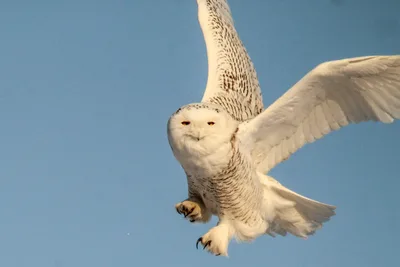
Almost every larger predator eats weasels. Remains turn up in the droppings of red foxes, sables, polecats, stoats, eagle owls and buzzards. Barn, barred and great horned owls catch them most often, and hawks and falcons take adults. Snakes such as the black rat snake and the copperhead take kits, and foxes dig out nests. The weasel lacks the black tail tip that draws a hawk's strike away from a stoat's body, so it is more exposed.
Fleas from the nests of moles, shrews and rodents infest the weasel. A nematode, Skrjabingylus nasicola, lives inside the sinuses of the nose and can deform the skull, but it seems to do little harm. Starvation is a constant threat, because the weasel stores little fat and burns energy fast. The species faces no human threat on a large scale.
Population and conservation
The IUCN lists the least weasel as Least Concern. It has a huge range and a large population that is not thought to be in decline. Numbers rise and fall with the rodents: in the Arctic, weasels boom and crash with the lemmings. It is common in Europe and Asia and less so in North America, where it is still not rare.
No large conservation programme appears to exist for the species. In New Zealand the weasel is an introduced pest, and it preys on ground-nesting birds such as the brown kiwi. Trappers catch it by accident in traps set for larger fur bearers. Pelts have little value, though some trim luxury coats and mittens.
Relationship with humans
The weasel does people a service by killing the rodents that eat grain and spread disease. Farmers have long blamed it for taking chickens, but there is little evidence that it preys on livestock. It is seldom seen, because it hunts under cover and moves fast. A cornered weasel probably bites, but it poses no danger to people.
In Britain the weasel is probably known more from stories than from sightings. In English, weasel words means evasive language, a phrase that Theodore Roosevelt made popular. Unlike the ferret, the least weasel has probably never been bred as a working animal. Zoos rarely keep it, and captive animals have lived 5 to 6 years on average.
In culture and myth
In ancient Macedonia, a weasel sighting was a good omen. Macedonian women with a headache after washing in water left out overnight blamed a weasel, which had used the water as a mirror. They would not say its name, in case it shredded their clothes. In southern Greece the weasel was once a bride, turned into a bitter animal that tears the dresses of other brides. In Aesop's fable, Aphrodite changes a weasel into a woman, but at the wedding feast the bride leaps after a mouse. Pliny the Elder wrote that the weasel's smell was the one thing that could kill a basilisk.
Ojibwe stories give the weasel the power to kill a wendigo by entering its body from below. Inuit tradition makes the weasel a sign of wisdom and courage, and a hero takes its shape for a brave deed. In seventeenth-century England the witch hunter Matthew Hopkins listed weasels among the familiars of witches. Women in Greece and Rome tied the weasel to childbirth and to midwives.
A sentence with a dotted underline is inferred: it describes the group the animal belongs to, or is a reading of the sources, rather than a measured or reported fact about this species.
Questions
Least weasel questions, answered
How small is a least weasel?
Head and body measure 11.4 to 26 centimetres, and the tail 1.2 to 8.7 cm. Most adults weigh 30 to 100 grams, which makes it the smallest carnivore in the world.
What does a least weasel eat?
Mostly voles, mice and lemmings. It also takes young rabbits in spring, and birds, eggs, frogs and insects when rodents are scarce. It eats about 35 grams a day.
Where do least weasels live?
Across Europe except Ireland, North Africa, much of Asia and northern North America. They use fields, woodland, tundra, parks and gardens, wherever there is cover and rodents.
Is the least weasel endangered?
No. The IUCN lists it as Least Concern. It has a huge range and a large, stable population.
What is the difference between a weasel and a stoat?
The stoat is larger and has a black tip to its tail in every season. The least weasel is smaller and its tail has no black tip. The two compete for rodents where they overlap.
Do least weasels turn white in winter?
Yes, in the north and at high altitude the coat turns pure white. Southern weasels stay brown all year.
How long do least weasels live?
Most wild weasels live only 1 to 2 years, and the wild record is about 4. In captivity they average 5 to 6 years, and one reached 10.
Are least weasels dangerous?
No. A weasel runs from people and cannot do serious harm. A cornered animal may bite and release a foul-smelling musk.
Can a weasel really kill a rabbit?
Yes. A least weasel can kill a rabbit that outweighs it five to 10 times over, though it usually takes young ones. It kills with a bite to the neck or the back of the skull.
How many babies does a least weasel have?
A litter usually holds four to six kits after a pregnancy of 34 to 37 days. Litters of up to 13 have been recorded in years with plenty of prey.
What is the weasel war dance?
It is a burst of leaps and twists with an arched back, bristling fur and bark-like calls. It may confuse prey, but weasels also do it alone and kits do it in play.
Do least weasels dig burrows?
No. They take over the burrow of a mole, a vole or a rat and line the nest with grass and the fur of their prey. A weasel uses several dens in turn.
What eats a least weasel?
Owls, hawks, falcons and buzzards take adults. Foxes and snakes dig out kits, and stoats and long-tailed weasels kill them too.
Are least weasels good for farmers?
Yes. They kill the rodents that eat grain and spread disease. Claims that they raid chicken coops have little evidence behind them.
Why is it called the least weasel?
Because it is the smallest weasel, and the smallest carnivore of all. Linnaeus named it Mustela nivalis in 1766, from the Latin for snow, after its white winter coat.
Food web
Prey and food
- voles
- mice
- lemmings
- rabbits
- birds
- eggs
 Eastern gray squirrel
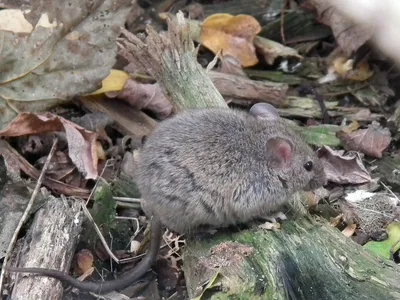 House mouse
 Passenger pigeon
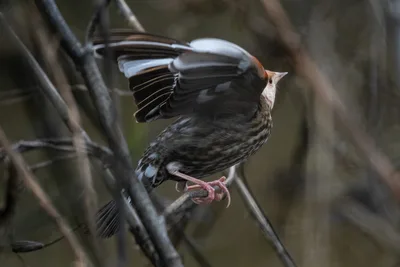 Red-winged blackbird
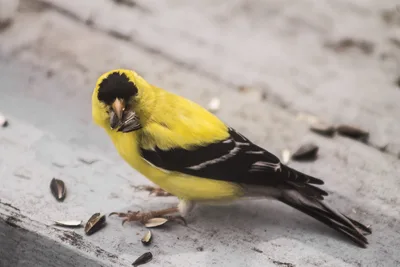 American goldfinch
 Eurasian blue tit
Food web
Predators
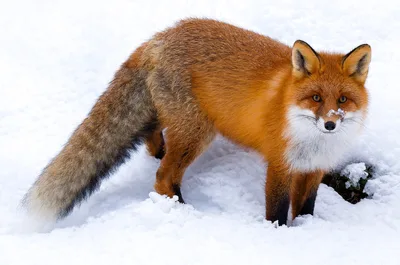 Red fox
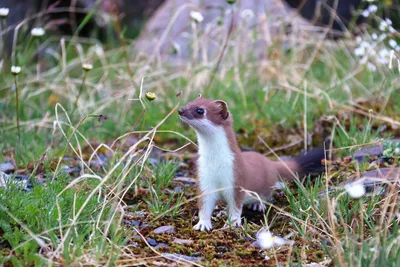 Stoat
Ecological equivalents
Related species on this site
Angora Ferret (same genus), Black-Footed Ferret (same genus), Cinnamon Ferret (same genus), European polecat (same genus), Ferret (same genus), Sable Ferret (same genus), and more.
Mammals
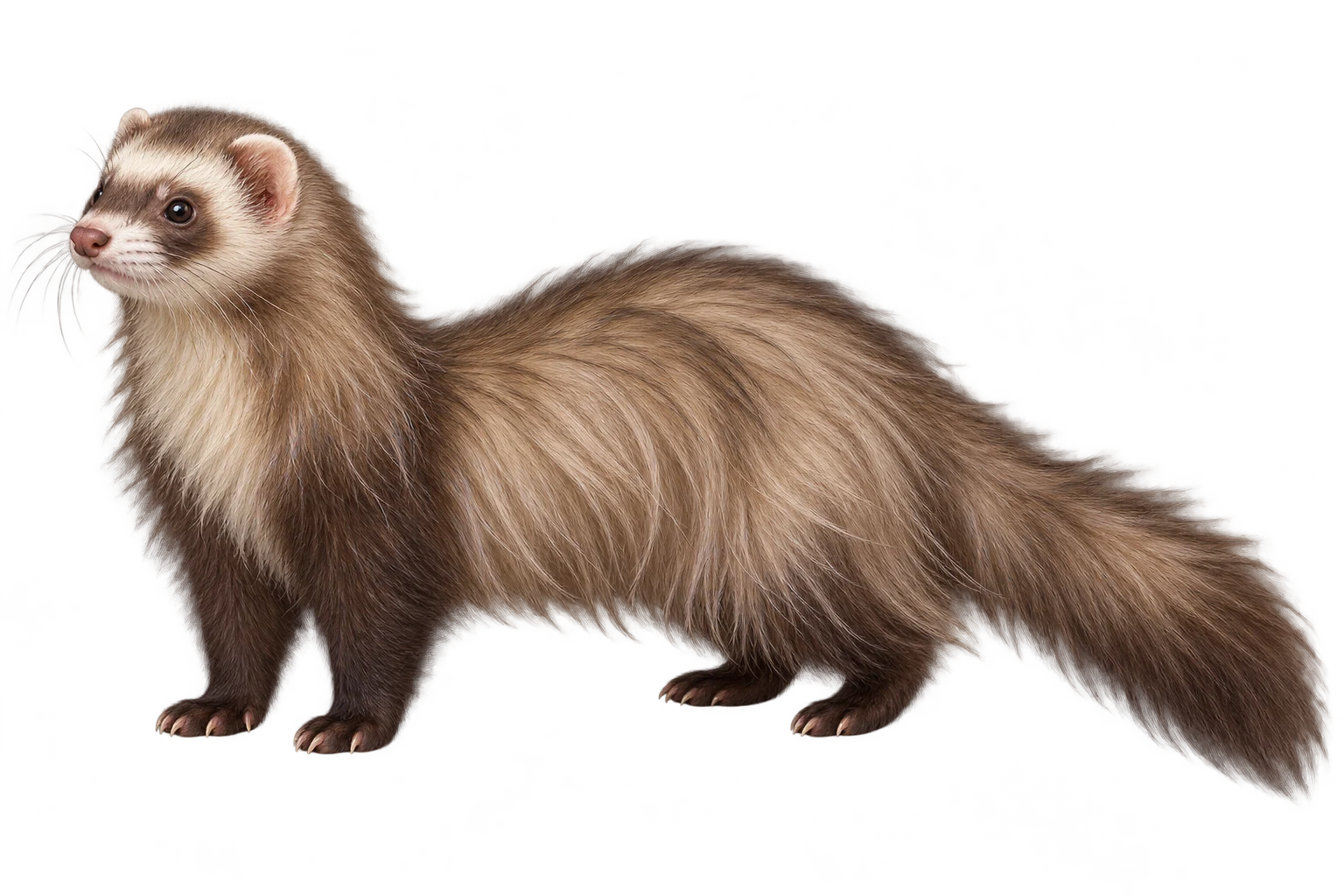
Angora Ferret
Mustela putorius furo
Classification and source reference
LivingAI illustration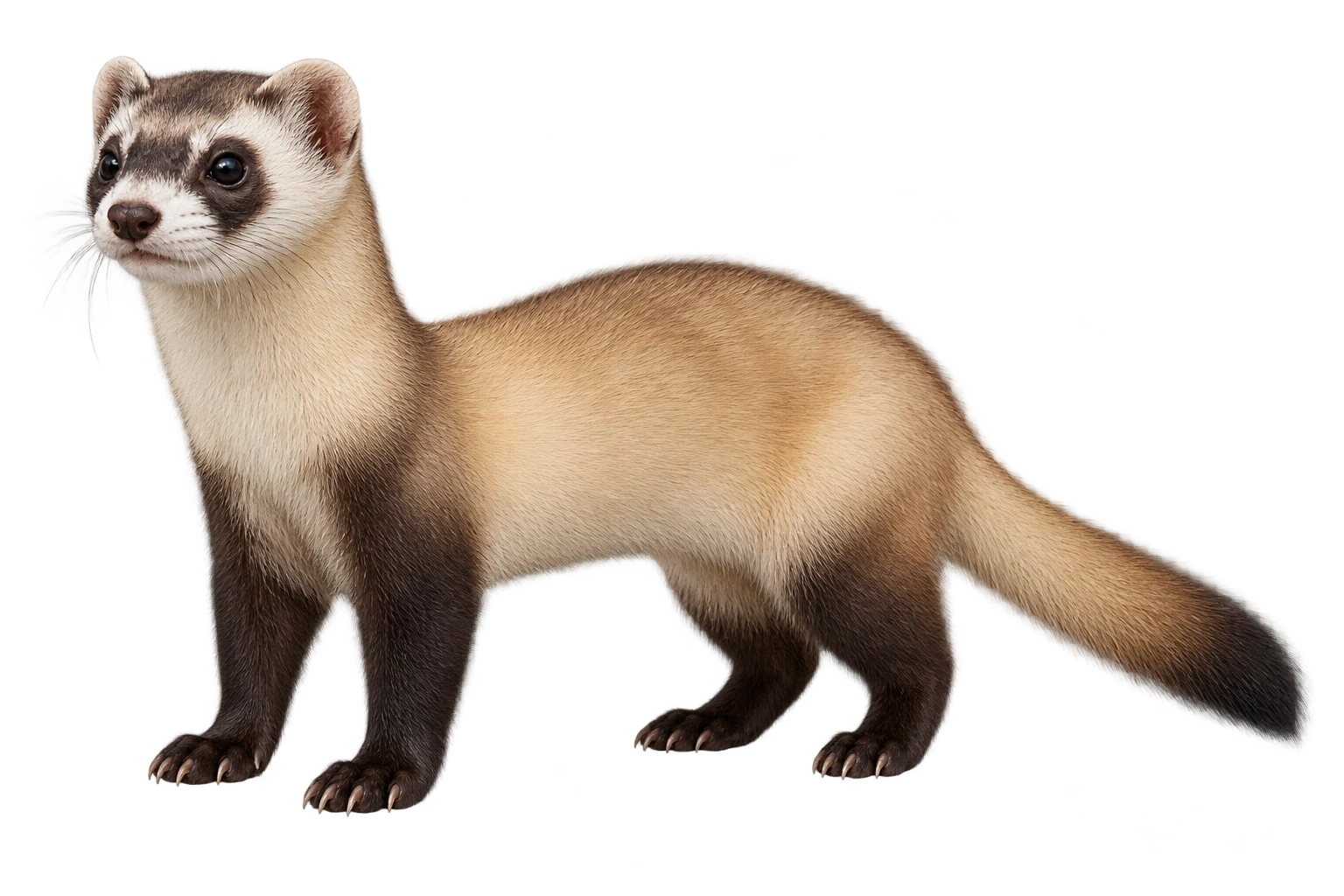
Mammals
Black-Footed Ferret
Mustela nigripes
Classification and source reference
LivingAI illustration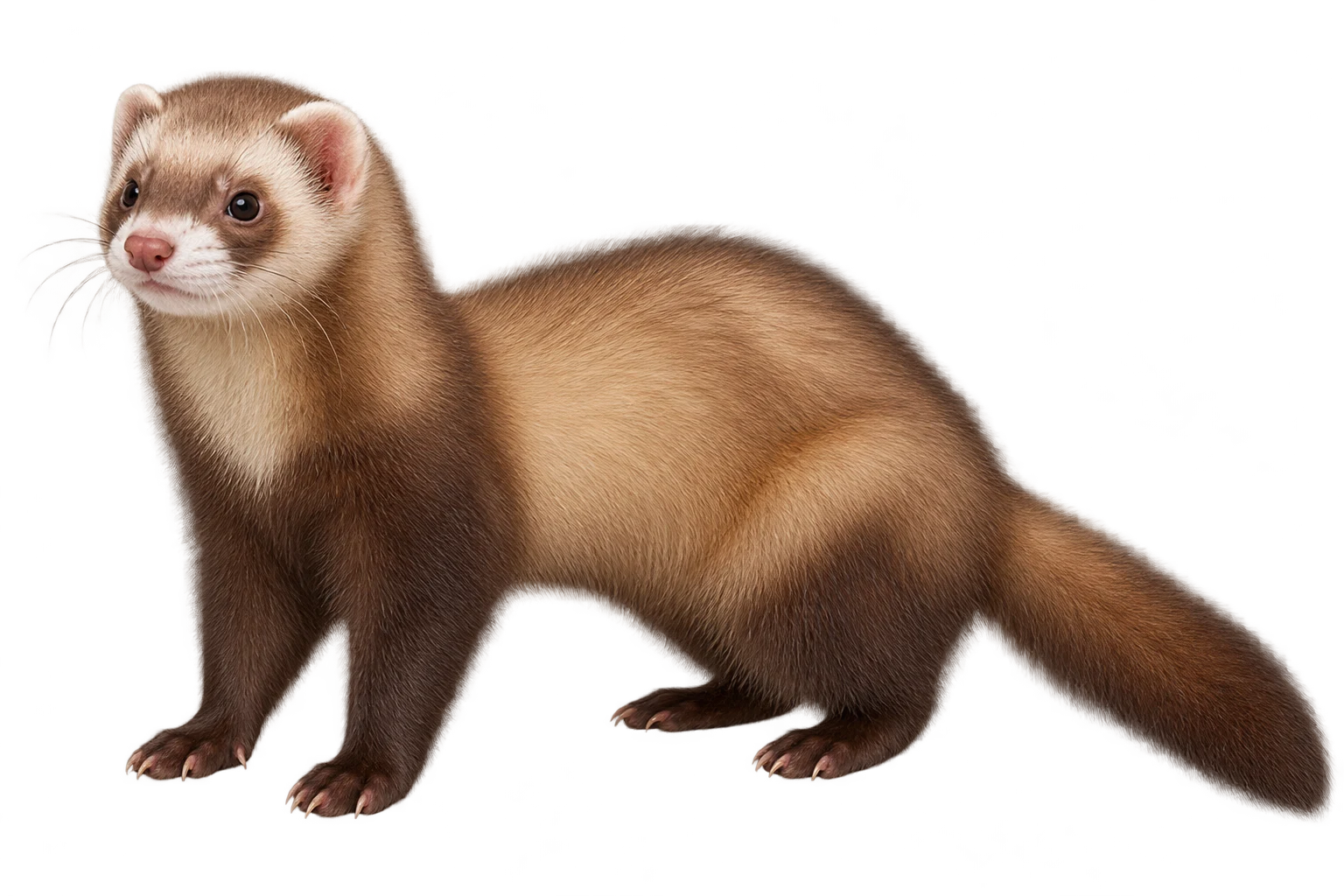
Mammals
Cinnamon Ferret
Mustela putorius furo
Classification and source reference
LivingAI illustration LC
Mammals
European polecat
Mustela putorius
The European polecat is a dark, stocky mustelid with a pale face mask that hunts frogs, voles and rabbits by night.
Living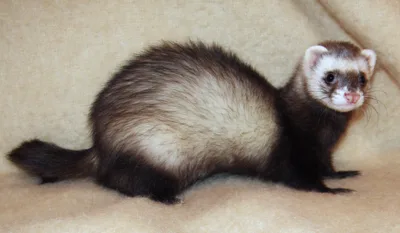
Mammals
Ferret
Mustela putorius furo
The domestic ferret is a slender carnivorous mammal kept by people.
Living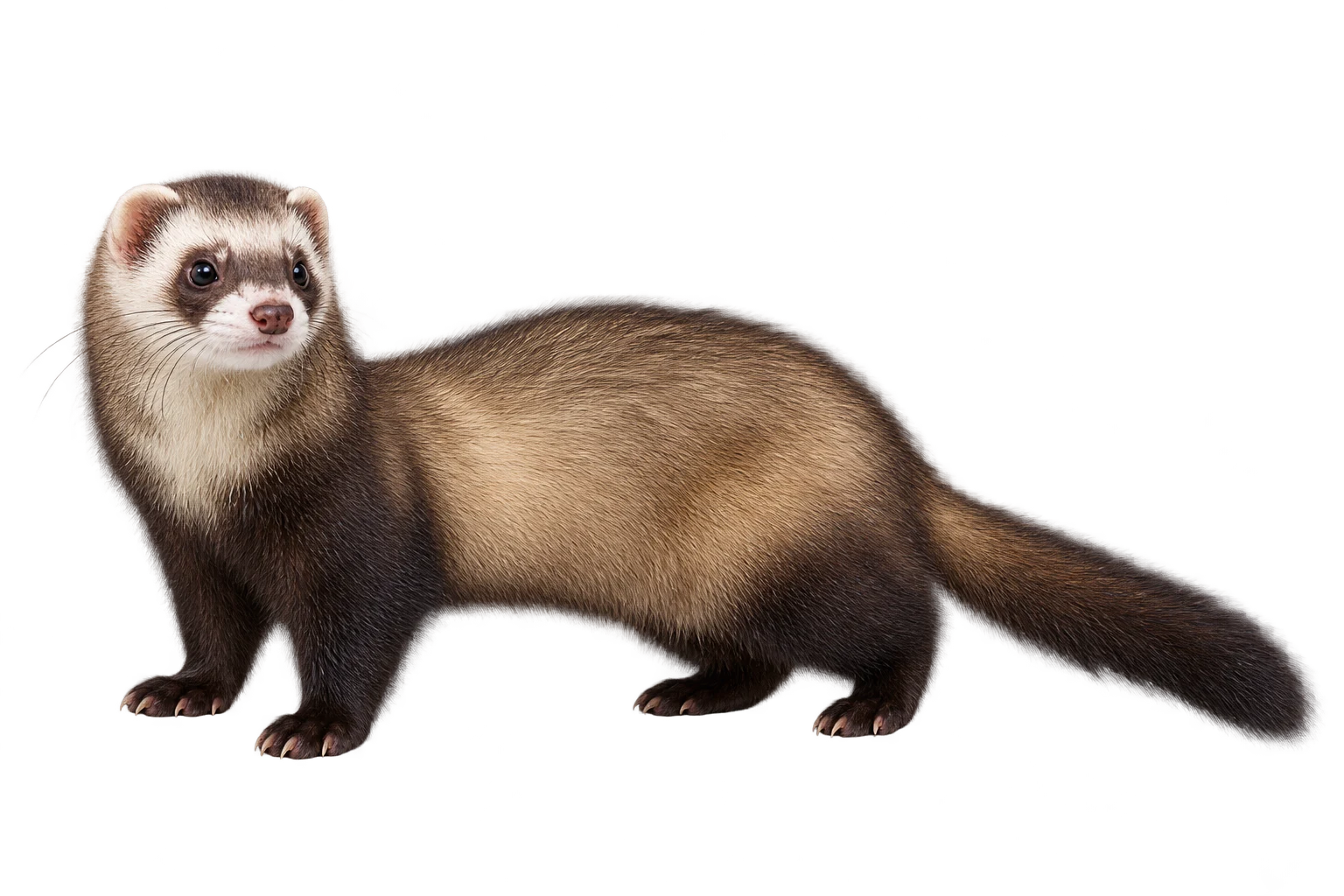
Mammals
Sable Ferret
Mustela putorius furo
Classification and source reference
LivingAI illustration