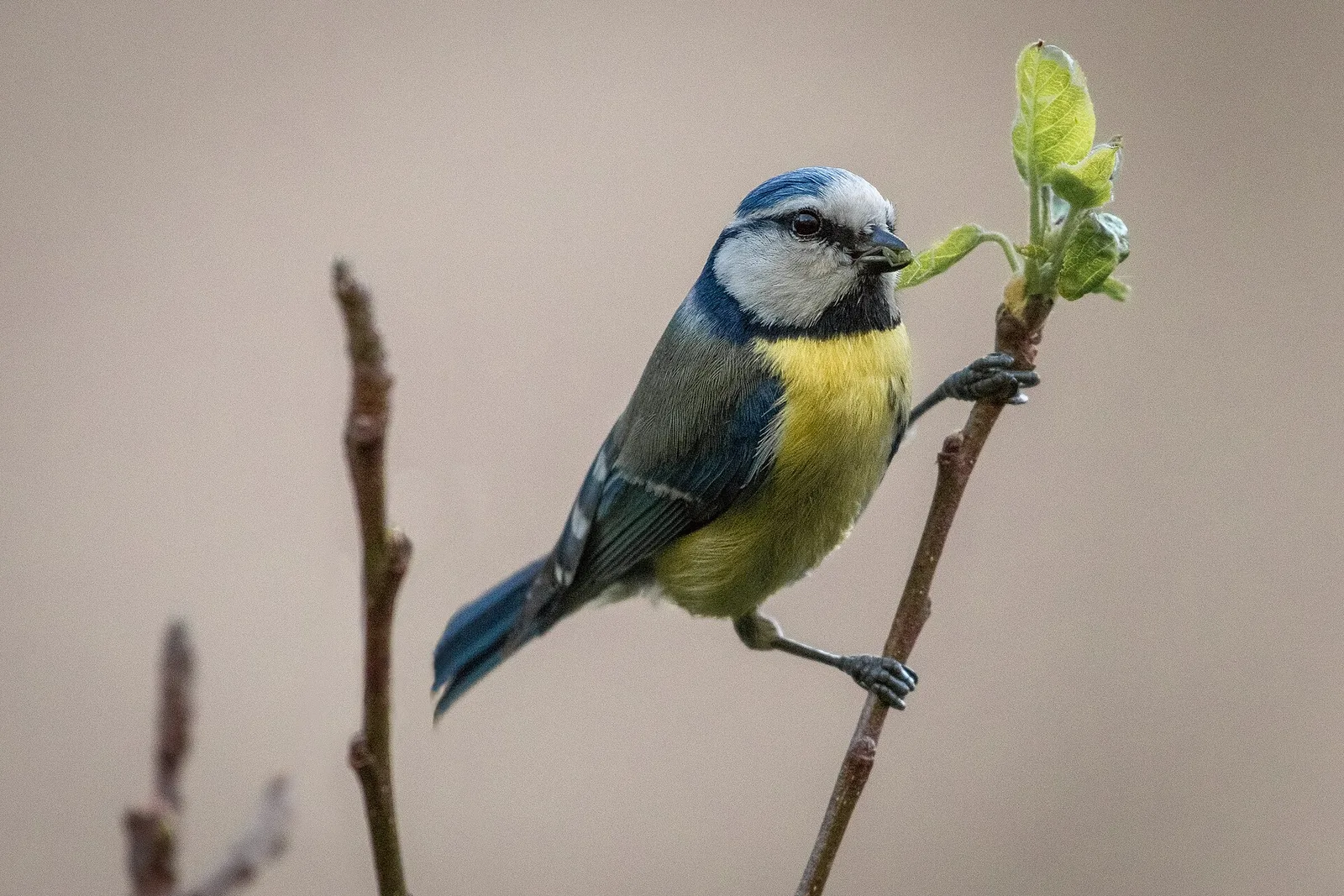
Eurasian blue tit
The acrobat of the garden feeder
Cyanistes caeruleus
Also called Blue tit, Common blue tit, European blue tit, Billy Biter
Living individuals or members of this group exist today. This does not mean they are safe from extinction.
Meet the eurasian blue tit
The Eurasian blue tit is a small blue and yellow songbird of European woods, parks and gardens. It feeds on caterpillars and other insects, nests in holes and boxes, and hangs upside down to reach food.
Images of the eurasian blue tit


Lifespan in the wild
About 3 years about three years for a bird that reaches breeding age
Weight
About 11 g
Length
10.5 to 12 cm
Wingspan
17.5 to 20 cm
Fact file
Eurasian blue tit
- Location
- Europe, western Asia and the Middle East
- Habitat
- Temperate forest, Towns and cities
- Diet
- Insectivore
- Prey / food
- Caterpillars, spiders, springtails, grasshoppers, earwigs, moths, lacewings, seeds
- Predators
- Eurasian sparrowhawks, domestic cats, jays, weasels, squirrels
- Lifestyle
- Active by day, in pairs in summer and flocks in winter
- Group name
- Flock
- Name of young
- Chick
- Incubation
- Incubation about 15 days
- Clutch size
- 7 or 8 eggs, and up to 14
- Population
- About 20 to 44 million pairs in Europe
- Biggest threat
- Cold wet weather during the caterpillar flush
- Distinctive feature
- A blue cap over a white face with a dark eye stripe
- Colour
- Blue cap, wings and tail, yellow underparts, white cheeks
- Skin type
- Feathers
Size
Next to a person
Measurements
Size and speed
- Length
- 10.5 to 12 cm
- Wingspan
- 17.5 to 20 cm
- Weight
- About 11 g about 11 grams
Typical adult ranges. Source: Wikipedia.
Life cycle
Lifespan
- In the wildAbout 3, up to 14.6 years about three years for a bird that reaches breeding age
- 014.6 years
The pale bar is the record. Source: AnAge.
Appearance
Colour and coat
- Primary colours
- blueyellow
- Secondary colours
- whitegreen
- Skin type
- feathers
- Male and female
- Slight. The two sexes look alike to a human eye and are the same size. Under ultraviolet light the male's crown is the brighter blue. A young bird is yellower with softer contrasts.
Life cycle
Mating and family
- Mating system
- socially monogamous pairs, with mating outside the pair
- Social structure
- pairs in the breeding season and mixed flocks in winter
- Breeding
- one brood a year, with a second in a warm spring
A pair takes a hole in a tree, a wall or a box from late March. The female builds a cup of moss, wool, hair and feathers. She lays seven or eight eggs in April or May and sits alone for about 15 days. The male brings her food while she sits, and both then feed the chicks. The young fly after about three weeks and can breed the next spring.
Classification
Taxonomy
- Kingdom
- Animalia
- Phylum
- Chordata
- Class
- Aves
- Order
- Passeriformes
- Family
- Paridae
- Genus
- Cyanistes
- Species
- Cyanistes caeruleus
Conservation
Red List status
- LC
- NT
- VU
- EN
- CR
- EW
- EX
Least Concern on the IUCN Red List
Range
Recorded in 21 countries
- Austria
- Belgium
- Switzerland
- Czech Republic
- Germany
- Denmark
- Spain
- Finland
- France
- United Kingdom
- Ireland
- Italy
- Luxembourg
- Netherlands
- Norway
- Poland
- Portugal
- Romania
- Russia
- Sweden
- Ukraine
Habitat layer: temperate broadleaf and mixed forest, temperate conifer forest, boreal forest and taiga.
Countries from 119,077 wild records on GBIF (iNaturalist research grade), filtered and checked by hand. Country shapes: Natural Earth. Habitat: RESOLVE Ecoregions 2017, CC BY 4.0. Basemap: Natural Earth.
Habitats
Three things to know
- 1
A blue tit can raise a clutch that weighs more than the mother herself.
- 2
Blue tits learned to open the foil tops of doorstep milk bottles in Britain.
- 3
The bird sees ultraviolet light, which makes a male's cap look brighter than a female's.
Did you know
Seven more facts
- 1
The English word titmouse joins an old bird name, mase, with tit, meaning small.
- 2
Nine subspecies are recognised, and they differ only in slight shades of colour.
- 3
The blue tit and the azure tit interbreed in western Russia to give Pleske's tit.
- 4
One verified British clutch held 14 eggs from a single female.
- 5
An egg measures 14 to 18 millimetres long and 10.7 to 13.5 mm across.
- 6
The oldest known blue tit lived 14.6 years.
- 7
The European range has moved 500 kilometres north through Fennoscandia since 1980.
Field notes
How it looks and acts
Field notes
Distinguishing features
- A bright blue crown over a white face.
- A dark blue line through the eye that rings the white cheeks.
- Sulphur-yellow underparts with a dark central line.
- A yellowish green back with blue wings and tail.
- A body of 10.5 to 12 centimetres and a weight of about 11 grams.
- A short black bill and bluish grey legs.
Field notes
Unique adaptations
- Light weight and strong feet allow feeding upside down on the thinnest twigs.
- A short stout bill hammers open a seed held under one foot.
- Ultraviolet vision reveals differences in plumage that a human eye misses.
- Nesting inside a hole shields eggs and chicks from weather and from most predators.
- Breeding is timed to the caterpillar flush, so the chicks meet the food peak.
Field notes
Interesting behaviours
- Hanging upside down from a twig or a feeder to reach food.
- Climbing a trunk in short jerky hops.
- Joining mixed winter flocks with great tits and other small birds.
- Mobbing a cat, a fox or a perched owl after a scolding call.
- Peeling bark, and sometimes thatch or wallpaper, in search of insects.
Field notes
Temperament
- Bold at a feeder and quick to return after a disturbance.
- Fierce on the nest, where a sitting female bites an intruding finger.
- Competitive with great tits and house sparrows over holes and food.
- Sociable in winter and territorial in spring.
Field notes
Communication
- A thin tee, tee, tee call given while feeding.
- A scolding churr aimed at a ground predator or a perched owl.
- A high whistle that warns of a hawk in the air.
- Zeedling notes exchanged by a pair before mating.
- Begging calls from chicks that change in pitch as they grow.
Ecology
Ecological role
The blue tit links the insects of the oak canopy to the predators of the wood. It also holds down caterpillar numbers.
- It removes large numbers of caterpillars from oaks each spring.
- It feeds sparrowhawks, jays, weasels and squirrels.
- Its alarm calls warn robins, treecreepers and great tits of the same danger.
- It carries the feather mite Proctophyllodes stylifer through its whole life cycle.
Stories
Myths and legends
- In southwest England the bird is the Billy Biter, because a sitting female bites.
- In British garden tradition it is the bird that opened the doorstep milk.
- In English naming tradition it is a titmouse, a word built from mase and tit.
- In North American tradition its relatives are chickadees, named after their call.
- In British stamp tradition it is a regular, and it appeared in a 2025 wildlife set.
People
Relationship with humans
People
Living alongside us
The blue tit is one of the best known garden birds in Europe. People feed it through the winter and put up boxes for it in spring. It repays the attention by eating caterpillars and aphids in the garden. Ringing schemes have tracked the species for decades. Its only nuisance is a habit of pecking at putty, thatch and wallpaper.
- A blue tit weighs about 11 grams and cannot injure a person.
- A sitting female will bite a finger pushed into her nest box.
- The bird carries feather mites, which appear to do no harm to people.
People
Status, uses and products
- Domestication
- Wild
- As a pet
- Not suitable. No. The blue tit is a protected wild bird across Europe and cannot be caged. It needs live insects and a large area to forage. Put up a nest box and a feeder instead.
- Uses
- garden birdwatchinglong-term ringing studiesnatural pest control
- Products
- None recorded
The full account
About the eurasian blue tit
The Eurasian blue tit is a small songbird of the tit family, Paridae. Its blue cap, white cheeks and yellow underparts make it easy to name. An adult measures 10.5 to 12 centimetres long, with a wingspan of 17.5 to 20 cm. It weighs about 11 grams, which is less than a pound coin and two pennies together. The scientific name is Cyanistes caeruleus, and both parts of it mean dark blue.
The species breeds across temperate Europe and into western Asia and the Middle East. It likes broadleaved woodland with plenty of oak, but it also lives in parks and gardens. Caterpillars feed the chicks, and insects and spiders feed the adults for most of the year. The bird nests in a hole, and few birds take to a wooden box so readily. The IUCN lists it as Least Concern, and European numbers have risen since 1980.
Name and taxonomy
Carl Linnaeus described the blue tit in 1758, in the tenth edition of Systema Naturae. He gave it the name Parus caeruleus, and the type locality is Sweden. Parus is the classical Latin word for a tit, and caeruleus means dark blue. Conrad Gesner had already used the same Latin words in his Historiae animalium of 1555. The modern genus Cyanistes takes its name from kuanos, an Ancient Greek word for dark blue.
The English word titmouse goes back to the 14th century. It joins mase, an old name for the bird, with tit, a word for anything small. Spelling drift turned mose into mouse during the 16th century. Nine subspecies are recognised, and they differ only slightly in the shade of the plumage. The differences run in a gradual cline rather than in sharp steps.
Evolution and relatives
The blue tit belongs to Paridae, the family of tits, titmice and chickadees. That family sits within the songbirds, the largest group of perching birds. A 2005 study of mitochondrial DNA showed that Cyanistes split early from the other tits. Before that work the birds were placed in the large genus Parus. Cyanistes now holds three birds: this species, the azure tit, and the African blue tit of the Canaries.
Ornithologists once treated the African bird as part of this species. Where the blue tit meets the azure tit in western Russia, the two interbreed. The hybrid is known as Pleske's tit and is common in that region. A hybrid may look like an azure tit with less white in the tail and a yellow tinge below. Other hybrids look like blue tits with whitish underparts.
Appearance
The blue tit is 10.5 to 12 cm long and spans 17.5 to 20 cm across the wings. It weighs about 11 g, and the two sexes are the same size. The crown is a strong blue, and a dark blue line runs through the eye. That line rings the white cheeks and chin, which gives the face its clean pattern. The forehead is white, and a white bar crosses the wing. Blue covers the nape, the wings and the tail, while the back is a yellowish green.
The underparts are sulphur yellow, with a dark line down the middle of the belly. A stronger yellow shows that the bird has eaten many green caterpillars. The pigment behind the colour comes from carotene in that food. The bill is black and short, the legs are bluish grey, and the eyes are dark brown. A young bird is yellower overall, with softer contrasts and yellow cheeks. It looks much like an adult by September, though some wing markings last into the next spring.
To a human eye the sexes look alike. Under ultraviolet light the crown of a male shines brighter than the crown of a female. Blue tits see ultraviolet light, so the difference is probably plain to them.
Habitat and range
The blue tit is a resident breeder across temperate and subarctic Europe. Its range reaches east into western Asia and south into parts of the Middle East. It is native to Ireland, the United Kingdom and nearly all of the European Union. It also breeds in Turkey, the Caucasus states, Iran, Iraq, Syria, Jordan and Russia. It is absent from Iceland and reaches Malta only as a stray. GBIF holds occurrence records from 72 countries.
The preferred habitat is broadleaved or mixed woodland with a good share of oak. Oaks carry the caterpillars that the chicks need, so the bird probably depends on them. In Britain the species also lives in hedges, parks, gardens and town centres. Most birds stay in one place all year and do not migrate. Since 1980 the northern edge of the range has moved 500 kilometres up through Fennoscandia.
Diet and feeding
The blue tit eats mostly insects and spiders, with other small invertebrates as well. Springtails, grasshoppers, damselflies, earwigs, moths and lacewings all appear on the list. Green caterpillars matter most, because the chicks are raised on them. Outside the breeding season the bird also takes seeds and fruit. It searches inside opening buds, and it strips the bark of hazel to reach hidden insects.
The bird feeds among the thinnest twigs, often hanging upside down. It rarely hovers, and it seldom feeds on the ground. At a bird table it takes bread, cheese, fat and seeds, and it favours sunflower. A large seed is carried to a branch and held under one foot while the bill hammers it open. Garden feeders now supply peanuts, fat balls and sunflower hearts through the winter. That extra food probably helps small birds through the coldest weeks.
Behaviour and social life
In winter blue tits join mixed flocks with great tits and other small birds. A flock moves through the wood together, and it probably finds food faster than one bird could. The blue tit is the better balancer on slender twigs. It climbs a trunk in short jerky hops, in the manner of a treecreeper. It roosts in ivy or an evergreen, and in hard weather it uses any small hole it can find.
The species is a favourite at garden feeders because of its quick acrobatic style. It swings under a feeder while calling a thin tee, tee, tee or a scolding churr. Blue tits also chase each other around a garden through the day. Great tits and house sparrows are the main rivals for both food and holes. The larger great tit probably wins most direct contests.
British blue tits learned to open the foil caps of doorstep milk bottles from the 1920s. The habit spread from bird to bird, which makes it a clear case of learning in a wild animal. It has since faded, because doorstep delivery and full-fat milk both grew rare. The same instinct to strip bark now peels thatch, wallpaper, stucco and window putty.
Communication and senses
Blue tits sing and call all through the year. Song is heard mostly in late winter and spring, to hold a territory or to attract a mate. Contact calls tell other blue tits where each bird is among the branches. Alarm calls warn of a predator, and great tits, robins and treecreepers listen to them too. A scolding call answers a fox, a cat, a dog or a perched owl. Birds often gather and mob the intruder after that call.
A thin whistle warns of a hunter in the air, such as a sparrowhawk or a buzzard. A pair gives high zeedling notes before and during mating. Chicks beg with calls that change as they grow. Early calls are soft and pure, and later ones are lower and more like a hiss. Traffic noise can mask those calls, which may harm chicks at some ages more than others. Ultraviolet vision helps a blue tit tell a male, a female and a young bird apart.
Reproduction and life cycle
A pair will nest in almost any hole, in a tree, a wall, a stump or a box. Nesting starts in late March, and the same hole often serves year after year. When one pair dies, another moves in. The female does nearly all the building, from moss, wool, hair and feathers. Blue tits are socially monogamous, but both sexes mate outside the pair as well.
Laying falls in April or in May, and a clutch holds seven or eight eggs. Single females in Britain have laid verified clutches of 14, and some sources give up to 16. Clutch size changes with latitude and with the local ground. Each egg is 14 to 18 millimetres long and 10.7 to 13.5 mm wide. A whole clutch can weigh 1.5 times as much as the mother. Larger eggs come from larger females, and higher ground yields smaller ones.
The female sits alone for about 15 days while the male brings her food. She sits tight and hisses at a hand that reaches into the box. At the peak of the season a single parent may deliver food every 90 seconds. Both parents work hardest in the morning and slow through the day. Chicks stay in the hole for about three weeks before they fly. Warmer springs have moved laying earlier and made a second brood more likely.
Ringing data from Britain give a first-year survival rate of 38%. Adults that pass their first year survive at 53% a year. A bird that reaches breeding age can expect about 3 more years. The oldest British bird was ringed in Bedfordshire and lived 10 years and 3 months. The record for the species stands at 14.6 years.
Predators and threats
A blue tit is small enough for many hunters to take. The Eurasian sparrowhawk and the domestic cat are probably the two that kill the most. Jays catch fledglings in the days after they leave the hole. Weasels, red squirrels and introduced grey squirrels rob nests in Britain. Feather mites live in the plumage, and lice and flat flies turn up now and then. The only European feather mite known from the species is Proctophyllodes stylifer.
That mite eats dead feather tissue and appears to do the bird no harm. The bigger risk is the weather during the breeding season. A cold wet spell between May and July can ruin a brood. The damage is worst when the bad weather lands on the caterpillar flush. Chicks need a steady supply of green caterpillars to survive. Traffic noise near a nest may also make it harder for parents to hear begging chicks.
Population and conservation
Europe holds about 20 to 44 million pairs of blue tits. The United Kingdom alone holds around 3.4 million pairs. The long-term European trend is upward, with a rise of 30 per cent between 1980 and 2016. The UK population has grown by 21% since 1970. The range limit has also shifted 500 km north in Fennoscandia.
The IUCN lists the species as Least Concern. The Royal Society for the Protection of Birds has placed it on the Green list since 1996. Green is the lowest level of concern in the United Kingdom. Warmer springs may bring gains and risks together for the species. Earlier laying may miss the caterpillar peak if the two dates shift at different rates. Nest boxes in gardens and woods add holes where old trees have gone.
Relationship with humans
Few wild birds live so close to people in Europe. The blue tit visits garden feeders all winter and nests in boxes on house walls. Householders put out peanuts, fat balls, mixed seed and sunflower hearts for it. Conservation groups advise feeding in winter, when natural food runs short. A box with a small hole shuts out larger birds and probably suits this species best.
The bird also causes small nuisances around a house. It pecks at thatch, wallpaper, stucco and putty as it would peel bark. It once opened the milk left on British doorsteps. Nest boxes with cameras appear often on garden wildlife television. Ringing schemes have followed blue tits for decades and supply much of what we know.
In culture and myth
Almost every European language names the bird for its colour. German has Blaumeise, French Mésange bleue, Dutch Pimpelmees and Spanish Herrerillo común. Italian uses Cinciarella and Danish uses Blåmejse. The Latin name repeats the colour twice, in Cyanistes and in caeruleus. Related birds in North America are chickadees, a name copied from their alarm call.
In southwest England the blue tit is the Billy Biter. The name comes from the sitting female, who hisses and bites at a hand in the box. A raised crest looks like anger, but it also appears in courtship. The milk bottle story of the 1920s is likely the most repeated blue tit tale of all. The bird appears on stamps and ornaments, most recently in a 2025 British Garden Wildlife set.
A sentence with a dotted underline is inferred: it describes the group the animal belongs to, or is a reading of the sources, rather than a measured or reported fact about this species.
Questions
Eurasian blue tit questions, answered
How big is a blue tit?
It is 10.5 to 12 centimetres long, with a wingspan of 17.5 to 20 cm. It weighs about 11 grams. Males and females are the same size.
What do blue tits eat?
Mainly insects and spiders, and above all green caterpillars in spring. Outside the breeding season they add seeds and fruit. At a feeder they take peanuts, fat balls and sunflower hearts.
How can you tell a male blue tit from a female?
Not easily by eye, because the two look alike. Under ultraviolet light the male's cap is a brighter blue. Blue tits see that range, so the difference is clear to them.
Where do blue tits live?
Across temperate Europe and into western Asia and the Middle East. They prefer broadleaved woodland with oak, but they also live in hedges, parks, gardens and towns.
Do blue tits migrate?
Usually not. Most birds hold the same small area all year. In winter they join mixed flocks with great tits and other small birds.
How many eggs does a blue tit lay?
Seven or eight is normal, and clutches of 14 have been verified in Britain. Laying falls in April or in May. The female sits alone for about 15 days.
How long do blue tit chicks stay in the nest?
About three weeks. Both parents feed them, and at the busiest time food arrives every 90 seconds. The young can breed the following spring.
How long do blue tits live?
A bird that reaches breeding age lives about 3 more years on average. The oldest British bird lived 10 years and 3 months. The record for the species is 14.6 years.
Are blue tits endangered?
No. The IUCN lists them as Least Concern, and the UK places them on the Green list. European numbers rose by 30 per cent between 1980 and 2016.
How many blue tits are there?
Europe holds about 20 to 44 million pairs. The United Kingdom alone has around 3.4 million pairs, up 21% since 1970.
Did blue tits really open milk bottles?
Yes. From the 1920s British blue tits pecked through the foil caps to reach the cream. The habit spread from bird to bird and faded when doorstep delivery declined.
Will blue tits use a nest box?
Very readily. Few birds accept a box so willingly, and the same box often serves for many years. A small entrance hole keeps larger birds out.
Why is a blue tit's breast so yellow?
The colour comes from carotene pigments in green caterpillars. A bird that has eaten more of them wears a stronger yellow. The shade is a rough guide to its diet.
What eats blue tits?
Sparrowhawks and domestic cats take the most. Jays catch fledglings, and weasels and squirrels rob nests.
What sound does a blue tit make?
A thin tee, tee, tee while feeding, and a scolding churr at a cat or an owl. A high whistle warns of a hawk overhead. Song is heard from late winter into spring.
Why do blue tits peck at putty and wallpaper?
The bird strips bark from trees to find insects. That same instinct turns on thatch, stucco, wallpaper and window putty around a house.
Food web
Prey and food
- caterpillars
- spiders
- springtails
- grasshoppers
- earwigs
- moths
- lacewings
- seeds
Food web
Predators
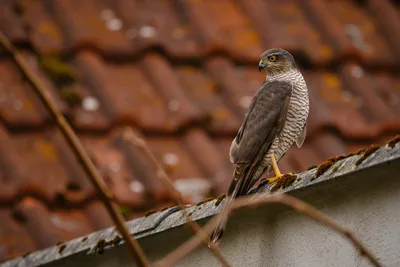 Eurasian sparrowhawk
- domestic cats
- jays
 Least weasel
- squirrels
Ecological equivalents
Related species on this site
Black-Capped Chickadee (same family), Chickadee (same family), Great tit (same family), Tufted Titmouse (same family), Acadian Flycatcher (same order), Amazonian Royal Flycatcher (same order), and more.
Birds
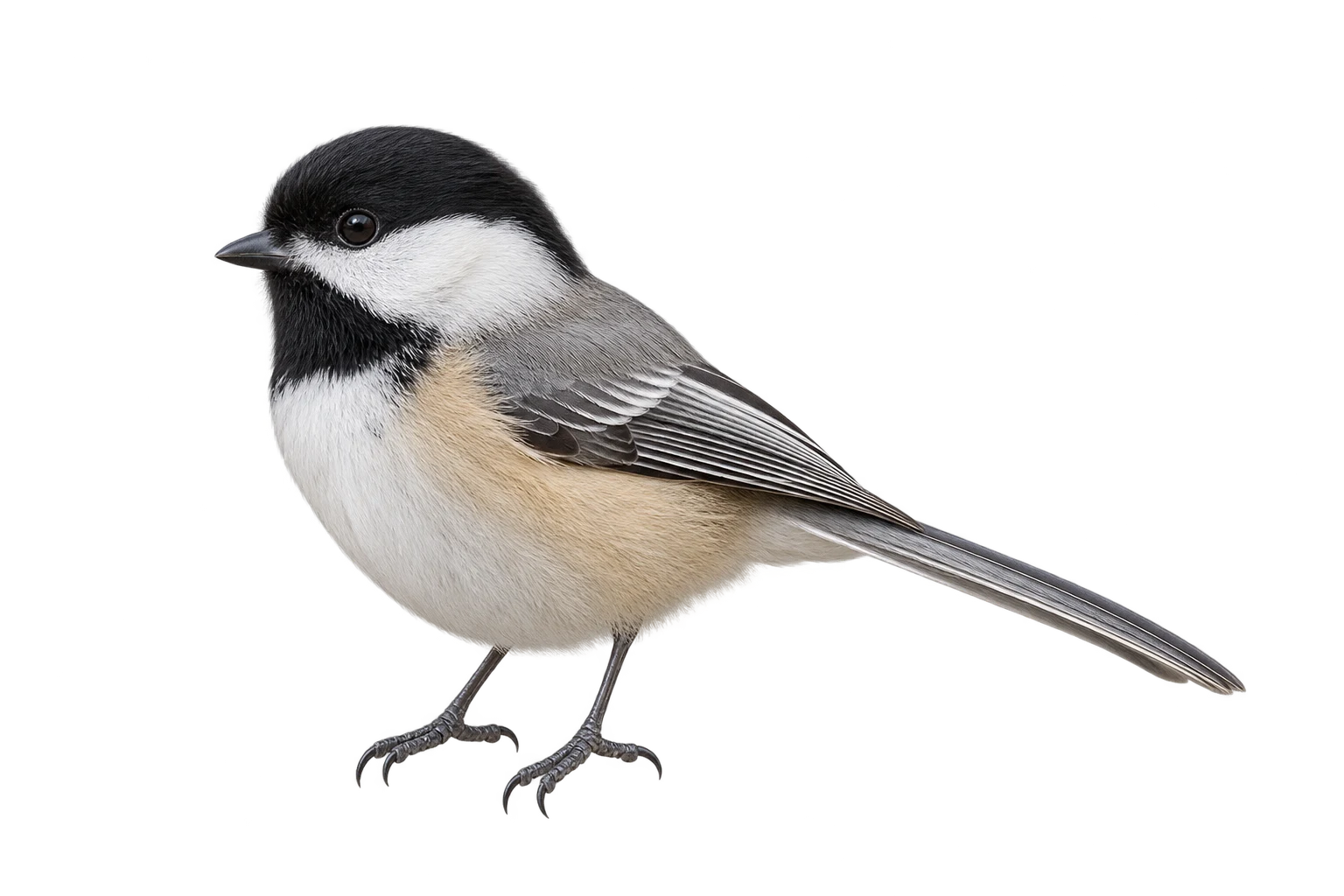
Black-Capped Chickadee
Poecile atricapillus
Classification and source reference
LivingAI illustration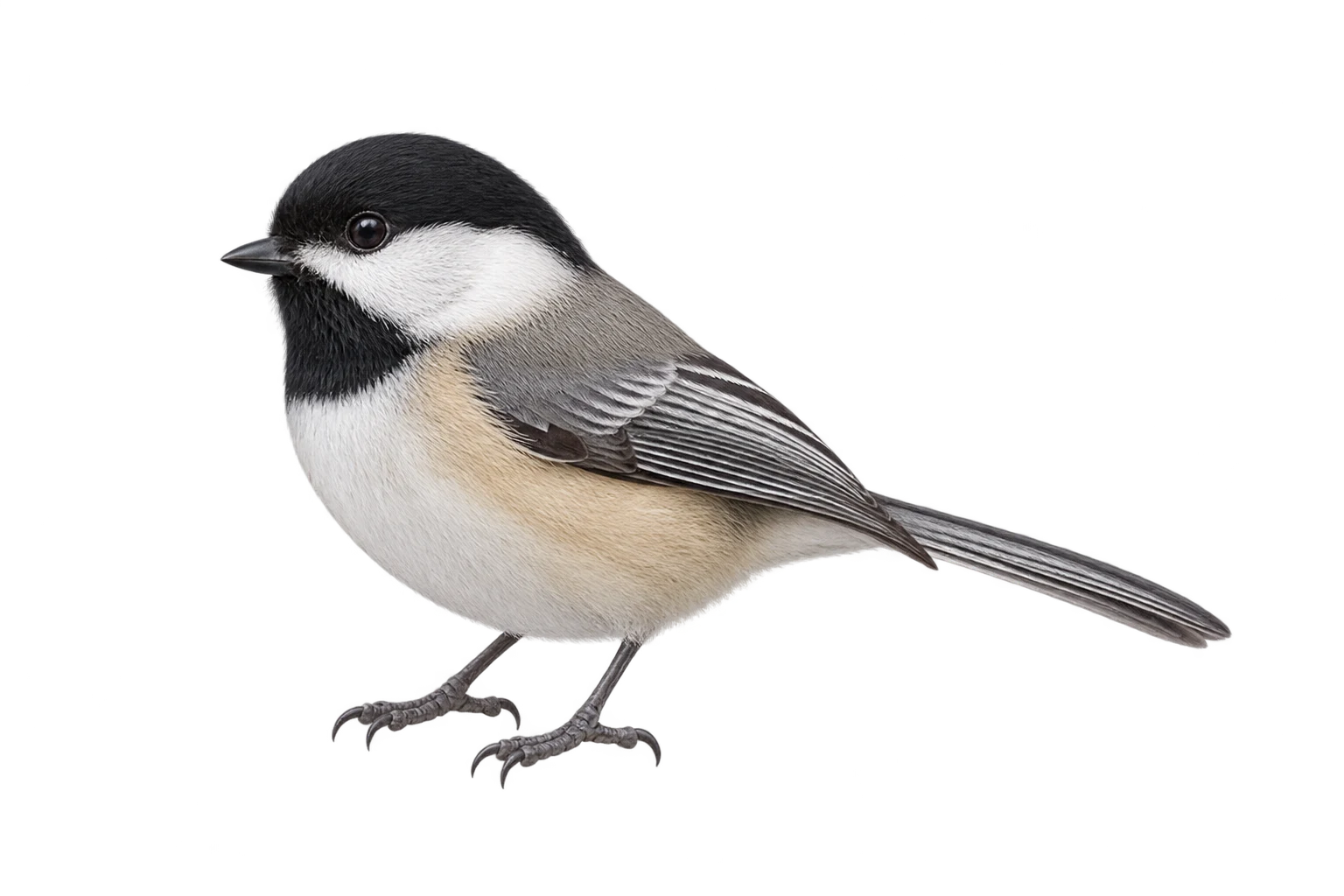
Birds
Chickadee
Poecile
Classification and source reference
LivingAI illustration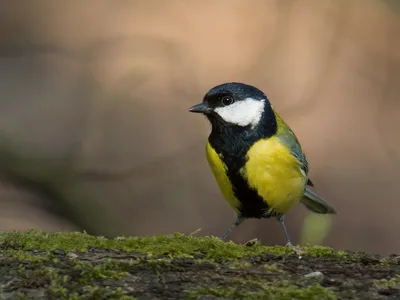 LC
Birds
Great tit
Parus major
The great tit is the largest European tit, with a black head, white cheeks and a yellow breast.
Living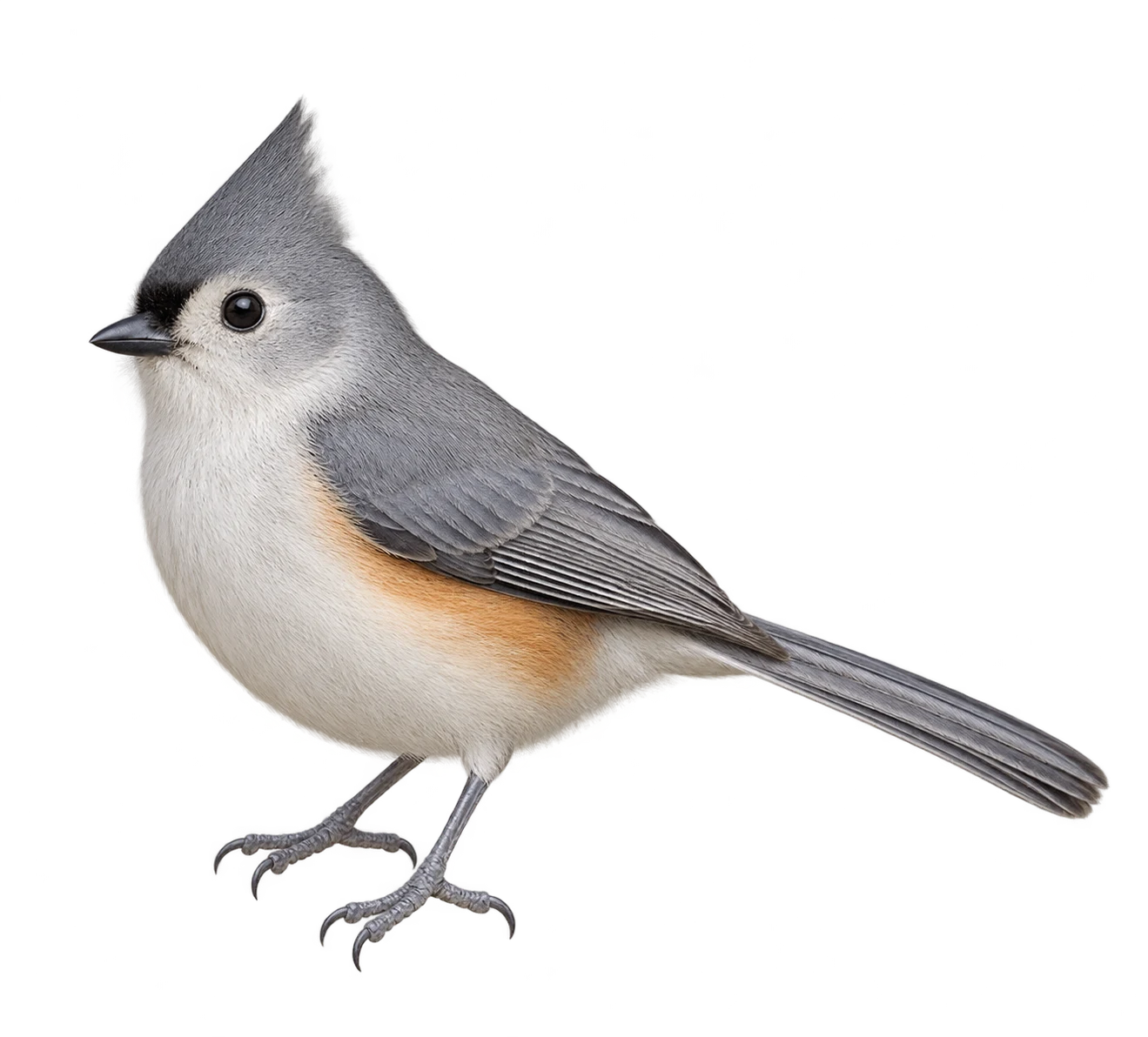
Birds
Tufted Titmouse
Baeolophus bicolor
Classification and source reference
LivingAI illustration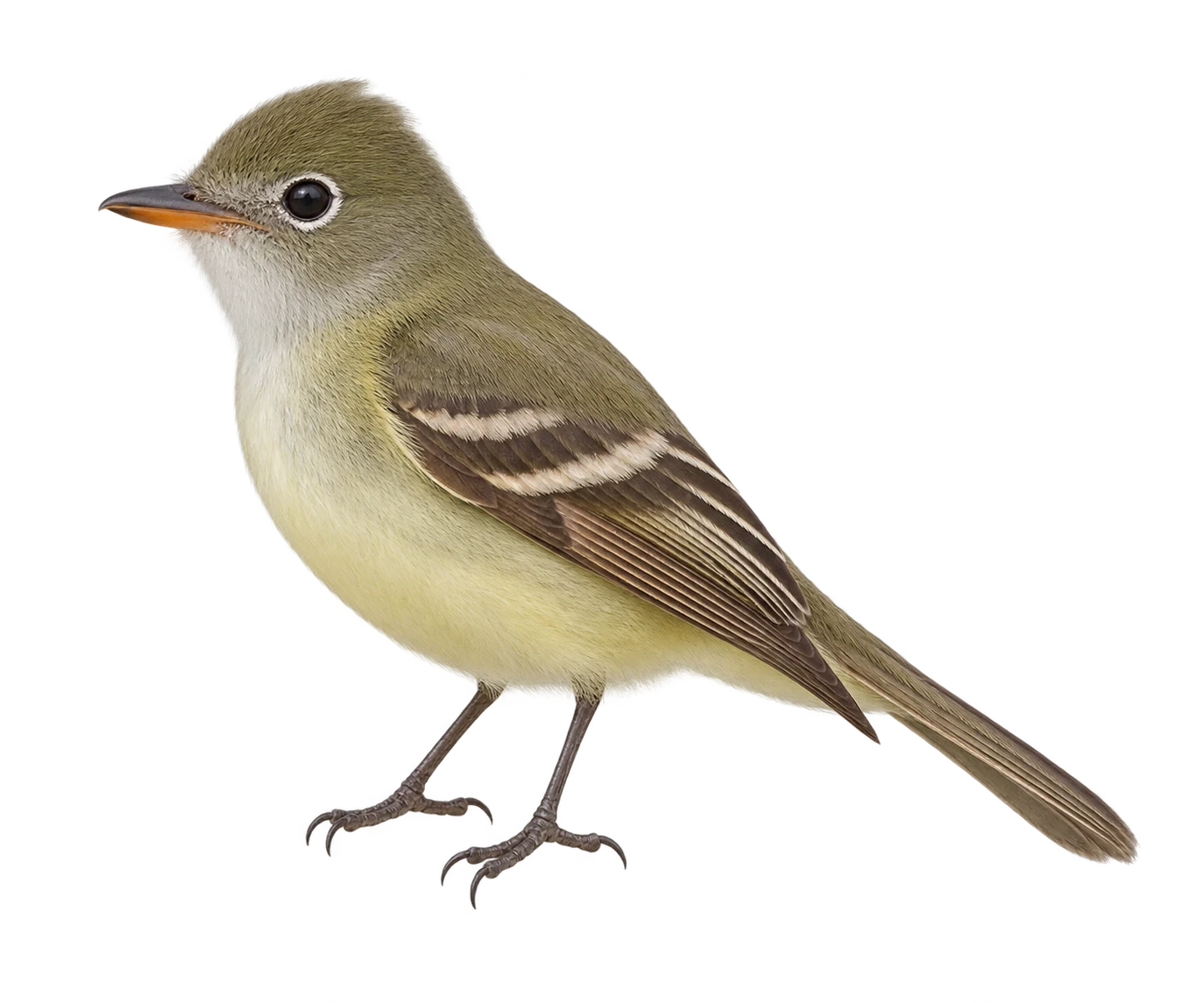
Birds
Acadian Flycatcher
Empidonax virescens
Classification and source reference
LivingAI illustration
Birds
Amazonian Royal Flycatcher
Onychorhynchus coronatus
Classification and source reference
LivingAI illustration