Living individuals or members of this group exist today. This does not mean they are safe from extinction.
Meet the great tit
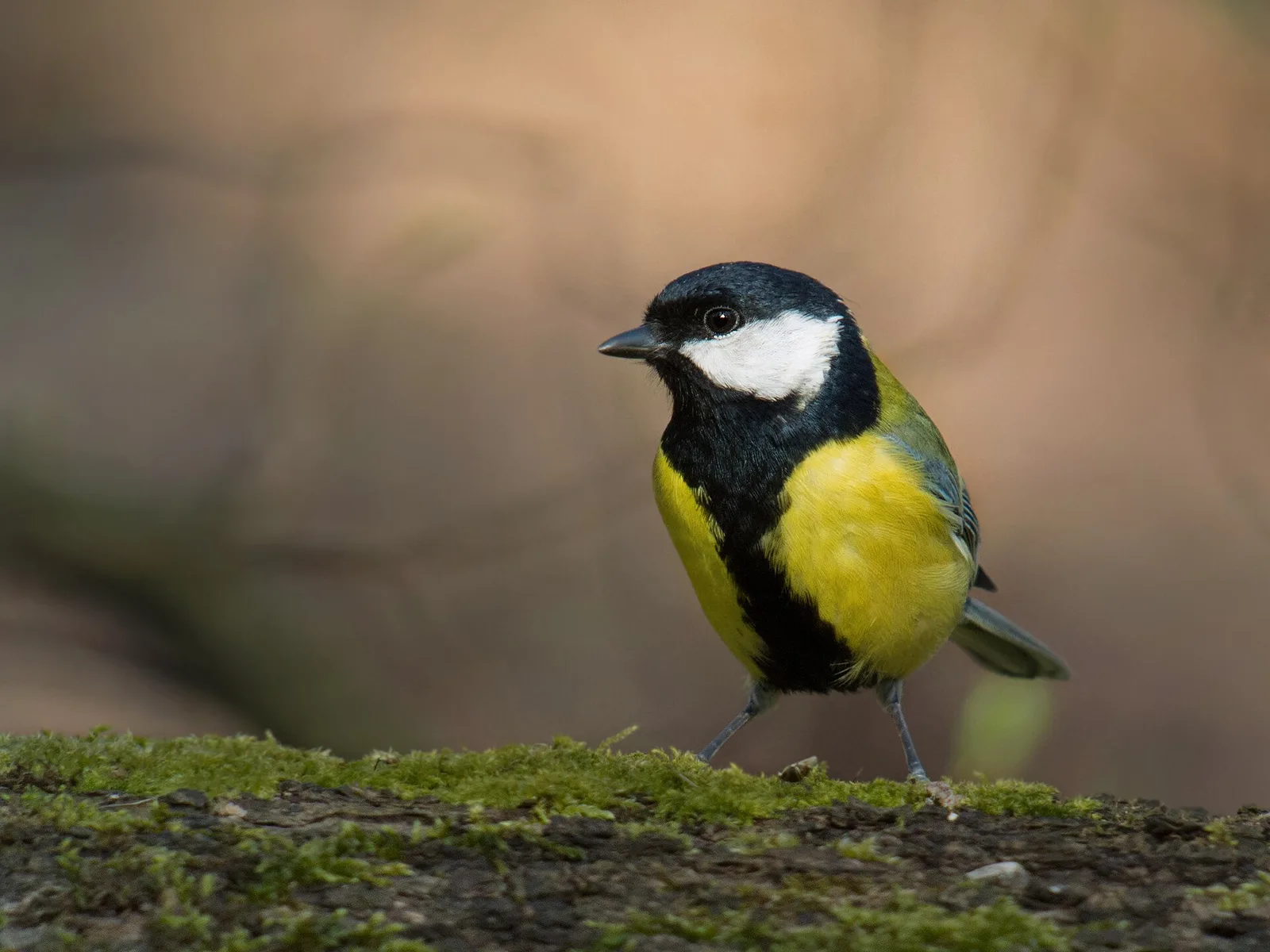
The great tit is the largest European tit, with a black head, white cheeks and a yellow breast. It nests in holes, learns quickly and is one of the most studied wild birds in the world.
Images of the great tit
Lifespan in the wild
Up to 15.4 years
Weight
About 18.5 g
Length
12.5 to 14 cm
Fact file
Great tit
- Location
- Europe, North Africa, the Middle East and Asia east to the Amur
- Habitat
- Temperate forest, Towns and cities
- Diet
- Omnivore
- Prey / food
- Caterpillars, spiders, beetles, grasshoppers, seeds, berries
- Predators
- Eurasian sparrowhawk; woodpeckers, grey squirrels and weasels raid nests
- Lifestyle
- Active by day, resident, holds a territory
- Group name
- Flock
- Name of young
- Chick
- Incubation
- Incubation 12 to 15 days, by the female alone
- Clutch size
- Five to twelve eggs, and up to 18
- Population
- Estimated 300 million to 1,100 million birds
- Biggest threat
- None at the species level; local habitat loss
- Distinctive feature
- Black head with white cheeks and a black belly stripe
- Colour
- Yellow, black, white and olive green
- Skin type
- Feathers
Size
Next to a person
Measurements
Size and speed
- Length
- 12.5 to 14 cm
- Weight
- About 18.5 g adult weight
Life cycle
Lifespan
- In the wildUp to 15.4 years
- 015.4 years
The pale bar is the record. Source: AnAge.
Appearance
Colour and coat
- Primary colours
- yellowblack
- Secondary colours
- whitegreen
- Skin type
- feathers
- Male and female
- A female carries the same pattern in weaker colours. Her black belly stripe is narrow, and it is sometimes broken.
Life cycle
Mating and family
- Mating system
- monogamous pairs, with frequent mating outside the pair
- Social structure
- pairs on a territory in the breeding season, mixed flocks in winter
- Breeding
- usually two broods a year
A pair takes a territory in late January and holds it into the spring. The female builds a nest in a hole and lays five to twelve eggs. She sits alone for 12 to 15 days while the male brings her food. Both parents then feed the brood until the young leave after 16 to 22 days. A pair usually raises two broods in a season.
Classification
Taxonomy
- Kingdom
- Animalia
- Phylum
- Chordata
- Class
- Aves
- Order
- Passeriformes
- Family
- Paridae
- Genus
- Parus
- Species
- Parus major
Conservation
Red List status
- LC
- NT
- VU
- EN
- CR
- EW
- EX
Least Concern on the IUCN Red List
Range
Recorded in 21 countries
- Austria
- Belgium
- Switzerland
- Czech Republic
- Germany
- Denmark
- Spain
- Finland
- France
- United Kingdom
- Hungary
- Italy
- Luxembourg
- Netherlands
- Norway
- Poland
- Portugal
- Romania
- Russia
- Sweden
- Ukraine
Habitat layer: temperate broadleaf and mixed forest, temperate conifer forest, boreal forest and taiga.
Countries from 183,482 wild records on GBIF (iNaturalist research grade), filtered and checked by hand. Country shapes: Natural Earth. Habitat: RESOLVE Ecoregions 2017, CC BY 4.0. Basemap: Natural Earth.
Habitats
Three things to know
- 1
One bird may use up to 40 different calls and songs.
- 2
The yellow of the breast comes from carotenoids in the food.
- 3
A pair takes a nest box readily, which is why researchers watch this species so closely.
Did you know
Seven more facts
- 1
The yellow of the breast comes from carotenoids in the food, not from the bird itself.
- 2
Females choose males with a wider black belly stripe.
- 3
Chicks have a yellow nape that reflects ultraviolet light.
- 4
A great tit can open a hazelnut in about twenty minutes.
- 5
In a hard winter the bird may eat 44 per cent of its body weight in sunflower seeds.
- 6
Great tits kill pied flycatchers in fights over a nest box.
- 7
Birds in noisy towns sing at a higher pitch than birds in quiet woods.
Field notes
How it looks and acts
Field notes
Distinguishing features
- A glossy black head with clean white cheeks.
- A bright lemon yellow breast.
- A broad black stripe down the centre of the underparts.
- Green upperparts with an olive tint.
- A white bar across a bluish grey wing.
- The largest body of any European tit, at 12.5 to 14 centimetres.
Field notes
Unique adaptations
- Blood that produces more heat as winter comes on.
- Narrowed blood vessels in the bill and legs, which cut heat loss.
- A bill strong enough to hammer open a hard seed.
- A switch from insects to seeds when the cold arrives.
- Problem solving that lets the bird reach new kinds of food.
Field notes
Interesting behaviours
- Holds a seed under one foot and strikes it with the bill.
- Joins mixed flocks of small birds through the winter.
- Removes the gut from a caterpillar before feeding it to a chick.
- Hisses from inside the nest hole when disturbed.
- Defends a nest box against the pied flycatcher.
Field notes
Temperament
- Bold at a garden feeder and close to people.
- Aggressive towards rivals over a nest hole.
- Quick to learn a new way to reach food.
- Noisy, with a large range of calls.
Field notes
Communication
- A repeated two note song that sounds like the word teacher.
- Soft single notes such as pit or chit between a pair.
- A loud tink as an alarm or a challenge.
- Up to 40 call types in one bird's repertoire.
- A higher pitch in towns with traffic noise.
Ecology
Ecological role
The great tit is a common insect eater and seed eater in woods, parks and gardens.
- It takes large numbers of caterpillars during the breeding season.
- Orchard trials recorded much less caterpillar damage where the birds fed.
- It feeds sparrowhawks, woodpeckers, squirrels and weasels.
- Its nests house fleas, lice and the beetles that eat them.
Stories
Myths and legends
- In English country belief the saw sharpening call foretold rain.
- In English naming tradition the bird was a titmouse, from a word for a small bird.
- In North American usage the same family became the chickadees, named after a call.
- In British garden lore the milk bottle raids probably made the tit a clever thief.
- In one scientific idea, named after the novel Beau Geste, many calls fake a crowded wood.
People
Relationship with humans
People
Living alongside us
The great tit is one of the birds people see most often at a feeder. It moves into a nest box without fuss, which is why researchers have studied it so closely. Work on this species shaped what biologists know about clutch size and breeding timing. The bird has also adjusted to towns, and it sings at a higher pitch where traffic is loud.
- The bird weighs about 18.5 grams and cannot hurt a person.
- A sitting female hisses at a hand that opens her nest box.
- Like other wild birds, great tits carry fleas and lice, so nobody should handle one.
People
Status, uses and products
- Domestication
- Wild
- As a pet
- Not suitable. The great tit is a protected wild bird across Europe. Put up a nest box and a feeder instead, because the bird will use both.
- Uses
- garden birdwatchingscientific researchorchard pest control
- Products
- None recorded
The full account
About the great tit
The great tit is a small bird with a black head, white cheeks and a yellow breast. A black stripe runs down the middle of the yellow underparts. It is the largest of the European tits, at 12.5 to 14 centimetres long. The species lives across Europe, North Africa, the Middle East and much of Asia. Most birds stay on the same ground all year.
Great tits nest in holes, and they take readily to a nest box. That habit has made the species one of the most studied birds in the world. In summer the bird eats insects and spiders, and in winter it turns to seeds and berries. It solves problems, uses simple tools and has learned new tricks in gardens. The IUCN lists the great tit as Least Concern. The world population may run from 300 million to 1,100 million birds.
Name and taxonomy
Carl Linnaeus gave the great tit its current name in 1758. The name joins the Latin parus, a tit, with maior, meaning larger. Francis Willughby had already used the name in the 17th century. The older English word for the group is titmouse, which goes back to the 14th century. It puts together mase, an old word for a small bird, and tit, which means small. Dutch mees and German Meise come from the same root.
Fifteen subspecies are recognised today. The nominate form runs from the Iberian Peninsula to the Amur Valley. Four of the subspecies live only on islands. Until 2005 the species also covered birds from southern and eastern Asia. DNA work split those birds off as the cinereous tit and the Japanese tit. The Turkestan tit stayed inside the great tit, though not every authority agrees.
Evolution and relatives
The major group split from the southern and eastern groups about 1.5 million years ago. The Turkestan birds parted from the rest about half a million years later. Where the western and eastern forms meet in the Amur Valley, hybrids are rare. That rarity suggests a barrier to breeding between the two groups.
Parus once covered most members of the family, and a split came in 1998. The great tit stayed in Parus, alongside the blue tits in the same lineage. That lineage does not hoard food, unlike the other main group of tits. The closest relatives outside the old subspecies are the white-naped and green-backed tits. Hybrids with the blue tit and the coal tit are very rare. Genetic work points to a bottleneck and then a fast spread after the last ice age.
Appearance
The bird is 12.5 to 14 centimetres long, which is large for a tit. An adult weighs about 18.5 grams. The crown is bluish black and the cheeks and ear coverts are white. The breast is bright lemon yellow, crossed by a broad black line from the bib to the vent. The back is green with an olive tint, and the wing carries a white bar. The outer tail feathers carry white tips on a bluish grey tail.
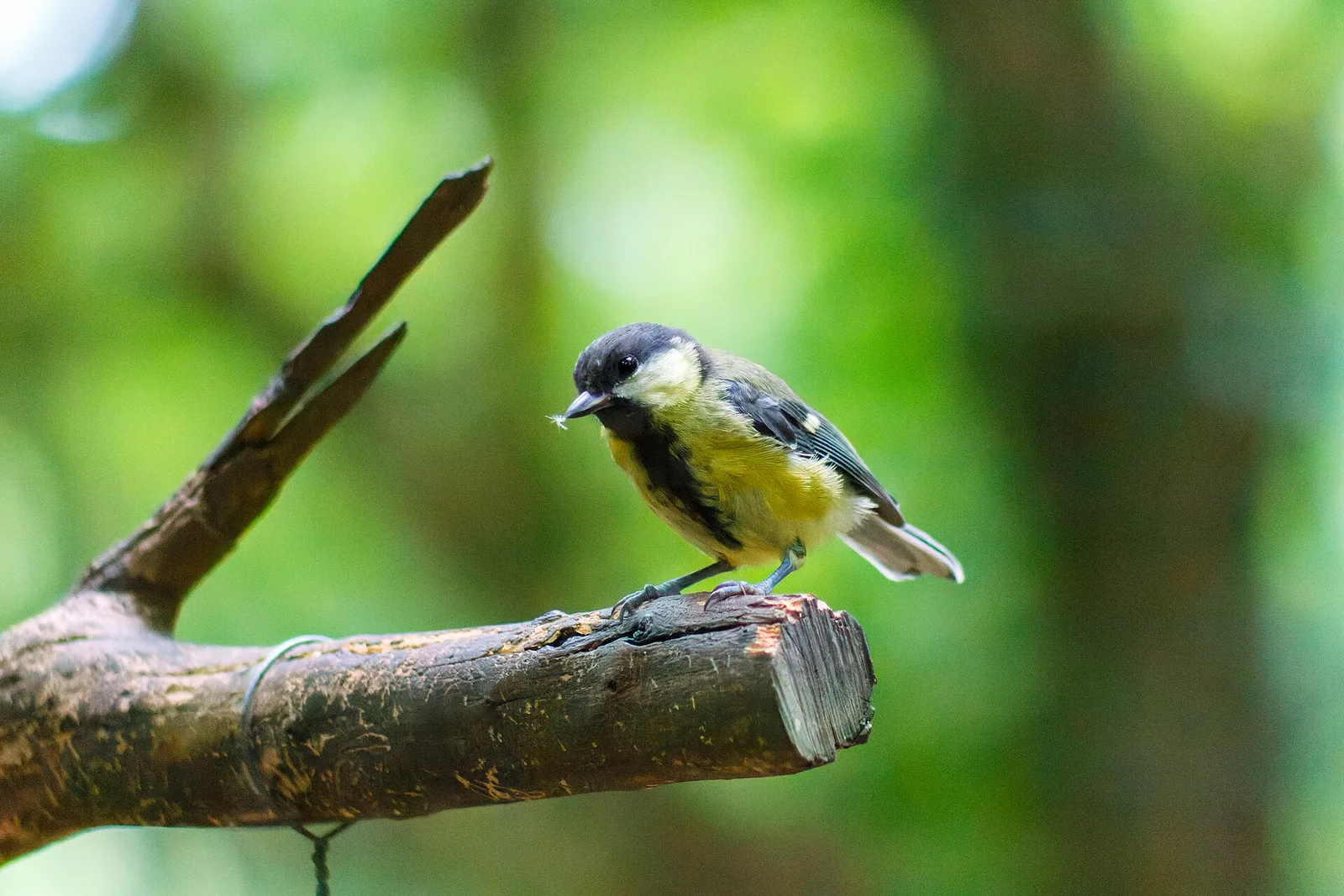
The female wears the same pattern in duller colours. Her belly stripe is narrower, and it is sometimes broken. Young birds look like the female, with a browner nape and a greyer rump. Carotenoids from food set the strength of the yellow, so a bright male has fed well. Females prefer a male with a wide belly stripe. Breast colour also tracks sperm quality in the male.
Habitat and range
The great tit lives across almost all of Europe. Iceland and northern Scandinavia are the gaps. In North Africa the bird lives in Morocco, Algeria and Tunisia. The range runs east through the Middle East and Central Asia to the Amur Valley. GBIF records the species in 101 countries, and that count includes escapes.
Open deciduous woodland suits it best, along with mixed forest, woodland edge and gardens. In a dense forest the bird keeps to clearings. Birds of northern Siberia occupy the boreal taiga. North African birds use oak forest, cedar stands and even palm groves. Eastern birds favour willow and birch woodland along rivers.
The species does not usually migrate, even in the north of the range. A pair holds its territory through the year. Young birds move away from the parents, though rarely far. In a bad winter a flock of a thousand birds may push south and west. Releases near Cincinnati in the 1870s failed to take hold. Birds released in Kazakhstan in the early 1960s did establish themselves.
Diet and feeding
In summer the great tit eats insects and spiders picked off leaves. Larger prey includes grasshoppers, beetles, earwigs, flies, bees, snails and woodlice. Parents prefer caterpillars for the chicks, because caterpillars are rich in protein. One study measured up to 50 per cent less caterpillar damage in orchards where the birds fed. Young nestlings also get a run of spiders early in their growth.
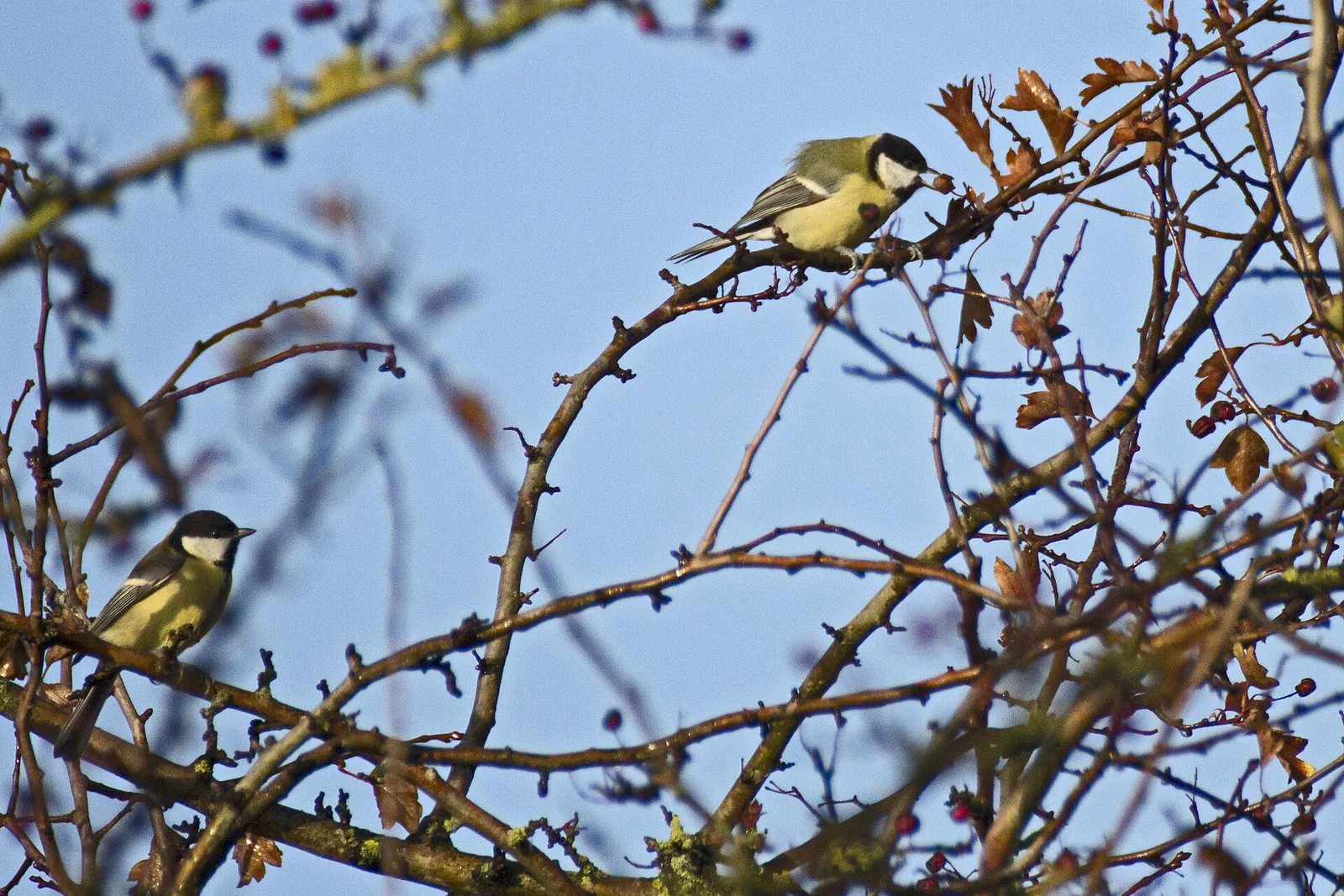
In autumn and winter the diet turns to seeds and berries. Beech and hazel seeds are common items. The bird takes peanuts, seed and scraps from a garden table. In a hard winter a great tit may eat 44 per cent of its body weight in sunflower seeds. Great tits join mixed flocks of small birds to forage through the winter.
A big seed gets held under one or both feet and struck with the bill. By that method the bird opens a hazelnut in about twenty minutes. Adults knock the heads off large insects before they pass them to a chick. They also pull the gut out of a caterpillar, because the tannins in it slow chick growth. In 2009 great tits were reported killing hibernating pipistrelle bats and eating the brains.
Behaviour and social life
Pairs set up a breeding territory in late January. They defend it from late winter into spring. A pair that raises a brood usually keeps the same territory the next year. A female whose nest was robbed is likely to move somewhere else. Outside the breeding season the birds mix into flocks with other small species.
The great tit learns by insight rather than by trial and error. In England the birds learned to open the foil caps of doorstep milk bottles. That trick was first noted in 1921 and spread fast over the next two decades. Birds have also used a conifer needle to pull a larva out of a hole. Tool use of that kind appears to be rare among small songbirds.
The species fights the pied flycatcher for nest boxes and sometimes kills the male flycatcher. Deaths rise when the two species nest at the same time. Warmer springs have pushed their nesting dates closer together. A great tit may eat the brain of a flycatcher it has killed.
Communication and senses
The great tit has up to 40 types of call and song. Both sexes use the same calls, but the male is far more vocal. Soft single notes such as pit or chit keep a pair in contact. A loud tink serves as an alarm and as a challenge to a rival. The best known song sounds like the word teacher, repeated over and over. People often compare it to a squeaky wheelbarrow wheel.
Calls vary from region to region across the range. Birds from the two Asian species do not react to the calls of European great tits. One idea holds that a wide repertoire makes a territory sound crowded to a rival. Birds with more calls tend to rank higher and to breed better. In noisy towns the birds sing at a higher pitch than in quiet places.
Reproduction and life cycle
The great tit is a cavity nester and usually chooses a hole in a tree. A wall or a rock face will also serve, and a nest box works well. The female builds the nest from plant fibre, grass, moss, hair, wool and feathers. Most breeding falls between January and September, and in Europe it starts after March. Laying is timed so that the chicks meet the peak of the caterpillars.
A clutch usually holds five to twelve eggs, and it can reach 18. The eggs are white with red spots. A late clutch and a second brood are both smaller than a first clutch. Island birds lay fewer eggs, and the eggs are larger. The female alone incubates for 12 to 15 days, and the male feeds her. A sitting female hisses at anything that disturbs her.
Chicks hatch blind and without feathers. Their nape is yellow and reflects ultraviolet light, which draws the parents to them. That patch turns white at the first moult, at about two months old. Both parents feed the brood, giving each chick 6 to 7 grams of food a day. The young leave the nest after 16 to 22 days and feed themselves eight days later.
Pairs are socially monogamous, but many broods hold chicks from another male. One German study found outside fathers in 40 per cent of nests. Second broods produce weaker chicks with lower survival. Young birds scatter from their birthplace, which lowers the chance of inbreeding. The oldest wild great tit on record reached 15.4 years.
Predators and threats
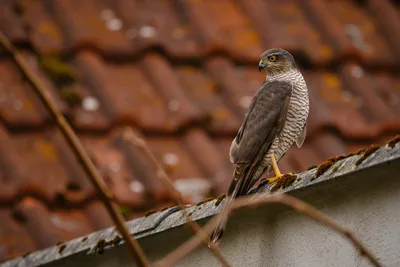
The Eurasian sparrowhawk hunts adult great tits. Chicks from a second brood face the greatest risk from that hawk. Great spotted woodpeckers break into nests, above all in some designs of nest box. Grey squirrels raid nests in Britain. Least weasels take eggs, chicks and sitting adults.
The hen flea is very common in the nests of great tits and blue tits. A biting louse described in 1981 also lives on the birds. Two kinds of beetle live in the nest and eat the fleas. Those beetles breed only in the warmth a brooding bird provides. No threat acts on the species as a whole, and declines are local.
Population and conservation
The IUCN classes the great tit as Least Concern. The world total is estimated at 300 million to 1,100 million birds. The range covers about 32.4 million square kilometres. Numbers have fallen in some places with poor habitat. The size of the range and the size of the population outweigh those local losses.
The bird has spread north into Scandinavia and Scotland. It has also spread south into Israel and Egypt. Breeding success is best where forest cover is undisturbed. Even so, the species is common in towns and cities. One estimate put the breeding population of Sheffield at about 17,000 birds. iNaturalist holds 247,146 observations of the species.
Relationship with humans
The great tit is a favourite at garden feeders. People enjoy the acrobatics it performs on a hanging nut feeder. Great tits in Britain may carry longer bills now than they did in the 1970s. A longer bill probably suits a garden feeder better. The bird moves into a nest box without hesitation.
That habit made the species a standard subject in bird research. Researchers have used it above all to study clutch size and other life history traits. One search of the literature found 1,349 papers on the species over three decades. Few wild birds appear to have been watched in such detail. People once proposed releasing great tits in the United States to control codling moths. That plan was never carried out.
In culture and myth
In English country belief the saw sharpening call warned of coming rain. The name titmouse comes from an English word for a small bird plus a word for small. The spelling moved towards mouse in the 16th century. In North America the same family is called the chickadees, after the alarm call.
The milk bottle story is probably the best known modern tale about this bird. British doorstep deliveries gave the tits cream under a foil cap. The trick spread across the country within two decades. People often quote it as a sign that a wild animal may learn from another.
One idea about the many calls is named after the novel Beau Geste. In that story a soldier props up dead men to make a fort look defended. The many calls of one bird may work in the same way on a rival. In garden lore across Britain the great tit seems to stand for the bold visitor at the feeder.
A sentence with a dotted underline is inferred: it describes the group the animal belongs to, or is a reading of the sources, rather than a measured or reported fact about this species.
Questions
Great tit questions, answered
How big is a great tit?
An adult measures 12.5 to 14 centimetres from bill to tail. That makes it the largest tit in Europe. It weighs about 18.5 grams.
How do you tell a great tit from a blue tit?
The great tit has a black head with white cheeks, while the blue tit has a blue cap. Only the great tit carries a black stripe down the yellow breast. The great tit is also the larger bird.
What do great tits eat?
In summer they eat insects and spiders taken off leaves. In autumn and winter they switch to seeds and berries, and they take peanuts and seed from a feeder.
Do great tits really eat bats?
Some do. Birds in Hungary were reported in 2009 killing hibernating pipistrelle bats and eating the brains. They do this only in winter, when other food is short.
What does a great tit sound like?
The familiar song is a repeated two note phrase that sounds like the word teacher. Listeners often compare it to a squeaky wheelbarrow wheel. One bird may use up to 40 different calls.
How many eggs does a great tit lay?
Five to twelve eggs is normal, and a clutch can reach 18. Each egg is white with red speckles.
How long do great tit eggs take to hatch?
The female sits alone for 12 to 15 days. The male brings her food while she incubates.
How long do great tits live?
Most die young, as in other small songbirds. The oldest wild bird on record reached 15.4 years.
Will great tits use a nest box?
Yes, and they take to one readily. That willingness is why the species is so heavily studied.
Do great tits migrate?
Usually not. A pair stays near its territory all year, even in the north. In a hard winter large groups may move south and west.
Are great tits aggressive?
They fight over nest holes. Great tits sometimes kill male pied flycatchers that compete for the same box.
Why is the great tit's breast yellow?
The colour comes from carotenoids in the food. A bird cannot make them, so a bright male shows that he feeds well.
Are great tits endangered?
No. The IUCN lists the species as Least Concern. Estimates put the world total between 300 million and 1,100 million.
Where do great tits live?
They live across Europe, North Africa, the Middle East and much of Asia, east to the Amur Valley. Open woodland, forest edge and gardens suit them best.
Are great tits clever?
They solve problems by insight rather than by trial and error. English birds learned to open milk bottle caps, and some use a conifer needle as a tool.
Why is it called a tit?
The older English name is titmouse, recorded from the 14th century. It comes from an old word for a small bird plus a word meaning small.
Food web
Prey and food
- caterpillars
- spiders
- beetles
- grasshoppers
- seeds
- berries
Food web
Predators
 Eurasian sparrowhawk
- woodpeckers
 Eastern gray squirrel
- weasels raid nests
Ecological equivalents
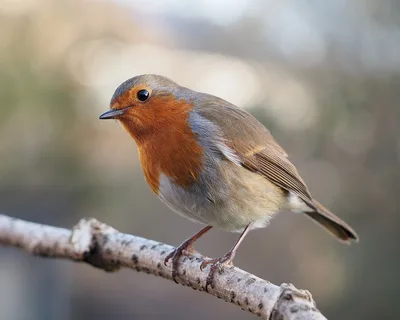
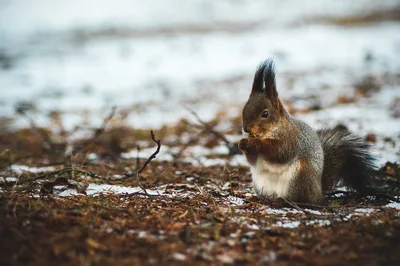
Related species on this site
Black-Capped Chickadee (same family), Chickadee (same family), Eurasian blue tit (same family), Tufted Titmouse (same family), Acadian Flycatcher (same order), Amazonian Royal Flycatcher (same order), and more.
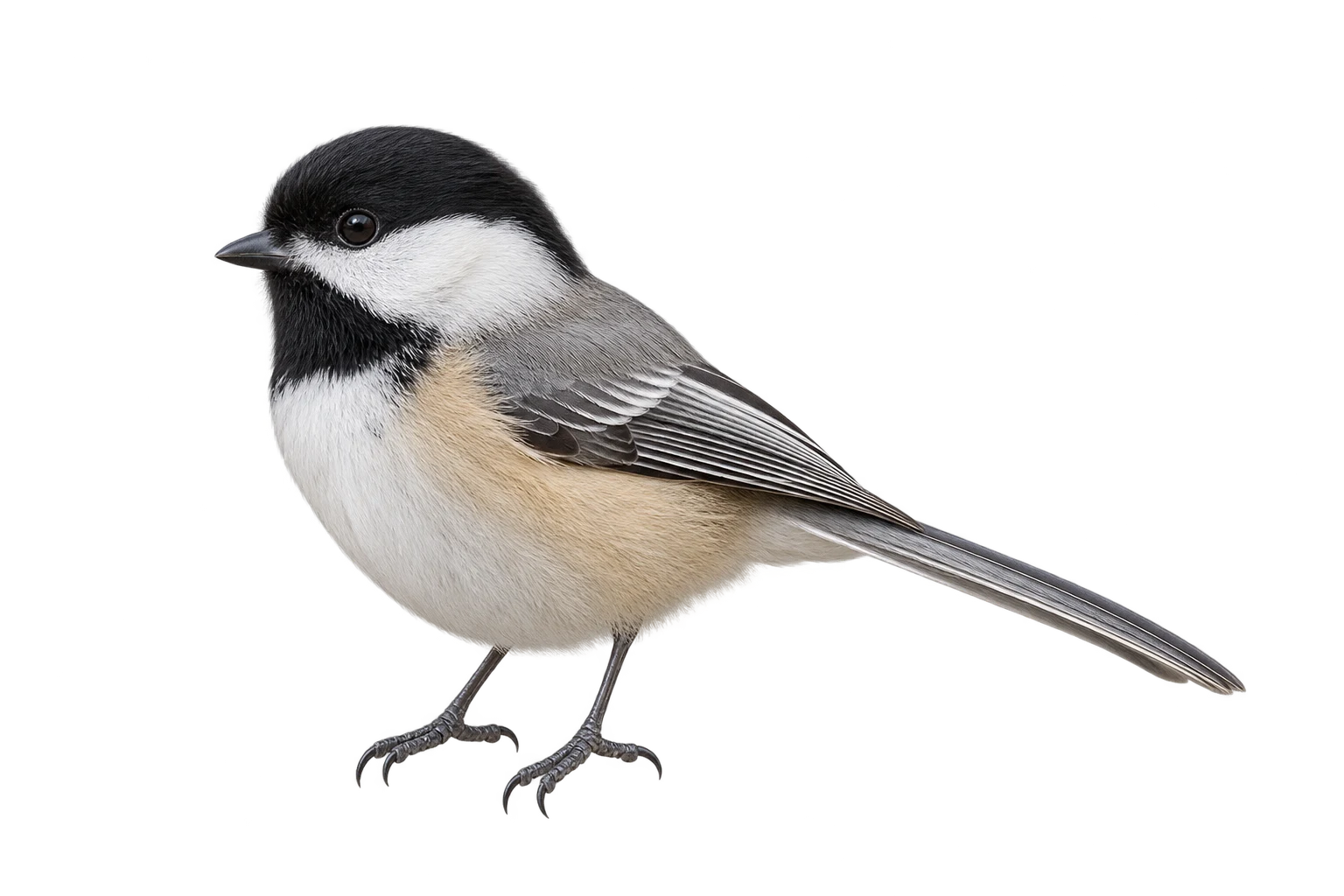
Birds
Black-Capped Chickadee
Poecile atricapillus
Classification and source reference
LivingAI illustration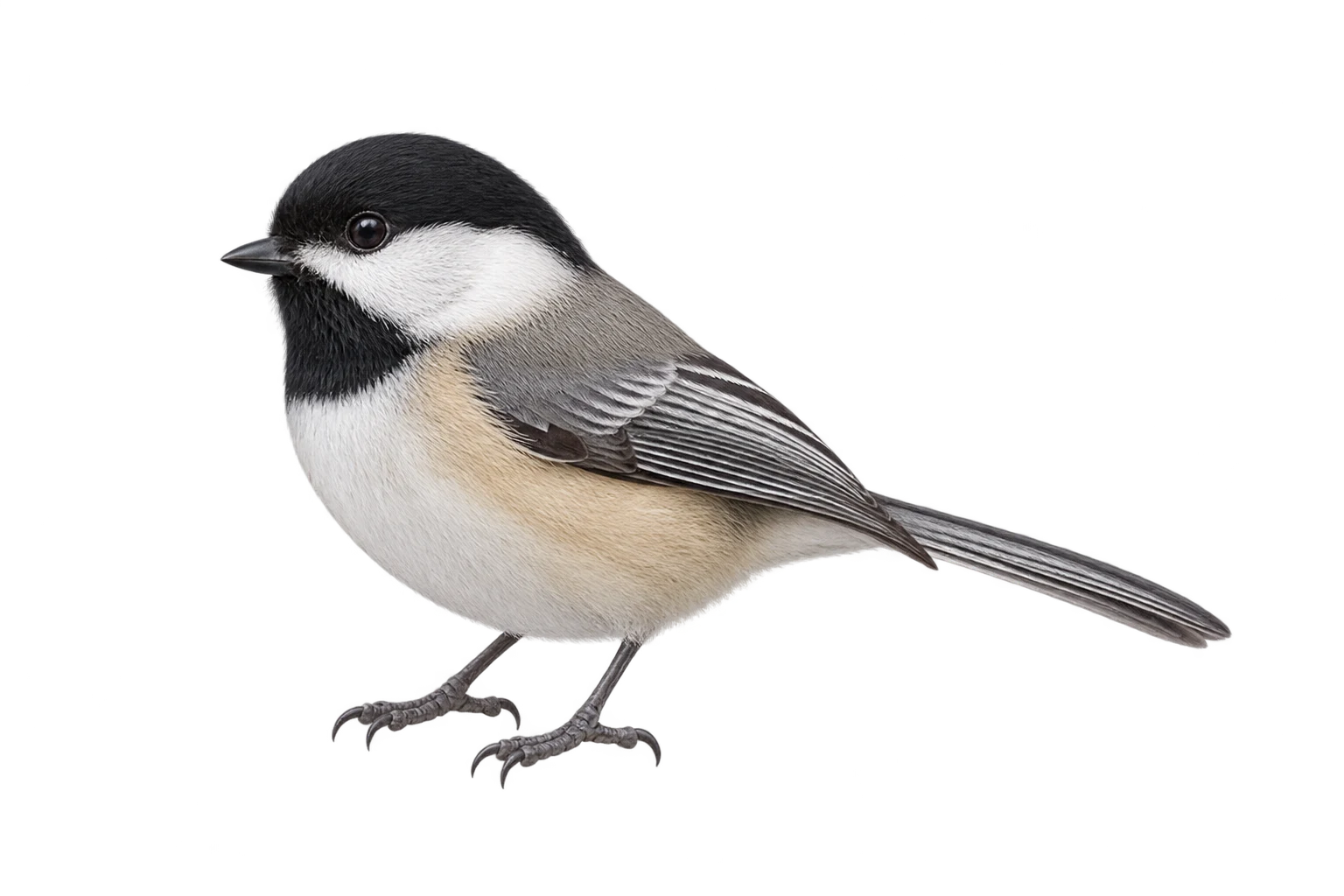
Birds
Chickadee
Poecile
Classification and source reference
LivingAI illustration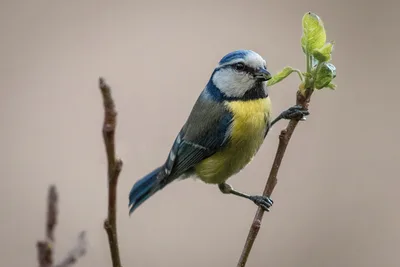 LC
Birds
Eurasian blue tit
Cyanistes caeruleus
The Eurasian blue tit is a small blue and yellow songbird of European woods, parks and gardens.
Living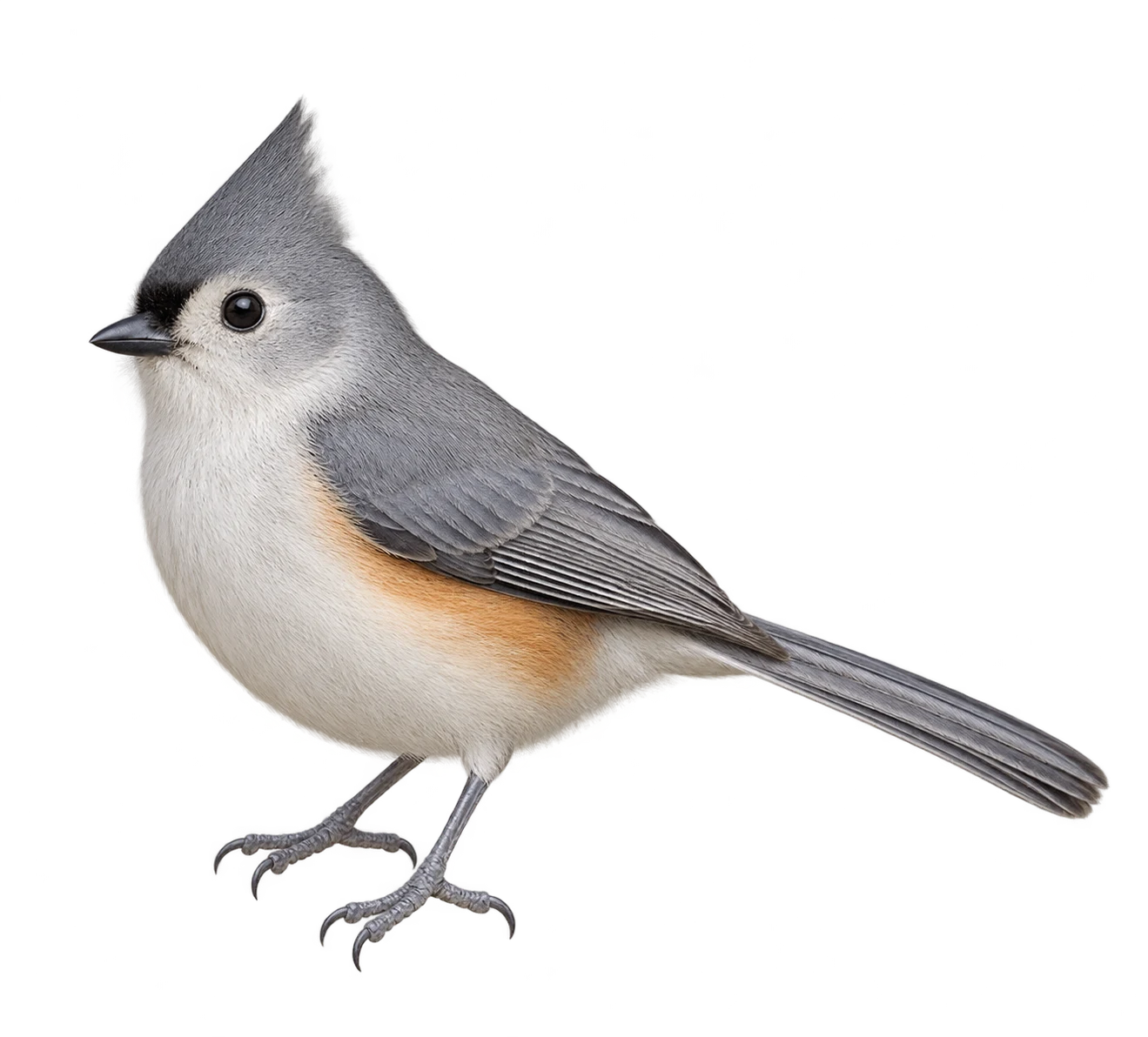
Birds
Tufted Titmouse
Baeolophus bicolor
Classification and source reference
LivingAI illustration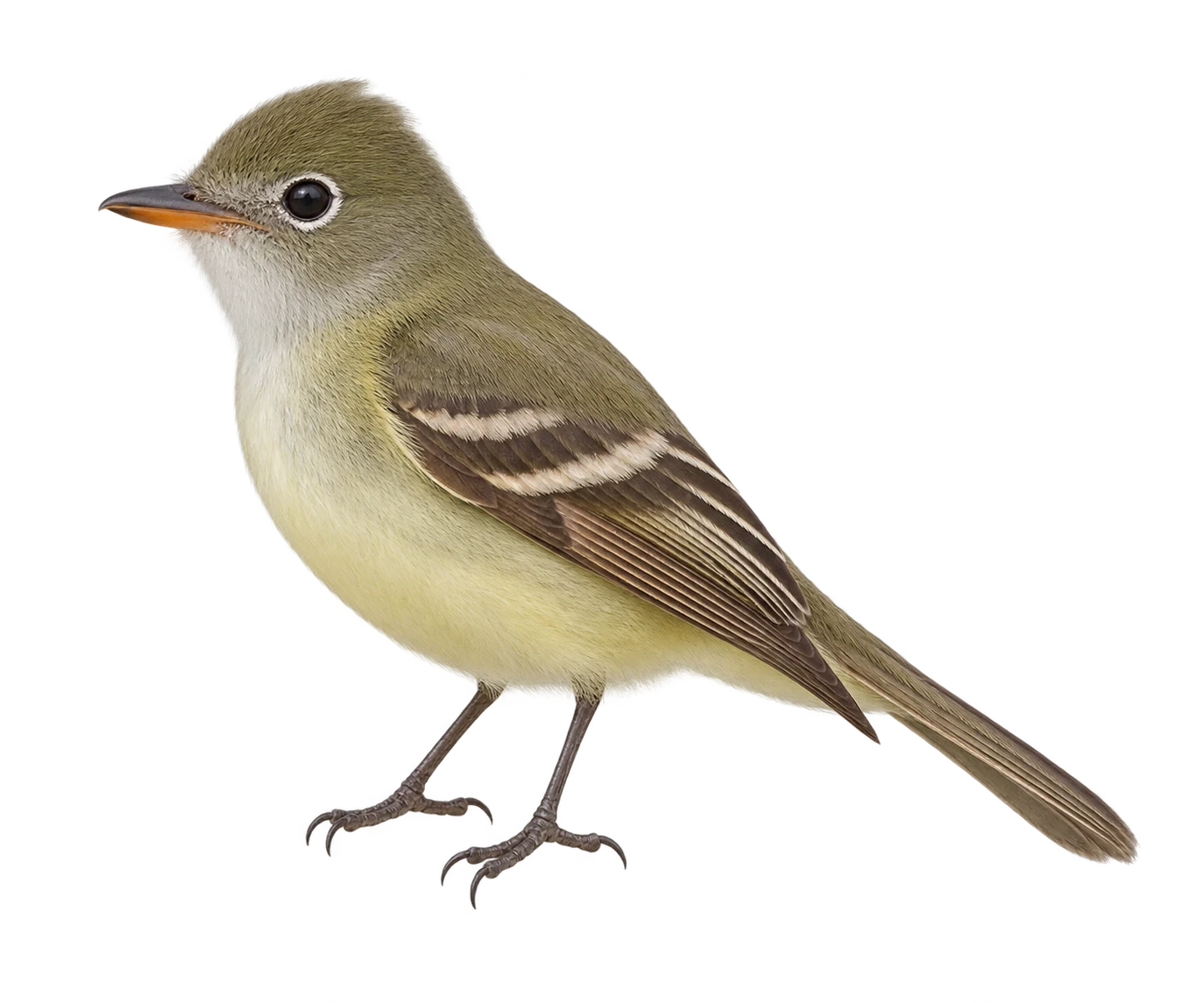
Birds
Acadian Flycatcher
Empidonax virescens
Classification and source reference
LivingAI illustration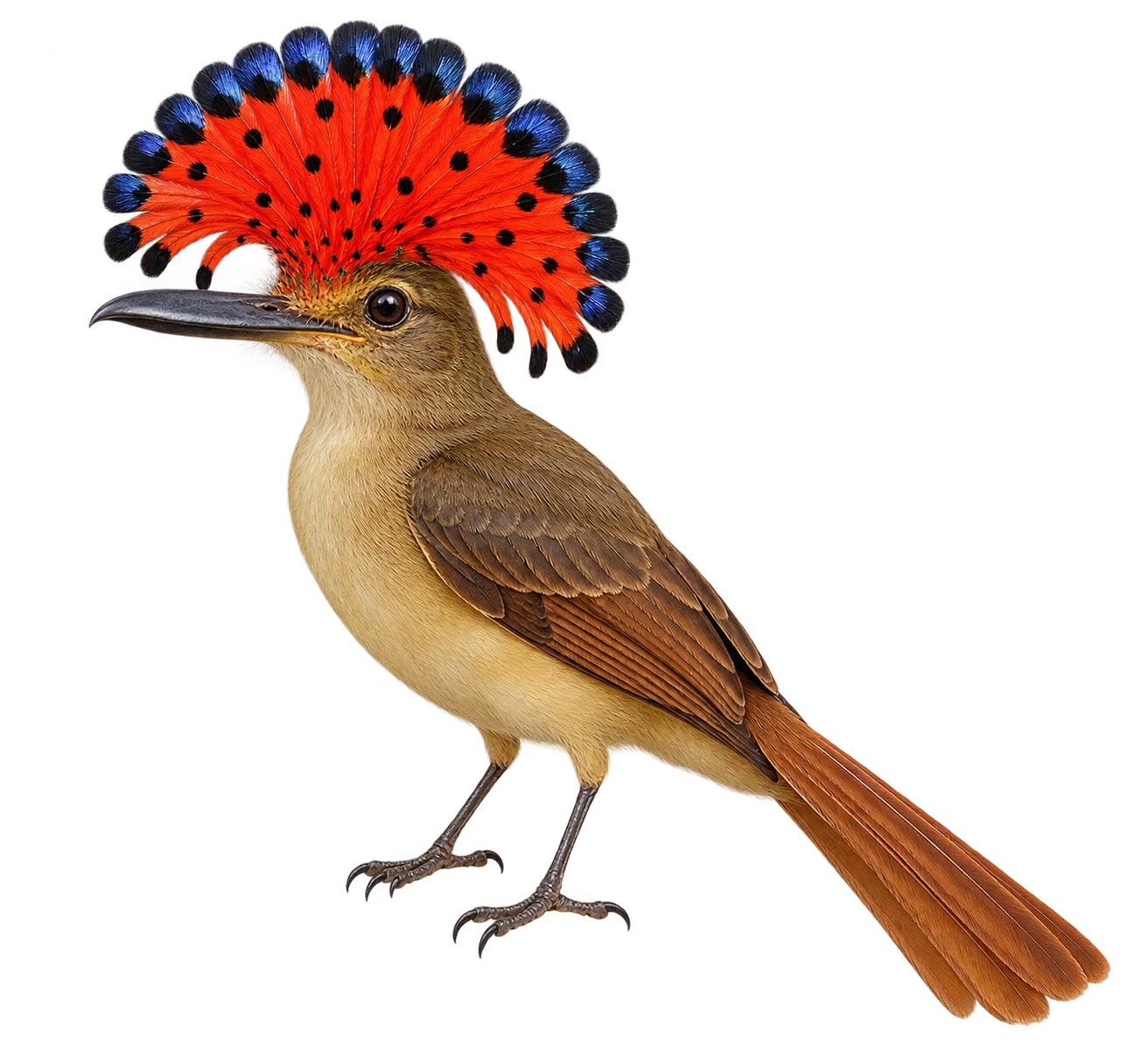
Birds
Amazonian Royal Flycatcher
Onychorhynchus coronatus
Classification and source reference
LivingAI illustration