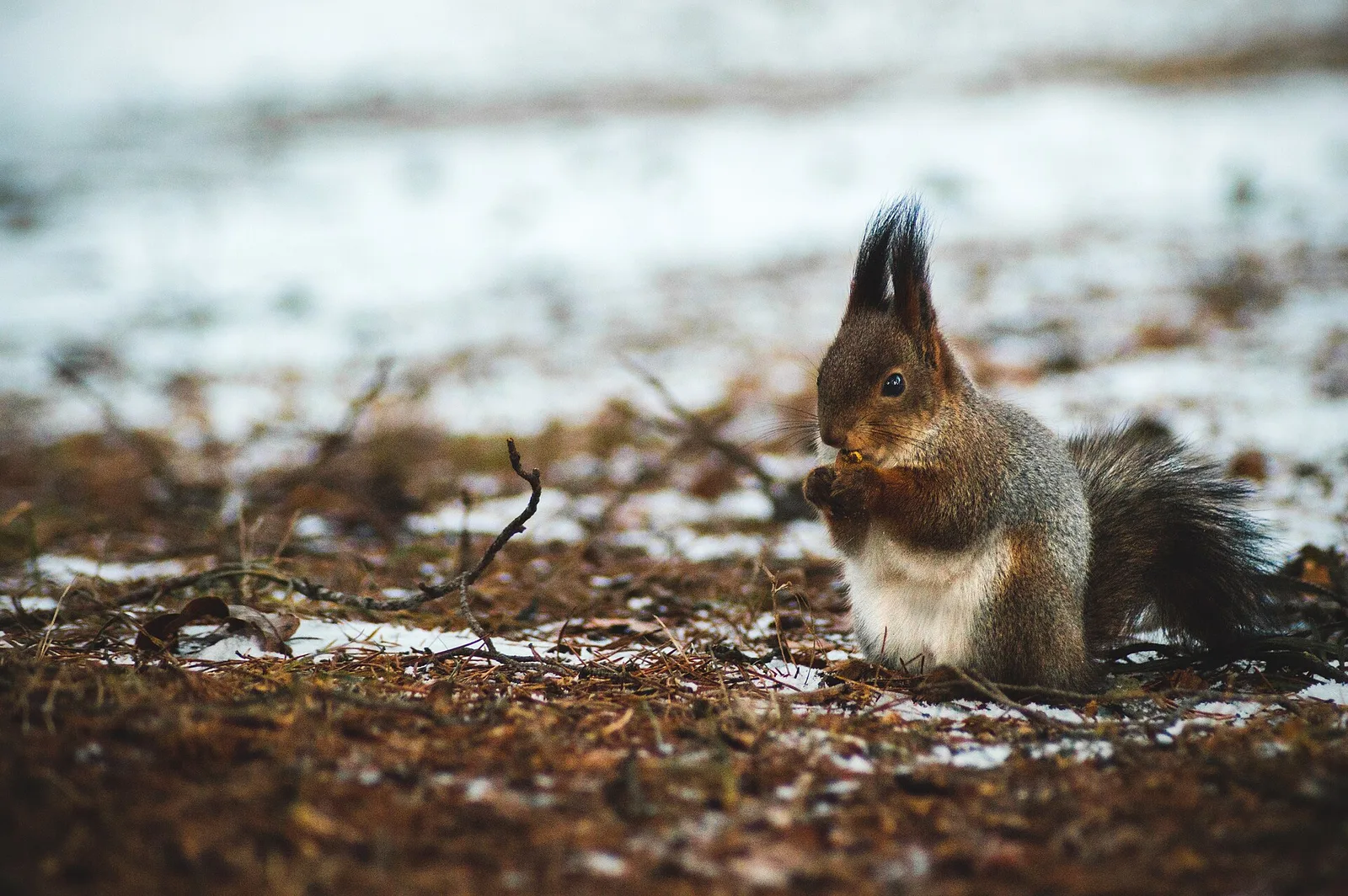
Red squirrel
The tufted tree squirrel of Europe and Siberia
Sciurus vulgaris
Also called Eurasian red squirrel
Living individuals or members of this group exist today. This does not mean they are safe from extinction.
Meet the red squirrel
The red squirrel is a small tree squirrel of the conifer and broadleaf forests of Europe and northern Asia. It lives on tree seeds, stores food for winter and sleeps in a domed nest called a drey.
Images of the red squirrel
Lifespan in the wild
2 to 4 years most adults live 2 to 4 years; 7 is a record
Weight
250 to 340 g
Length
19 to 23 cm
Fact file
Red squirrel
- Location
- Europe and northern Asia, from Britain to Kamchatka and Japan
- Habitat
- Temperate forest, Mountains, Towns and cities
- Diet
- Omnivore
- Prey / food
- Conifer seeds, hazelnuts, acorns, fungi, berries, buds, occasionally eggs
- Predators
- Pine marten, goshawk, buzzard, owls, wildcat, red fox, domestic cat
- Lifestyle
- Diurnal, solitary, lives in trees
- Group name
- Scurry
- Name of young
- Kit
- Gestation
- About 38 to 39 days
- Litter size
- About 3 kits; up to 10
- Population
- Common across Eurasia; fewer than 160,000 in the UK
- Biggest threat
- The introduced grey squirrel and the squirrelpox virus it carries
- Distinctive feature
- Long ear tufts and a bushy tail as long as the body
- Colour
- Red, chestnut, brown or black above, white below
- Skin type
- Fur
Size
Next to a person
Measurements
Size and speed
- Length
- 19 to 23 cm head and body, without the tail
- Tail
- 15 to 20 cm
- Weight
- 250 to 340 g
Typical adult ranges. Source: Wikipedia.
Life cycle
Lifespan
- In the wild2 to 4, up to 7 years most adults live 2 to 4 years; 7 is a record
- In captivityUp to 14.8 years
- 014.8 years
The pale bar is the record. Sources: Animal Diversity Web, AnAge.
Appearance
Colour and coat
- Primary colours
- redchestnutbrown
- Secondary colours
- blackgreywhite
- Skin type
- fur
- Male and female
- None known. Males and females are the same size and colour.
Life cycle
Mating and family
- Mating system
- promiscuous, with a mating chase
- Social structure
- solitary, with loose dominance ranks and overlapping home ranges
- Breeding
- up to two litters a year, in spring and summer
Red squirrels mate in late winter and again in summer. The female is receptive for one day, and several males chase her before the largest mates first. After 38 to 39 days she gives birth to about three blind, naked kits in a drey. The kits leave the nest at six to seven weeks and are weaned by 8 to 12 weeks. Most adults live 2 to 4 years in the wild.
Classification
Taxonomy
- Kingdom
- Animalia
- Phylum
- Chordata
- Class
- Mammalia
- Order
- Rodentia
- Family
- Sciuridae
- Genus
- Sciurus
- Species
- Sciurus vulgaris
Conservation
Red List status
- LC
- NT
- VU
- EN
- CR
- EW
- EX
Least Concern on the IUCN Red List
Range
Recorded in 25 countries
- Austria
- Belgium
- Belarus
- Switzerland
- People's Republic of China
- Czech Republic
- Germany
- Denmark
- Spain
- Finland
- France
- United Kingdom
- Italy
- South Korea
- Kazakhstan
- Lithuania
- Luxembourg
- Netherlands
- Norway
- Poland
- Portugal
- Romania
- Russia
- Sweden
- Ukraine
Habitat layer: temperate broadleaf and mixed forest, temperate conifer forest, boreal forest and taiga, montane grassland and shrubland.
Countries from 67,578 wild records on GBIF (iNaturalist research grade), filtered and checked by hand. Country shapes: Natural Earth. Habitat: RESOLVE Ecoregions 2017, CC BY 4.0. Basemap: Natural Earth.
Habitats
Three things to know
- 1
A red squirrel grows a new coat twice a year, and the winter coat carries the long ear tufts.
- 2
A red squirrel can leap between trees up to four metres apart.
- 3
In Britain the introduced grey squirrel has pushed red squirrels out of most of England and Wales.
Did you know
Seven more facts
- 1
A newborn kit weighs 10 to 15 grams and is blind, deaf and naked.
- 2
The back can be red, brown, grey or black, but the belly is always white or cream.
- 3
A Swedish study found bird remains in only four of 600 squirrel stomachs.
- 4
A red squirrel eats about 80 grams of food a day in spring but only 35 g a day in winter.
- 5
The grey squirrel carries a virus that leaves it unharmed but usually kills a red squirrel.
- 6
GBIF holds records of the species from 71 countries.
- 7
Squirrels moved to the Isles of Scilly by helicopter in 2012 now live on an island with no foxes and no greys.
Field notes
How it looks and acts
Field notes
Distinguishing features
- Long tufts of hair on the ear tips, longest in winter.
- A bushy tail of 15 to 20 centimetres, nearly as long as the body.
- A red, chestnut, brown or black back with a white belly.
- A head and body of 19 to 23 centimetres.
- Long, heavy hind legs on a light frame.
- A smaller body and redder coat than the grey squirrel.
Field notes
Unique adaptations
- A long tail balances the body in a leap and wraps the animal at night for warmth.
- Strong lower front teeth open a hazelnut in a few seconds.
- A thick winter coat covers even the soles of the feet.
- Food stores and a good nose let it survive winter without hibernating.
- Light bones and long hind legs are typical of tree squirrels and suit a life of climbing and jumping.
Field notes
Interesting behaviours
- Strips pine cones scale by scale to reach the seeds.
- Buries nuts and cones in autumn and digs them up through winter and spring.
- Keeps several dreys and sleeps in a different one on successive nights.
- Shares a drey with other adults on cold winter nights.
- Stays in the nest for days during a storm.
Field notes
Temperament
- Shy and solitary, and unwilling to share food.
- Alert at all times, with frequent pauses to sniff the air.
- Quick to threaten a rival with calls, foot stamps and a flicking tail.
- Tolerant of people in parks, where it probably learns to take food from visitors.
Field notes
Communication
- Rubs facial glands on bark to leave a scent mark.
- Calls loudly and stamps its feet to warn off a rival.
- Flicks and waves the tail as a visual signal.
- Gives alarm calls when a predator appears.
Ecology
Ecological role
The red squirrel is a seed predator and a seed planter in the forests of Eurasia.
- Eats large numbers of conifer seeds, acorns and nuts.
- Buries seeds away from the parent tree, and forgotten stores grow into new trees.
- Feeds pine martens, goshawks, buzzards and owls.
- Spreads the spores of the fungi it eats, as other tree squirrels are thought to do.
Stories
Myths and legends
- In Norse tradition, the squirrel Ratatoskr carries insults between the eagle and the serpent on the world tree.
- In medieval European tradition, the squirrel stood for thrift because it stores nuts for winter.
- In Christian tradition of the later Middle Ages, the fiery coat tied the animal to the devil.
- In Danish tradition, the red squirrel is the national mammal.
People
Relationship with humans
People
Living alongside us
People have hunted red squirrels for fur and meat for centuries, and the trade was large in the Middle Ages. Today the animal is a favourite in parks and gardens across Europe. Foresters dislike it because it strips bark from conifers. In Britain the law protects it, and volunteers remove grey squirrels to help it survive. It is a national symbol in Denmark.
- A red squirrel does not attack people and runs up a tree when approached.
- A cornered or hand-fed squirrel may give a sharp bite with its front teeth.
- As with other tree squirrels, it carries no disease that is a common risk to people.
People
Status, uses and products
- Domestication
- Wild
- As a pet
- Not suitable. A red squirrel needs tall trees, a wide home range and a diet of fresh tree seeds. It is shy and does not tame well. In Britain it is illegal to keep one without a licence.
- Uses
- wildlife tourismhunting for fur
- Products
- fur
The full account
About the red squirrel
The red squirrel, Sciurus vulgaris, is a small tree squirrel that lives across Europe and northern Asia. It spends most of its life in the branches, where it feeds on the seeds of pine, spruce and other trees. The head and body measure 19 to 23 centimetres, and the bushy tail adds 15 to 20 cm more. An adult weighs 250 to 340 grams, so it is lighter than a can of drink. Long tufts on the ears, most obvious in winter, set it apart from the grey squirrel.
The IUCN lists the species as Least Concern, because it remains common from Scandinavia to Siberia. In Britain, Ireland and Italy the picture is different. The eastern grey squirrel, brought from North America, has driven red squirrels out of most of England and Wales. Fewer than 160,000 red squirrels remain in the UK, and most of those live in Scotland. Denmark counts it as the national mammal, and Norse myth gave it a role as the messenger Ratatoskr.
Name and taxonomy
Carl Linnaeus described the red squirrel in 1758 and gave it the name Sciurus vulgaris. The type locality was later fixed at Uppsala in Sweden. The species name vulgaris is Latin for common. In much of the world the animal is called the Eurasian red squirrel, to separate it from the American red squirrel of another genus. The genus Sciurus holds the tree squirrels, and its name is thought to come from Greek words for shade and tail.
Naturalists have described more than 40 subspecies, mostly on coat colour. A review in 1971 accepted 16 of them, and the current count stands at 23. Coat colour varies so much within one region that many of these names are doubtful. Two former subspecies are now treated as full species. The Japanese squirrel, Sciurus lis, was split off from the 1960s onward. The Calabrian black squirrel of southern Italy was raised to species rank in 2017.
Evolution and relatives
The red squirrel belongs to the family Sciuridae, which also holds chipmunks, marmots and flying squirrels. Its closest relatives are the other members of Sciurus, such as the Japanese squirrel and the eastern grey squirrel. The Japanese squirrel probably arose when red squirrels reached the Japanese islands in the Pleistocene and were cut off from the mainland. The Calabrian black squirrel descends from one population that became isolated in the Middle Pleistocene. A population in the Sierra Espuna of south-east Spain may also deserve species rank, according to genetic work.
Like other tree squirrels, the red squirrel has a light skeleton and long, heavy hind legs built for leaping. These traits are shared across the genus and probably date from its early history in the forests of Eurasia.
Appearance
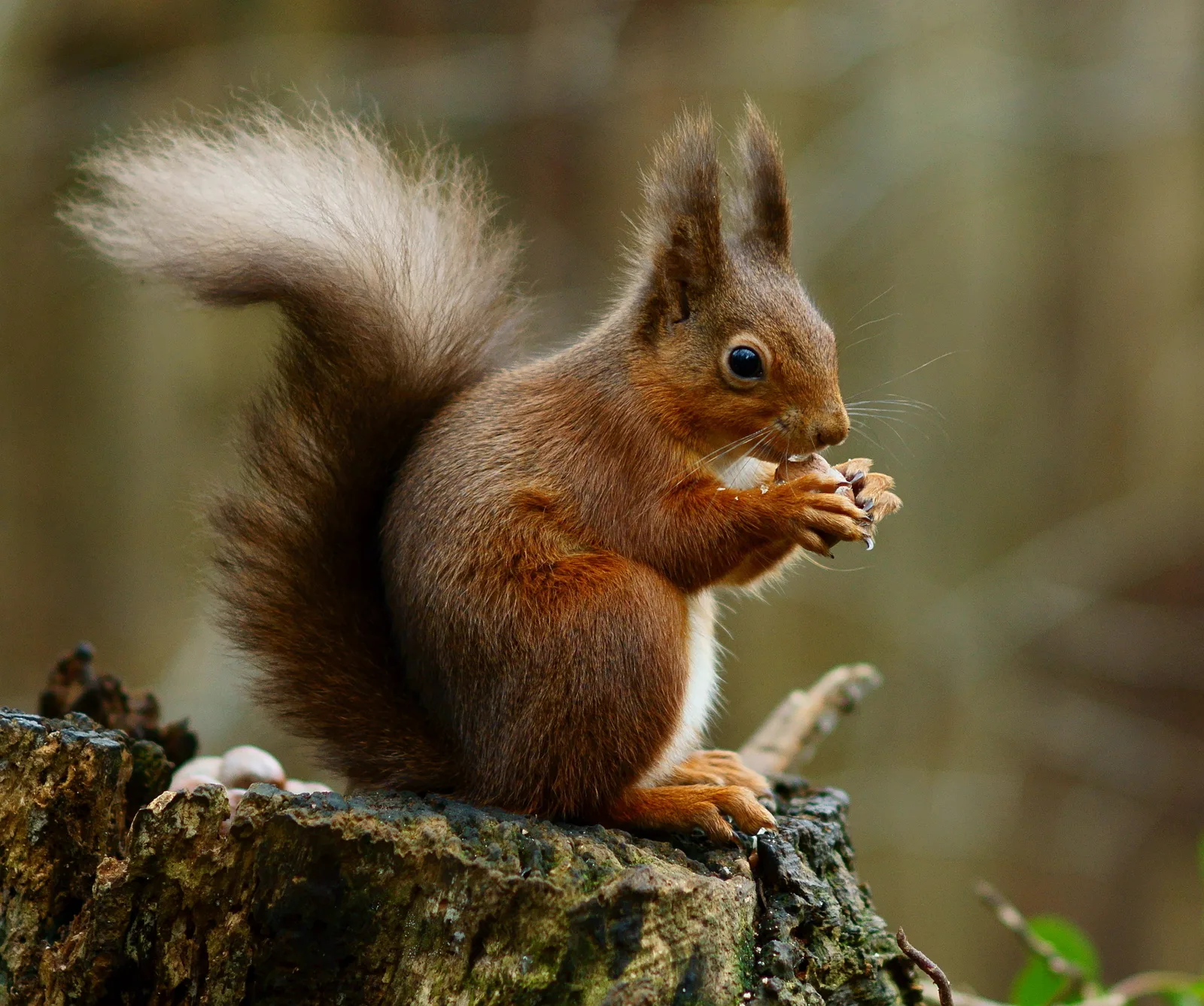
The head and body measure 19 to 23 centimetres, and the tail is 15 to 20 cm long. Adults weigh 250 to 340 grams, and males and females are the same size. The tail is nearly as long as the body and is thick with fur. The squirrel uses it to balance during a jump, wraps it round itself when asleep, and waves it in social displays. Long tufts of hair grow on the tips of the ears.
The name promises a red coat, but the back can be red, chestnut, brown, grey, black or even bluish. Animal Diversity Web says this species shows more coat variation than almost any other mammal of the region. Red coats dominate in Britain, while black animals are common on the continent and in mountain and northern forests. Whatever the colour of the back, the belly is white or cream. The squirrel moults twice a year. Between August and November it grows a thicker, darker winter coat with much longer ear tufts.
Habitat and range
The red squirrel ranges across the forested parts of Eurasia, from Iberia and Britain east to Kamchatka and Sakhalin. In the south it reaches the Mediterranean and Black Seas, northern Mongolia, Korea and north-east China. One subspecies lives on Hokkaido in Japan. People have also introduced it to Crimea, the Caucasus, parts of Central Asia and Tokyo. GBIF holds records from 71 countries, though that count includes zoo animals and escapes.
The species lives in both conifer forest and broadleaf woodland, from sea level up to the tree line in the mountains. Numbers are highest in large blocks of conifer forest, especially Scots pine, Norway spruce and Siberian pine. In western and southern Europe it uses mixed broadleaf woods, where a range of trees gives food all year. It also lives in parks, suburbs and conifer plantations, usually at lower density. It is scarce where forest is broken into small patches.
Diet and feeding
Tree seeds make up most of the diet, above all the seeds of conifers. A squirrel strips a cone scale by scale to reach the seeds inside, and leaves a chewed core behind. It also eats hazelnuts, acorns and beech mast, and opens a nut with its lower front teeth in a few seconds. Fruit, berries, fungi, lichen, buds, shoots, flowers and tree sap fill out the menu. Now and then it takes insects, bird eggs or nestlings. A Swedish study found bird remains in only four of 600 stomachs.
Food intake changes with the season, from about 80 grams a day in spring to 35 g a day in winter. In autumn the squirrel stores surplus food for the cold months. It buries nuts and cones in the soil or tucks them into holes and forks in trees. It finds these stores again by memory and smell, though its memory is weaker than that of the grey squirrel. Stores that are never recovered can sprout into new trees.
Behaviour and social life
The red squirrel is active by day. It starts at sunrise, works hardest in the morning and late afternoon, and rests in its nest around midday in summer. Between 60% and 80% of its active time goes on finding and eating food. It does not hibernate. In a storm or a hard frost it may stay in the nest for several days and live on its stores.
It builds a domed nest, called a drey, from twigs in the fork of a branch. A drey is about 25 to 30 centimetres across, and the squirrel lines it with moss, dry leaves, grass and strips of bark. Most dreys sit at least six metres up, close to the trunk. Tree hollows and old woodpecker holes serve as well. Each squirrel keeps several nests and moves between them on successive nights.
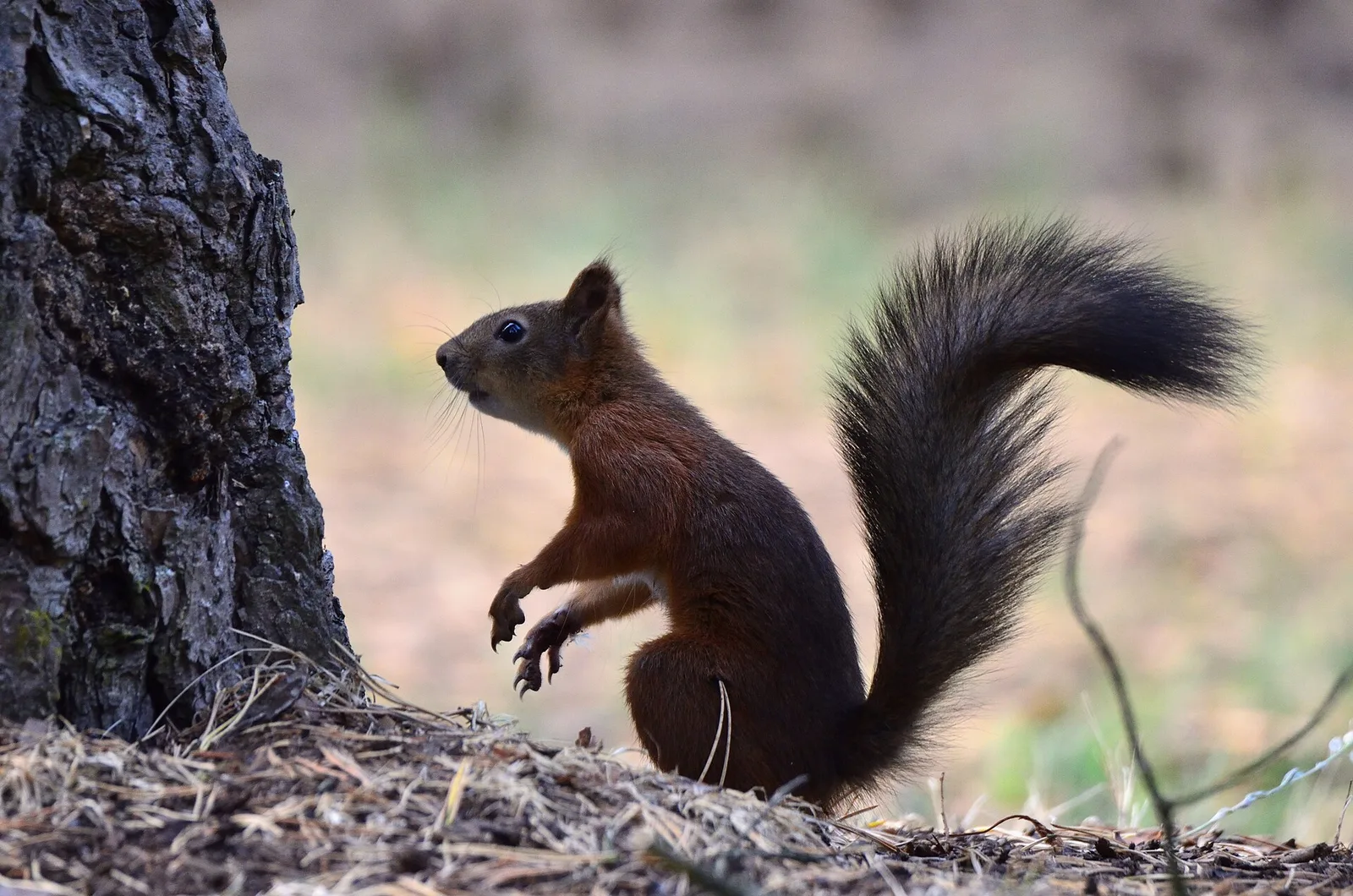
Red squirrels live alone and do not like to share food. In winter, though, several adults may sleep together in one drey for warmth. Older and larger animals dominate younger ones, and dominant males hold the largest home ranges. Home ranges overlap at the edges, and Animal Diversity Web says the species is not strongly territorial. On the ground it moves in bounds and stops often to sit up and sniff the air. In the trees it can leap between crowns up to four metres apart and always climbs down head first.
Communication and senses
The red squirrel has sharp eyesight, a keen nose and good hearing. It leaves scent on trees by rubbing glands on its face against the bark at regular spots. Urine carries the same message. These marks tell other squirrels who lives there, how high they rank, and whether they are ready to breed.
A squirrel that meets a rival calls loudly, stamps its feet and flicks its tail. If neither backs down, a fast chase follows, and the loser may get its tail bitten. Alarm calls warn other squirrels of a hawk or a cat. Between a mother and her kits, touch is also part of communication.
Reproduction and life cycle
Mating takes place in late winter, in February and March, and again in summer, in June and July. A female is in oestrus for a single day. Males follow her scent, and up to ten may chase her through the trees. The largest male usually wins and mates first, but the female often mates with others afterwards. Males take no part in raising the young.
Pregnancy lasts 38 to 39 days. A female can raise two litters a year, and a litter averages about three kits, though ten is possible. Kits are born blind, deaf and naked, and weigh 10 to 15 grams. Fur covers the body by 21 days, and the eyes open at about 30 days. Their first trip outside the nest comes at six to seven weeks, and weaning is complete by 8 to 12 weeks. After weaning they leave the area where they were born.
Young squirrels reach adult size at one year and most breed for the first time at 11 months or later. Life is short. Between 75% and 85% of kits die in their first winter, and about half of the adults die each winter after that. Most adults live 2 to 4 years, and 7 years is a record in the wild. One captive squirrel lived 14.8 years.
Predators and threats
The pine marten is the main mammal predator, because it can follow a squirrel through the branches. The Eurasian goshawk, the common buzzard and owls take squirrels from the canopy. On the ground, the red fox, the European wildcat and domestic cats and dogs all catch them. In suburbs the domestic cat is the chief killer. Stoats and climbing snakes raid nests for kits.
The biggest threat in Britain, Ireland and Italy is the eastern grey squirrel. The two species do not fight. Instead, the grey squirrel carries the squirrel parapoxvirus, which does not harm it but usually kills a red squirrel. At Formby in England, the disease cut the red population by 80% before 2008. The grey squirrel also digests acorns better, lives at higher density in broadleaf woods, and robs red squirrel food stores. Loss and fragmentation of forest threaten red squirrels across much of their range.
Population and conservation
The IUCN lists the red squirrel as Least Concern, but the global trend is downward. Regional lists rate it Near Threatened in Mongolia and Croatia and Vulnerable in Poland and China. The Bern Convention protects it in most of Europe, but in parts of Russia and Mongolia it is still hunted for fur. The British subspecies is in critical decline. Fewer than 160,000 remain in the UK, and about 120,000 of those are in Scotland.
British conservation rests on removing grey squirrels from places where reds survive. On Anglesey, grey squirrel control began in 1998, and the island now holds the largest red population in Wales. Brownsea Island and the Isle of Wight have only red squirrels, and islanders report any grey they see. Where the pine marten has spread back into England and Scotland, grey squirrels retreat, because greys spend more time on the ground. A government project now tests an oral contraceptive for grey squirrels, given from feeders that reds cannot open.
Relationship with humans
People have hunted the red squirrel for meat and fur for centuries. In the Middle Ages its pelt was a valued trade good across Europe. One study suggests the fur trade may have carried leprosy into medieval England, because the same strain occurs in squirrels on Brownsea Island today. In parts of the former Soviet Union the thick winter pelt is still sold.
In towns the red squirrel is a welcome sight, and volunteers across Britain count it and defend it. Foresters are less fond of it. It strips bark to reach the sap layer beneath, which slows tree growth and can damage a conifer plantation. Gardeners lose bulbs, flowers and vegetables to it, and it can be a noisy lodger in a roof. In Britain it is illegal to kill a red squirrel or to release a captured grey one. New Zealand bans its import as a prohibited new organism.
In culture and myth
In Norse tradition a squirrel called Ratatoskr races along the trunk of Yggdrasil, the world tree. It ferries gossip and abuse from the eagle in the crown down to the serpent Nidhogg among the roots. Scandinavian artists usually draw Ratatoskr as a red squirrel. Denmark has made the red squirrel its national mammal.
Medieval bestiaries used the squirrel as a symbol of thrift, because it stores nuts for winter. Later Christian writers turned that image around and linked the red coat and restless habits with the devil. In heraldry a squirrel is shown sitting upright with a nut in its paws. In some languages the phrase squirrel pelt is still a slang word for money, a memory of the fur trade. Modern spirit-animal writers read the red squirrel as a sign of energy and preparation, but that is probably a recent invention.
A sentence with a dotted underline is inferred: it describes the group the animal belongs to, or is a reading of the sources, rather than a measured or reported fact about this species.
Questions
Red squirrel questions, answered
How big is a red squirrel?
The head and body measure 19 to 23 centimetres, and the tail adds 15 to 20 cm. An adult weighs 250 to 340 grams.
Where do red squirrels live?
They live in conifer and broadleaf forests across Europe and northern Asia, from Spain and Britain to Siberia, Korea and Hokkaido. They also use parks and suburbs.
What do red squirrels eat?
Mostly tree seeds, above all conifer seeds, plus hazelnuts, acorns, fungi, berries, buds and sap. Now and then they take insects or bird eggs.
Do red squirrels hibernate?
No. They stay active all winter and live on stored food. In bad weather they may stay in the nest for several days.
Are red squirrels endangered?
The IUCN lists the species as Least Concern because it is common across Eurasia. In Britain, Ireland and Italy it has declined badly, and fewer than 160,000 remain in the UK.
Why are red squirrels disappearing in Britain?
The introduced eastern grey squirrel carries a virus that kills red squirrels, digests acorns better and robs their food stores. Loss of forest adds to the problem.
How long do red squirrels live?
Most wild adults reach only 2 to 4 years, and the wild record is 7. In captivity one animal reached 14.8 years.
How many babies does a red squirrel have?
A litter averages about three kits, though a female can have up to ten. She may raise two litters a year.
Are red squirrels always red?
No. The back can be red, chestnut, brown, grey or black, and black animals are common on the continent. The belly is always white or cream.
What is a red squirrel's nest called?
It is called a drey. It is a domed ball of twigs about 25 to 30 centimetres across, lined with moss and leaves, and built high in a tree.
What eats red squirrels?
Pine martens, goshawks, buzzards and owls hunt them in the trees. Foxes, wildcats and domestic cats catch them on the ground.
How far can a red squirrel jump?
It can leap between trees up to four metres apart. Its long tail helps it balance and steer.
Are red squirrels dangerous?
No. They avoid people and flee up a tree. A hand-fed squirrel can bite, so it is best not to touch one.
Can you keep a red squirrel as a pet?
No. It is a shy wild animal that needs trees and a large range, and in Britain it is protected by law.
What is the difference between a red squirrel and a grey squirrel?
The red squirrel is smaller, has a redder coat and grows long ear tufts in winter. The grey squirrel comes from North America and is larger and heavier.
Is the red squirrel a national animal?
Yes. Denmark has chosen the red squirrel as its national mammal.
Food web
Prey and food
- conifer seeds
- hazelnuts
- acorns
- fungi
- berries
- buds
- occasionally eggs
Food web
Predators
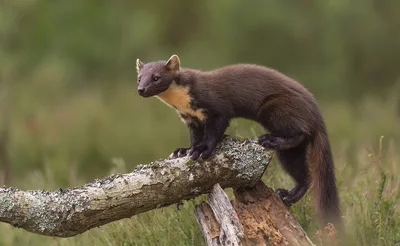 European pine marten
- goshawk
- buzzard
- owls
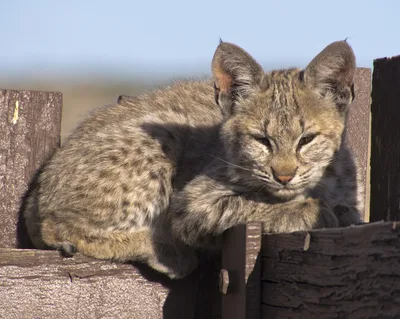 Bobcat
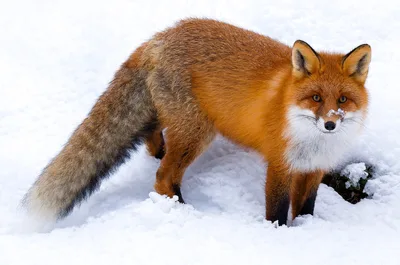 Red fox
- domestic cat
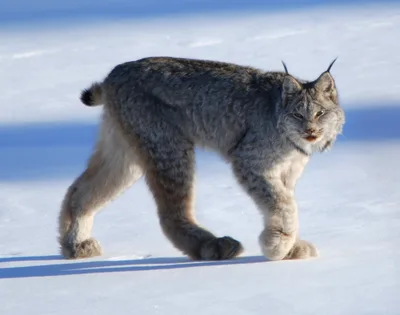 Canada lynx
Ecological equivalents
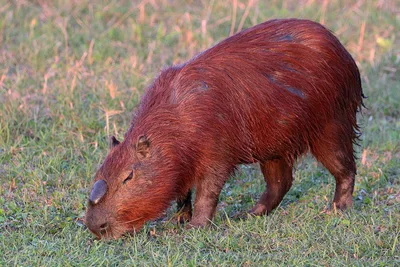
Related species on this site
Eastern gray squirrel (same genus), Fox Squirrel (same genus), Japanese Squirrel (same genus), Chipmunk (same family), Eastern Chipmunk (same family), Flying Squirrel (same family), and more.
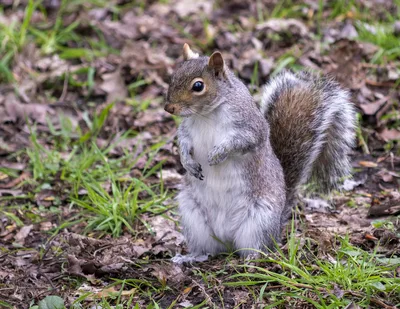 LC
Mammals
Eastern gray squirrel
Sciurus carolinensis
The eastern gray squirrel is a medium-sized tree squirrel of the oak and hickory forests of eastern North America.
Living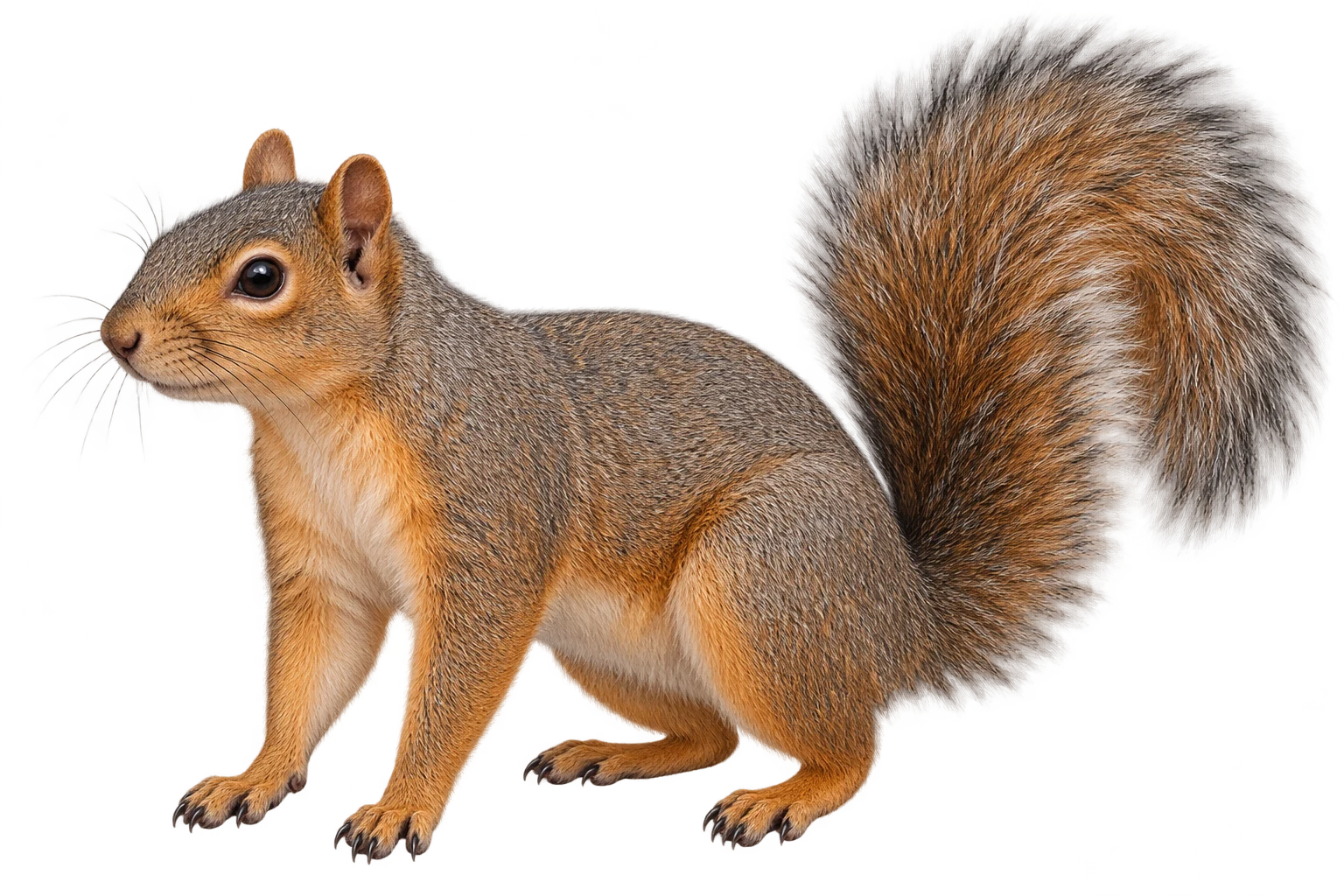
Mammals
Fox Squirrel
Sciurus niger
Classification and source reference
LivingAI illustration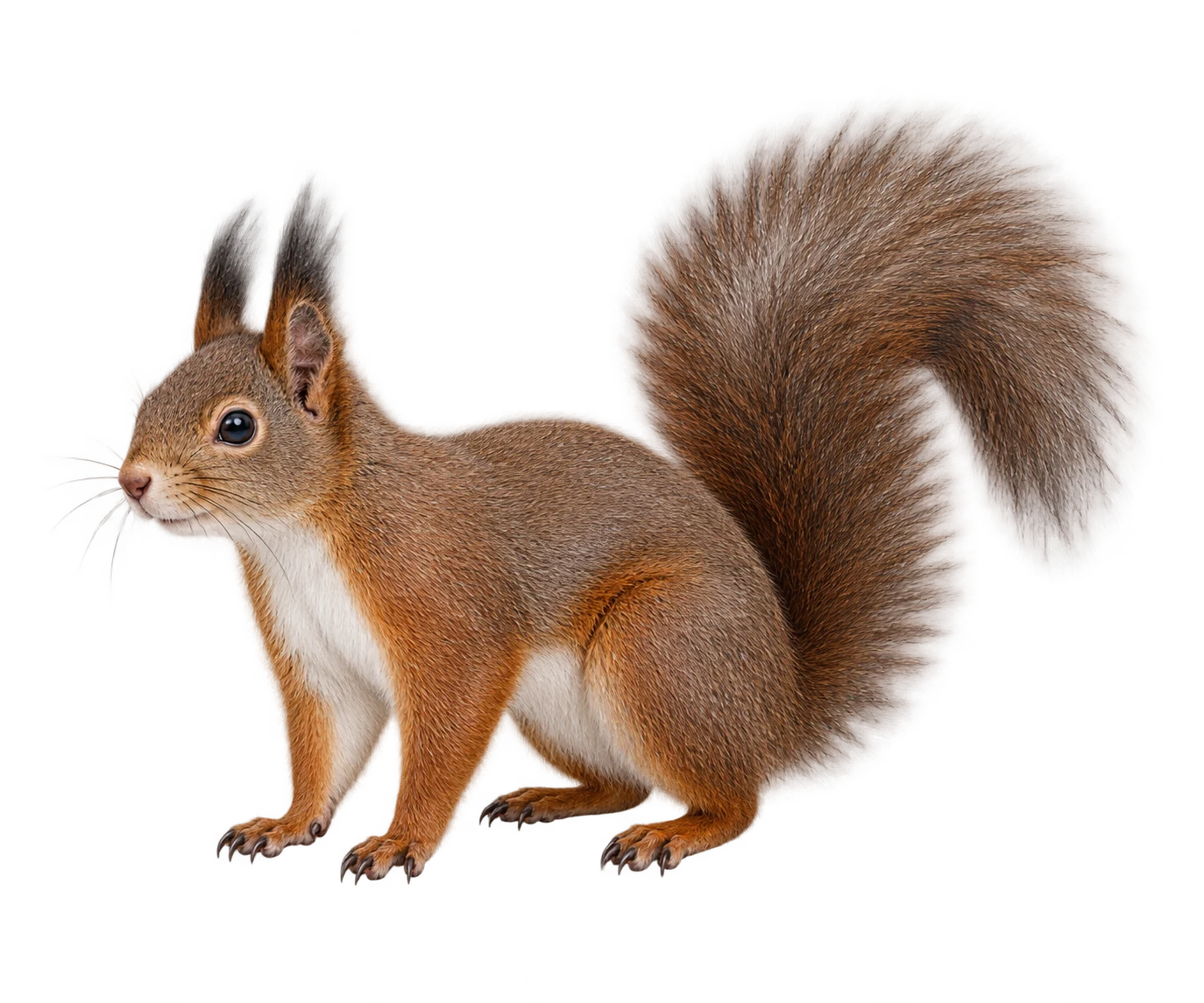
Mammals
Japanese Squirrel
Sciurus lis
Classification and source reference
LivingAI illustration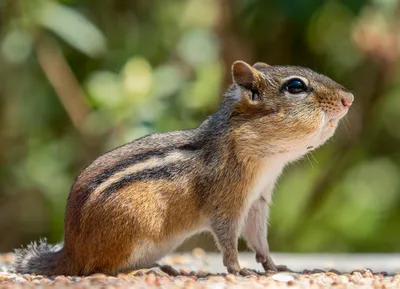
Mammals
Chipmunk
Tamias
Chipmunks are small striped squirrels.
Living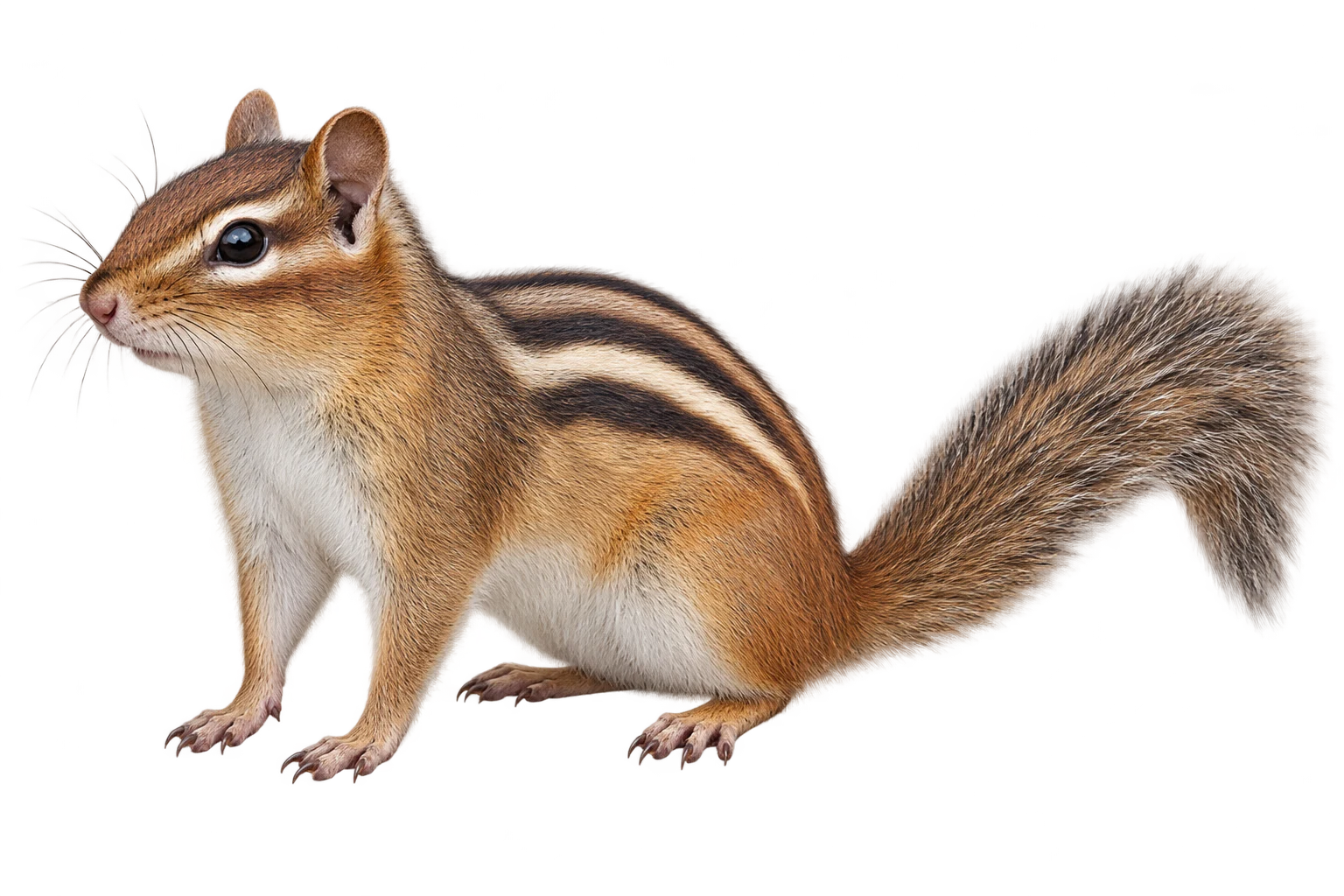
Mammals
Eastern Chipmunk
Tamias striatus
Classification and source reference
LivingAI illustration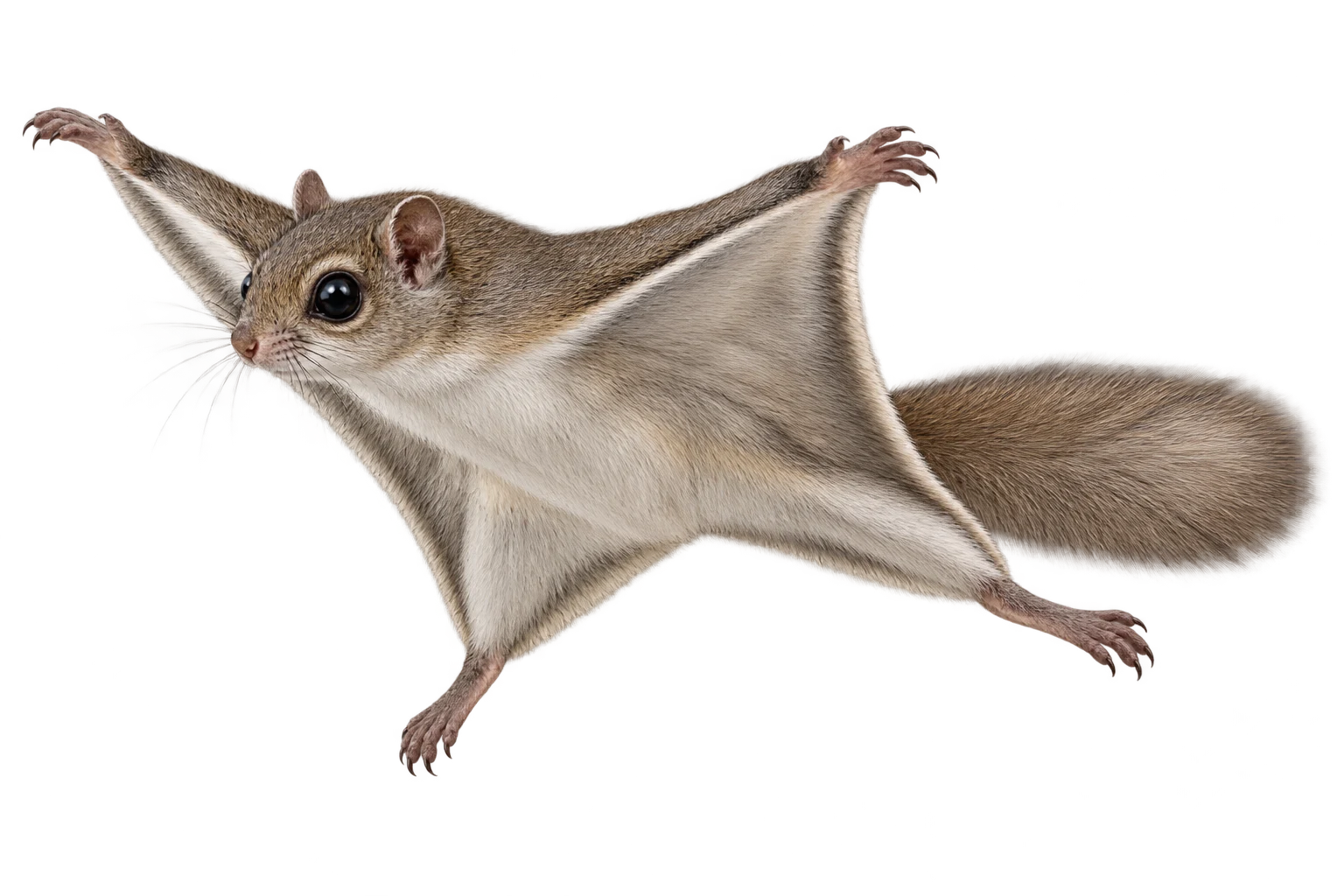
Mammals
Flying Squirrel
Sciuridae
Classification and source reference
LivingAI illustration