Living individuals or members of this group exist today. This does not mean they are safe from extinction.
Meet the capybara
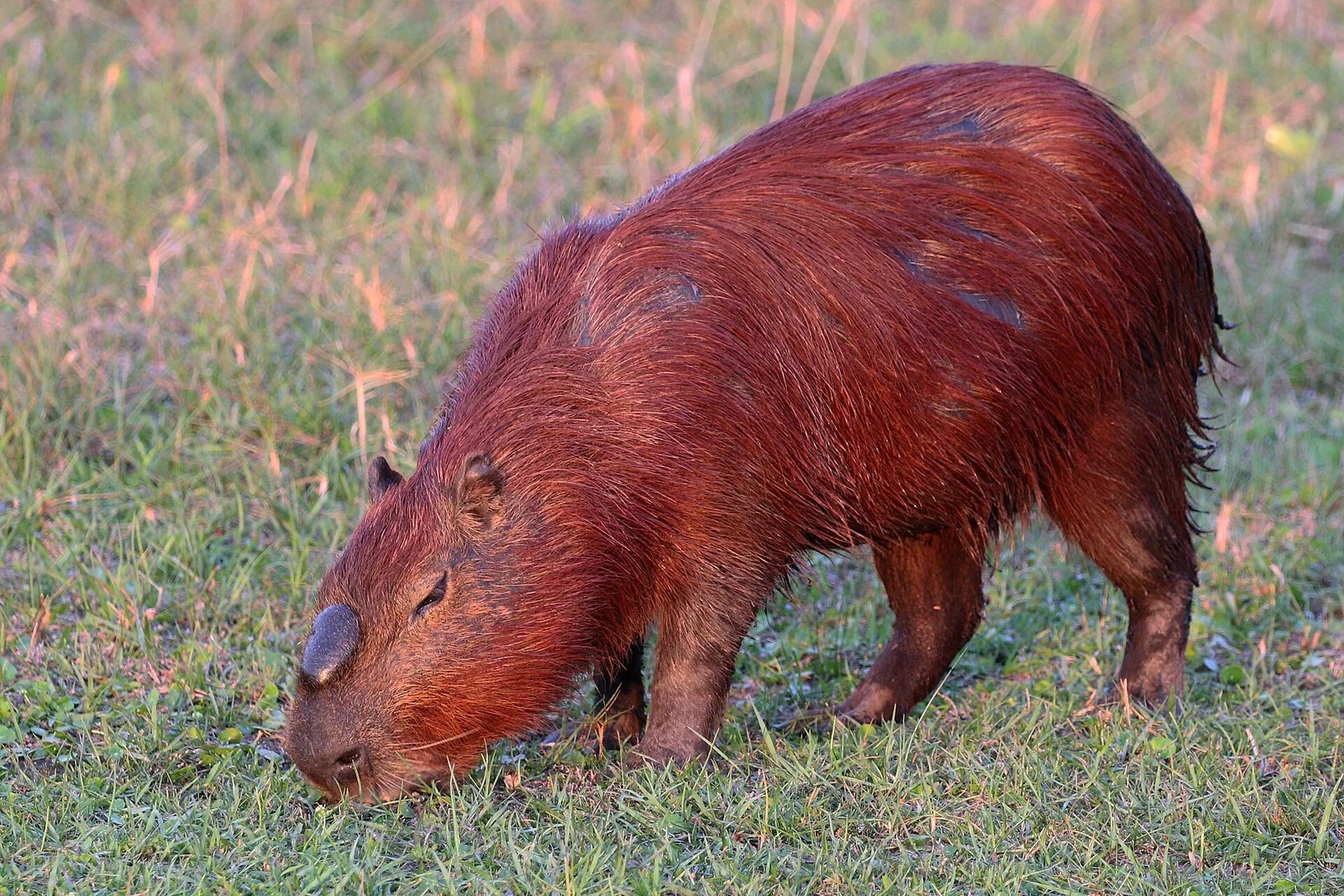
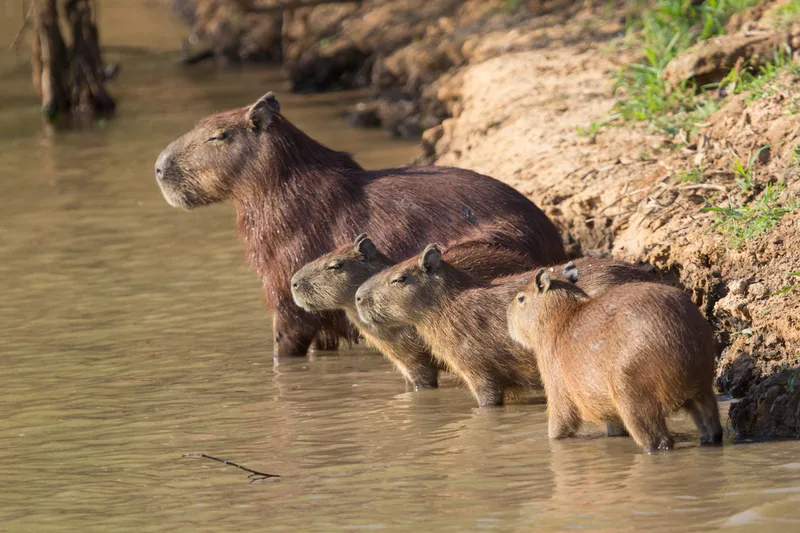
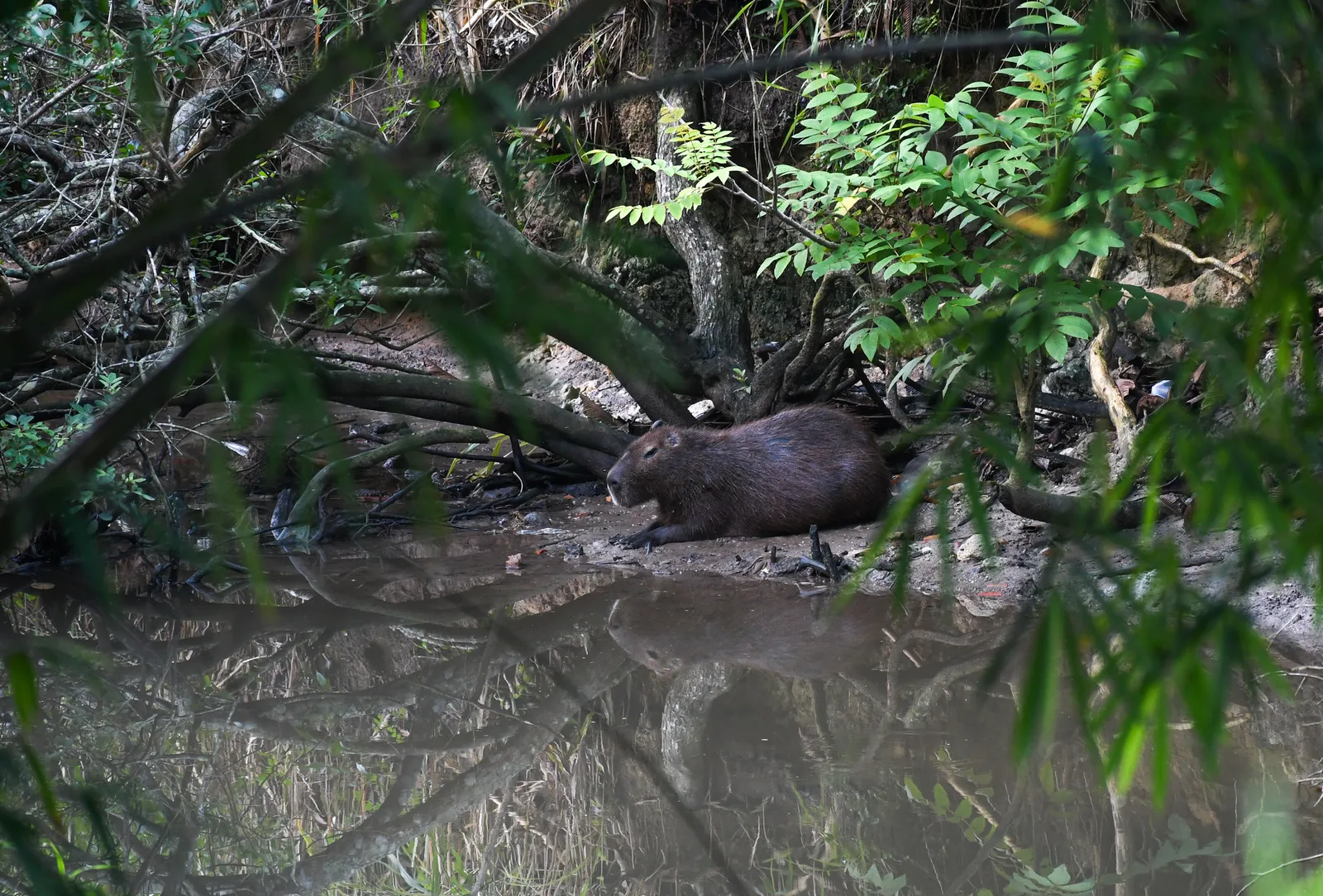
The capybara is the largest rodent in the world. It lives in groups beside South American rivers and marshes and retreats into the water when threatened.
Images of the capybara
Lifespan in the wild
Up to 10 years
Weight
35 to 66 kg
Length
1.06 to 1.34 m
Height
50 to 62 cm
Fact file
Capybara
- Location
- Most of South America east of the Andes
- Habitat
- Wetlands, Rivers and lakes, Grassland
- Diet
- Herbivore
- Prey / food
- Grasses, aquatic plants, bark, fruit
- Predators
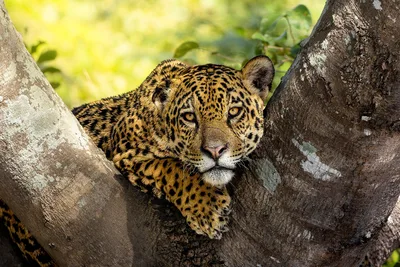
- Jaguars, anacondas, caimans, harpy eagles
- Lifestyle
- Crepuscular
- Group name
- Herd
- Name of young
- Pup
- Gestation
- About 150 days
- Litter size
- 2 to 8 pups
- Biggest threat
- Hunting for meat and hide
- Distinctive feature
- A barrel body and slightly webbed feet
- Colour
- Red-brown to yellow-brown
- Skin type
- Coarse hair
Size
Next to a person
Measurements
Size and speed
- Height
- 50 to 62 cm at the shoulder
- Length
- 1.06 to 1.34 m
- Weight
- 35 to 66 kg, up to 91 kg
Typical adult ranges. Source: Wikipedia.
Life cycle
Lifespan
- In the wildUp to 10 years
- In captivityUp to 15.1 years
- 015.1 years
The pale bar is the record. Sources: Animal Diversity Web, AnAge.
Appearance
Colour and coat
- Primary colours
- red-brown
- Secondary colours
- yellow-brownblack
- Skin type
- coarse hair
- Male and female
- Slight. Females are a little heavier than males. Adult males carry a bare scent gland on the snout, and both sexes look otherwise alike.
Life cycle
Mating and family
- Mating system
- polygynous to promiscuous, with a dominant male and subordinate males that also mate
- Social structure
- groups of about 10 to 20 with one dominant male, several females and their young
- Breeding
- one litter a year, sometimes two, of about four pups
There is no fixed breeding season, but births peak at the start of the rains. After about 150 days the female gives birth on land to one to eight pups, usually about four. The pups walk within hours, graze within a week and take milk from every female in the group until about 16 weeks. They stay with the group for about a year. Few wild capybaras live past four years, and the maximum in the wild is about 10.
Classification
Taxonomy
- Kingdom
- Animalia
- Phylum
- Chordata
- Class
- Mammalia
- Order
- Rodentia
- Family
- Caviidae
- Genus
- Hydrochoerus
- Species
- Hydrochoerus hydrochaeris
Conservation
Red List status
- LC
- NT
- VU
- EN
- CR
- EW
- EX
Least Concern on the IUCN Red List
Range
Recorded in 12 countries
Habitat layer: tropical grassland, savanna and shrubland, temperate grassland, savanna and shrubland, flooded grassland and savanna, mangrove.
Countries from 11,021 wild records on GBIF (iNaturalist research grade), filtered and checked by hand. Country shapes: Natural Earth. Habitat: RESOLVE Ecoregions 2017, CC BY 4.0. Basemap: Natural Earth.
Habitats
Three things to know
- 1
Eyes, ears and nostrils sit high on the head so it can stay almost submerged.
- 2
A capybara can hold its breath for up to five minutes.
- 3
Many other animals sit on capybaras, from birds to monkeys.
Did you know
Seven more facts
- 1
The name comes from a Tupi word that means grass eater.
- 2
Female capybaras are slightly heavier than males.
- 3
A capybara has sweat glands in its hairy skin, which is rare for a rodent.
- 4
Like a guinea pig, it cannot make its own vitamin C.
- 5
Capybaras once lived in Florida and California, and escaped animals now turn up there again.
- 6
In Venezuela it is eaten during Lent because a legend says the Church counted it as fish.
- 7
Its front teeth and cheek teeth never stop growing.
Field notes
How it looks and acts
Field notes
Distinguishing features
- A barrel-shaped body with almost no tail.
- Eyes, ears and nostrils set high on a broad, blunt head.
- Partly webbed feet, with four toes in front and three behind.
- Coarse red-brown hair with no underfur.
- A bare scent gland, the morrillo, on the snout of an adult male.
- A shoulder height of 50 to 62 centimetres.
Field notes
Unique adaptations
- High-set eyes and nostrils let it watch and breathe while almost submerged.
- Webbed feet and a body barely denser than water make it a strong swimmer.
- Ever-growing teeth cope with the wear of chewing grass.
- Eating its droppings recovers protein and vitamins from tough grass.
- Group vigilance gives every animal more time to graze in the open.
Field notes
Interesting behaviours
- Spends the hottest hours of the day in the water.
- Runs into the water and dives at an alarm bark.
- Rubs its snout gland on plants to mark territory.
- Chews food a second time after bringing it back up.
- Lets birds sit on its back and pick off insects.
Field notes
Temperament
- Calm and tolerant of other animals and of people.
- Highly social, and rarely found alone.
- Males hold a strict rank order but seldom fight.
- Wary while grazing, with a quick retreat to water.
Field notes
Communication
- A bark warns the group of a predator.
- A female whistles through her nose when she is ready to mate.
- Purrs, chirps and huffs pass between group members.
- Scent from the morrillo and anal glands marks rank and territory.
Ecology
Ecological role
The capybara is often the only large grazer in its wetlands, and it feeds most of the big predators around it.
- Shapes wetland vegetation by grazing grasses and water plants.
- Feeds jaguars, caimans, anacondas, ocelots, cougars and eagles, especially with its young.
- Hosts birds that pick parasites from its fur or catch insects it flushes from the grass.
- Its dung probably returns nutrients to the water and the grazing lawns it uses.
Stories
Myths and legends
- In South American tradition, the capybara is thought to be a sign of fertility and plenty, linked to water spirits.
- In some South American tales, the capybara is thought to bring rain in a drought.
- In Paraguayan tradition, the capybara may play the prankster.
- In Venezuelan Catholic tradition, the Church is said to have ruled the capybara a fish, which made it a Lent food.
People
Relationship with humans
People
Living alongside us
People across South America hunt the capybara for meat, leather and grease, and in Venezuela it is a traditional Lent dish. Ranches now farm it, and it grazes more efficiently than cattle. It is docile in zoos and parks and lets visitors pet it, though its ticks can carry disease. Online it has become a symbol of calm.
- The capybara is a grazer and does not attack people.
- Its ticks can carry Rocky Mountain spotted fever, so keepers discourage contact.
- Like any large rodent, it could probably bite if grabbed, but such cases are rare.
People
Status, uses and products
- Domestication
- Wild
- As a pet
- Not suitable. A capybara needs a pond, a group of its own kind and a large area of grass. Kept alone it is stressed, and its ticks can carry disease. It suits a farm or a zoo, not a home.
- Uses
- meatleatherecotourismzoo exhibition
- Products
- meathidegrease
The full account
About the capybara
The capybara, Hydrochoerus hydrochaeris, is the biggest rodent alive today. It is a close relative of the guinea pig, grown to the size of a small pig. It is built for a life half in water. It lives beside rivers, lakes and marshes in every South American country except Chile. Its eyes, ears and nostrils sit high on the head, so it can float with almost all of its body below the surface. When a predator appears, the whole group runs into the water and dives.
An adult weighs 35 to 66 kilograms, measures 106 to 134 centimetres long and stands 50 to 62 cm at the shoulder. It grazes grass and water plants, and it eats its own droppings each morning to digest that grass a second time. Capybaras live in groups of about 10 to 20, with one dominant male, several females and their young. The IUCN lists the species as Least Concern, because it is widespread, breeds fast and thrives on cattle ranches. People hunt and farm it for meat and leather, and in recent years it has become an internet symbol of calm.
Name and taxonomy
The name capybara comes from the Tupi word ka'apiuara, which joins the words for leaf, slender, eat and doer. It means grass eater. The genus name Hydrochoerus comes from the Greek for water and pig, and the species name hydrochaeris means one who enjoys water. In Spanish the animal is called carpincho in the south and chiguire in Venezuela and Colombia, and in Portuguese it is capivara. German speakers call it Wasserschwein, the water pig.
The capybara belongs to the family Caviidae, which also holds the guinea pigs and the rock cavies. Within that family it sits in the subfamily Hydrochoerinae with the rock cavies of the genus Kerodon. Older classifications gave the capybaras a family of their own, Hydrochoeridae, but molecular studies since 2002 placed them inside Caviidae. Its only living relative in the genus is the lesser capybara, Hydrochoerus isthmius, of Panama and northern South America. No subspecies are recognised.
Evolution and relatives
The capybara is a caviomorph rodent, part of the South American group that also includes the agouti, the chinchilla and the coypu. Fossil capybaras include the genera Cardiatherium, Phugatherium, Hydrochoeropsis and Neochoerus. The fossil record once looked far richer than it is, because capybara molars change shape as an animal ages. In one case, bones assigned to four genera and seven species turned out to be one species, Cardiatherium paranense, at different ages.
Capybaras once lived far outside South America. In the late Pleistocene one species lived in Florida, Hydrochoerus hesperotiganites lived in California and Hydrochoerus gaylordi lived in Grenada. Escaped capybaras now turn up in Florida, and one was seen on the Central Coast of California in 2011. Those escapes may be filling the niche the Pleistocene species left empty.
Appearance
The capybara is heavy and barrel-shaped, with a broad blunt head and almost no tail. Adults measure 106 to 134 centimetres from nose to rump and stand 50 to 62 cm at the withers. Most weigh 35 to 66 kilograms, and the average in the Venezuelan Llanos is 48.9 kg. The record is a wild female from Brazil at 91 kg. Females are slightly heavier than males, which is unusual among mammals. A wild male from Uruguay reached 73.5 kg, and an 81 kg animal was reported in Sao Paulo.
The coat is coarse and thin, red-brown on the back and yellow-brown on the belly, sometimes black on the face. Hairs run from 30 to 120 millimetres long, and there is no soft underfur. Sweat glands open on the hairy skin, a rare feature among rodents. The feet are partly webbed, with four toes in front and three behind, and the hind legs are a little longer than the front legs. An adult male carries a bare oval gland on top of the snout, called the morrillo. The front teeth grow throughout life to keep pace with the wear of grazing, and so do the cheek teeth.
Habitat and range
The capybara lives east of the Andes across Colombia, Venezuela, the Guianas, Brazil, Ecuador, Peru, Bolivia, Paraguay, Uruguay and northern Argentina. It is absent only from Chile among the countries of South America. GBIF holds records from 26 countries, but that figure includes zoos and escapes, not the native range. iNaturalist lists 18,158 observations of the species.
It needs fresh water close at hand, and it lives beside rivers, lakes, ponds, streams, swamps and reservoirs. Flooded savanna, marsh edges and gallery forest along rivers are its favourite habitats, and it also uses dry forest and scrub. The Llanos of Venezuela and the Pantanal of Brazil hold some of the densest populations. Most animals live in the lowlands, and the highest record is 1,500 metres in the Chapada dos Veadeiros National Park. Cattle ranches suit it well, because they combine open grazing with permanent water. A group's home range covers about 5 to 16 hectares in rich habitat and can exceed 200 ha where food is poor.
Diet and feeding
The capybara is a grazer. Grasses and water plants make up most of its diet, with sedges, reeds, fruit and bark added at times. It is a picky feeder and will strip the leaves of one plant species while it ignores the plants around it. In the dry season it eats a wider range of plants, and it switches from grass to reeds when the grass fails. It sometimes raids gardens and fields for melons, squashes and grain.
Grass is hard to digest, so the capybara passes it through twice. Each morning it eats its own soft droppings, which carry the gut bacteria that break down cellulose. It also brings food back up to chew again, much as a cow chews the cud. The jaw hinge is set so that the animal grinds its food with a front-to-back motion, not a sideways one. Like the guinea pig, it cannot make vitamin C, and captive animals without a supplement develop gum disease.
Behaviour and social life
Capybaras are most active around dawn and in the early evening. They rest on land in the morning, spend the hot afternoon in the water, then graze through the late afternoon and night. A large body loses heat slowly, so they wallow to keep cool. Where hunting is heavy they become nocturnal. They swim strongly, because the body is only slightly denser than water, and they can stay under for up to five minutes.
A typical group holds 10 to 20 animals: a few adult males, more adult females and their young. In the dry season groups of 50 or even 100 gather around the last water. A single dominant male leads each group and holds a territory that includes water, grazing and a resting place. Males keep a strict rank order by chasing, and they rarely fight. Groups are stable, and one group can hold the same territory for more than three years.
A lone capybara is rare, because an animal without a group is shut out of the best grazing and cannot find a mate. Some group members watch while others feed, and a bark sends everyone into the water. Capybaras do not travel far: in one study 40% of marked animals were recaptured within 100 metres two years later. They tolerate other animals well, and birds ride on their backs to pick off insects.
Communication and senses
Capybaras bark, chirp, whistle, huff and purr, and the young call almost constantly. A dog-like bark warns the group of danger. A female in heat whistles through her nose to tell males she is ready. The purpose of many sounds is still unknown.
Scent matters as much as sound. The male's morrillo gland gives off a white liquid that acts as a chemical fingerprint of his rank. He rubs it on plants to mark territory and smears it on his own body to advertise for a mate. Both sexes have anal glands, and the male's are lined with hairs that carry a long-lasting crystalline scent. Other capybaras taste these marks to learn who left them. Like other rodents, the capybara probably relies more on smell and hearing than on sharp eyesight.
Reproduction and life cycle
Capybaras breed all year, with a peak at the start of the rains. In Venezuela births peak in April and May, and in Mato Grosso in October and November. When a female comes into heat her scent changes, and a male follows her closely, sometimes for a long time. A higher-ranking male often drives him off and takes his place. Mating happens only in the water, and a female who does not want a male simply dives or walks out.
The dominant male gets more matings than any single rival, but the subordinate males together father more young than he does. Gestation lasts about 150 days. A litter holds one to eight pups, usually about four, born on land. The mother rejoins the group within hours, and the pups follow as soon as they can walk. They graze within a week, and any female in the group will nurse them until weaning at about 16 weeks.
The young of a group form a creche, and every adult shares the watch for predators. Pups are small, slow and easily tired in their first year, so the group's protection keeps them alive. They stay with the group until about a year old. In the wild a capybara lives up to 10 years, though most die before four, and the captive record is 15.1 years.
Predators and threats
The capybara feeds many predators. Jaguars, ocelots and cougars take adults, and caimans, green anacondas and eagles take the young. A grazing capybara looks up constantly, and one bark sends the group into the water. There it floats with only the eyes and nostrils above the surface, or dives and swims away below. Because so many die young, few wild capybaras pass four years of age.
People are the other main predator, and hunting for meat and hide has cut some local populations. Ranchers sometimes kill capybaras as competitors for cattle pasture. Ticks on capybaras can carry Rocky Mountain spotted fever, and the animals are suspected reservoirs of a Lyme-like disease in Brazil.
Population and conservation
The IUCN Red List rates the capybara as Least Concern. It has a very wide range, lives in many protected areas and reaches high densities, up to nearly 15 animals per hectare in the Pantanal. The population is stable across most of South America. Fast breeding helps it recover from hunting. A female can raise one or two litters a year, and the young breed within a few years.
Over-hunting has reduced numbers in some places, and Colombia's Valle del Cauca lists it as regionally threatened. Farming the animal for meat has eased pressure on wild herds and given landowners a reason to keep wetlands intact. Capybaras have adapted well to towns and parks, and they are now a familiar sight in South American cities. In Europe, Drusillas Park in Sussex keeps the studbook that tracks every captive capybara birth, death and move.
Relationship with humans
South Americans have eaten capybara for centuries, and the meat and leather are both prized. In Venezuela capybara is a Lent and Holy Week dish, because the Catholic Church is said to have classed the animal as fish. The story is that its watery habits convinced early priests, and the dispensation is often dated to the 1700s. Ranching capybaras has been proposed to curb illegal hunting, and they graze more efficiently than cattle. Capybara grease from the thick fatty skin is also collected.
The animals are docile and let visitors pet and hand-feed them in zoos and parks. Keepers discourage contact, because their ticks can carry disease. A capybara cafe in St Augustine, Florida, lets visitors scratch their heads. Hot spring baths for capybaras at Izu Shaboten Zoo in Japan have drawn millions of video views. The bathing capybaras inspired plush toys and the anime character Kapibara-san.
In culture and myth
In South American folklore the capybara is thought to stand for fertility, abundance and the water spirits. In some stories it is thought to bring rain in a drought. In Paraguayan tales it may appear as a prankster. The Lent legend, in which the Church declared the capybara a fish, is the best-known story about the animal.
In the 2020s the capybara became a meme, and one common format sets it to Don Toliver's song After Party. A capybara song went viral on TikTok in 2022. Fans in Japan and China treat it as a model of calm, and writers have called its manner buddha-like. In August 2021 capybaras overran Nordelta, a gated estate north of Buenos Aires built on their wetland. Social media users joked that the rodents had become a symbol of class struggle.
A sentence with a dotted underline is inferred: it describes the group the animal belongs to, or is a reading of the sources, rather than a measured or reported fact about this species.
Questions
Capybara questions, answered
How big is a capybara?
Most adults weigh 35 to 66 kilograms and measure 106 to 134 centimetres long. They stand 50 to 62 cm at the shoulder. The heaviest wild capybara on record was a female of 91 kg.
Where do capybaras live?
Beside rivers, lakes and marshes in every South American country except Chile. They favour flooded savanna and gallery forest, and they thrive on cattle ranches. A few escaped animals live in Florida.
What do capybaras eat?
Mainly grasses and water plants, with reeds, fruit and bark at times. They eat their own droppings each morning to digest the grass a second time.
Are capybaras endangered?
No. The IUCN lists the capybara as Least Concern. It has a huge range, breeds fast and is common in many protected areas, though hunting has reduced some local populations.
Can capybaras swim?
Yes, very well. Their feet are partly webbed and their bodies are only a little denser than water. They can stay under for up to five minutes and often float with only the eyes and nostrils showing.
How long do capybaras live?
Up to about 10 years in the wild, though most die before four because of predators. In captivity the record is 15.1 years.
Why are capybaras so friendly?
They live in stable groups and rely on shared vigilance rather than aggression. That makes them tolerant of other animals, and birds, monkeys and even caimans are seen resting near them. In zoos they let people pet and feed them.
Are capybaras dangerous?
No. They graze and run into the water when threatened. The only real risk is their ticks, which can carry Rocky Mountain spotted fever.
Can you keep a capybara as a pet?
It is legal in some places, but a capybara needs a pond, grass and company of its own kind. Kept alone it suffers. It belongs on a farm or in a zoo, not in a house.
What eats capybaras?
Jaguars, ocelots and cougars take adults. Caimans, green anacondas and eagles take the young. People hunt them for meat and leather.
How many babies does a capybara have?
One to eight pups, usually about four, after a gestation of about 150 days. The pups can walk within hours and graze within a week.
Do capybaras eat their own poop?
Yes. Each morning they eat their soft droppings to take in gut bacteria that break down cellulose. This lets them get more protein and vitamins from grass.
Why is the capybara called a fish?
A legend says the Catholic Church once classed it as a fish because it lives in water. That allowed people in Venezuela to eat it during Lent, and the custom continues today.
Is a capybara a rodent?
Yes. It is the largest rodent alive and a close relative of the guinea pig and the rock cavies. Like other rodents its front teeth never stop growing.
What is the capybara's closest relative?
The lesser capybara, Hydrochoerus isthmius, is the only other living species in the genus. Beyond that its closest kin are the rock cavies and guinea pigs.
Food web
Prey and food
- grasses
- aquatic plants
- bark
- fruit
Food web
Predators
 Jaguar
- anacondas
- caimans
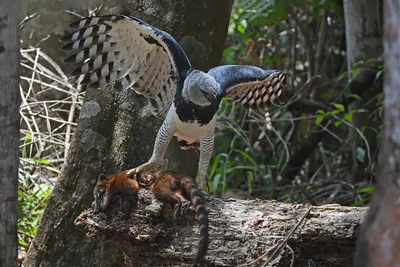 Harpy eagle
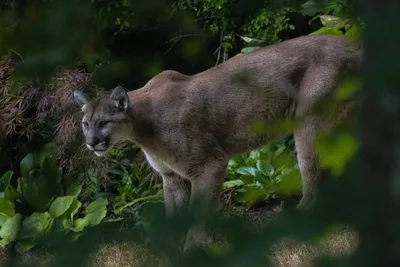 Cougar
Ecological equivalents
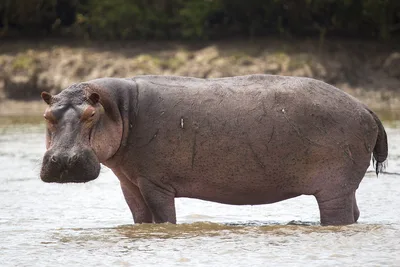
Related species on this site
Abyssinian Guinea Pig (same family), English Crested Guinea Pig (same family), Patagonian Cavy (same family), Patagonian Mara (same family), Peruvian Guinea Pig (same family), Teddy Guinea Pig (same family), and more.
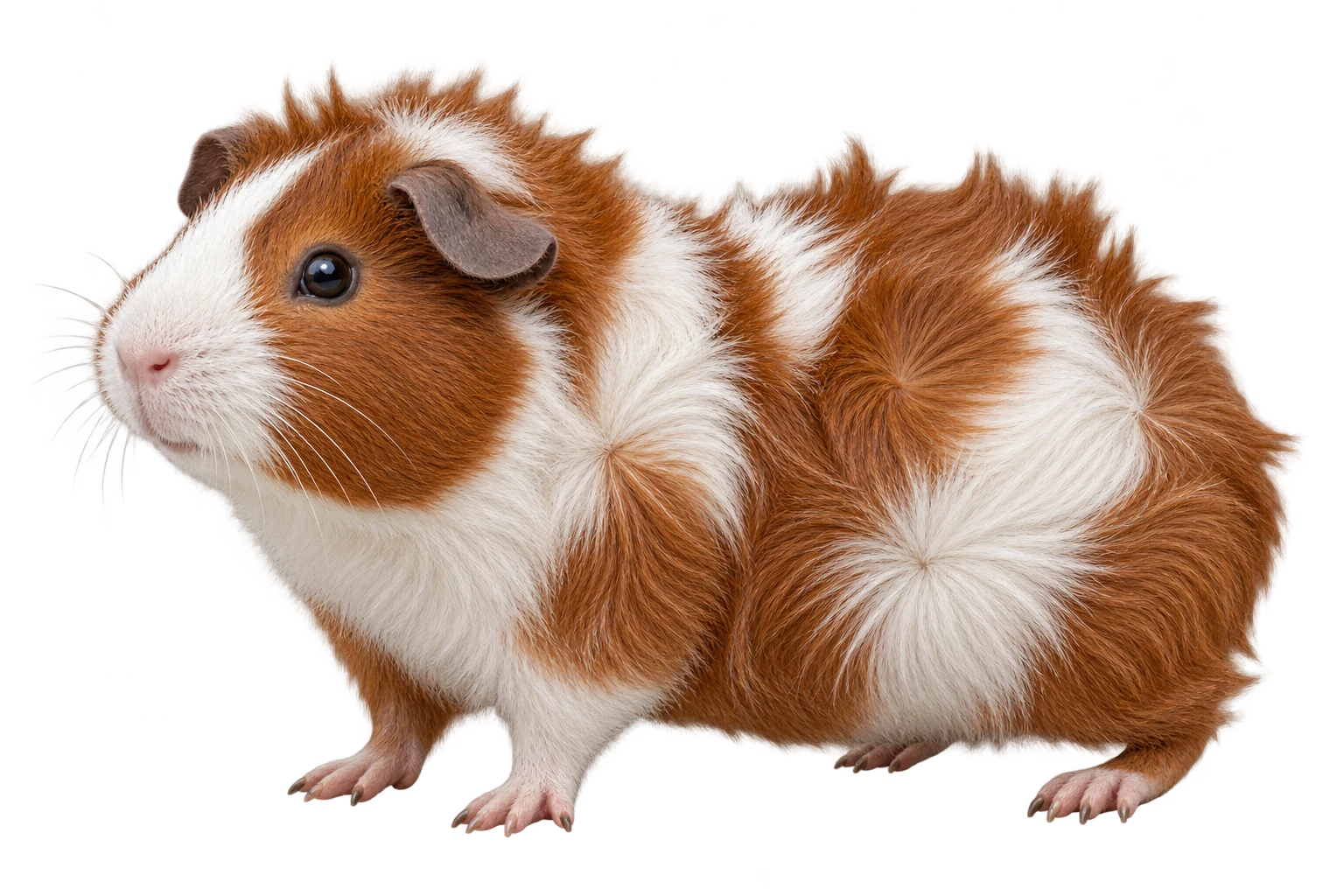
Mammals
Abyssinian Guinea Pig
Cavia porcellus
Classification and source reference
LivingAI illustration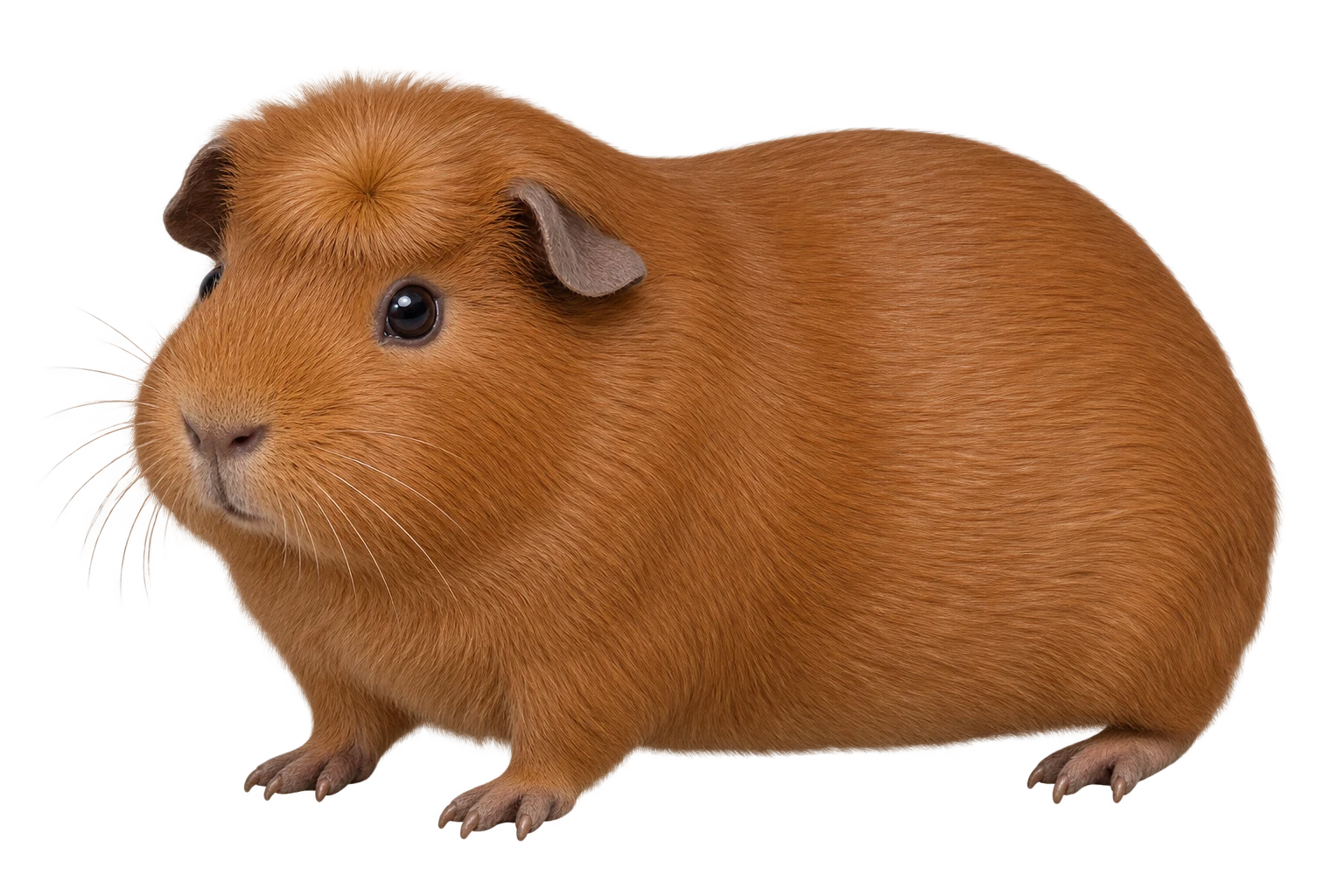
Mammals
English Crested Guinea Pig
Cavia porcellus
Classification and source reference
LivingAI illustration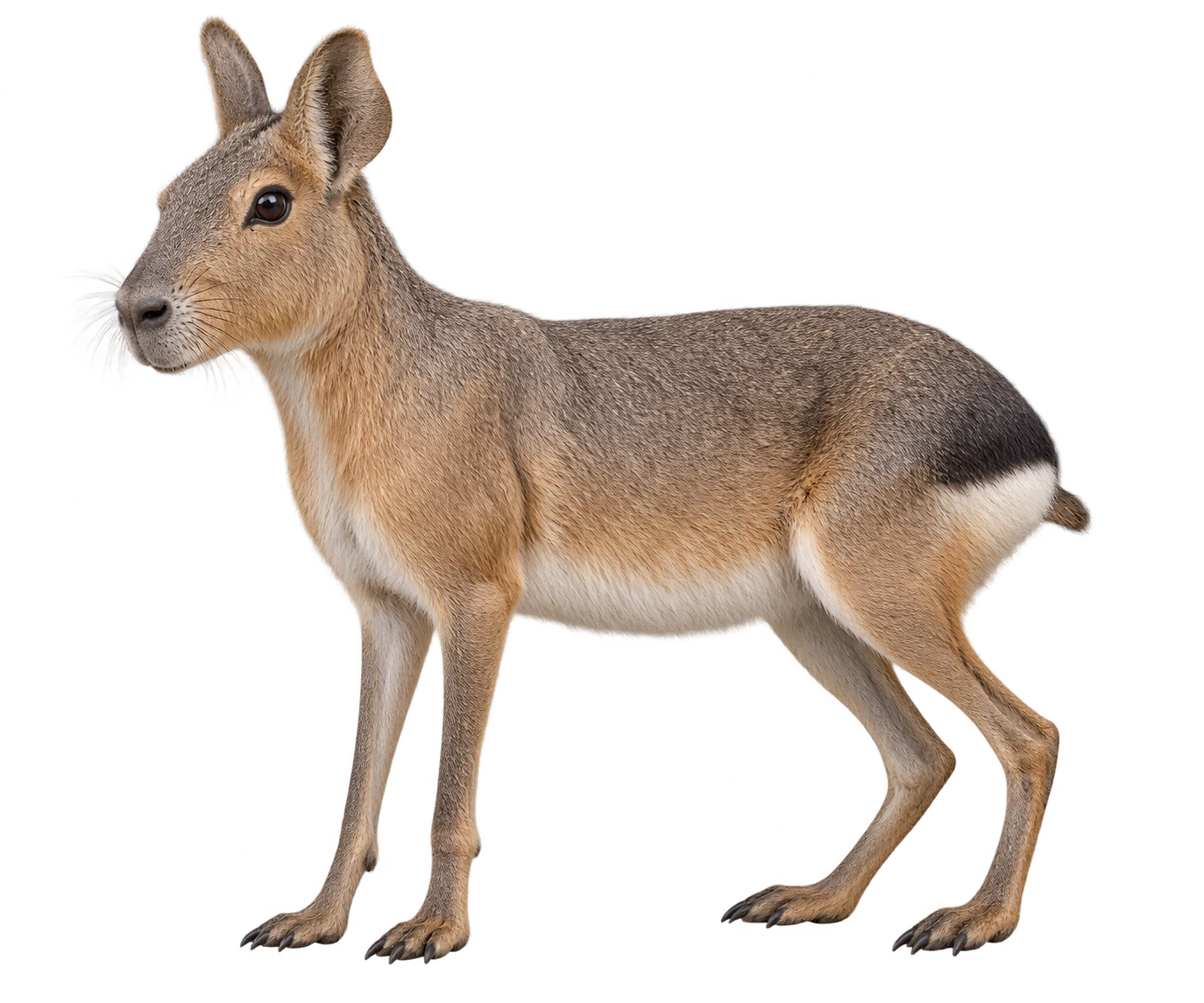
Mammals
Patagonian Cavy
Dolichotis patagonum
Classification and source reference
LivingAI illustration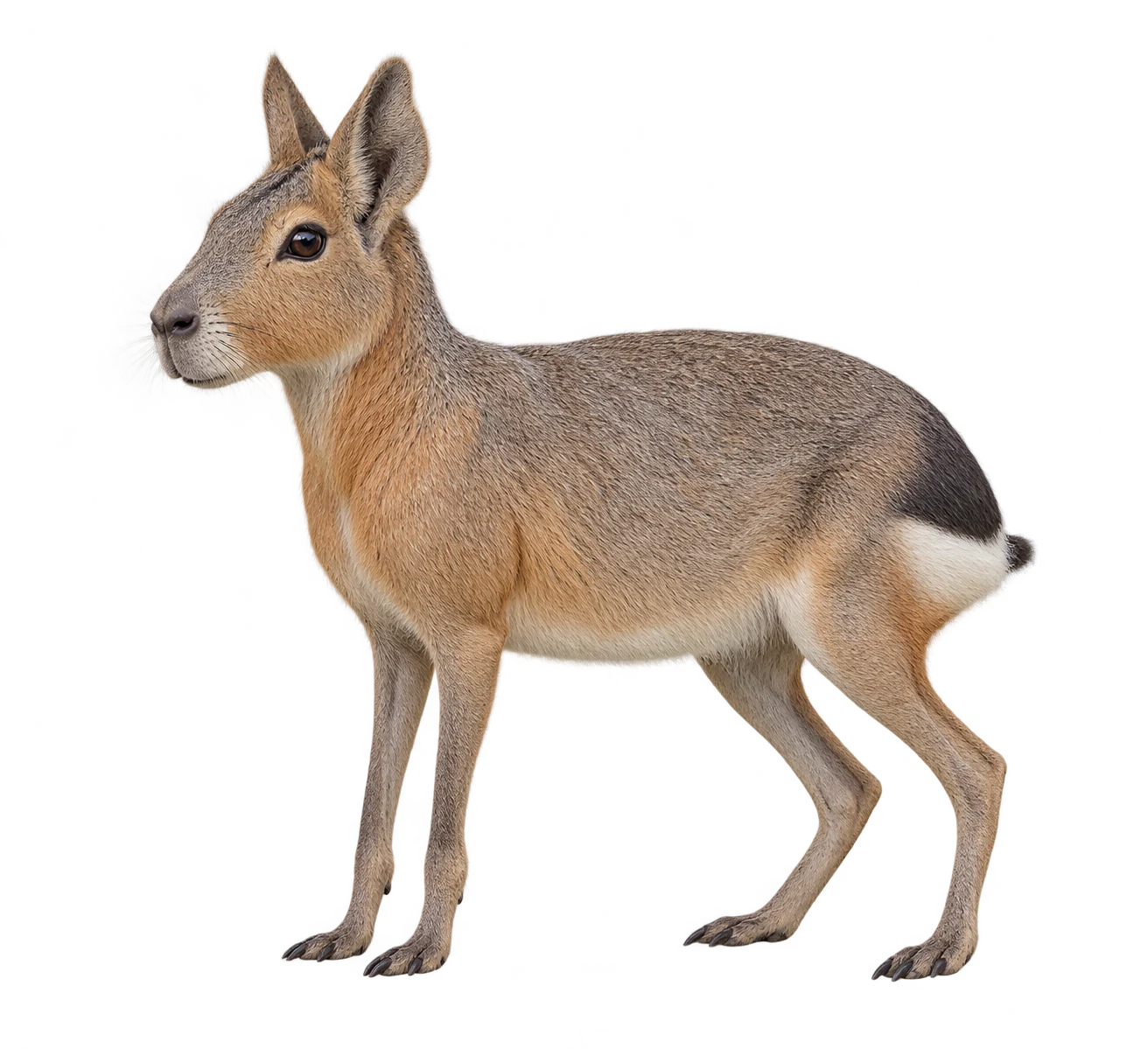
Mammals
Patagonian Mara
Dolichotis patagonum
Classification and source reference
LivingAI illustration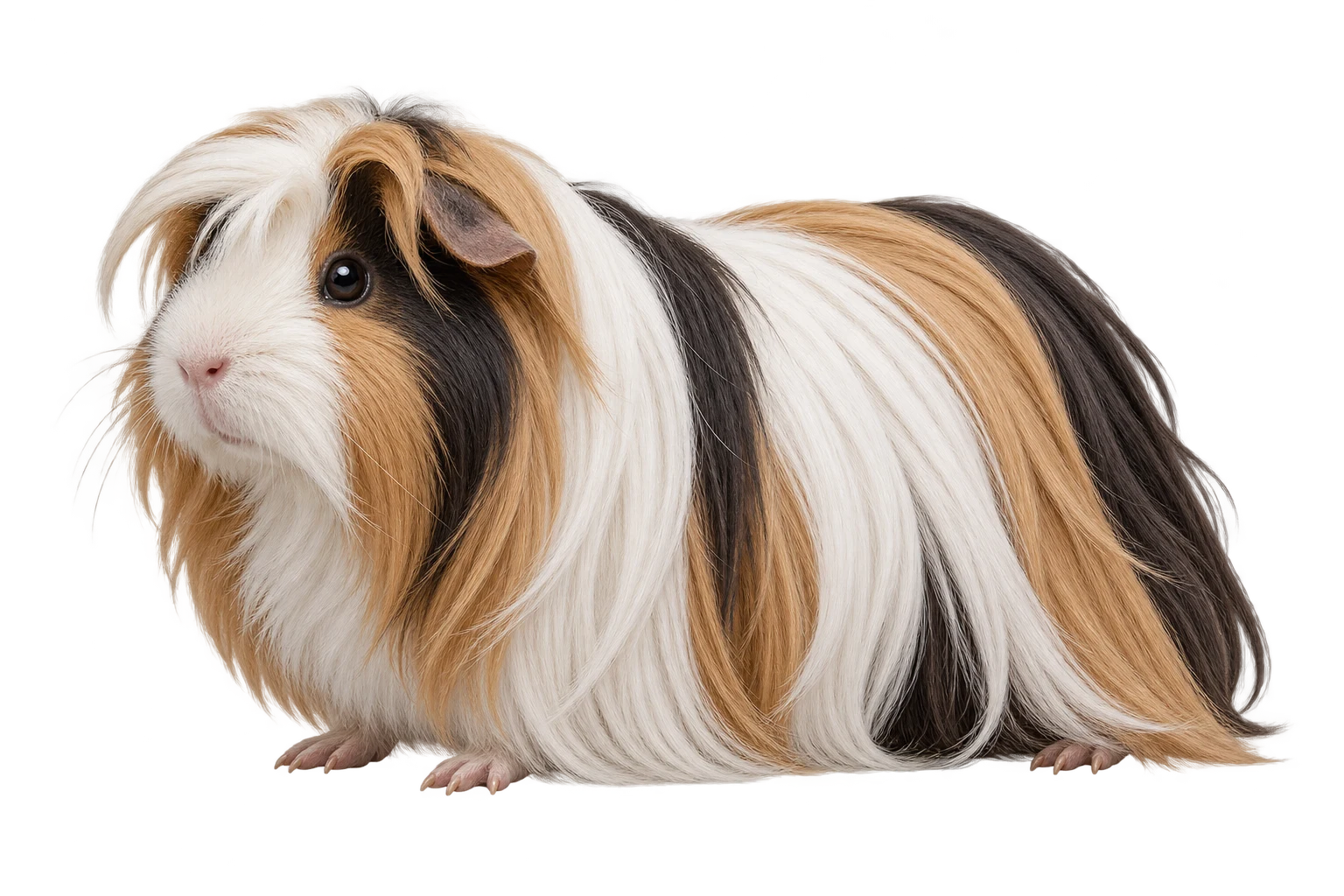
Mammals
Peruvian Guinea Pig
Cavia porcellus
Classification and source reference
LivingAI illustration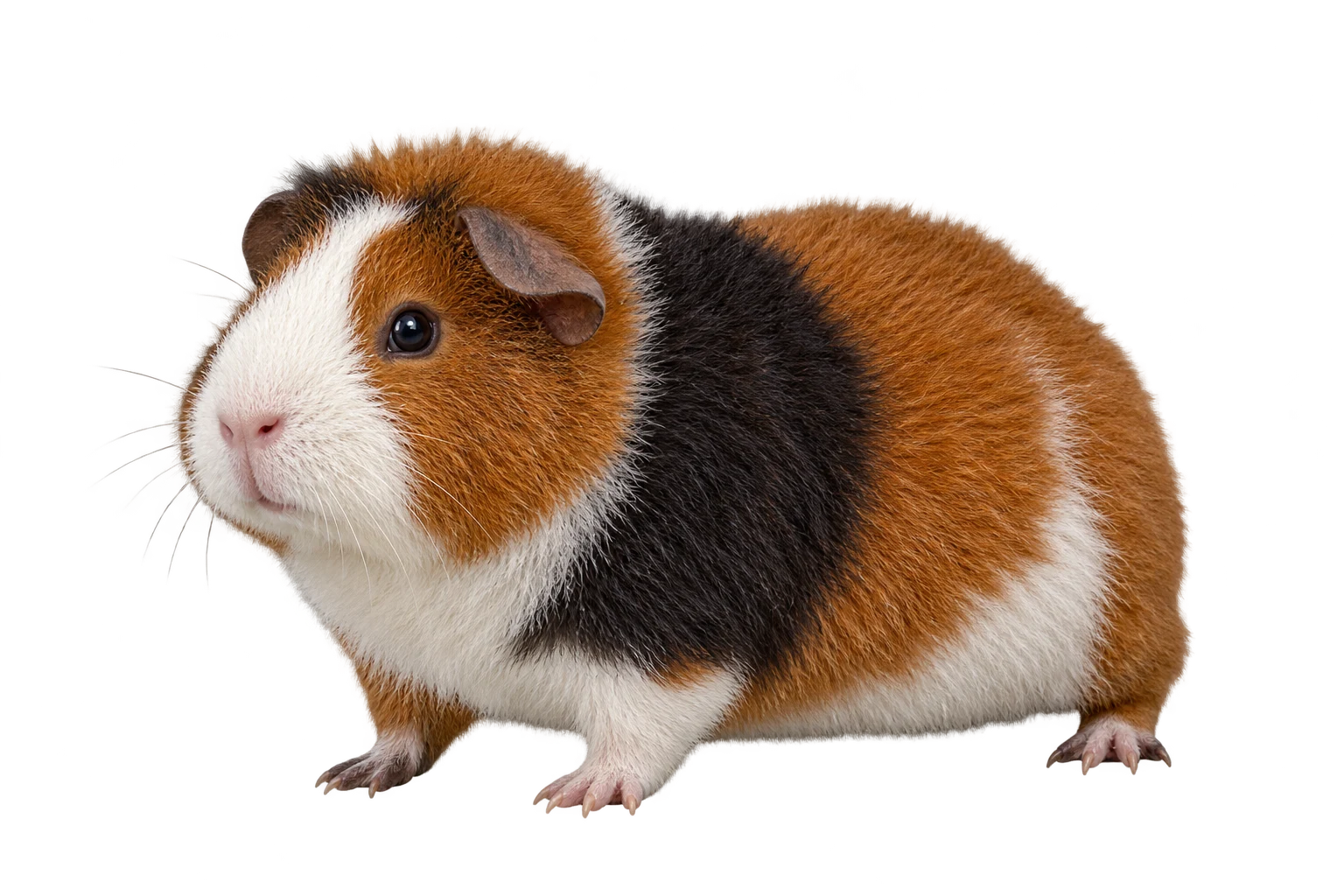
Mammals
Teddy Guinea Pig
Cavia porcellus
Classification and source reference
LivingAI illustration