Living individuals or members of this group exist today. This does not mean they are safe from extinction.
Meet the jaguar
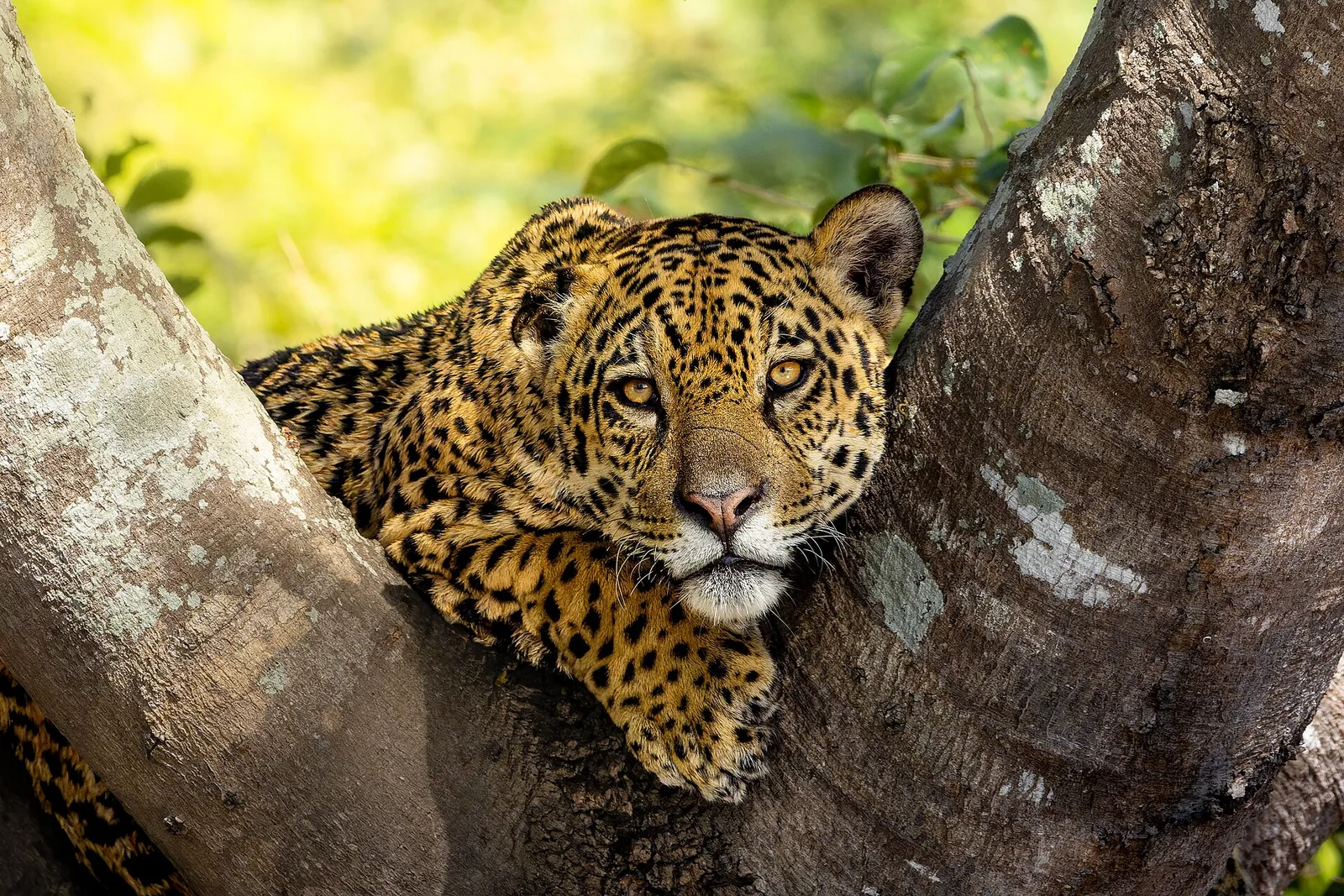
The jaguar is the largest cat in the Americas and the third largest in the world. It hunts in and around water and has the strongest bite of any big cat for its size.
Images of the jaguar
Lifespan in the wild
11 to 12 years
Weight
68 to 136 kg
Length
1.12 to 1.85 m
Height
57 to 81 cm
Fact file
Jaguar
- Location
- Mexico to northern Argentina, mainly the Amazon and Pantanal
- Habitat
- Rainforest, Wetlands, Rivers and lakes
- Diet
- Carnivore
- Prey / food
- Capybara, caiman, deer, peccary, fish, turtles
- Predators
- None as adults
- Lifestyle
- Nocturnal and crepuscular
- Name of young
- Cub
- Gestation
- About 100 days
- Litter size
- 1 to 4 cubs
- Population
- About 170,000
- Biggest threat
- Deforestation and conflict with ranchers
- Distinctive feature
- Rosettes with a spot in the centre
- Colour
- Gold with black rosettes; some are black
- Skin type
- Fur
Size
Next to a person
Measurements
Size and speed
- Height
- 57 to 81 cm at the shoulder
- Length
- 1.12 to 1.85 m head and body
- Tail
- 45 to 75 cm
- Weight
- 68 to 136 kg
Typical adult ranges. Sources: Animal Diversity Web, Wikipedia.
Life cycle
Lifespan
- In the wild11 to 12 years
- In captivityUp to 28 years
- 028 years
The pale bar is the record. Source: Animal Diversity Web.
Appearance
Colour and coat
- Primary colours
- golden yellowtan
- Secondary colours
- blackwhite
- Skin type
- fur
- Male and female
- Moderate. Males are about 10 to 20% larger than females and have deeper voices. Both sexes carry the same coat pattern.
Life cycle
Mating and family
- Mating system
- polygynous, with a male range overlapping two or three females
- Social structure
- solitary, except a mother with cubs
- Breeding
- one litter of one to four cubs, usually two, about every two years
Jaguars breed in any month, with a peak in the wet season. After 91 to 111 days the female bears one to four cubs, usually two, in a hidden den. The cubs open their eyes at about two weeks and start to hunt with their mother at five or six months. They leave her at 16 to 24 months. Wild jaguars live about 11 to 12 years.
Classification
Taxonomy
- Kingdom
- Animalia
- Phylum
- Chordata
- Class
- Mammalia
- Order
- Carnivora
- Family
- Felidae
- Genus
- Panthera
- Species
- Panthera onca
Conservation
Red List status
- LC
- NT
- VU
- EN
- CR
- EW
- EX
Near Threatened on the IUCN Red List
Range
Recorded in 17 countries
- Argentina
- Bolivia
- Brazil
- Belize
- Colombia
- Costa Rica
- Ecuador
- Guatemala
- Guyana
- Honduras
- Mexico
- Nicaragua
- Panama
- Peru
- Paraguay
- Suriname
- Venezuela
Habitat layer: tropical moist broadleaf forest, flooded grassland and savanna, mangrove.
Countries from 3,640 wild records on GBIF (iNaturalist research grade), filtered and checked by hand. Country shapes: Natural Earth. Habitat: RESOLVE Ecoregions 2017, CC BY 4.0. Basemap: Natural Earth.
Habitats
Three things to know
- 1
A jaguar kills with a bite through the skull, unlike other big cats.
- 2
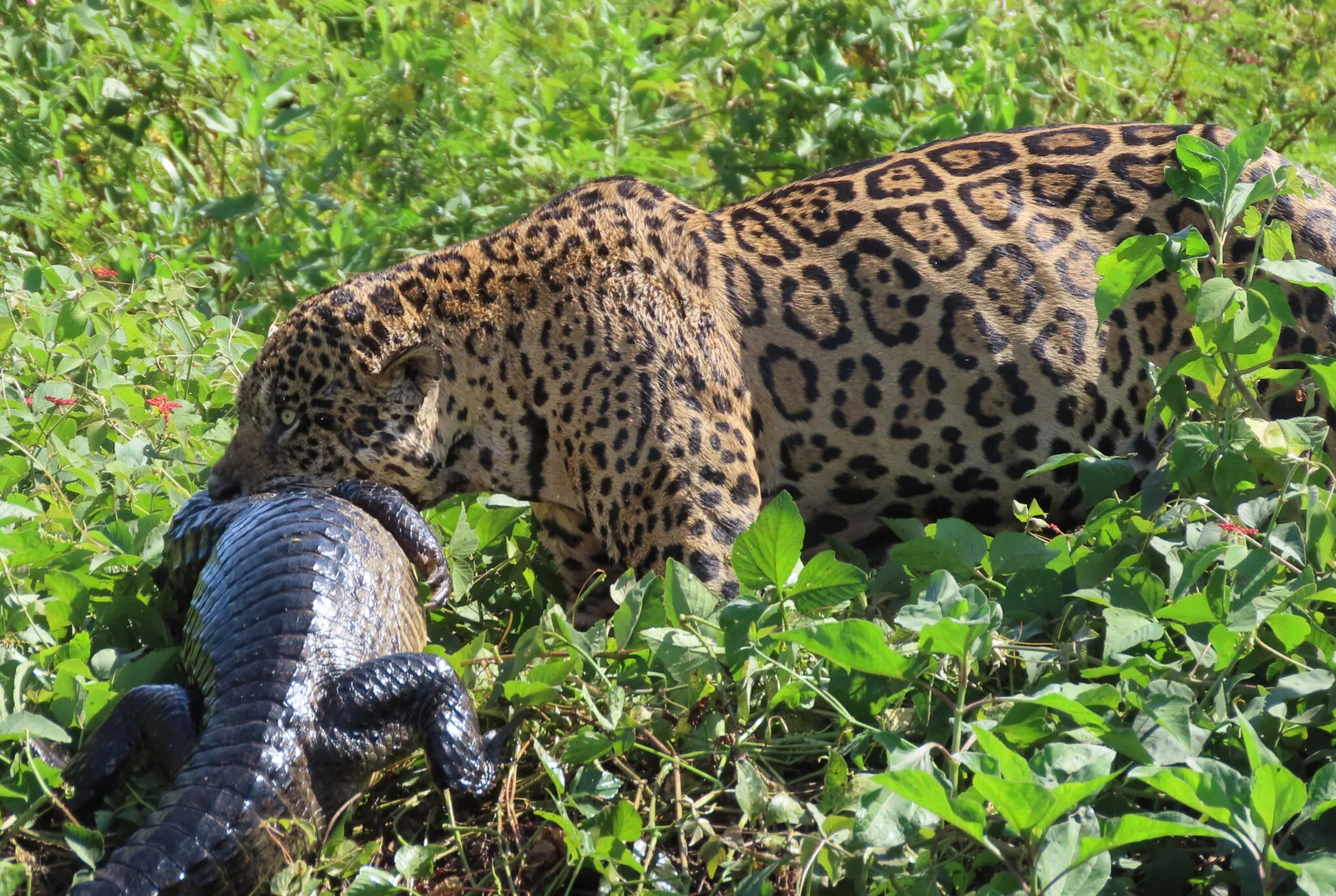
Jaguars swim well and often hunt caiman in rivers.
- 3
The name comes from a Tupi word meaning 'one that kills in a single leap'.
Did you know
Seven more facts
- 1
A black jaguar still has rosettes, and they show through the dark fur in strong light.
- 2
The jaguar has the shortest tail of any big cat, 45 to 75 centimetres.
- 3
The name may come from a Tupi-Guarani word for a beast that kills in a single bound.
- 4
Hunters once lured jaguars by grunting into a hollow gourd.
- 5
Between 1996 and 2024 only eight jaguars were photographed in the United States.
- 6
In the Pantanal, pairs of males have been seen hunting and patrolling together.
- 7
A Pleistocene jaguar from Uruguay may have weighed up to 173 kilograms.
Field notes
How it looks and acts
Field notes
Distinguishing features
- Large rosettes with one or more black spots inside, unlike a leopard's empty rings.
- A broad, square head and heavy jaws.
- Short, thick legs on a deep-chested body.
- A short tail of 45 to 75 centimetres, banded with black towards the tip.
- A line of spots along the spine that often joins into a stripe.
- A black morph with rosettes visible in bright light.
Field notes
Unique adaptations
- A skull with a strong sagittal crest anchors jaw muscles that bite through bone and shell.
- A rosette coat breaks up its outline in dappled forest shade.
- A stocky, powerful build suits ambush and dragging heavy prey, not long chases.
- Strong swimming lets it hunt caiman, fish and turtles in flooded forest.
- Melanism is probably an advantage in the dark understorey, where black cats are commoner.
Field notes
Interesting behaviours
- Walks slowly along trails and river banks and ambushes prey from cover.
- Lies half submerged in a stream in the heat of the day.
- Drags a kill into thick cover before it eats.
- Scrapes the ground and sprays urine to mark its range.
- Shifts between day and night activity to match its prey.
Field notes
Temperament
- Solitary and secretive, and it avoids other adults.
- Rarely fights, but a male defends his range against rivals.
- Usually leaves people alone unless cornered or wounded.
Field notes
Communication
- A hoarse roar of five or six grunts carries over long distances.
- A female in heat calls at night and at dawn to attract a male.
- A soft snort, the prusten, greets a mate or soothes cubs.
- Scrapes, droppings and urine sprays mark the borders of a range.
Ecology
Ecological role
The jaguar is the top predator of the neotropical forest, and many ecologists treat it as a keystone species.
- Takes large herbivores and seed eaters such as capybara, peccary and deer, which may keep their numbers in check.
- Preys on caiman, turtles and fish, so it links the forest and river food webs.
- Its reserves shelter about 1,500 other mammal species, which makes it an umbrella species.
- Its keystone effect is disputed, because prey increases after its loss may reflect natural variation.
Stories
Myths and legends
- In Maya tradition, the jaguar was an underworld god that took the sun below the earth at night.
- In Aztec tradition, the god Tezcatlipoca took the form of a jaguar, and jaguar warriors formed an elite military order.
- In Olmec tradition, were-jaguars with half-human faces were the offspring of rulers and jaguar beings.
- In Muisca tradition, the jaguar was sacred, and priests dressed in its skin.
- In Chavin and Moche tradition in Peru, the jaguar was a symbol of power on ceramics and in a widespread cult.
People
Relationship with humans
People
Living alongside us
People have hunted the jaguar for its skin, feared it, and worshipped it for thousands of years. Ranchers still shoot cats that take calves, and forest clearance has removed about half of its range. Every range country now bans or limits hunting, and CITES bans trade in its parts. Ecotourism in places such as the Pantanal gives local people a reason to keep jaguars alive.
- A jaguar can kill a person, but recorded attacks are rare.
- Most attacks happen when the cat is cornered, wounded or provoked.
- Brazil recorded its first official human death from a jaguar in 2008.
People
Status, uses and products
- Domestication
- Wild
- As a pet
- Not suitable. A jaguar needs a range of tens of square kilometres, water and large prey, and it can kill an adult. Trade in the species is banned under CITES Appendix I.
- Uses
- ecotourismzoo exhibitiontrophy hunting in Bolivia
- Products
- skinsteethbones
The full account
About the jaguar
The jaguar, Panthera onca, is the largest cat in the Americas and the only living Panthera species native to the New World. Only the tiger and the lion are bigger. It looks like a leopard, but it is stockier, with a broader head and larger rosettes that hold a spot in the middle. Its jaws are the strongest of any big cat for its size, and it can bite through a turtle shell or a skull. Some jaguars are black, and these melanistic cats are often called black panthers.
An adult weighs 68 to 136 kilograms, and the body measures 112 to 185 centimetres before the tail. The jaguar lives from Mexico and the south-western United States down to northern Argentina, with its stronghold in the Amazon. It hunts alone by stalk and ambush, and it takes capybara, peccary, deer, caiman, turtles and fish. It swims well and spends much of its time near rivers and swamps. The IUCN lists the jaguar as Near Threatened, because forest loss and conflict with ranchers have cut its range by about half.
Name and taxonomy
The name jaguar probably comes from the Tupi-Guarani word yaguara, a wild beast that overcomes its prey in one bound. In Guyana, people add the suffix ete to make jaguarete, the true beast, because jaguar can mean other animals too. The species name onca comes from the Portuguese onca, a spotted cat larger than a lynx. In Brazil the cat is called onca-pintada, the painted onca, and in Spanish it goes by yaguarete, otorongo or tigre. Carl Linnaeus described the jaguar in 1758 as Felis onca, and Reginald Pocock later moved it into Panthera.
Pocock named eight subspecies in 1939 from skulls and their places of origin, and by 2005 nine were in use. Genetic work found a smooth north to south gradient in size and form, but no real subspecies boundaries. Since 2017 the jaguar is treated as a single species with no living subspecies. Two fossil forms, P. o. augusta in North America and P. o. mesembrina in South America, are still named, though a 2024 study questioned them. DNA from 84 South American jaguars showed that gene flow across Colombia was high in the past.
Evolution and relatives
The Panthera line split from the rest of the cat family several million years ago, with estimates from about 4 to 12 million years. Some genetic studies make the jaguar the sister species of the lion, while others place the lion closer to the leopard. The jaguar line seems to have begun in Africa and reached Eurasia about 1.95 to 1.77 million years ago. Many authors derive the living jaguar from the Eurasian Panthera gombaszogensis, though that link is disputed. Its ancestor then crossed the Bering land bridge into North America in the Early Pleistocene.
The oldest fossils of the modern species come from North America and date to about 850,000 to 820,000 years ago. Mitochondrial DNA from 37 jaguars suggests today's populations arose in northern South America between 510,000 and 280,000 years ago. Jaguars died out in North and Central America in the Late Pleistocene and later moved back north. A fossil from Oregon Caves National Monument is about 38,600 years old, far north of any living jaguar.
Appearance
The jaguar is a compact, deep-chested cat with short, thick legs and a large, rounded head. It stands 57 to 81 centimetres at the shoulder, and the head and body run 112 to 185 cm. The tail adds 45 to 75 cm, the shortest tail of any big cat. Weight ranges from 68 to 136 kilograms, with about 100 kg typical for a Pantanal male. Size grows from north to south: Honduran males average 57 kg, while the biggest males on record reached 158 kg. Females are about 10 to 20% smaller than males.
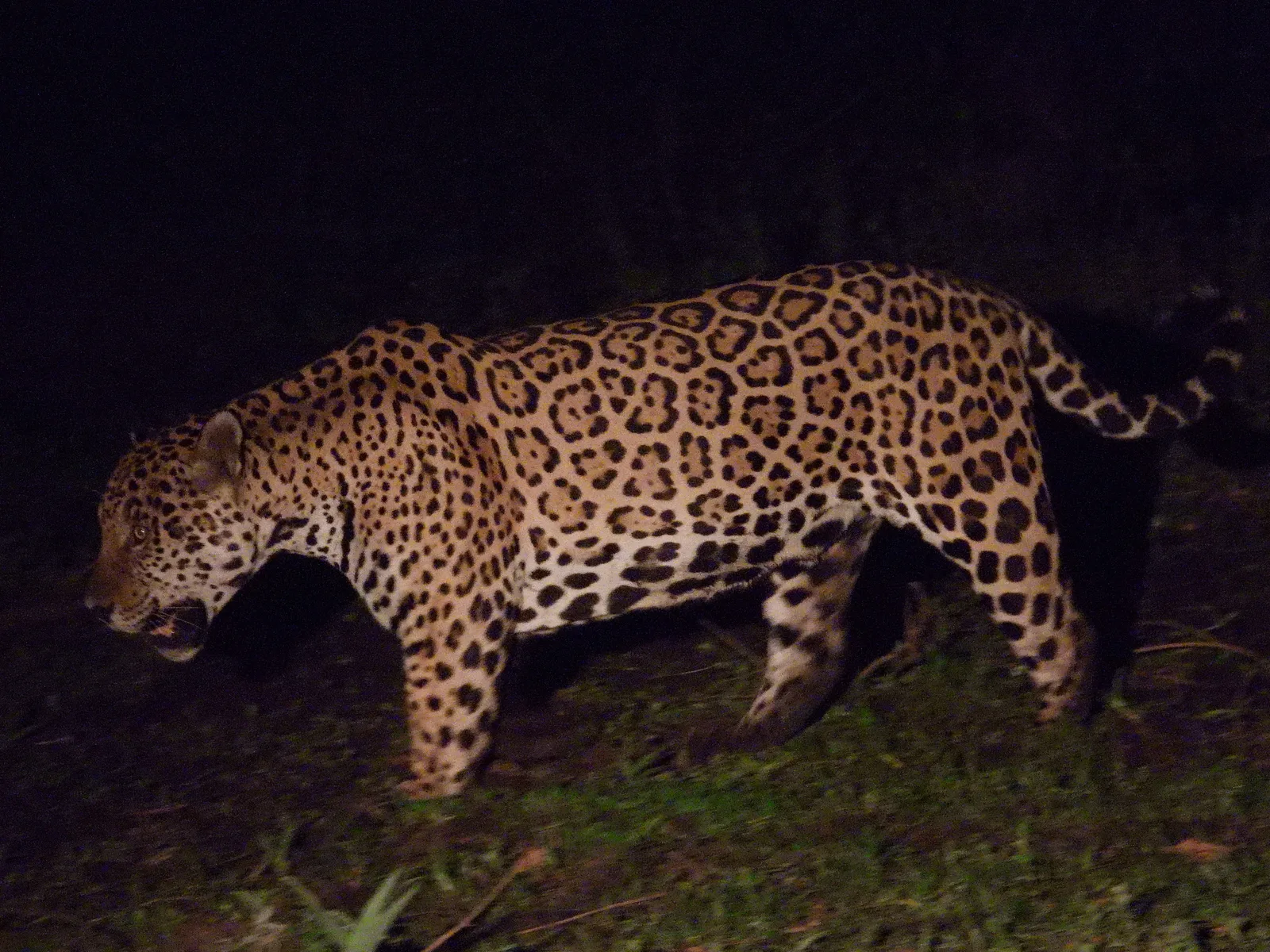
The coat runs from pale yellow to rusty red, with a whitish belly. Solid black spots cover the head, neck and legs, and on the flanks they open into rosettes with one or more spots inside. A leopard's rosettes are smaller, more numerous and empty in the middle. Spots along the spine often join into a dark line, and the tail ends in black bands. Forest jaguars tend to be darker and smaller than those of open country.
Black jaguars carry a dominant allele caused by a deletion in the melanocortin 1 receptor gene. In bright light their rosettes still show through the dark fur. Black cats are commoner in dense rainforest and are more active by day, so the colour probably hides them in deep shade. The first black jaguar in northern Mexico was photographed by a camera trap in 2004.
Habitat and range
The jaguar favours dense, wet lowland forest, and it lives in rainforest, cloud forest, dry deciduous forest and gallery forest along rivers. It also uses seasonally flooded savanna, mangrove swamp and reed beds, and it is almost always near water. It avoids open grassland and true desert, and in arid country it follows the watercourses. It has been recorded up to 3,800 metres, but it is scarce in montane forest and absent above about 2,700 m in the Andes. Healthy populations need three things: water, thick cover and enough prey.
Around 1900 the jaguar ranged over about 19,000,000 square kilometres, from the southern United States to southern Argentina. By 2000 that area had fallen to about 8,750,000 km², roughly 46% of the old range. The cat is now found from Mexico through Central America and across South America to Paraguay and northern Argentina. It is extinct in El Salvador and Uruguay, and the Amazon basin holds the largest continuous population. GBIF holds records from 33 countries, which includes zoo animals and old records outside the living range.
In the 19th century jaguars lived in California, Colorado, Louisiana, Texas, Arizona and New Mexico. The last breeding den known in the United States was in California's Tehachapi Mountains before 1860. The last Texas jaguar was shot in 1948, and an Arizona female was shot in 1963. Between 1996 and 2024 eight jaguars were photographed in the south-western United States, all wandering males from Mexico.
Diet and hunting
The jaguar eats only meat, and more than 85 prey species have been recorded. A review of 53 diet studies found prey from 1 to 130 kilograms, with a preference for animals of 45 to 85 kg. Capybara and giant anteater were the most selected prey, followed by marsh deer, tamandua, collared peccary and agouti. In flooded country it takes caiman, anaconda and river turtles, and in the Pantanal fish such as catfish, pacu and piranha. Where wild prey is scarce it kills cattle, and on one Pantanal ranch cattle made up 46% of jaguar kills.
The jaguar hunts by stalk and ambush, not by chase. It walks slowly along trails and river banks, listens, then creeps close and pounces from cover. It will leap into water after a capybara and catch it before it dives. Unlike other big cats, it often kills a mammal with a bite through the back of the skull, straight into the brain. The same bite cracks the shells of river turtles and tortoises. Its canine bite measures about 887 newtons, the third strongest among cats after the tiger and lion.
After a kill the cat drags the carcass into cover, sometimes several hundred metres away. It is strong enough to haul a heifer up a tree above flood level, and one dragged a 34 kg turtle 91.5 metres. It starts eating at the neck and chest and takes the heart and lungs first.
Behaviour and social life
Most jaguars hunt at night and in twilight, but the pattern follows the prey. In the Amazon and the Pantanal it hunts largely by day, while in the Atlantic Forest it is nocturnal. It rests in thickets, caves and deep shade, and in the hot season it may lie half in a stream. It swims well, and jaguars have crossed at least 1.3 kilometres of open water between islands and the shore. It climbs when it needs to, but less than a cougar.
Adults live alone except for a mother with cubs and a pair during mating. A female home range covers about 15 km² in the Pantanal, 54 km² in the Amazon and 233.5 km² in the Atlantic Forest. Male ranges are larger: 25 km² in the Pantanal, 180 km² in the Amazon and up to 807.4 km² in the Cerrado. A male's range overlaps those of two or three females, and he defends it against other adult males.
Fights between males are rare, and cats usually avoid each other. In the Venezuelan Llanos and the Pantanal, pairs of males have formed coalitions that patrol, hunt and mate together. Density is highest in the Pantanal, at about 10 to 11 adults per 100 km², and far lower in most forest sites.
Communication and senses
The jaguar roars, or rather grunts, in a hoarse series of five or six notes to signal over long distances. Cats answer each other, and long bouts of counter-calling are heard in the wild. A female in heat calls late at night and at dawn, and males reply with deeper, rougher calls. Hunters copy that call with a hollow gourd to draw a jaguar within range. A soft snort, called prusten, serves as a greeting, in courtship and when a mother calms her cubs. Cubs bleat, gurgle and mew, and a mother mews to keep contact with them.
The cat marks its range by scraping the ground and trees and by spraying urine and leaving droppings in prominent places. Like other cats, the jaguar sees well in dim light and relies on hearing to locate prey on a dark trail.
Reproduction and life cycle
Jaguars can breed all year, but mating rises from December to March and most births fall in the wet season, when prey is plentiful. A female is in heat for 6 to 17 days on a cycle of about 37 days. She calls and roams to find a male. A pair may stay together for up to five days and mate many times a day. Once she has mated, the female drives the male away, and she will not tolerate him near the cubs.
Gestation lasts 91 to 111 days. A litter holds one to four cubs, usually two, each weighing about 700 to 900 grams. Cubs are born blind and open their eyes at about two weeks. They take milk alone for 10 to 11 weeks. At five or six months they begin to follow their mother on hunts. By 15 to 18 months a young jaguar makes its own kills inside its mother's range, and it disperses at 16 to 24 months.
Females mature at about two to two and a half years, and males at three to four. A male sometimes kills cubs, and in one case in Emas National Park DNA showed the killer was their own father. A mother hides her cubs and distracts a male with courtship to protect them. Wild jaguars live about 11 to 12 years, and a captive cat has reached 28 years.
Predators and threats
An adult jaguar has no natural predator and sits at the top of its food web. People are its only real enemy. Ranchers shoot jaguars that kill calves, and cats are often shot on sight even where the law protects them. In Panama, 220 of 230 jaguars killed between 1998 and 2014 died in revenge for livestock losses. Some cattle killers carry old shotgun wounds, which may have forced them onto easy prey.
Forest loss is the largest threat across the range, fastest in dry regions such as northern Mexico and the Argentine pampas. Roads open forest to hunters who take the cat's prey, so jaguars go hungry even where trees remain. The skin trade peaked from the late 1940s to the early 1970s, when over 15,000 jaguars a year died in the Brazilian Amazon alone. Trade fell after CITES came into force in 1973, but a new market for teeth and bones has grown in Asia. Seizures between 2012 and 2018 involved at least 857 jaguars, 482 of them from Bolivia, and 760 fangs bound for China were taken from smugglers.
Population and conservation
The IUCN Red List has rated the jaguar Near Threatened since 2002, and numbers probably fell by 20 to 25% after the mid 1990s. Around 170,000 jaguars are thought to remain, most of them in the Amazon. National listings are harsher: Argentina rates the cat Critically Endangered, Ecuador and Mexico Endangered, and Brazil Vulnerable. In the United States it is listed as Endangered and NatureServe ranks it N1, the most imperilled level. iNaturalist holds 8,641 observations of the species.
The jaguar is on CITES Appendix I, so all commercial trade in the cat or its parts is banned. Hunting is illegal in most range countries, though many allow a rancher to shoot a problem animal, and Bolivia permits trophy hunting. In 1986 Belize created the Cockscomb Basin Wildlife Sanctuary, the first reserve set up for jaguars. In 1999 scientists from 18 countries mapped 51 Jaguar Conservation Units, each large enough for at least 50 breeding cats. Corridors linking those units cover 2,600,000 km², but deforestation has already cut some links in Bolivia and Argentina.
Mexico's jaguars rose from about 4,000 in 2010 to about 4,800 in 2018 after a national strategy was adopted. Because its reserves overlap the homes of about 1,500 other mammal species, the jaguar is called an umbrella species.
Relationship with humans
Spanish conquistadors feared the jaguar, yet Charles Darwin was told that people were safe as long as capybaras were plentiful. Attacks on people are rare and most happen when a cat is cornered or wounded. Brazil did not officially record a fatal jaguar attack until 2008, and two children have been attacked in Guyana. A jaguar sometimes follows a person through the forest, which is thought to be an escort to the edge of its range.
Cattle ranching brought the cat large, slow prey, and it brought the rancher's rifle too. Studies show that only some jaguars kill cattle, and on one Venezuelan ranch pumas caused 86% of the losses to cats. Ecotourism in the Pantanal now earns local people money from live jaguars, and camera traps and detection dogs help scientists count them. Some Afro-Colombian communities in the Choco hunt the cat for meat, and Amazonian peoples such as the Baniwa have long hunted it.
In culture and myth
Across the pre-Columbian Americas the jaguar stood for power, and only the snake god ranked above it. In the Andes the Chavin culture spread a jaguar cult over most of Peru by 900 BC. Moche potters later painted it as a sign of rule. Muisca priests wore jaguar skins in rituals, and the ruler Nemequene took his name from words meaning force of the jaguar. Olmec sculptures show were-jaguars, figures with half-human, half-cat faces, said to be the children of rulers and jaguar spirits.
The Maya called the cat balam and gave its image to warriors and nobles, and it decorated tombs as a lord of the underworld. In Maya belief the jaguar took the sun through the underworld every night, and some people could turn into jaguars. The Aztecs called it ocelotl, the king of animals, and their jaguar warriors fought beside eagle warriors in animal dress. The god Tezcatlipoca, lord of night and fate, took the jaguar as his form.
A sentence with a dotted underline is inferred: it describes the group the animal belongs to, or is a reading of the sources, rather than a measured or reported fact about this species.
Questions
Jaguar questions, answered
How big is a jaguar?
An adult weighs 68 to 136 kilograms and measures 112 to 185 centimetres in head and body, without the tail. It stands 57 to 81 cm at the shoulder. The largest cats live in the Pantanal and the smallest in Central America.
Where do jaguars live?
From Mexico through Central America to Paraguay and northern Argentina, with the largest population in the Amazon basin. A few males wander into Arizona and New Mexico. They favour dense wet forest near rivers and swamps.
What do jaguars eat?
Only meat, from more than 85 species. Favourites are capybara, peccary, deer and giant anteater, and in wetlands they take caiman, turtles and fish. Where wild prey is scarce they kill cattle.
Are jaguars endangered?
The IUCN lists the jaguar as Near Threatened. About 170,000 remain, but numbers probably fell by 20 to 25% after the mid 1990s and the range has shrunk by about half. Argentina rates it Critically Endangered.
What is the difference between a jaguar and a leopard?
The jaguar is stockier, with a broader head, shorter legs and a shorter tail. Its rosettes are larger and fewer, and most hold a black spot in the centre. Leopards live in Africa and Asia, jaguars only in the Americas.
How strong is a jaguar's bite?
About 887 newtons at the canine tip, the third strongest of any cat after the tiger and lion. For its size it bites harder than either. It can pierce a turtle shell or a skull.
Do jaguars attack humans?
Rarely. Most attacks happen when a cat is cornered or wounded. Brazil recorded its first official fatal attack in 2008, and two children have been attacked in Guyana.
Can jaguars swim?
Yes, very well. Jaguars hunt caiman and fish in the water and have swum at least 1.3 kilometres between islands and the shore. They often rest half submerged in the heat.
Is a black panther a jaguar?
In the Americas, yes. A black panther is a jaguar with a dominant gene for melanism. Its rosettes still show in bright light. In Africa and Asia the name refers to a black leopard.
How long do jaguars live?
About 11 to 12 years in the wild. In captivity a jaguar has lived to 28.
How many cubs does a jaguar have?
One to four, usually two, after a gestation of 91 to 111 days. Each cub weighs about 700 to 900 grams at birth and opens its eyes at about two weeks.
Are there jaguars in the United States?
Only a few wandering males. Jaguars once bred in California, Texas and Arizona, but the last Arizona female was shot in 1963. Eight jaguars were photographed in the south-west between 1996 and 2024.
How does a jaguar kill its prey?
It stalks close, pounces from cover and often bites straight through the back of the skull into the brain. Other big cats bite the throat. It then drags the carcass into cover to eat.
Why are jaguars important?
As the top predator they help control capybara, peccary and deer, and their reserves protect about 1,500 other mammal species. Many scientists call the jaguar a keystone species, though the idea is debated.
What did the jaguar mean to the Maya and Aztecs?
To the Maya it was balam, a lord of the underworld and a badge of warriors and kings. The Aztecs called it ocelotl, the king of animals, and their jaguar warriors formed an elite order.
Food web
Prey and food
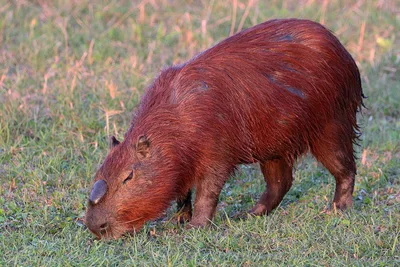 Capybara
- caiman
- deer
- peccary
- fish
- turtles
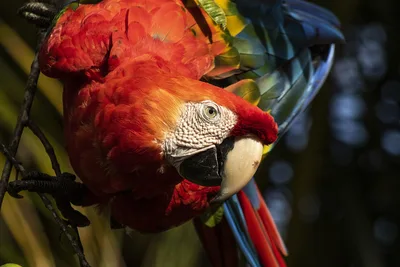 Scarlet macaw
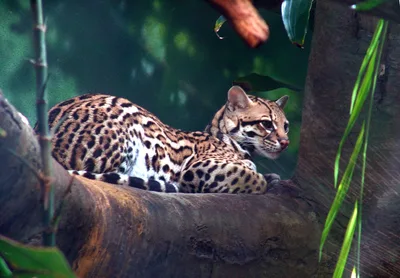 Ocelot
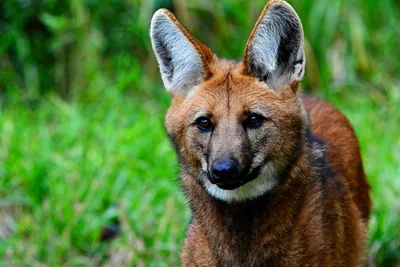 Maned wolf
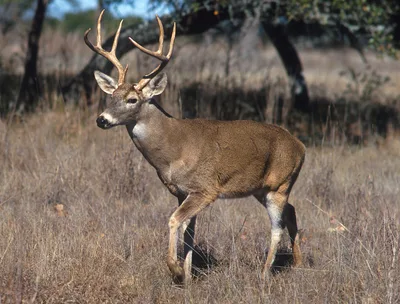 White-tailed deer
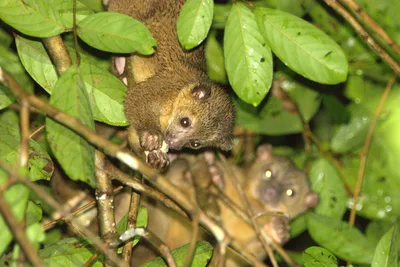 Kinkajou
Food web
Predators
No natural predator is recorded.
Ecological equivalents
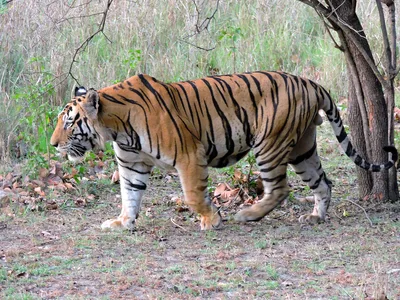
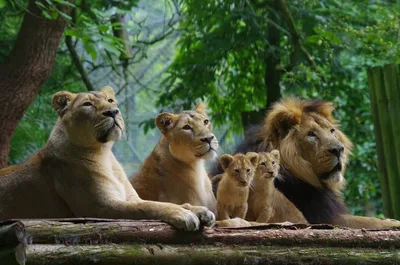
Related species on this site
Amur Leopard (same genus), Bengal Tiger (same genus), Cape Lion (same genus), Cave Lion (same genus), Indochinese Tiger (same genus), Javan Leopard (same genus), and more.
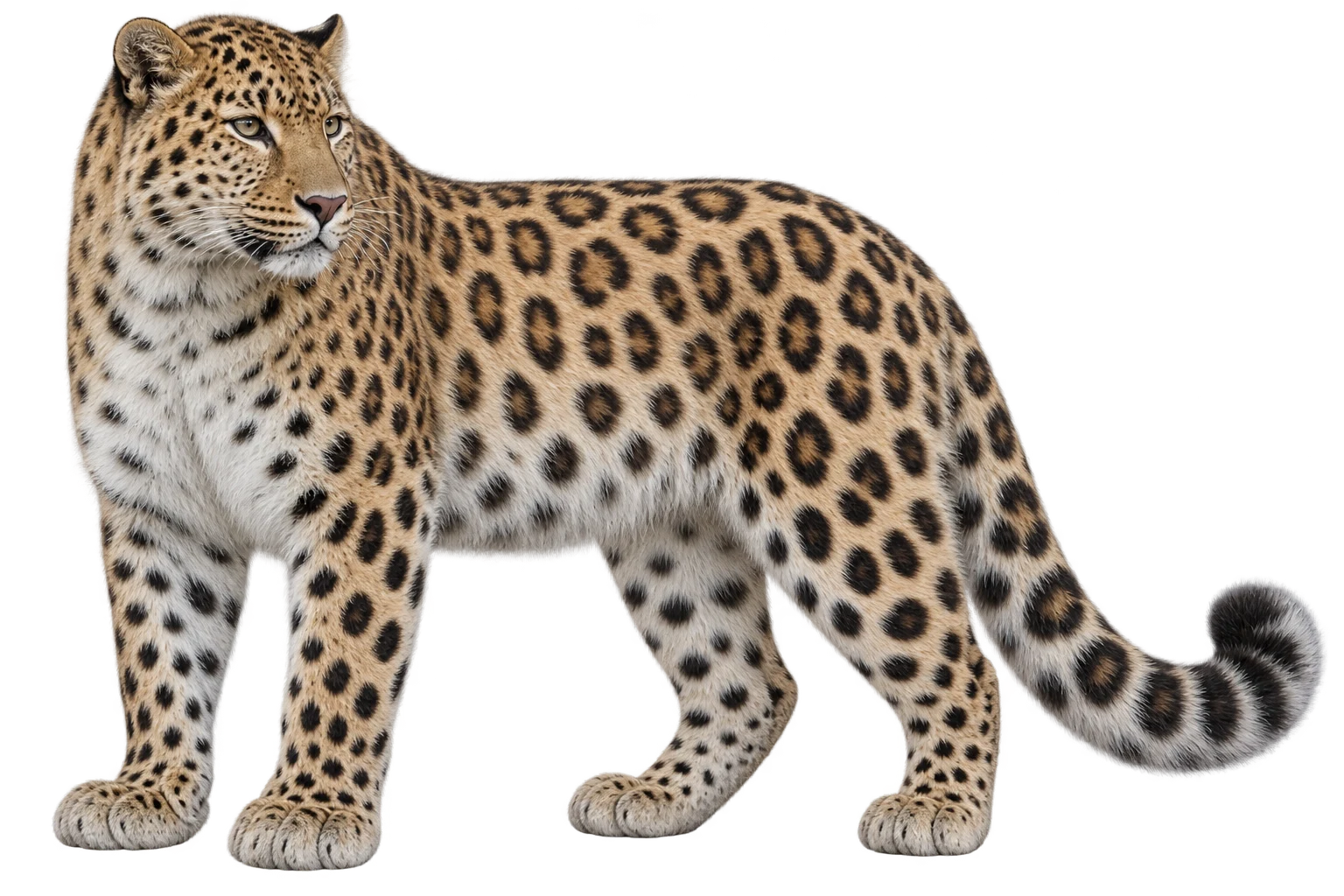
Mammals
Amur Leopard
Panthera pardus orientalis
Classification and source reference
LivingAI illustration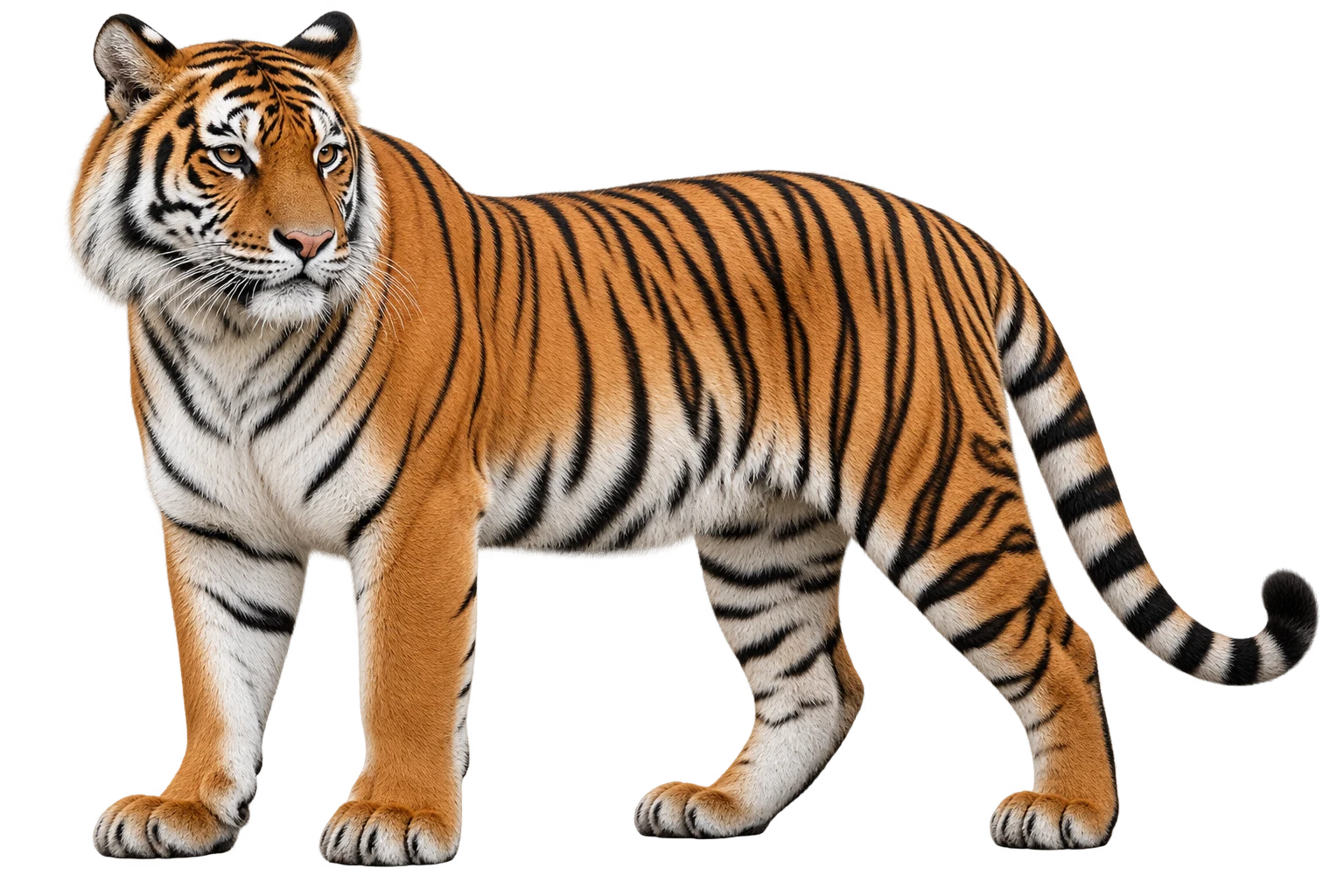
Mammals
Bengal Tiger
Panthera tigris tigris
Classification and source reference
LivingAI illustration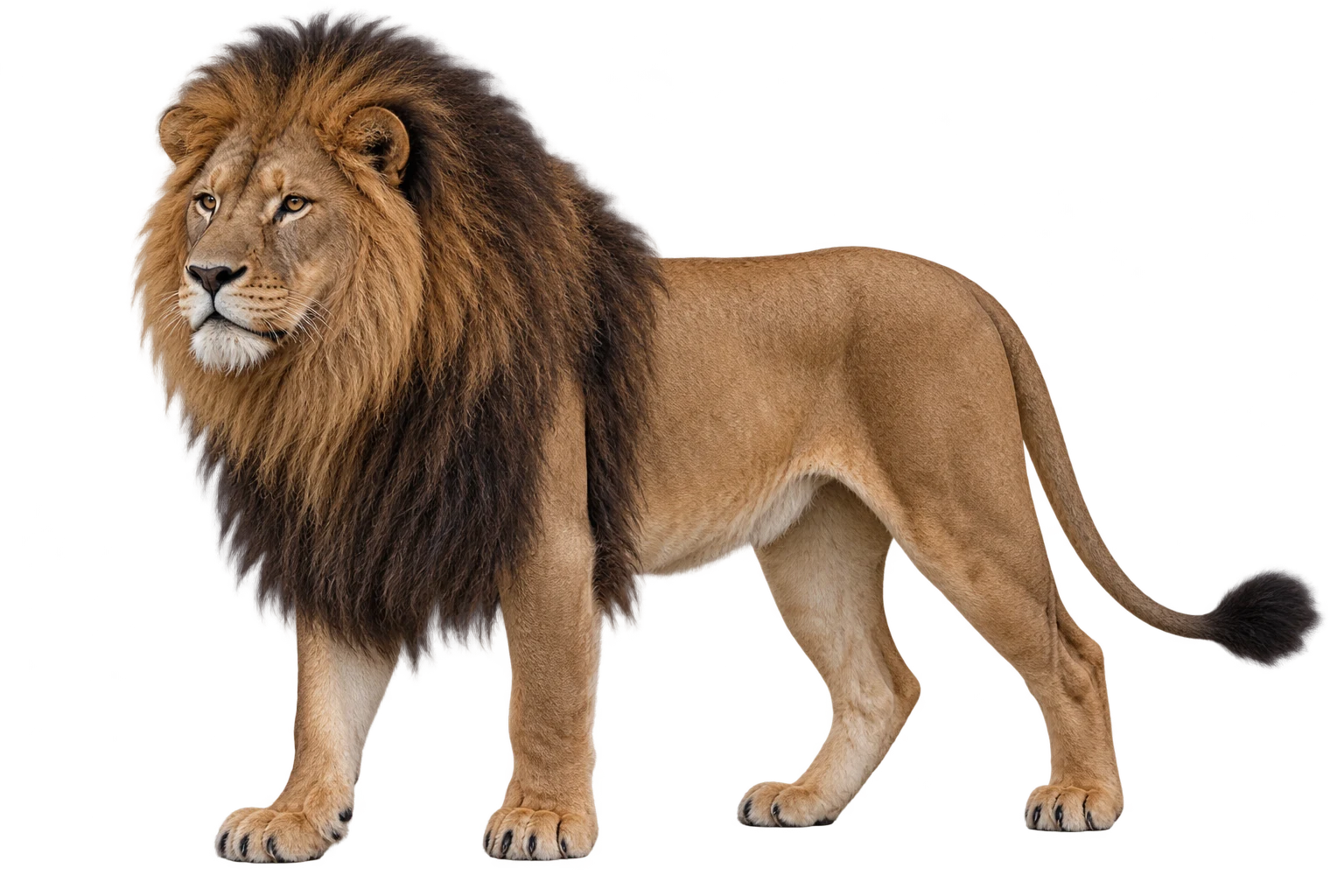
Mammals
Cape Lion
Panthera leo melanochaita
Classification and source reference
ExtinctAI reconstruction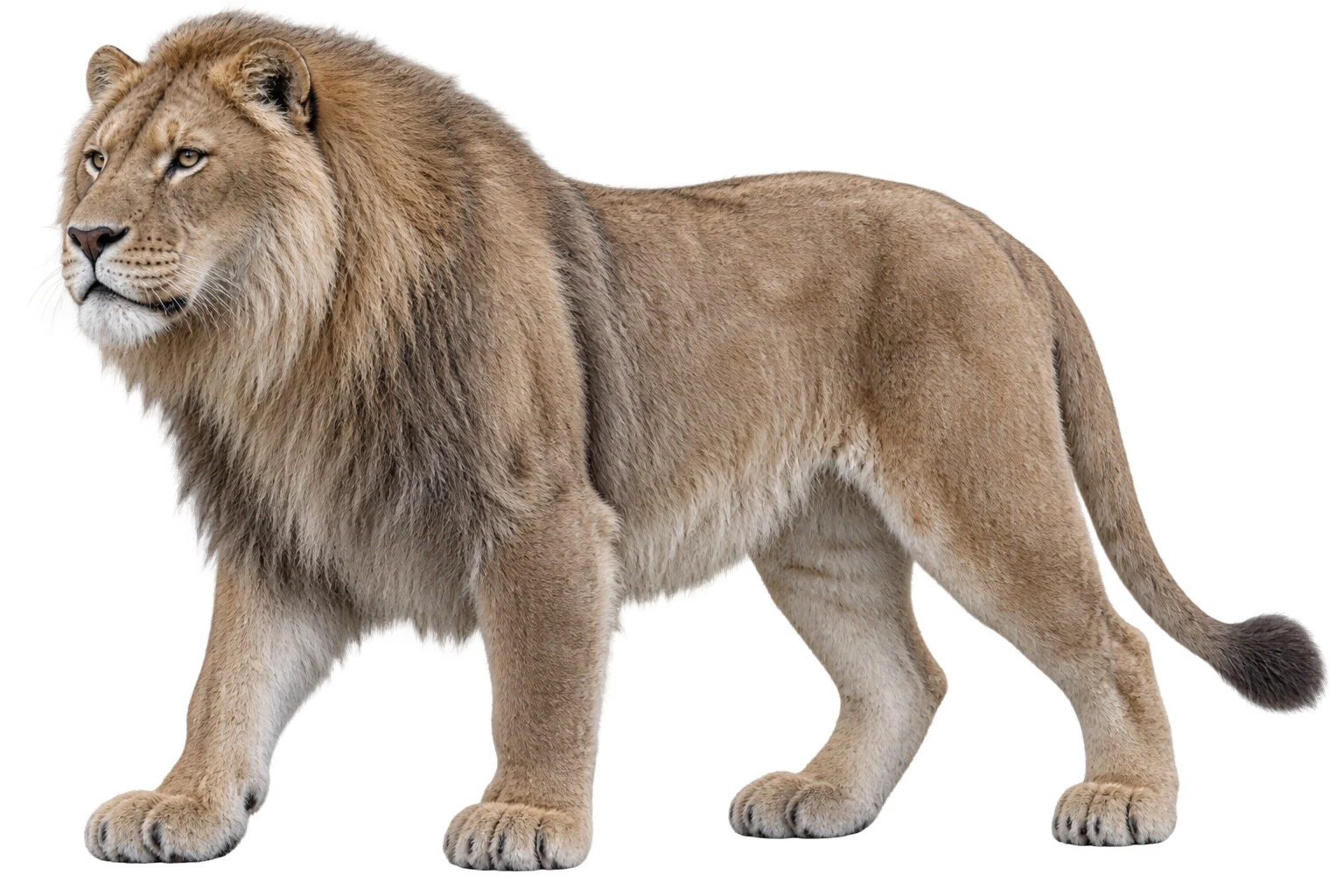
Mammals
Cave Lion
Panthera spelaea
Classification and source reference
ExtinctAI reconstruction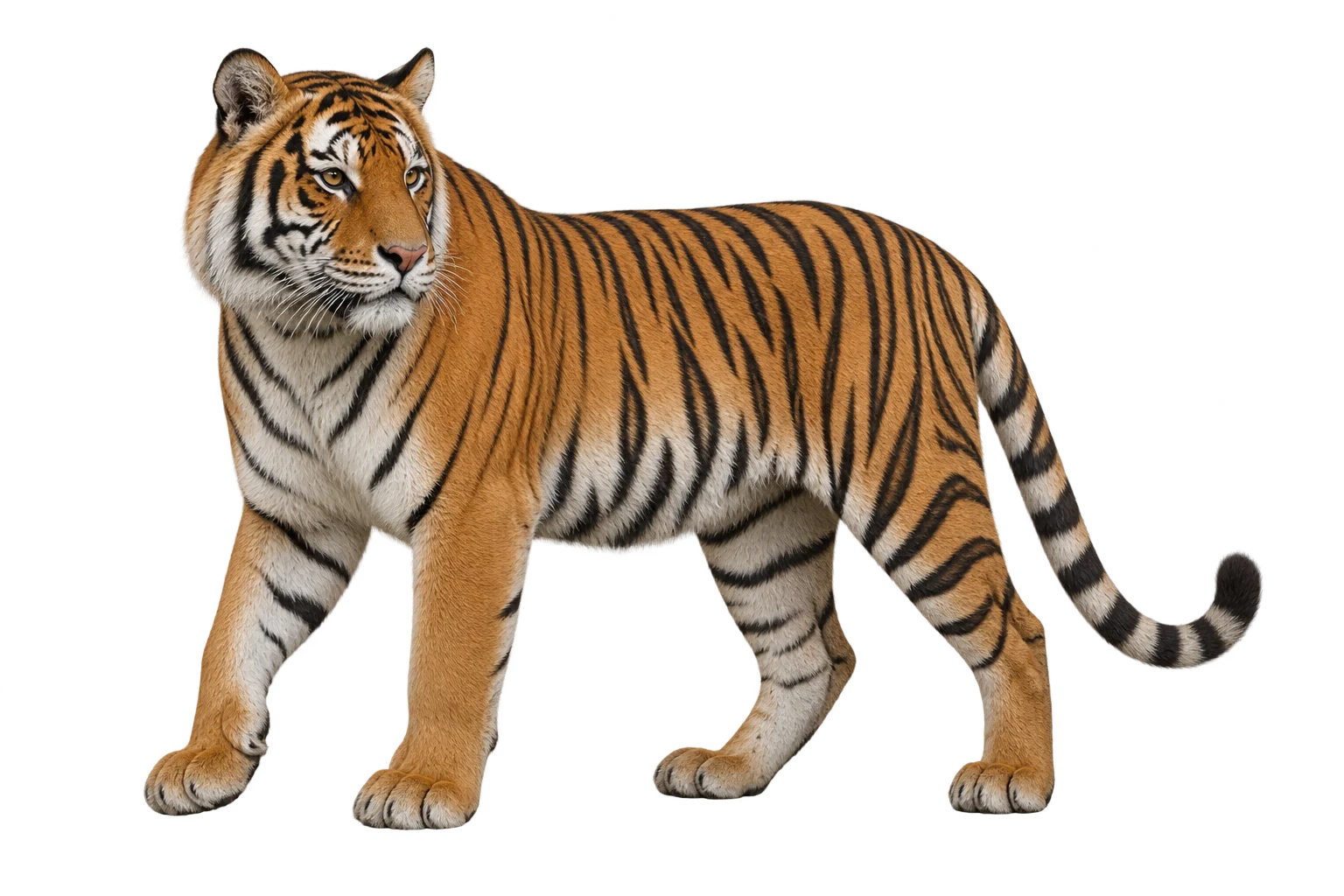
Mammals
Indochinese Tiger
Panthera tigris corbetti
Classification and source reference
LivingAI illustration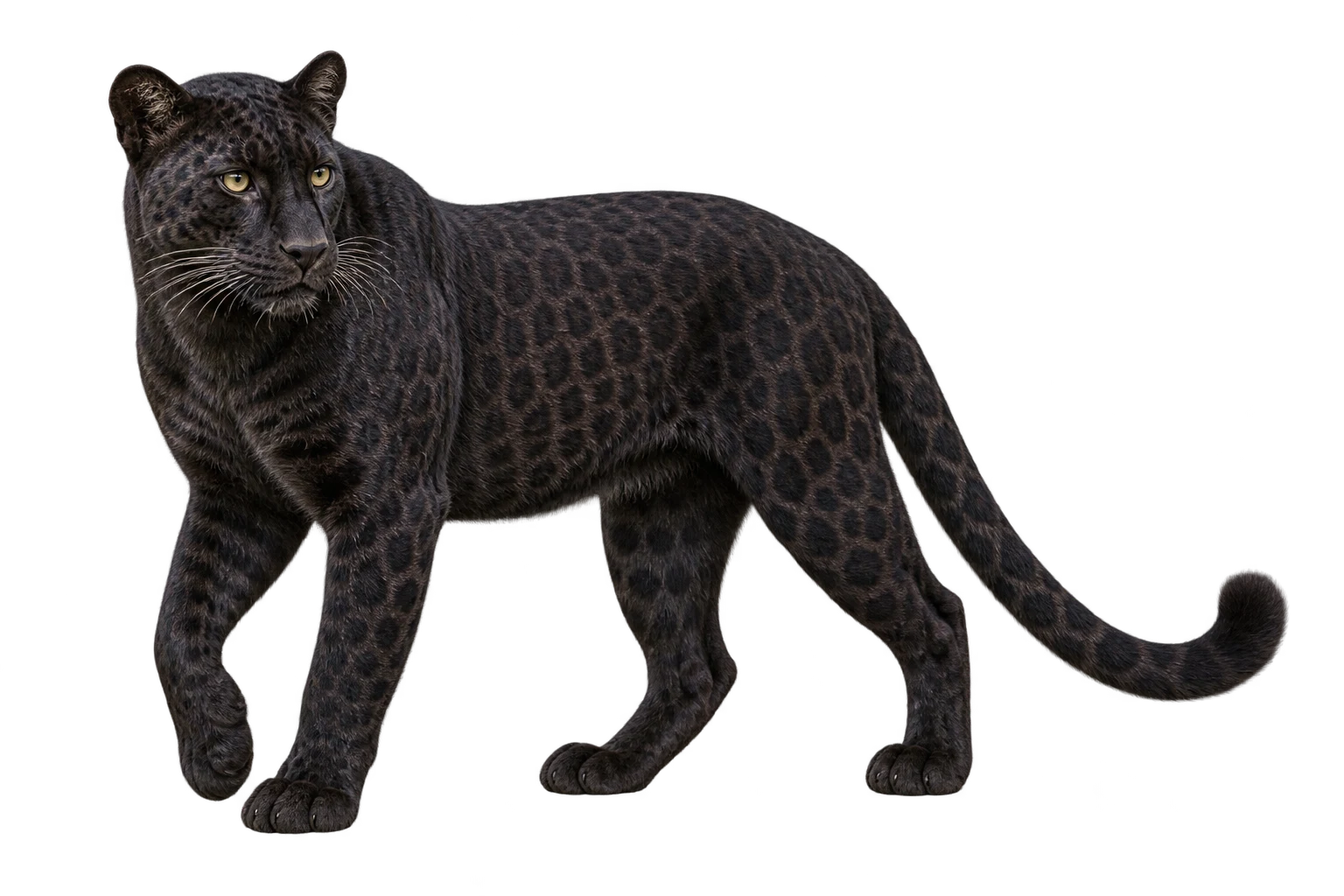
Mammals
Javan Leopard
Panthera pardus melas
Classification and source reference
LivingAI illustration