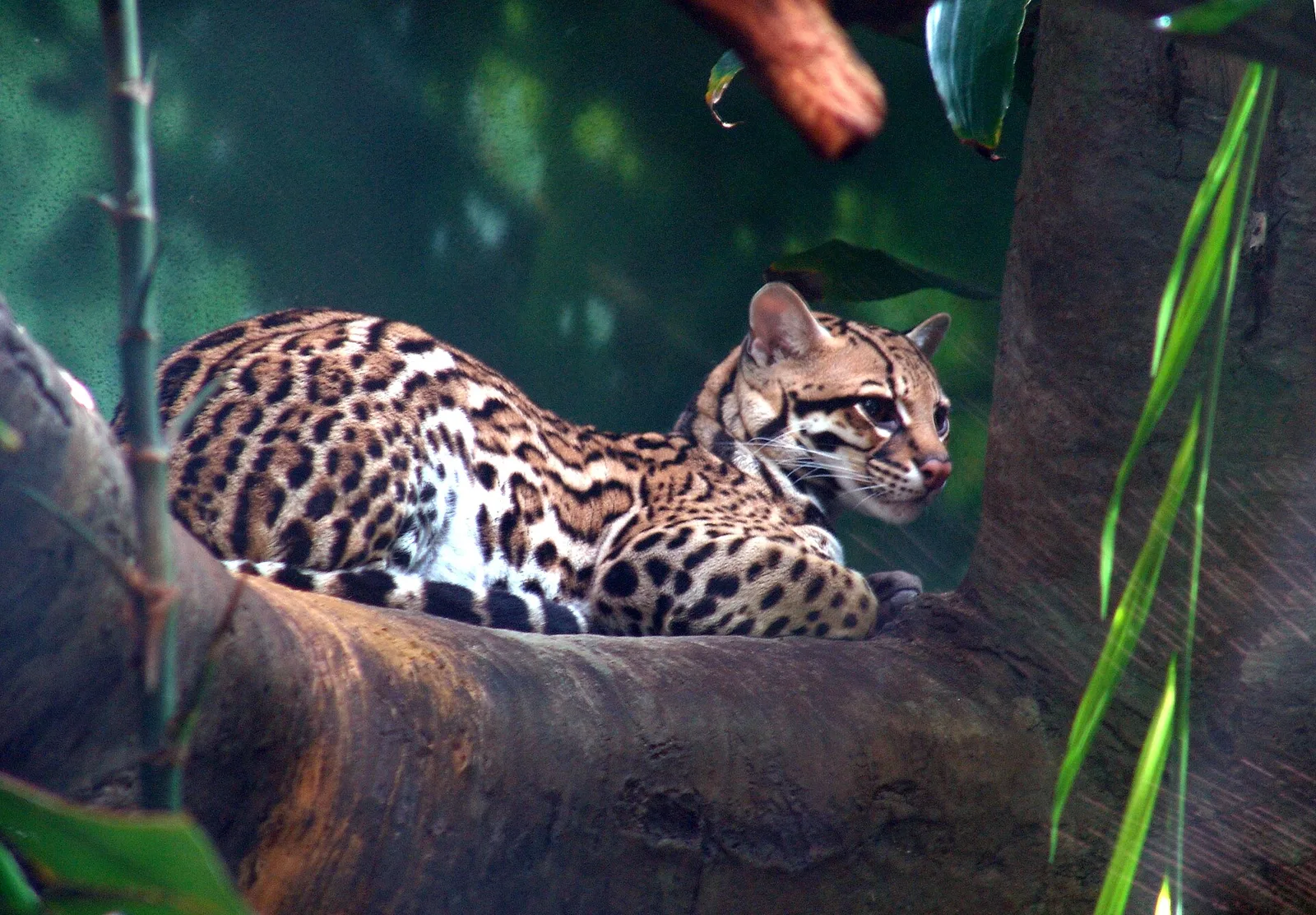
Ocelot
The spotted night hunter of the American forests
Leopardus pardalis
Also called Ocelote, Tigrillo, Manigordo, Jaguatirica
Living individuals or members of this group exist today. This does not mean they are safe from extinction.
Meet the ocelot
The ocelot is a medium-sized spotted cat of the Americas, from Texas to northern Argentina. It hunts rodents and other small animals at night in dense cover, and it is the largest cat in the genus Leopardus.
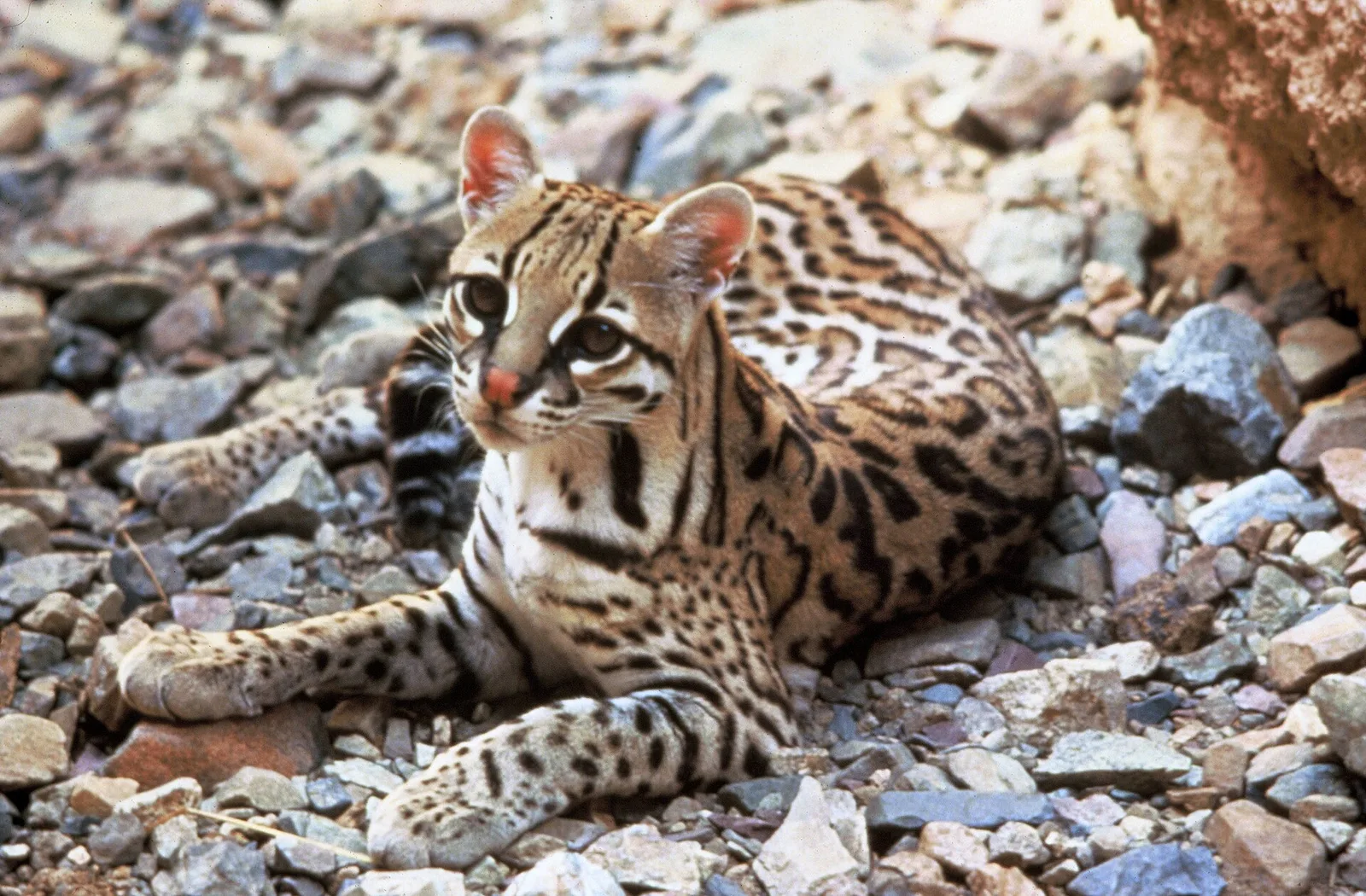
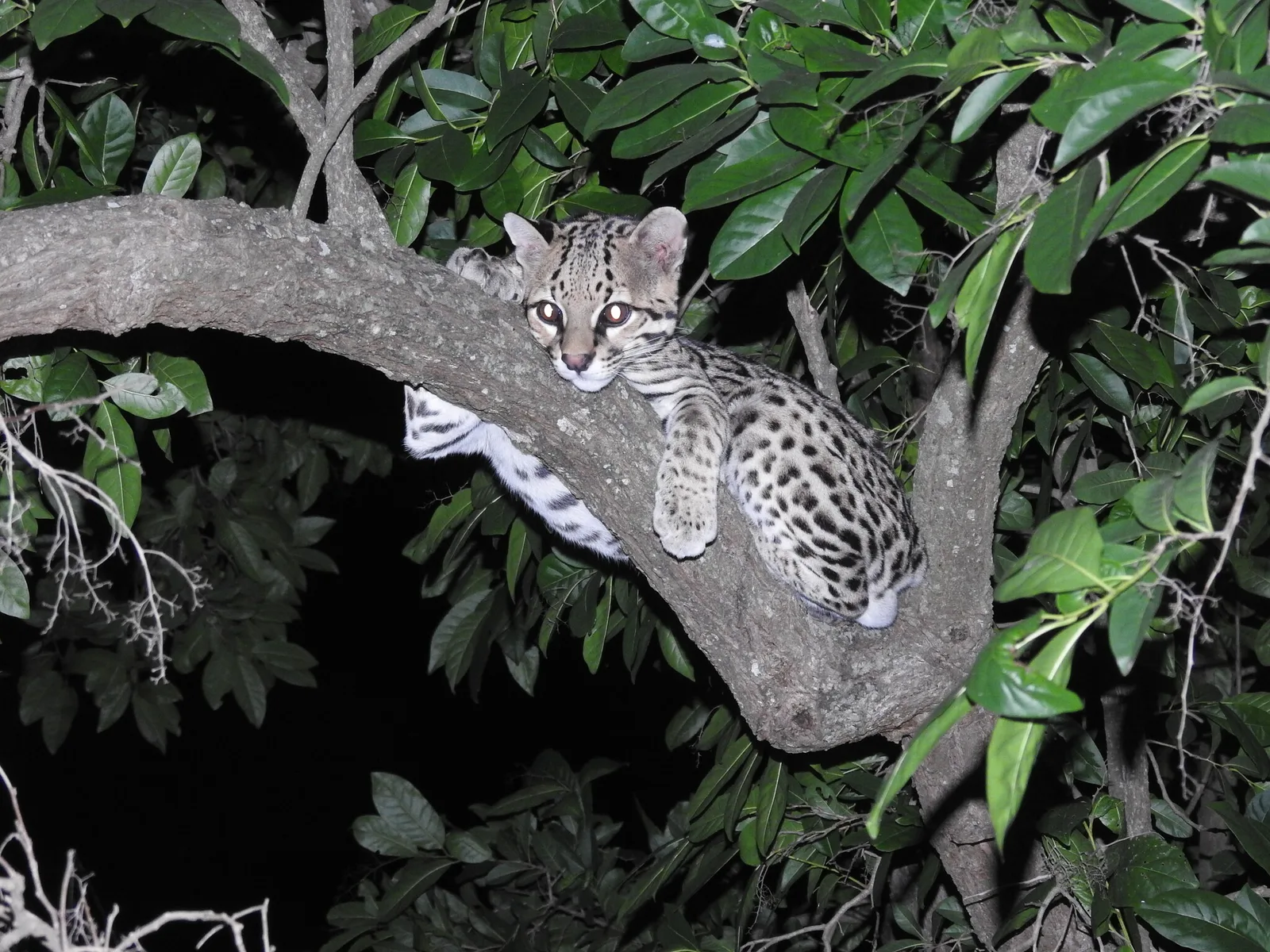
Images of the ocelot
Lifespan in the wild
7 to 10 years
Weight
7 to 15.5 kg
Length
0.55 to 1 m
Height
40 to 50 cm
Fact file
Ocelot
- Location
- Southern Texas to northern Argentina
- Habitat
- Rainforest, Temperate forest, Wetlands, Savanna
- Diet
- Carnivore
- Prey / food
- Rodents, opossums, armadillos, rabbits, iguanas, birds, crabs
- Predators
- Jaguar, cougar, harpy eagle, anaconda
- Lifestyle
- Nocturnal and solitary
- Group name
- Solitary
- Name of young
- Kitten
- Gestation
- 79 to 85 days
- Litter size
- 1 to 3 kittens
- Population
- More than 40,000 mature adults; only 50 to 80 in Texas
- Biggest threat
- Habitat loss, roads and the skin trade
- Distinctive feature
- Chains of black-rimmed blotches on a tawny coat
- Colour
- Tawny to grey with black spots and stripes; white underneath
- Skin type
- Fur
Size
Next to a person
Measurements
Size and speed
- Height
- 40 to 50 cm at the shoulder
- Length
- 0.55 to 1 m head and body, without the tail
- Tail
- 30 to 45 cm
- Weight
- 7 to 15.5 kg average adults; males run heavier
- Weight, male
- 8 to 18 kg
- Weight, female
- 7 to 12 kg
Typical adult ranges. Source: Wikipedia.
Life cycle
Lifespan
- In the wild7 to 10 years
- In captivityUp to 28.2 years
- 028.2 years
The pale bar is the record. Sources: Animal Diversity Web, AnAge.
Appearance
Colour and coat
- Primary colours
- tawnygrey
- Secondary colours
- blackwhite
- Skin type
- fur
- Male and female
- Males are clearly larger. They weigh 8 to 18 kilograms against 7 to 12 for females, and they hold territories up to three times the size.
Life cycle
Mating and family
- Mating system
- polygynous
- Social structure
- solitary; a male's range covers those of two or three females
- Breeding
- one litter every two years
Ocelots mate in any month, with peaks in autumn in the south and in autumn and winter in Mexico and Texas. After 79 to 85 days the female bears one to three kittens in a hidden den. She raises them alone, weans them by six weeks and lets them stay in her range for up to two years. Females breed from about 18 to 22 months. Wild ocelots live 7 to 10 years, and a captive cat reached 28.2.
Classification
Taxonomy
- Kingdom
- Animalia
- Phylum
- Chordata
- Class
- Mammalia
- Order
- Carnivora
- Family
- Felidae
- Genus
- Leopardus
- Species
- Leopardus pardalis
Conservation
Red List status
- LC
- NT
- VU
- EN
- CR
- EW
- EX
Least Concern on the IUCN Red List
Range
Recorded in 12 countries
Habitat layer: tropical moist broadleaf forest, temperate broadleaf and mixed forest, temperate conifer forest, boreal forest and taiga, tropical grassland, savanna and shrubland, flooded grassland and savanna, mangrove.
Countries from 2,474 wild records on GBIF (iNaturalist research grade), filtered and checked by hand. Country shapes: Natural Earth. Habitat: RESOLVE Ecoregions 2017, CC BY 4.0. Basemap: Natural Earth.
Habitats
Three things to know
- 1
Every ocelot carries a unique pattern of spots and stripes, which lets researchers tell individuals apart on camera traps.
- 2
In 1970 about 140,000 ocelot skins passed through the fur trade in a single year.
- 3
The painter Salvador Dali kept a pet ocelot named Babou and took it to restaurants.
Did you know
Seven more facts
- 1
The ocelot's Spanish nickname manigordo means big feet.
- 2
Kittens are born grey and turn golden as they grow.
- 3
A Texas mother moves her litter between two or three dens.
- 4
In Venezuela, ocelots switch from iguanas to land crabs when the rains come.
- 5
Only one albino ocelot has ever been recorded.
- 6
Several ocelots leave their droppings at the same shared latrine.
- 7
The Texas population numbers only 50 to 80 cats.
Field notes
How it looks and acts
Field notes
Distinguishing features
- Chains of black-rimmed blotches and stripes on a tawny or grey coat.
- A white spot on the back of each round ear.
- Two black stripes across each cheek.
- A ringed or barred tail of 30 to 45 centimetres.
- Broad front paws, larger than the hind paws.
- A shoulder height of 40 to 50 cm, the largest cat in its genus.
Field notes
Unique adaptations
- A dappled coat that vanishes in broken shade.
- Eyes with sharp binocular vision for hunting in the dark.
- A nose good enough to follow a scent trail to its prey.
- Strong limbs for climbing, leaping and swimming.
- A cheek bite rated at 113.8 on the bite force quotient, enough to kill prey larger than itself.
Field notes
Interesting behaviours
- Follows scent trails through dense cover at night.
- Waits in ambush for up to an hour before moving on.
- Plucks a bird before eating it and covers the leftovers.
- Sprays urine to mark the edges of its territory.
- Sleeps by day in a tree or a den under roots.
Field notes
Temperament
- Solitary and secretive, with little contact between adults.
- Fiercely territorial, and fights can be fatal.
- Playful and affectionate when hand-raised, but prone to bite.
Field notes
Communication
- Urine spray and shared latrines that mark territory.
- A long-range yowl in the mating season.
- A short mew between cats at close range.
Ecology
Ecological role
The ocelot is the main mid-sized predator of the forest floor across tropical America and keeps rodent numbers in check.
- Takes rodents, opossums and armadillos, and so limits the small mammals that eat seeds and crops.
- Competes with the margay and the oncilla for the same prey in the Atlantic forest.
- Feeds jaguars, cougars, harpy eagles and anacondas.
- Hosts many parasites.
Stories
Myths and legends
- In Aztec tradition, the god Tezcatlipoca fell into the sea, became an ocelot and killed the giants.
- In Aztec ritual, ocelot bones pierced the skin for blood offerings.
- In Moche tradition in Peru, ocelots were painted on pottery.
- In modern spirit-animal writing, the ocelot is thought to carry messages between the seen and unseen worlds.
People
Relationship with humans
People
Living alongside us
The Aztecs and the Moche put the ocelot in art and ritual, and the fur trade of the 1960s and 1970s nearly wiped it out. Trade bans have closed most of that market, and the cat now earns goodwill as a rodent killer on farms. A few people keep ocelots as pets, and the Texas population survives only through habitat restoration on private land.
- A wild ocelot avoids people and has no record of killing anyone.
- A pet ocelot can bite its owner without meaning harm.
- It kills poultry where wild prey is scarce, but livestock larger than a chicken is safe.
People
Status, uses and products
- Domestication
- Wild
- As a pet
- Not suitable. A pet ocelot chews cloth and fingers, leaps around the house, swallows objects and can bite. It needs 600 to 800 grams of meat a day and space to roam, and keeping one is illegal in many places.
- Uses
- rodent controlzoo exhibition
- Products
- fur
The full account
About the ocelot
The ocelot, Leopardus pardalis, is a spotted wild cat of middle size from the Americas. It stands 40 to 50 centimetres at the shoulder and weighs 7 to 15.5 kilograms. It lives from the southern United States through Mexico and Central America to northern Argentina, and on Trinidad and Margarita. Carl Linnaeus described it in 1758. It is the largest member of its genus, which also holds the margay and the oncilla.
The ocelot climbs, leaps and swims well, but it hunts mostly on the ground at night. It lives alone in dense cover near water and eats rodents, opossums, armadillos and other prey under a kilogram. A female bears one to three kittens after two to three months and keeps them for up to two years. The IUCN lists the species as Least Concern, but habitat loss, road deaths and hunting are cutting many populations. The Aztecs painted and carved the ocelot, and a few people still keep it as a pet.
Name and taxonomy
The name comes from the Nahuatl word ocelotl, which in Aztec usage usually meant the jaguar rather than this cat. Another suggested root is the Latin ocellatus, marked with little eyes, for the spotted coat. Local names include tigrillo in Colombia and Peru, jaguatirica in Brazil, cunaguaro in Venezuela and manigordo, big feet, in Costa Rica and Panama. Linnaeus named the cat Felis pardalis in 1758. John Edward Gray set up the genus Leopardus in 1842 for a set of spotted skins in London.
Naturalists once split the species into nine or ten subspecies on the colour and spotting of skins. A 1998 study of mitochondrial DNA found four main groups: Central America, north-western, north-eastern and southern South America. In 2017 the IUCN Cat Specialist Group accepted just two subspecies, split by the Andes. L. p. pardalis is greyer and ranges from Texas and Arizona to Costa Rica. L. p. mitis is larger and yellower and lives in South America south to northern Argentina.
Evolution and relatives
The Leopardus line branched off from the rest of the cat family about 8 million years ago. The ocelot and the margay parted between 2.41 and 1.01 million years ago. Fossil ocelots have turned up in Florida, well beyond the modern range. The genus appears to be the main radiation of small cats in South America. It includes the oncilla, Geoffroy's cat and the Andean cat.
The ocelot shares its range with the jaguar, cougar, jaguarundi, margay and oncilla. It is easy to confuse with the margay and the oncilla. It is clearly bigger, with a shorter tail and blotches rather than neat rosettes. It is about the size of a bobcat, and the jaguar is far larger.
Appearance
Head and body measure 55 to 100 centimetres, and the tail adds 30 to 45 cm. Shoulder height is 40 to 50 cm. Females weigh 7 to 12 kilograms and males 8 to 18 kg, so the sexes differ clearly in size. The paws are large for the body, and the front paws are broader than the hind ones. A footprint measures close to 5 by 5 cm.
The coat is cream, tawny, reddish grey or grey, and it is covered in solid black markings. Spots on the head and legs are small, while the back, cheeks and flanks carry open or closed bands and stripes in chains. Several dark stripes run from the neck along the back to the tail. The neck and underside are white, each round ear bears a white spot, and two black lines cross each cheek. No two ocelots share the same pattern, and cats from dry scrub are greyer than cats from wet forest.
The fur is short, about 0.8 cm on the belly and 1 cm on the back, and it carries a strong smell. The eyes are brown and shine gold in a torch beam. There are 28 to 30 teeth, and only one albino ocelot has ever been recorded. Black ocelots occur but are rare.
Habitat and range
The ocelot ranges from Texas and Arizona to northern Argentina, and it has been recorded up to 3,000 metres. It once lived in Louisiana and Arkansas but is gone from both. Central America holds the densest populations, with further clusters in north-western, north-eastern and central southern South America. GBIF holds records from 33 countries.
It lives in tropical forest, thorn forest, mangrove swamp, marsh and savanna. The one thing it needs is thick cover, and it crosses open ground only on cloudy or moonless nights. In the Amazon it picks places with plenty of prey and water and keeps away from roads, settlements and steep slopes. Where cougars or people are common, it shifts its active hours to avoid them. Most ocelots live below 1,200 m, although one was seen at 3,800 m.
Density is highest in wet tropical forest and falls toward the north and south. On Barro Colorado Island in Panama it reached 1.59 to 1.74 cats per square kilometre in 2014, the highest ever recorded. In the Colombian Llanos, ocelots persist on oil palm estates and large cattle ranches.
Diet and hunting
The ocelot is a strict carnivore that takes prey mostly under 1 kilogram. Small rodents make up about 65 to 66% of the diet and reptiles 12 to 18%. Medium mammals add 6 to 10%, birds 4 to 11%, and crabs and fish 2 to 7%. Cane mice, spiny rats, agoutis, opossums and armadillos are the staple, most of them active at night. Now and then it takes a deer, a peccary, an anteater, a monkey, a tortoise or an iguana. In south-eastern Brazil monkeys lead the diet, and in dry forest in Mexico iguanas do. In Venezuela the dry season diet is iguanas and rodents, and the wet season diet is land crabs.
An ocelot hunts by scent, walking a trail at about 0.3 kilometres per hour. Or it waits at one spot for 30 to 60 minutes, then moves on at 0.8 to 1.4 km/h. It makes about 0.9 kills per kilometre travelled. It eats at the kill, plucks a bird before eating it, and covers what it leaves. It needs 600 to 800 grams of meat a day. It hunts inside cover and avoids open ground on bright nights so that prey does not see it coming.
Behaviour and social life
The ocelot lives alone and is active at twilight and through the night. Radio-collared cats in Peru rested by day and set out in the late afternoon. They moved for 3.2 to 17 hours before returning to a den at dawn. It is active for more than 12 hours a day and covers 1.8 to 6.7 km, with males travelling nearly twice as far as females. By day it sleeps in a tree, a hollow, a den under roots or a patch of thick brush. It climbs well, leaps into trees to escape a predator, and swims without trouble.
Males hold territories of 3.5 to 46 square kilometres, and females 0.8 to 15 km2. A male's range takes in the ranges of two or three females, while female ranges rarely overlap. Both sexes mark with sprayed urine, and several cats use shared latrines. Fights over territory can end in death. Adults have little to do with each other outside mating, although a few pairs have been seen together and young cats sometimes meet their parents.
Communication and senses
The ocelot has keen sight and smell. Its eyes give sharp binocular vision for hunting in the dark, and they shine gold when lit. It finds, tracks and stalks prey by scent, and it reads territory borders the same way.
Scent is the main signal between cats: sprayed urine, scat left at latrines, and rubbing. Both sexes give a long-range yowl in the mating season, much like a domestic cat, and a short mew close up. Captive pairs that are courting scent-mark heavily, spend more time together and eat less. The white ear spots and cheek stripes probably help cats read each other at close range, as with other spotted cats.
Reproduction and life cycle
Ocelots can mate in any month. Births peak in autumn in Argentina and Paraguay and in autumn and winter in Mexico and Texas. Oestrus lasts four to five days and returns every 25 days if the female does not conceive. Captive pairs mate 5 to 10 times a day during that window. The system is polygynous: one male covers the ranges of several females.
After 79 to 85 days the female bears one to three kittens, on average 1.63, in a den hidden in dense vegetation. A newborn weighs 200 to 340 grams and is born spotted on a grey coat that turns golden with age. Its eyes open at 15 to 18 days. In Texas a mother keeps the litter in a den for 13 to 64 days and moves it between two or three dens. Kittens are weaned by 6 weeks, leave the den at three months, and reach adult size at 8 to 10 months.
The mother raises them alone, and they watch her hunt before they hunt themselves. They become independent at about a year but may stay in her range until two. Females mature at 18 to 22 months and can breed until about 13 years old, and males start producing sperm at about 30 months. A female usually raises one litter every two years, a slow rate for a cat. Wild ocelots live 7 to 10 years, and one captive cat reached 28.2.
Predators and threats
Jaguars and cougars kill adult ocelots, and in Guatemala shrinking water sources push the two cats together. Harpy eagles and anacondas also take them. In Texas the kittens face cougars, coyotes, bobcats, alligators, great horned owls, feral dogs and pigs, pit vipers and constrictors. The ocelot escapes by climbing, and its coat hides it in dappled shade.
The main threat everywhere is the loss and cutting up of habitat. In Texas the dense thorn scrub it needs is going under the plough, and cats in small patches starve. Road deaths have become a major cause of loss as young cats wander in search of new ground. In the 1960s and 1970s the fur trade hit the species hard, and 140,000 skins were traded in 1970 alone. Skins still sell illegally, and kittens are taken for the pet trade by killing the mother. Farmers kill ocelots that raid poultry where wild prey has been hunted out.
Population and conservation
The IUCN lists the ocelot as Least Concern because of its huge range. In 2013 the world population was put at more than 40,000 mature adults. One 1996 estimate ran to 1.5 to 3 million cats of all ages. Numbers are stable in parts of the Amazon basin but falling in many other regions. Argentina's subtropical forests held 1,500 to 8,000 mature cats in 2012.
Brazil and the United States banned trade in spotted cat skins in the 1970s. Europe banned imports in 1986, and CITES placed the ocelot on Appendix I in 1989. Hunting is banned in almost every range country and regulated in Peru. Texas holds only 50 to 80 ocelots, inbred and cut off, and agencies are replanting thorn scrub in the Rio Grande Valley to link them. The Texas subspecies is the only one listed as endangered. North American zoos held 16 ocelots from six founders in 2006, and some litters came from artificial insemination.
Relationship with humans
For twenty years from the early 1960s, spotted cat fur was high fashion. An ocelot coat sold for 40,000 dollars in West Germany, and a live kitten fetched 800 dollars as a pet. The trade nearly emptied whole regions, and alarm over the ocelot helped bring about CITES in 1975. Ocelot skins and pets can still be found in some Central and South American markets.
Alive, the ocelot keeps down rodents that damage crops, and it rarely troubles people. It does kill chickens where its wild prey is gone. As a pet it demands attention, chews and sucks on cloth and fingers, leaps about and can swallow objects such as tennis balls. Salvador Dali travelled with an ocelot named Babou and once told a worried diner it was a house cat painted in op art. The singer Lily Pons and the musician Gram Parsons also kept ocelots.
In culture and myth
Ocelots appear in Moche pottery, in murals, and in carved stone across ancient Mexico and Peru. Aztec priests sharpened ocelot bones into points for piercing ears and limbs in blood offerings. In a 1904 study, the archaeologist Zelia Nuttall tied a felid statue from Mexico City to the god Tezcatlipoca. In the myth she cited, Tezcatlipoca fell from heaven into the sea, became an ocelot, and rose to kill the giants. She also described a seated figure wearing an ocelot skin and leggings as Lord Ocelot, a form of the same god.
In Nahuatl, ocelotl meant the jaguar and its warrior order, so Aztec ocelot lore is partly jaguar lore under a borrowed name. Modern symbolism blogs link the cat to the Maya moon goddess Ixchel, but the claim seems to have no ancient source. The same sites read the ocelot as a messenger between worlds and a sign of stealth, night and the defence of territory.
A sentence with a dotted underline is inferred: it describes the group the animal belongs to, or is a reading of the sources, rather than a measured or reported fact about this species.
Questions
Ocelot questions, answered
How big is an ocelot?
An ocelot stands 40 to 50 centimetres at the shoulder and weighs 7 to 15.5 kilograms. Head and body measure 55 to 100 cm, and the tail adds 30 to 45 cm.
Where do ocelots live?
From southern Texas and Arizona through Mexico and Central America to northern Argentina, and on Trinidad and Margarita. They need dense cover near water.
What do ocelots eat?
Mostly small rodents, with reptiles, opossums, armadillos, birds, crabs and fish. Most prey weighs under a kilogram.
Are ocelots endangered?
The IUCN lists the ocelot as Least Concern with more than 40,000 mature adults. The Texas population of 50 to 80 cats is endangered.
Can you keep an ocelot as a pet?
It is legal in a few places but a poor idea. Pet ocelots chew, bite, leap about and swallow objects, and the kitten trade kills wild mothers.
How long do ocelots live?
Wild ocelots live 7 to 10 years. In captivity one reached 28.2 years.
Are ocelots dangerous to humans?
No. A wild ocelot avoids people, and there is no record of one killing a person. A pet can bite.
What is the difference between an ocelot and a margay?
The ocelot is much bigger, with a shorter tail and a more blotched coat. The margay is a smaller tree cat with a long tail.
Do ocelots climb trees?
Yes. They climb, leap and swim well, and they escape predators by jumping into trees, but they hunt mostly on the ground.
How many kittens does an ocelot have?
One to three kittens, after a gestation of 79 to 85 days. A female usually raises one litter every two years.
Are ocelots nocturnal?
Yes. They are active at twilight and through the night, and they rest by day in trees or dens.
What eats ocelots?
Jaguars, cougars, harpy eagles and anacondas. In Texas, kittens also face coyotes, bobcats, owls, alligators and snakes.
Why are ocelots called ocelots?
The name comes from the Nahuatl word ocelotl, which the Aztecs used for the jaguar. Another idea traces it to Latin ocellatus, marked with little eyes.
How many ocelots are left in the United States?
About 50 to 80, all in southern Texas as of 2014. The species is gone from Louisiana and Arkansas.
Food web
Prey and food
- rodents
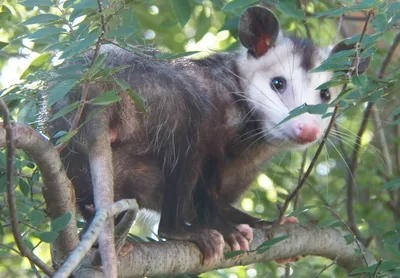 Virginia opossum
- armadillos
- rabbits
- iguanas
- birds
- crabs
Food web
Predators
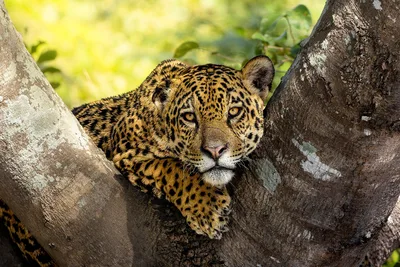 Jaguar
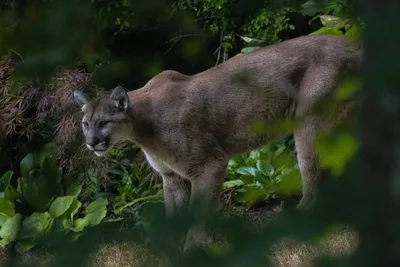 Cougar
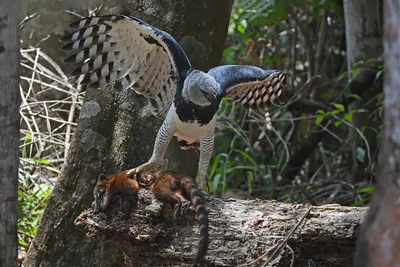 Harpy eagle
- anaconda
Ecological equivalents
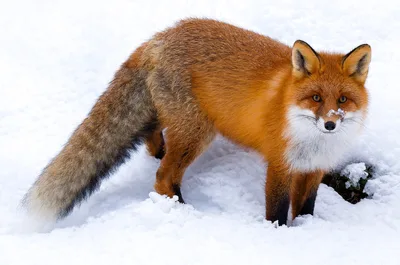
Related species on this site
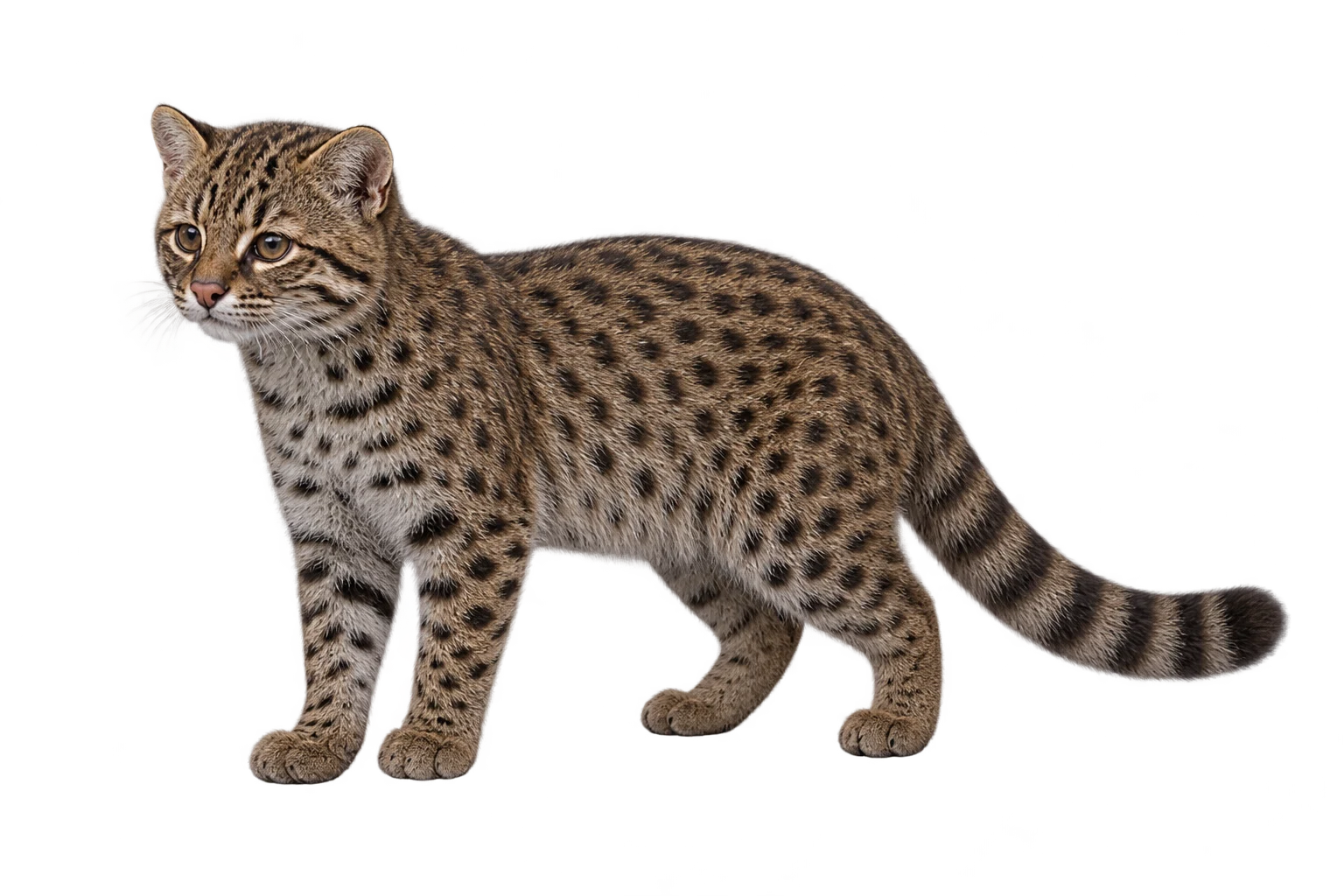
Kodkod (same genus), Margay (same genus), Abyssinian (same family), African Golden Cat (same family), African wildcat (same family), American Wirehair (same family), and more.
Mammals
Kodkod
Leopardus guigna
Classification and source reference
LivingAI illustration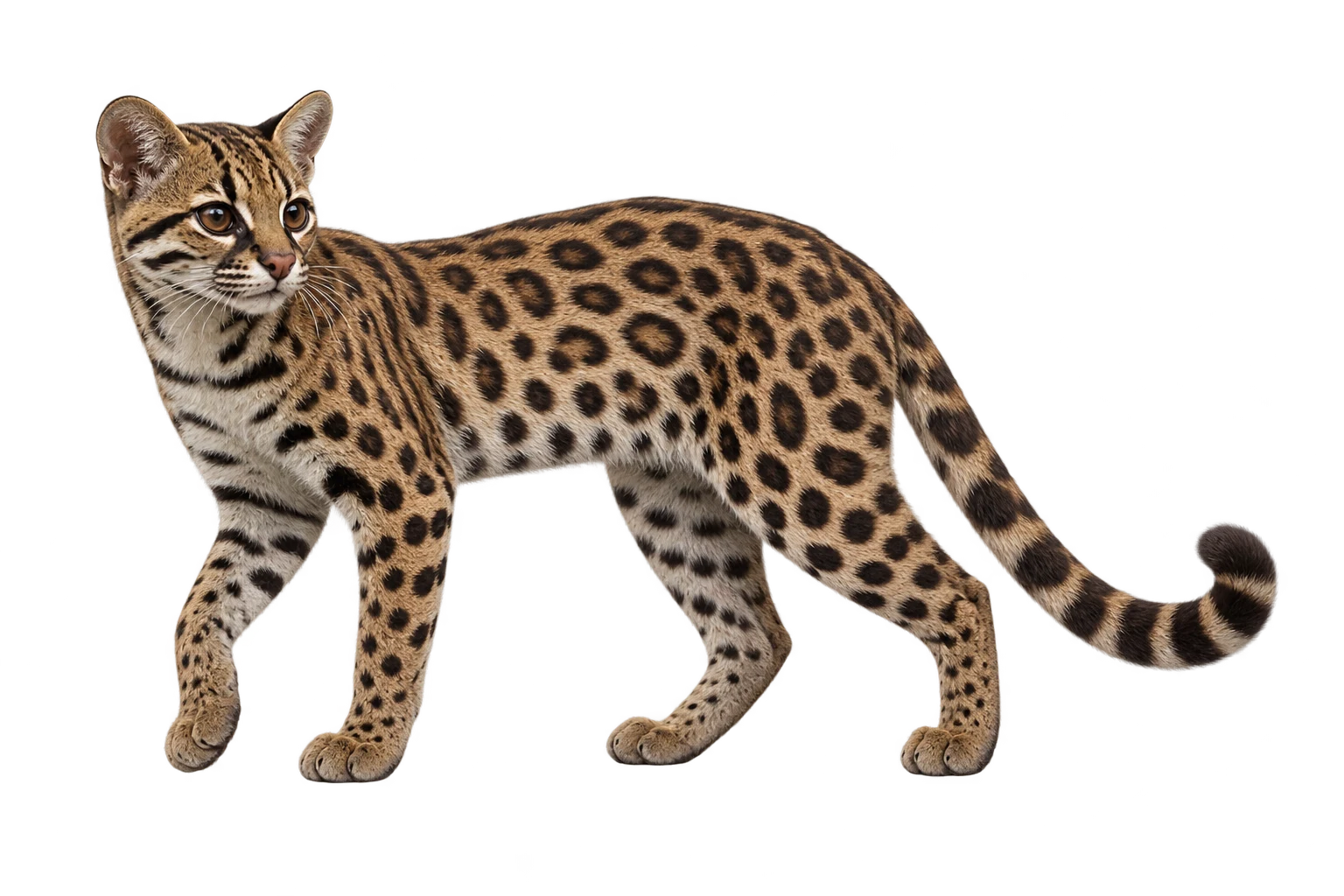
Mammals
Margay
Leopardus wiedii
Classification and source reference
LivingAI illustration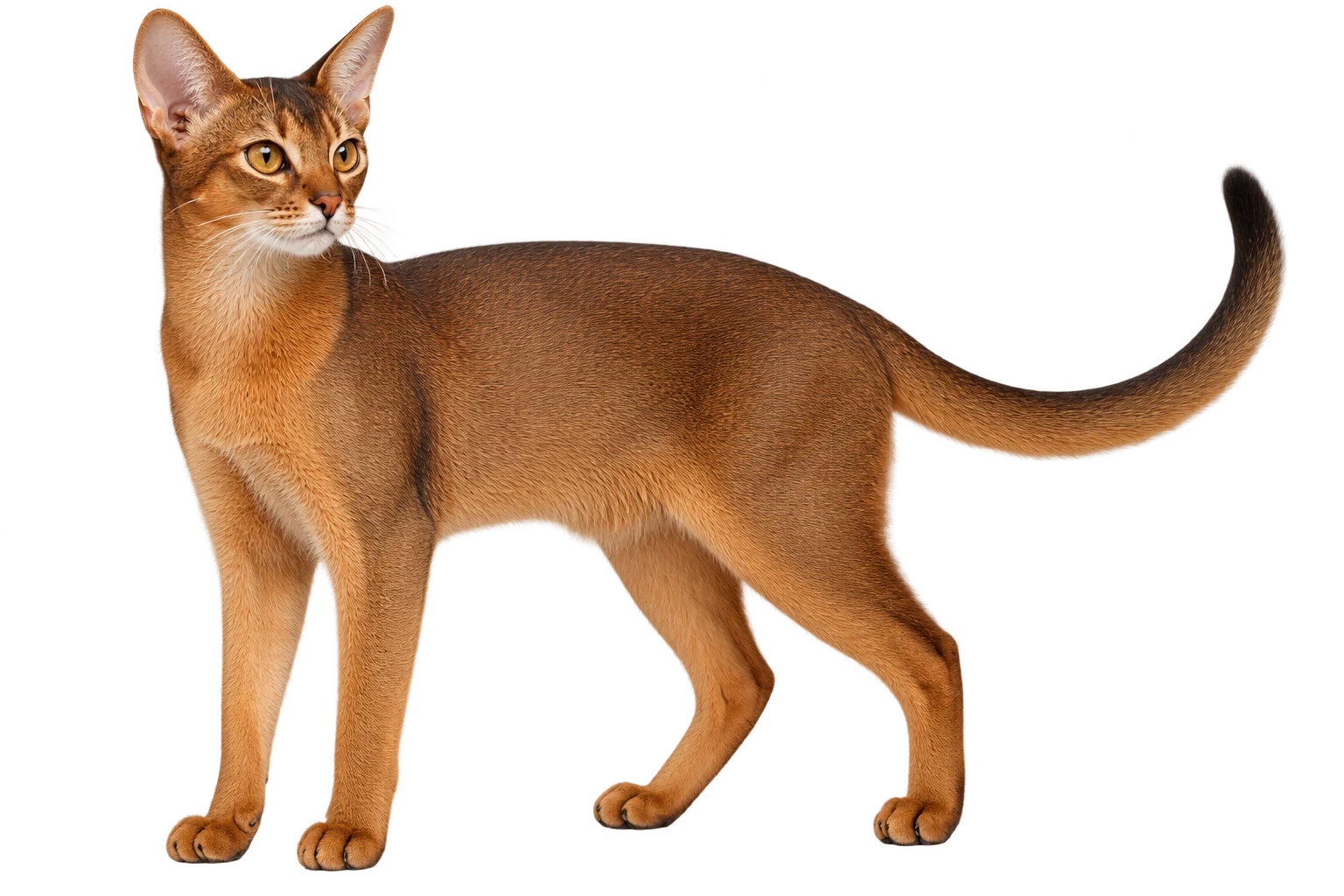
Mammals
Abyssinian
Felis catus
Classification and source reference
LivingAI illustration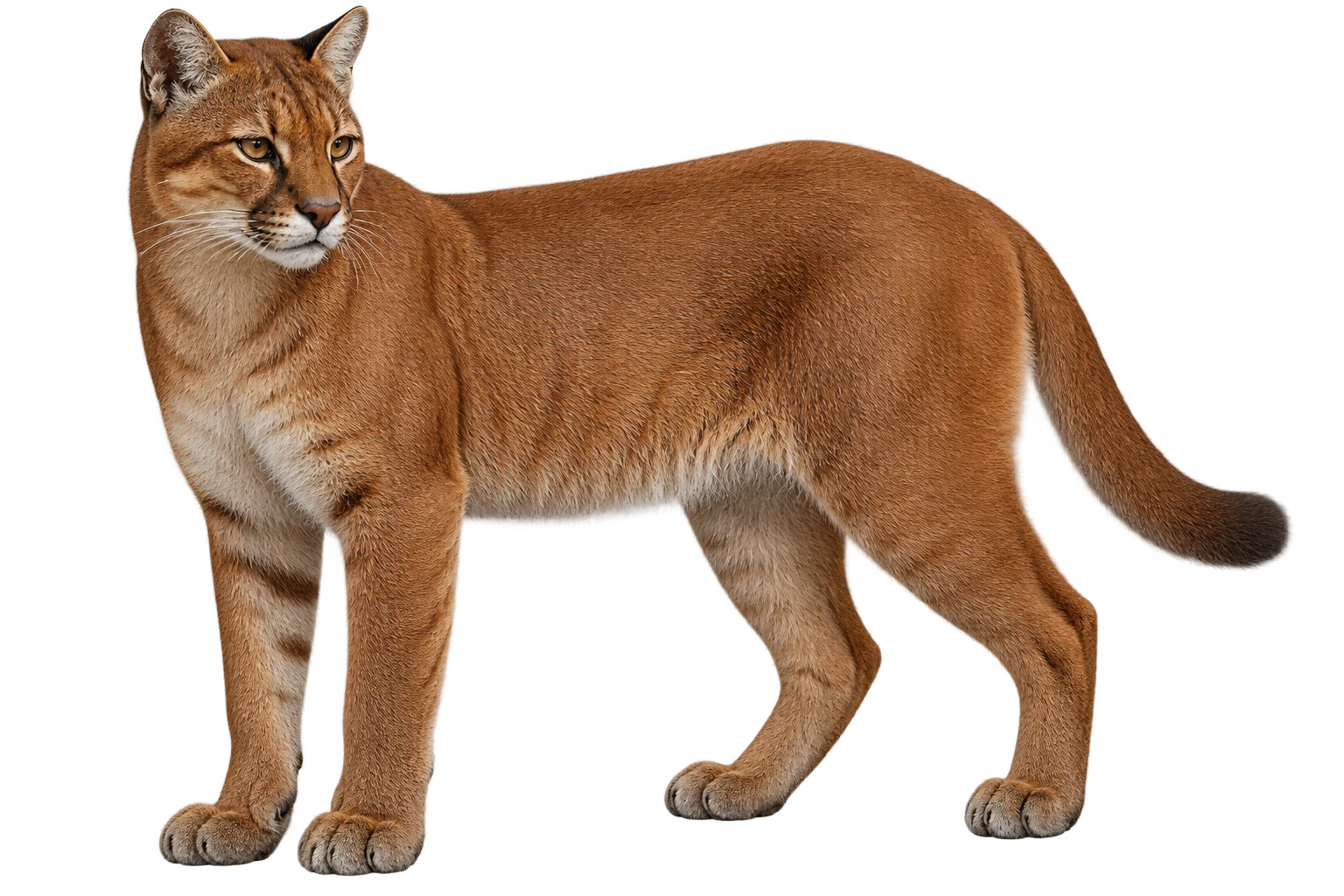
Mammals
African Golden Cat
Caracal aurata
Classification and source reference
LivingAI illustration LC
Mammals
African wildcat
Felis lybica
The African wildcat is a small striped cat of dry Africa and Asia, and the ancestor of every domestic cat.
Living
Mammals
American Wirehair
Felis catus
Classification and source reference
LivingAI illustration